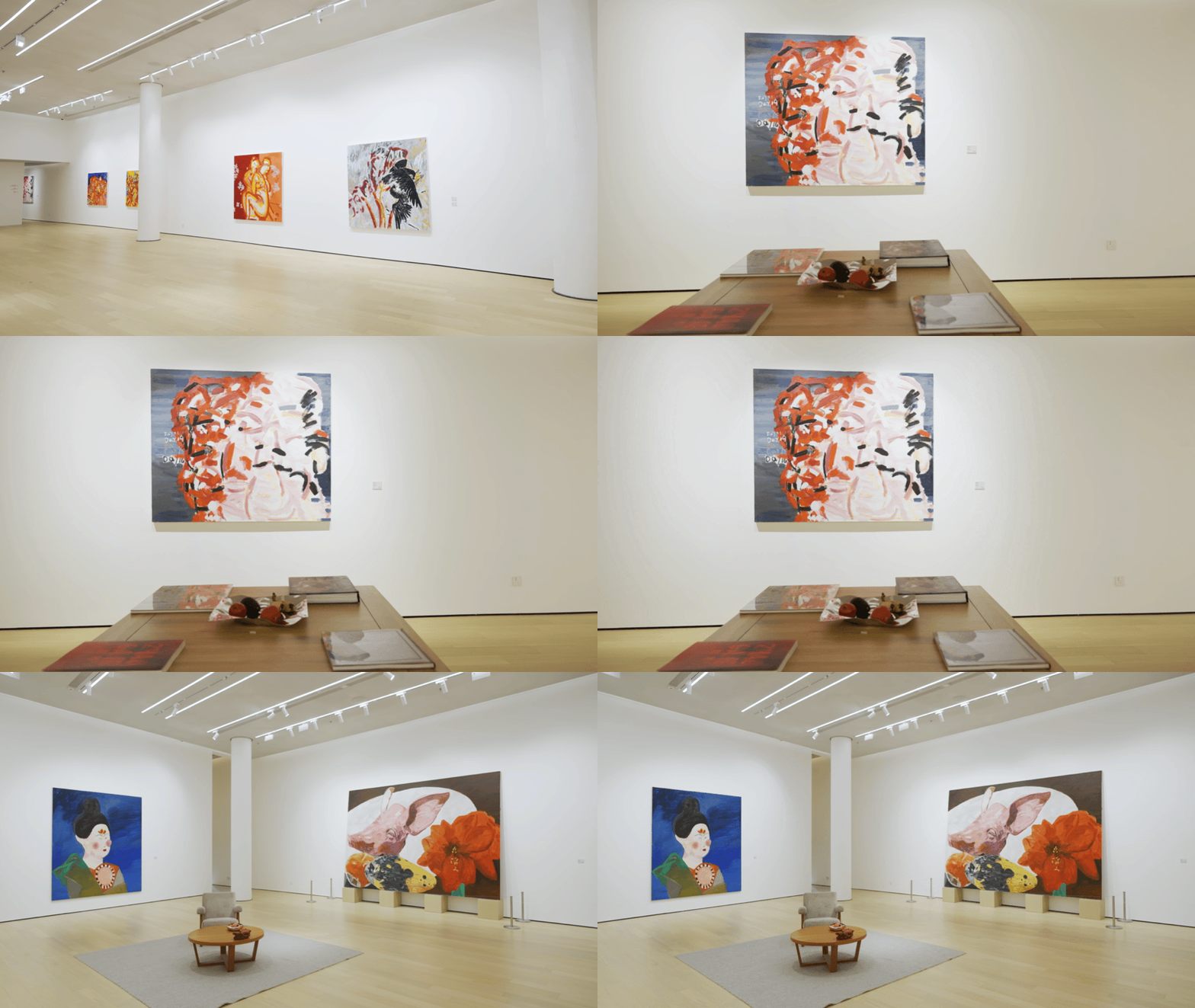
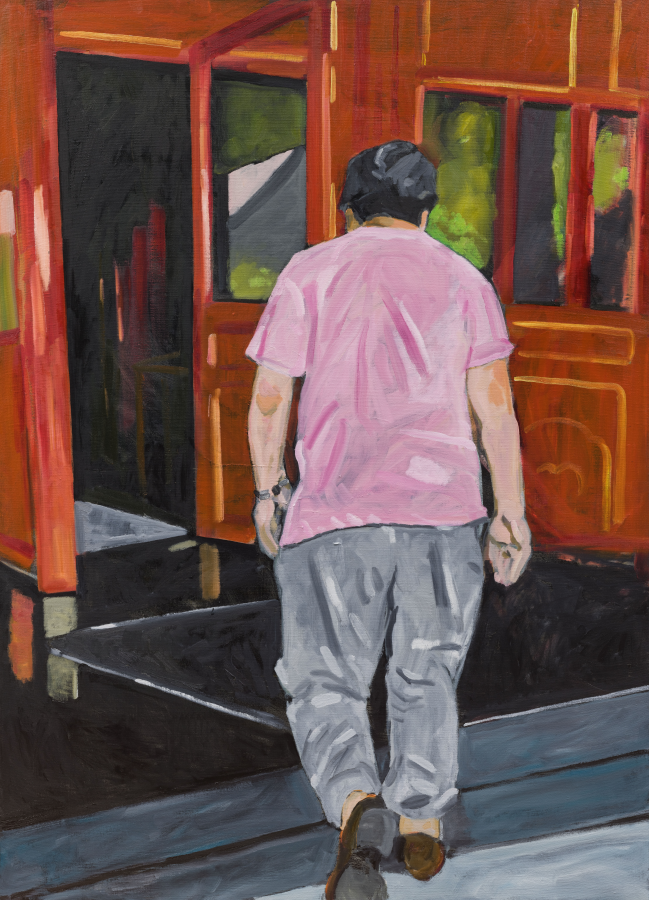
At eighteen he joined the Stars Art Group; later he studied in the Netherlands, signed with a major New York gallery, walked away from painting, spent eight years on Wall Street, and, after taking up the brush again, returned to China in 2006 after twenty-two years in the United States......
By / Xirui Huang · 11 min read
How does Zhao Gang bring cooking and a life across places into painting?
In Xirui Huang’s 2023 Sanya interview, Zhao Gang begins with the market and kitchen, explaining his recurring interest in food and everyday objects. Small paintings in Vacation connect with his time in Sanya in 2020, while larger works extend his exploration of figures, still life and landscape. A life across different cities, including stopping and returning to painting, informs an approach in which work, rest and making art remain intertwined.
Zhao Gang's life story has something of the legendary about it. At eighteen, he joined the "Stars Art Group," then went to study in the Netherlands and signed with a major New York gallery. After becoming famous young, he abruptly gave up painting of his own accord and spent eight years on Wall Street as a "Wolf of Wall Street." In 2006, not long after taking up the brush again, he returned to China from the United States, where he had lived for twenty-two years. Yet Zhao remained restlessly on the move, painting in Beijing, Sanya, and Taipei.
Artist | Zhao Gang: Ideas, Not Ideology
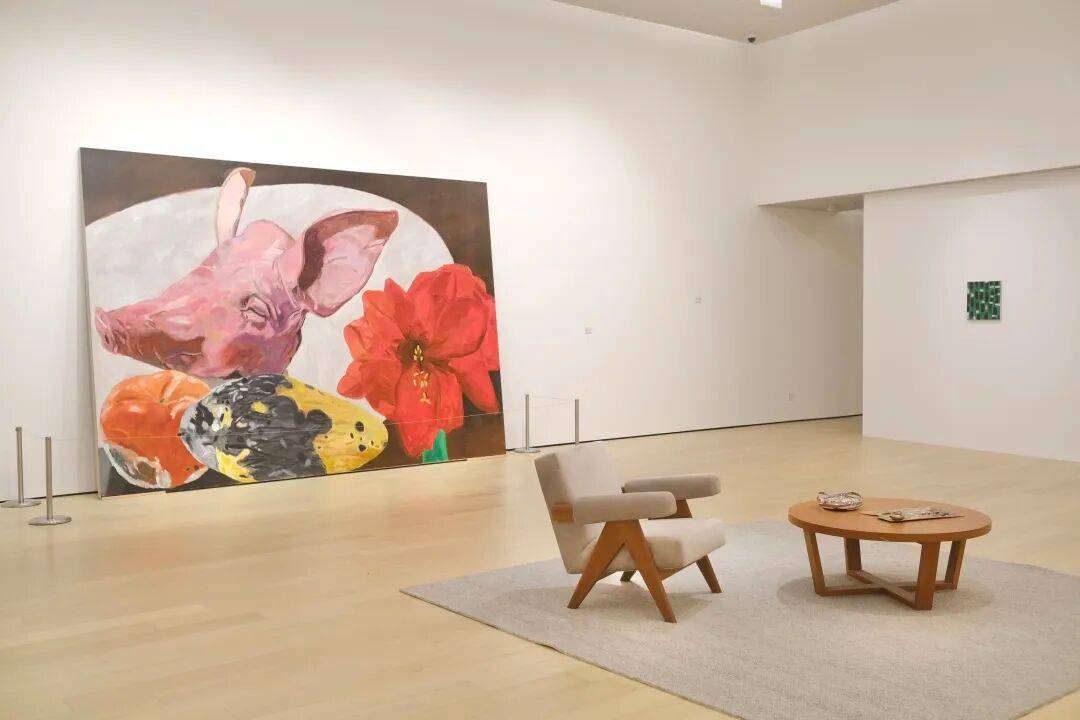
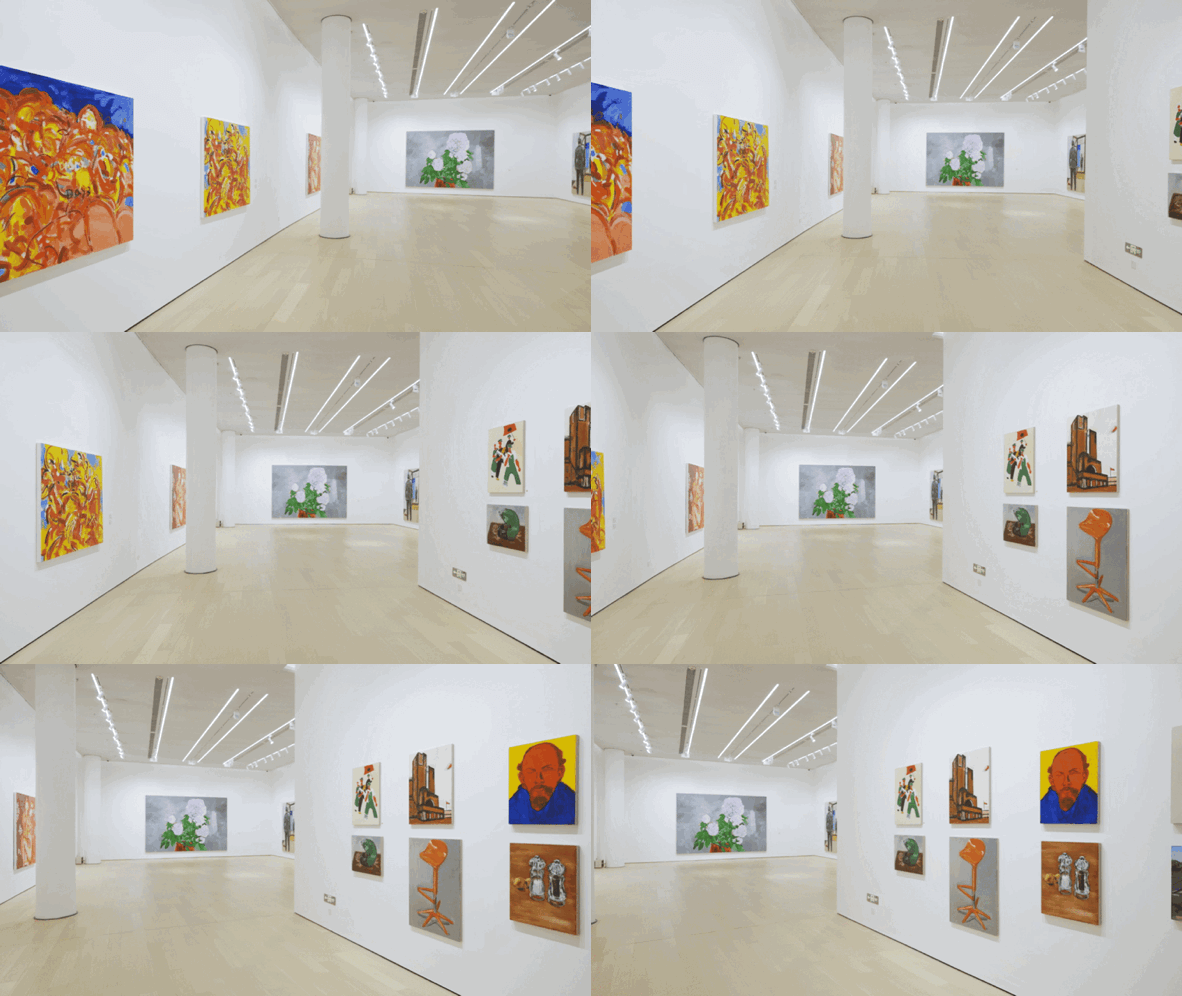
He paints flowers and fruit larger than life, as well as self-portraits, figures in historical dress, and all kinds of still lifes. More recently, he has begun trying abstraction. In a recent interview with Yit Art, the occasion was Zhao Gang: Holiday, his new exhibition at Xinghe Art Center (Sanya), in 2023. The show brought together eleven small paintings Zhao made while vacationing in Sanya in 2020, along with fourteen groups of his monumental works.
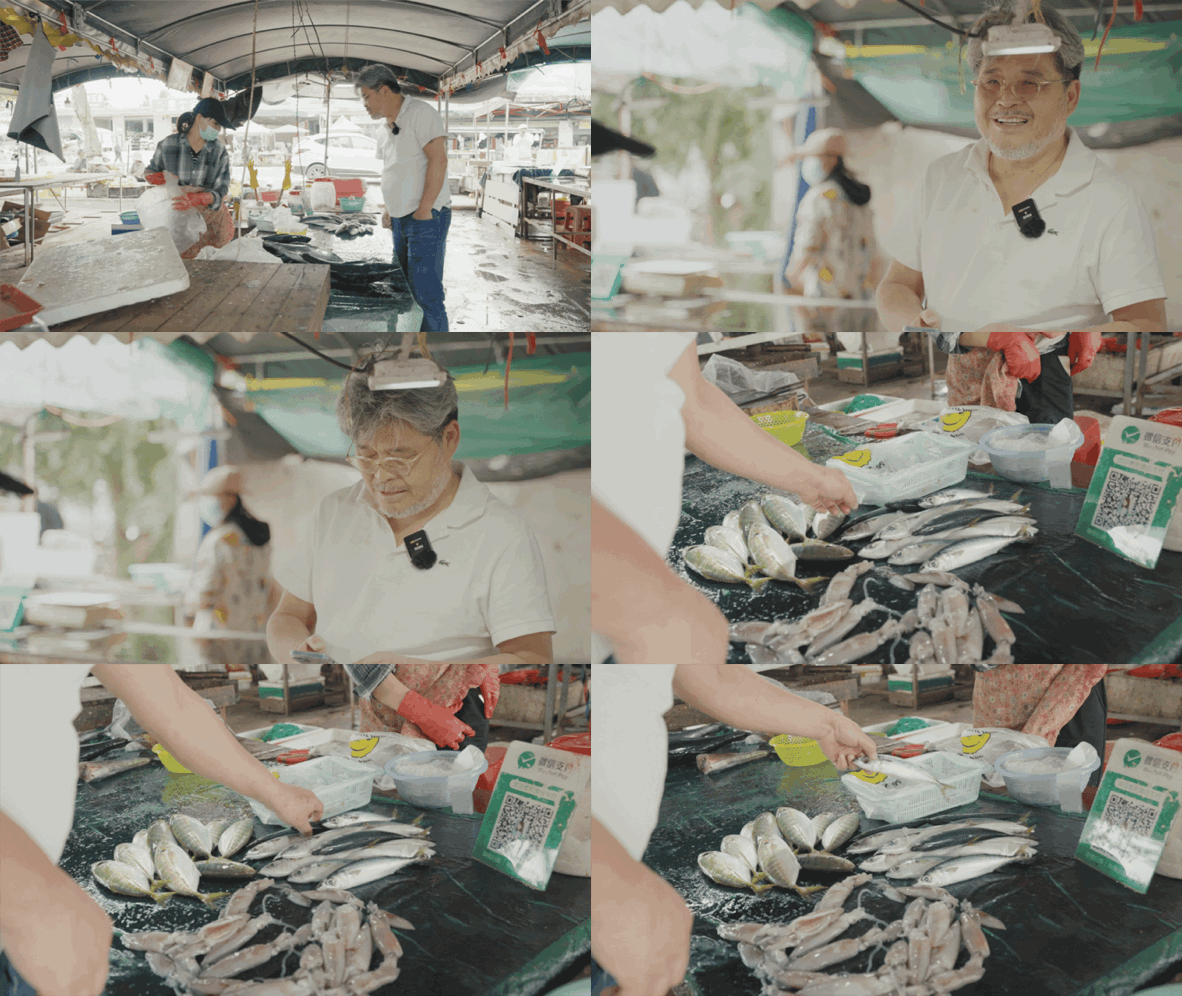
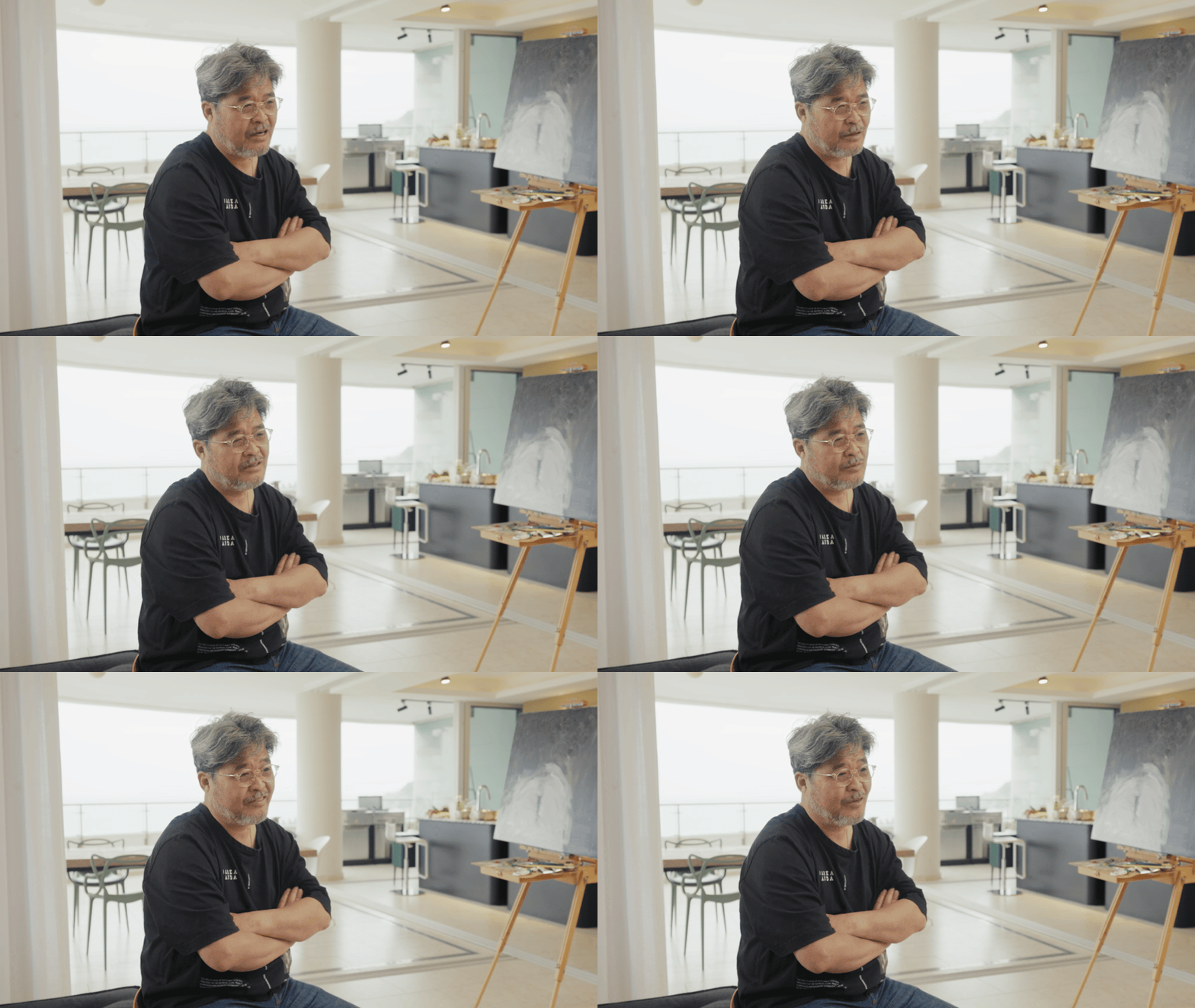
"I am a person with ideas, but without thought," the artist said of himself. Early in the exhibition's run, we went to Sanya and followed Zhao through a day that included buying groceries, going home to cook, painting, drinking, and talking expansively with friends. Amid the everyday warmth of his routine, we spoke about the strange turns of his life and his art. The first place we met Teacher Zhao was not the gallery or the studio but an utterly ordinary local market in Sanya, where he was buying fish.
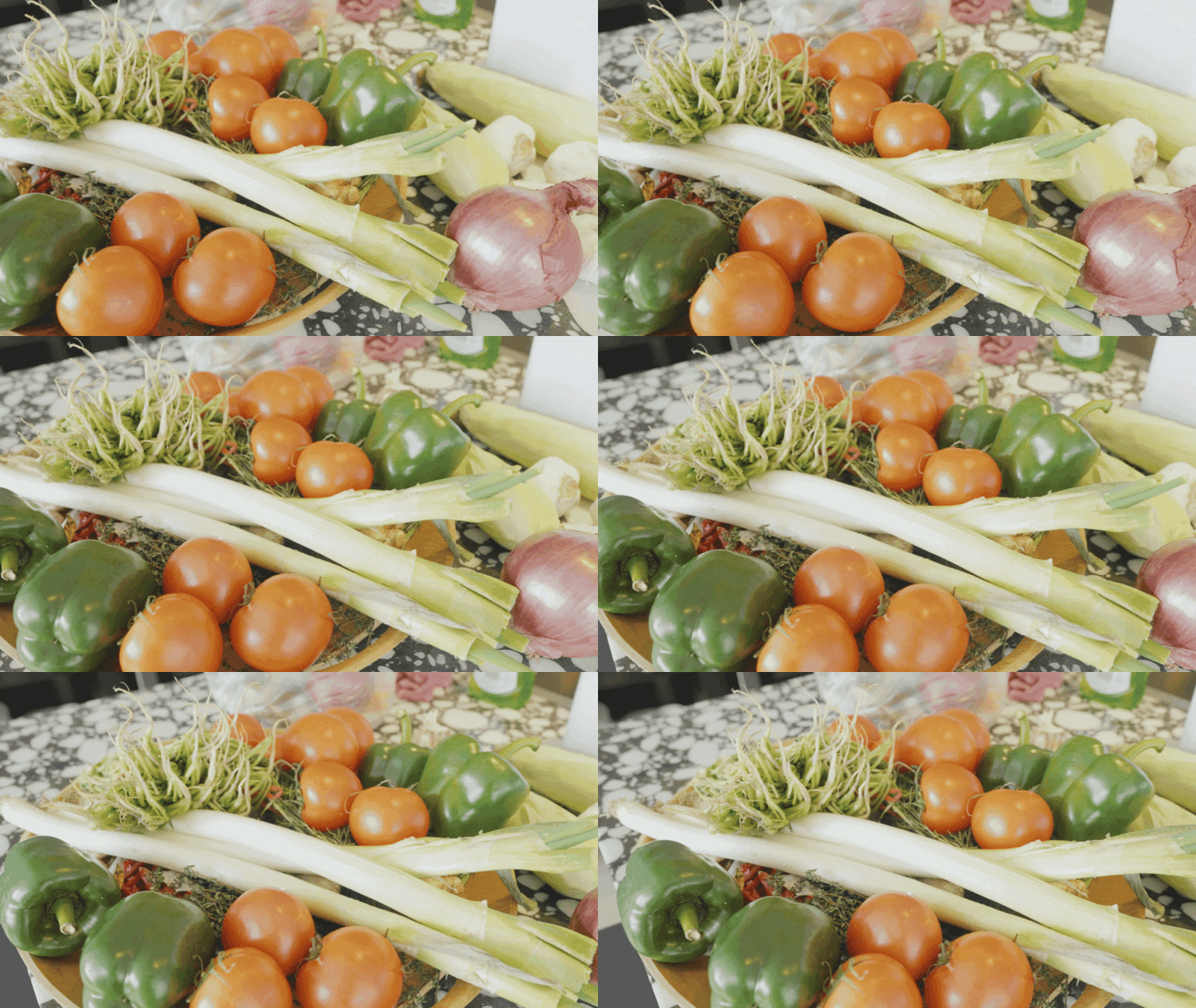
Watching him chat with vendors as he bought fish, vegetables, and meat, carrying home his ingredients with a smile of deep worldly satisfaction, it was hard to imagine that his actual profession was artist. The first thing he did when he got home was not paint but cook. "Buying groceries and cooking may seem like the sort of thing many people don't want to do, but I am very willing to do it. Cooking is really a way of escaping the cruel things in reality.
SECTION 01 | Taking two years to create a "holiday" in the cloud
Sometimes real life is too frightening. The kitchen may be the safest place. You can carve up that piece of meat any way you like, right? But when you return to reality, you are a piece of meat yourself, and others can carve you up however they like." As he spoke, he brought the knife down and cut into a piece of fish.
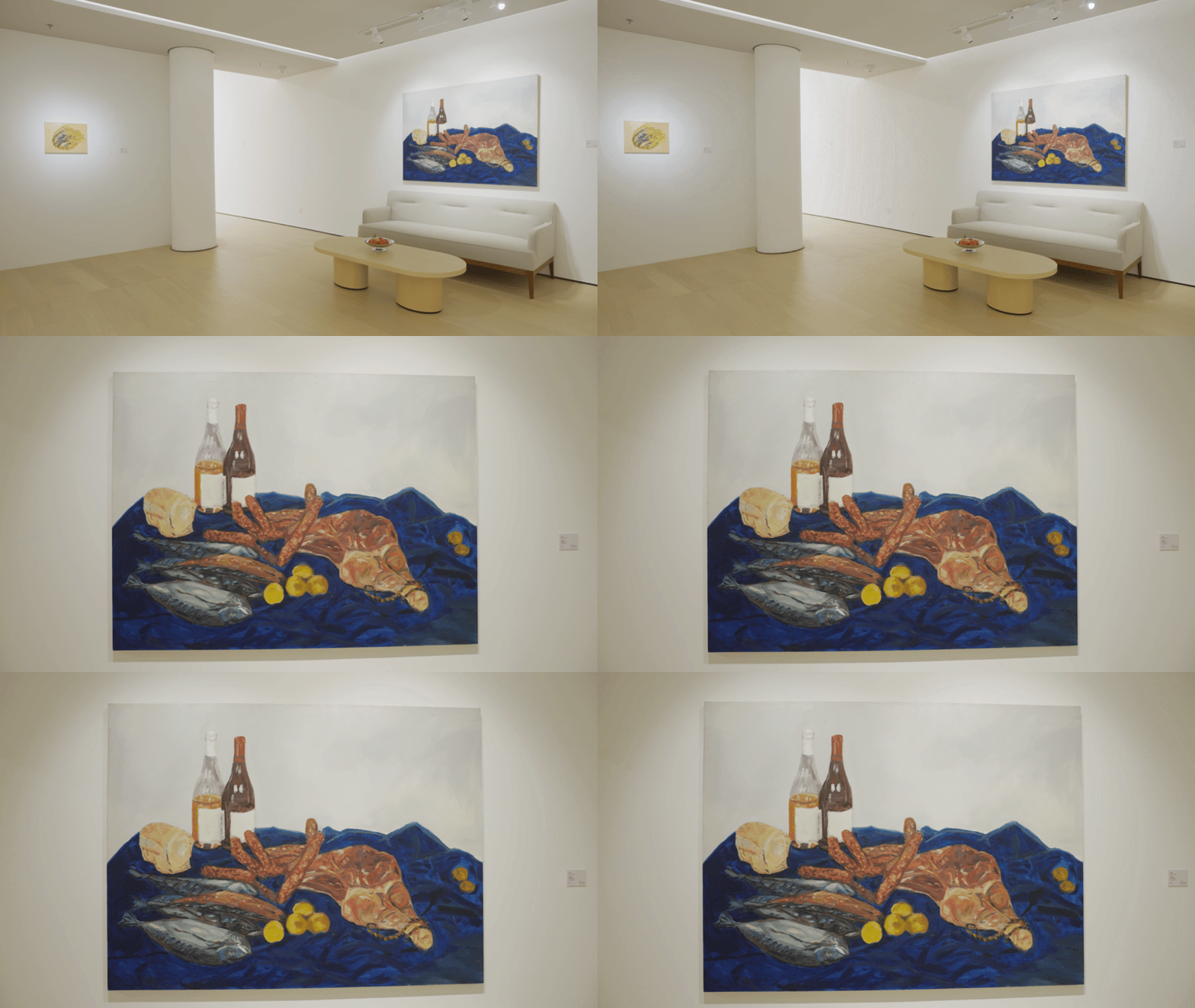
The relationship between food and people in his work is inseparable from his love of cooking. Enormous slabs of cured meat, pig heads, wine, fish, and bread appear in his paintings looking, at first glance, like nothing more than "food." Yet the ingredients he paints may well be the same ones he uses in his own kitchen. Zhao Gang: Holiday, Xinghe Art Center (Sanya), 2023; Zhao Gang, Dried Goods, 2020; Zhao Gang, Beijing Autumn No. 5, 2021.
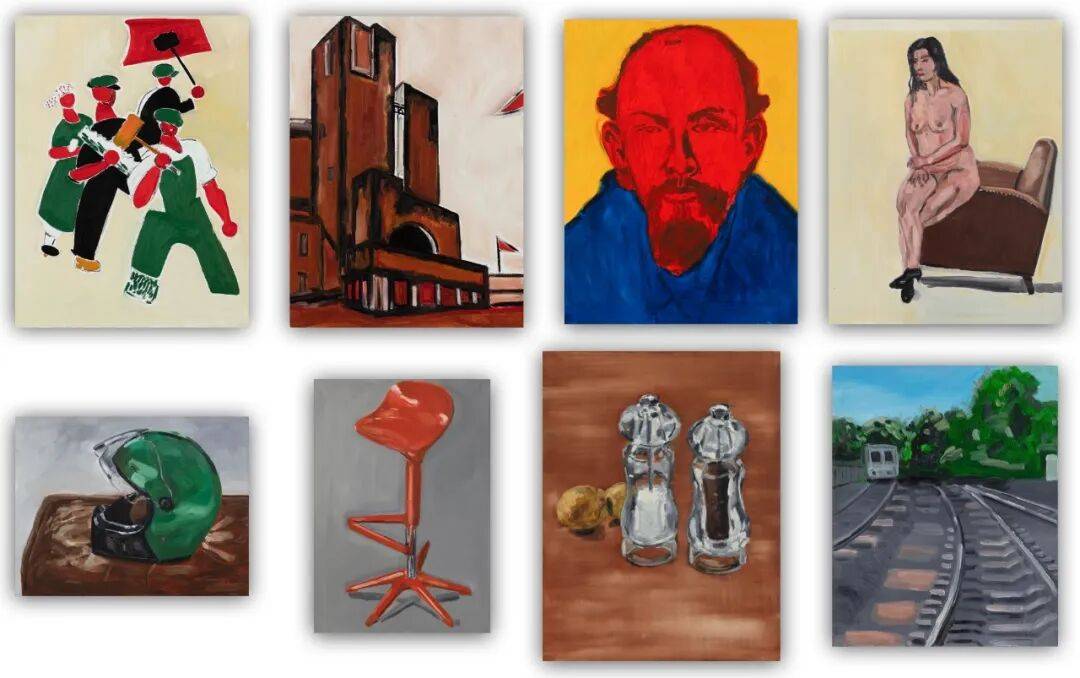
Zhao says he has many Beijing dishes he makes especially well, and authentically: "I can make sauce-braised pork hock, braised mutton, braised meatballs, but because I may have lived abroad for so long, I still tend to prefer Western food sometimes." Nursing Home No. 1, 130 x 180 cm, oil on canvas, 2022; Zhao Gang, Chapter Three from the Chinese Eastern Railway series, 2020; Zhao Gang: Holiday, Xinghe Art Center (Sanya), 2023. Speaking of how this exhibition came about, Zhao was plainly moved.
"This exhibition was nearly two years in the making, and for various reasons it kept being delayed until now." Why call it Holiday? Because Zhao likes to take a break after working for a stretch.
"Simply put, I work hard so I can rest." But "holiday" has a second meaning for Zhao as well: he finds the state of being on holiday interesting in itself. Many conspiracies are hatched on holiday, he said; many people like to think on holiday, and he is no exception. Zhao Gang, Lingshui Landscape series, 2021; Zhao Gang: Holiday, Xinghe Art Center (Sanya), 2023. Staging the exhibition in Sanya also had to do with the place's particular significance for him.
Joking with us, Zhao said that more than a decade ago he had been talked into buying this apartment in Lingshui, Hainan. At the time, he said, having an apartment by the sea felt almost like realizing his Chinese dream.
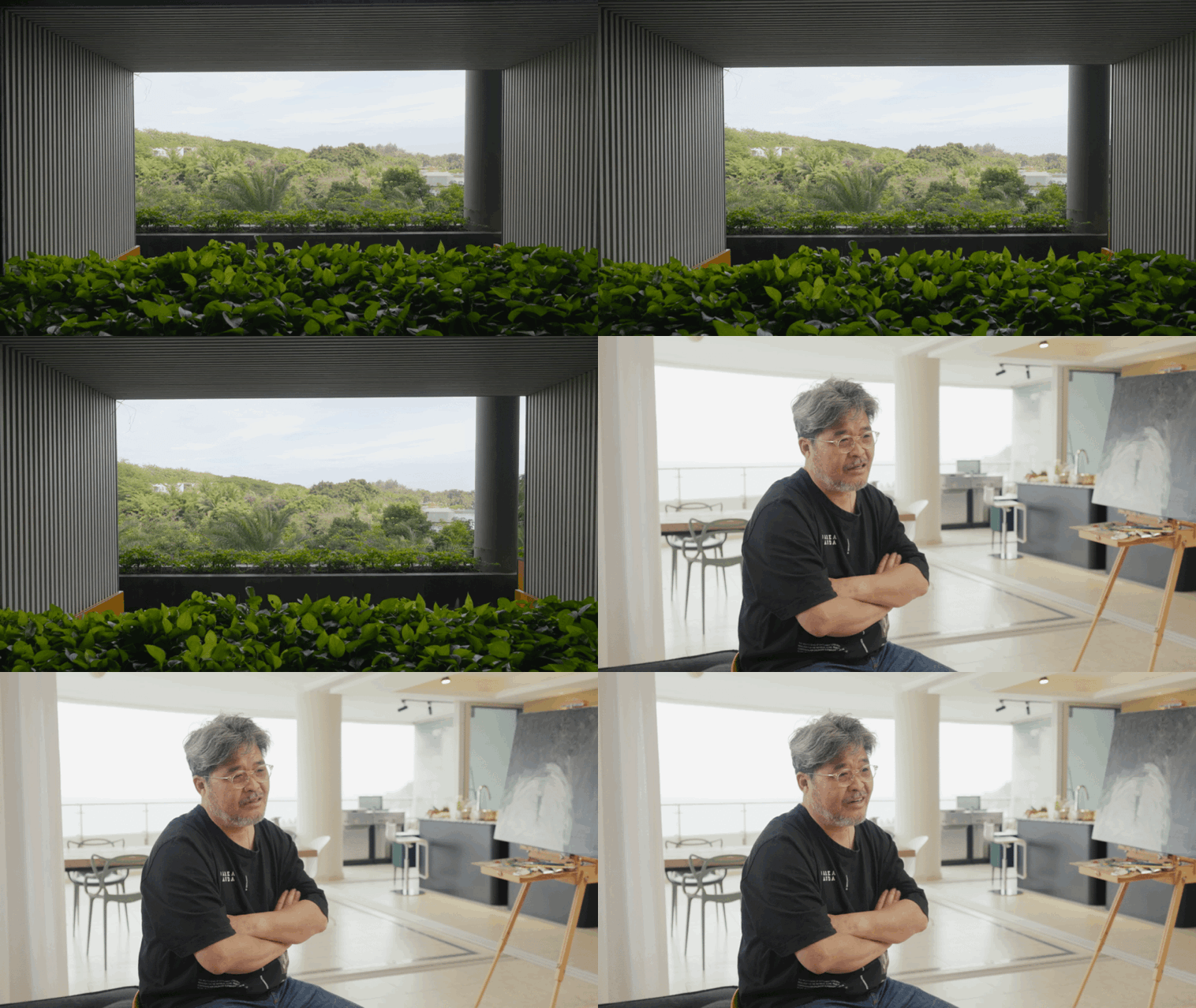
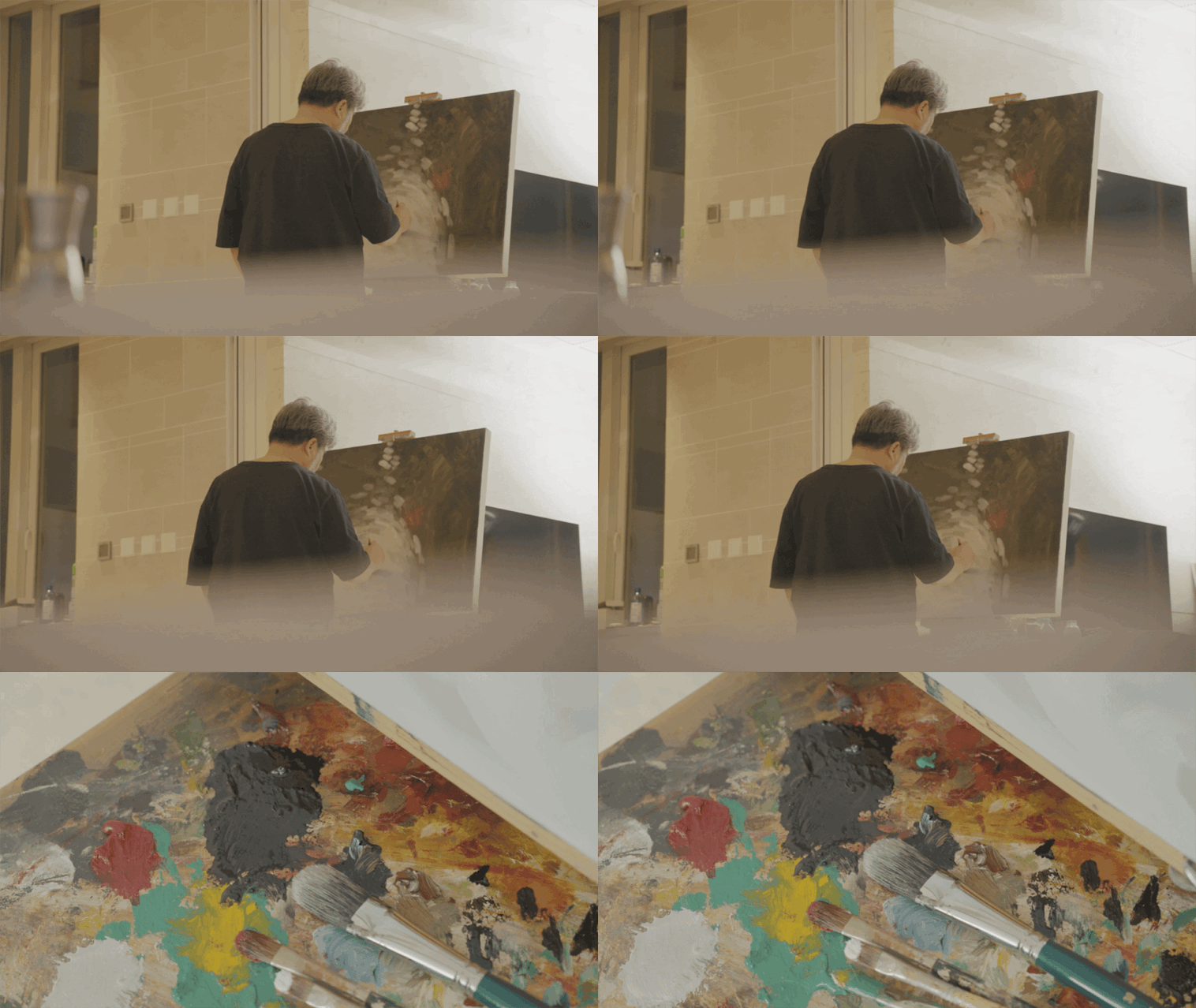
"For me, this is a particularly interesting place. It's completely unfamiliar. I don't know anyone. It's a little lonely, and every day there's nothing much to do, so I think about a lot of things. Then I paint. Other than painting, there's nothing else to do. I always keep the canvas beside me, and when nothing's going on, I add a few strokes," Zhao said. In an interview with Yit Art, and while painting in his apartment in Sanya, he said that after waking at eight every morning, the first thing he does is make three cups of coffee. "What I like best is MOCA without milk."
That, Zhao said, is how the day begins. Then he drinks his coffee and thinks about how to pass the time.
"While I'm thinking, suddenly it's almost 12, and I have to go to the market to buy something to cook." Zhao's habit of returning every few sentences to food made all of us laugh. Zhao painting; Zhao Gang, Lingshui Landscape No. 1, 2021; Zhao Gang, Lingshui Landscape No. 8, 2021; Zhao Gang, Lingshui Landscape No. 5, 2021; Zhao Gang, Birdman, 2023. In 2020, he painted eleven small oils here.
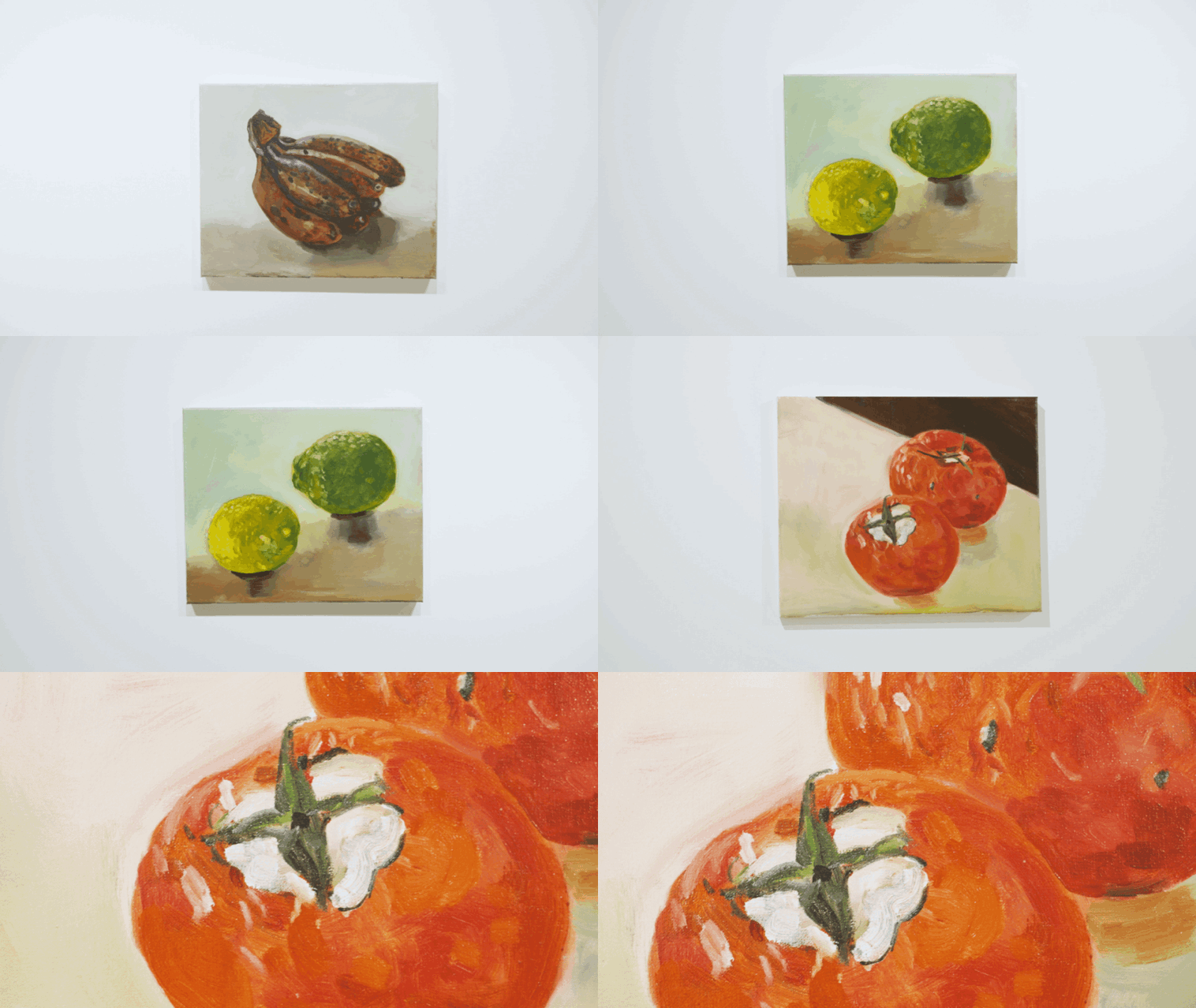
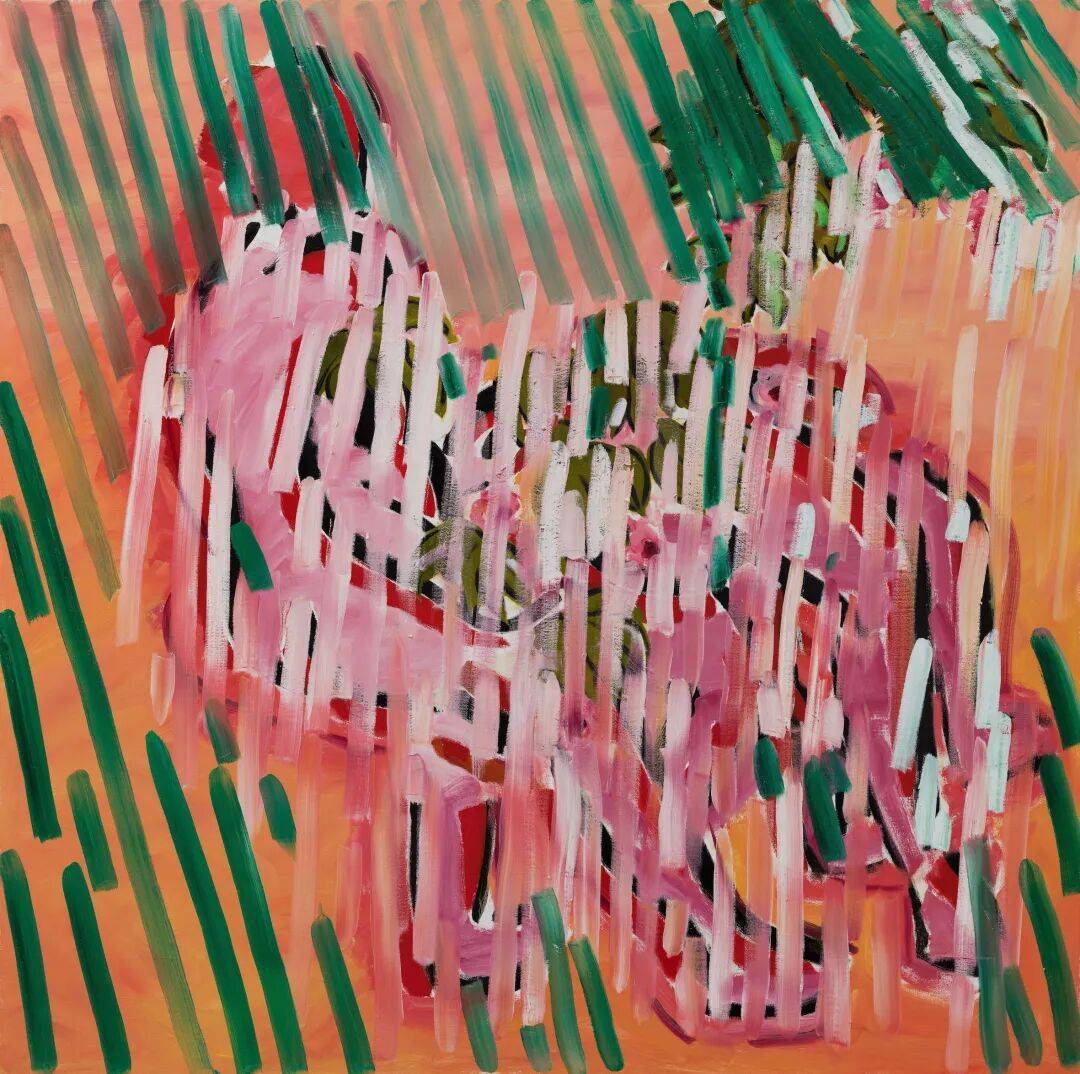
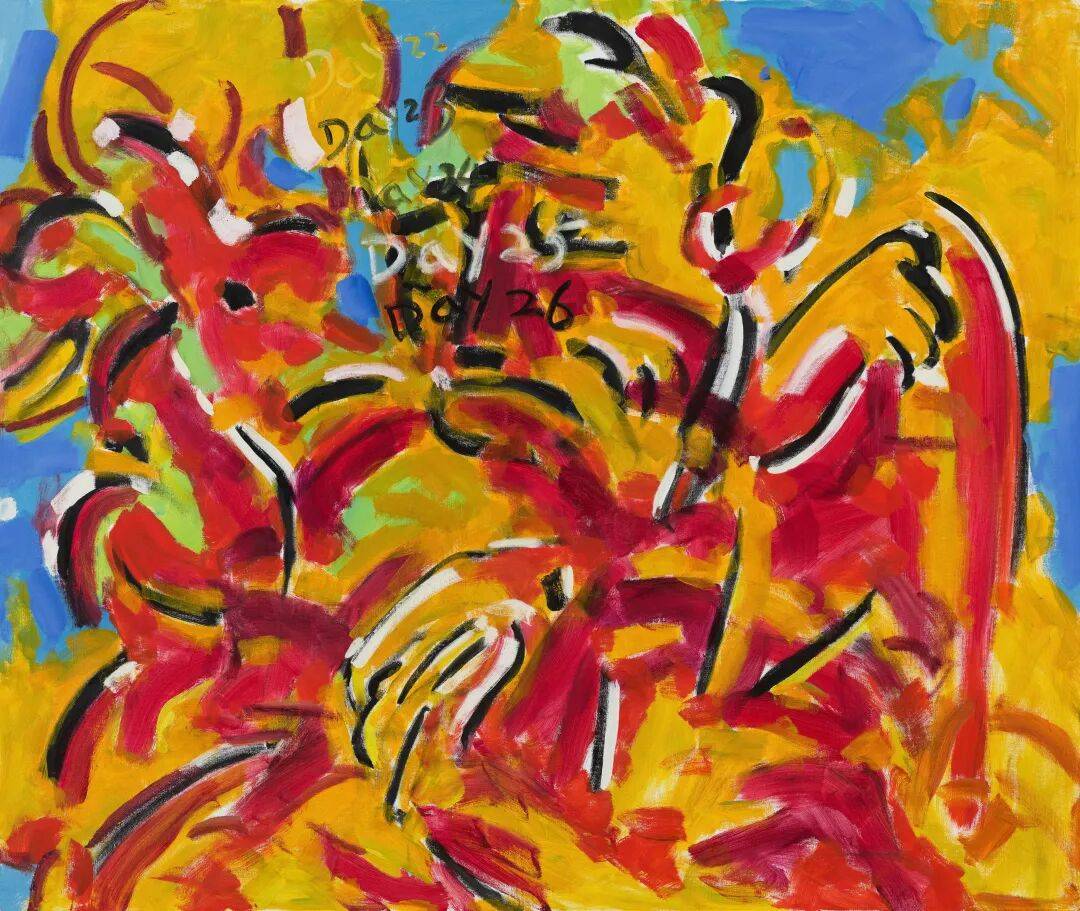
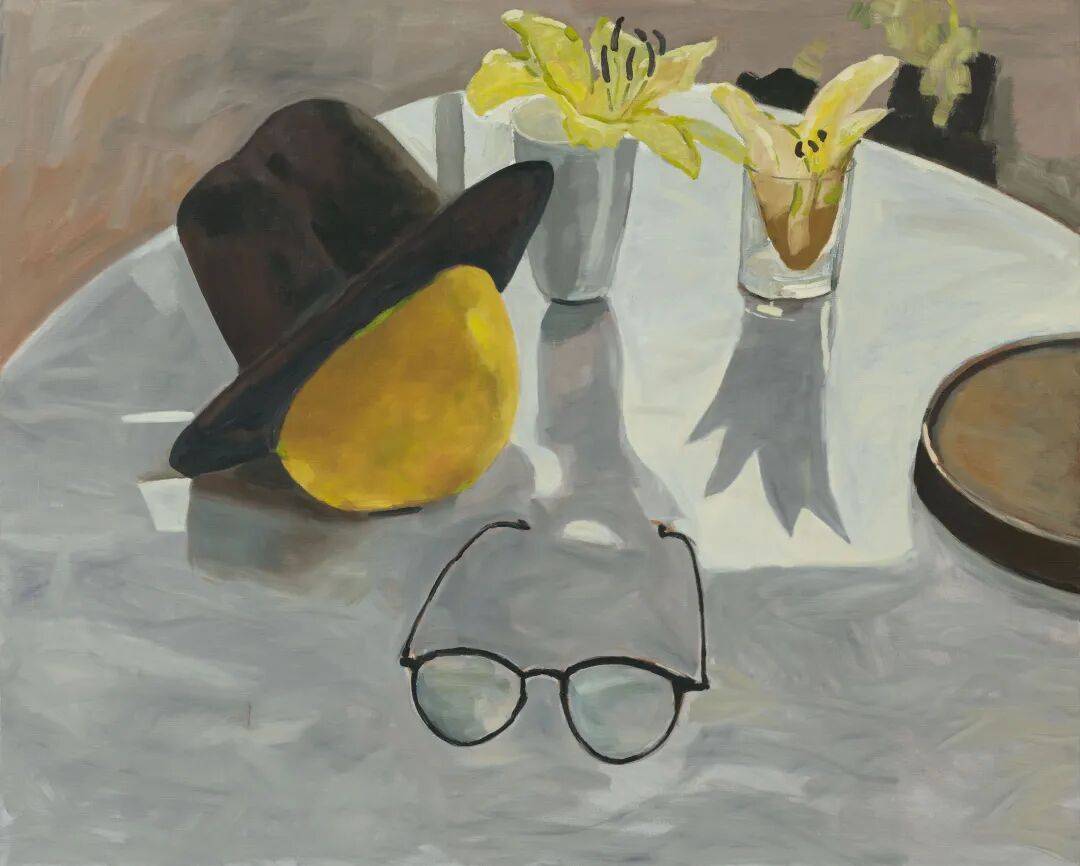
At first, he only wanted to poke fun at art history. Bored, he painted the most boring things he could reach at hand and see right in front of him: Buddha's hand citron, lemons, bananas, tomatoes, pomelos, and lunchboxes. As he kept going, he began painting abstract works, and this process of "learning abstraction" has continued up to the present. Zhao Gang, Holiday No. 8, 2022; Zhao Gang, Holiday No. 1, 2022; Zhao Gang, Holiday No. 2, 2022. "One reason Lingshui is important to me is that I tried some abstract works here that were unlike anything I had done before."
That, Zhao said, was why he began numbering his abstract works Day 1, Day 2, Day 3, and so on, like a child learning to walk, relearning how to paint. He feels he has never really understood abstraction, and that painting is a gradual process of exploration and practice. Compared with painting other things, the process feels more mechanical to him.
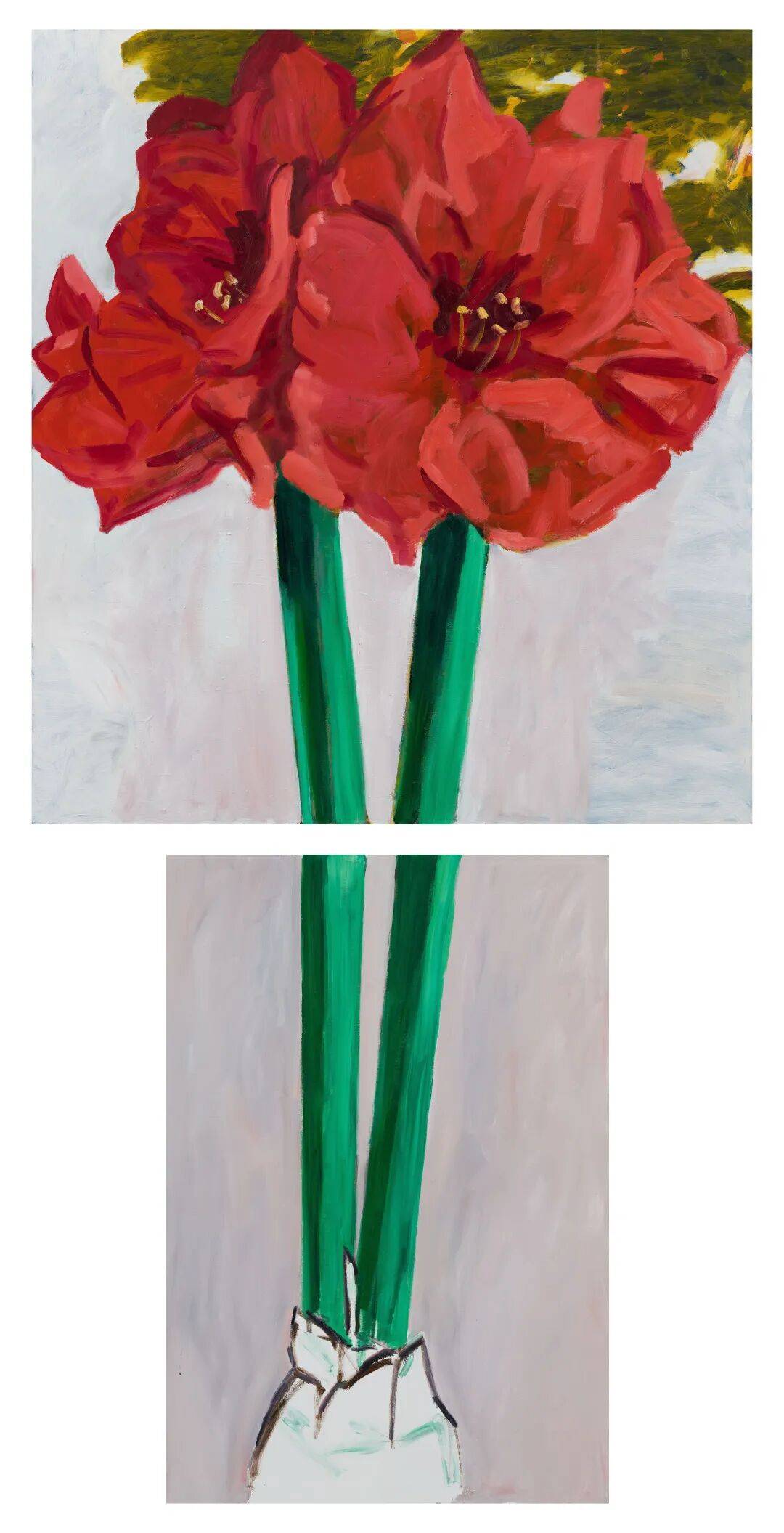
"For someone like me, already past sixty, the things I think about can sometimes become simpler. Painting abstraction makes it easier for me to go deeper, as if I were voluntarily entering a state of dementia," he said with a laugh. Zhao Gang, Beijing Autumn No. 4, 2021; Zhao Gang, Dream of Wealth, 2021-2022; Zhao Gang, Great Love, 2021. In the exhibition, we noticed that the artist seemed especially fond of rotten fruit, some of it already moldy, yet he still wanted to paint it.
What was striking was that the peculiar texture of the rotting fruit he painted looked uncannily like the sea, giving ordinary still lifes an unexpected gravity. He does not paint the ocean while living by the shore in Lingshui, yet somehow viewers discover the sea in rotten fruit. Whether this is coincidence or intention on the artist's part, it kept us lingering before the paintings.
"People and food have an interactive relationship, a relationship of dependence. When you watch fruit rot, think about whether you are rotting too." Zhao delivered the line so abruptly that everyone present burst out laughing again.
Zhao Gang: Holiday, Xinghe Art Center (Sanya), 2023; Zhao Gang, Summer Night, 2021; Zhao Gang, Holiday No. 9, 2022. Many of the works on view are exceptionally large: pomegranate blossoms taller than a person, avocados, lemons, and oranges bigger than a body, giving viewers the feeling that reality itself has become suspect.
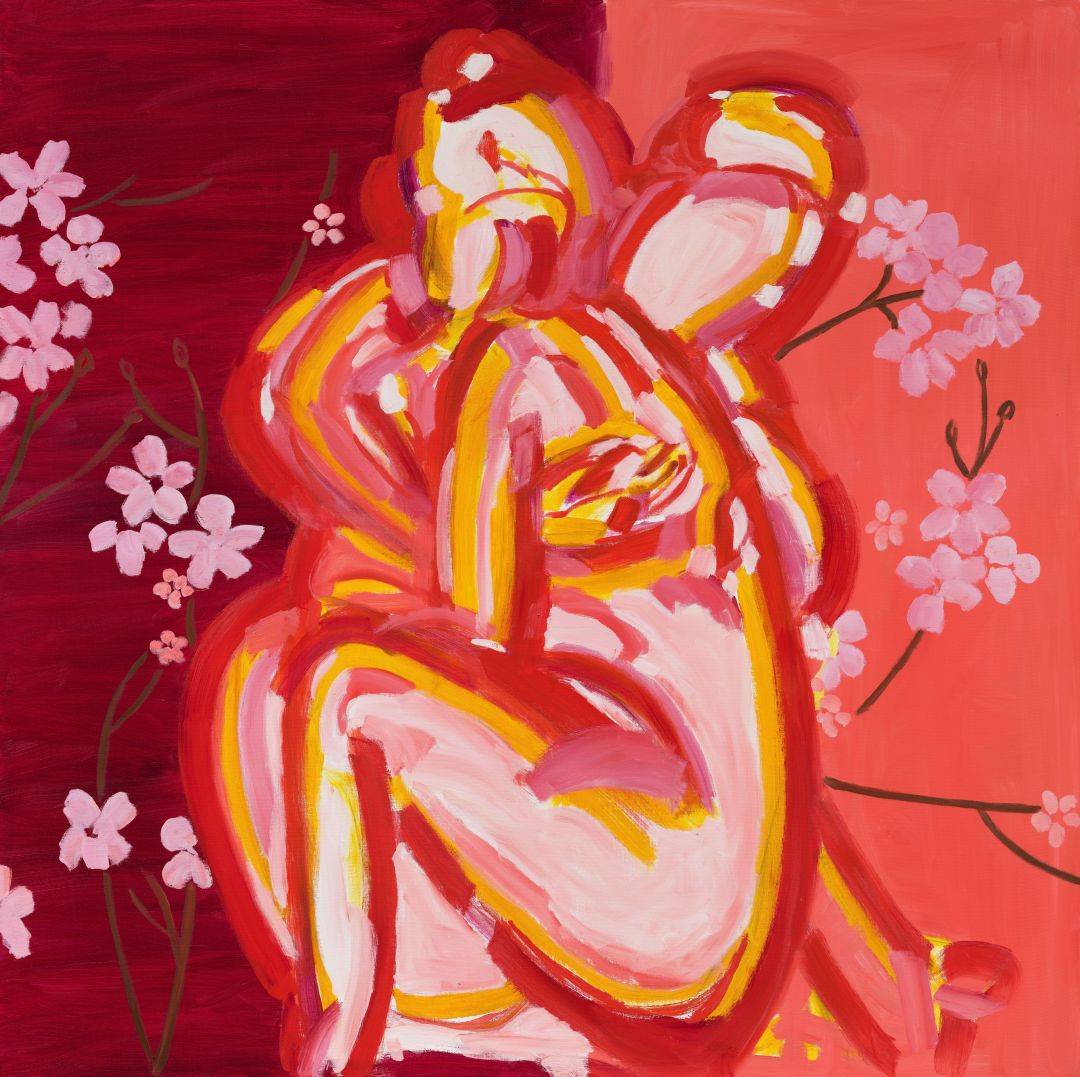
"Painting on a large scale is actually very difficult, because it goes beyond your knowledge and experience. It isn't just a matter of enlarging something. You also have to paint that aura, and you have to master the emotion. In Summer Night, I turned a small plant into something larger than a person. A sudden change in scale may bring about a kind of human alienation." Zhao Gang, Holiday No. 7, 2022. The exhibition also includes a painting of two people locked tightly in an embrace, abstract, red, and intense.
Zhao said that this painting had a very special meaning for him. As for why it was special, he just smiled and said nothing. An artist, after all, presumably needs to leave some space for himself. The Zhao Gang speaking with us now is casual, calm, self-mocking, and sharply funny; it is hard to imagine how unruly he was when he was young. Born in Beijing in the 1960s, Zhao was, from childhood, a "promising seedling," the only child recommended by Haidian District to study painting at the Children's Palace. He kept at it until the splendid age of eighteen.
He took part in the second Stars Art Exhibition and was also one of the earliest members of the "Stars Art Group," founded at the home of the artist Huang Rui. In 1983, when Zhao was twenty-one in the Netherlands, he chose to study abroad, first at the State Academy of Fine Arts in Maastricht, one of those top European art schools so many people dream of attending.
"I was very young when I went abroad. Everyone in the Netherlands was studying science or engineering; I was the only one painting," Zhao said. But because he was always doing life drawing and found it dull, he transferred after just one year to Vassar in New York. In 1984, Zhao Gang was in his studio at Vassar. As a top liberal-arts college close to New York's SoHo, Vassar drew unusual outside attention to its students.
Without question, Zhao became the young prodigy who was noticed almost at once. Famous at an early age, on a full scholarship, he signed with a fairly substantial gallery, and even the college president bought his paintings.
"Early fame is especially dangerous. It may look as though you've accomplished a great deal, but the real you may actually be getting closer and closer to failure." Zhao said that his vanity swelled to the point that he fell into depression, then ran off to Europe and lost all desire to paint. In 1986, Zhao Gang was photographed at Vassar with Tom Canellakis. "New York was complicated and brilliant then, but in fact it was also cruel. I think young people always have a kind of mission tied to their homeland. You feel that you represent Chinese people, so you must become one of the highest-end, most mainstream artists. A lot of those troubles are self-generated when you're young."
Zhao said that at the time he regarded his gallery as too commercial, and because he had not entered the truly mainstream artistic circles of New York, his pride left him always feeling like a "minority." He did not want to spend his whole life being carried along by commerce, so he thought it best to close that chapter and stop painting. In 1985, Zhao Gang was in his Vassar studio; Zhao Gang, Becoming a Thinker, 1989. "But the me of today seems more commercial than I was thirty years ago, which is to say that in the heat of youth you really do things that only that age could produce."
That, Zhao said, was his own joke on himself. After giving up painting completely, he found a job at a small private investment bank on Wall Street and stayed for six years. He also did many other jobs entirely unrelated to painting or art.
"I really just wanted to escape the profession of artist. I'd been painting for too long then, and I no longer believed in it myself." Zhao Gang, Palace, 1996-1997, a work from his Bard College period; Zhao Gang, Untitled No. 4, 1998, also from his Bard College period. After drifting like this for ten years, taking up the brush again seems, in Zhao's telling, to have been a decision made in the time it takes to snap one's fingers.
Using reels of experimental film he had made as an undergraduate, he applied to Bard College in the United States and got in at once. For three full years, he took classes alongside students in creative writing, film, painting, sculpture, music, and dance. Each year, in a huge space at Bard, there was a collective "critique assembly" for the work of all the students.
"All the professors, visiting scholars, and students would discuss the work you had installed there for more than twenty minutes. It was like having your skin peeled off. Extremely cruel," the artist said. Looking back on his time at Bard, Zhao said frankly that he benefited enormously. It was also then that he truly came into contact with many mainstream Western artists, curators, and literary and cultural figures. From their comments on his work, he seems to have found some kind of lacerating revelation.
Zhao Gang: Nothing Happened, Long Museum (Chongqing), 2022; Zhao Gang, Master, 2020; Zhao Gang, The Returner, 2022. In the early 2000s, Chinese contemporary art was entering a dazzling moment of emergence. Centered on Beijing, countless young artists with a "Chinese art dream" gathered there, and the entire artistic environment was even more active than New York. Artists dared to speak, paint, and think, opening a "red" breach in the international art market.
SECTION 02 | 30 years later, I am more commercial than before
Zhao said that his decision to return to China was not the result of any long deliberation. Egged on by his artist friend Liu Wei, he slapped his thigh, made up his mind, and hazily left the New York where he had lived for twenty-two years.
"It was as if, under the influence of alcohol, I just muddleheadedly came back. Back then it wasn't like now. I was drinking every day, and there were fewer sober moments," he said, teasing himself with a laugh. Zhao Gang, Diplomat, 2022. After returning, he discovered that compared with the United States, problems of identity were even more severe: "I was even more like a 'minority.' Sometimes people seemed to understand what I said, and later I found out they didn't understand my meaning at all, or they thought what I said contained some other implication. Those were habits I may have brought back from Western culture."
That, Zhao said, was the social and linguistic dislocation he lived with. In daily life, too, he remained perpetually ill at ease amid the split between Chinese and Western culture. He still ate an American breakfast of fried bacon and eggs, and there was always the possibility that the next moment something would happen to enrage him, even if all he had done was go out to buy groceries.
"What I can least get used to is warm water in restaurants with a slice of lemon in it. The smell is awful." As he said it, the artist wrinkled his nose.
Zhao Gang: Holiday, Xinghe Art Center (Sanya), 2023. In his art, Zhao could not escape this same split identity. He loves finding inspiration in Chinese classical painting, then presenting the symbolic stories behind those images through the medium of oil painting. The result is a sense of contradiction produced almost by accident. The figures and patterns are clearly from ancient China, and yet they seem to have little to do with the East at all.
"My paintings can all be called narrative paintings. Whether they are figures in historical dress, or self-portraits, or all kinds of still lifes, each one tells an unspeakable story." When Zhao said this, his smile turned faintly, oddly mysterious. Zhao Gang, Beauty, 2016-2022; Zhao Gang, Confucius, 2022. "It isn't that I deliberately want to paint Chinese culture with Western technique. I simply like it.
How many writers, artists, and great idealists in history have hoped to fuse Chinese and Western culture? How could that be possible? I believe East and West can never truly be combined." Faced with the differences and fractures between the two, Zhao now accepts them calmly. After returning to China, he remained no less restless. He says he has an avoidant personality and simply cannot stay in one place for very long; after a while, he always wants to move somewhere else, to change the scenery and his mood.
Now there are at least five places where he can stay and paint quietly, from north to south: Beijing, Sanya, and Taipei. He moves as inclination and emotion dictate. Zhao drinking at home: "I read fewer and fewer books now, though I do still like looking at cookbooks. When I was younger and in school, I studied philosophy, psychology, and history. Now I've completely forgotten it all," Zhao said, laughing at himself.
Zhao Gang, Restless After Sixty
"I most like to drink in the kitchen. I'm afraid of drinking too much, so I set myself a fixed time and don't start until after 5:30 p.m. So every day I look forward to 5:30." Zhao said that even costume dramas, so often scorned by others, still hold his attention perfectly well.
"The more you watch these things, the worse they get, but I can't do without them, because I watch them lying in bed, and they help me sleep very well." Zhao Gang, Birdsong, 2023; Zhao Gang, Untitled, 1982. "You could say my life is getting more and more boring, or simpler and simpler," Zhao said. But he appears to take deep pleasure in it. For him, art is like eating and drinking water: the meaning of life, the necessary continuation of existence, the way he "keeps himself going."
At the end of the interview, when the conversation turned to how he sustains an unbroken flow of creative inspiration, Zhao answered in a way that seemed to bring back the brilliant young prodigy he had once been: "People always talk about genius. Shouldn't you ask God about that?"