He Films Women Workers, the Unemployed, and Temporary Laborers—Recording the Lives Around Him
Chen Chieh-jen, an artist whose practice centers on moving-image works, was born in 1960 to an ordinary family in Taoyuan, Taiwan. Now internationally acclaimed, he did not have the chance to exhibit formally until he was thirty-six......
By / Xirui Huang · 10 min read
Why does Chen Chieh-jen keep filming workers, unemployed people and marginalised communities?
In Xirui Huang’s 2023 Beijing interview, Chen Chieh-jen connects these subjects with his family, upbringing and the lives of people around him. Participants contribute lived experience rather than simply illustrating a social issue. He often works from a brief outline with non-professional performers, leaving room for what happens during filming. The resulting moving-image works consider labour, institutional constraints and how people might rebuild a sense of agency within them.
Chen Chieh-jen, an artist whose practice centers on moving-image works, was born in 1960 to an ordinary family in Taoyuan, Taiwan. Now internationally acclaimed, he did not have the chance to exhibit formally until he was thirty-six.
Artist | Chen Chieh-jen: Becoming a "Ghost in the Flesh"
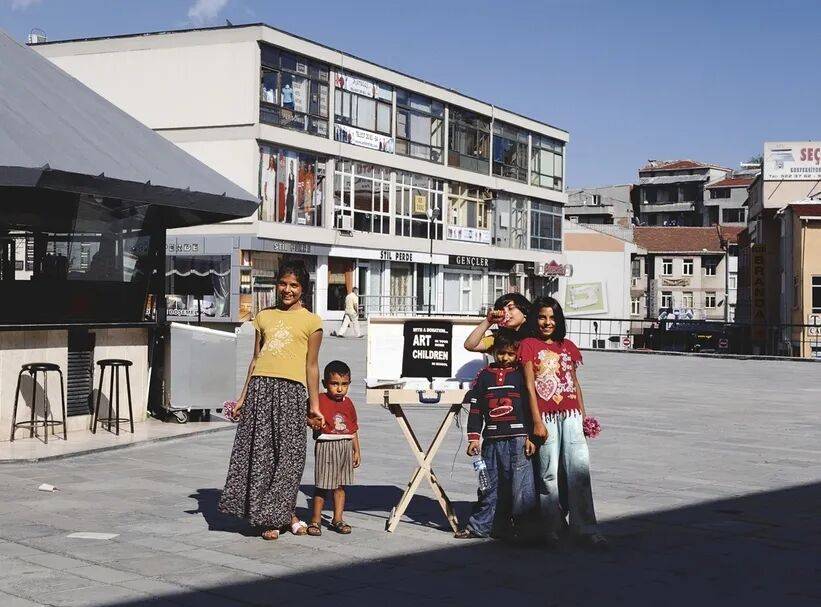
“You ask why I film women workers, unemployed workers, temporary laborers, immigrants, and other marginalized groups. It’s because I’m part of them. My background and family environment make me especially attuned to them.” Chen Chieh-jen, Factory (film still), 2003. Chen Chieh-jen, The Hollow Land (film still), 2017. Today, Chen Chieh-jen’s moving-image works, which lay bare the most brutal and authentic aspects of society, are held in the permanent collections of leading institutions including Tate and the Centre Pompidou. His works have been screened at major biennials in Venice, Lyon, São Paulo, Sydney, Moscow, Gothenburg, Gwangju, and elsewhere.
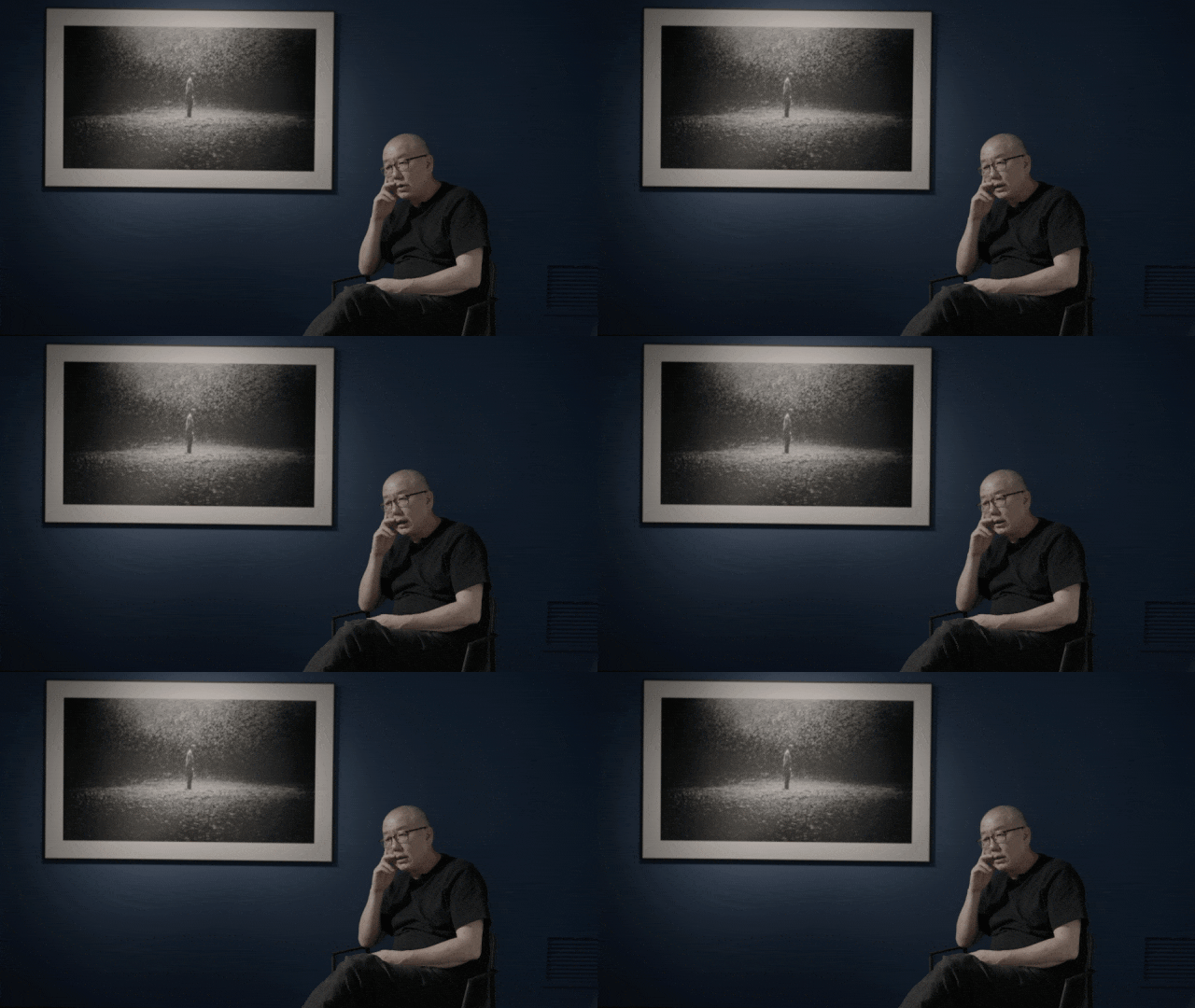
In August, Chen Chieh-jen’s new work went on view at Long March Space in Beijing; one of the pieces runs for sixty-nine minutes. At the opening, we spoke with the artist, who had come to Beijing from Taipei, about his singular approach to making art. Chen Chieh-jen in an interview. When we saw Chen Chieh-jen in the gallery, he looked exactly like the portraits we had seen: the same black-rimmed glasses, black T-shirt and trousers, and sneakers. He was adjusting the sound for one of the films. When he saw us, he immediately brought out the interview questions he had received.
“I feel that these questions would take at least three hours to discuss—or I could just keep talking. Asking me to ‘say a few words’ is really difficult.” Chen Chieh-jen’s tone was serious, but people on site were amused.
SECTION 01 | 'We Are All Documentarians in a Broad Sense'
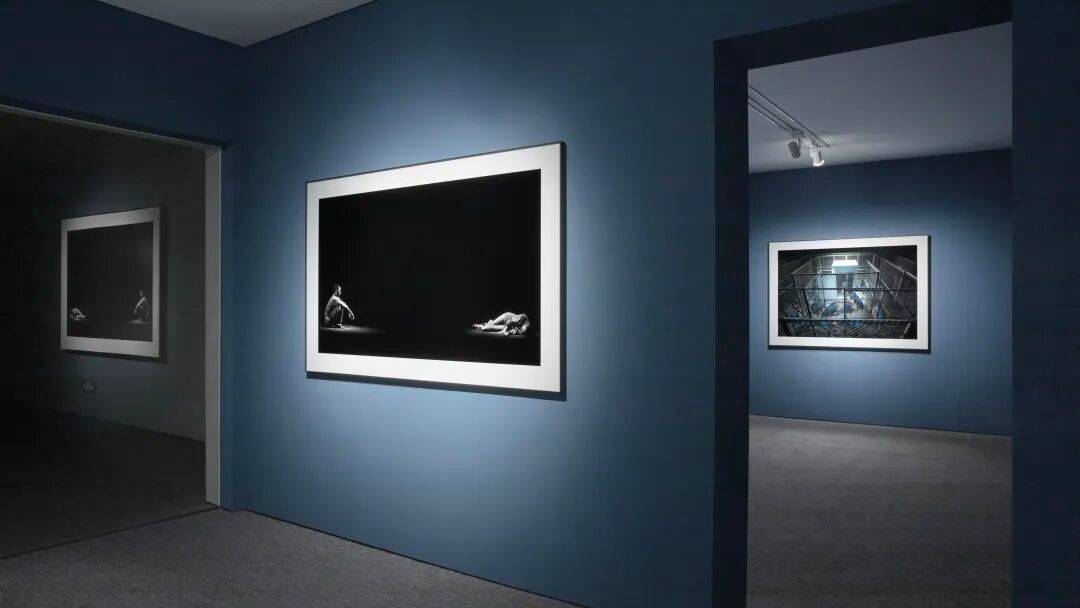
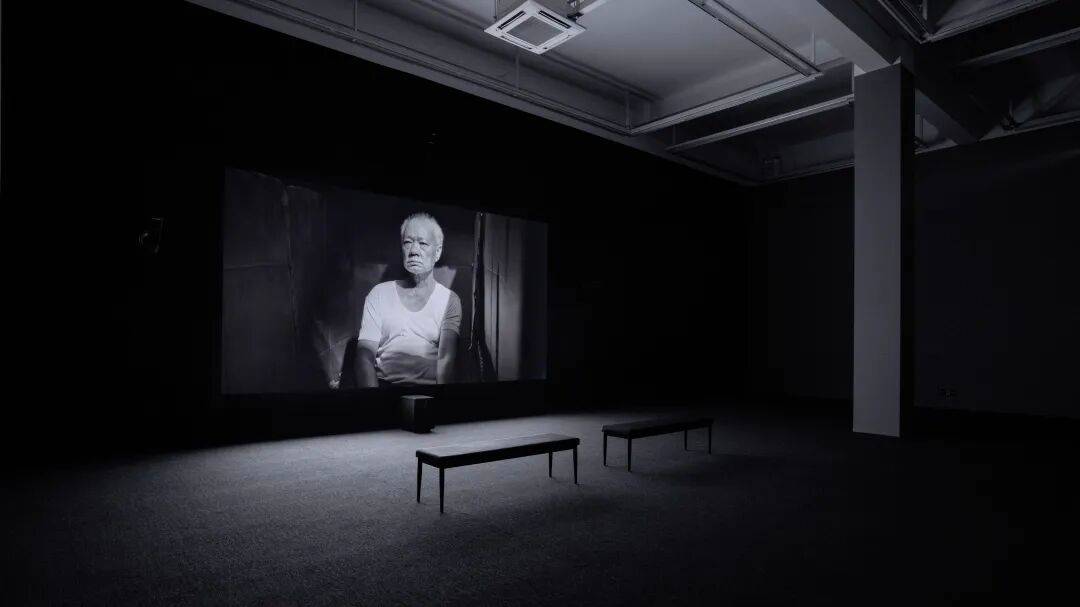
Chen Chieh-jen: To Dispel Illusion with Illusion, exhibition view, 2023, Long March Space, Beijing. The exhibition title alone, “To Dispel Illusion with Illusion,” carries several layers of meaning. Chen Chieh-jen told us that, from a Buddhist perspective, “we are all, in a broad sense, people of illusion”—roughly meaning that everything in life and the universe is in constant flux.
“From birth until our eventual disappearance, we are like a film: moving images, constantly changing, impossible to define completely.” Through the “illusion” of moving images, he wants to examine the “illusion” of reality.
Chen Chieh-jen: To Dispel Illusion with Illusion, exhibition view, 2023, Long March Space, Beijing. Chen Chieh-jen in the gallery. Much of this other “illusion” of reality is connected to his observations of family and friends.
“My older brother eventually suffered a mental breakdown.”
“According to the information available, roughly one-eighth of the world’s population—about one billion people—suffers from some form of mental illness. From one perspective, they are trapped by illusion, unsure what value their lives have or what meaning their existence holds.” Chen Chieh-jen believes that the pace of life in modern society has accelerated steadily, and that no one can safely take shelter for long under the resistance created by this constant acceleration.
Chen Chieh-jen: To Dispel Illusion with Illusion, exhibition view, 2023, Long March Space, Beijing. Another aspect of “illusion” is the rapid advance of super-technology. High technologies such as the Internet and AI are controlled by a small number of people, so in the foreseeable future, the gap between rich and poor will grow increasingly severe, further intensifying human alienation.
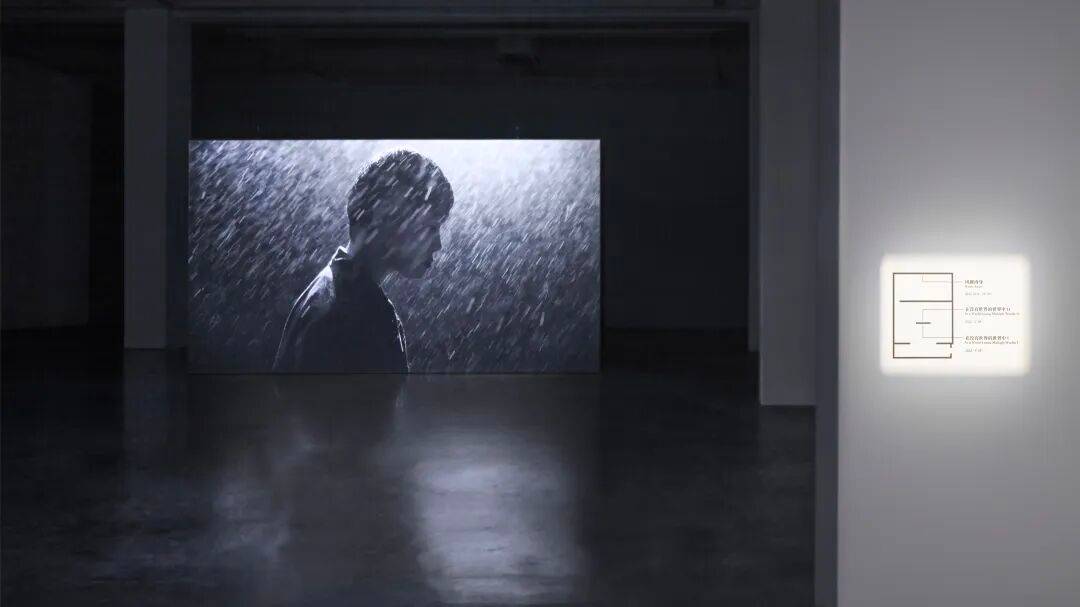
“Our present era resembles what is often called the ‘Axial Age,’ the time in which the Buddha, Jesus Christ, Confucius, and Laozi lived. I think we need to summon philosophical and spiritual things back into our lives, because they concern a fundamental question we often forget today: ‘Why do human beings exist?’” Chen Chieh-jen, In a World Without a World II. Chen Chieh-jen: To Dispel Illusion with Illusion, exhibition view, 2023, Long March Space, Beijing. Chen Chieh-jen: To Dispel Illusion with Illusion, exhibition view, 2023, Long March Space, Beijing. The depth and breadth of Chen Chieh-jen’s thinking emerge in different ways across the three new moving-image works in this exhibition.
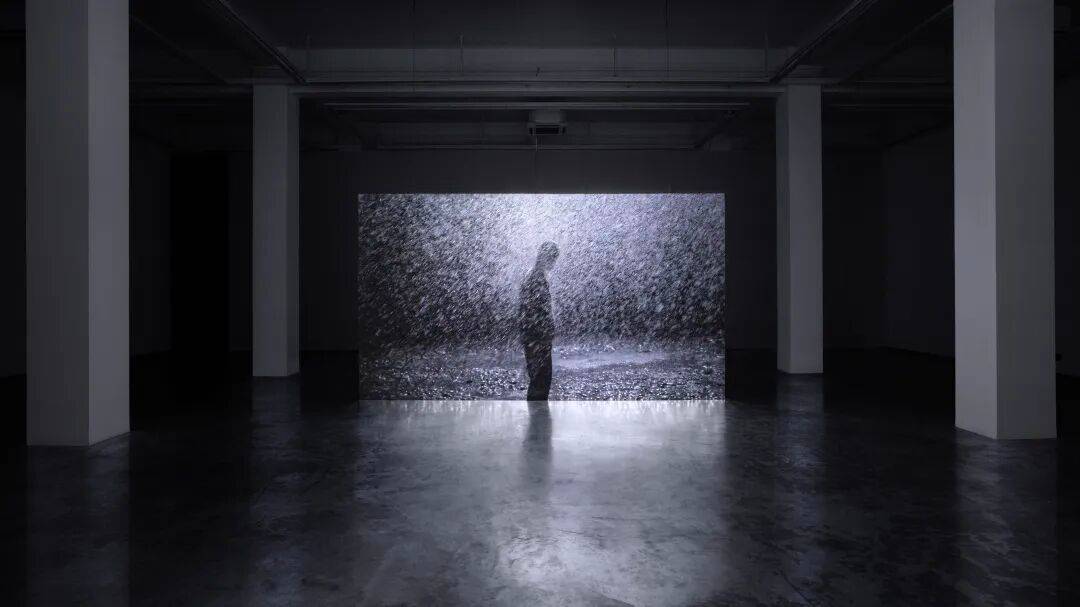
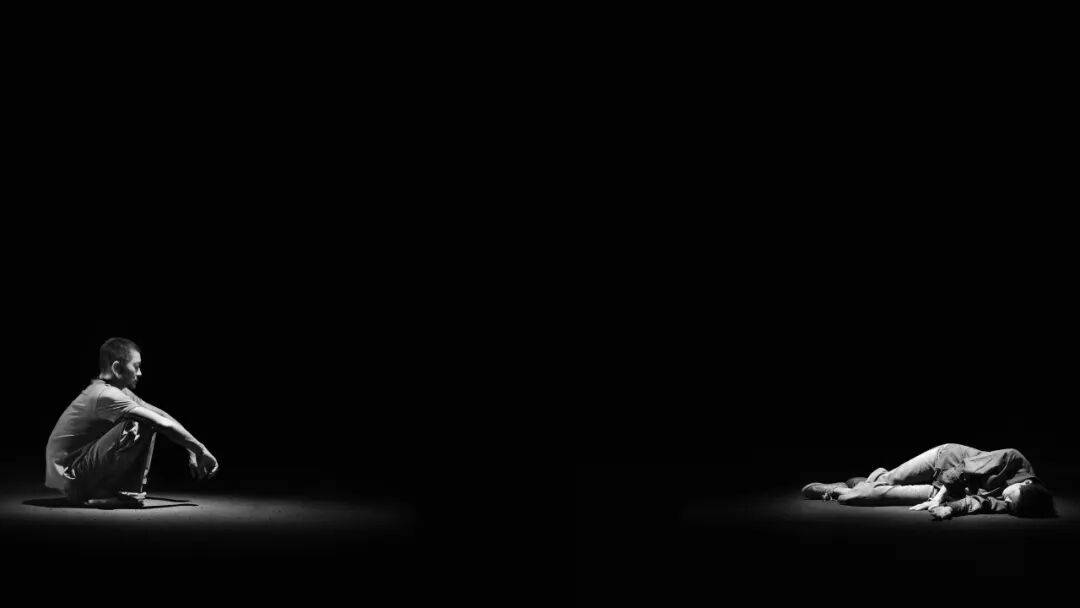
In a World Without a World I and II (2022) consists of two films, one more than two minutes long and the other more than four. There is no dialogue. Only a figure whose gender is unclear stands alone and unyielding in a downpour, rain pouring over the face and body. The figure and the rain in the darkness engage in a kind of silent standoff.
“I think the rain that envelops the person completely resembles today’s flow of information. This person standing in the wind is engaged in some kind of confrontation with an endless stream of information.”
Chen Chieh-jen: To Dispel Illusion with Illusion, exhibition view, 2023, Long March Space, Beijing. The film was inspired by a rainy night more than five years ago. A friend was driving him to scout locations for an earlier film when they suddenly passed a barren stretch of land. Far away, a figure stood there, glimpsed for only an instant.
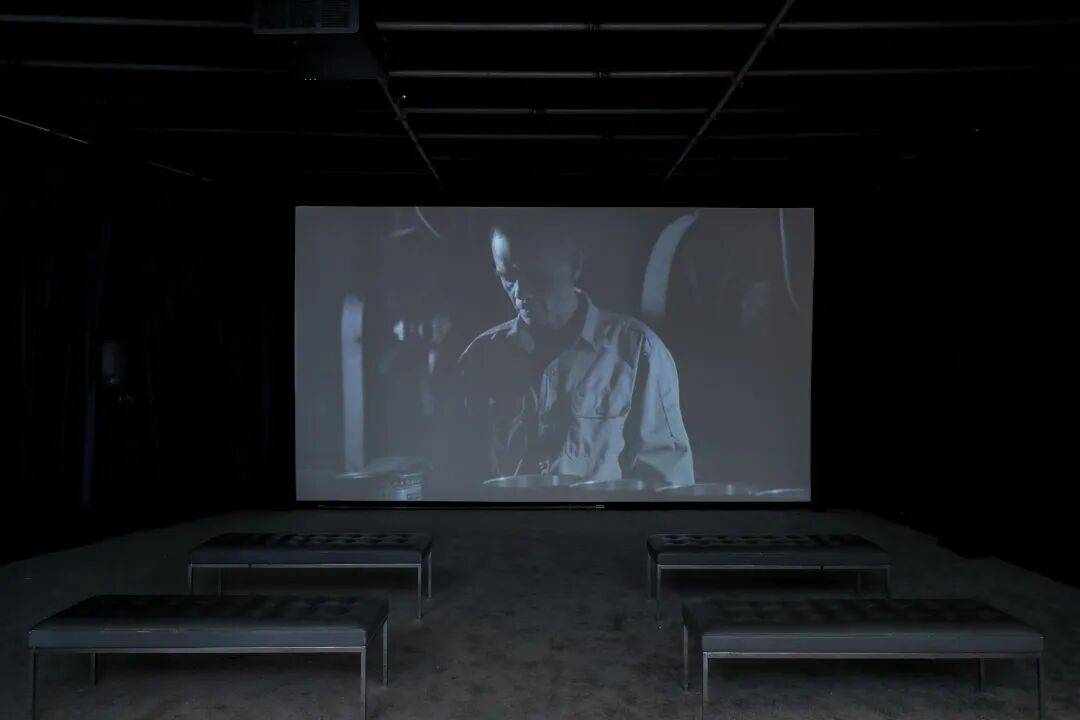
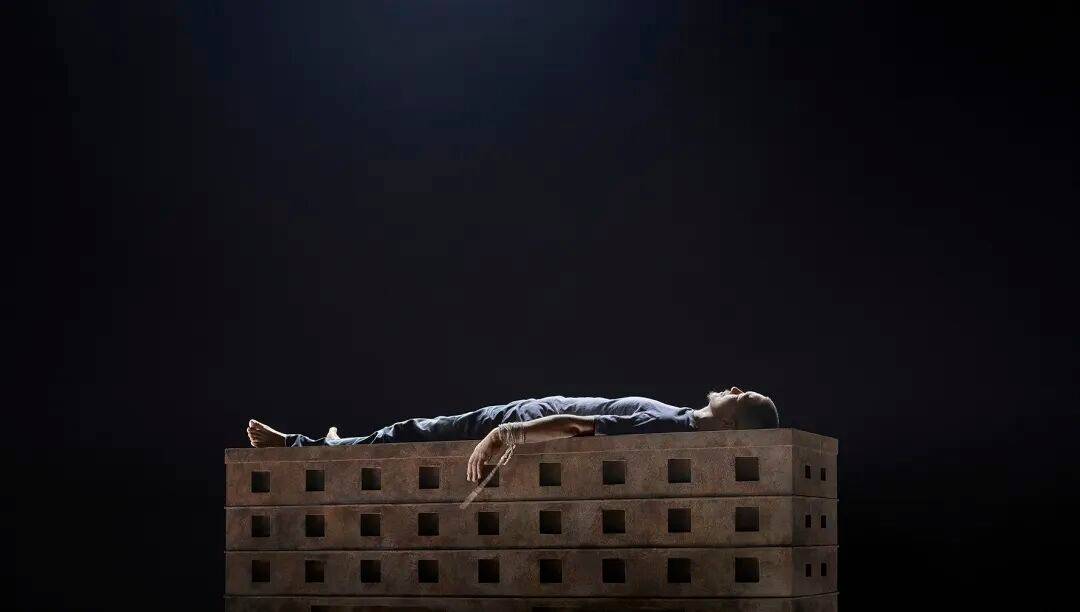
“I had no idea who he or she was. I didn’t know the person’s gender, much less what the person might have been thinking. But the image stayed in my mind and kept developing.” For a film whose “visual composition seems very simple,” he hopes viewers will let their imaginations roam freely. He did reveal one detail: the gender-ambiguous figure is in fact played by a woman. Chen Chieh-jen, The Flesh Is Ravaged by the Wind—Close Your Eyes (black-and-white photograph), 2022–2023. Chen Chieh-jen: To Dispel Illusion with Illusion, exhibition view, 2023, Long March Space, Beijing. Another work, The Flesh Is Ravaged by the Wind (2022–2023), runs for sixty-nine minutes and thirty seconds, close to the length of a standard feature film.
The film follows an unemployed person unable to obtain credit who, after applying for a “loan program to assist in optimizing biological functions,” arrives at “the waiting area of a certain empire,” where the person awaits use as material for a biological experiment. Ultimately, the character realizes how, even in an environment that appears to offer no way out, a person can reconstruct a sense of agency.
SECTION 02 | Embrace the suffering of life and record it
Interview | He Films Women Workers, the Unemployed, and Temporary Laborers—Recording the Lives Around Him
“The film I made last year is neither a narrative film nor a documentary. It has only a very small amount of narrative. What truly interests me is the state of these people’s lives, trying to describe the condition of people today.” Chen Chieh-jen feels that although the film may appear deeply despairing, he wants to propose another kind of “epistemology” in this feature-length work: how individuals might “rebuild a new world in a world without a world.”
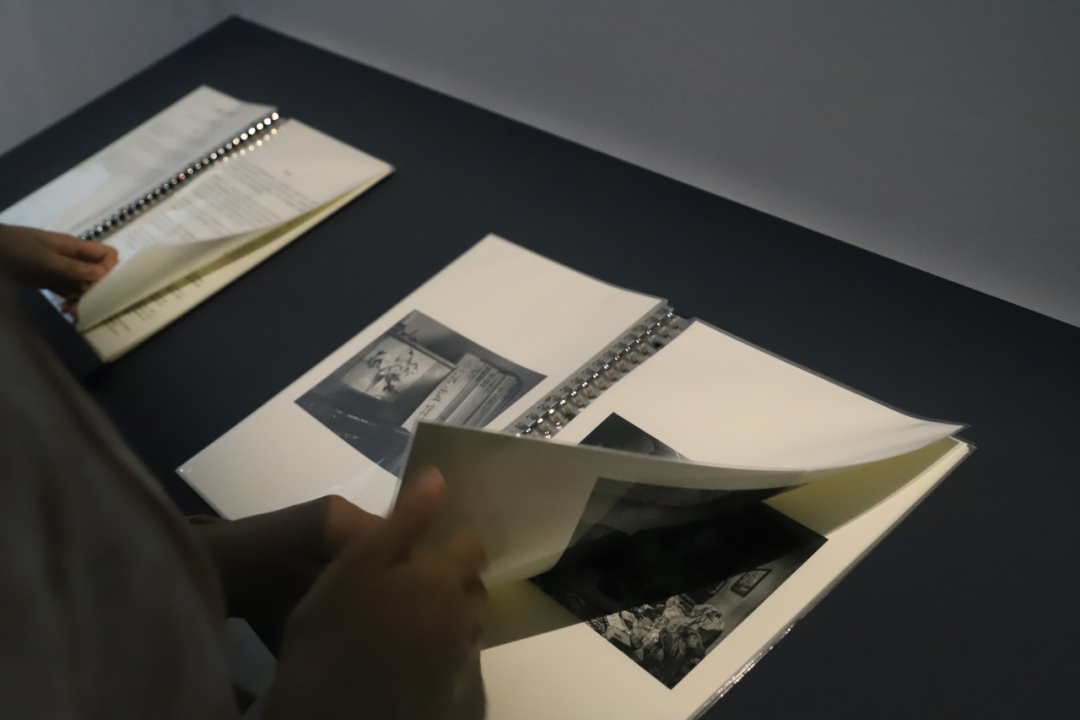
Chen Chieh-jen: To Dispel Illusion with Illusion, exhibition view, 2023, Long March Space, Beijing. The entire gallery is black. The only clearly visible white element is a white display stand at the entrance, holding six white booklets that document, in words, Chen Chieh-jen’s earlier moving-image works. One of them, Reenacting the Void, records a film performance at Taipei’s Guling Street Avant-Garde Theatre on December 4, 2020. Taking the circumstances of his mother’s death as its point of departure, Chen spent an hour and a half orally recounting stories of his mother and his brothers.
Chen Chieh-jen sat behind a projection screen. The image was extremely simple: from total black, a white point emerged and expanded until the frame became entirely white; then a black point appeared within the white and spread until the frame returned to black. The cycle continued. Chen Chieh-jen, Reenacting the Void (film still), film performance, 2020. For Chen Chieh-jen, Reenacting the Void is crucial to his artistic career.
“I can’t perform this piece a second time. Because it concerns my family, there were too many emotions, and I even felt that the audience didn’t know what I was saying. I wanted to make Reenacting the Void because my mother had died. She was an orphan, had never gone to school, and raised herself. Her influence on me was profound.” Before Chen Chieh-jen left home as a young man to make a living, his mother told him, “We are all people of illusion created by illusion-makers, but people of illusion can also become illusion-makers who create illusions.”
The first half of the sentence comes from the Buddhist scripture Vimalakirti Nirdesa Sutra; she added the second half herself.
“My mother said it in Minnan. To me, she was a bearer of folk wisdom.” It is difficult now to imagine a poorly educated rural woman saying such words to her son. Chen Chieh-jen, Reenacting the Void (film still), film performance, 2020. In Reenacting the Void, Chen Chieh-jen also speaks of his older brother who suffered a mental breakdown—the person who first taught him photography. He recalls as well his younger brother, who had been cognitively impaired and paralyzed since childhood and died tragically when Chen was in sixth grade.
SECTION 03 | Inspiration is a strange concept to me
In his work, family stories serve as a point of entry into unresolved predicaments. He told us that one of his younger brothers now works as a food-delivery courier and has been involved in more than twenty traffic accidents, large and small. “He is controlled by the platform’s algorithm, racing against time every day.” In Chen’s view, this is even more brutal than assembly-line work.
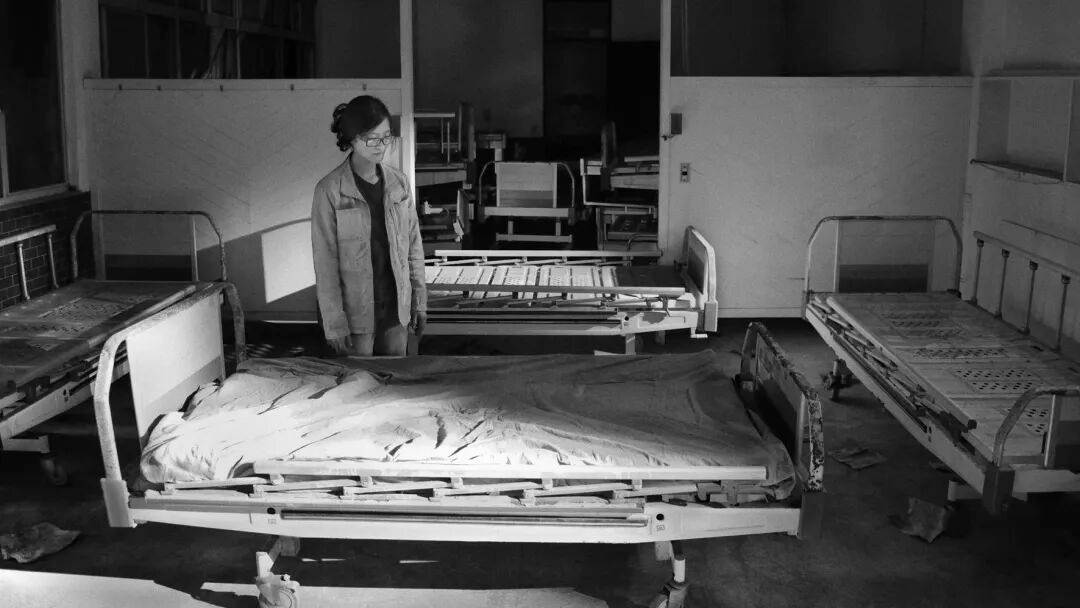
“Perhaps one day I’ll follow a delivery courier and ask, ‘Must we rely on these enormous platform companies? Couldn’t there be a more reasonable platform, a better way?’” Chen Chieh-jen, The Condemned—Echoes of a Historical Photograph, 2002. Chen Chieh-jen, Friend–Wadan (film still), 2013. Chen Chieh-jen, Friend–Wadan, 2013, Xing Art Museum, A Moment After Saying, exhibition view, 2023. Chen Chieh-jen, Self-Piracy: Free Donation Project (film still), 2008. From the hard-to-define “history of the photographed” in The Condemned, to the unemployed women workers reentering the factory in Factory; from Empire’s Borders, which examines the predicament of individuals and groups within institutions, to Echoes of the Rainbow, with its asylum residents living like people on an island; and to The Hollow Land, which portrays the individual fates of social outsiders who have escaped disciplinary frameworks…
Over the past twenty years, Chen Chieh-jen’s work has torn open a breach through which he writes the hardships of these “people without a share,” those whom the public rarely notices. In conversation, he does not shy away from his “grass-roots” origins or from family stories that may sound bleak to ordinary listeners. This unvarnished way of speaking about suffering and pain, this direct confrontation with reality, has run through his work from beginning to end. Chen Chieh-jen, Echoes of the Rainbow (film still), 2014. Chen Chieh-jen did not take part in a formal exhibition until he was thirty-six.
But beginning in the 1980s, he took to the streets to make guerrilla-style performance art and organized various underground exhibitions.
“I loved imagining things as a child—drawing or writing little stories. But the school thought, ‘How could a child draw something like that?’ I was even summoned to the Ministry of Education. In high school I studied commercial art at a vocational school, but from then on I no longer wanted to study and began skipping class. It was because I skipped school that I came to love reading: I had nowhere to go, so I went to the library, which had air-conditioning.” Buried in books, he read modern art of all kinds, including Andy Warhol’s satires of consumerism. But when he returned home, to the urban-rural fringe surrounded by prisons, arms factories, and all kinds of export-processing factories, he saw residents struggling to make a living. “I began to wonder: What does so-called modern art have to do with your life?”
Chen Chieh-jen, Star Chart, 2017. After that, he stopped making art altogether for eight years. The reason was simple: confusion and uncertainty. At the time, he spent his days sitting and staring into space, living on money earned by his second-youngest brother, who sold handbags and clothing at street stalls—goods made from discarded fabric salvaged from export factories.
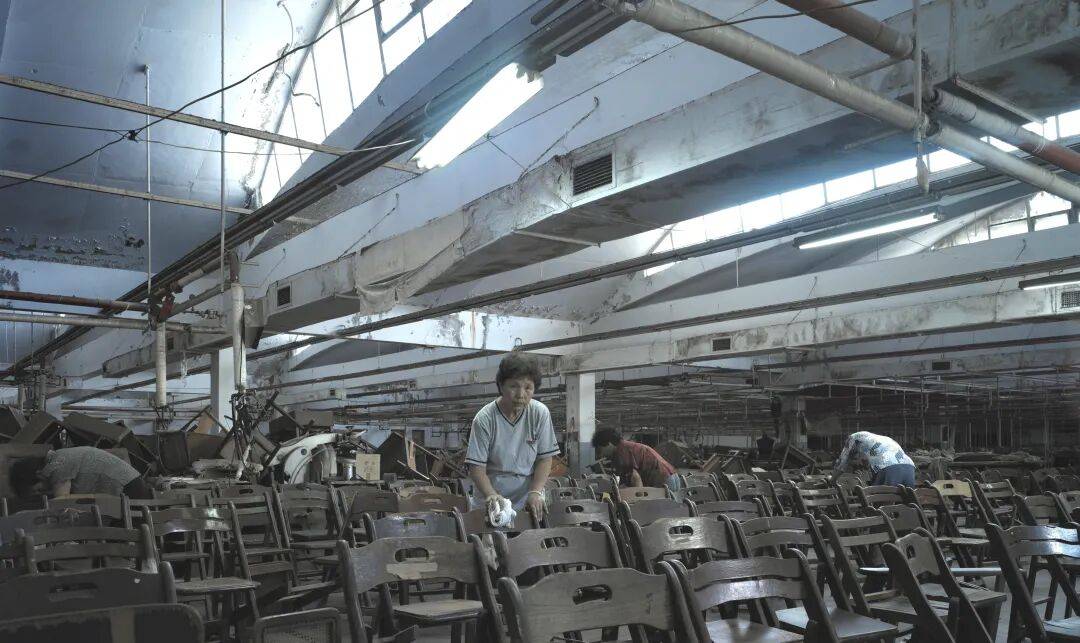
“I was very close to my second-youngest brother. He believed that even when his brother was sitting around doing nothing, it had meaning. I sometimes helped him at his stall, and eight years passed that way. Then one day I dreamed of my younger brother who had died, and suddenly I understood something. I began making art again.” Chen Chieh-jen, Factory (film still), 2003. In 2003, Chen began making Factory, one of the earliest representative works of his career. At the beginning of the shoot, there were only three or four crew members: one was his brother, and another was an unemployed woman worker.
He filmed these people because his eldest sister had spent her entire life as a woman worker, and he was familiar with the conditions of women workers’ lives.
“On an assembly line, people are like machines. They can never stop; even the time needed to go to the restroom is calculated. All thought and feeling are stripped away.” Chen Chieh-jen, Factory (film still), 2003. When we asked about his working method, Chen answered without reservation: “No part of my process is secret, and there’s nothing I can’t talk about.” He is not a director in the conventional sense. During filming, he rarely does retakes; a shot is made at most three times.
“I simply let things happen. These performers and crew members have lived through all kinds of hardship. If you explain things to them in the simplest way, they feel it more deeply than you do. There’s no need to tell them how to act.” Chen Chieh-jen, Factory (film still), 2003. During filming, he generally has no detailed script, only a simple outline. Most of the performers are nonprofessionals, including actual unemployed women workers and people on the margins of society.
“The women workers would tell me, ‘Director, you don’t need to prepare breakfast, lunch, or dinner for us. We’ll take care of everything ourselves.’ After a few days of filming, an unemployed worker might suddenly say, ‘Director, are you filming the condition of people after they’ve been reduced to zero?’” Recalling his sets, Chen said with feeling that a considerable proportion of these so-called marginalized people possess an acute sensitivity, and that he benefited enormously from working with them. Chen Chieh-jen, The Hollow Land (film still), 2017. When he makes a short film, the entire process is quick; shooting may be completed in three to five days.
Although the participants are nonprofessionals, they enter the role remarkably quickly. They may be joking one or two minutes earlier, but once they grow quiet, they can enter the emotion at once. Their lives contain so much weighty experience that it helps them immerse themselves quickly in memories of hardship.
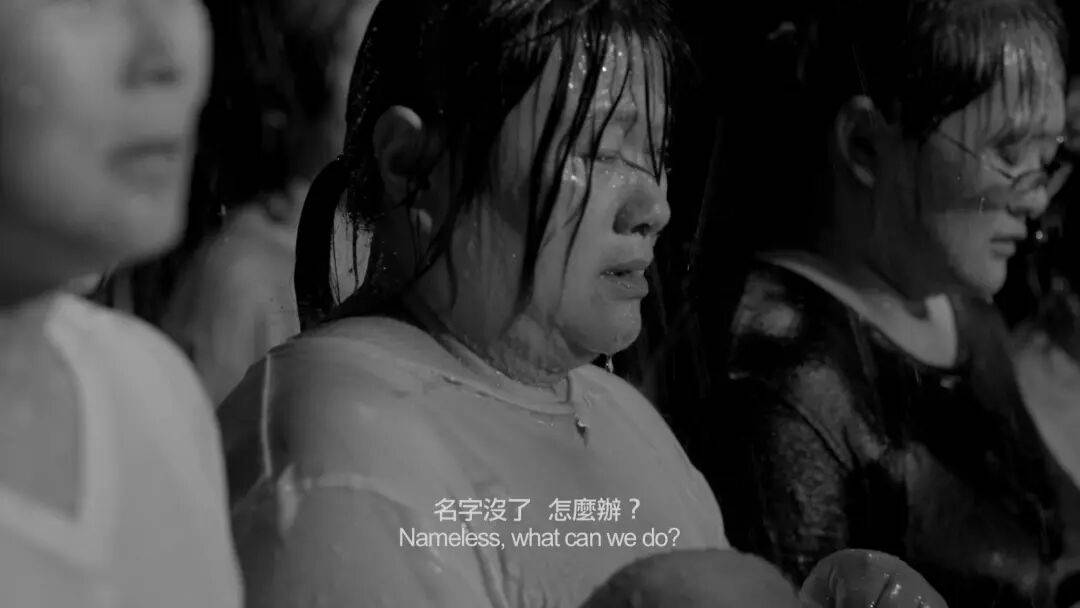
“When I was filming The Hollow Land, dozens of women workers repeatedly recited in Hakka, ‘What do we do if our names are gone?’ in the pouring rain. I asked them to close their eyes and describe their lives. As they recited, the rain began to fall, and many of them ended up crying. None of that was arranged.” The cinematographers wiped away tears as they filmed. Chen Chieh-jen, A Song (film still), 2018. In the end, he said with a laugh that although his work may appear morose, the atmosphere on set is actually relaxed.
While filming Echoes of the Rainbow, which concerns people with leprosy, he would spend the breaks chatting with the patients about gossip. He saw another side of them: even while enduring hardship, people continue to create laughter out of bitterness.
“You ask why I film these subjects. The reason is simple: I feel that I’m part of them. This is the condition of most people—we are always living through a crisis of fate. Yet this reality is rarely discussed, which is profoundly strange. I want to record it.”
“I don’t really understand the word ‘inspiration.’ To me, it’s a particularly strange concept. The way you live your daily life inevitably gives you feelings. Then one day, by some confluence of circumstances, you begin making art. It’s that simple.” Image courtesy of Long March Space, the studio of Chen Chieh-jen, and Xing Art Museum.