Li Jin Opens a New Show in Guangdong: Thirty Years of Painting Food, Alive With the Heat of Everyday Life
“I’m someone who lives in the present,” says Li Jin, the Tianjin-born painter who since the 1990s has turned ink painting toward food, flowers, tea wares, men, women, and children, finding in ordinary pleasures a durable subject......
By / Xirui Huang · 9 min read
Why does Li Jin experience Shunde’s food and everyday life before painting it?
Published in 2023, Xirui Huang’s interview with Li Jin centres on the exhibition presented at HEM in Shunde from late 2022. Li values encountering ingredients, hearing local voices and experiencing street life before painting. Fish, claypot rice and everyday vessels are more than appealing subjects: they carry local habits and his affection for ordinary life. Ink painting becomes a way to register a sense of place alongside personal response.
“I’m someone who lives in the present.” The artist Li Jin wears a large salt-and-pepper beard, and when he speaks there is a trace of Tianjin in his Beijing-inflected Mandarin. Born in Tianjin in 1958, he has, since the 1990s, painted food, flowers, tea wares, men, women, and children in ink. His work is full of feeling for the bustle and warmth of everyday life. He is especially fond of painting food: red-braised pork, oil-braised shrimp, steamed fish, sliced meat cooked at the table. The heat of the wok and the aroma seem almost to rise from the paper.
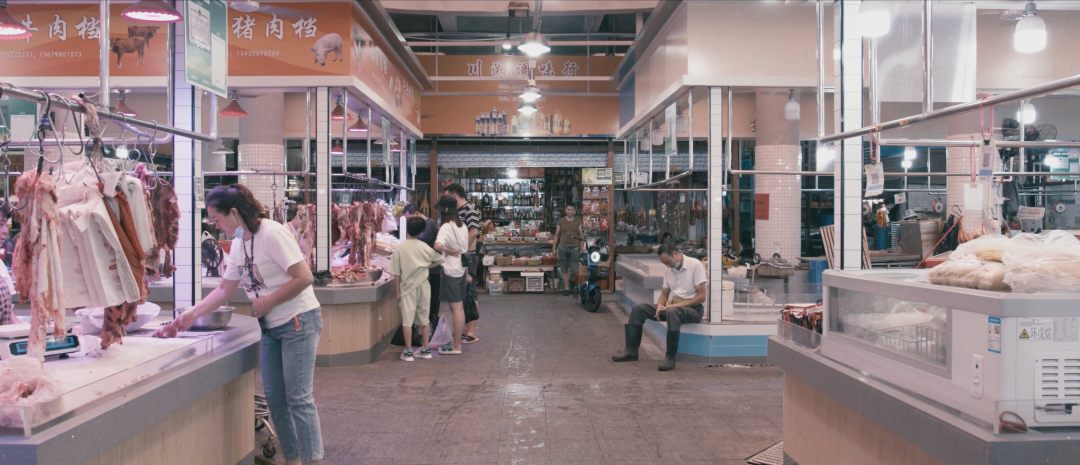
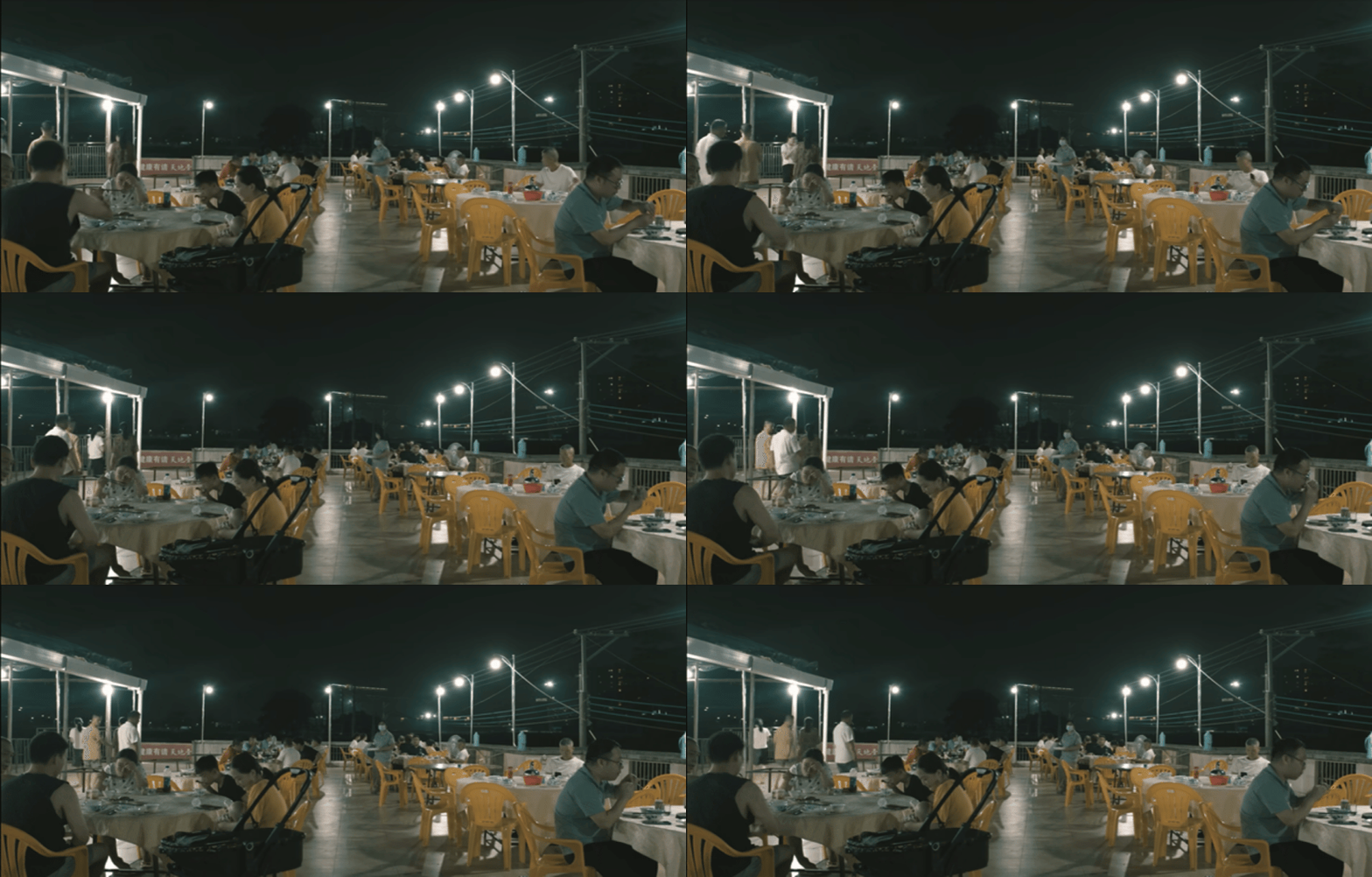
In a scene from Li Jin’s documentary, on December 31, 2022, the He Art Museum in Shunde, Guangdong, presents the exhibition “Meat Eaters Are Not Base: Li Jin in Shunde.” For the show, Li drove by himself through Shunde in search of flavor, eating his way around the region for a month. As he ate, he worked, producing about twenty new ink paintings that interpret, in his eyes, the tastiest side of Shunde, along with the meanings of food and flesh.
“You really have to come to a place like this to taste its most original flavors.”
SECTION 01 | Meat eaters don’t despise it, it’s a love of life
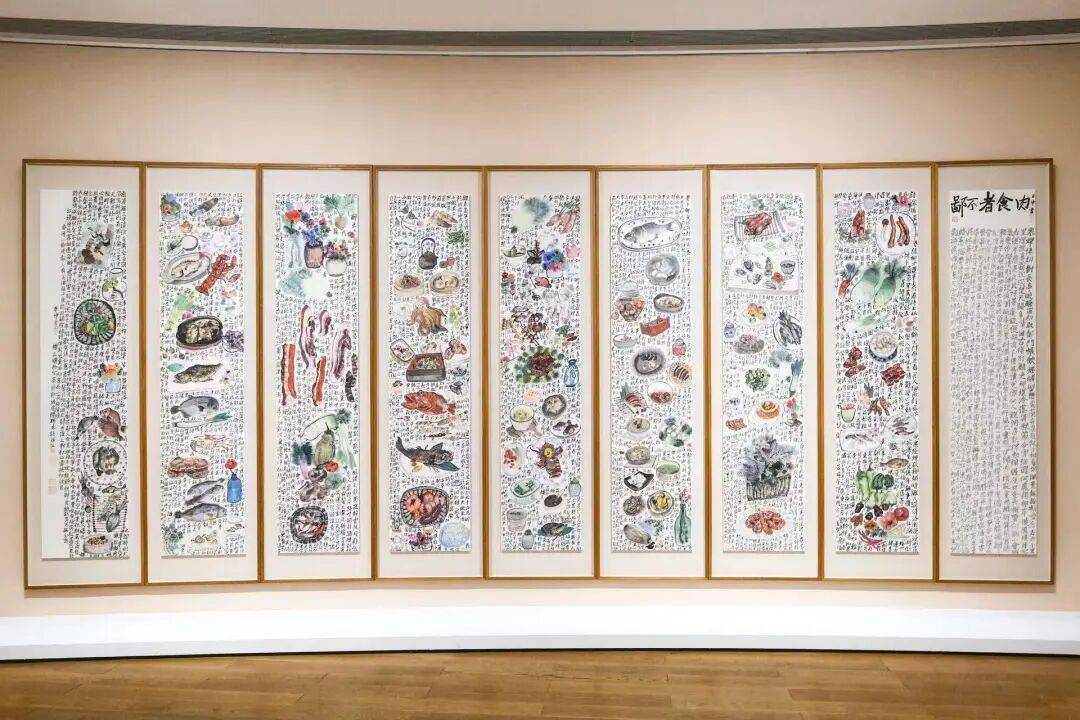
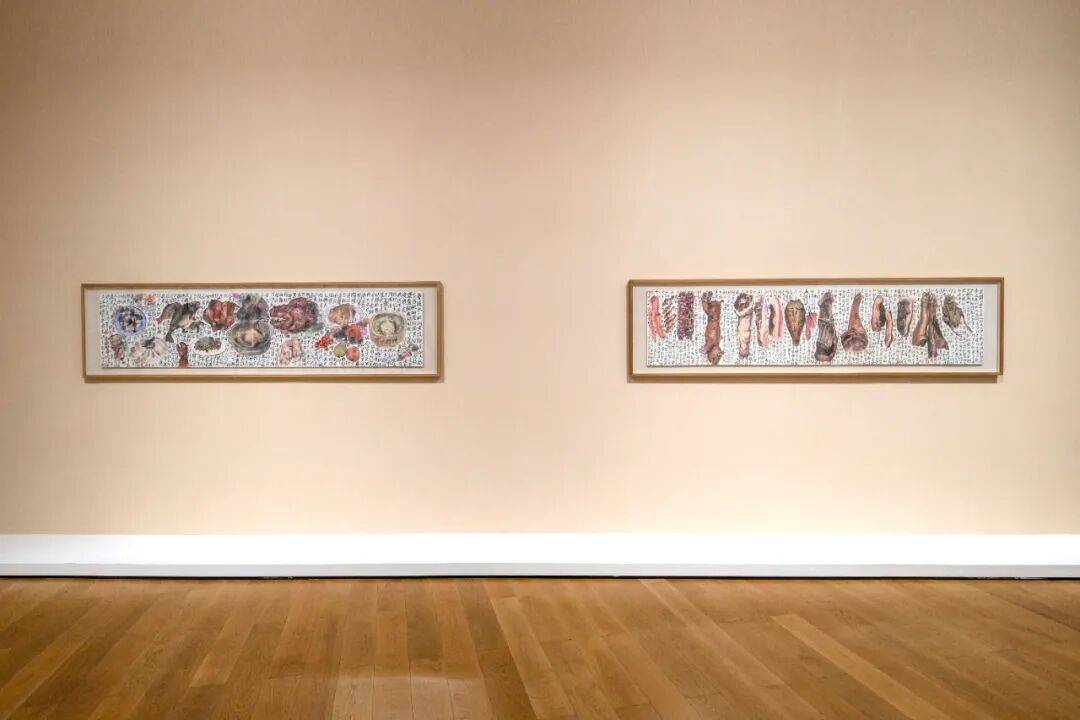
Li said this with a laugh. On the eve of the opening, we spoke with the artist, whose appetite for life and food has never dimmed, about his work and the pleasures of living. Li Jin, installation view of “Meat Eaters Are Not Base,” He Art Museum, 2022. Entering the gallery, one sees food everywhere, enough to make a viewer hungry: Cantonese cured meats, Shunde-style raw fish, clay-pot rice, and a range of fresh southern ingredients occupy more than half of the more than fifty new works on view. Many of them were painted by the artist directly in Shunde, after local excursions there.
“Really, I just used ‘research’ in Shunde as an excuse to eat as much as possible,” Li said with a laugh. Li Jin, “Meat Eaters Are Not Base,” 2022. Li Jin, “Meat Eaters Are Not Base,” 2022. Shunde, in Guangdong, is celebrated as a capital of food, and for Li, who loves to paint it, the place had long held a strong pull. “I’d never been to Shunde before, but I’d been looking forward to it for a long time. I’ve painted Sichuan food, I’ve painted Japanese cuisine. I always wanted to paint something different.” For Li, a sense of presence is essential: only after experiencing a place firsthand can a painting move people.
“When you’re actually in this place, hearing Cantonese while you eat a dish, it’s completely different from eating Shunde food in Beijing cooked by a chef speaking in a Beijing accent.”
“My first impression of Shunde was that its land and water have nourished extraordinary food. People eat fresh ingredients from right around them. I especially love that vivid sense of freshness.” In an excerpt from Li Jin’s documentary, and in Li Jin’s “Shunde Cuisine,” 2022, one of the stars of this exhibition is fish. In Li’s paintings, bighead carp gape open-mouthed; their eyes are full, their bodies glossy. They look as fresh as if they had just been set out for sale in a seafood market.
“The bighead carp is plump and adorable. That proportion, half head and half body, is so interesting,” Li said.
“I also really love eating fish. If you put meat and fish in front of me, I’ll still choose fish, so this time it suited me perfectly.” He says that one reason he likes painting ingredients is the natural, clean freshness of a fish just out of the water, a sight he does not often encounter as a northerner. Li Jin, “Meat Eaters Are Not Base,” 2022. Li Jin, “A Pot of Pigeon,” 2022. Besides fish, another central subject in the exhibition is clay-pot rice.
In the paintings, each grain of rice is distinct. Beside the sheen of Cantonese sausage and other meats, you can almost see white steam rising from the surface. Li said that before coming to Shunde, he had no idea that clay-pot rice could be topped with so much more than Cantonese sausage: fish, beef, pigeon, all of it soaked in soy sauce and oil, with the crisp scorched rice at the bottom giving off an irresistible fragrance.
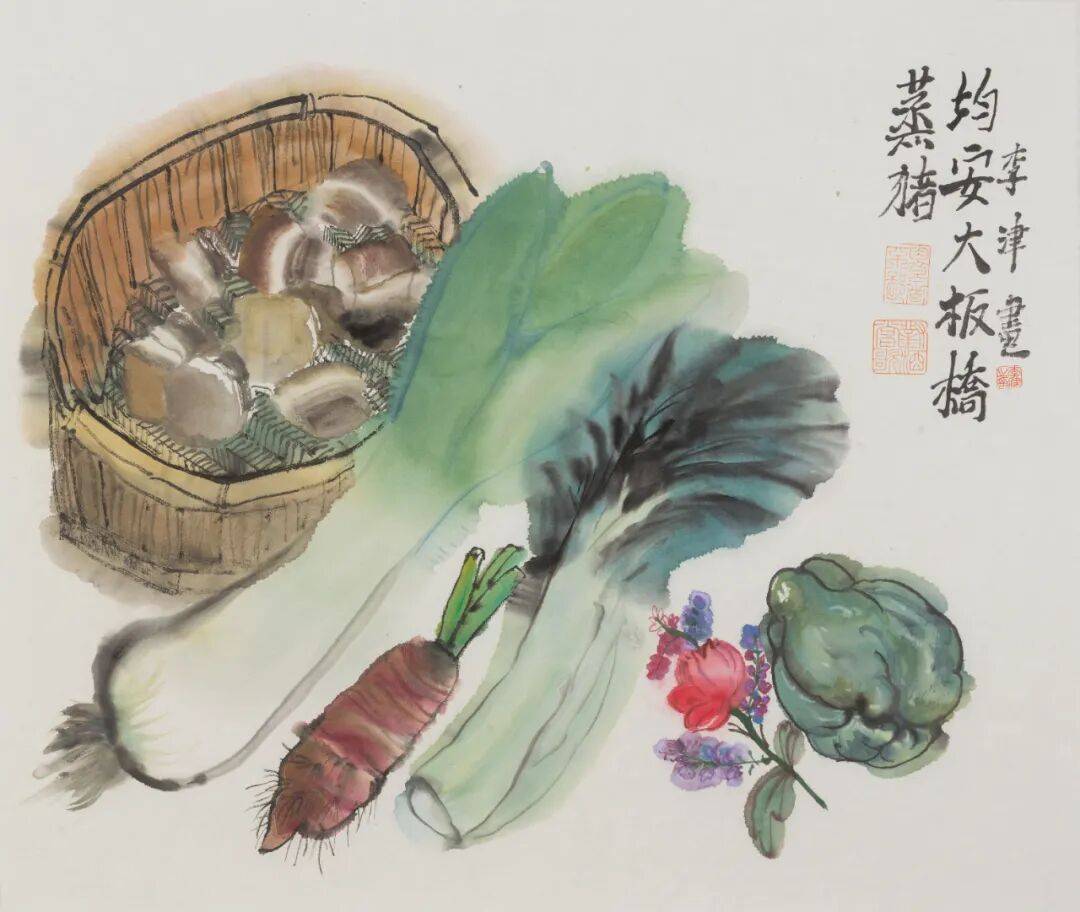
“I felt I had to paint the flavor of every single grain of rice to do justice to the clay-pot rice here. While I was painting, I could feel myself salivating,” Li said with a laugh. In excerpts from Li Jin’s documentary, in Li Jin’s “Jun’an Cuisine,” 2022, and in a detail of Li Jin’s “Meat Eaters Are Not Base,” 2022, the paintings in the exhibition also include many elemental utensils, such as woven bamboo baskets and the clay pots used for rice. The artist says that this traditional, smoke-and-fire atmosphere is especially vivid and moved him enough to record it.
“In Shunde, tradition and the contemporary come together very naturally, and you can see that in the food culture.” And in the plain little eateries tucked into streets and alleys, it is not only old men eating; the places are crowded with young people too.
“It’s moving to see the younger generation identify so strongly with the culture of their hometown.” Li Jin, “Food Is Heaven,” 2022. Li Jin, “Drinking Tea,” 2022. The richly animated atmosphere and unabashed worldliness in Li’s paintings are particularly rare in ink painting. At a glance, his work is not ink painting in any conventional sense. He has pushed the medium in color and water handling alike, and his style is distinctly of the Shanghai school: it carries something of Western watercolor while retaining a traditional bearing.
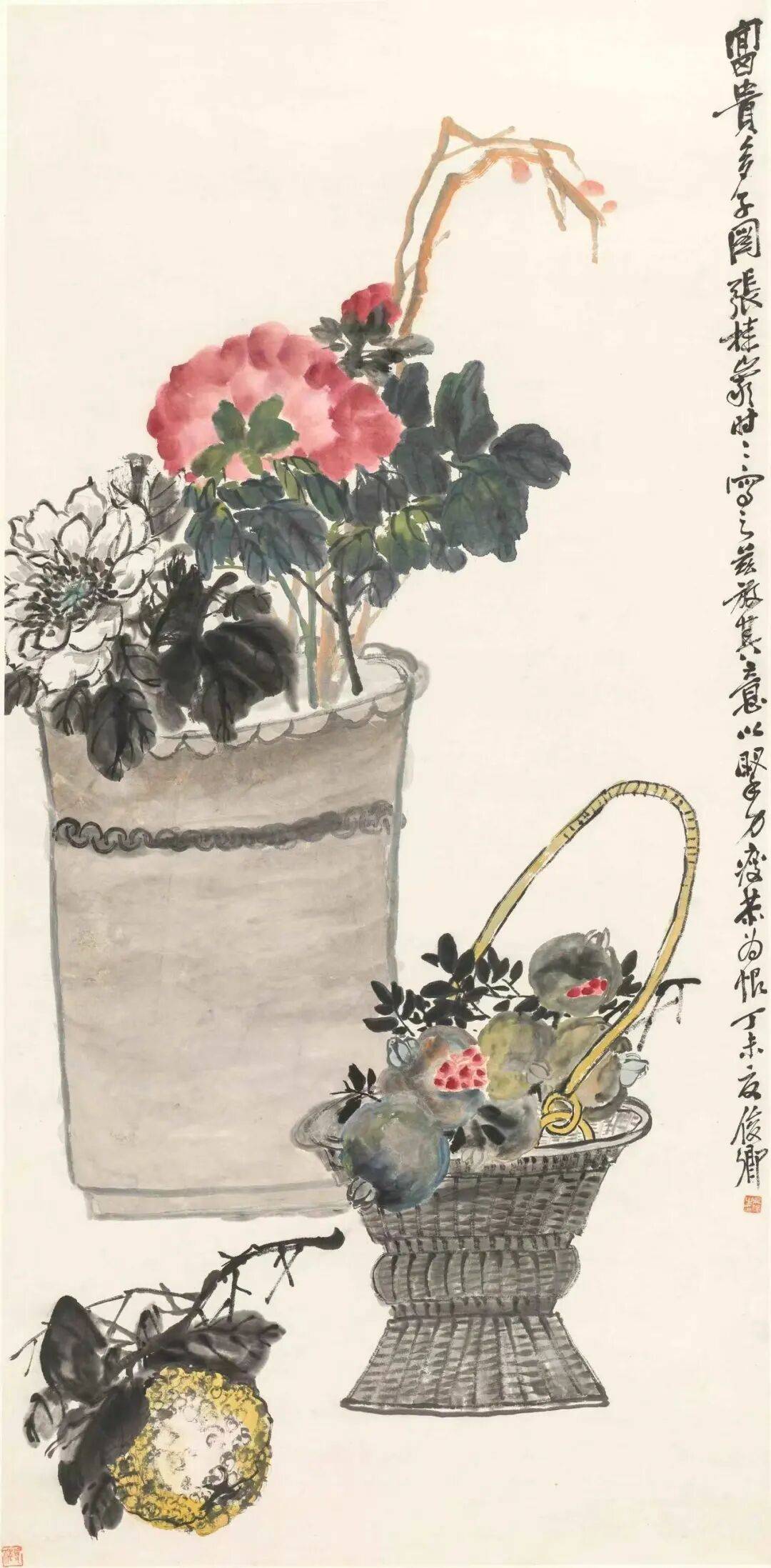
In this exhibition, his works are shown alongside dozens of modern and contemporary masterworks from the He Art Museum collection, including pieces by Wu Changshuo, Gao Jianfu, and Qi Baishi, creating an intriguing long-distance dialogue with Li’s contemporary practice. Yang Shanshen, “Travelers Among Streams and Mountains,” 1989, He Art Museum Collection. Wu Changshuo, “Wealth and Many Sons,” 1907, He Art Museum Collection. Li Jin, “By the White Cloud,” 2022. Whether in Wu Changshuo or in the bird-and-flower and landscape paintings of Gao Jianfu, a representative painter of the Lingnan school, the lineage of the Shanghai style is continuous.
“I’ve always felt that my painting style has a hidden affinity with the Lingnan school. I grew up in Tianjin, which in fact was also shaped by the Shanghai style. On the one hand, it was close to Beijing’s tradition; on the other, Tianjin was one of the earliest treaty ports to open in the late Qing and early Republican period, and I grew up living in a small Western-style house.” Li said this as “Rich Broth, Deep Flavor,” Li Jin, color on paper, 53 × 230 cm, 2019, came to mind. Since the 1990s, Li has painted all kinds of food, not just light and delicate fruits and melons but also lavish dishes of fish and meat, fried, braised, steamed, and simmered.
By now, “painting food” has become his signature. He says that amid the atmosphere of the “’85 New Wave” art world, he suddenly wanted to embrace the good things close at hand. “My greater interest is in the relationship between the individual and life, in that very everyday, very street-level kind of living. The scenes in my paintings all come from me, an ordinary person, and my affection for the small details of life,” Li said. Li Jin, “Nourishing the Mind,” 2022. Li Jin, “You Reap What You Sow,” 2012. Even today, painting scenes from ordinary life may not seem novel, but in the early 1990s, this shift from the collective back to the individual was still a decisive break.
At first, he painted “hair-washing pictures”: in those days, it was common for people to set a basin in the courtyard and wash themselves or their hair. Later, he began painting cooking scenes and ingredients. “I’d paint whether I ate peanuts that day or salted duck eggs.” Gradually, he removed both figures and surroundings altogether and painted only food. That marked the beginning of the “food painting” series he has continued ever since. Li Jin, “The Basic Problems of Life,” 2018. Li Jin, “Vegetables and Duckweed,” 2018. Li Jin, “Stuffed All Day Long,” 2022. “I think the language of food itself is enough. It’s compelling enough, and enough to keep me rendering it without ever getting tired of it.”
“We’ve all been eating our whole lives. Who gets tired of eating? To me, there’s tremendous energy in it,” Li said with a laugh. Whether in provinces and cities across China or abroad, in Europe, the Americas, or Australia, Li has found that enthusiasm for food is universal, regardless of race or country.
SECTION 02 | I draw food, people, flowers and plants because life is so interesting
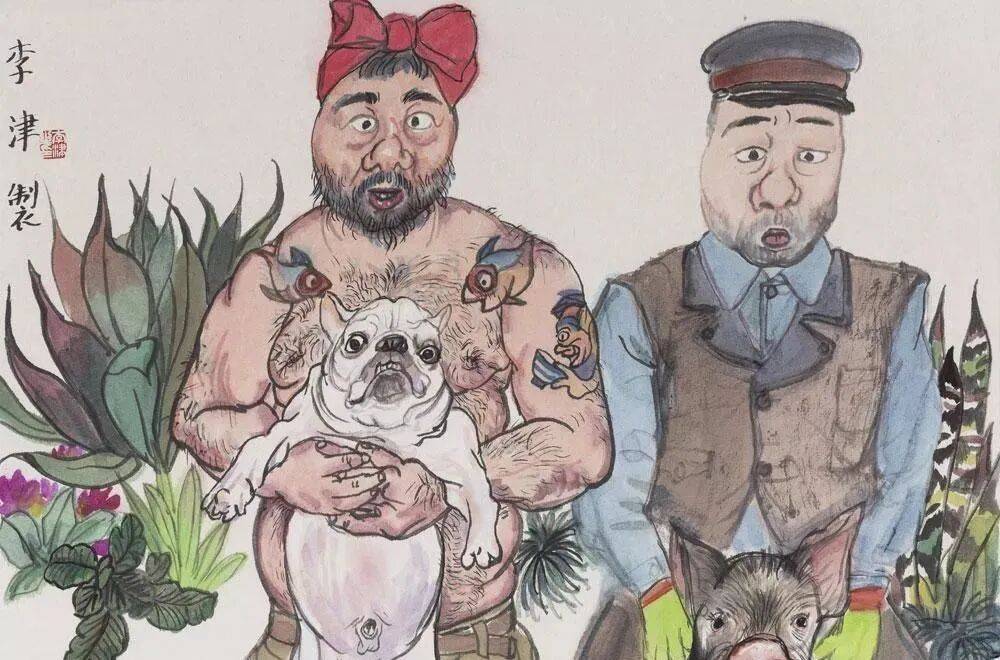
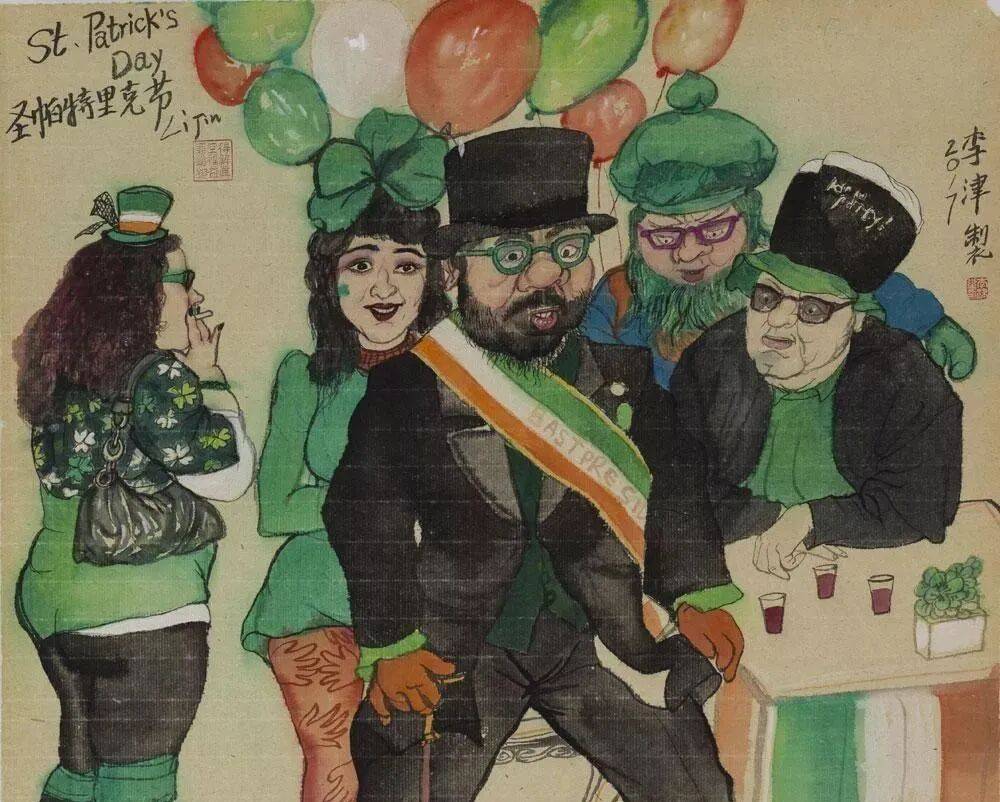
“To be able to record it and put it into a painting is a very happy thing.” What sets an artist apart, perhaps, is the ability to find pleasure and a glint of meaning in the most ordinary, seemingly least consequential things, to record them, paint them, and place them before viewers. Li Jin, “A Glutton’s Journey West,” 2017. Li Jin, “Brothers,” 2017. Li Jin, “St. Patrick’s Day Polyptych,” 2017. Besides painting food, Li’s figure paintings are full of wit. He often places his own image in them, eating, drinking, talking, having tea, taking a walk.
Li Jin Opens a New Show in Guangdong: Thirty Years of Painting Food, Alive With the Heat of Everyday Life
We become, almost, intimate friends of the artist, able to observe through the paintings a daily life full of pleasure and small details. When we asked why he was so fond of self-portraiture, he told us that painting every day is like keeping a diary, a record of his most real life and of his joys and sorrows.
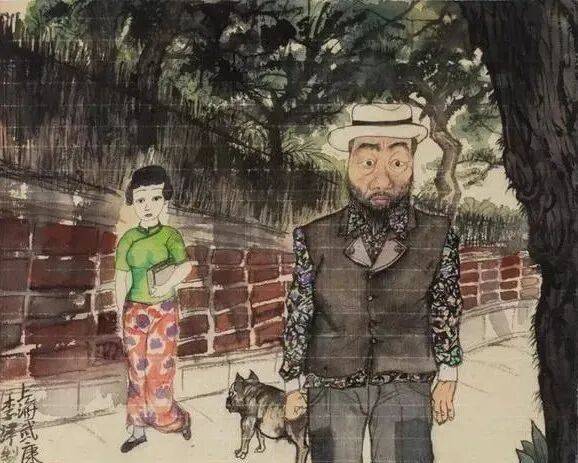
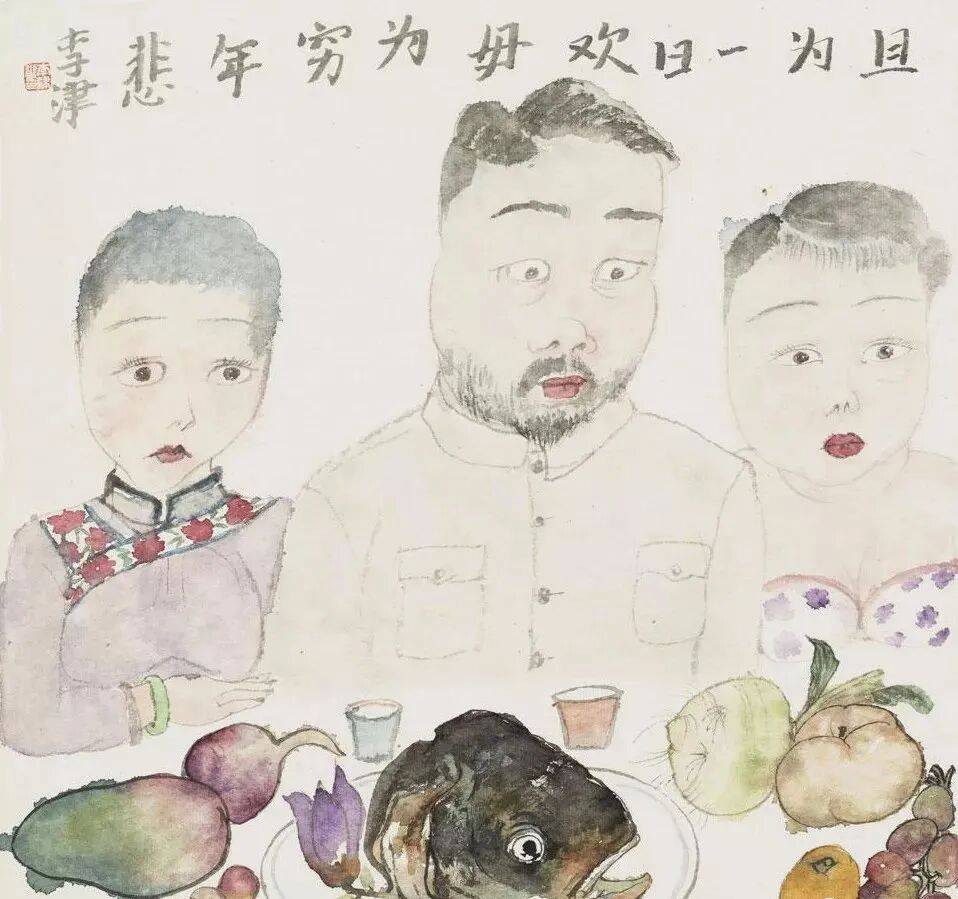
“At the time I was living in a hutong in Beijing. There was a jujube tree in the courtyard. I’d set a small table beneath it, buy vegetables at the market, cook, then invite friends to sit under the tree, talk, drink, and ramble on. That was my ideal of a deeply self-sufficient life,” Li said with a laugh. Li Jin, “Spring on Wukang Road,” 2017. Li Jin, “The True Pleasure of Plainness,” 2016. Li Jin, “Japanese Meal at Ziyun Villa,” 2016. Li Jin, “Let Us Drink for a Day,” 2015. Alongside his own image, many female figures appear in his paintings as well, some full-hipped and large-breasted, others slender and delicate.
“The women I paint don’t necessarily correspond to a real person. Sometimes I’ll see a film, and if a character’s expression or bearing moves me, I’ll immediately paint ‘her.’ I just follow feeling. I don’t have any fixed aesthetic preference.” Li Jin, “Value Joy, Value the Natural and the True,” 2013. Li Jin, “Beauties on the Move,” 2013. Li Jin, “Nothing Beats Dumplings,” 2013. Over the past nearly thirty years, Li’s painting style has kept changing. When we asked whether those changes followed different phases of his practice, he said that change comes because art always moves with the heart; it is never deliberate.
Li Jin Opens a New Show in Guangdong
“For example, last year I spent a long stretch of time in a temple. All of a sudden I didn’t want to paint lavish meat and fish, and I didn’t want to paint beautiful women either. If I had gone on painting scenes of ‘songs and dances in times of peace,’ they would have felt disconnected from the life I was living then.” Li Jin, “Within the Gate of Purity,” 2013. Li Jin, “Rising to Dance with the Bright Moon,” 2013. At that time, his state of mind was gradually purified by the bells and wooden fish in the ancient temple. Naturally, his gaze settled on the flowers, plants, and trees within the monastery, and on simple vegetarian food.
This habit of moving with circumstance and mood, of letting art follow life, runs through the artist’s career. “It’s not that the artist goes looking for a style. Style quietly arrives in response to what your inner life needs.” Portrait of the artist Li Jin. Li was born and raised in Tianjin. He feels that his hometown’s greatest influence on him lies in its history as a semi-colonial city and in its distinctive street culture. He describes that formative local atmosphere this way: “There’s a lot of humor in my paintings, a bit like Guo Degang’s xiangsheng.”
“There’s folk custom, performance art, color; it’s a little like New Year prints, but at the same time a little Westernized. A city like that produced someone like me.” Later, Li moved to Beijing and came to love its atmosphere and scale, “a particularly strong pulse,” so he chose to settle there. Li Jin, installation view of “Meat Eaters Are Not Base,” He Art Museum, 2022. Another city that had an important influence on him was Nanjing. Although he did not spend a long time there, the experience radically reshaped and deepened his thinking about ink painting.
Previously, he had regarded ink simply as a material. After arriving in Nanjing, he realized that the idea of ink is expressed more as an aesthetic and a way of thinking, carrying a “southern temperament”: delicate, gentle, and deeply suggestive.
“Don’t be fooled by the fact that I’m a northerner. I’m a northerner with southern sensibilities. I’ve always been interested in delicate things. After I got to Nanjing, that taste and aesthetic were gradually awakened and began to work on me,” Li said, even though before going to Nanjing he had never lived in the South for any long period. Li Jin, “Crispy-Skinned Squab,” 2022. Talking with Li Jin, what struck us most was his sincerity. The vivid truth in the paintings and the person outside them are one and the same.
When the conversation turned to why he first picked up a brush, he answered directly: his parents were very busy when he was a child, and to amuse himself, and also to entertain his younger brother, he would tell stories while drawing comic strips. Li Jin, “Drowsing,” 2009. Li Jin, “Brooding,” 2012. Li Jin, “Within the Gate of Purity, Destiny Settles,” 2012. “After all these decades, I haven’t changed. When I first started learning to paint, I felt that I had to take painting seriously. If I painted a book, that book ought to feel as if it could be opened.”
“If I paint water, it ought to seem to have temperature. That kind of conviction matters.” For him, making art is companionship, consolation, a way of amusing himself, and also the truest way of facing his own inner life. “When you make up stories for yourself, they have to be true. Otherwise, when you should cry, you won’t cry; when you should laugh, you won’t laugh. You’ll have botched the performance for yourself.” Li Jin, installation view of “Meat Eaters Are Not Base,” He Art Museum, 2022. Because of that sincere investment, Li’s art and life are inseparable. Other than eating and drinking, there is painting.
Every morning, the first thing he does is go to his table and copy out passages he likes, or make a small painting.
“Painting is something I have to do every day, but not according to any plan. It all happens naturally.” Li Jin, “Rain and Dew Strengthen the Seedlings,” 2013. Li Jin, “Poetry and Painting Born of a Delighted Heart,” 2013. By now, it is clear that Li’s work has never run dry. If anything, new ideas and subjects keep coming, and all of it grows out of his love for life and for art. As the interview took place near the end of the year, Li spoke of the year ahead with ardor: “As long as your life is still going on, and you keep discovering moving and interesting things around you, your heart won’t dry up. Then what you paint will naturally carry feeling.”