BY ART MATTERS Tianmu Art Museum Opens Its Second Season: Forty-Five Artists in Conversation
A first look at “Building Dreaming,” the group exhibition at BY ART MATTERS Tianmu Art Museum in Hangzhou in early summer 2022, alongside a solo exhibition by the young artist Cheng Ran......
By / Xirui Huang · 12 min read
Why did Building Dreaming at BY ART MATTERS invite a garden-like way of looking?
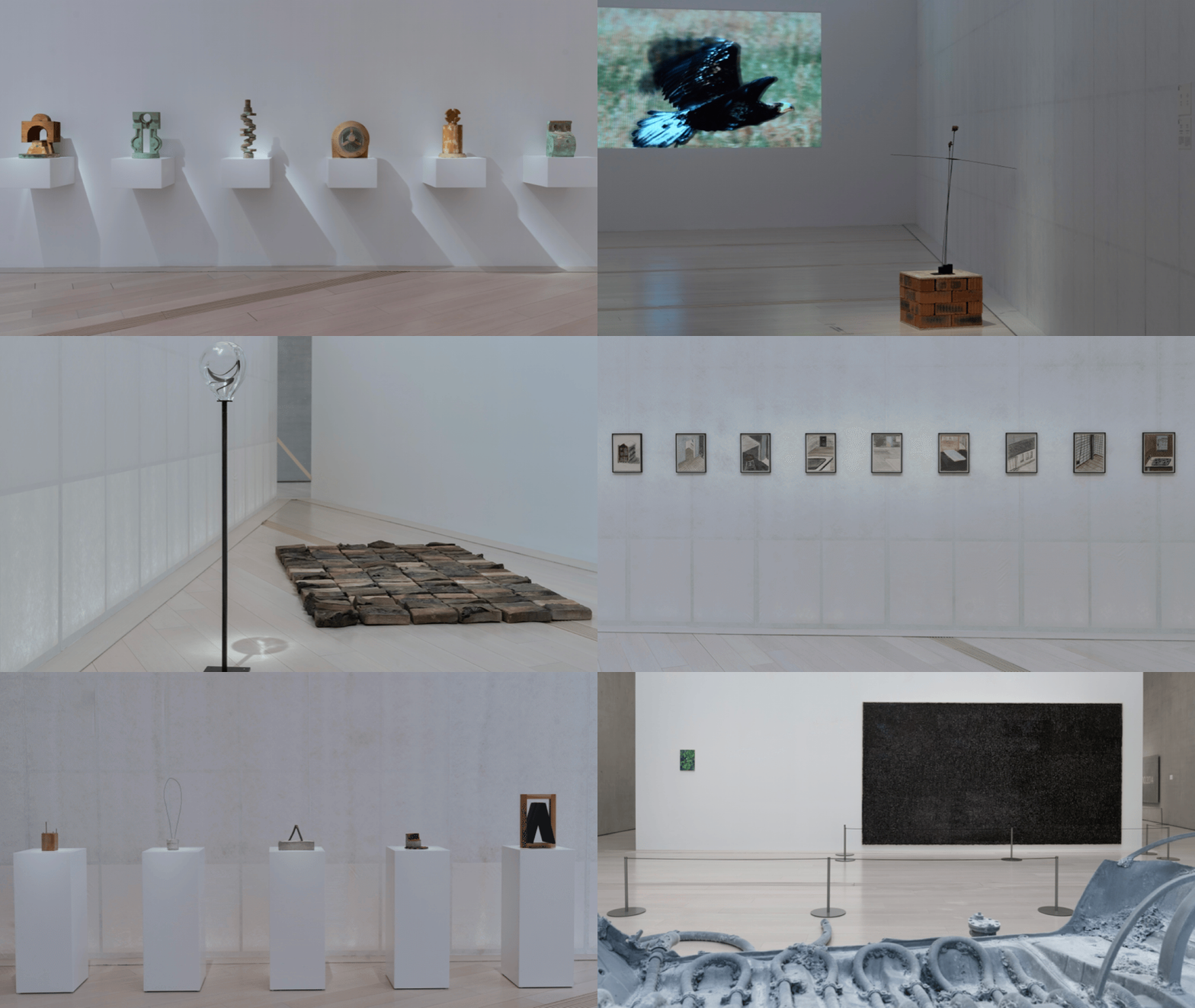
In 2022, Building Dreaming at BY ART MATTERS divided a large gallery into eight connected spaces with lightweight, translucent partitions. The curatorial interview explains how works by 45 artists and groups move between rational construction and imagination. Photographs, sculptures and installations converse through form and ideas. Rather than impose one explanatory route, the exhibition invites visitors to wander as if through a garden and build their own connections between works, intervals and personal responses.
“Building Dreaming” at BY ART MATTERS Tianmu Art Museum, Hangzhou, early summer 2022. The museum, which opened at the end of last year, has entered its second exhibition season with two shows: the group exhibition “Building Dreaming” and a solo exhibition by the young artist Cheng Ran.
The group exhibition “Building Dreaming” occupies the museum’s nearly 1,500-square-meter main gallery on the first floor. It brings together approximately eighty works by forty-five artists or artist groups from China and abroad. The list is star-studded, including Matthew Barney, Bernd and Hilla Becher, Hiroshi Hamaya, Liu Wei, and Wang Jianwei. The works span wide reaches of time and geography, entering into “conversation” with one another. Opening a new exhibition during the pandemic was not easy. What are the highlights of “Building Dreaming”? How did the museum respond to the challenges of mounting a show under these conditions?
After six months of operation, what new understandings of, and responses to, contemporary-art exhibitions have audiences developed? I spoke with the curator Sun Man. Mariana Castillo Deball, Who Measures Space, Who Tells Me Time? (Gears), 2015, view of “Building Dreaming,” BY ART MATTERS Tianmu Art Museum, 2022. Left: Mariana Castillo Deball, Who Measures Space, Who Tells Me Time? (Gears); right: Phyllida Barlow, untitled: lipchitzplinth2013, 2013, view of “Building Dreaming,” BY ART MATTERS Tianmu Art Museum. The new exhibition, titled “Building Dreaming,” begins where the galleries connect with the daylight outside.
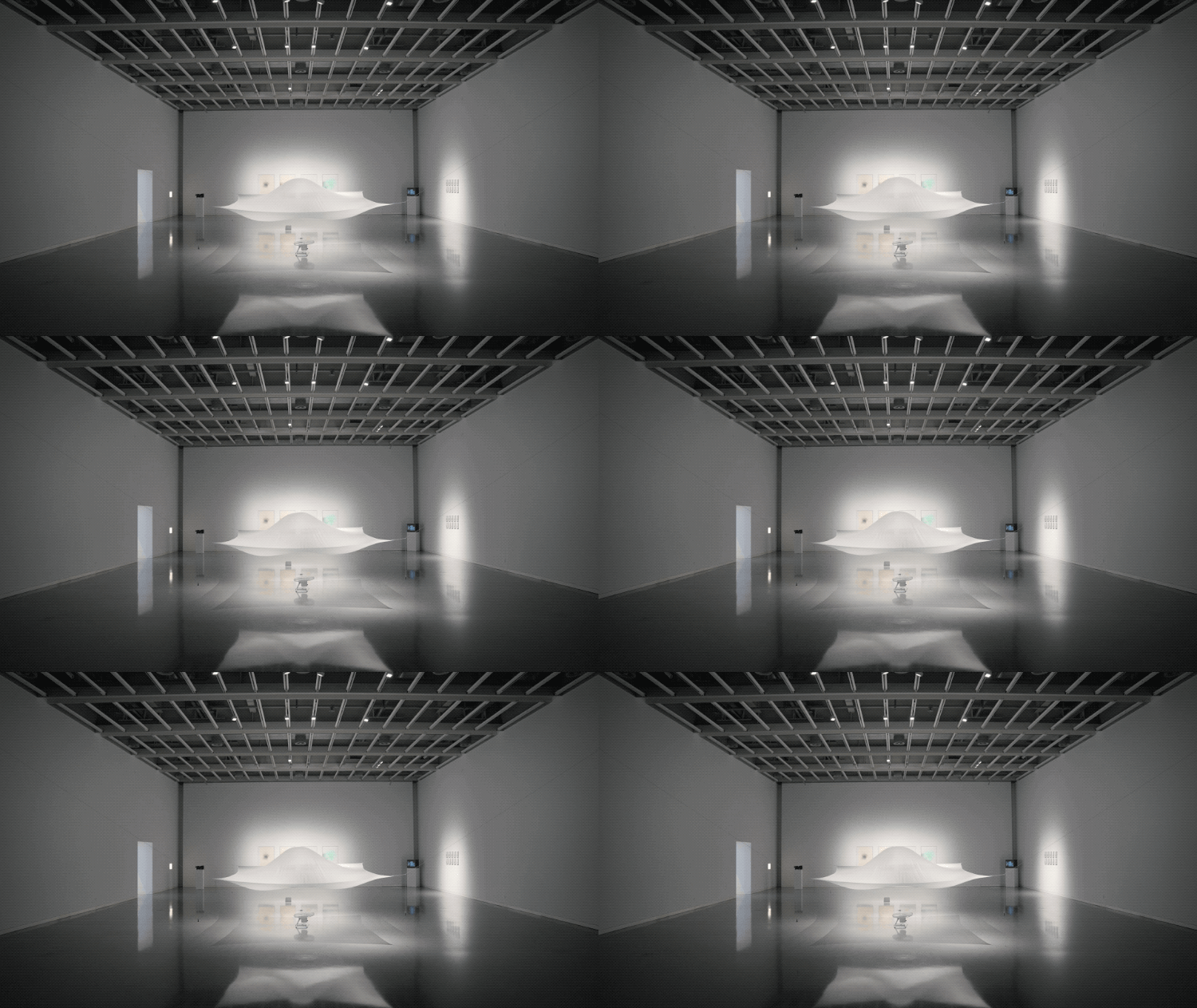
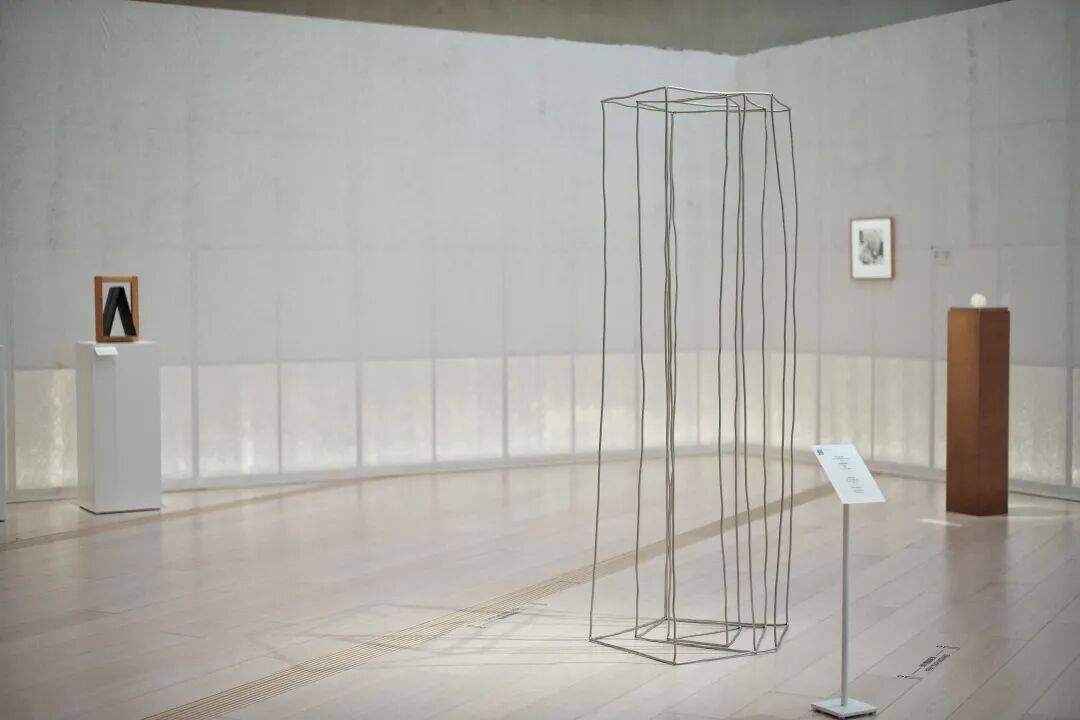
At the entrance, the most striking work is a 4.3-meter-high sculpture assembled from loosely stacked, traditionally fired ceramic vessels whose forms and sources come from different periods. Beside it is an installation made by reassembling simple everyday materials—plywood, cement, foam, plaster, paint, PVA, and others. It is an “anti-monumental” work. View of “Building Dreaming,” BY ART MATTERS Tianmu Art Museum, 2022. In the first-floor gallery, the open layout of the opening exhibition, with its broad expanses and dramatic transitions, has disappeared. In its place is a gradually unfolding labyrinth: eight small galleries are divided by thin, supple sheets of DuPont paper. The partitions glow faintly with white light, creating the hazy atmosphere of a dream—an apt setting for “Building Dreaming.”
“This time, we wanted to give visitors the feeling of strolling through a garden,” curator Sun Man said. In the exhibition title, “Building” and “Dreaming” are both rendered in the present progressive tense, suggesting that contemporary art is always in two states at once: being constructed and being dreamed. The title can also be understood as representing the two poles of reason and emotion. Sun explained, “The works embody the choices artists make between reason and imagination—or their blending of the two.”
SECTION 01 | Building: restraint, rationality
“The process of drifting between those two poles is extremely interesting and rich.” Bernd and Hilla Becher, Water Towers series, 1960–2009, view of “Building Dreaming,” BY ART MATTERS Tianmu Art Museum. The exhibition begins with “Building.” The earliest group of works on view is the Water Towers series by Bernd and Hilla Becher, leading figures of the “Düsseldorf School.” Created beginning in the 1960s, the images are highly restrained and rational.
In 1957, the two met at an advertising agency in Düsseldorf, Germany. Two years later, they began collaborating on photographic works. Their subjects were unusual: industrial structures that had once been at their height but were already disappearing, including water towers, blast furnaces, gas tanks, mine-car dumpers, and grain elevators. Bernd and Hilla Becher, “Water Towers” series, 1960–2009. Image courtesy of the artists and Konrad Fischer Galerie, Düsseldorf. They simply recorded the physical characteristics of the structures, without emphasizing conventional ideas of beauty.
They required every photograph to achieve the accuracy and rigor of an engineering diagram. To avoid light that was too harsh or too weak, they generally photographed in overcast weather during spring and autumn. This allowed them to capture architectural details with the greatest possible clarity and precision, reducing photography’s variable factors to a minimum. These photographs, preserving the last remains of the industrial age, have had a profound influence on later generations, both in method and in concept. Left: Hiroshi Hamaya, Katsura 005/Interior of the Shokin-tei, 1953–1954; right: Hiroshi Hamaya, Katsura 004/Shin-goten, East Exterior, 1981–1982. Two other gelatin silver photographs in the exhibition enter into a distant dialogue with them. They were made by Hiroshi Hamaya and take Kyoto’s Katsura Imperial Villa as their subject.
Hiroshi Hamaya was a Japanese American born in San Francisco. After the war, he combined the Japanese aesthetic of shadow and subdued light with German academic traditions. In his images, the lines and rectangles of Katsura’s interior and exterior are deliberately emphasized. Their Bauhaus-like simplicity is joined to the refined elegance of Japanese wooden architecture. Feng Yan, Black Leather Chair and Wooden Box, 2010, view of “Building Dreaming,” BY ART MATTERS Tianmu Art Museum. Feng Yan’s photographs, meanwhile, describe in color a Chinese minimalist aesthetic marked by the 1980s.
Feng Yan graduated from the Department of Photography at the Beijing Film Academy and is equally exacting and tenacious in his photographic practice. Before shooting, he spends a great deal of time carefully examining each scene. During the shoot, he uses only a 50-millimeter fixed-focus lens. Afterward, he neither crops nor retouches the images, making only occasional, extremely slight color adjustments. After viewing the works of the Bechers, Hamaya, and Feng Yan on site, audiences may notice formal similarities among works made in different times and places, while also sensing how different their resulting states are. Behind each is an artist’s distinct way of thinking.
Matthew Barney, The Victoria Crown, 2014, view of “Building Dreaming,” BY ART MATTERS Tianmu Art Museum. Turning from photography to large-scale metal installations and sculpture, one encounters a powerful impact, both visually and spatially. One of the exhibition’s most substantial works is Matthew Barney’s The Victoria Crown, cast in heavy gray-white zinc. Its central form resembles the chassis of a Ford Crown Victoria Police Interceptor.
This type of car is a common American police vehicle. A corrugated tube more than two meters long runs along the chassis, making the work look like the remains of a giant laid across four sleepers. Donald Judd, Untitled, 1989, view of “Building Dreaming,” BY ART MATTERS Tianmu Art Museum. The American minimalist Donald Judd is represented by six rectangular hollow metal boxes, suspended from the wall at even intervals.
This is Judd’s signature vocabulary of “stacking.” He wanted sculpture to merge with the space occupied by the viewer—simple, yet ambiguous, with blurred boundaries. Wang Jianwei, “…or the event caused every invalid result,” 2013, view of “Building Dreaming,” BY ART MATTERS Tianmu Art Museum. Liu Wei, The Wanderer, 2015, the work at the center of the image, view of “Building Dreaming,” BY ART MATTERS Tianmu Art Museum. Alongside the rough, weighty metal sculptures, the exhibition includes works made from lighter materials such as wood, rubber, and wire. These appear more delicate and buoyant, their forms freer.
One of Liu Wei’s works, more than two meters high, reveals a certain uncertainty beneath its regularity. Kishio Suga, works from left to right: Untitled, Standing in the Void, Untitled–24, Boundary Curve, and Interval Surface, 1982–2010, view of “Building Dreaming,” BY ART MATTERS Tianmu Art Museum. Left: Kishio Suga, Untitled, 2004. Right: Kishio Suga, Standing in the Void, 2010. A leading figure in Japanese Mono-ha, Kishio Suga uses everyday materials—wood, nails, wire, cement, and iron—to create new “components.” Each installation forms an intense interaction with its surroundings, and its visual rhythm rewards close attention.
Shao Yi, works from left to right: Sabhā Sabhā, Ihī Ihī, Dūlu Dūlu, Shīna Shīna, Morā Morā, and Dhārā Dhārā, 2010, view of “Building Dreaming,” BY ART MATTERS Tianmu Art Museum. Photograph by Yuqing. Also working with a natural material—wood—the artist Shao Yi makes sculptures that embrace “Buddha-nature” through minimalism. He alters wooden molds used in industrial production, creating shrine-like forms and naming them after murmured rhythms in Sanskrit.
Shao Yi draws on religious symbolism, allowing objects that were originally utilitarian to carry a kind of spiritual force. Viewers can therefore sense the artist’s simple pleasure in, and appreciation of, engaging with objects. The first half of the exhibition title, “Building,” relates to works that enter into dialogue with architecture, matter, and form. Works associated with the second half, “Dreaming,” are more abstract and employ more novel media. They explore collective and personal memory, the passage of time, or the extinction and rebirth of life.
SECTION 02 | Dream: lightness, sensuality
This is also apparent in the exhibition’s physical arrangement: hazy walls, a winding route, and ambiguous boundaries all seem to prepare the visitor for entering a dream. Mungo Thomson, Timekeeper, Chapters 1–7, 2022, view of “Building Dreaming,” BY ART MATTERS Tianmu Art Museum. In a forty-seven-minute video work, the Los Angeles artist Mungo Thomson records everyday life in an unconventional way, as if we were watching our own lives through a third eye. The experience is strange and compelling.
Mona Hatoum, Silver Ball, 2019. Image courtesy of the artist and Galerie Chantal Crousel, Paris. Silver Ball is a nine-centimeter-diameter sphere made by the Lebanese artist Mona Hatoum from a tuft of white hair, set on a wooden base. It presents gray hair with a sense of the sacred, while also serving as a kind of memorial to the passage of time.
Left: Gregor Schneider, The Beginning House, 1993. Right: Genieve Figgis, Green Chair, 2016. The curatorial team places Schneider’s photographs beside Figgis’s oil paintings. They come from different times and places, yet appear like a pair of twins with radically different temperaments.
BY ART MATTERS Tianmu Art Museum Opens Its Second Season: Forty-Five Artists in Conversation
“Art activates ordinary things; in the smallest details, there are surprises and unexpected discoveries.” These are among the sensations the curatorial team hopes visitors will experience on site—experiences that looking at images alone cannot provide. Ouyang Ting, Zoning Out, 2009, view of “Building Dreaming,” BY ART MATTERS Tianmu Art Museum. Deep inside the “dream,” the works become increasingly light and delicate. A white, fluffy cloud hangs in midair, with a periscope used by submarine crews protruding from its underside.
Visitors seem to be floating above the clouds, or diving beneath the sea. The artist Ouyang Ting titled the work Zoning Out, a phrase that is itself light and double-edged. The physical cloud recalls the imaginary cloud that appears above one’s head while daydreaming. Adrian Nivola, this series of works is dedicated to the great aircraft makers of history, 2014, view of “Building Dreaming,” BY ART MATTERS Tianmu Art Museum. Photograph by Yuqing. The exhibition also includes a number of tributes to those who have pursued dreams throughout human history.
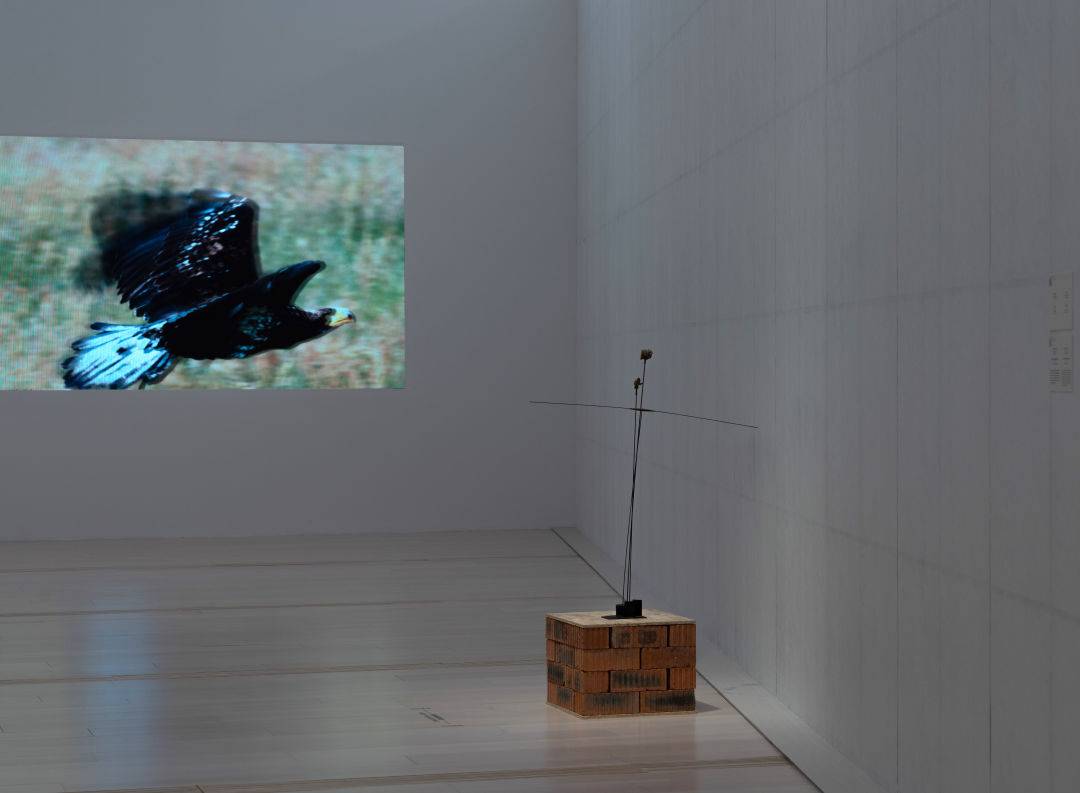
Using linen, wire, aluminum, and other lightweight materials, Adrian Nivola improvised a series of sculptures dedicated to the great aircraft makers. Their lines are simple and highly spontaneous, awkward in the manner of children’s handicrafts, yet they vividly evoke the innocence, optimism, and freewheeling imagination involved in humanity’s attempts to invent flying machines. Upper left: Mircea Cantor, The Eagle Does Not Waste Its Energy Trying to Catch Flies, 2018, view of “Building Dreaming,” BY ART MATTERS Tianmu Art Museum. Takis, Signal, 1974, view of “Building Dreaming,” BY ART MATTERS Tianmu Art Museum. Takis’s kinetic sculpture Signal, created in the 1970s, offers another form of dreamlike experience.
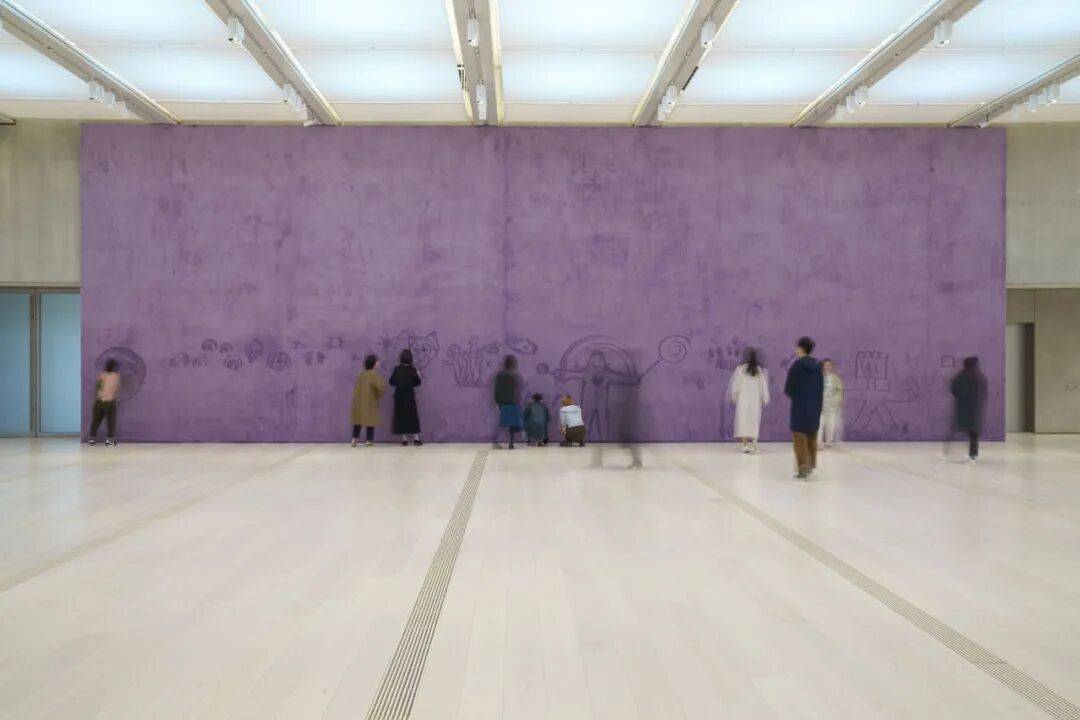
He uses invisible forms of energy—magnetism, sound waves, or light waves—as his means of creation, producing a sense of mystery beyond ordinary dimensions. By the time we reach the end of the exhibition, it feels as though we have been through a long dream and returned to reality. From Nothing to Something, the opening exhibition at BY ART MATTERS Tianmu Art Museum, 2021. The museum was one of the most closely watched new art museums to open last year. From its architecture to the international character of its contemporary-art exhibitions, it has been called “Hangzhou’s ceiling of literary and artistic culture,” and during its first six months it has continued to surprise us both online and in person.
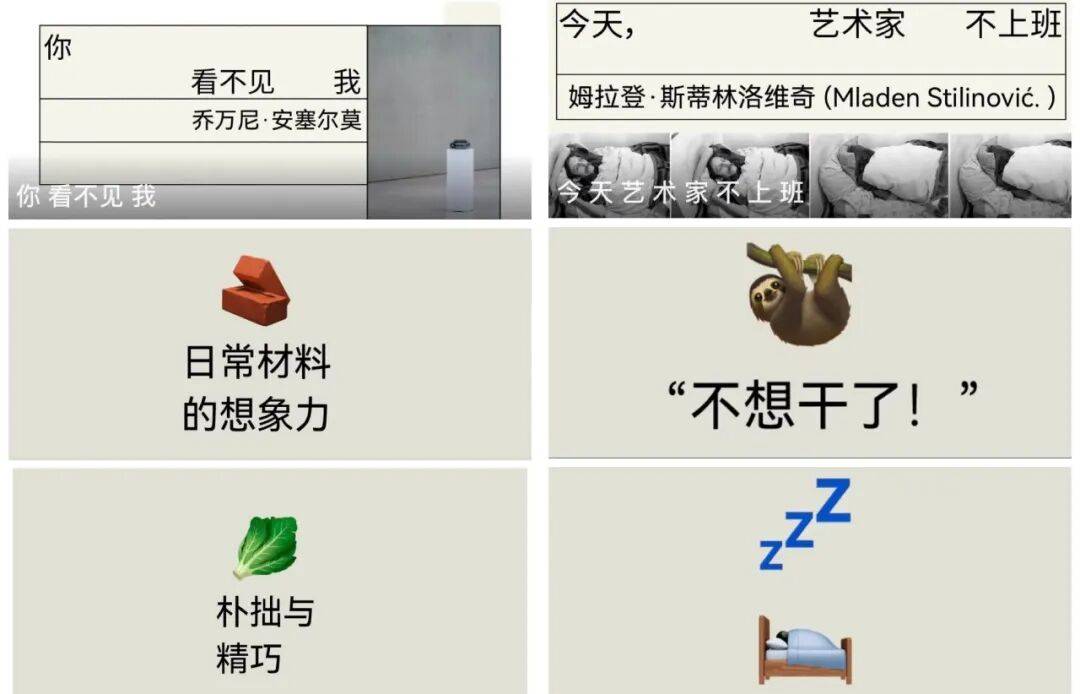
Online, the team offers lively explanations of artworks and artists on social-media platforms. It has devoted considerable effort to interpreting “difficult” contemporary art, often introducing works with humor and using current modes of communication, including emojis. The explanations proceed from the accessible to the more complex. The museum has also launched a column called “F!gure Talk,” inviting artists and creators to discuss their work and share their understanding of life.
SECTION 03 | Review and Reflection on the First Six Months
Above: Rirkrit Tiravanija, Untitled, 2018, public artwork at Tianmu Li. Below: a tea gathering at BY ART MATTERS Tianmu Art Museum, 2022. Offline, the museum has also organized a number of playful artist-residency programs, including invitations for audiences and artists to share a meal and make work together on site. It has also held tea “pop-ups” in the tea house by Rirkrit Tiravanija in the collection.
Another event took its inspiration from Man Ray’s “Nothing Is Useless,” inviting visitors to bring their own “useless objects” to the museum and exchange them with strangers. How does the BY ART MATTERS Tianmu Art Museum team view what it has gained since opening, and what does it hope for from this exhibition? What follows is a selection from my interview with curator Sun Man. Q: Interviewer. A: Sun Man. Sabine Moritz, series of works, 2016, view of “Building Dreaming,” BY ART MATTERS Tianmu Art Museum, 2022. Q: What preparations and challenges did you face in mounting a new exhibition during the pandemic?
A: The previous exhibition ended on May 8, and we immediately began taking it down and preparing the space. The works for this exhibition arrived at the same time, and installation was completed on the 26th, giving us about ten days in all. A few weeks ago, we encountered a situation in which works could not reach Hangzhou on schedule because of transportation problems. The experience of the opening exhibition helped us make judgments earlier about when contingency plans would be necessary. We anticipated several possibilities in advance and set out how the exhibition content might need to change.
It has been gratifying to see how readily everyone on the team has learned to embrace change. Their first response is always: Stay calm; we can find another way. View of “Building Dreaming,” BY ART MATTERS Tianmu Art Museum, 2022. I worked very closely with the other curator, Stefano Collicelli Cagol. He has extensive curatorial experience, especially in communicating with artists, setting the exhibition’s overall tone and structure, and imagining how works might be arranged in an empty space. All of that is essential to making a large group exhibition of this kind.
I was fortunate to work more closely across the gallery, the works, and the team. Our relationship also resembles that between “dreaming” and “building.” Another difficulty is that art is inherently resistant to standardization and quantification, while presenting an exhibition still requires careful arrangements and practical planning. Much of a curator’s role lies in finding a balance between exceeding standards and meeting them. That is the most challenging part, and also what makes the work interesting.
Paolo Icaro, Empty Space, 2014, view of “Building Dreaming,” BY ART MATTERS Tianmu Art Museum, 2022. Photograph by Yuqing. Q: What are the highlights of this exhibition? A: The exhibition includes many artists, some of whom are relatively unfamiliar to audiences in China. We made several curatorial considerations in response. Some canonical works are arranged near one another chronologically. When an artistic tendency or movement has influenced works from different periods, we considered placing those works in the same gallery so that a natural dialogue could emerge among them.
For viewers, this creates a sense of moving “from far to near” in relation to the artistic background and the works themselves. But the exhibition is not organized around a single narrative with a “correct answer.” It relies more on atmosphere as a form of guidance. There are many “blank spaces,” because we want people to wander through the galleries more comfortably. Understanding an artist’s background, story, and significance is certainly important, but it is not the museum’s only purpose since opening. Nor do we prescribe how visitors should respond. Visitors are mirrors, each reflecting something different.
Visitors interacting with contemporary art at the opening exhibition From Nothing to Something, 2021. Q: What feedback have you received during the six months since opening, especially about your observations of visitors? A: The previous exhibition season gave us some unexpected responses. That is precisely the real gain art offers through its unpredictable, dreamlike dimension. With From Nothing to Something, visitors’ interpretations and experiences were remarkably diverse. Some said, “I felt so happy after seeing the exhibition.” One person said they had just quit their job and felt deeply connected to the many works about labor and “doing nothing.” Some visitors posted detailed accounts of their responses to every work. Others felt that the exhibition was especially welcoming to children.
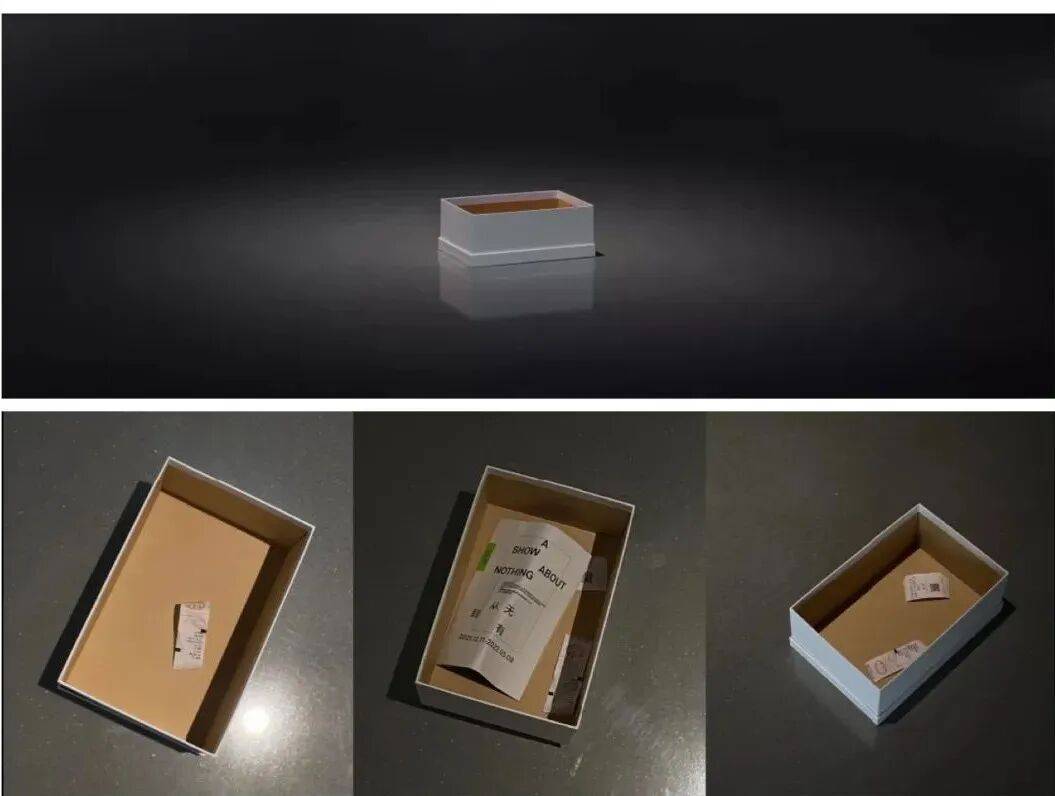
They also found their own ways to converse with the works. Some lay on the floor and warmed up alongside the dancers in Warm-Up; others danced with the performers in Tino Sehgal’s work. The interaction between visitors and the work Empty Shoebox at BY ART MATTERS Tianmu Art Museum, part of the From Nothing to Something opening-exhibition program, was especially representative. The box was stepped on, dismantled, and reassembled; it became a message board; and visitors used it as a “prop” in scenes they designed themselves. We found this deeply surprising and exciting. That kind of free expression matters.
Since opening, feedback from visitors, volunteers, and colleagues has been extremely important to us, giving us new perspectives on our future plans. Before opening, we were relatively “working behind closed doors.” Afterward, we gradually realized that audiences were more receptive than we had expected. During the first exhibition season, we placed a short curator-led tour video in the fifth-floor gallery. Visitors stopped to watch it with great attention, which made us realize that the format could be continued and developed—finding ways to offer more guidance and information without disturbing the experience of viewing the exhibition.
We will pay more attention to this in the current exhibition and in the future. Some visitors come to the exhibitions feeling confused and ask staff when the museum will hold a “painting exhibition.” We are in fact planning to present painting exhibitions in the future and hope to make the program more diverse. Around November this autumn, we will present the exhibition for the third quarter.