In Hangzhou, an Immersive Exhibition That Makes the Everyday New
What should the relationship between art and daily life be? From Duchamp’s 1917 urinal to contemporary works shaped by ordinary objects, this exhibition traces nearly a century of artists turning fleeting moments into monuments......
By / Xirui Huang · 10 min read
How did BY ART MATTERS invite a fresh look at ordinary objects in 2024?
In the 2024 interview at BY ART MATTERS, Francesco Bonami and Wu Tian discuss how art can preserve fleeting experience through ordinary things. Works from different periods alter expectations through contrasts in light, texture, weight and scale. Marcel Duchamp’s optical experiments appear alongside installations that transform familiar materials. Rather than impose a single story, the exhibition invites visitors to slow down and notice relationships they might otherwise overlook in daily life.
Exhibition | "A Moment Becomes a Monument": Everyday Life Has Meaning Too
What should the relationship between art and daily life be? Ever since Marcel Duchamp secretly submitted his famous urinal to a New York exhibition in 1917, traditional ideas about art have been overturned almost overnight. Art was brought down from its lofty pedestal and began, inevitably, to entangle itself with everyday life. Liang Tingxu, *Scene of Dialogue T_9*, 2018, installation view of *A Moment Is a Monument*, BY ART MATTERS TANKUTI ART MUSEUM, 2024, photograph by Jiang Liuliu. Ryan Gander, *A Lamp Made by the Artist for His Wife (Attempt 22) #22*, 2013, installation view of *A Moment Is a Monument*, BY ART MATTERS TANKUTI ART MUSEUM, 2024, photograph by Xu Jinsong. This August, the new exhibition *A Moment Is a Monument* at TANKUTI ART MUSEUM presented more than eighty works by twenty-nine artists or artist groups from China and abroad, including works by Duchamp, spanning from the 1930s to the present and taking everyday things as their medium, inspiration, and setting.
Alongside internationally known artists such as Anthony Caro and Edmund de Waal, whose work is being shown for the first time at an art institution in mainland China, the exhibition includes rare work by He Xiangyu, a young artist who has recently attracted considerable international attention. At the opening, we spoke with the exhibition’s curators, Francesco Bonami and Wu Tian, about how, across nearly 100 years, artists have endowed the ordinary things of our lives with spirit and meaning.
Installation view of *A Moment Is a Monument*, BY ART MATTERS TANKUTI ART MUSEUM, 2024, photograph by Jiang Liuliu. In the exhibition’s title, “a moment” refers to the small, swiftly changing instants of daily life. “A monument” suggests that artists may perceive these moments with unusual acuity and transform them into works, preserving them as monuments and allowing us to return, again and again, to the ordinary but beautiful “small certainties” of life.
In Hangzhou, an Immersive Exhibition That Makes the Everyday New
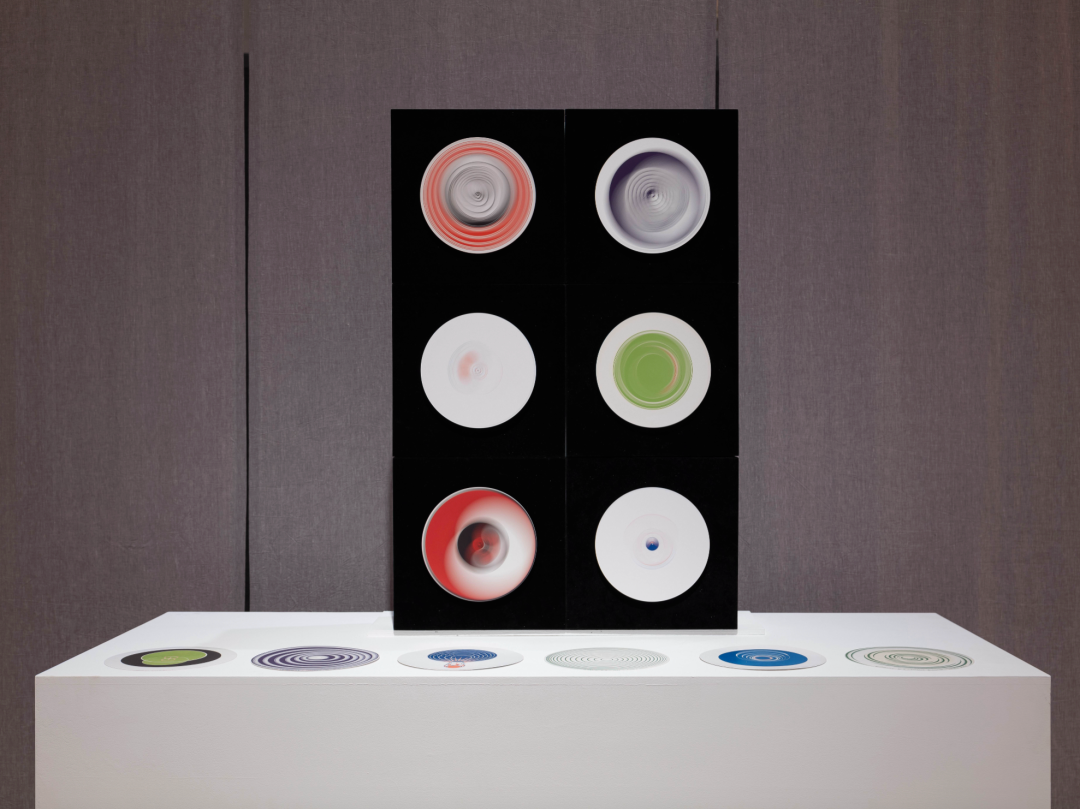
“By examining these everyday objects, we can explore the human side of art, and we hope the exhibition will give visitors a chance to slow down,” the curator told us. Marcel Duchamp, *Rotoreliefs*, 1935, installation view of *A Moment Is a Monument*, BY ART MATTERS TANKUTI ART MUSEUM, 2024, photograph by Xu Jinsong. The earliest work in the exhibition is Duchamp’s *Rotoreliefs*, made in 1935.
“When we mention Duchamp, we shouldn’t think only of readymades. He also made many pioneering attempts in other areas, and this work shows another side of him. At a time when television was not yet widely used, he was already experimenting with optical illusions. That is remarkable. Art is not about preaching; it is about exploration. That is also where art’s meaning lies,” the curator said. Some of the works that enter into a long-distance dialogue with Duchamp’s are nearly 100 years “younger” than his.
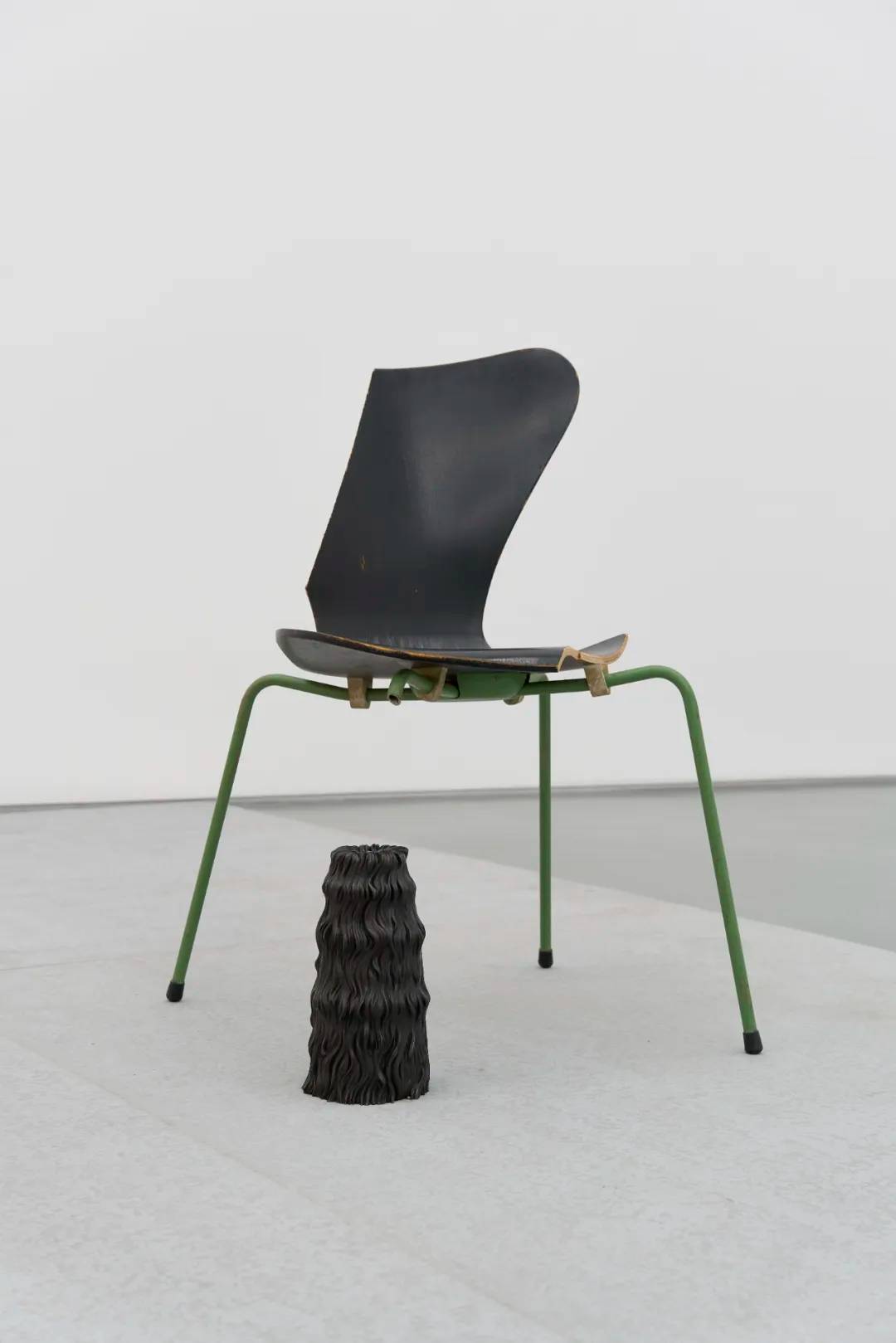
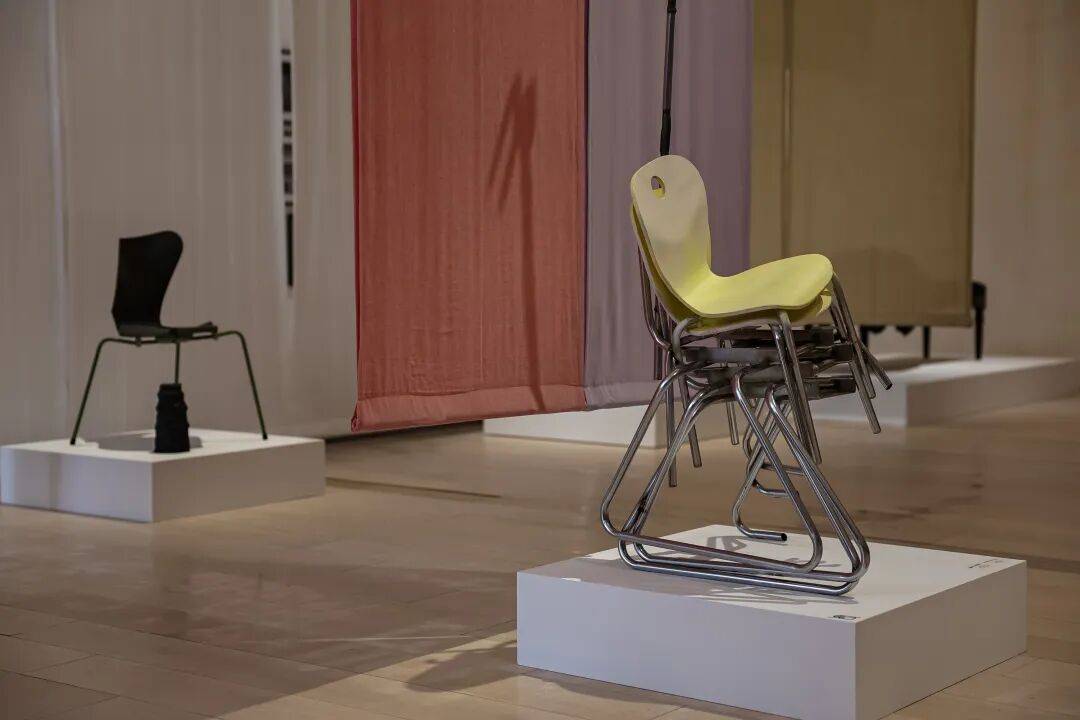
Installation view of *A Moment Is a Monument*, BY ART MATTERS TANKUTI ART MUSEUM, 2024, photograph by Xu Jinsong. The two chairs in the photograph are both works by the young Chinese artist He Xiangyu. The exhibition is divided into eight chapters: “Reflections of Worship,” “Gazing at the Moon,” “The Eternal Drama,” “A Touch of Warmth,” “A Stroke of Ease,” “The Silent Monologue,” “The Heavy Bird,” and “The Return of the Human.” The chapters are separated by hanging fabric, and the light, movable partitions lend the galleries a softness absent from conventional white walls.
It is worth noting that the differently colored fabrics are from surplus stock rather than newly produced, an especially apt choice for an exhibition centered on everyday objects.
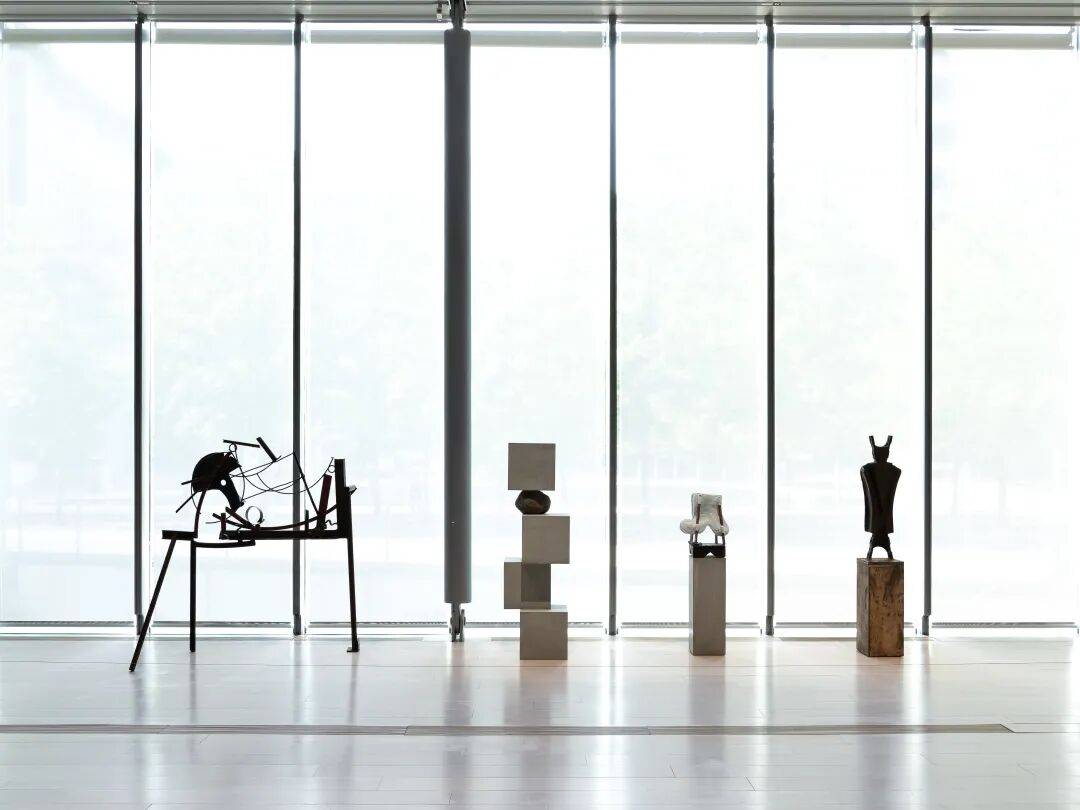
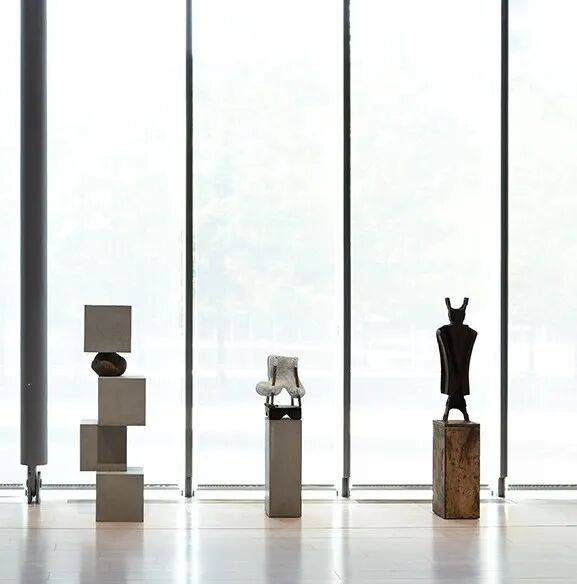
“We left spaces between the fabric partitions, giving visitors the freedom to pause and revisit what they have seen as they move through the exhibition, rather than pushing them forward,” the curator explained of the spatial design. Anthony Caro, *Emma Screen* (detail), 1977/1978, installation view of *A Moment Is a Monument*, BY ART MATTERS TANKUTI ART MUSEUM, 2024, photograph by Jiang Liuliu. Installation view of *A Moment Is a Monument*, BY ART MATTERS TANKUTI ART MUSEUM, 2024, photograph by Jiang Liuliu. Entering the galleries, we first encounter “Reflections of Worship,” the opening chapter. Anthony Caro’s *Emma Screen*, along with *The Fundamental Question XXVIII* by the Mexican artist José Dávila and four sculptural works by Marianne Vitale and Tatiana Trouvé, begins the exhibition. The works are placed before the museum’s white, semitransparent glass curtain wall on the north side, where they meet the daylight.
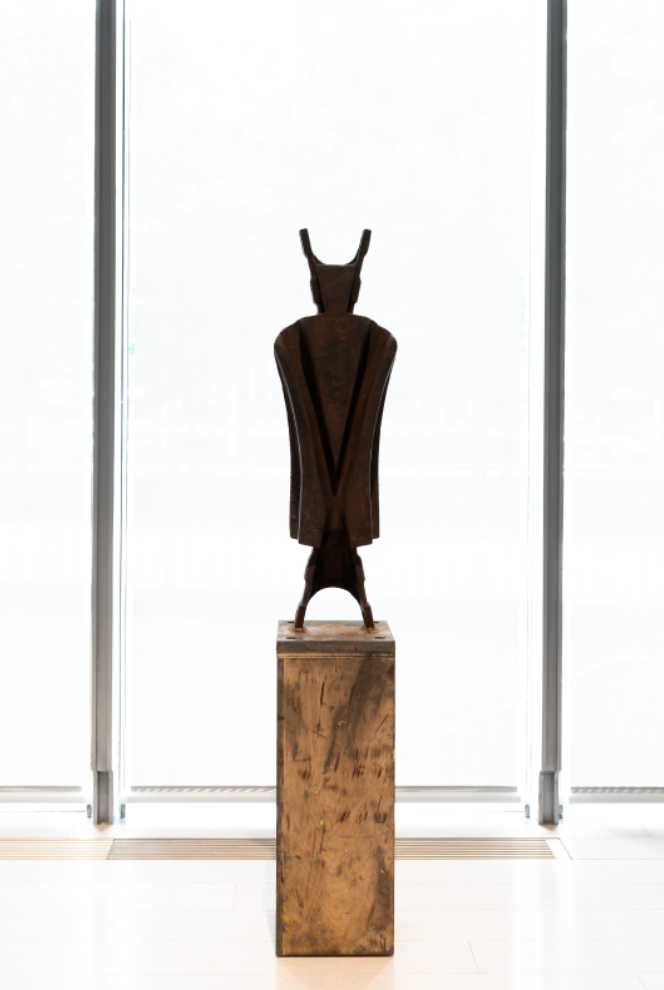
A pioneering abstract sculptor of the 20th century, Caro was known for welding industrial readymades into metal sculptures. He was regarded as the greatest British sculptor of his generation. His first sculptures shocked the world: they had no bases and did not figuratively represent any particular person or thing, yet they possessed a powerful sense of movement. For the art world of the time, these works, charged with industrial and architectural qualities, were profoundly revolutionary. Marianne Vitale, *Common Frog (Little Baby)*, 2017, installation view of *A Moment Is a Monument*, BY ART MATTERS TANKUTI ART MUSEUM, 2024, photograph by Jiang Liuliu. In the simple steel and the sculptures made from rail components that resemble African totems, we seem to find traces both of the industrial age and of humanity’s earliest tribal cultures. Set beside each other, they take us from antiquity to the explosion of human civilization brought by the Industrial Revolution.
Jamesplumb, *Mottled Moon*, 2020, installation view of *A Moment Is a Monument*, BY ART MATTERS TANKUTI ART MUSEUM, 2024, photograph by Jiang Liuliu. The second chapter’s gallery is the opposite of the transparent, gleaming white prologue. We enter a completely black room, silent and still. Eight moons hover in the darkness, moving from eclipse and new moon to full moon. Each emits a faint, warm glow, filling the room with poetry and making the passage of time almost perceptible.
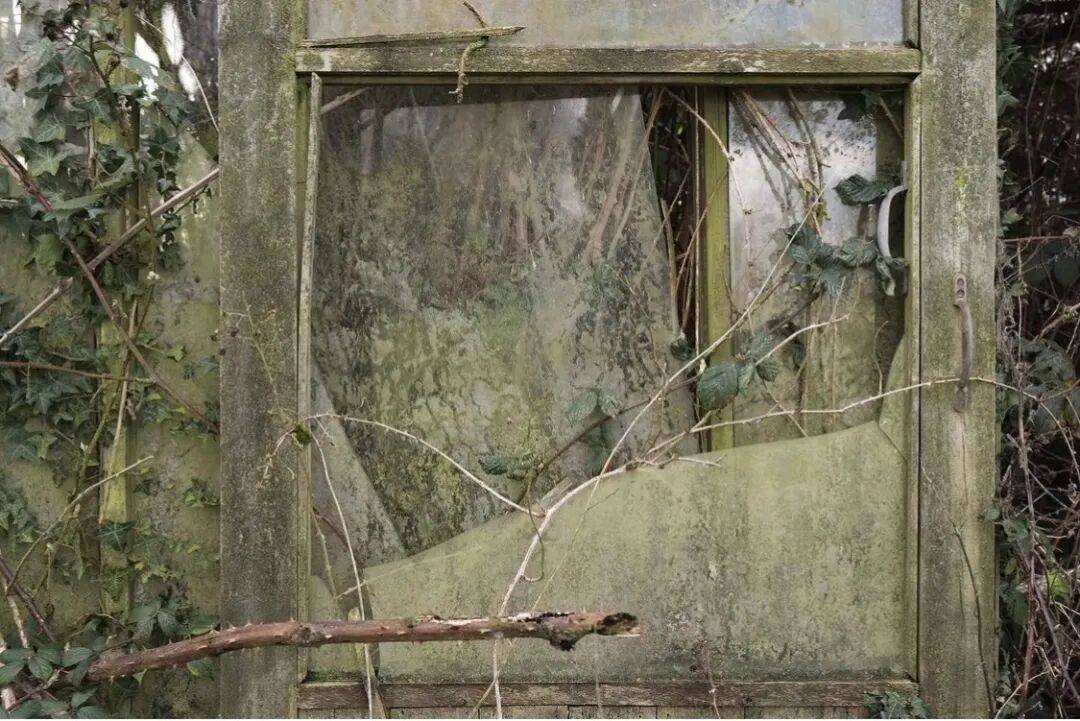
The process behind *Mottled Moon* is difficult to imagine. This astonishing immersive installation was made by the artist Jamesplumb from discarded glass panes salvaged from abandoned greenhouses, their surfaces covered in moss, lichen, and dirt. After being treated, the panes were projected through optical principles. The traces of moss left on the glass resemble the radiance and shadows the moon has carried since antiquity. Here, nature, time, and life are brought together within a single work.
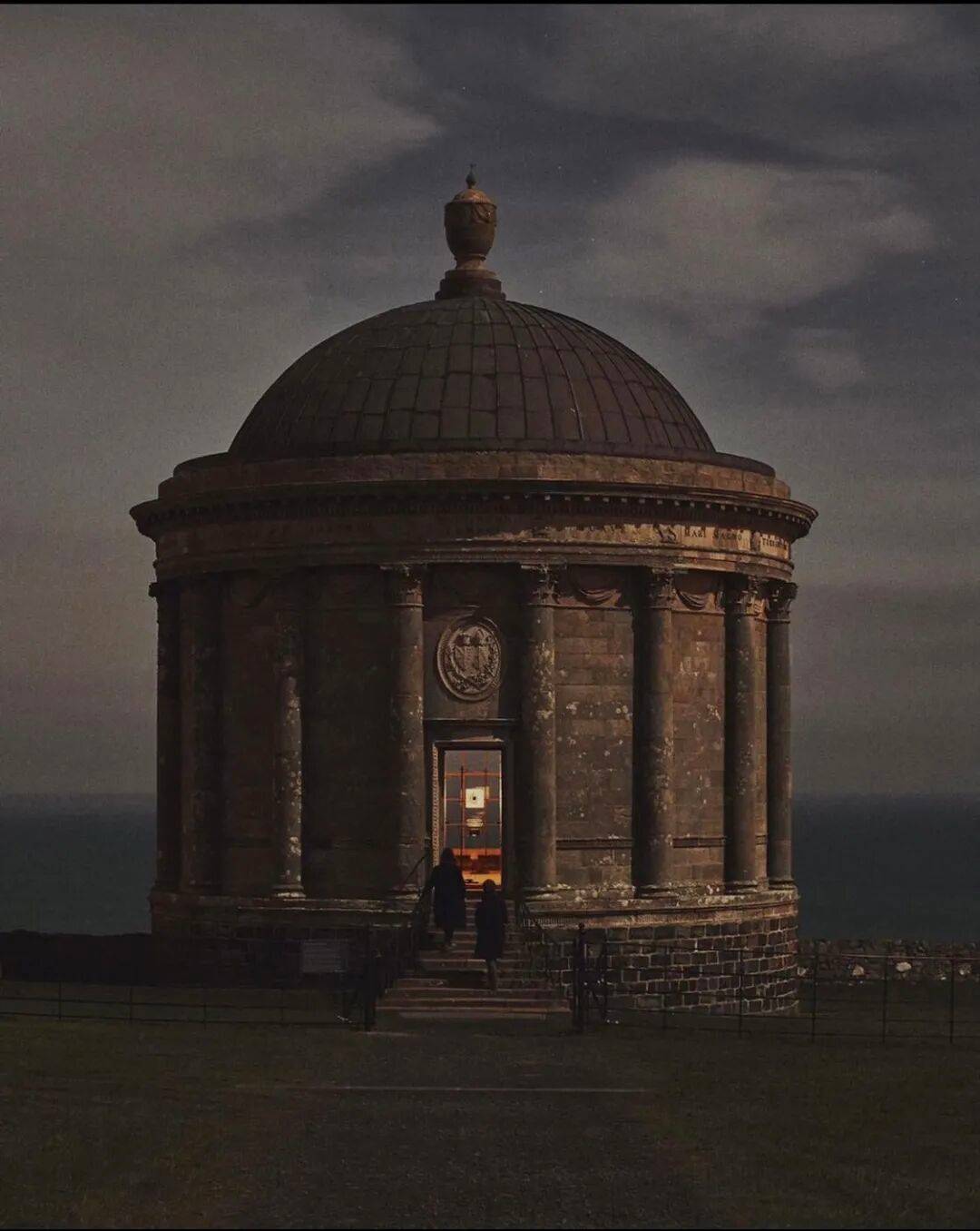
“Although each visitor will favor different works according to their experiences and tastes, in terms of scale Jamesplumb’s *Mottled Moon* requires little explanation. It gives us a direct, concentrated, and abundant experience of beauty, and behind that experience lies our instinctive connection with nature,” the curator said. Since the exhibition opened, the work has also been one of the pieces where visitors linger longest and one of the most enthusiastically received. *Mottled Moon* installation at Mussenden Temple, 2021, photograph by Rich Stapleton. This is likewise Jamesplumb’s first exhibition at an art museum in mainland China.
SECTION 02 | When you are staring at the moon, the moon is also staring at you
James Russell and his wife, Hannah Plumb, are the British artists who founded the interdisciplinary studio behind the work. *Mottled Moon* was first shown in the library of Mussenden Temple, an abandoned estate built on a sea cliff in Northern Ireland. The lighting alone took 18 months to install.
If the work here offers an expansive encounter with nature, its grandeur and desolation, then at TANKUTI ART MUSEUM it turns toward the self, toward the fragmentary and the everyday. Ryan Gander, *Then the Sound of Their Falling Is Four-Dimensional—A Study in Composition Ten*, 2016, installation view of *A Moment Is a Monument*, BY ART MATTERS TANKUTI ART MUSEUM, 2024, photograph by Xu Jinsong. Theaster Gates, *Some Members of the World Live in Paradise* (detail), 2016, installation view of *A Moment Is a Monument*, BY ART MATTERS TANKUTI ART MUSEUM, 2024, photograph by Xu Jinsong. As its title suggests, the chapter “The Eternal Drama” is full of theatricality.
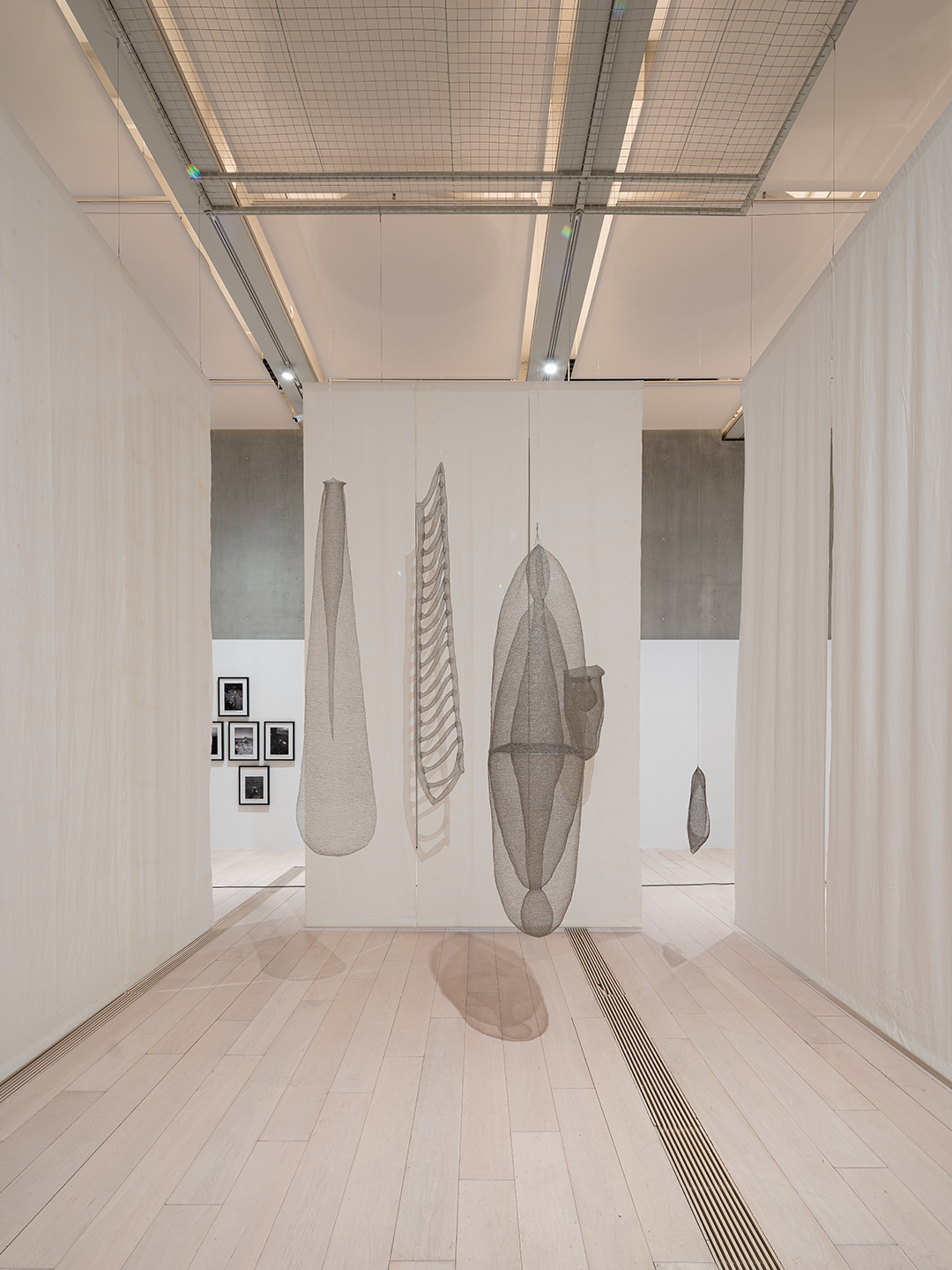
Most striking is Theaster Gates’s *Some Members of the World Live in Paradise*: ten white and black clay figures, like deformed Go stones, face the work itself and the viewer, playing a game with no winner or loser, performing a silent farce, or perhaps enacting some ancient ritual or myth. Works by Lothar Götz, 2008–2014, installation view of *A Moment Is a Monument*, BY ART MATTERS TANKUTI ART MUSEUM, 2024, photograph by Jiang Liuliu. In “A Stroke of Ease,” the most arresting work is by the German artist Lothar Götz, who crocheted translucent, mesh-like structures from stainless-steel wire and suspended them in midair.
Seen from different angles, the work reveals minute shifts in light and shadow. Vivian Suter, *Untitled*, year unknown, installation view of *A Moment Is a Monument*, BY ART MATTERS TANKUTI ART MUSEUM, 2024, photograph by Xu Jinsong. Suter’s work is painted with pigments made from minerals found in nature.
“Suter lived and worked for more than 40 years in the tropical rainforest of Guatemala, and she is especially adept at incorporating the active relationships among natural things into her images. The six canvases in this exhibition, varying in size, are displayed in overlapping, staggered arrangements. They vividly reflect the process and condition of Suter’s life and work in the rainforest,” the curator told us. As the exhibition progresses, we move from nature into the “interior,” more closely tied to daily life, and toward the “monologue” nearer to the soul.
Rachel Whiteread, *Untitled (Torso)*, 1992, installation view of *A Moment Is a Monument*, BY ART MATTERS TANKUTI ART MUSEUM, 2024, photograph by Jiang Liuliu. In “A Touch of Warmth,” there is an especially endearing pink hot-water bottle, a work by the British artist Rachel Whiteread shown for the first time at an art institution in mainland China. She cast in plaster the interior of the soft rubber hot-water bottle familiar from everyday life.
The work looks soft but is hard, revealing the interior space of a hot-water bottle—something we have never been able to see. Familiar yet new, it directs our attention toward and prompts reflection on the spaces so often overlooked in daily life. Edmund de Waal, *More Detours, More Delays*, 2022, installation view of *A Moment Is a Monument*, BY ART MATTERS TANKUTI ART MUSEUM, 2024, photograph by Jiang Liuliu. Another artist whose work is being shown for the first time is Edmund de Waal, who is both a writer and a ceramicist.
Wooden “trays” and porcelain “paper” as thin as a cicada’s wing appear in his work, where we can even see the ancient Chinese technique of kintsugi, the austere beauty of the old combined with contemporary forms. Because of de Waal’s multiple identities, his work often brings literature and art together. He is particularly drawn to the German philosopher Walter Benjamin, whose “Saturnine” temperament and creative rhythm—indirect, delayed, and recursive—deeply influenced him. De Waal sees in Benjamin a pace identical to that of his own artistic practice: through continual returns, postponements, and elaborations, the essential nature of objects and materials is gradually revealed, understood, and presented.
Installation view of *A Moment Is a Monument*, BY ART MATTERS TANKUTI ART MUSEUM, 2024, photograph by Jiang Liuliu. In the exhibition’s final two chapters, “The Heavy Bird” and “The Return of the Human,” the curator turns toward more metaphysical questions, hoping to prompt us to reflect on our lives and on our relationship with life and nature through the everyday.
“The artists in this exhibition are all skilled at creatively transforming the textures and weights of different materials: light and heavy, soft and hard, smooth and rough, and so on. They are constantly trying to preserve or embody the traces of time through matter,” the curator said. Anna Boghiguian, *Nine (Standing Birds)*, 2012–2015, installation view of *A Moment Is a Monument*, BY ART MATTERS TANKUTI ART MUSEUM, 2024, photographs by Xu Jinsong (above) and Jiang Liuliu (below). Near the end of the exhibition, we encounter Anna Boghiguian’s *Nine (Standing Birds)*. Their movements are so lifelike that, at first glance, they can be faintly unsettling.
The artist asks how humans and animals are to live within and alongside one another in a modernized environment. If the nine standing birds pose a question to us, the photographic work *Metaphors*, covering an entire wall, seems to answer it. Ettore Sottsass, *Metaphors*, 1972–1978, installation view of *A Moment Is a Monument*, BY ART MATTERS TANKUTI ART MUSEUM, 2024, photograph by Xu Jinsong. This series by Sottsass was later regarded as a prelude to the Memphis design movement.
Its three sections—“Design for Human Destiny,” “Design for Human Rights,” and “Design for the Survival Needs of Animals”—reweave Sottsass’s design philosophy around fate, freedom, and desire. The exhibition closes with *Metaphors*, which is both an ending and a return, perhaps even a new beginning. Returning to the exhibition’s title, *A Moment Is a Monument*, the ideal relationship between art and daily life should be seamless. When we look at everyday life through the eyes of art, every moment may become a work of art.
Art, then, is not merely an object to be looked at. It is more like a methodology, teaching us to experience and feel the world from a richer range of perspectives.
SECTION 03 | Today in the 21st century, what should we "commemorate"?
Installation view of *A Moment Is a Monument*, BY ART MATTERS TANKUTI ART MUSEUM, 2024, photograph by Xu Jinsong. “Today, the internet, our devices, and artificial intelligence have almost helped us remember everything that has happened and everything now being voiced in the world. In this situation, what should we remember and commemorate? Or, put another way, what is truly worth commemorating?” the curator told us. In this exhibition, whether in the span of time covered by the project or in the painstaking refinement of the creative process, what emerges is a respect for the slow passage of time. No step can be rushed.
“The world is moving a little too fast. You could say that we all live in a world of racing against the clock. We hope visitors will stop, look, listen, and think, then return to their lives with a finer awareness of everyday moments.”