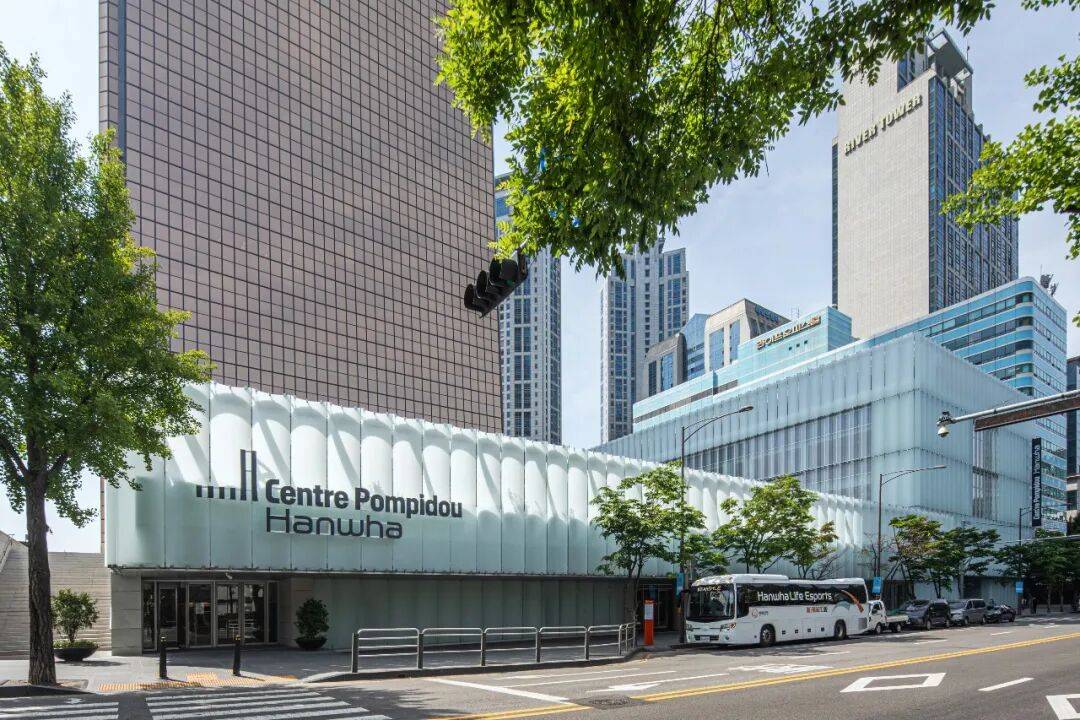
This summer, there is a new address for art lovers: the Centre Pompidou × Hanwha.
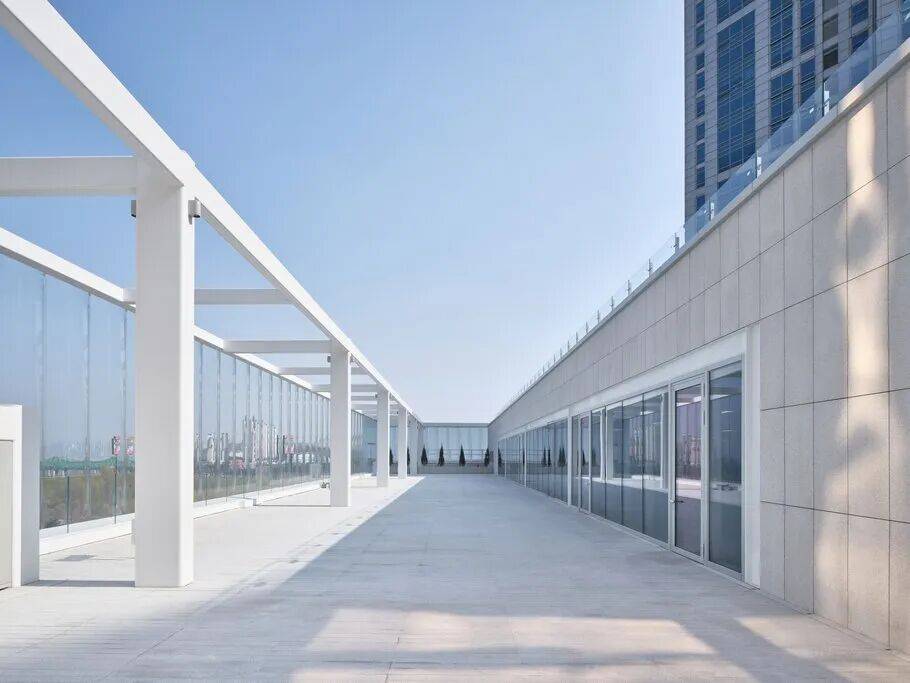
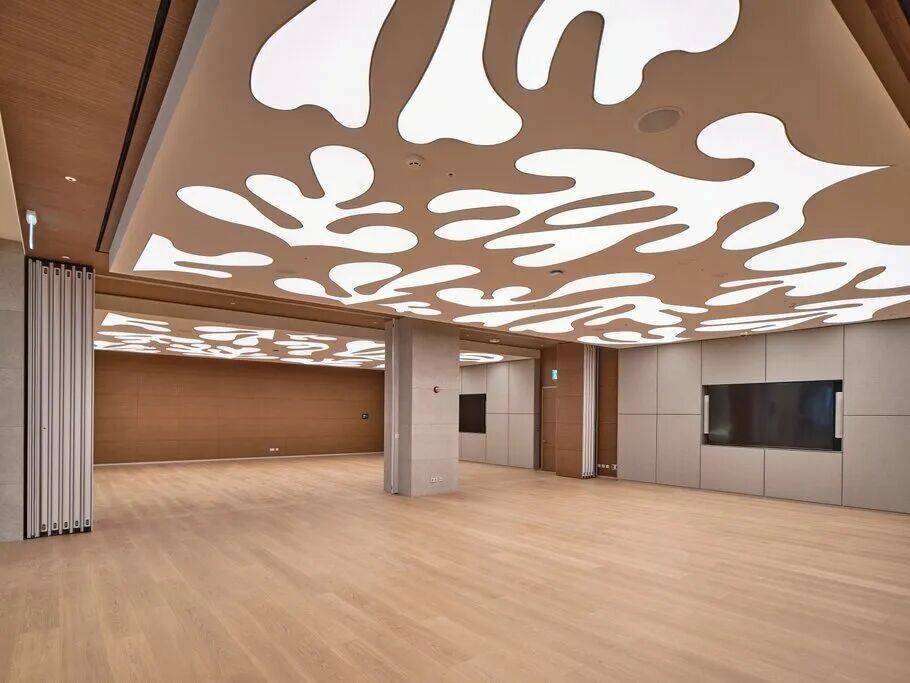
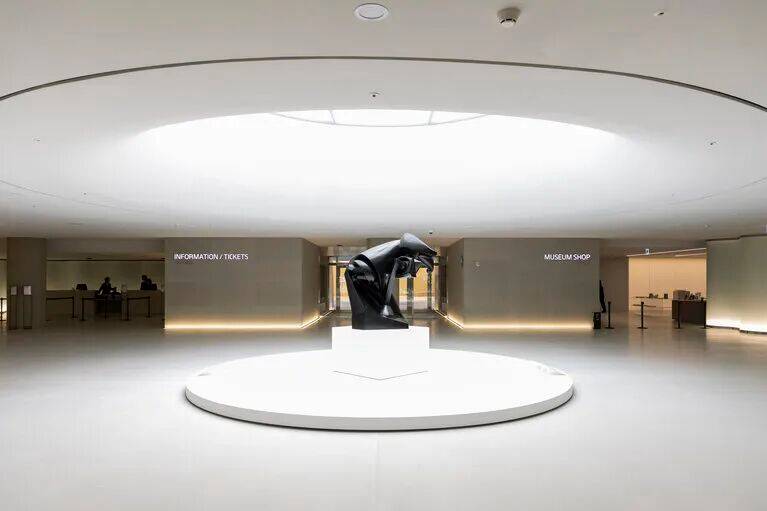
On Yeouido, an island in the middle of Seoul's Han River, you cross a freshly landscaped sculpture garden and arrive at a low, unassuming white building—four stories, spread out rather than up, its translucent façade glowing faintly, like a lightbox someone had set down gently on the riverbank.
It is the Centre Pompidou's first long-term outpost in Korea, and its second major foothold in Asia after Shanghai. The building was designed by the French architect Jean-Michel Wilmotte, who also designed the UCCA Center for Contemporary Art in Beijing.
The Pompidou's flagship building in Paris is currently closed for renovations, but its president, Laurent Le Bon, describes this new outpost as a star that has just switched on. "Some people think we've shut down for good," he said. "That's wrong—we're more alive than we've ever been."
From Shanghai to Seoul, the question worth asking is no longer why the Pompidou came to Asia at all, but why it keeps coming back—and why Seoul, this time. What, if anything, does the arrival of the Hanwha branch have to teach China's own contemporary-art scene?
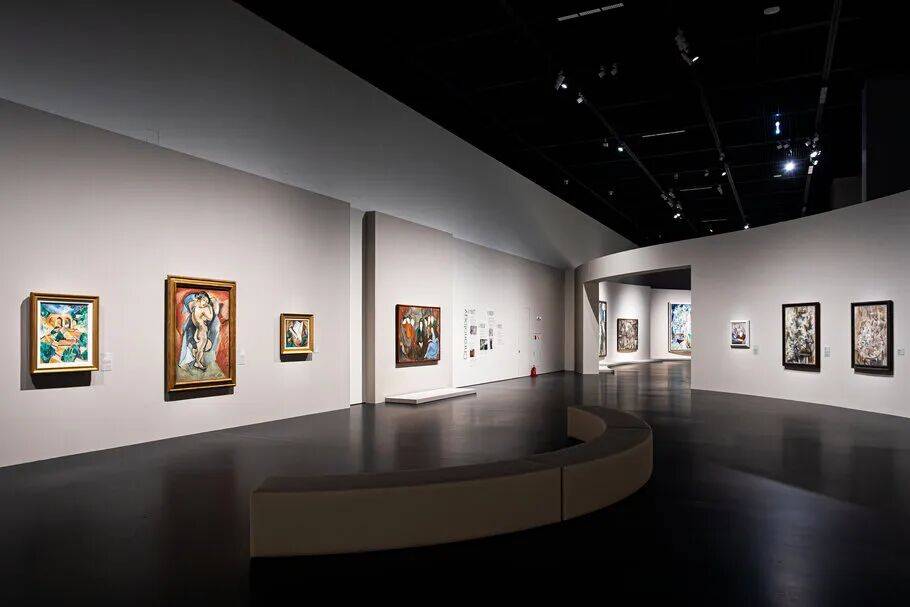
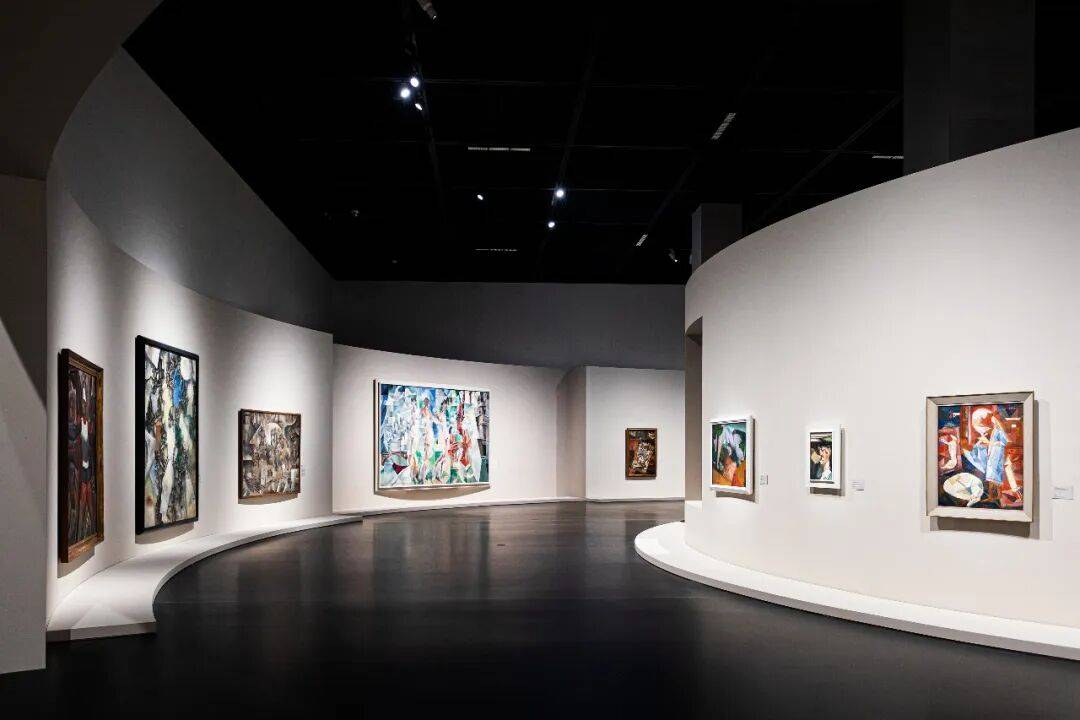
The museum has two large galleries, each about 1,650 square metres (nearly 18,000 square feet). The opening show, "The Cubists: Inventing Modern Vision," draws on the Pompidou's own holdings and adds work by Korean artists, for a total of a hundred and twelve pieces by fifty-four artists. The French portion—ninety-one works by forty-three artists—brings together Picasso, Georges Braque, Juan Gris, Fernand Léger, and Robert Delaunay, among others. A Korean section, twenty-one works strong, surveys how Cubism developed in Paris between 1907 and 1927.
Walk in, and the first things you see are the Cubist works most people already carry around in their heads—paintings, sculptures, works on paper, collages, stage designs—by Picasso, Braque, Delaunay, and the rest.
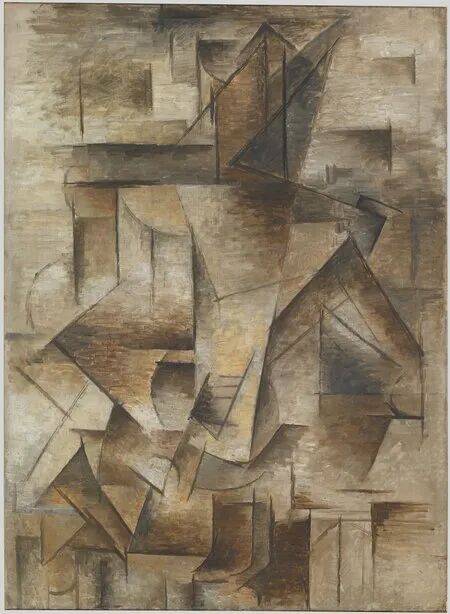
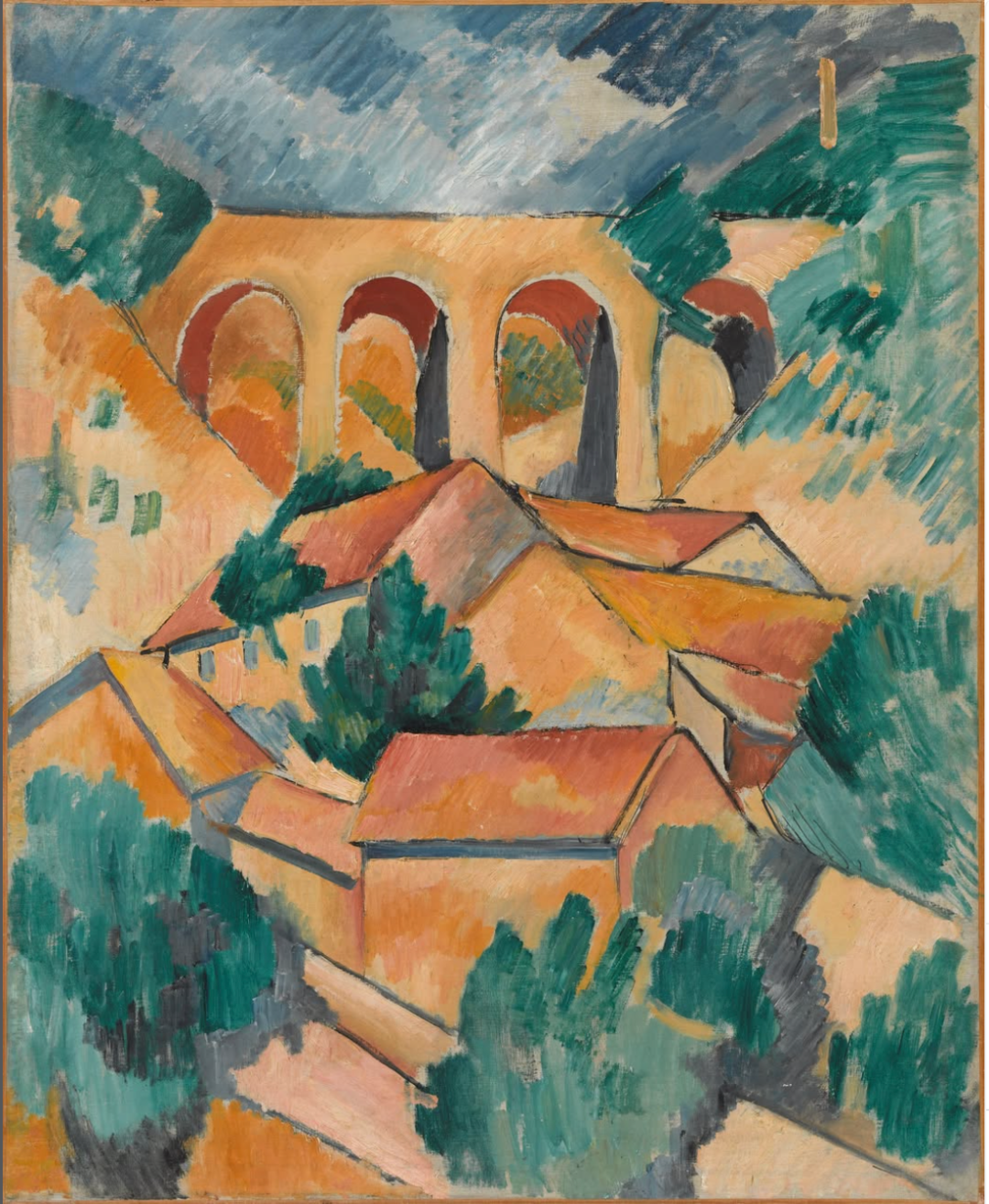
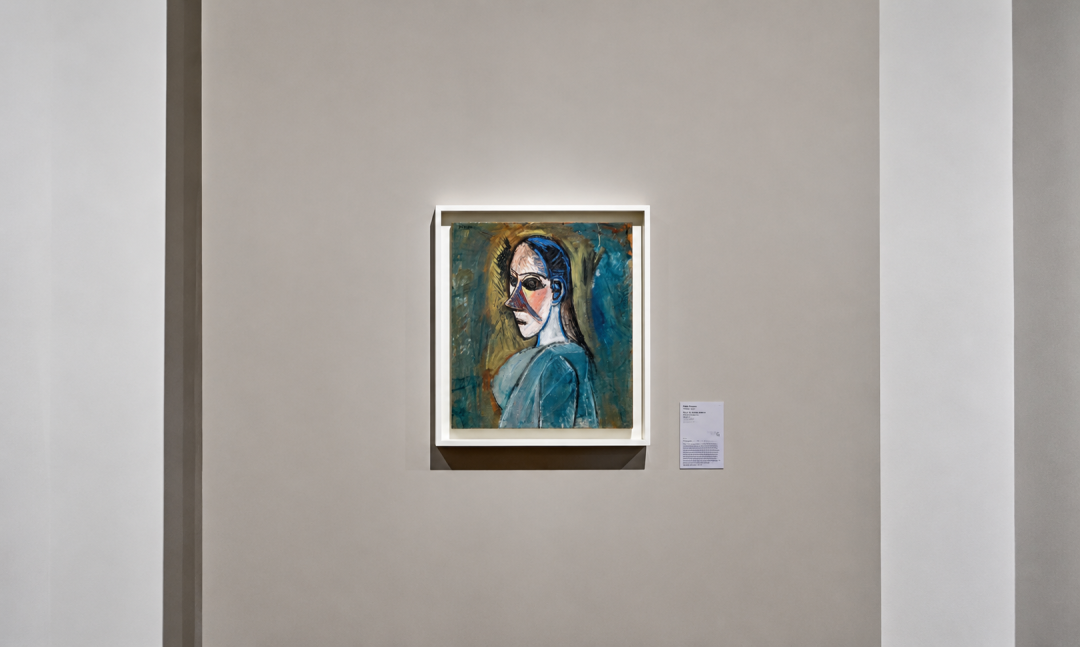
The show unfolds in nine sections and includes several paintings that changed the course of modern art history—Georges Braque's Viaduct at L'Estaque, which reimagines landscape in a way that anticipates Analytic Cubism, and Picasso's The Guitarist, in which bottles, guitars, tabletops, faces, and bodies are all taken apart and reassembled as overlapping planes.
A face can show its front and its profile at once. A cup no longer obeys a single vantage point. A guitar splinters into pieces, as if the viewer were circling it—or as if several moments of looking had been pressed together into one.
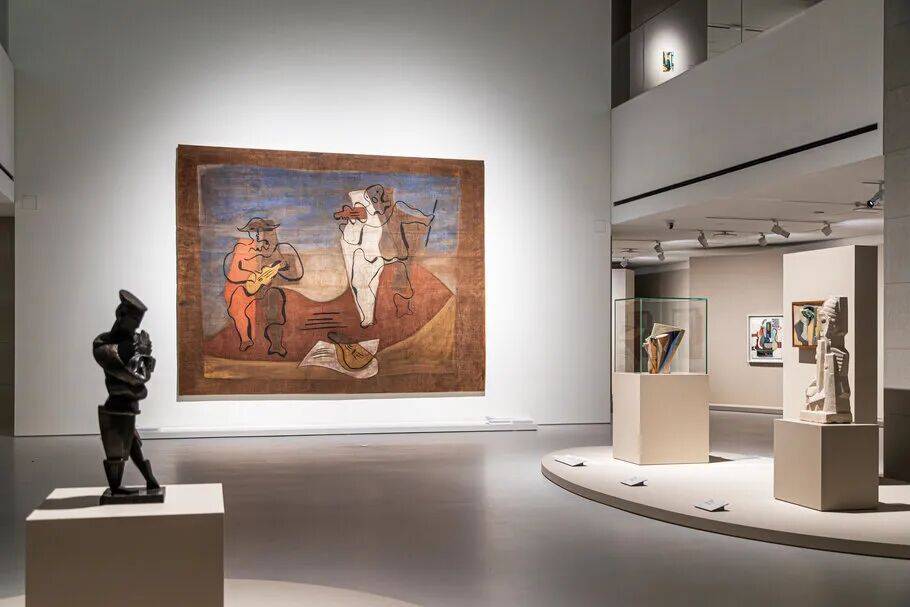
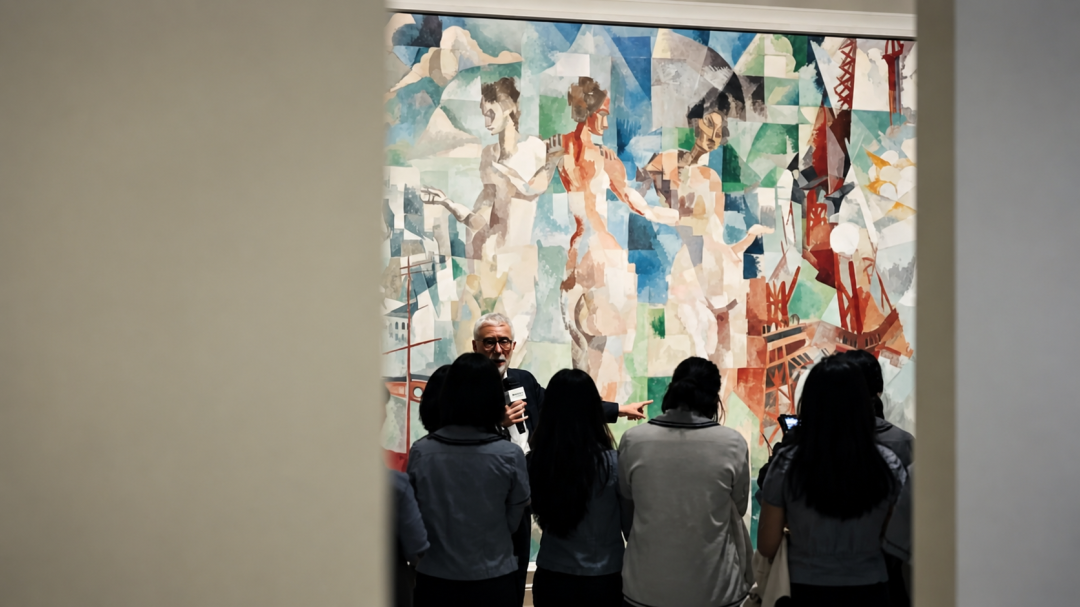
Several works are being shown in Asia for the first time, among them the enormous stage curtain Picasso painted in 1924 for the ballet Mercure. This is not the framed, domesticated Picasso most people know; it's a vast object that was always meant to share a stage with dancers, music, and bodies in motion.
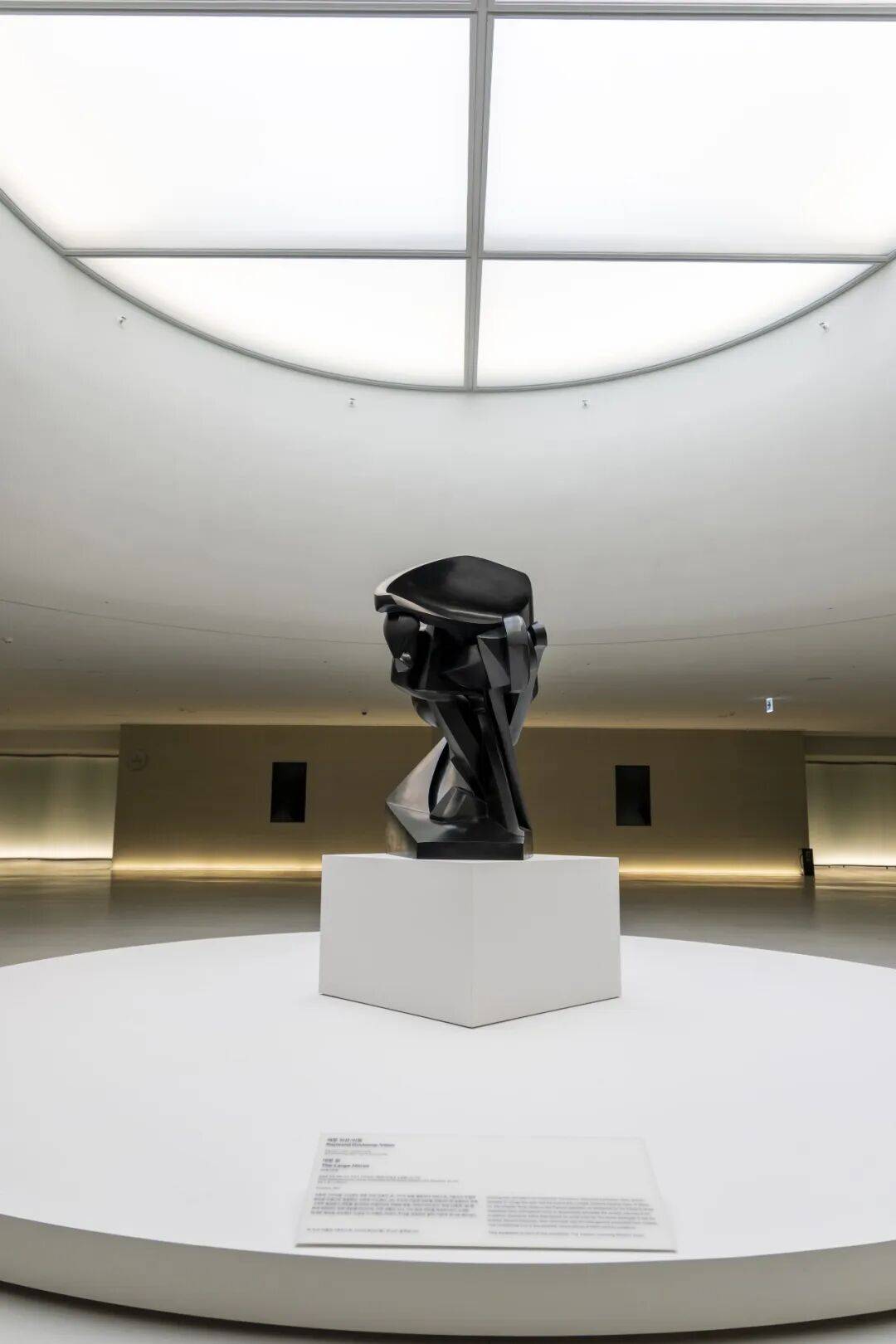
The curatorial emphasis here departs from the usual pileup of masterpieces. Art history has long compressed Cubism into the story of a handful of men—Picasso, Braque, Juan Gris, Fernand Léger.
Christian Briend, who curated the exhibition, thinks the first thing a show like this needs to do is dismantle that oversimplified narrative.
"There was never just one Cubism," he said. "In that crucial period in Paris, many Cubisms developed at once." Which is why the show holds more than the textbook pairing of Analytic and Synthetic Cubism.
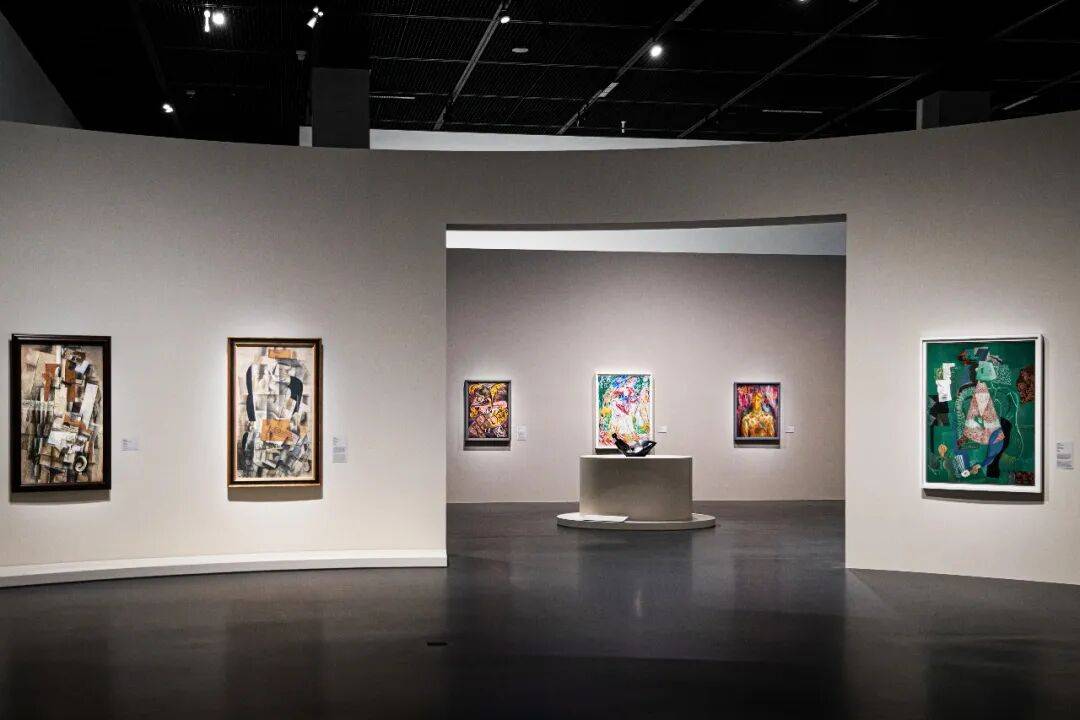
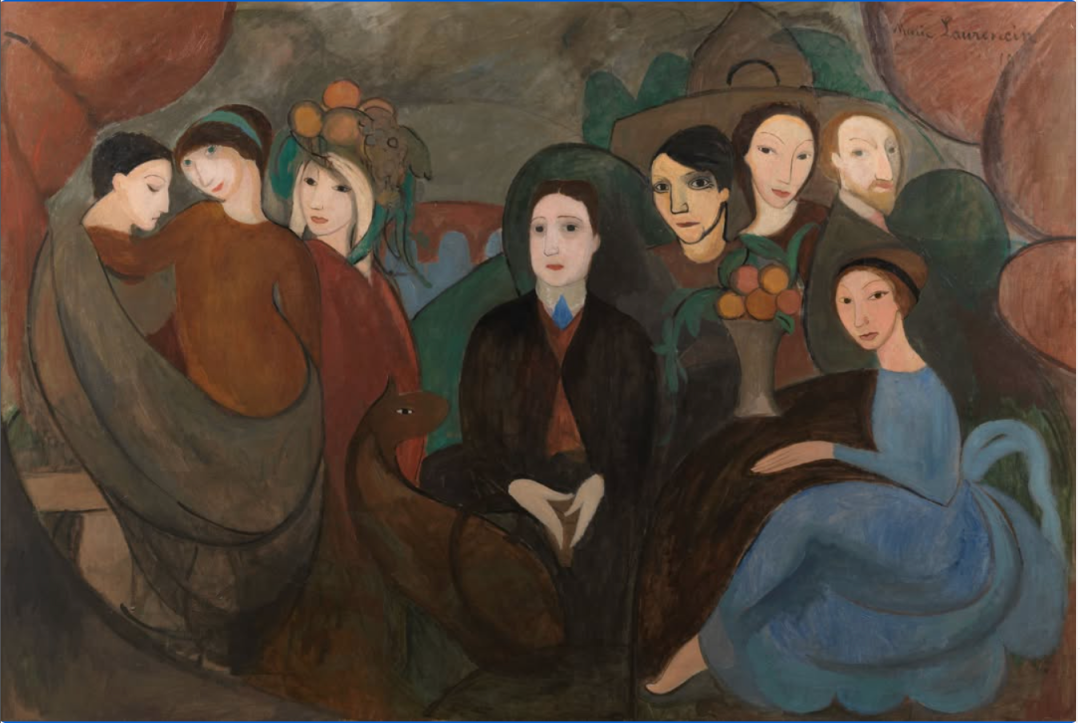
Sonia Delaunay, Natalia Goncharova, Albert Gleizes, Jean Metzinger, Marie Laurencin—artists who rarely got much room in the old story—are given more space here. Cubism's reach, the show argues, extended well past painting, into collage, sculpture, stage design, architecture, and the abstraction that came after.
For Briend, Cubism's break with traditional perspective opened the door to abstraction, collage, and conceptual art, and ultimately redirected the whole course of modern and contemporary art. That, he suggests, is why the Pompidou chose not to open with a crowd-pleasing Picasso blockbuster, and instead let Cubism itself be the inaugural statement.
A show built around a single artist emphasizes masterpieces and genius. A show built around Cubism emphasizes how a whole way of seeing got rewritten. "Cubism made sense as the opening show not just because the Pompidou in Paris holds an important collection of it, but because the movement shaped nearly all of twentieth-century art that followed—and it connects to other exhibitions we're already planning for Seoul," he told me.
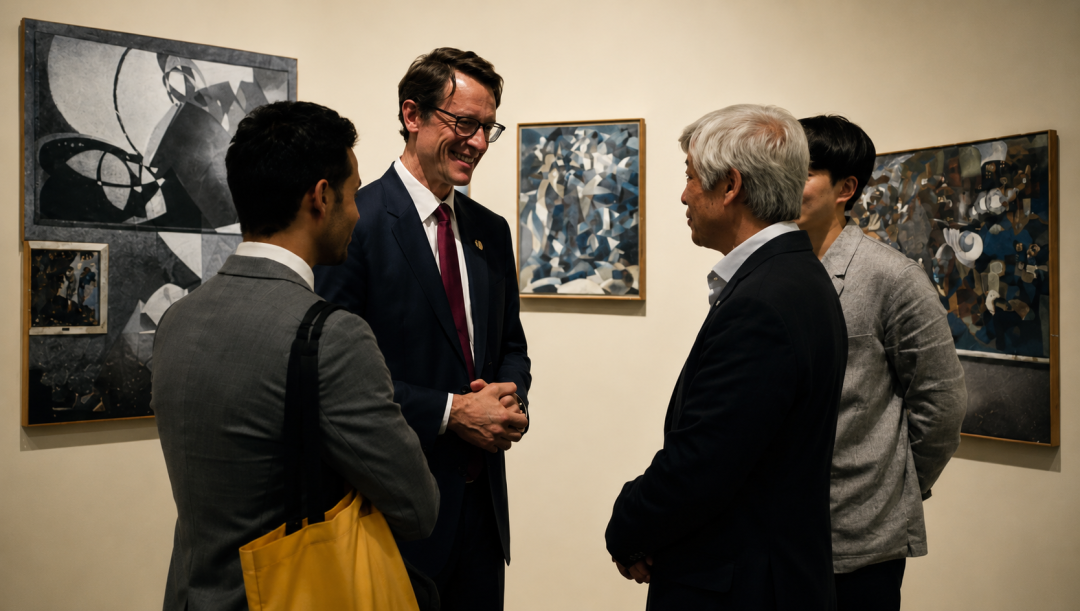
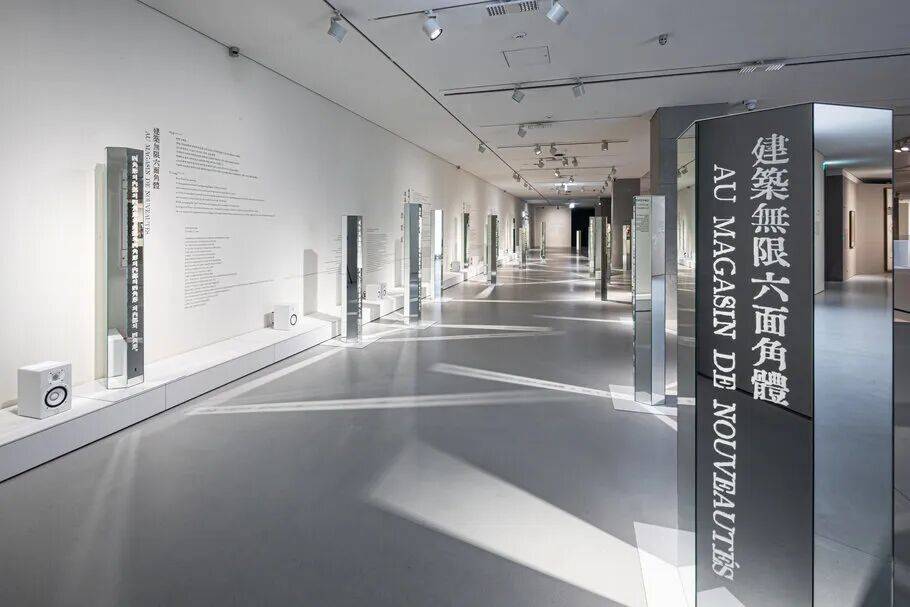
Beyond the main galleries, the curatorial team carved out a separate Korean section, "Korea Focus: A Dream Map to the Modern Avant-Garde," tucked into a mezzanine level. It holds twenty-one works by eleven Korean artists, including Kim Whanki, Yoo Youngkuk, Park Re-hyun, Lee Soo-eok, and Ham Dae-jeong.
The question this section asks isn't whether Cubism existed in Korea. It's what happened to modernism's visual language once it arrived there. "'Korea Focus' isn't ultimately trying to prove that Cubism existed in Korea too," said Cho Ju-hyun, the curator responsible for the section. "It's trying to show how Korean modern art met and collided with an international movement, and what kind of new sensibility came out of that collision."
In the standard history of Western modernism, Paris is the starting point. New styles radiate outward from there to the rest of the world. Asian countries tend to show up in the second half of that story: an artist travels to Paris, encounters Cubism or Fauvism or abstraction, and carries it home.
On that one-way route, Western artists invent and everyone else receives—a structure that has become almost the default script for showing Western modern art in Asia. Cho didn't want the Korean section to repeat it. "In the first half of the twentieth century, Paris was a symbolic destination for Korean artists," she said, "a place onto which they projected their longing."
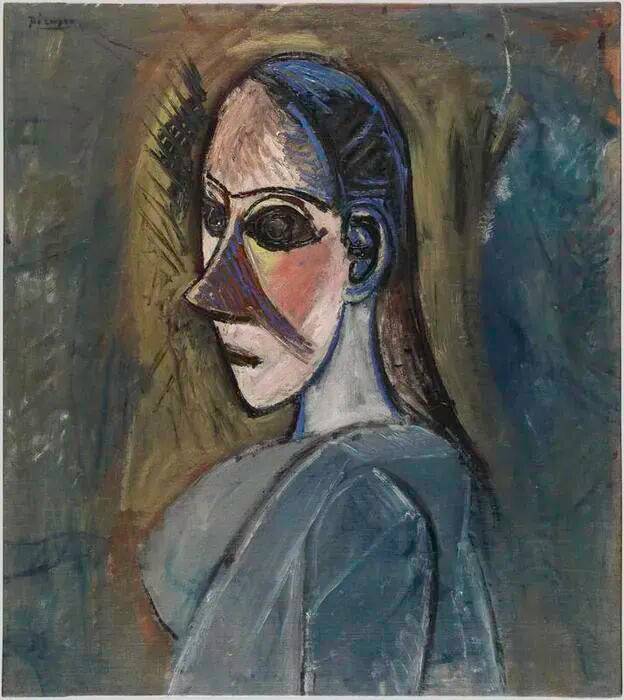
But once those visual languages reached Korea, they weren't simply copied. "What we're tracing," she said, "is how the modern visual language that came after Cubism was reimagined through Korean reality and Korean perception."
Some Korean artists borrowed Cubism's geometry but put its fractured forms to work on the everyday textures of life after war, division, and breakneck modernization.
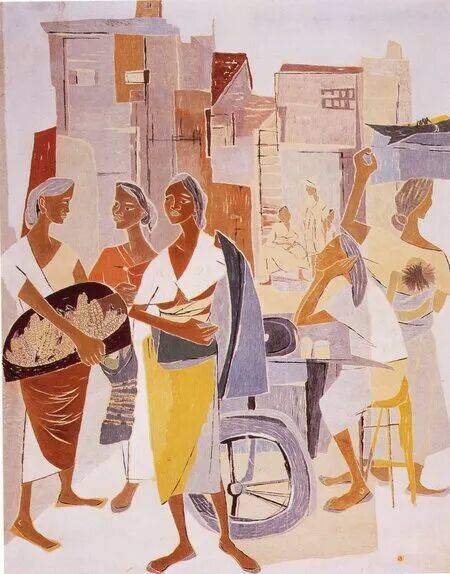
Others kept something of ink painting's softness and bleed in their brushwork. Here, Cubism stops belonging only to Paris. It gets translated, misread, and reshaped, until it's tangled up with an artist's own visual habits, materials, and history in Asia.
Take Park Re-hyun's Open-Air Stall. Park spent much of her career searching for new relationships between ink, color, textile-like flat surfaces, and modernist composition. The market, the goods, the figures in Open-Air Stall can all be broken down into sharply rhythmic blocks of color and geometry—but the picture didn't come from a Parisian café still life. It came from postwar Korean street life.
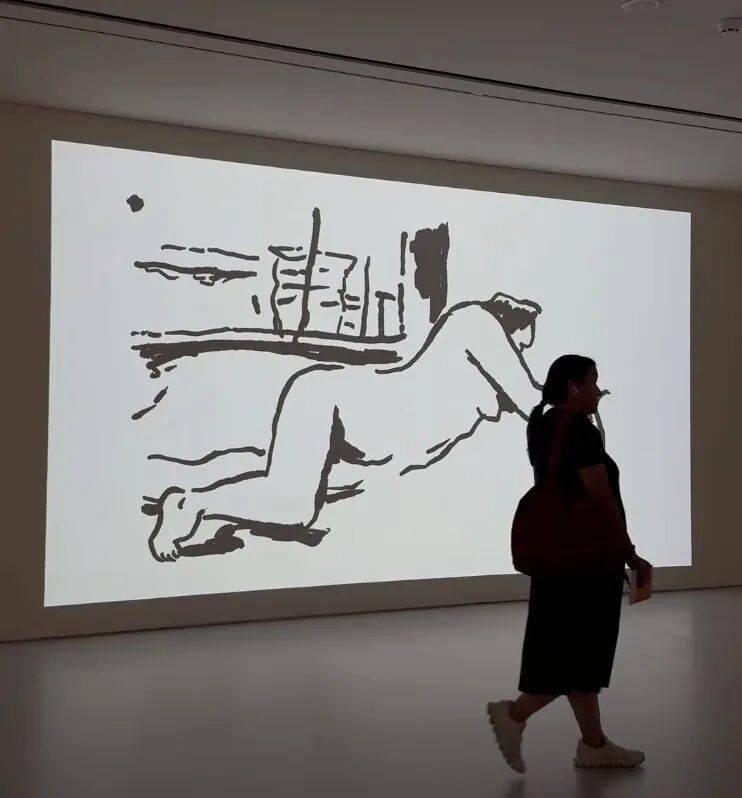
One newly commissioned piece comes from the Korean media artist Kwon Ha-yoon, who divides her time between France and Korea. For the commission, she turned the experimental poetry, diagrams, and architectural sketches of the Korean modernist poet Yi Sang into moving image, letting text unfold at the pace of verse. Paris was once an unreachable modernist fantasy for Yi Sang; nearly a century later, his words have found their way into a Seoul exhibition built around the Pompidou's Paris collection.
Maybe that's what the "dream map" is really pointing to: a kind of misalignment. Paris lived for decades in the imagination of Korean modern artists, but their modernity was never just a matter of reaching Paris, copying it, or being validated by it. It was also made out of not arriving, out of misunderstanding, retranslation, and creation under the pressure of one's own history.
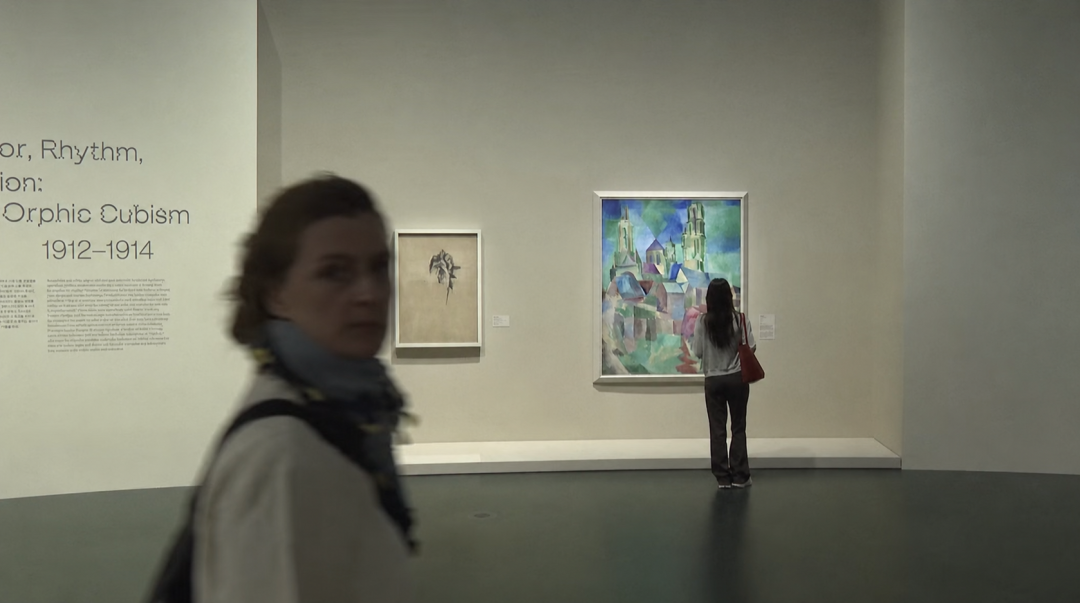
Cho calls this part of the show "a bridge" between two worlds. On that bridge, she hopes, Korean artists get to present their own work while meeting Cubism and the Parisian avant-garde face to face. Whether that meeting happens between equals is another question. On one side is the Pompidou, with a world-class collection, an established art-historical apparatus, and international brand power behind it; on the other is Korean art, tucked into a special section on the mezzanine.
The spatial hierarchy is plain to see. But the Korean section at least brings a long-standing complaint into the open—the same growing pain that showed up when the West Bund Museum in Shanghai partnered with the Pompidou: when an international museum opens a new outpost in Asia, is shipping over Western masterpieces really all it can do? Is "local context" just a footnote tacked on after the main event, or is it knowledge and experience capable of actually reshaping how a show is built?
Over the past two decades, Korea has hosted no shortage of exhibitions driven by foreign institutions, luxury brands, domestic conglomerates, and international art connections. They can produce long lines fast, generate lively social-media chatter, and draw visitors in from across Asia.
But heat and a healthy local art ecosystem aren't the same thing. Lim Keun-hye, the exhibition director sent by the Hanwha Cultural Foundation, doesn't shy away from that distinction. "A lot of these shows have genuinely raised Korean audiences' awareness of exhibition culture," she said. "But the real question is whether they've touched, and changed, the culture itself."
Will an international blockbuster of masterworks open new doors for Korean artists? Are Korean curators actually producing knowledge, or just hosting it? When the show closes, what's left besides ticket sales, photographs, and press coverage? The ambition behind the Centre Pompidou × Hanwha goes well past borrowing shows from Paris one-way; the museum wants to be a "strategic framework" that nourishes Korea's contemporary-art world over the long run.
Inside that framework, Korean art would be introduced to the world through themes that resonate with the Pompidou's own holdings; new connections would be built between international masters and emerging Korean artists; and the Pompidou's formidable international network would help push Korean artists toward wider visibility…
Hanwha's own ambitions are considerable. It is one of Korea's best-known chaebol, a conglomerate whose scale, wealth, and social standing put it in the same tier as Samsung, Hyundai, SK, and LG. It is Korea's largest aerospace company, and it rose along with the rest of the Korean economy.
It's worth knowing that the Pompidou's new Seoul branch occupies what used to be an annex of the 63 Building, Hanwha's towering gold-clad skyscraper on the Han River—once one of the most conspicuous landmarks of Korea's high-growth years. For a lot of people who grew up in Seoul, visiting the 63 Building's aquarium as a kid, riding its high-speed elevator, and looking down at the Han from the top floors is a shared memory.
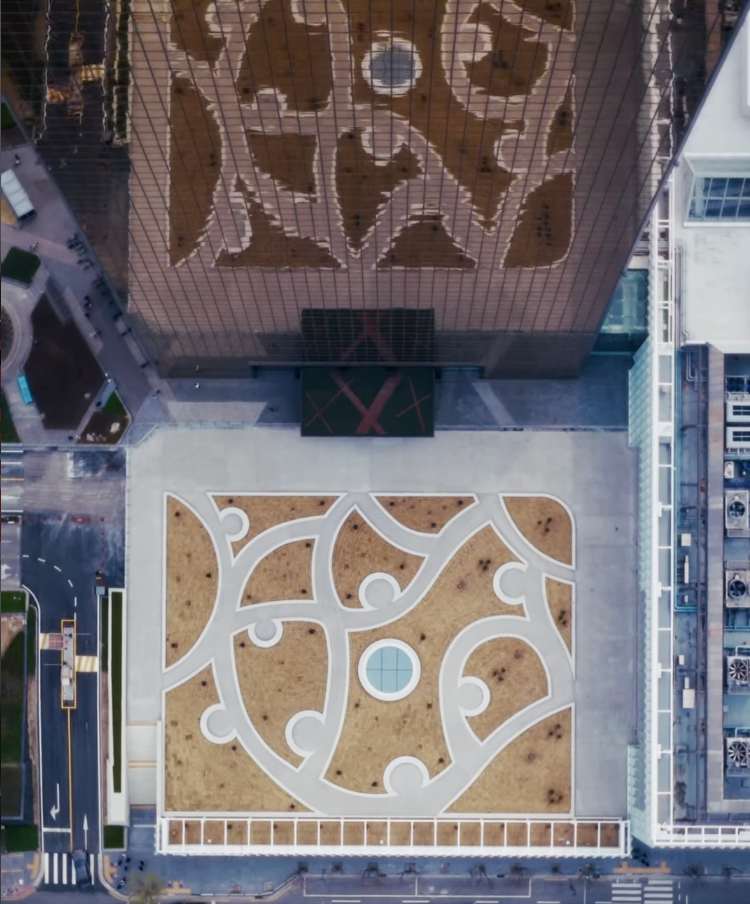
That aquarium has since been emptied out and turned into the Centre Pompidou × Hanwha. So why did Hanwha choose to partner with the Pompidou in the first place?
Hanwha, as it happens, was never particularly known for art; its patronage went mostly toward classical music. Which is to say, the conglomerate never built up the kind of collection that could, on its own, support a world-class modern-art museum—unlike Samsung, which has the Leeum; Hyundai Motor, with its own cultural foundation; LG, a patron of photography; or Amorepacific, with its formidable exhibition resources at the APMA.
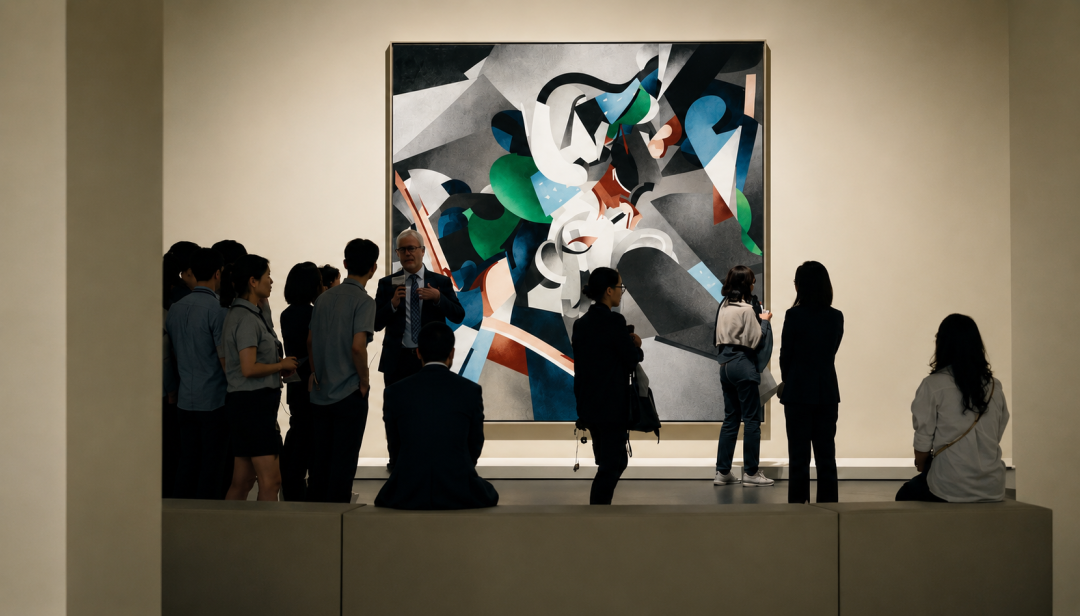
So a partnership with the Pompidou, which comes with an enormous collection and an international network, was something close to a natural fit—one that made up for Hanwha's late start and its thin holdings.
That the Centre Pompidou × Hanwha finally landed in Seoul has as much to do with the crisis and renovation the Paris museum is going through as it does with a decade of Seoul's own art ambitions, with the long-standing habits of Korean conglomerates patronizing art, and with how major museums today export their brands, their collections, and their countries' cultural influence.
Put more precisely: it isn't that the Pompidou simply chose Seoul. At a particular moment, the Pompidou, Hanwha, and Seoul all happened to need each other.