Backed by NVIDIA and Google, Does Dataland Live Up to the Hype?
One of Los Angeles’s biggest recent openings is Dataland, billed as the world’s first AI art museum. It occupies a Frank Gehry-designed building beside The Broad, MOCA, and Walt Disney Concert Hall......
By / Xirui Huang · 2 min read
Photo: Xirui Huang / Dataland, 2026
Is the AI museum experience at Dataland worth its $79 ticket?
Its immersive projections, biometric sensing, and real-time generative visuals make for a polished and interactive visit, but the $79 price is steep. It feels like a higher-tech teamLab, while its ability to keep innovating remains unproven.
One of Los Angeles’s biggest recent openings is Dataland, billed as the world’s first AI art museum. It occupies 25,000 square feet inside a Frank Gehry-designed building downtown, beside The Broad, MOCA, and Walt Disney Concert Hall.
The museum was founded by American media artist Refik Anadol. Jensen Huang began collecting Anadol’s work a decade ago, and the GPUs at Dataland were donated by him on behalf of NVIDIA. Its algorithms use Google’s large models. The museum’s inaugural exhibition, “Machine Dreams: Rainforest,” grew out of a journey Anadol and his wife took through the Amazon rainforest five years ago.
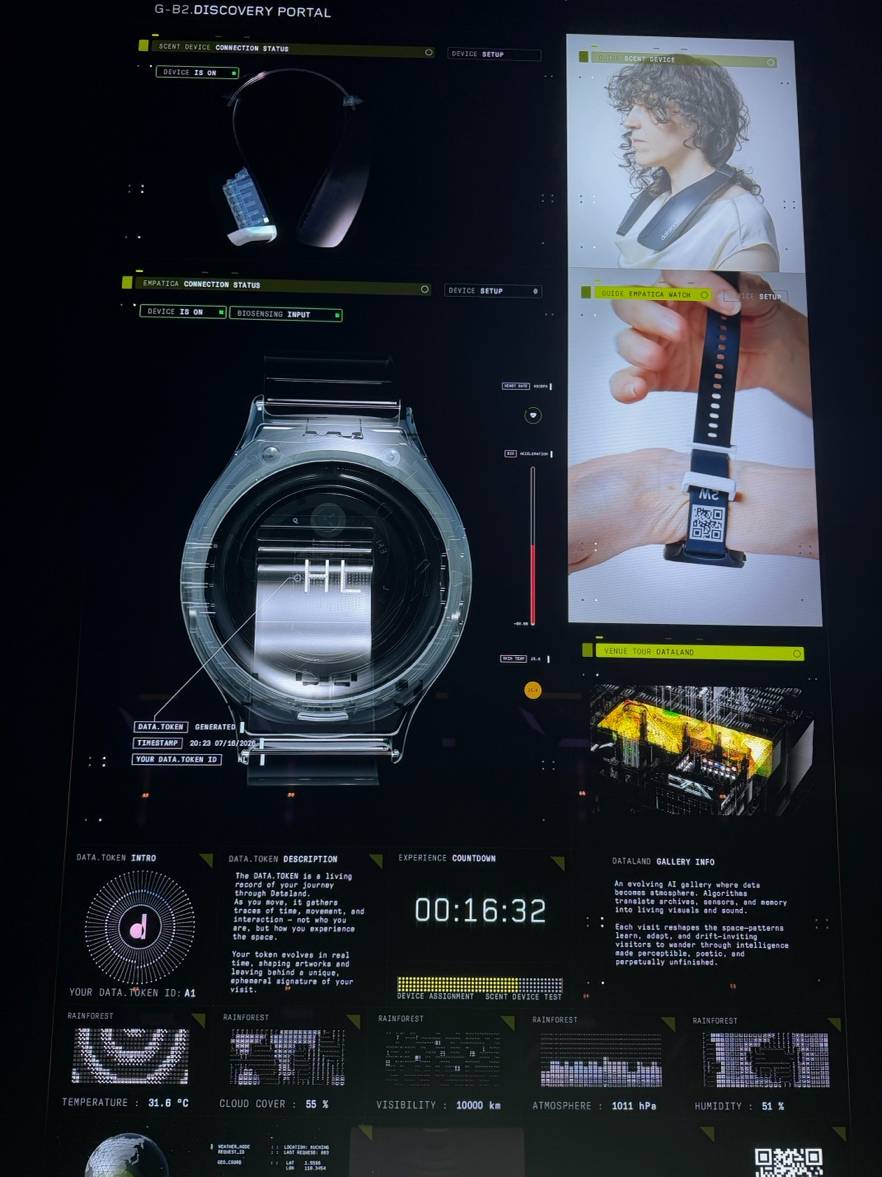
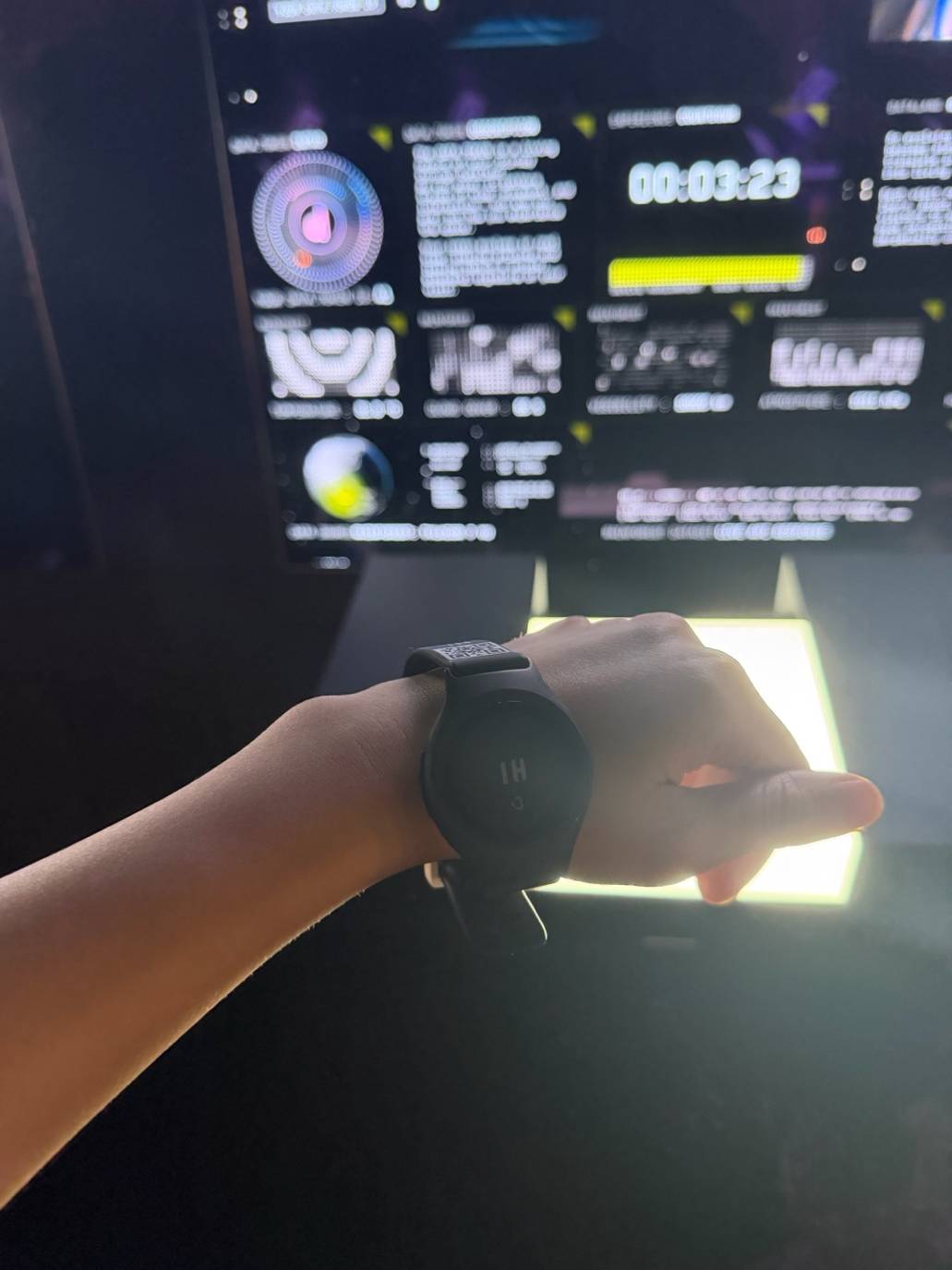
The neckband worn at the entrance records visitors’ biometric data. / Photo: Xirui Huang / Dataland, 2026Visitors put on a wristband and neckband at the entrance. / Photo: Xirui Huang / Dataland, 2026The neckband releases a scent generated from each visitor’s data. / Photo: Xirui Huang / Dataland, 2026
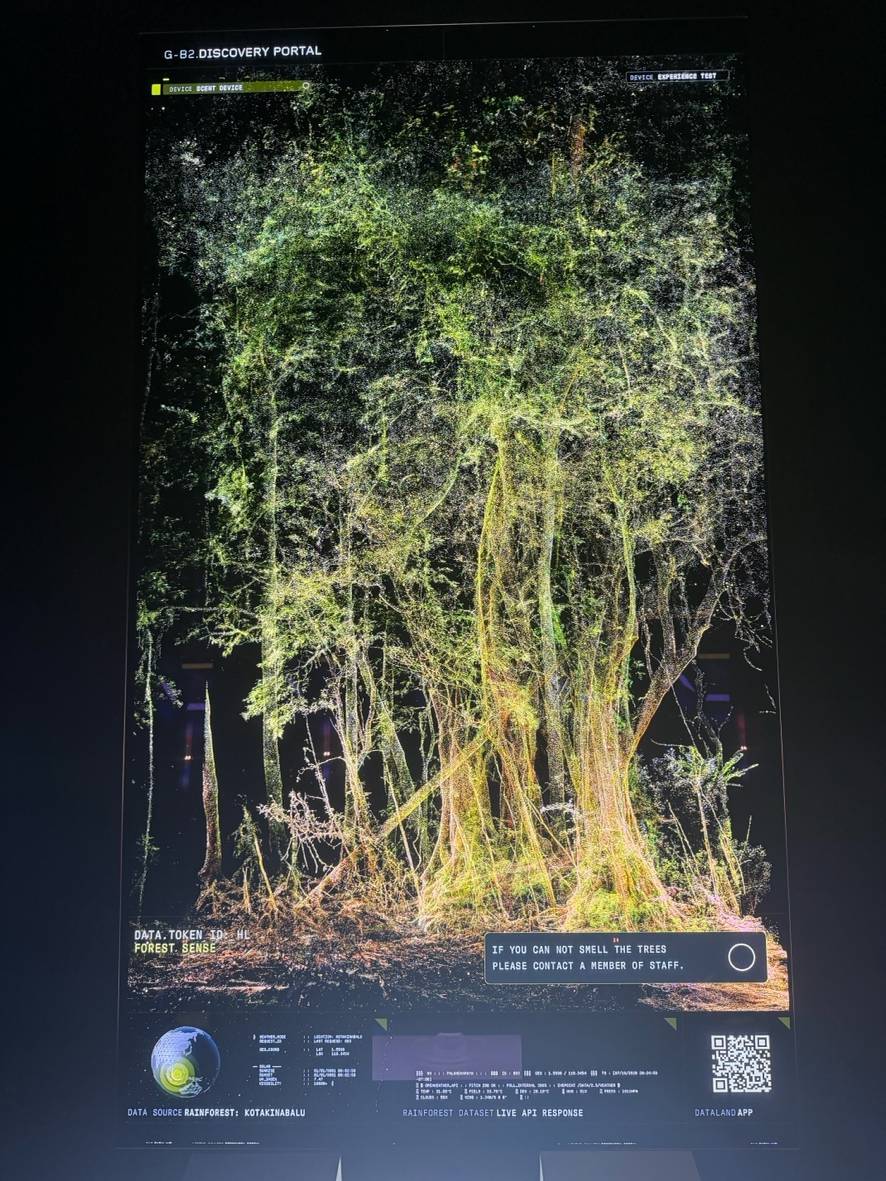
At the entrance, each visitor receives a wristband and a neckband that monitor heart rate, body temperature, and breathing. Those measurements eventually become part of the exhibition’s data rainforest. The neckband also releases a scent unique to you. The first thing I smelled was the damp, woody air of a tropical rainforest.
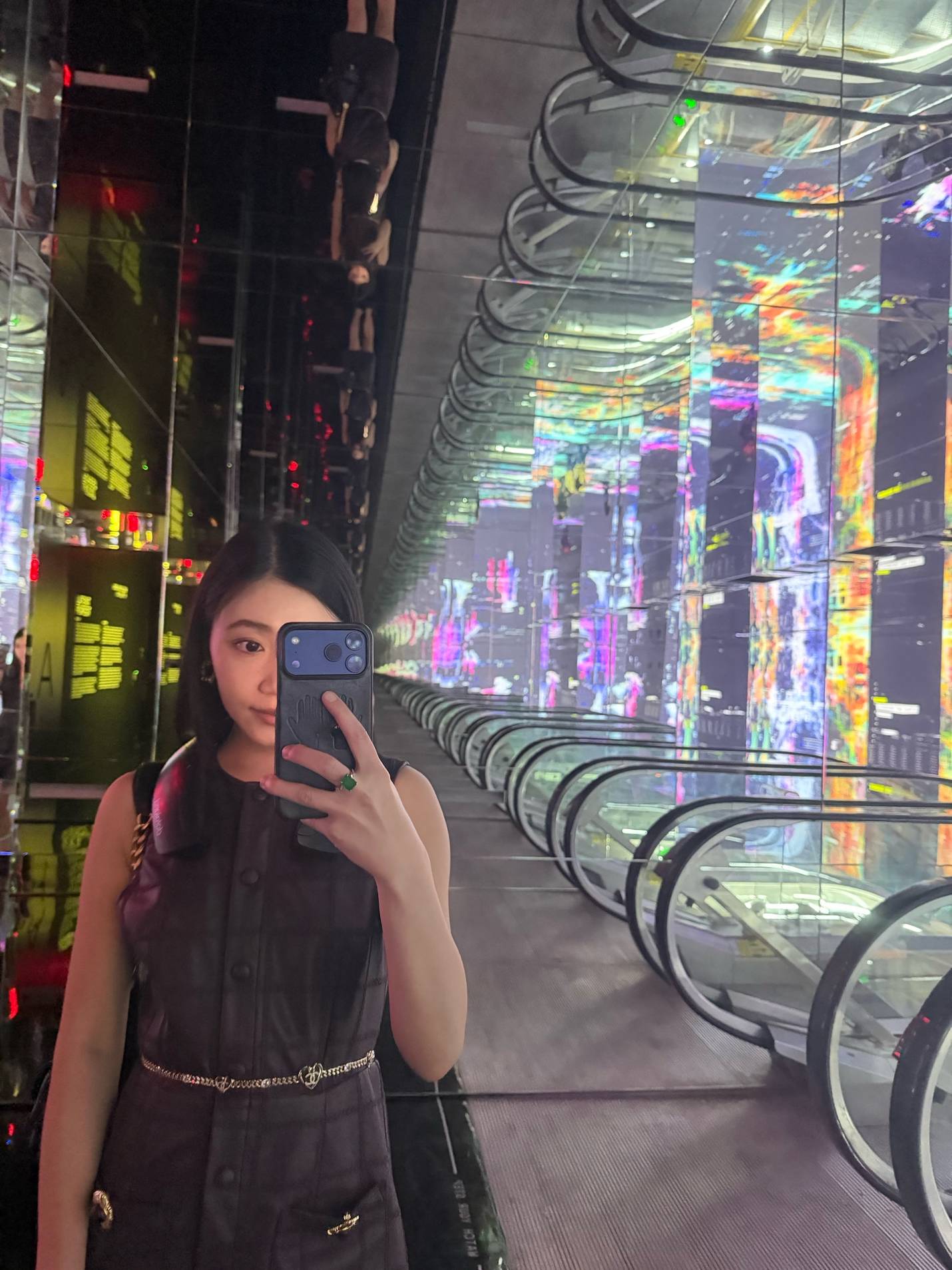
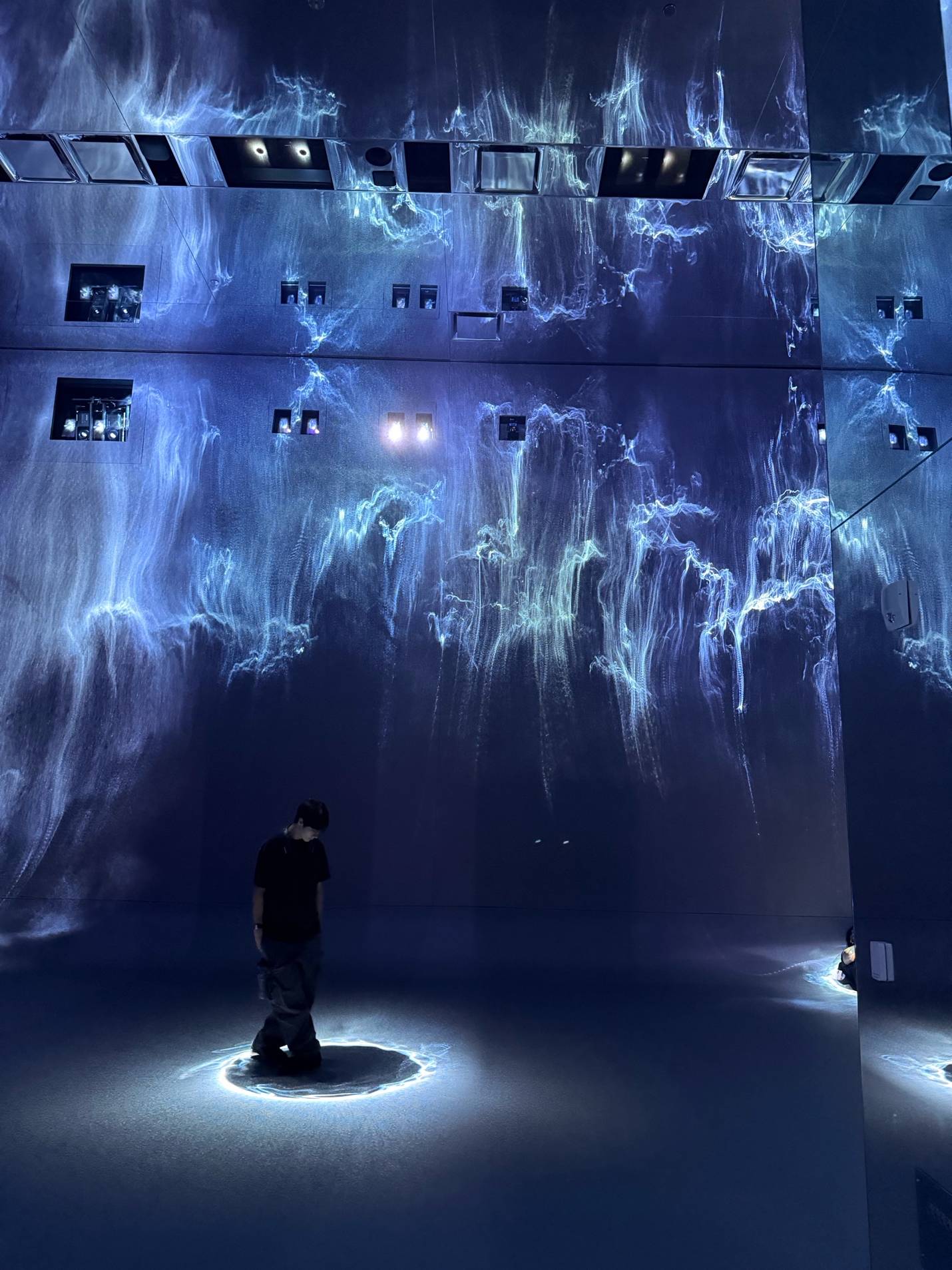
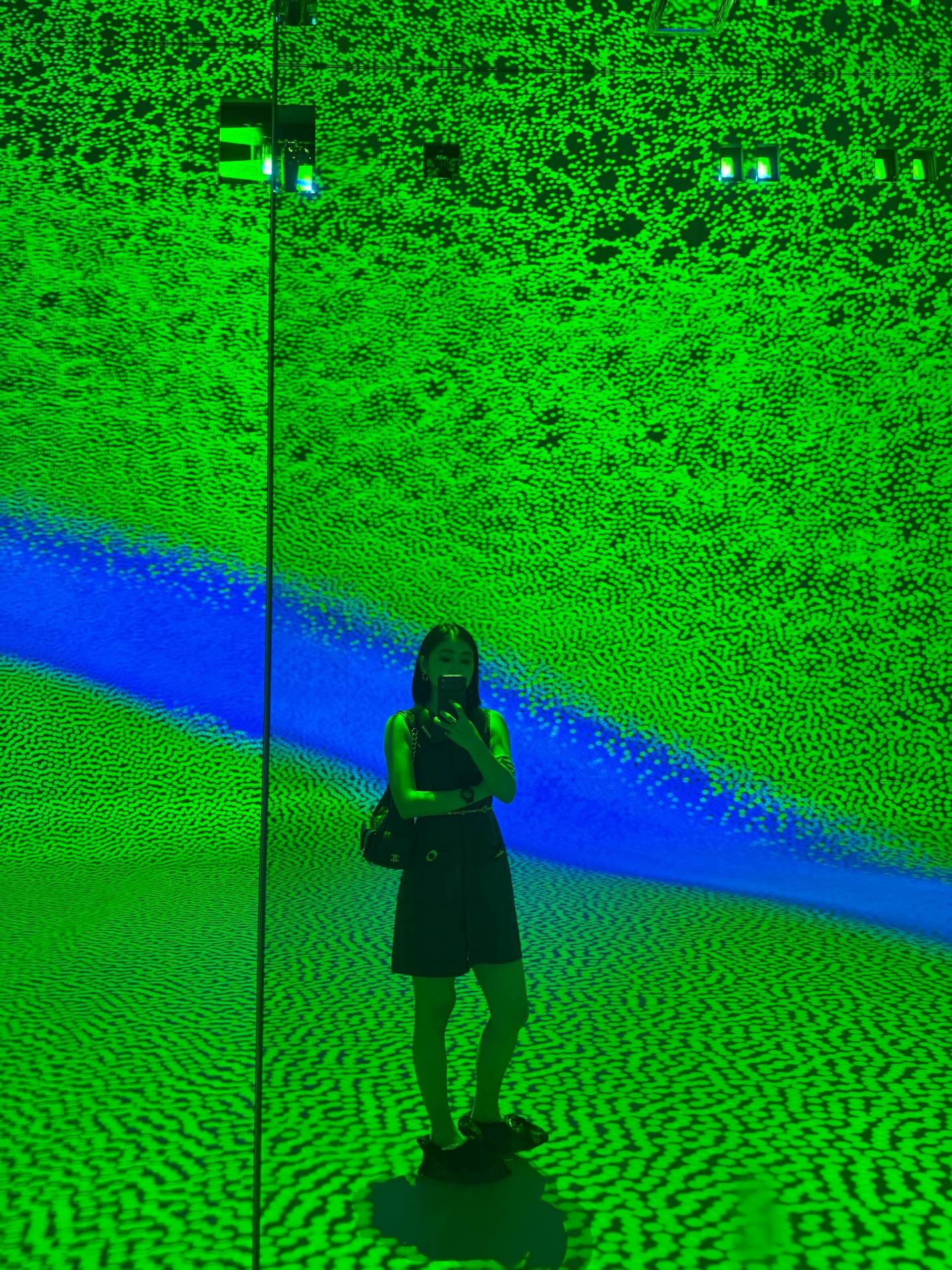
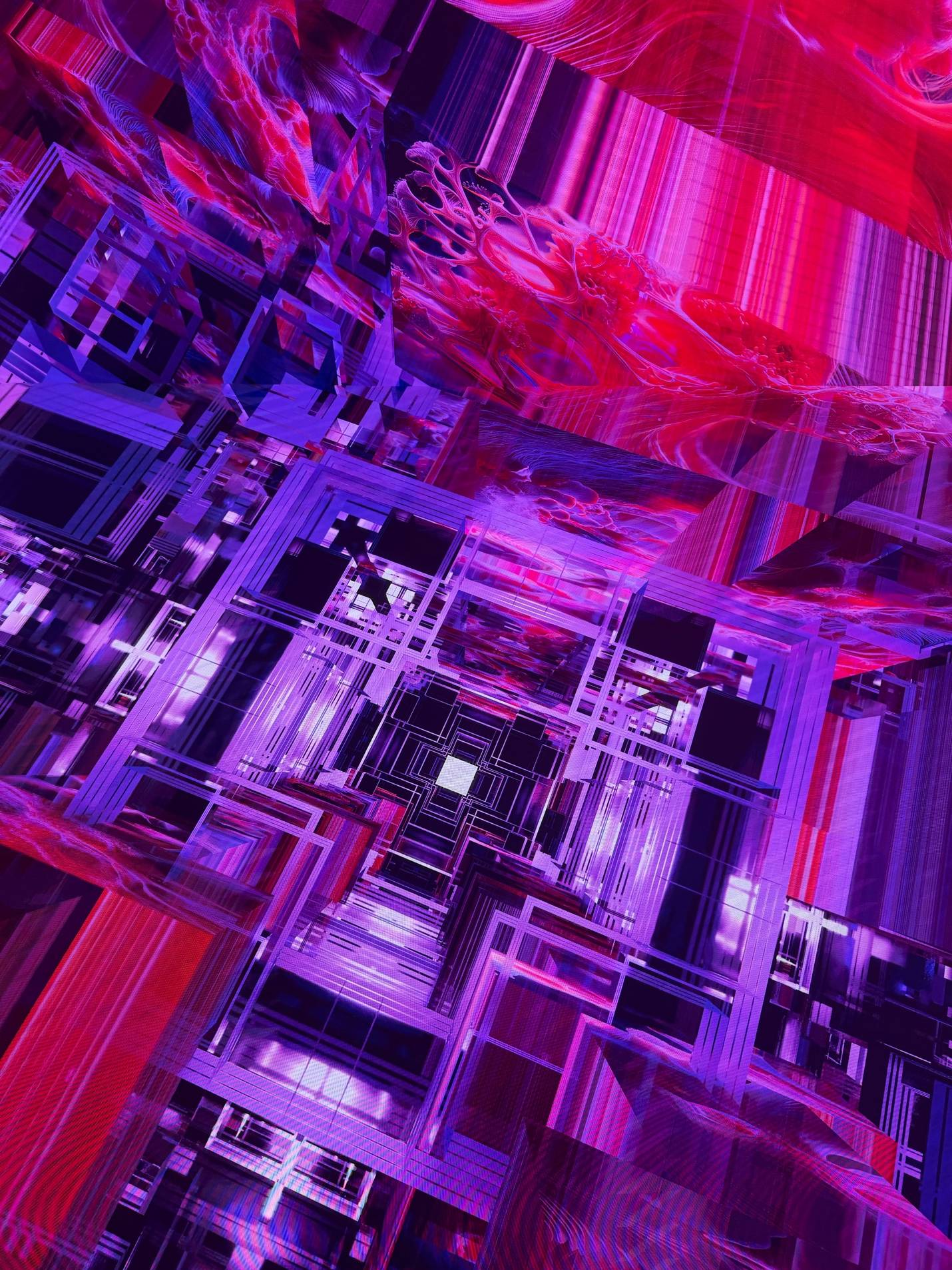
Data Pavilion, the largest gallery, contains 84 4K projectors and 1,577 custom 10K LED panels that cover the space without visible seams. A ripple follows each visitor’s footsteps across the floor, and the interaction works impressively well.
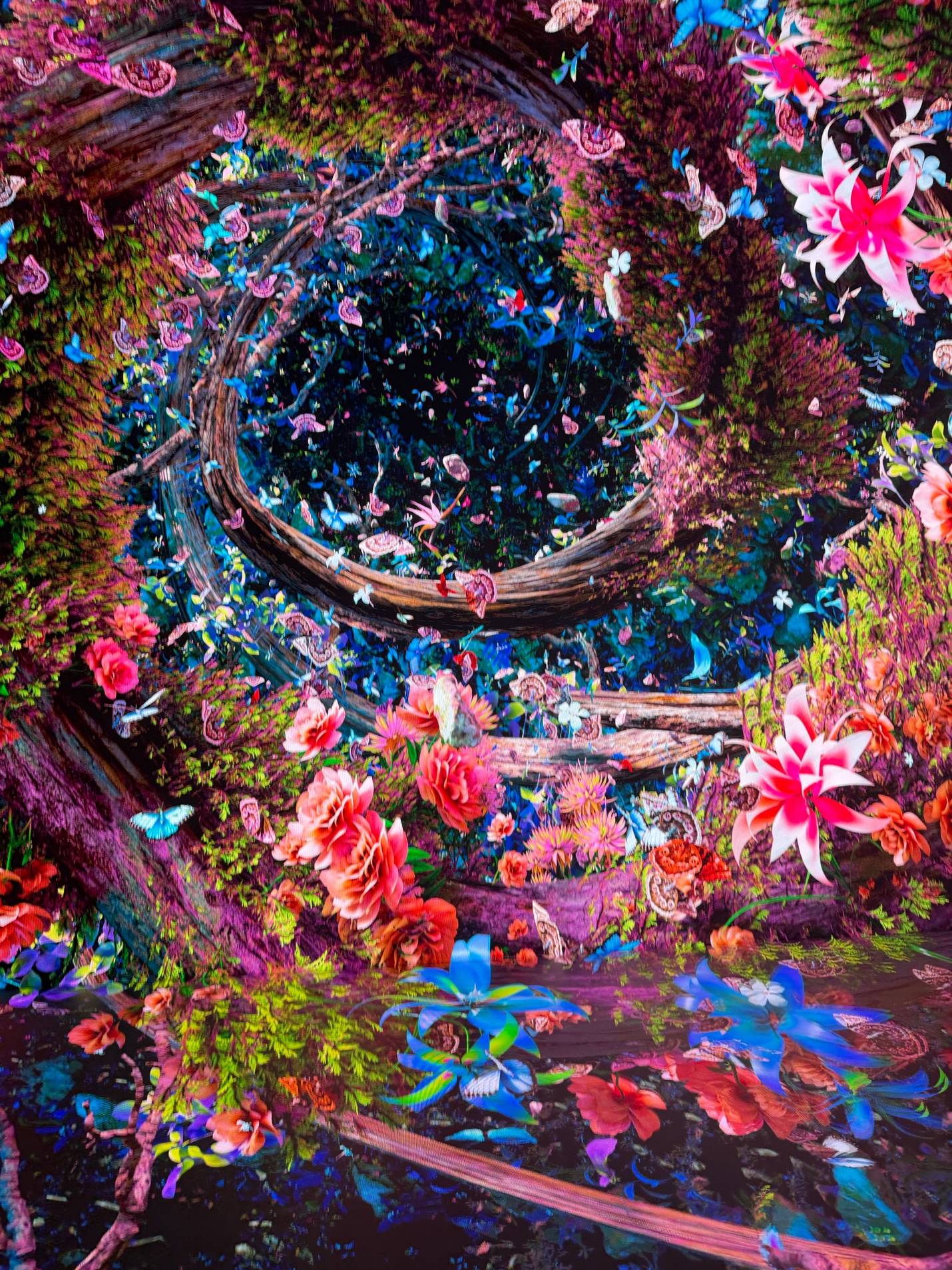
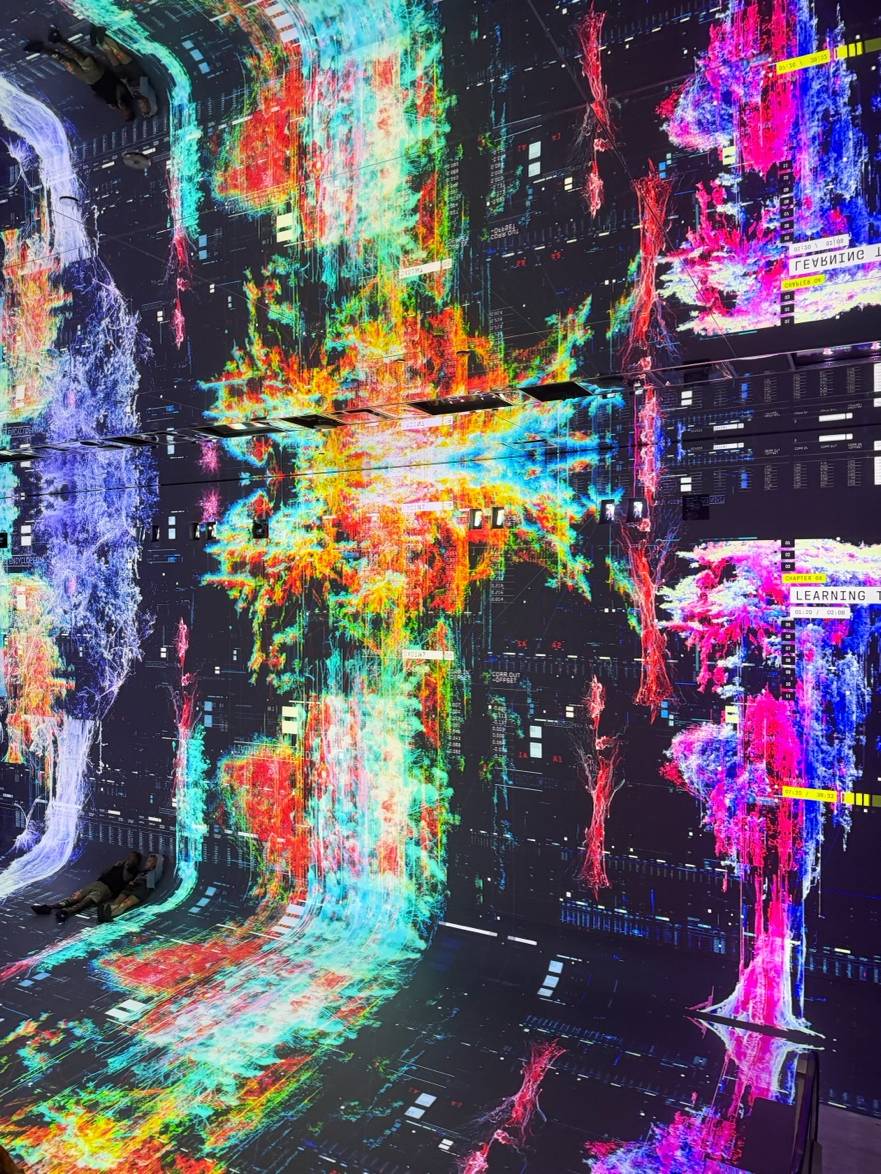
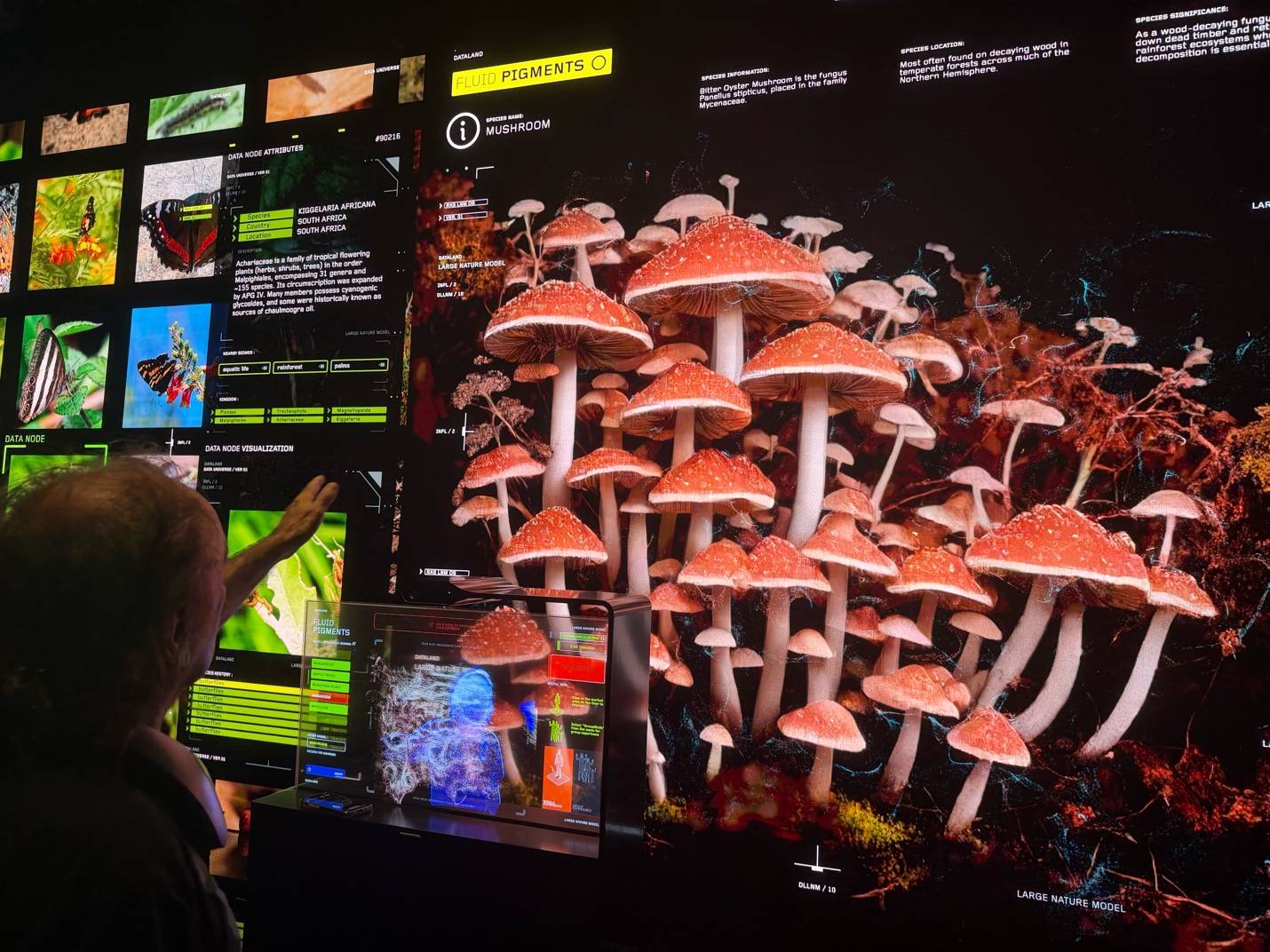
For the exhibition, the artist combined field data from sixteen rainforest locations with thousands of species samples from the Encyclopedia of Life, then fed it all into a custom nature model. The result is a forest no one has ever actually visited, yet one more hallucinatory than any rainforest documentary.
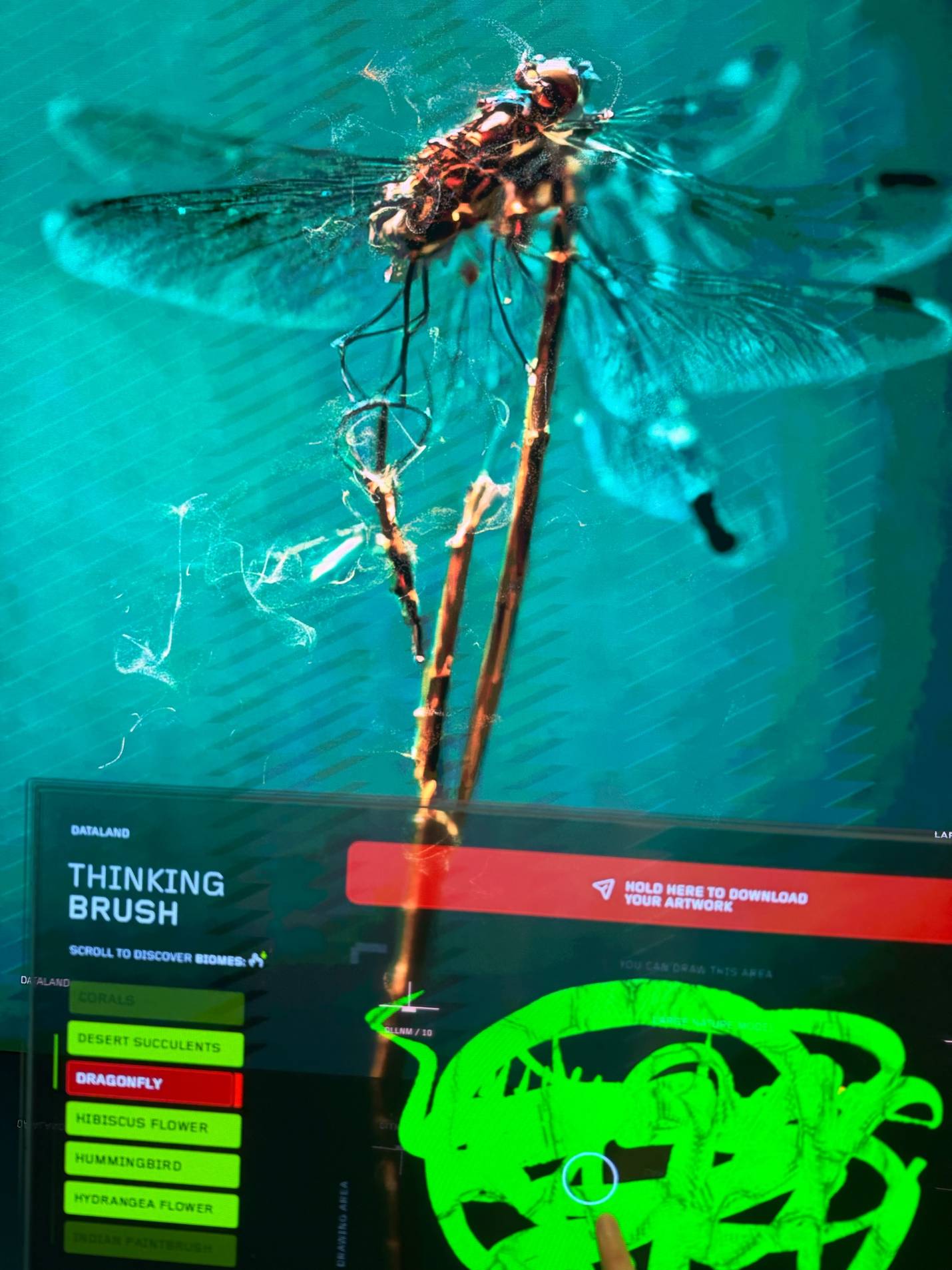
Latent Room is an interactive gallery where visitors draw freely on a touchscreen. AI translates each line in real time into the form of a plant, a feather, or an insect. Mine became a dragonfly.
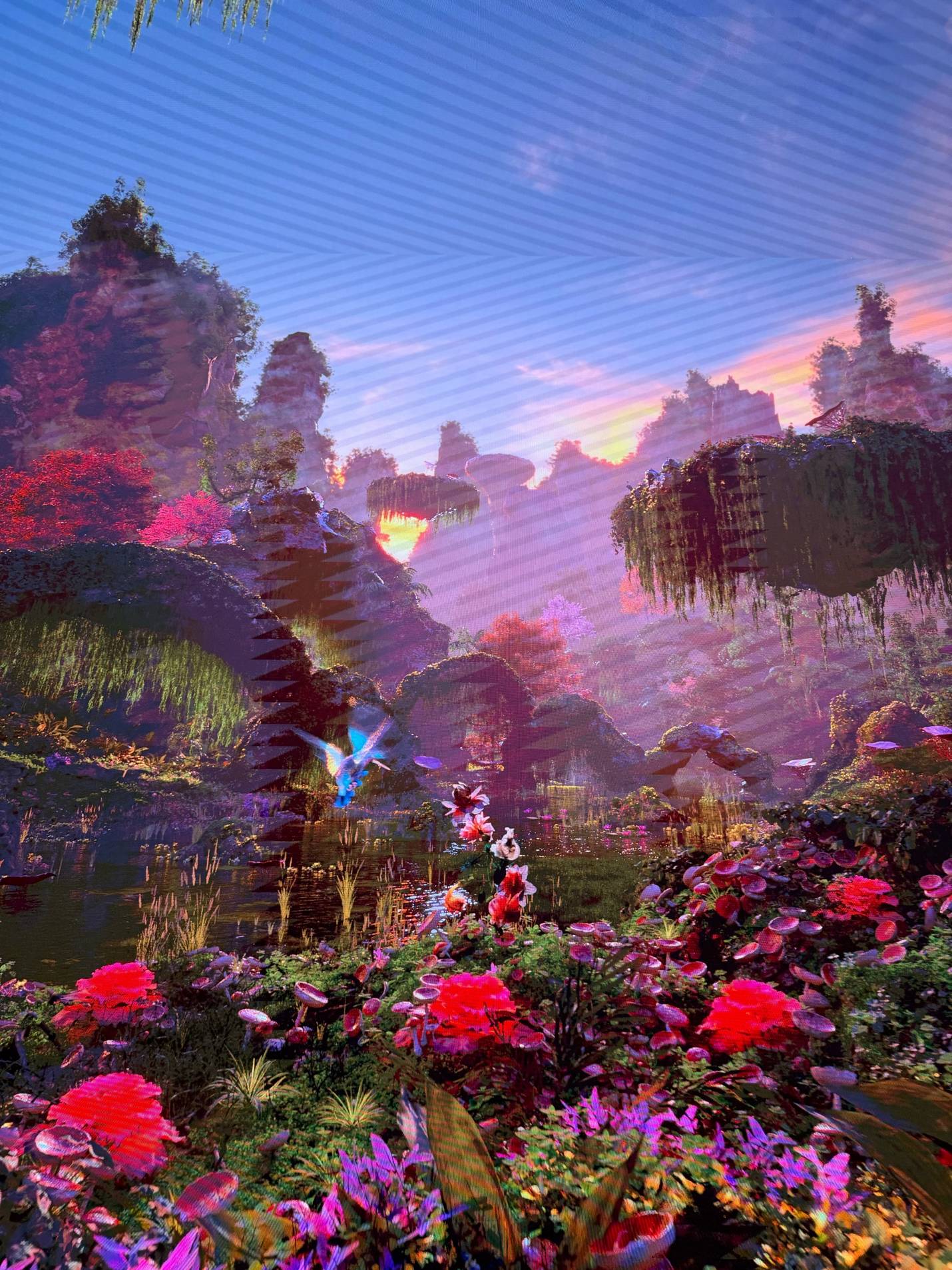
AI-generated rainforest imagery in Machine Dreams: Rainforest. / Photo: Xirui Huang / Dataland, 2026Rainforest imagery inside Infinity Room. / Photo: Xirui Huang / Dataland, 2026Infinity Room runs for about nine minutes, with the viewer taking a hummingbird’s perspective. / Photo: Xirui Huang / Dataland, 2026
Infinity Room was one of my favorite spaces. Its 360-degree screen is best experienced lying down. We seem to become the hummingbird in the film, flying through the Amazon while scents of flowers and mist, along with physical vibrations, make it feel like walking through the world of Avatar.
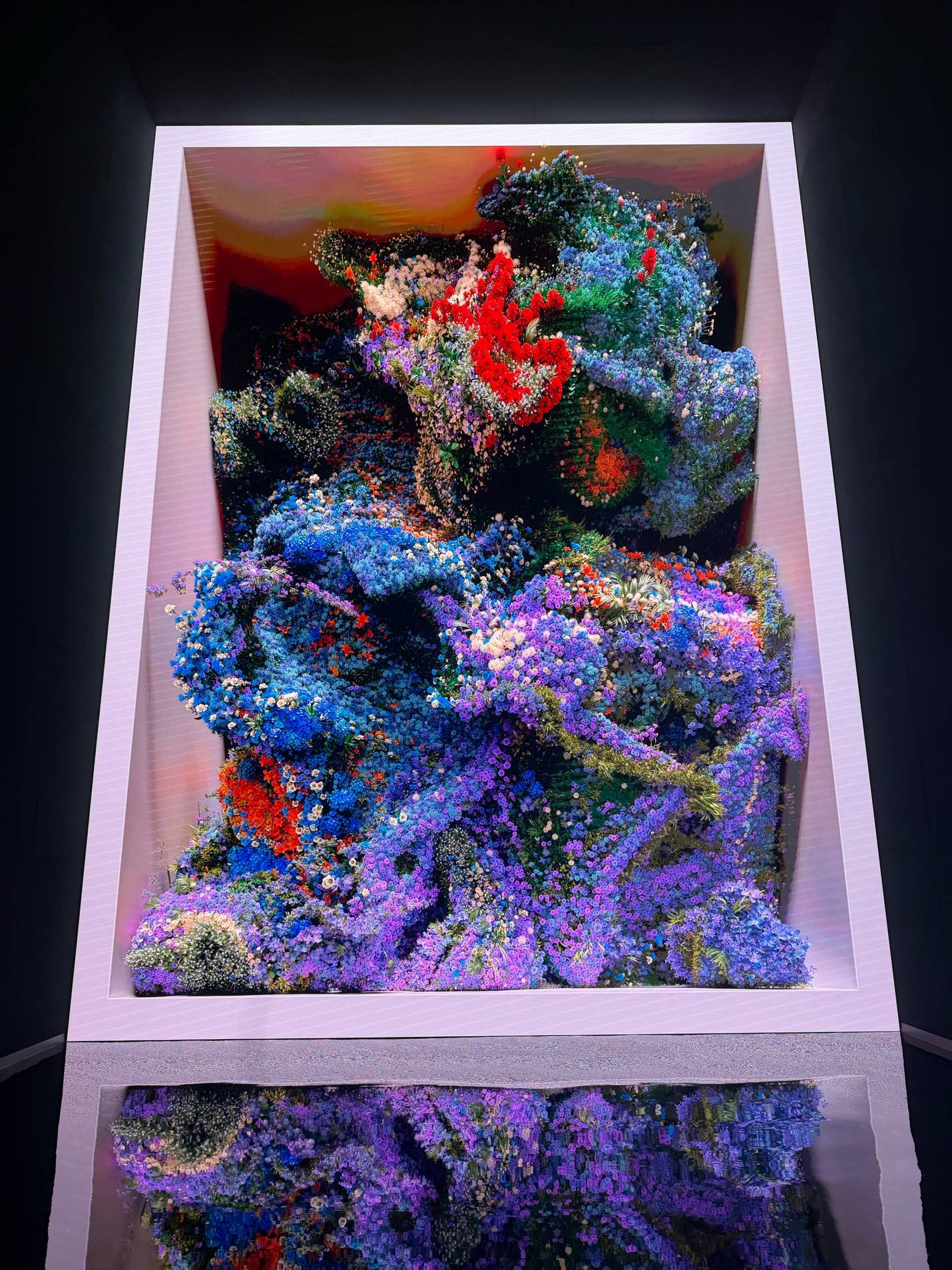
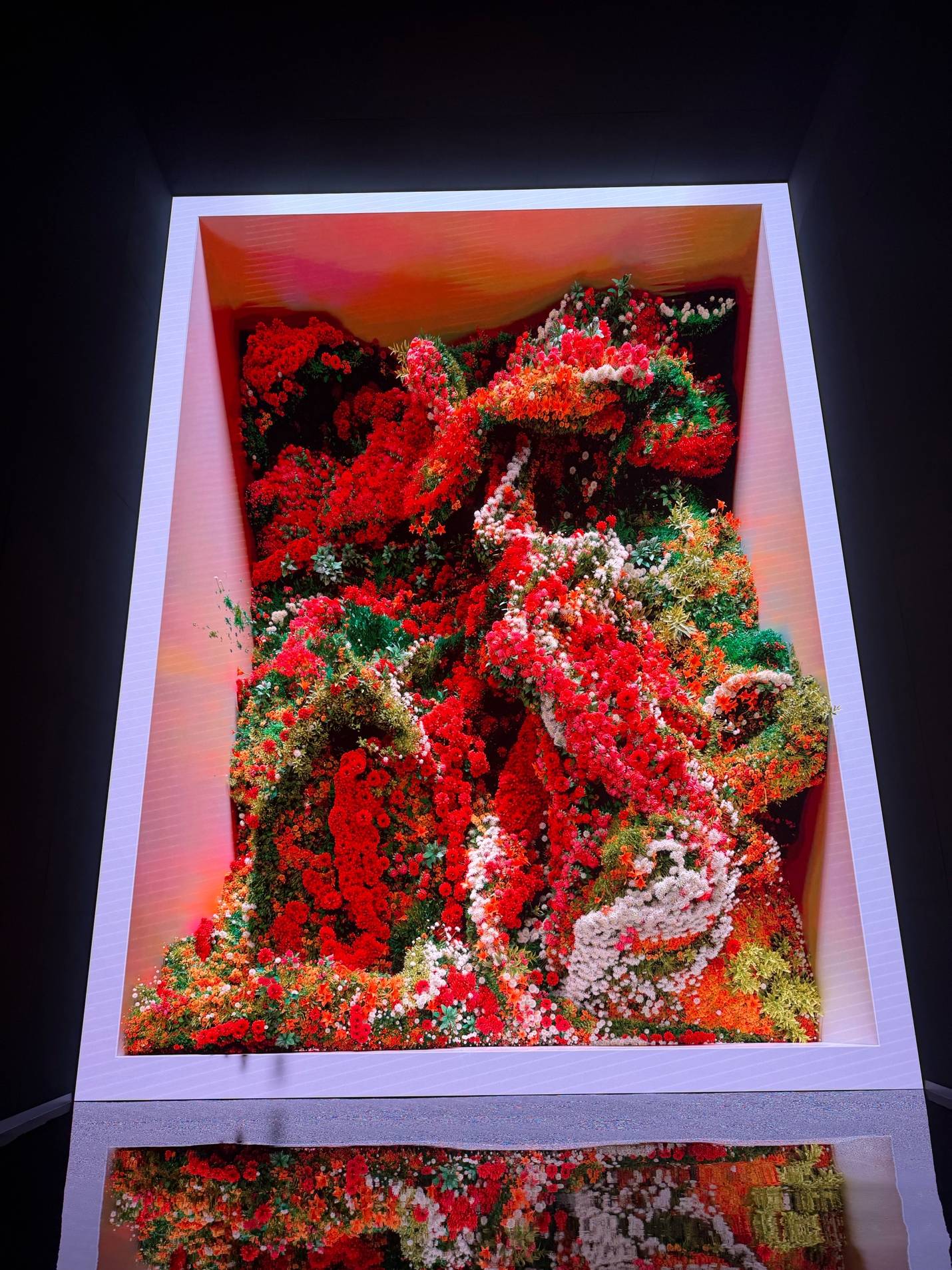
The Sanctuary’s ever-changing particles and flowers never repeat. / Photo: Xirui Huang / Dataland, 2026The image is generated in real time from visitor biometric data. / Photo: Xirui Huang / Dataland, 2026
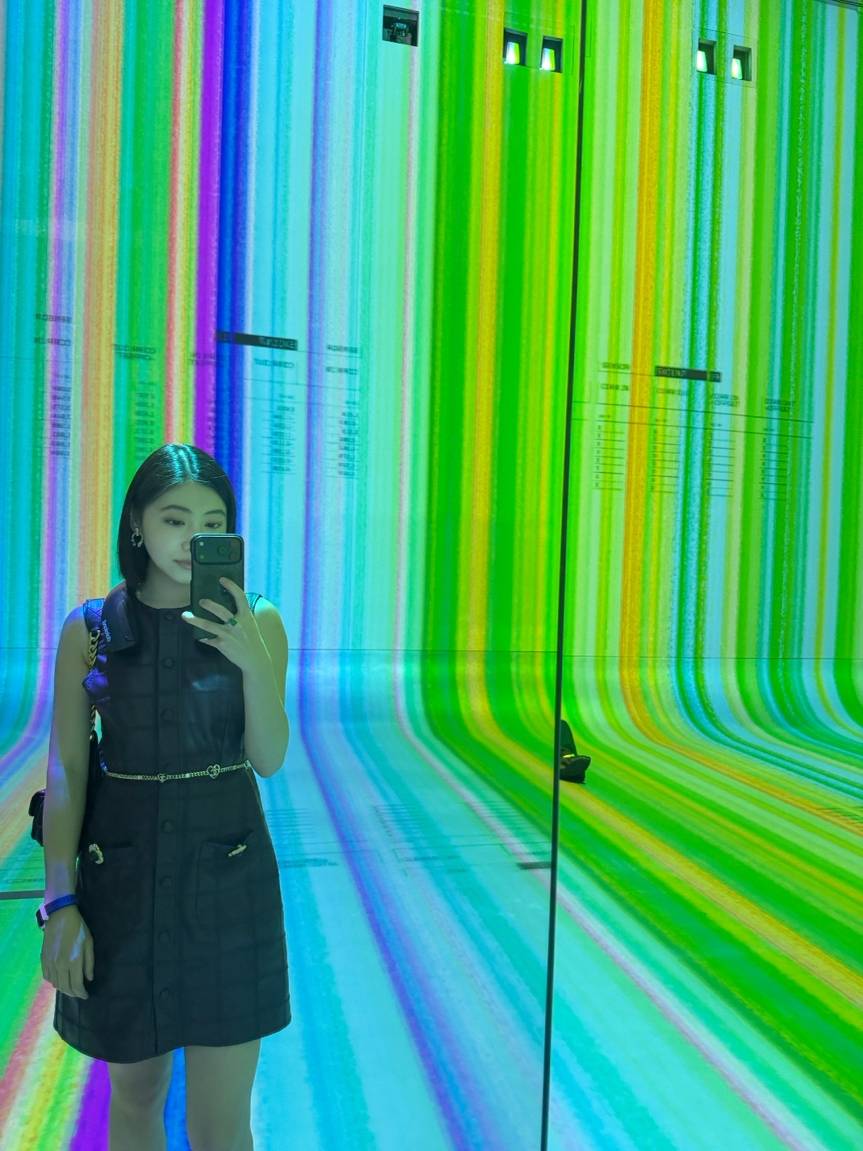
The Sanctuary is anchored by a 30-foot panel where colored particles and flowers continuously emerge and transform, producing an almost meditative effect. The visuals are generated in real time from the body temperature, heart rate, and skin-conductance data of everyone who visits that day, so the display never repeats.
Admission is $79. The overall experience is strong, but the price is undeniably steep. It feels like a higher-end version of teamLab. How the museum will innovate after this exhibition may be a question best left to the AI trained by Anadol himself.