Liu Shangying: Making the World His Studio, Painting in Nature for 10 Years
Since 2011, Liu Shangying has worked across five places—Ali in Tibet, Ejina Banner in Inner Mongolia, Lop Nur and the Altun Mountains in Xinjiang, and the Tianshan Mountains—painting across plateaus, deserts, wildernesses, and high mountains. His works, made over more than 10 years of “walking,” are now on view at Xihai Museum in five thematic chapters......
By / Xirui Huang · 11 min read
Why does Liu Shangying make walking and bodily perception part of painting?
In Xirui Huang’s 2022 interview, Liu Shangying describes travelling to plateaus, deserts and mountains since 2011 to recover bodily responses to nature beyond urban routines. At Lop Nur he lays long canvases across the terrain, paints through touch and incorporates sand. Animal tracks, light and local materials in the Altun and Tianshan Mountains prompt further experiments. His exhibition at TAG Art Museum brings these journeys into the galleries, connecting the movement of viewers with the making of paintings.
Liu Shangying: Ten Years Painting With the Earth as His Studio
Since 2011, the artist Liu Shangying has traveled through five places—Ali in Tibet, Ejina Banner in Inner Mongolia, Lop Nur and the Altun Mountains in Xinjiang, and the Tianshan Mountains—working continuously across plateaus, deserts, wildernesses, and high mountains. His works, made over more than 10 years of “walking,” are currently on view at Xihai Museum in five thematic chapters, recounting his most direct responses to different natural environments: at times rugged, at times naïve, at times perilous.…
At the opening, we spoke with the artist via a link to his Beijing studio about his creative journey “using heaven and earth as a studio.”
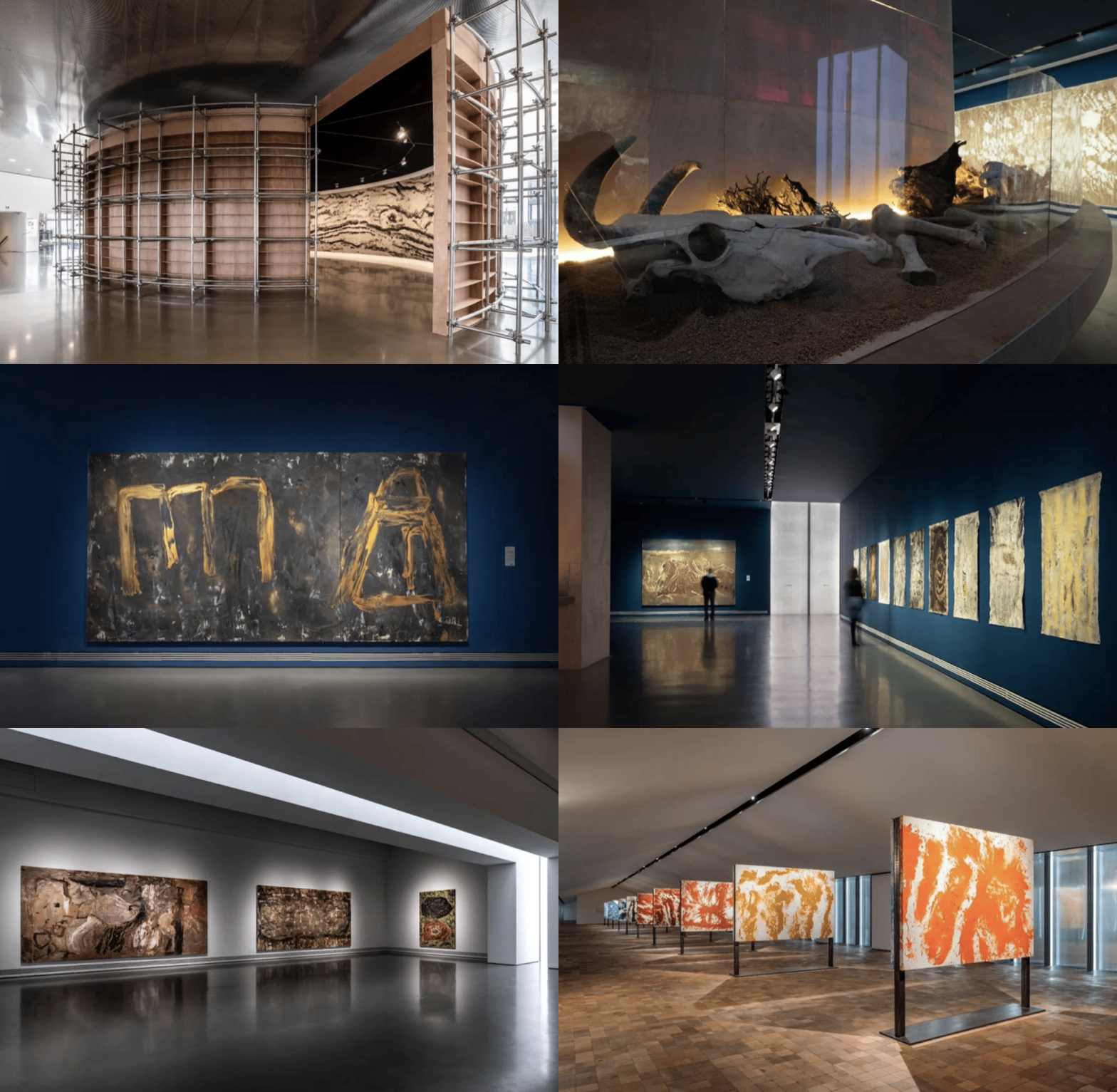
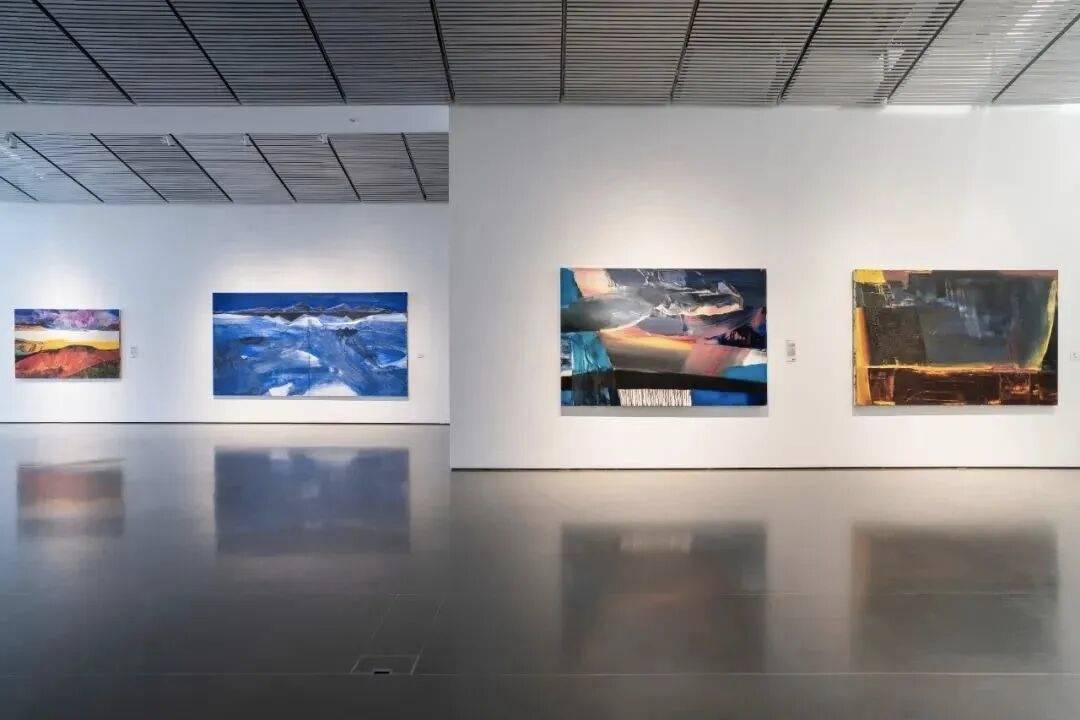
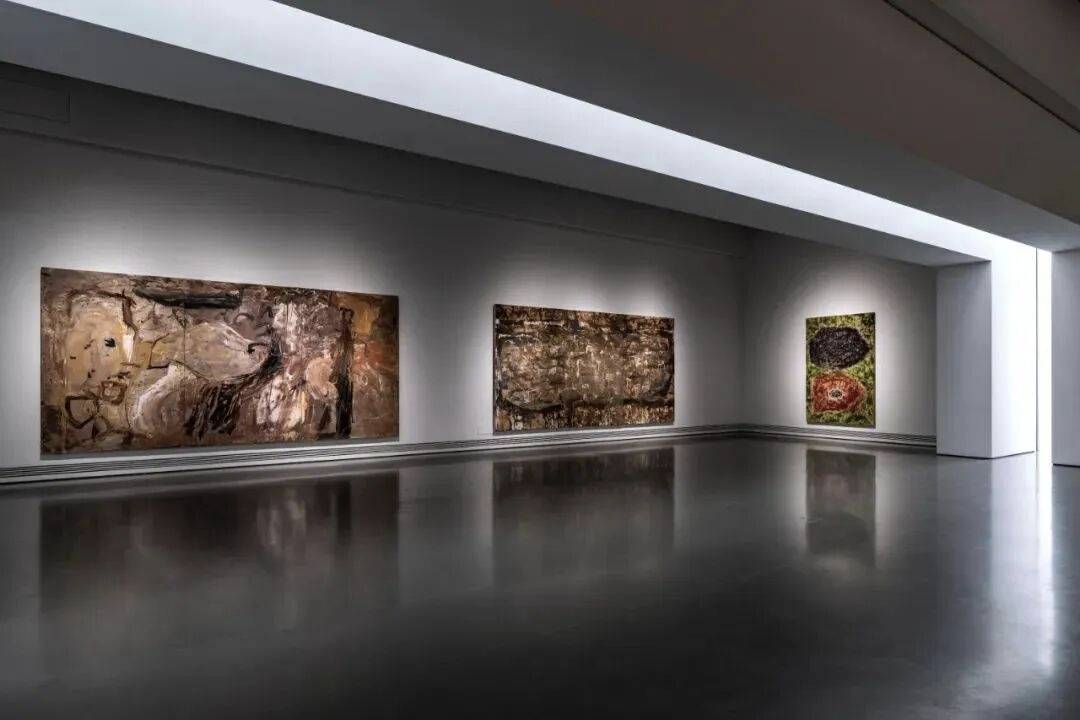
“Walking Between Worlds: Liu Shangying,” exhibition view, TAG·Xihai Museum, 2022. “Valley and Summit,” site-specific exhibition view, 2022. Born in Kunming, Yunnan, in 1974, Liu Shangying is the son of two professors at the Academy of Arts & Design, Tsinghua University. He studied at the High School Affiliated to the Central Academy of Fine Arts and went on to earn a master’s degree there; he now carries on the “family tradition” by teaching at CAFA. Yet Liu’s method differs from that of other “academically trained” artists—he describes himself as someone who “walks and paints in nature.”
SECTION 01 | Why "walk"?
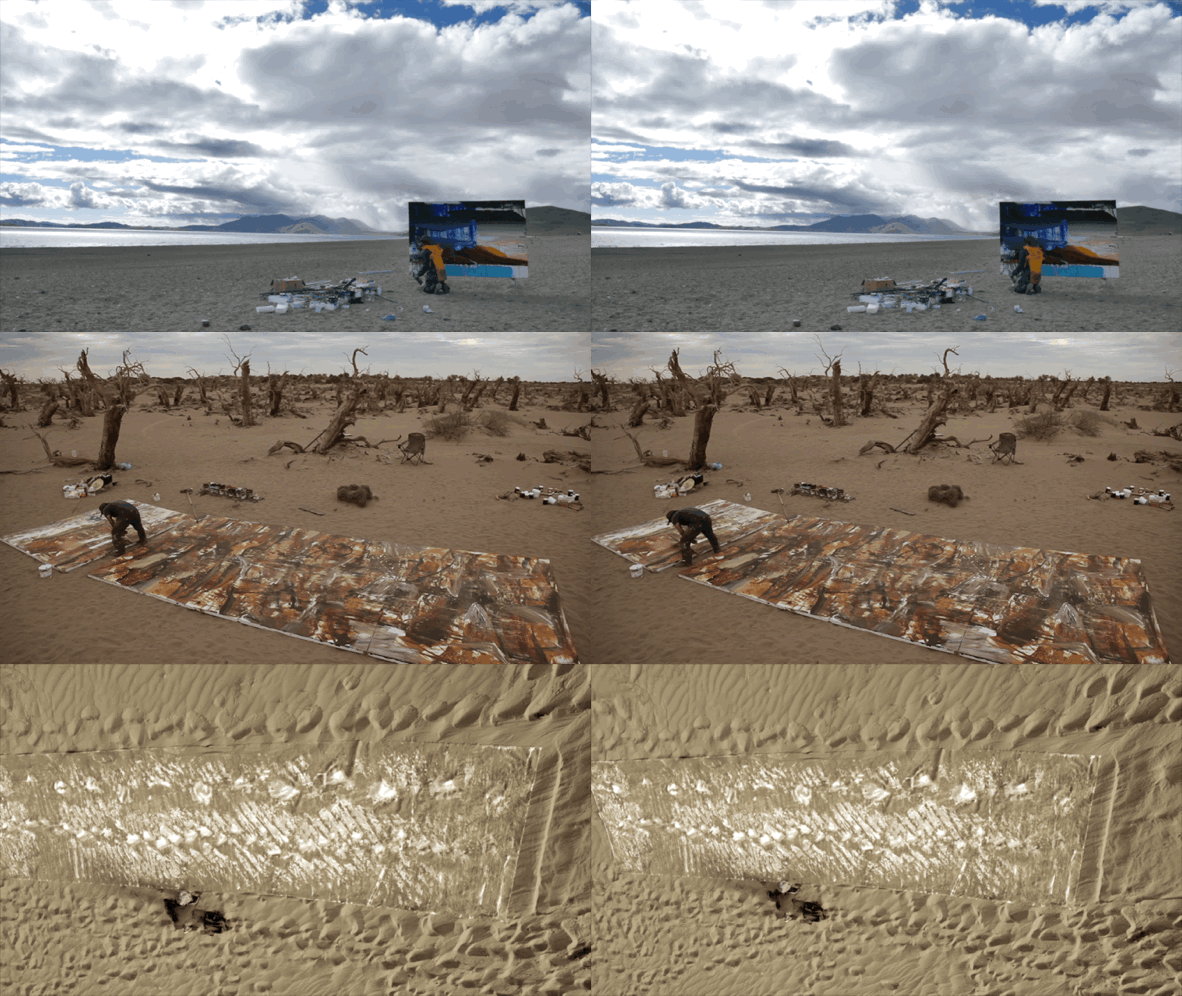
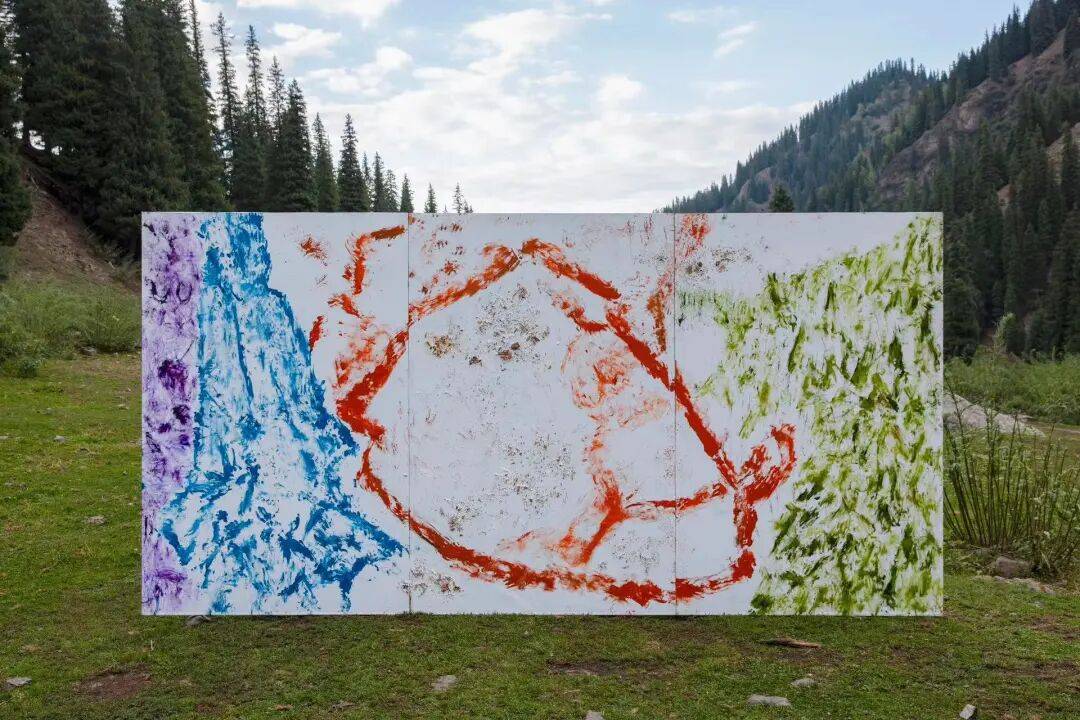
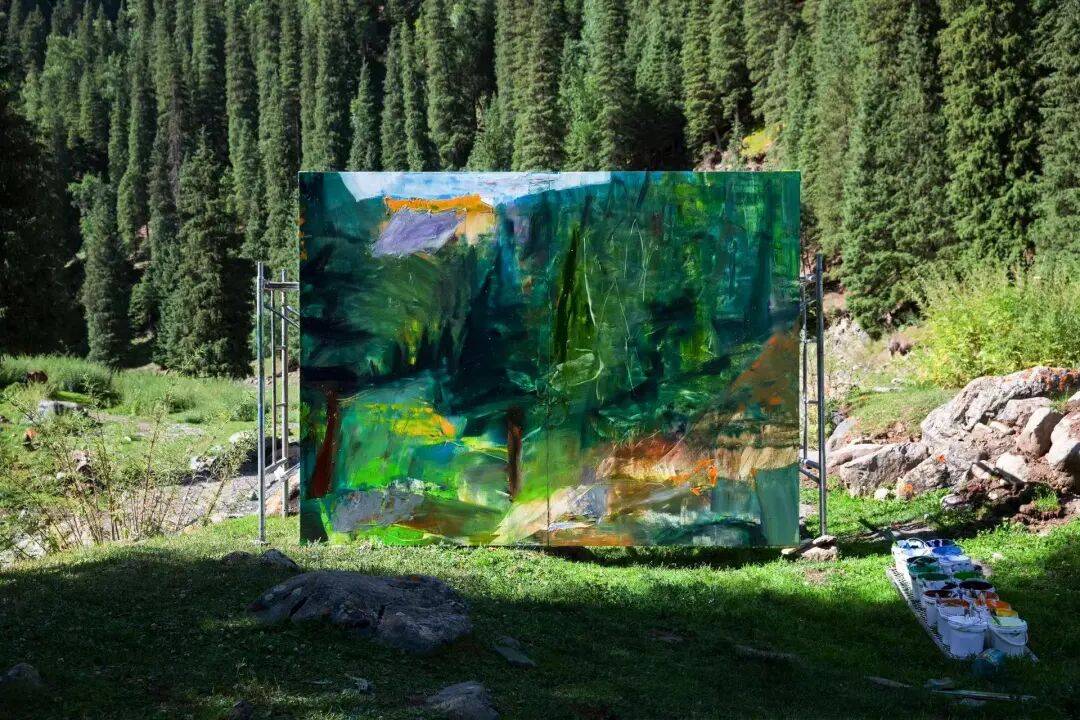
His painting supplies have been blown away; traditional easels and brushes are unusable.… In extreme natural environments, he has felt the smallness of the human being: “And bodily perception becomes more important.” Liu told us that this way of painting, “tugging against” nature, has pulled him out of the trivial routines of life in Beijing, giving him an entirely different experience of life and art. Liu Shangying creating outdoors. Exhibition view at Xihai Museum, presenting a concentrated selection of the artist’s representative works from 2010 to the present.
The exhibition is organized into five thematic galleries—“Walking,” “Inviting Light,” “World,” “Poems,” and “Rainbow.” It traces Liu’s principal mode of working—the relationship between painting and walking—while examining the social and cultural contexts behind the works and presenting the evolution of his artistic practice in both thought and style.
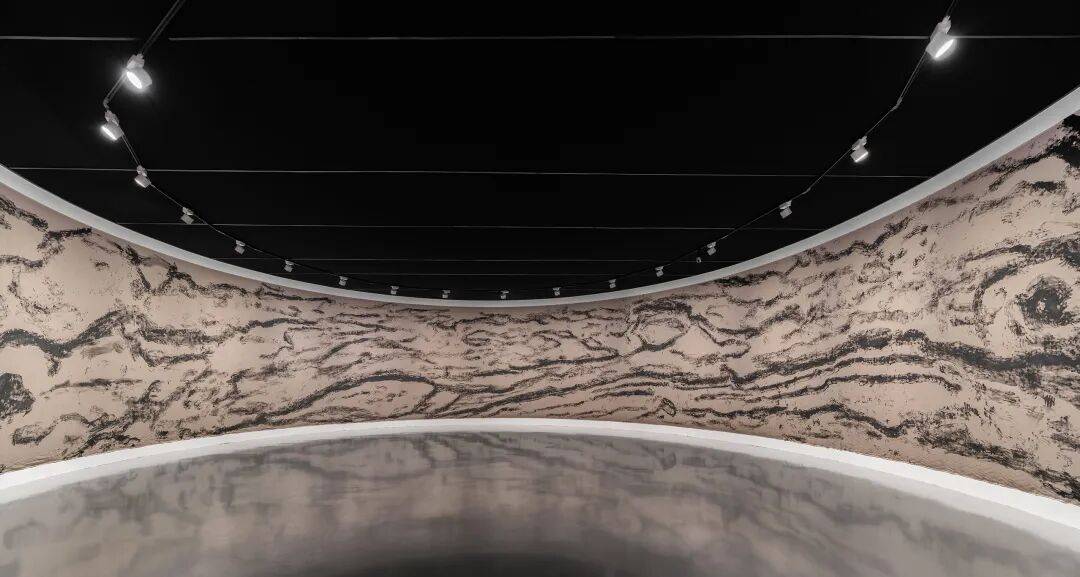
“This exhibition is really a partial summary of a stage in my work. Along the route I’ve walked, every point of support is different, and the curator hoped to sort through things at different points by means of these five projects. The five galleries are arranged according to the locations of my projects, but not entirely,” Liu told us. Liu Shangying, *Wasteland Project No. 21*, 2019. “Walking Between Worlds: Liu Shangying,” exhibition view, TAG·Xihai Museum, 2022. Gallery One, “Walking,” creates a circular space from scaffolding and wooden planks. These materials were essential to Liu’s walking projects; the circular structure simulates his route across the Lop Nur wasteland, attempting to create a painting field structurally equivalent to the natural site. As viewers move continuously around it, they see a monumental work 38 meters long and simultaneously experience the sensation of being enclosed and covered by nature that the artist felt while painting outdoors.
It is the largest work the artist has made outdoors to date, as well as a summative work from his journey through Lop Nur in Xinjiang, the third of his walking projects. While making *Wasteland Project No. 21*, Liu spread a 38-meter-long canvas across the undulating yardang landscape. He felt that his previous experience of painting had failed him there.
“So I chose to touch it with my hands. Painting at that moment had nothing to do with vision; it was directly related to touch.” Liu pressed his paint-covered hands directly against the terrain beneath the canvas. He caressed the earth, leaving behind the imprint of bodily perception.
Liu Shangying: Making the World His Studio, Painting in Nature for 10 Years
“The traces of lines left on the canvas are, to me, painting, though perhaps not entirely painting. They broke open my previous experience of the boundaries of painting. The feeling was extraordinary.”
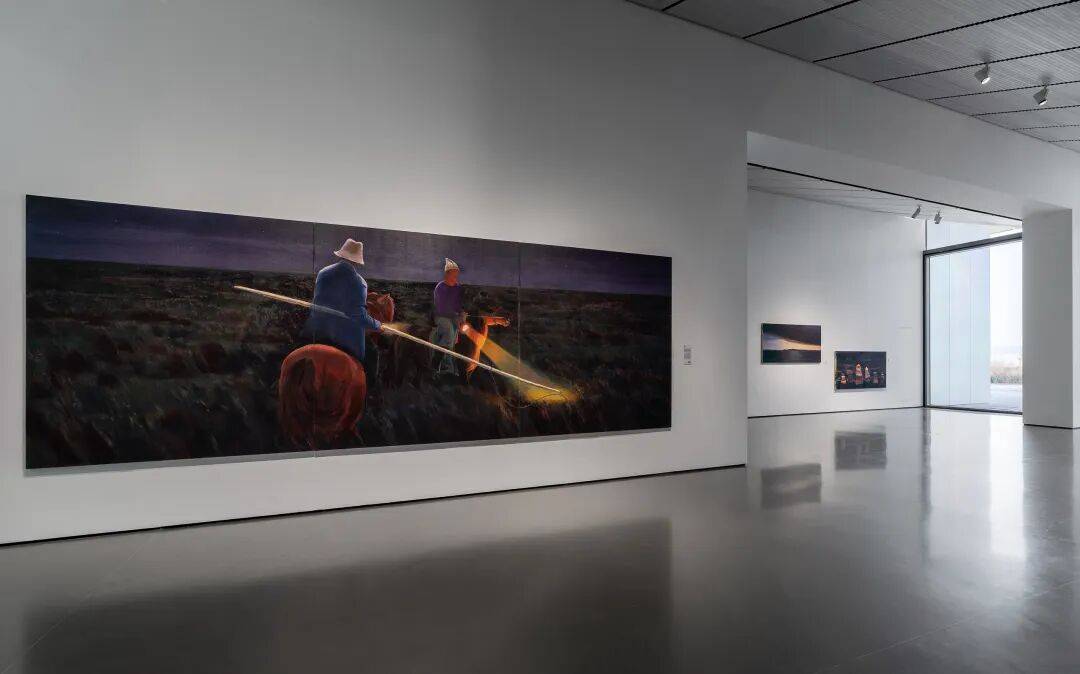
“Walking Between Worlds: Liu Shangying,” exhibition view, TAG·Xihai Museum, 2022. In Gallery Two, “Inviting Light,” a rare representational work makes a strong impression. *Searching for Sheep*, made in 2010, grew out of Liu’s actual experience on the Hulunbuir grasslands. After returning to Beijing, he painted *Searching for Sheep*, the first monumental work of his career, on a canvas 5.7 meters wide and 2 meters high. As he depicted the herders’ daily life, he also turned toward a question about himself: What was he looking for by going from Beijing to the grasslands?
Liu Shangying: Making the World His Studio
This strongly symbolic representational work can be seen as the starting point of Liu’s “walking between worlds.”
“In 2010, I hadn’t yet begun a walking-and-painting project in the true sense. I spent a day or two living with a herding family in Buryat, on the Hulunbuir grasslands. One night, after they returned from herding sheep, they discovered that a mother and its lamb were missing. It was already dark, but I was curious: How could they tell, among two or three hundred sheep, that these two were gone? So I went with them to look.” Liu Shangying, *Searching for Sheep*, 2010. “The grasslands at night made an especially powerful impression on me. They were a little like the sea, completely different from the sunny, breezy grasslands we see during the day.
“You look around and can’t tell whether what you see is grass or waves. The grass makes a rustling sound as the wind passes through it, and that is a little frightening.” Liu said they spent more than 2 hours before finally finding the sheep. This extremely primitive, plainspoken process of humans living alongside nature and animals moved the artist deeply.
“It’s difficult to say exactly what moved me, but I knew I had to paint it.” The journey prompted him to keep asking himself: Why did he always want to leave Beijing? Why did he always want to go toward the grasslands and natural environments? The following year, he went to Ali in Tibet, formally beginning more than 10 years of “wild walking.”
“Walking Between Worlds: Liu Shangying,” exhibition view, TAG·Xihai Museum, 2022. Liu Shangying, *Mani Stone*, 2012; *Lake Manasarovar*, 2011; *Lake Manasarovar No. 19*, 2014. “The most distinctive thing about Tibet is its light. That light makes you feel a sense of the sacred involuntarily; it envelops you,” Liu told us. In the *Lake Manasarovar* series, light becomes the most lingering brushstroke in the image.
Liu’s ability to capture light that vanishes in an instant is astonishing. The light is not representational; you may not even know where it comes from. Its shifting halos are static, yet resemble the ceaseless, ubiquitous changes of light in the natural world.
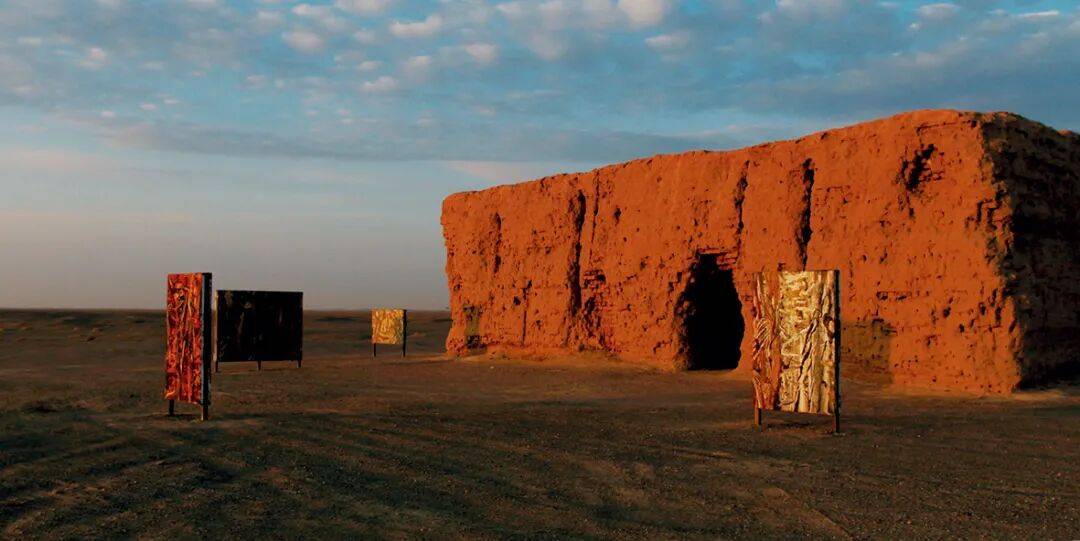
“I use a kind of circumferential way of looking. My gaze remains fixed in the distance, and I try to slow myself down as much as possible, to experience more, and only then begin to paint. In that process, the light may already have passed, but that actually allows me to follow my genuine inner feelings more faithfully.” Liu Shangying at the artist’s solo exhibition “Field of Life,” held at the Western Han Red City ruins in Ejina Banner, Inner Mongolia, 2017. After returning from Tibet, Liu traveled successively to Ejina Banner in Inner Mongolia, Lop Nur and the Altun Mountains in Xinjiang, and the Tianshan Mountains.
Moving between different sites deepened his understanding of the primitive and the chaotic, while allowing unexpected forms and insights to erupt each time he worked. Gallery Three, “World,” is immersed in the calm and mystery of a wasteland at night. Its paintings include dialogues between the artist and wild animals, as well as some unreachable spirit moving through time and space. Liu also brought objects from his time in nature into the gallery, pointing toward a collective ecology of human and nonhuman coexistence.
The “world” of time and the “realm” of space lead Liu to question his relationship with himself, with the world, and with others. One rubbing, more than 10 meters long and covered in footprints, prompts viewers to ask further questions and imagine their own answers.
“Walking Between Worlds: Liu Shangying,” exhibition view, TAG·Xihai Museum, 2022. For Liu, *Footprints* was a work that could only be encountered by chance, arising entirely from an accidental act. At Shazi Spring in the Altun Mountains, he happened to see a clear trail of wild yak footprints on a sand mountain several hundred meters away and decided to follow it. He later preserved both his own footprints and those of the wild yak: using a canvas covered in white oil paint, he imprinted the tracks of human and wild animal through a rigorous process of documentation, then waited a week for the marks to dry before removing the work.
“On the other side of the sand mountain at an elevation of 4,000 meters, I saw an especially elegant line, curving in a ring and meeting the horizon. I thought it was extraordinary. Looking closely, I realized it was a wild yak’s footprints. Then I thought: If a wild animal can walk there, a person can walk there too. So I decided to follow its tracks, walking parallel to it.” As Liu followed the wild yak’s footprints, the steepness of the sand mountain made him feel the smallness and arrogance of the human being. The slope was roughly 70 degrees and very hard; it was almost impossible to stand on it. One careless step could send him into a 300-meter abyss.
He was caught between advancing and retreating, unable to turn back. In the end, he completed almost the entire route on all fours.
SECTION 03 | Play chess with the wasteland and wander in the "fairy tale world"
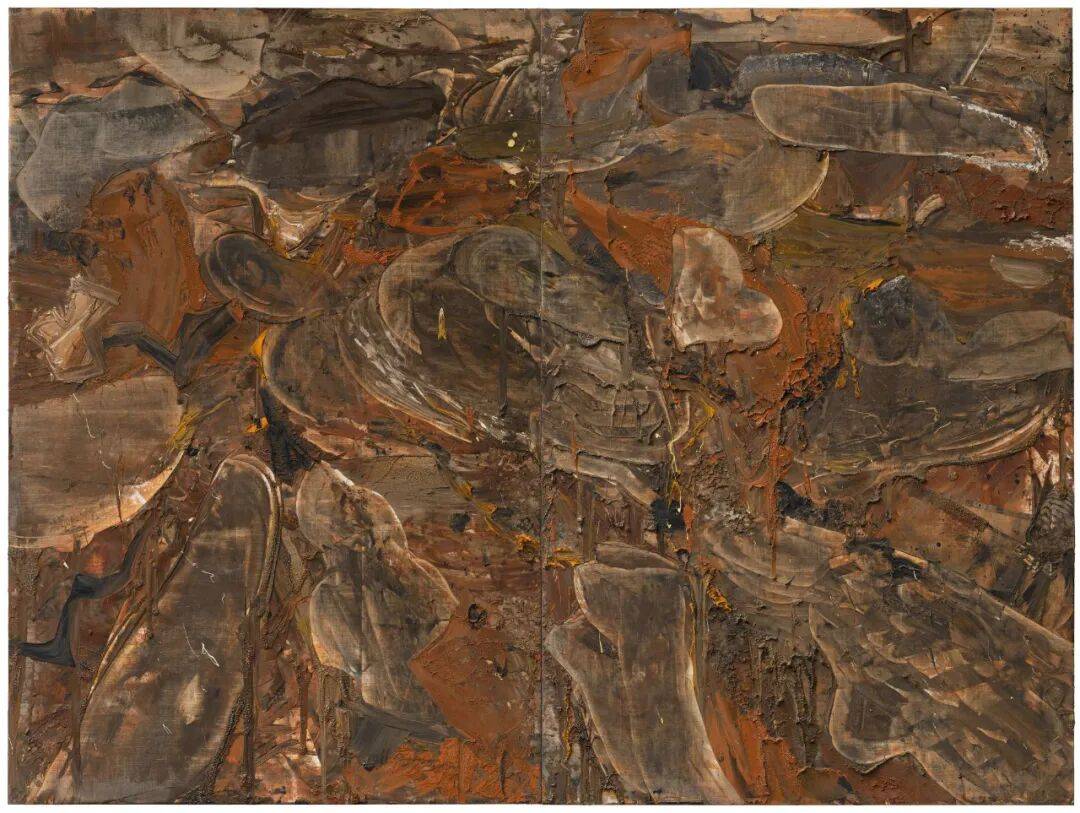
“This work can’t really be considered a painting, but it made me feel a state that can only be encountered by chance. It was a real experience of communicating with a wild animal,” Liu said. For him, such firsthand experience far exceeds anything recorded in films or books. The work’s accidental emergence again prompted him to consider painting and nature: the intervention of the body and bodily labor are irreplaceable. Liu Shangying, *Wasteland Project No. 14*, 2019. “Walking Between Worlds: Liu Shangying,” exhibition view, TAG·Xihai Museum, 2022. “Walking Between Worlds: Liu Shangying,” exhibition view, TAG·Xihai Museum, 2022. Liu Shangying, *Wasteland Project No. 5*, 2019; *Wasteland No. 23*, 2019. Another way Liu dialogues with the earth and nature is to scatter soil directly from the outdoor site onto the image, allowing matter from the natural world to participate in the work.
Confronting the ruins of Loulan, which had become part of the wasteland itself, the artist sensed a spiritual connection between humans and nature that could not be separated across time and space. How can people contend with nature in harsh weather and extreme environments? After moving from passive resistance into a drawn-out stalemate, Liu finally decided to let nature participate in the painting of its own accord.
“My feelings at the time were complicated. I wondered whether I should be painting here at all. I felt like retreating, but that was mixed with a sincere awe of nature. I felt the tug-of-war inside me, and kept revising the painting back and forth, never satisfied. I was truly helpless, truly hopeless,” Liu said.
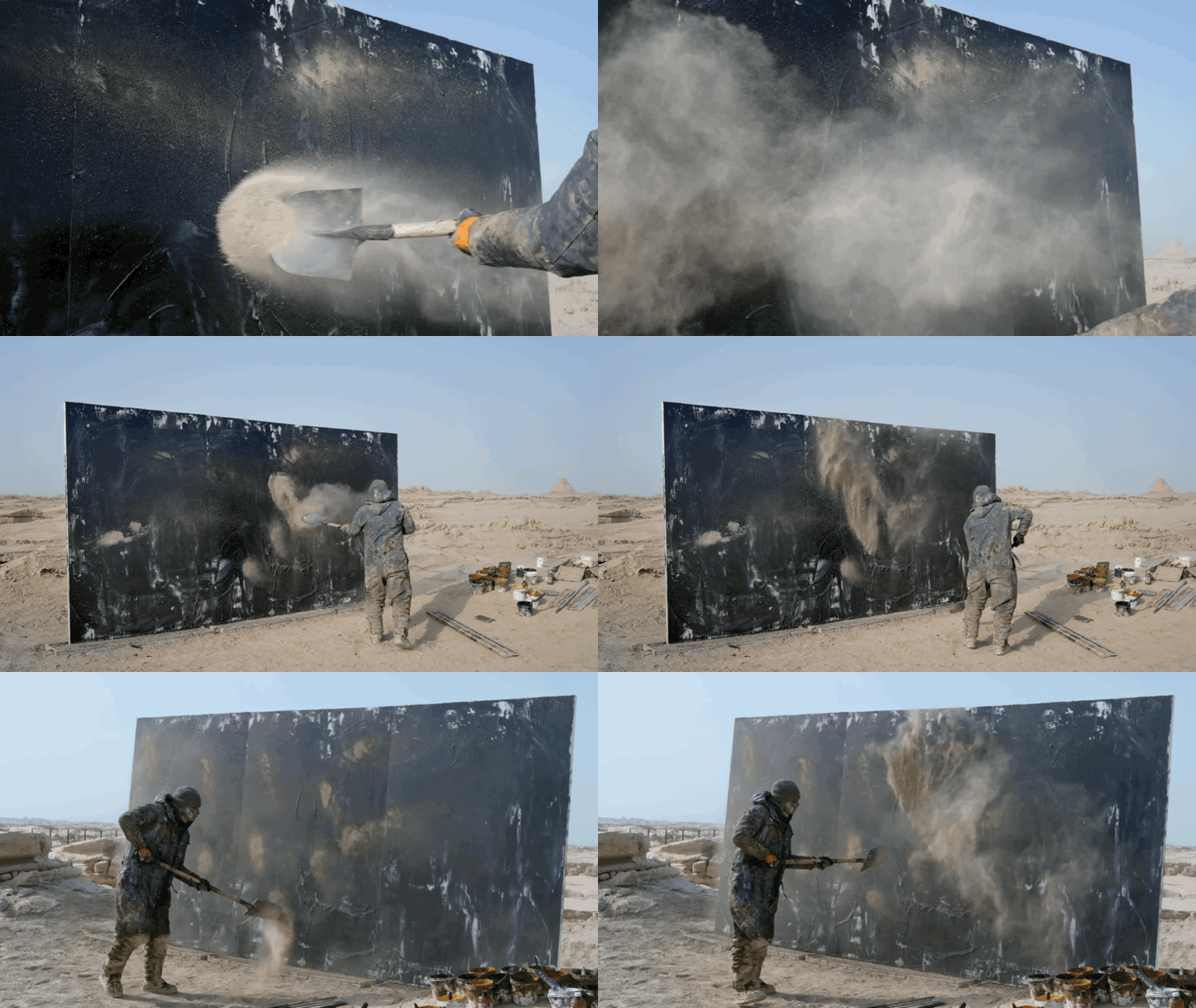
“Walking Between Worlds: Liu Shangying,” exhibition view, TAG·Xihai Museum, 2022. Liu Shangying making *Wasteland Project No. 14*. Liu Shangying in the Lop Nur wasteland, 2019. While painting one day, he accidentally kicked a shovel, and the soil on the ground was swept into the image. Mixed with the paint, the sand took on an unusual shape, as if laying a mysterious veil over the work.
“At that moment, the stalemate that had been pulling at me suddenly opened up. It was as if I had found a way out of a dead end; everything that had accumulated inside me vanished,” he said. Later, he simply shoveled sand from the ground and flung it at the image. In the end, that gesture seemed to make everything fall into place. The intervention of the sand allowed the ruins of Loulan and the Sea of Death before him to complete, within his work, a passage through history and a dialogue between past and present. It also brought him back to the place of origin.
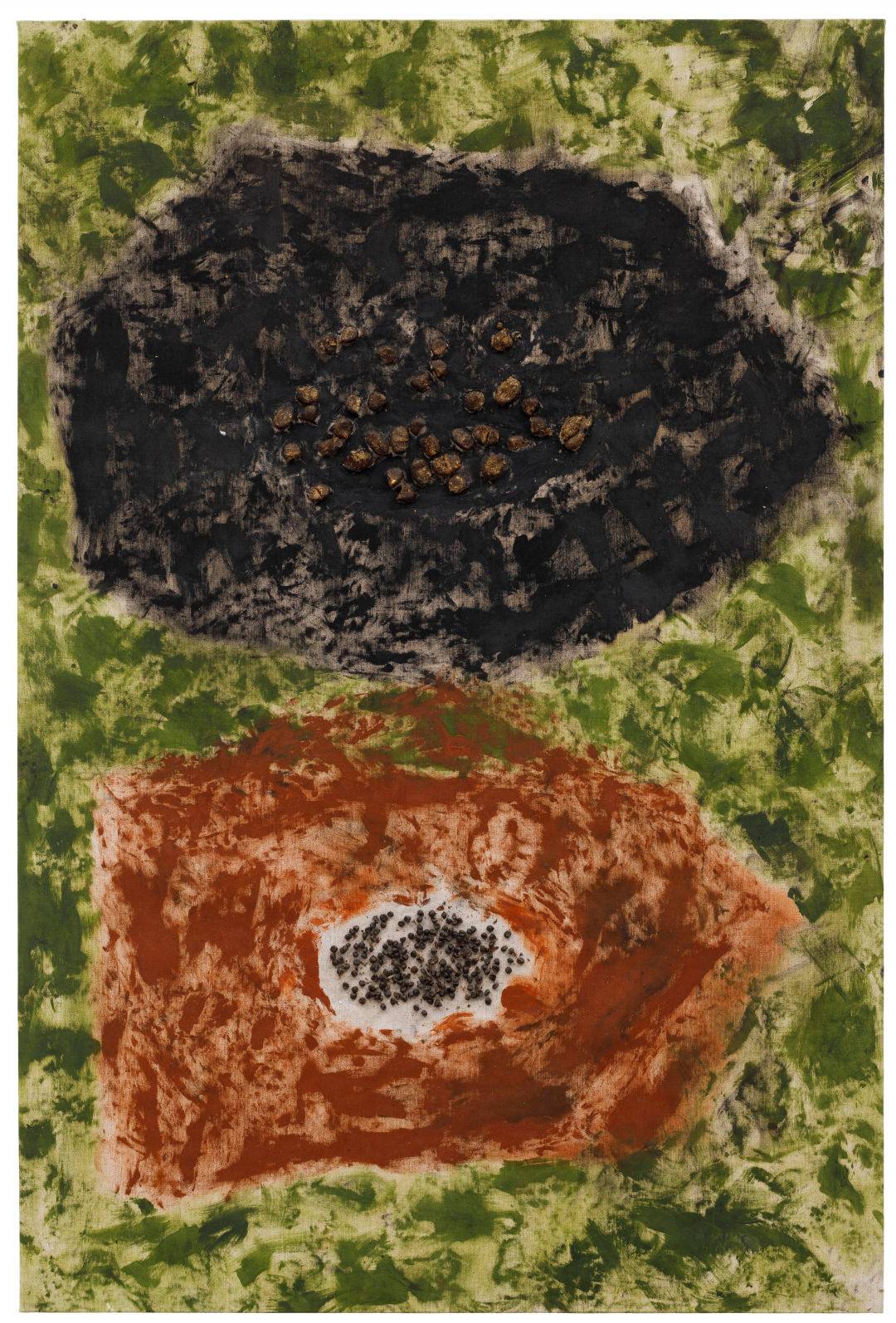
Liu Shangying, *Tianshan No. 9*, 2022; *Tianshan No. 6*, 2022; *Tianshan No. 10*, 2022. Looking at Liu’s work, one easily finds oneself asking why his paintings are so different. The artist’s answer is simple: because the places he visits are different. Tibet, in his paintings, is radiant, like a young and beautiful woman. The dead poplars of Ejina Banner in Inner Mongolia represent the alternation of life and death. Lop Nur in Xinjiang has an epic roughness and grandeur. The Altun Mountains are barren, yet vivid with color and fantasy.
SECTION 04 | I can't stand living in the online world
His most recent journey, to the Tianshan Mountains in 2022, brought back something close to a world beyond the ordinary.
“The Tianshan Mountains really are a wonderful place. It’s as if you’re in a fairy tale, with people living in wooden cabins on the mountains and raising cattle and sheep. When they have time, everyone gathers to sing and dance,” Liu said with a smile. Liu Shangying, *Tianshan No. 28*, 2022. The beauty of the Tianshan Mountains briefly made the artist retreat. Later, he realized that whether a place is desolate or beautiful, it has its own particular qualities. His task was to set aside his previous experience, return to zero, and begin again—to face a new “world,” and himself.
“I have to mobilize all my bodily senses, truly enter the place, and perceive it. The process is very slow, step by step. Previous experience changes naturally as well; experience is always behind.” The artist used fallen pine needles from the Tianshan Mountains and wool dyed green as parts of the image. To truly “enter the Tianshan Mountains,” Liu used an honest, seemingly foolish method. He began by carefully painting from life: beautiful forests, blue skies and white clouds, herds of cattle and sheep—scenery as picturesque as a postcard.
Then he gradually discovered that there were more revelations beyond the landscape. The thick pine needles on the ground, sheep dung, fallen horseshoes, and loose wool left behind after shearing—details alive with energy—eventually formed an imagining of a fairy-tale world.
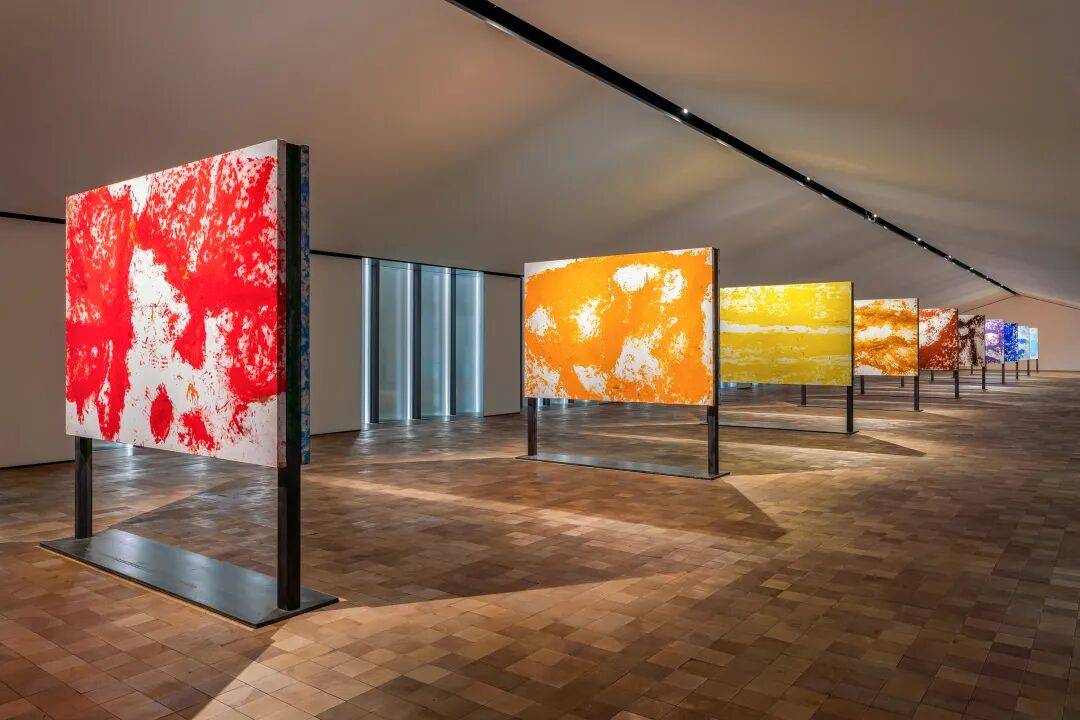
“Walking Between Worlds: Liu Shangying,” exhibition view, TAG·Xihai Museum, 2022. The final work Liu made for his Altun Mountains project in Xinjiang is a suite of 20 paintings titled *Rainbow*. Arranged in a line through a 50-meter-long gallery, their many colors reflect another layer of fantastical light in the white exhibition space, blending with the surrounding architecture in another sense of seamless integration.
“Two days before I painted this work, I saw a rainbow in the open wilderness beside a lake. Red, orange, yellow, green, cyan, blue, and violet came down like that. Conditions were difficult, and everyone on the team was physically and mentally exhausted, but when the rainbow appeared, we were all extremely excited. It seemed to knock away all our fatigue. We saw the original intention that had brought us there and the vision we had ultimately hoped for. It was like a hallucination, and like a dream.” The artist creating in nature. Liu Shangying, *Tianshan No. 11*, 2022; *Tianshan No. 3*, 2022. His weariness with urban life is inseparable from experiences in his childhood.
“When I was little, I spent some time living with my grandparents in Inner Mongolia, so I naturally developed a deep attachment to and affection for that kind of open terrain and landscape. Although I later came to live in Beijing, that childhood longing for nature has remained in my body.” He disliked sitting in a classroom to paint from an early age, and never passed up an opportunity to go to the countryside. “Even now, when I’m in Beijing, I like to go out to the suburbs when the weather is good. This desire to get outside can’t be suppressed.”
“Walking Between Worlds: Liu Shangying,” exhibition view, TAG·Xihai Museum, 2022. Liu Shangying, *Tianshan No. 1*, 2022. The artist creating in nature. He also acknowledges that he cannot bear living in an online world. The conditions of the city are too comfortable, and he feels they scatter and distract him from making art. Going somewhere very far away, where living conditions are more difficult, instead activates his bodily powers of perception.
“The body’s perception is so important, and we are gradually losing it. I like that primitive, simple state.” In the mountains, he worked from sunrise to sunset, breathing in rhythm with nature. The perceptive powers numbed by the busy city returned to his body little by little, settling onto his canvases.
“In the city, say I want malatang today and seafood tomorrow—I can change restaurants every day. But in the mountains, the food is very simple: instant noodles and dry provisions. Yet I feel more physically at ease than I do in a big city.” Liu Shangying in his studio. Both of his parents were professors at an academy of fine arts. Liu said the influence of his family environment was subtle and gradual: “As a child, I never felt that art was something especially sacred. I simply loved drawing. My parents influenced me more through a kind of guidance at the spiritual level.”
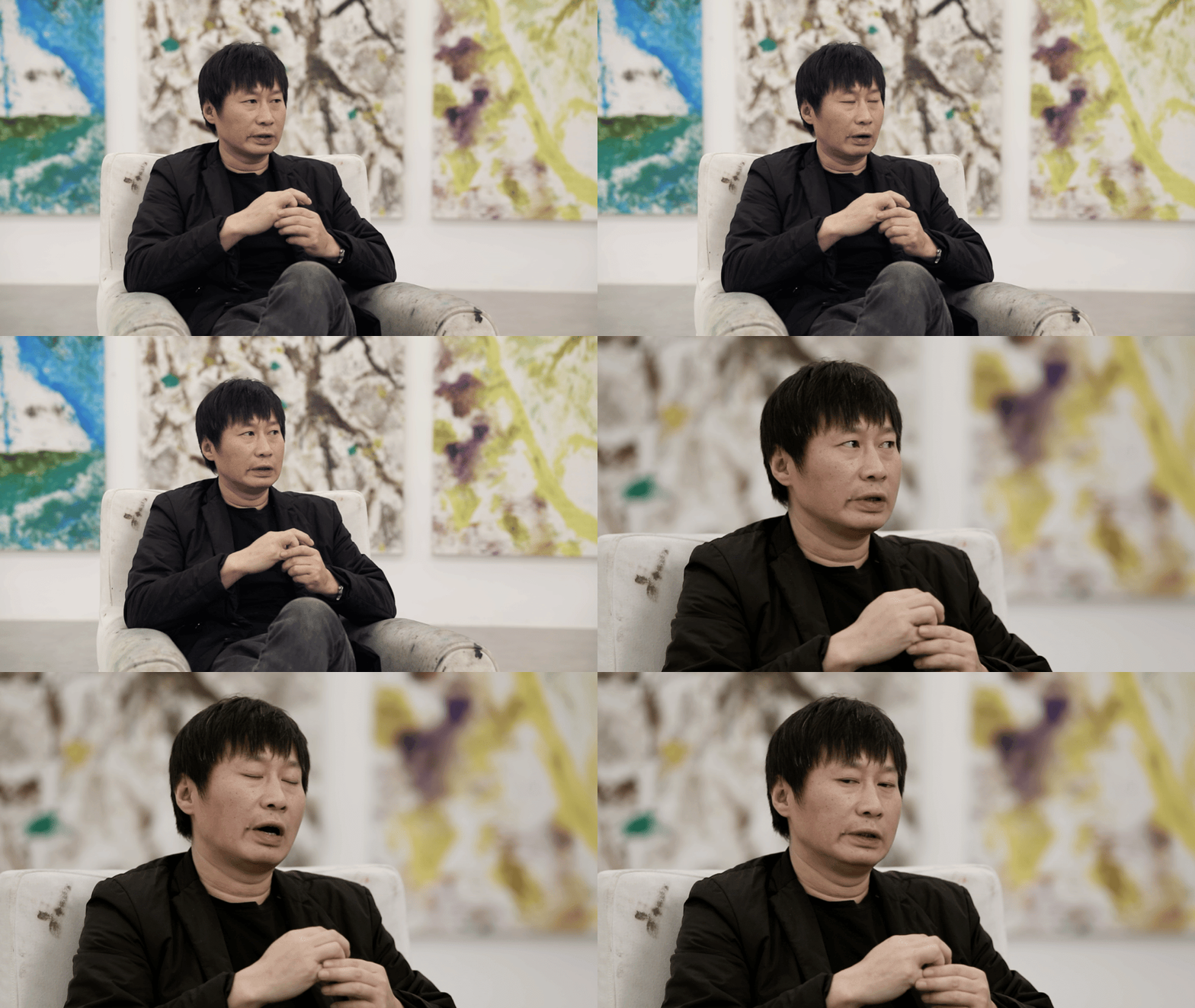
Even now, when Liu returns to his parents’ home, the subjects he and his parents discuss are still more likely to concern art. “Everyone sits together and talks as equals. That feeling is very good.” Liu Shangying being interviewed for an art feature. At the end of the interview, we talked about his life outside his work. Liu joked that he was becoming an increasingly dull person.
“The World Cup has just started, so I watch some football. Actually, these years I feel as if I have fewer and fewer hobbies. I used to like playing football, listening to music, and watching films, but gradually I’ve lost much interest in those things. Because work really gives me a great deal of pleasure.” Editor: Huang Xirui