The Swiss Artist Who Fell for Ink and Chinese Landscapes
Born in 1993, the Swiss artist Rebekka Steiger is one of the most sought-after young artists working today. Though born and raised in the traditional “European soil,” she makes work deeply connected to Chinese culture, landscape, literature, and ink. During a 2018–19 residency in Beijing, she taught herself Mandarin and Cantonese and chose an authentic Chinese name......
By / Xirui Huang · 8 min read
The Swiss Artist Who Fell for Ink and Chinese Landscapes
Born in 1993, Swiss artist Rebekka Steiger has developed a close relationship with Chinese landscape painting, literature and ink. In March 2024, her exhibition Octopus Mountain opened at Tank Shanghai, presenting more than 60 works made over the previous six years. Four poems divide the exhibition into chapters, bringing together experiences of life in China, Switzerland and Vietnam.
How does Rebekka Steiger bring Chinese landscapes and residency experiences into painting?
Swiss artist Rebekka Steiger, also known by her Chinese name Gao Yan, learned to work with ink during a Beijing residency in 2018–2019. She explored the scale of figures within Chinese landscapes and carried calligraphic gestures into paintings of Swiss scenery. In Xirui Huang’s 2024 interview at Tank Shanghai’s Octopus Mountain exhibition, she discusses how life in China, Switzerland and Vietnam enters her work through poems, animal legends and personal memories. The conversation follows these experiences as sources for painting rather than fixed geographical labels.
Figure | Gao Yuan: Everything I've Lived Through Is in My Painting
Born in 1993, the Swiss artist Rebekka Steiger is one of the most sought-after young artists working today. Though born and raised in the traditional “European soil,” her work is deeply connected to Chinese culture, landscape, literature, and ink. She feels a strong affinity with Chinese culture. During a 2018–19 residency in Beijing, she taught herself Mandarin and Cantonese and chose an authentic Chinese name for herself.
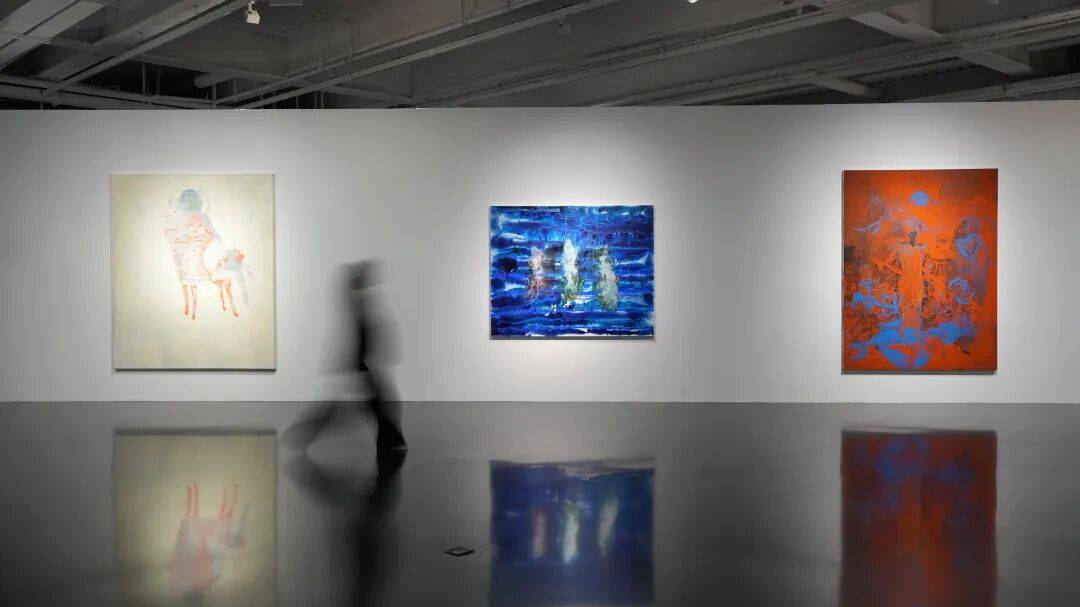
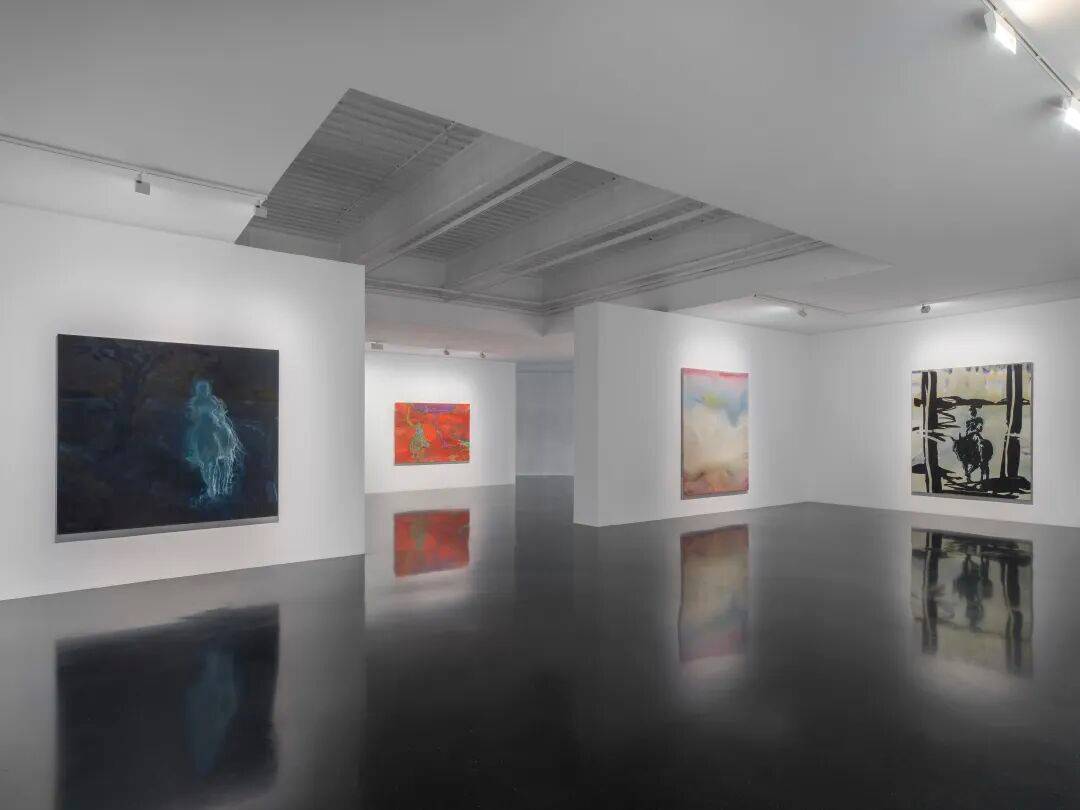
“At the time, I even thought about moving to China. I shipped everything I owned from Switzerland to Beijing,” Steiger told me with a laugh. Rebekka Steiger, installation view of “Octopus Mountain,” Tank Shanghai, March 2024. At Tank Shanghai, Steiger’s new solo exhibition, “Octopus Mountain,” opened in March 2024, presenting more than sixty works made over the past six years. Steiger wrote four fantastical poems that divide the exhibition into four independent chapters—“Appreciating Stones,” “Blood of the Gods,” “Dead Wake,” and “Olivewing”—recounting the time she spent in China, Switzerland, and Vietnam.
SECTION 01 | Experiencing Creative Freedom in China
When I met Steiger at the exhibition, she had just returned from a luncheon at the Consulate General of Switzerland in Shanghai. She wore a peacock-blue knit sweater and simple jeans; tiny beads of drizzle still clung to her hair. She looked both brisk and softly veiled in mist. She strode over and opened with a fluent “Hello, I’m Rebekka Steiger,” then turned self-deprecating: “Oh my God, I haven’t spoken Chinese in so long. I’ve almost forgotten it.”
“To have an exhibition in such a beautiful museum makes me feel like a ‘superstar.’” This charming, down-to-earth opening made the much-discussed Swiss art star seem more approachable. Rebekka Steiger, installation view of “Octopus Mountain,” Tank Shanghai, 2024. Rebekka Steiger, Untitled, 2018. Steiger told us that since finishing her Beijing residency in 2019, this was her first return to China in five years.
When I asked about the effect her time in Beijing had on her life and work, she had a great deal to say.
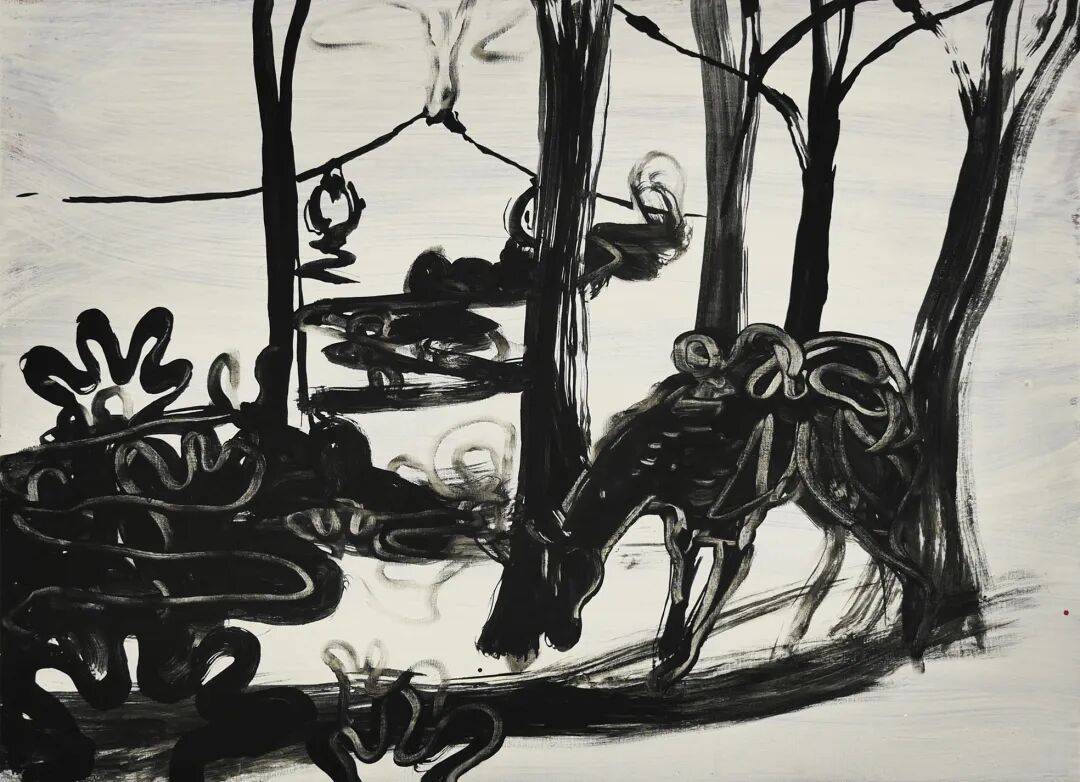
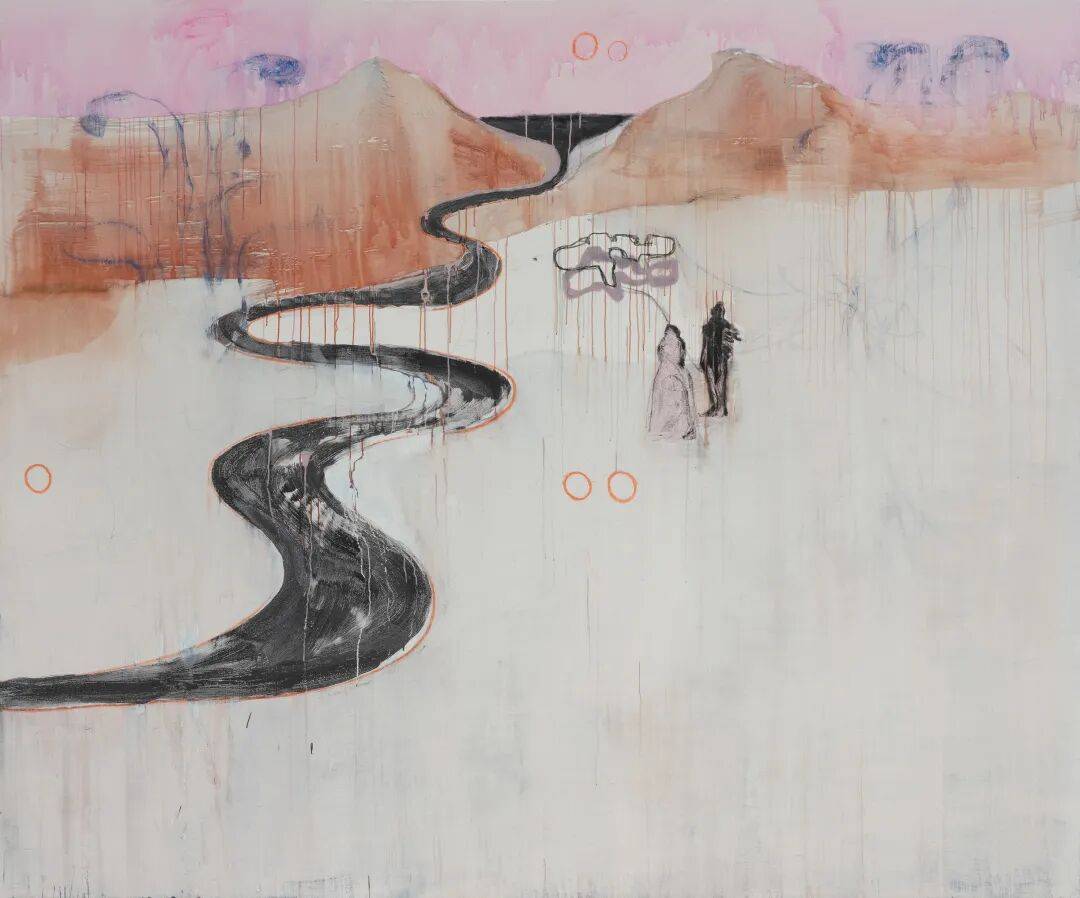
“I find making art in China very liberating, with a great deal of flexibility. Nothing is fixed, and every day I can try more things and reshape my creativity. Switzerland is small, and everything is orderly; it has been that way for centuries, which can make people somewhat narrow-minded.” Rebekka Steiger, Untitled, 2018. Rebekka Steiger, Helium 11, 2019. During her time in China, she learned to paint with ink. She painted the Great Wall, the mountains she had climbed, and tiny people and horses set within vast landscapes.
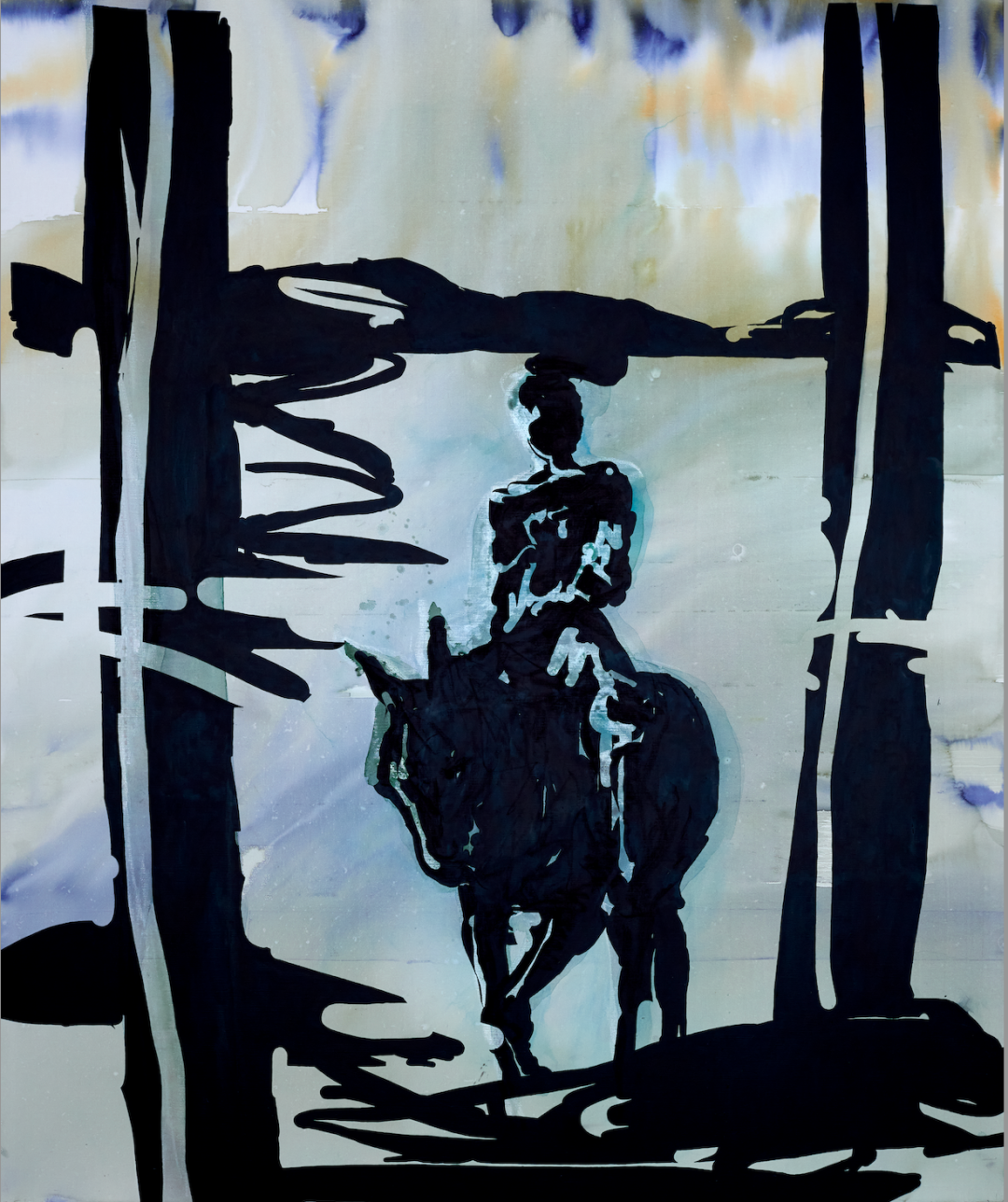
These paintings contain elements of Europe, but they are also distinctly “Chinese.” In paintings of riders, for example, European artistic traditions treat the figure and the horse as equally important subjects, while in Chinese painting, artists have often rendered the landscape on a grand scale and the mounted figure very small. Rebekka Steiger, To Where Grey Waters Flow, 2021. Rebekka Steiger, Untitled, 2018. “Personally, I prefer the Chinese approach,” Steiger said.
Inspired by the relationship between landscape and the human figure in traditional Chinese painting, she made these works, which achieved major success three years ago. They became the first paintings of hers to enter collections. Rebekka Steiger, installation view of “Octopus Mountain,” Tank Shanghai, 2024. During this period in China, Steiger absorbed everything around her like a sponge, drawing it deep into her body. Chinese landscape painting and the murals of Dunhuang became an unconscious source of nourishment, flowing naturally onto the canvas when she worked.
“Everything I experienced entered my paintings directly. People always ask me, ‘Did you get inspiration from ancient Chinese paintings and calligraphy?’ Perhaps it’s the brushwork or the colors that give them that impression, but none of it was something I consciously set out to paint.” She also shared several metaphysical stories and amusing coincidences connected to her experience in China. Before going to China, she said, she had painted two works related to the Great Wall—perhaps a vague premonition. Six months later, she arrived in China.
Rebekka Steiger, The Writing Is on the Wall, 2017. Rebekka Steiger, Wish You Were Here, 2017. Both paintings were made before Steiger came to China for her residency in 2018. After returning to Switzerland at the end of the residency, she continued to paint with ink. This snow scene depicts the Swiss Alps from a photograph, yet its free, expressive handling recalls Chinese calligraphy.
Steiger’s photographs of the Swiss mountains in snow. Rebekka Steiger, Blue Streak, 2020. “What really interests me is the abstract sensation—the way the white snow and dark rocks form a kind of pattern. When I put brush to canvas, I move almost as quickly as if I were writing calligraphy,” Steiger told us. Rebekka Steiger, Lichen and Light, 2020. Another work is more abstract still.
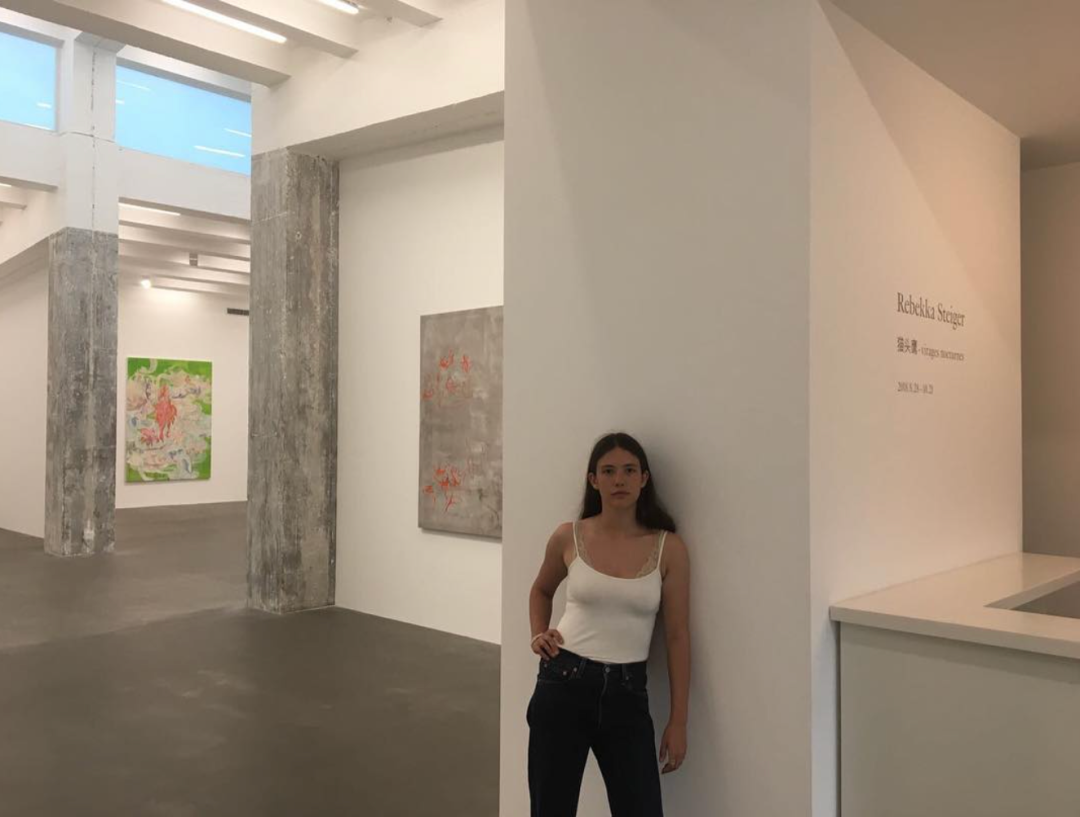
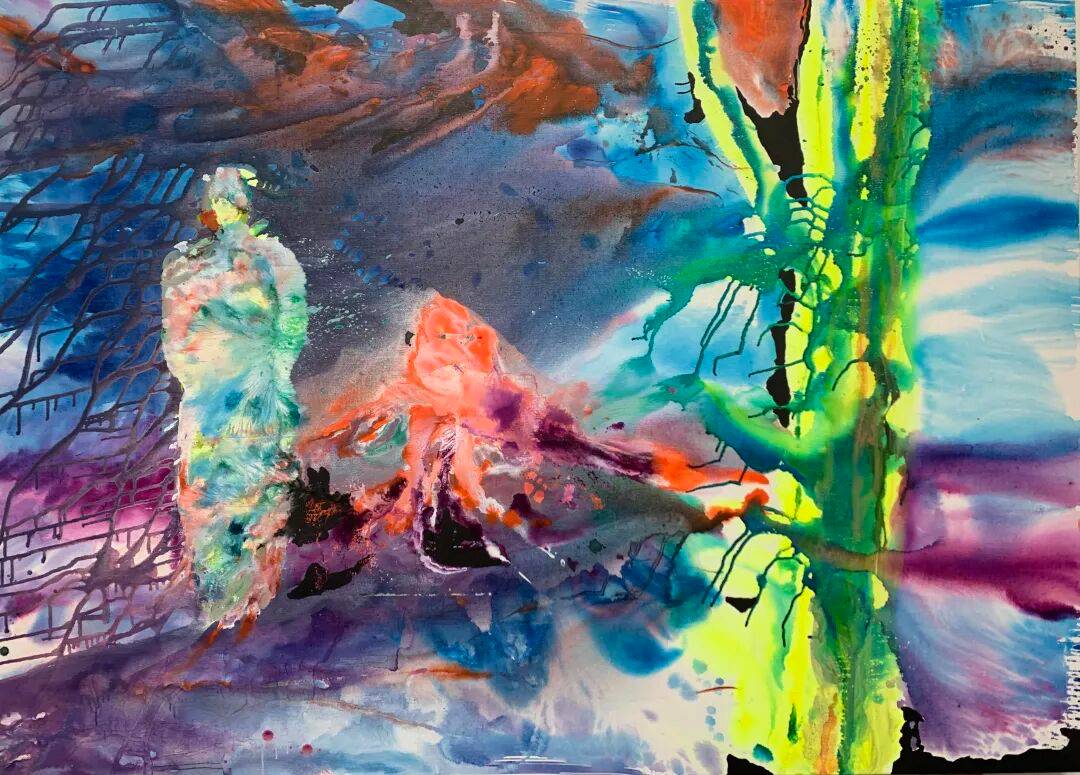
“This painting is called Lichen and Light. The three orange circles represent light, and in painting those ‘circles,’ I wanted to interpret the rounded hills found in Chinese painting. So although it’s very abstract, to me it is still a landscape.” Rebekka Steiger at the exhibition following the conclusion of her 2018 residency project at Galerie Urs Meile Beijing. Rebekka Steiger in front of Zhang Ding’s work Safe House, 2018. “Life in China surprised me. Things were always changing.”
“I’m actually very lazy; I never practiced Chinese. But I liked looking at things written in Chinese here, and gradually I was able to understand them. That gave me a real sense of accomplishment. Learning things without going to school is a very enjoyable way to learn.”
“I also encountered some extremely rude taxi drivers. One drove me across half the city to the Great Wall, talking nonstop the whole way—God knows what kind of stories he was telling.” Steiger laughed as she recalled the amusing incidents she encountered in China. “I like living in different cities. I like their unfamiliarity, and I like the food in different places.” Rebekka Steiger, installation view of “Octopus Mountain,” Tank Shanghai, 2024. Rebekka Steiger, Octopus Mountain, 2023. The exhibition takes its title from this work.
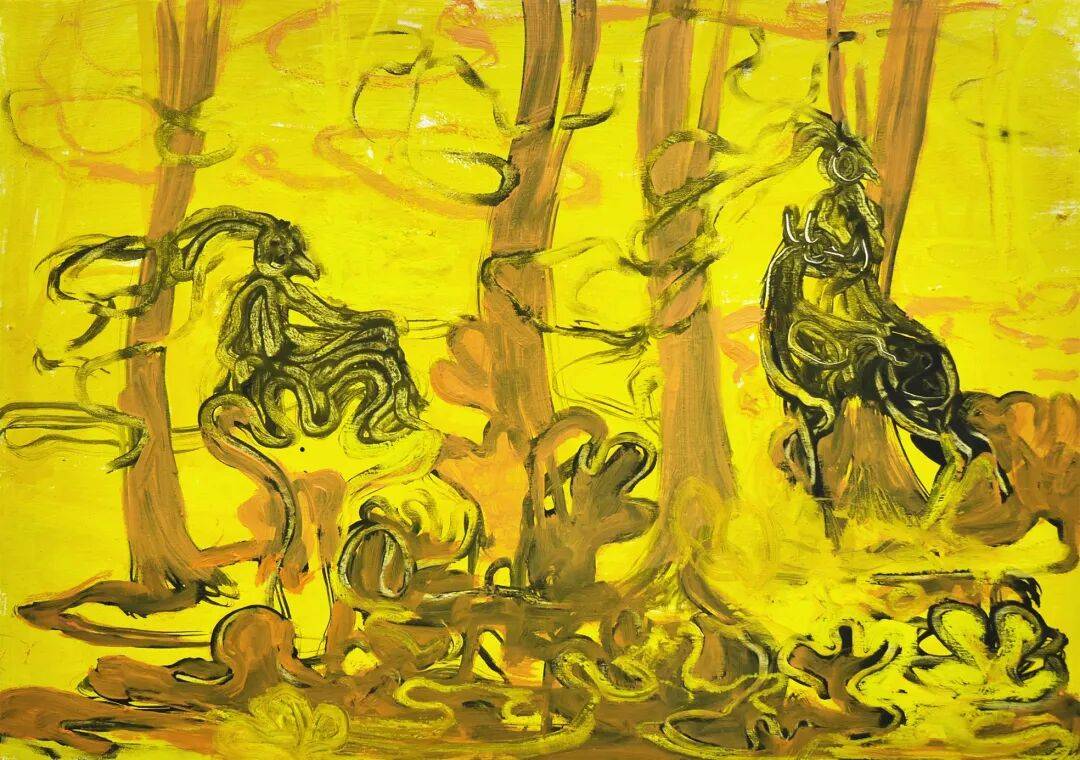
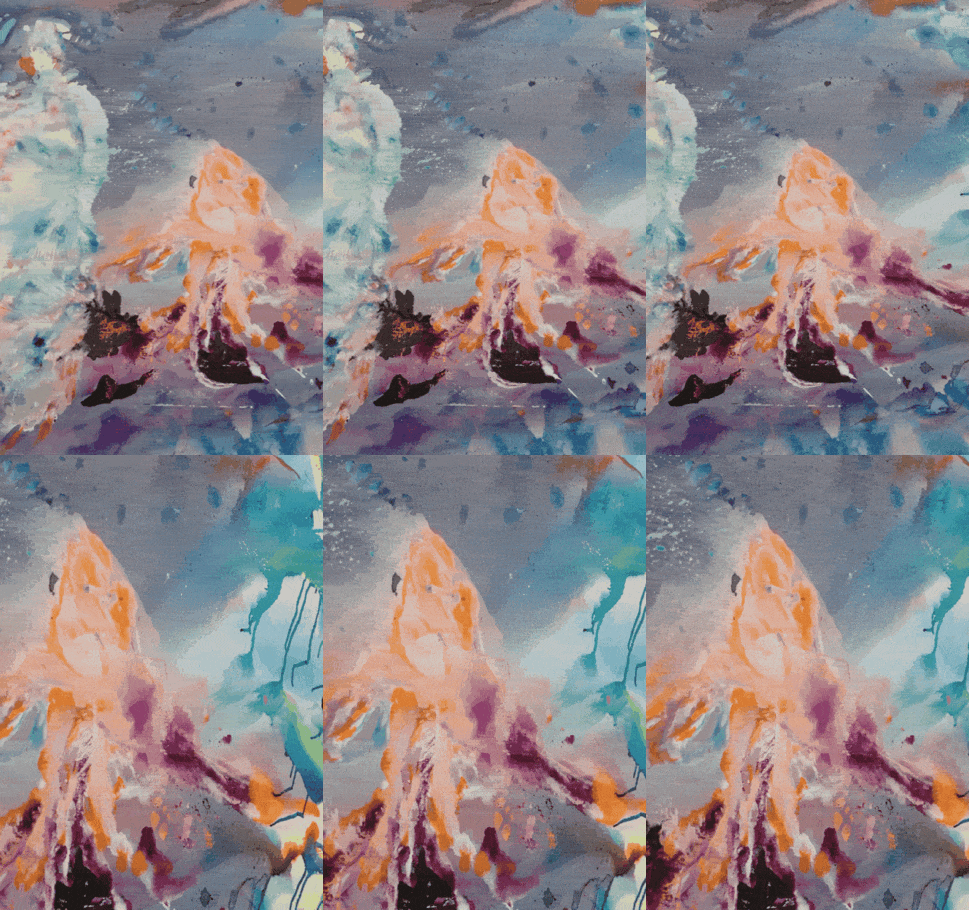
“The mountain in this painting looks like an octopus. It reminded me of traveling in Guilin, where I saw that Chinese mountains are often named after animals. I find that imaginative and beautiful, and it’s not common in Europe. I also love the sound of the words ‘Octopus Mountain.’ They sound beautiful and remind me of my time in China,” Steiger said. Her work is often full of comparisons, mixtures, and imaginings drawn from Eastern and Western cultures. At times, she opens an improbable new line of thought onto a traditional interpretation.
Rebekka Steiger, installation view of “Octopus Mountain,” Tank Shanghai, 2024. Rebekka Steiger, Kitsune, 2022. The first painting in the exhibition’s opening chapter, “Appreciating Stones,” shows the back of a woman and three foxes against a blue-green ground. The woman herself seems to have a fox’s face, giving the scene an uncanny, mysterious quality.
“In Chinese and Japanese legends, foxes are always associated with women who are both beautiful and dangerous. I once read an article in The New York Times about a stone in Japan’s Nikkō National Park that was said to have been a particularly sacred fox. Recently, for reasons I don’t know, the stone cracked.”
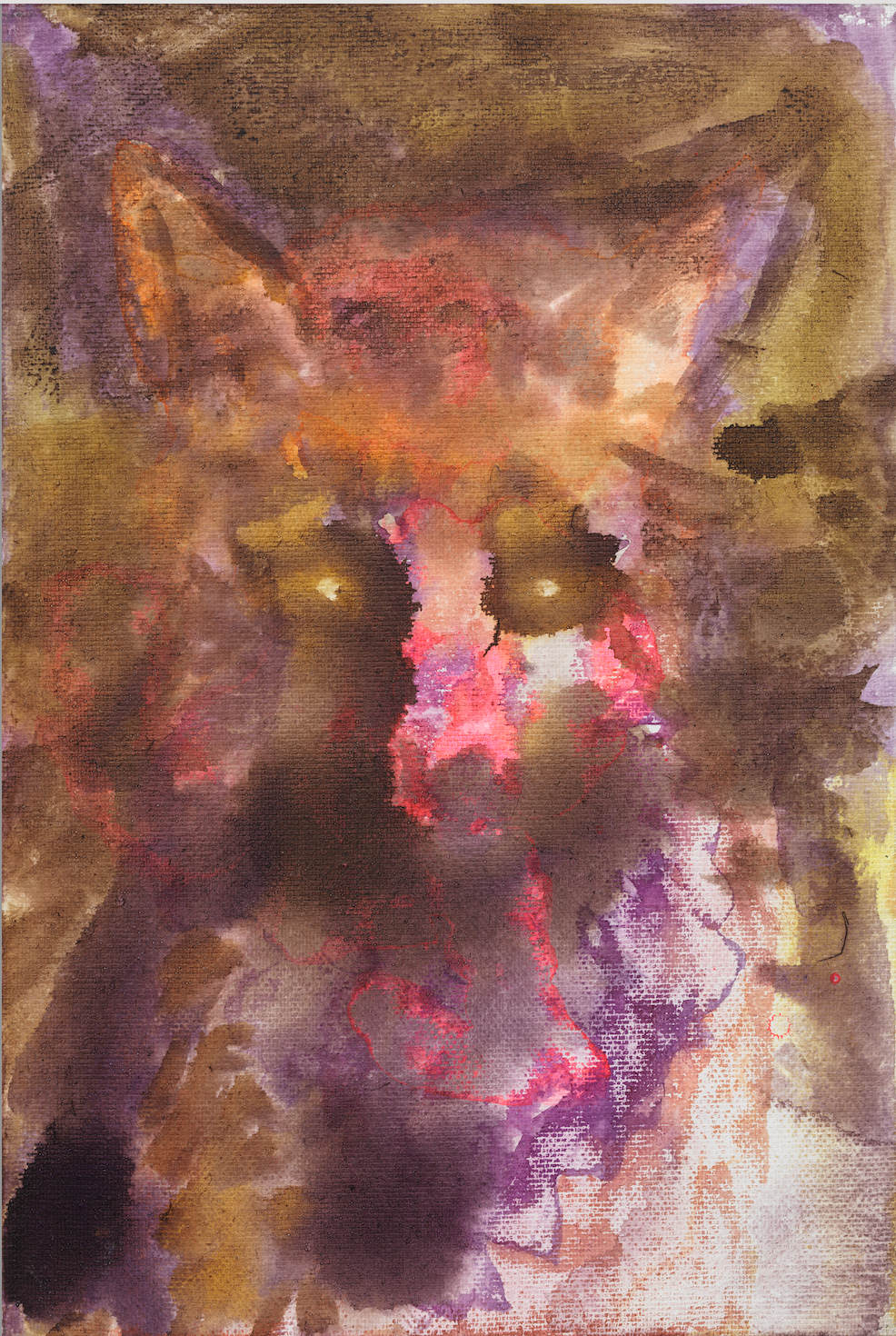
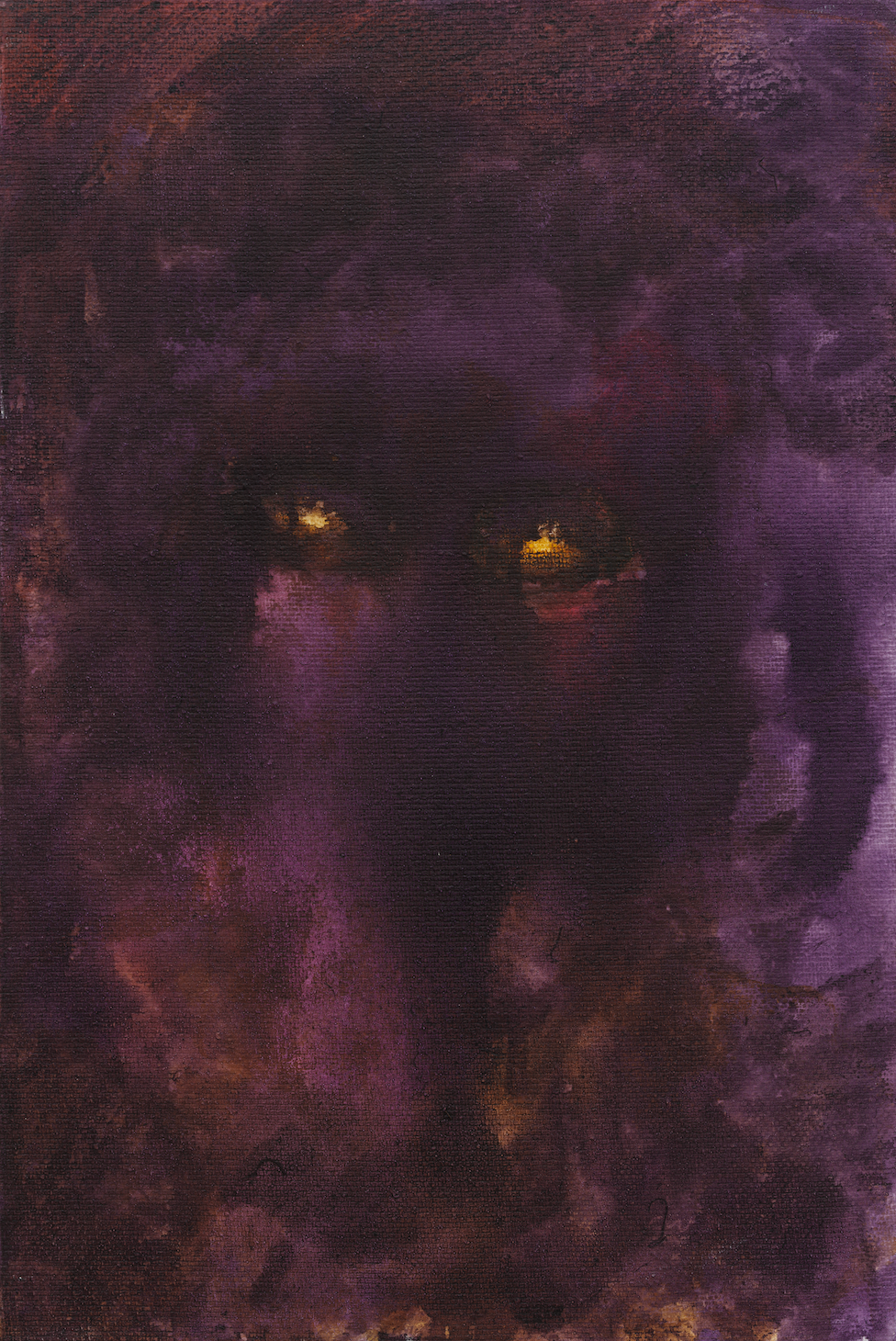
“When I saw that news, I thought the world needed a powerful female spirit—a so-called ‘fox spirit’—to save us. It’s a reinterpretation of that old story.” Rebekka Steiger, Foxy Lady I, 2023. The exhibition includes several other fox paintings, all made last year during Steiger’s residency in Ho Chi Minh City, Vietnam. Two of them depict the eyes of foxes in the darkness, and they are especially alive.
SECTION 02 | Care about the cultural legends of the East and the West, but also sensitively touch the present
“I like foxes. They’re beautiful, intelligent, and very interesting animals. My parents have a house in the mountains, and sometimes you see foxes and wolves. During my residency in Vietnam last year, a local artist told me, ‘If you paint a face, and it has eyes and irises, it will become real.’” Rebekka Steiger, Foxy Lady II, 2023. In fact, these two “fox paintings” are portraits of women. Steiger painted them again and again, and the more she painted, the more their faces came to resemble foxes.
“I think that fits the legend of the fox spirit very well. The transformation of the female figure into a fox is enacted here,” she said with a laugh. The chapter title “Appreciating Stones” also has another meaning. Steiger grew up in Switzerland and became tired of the classical European sculptures and houses that were always square and symmetrical. Chinese scholar’s rocks, by contrast, are curved and winding, resembling the structure of the human body and possessing a different kind of beauty. Rebekka Steiger, installation view of “Octopus Mountain,” Tank Shanghai, 2024. Rebekka Steiger, installation view of “Octopus Mountain,” Tank Shanghai, 2024. Rebekka Steiger, Dead Wake, 2022. For Steiger, “Dead Wake” is the most personal chapter. It is sad and uneasy: a vigil for the dead, and a sigh directed at a turbulent, unsettled world.
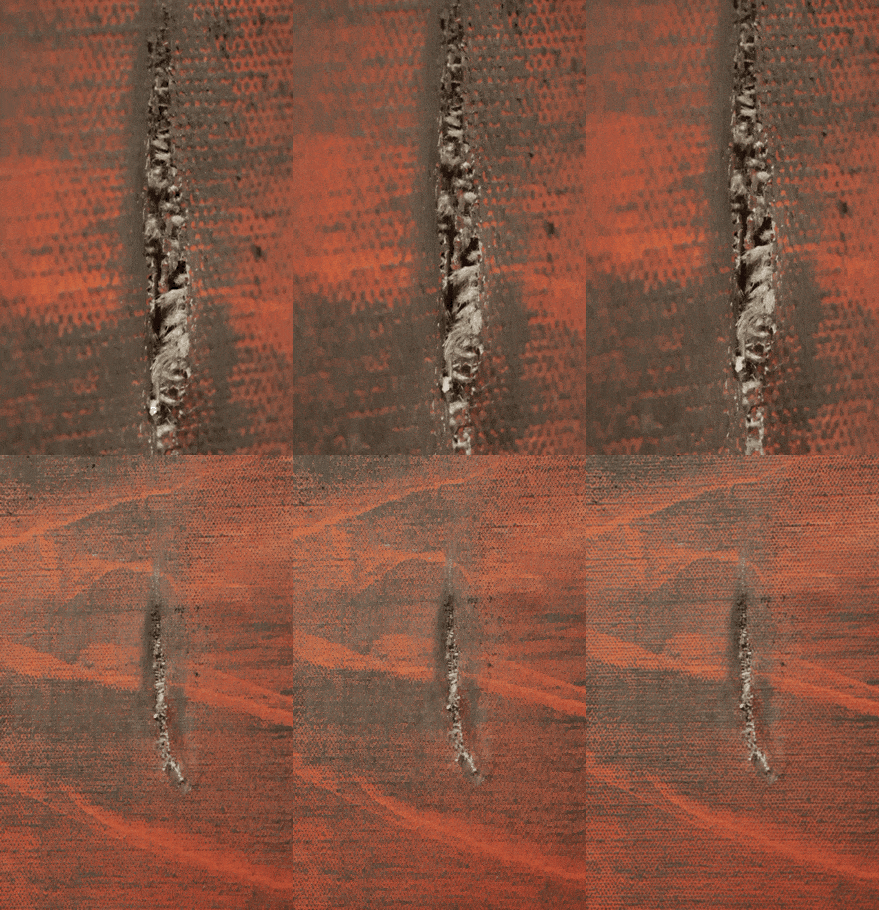
The red painting at its center is the chapter’s core. Detail of the crack in the canvas of Dead Wake. “My neighbor in Switzerland was an elderly man who was always frail. One day, my boyfriend and I discovered that he had killed himself. We were the first to find the body; it was an extremely disturbing experience. And that same week, the war between Russia and Ukraine broke out. I painted this work in a state of deep confusion.”
Steiger also pointed out a crack in the work. “Do you know why there’s a crack here? I was so emotionally agitated that I drove my brush into the painting. Every collector who sees the work asks where the crack came from. I don’t avoid telling them, because it belongs to the story of the work.” Rebekka Steiger’s studio during her residency in Vietnam, 2023. “Did you know that lichen is one of the most resilient forms of life on Earth? It can survive on light alone.”
“If you send it into space, it can survive for a long time without oxygen. It’s incredible.” While discussing her work, Steiger suddenly changed the subject to the plant mentioned in one of her titles. This is how she works: freely, associatively. She is curious about everything and willing to spend a long time on things that may seem meaningless to most people.
“The names of the exhibition’s other two chapters, ‘Olivewing’ and ‘Blood of the Gods’ (Igor), are also words I don’t know where I encountered.” Rebekka Steiger, installation view of “Octopus Mountain,” Tank Shanghai, 2024. Perhaps this is connected to the way her parents raised her, giving her plenty of freedom. “My parents were never the kind of people who told me, ‘You have to work.’ In fact, they were always very relaxed.”
“They never told me I had to be different. I’m simply ambitious by nature.”
“I’ve been scribbling and drawing since I was two. My parents bought me drawing books because they knew that if they didn’t, I would draw all over their bedsheets,” Steiger said with a laugh. She told me she was not a high-achieving student in the traditional sense. “At first, the Zurich University of the Arts didn’t accept me. In the end, I went to Lucerne to study art, and after graduating I simply explored on my own.” Rebekka Steiger in her studio in Switzerland. Steiger’s current studio is in Lucerne, Switzerland. It is a concrete structure without heating, built by Steiger and her friends themselves.
“My expenses in Switzerland are low, and the rent isn’t expensive, so I can spend more money traveling abroad. I’m a night owl. I usually don’t go to the studio very early. Some days I work three hours; other days, ten. It completely depends on me.” Rebekka Steiger in her studio in Switzerland. If she has no inspiration and cannot begin painting, she sits down and reads books and articles that may appear irrelevant.
Steiger said, “I once spent three days reading many articles about helium isotopes. If helium gets cold enough to become a fluid, it can rise and move, almost as if it were crawling over your body…”
SECTION 03 | The happiness of being an artist is spending time on crazy nonsense