Born in 1966 and raised in Dalian, the artist Qu Fengguo graduated from the Department of Stage Design at the Shanghai Theatre Academy in 1988 and stayed on to teach. He has devoted himself to abstraction ever since, moving from charcoal powder to acrylics, oil paint, and even fabric paint, building his surfaces in dense layers that have shifted from early grays, browns, and blacks toward increasing color and radiance over more than three decades of work......
By / Xirui Huang · 11 min read
Why does Qu Fengguo keep painting while setting the brush aside?
In Xirui Huang’s 2023 interview, Qu Fengguo describes setting aside the brush as a search for a more direct relationship between body and material. Early Hand Traces works use fingers and carbon powder; later experiments with cloth, scrapers and different paints build layers of colour. His Long Museum retrospective places these stages together, tracing an abstract language that develops from bodily marks into expressions of time, life and changing seasons.
Qu Fengguo was born in 1966 and grew up in Dalian. After graduating in 1988 from the Department of Stage Design at the Shanghai Theatre Academy, he stayed on as a teacher. Qu has long focused on abstract painting, moving from early work in charcoal powder to acrylic, oil paint, and even paints used for clothing. His layered surfaces have evolved from gray, brown, and black into ever richer, more dazzling color. He has been painting this way for more than thirty years, and continues to do so.
Exhibition | Qu Fengguo: Painting Is My Destiny
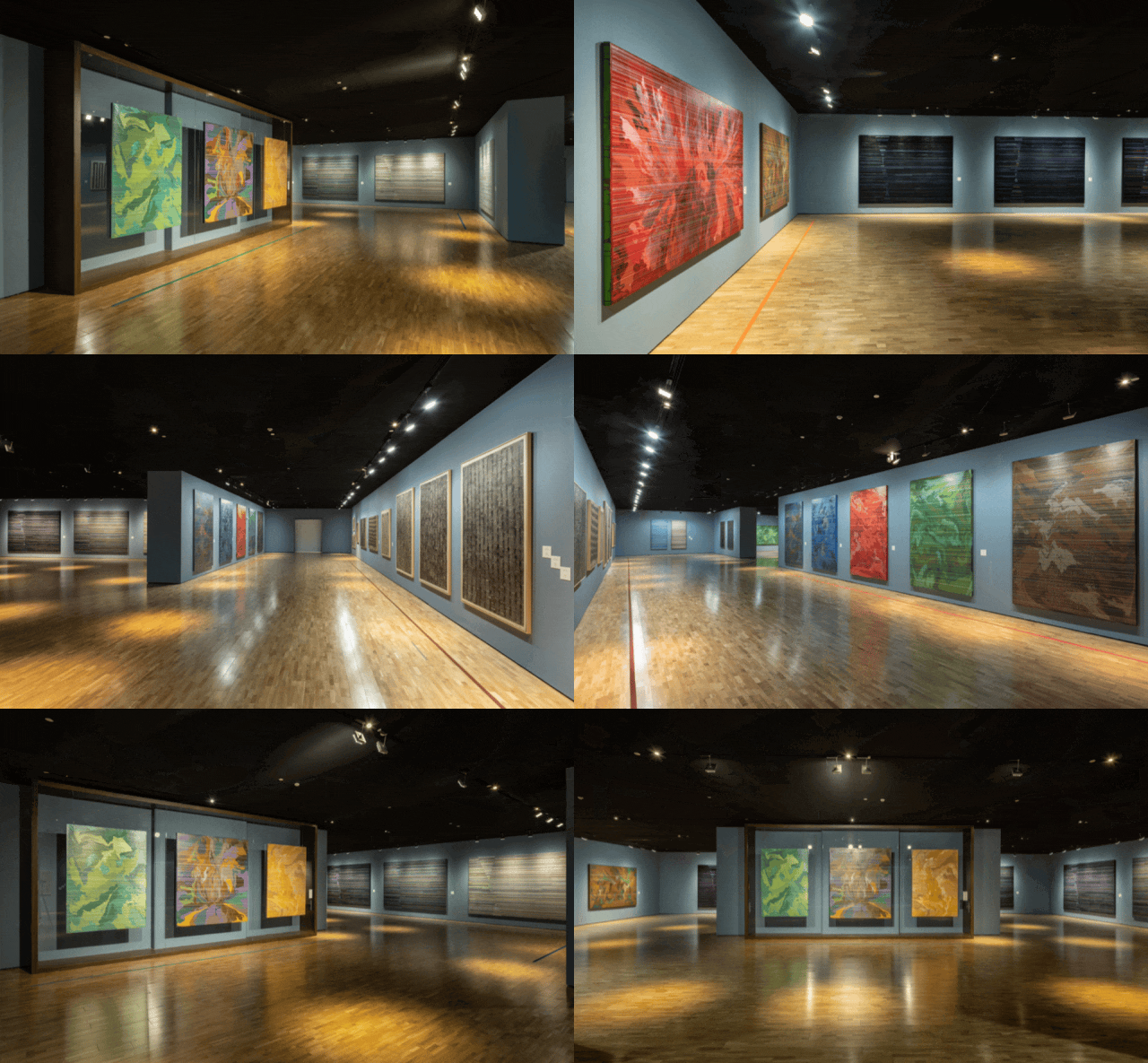
The one constant is that he eliminated the brush altogether. On the eve of the exhibition opening, the artist Qu Fengguo was making final adjustments to works from the Four Seasons series at the Long Museum West Bund, in Shanghai. “It is not that I have something against brushes. I just want a more direct form of expression, with my hands, say, or with a scraper,” Qu told us. This summer, his thirty-year retrospective, Time and Traces, opened at the Long Museum’s West Bund location in Shanghai, presenting thirty-nine large-scale works spanning thirty years.
The exhibition was curated by Wang Wei, director of the Long Museum, which suggests its significance. On the eve of the opening, we walked through the galleries with Qu, talking as we went. Looking at the work at close range and in the most immediate way, we could trace the artist’s inner journey over the past thirty years, along with the thoughts and feelings of his life. The day we met him in the exhibition hall, Qu was dressed in a gray linen suit and wore thin-rimmed glasses with softly squared round lenses. He greeted us in a low, gentle voice.
SECTION 01 | 39 works, looking back on 30 years of creative career
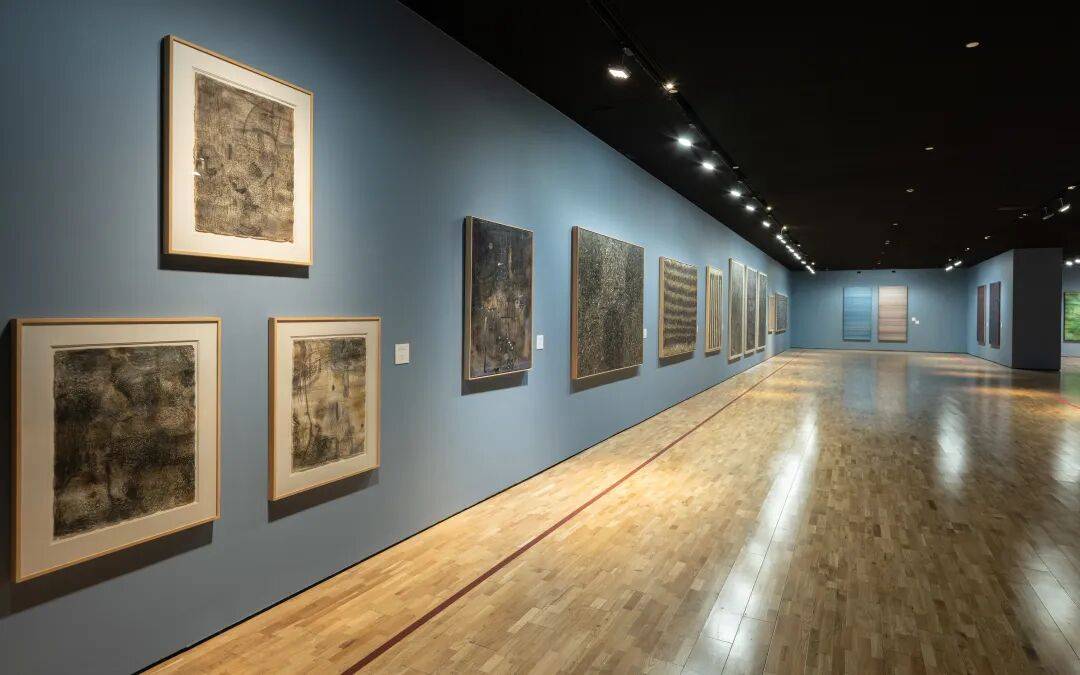
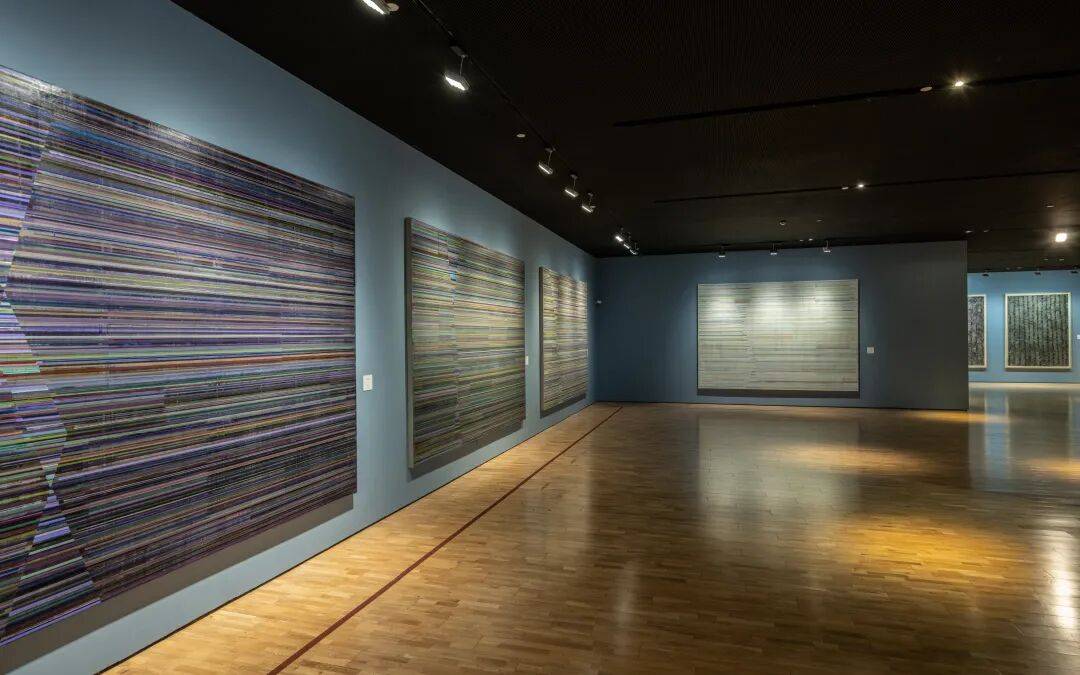
The first thing one saw on entering the gallery was the gray-blue wall color, its tone exactly judged, the blue especially beautiful.
“Director Wang, the curator, put a great deal of thought into the walls, going back and forth over which background color would work best,” Qu told us. “She is very experienced. She chose this gray-blue, and the whole gallery feels harmonious and quiet. Once the works were hung, it was obvious it was right. There was no need to try any other color.”
At the left of the entrance to the gallery, ten works of varying size from the Hand Traces series mark the beginning of the exhibition, and also the true beginning of Qu Fengguo’s artistic life.
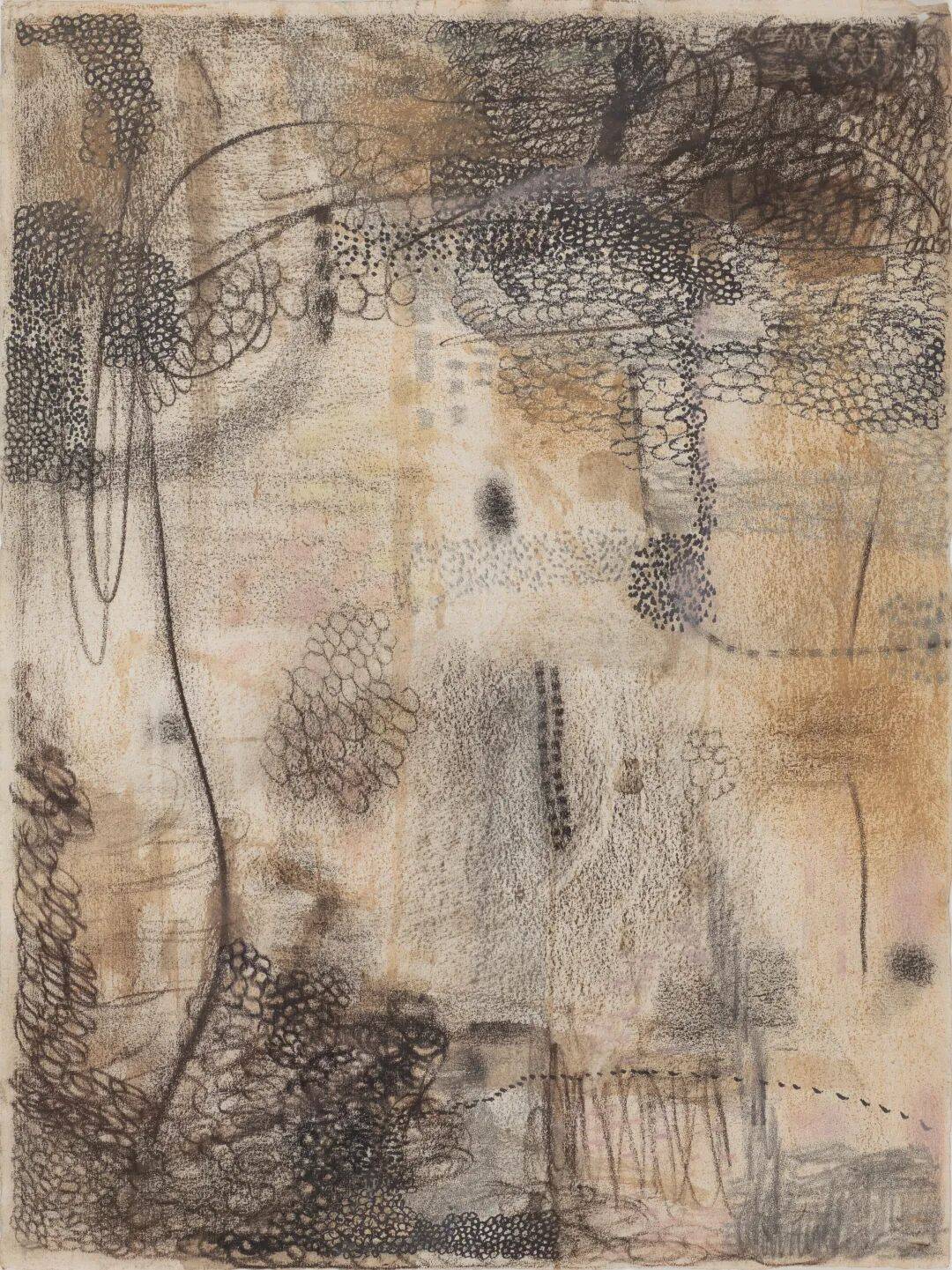
“When I was just graduating from college, in 1985 and 1986, I actually made a lot of paintings, but they were all imitations, imitations of Italian and German Expressionism. They were more like exercises, not really works. It was not until Hand Traces, which began in 1993, that I truly had the feeling of starting to walk on my own,” he said. Qu Fengguo, Hand Traces 1993-1, 1993. Qu Fengguo, Hand Traces 1996-2, 1996. The artist’s early work used very little color. Made with charcoal powder, it looked somewhat like expressive ink painting.
The Handprints series grew out of Qu’s early study of art history, when he saw the handprints left by prehistoric people in caves. Cave painting is regarded as humanity’s earliest form of painting. Those handprints gave him an immense shock and a profound sense of feeling, as if, across tens of thousands of years, he had suddenly grasped that human beings have always been one.
“Of course we can never know what people were thinking tens of thousands of years ago, but those two handprints felt especially real. They made me think that perhaps they, too, had a desire to tell the world: he or she was here. This primal kind of painting gives you a sense of individual existence, and also of spirituality and continuity.” Qu Fengguo, Hand Traces 1996-1, 1996. Qu Fengguo, Hand Traces 2000-1, 2000. Qu says that even in college he was never fully satisfied with academic training in form, finding it too limiting and insufficiently stirring to the inner life.
Qu was not long out of college when he began making the Hand Traces series. He liked to sit alone in his studio and fiddle around, and without quite meaning to, he began smudging charcoal powder onto canvas with his fingers, painting freely according to intuition. The dots we saw on the surfaces in the gallery are, in fact, all Qu Fengguo’s fingerprints.
“From that point on, I got rid of the traditional tool most commonly used in painting, the brush. Later, when my thumbs were almost rubbed raw, I wrapped them in cloth and painted by holding rolls of cloth against the canvas.” Qu Fengguo, Hand Traces 1998, 1998. This work won first prize at the 99 Shanghai Youth Art Exhibition at the Liu Haisu Art Museum. The artist said that traditional Chinese culture also had a major influence on him, and in the Hand Traces works made after 1998, the once chaotic surfaces begin to show a certain regularity and structure.
“The regularity you see is a bit like totems, and it also simulates the way Chinese calligraphy is written. At the time, with cloth wrapped around my hand, the painting came more easily, and the scale got larger.” In the studio, creating for more than twenty years later, Qu recalled what it felt like to make that body of work quietly and alone: “It was actually very lonely.” At the time, very few people had ever really seen him at work. His studio was absurdly small, with a ceiling only 2.6 meters high, even though his large paintings reached 2.5 meters.
“When I painted, my head was always tilted. I painted with the canvas pressed against the wall,” Qu said with a laugh.
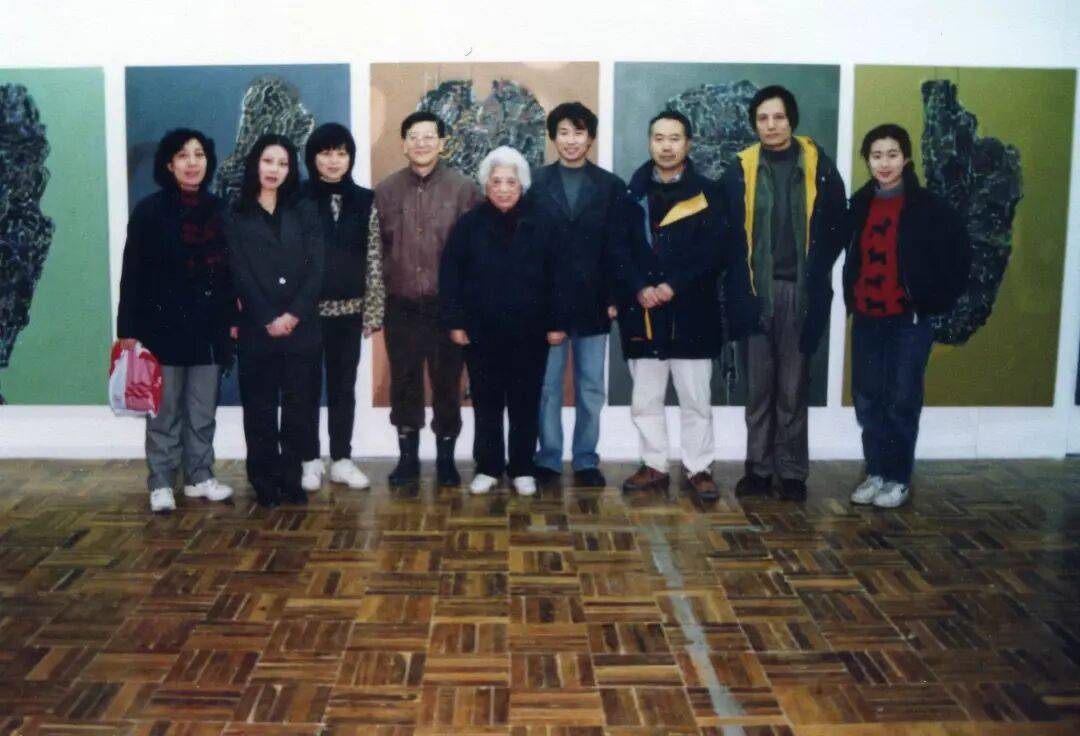
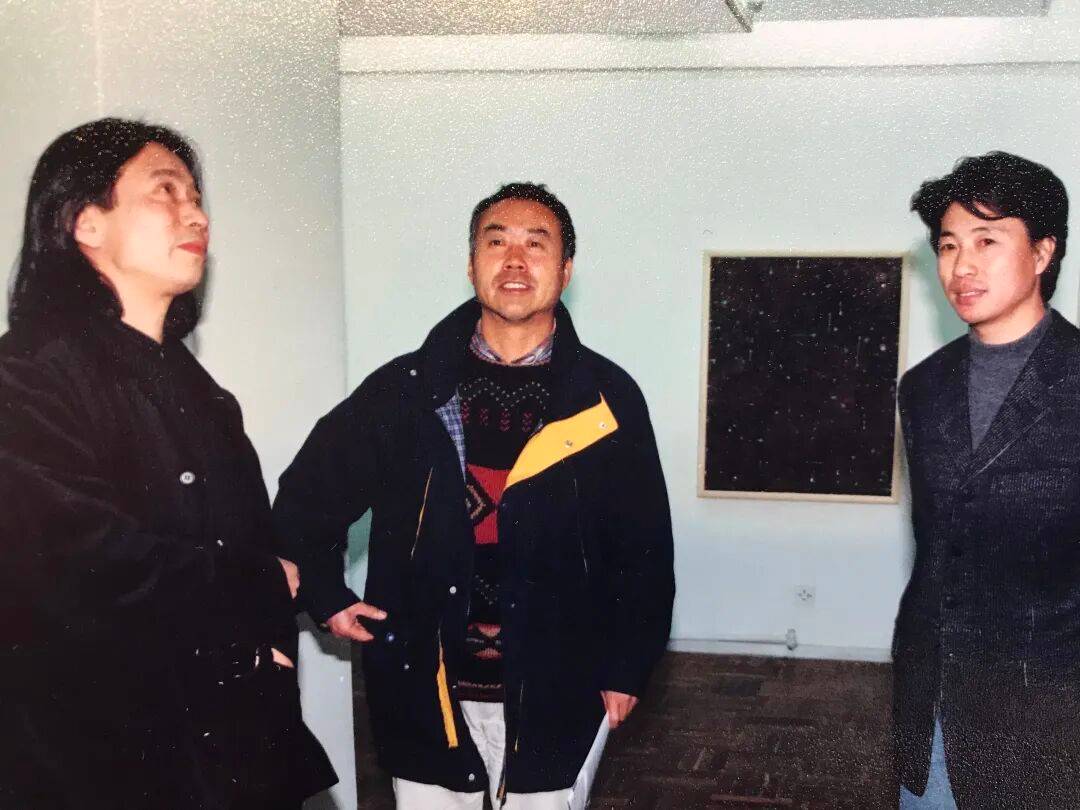
Time and Traces: Qu Fengguo Thirty Years of Painting Retrospective, installation view, Long Museum West Bund, Shanghai, photographed by Su Hang. Qu Fengguo, Hand Traces 2000-3, 2000. Qu Fengguo’s first solo exhibition at the Shanghai University Academy of Fine Arts Gallery, 1998. Qu Fengguo, at right, with the artists Mi Qiu, center, and Li Shan, left, at the exhibition opening in 1998. “In 2000, when the organizing committee of the Shanghai Biennale called and asked me to bring paintings to the exhibition, I found it rather strange, because it was a very important show, and it seemed that the organizers and curator had not really seen much of my work.”
That is how Qu remembers it. At that Biennale, he exhibited four works in total, one of which was acquired by the museum. The three we saw in the gallery have hardly been seen in public at all since that Biennale.
“I myself had not seen these works for a very, very long time. They have been sitting in storage. Taking them out again after so many years, you really feel how quickly time has passed,” Qu said. He recalled that his first interest in painting as a child came from the fact that his father also liked to paint in his spare time.
Qu Fengguo: Painting as Fate
“By chance, I once opened a locked trunk, and I was stunned. It was like opening Pandora’s box. My father had hidden a lot of albums of Russian-school painting in there. I suppose he thought I was still too young, and was afraid I might see things in them that were not appropriate, so he kept them locked away,” Qu said. Qu Fengguo, left, with his older sister, center, and younger sister, right, in 1977. After that, whenever he had a moment, he would secretly copy things from the albums, and gradually he improved.
For the young Qu Fengguo, that secret pleasure was almost the only comfort and spiritual sustenance in difficult circumstances.
“I was only in the lower grades of elementary school then, and I was still a little scared, so after I finished drawing I would secretly put the albums back. But later my father noticed that the lock on the back of the trunk had been opened. He said nothing. He simply, very naturally, put some albums of still lifes, without figures, outside the trunk.” In this way, copying and puzzling things out on his own, Qu kept going until middle school, when painting became something he did every day. Even at school, he spent whole classes drawing while listening.
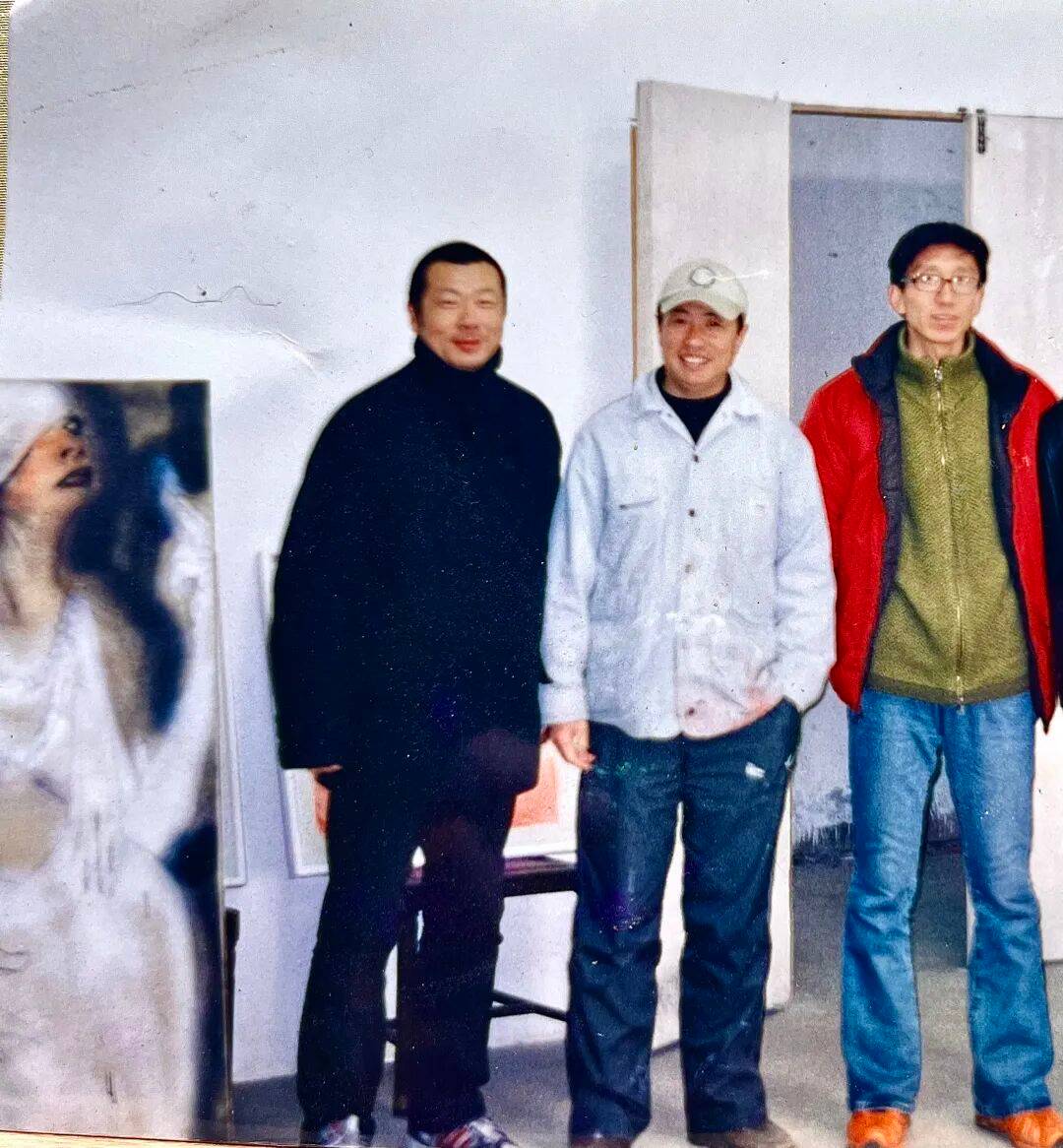
Qu Fengguo in the studio, 2000. “My Chinese teacher was especially angry and said to me, ‘If you keep drawing like this, I’ll send you to the art group.’ And later I just went along with it,” Qu said with a laugh. Through all of middle and high school, he said, he never really studied much. He was always painting and sketching, from lakeside to seashore, covering nearly every place of striking beauty around his hometown, Dalian. Qu Fengguo with his mentor Chen Junde at an exhibition opening in 1998. Qu Fengguo with Han Feng and Wang Xingwei in an M50 studio. “When I was sixteen, I secretly dropped out of high school and took a stack of my own paintings to apply to the Lu Xun Academy of Fine Arts. Of course I did not get in, and I was so unconvinced that I went to their admissions office to find the director.”
“They were surprised, and when they learned I was only sixteen, they said, ‘You do not even meet our admissions requirements,’ and told me to go back and finish school properly.” So Qu had no choice but to return and prepare for the college entrance examination. By chance, he saw the admissions notice for the stage design department of the Shanghai Theatre Academy. At the time, the film Shanghai Bund was a nationwide hit, and he remembers thinking: “Shanghai, a modern city. It ought to be better than these cities in the Northeast, no? And you could even go there by boat.” And so, by a series of accidents, he came to Shanghai, where he has remained for more than thirty years.
Time and Traces: Qu Fengguo Thirty Years of Painting Retrospective, installation view, Long Museum West Bund, Shanghai, photographed by Su Hang. During the interview, he returned more than once to his desire to interpret the abstract idea of time in his own way.
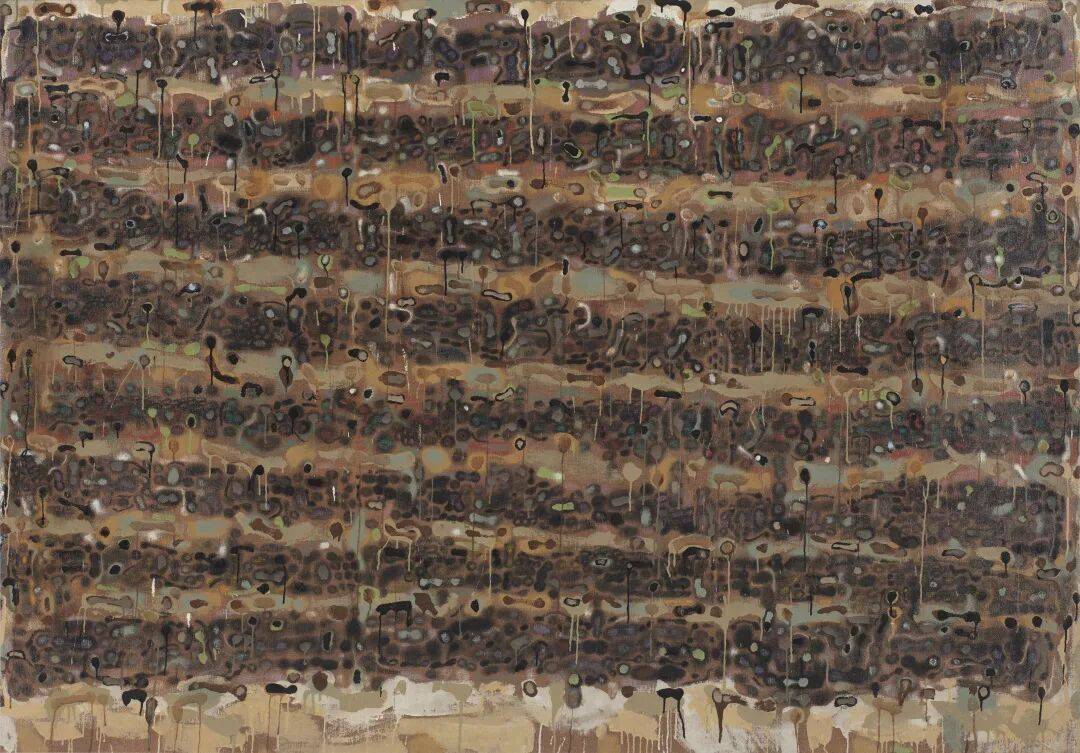
Time is also a thread that runs through all his work. The second section of the exhibition, Untitled, presents five works, and at first glance they seem worlds apart from the series before it. From plain tones to vivid color, from irregular dots and lines to countless parallel straight lines, the shift appears abrupt. We asked, naturally, why the work changed so suddenly. Qu Fengguo, Untitled 200606291132200607182017, 2006. Qu Fengguo in his M50 studio. “This series came after I moved into a new studio at M50.
“Once I arrived in the new environment, I suddenly did not know how to paint anymore, so I began sorting through my past again. At the time, I felt that the work of the previous stage had somehow been completed, that it should come to an end, and that I ought to move on to a new subject.” Every day, when Qu arrived at his studio by Suzhou Creek and opened the window, he could see the creek flowing quietly by, beginning and end repeating without cease. Gradually, he no longer saw flowing water as water, but as a kind of temporal transformation.
Qu Fengguo, Untitled 200608241238200609262207, 2006. He gave that temporality visual form in painting: on the surface, one parallel line after another, never intersecting, moves ahead in its own fixed direction. The lines resemble the destinies and lives of different individuals, each developing in its own way within the circumstances of the same span of time. The series is called Untitled because, at the time, he simply could not find language to describe his understanding of time: “When you cannot say it, keep silent.”
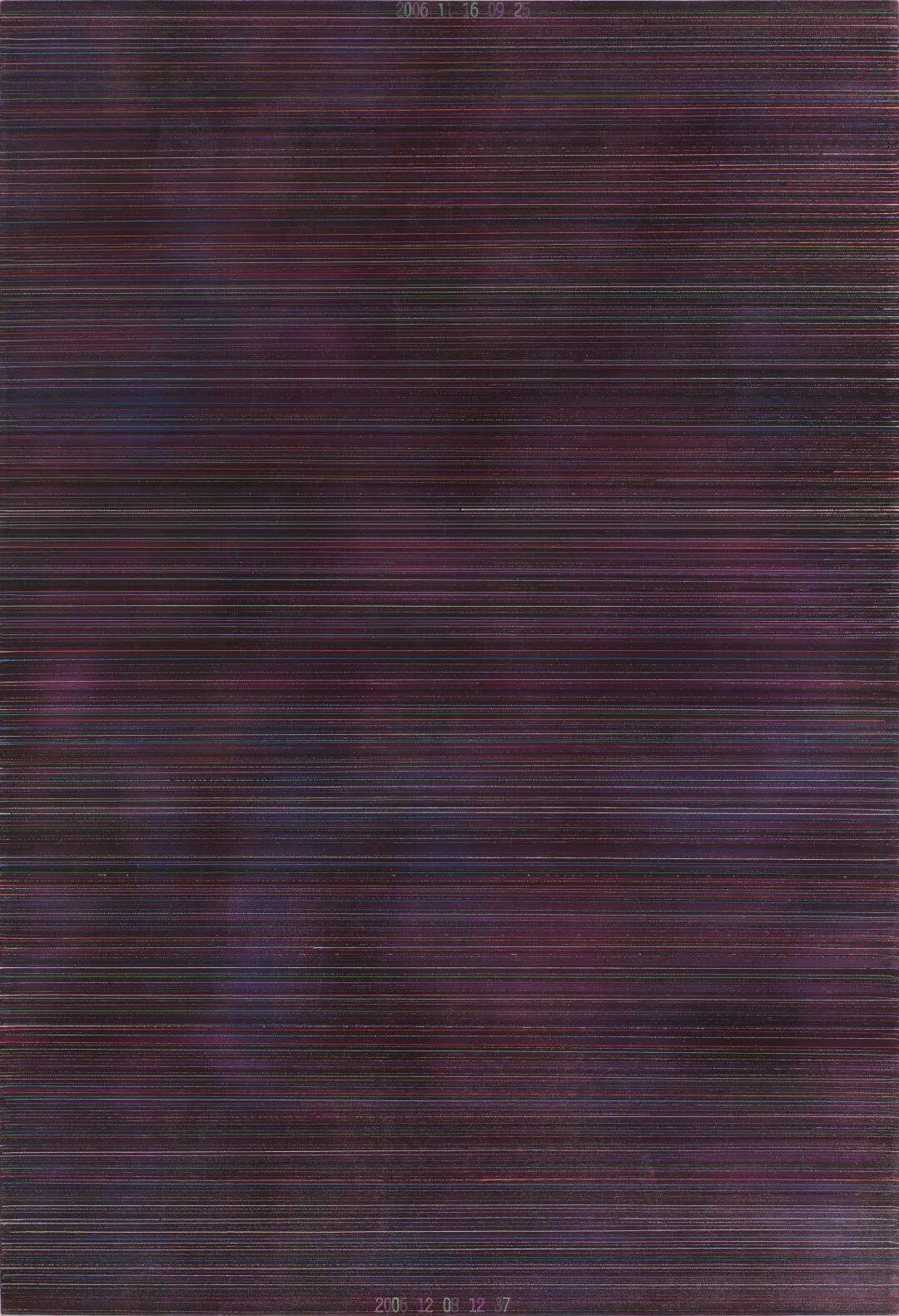
The artist said this with a smile. Qu Fengguo, Untitled 200609102108200611092016, 2006. Qu Fengguo, Untitled 200609102108200611092016 (detail), 2006. We noticed that Qu had inscribed numbers on every painting. The number at the top or left indicates when he began the work; the number at the bottom or right marks when it was finished.
Qu Fengguo: Painting as Fate
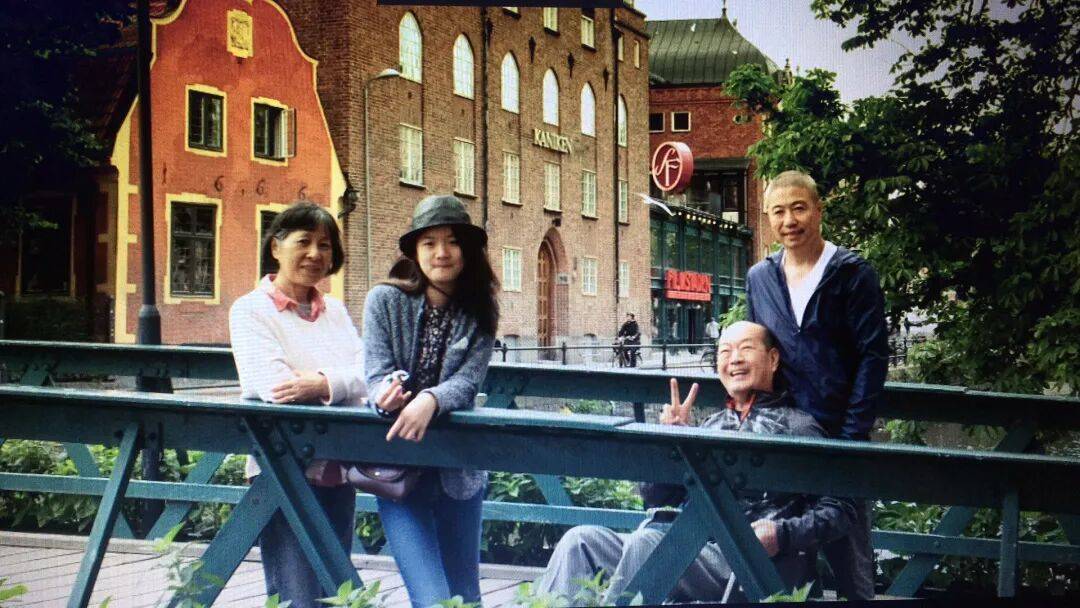
“It is actually very hard for people to feel temporality. But when I mark the time, when I note when I started painting and when I finished, I find that I can concretely present the course of that stretch of time on the surface. It is very subtle.” Qu Fengguo traveling with his family, 2018. “A lot of people look at this series and start searching: what was I doing that year? Some say they were traveling, some say they were working somewhere, some were ill, or something else . . .
“The moment viewers see the work, this feeling for time connects them to their real lives. I think that is the artist’s most important work,” Qu said.
Time and Traces: Qu Fengguo Thirty Years of Painting Retrospective, installation view, Long Museum West Bund, Shanghai, photographed by Su Hang. Qu Fengguo, Untitled 200611160925200612081237, 2006. Seen up close, the surfaces reveal that nearly all the parallel lines laid over several airbrushed color grounds are glittering. Under different light, and from different angles, they appear in different colors.
The artist told us that this was in fact a French paint used for painting on clothing, containing shimmering gold powder.
“The first time I saw this paint, I thought it was interesting. In traditional painting, I had never seen anything that glowed like this. When you use this paint to make lines, the depth of space becomes stronger, presenting a world that feels more expansive and hazy.” And the colors in these paintings do not correspond specifically to any one object.
“I want these colors to be free, liberated, and yet still look real.”
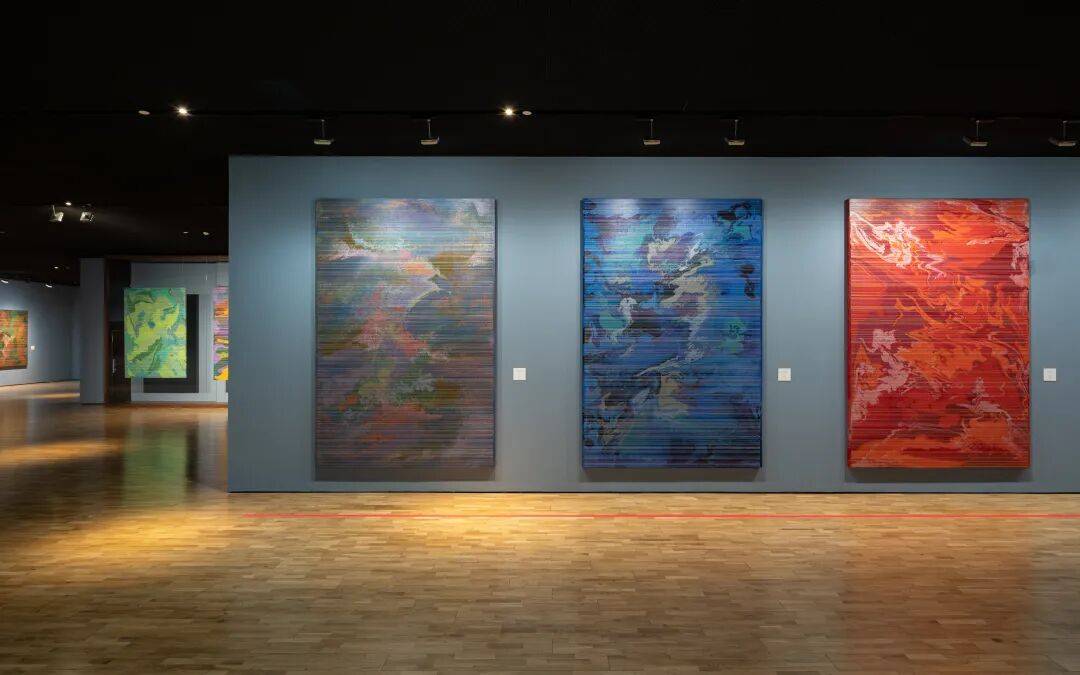
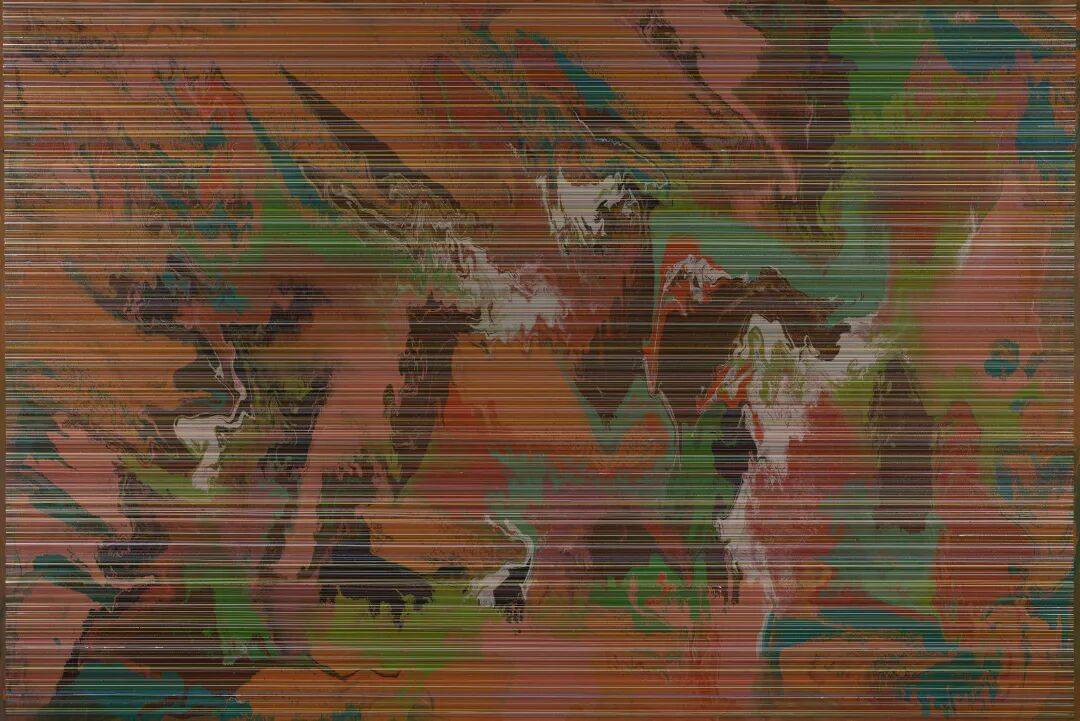
Time and Traces: Qu Fengguo Thirty Years of Painting Retrospective, installation view, Long Museum West Bund, Shanghai, photographed by Su Hang. Qu Fengguo, World No.19 (detail), 2008. Seen in person, the works in the World series are visually forceful, almost like twelve maps of different continents. Their surfaces flow with undertones suggesting landforms, mountains, rivers, oceans, and changing weather, presented in a way that is both abstract and representational.
Qu described the process of making them: “I actually pour paint onto the canvas and then let it rotate. In that process, I control half of it, slowly working the diffusion, and the other half I hand over to gravity.” Qu Fengguo, World No.25, 2008. Time and Traces: Qu Fengguo Thirty Years of Painting Retrospective, installation view, Long Museum West Bund, Shanghai, photographed by Su Hang. It is precisely because this uncontrollable element exists that the paintings are always full of surprise.
Once fine lines are added over the large blocks of color, the whole surface begins to resemble a beautiful textile.
“The meaning of the word world has changed. In the past, it referred to a specific geographic space. Today, world is the fitting together of time and space. When I painted this series, I also hoped to express the state of time, space, and our interconnectedness.” Qu Fengguo, World No.23, 2008. Qu Fengguo, World No.20, 2011. Qu feels that the act of painting parallel lines is like spiritual practice, a kind of joyful labor.
SECTION 03 | The most important thing in life is the present moment
“Painting lines gives me a feeling of sliding across the world. Every straight line, from start to finish, is a one-dimensional movement, and also the process of expressing the disappearance of temporality. It appears before you think it,” Qu said.
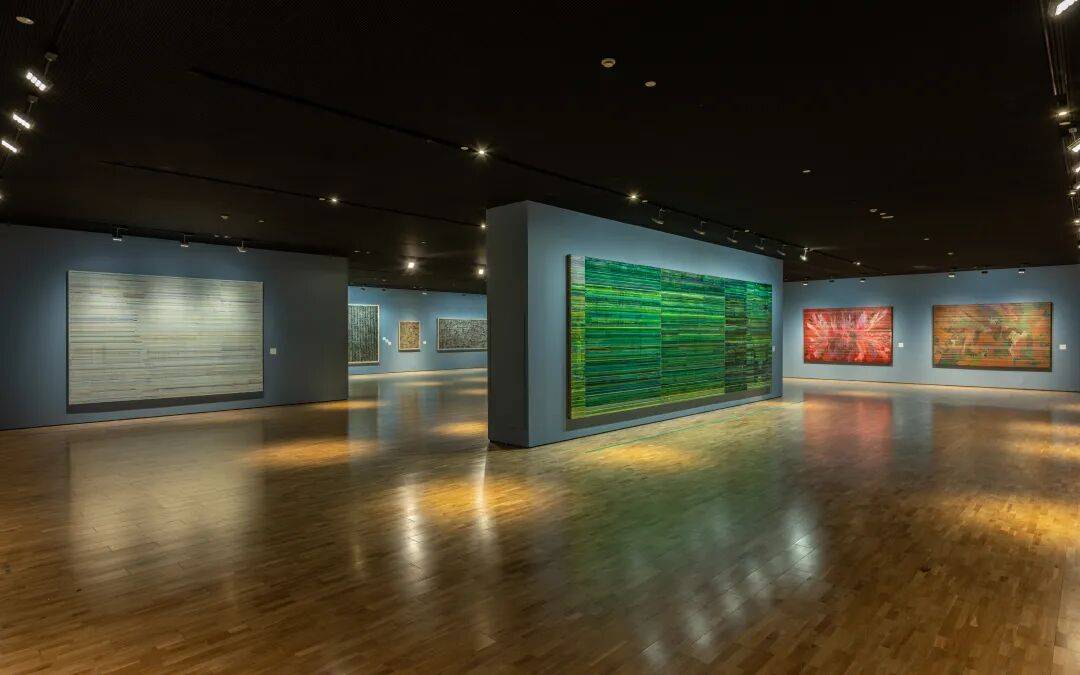
Time and Traces: Qu Fengguo Thirty Years of Painting Retrospective, installation view, Long Museum West Bund, Shanghai, photographed by Su Hang. The final series in the exhibition, Four Seasons, consists of Qu Fengguo’s newest works, from 2023, and in them he has changed his method once again.
“I squeeze oil paint directly onto the canvas, line by line, and when it is half dry, I scrape it away with a long ruler, then squeeze it out again.” The resulting surfaces contain thick and thin lines, overlaps and coverings, creating interactions of temporal sequence and layered space. Qu Fengguo in the studio working on the Four Seasons series. Time and Traces: Qu Fengguo Thirty Years of Painting Retrospective, installation view, Long Museum West Bund, Shanghai, photographed by Su Hang. The new work Four Seasons: Spring presents the green of spring, all kinds of unadorned greens appearing on the surface in parallel or slightly displaced arrangements.
Here, color is not meant to depict a particular tree or blade of grass. It stands for the imprint of spring as a whole, and for springtime recurring year after year. Qu also noted that the Chinese sense of time differs from the Western one: “Westerners are more rational and exact, while Chinese people are more poetic. Take solar terms such as Grain in Ear and Awakening of Insects. People established this kind of timetable to remind themselves to labor and to harvest. It is a concept of time that truly begins from life.”
Time and Traces: Qu Fengguo Thirty Years of Painting Retrospective, installation view, Long Museum West Bund, Shanghai, photographed by Su Hang. Qu Fengguo, Four Seasons: Before Dawn, 2023. Qu Fengguo, Four Seasons: Dusk, 2023. On the final wall of the gallery, eight large works of identical size are lined up in a row: Midnight, Late Night, Dark Night, Before Dawn, Dawn, Morning Glow, Early Morning, and Daytime. It is as if, moving through the gallery, we had traveled from the depths of night into an onrush of morning light.
The colors accord perfectly with everything we imagine about a given hour. They may be the colors of the city just as the lights come on, or the deep blue after all is hushed and the urban lights have gone dark; they are the faint glimmer of dawn and also the clear brightness of the sun just rising into day. Qu Fengguo, Four Seasons: Morning Glow, 2023. Qu Fengguo, Four Seasons: Midnight, 2023. Qu Fengguo, Four Seasons: Dawn, 2023. In addition to the signature parallel lines, we noticed many cones of light entering the pictures, as if bringing with them, almost by accident, an added sense of crossing times.
“In this world, people and people are, for the most part, unlikely to meet. But perhaps within the range of this cone of light, we will encounter one another, perhaps we will find each other. There will be a beginning, and there will be an ending, and in the end it may return to two parallel lines.” Qu offers a strikingly romantic and poetic interpretation of the cones of light in these works. Qu Fengguo, Four Seasons: Daytime, 2023. Qu Fengguo, Four Seasons: Dark Night, 2023. “This series is like slow motion in film. I am using something extremely slow to convey an instant.
“In a very brief moment, the work can bring you into a particular point in time and tell you what the passage of time feels like,” Qu said. In his view, what an artist finally does is create a phenomenon, so that viewers can feel something and draw some illumination for life. Qu Fengguo with his parents at an exhibition site, 2019. “Our lives are precious. I hope that after seeing this exhibition, viewers can also feel that sense of life’s cycle, and return again and again to their own lives, seeing life, seeing aging, loving themselves well, and loving the people around them.