Huang Yishan’s New Beijing Show Traces Nearly Eight Years of Making
Born in Chaoshan and based in Guangzhou, Huang Yishan is one of the most watched artists of his generation. The texture of everyday life has fed his work and sharpened his fascination with building spaces of many kinds: he repeatedly joins two dimensions to three, making reliefs and collages of varying thickness through grinding, tiling, gouging, and pressing, as if he were renovating a house inside a painting......
By / Xirui Huang · 7 min read
How does Huang Yishan combine painting and space in his 2025 Song Art Museum exhibition?
Huang Yishan’s 2025 exhibition “Punctuation in the Interior” at Song Art Museum in Beijing presented more than sixty works tracing his practice from 2017 to 2025. Through paintings within paintings, reliefs, assembled materials and combinations of painting and video, he explores two- and three-dimensional space, drawing inspiration from everyday life in Guangzhou’s urban villages.
Huang Yishan: A Player of Painting and Space
Huang Yishan is one of the most watched artists of the post-1980 generation. Born in Chaoshan and living in Guangzhou, he draws nourishment from the dense texture of ordinary life, and that life has also made him keen to construct spaces of many kinds. He habitually combines two dimensions with three, building reliefs and collages of varying thickness on the picture plane through sanding, tiling, gouging, and pressing, as if renovating a house within a painting.
“I’ve always felt that I’m like a general contractor. My studio assistants and I are like a construction crew: how the wall surface should be applied, whether the terrazzo should be darker or lighter, how the floor should be inlaid, all of that has to be planned in advance before we begin,” Huang Yishan told us with a laugh. In Huang Yishan’s solo exhibition “Punctuation in the Interior,” at Song Art Museum, Beijing, 2025, his work repeatedly turns over and slyly needles art history, reality, fairy tales, and even the self, while constructing three-dimensional space with an ease that only looks casual and is in fact carefully designed and considered.
SECTION 01 | From 2017 to 2025, look back at the creations in the past 8 years
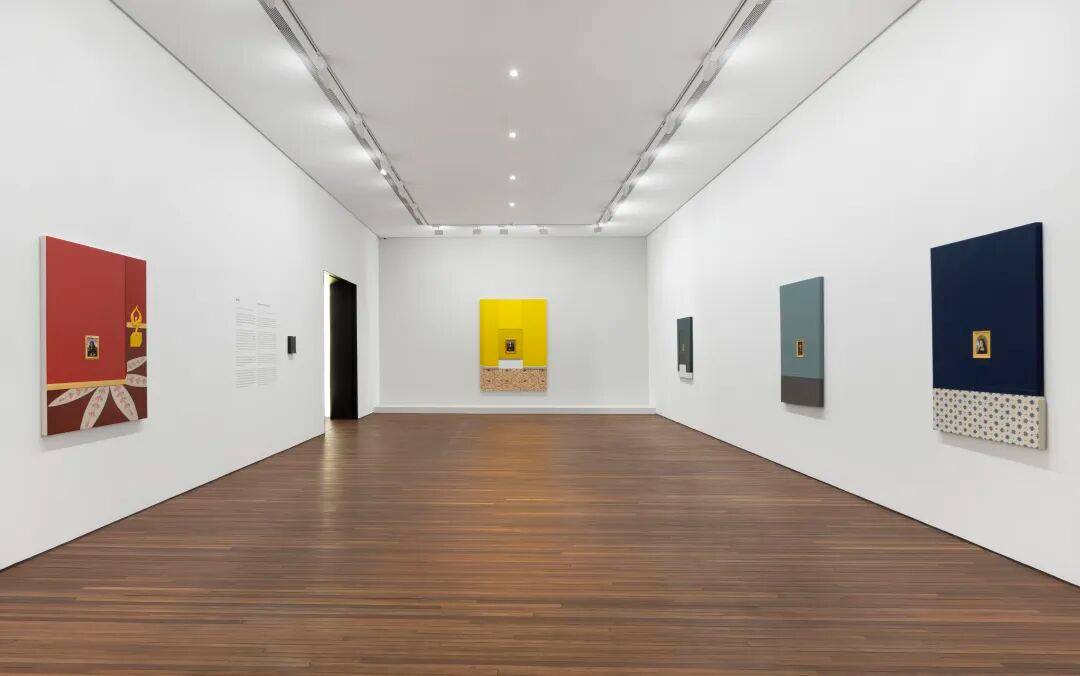
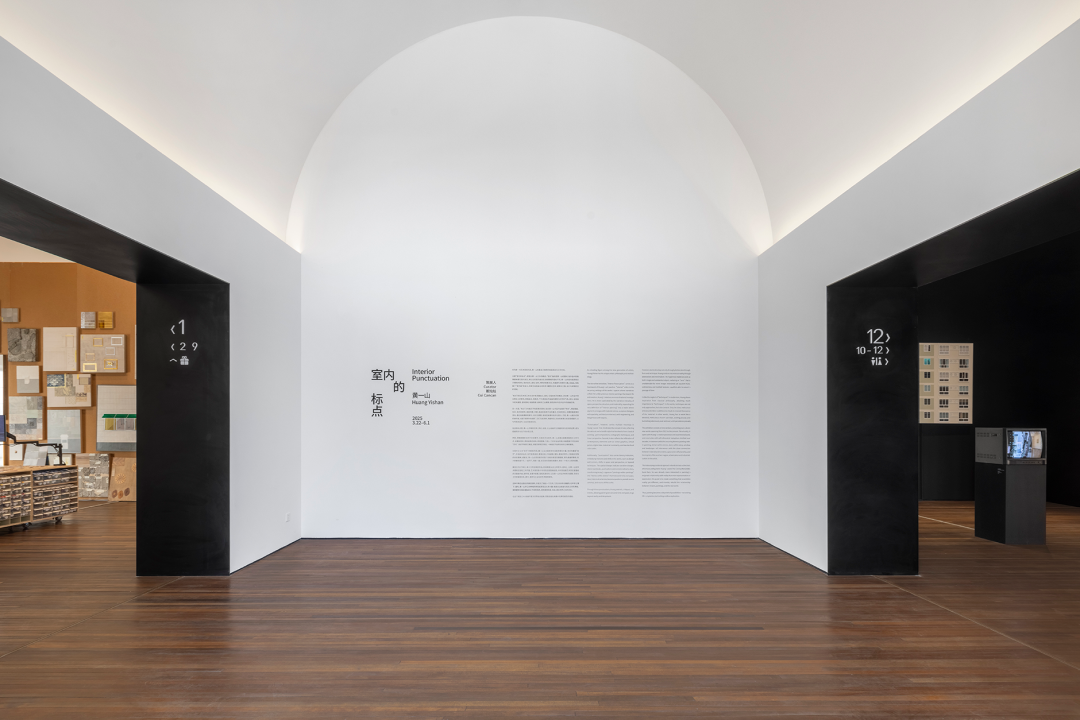
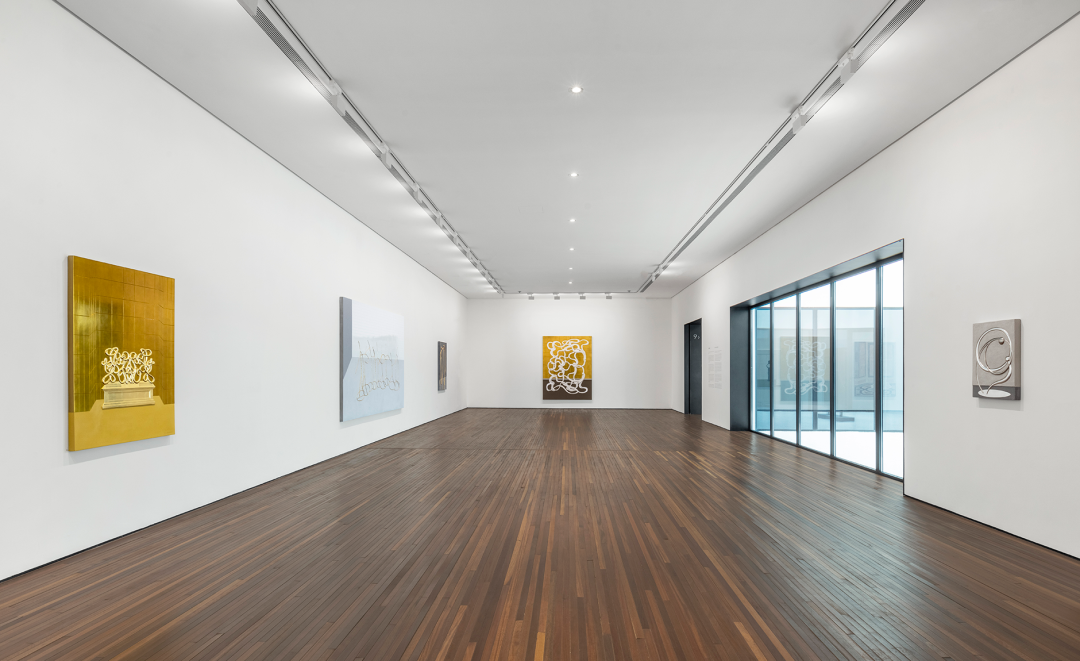
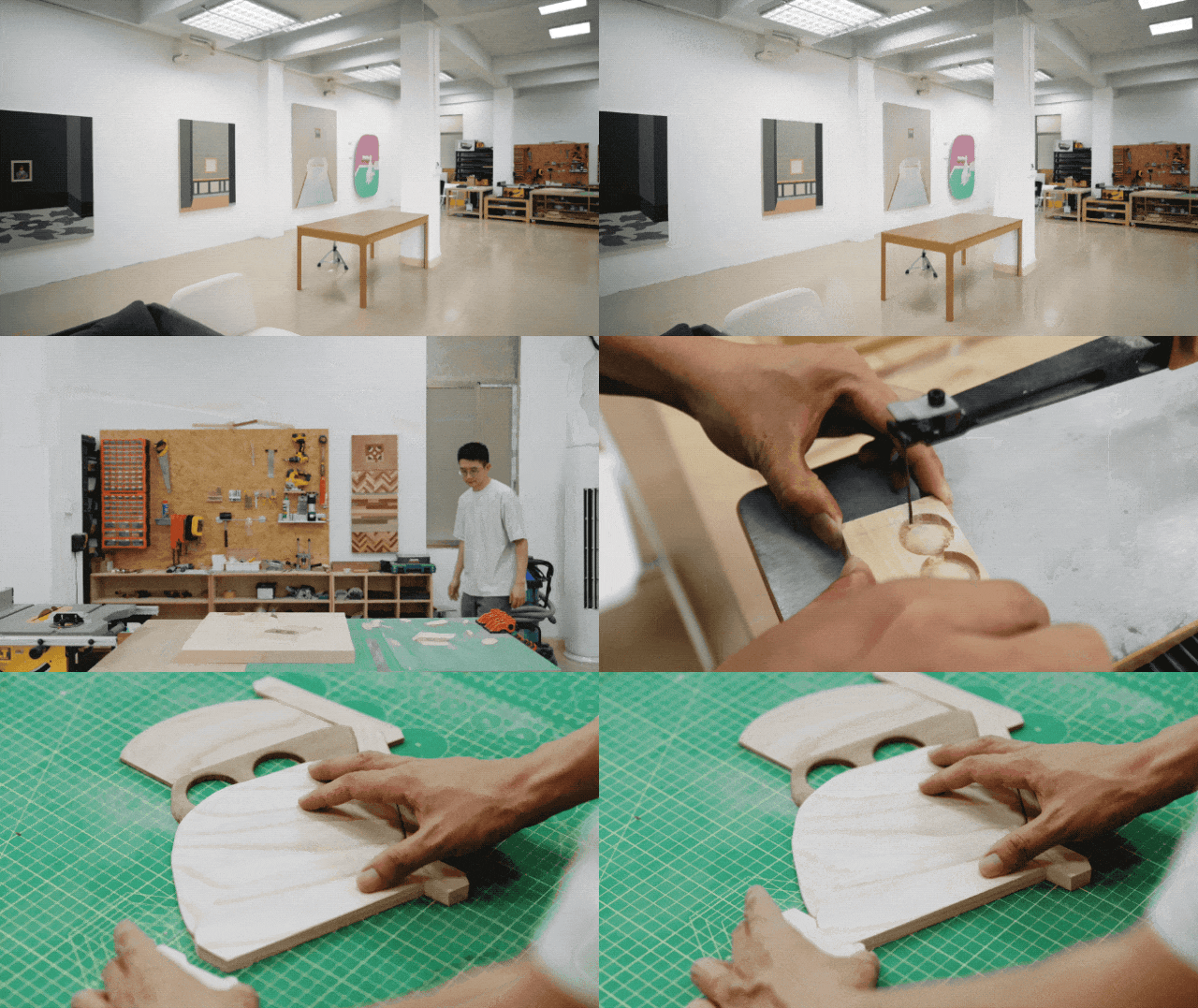
In March 2025, his largest exhibition to date opened at Song Art Museum in Beijing. On the eve of the opening, we went to the site and spoke retrospectively with the artist, who was still pulling an all-nighter in the museum, about the phases of his work over the past decade or so and about his life in an urban village in Guangzhou. Huang Yishan’s solo exhibition “Punctuation in the Interior,” Song Art Museum, Beijing, 2025. Enter the galleries at Song Art Museum and turn left, and the first thing you encounter is a cluttered yet orderly, densely stocked artist’s studio: Huang Yishan brought over drafts, painting tools, and test panels from his Guangzhou studio and placed them before viewers.
“This is simply the state of a painter in the studio; the process of thinking and experimenting all happens here.” The artist told us that his work has gone through three stages so far. The first, from 2007 to 2013, was more strongly narrative and somewhat more raw. The second, from 2014 to 2016, broke further with strict parallel perspective and moved into a freer mode. The third runs from 2017 to 2025, the span represented in this exhibition: “I entered a more mature stage of making. Several series were developing at the same time, and I think these works all have a gradual, interconnected relationship.”
Huang Yishan’s solo exhibition “Punctuation in the Interior,” Song Art Museum, Beijing, 2025. The exhibition as a whole includes more than sixty works, from 2017 to 2025, spanning eight years of Huang Yishan’s practice. He told us that the ideal viewing route was something he and the curator Cui Cancan refined repeatedly over nearly six months of preparation. In the middle of the image is Huang Yishan’s 2015 work Half-Open Door. Huang Yishan, Moving the Sofa, 2019. In the “studio,” one of the wooden works from 2015 is called Half-Open Door; in it, a person squeezes a green oil painting piled with thick paint through the crack of a door.
It forms a visual echo with another work from 2019, Moving the Sofa.
“In Moving the Sofa, someone is carrying a very thick oil painting by Fred. When he walks through the door, the paint gets caught by the doorway and is squeezed outside the crack. It’s as if I painted a work many years ago and buried a clue in it.” Huang Yishan’s solo exhibition “Punctuation in the Interior,” Song Art Museum, Beijing, 2025. Continuing upward, we arrive at the “Mirror Within Mirror” gallery, where there are many depictions of mirrors by the artist, all charged with narrative feeling.
“A mirror is actually a bit like a painting too, expressing a kind of comparison between a person and the self, and a kind of reflection.” The artist said this before we moved on to Huang Yishan’s signature “painting within a painting” series, where we see many famous images from art history: Leonardo da Vinci’s Mona Lisa, Vincent van Gogh’s The Gleaners, Pablo Picasso’s Bull, Johannes Vermeer’s Girl with a Pearl Earring, and more. By reconstructing space within the picture, Huang Yishan “installs” these canonical paintings inside his own.
“In this series, outside the famous painting there may be a person looking at it, or doing something to it, or the story inside the famous painting itself may be adapted by me into something fuller,” he said. Huang Yishan’s solo exhibition “Punctuation in the Interior,” Song Art Museum, Beijing, 2025. Huang Yishan, Mona Lisa-Bad Kid (detail), 2021. The most striking of these is Mona Lisa-Bad Kid, in which the artist creates a deep spatial structure within a space of just one centimeter.
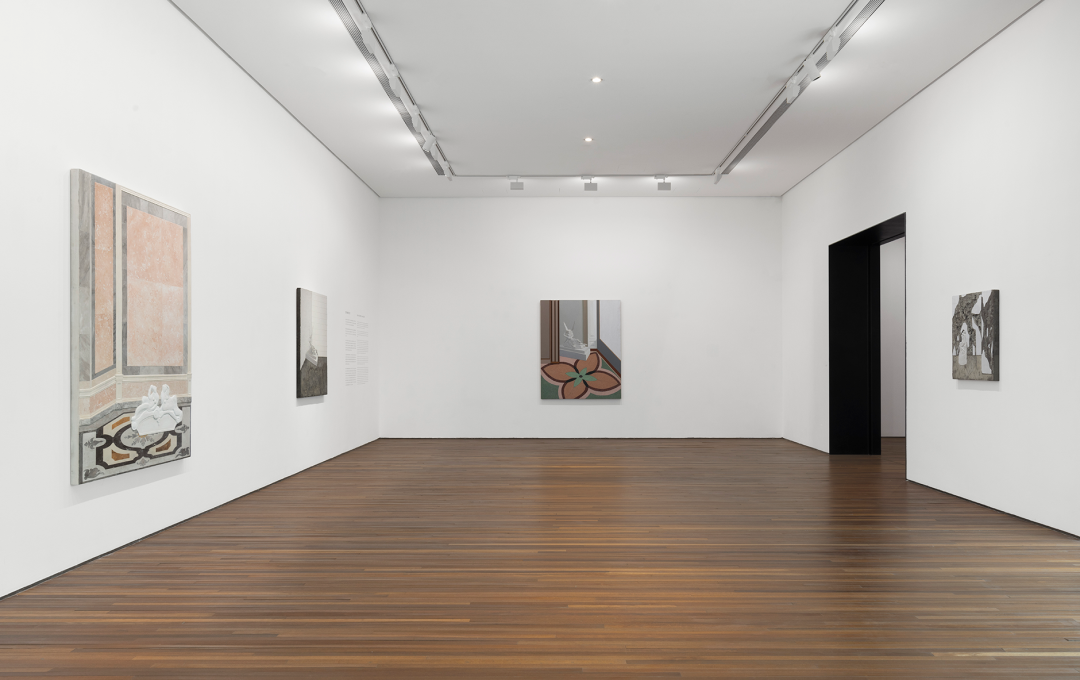
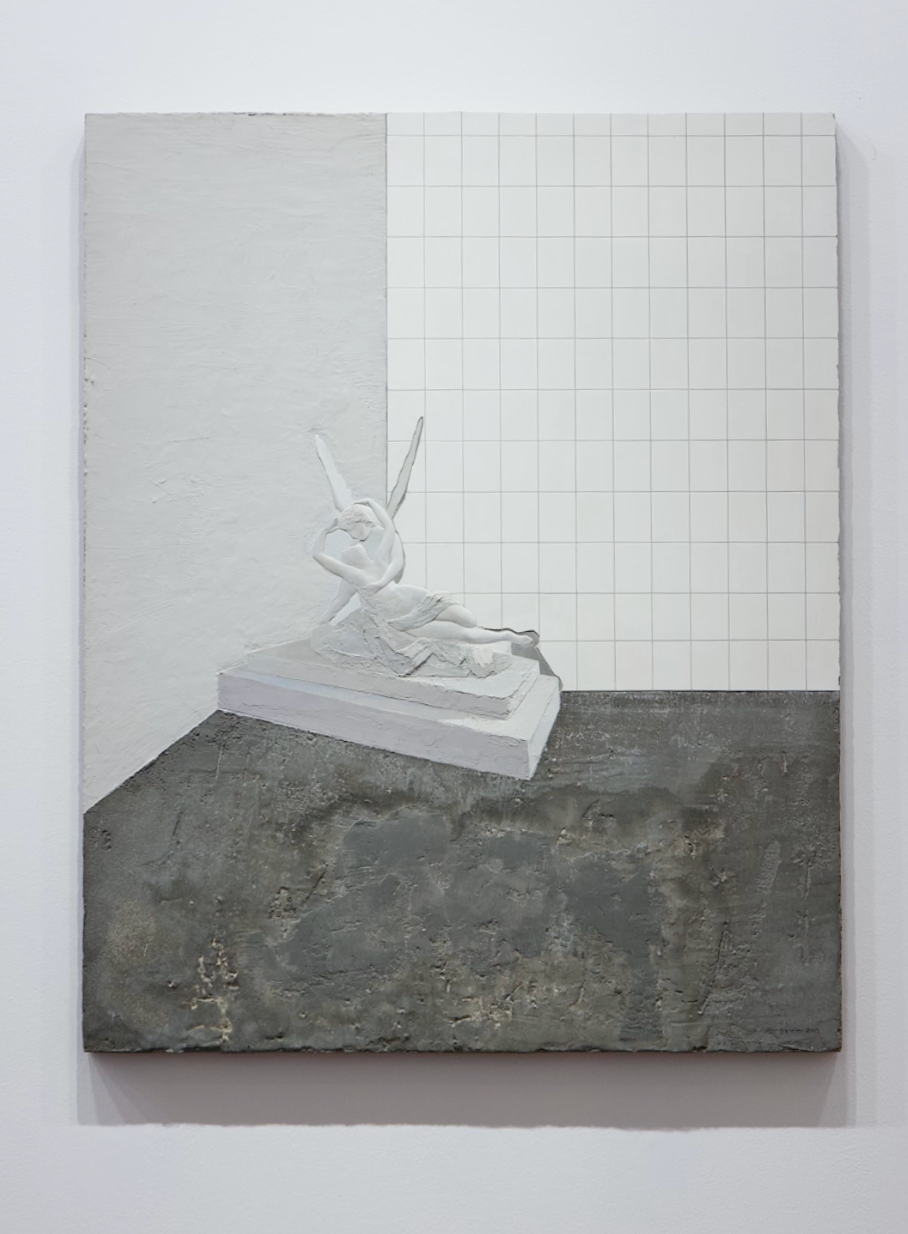
“This painting was done with great precision, at a very high level of detail. But after I finished it, I used correction fluid on the surface in one instant, and I only had one chance. It was like a naughty child had vandalized a world-famous masterpiece in a museum. I found that feeling very exciting.” The artist told us that he practiced the correction over and over on an acrylic sheet before he dared to do it on the actual work. Huang Yishan’s solo exhibition “Punctuation in the Interior,” Song Art Museum, Beijing, 2025. Huang Yishan, Kiss 2, 2017. Down on the basement level, sculpture and relief take on noticeably greater weight. In one gallery, a series of Kiss works retells a sculpture by Rodin.
“I made many reliefs, adding thick materials onto the painting. The column we see faces the viewer straight on, but the floor is angled to the viewer, and the window is a slice from yet another angle. It’s a bit like joining together several orientations.” Huang Yishan, Kiss 1, 2017. Huang Yishan joked that because the work has to be planned in advance, much like interior design, he really is like a “general contractor.”
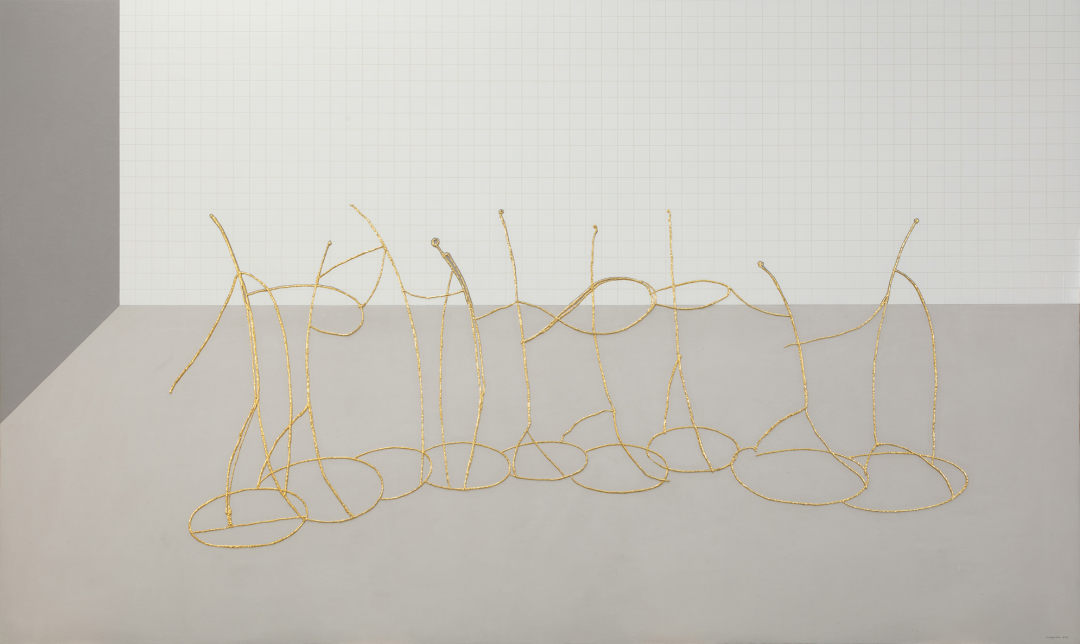
“It feels as if my assistants and I are a construction crew. I tell them that this spot needs this kind of tile, that one needs flooring, or that the terrazzo here needs to be darker or lighter.” Huang Yishan’s solo exhibition “Punctuation in the Interior,” Song Art Museum, Beijing, 2025. Huang Yishan, Blind Leading the Way, 2025. Move farther on and you reach the largest space on the museum’s basement level, where the new series made for this exhibition is presented. The two largest works there happen to be one figurative painting, Eloquence, and one abstract work, Blind Leading the Way.
SECTION 02 | Abstract or figurative, there is unity in my work.”
“This expression through abstract materials is my newest series, but I think it connects with the figurative. Whether it is abstraction or the ‘painting within a painting’ format, they differ only in the mode of expression; the two permeate each other.” Huang Yishan painting Eloquence on site at Song Art Museum. Huang Yishan considers the group portrait Eloquence one of his most important works of recent years. Even on the night before the opening, he was still painting it straight through the night.
“This is my second real group portrait, and it is also a self-portrait. In it I painted different states of myself: inexperienced, anxious, arguing with people. Although it is a self-portrait, at the same time it can also reflect all sorts of people in our society.” Huang Yishan, Courbet’s Studio, 2024. Huang Yishan installing Courbet’s Studio. Another work in this gallery tied to art history, Courbet’s Studio, is also a very important piece among the new works in this exhibition.
In it, Huang Yishan once again explores the possibilities of combining materials and assembling the picture plane.
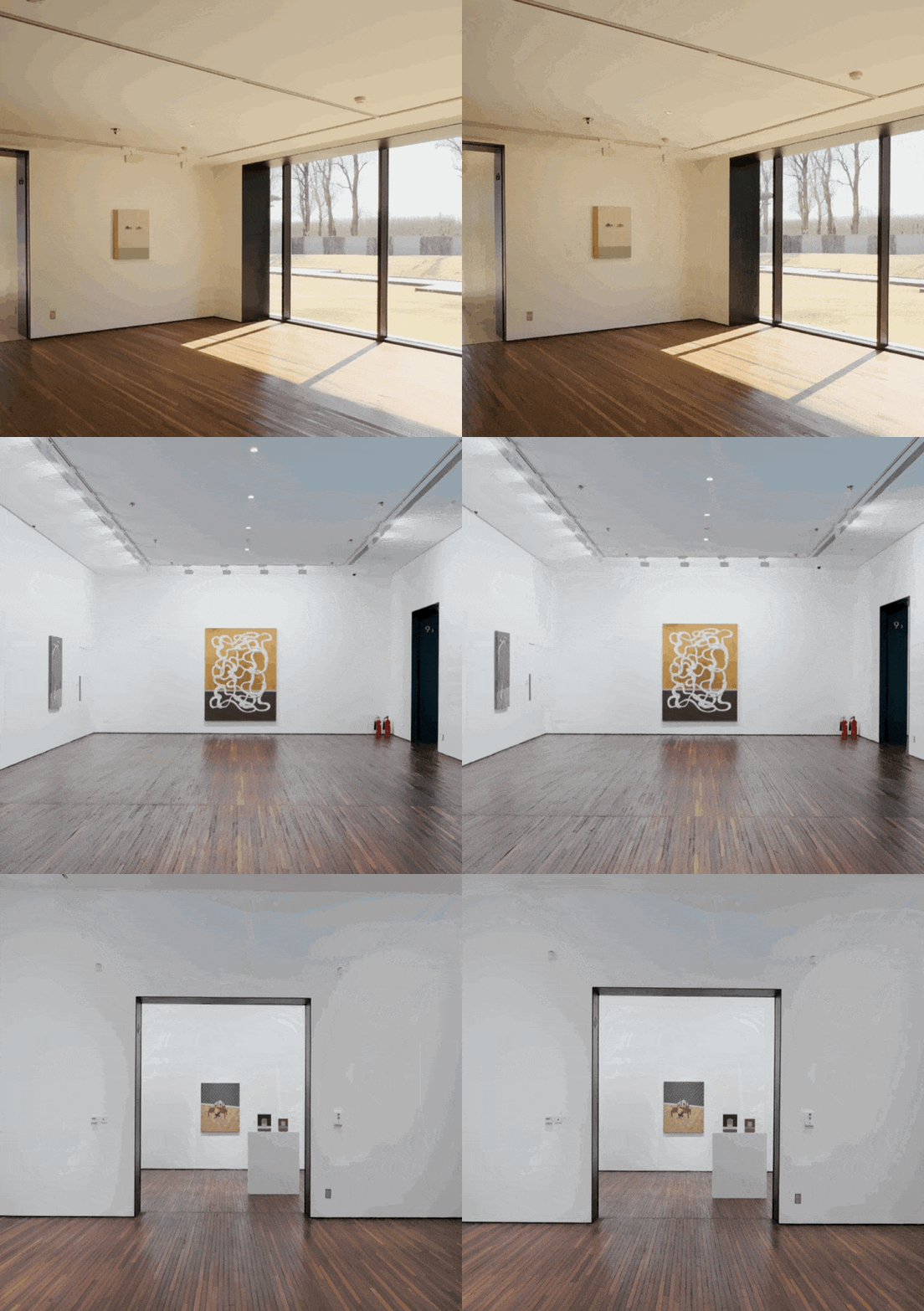
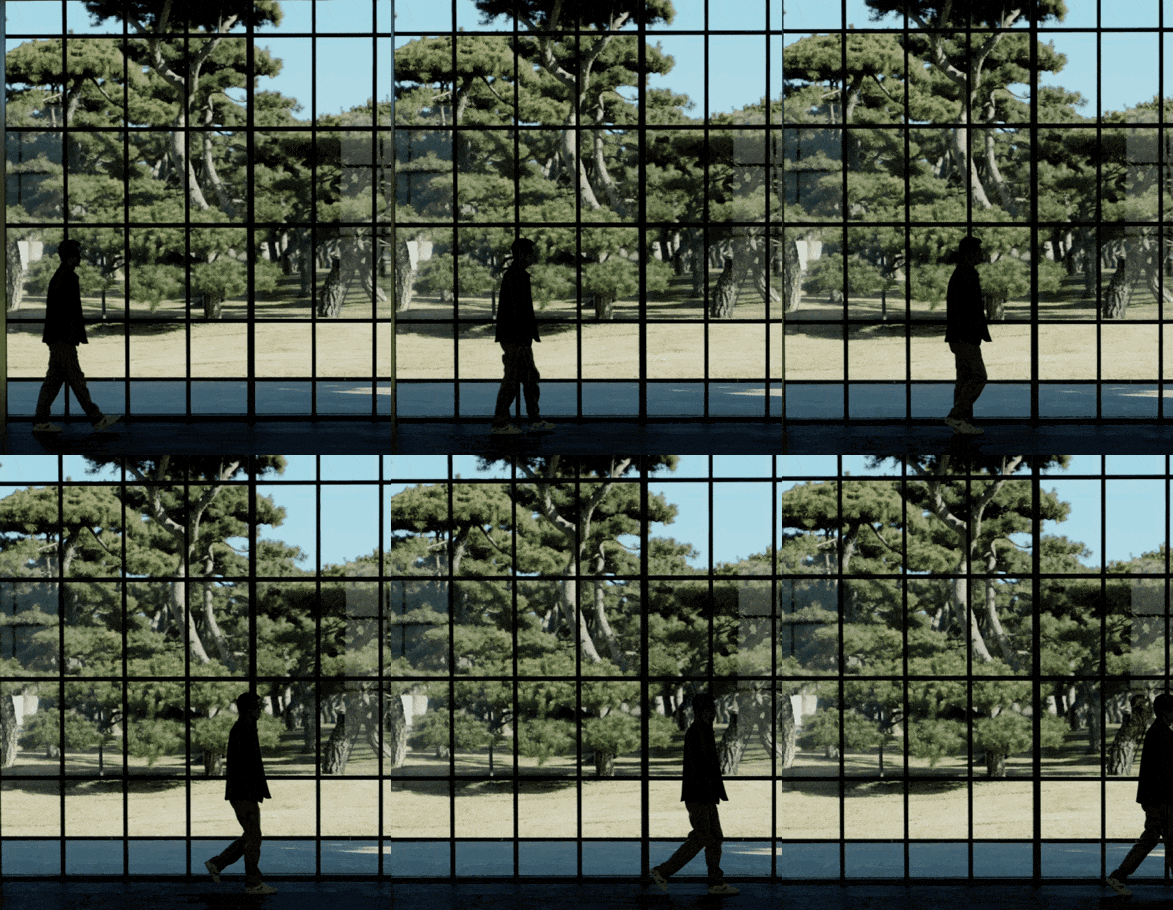
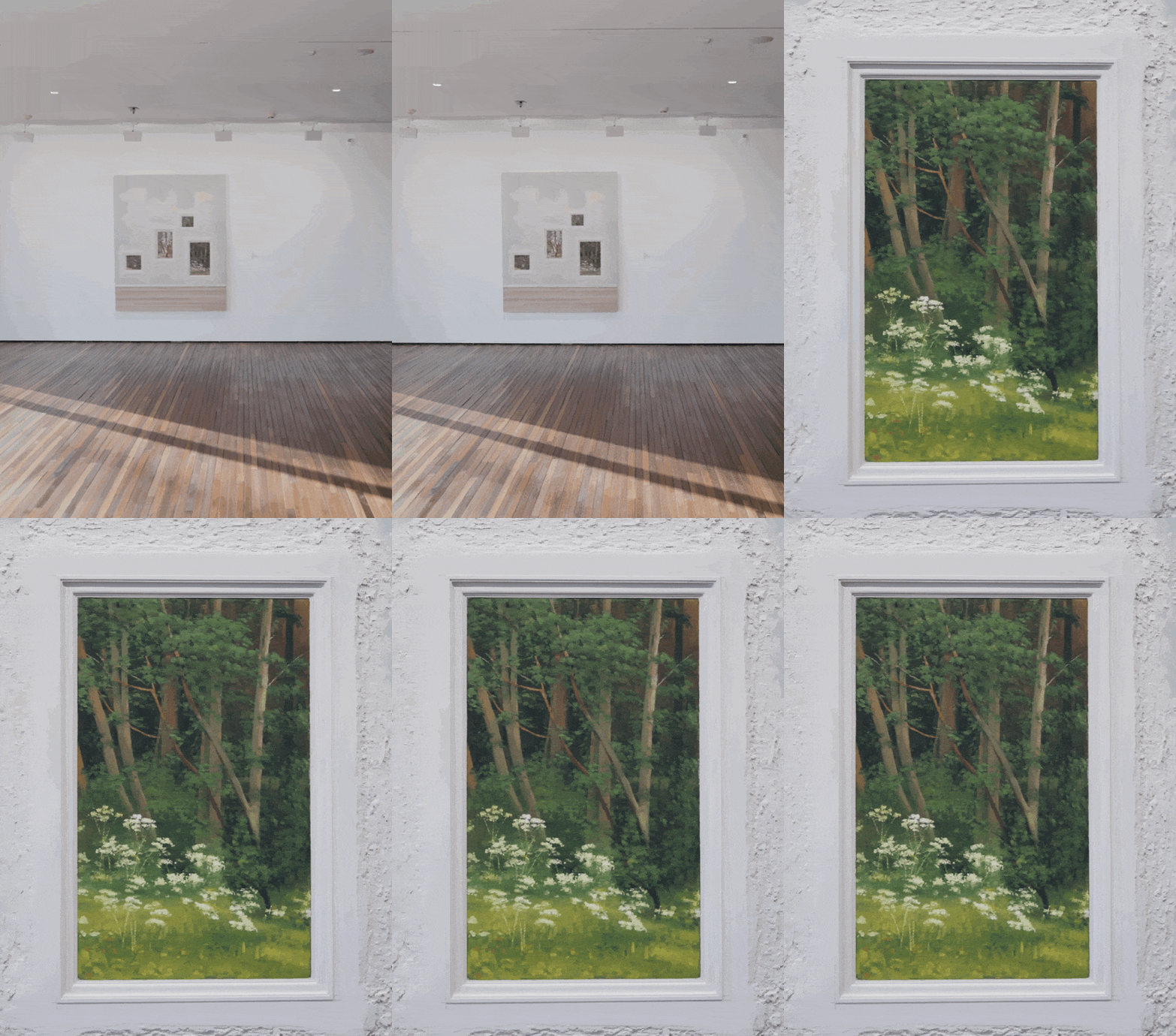
“Courbet’s work can actually be taken apart. I cut a hole in a large panel; the painting inside is an oil on canvas, while the outer part is an oil on panel. So before the hole was cut, everything had already been planned.” Huang Yishan’s solo exhibition “Punctuation in the Interior,” Song Art Museum, Beijing, 2025. Finally, we take the elevator back to the first floor, where the “landscape gallery,” the part of the exhibition that works best with the architecture of Song Art Museum, comes into view. Beyond the huge floor-to-ceiling windows, pine trees stir lightly in the wind; inside the museum is the reappearance of another kind of landscape. “Looking out from inside the museum, the landscape of Song Art Museum is painting, while the images in the gallery are all landscapes,”
the artist said. Huang Yishan’s solo exhibition “Punctuation in the Interior,” Song Art Museum, Beijing, 2025. Living in Guangzhou, Huang Yishan regards the city as one of the most important sources of inspiration for his art. His studio is located in an urban village, surrounded by street life and the routines of the everyday, and Guangzhou’s urban character has deeply permeated both his work and his ideas. That is unmistakable in the final gallery of the exhibition, where video installation and painting are combined.
Detail of Building-1. The two most important works in the gallery, Building-1 and Building-2, were made by Huang Yishan for the Guangzhou Triennial in 2020. The buildings in them depict the apartment blocks seen everywhere.
SECTION 03 | Artists should live a comfortable life
“Building-1 has the feeling of buildings in Guangzhou in the 1990s, while Building-2 depicts the commercial apartment buildings of Guangzhou after 2000.” Detail of Building-2. If we stop in front of the works, we notice that the “residents” inside the buildings are actually in motion: a woman hanging laundry on a balcony, a child sitting at a table and a mother cleaning nearby, an auntie practicing square dancing in the living room. This is also the first time Huang Yishan has tried combining video and painting in his work.
Huang Yishan working in his Guangzhou studio. “A work is still an expression of your life. Whatever area you live in nourishes you and becomes the soil of your making.” He told us that Guangzhou’s urban villages can take in many newcomers, as well as young people who have just graduated. “They allow everyone to survive a little better in Guangzhou, and that kind of environment is actually very important.” Huang Yishan working in the studio. For him, arriving each day at the studio building he has rented out, beginning in an orderly way to “renovate” the picture plane, and every so often hearing an electric scooter pass through the urban village or someone calling out to collect used appliances, is deeply reassuring.
That practical, grounded quality also appears in his working methods and visual language. He said, for instance, that the decorative elements related to interiors and space in his work have been influenced by the village houses in urban villages. Huang Yishan’s solo exhibition “Punctuation in the Interior,” Song Art Museum, Beijing, 2025. “Village houses really have distinct characteristics. Every house uses different exterior tiles, and that represents each owner’s preferences. So I often think about why the owner chose to put that mosaic or tile on the house when it was built.”
Working in that environment and at that pace, Huang Yishan said he has almost never experienced a so-called creative block. “Daily life gives you a constant stream of inspiration. Every time I begin a new work, there are already many desires and imaginings for the next step waiting for me.” Perhaps that is also why he told us, “I think an artist still ought to live a life of ease, or rather a life that is internally coherent.”