Liu Ren and Zhang Ruyi at Yuz Museum Shanghai: Two Artists, Twenty Years
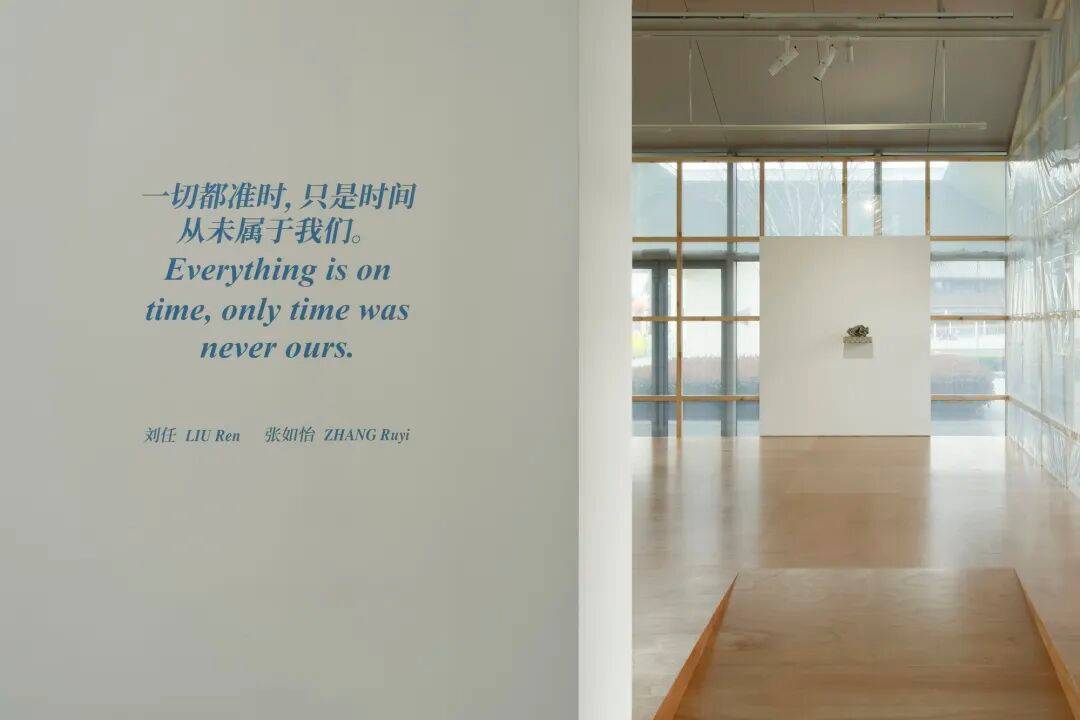
What happens when two artists who have shared a life for nearly twenty years place their work in the same room for the first time? At Shanghai’s Yuz Museum, Liu Ren and Zhang Ruyi’s two-person exhibition, “Everything Is On Time, Except Time Has Never Belonged to Us,” offers an answer that arrives almost at once......
By / Xirui Huang · 15 min read
What is Liu Ren and Zhang Ruyi’s 2026 exhibition at Yuz Museum Shanghai about?
Liu Ren and Zhang Ruyi’s first two-person exhibition at Yuz Museum Shanghai brings together more than twenty years of independent practice. Eggshells, cactus spines, concrete, tiles and everyday objects create a dialogue about urban life, constraint, time and individual experience.
Figure | Turning Twenty Years of Life into an Exhibition
What happens when two artist-partners who have shared a life for nearly twenty years place their work in the same room for the first time? At Shanghai’s Yuz Museum, Liu Ren and Zhang Ruyi’s two-person exhibition, “Everything Is On Time, Except Time Has Never Belonged to Us,” offers an answer that arrives almost at once. In Zhang Ruyi’s work, one encounters many familiar elements—cacti, concrete, bathroom floor drains, tiles, plastic sheeting, rebar. The most ordinary and overlooked materials of urban life are reorganized.
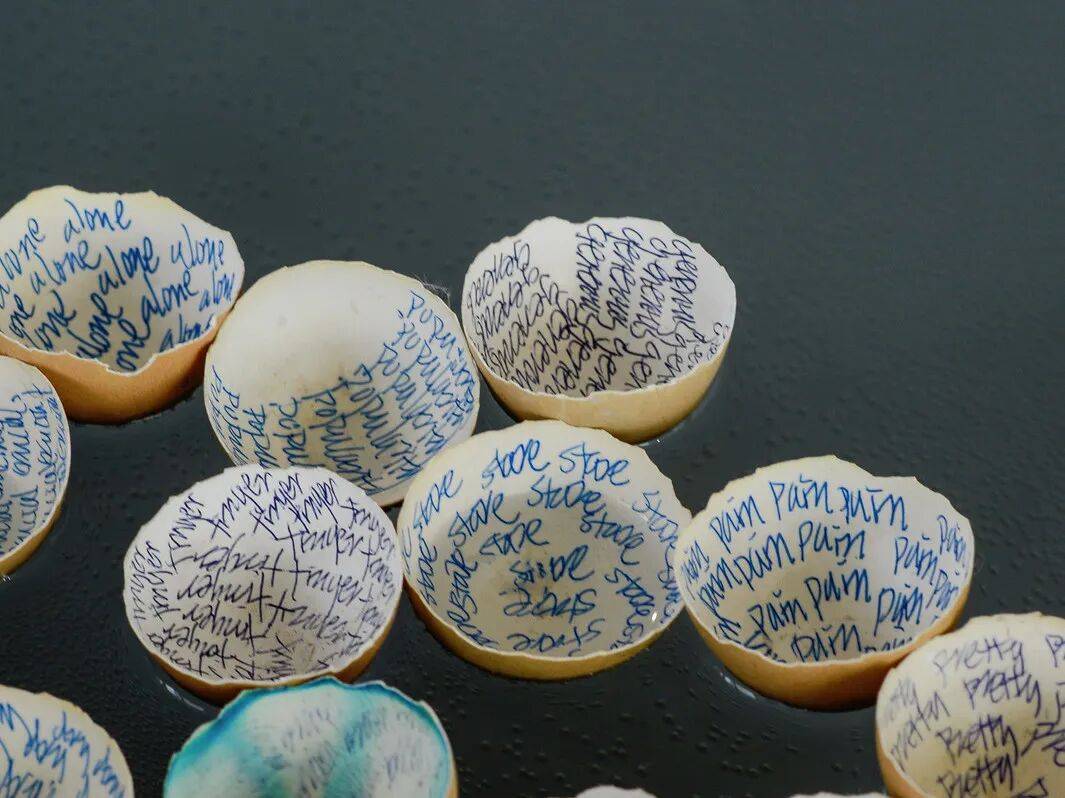
She has never been talking about materials for their own sake, but about the individual’s repression, movement, and obstruction in the modern city, as well as perceptions and emotions that cannot be spoken. Liu Ren, meanwhile, continually embeds language and ideas in everyday objects: repeatedly writing English words inside eggshells, placing an apple above a fishhook, printing “the ocean,” Time magazine, and dollars on straw paper. He is an artist who writes philosophy into ordinary things.
“Liu Ren & Zhang Ruyi: Everything Is On Time, Except Time Has Never Belonged to Us.” Exhibition view, Yuz Museum, 2026. Photograph: LING. Liu Ren and Zhang Ruyi at the Yuz Museum, 2026. Both artists were born in the 1980s and are among the central figures of Chinese contemporary art. They grew up in Shanghai and both graduated from the Printmaking Department of the School of Fine Arts at Shanghai University. Though they share a similar background, they developed sharply different artistic languages.
SECTION 01 | Entering a city about "time"
For nearly twenty years, they have continued to work independently.
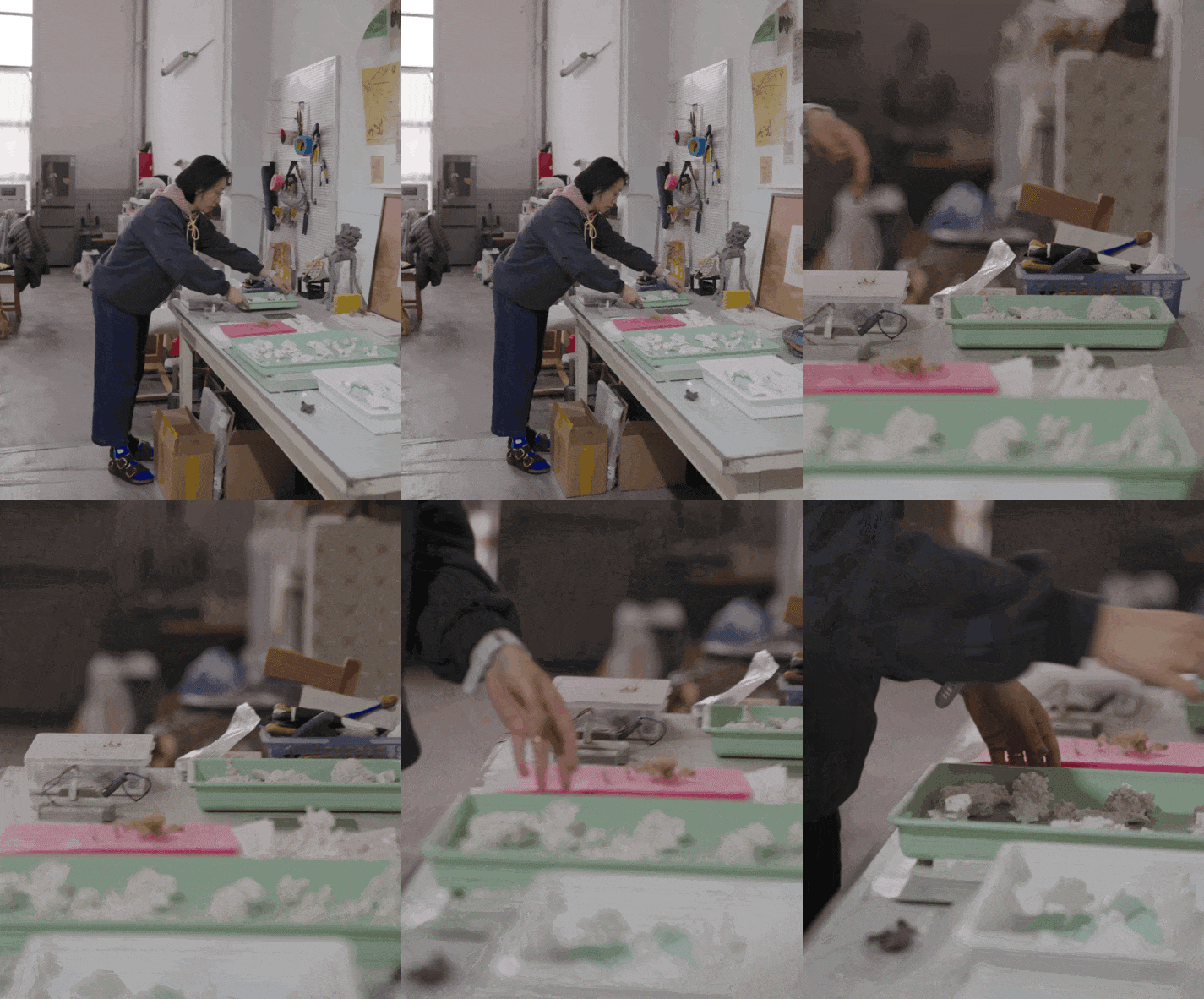
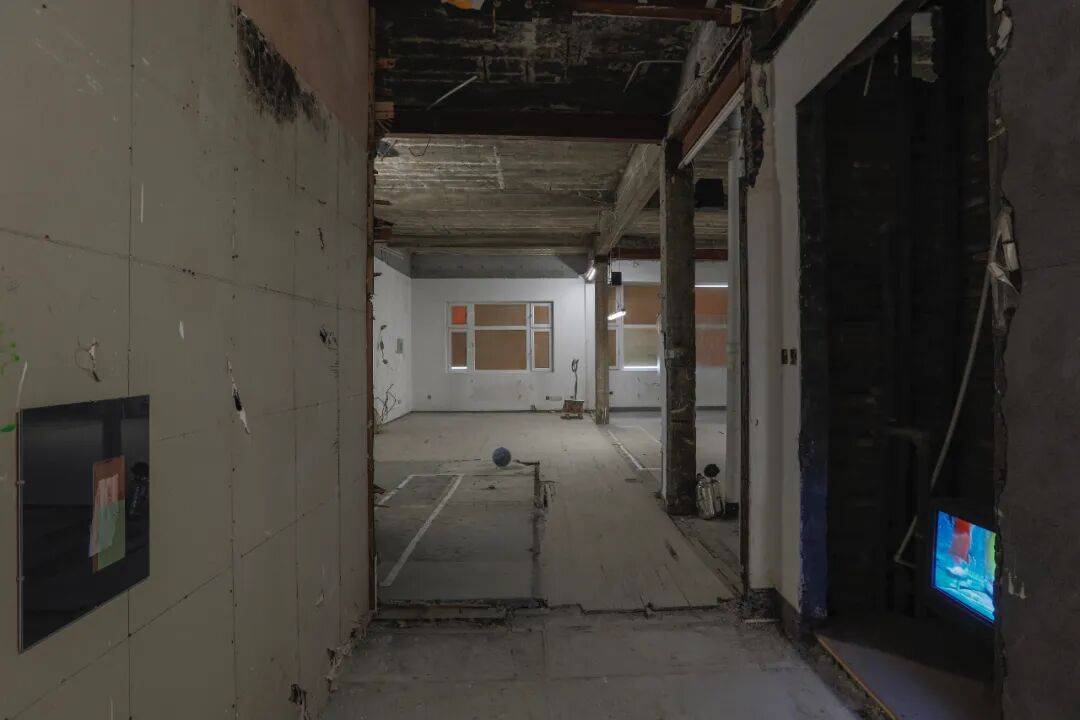
“At first, we didn’t quite know where to begin with this two-person exhibition,” Zhang Ruyi told us. “After thinking through and organizing works made over more than 20 years, we found a suitable point of entry in the space.” At the beginning of the exhibition, we visited the galleries and the studio the artists share, and spoke with them. Zhang Ruyi in the studio. The artists’ studio is in a factory building on Jiangyang North Road in Shanghai. It occupies two levels, with a seven-meter ceiling, and is expansive.
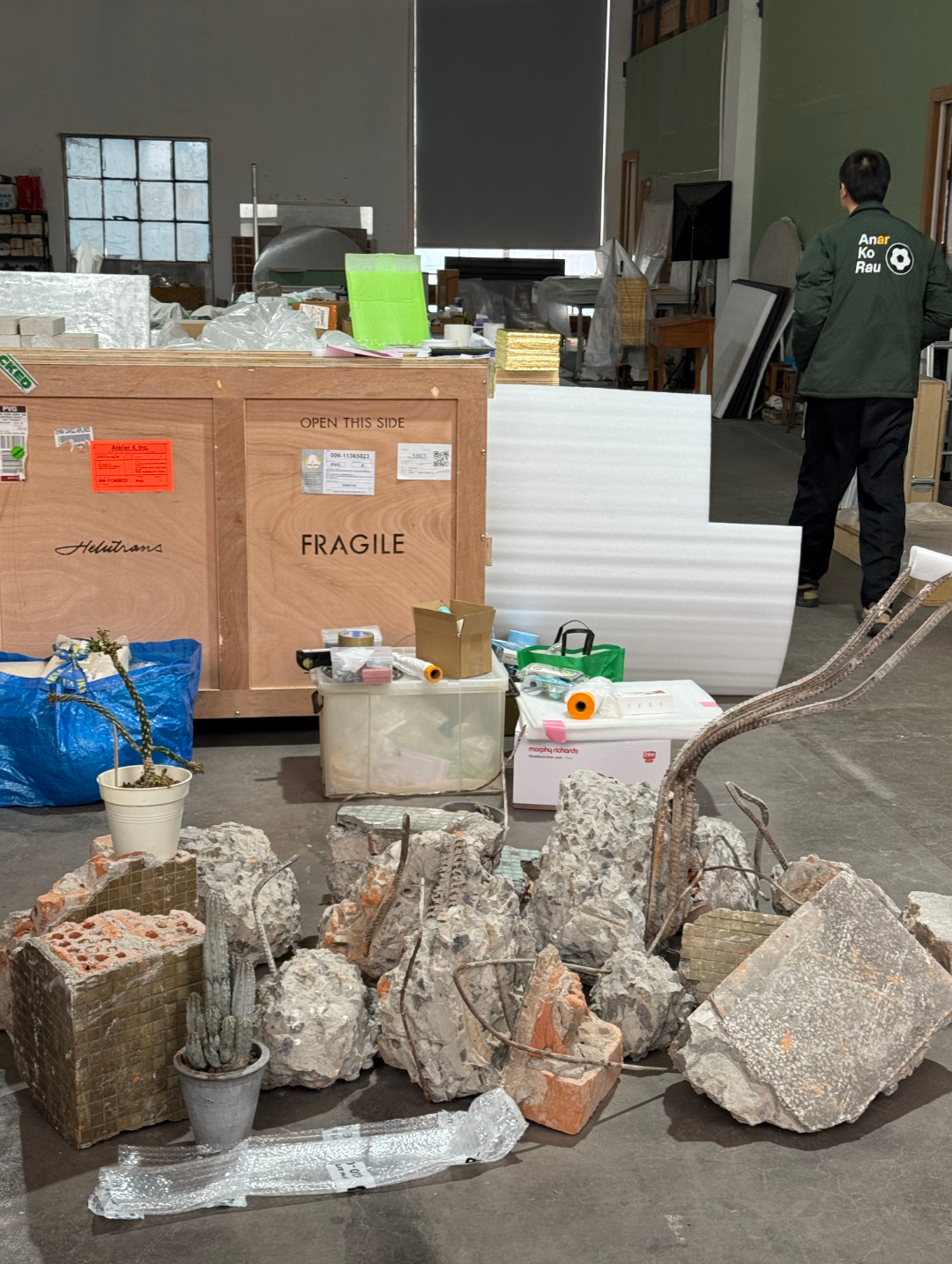
They laughed and said it had not been tidied in a long time. Wooden crates, plaster models, metal frames, tools, electrical wires, and unfinished works filled the space with evidence of labor.
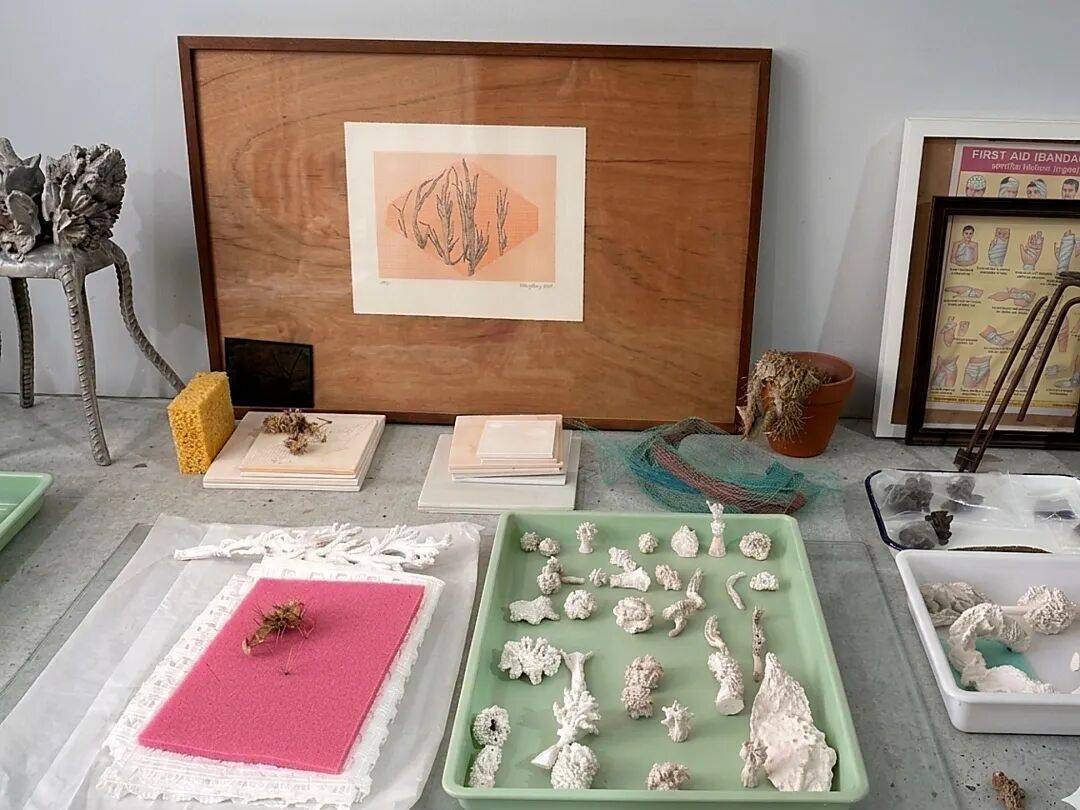
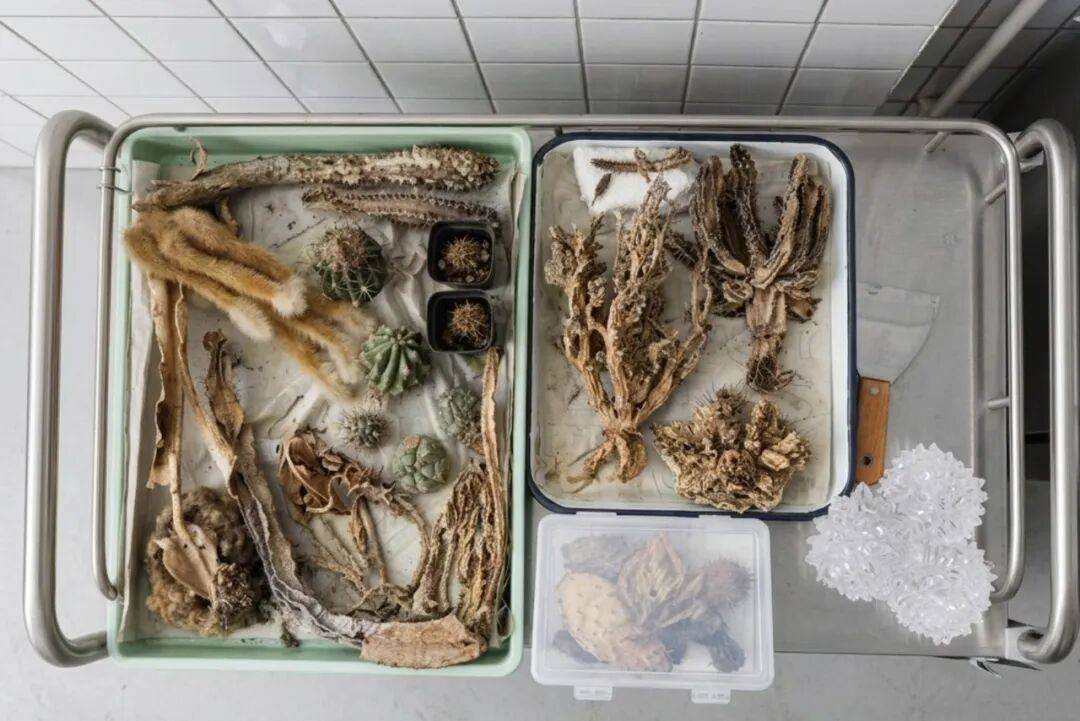
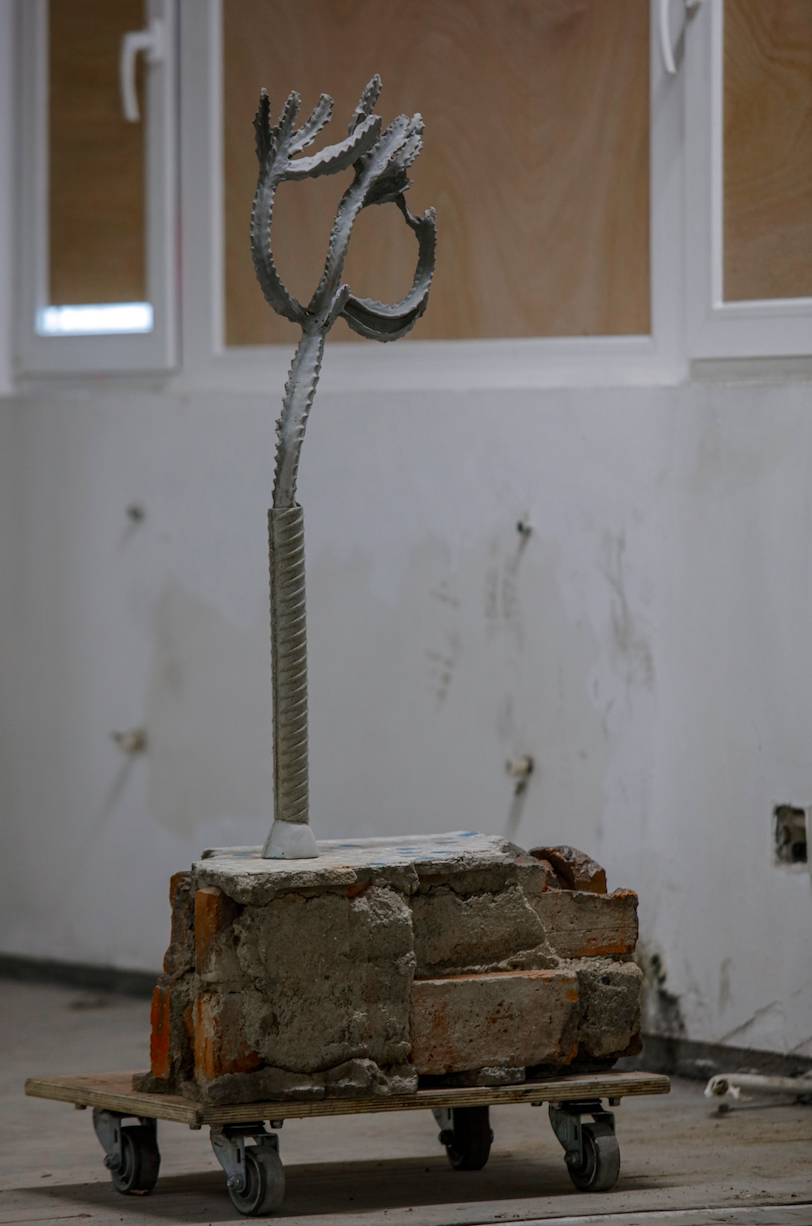
“We are essentially two completely independent rooms. The larger area is mainly for working with materials and preparing works,” Zhang Ruyi said. Worktable and cacti drying in Zhang Ruyi’s studio. Her worktable held numerous plaster cactus components—spines, branches, skeleton-like forms. Nearby lay many cacti that had dried out, twisted and gray, yet still carrying a tenacious sense of life. All would later be cast into new sculptures.
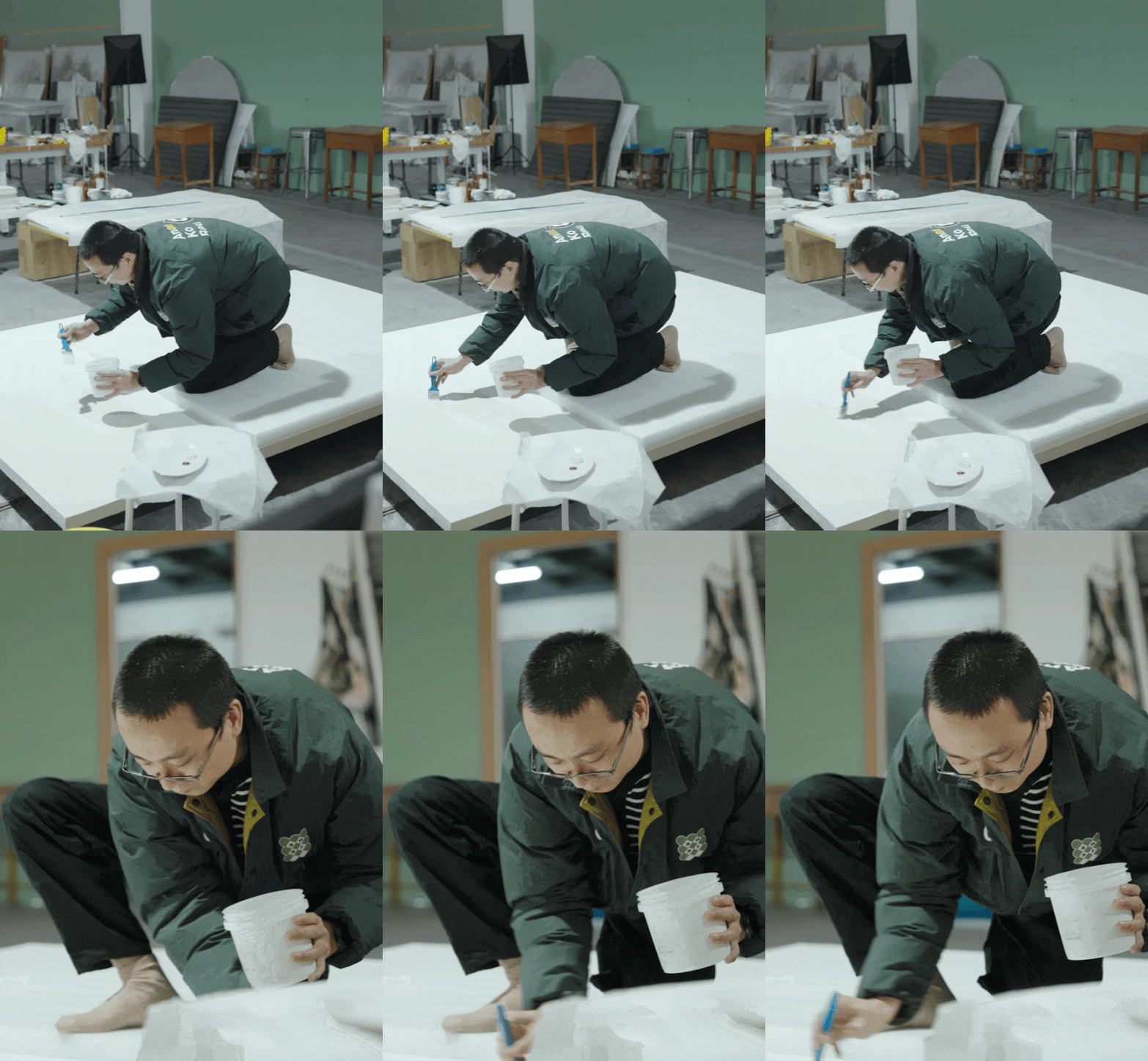
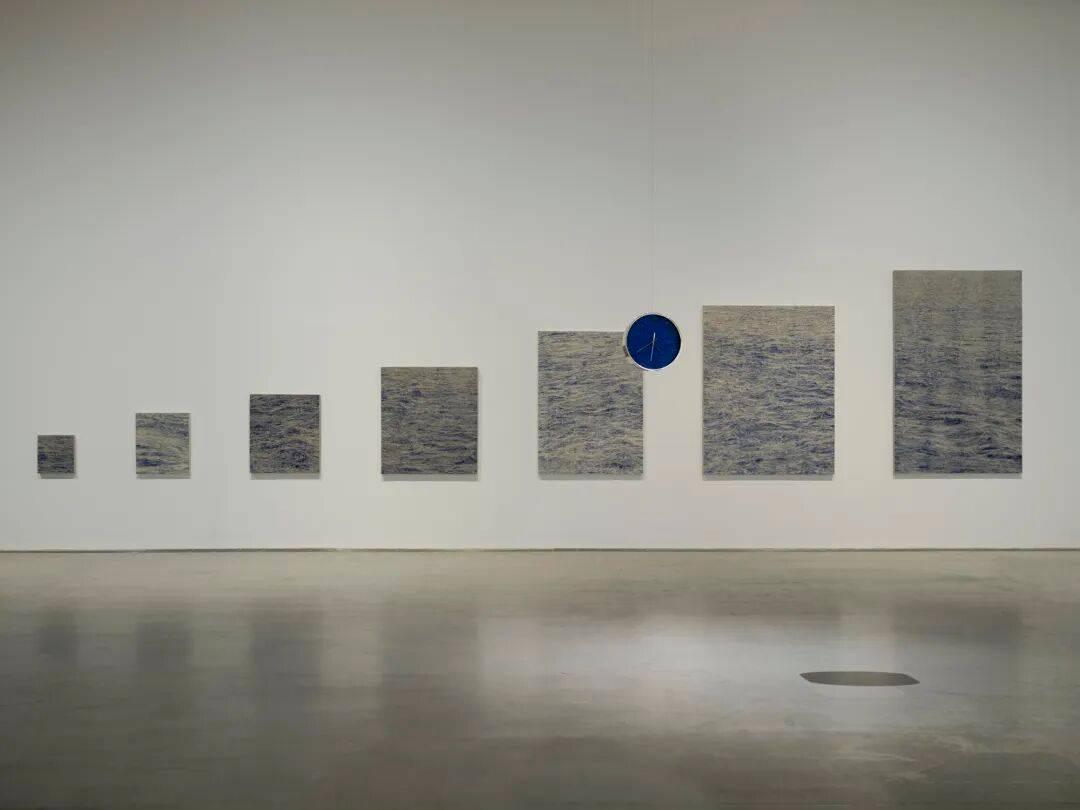
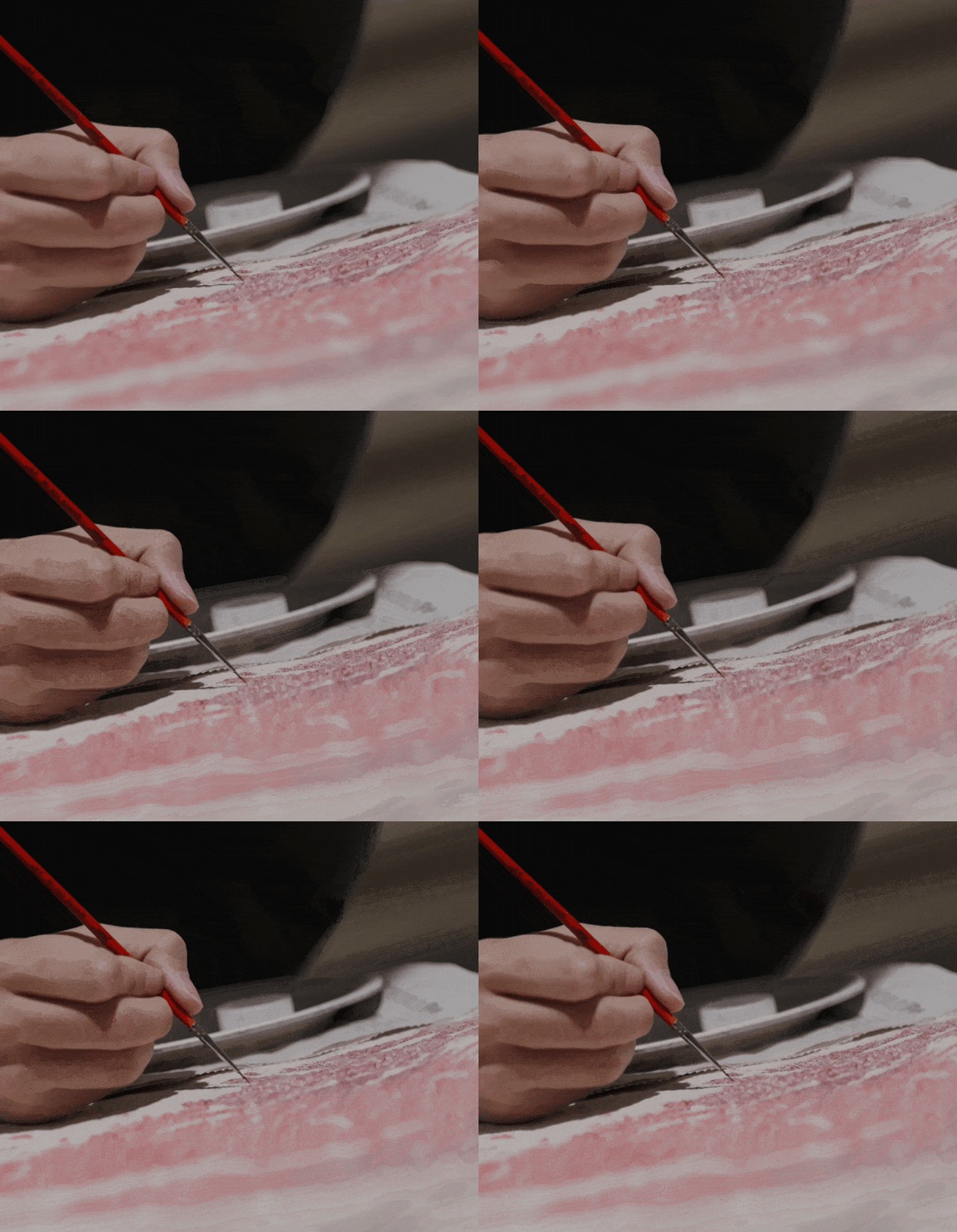
Liu Ren in the studio. “Liu Ren & Zhang Ruyi: Everything Is On Time, Except Time Has Never Belonged to Us.” Exhibition view, Yuz Museum, 2026. Photograph: LING. On the other side was Liu Ren’s area. A large work from his PantaRhei series lay spread across the floor as he applied its first coat of latex paint. The brush moved back and forth, as if laying a new weather across the surface of the sea. Liu Ren’s PantaRhei series consists of straw-paper works, large and small, densely screen-printed in blue with the words “PantaRhei.”
“‘Panta Rhei’ comes from a philosophical proposition of Heraclitus: everything flows, nothing remains, and no one can step into the same river twice. It corresponds to the irreversible condition of individual life amid the rapid flows and changes of the present information age,” Liu Ren said. Beside him was an unfinished “steak” in the studio, made of straw paper. On its surface, he had written the characters for “food” and “color” in red pigment, imitating the marbling of beef with striking vividness.
We asked whether, working in the same studio, they often discussed what the other was making. Zhang Ruyi laughed. “We don’t actually ask about specific works. Our everyday conversations tend to remain at a more abstract level, or concern other daily matters.” Building materials and wooden crates piled in the artists’ studio. “We talk more about a state behind the work, or a view of art. I think that is a good state. Discussing art itself is part of life.”
Liu Ren added. Perhaps this kind of relationship explains how they have been able to share a life for nearly twenty years while maintaining independent practices. It is not that they intervene too much in each other’s work, but that they understand each other deeply enough.
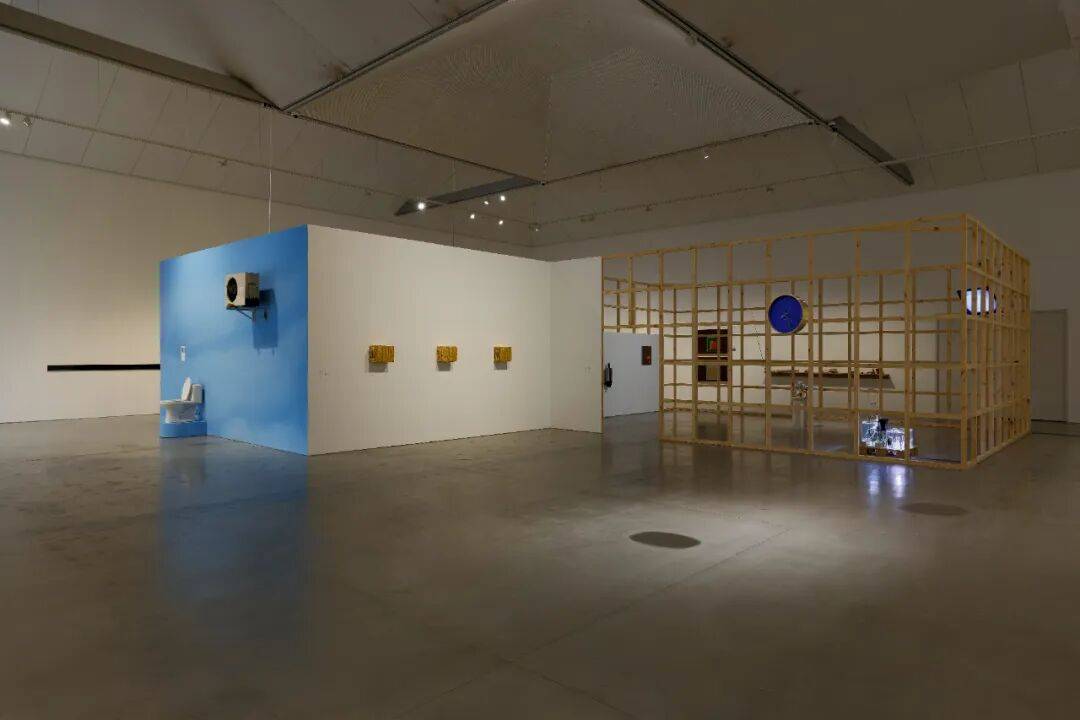
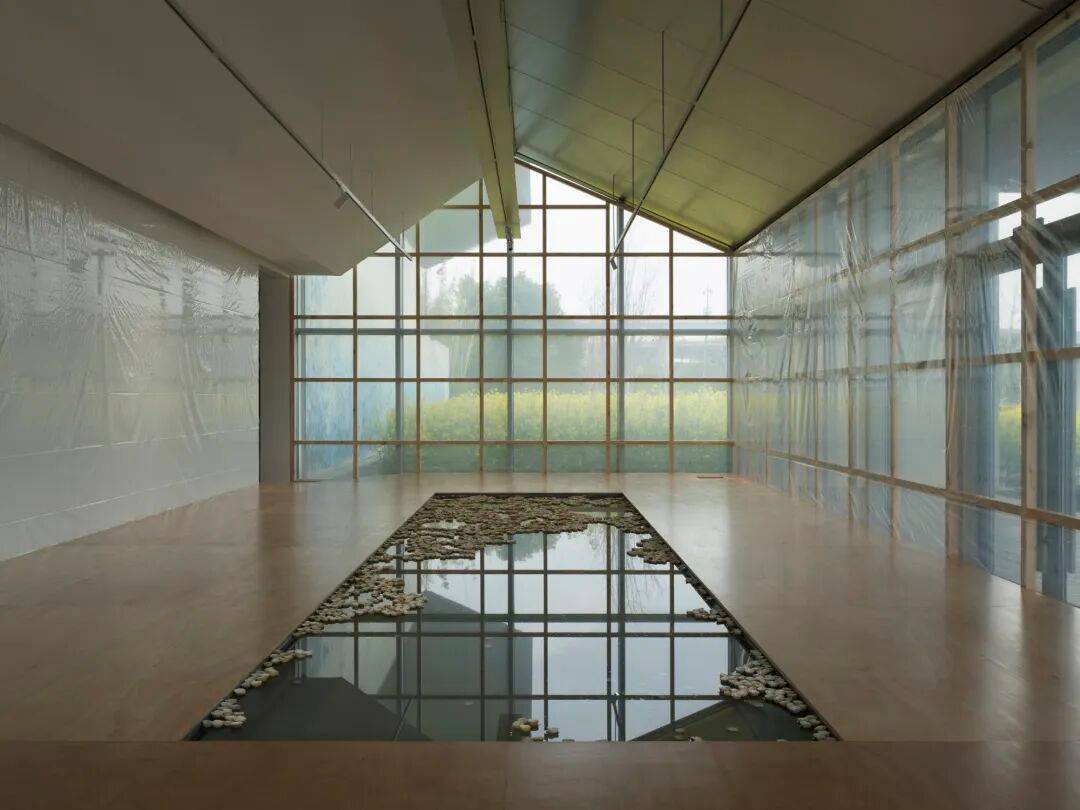
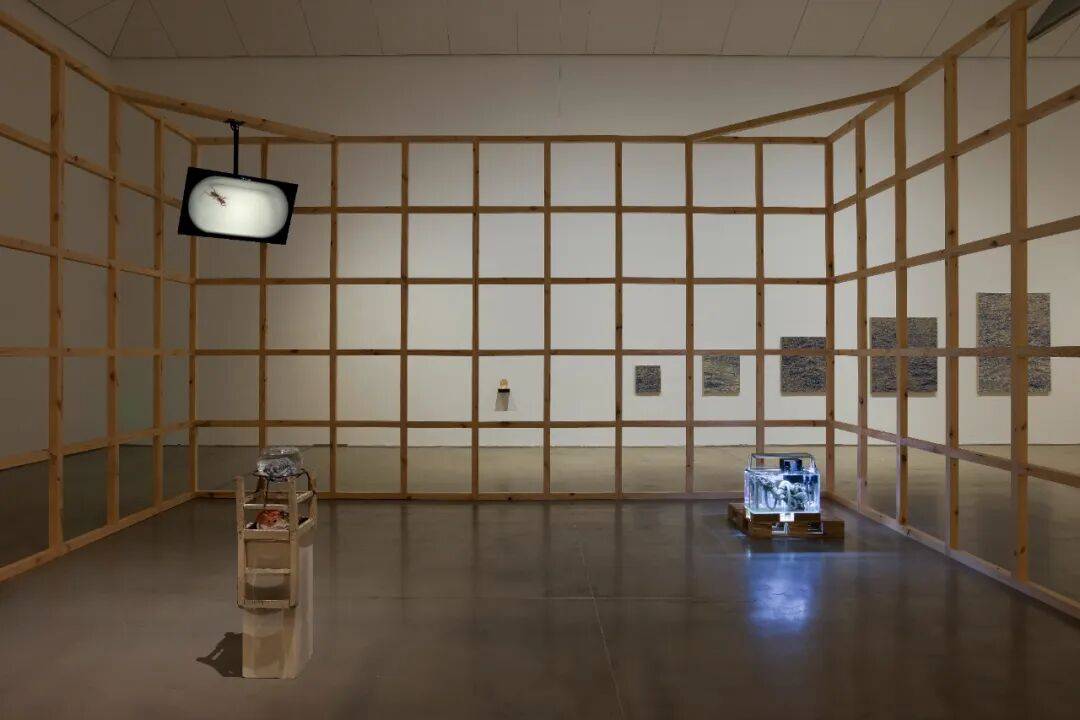
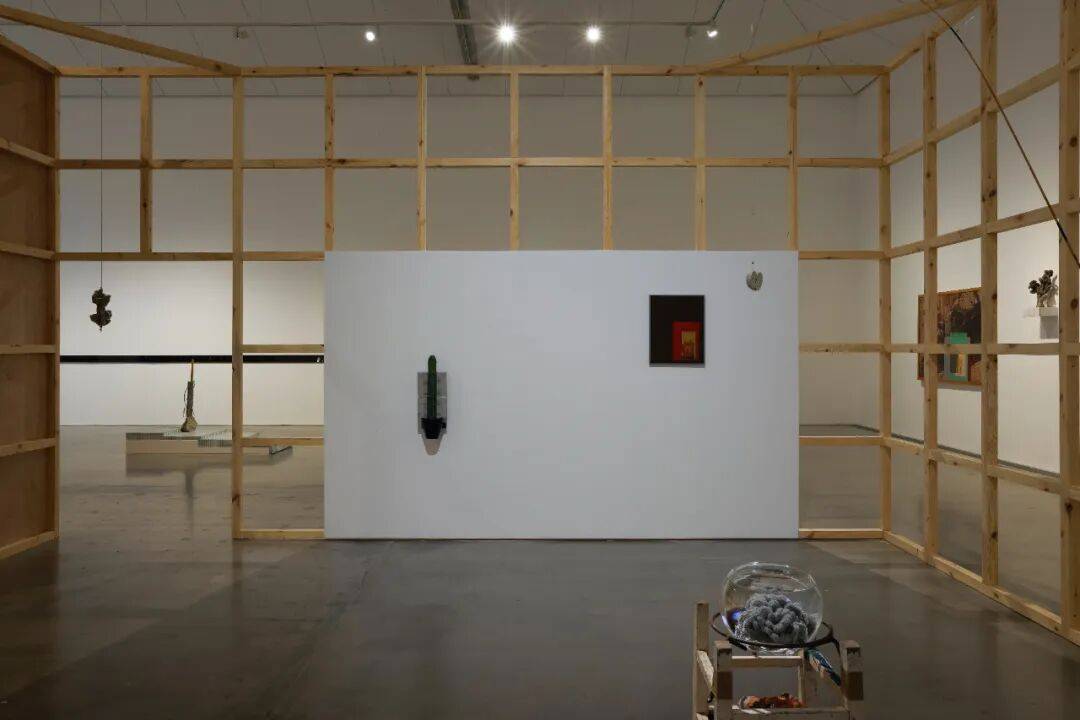
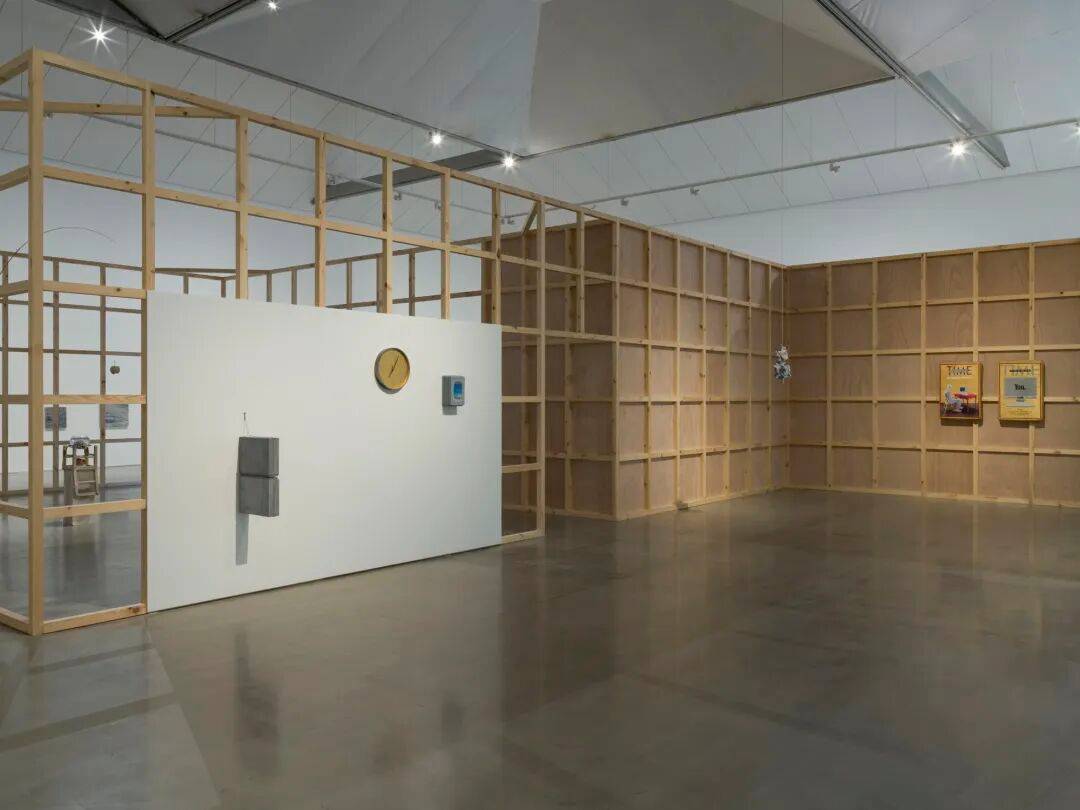
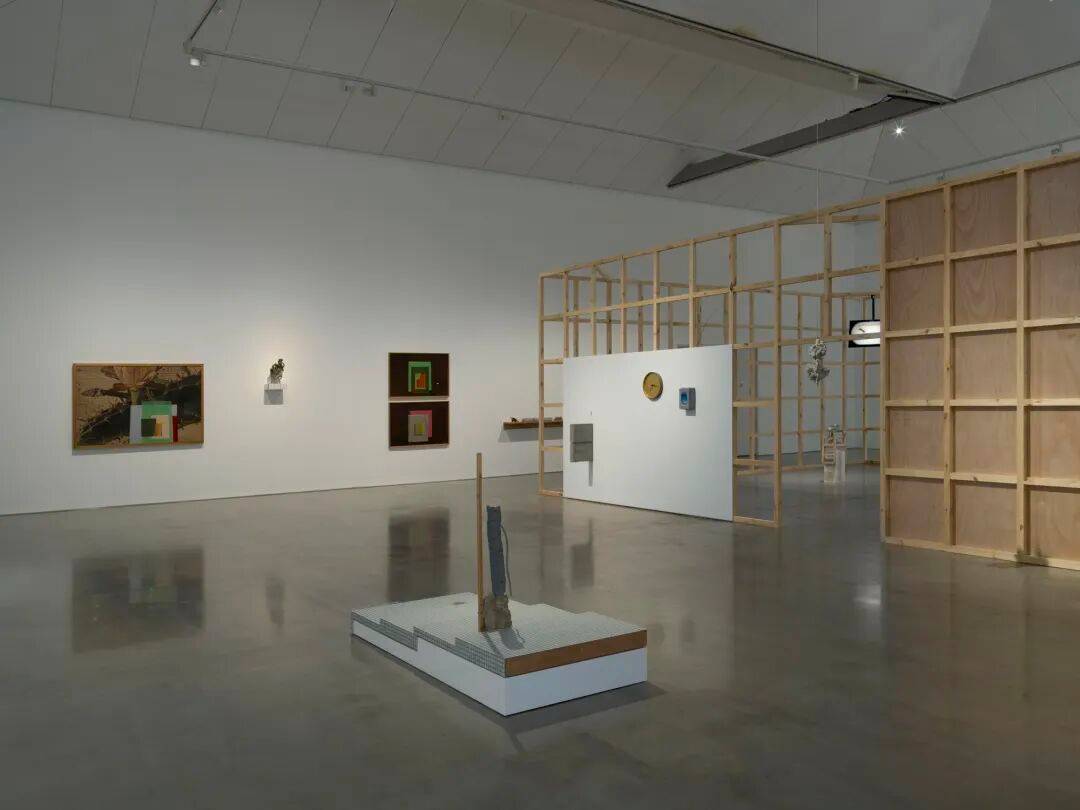
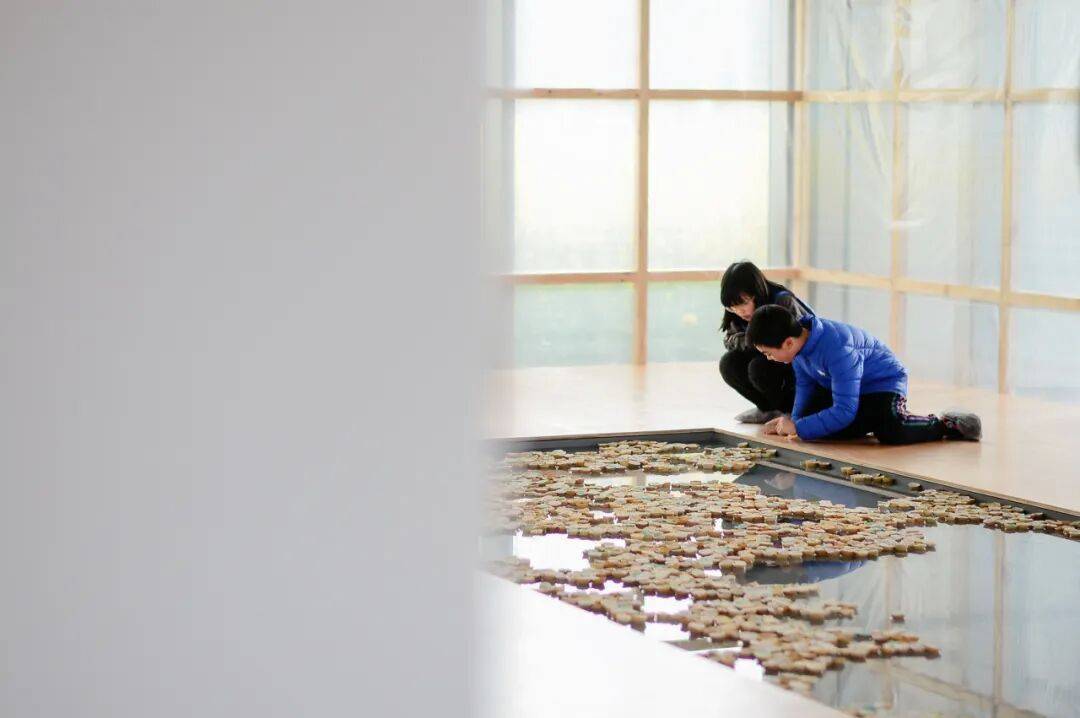
“Liu Ren & Zhang Ruyi: Everything Is On Time, Except Time Has Never Belonged to Us.” Exhibition view, Yuz Museum, 2026. The way the works are arranged in the galleries is an exact expression of that condition. We first enter a gallery enclosed by transparent glass. A space that was originally open and bright has been divided by the artists with a grid of wooden studs. Together with a layer of industrial sheeting inserted within it, the structure forms a space that resembles a greenhouse while retaining the feel of temporary architecture.
“We used the transparency of the gallery. The wooden grid and the interior space of the sheeting create a contrast between soft and hard textures and the original space. When the sunlight is strong, shadows float through the gallery, enriching the space,” Zhang Ruyi explained. Liu Ren, Finding a Sense of Security (detail), 2006–2007. “Liu Ren & Zhang Ruyi: Everything Is On Time, Except Time Has Never Belonged to Us.” Exhibition view, Yuz Museum, 2026. Photograph: LING. Standing inside, one first feels a peculiar instability—it is both a real space and a stage set, both an architectural interior and a site awaiting growth.
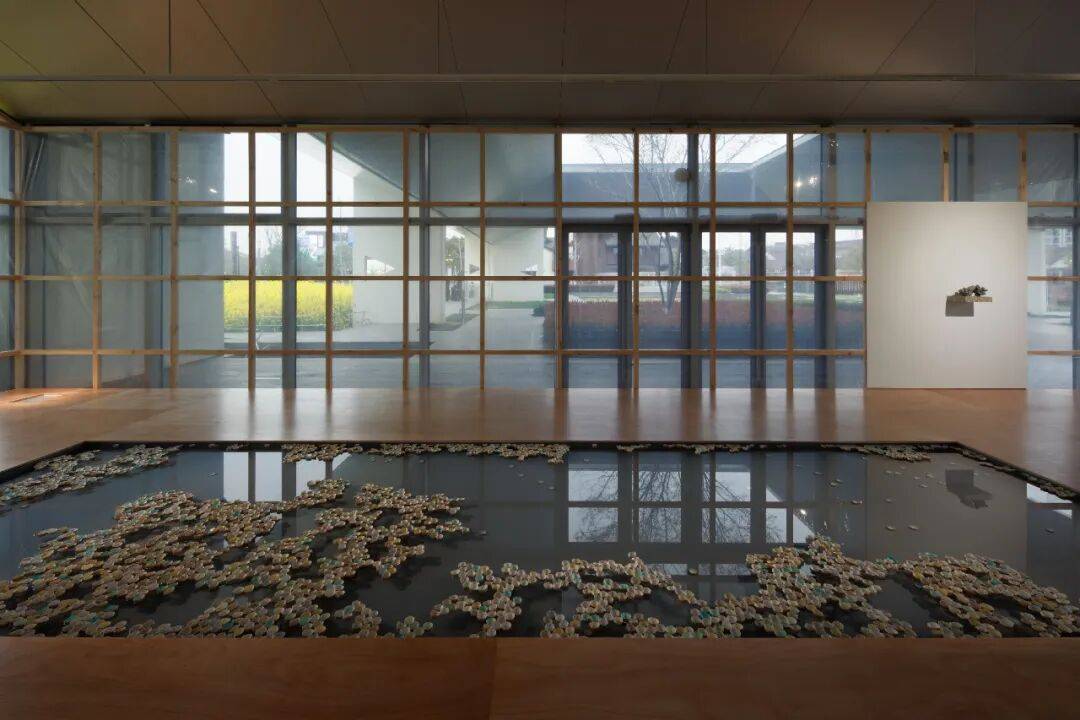
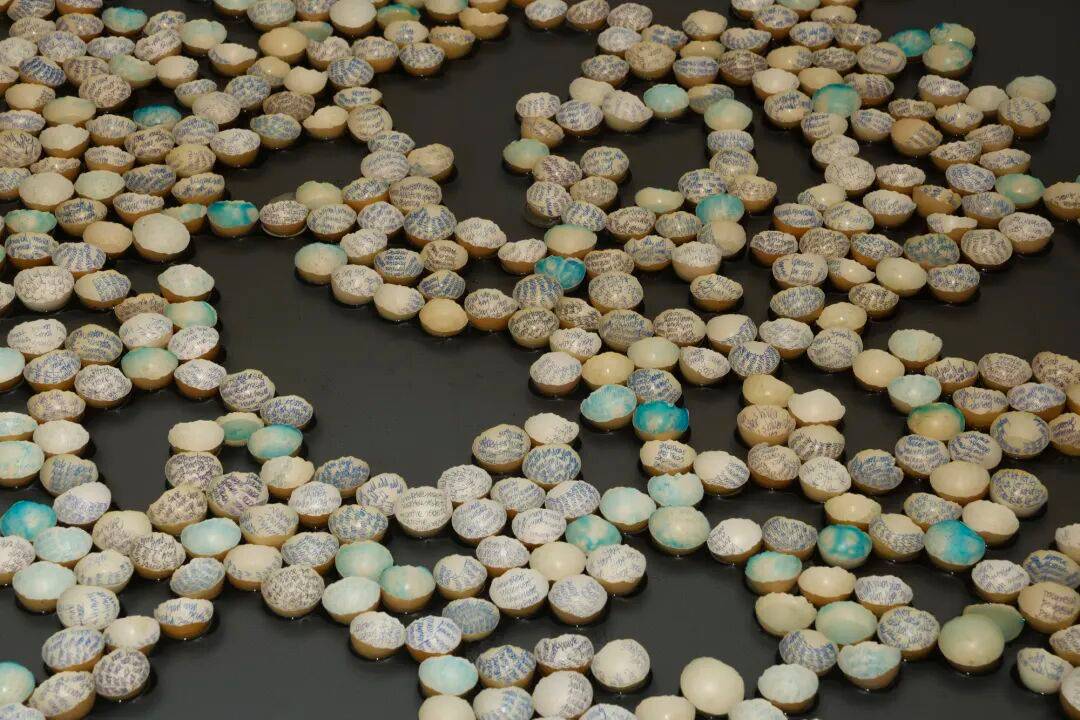
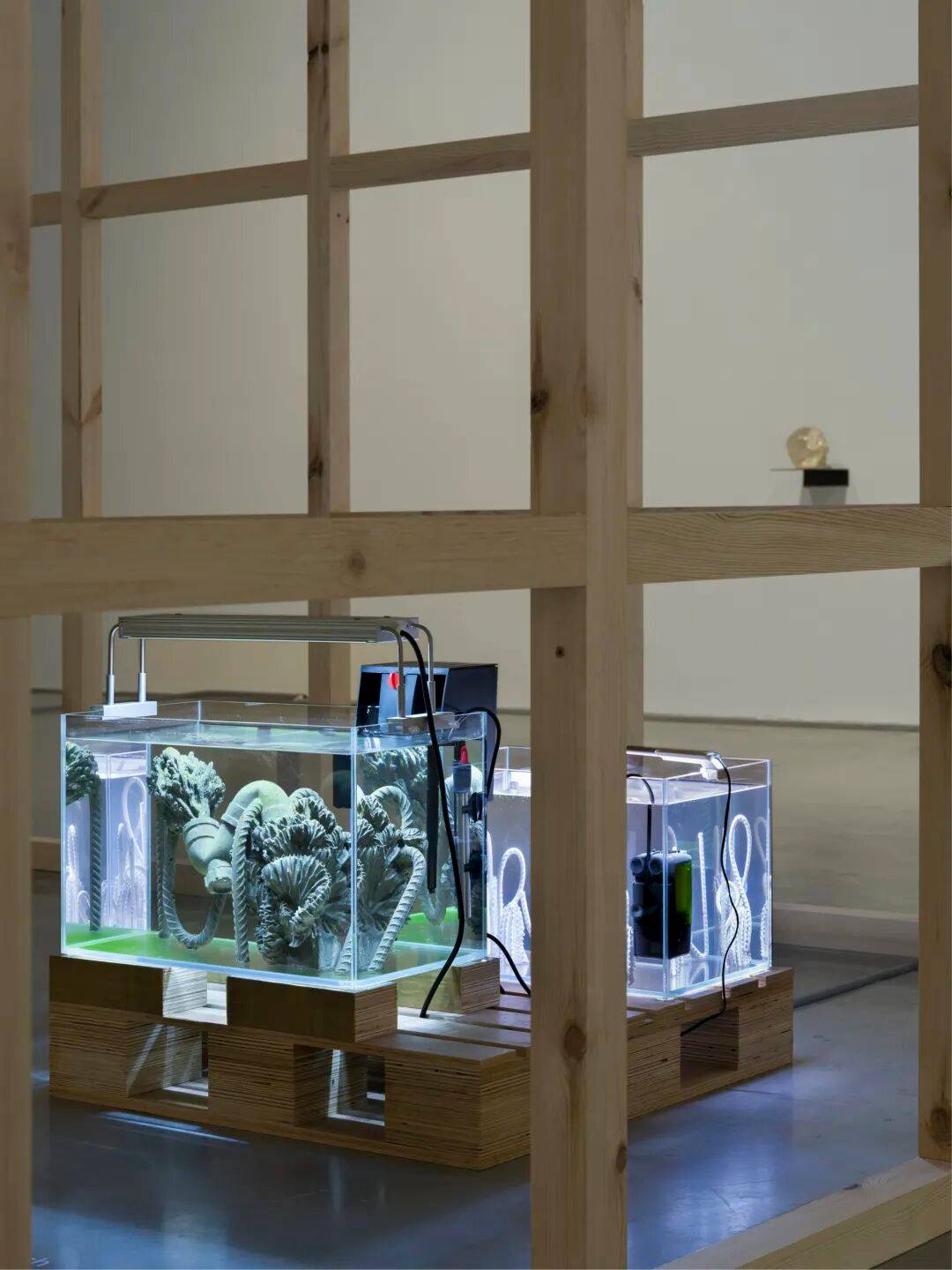
In the central pool, Liu Ren’s Finding a Sense of Security is especially arresting. The work was made around 2006 and 2007. The inside of an eggshell is densely covered with English words from a Level Four examination. The shell sits in the pool, slowly softening and breaking apart over time.
“2006 to 2007 was a moment when China was rapidly internationalizing. As individuals, we may not have been prepared. That anxiety—including the difficulty of adapting to the school system and the helplessness of existing within an institution, its fragility—was hidden in the writing on the eggshell,” Liu Ren told us. Particularly meaningful is the fact that throughout the exhibition, the work continues to change with time. Zhang Ruyi, Whispering (Wild Grass), 2026. “Liu Ren & Zhang Ruyi: Everything Is On Time, Except Time Has Never Belonged to Us.”
SECTION 02 | How to create a dialogue that spans more than 20 years?
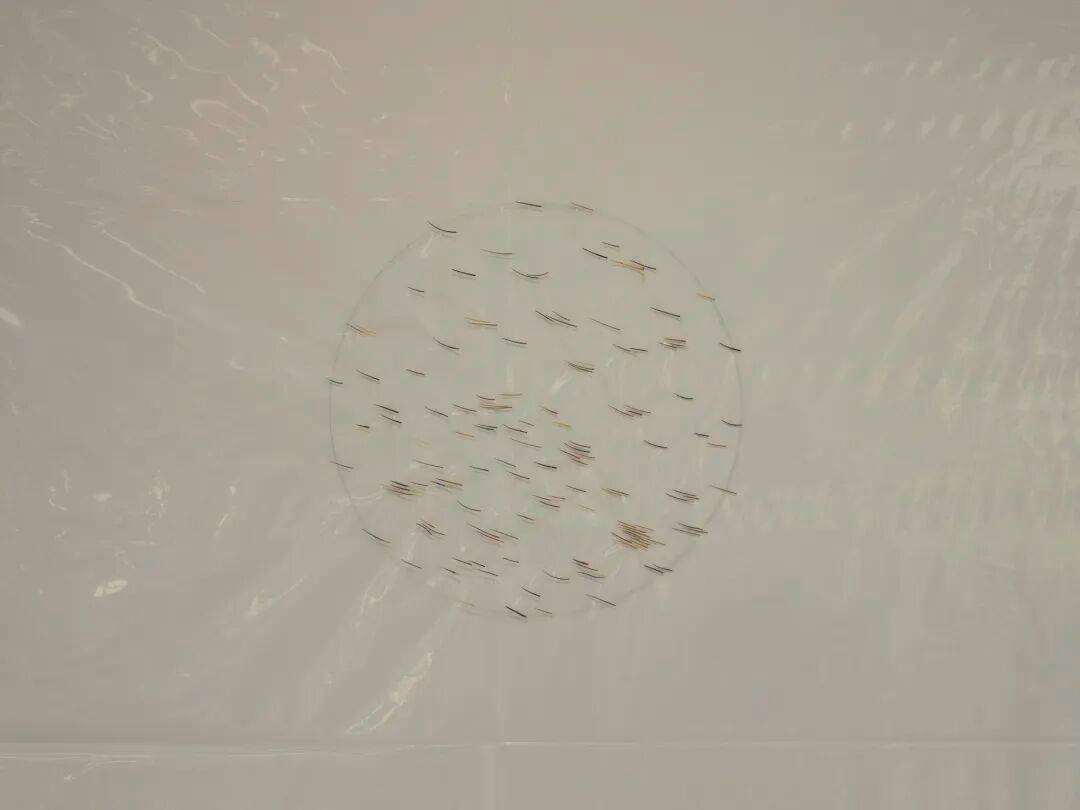
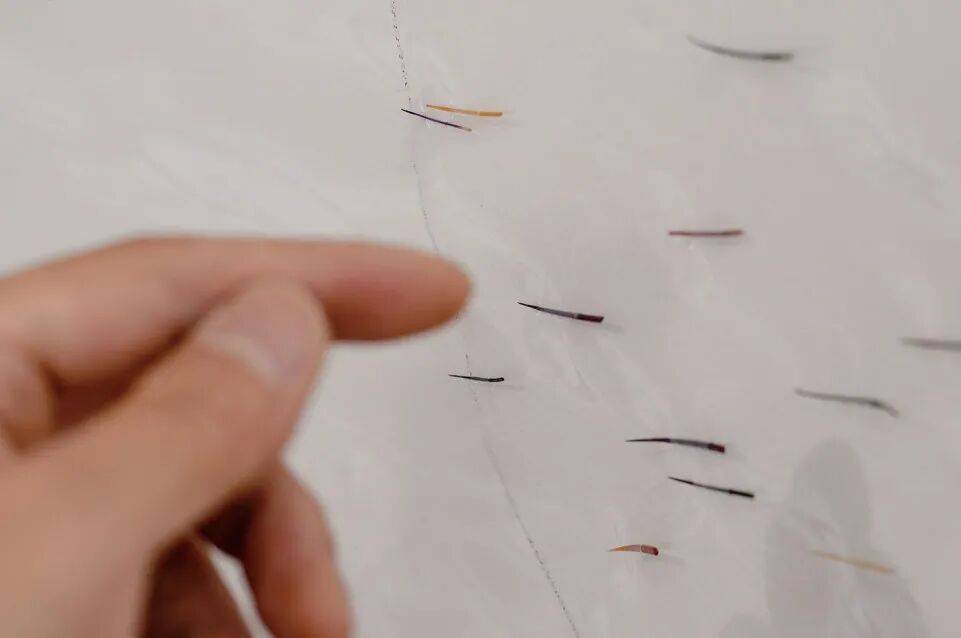
Exhibition view, Yuz Museum, 2026. Photograph: LING. On the other side of the pool is an installation by Zhang Ruyi, in which cactus spines pierce transparent sheeting.
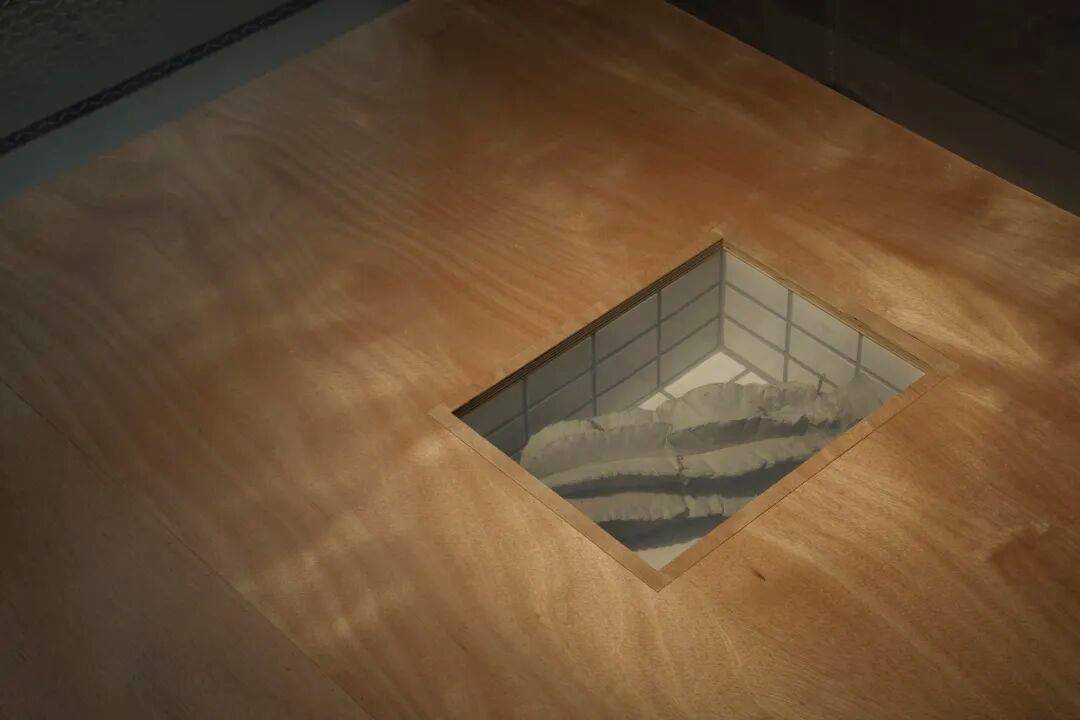
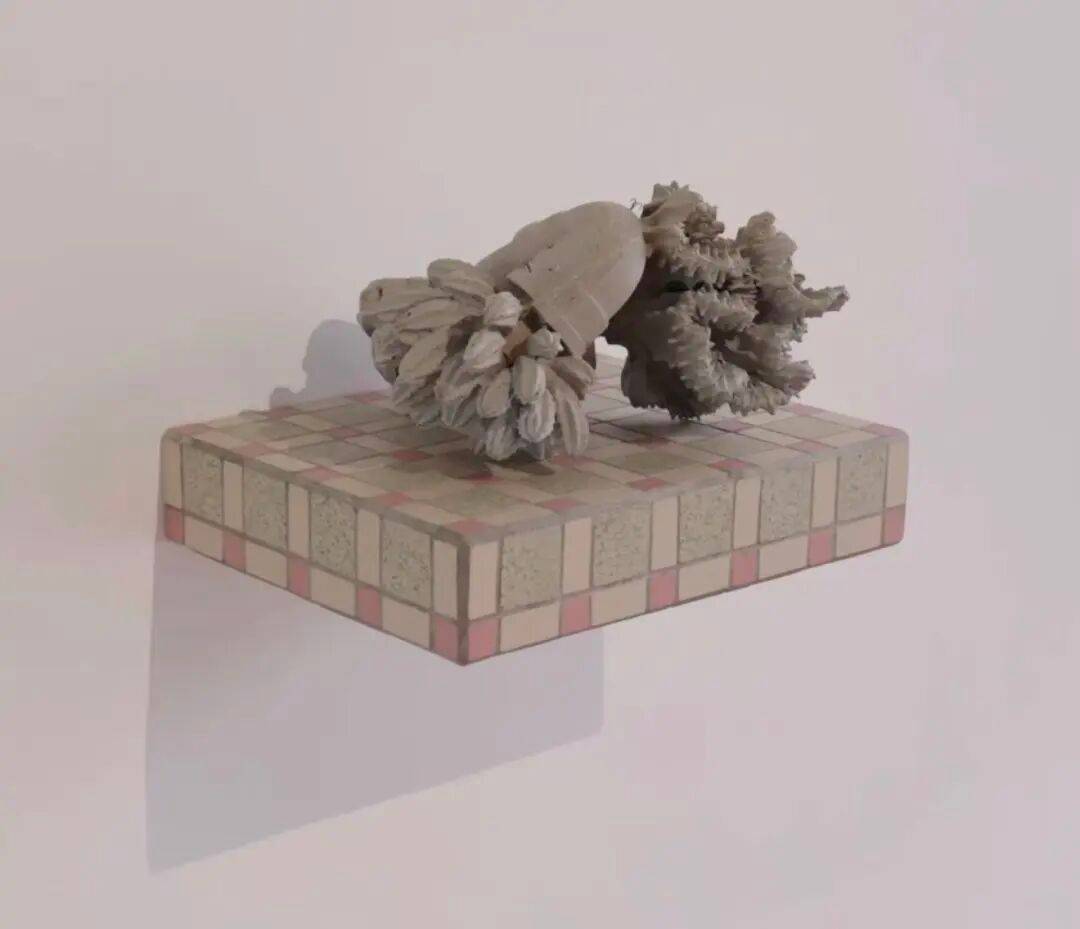
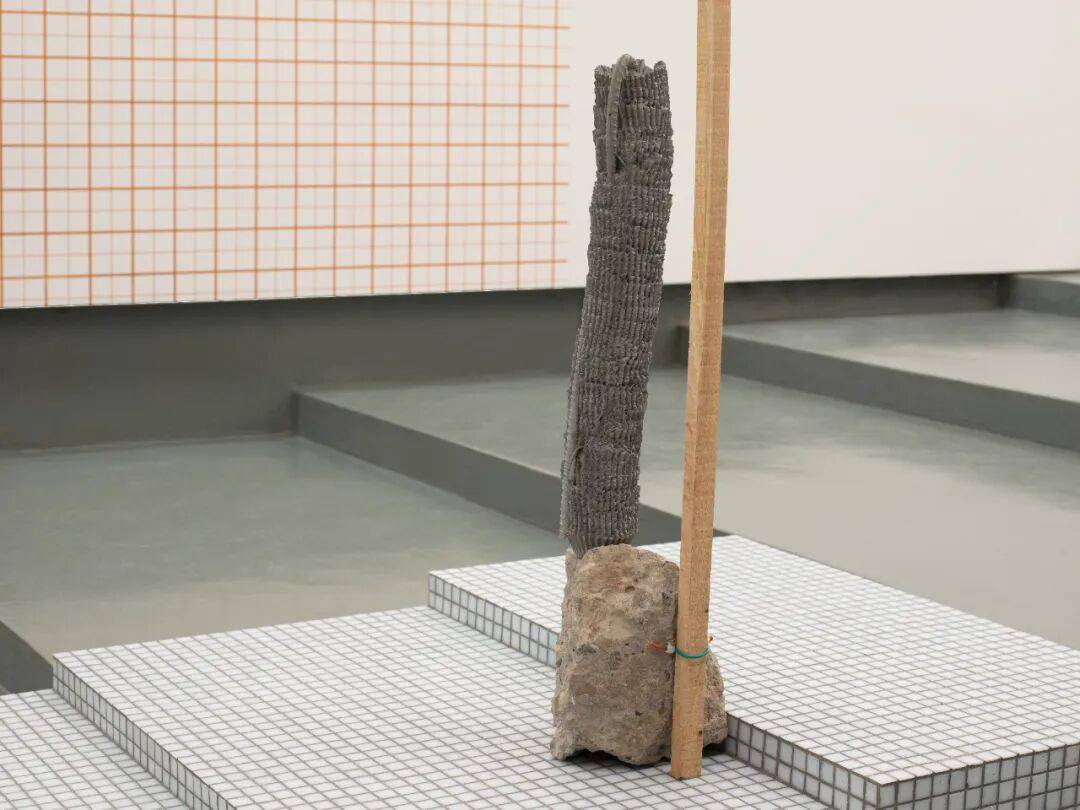
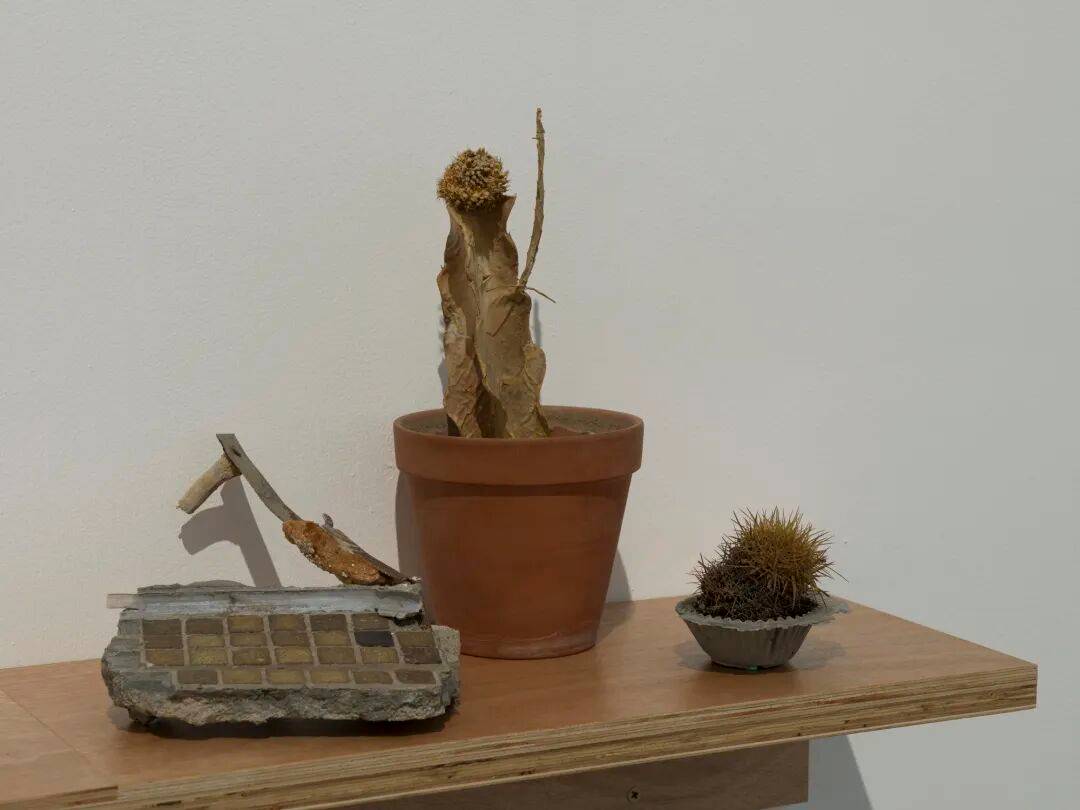
“The peeling eggshells and the cactus spines I threaded through the sheeting both come from traces of metabolism within organic matter. They share the quality of being peeled away, so we used these organic remnants as the entry point for the exhibition,” Zhang Ruyi said. Zhang Ruyi, Matter, 2026. “Liu Ren & Zhang Ruyi: Everything Is On Time, Except Time Has Never Belonged to Us.” Exhibition view, Yuz Museum, 2026. Photograph: LING. The glass gallery also contains another work by Zhang Ruyi: tiles from a building façade are embedded in the floor, among which lies an oddly shaped concrete cactus sculpture. Its “spines,” made from secondhand electrical wires, turn it into a distinctly grotesque image.
Zhang Ruyi, Modern Fossil (Pipe)–3, 2022. “Liu Ren & Zhang Ruyi: Everything Is On Time, Except Time Has Never Belonged to Us.” Exhibition view, Yuz Museum, 2026. “Liu Ren & Zhang Ruyi: Everything Is On Time, Except Time Has Never Belonged to Us.” Exhibition view, Yuz Museum, 2026. Photograph: LING. The pipe element in another work, Modern Fossil (Pipe)–3, echoes the pool in the gallery.
PVC pipes embedded in cement molds seem to sprout cactus-like forms through the cracks, like living organisms continually generated under pressure.
“A pipe is actually an invisible, concealed space within architecture. It carries wastewater from daily life over long periods; its inner wall is damp and nourishes bacteria. A cactus, by contrast, grows for long periods in a dry environment. These two entirely different ecological conditions form an inverted contrast here,” Zhang Ruyi explained. Three extremely fine fishhooks on the concrete sculpture prompt us to consider entrapment and the predicament of one’s own desire amid urban metabolism and the desires of modernity.
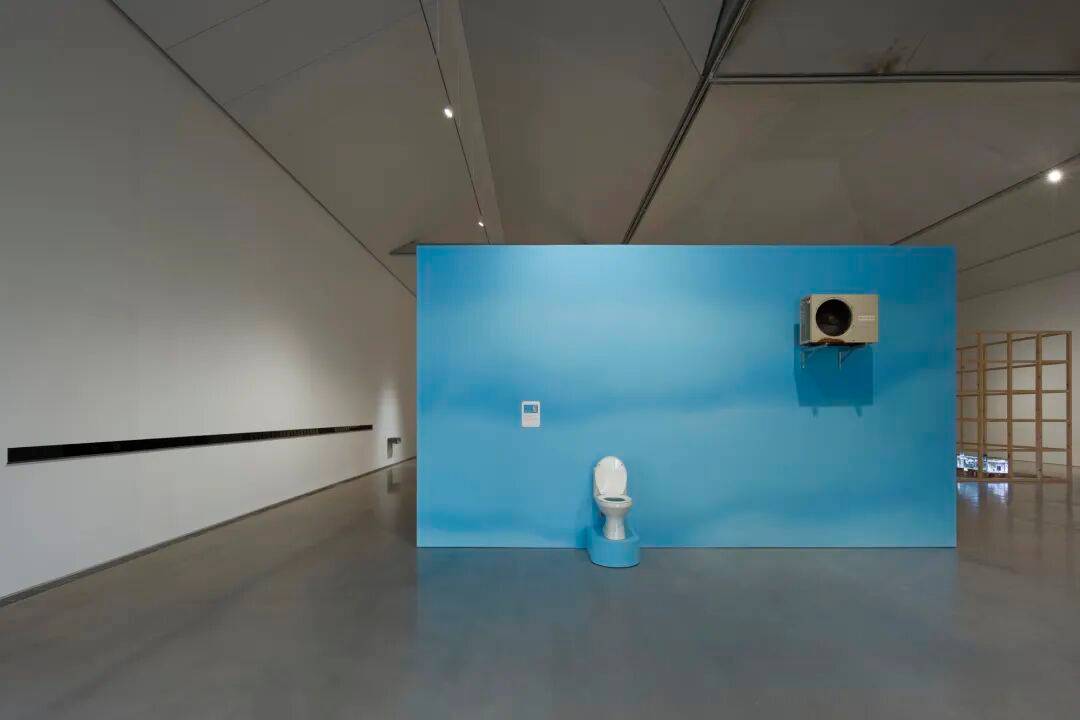
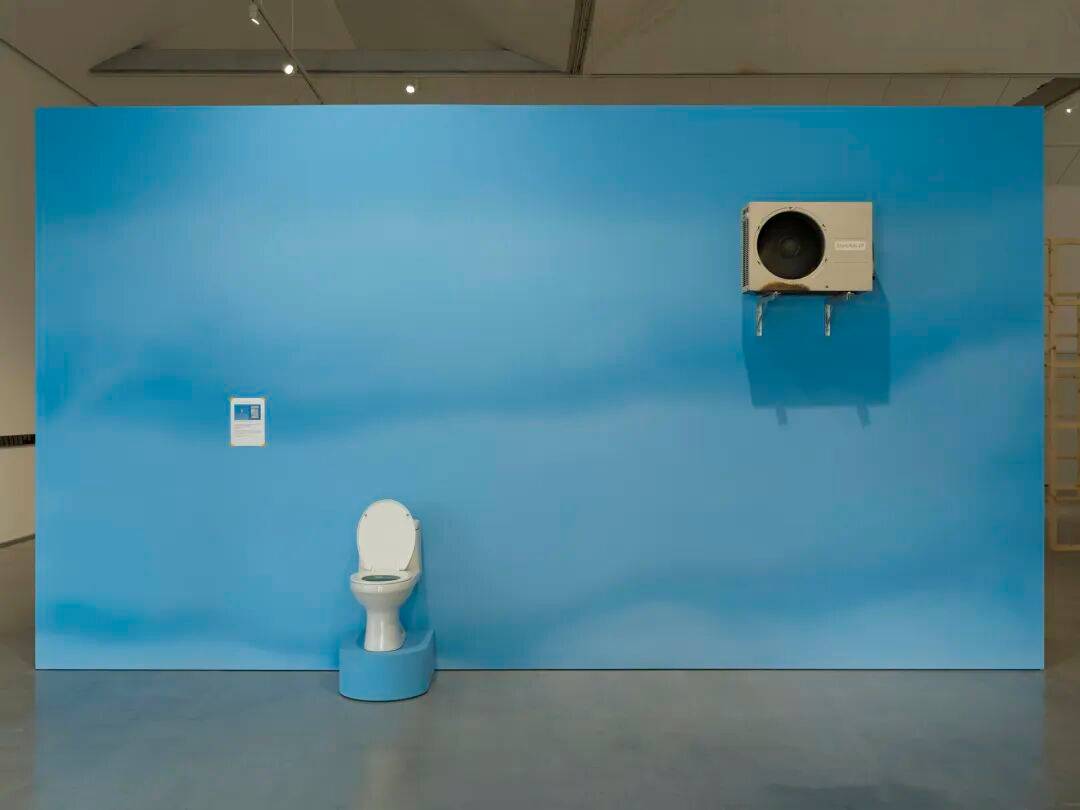
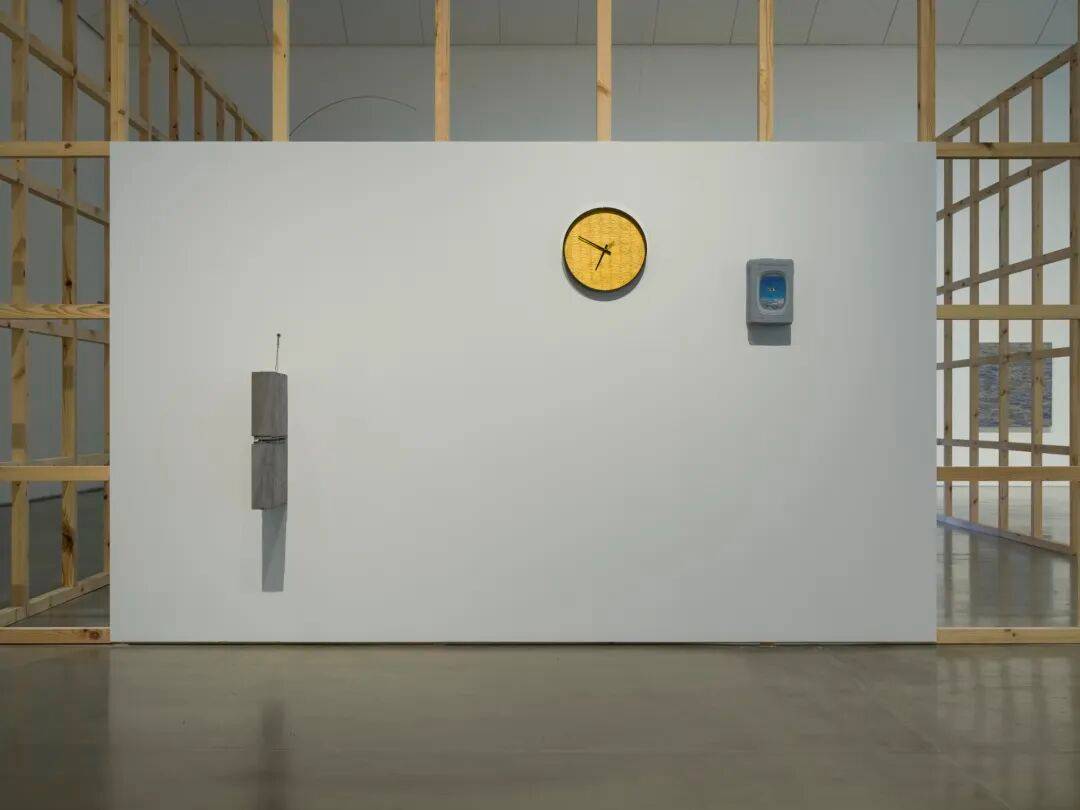
“Liu Ren & Zhang Ruyi: Everything Is On Time, Except Time Has Never Belonged to Us.” Exhibition view, Yuz Museum, 2026. Entering the main gallery, we face a wall of blue sky and white clouds. At its center is a toilet installation Liu Ren made for this exhibition; its interior is blue, and water continually circulates through it. In the upper right is one of Zhang Ruyi’s early works, an air-conditioning unit exterior. On the left is Liu Ren’s work on the disappearance of Malaysia Airlines Flight 370, made on straw paper. Because the work has itself been lost in reality, he made a “lost-and-found notice” around this double disappearance.
“The operation inside the air conditioner, the toilet’s circulating water, and the turning of the airplane engine all come from what we see as the anxiety modern technology brings to people. We also wanted to express the way individuals are swept along in everyday life,” the artists explained. Air conditioners, toilets, airplanes—ordinary, convenient modern facilities—are transformed here into a constantly operating psychic landscape, fermenting over time.
“Liu Ren & Zhang Ruyi: Everything Is On Time, Except Time Has Never Belonged to Us.” Exhibition view, Yuz Museum, 2026. Farther in is a cage-like grid space. It contains Liu Ren’s early video installation of fighting crickets and an apple sculpture, as well as an environment Zhang Ruyi created from a group of everyday scenes. Structurally, the area continues the spatial logic of the blue-sky wall. The grid is both a formal symbol of standardization in Zhang Ruyi’s early work and an echo of the sense of confinement in the fighting-cricket work Field/2011.10.01.
The dialogue between the two artists’ works is therefore intensified, even producing, through the enclosure of the space, a powerful sense of constraint and fate.
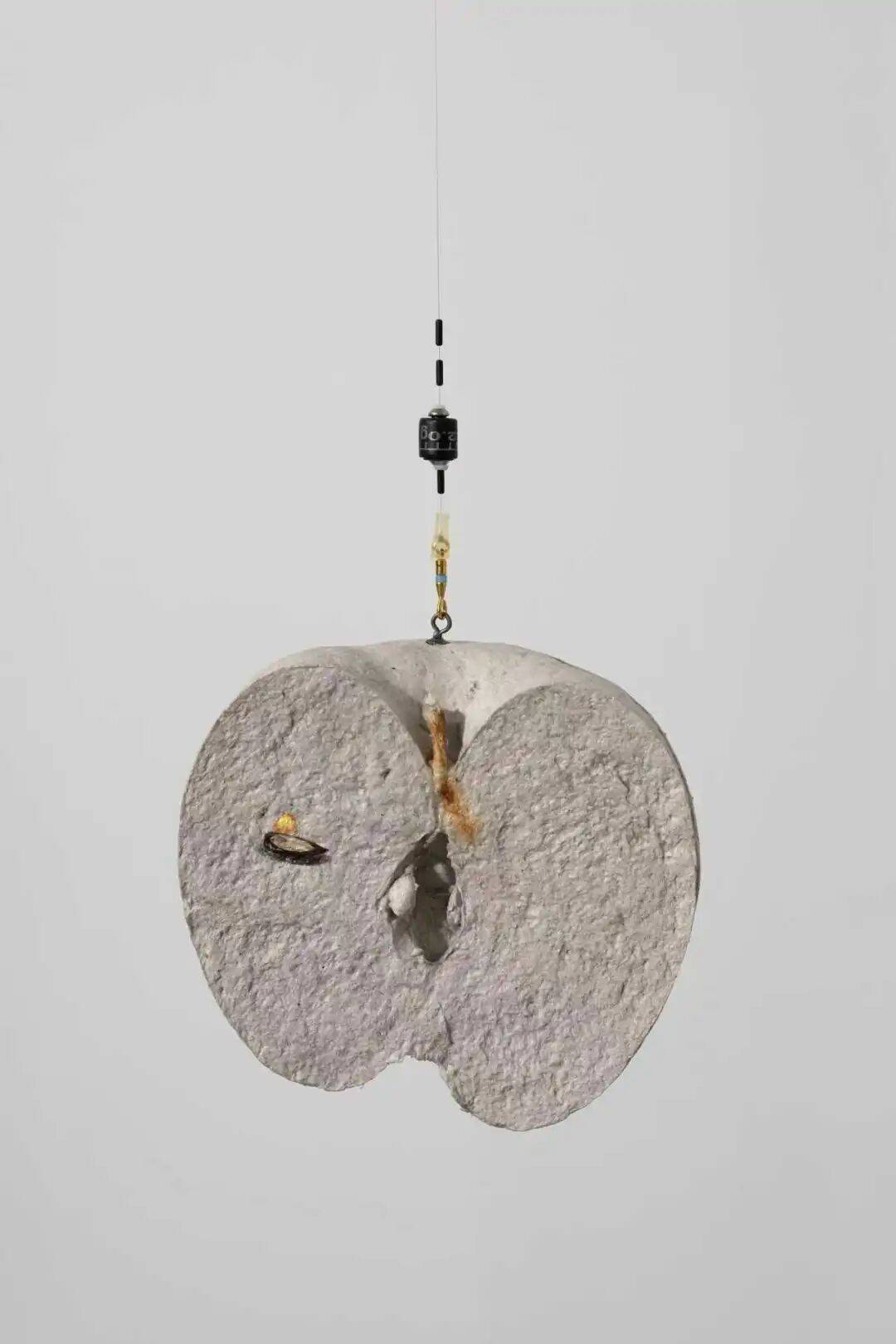
“The crickets fight within a defined area, which creates a strong sense of a cage. That sense of a cage corresponds to the invisible restraints people experience in modern society,” Liu Ren told us. Liu Ren, The Spark—Little Boy (detail), 2023. Courtesy of the artist and Don Gallery. We also see a two-meter-long fishing rod, suspended from a transparent line, casting for half an apple made of straw paper.
SECTION 03 | They are both partners and independent artists. They create their own worlds.
“The Spark—Little Boy was inspired by Prometheus stealing fire for humanity and by Adam and Eve stealing the apple. The two meanings come together, pointing to the beginning of early human civilization. Once humanity possessed the intelligence of fire and the apple, it had greater energy,” Liu Ren said. On the half apple made of straw paper, he drew an apple seed engulfed in flame, corresponding to that meaning. The slight tilt of the fishing rod and the apple’s role as bait suggest a state of danger produced by temptation.
“When human beings possess enormous power, danger exists at the same time,” he said.
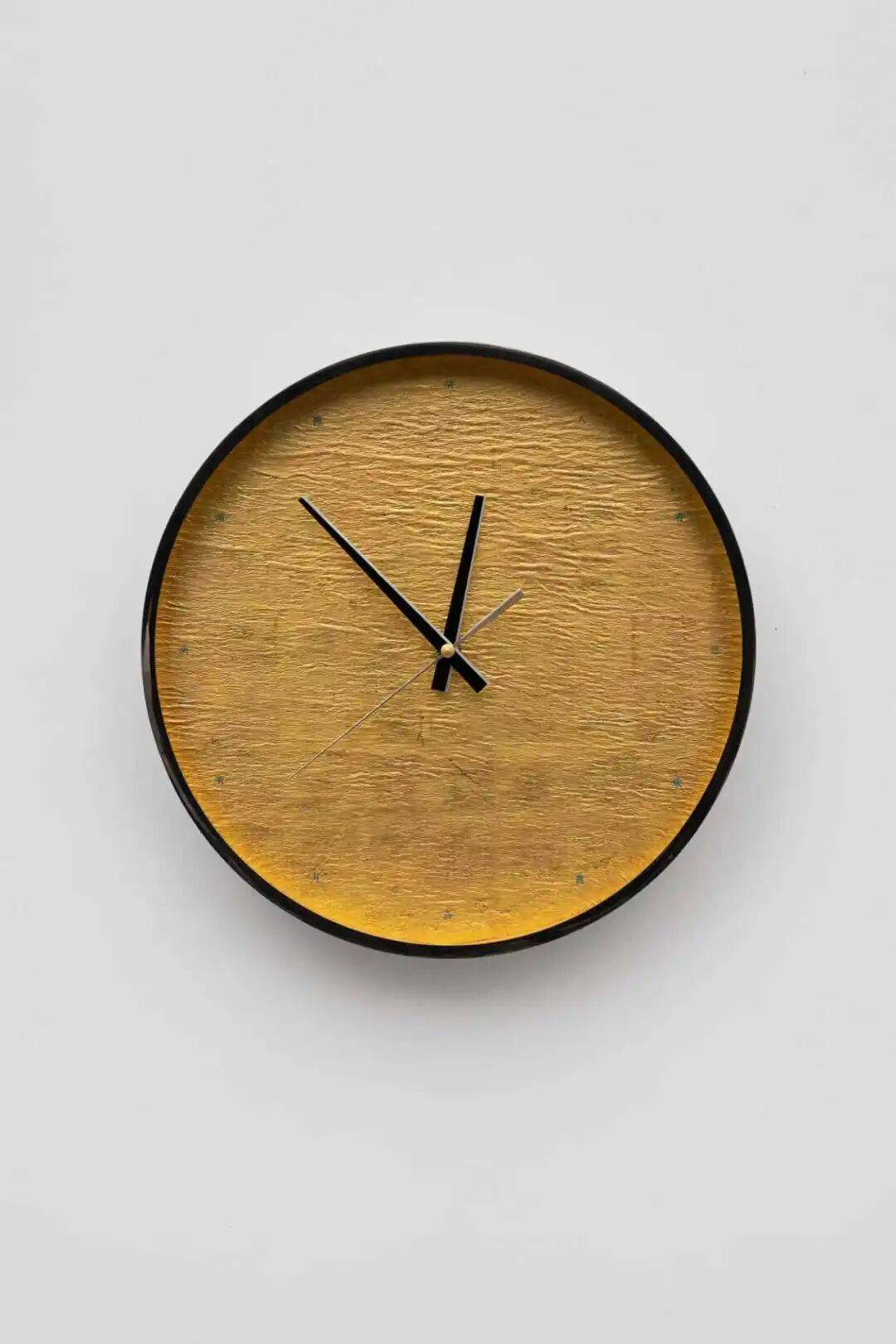
“Liu Ren & Zhang Ruyi: Everything Is On Time, Except Time Has Never Belonged to Us.” Exhibition view, Yuz Museum, 2026. The most compelling and subtly dialogic wall in the gallery holds three works: Zhang Ruyi’s The Building Opposite and the Building Opposite–2, Liu Ren’s work about a plane crash, I’m Going to Fly, and one of his clock-face installations. In The Building Opposite and the Building Opposite–2, two building models are recast in concrete and tightly bound with wire. Their formerly orderly, opposing windows have been crushed shut, severing the route toward the outside and the desire for communication.
From a distance, the work looks like a brick or a stele. It forms an ingenious echo with I’m Going to Fly beside it, a work inspired by an actual plane crash.
“Everyone has had a similar experience: before a plane takes off, you tell your family, ‘I’m taking off, I’ll stop here, I have to turn off my phone.’ In this work, a wife sends her husband the message, ‘I’m going to fly.’ But after an accident occurs, when you return to those four words, you feel the weight of life, its suddenness, and a profound, unspeakable romance,” Zhang Ruyi said.
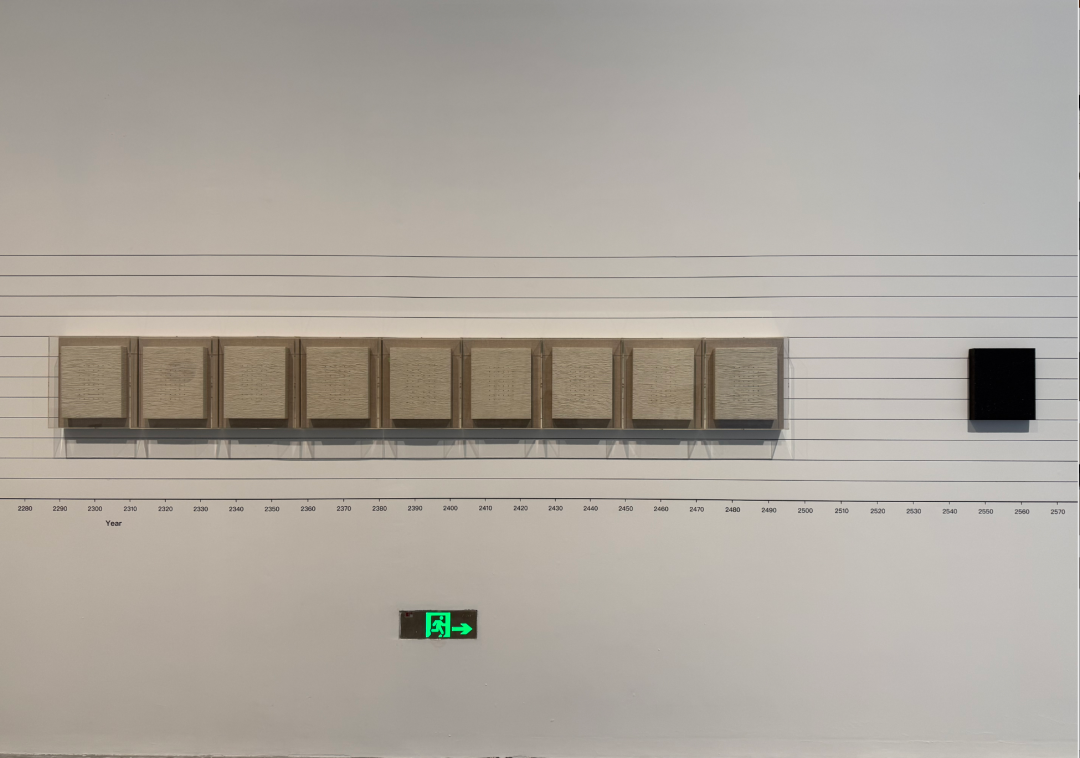
“Liu Ren & Zhang Ruyi: Everything Is On Time, Except Time Has Never Belonged to Us.” Exhibition view, Yuz Museum, 2026. Photograph: LING. Liu Ren, Sharp Edge Passing Through—“Prelude to Water Melody: When Will the Bright Moon Appear?” (Su Shi), 2023. Courtesy of the artist and Don Gallery. To its left, the hour and minute hands of a clock-face work have been sharpened like blades and continually scrape across the clock’s surface. The original twelve numerical markers have been replaced by the words “People have sorrow and joy, they meet again and part; the moon is bright or dim, it waxes and wanes.”
“Today’s technological environment is very different from the past. Before the internet, interaction between people required a physical space in which they were present. That sense of presence is broken in these works. Two buildings are bound together and appear close, but may also be separated. Yet if you say they are separated, they can still connect through technology. When the wife messages her husband, their physical spaces are far apart, but communication devices make them feel close.”
Liu Ren offered us another way of looking at this wall.
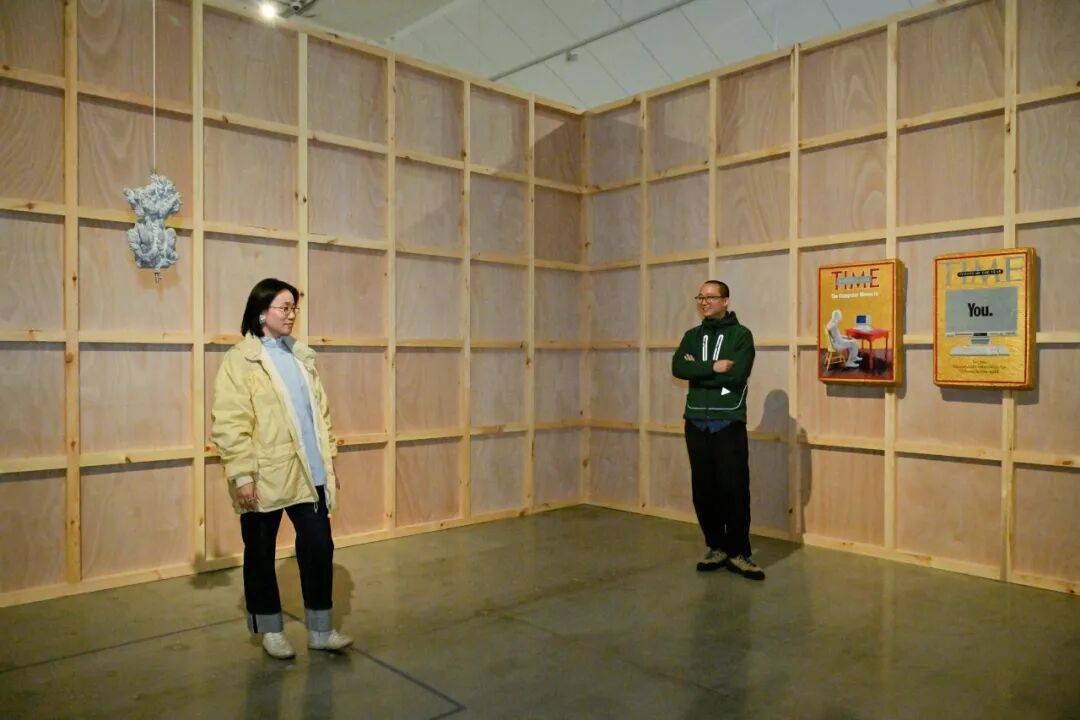
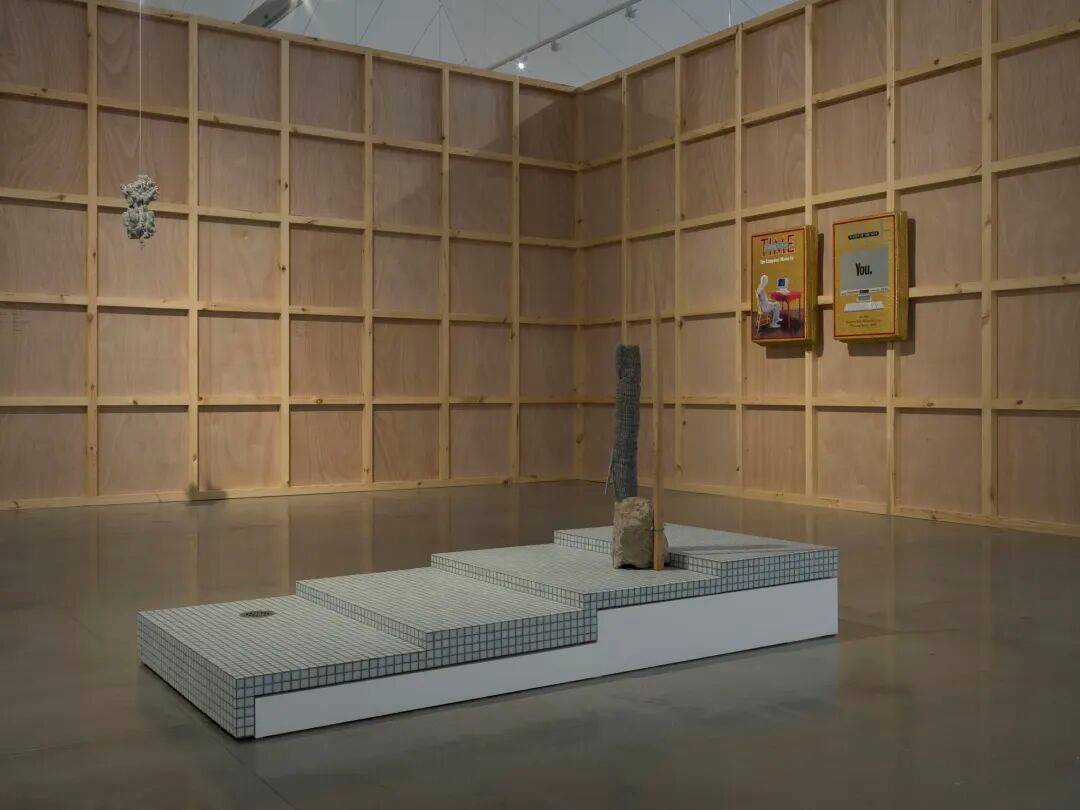
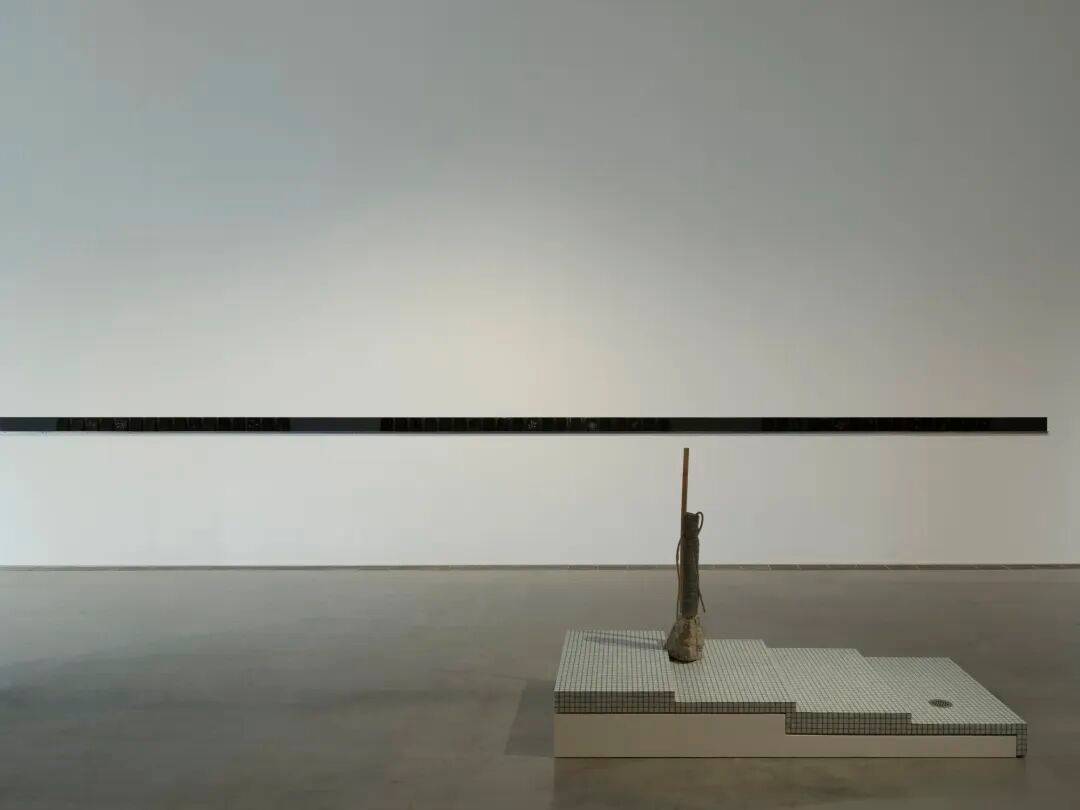
“Liu Ren & Zhang Ruyi: Everything Is On Time, Except Time Has Never Belonged to Us.” Exhibition view, Yuz Museum, 2026. Another compelling juxtaposition is Zhang Ruyi’s Daily Accessories and Liu Ren’s work concerning the cover of Time magazine. Daily Accessories is a stepped sculpture with bathroom floor drains embedded in its steps and tilted stacks of cake cups piled on top. The form grew from the artist’s habit, during a residency in Switzerland, of continually stacking the paper cups left after eating cake.
“Daily Accessories looks somewhat different visually from the cactus and tile sculptures people know better. Here, another set of steps is layered onto the steps. The steps found in many public areas have a very strong sense of circulation, directing people toward a place. But these steps also contain a bathroom floor drain, symbolizing a highly personal, enclosed, inward physical space of everyday life.”
Zhang Ruyi told us. The higher the many cake cups are stacked, the more tilted and uncontrollable the form becomes, with a precarious, almost collapsing quality. Zhang Ruyi, Daily Accessories, 2022. Private collection. Courtesy of the artist and Star Art Museum.
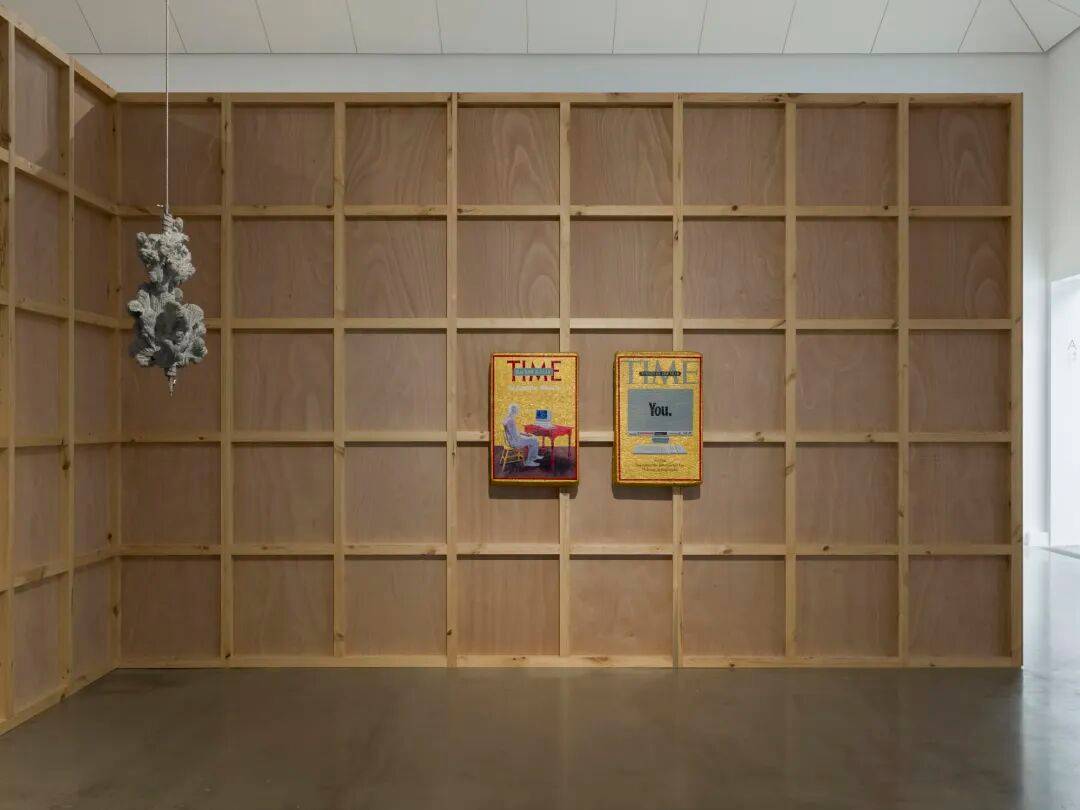
“Upward-facing sculpture is a symbol of power and force. The rebar running through it also implies a condition of urban expansion. When we were selecting works, we felt that this upward movement could correspond to my two works concerning Time magazine,” Liu Ren told us.
“Liu Ren & Zhang Ruyi: Everything Is On Time, Except Time Has Never Belonged to Us.” Exhibition view, Yuz Museum, 2026. One is Golden Age—1983.01.03. In 1983, the personal computer appeared on the cover of Time for the first time. The other is the 2006 work Golden Age—You, in which the power of user-generated content in the Web2.0 and social-network era became the magazine cover.
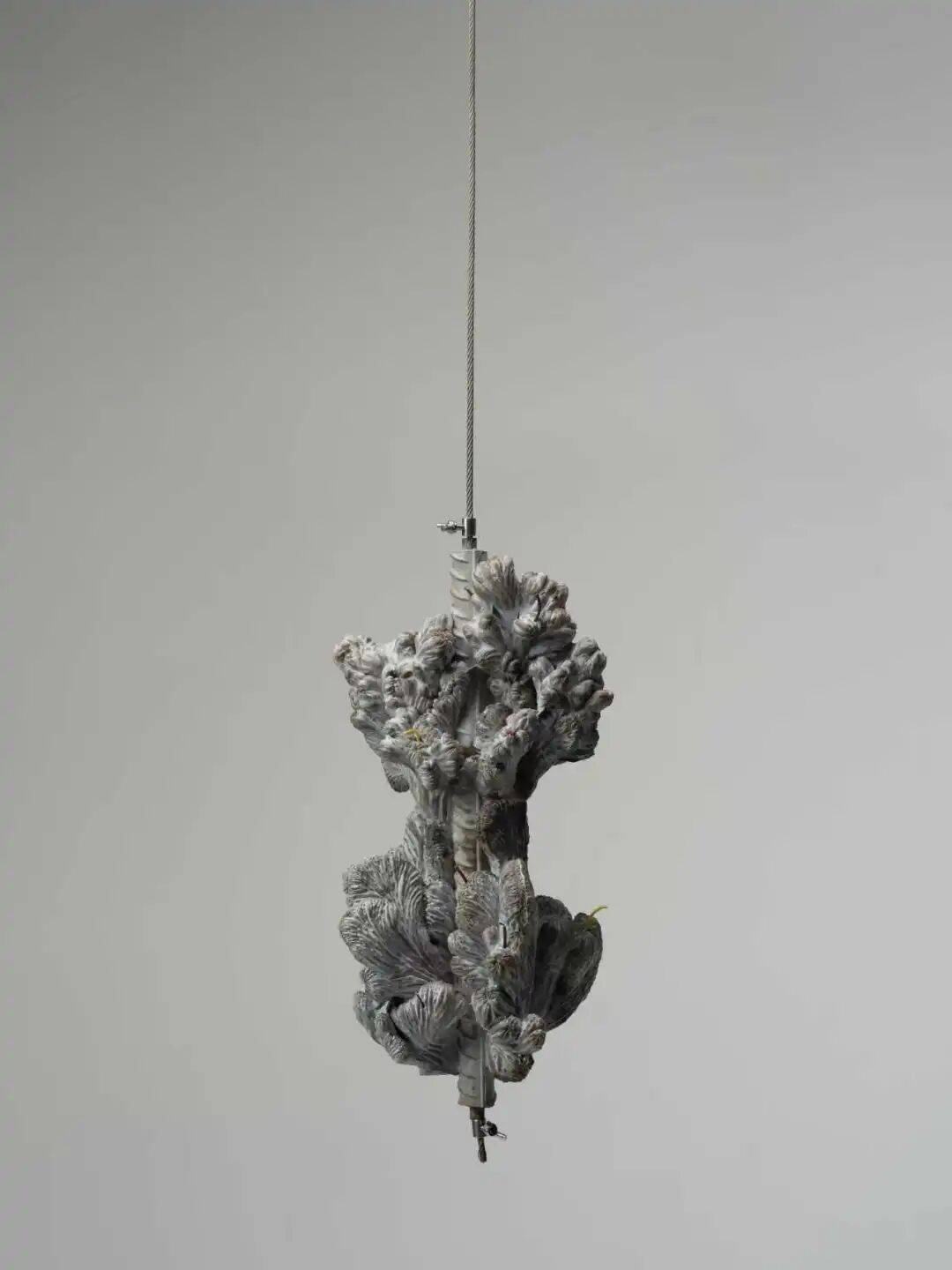
“Both moments symbolize humanity’s continual departure from its own body toward a purer, more virtual space.” Hung diagonally across from them is Dry Withered Island, the beginning of Zhang Ruyi’s “Suspended” series and one of her most important works. Zhang Ruyi, Dry Withered Island (detail), 2022. Courtesy of the artist and Don Gallery. “Cement itself is an interesting material. Before it meets water, it is a light industrial powder. After water is added, it becomes extremely hard as the moisture slowly evaporates, while retaining a certain fragility.
“That transformation from soft to solid is important to me. In this work, I combined different plant forms with the structure of rebar. The properties of cement allow it to naturally coagulate into form during the process, turning an originally invisible condition into a concrete shape,” she explained. The parts of the sculpture that originally resembled “spines” have been replaced by wires and exposed copper strands. They look like antennae, or like some extended defensive structure.
The substitution creates an interwoven relationship between organic forms and industrial materials. The wires correspond to the Time magazine covers in Liu Ren’s work and to technology networks and modern life.
“Liu Ren & Zhang Ruyi: Everything Is On Time, Except Time Has Never Belonged to Us.” Exhibition view, Yuz Museum, 2026. “At the beginning of the exhibition, we did not have a very firm preconception. But we had one basic principle: we hoped our works could coexist harmoniously while also forming a dialogue with each other,” Liu Ren told us. Zhang Ruyi added, “When the museum invited us to exhibit, we initially had no idea where to begin.
“Our practices are completely independent in everyday life, so how could we make a two-person exhibition with a dialogue in the true sense? But as we continued sorting through the work, we found that its threads contained hidden points of correspondence, and the process became increasingly natural.”
“Liu Ren & Zhang Ruyi: Everything Is On Time, Except Time Has Never Belonged to Us.” Exhibition view, Yuz Museum, 2026. Across their more than twenty-year careers, Liu Ren and Zhang Ruyi’s languages have continued to change within their respective fields. Before finishing graduate school, Zhang Ruyi began cultivating cacti herself and spent entire days drawing them on industrial grid paper. Through observation and depiction, the plants’ forms gradually began to change.
“At the time, I felt that the cactus was a metaphor for a kind of portrait. Around 2011, during this same period, I began using the most basic materials in a space—cement and concrete, for example—to transform an old residential room on Shanyin Road in Shanghai. I brought these materials back into that specific space to reconsider the relationship between people and the world.” Zhang Ruyi, personal project, Renovation: Crushed Stone, 2020, image source: online. Later, the cactus gradually “walked out” of the two-dimensional plane, where it had initially carried the meaning of a portrait, and became three-dimensional sculpture.
Zhang Ruyi’s use of materials and her artistic interests also expanded from interiors into the external environment, turning increasingly toward urban conditions: city ruins, secondhand materials from buildings, and the stories behind them. In traces, she continually searches for a spatial perception connected to individual identity and emotion. In 2020, for example, she presented the personal project Renovation: Crushed Stone on Tongren Road in Shanghai.
“Over the past three to five years, plastic sheeting has become more important and more widely used in my work. What attracts me most is its condition of being visible but never reachable—a more implicit, difficult-to-articulate quality,” Zhang Ruyi told us.
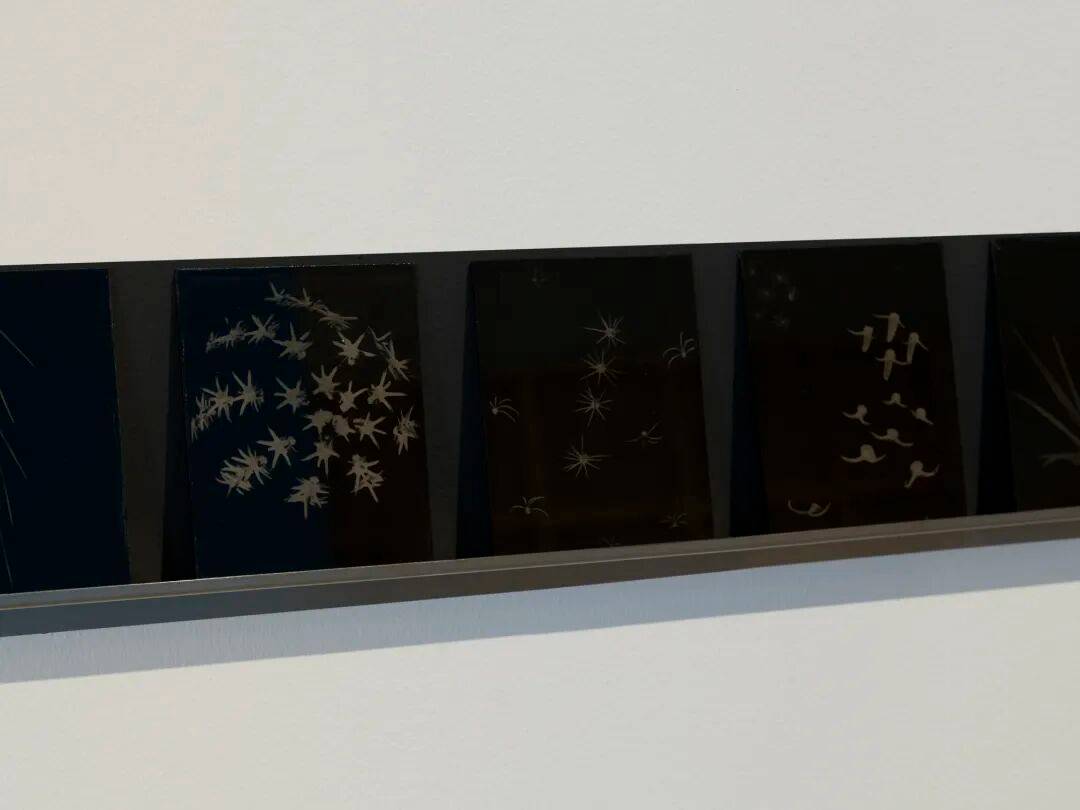
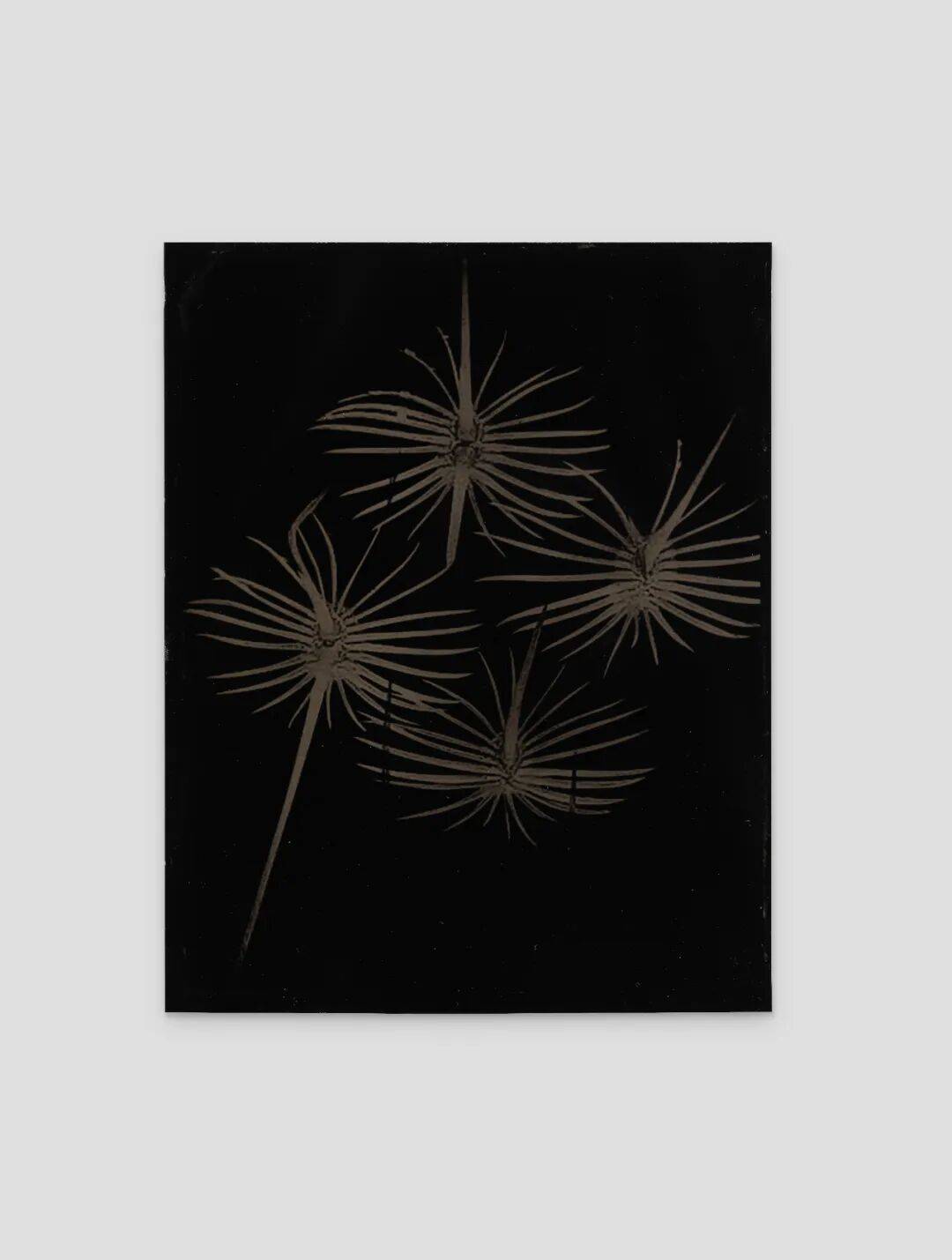
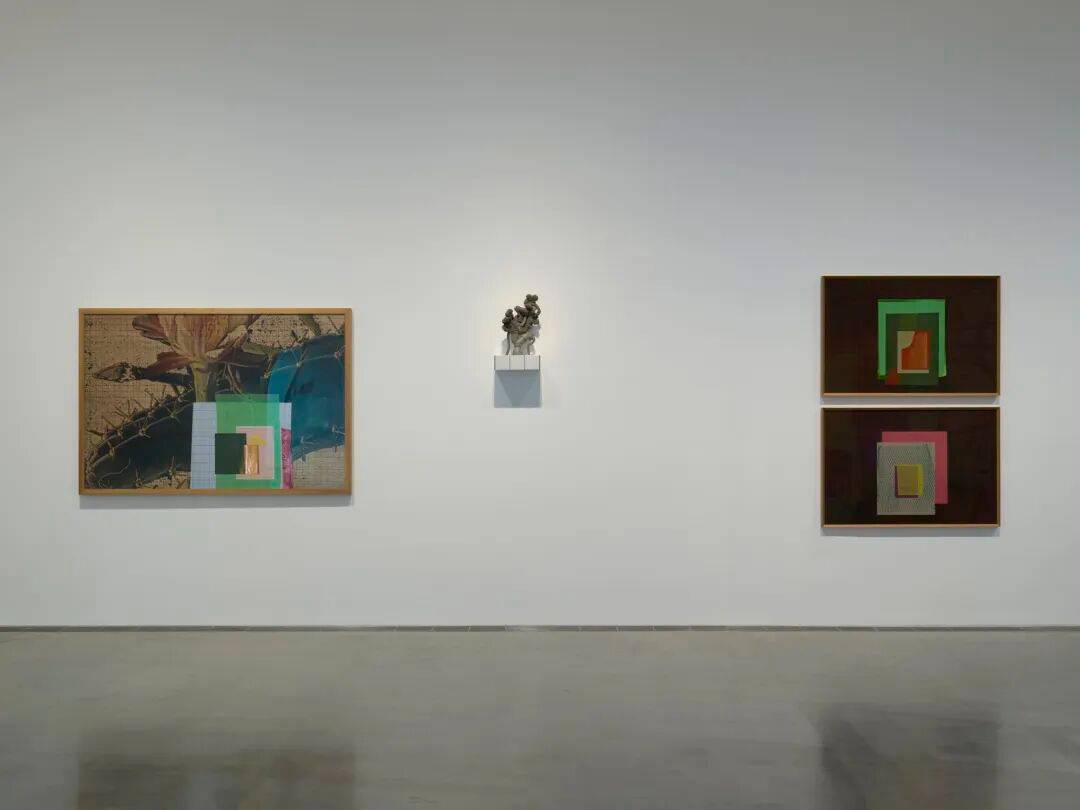
“Liu Ren & Zhang Ruyi: Everything Is On Time, Except Time Has Never Belonged to Us.” Exhibition view, Yuz Museum, 2026. Zhang Ruyi, Weaving Shadows, 2022–2026. Courtesy of the artist and Don Gallery. At the same time, she has been practicing more in two-dimensional work. Weaving Shadows, on view in the gallery, is one of the artist’s significant recent series.
“This series uses negatives from wet-plate photography to recast different cactus images. It removes the subject completely, leaving only the spines. They look like slices under a microscope, or like some kind of deep-sea organism; they have become softer, or more buoyant. In some of the new sections I have expanded recently, the forms of spines from different species are collaged into a state resembling a starry sky.”
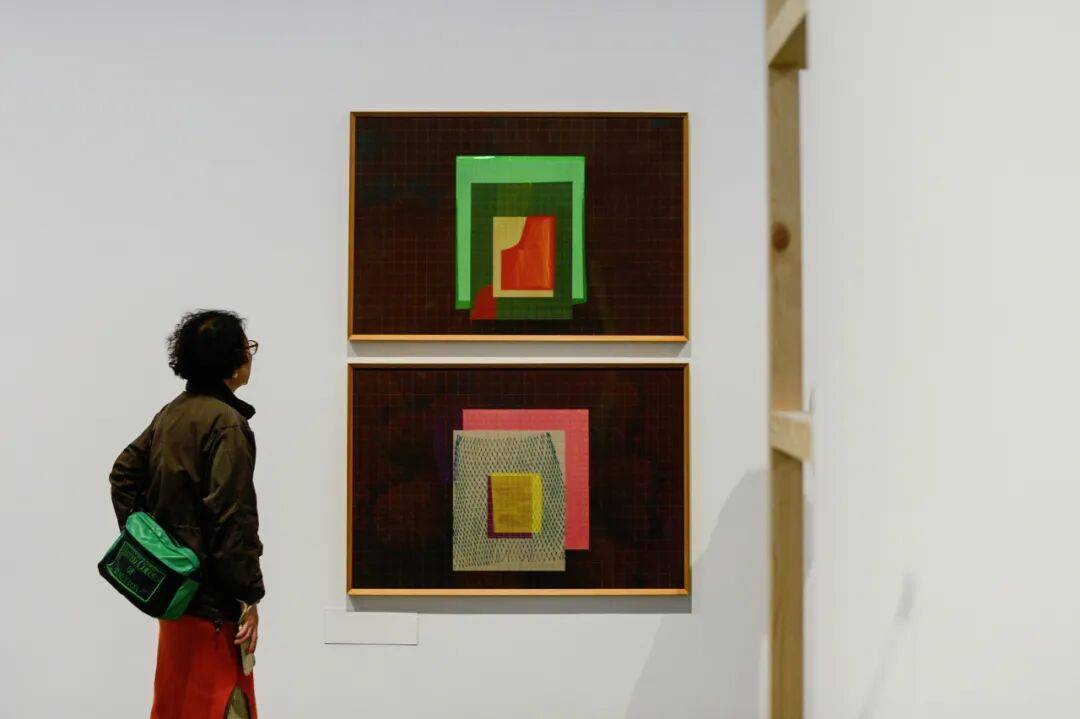
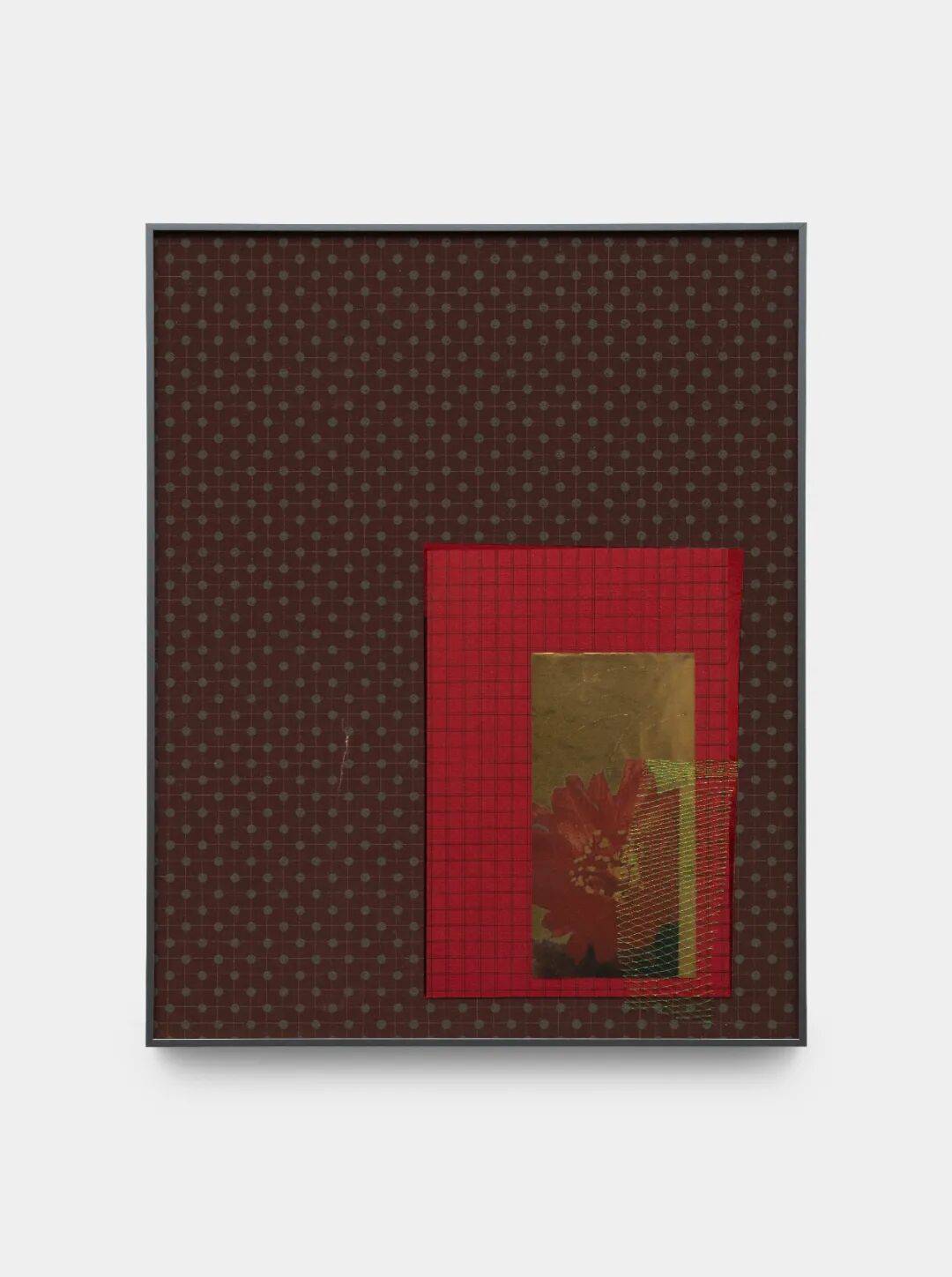
“Liu Ren & Zhang Ruyi: Everything Is On Time, Except Time Has Never Belonged to Us.” Exhibition view, Yuz Museum, 2026. Zhang Ruyi, Polishing (Shadow Ore), 2025. Courtesy of the artist and Don Gallery. Polishing (Shadow Ore) was made especially by Zhang Ruyi for this exhibition.
“The backing board in the work is actually sandpaper, the kind you can see in any hardware store. Sandpaper can make objects smooth, but it also leaves traces. This is a metaphor. In a high-density city like Shanghai, individual social desires are constantly being worked and worn in this way, and those traces continually shape us,” she said.
“Liu Ren & Zhang Ruyi: Everything Is On Time, Except Time Has Never Belonged to Us.” Exhibition view, Yuz Museum, 2026. Liu Ren told us that when he looks back at the threads of his practice, they are often accompanied by the individual anxieties he faced at the time.
“The early points of entry were often small and concrete. Finding a Sense of Security, for example, described the helplessness I felt as an individual within the machinery of the era and the institutional system while learning English. As time passed, that helplessness shifted onto the larger stage of life, becoming increasingly entangled with the contradictions and ruptures among technological development, lived reality, and the impermanence of life,” Liu Ren said.
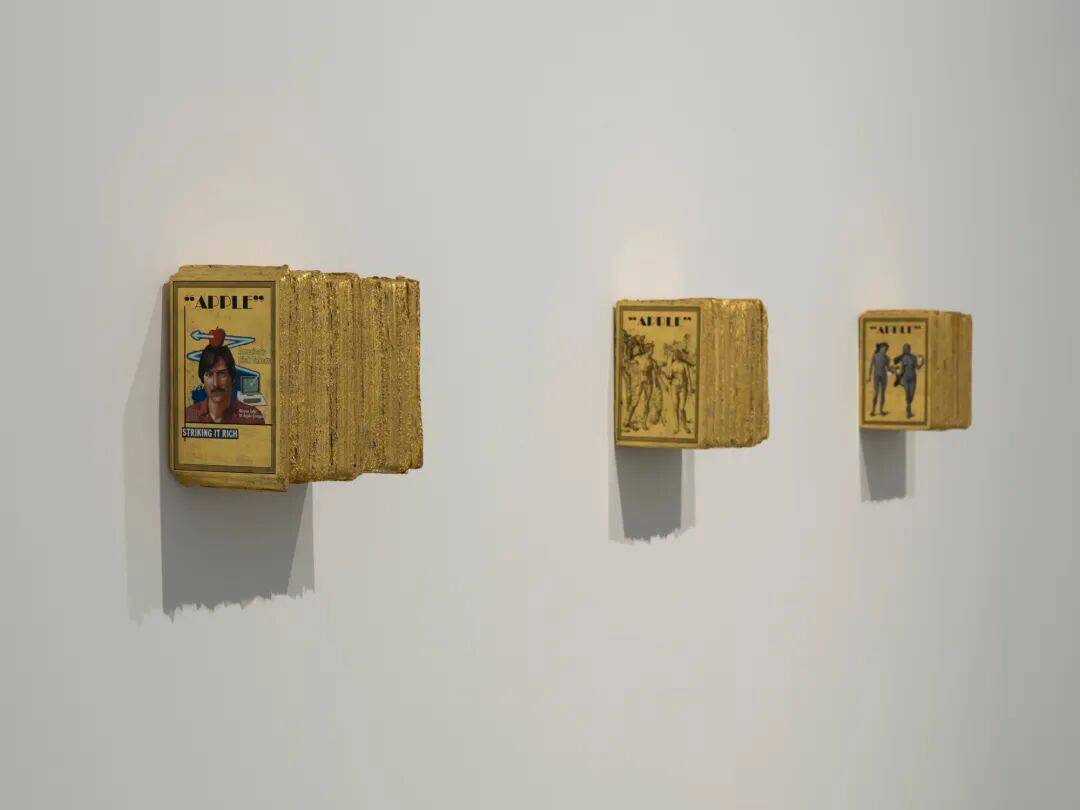
“Liu Ren & Zhang Ruyi: Everything Is On Time, Except Time Has Never Belonged to Us.” Exhibition view, Yuz Museum, 2026. The image shows the original straw-paper series. Liu Ren, “Forbidden Fruit” series, 2018–2026. “Liu Ren & Zhang Ruyi: Everything Is On Time, Except Time Has Never Belonged to Us.” Exhibition view, Yuz Museum, 2026. Photograph: LING. Liu Ren’s later straw-paper series came to exist like sculpture—for example, a series of screen-shot paintings of straw-paper covers and double-sided straw-paper apple covers. These works began around 2011 with a thin sheet of toilet paper.
“Over more than ten years of development, they gradually evolved into ‘sculptural brick books’ consisting only of covers that cannot be opened. The covers might present plane crashes I had followed for years, moments displaying human desire and vulnerability, or juxtapositions and reflections involving technology and religion. In 2018, I began trying to transform the specific content of screen shots on straw-paper covers into more abstract forms and expressions. The ‘Sea’ series constructed from ‘PantaRhei’ began there.
The apple-fishing installation The Spark—Little Boy, made in 2023, continues this line of inquiry. As a material, straw paper has become increasingly important for its physical and sculptural qualities over nearly 20 years of development.
“Liu Ren & Zhang Ruyi: Everything Is On Time, Except Time Has Never Belonged to Us.” Exhibition view, Yuz Museum, 2026. Photograph: LING. What moves us in this two-person exhibition is not only the artists’ work, but also the example of their relationship: close, without consuming each other; traveling together, without overlapping; in love, while remaining independent. As the exhibition title says, everything is on time. What is truly precious is what time has not carried away.