A New Private Museum from a Chinese-Thai Beverage Dynasty
In a former industrial district of Bangkok, Dib Bangkok turns a family’s two-generation devotion to art into a public encounter with the contemporary......
By / Xirui Huang · 12 min read
What is Dib Bangkok, and what does its inaugural exhibition show?
Dib Bangkok is a 12,000-square-metre private contemporary art museum on Sukhumvit Soi 40, created across two generations of the Osathanugrah family. Its inaugural exhibition, (In)visible Presence, opened in late December 2025 with 81 works by 40 Thai and international artists across the plaza and 11 galleries, organized around the unseen, the onset and global conversation.
Industry News | Dib Bangkok: Thailand’s First Private Contemporary Museum
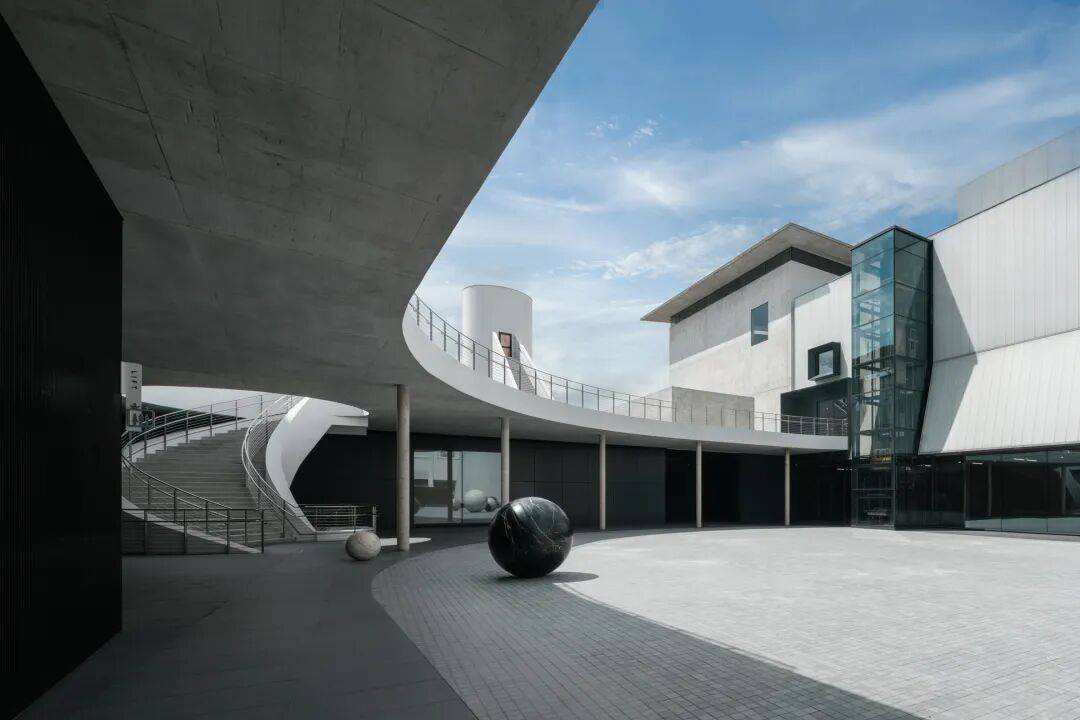
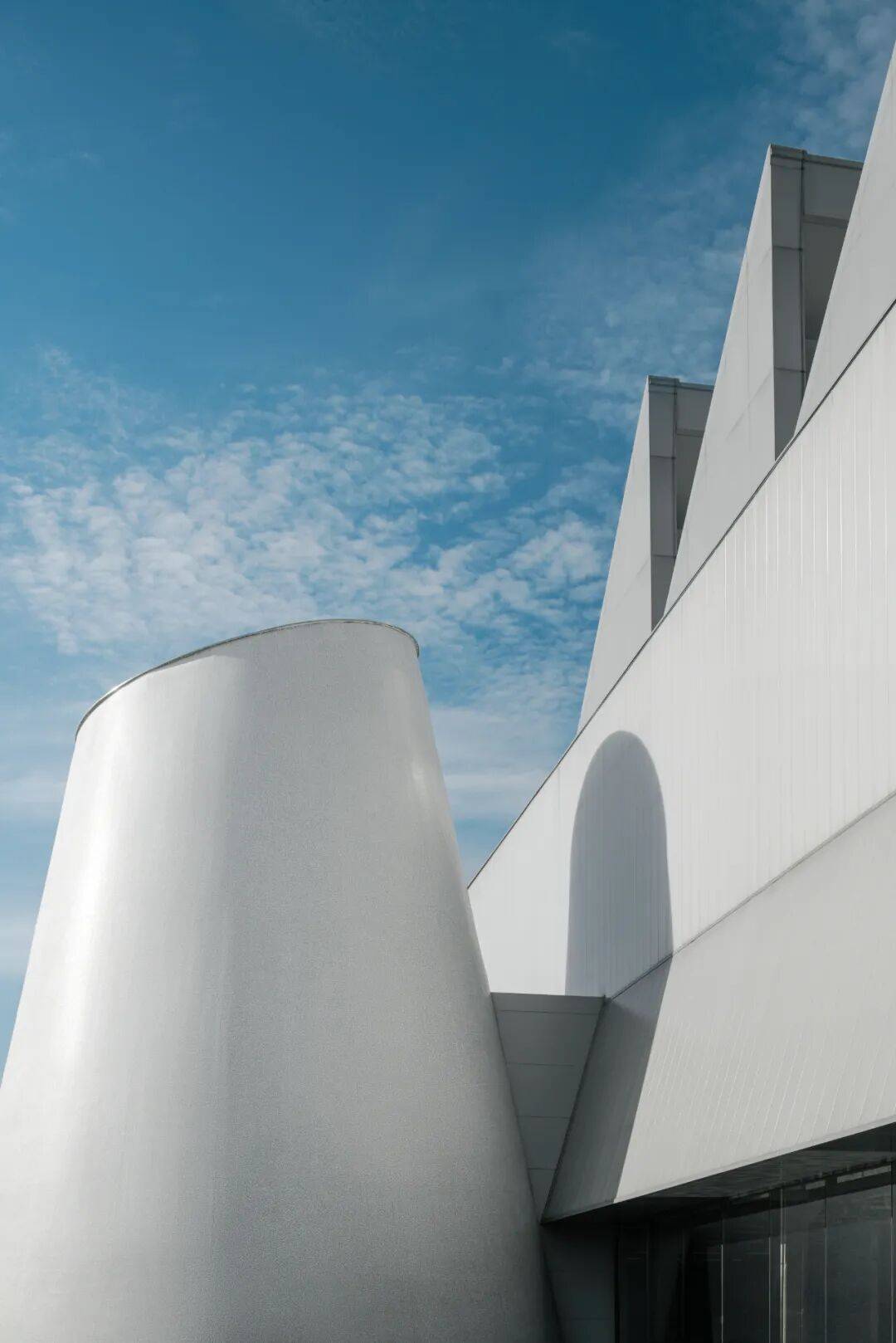
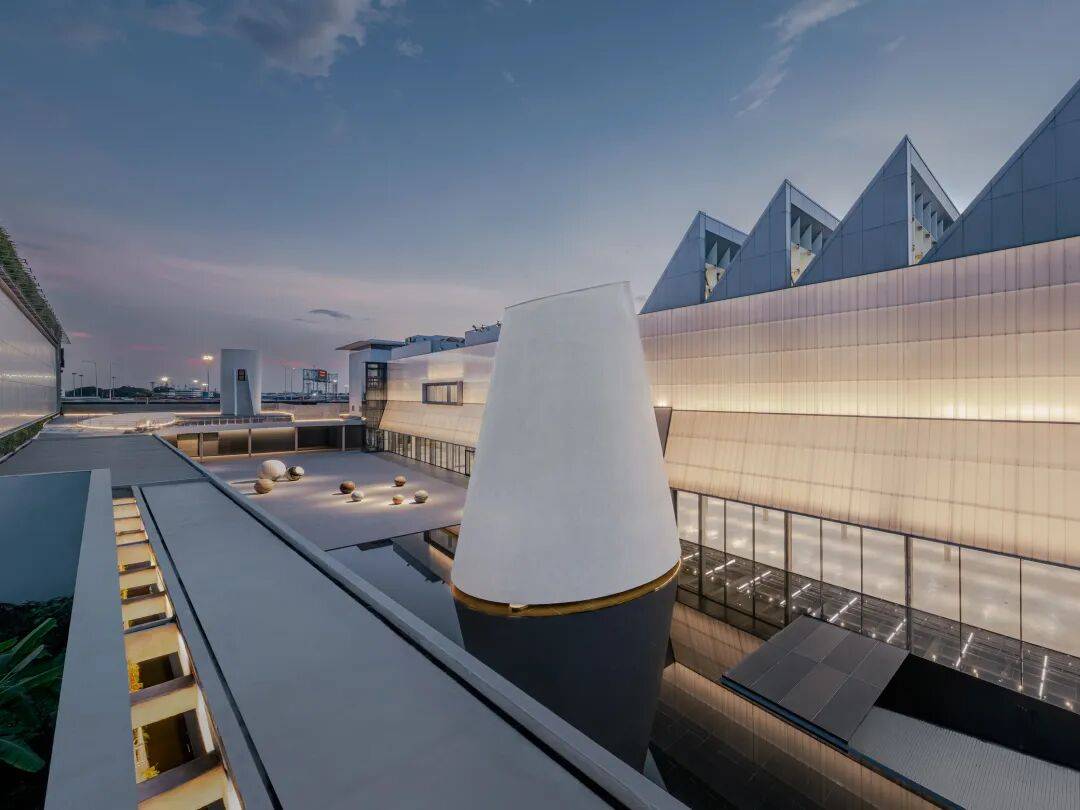
In Bangkok’s old industrial district, on Sukhumvit Soi 40, a three-story warehouse glows softly white in the daylight. Cylindrical chimneys, nostalgic Sino-Thai window grilles, and a sawtooth roof seem to have “grown” toward the sky above the main gallery. Daylight pours through skylights on the north side; a pool in front of the plaza glows continuously, like a gentle, persistent summons. This is Dib Bangkok—Thailand’s first large private museum devoted to international contemporary art, and the artistic ambition, spanning two generations, of the Osathanugrah family, Thai Chinese descendants of Fujian.
The late Petch Osathanugrah appeared on ARTnews’s top collectors list, the ARTnews 200, in 2019. His collection numbered more than 1,000 works and included pieces by Pablo Picasso, David Salle, and Damien Hirst. He also supported, early on, many of Thailand’s internationally celebrated artists, including Rirkrit Tiravanija and Apichatpong Weerasethakul.
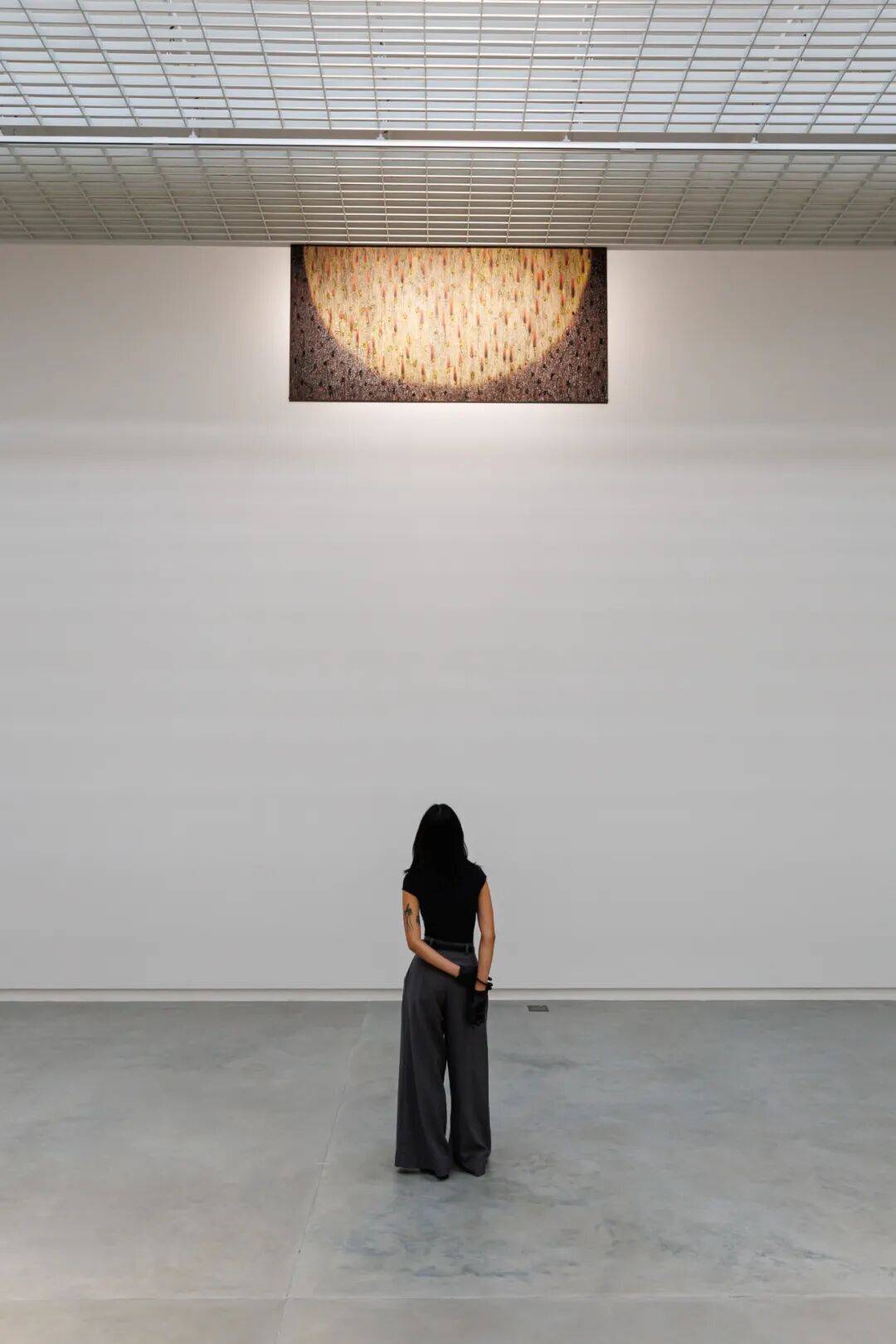
Dib Bangkok exterior, photographed by W Workspace, 2025. Installation view of “(In)visible Presence,” Anselm Kiefer, Der verlorene Buchstabe, 2019, photographed by Auntika Ounjittichai, 2025. At the end of December 2025, the museum opened to the public with “(In)visible Presence,” its inaugural exhibition. Spanning the museum plaza and 11 galleries, it presents 81 works by 40 important artists from Thailand and around the world.
SECTION 01 | Create an ocean where more people can learn to swim
“At Dib Bangkok, we think of art as an ‘ocean’: people with experience can dive into the deep, but there are many other ways to approach the sea—you can surf, fish, paddleboard, kayak…. Everyone has a different way of entering.” Purat (Chang) Osathanugrah, the museum’s chairman and the son of its late founder Petch, told us with a laugh. “I’ve thought of many metaphors, but ‘ocean’ really suits Thailand.”
A week before the opening, we spoke with Dib Bangkok chairman Purat Osathanugrah and its first director, Tezuka Miwako, about the birth of Thailand’s first private museum of contemporary art. Installation view of “(In)visible Presence,” Alicja Kwade, Pars pro Toto, 2020, photographed by Auntika Ounjittichai, 2025. “I don’t know if you remember the villain in Disney’s Hercules?”
“His hair looks like flames. That’s the state everyone at the museum is in now.” Purat laughed as he described the frantic preparations before the opening. He is the fifth-generation heir to the Fujianese Thai Chinese Osathanugrah family, which has lived in Thailand for more than 150 years. It is the eighth-ranked family in Thailand on Forbes’s list, with business interests including beverages, pharmacies, and personal-care products.
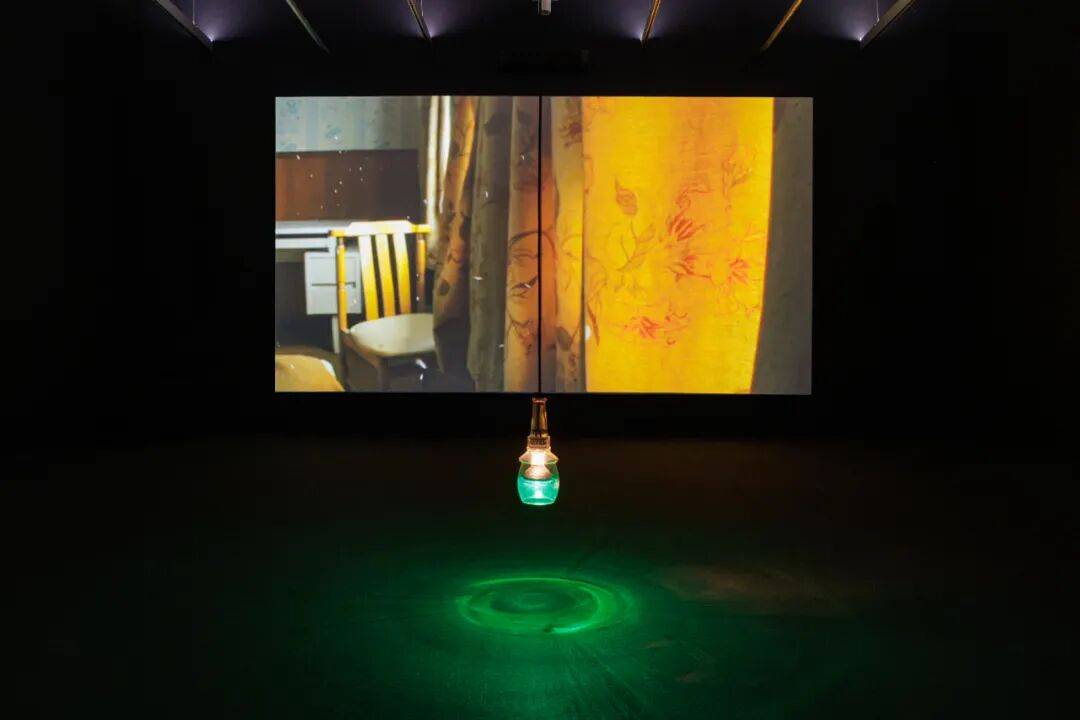
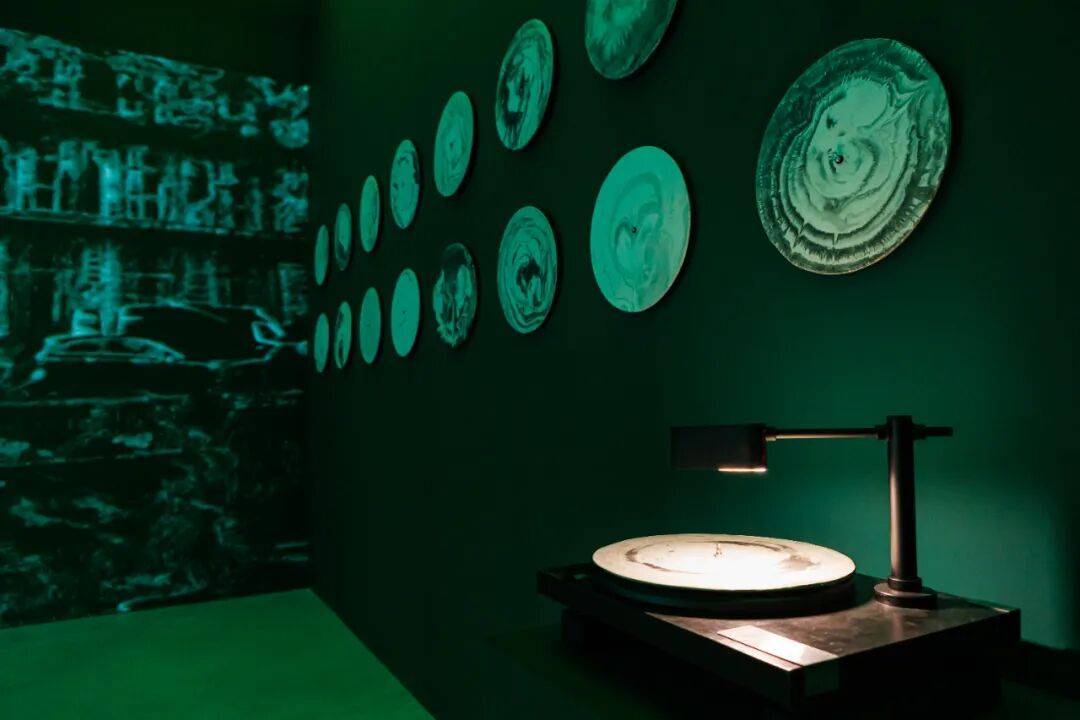
Installation view of “(In)visible Presence,” Apichatpong Weerasethakul, Morakot (Emerald), 2007, photographed by Auntika Ounjittichai, 2025. “We come from a family of artists and musicians who have long been suppressed, trapped inside the bodies of merchants.”
“Every generation has had an extraordinary love of art and culture. That love can be traced back to my grandfather, who was both a highly successful photographer and a successful entrepreneur,” Purat told us. Photographs by Purat’s grandfather, Surat, are also displayed in the galleries.
Installation view of “(In)visible Presence,” Sho Shibuya, Present, 2025, photographed by Auntika Ounjittichai, 2025. Installation view of “(In)visible Presence,” Navin Rawanchaikul, There is No Voice (detail), 1994, photographed by Auntika Ounjittichai, 2025. The museum’s original founder, Purat’s father Petch, was the first and only Thai person to appear on the ARTnews 200. In 2025, that “only” was no longer true: Purat followed his father onto the list, making them the first father-and-son pair to appear on it.
Petch was a legendary figure of his generation. He began playing guitar at 12 and piano at 14. His song I’m Not a Magical Guy was called one of the most romantic songs in the Thai language. Only after his mother insisted repeatedly did Petch reluctantly return to the family business. He continued to collaborate from time to time with Thai bands, and he was also president of Bangkok University, Thailand’s largest private university.
In 2023, Petch died, leaving Purat the responsibility of building Dib Bangkok. “My father began collecting at 30 and continued until he died at 67. As his life matured, so did the collection. His starting point was always a personal emotional connection. Unlike many public institutions, which follow principles about who must be collected and which works must be included, we began with passion,” Purat told us.
SECTION 02 | How to touch those invisible beings?
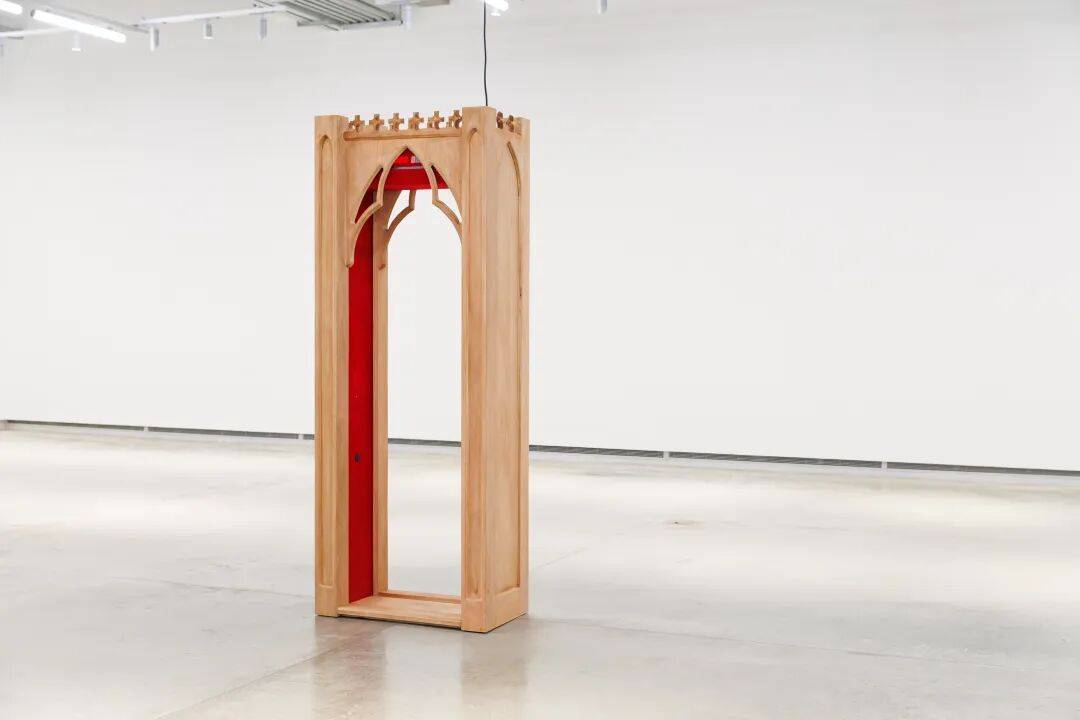
Installation view of “(In)visible Presence,” Hugh Hayden, Untitled Threshold (After Victor Horta After Charleston), 2019, photographed by Auntika Ounjittichai, 2025. Installation view of “(In)visible Presence,” Jinjoon Lee, Daejeon, Summer of 2023, 2023, photographed by Auntika Ounjittichai, 2025. Their collection has a deep connection to “healing.”
For Purat’s father, collecting art was also a way of confronting inner trauma and seeking spiritual refuge. At Dib, one can therefore see a spectrum of works ranging from lighthearted humor and popular appeal to the profound and weighty, works directed toward the human condition.
“Although art has long been part of our family culture, contemporary art itself takes time to learn to love. You could say it is a taste cultivated gradually,” Purat told us. Many ordinary visitors entering a contemporary museum for the first time, he said, ask in confusion: “What is this?” or “Why is there a urinal in the middle of the gallery?” For someone unfamiliar with contemporary art, it can feel like throwing a person who cannot swim straight into the deep sea.
Installation view of “(In)visible Presence,” Marco Fusinato, Constellations, 2015–2025, photographed by Auntika Ounjittichai, 2025. Installation view of “(In)visible Presence,” Sho Shibuya, Present, 2025, photographed by Auntika Ounjittichai, 2025. “So at Dib Bangkok, we think of art as an ‘ocean.’ Our mission is to help people find their own way into it.”
“Diving, surfing, fishing—even sitting on the shore and watching the waves—is fine. If one day they are willing to get into the water, we’ll be very happy.” The curatorial team’s task was to connect the works in the Osathanugrah family collection so that visitors—even those who know nothing about art—could follow the narrative and enter gradually, rather than falling straight into the deep. Dib Bangkok exterior; the white cylinder is “the Chapel,” photographed by W Workspace, 2025. Installation view of “(In)visible Presence,” Alicja Kwade, Pars pro Toto, 2020, photographed by W Workspace, 2025. Before Petch’s death, the museum’s architectural plan, designed by WHY, was already under way, but the curatorial concept existed only in outline. “At the time, there was almost no team—only one administrative colleague, who is still with us.”
Purat told us. Tezuka Miwako, the museum’s first director, recalled that before the opening, Petch had already marked several key works on a simple gallery map. In the courtyard before the entrance, for example, 11 “balls” made from natural stone by Alicja Kwade place visitors in a state where their sense of scale is recalibrated.
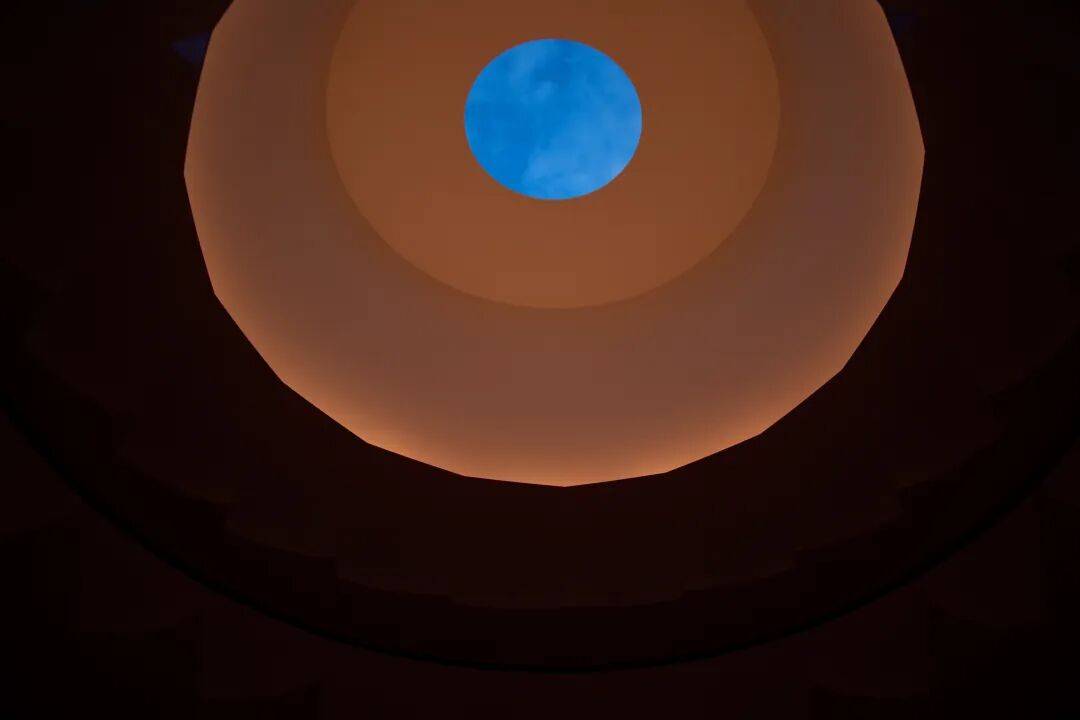
Installation view of “(In)visible Presence,” James Turrell, Straight Up, 2025, photographed by W Workspace, 2025. The museum occupies 12,000 square meters and is white throughout. Its exterior garden contains the distinctive “Chapel,” a domed exhibition space clad in mosaic tile, with a skylight at the top, resting quietly within a water feature.
A large installation by James Turrell stands outdoors. Its opening to the sky meets the same natural light and answers the “Chapel” from a distance.
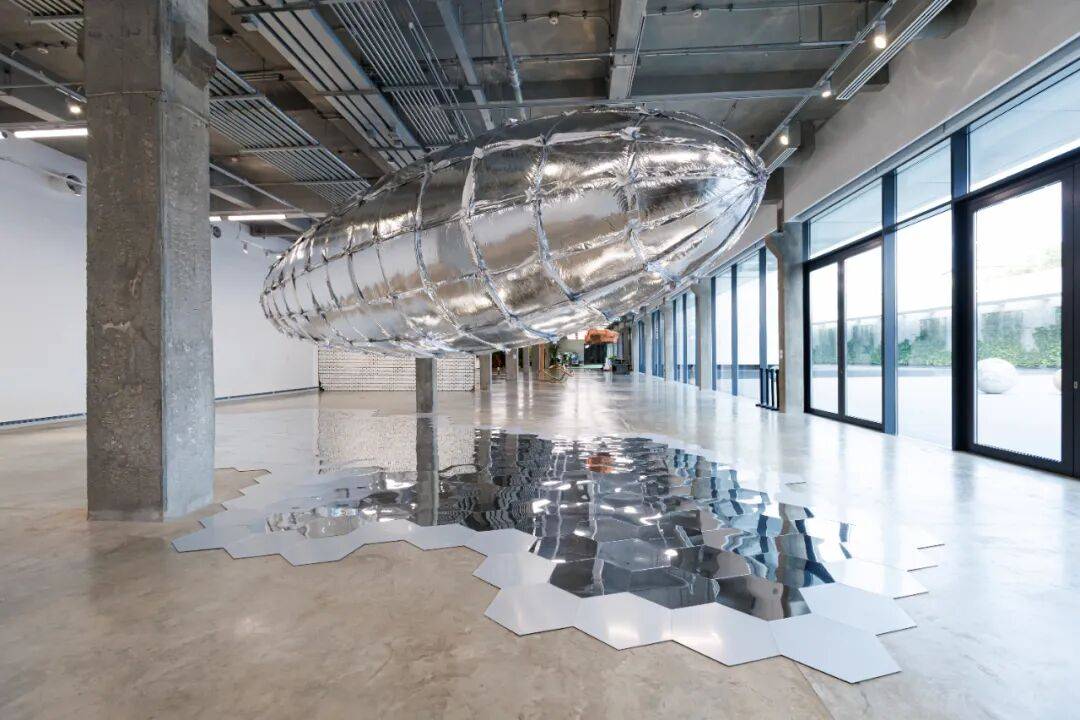
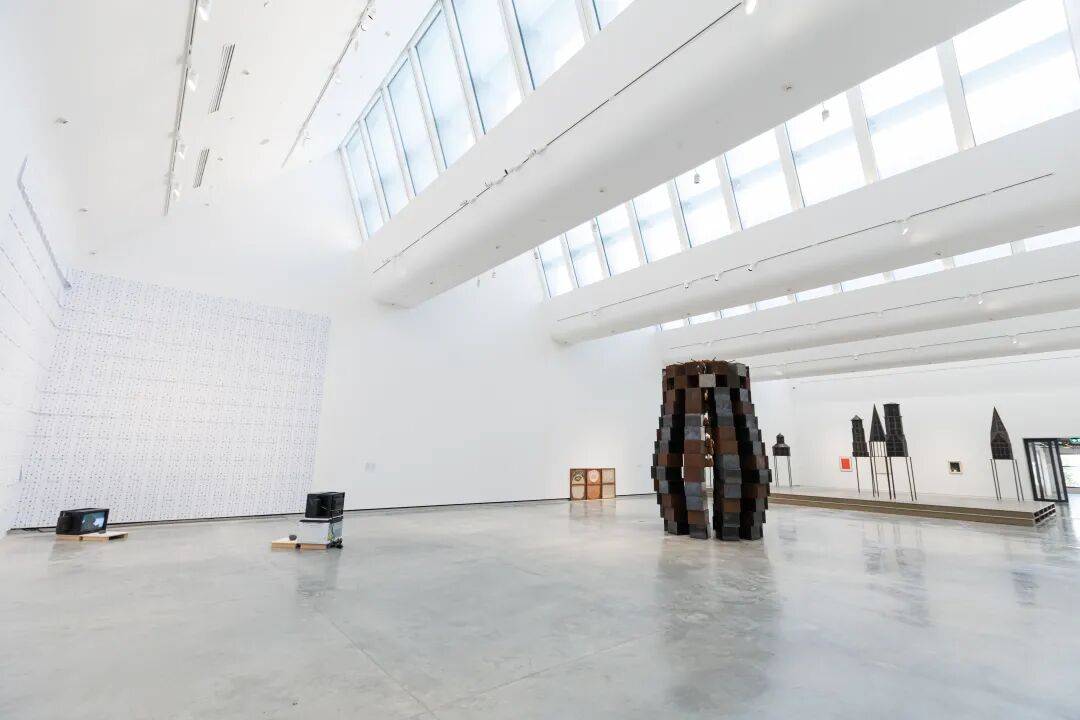
Installation view of “(In)visible Presence,” Lee Bul, Willing To Be Vulnerable—Metalized Balloon V3, 2025, photographed by W Workspace, 2025. The main museum has three floors, each with a thematic focus: the first, “the unseen”; the second, “the onset”; and the third, “Global Conversation.”
The first-floor galleries open into a broad, deep space: two large connected rooms well suited to monumental works. There we encounter an installation resembling a floating silver balloon, by the Korean artist Lee Bul. It returns the viewer to a cosmic scale of perception and to questions about the relationship between human beings and the universe.
Installation view of “(In)visible Presence,” Subodh Gupta, Incubate, 2010, photographed by Auntika Ounjittichai, 2025. Installation view of “(In)visible Presence,” Surasi Kusolwong, Emotional Machine (VW), 2000–2001/2002/(Permanently Damaged) 2025, 2000–2001/2002/2025, photographed by Auntika Ounjittichai, 2025. We then come to Surasi Kusolwong’s Emotional Machine: a Volkswagen Beetle from the 1960s, suspended upside down, becomes a vessel for memory and emotion.
From there, we can follow the space’s natural structure and take the stairs to the second floor.
Installation view of “(In)visible Presence,” Tim Rollins & K.O.S., A Midsummer Night’s Dream (after Mendelssohn and Shakespeare), 2009–2010, photographed by Auntika Ounjittichai, 2025. Installation view of “(In)visible Presence,” Somboon Hormtientong, The Unheard Voice, 1995, photographed by Auntika Ounjittichai, 2025. “Compared with the first floor, the second is clearly smaller in scale, with lower ceilings.”
“So here we created a passage structure resembling a ‘maze.’ Visitors have to keep turning and changing direction, exploring and gradually discovering the smaller works—many of which look like private diaries rendered visually. You have to come closer to see the images, materials, smells, and movement clearly, and then slowly understand the narrative behind them,” Tezuka Miwako told us.
Installation view of “(In)visible Presence,” Montien Boonma, Group of Primary Form, 1989, photographed by Auntika Ounjittichai, 2025. Installation view of “(In)visible Presence,” Montien Boonma, Zodiac Houses, 1998–1999, photographed by Auntika Ounjittichai, 2025. The third floor contains three large galleries, all with skylights through which daylight pours, creating an exhibition environment close to the “white cube.”
Works by Montien Boonma, one of Thailand’s most important artists, are placed in dialogue with those of artists from other countries.
“The title ‘(In)visible Presence’ itself requires these works to move beyond the purely visual, so Montien Boonma’s work was an obvious starting point,” Tezuka Miwako told us. Boonma was a profoundly important Thai artist whose work brought together Buddhism, healing, bodily sensation, scent, and structure.
SECTION 03 | Sharing art in a raw, authentic way in Thailand
Installation view of “(In)visible Presence,” Montien Boonma, Lotus Sound, 1992/1999–2000, photographed by Auntika Ounjittichai, 2025. Installation view of “(In)visible Presence,” Montien Boonma, Lotus Sound (detail), 1992/1999–2000, photographed by Auntika Ounjittichai, 2025. “The moment I was truly overwhelmed in my life was the first time I encountered Boonma’s work—when I was 15, and my father told me about it.”
“I saw a perfect point of convergence: culture, religion, philosophy, and visual art distilled into a form. In that moment, I understood deeply that art could leap off the page and become something far beyond the image itself,” Purat said. His Lotus Sound and Temple of the Mind still astonish him.
“I believe they are masterpieces of Thai art history, and they are now treasured at Dib.”
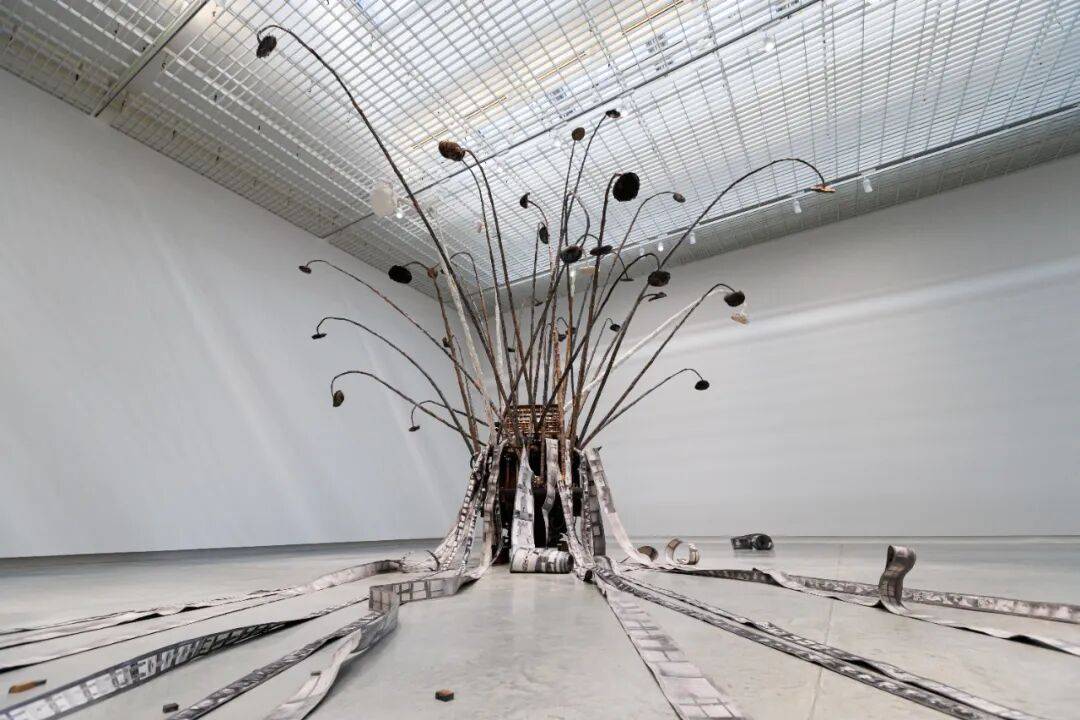
Installation view of “(In)visible Presence,” Anselm Kiefer, Der verlorene Buchstabe, 2019, photographed by Auntika Ounjittichai, 2025. Installation view of “(In)visible Presence,” Anselm Kiefer, Der verlorene Buchstabe (detail), 2019, photographed by Auntika Ounjittichai, 2025. In dialogue with Boonma are large-scale installations by Anselm Kiefer, as well as works by Louise Bourgeois.
“Here, you feel something that might be called ‘the sublime’—not the sublime in a religious sense, but the sublime expressed by contemporary art, concerning human existence and the cosmic dimension,” Tezuka Miwako said.
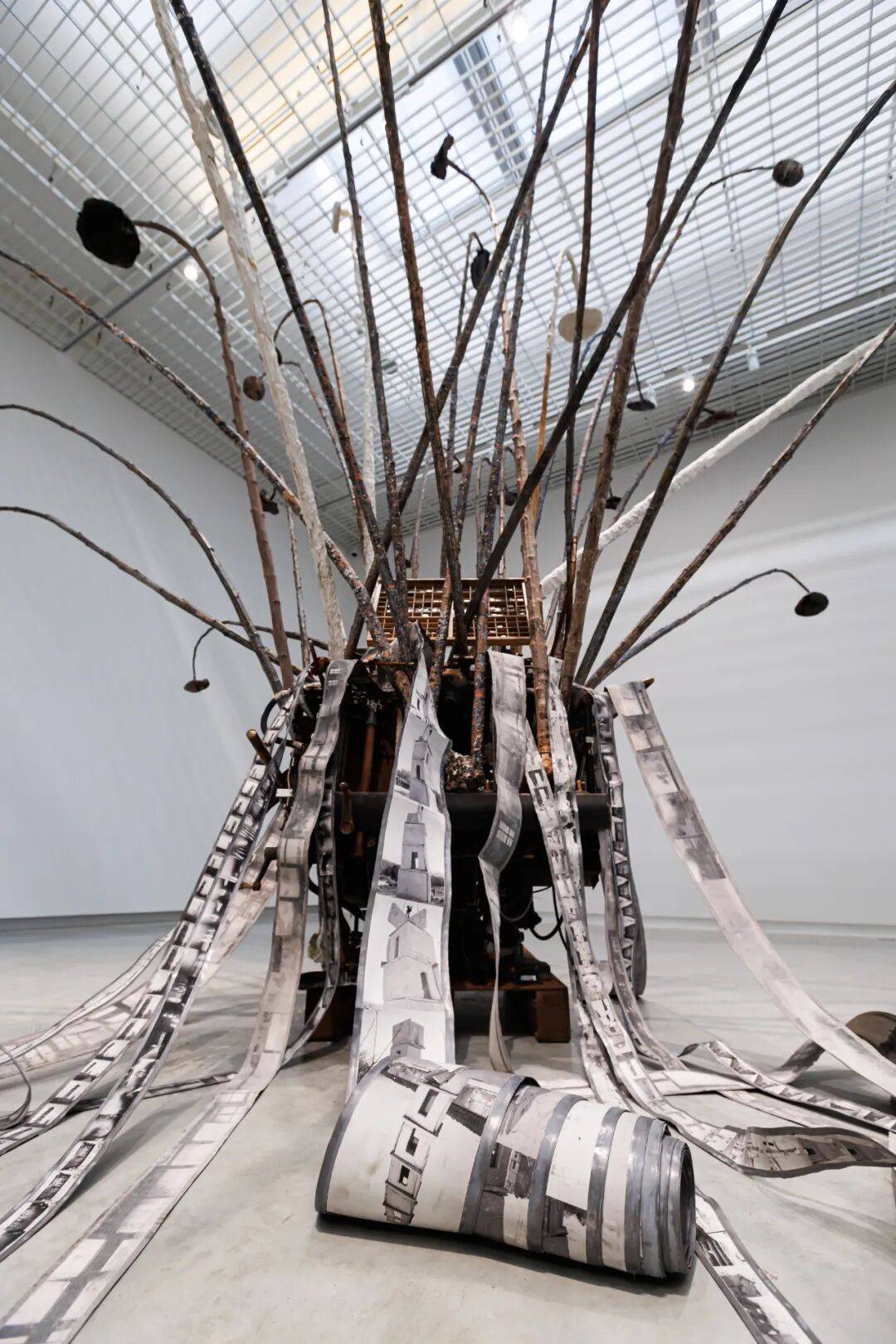
Installation view of “(In)visible Presence,” Jannis Kounellis, Untitled, 1998, photographed by Auntika Ounjittichai, 2025. Other Thai artists represented here work with sound and moving image, including Apichatpong Weerasethakul’s films and Jakapan Vilasineekul’s cross-media works.
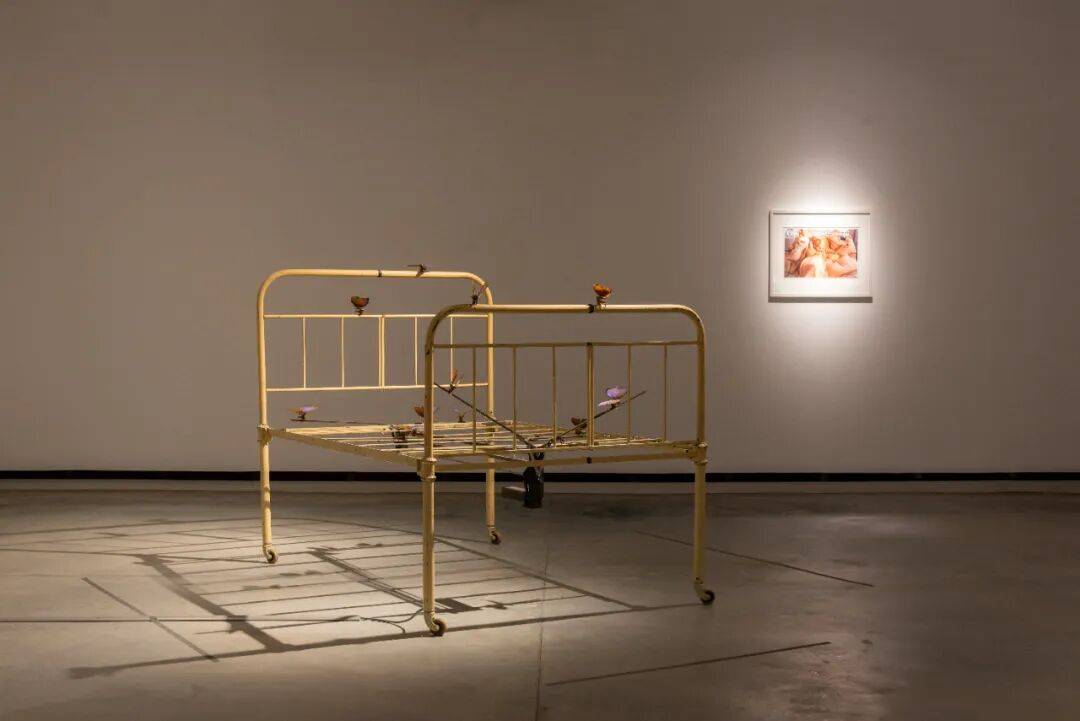
Some other works in the museum engage with scent. Jannis Kounellis repeatedly used materials with different tactile qualities and smells, including ground coffee beans. Installation view of “(In)visible Presence,” Montien Boonma, Water (detail), 1991, photographed by Auntika Ounjittichai, 2025. Installation view of “(In)visible Presence,” Rebecca Horn, The Lover’s Bed, 1990, photographed by Auntika Ounjittichai, 2025. “I often wonder: What is it that makes a moment ‘unforgettable’?”
“I remember the film Lion, and a scene that moved me deeply: an Indian boy adopted by an Australian family is with friends when he sees a dessert from India—the food he ate as a child. In that instant, taste and sight, together with the act of crying, trigger a buried memory.” It was then that Tezuka Miwako understood that memory is often activated by things that go beyond vision.
This was also the curatorial logic of the inaugural exhibition: beginning with narrative experience and asking which works in the Osathanugrah family collection could carry such “memory-triggering moments,” in ways that were positive and gentle. Installation view of “(In)visible Presence,” Montien Boonma, Full Moon, 1991, photographed by Auntika Ounjittichai, 2025. “My father once said to me, ‘If one day I’m gone, you can do whatever you want with the museum—you could even turn it into apartments,’” Purat told us with a laugh. “But I won’t do that.”
“His vision was very poetic, expressing stages of life, Buddhism, and philosophy, but in a very understated way. I want to share—to share the joy of art.” He has long felt that Thailand is one of the most interesting countries in Southeast Asia. “We were never colonized by the West; we have always been at the crossroads of East and West. On one hand, we have been deeply influenced by Indian religious civilization; on the other, we inherited China’s commercial, innovative, and pragmatic traditions. So I often say that China is like our paternal culture—prosperous and business-minded—while India is our maternal culture, giving us spirituality.”
“So it would be impossible to build a museum ‘unrelated to the city.’ This museum will naturally reflect the Thai spirit.” Installation view of “(In)visible Presence,” Louise Bourgeois, Untitled, photographed by Auntika Ounjittichai, 2025. He hopes that the world-class artists Thailand has nurtured—Montien Boonma, Rirkrit Tiravanija, Apichatpong Weerasethakul, and Pratchaya Phinthong, among others—can be presented alongside international artists and enter into dialogue with them.
“To me, artists are like living philosophers. Philosophy endures in the form of contemporary art, joined to visual language. So when you look at a work, you don’t need to ‘interpret’ it; it speaks to you directly and touches your heart intuitively,” Purat said. The family believes that contemporary art, as a platform and an institution, still has enormous room to grow in Thailand. Installation view of “(In)visible Presence,” Paloma Varga Weisz, Bumpman on a Tree Trunk, 2018, photographed by Auntika Ounjittichai, 2025. “I don’t know if you remember what it felt like to draw when you were a child. Everyone liked drawing as a child.”
“But somehow that passion gradually disappears. In our family, it never disappeared; it only grew stronger with age,” Purat said.
“Across Southeast Asia, of course, there are many other important collectors. But my father collected for 30 years. For the past 15 years, we have had a family committee. Every evening, we would eat dinner together and discuss art. So art is part of our family DNA,” Purat told us.
Installation view of “(In)visible Presence,” Laurent Grasso, Panoptes, 2019, photographed by Auntika Ounjittichai, 2025. Installation view of “(In)visible Presence,” photographer uncredited, 2025. “If you are willing to spend more time understanding contemporary art, you gradually encounter deeper layers: philosophy, the artist’s way of life, how they understand the world, and how they arrived at the point of making the work—all of these accumulate into something richer.”
“I think that is how our family looks at art,” Purat said. The museum’s origins are closely tied to the conversations that have long taken place around the family dinner table.
“We often say that Thailand has always lacked a contemporary-art public institution in the fullest sense. We hope to take on a responsibility: to turn a ‘private dream’ into a ‘public mission.’ Although we are a private museum, our most important goal remains to cultivate the public’s appreciation of art.”
“Dib” means “raw” or “authentic” in Thai. Perhaps that is the museum’s guiding thread: allowing art to exist in an unpolished state, and allowing people, before art, to return to an unadorned version of themselves. Image rights belong to Dib Bangkok; acknowledgment is gratefully given.