After Achieving Financial Freedom at Thirty, He Built Four Private Museums Across Asia
He made a fortune in business by the age of thirty and began collecting in the 1980s. Today he has four large private museums and more than 4,000 works, including pieces by Andy Warhol, Tracey Emin, Damien Hirst, Antony Gormley, Gerhard Richter, Jackson Pollock, and Cindy Sherman......
By / Xirui Huang · 8 min read
Who is Kim Chang-il, and why did he create four Arario museums?
Kim Chang-il is a Korean collector, artist, and founder of Arario Gallery whose collection exceeds 4,000 works. He operates four Arario museums in Seoul and on Jeju, adapting disused cinemas and motels so their histories remain visible while visitors encounter contemporary art outside a conventional white cube.
He made a fortune in business by the age of thirty and began collecting in the 1980s. He now has four large private museums, making him the collector with the most museums in Asia. His collection numbers more than 4,000 works, including masterpieces by Andy Warhol, Tracey Emin, Damien Hirst, Antony Gormley, Gerhard Richter, Jackson Pollock, Cindy Sherman, and Nam June Paik. He is Kim Chang-il, South Korea’s most famous legendary collector.
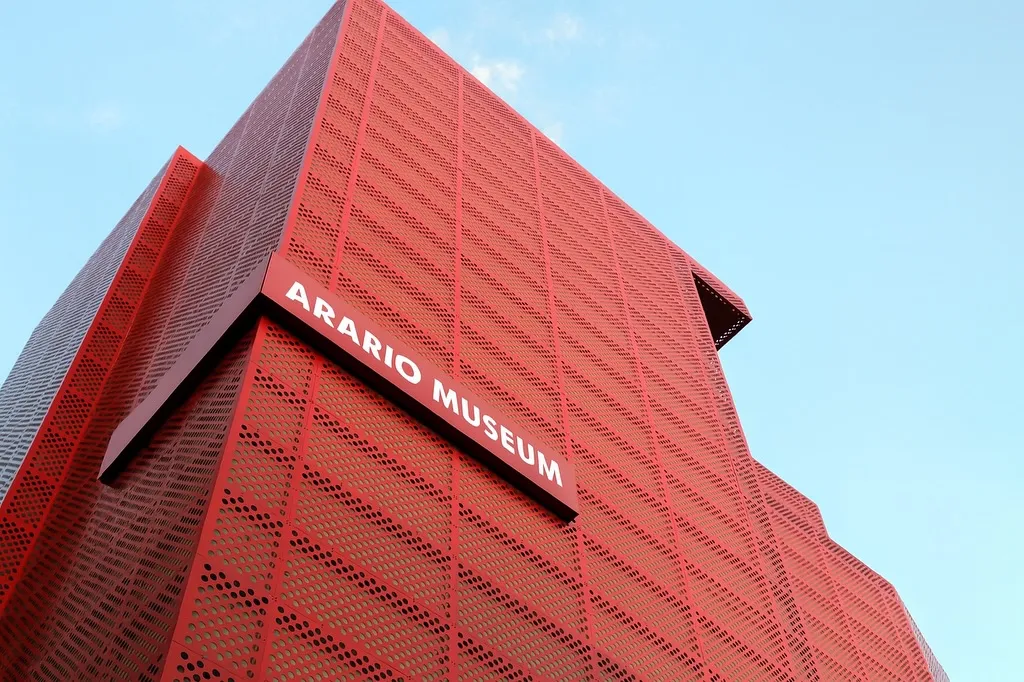
Exterior of Arario Museum Tapdong Cinema on Jeju IslandInstallation view of Kim Chang-il’s WHY NOT? at Mao Space, Shanghai, 2025
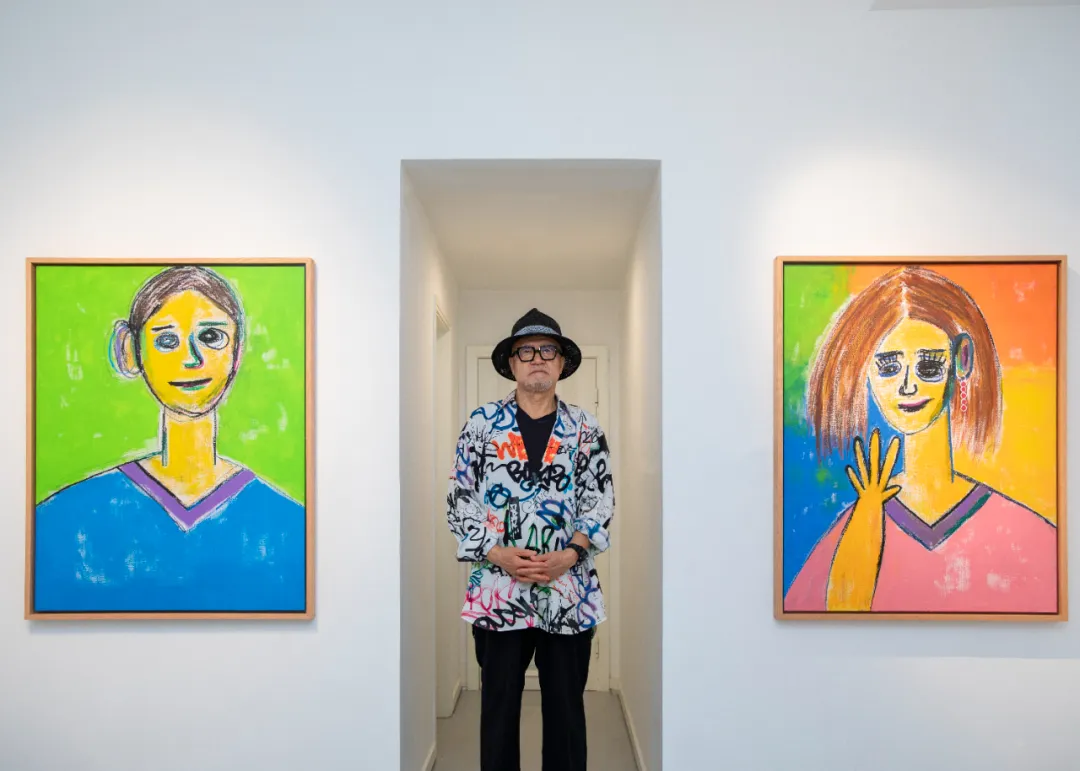
Kim Chang-il at the Arario Museum Tapdong Cinema on Jeju Island; installation view of “WHY NOT?” at Mao Space, Shanghai, 2025. He is also the founder of Arario Gallery and, in recent years, has been active in Asia’s art world as an artist. During the November art season, Kim Chang-il’s first exhibition in China opened in Shanghai; all the works were made specifically for the space.
SECTION 01 | "WHYNOT? Why not?
Kim Chang-il during the interview
At the opening, we went to Mao Space, tucked into an alley with the unmistakable atmosphere of old Shanghai, to talk with Kim Chang-il, who had only recently arrived in the city, about his work and his singular life. When we met him, he was sitting with a large tableful of family members, chatting happily and loudly. Wearing his signature felt hat and a checked shirt, he greeted us with his usual warmth and embraced us enthusiastically.
He told us that the title of the exhibition, “WHY NOT?”, came from memories of his childhood.
“When I was young, I had a condition that made it impossible for me to concentrate. If I saw a bird fly past the window during class, I would be distracted, and my head would fill with all kinds of ‘whys.’ My teacher thought I couldn’t pay attention and would get very angry.” He told us that he had always been unable to fit into groups—whether because of his poor grades in high school or because, later, he did not want to obey orders during his military service. He was always an “outsider,” with too many ideas that ran against the mainstream.
Kim Chang-il working in his studio
Kim Chang-il working in his studio. “I first started painting one morning in May 1999. I got up that morning and suddenly wanted to paint. By then, I had been running my gallery for ten years, so as soon as I arrived, I told my employees to go to the art-supply store and buy painting materials. I closed the door and started painting,” Kim Chang-il told us.
Kim Chang-il making a wall drawing during the interview
“When I first started, I kept painting one thing: circles. In painting, a circle is actually the hardest thing to draw. I painted them for two years. After that, I found that every other shape was easy.” During the interview, Kim Chang-il suddenly said, “I really want to paint right now.” Looking at the large white wall beside the interview table, he asked, “Is here all right? A black marker is enough.” Once he had the pen, he took off his shoes, knelt on the table, and became absorbed in the work. He did not pause, and seemed completely unaware of the people around him.
The WHY NOT? wall drawing Kim Chang-il completed during the interview
The finished work was a playful doodle: from a branch extending into the frame from nowhere on the right, a spider hung leisurely, exhaling a speech bubble that read, “WHY NOT?” It fit the exhibition’s title perfectly. Installation view of “WHY NOT?” at Mao Space, Shanghai, 2025. “When I’m creating, whatever comes to mind, I have to draw it. I can’t be interrupted, because I become so immersed in it. Once, when I was interrupted, I was even frightened enough to faint.”
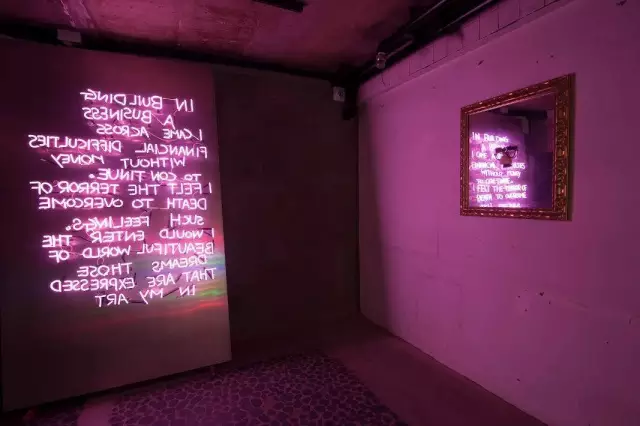
Installation view of Kim Chang-il’s WHY NOT? at Mao Space, Shanghai, 2025Installation view of Kim Chang-il’s WHY NOT? at Mao Space, Shanghai, 2025
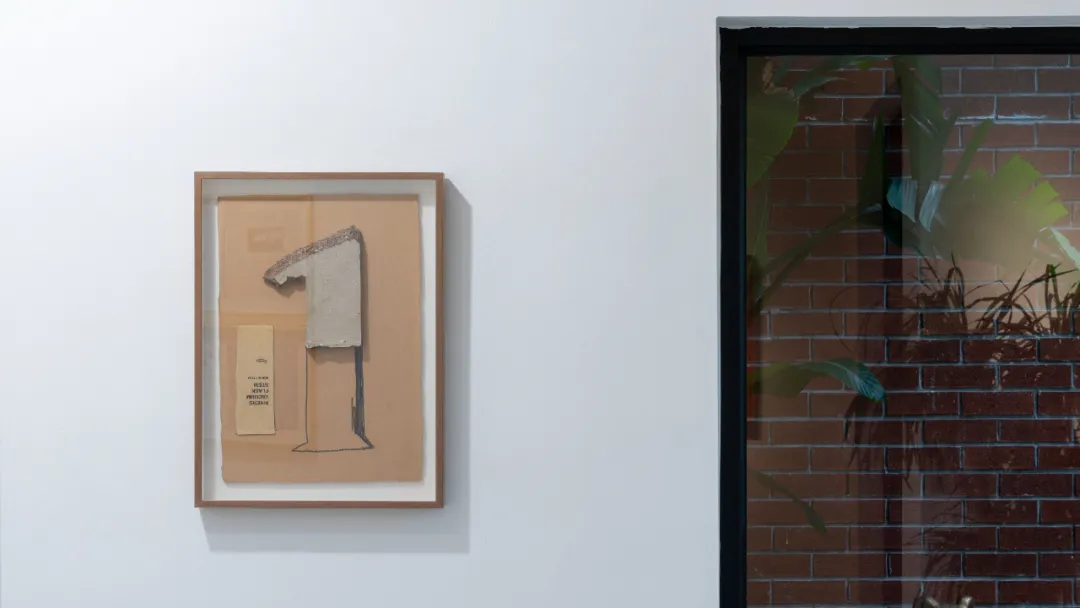
That is how he describes his state while working. The scene during the interview made us believe completely that, in the studio, he must be guided by the same principle: what the mind imagines, the hand draws. The works in this exhibition confirm it—improvised, entirely unplanned, and free-ranging. Just inside the entrance was a group of illustrations based on images selected from magazines. The images included cherries, cosmetics, and paint, among other things, but Kim Chang-il expressed them in another visual language and set them beside one another, revealing an especially childlike side of himself.
Installation view of Kim Chang-il’s WHY NOT? at Mao Space, Shanghai, 2025Installation view of Kim Chang-il’s WHY NOT? at Mao Space, Shanghai, 2025
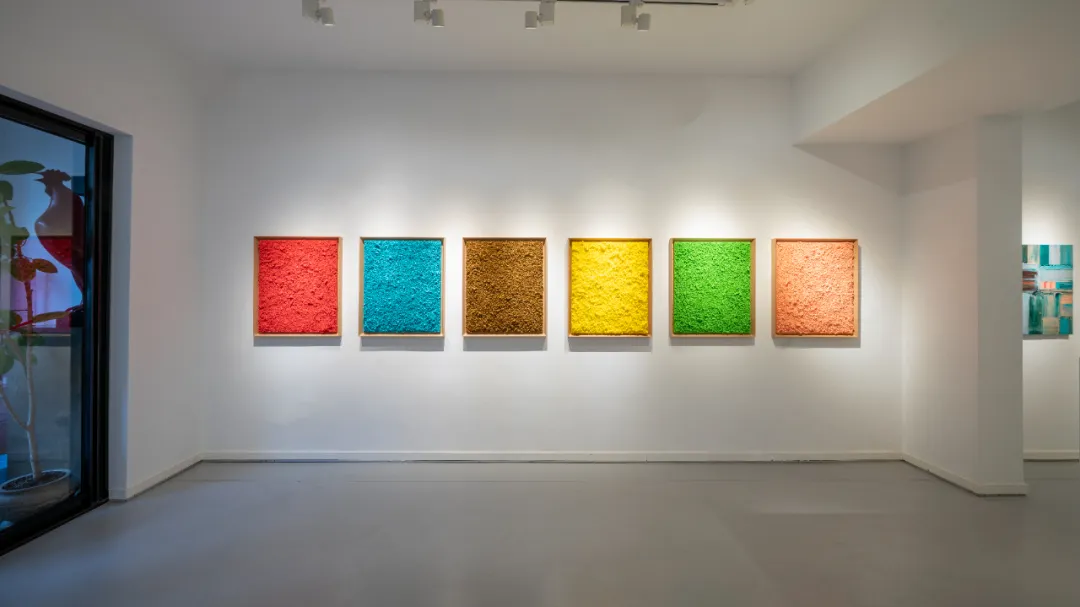
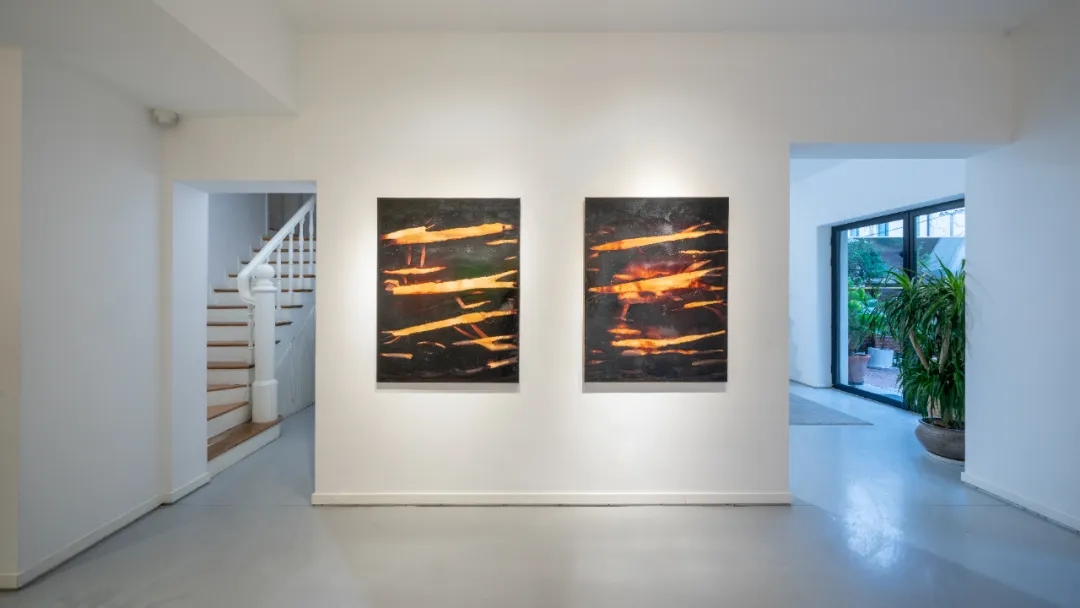
Installation view of “WHY NOT?” at Mao Space, Shanghai, 2025. In the inner space, one wall held six separate colors; another displayed abstract paintings in black and color, all made specifically for the site. Since his earliest works, Kim Chang-il has generally been known for large paintings and installations—some two to three meters in size—made with “hardcore” materials such as wood, iron powder, scrap, and cement.
A portrait in Kim Chang-il’s WHY NOT? exhibition at Mao Space, Shanghai, 2025
“Perhaps the illness I had early in life never completely went away. Sometimes it flares up, and I shout. But after I began creating, it never happened again. Maybe all of it was transferred into those large works.” Installation view of “WHY NOT?” at Mao Space, Shanghai, 2025. In this exhibition, Kim’s style has changed noticeably: it is gentler and smaller in scale.
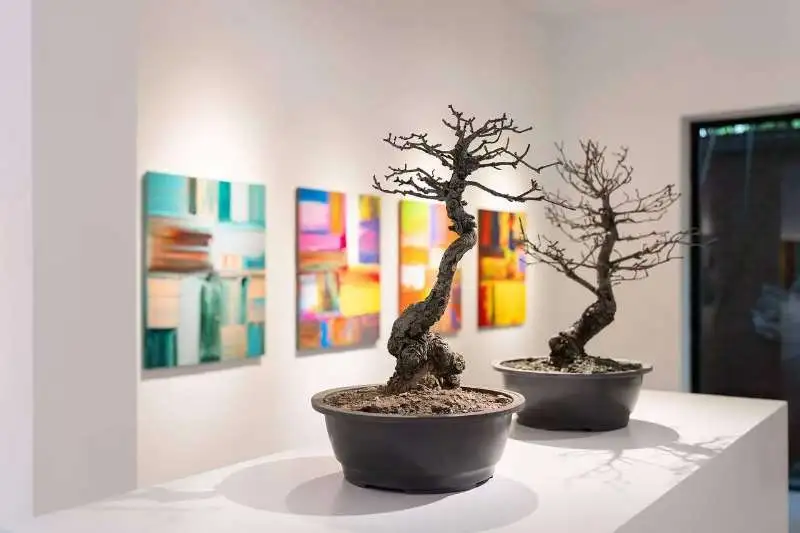
Bronze bonsai in Kim Chang-il’s WHY NOT? exhibition at Mao Space, Shanghai, 2025
“Because this space feels very gentle, my work followed that feeling completely. One day I casually started drawing, and it felt a little like keeping a diary. It seemed very suited to the energy of this space.” Most astonishing were two “bonsai trees” in the gallery. Both were made entirely of bronze, yet they were almost indistinguishable from the real thing—even the individual grains of soil beneath them looked convincing. Kim tapped one lightly with his hand as a joke and invited everyone to listen, revealing that “it really is bronze!”
Installation view of Kim Chang-il’s WHY NOT? at Mao Space, Shanghai, 2025
Installation view of “WHY NOT?” at Mao Space, Shanghai, 2025. Most amusingly, he told us that the portraits showing only one ear represented his “progress” over the years.
SECTION 02 | Starting a business at the age of 28, living a life of wealth and freedom at the age of 30
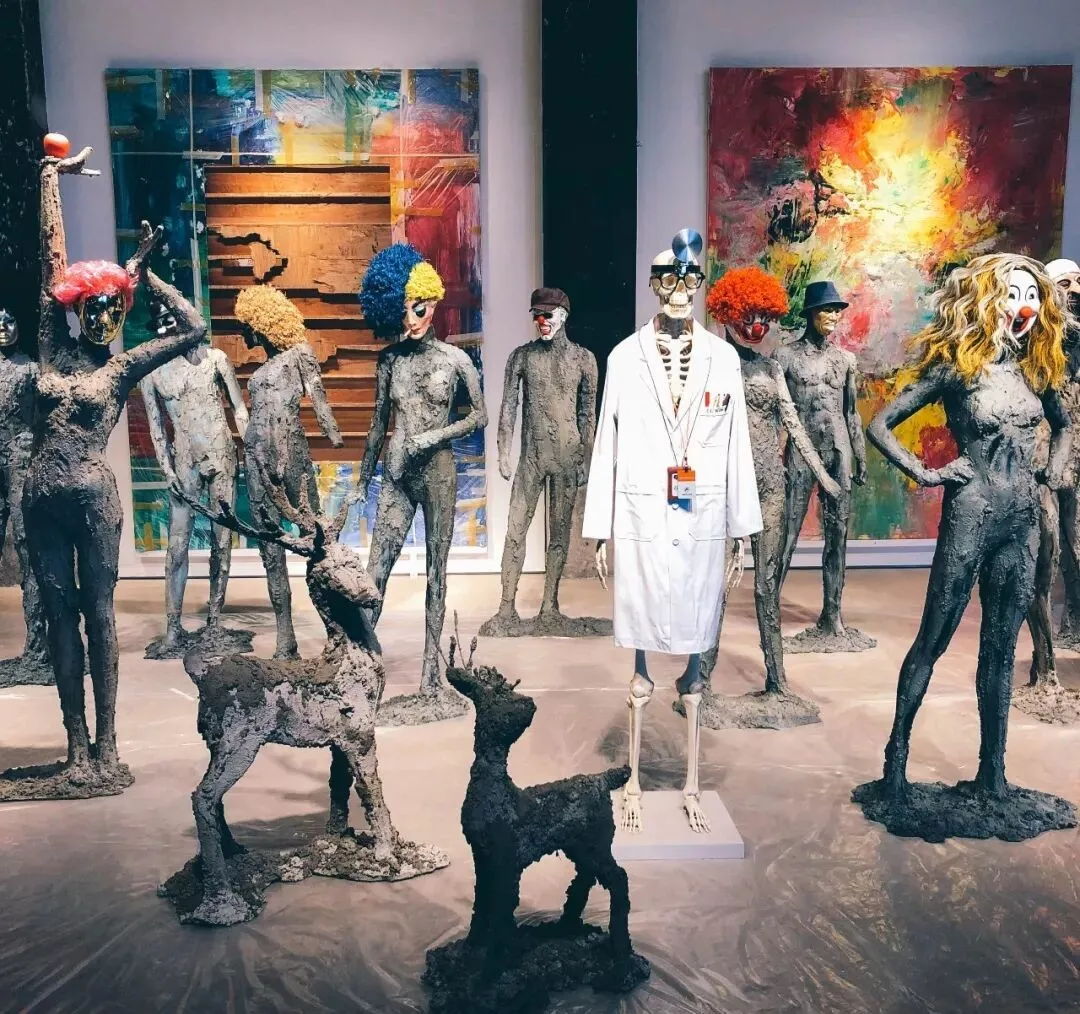
Installation at Arario Museum in Seoul
“My portraits used to have no ears, because when I made decisions or created, I never listened to other people’s so-called ‘advice.’ Now I can take in a little more, so I’ve drawn one ear.” Kim Chang-il said this with a broad laugh. Exhibition hall at the Arario Museum in Seoul. Of course, artist is not Kim Chang-il’s only identity. He is also a collector, gallery owner, museum director, and patron. Though by worldly standards he is highly “successful,” he has also been troubled by his own difference.
Exterior of Arario Museum in SeoulExterior of Arario Museum in Seoul
“I once asked God why He treated me this way...” At the time, I lived at the foot of Namsan Tower in Seoul. After every rain, I would climb to the top of Namsan. Strangely, every time I saw a rainbow in the same place, with the same colors and the same shape. From then on, I began to believe that perhaps there really were spirits.” Exterior of the first Arario Museum in Seoul. At twenty-eight, while starting a business in a remote area of Cheonan, he realized that perhaps heaven had not abandoned him but had given him another universe.
In that universe, he reflected deeply and spent a great deal of time with his unusual ideas. That also helped him transform the nearly bankrupt convenience store at a bus station, which he inherited from his mother, through renovation. The business took off, and he earned his first substantial sum. He went on to acquire many bus stations and began expanding rapidly into different industries. Before turning thirty, he owned restaurants, cinemas, and department stores.
To date, he owns as many as 200 restaurants.
Gallery at Arario Museum in Seoul
“For my restaurant business, I was constantly flying back and forth. I’ve taken Korean Air more than 2,000 times alone,” Kim Chang-il told us with a laugh. Exhibition hall at the Arario Museum in Seoul. Before turning thirty, Kim had amassed a vast fortune and achieved financial freedom, but this also left him somewhat at a loss. One day, while passing through Seoul’s art district, Insadong, he received what felt like a flash of inspiration and threw himself into the art world.
Gallery at Arario Museum in Seoul
He began visiting museums around the world. In the early 1980s, he visited the Museum of Contemporary Art, Los Angeles (MOCA), and Dia Beacon outside New York. The experience made a deep impression on him and inspired his dream of establishing a museum to house his own collection. Exhibition hall at the Arario Museum in Seoul. As his artistic horizons widened, he gradually moved from an initial interest in Korean artists to a focus on contemporary artists from Europe and the United States.
Gallery at Arario Museum in Seoul
His collection numbers more than 4,000 works. Many of the artists who are now renowned were still living in garages when Kim Chang-il collected them—poor, struggling, and unknown. They include Tracey Emin, now regarded as a “godmother” of contemporary women artists and a leading figure in the YBA movement. Even today, Emin “worships” Kim Chang-il: at the most desperate and chaotic point in her career, he followed his intuition and bought a garageful of her work. Exhibition hall at the Arario Museum in Seoul.
The same story unfolded with Damien Hirst.
“That is my intuition. I have never listened to other people’s advice about collecting. My experience and my eyes tell me that this is good art,” Kim Chang-il said.
Gallery at Arario Museum in Seoul
“This is also what drives me to make money,” Kim Chang-il told us. “If I want to collect more art, I have to keep making money. My dream is to open a department store and a supermarket. Art collecting has made all those dreams a reality.” Exhibition hall at the Arario Museum in Seoul. As his collecting deepened, Kim founded Arario Gallery in 1989, with locations in Seoul, Cheonan, and Shanghai. In 2014, he opened his first Arario Museum, in Seoul. The enormous tree at the entrance is his own work.
Gallery at Arario Museum in Seoul
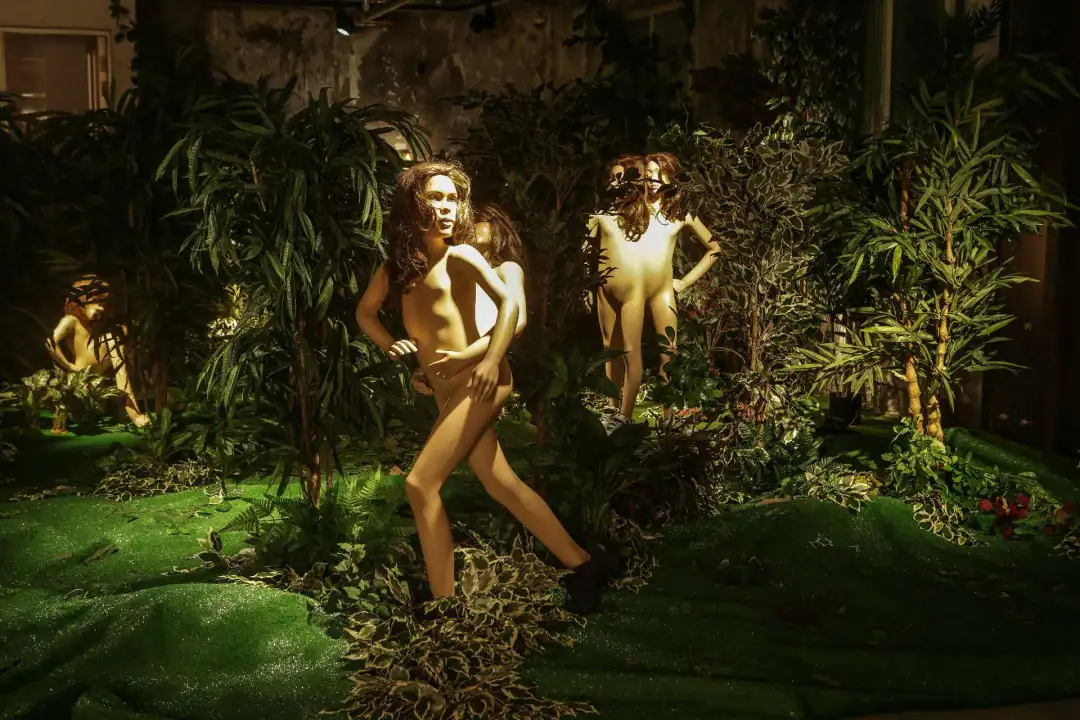
The collection includes works by Andy Warhol, Tracey Emin, Damien Hirst, Gerhard Richter, Jackson Pollock, Cindy Sherman, Nam June Paik, and other masters. His curatorial approach is equally distinctive. There is no prescribed route or fixed viewing order—“not academic, not a museum”—but an invitation for visitors to discover the works for themselves. If the Arario Museum in Seoul already seems far from conventional, the three other Arario museums Kim Chang-il established on Jeju Island are even more unusual.
SECTION 03 | The best in Asia with 4 art museums of different styles
Works from Kim Chang-il’s collection at Arario Museum
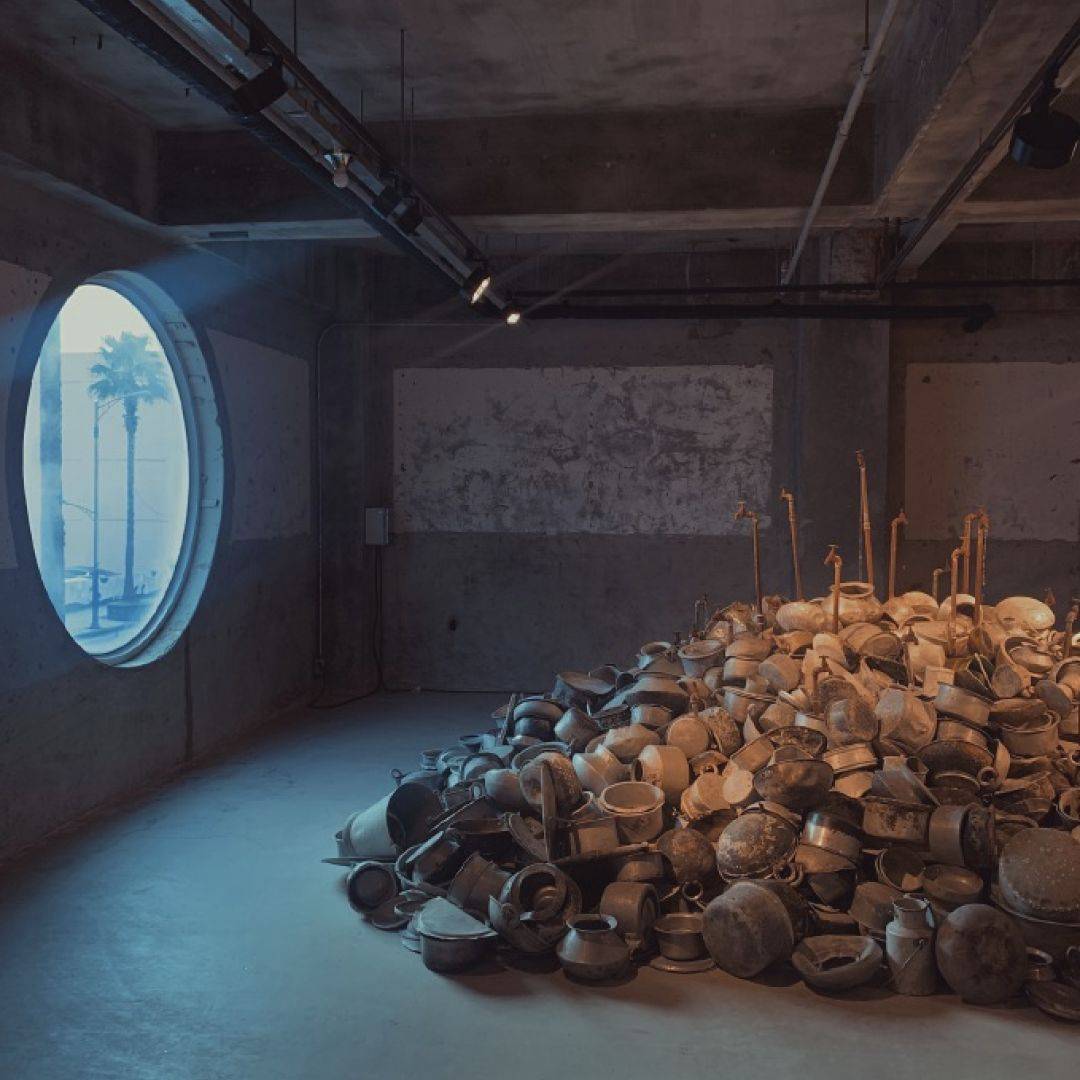
He acquired a derelict single-screen cinema, a disused motel, and an old theater, transforming each into a museum. Exterior of Arario Museum Tapdong Cinema. Interior of Arario Museum Tapdong Cinema. Near Tapdong Beach by the sea, Tapdong Cinema was formerly an old theater and is the largest of the three museums on Jeju Island.
Exterior of Arario Museum Tapdong CinemaInterior of Arario Museum Tapdong CinemaGallery at Arario Museum Tapdong CinemaGallery at Arario Museum Tapdong Cinema
Kim preserved the original building’s theatrical height and depth, making it especially suitable for large installations, paintings, and video works. A solo exhibition by the Chinese artist Yan Heng is currently on view at Tapdong. Exterior of Arario Museum Motel II. Interior of Arario Museum Motel II. Located in the old port district of Jeju’s historic center, Motel II was once a small local cinema where residents went to watch films, meet, and relax.
Exterior of Arario Museum Motel IIInterior of Arario Museum Motel IIGallery at Arario Museum Motel IIExterior of Arario Museum Motel IInterior of Arario Museum Motel IGallery at Arario Museum Motel I
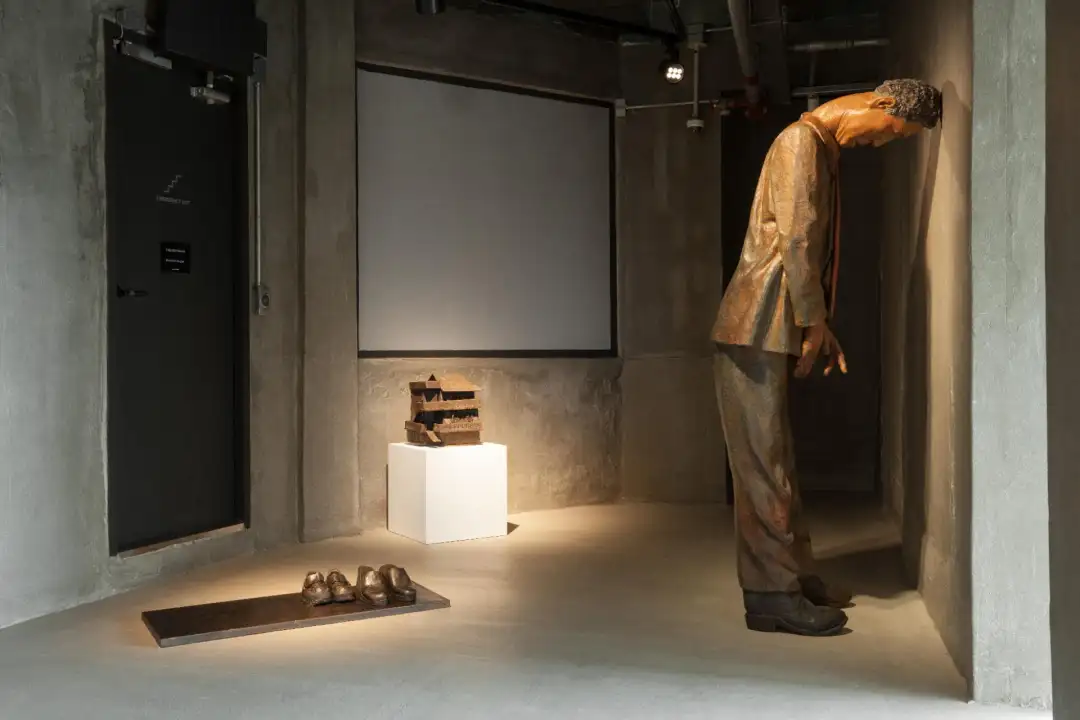
Kim preserved the original space’s weathered walls, auditorium structure, and sense of the stage, allowing the artworks to coexist with the traces of time. Exterior of Arario Museum Motel I. Interior of Arario Museum Motel I. Kim told us that the museum with which he feels the deepest connection is the dilapidated mid-century motel near Dongmun Market. Inside, the museum consists of narrow corridors and a series of small rooms. Even the severely worn toilets were preserved and used to house video installations.
Aerial view of Arario Museum in SeoulGallery at Arario Museum in Seoul
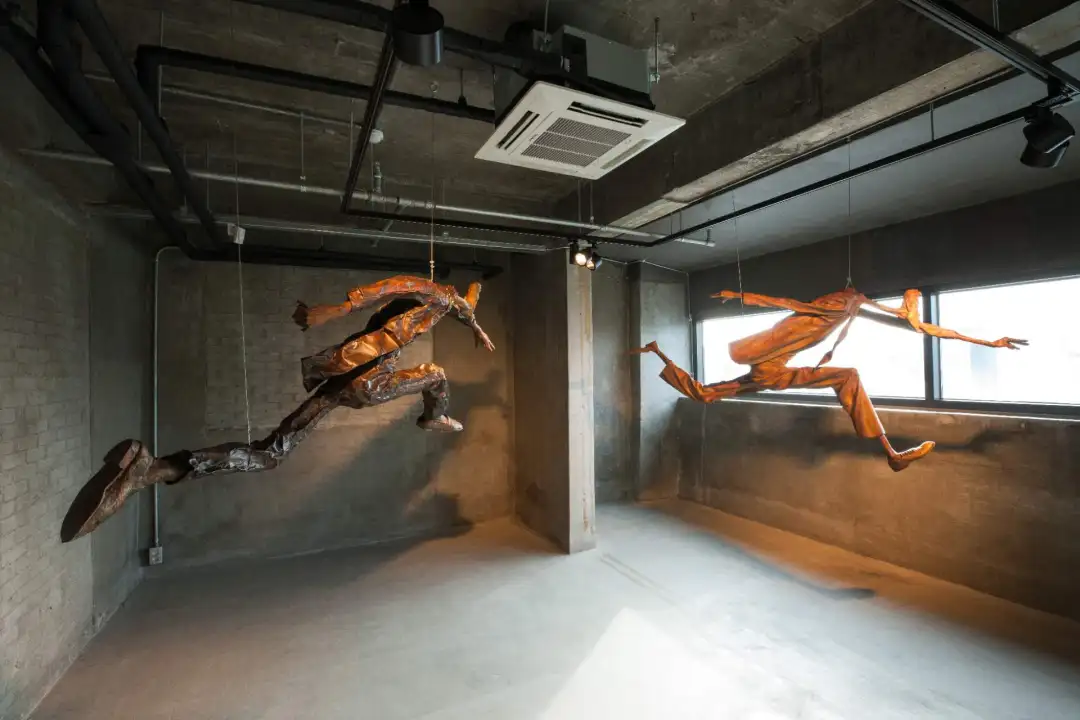
“Of course I could have hired very famous designers to design all the museums, but I didn’t. I want young people to understand a neglected period of history and to know how people lived in the past.” Kim told us that all the museum buildings on Jeju Island retain their original appearance from the time they were abandoned. Aerial view of the Arario Museum in Seoul. Exhibition hall at the Arario Museum in Seoul. “So, in a sense, I didn’t build museums. I am simply allowing old buildings to go on living.
“Because I don’t want these old buildings to be demolished and disappear. When visitors come to a museum, they are not entering a new white cube but a body marked by traces of life.” At the end of our conversation, Kim Chang-il reflected that he had never aspired to become a great collector whose name would live on in history: “The road is long. The road I traveled to get here was long, and the road ahead is long as well. All I am doing is leaving some things behind, and if the visitors who enter them can enjoy art happily—that is enough.”