Five New Exhibitions in Paris Landmarks, All Free to See
As Art Basel Paris launched its public program across five historic sites in October 2023, contemporary art met the city’s architectural past in a series of free installations, exhibitions, and conversations spread through the capital......
By / Xirui Huang · 15 min read
How did Paris+ public projects change encounters with historic landmarks in 2023?
In 2023, Paris+ brought public art to the Tuileries, Place Vendôme, the Chapelle des Petits-Augustins, Palais d’Iéna and the Institut de France forecourt. Interviews explore relationships between artworks, gardens, monumental buildings, sound and everyday movement. Historic places are active settings that alter scale and meaning, while contemporary work draws fresh attention to familiar architecture. The public-access arrangements described apply to those projects, rather than an ongoing programme.
Art Basel Paris’s public program opened in Paris from October 18 to 22, 2023, with public days from October 20 to 22. In recent days, coverage of the war in the Middle East has been relentless, but it has not diminished people’s appetite for art: at the VIP preview, collectors from Europe, the United States, and Asia packed the aisles, and many works were snapped up within the first hour.
This year, beyond the indoor fair booths, one of the main attractions is a large group of newly realized public art projects. Across five important Paris landmarks, the Jardin des Tuileries, Place Vendôme, the Chapel of Petits-Augustins, the Palais d’Iéna, and the forecourt of the Institut de France, contemporary artworks are set against the city’s classical architecture, producing a time-warping encounter between past and present. All are free to the public. As the only invited Asian arts media outlet, we came to Paris in October and spoke with Clément Delépine, the director of Art Basel Paris, along with several of the artists and curators involved in the public program, about the projects and events now unfolding across the city.
“Paris is a leading creative center for fashion, film, literature, theater, art, and design, and these five buildings are all deeply bound up with the city’s history. They are old, but they remain dynamic places of life and exchange. That is what is most precious about them,” Clément Delépine, the director of Art Basel Paris, told us. At the Jardin des Tuileries, beside the Louvre, Zanele Muholi’s The Politics of Black Silhouettes, 2023, appears in one of Paris’s most popular and historically resonant parks.
SECTION 01 | Feeling "man and nature" in art
As Delépine noted, the Jardin des Tuileries sits along the Seine, within a ten-minute walk of the Louvre, the Musée d’Orsay, and the Musée de l’Orangerie, in the golden center of Paris. The contemporary group exhibition installed there, La cinquième saison, is organized around a question that feels especially urgent now: how are we to live with, and relate to, the life forms of the natural world?
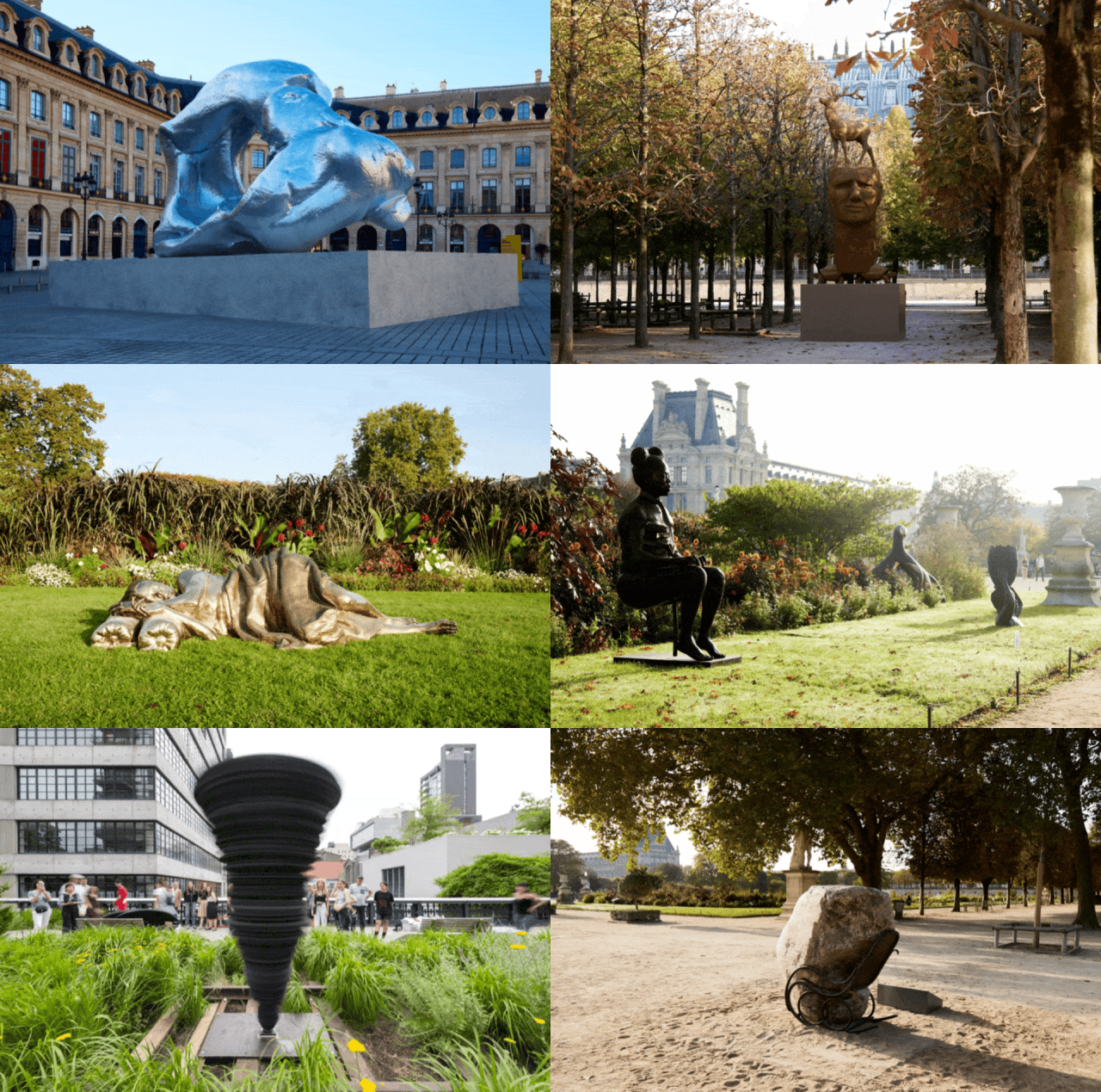
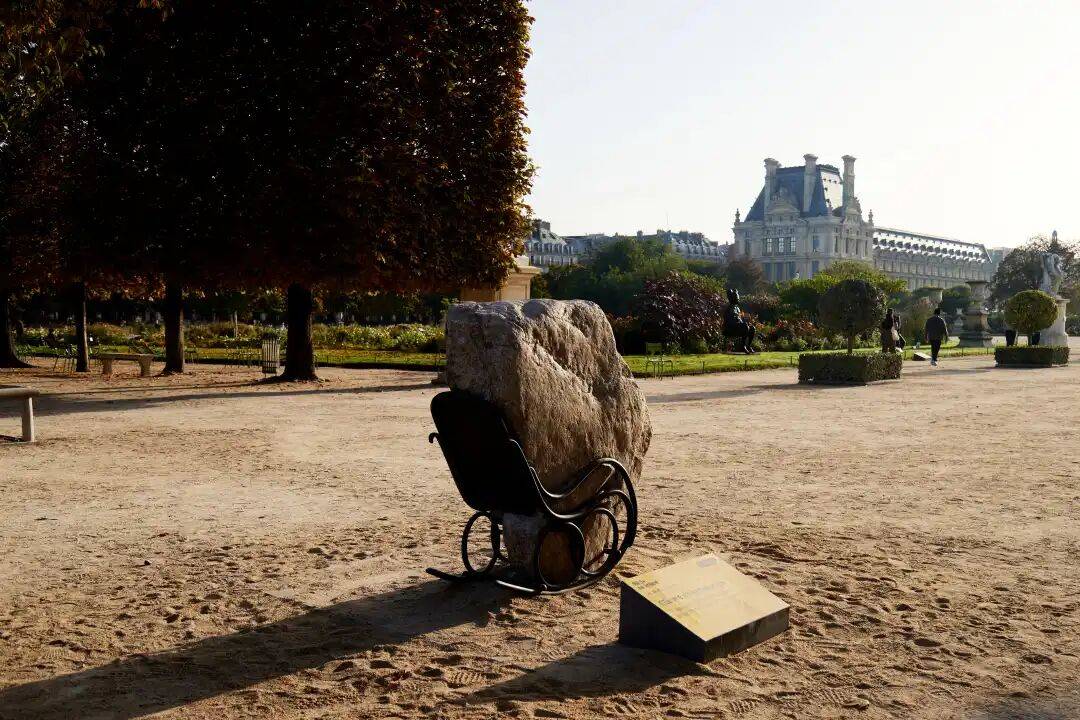
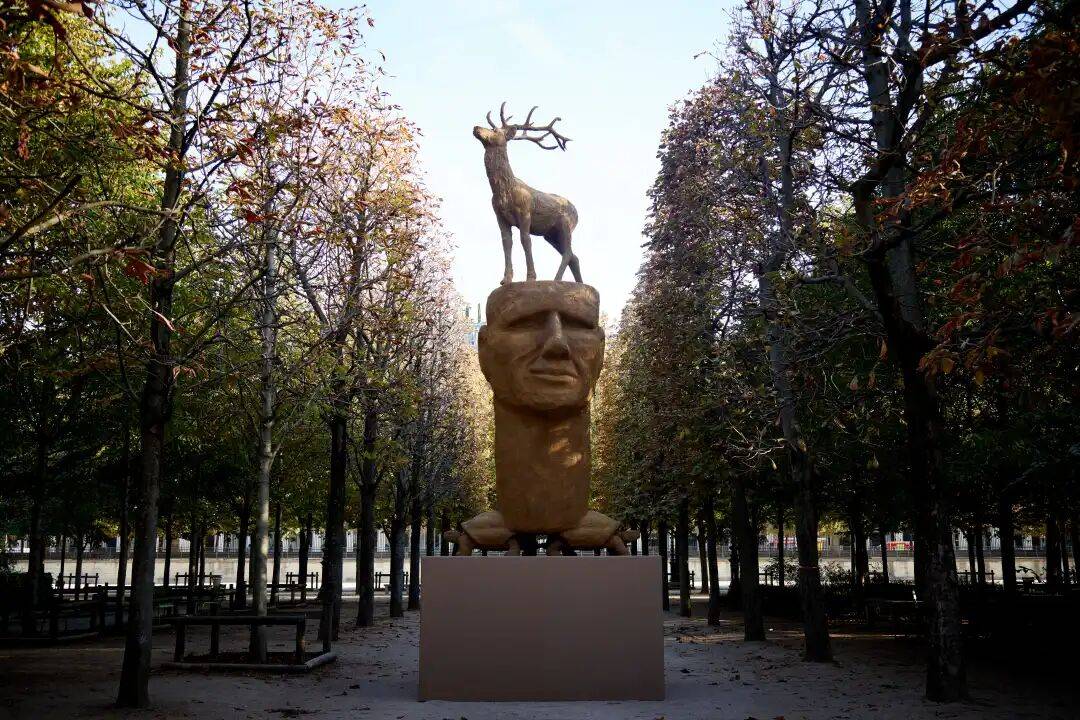
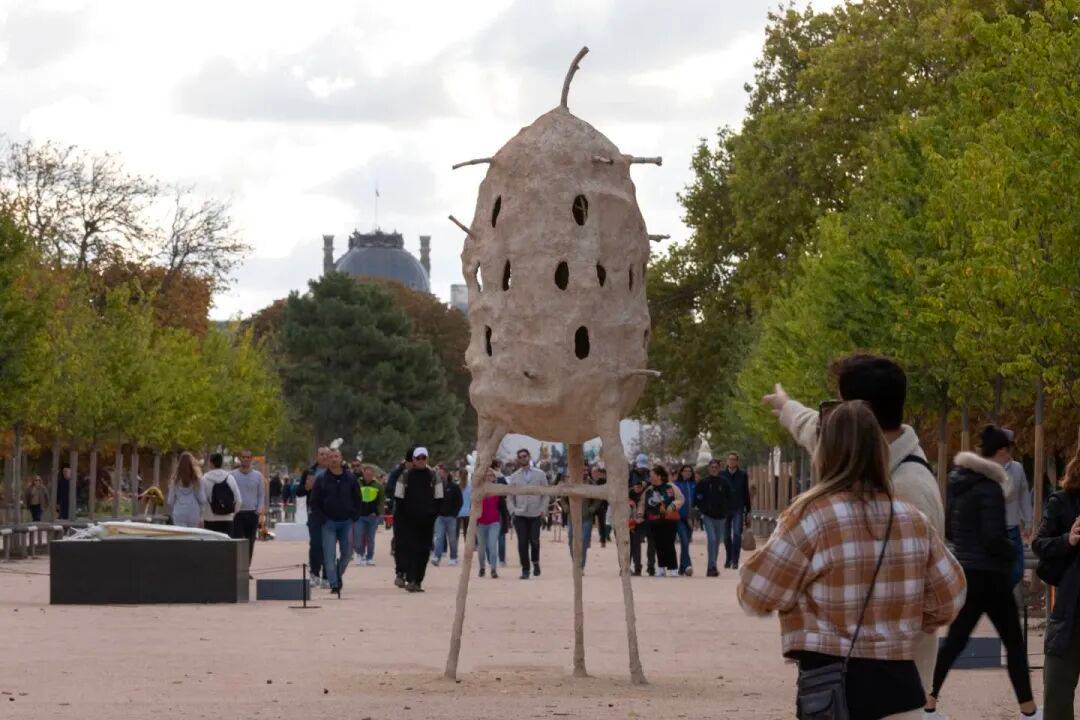
Works by Alicja Kwade, Stella Sella, 2023; Gloria Friedmann, Les Représentants, 2022; Solange Pessoa, Bronzôcos, 2005-2023; and Alex Ayed, Untitled (Belt el hmam I), 2023, appear throughout the park. Walking the tree-lined paths and lawns, you encounter contemporary works at every turn. In all, the Tuileries public project includes twenty-six works, more than ten of them new pieces from 2023, closely tied to nature, people, animals, and plants.
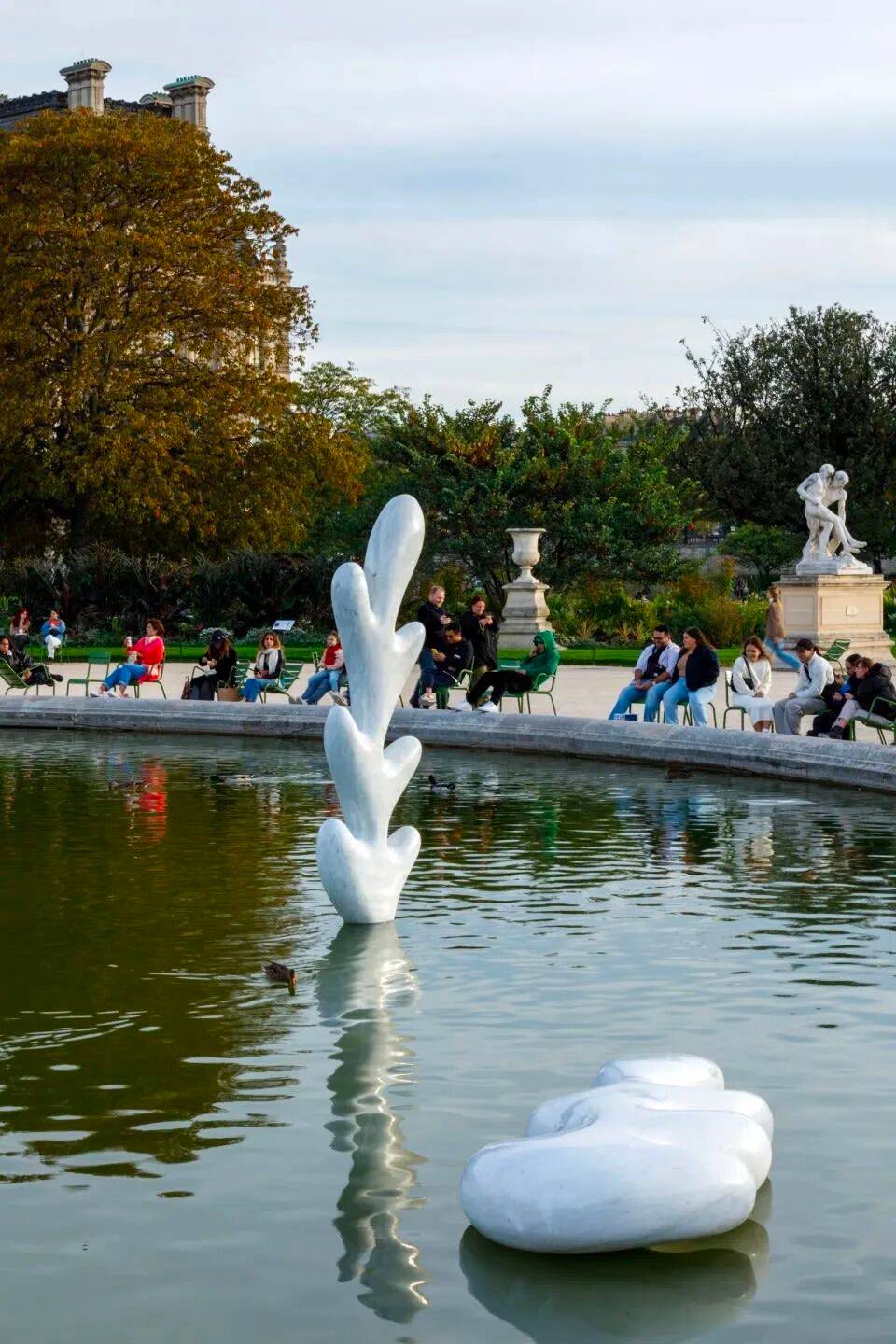
The curator Annabelle Ténèze told us that there is no rigid route through the exhibition. She wanted viewers to move freely through the garden and feel the energy of the dialogue between old architecture and contemporary art, and the way the two might merge, or seem to breathe together. Claudia Comte’s Five Marble Leaves, 2023, a special commission for the site, sets five enormous “fallen leaves” adrift on the garden’s pool in response to its trees, vegetation, and water.
Using marble, a material associated with permanence, Comte evokes the endless cycle of nature, autumn leaves falling and spring shoots returning. Tony Matelli’s Lion “Bananas,” 2022, is among the most amusing works on view: a lion sculpture heaped with bananas, carrying a sense of comic displacement. The bananas look uncannily real, though in fact they are cast in bronze and painted by hand.
The stone lion takes on the role of guardian of the garden. Damage to its legs gives the figure a weathered, battered look. Fresh fruit set against an old lion suggests the passage of time and the illusion of eternal youth. Meriem Bennani’s Windy, 2022, is the only moving work in the park, a kinetic sculpture with a lively, cartoonish force.
Made from an ultralight material, motorized foam discs, the work spins continuously, twenty-four hours a day, like a tornado from a comic strip escaping from a two-dimensional world into a three-dimensional one. On another pool floats a fifteen-part installation by Joël Andrianomearisoa, Serenade Serenade - Serenade And The Triumph Of Romance, 2023, created in response to Daphne Pursued by Apollo: glass vases are pierced through, and rainwater passes through them like a fountain of love.
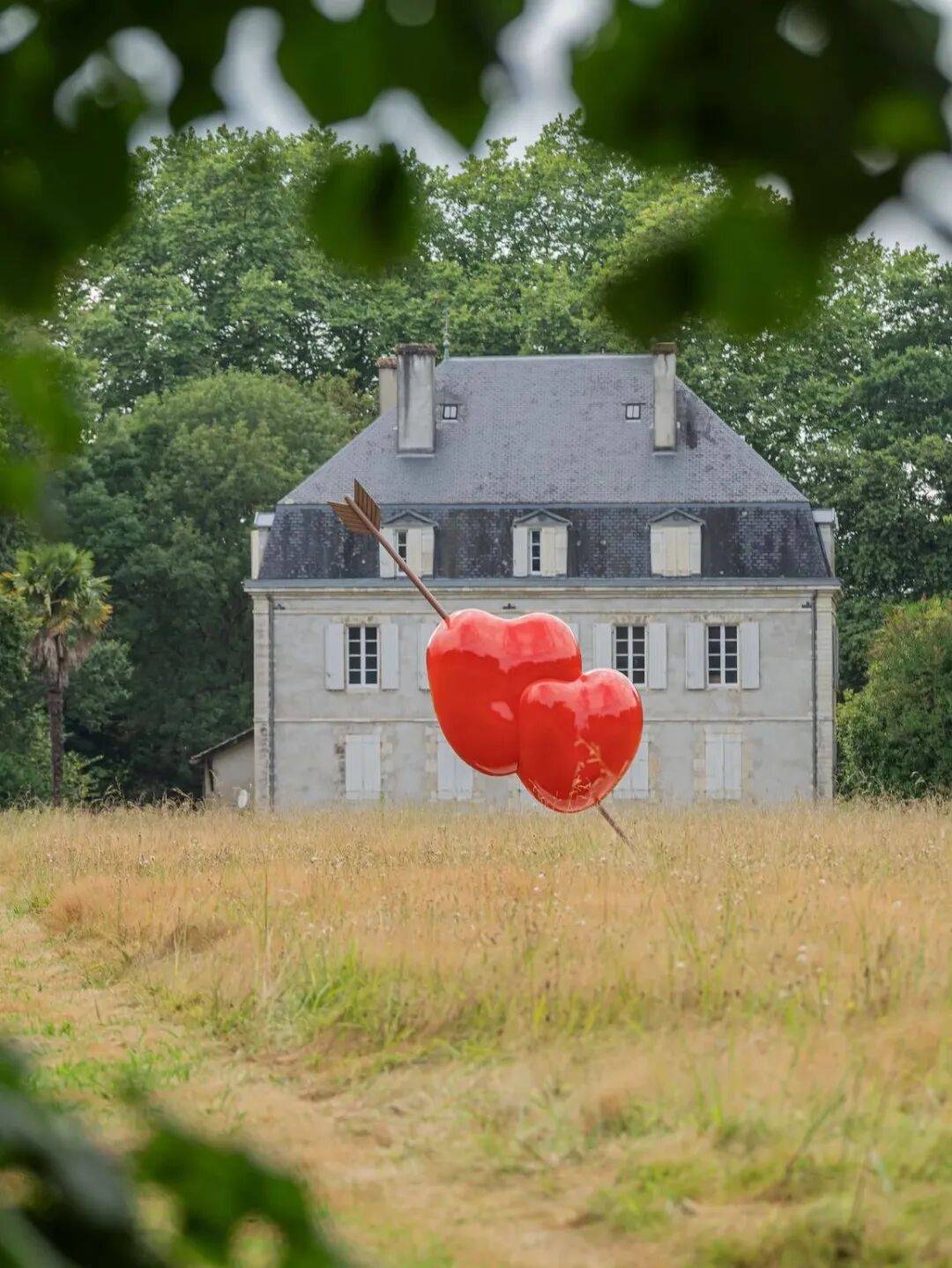
Gaetano Pesce’s Double Heart, 2022, a pair of red hearts transfixed by an arrow, stands out vividly on the grass. Pesce, an artist and designer with enormous weight in the history of contemporary design, developed the piece from an idea that branched off from a lamp he designed in 1969.
The work grows out of the artist’s vision of love in contemporary life: the garden is a place for strolling and for romance, and the pierced heart is symbolic while also carrying the possibility of uncertainty, even tragedy. Claudia Wieser’s But round my chair the children run, 2023, was made specifically for this exhibition. Because the Tuileries site was once home to a medieval tile factory, the artist used more than two thousand hand-glazed tiles to construct a bench that answers the site’s history.
The bench is spare but still commanding, and also inviting: viewers can quite literally use it as park furniture. Passersby, especially children, seem especially taken with the brightly colored “seat.” At Place Vendôme and the forecourt of the Institut de France, two historically significant squares in central Paris, public sculptures by the Swiss artist Urs Fischer and the American artist Sheila Hicks have been installed: Fischer’s five-meter aluminum Wave and Hicks’s six-meter woven work Vers des horizons inconnus.
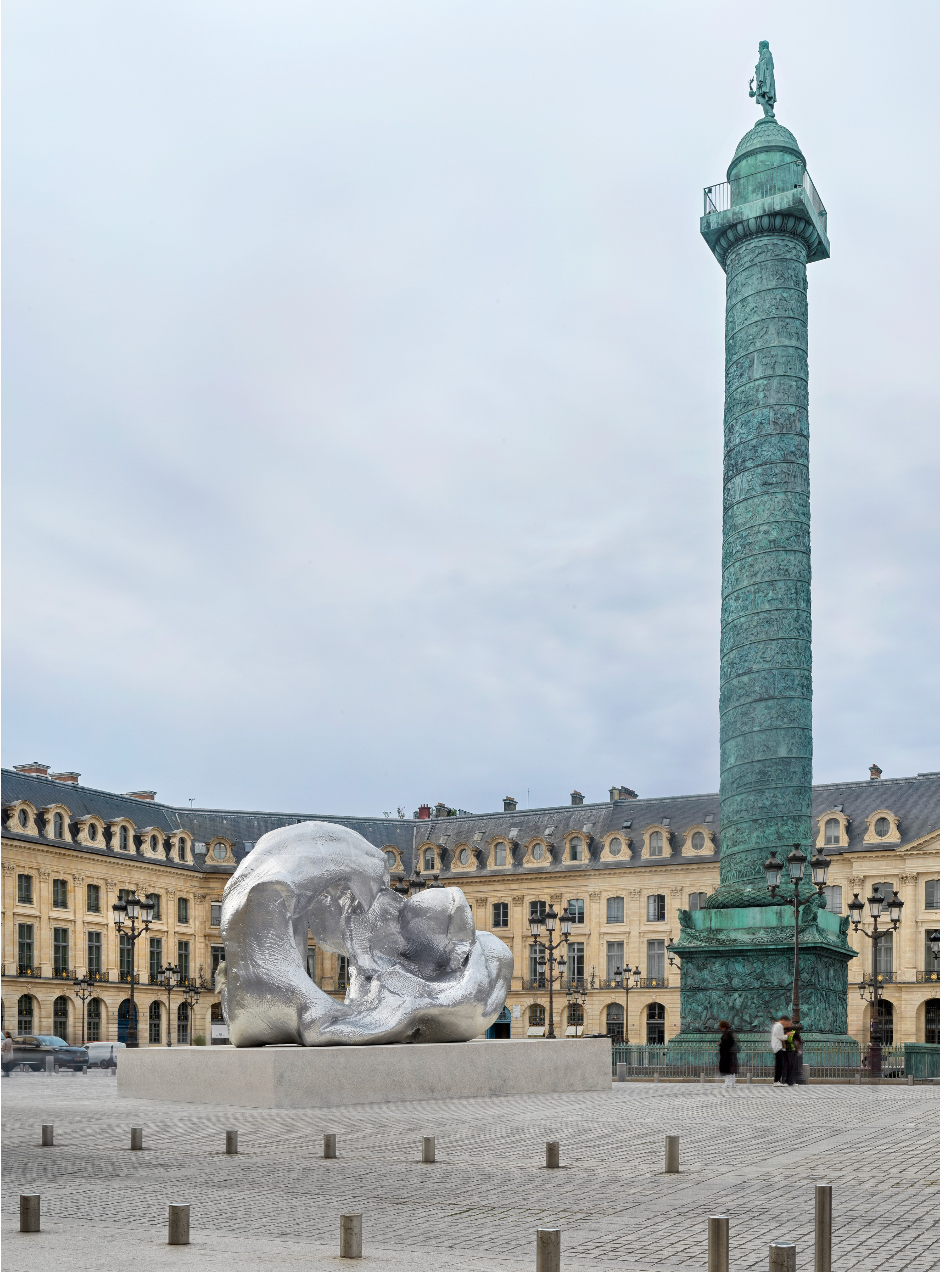
Urs Fischer’s Wave, 2018, installed at Place Vendôme in Paris in 2023, began as a lump of clay the artist pressed, kneaded, and squeezed by hand. He later enlarged that clay form and cast it as a monumental sculpture, so that viewers can see even more clearly the palm prints and finger marks embedded in its surface.
Fischer’s works in this series have continued to evolve from 2008 to the present. They possess a peculiar humor, oddly intimate, and reflect the artist’s exploration and discussion of sheer materiality. This work arrives in Place Vendôme like a blazing, gleaming wave, bringing a rough primality and a strange wit to the square. Sheila Hicks’s Vers des horizons inconnus, shown on the forecourt of the Institut de France in Paris in 2023, makes an even sharper visual impact.
Vers des horizons inconnus is made from knotted and twisted abrasion-resistant fibers in violet, blue, red, pink, orange, gray, brown, and other colors. Its palette is exceptionally bright, and it stands in striking contrast to the muted beige sandstone facade behind it and to the refined, severe presence of the Institut de France and the Pont des Arts.
“From the orientation of the sculpture, you can see the Pont des Arts, the Seine, and the Louvre on the opposite bank.
SECTION 02 | New contemporary works in the old square
“The idea of the ‘infinite’ is especially pronounced in this work. It cannot be defined, and it remains out of reach. It approaches the sky, and it also represents an exploration of the unknown,” the director of galerie frank elbaz, which represents the artist, told us. Hicks came from Mexico to Paris in 1964, and has lived and worked there ever since, becoming well known for large installations thick with textile forms.
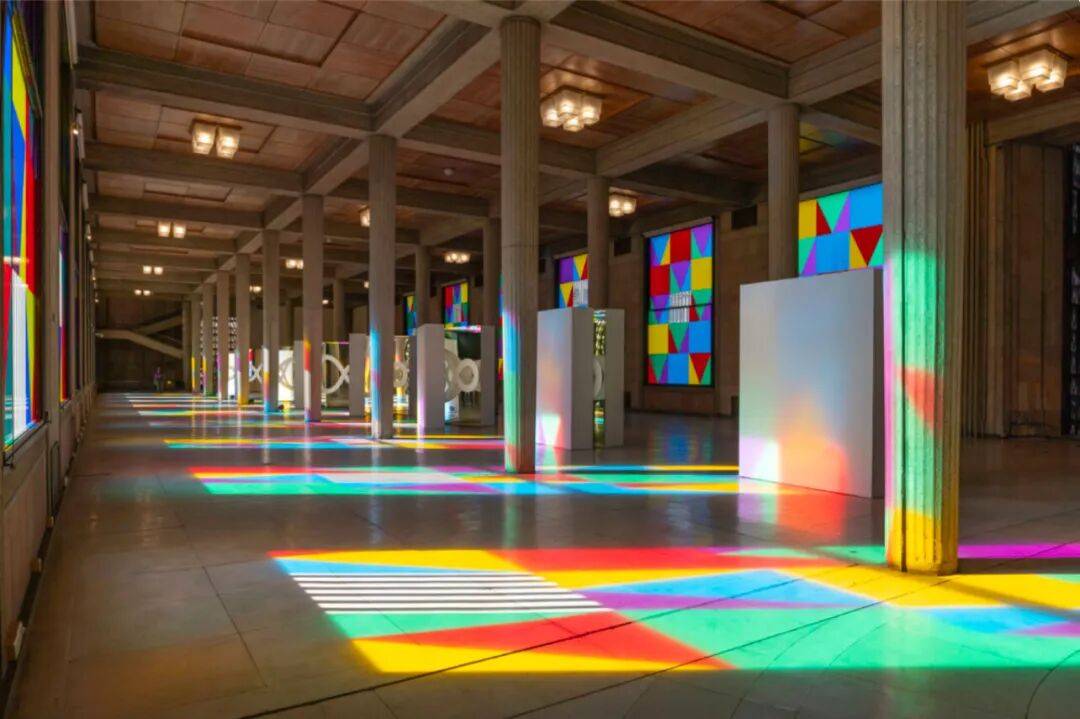
Twisting soft thread into straight, rigid columns is part of her exploration of colored woven materials. She sees the material as a source of limitless possibility, and as an antidote to rigid artistic categories. Set in Paris’s historic squares, the works by Urs Fischer and Sheila Hicks stage not only a juxtaposition of roughness and refinement, but also a collision between the present and history. At the Palais d’Iéna, works including Michelangelo Pistoletto’s Divisione-Moltiplicazione, 1973-2023, and Daniel Buren’s Plaisir tempéré (travail in situ), 2023, enter into yet another such encounter. Built in 1937 by Auguste Perret, the gray Palais d’Iéna is unlike the city’s marble palaces with their elaborate carved facades.
Its soaring interior has a monumental solemnity, while the unfinished concrete reveals a subtle polychromy, and the building’s layered structure creates distinctive patterns of light and shadow. At this 2023 exhibition in the Palais d’Iéna, the two-person presentation brings together Daniel Buren and Michelangelo Pistoletto.
Their works carry on a strange dialogue across temporal disjunctions, and seen as a whole within the space, they disrupt the palace’s existing color and structure, cutting it anew with exaggerated, brilliant geometric forms. The curator and art historian Matthieu Poirier told us, “The solemnity of the architecture can be shaken by the work of artists like Pistoletto and Buren, and I find that deeply moving.”
SECTION 03 | Arte Povera Meets Stripe Style
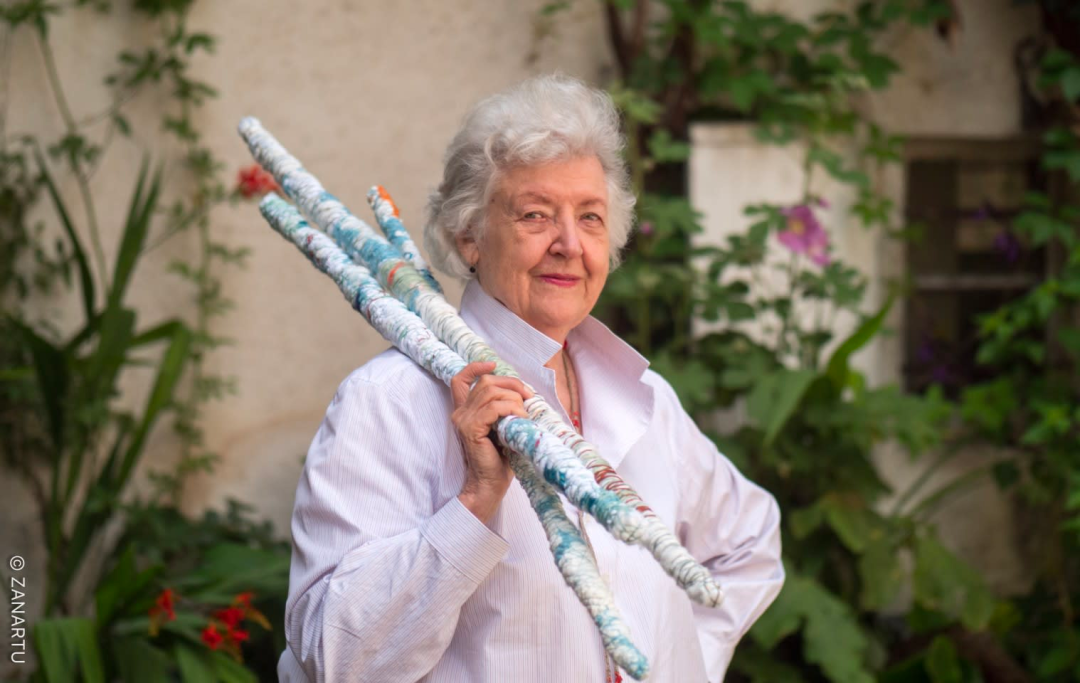
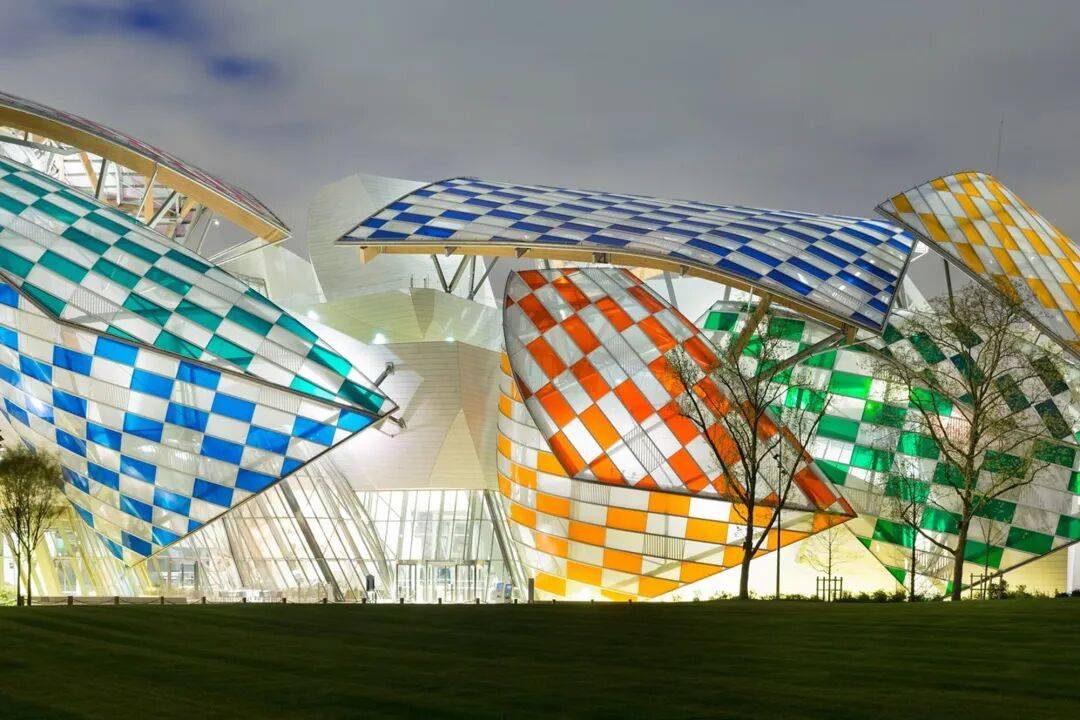
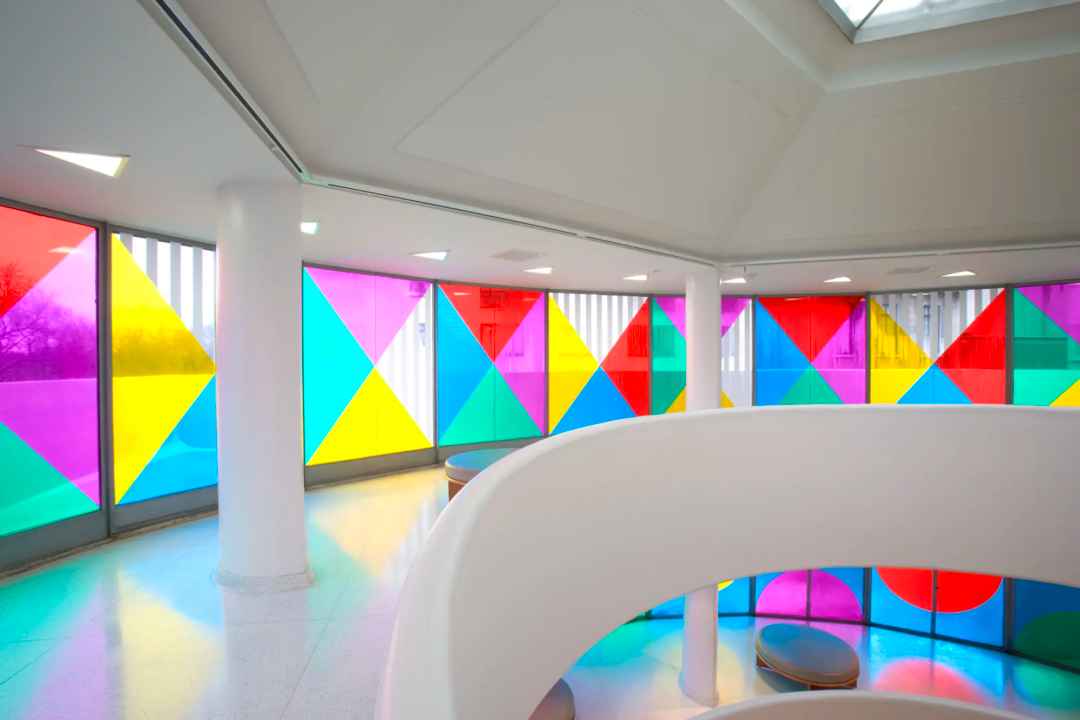
Daniel Buren’s practice can be traced here through images of the artist, of Observatory of Light at the Fondation Louis Vuitton in Paris, France, 2016, and of The Eye of the Storm at the Solomon R. Guggenheim Museum in New York, 2005. From 1960 to the present, Buren has explored the relationship between pattern and background. His signature industrial-fabric works alternate bands of color with fixed white vertical stripes measuring 8.7 centimeters wide.
Those stripes have become the central visual effect of his work; one glimpse of such a fabric installation, and you think of him at once. Beginning in 1967, he started making works in situ. His stripes have since appeared on streets, in galleries, museums, natural landscapes, and buildings around the world, and he has participated in the Venice Biennale as many as ten times. Whether in a natural setting or a built one, the site-specific nature of the work allows it to resonate and interact with its surroundings.
Images of Michelangelo Pistoletto accompany the exhibition, along with Mercury’s Gift in Mirror, 1971, and Venere degli stracci, 1967-1974. Pistoletto is a founding figure of Arte Povera. His work is held by some of the world’s best-known museums and institutions, including the Museum of Modern Art in New York, the National Gallery of Art in Washington, D.C., Tate Modern in London, the Centre Pompidou in Paris, and the Museo Reina Sofía in Madrid.
He has also participated in the Venice Biennale eleven times. Perhaps his best-known work, and the one most widely recognized by the public, is Venere degli stracci, in which a heap of old clothes in many colors is piled before a gilded classical sculpture, producing a sharp tension of opposites. At the Palais d’Iéna in 2023, Pistoletto’s Divisione-Moltiplicazione, 1973-2023, and Buren’s Plaisir tempéré (travail in situ), 2023, share the site to excellent effect.
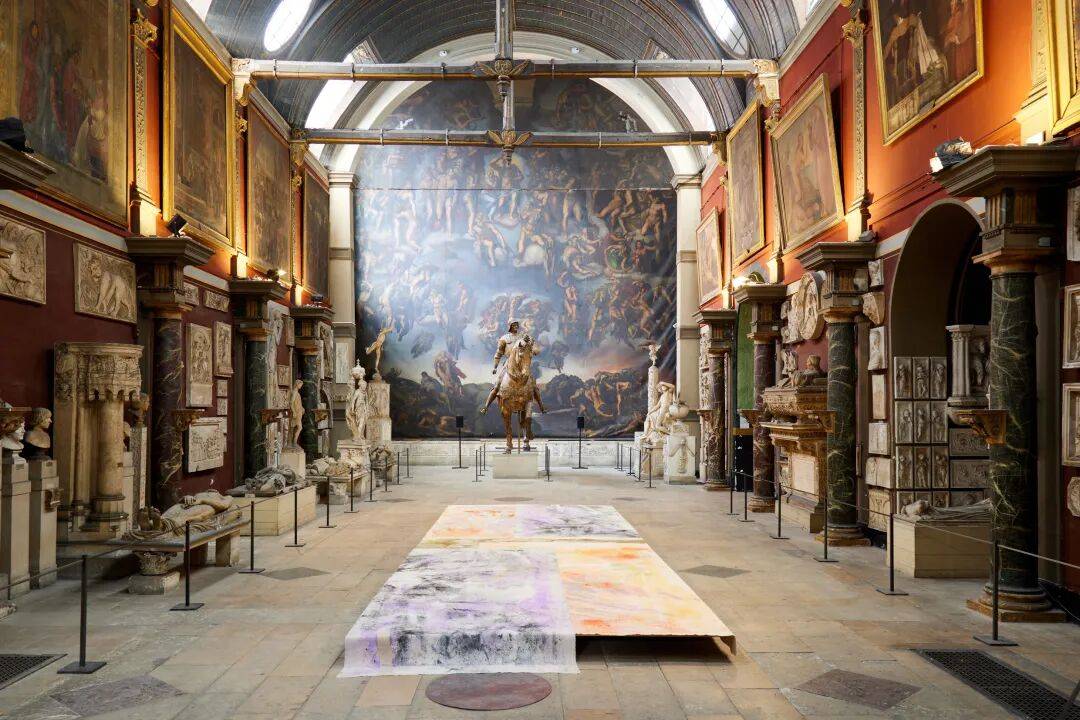
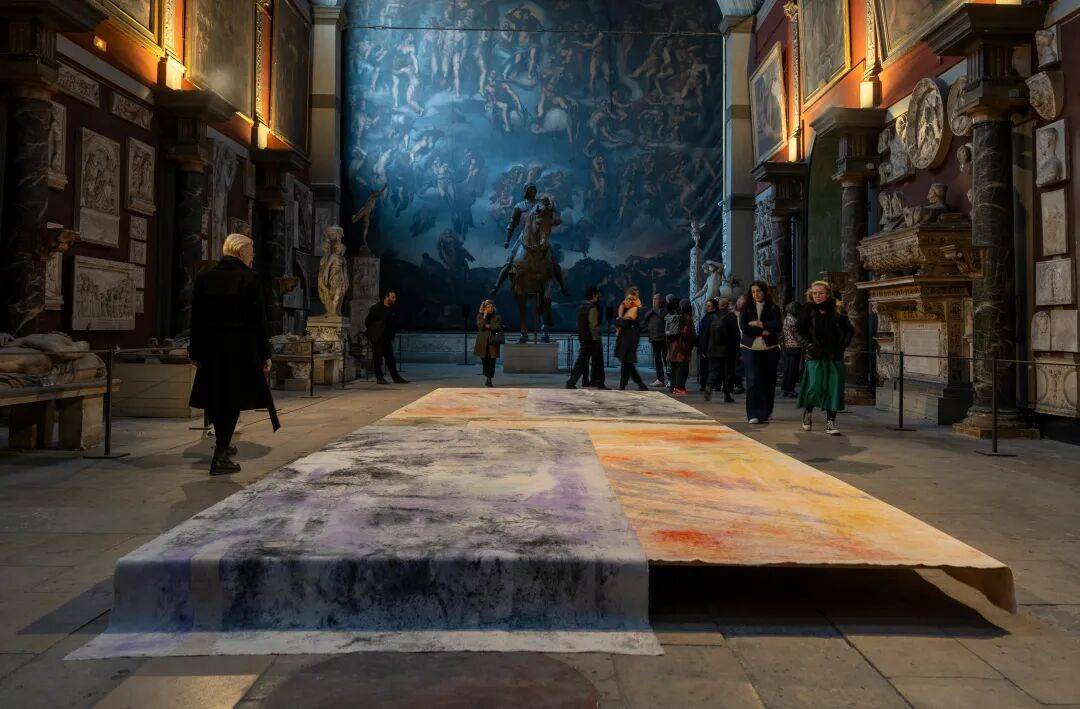
At the Chapel of Petits-Augustins, inside the École nationale supérieure des Beaux-Arts de Paris, there is a solo exhibition by the Welsh artist Jessica Warboys. The exhibition is also closely bound to nature. Its setting carries its own significance: as Delépine told us, the chapel was the first museum in France to open to the public, in 1798.
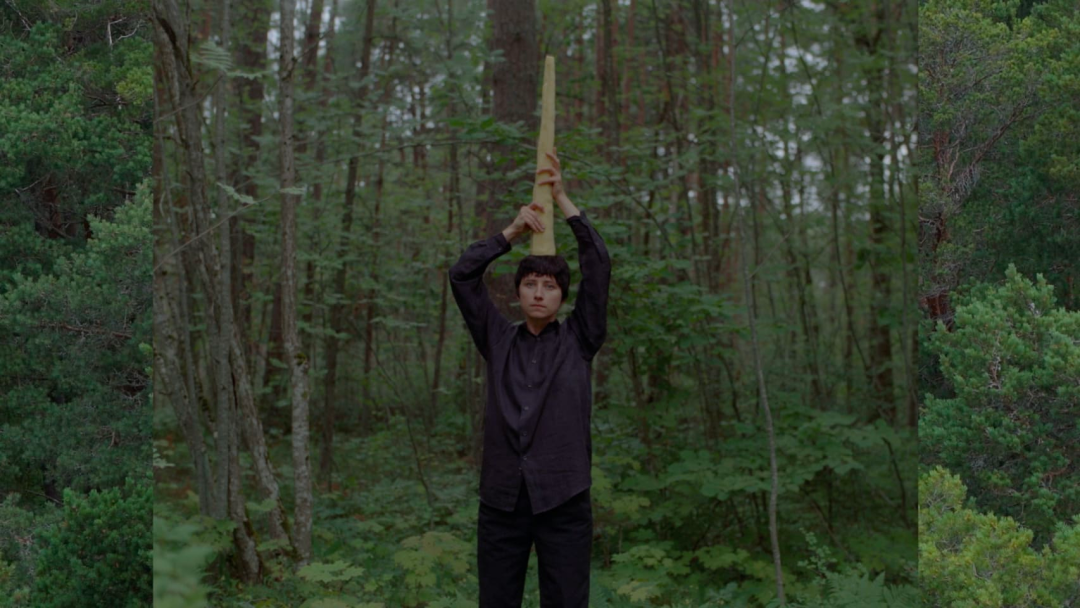
The moment we entered, we heard bats, their calls circling through the chapel and producing the disorienting feeling of being inside a cave. This is Warboys’s audio-video work THIS TAIL GROWS AMONG RUINS, 2023. “Normally we cannot hear the sounds of bats, but once they are down-sampled, the human ear can catch them,” the artist told us.
“They come from an abandoned seventeenth-century bat convent, Santa Clara-a-Nova, in Coimbra, Portugal. When I play the work in this chapel, it feels as if the bats’ cries can carry you from one building into another, and you hear the ghost song of nuns from the seventeenth century.” Warboys’s large collage of the same title, THIS TAIL GROWS AMONG RUINS, was made directly in nature.
Her process is unusual. In her “Sea Paintings,” she hauls a canvas up after it has been soaked in seawater, stretches it on the beach, and scatters mineral pigments directly onto the surface marked by the sea. The folds and creases of the canvas catch particles of color. Under the force of the wind, sand moves across the surface and creates singular shapes. In River Painting Fossbekken, 2022, part of her “River Painting” series, the process shifts somewhat.
First she brushes beeswax onto the canvas, then immerses it in river water, and only afterward scatters mineral pigments over it. As she explained to us, “The beeswax blocks both the river water and the potential staining of the pigment, allowing the overlapping wax lines to appear in the work.” In the exhibition, these works are laid out horizontally on structures like low tables, as if reconstructing the artist’s process. In the October streets of Paris, Delépine added, “Beyond the public projects, which are free and open to everyone, Art Basel works very closely with Paris’s art and cultural institutions and partners.”
Some of the world’s leading museums, including the Musée de l’Orangerie, the Musée d’Orsay, the Centre Pompidou, the Musée Picasso, and the Musée Rodin, as well as major private foundations established by powerful patrons, among them the Fondation Louis Vuitton designed by Frank O. Gehry, the Pinault Collection in the former Paris Bourse, the Lafayette Anticipations foundation, and the Fondation Cartier, have all mounted important artist retrospectives and thematic exhibitions during this autumn season.
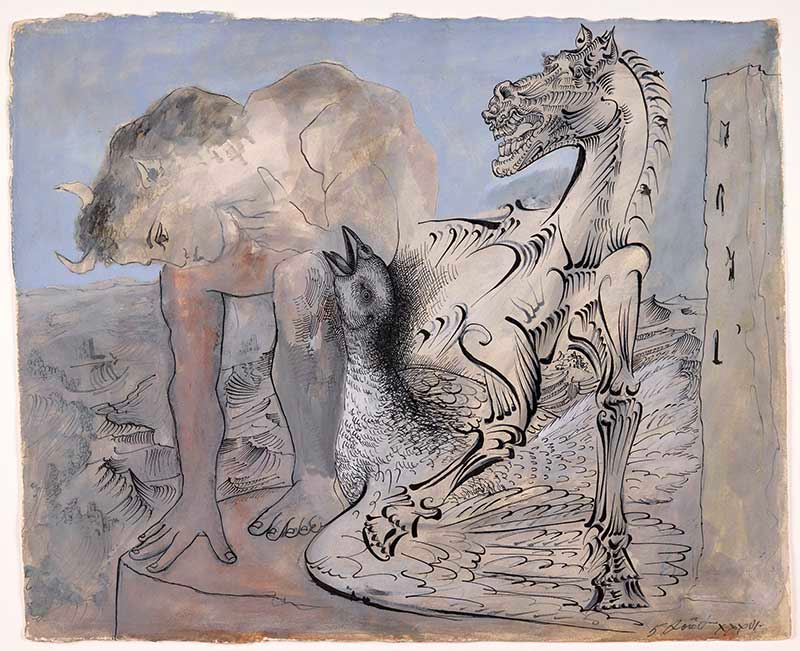
During the run of Art Basel Paris, it becomes possible, in a real sense, to tour Paris through art. Here are our main recommendations. At the Centre Pompidou, highlights include a special exhibition marking the fiftieth anniversary of Picasso’s death and a Chagall exhibition. Among the works on view is Pablo Picasso’s Flora, Horse and Bird, 1936. This year, the museum is also showing paintings, ceramics, and sculptures by Chagall from 1945 to 1970.
SECTION 04 | Travel through time and space in sounds and images
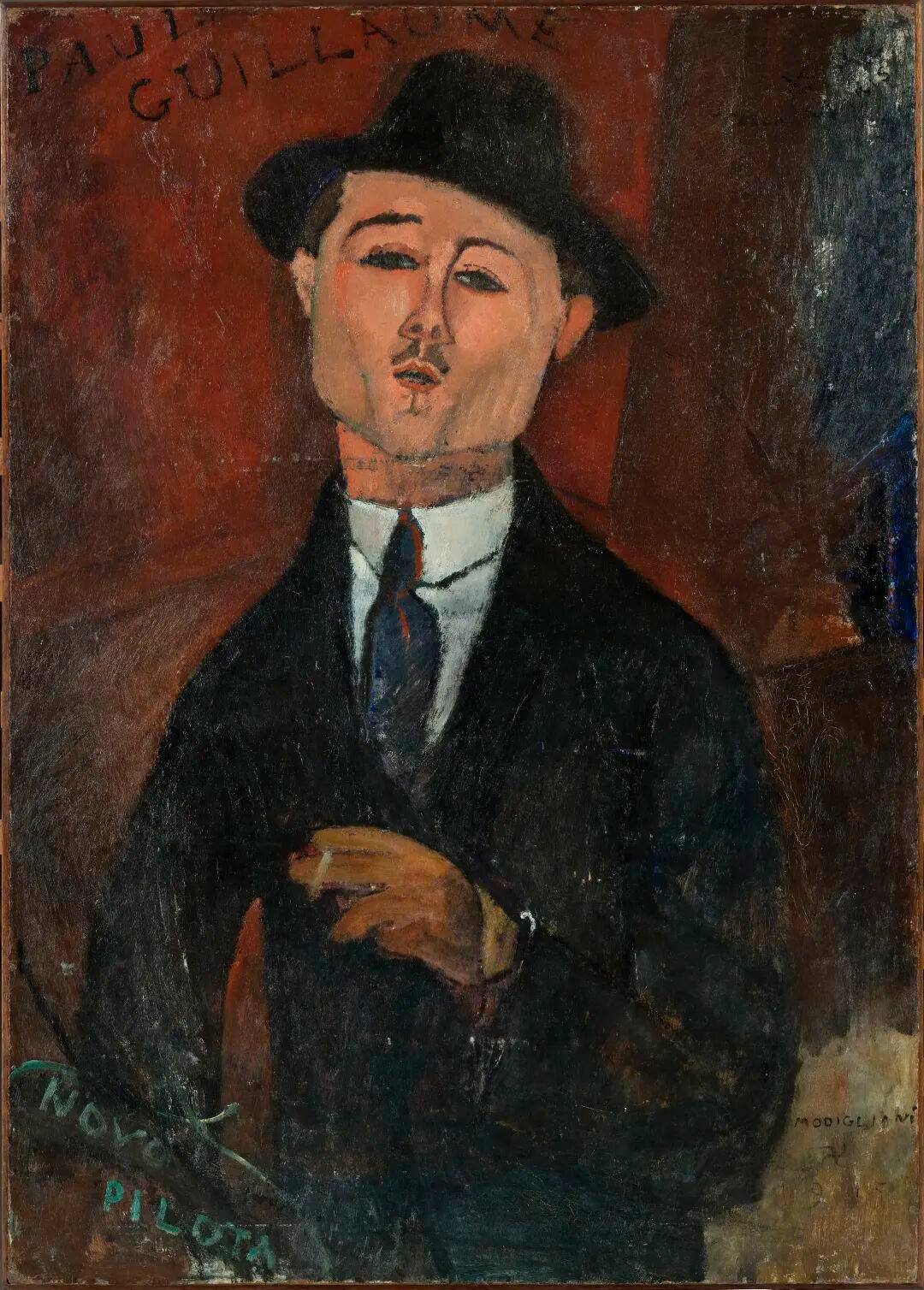
“The Centre Pompidou is also a classic example of how contemporary architecture can transform an entire neighborhood. Now it hosts a large number of creative events year-round, whether art exhibitions, fashion shows, film premieres, or theater performances,” Delépine told us. This year’s Conversations sector of Art Basel is also held at the Centre Pompidou. At the Musée de l’Orangerie, a major Modigliani exhibition includes Amedeo Modigliani’s Hébuterne Seated at a Table, 1919, and Paul Guillaume, Novo Pilota, 1915. Alongside the museum’s five works by Modigliani are eight important paintings, four sculptures, and six photographs, vividly tracing the artist’s career and his close relationship with the dealer and collector Paul Guillaume.
At the Musée d’Orsay, the notable shows are a Van Gogh exhibition and a solo presentation by Peter Doig. On view are Peter Doig’s exhibition at the Musée d’Orsay, Paris, 2023, and Vincent van Gogh’s Wheatfield Under Thunderclouds, 1890, from the Van Gogh Museum in Amsterdam. At the Fondation Louis Vuitton, the highlight is a special exhibition marking the one hundred twentieth anniversary of Mark Rothko’s birth. The building, designed by Frank O. Gehry and photographed by Iwan Baan in 2014, serves as the setting for the Fondation Louis Vuitton’s Rothko retrospective in 2023, described as the largest since 1999.
At the Pinault Collection, the attractions include the architectural transformation by Tadao Ando and a major Mike Kelley exhibition. The institution, housed in the former Paris stock exchange, is presenting a large exhibition devoted to the late American artist Mike Kelley, known for his Superman “Kandor” series, along with a solo show by the artist Lee Lozano titled Strike.
The building itself, as well as Pinault’s personal collection, is also a major draw. At the Fondation Cartier, the highlight is a special exhibition by the hyperrealist sculptor Ron Mueck. Installation views from 2023 show a group of works by the Australian artist, including his signature installation Mass, 2017, along with new pieces created especially for this exhibition and previously unseen in France.
At the Musée d’Art Moderne de Paris, the focus is a solo exhibition by the American artist Dana Schutz, Visible World. Schutz’s Mountain Group, 2018, appears among roughly forty paintings, twenty drawings and sculptural works, and seven sculptures made since the early 2000s. It is the first time the artist’s work has been shown on such a large scale in France.
Five New Exhibitions in Paris Landmarks, All Free to See
Schutz’s work is always charged with narrative, constructing a universe made up of turmoil, frenzied human beings, catastrophic environments, and material disaster. At Lafayette Anticipations, the highlight is the juxtaposition of solo exhibitions by younger artists and fashion designers. Akeem Smith’s Pigeon Coop, 2020, photographed by Pierre Antoine, appears there alongside new work by Smith, an artist who also works as a designer.
SECTION 05 | Paris has all the rich and exciting art options
At the same time, works by the British artist Issy Wood, including Study for No, 2019, photographed by Stephen James, are installed in the foundation’s spaces as well. The two artists differ in gender, but the similarities and internal dialogue in their artistic vocabularies are strikingly interesting. At the Grand Palais Éphémère, where Art Basel Paris takes place, Delépine noted that more than one-third of the participating galleries maintain gallery spaces in France. During the fair, many of them are also mounting especially important exhibitions in their Paris locations.
“If you wander the small streets around the Grand Palais Éphémère, you can witness a vibrant artistic phenomenon. From galleries focused on twentieth-century masters to galleries representing a fearless young French art scene, the choices are both rich and exhilarating,” Delépine said. At Galleria Continua’s Paris space, for instance, there is a large retrospective, Double Exile, devoted to the Chinese artist Chen Zhen, who died in 2000, bringing together nearly all of the signature works of his career.
He planted fresh flowers in cow dung, built houses from candles, made chime stones from wooden barrels, created giant beds and drum skins, and turned the internal organs of his own tormented body into glass vessel forms laid out across a table. The work is full of reflections on travel, health, and homeland. At Perrotin’s Paris space, meanwhile, a major exhibition by the Chinese artist Chen Ke has just opened. The artist is shown in the gallery with the exhibition Bauhaus Gal - Theater in 2023.
The exhibition includes thirty-six new works by Chen Ke from 2023. Her Bauhaus girls look independent and self-possessed, though not overtly aggressive; they carry a gentleness and a polite distance, a hardness wrapped in softness. Light in the paintings shifts between concealment, haze, and clarity. That uncertainty gives the work its dramatic quality and invites the viewer to keep searching within the image. At Hauser & Wirth’s Paris space, newly opened last week, the inaugural exhibition is a presentation of new work by the Los Angeles artist Henry Taylor, titled From Sugar to Shit, shown in 2023 and featuring paintings and sculpture.
The title alone suggests the artist’s singular style: he both accepts and refuses the principles of traditional painting, along with any formal label. Even with our schedule filled past capacity, we still missed a number of compelling exhibitions and events, and that left a certain regret. As art-media workers focused on contemporary art, we felt keenly during this week in Paris how powerful an effect art can have on a city. Through contemporary art, we came to see a once-familiar city anew. Images in the source also included Emmanuel Macron at Art Basel Paris, 2022, and views of Art Basel Paris within the cityscape, 2022.
It prompted us to look at the city’s historic architecture and cultural lineages from another angle, and to see the surrounding natural and human landscape differently, in a way that might open us to greater cultural plurality and to the imperfect human community itself. And at a moment of global instability, it offered a powerful consolation and a source of inner strength. Image credits in the source were given to Art Basel and the related galleries.