Art Basel Paris: Why It Ranks First for So Many Collectors
In mid-October, beneath Paris’s almost excessive sunlight, Art Basel opened at the Grand Palais for the first time after three years of renovation. We encountered familiar Chinese collectors throughout the fair, united in their verdict: “The venue is too beautiful. Paris has absolutely won.” Public art had taken over Avenue Winston Churchill, just one block away......
By / Xirui Huang · 15 min read
Why was the Art Basel Paris experience in 2024 connected with the wider city?
Art Basel Paris moved into the restored Grand Palais in 2024, making daylight and the building’s open structure part of the viewing experience. Interviews with Clément Delépine and three Chinese collectors extend the report from booths to public art and exhibitions at the Centre Pompidou, Fondation Louis Vuitton and Pinault Collection. Encounters across these places connect art history with contemporary practice, turning the fair into an entry point to a wider exhibition network.
Art Basel Paris: Stunning Architecture Brings the Ultimate Viewing Experience
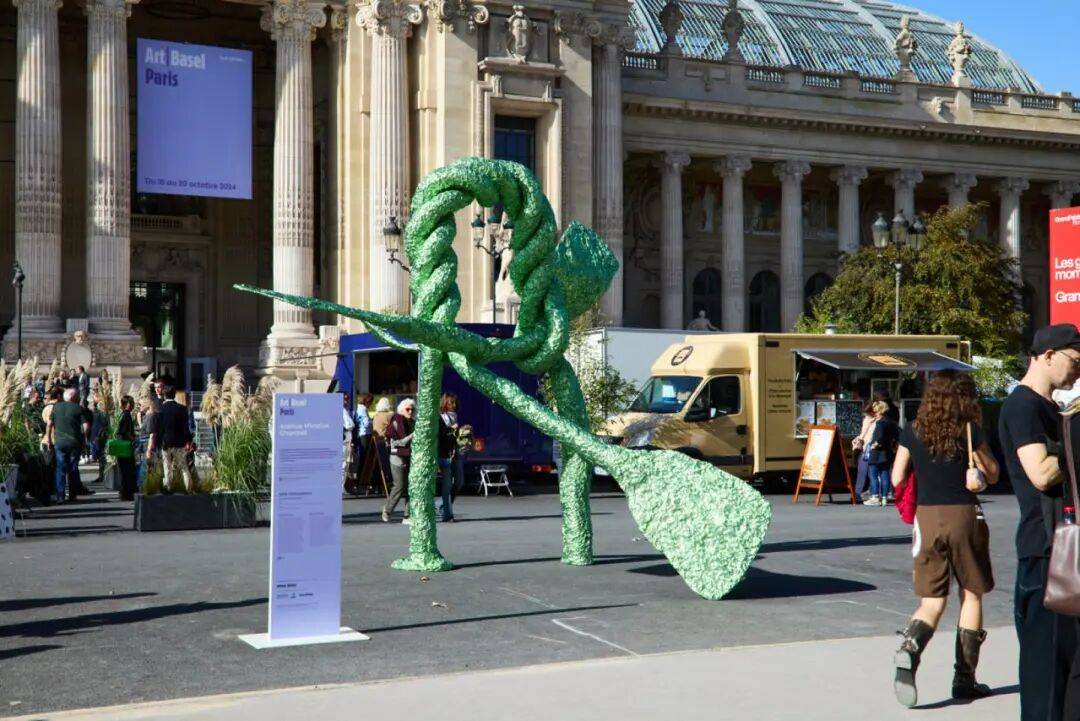
In mid-October, beneath Paris’s almost excessive sunlight, Art Basel opened at the Grand Palais for the first time after three years of renovation. We encountered familiar Chinese collectors throughout the fair, united in their verdict: “The venue is too beautiful. Paris has absolutely won.” Public art had taken over Avenue Winston Churchill, just one block away and within walking distance: Yayoi Kusama’s enormous pumpkin, Jean Prouvé’s “Little House,” John Chamberlain’s vivid green abstract sculpture, and more.
Art Basel Paris’s public-art project, 2024. At the same time, major institutions including the Louvre, the Fondation Louis Vuitton, the Pinault Collection, and the Fondation Cartier pour l’art contemporain opened major exhibitions. The Centre Pompidou presented not only a centenary survey of Surrealism but also a group exhibition of “a new generation of Chinese artists.” As the only mainland Chinese media outlet officially invited, we spoke with Clément Delépine, the fair’s director, about its latest developments, and with three seasoned collectors of different generations—Zhang Qiong, Zhang Ran, and Zhou Chong—about their days in Paris.
SECTION 01 | Translucent exhibition in the Grand Palais, where is the new?
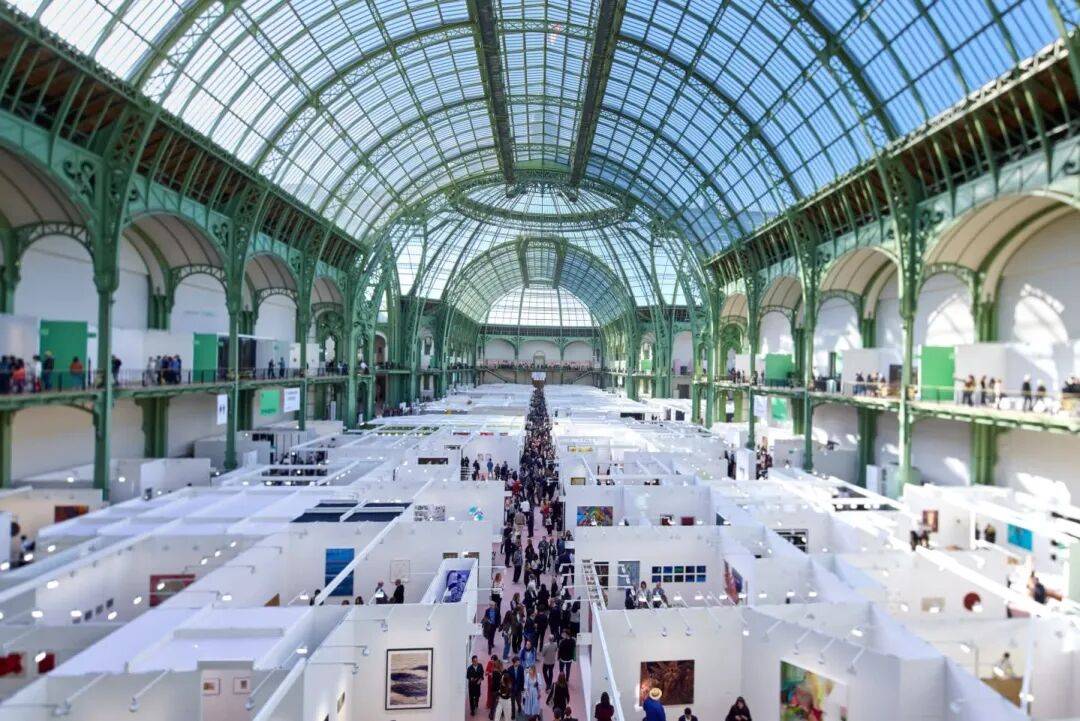
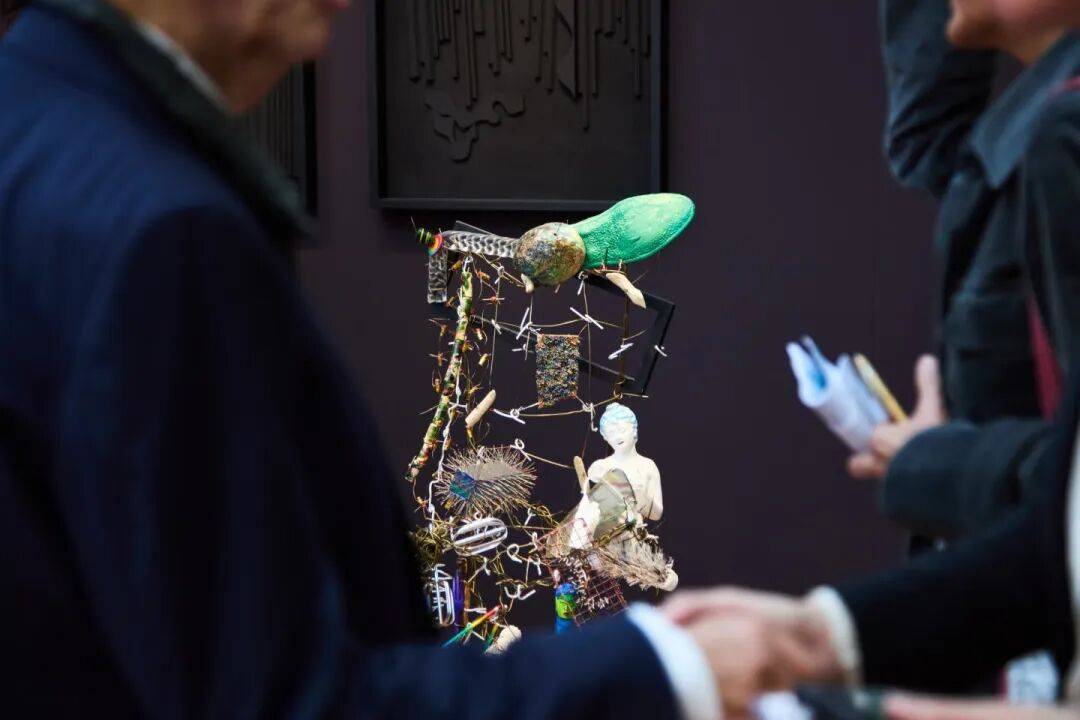
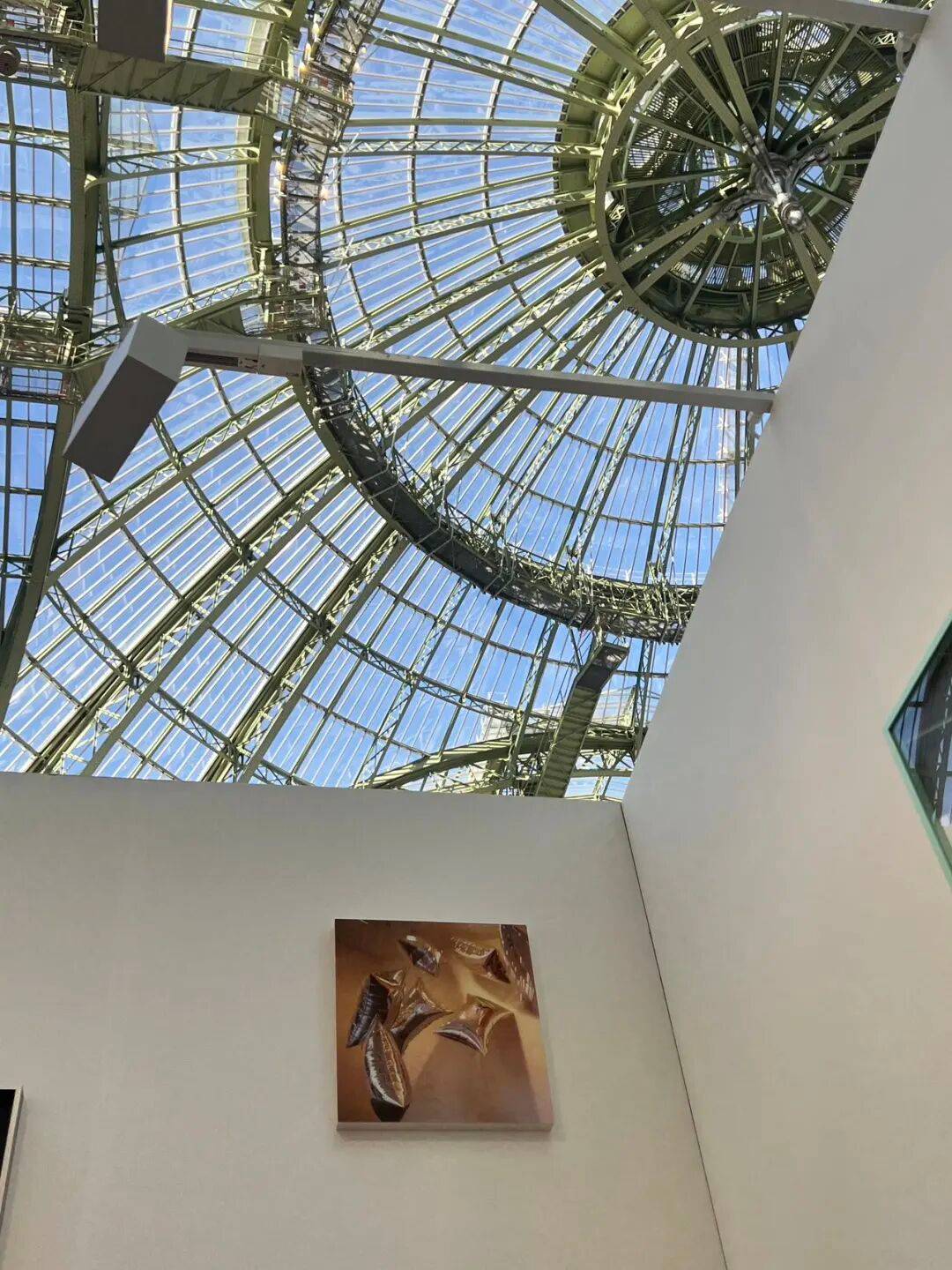
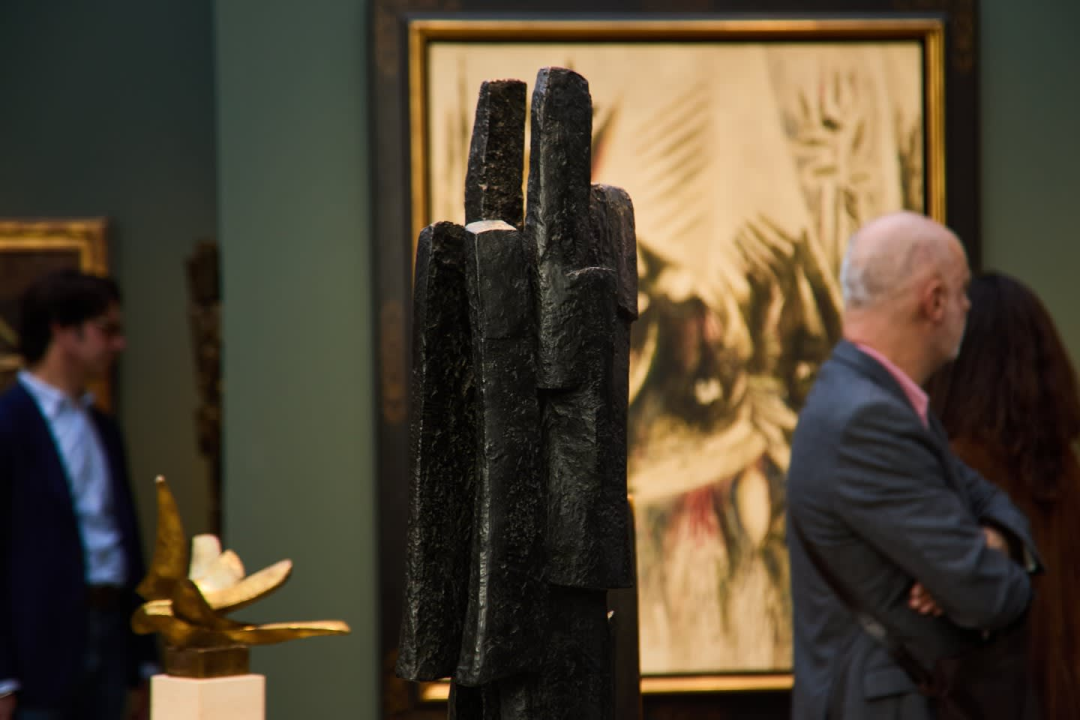
Art Basel Paris, 2024. Entering this year’s fair, we were healed by the sunlight before we had even begun looking at the art. Daylight poured through the pale-green glass-and-iron dome, built in 1900 and entirely transparent, bathing every work in a thin wash of gold. Natural light, the translucent white scrims suspended above some booths, and the booths’ own illumination produced an interplay of light and shadow unlike anything we had experienced at an art fair before.
Before seeing a single work, the venue itself had already raised our expectations to their limit. White Cube booth, Art Basel Paris, 2024. Schipper & Cie. booth, Art Basel Paris, 2024. The fair’s layout largely followed the familiar logic of viewing. The central section near the entrance was occupied by major galleries with branches around the world, including Gagosian, Lisson, Gladstone, Hauser & Wirth, White Cube, Evergreen, Perrotin, Pace, David Zwirner, Almine Rech, and Schipper & Cie.
“This edition of Art Basel Paris consists of three sections: the traditional Galeries section, presenting work by the world’s most renowned galleries; Emergence, which presents solo booths by artists from galleries founded within the past ten years; and the new Premise section, devoted entirely to works made before 1900,” Delépine, the fair’s director, told us.
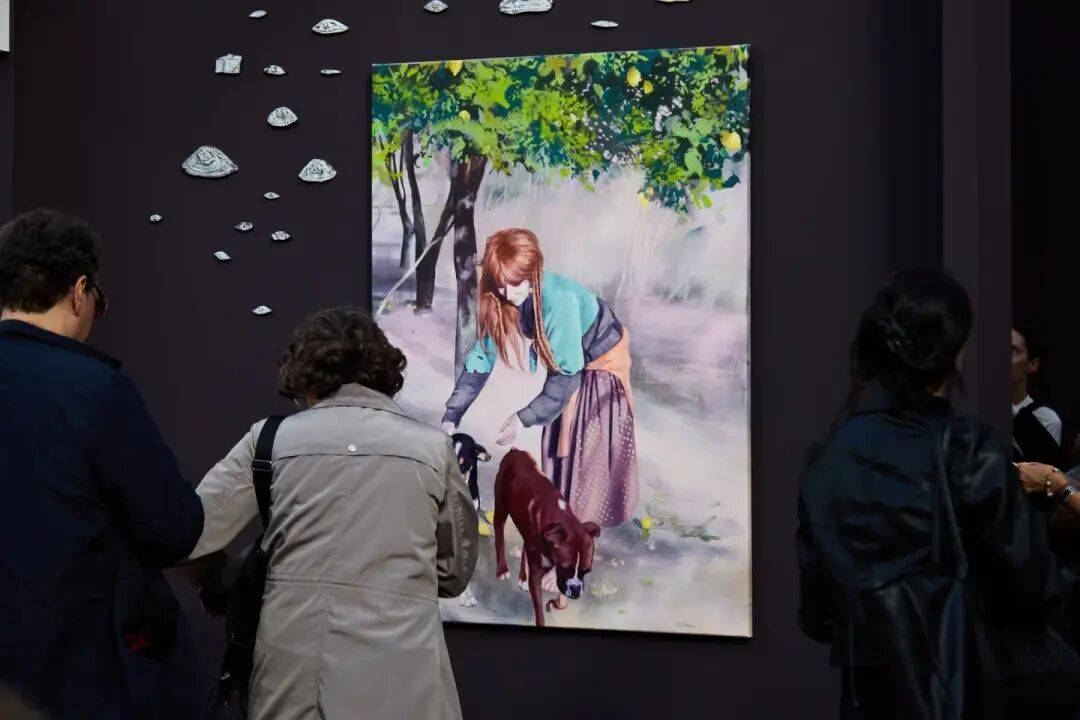
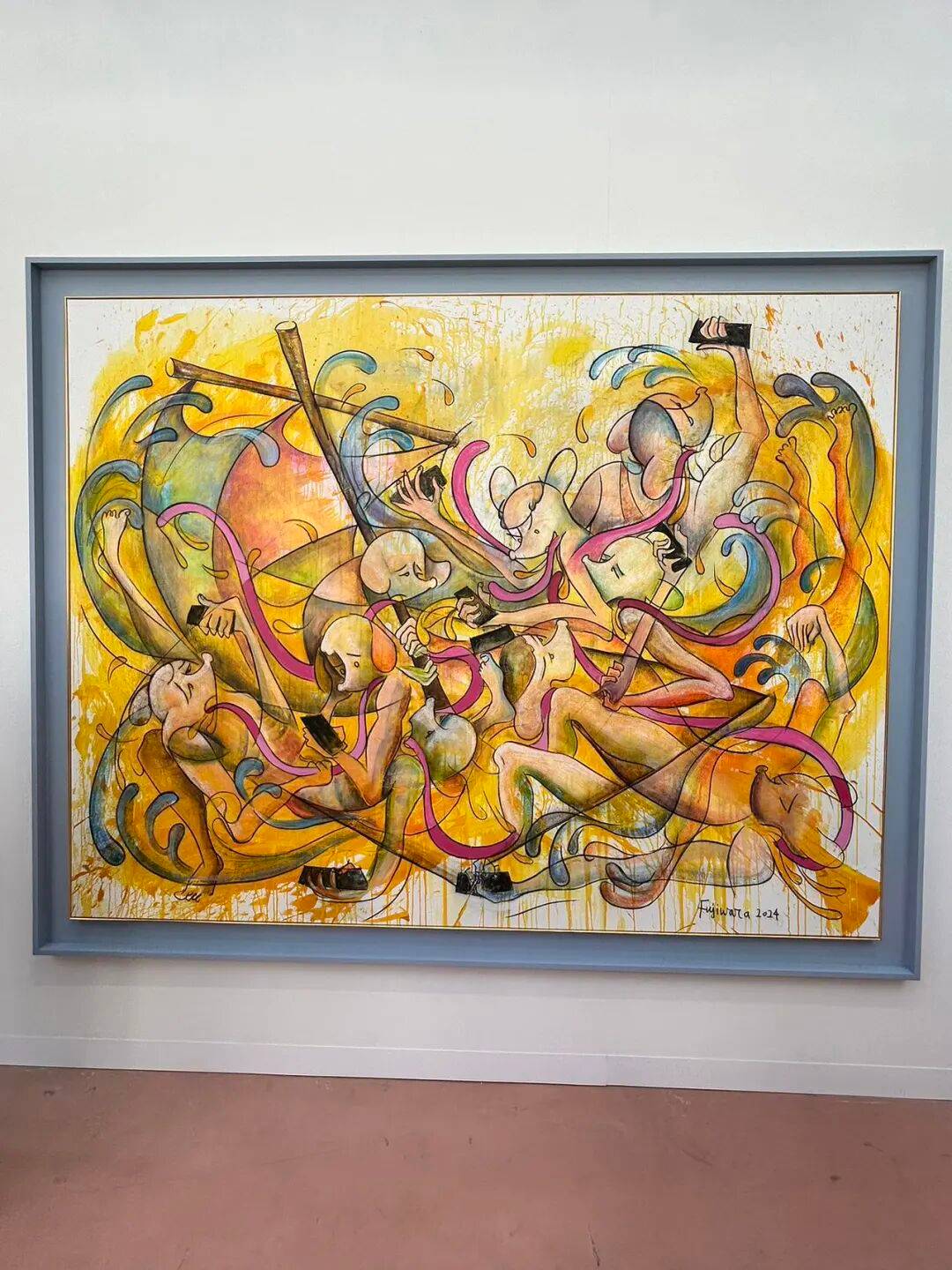
Gagosian booth, Art Basel Paris, 2024. The international blue-chip galleries brought substantial works. White Cube presented Julie Mehretu, the most expensive living female artist, as well as a rare sculpture by Tracey Emin. Gagosian focused on the Pop artist Tom Wesselmann, whose latest major retrospective, “Pop Forever, Tom Wesselmann & …,” is on view at the Fondation Louis Vuitton.
Hauser & Wirth booth, Art Basel Paris, 2024. Evergreen Gallery booth, Art Basel Paris, 2024. Gladstone brought works by Robert Rauschenberg. The enormous spider by Louise Bourgeois was impossible to miss at Hauser & Wirth. At Evergreen, the clear centerpiece was Michelangelo Pistoletto, a leading figure of Arte Povera, who also occupies a central position in the “Arte Povera” exhibition currently on view at the Pinault Collection.
Pace’s booth was curated by the artist Paulina Olowska, and its deep-purple walls stood out among the surrounding white booths. David Zwirner booth, Art Basel Paris, 2024. Michael Werner booth, Art Basel Paris, 2024. Michael Werner and Thaddaeus Ropac independently brought works by Georg Baselitz.
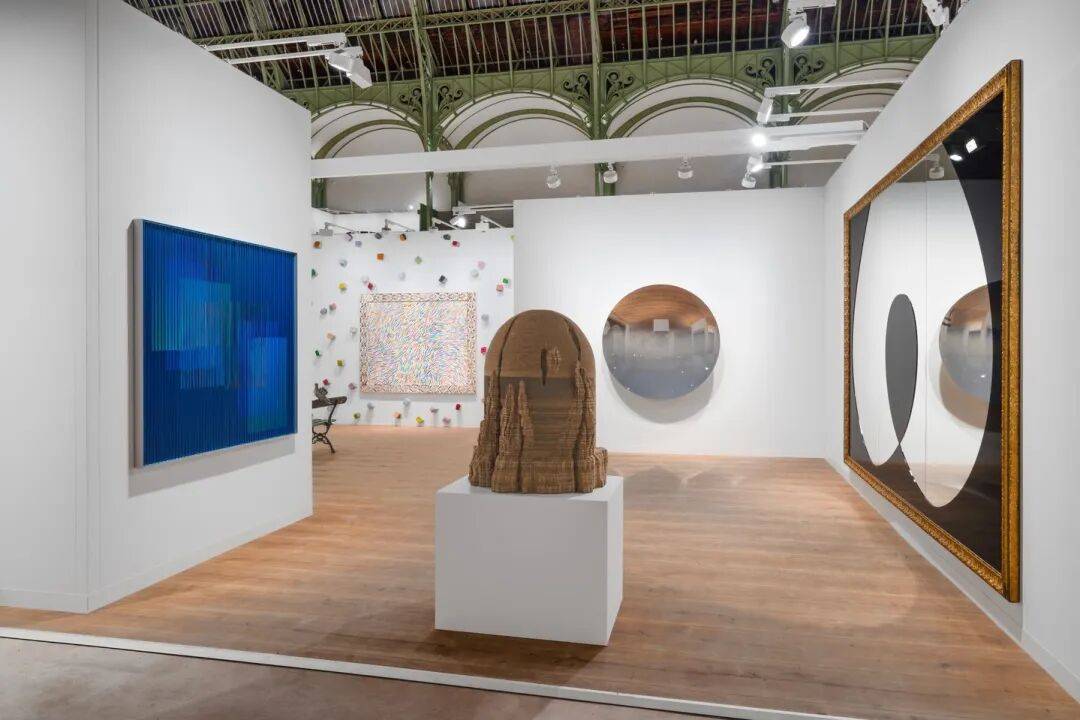
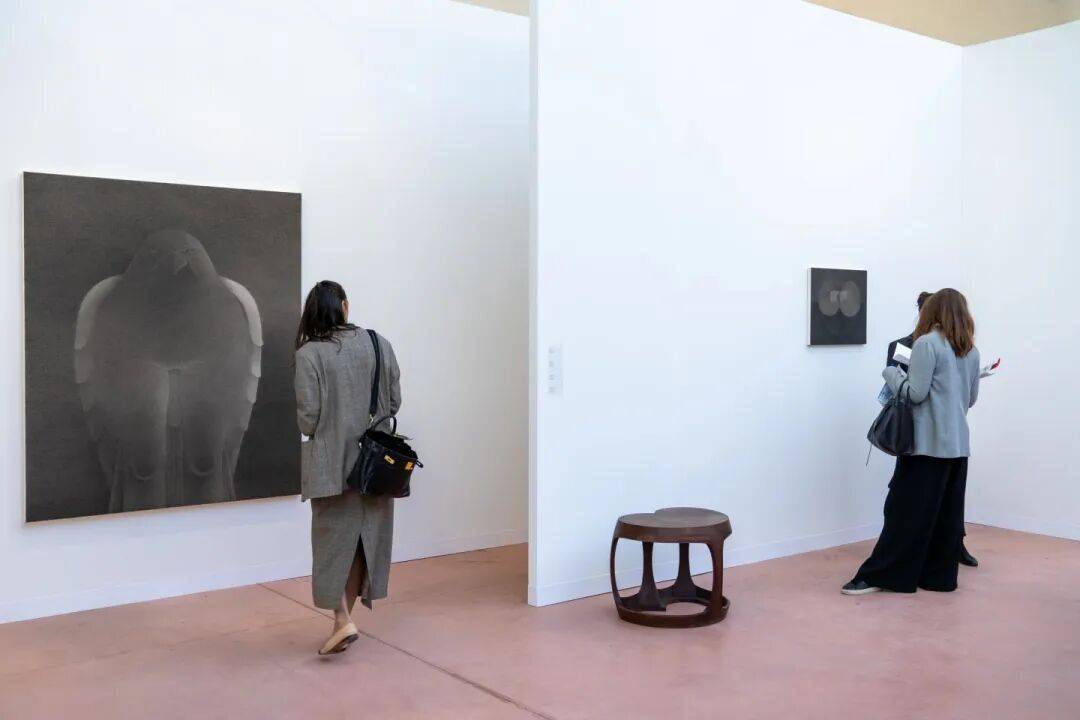
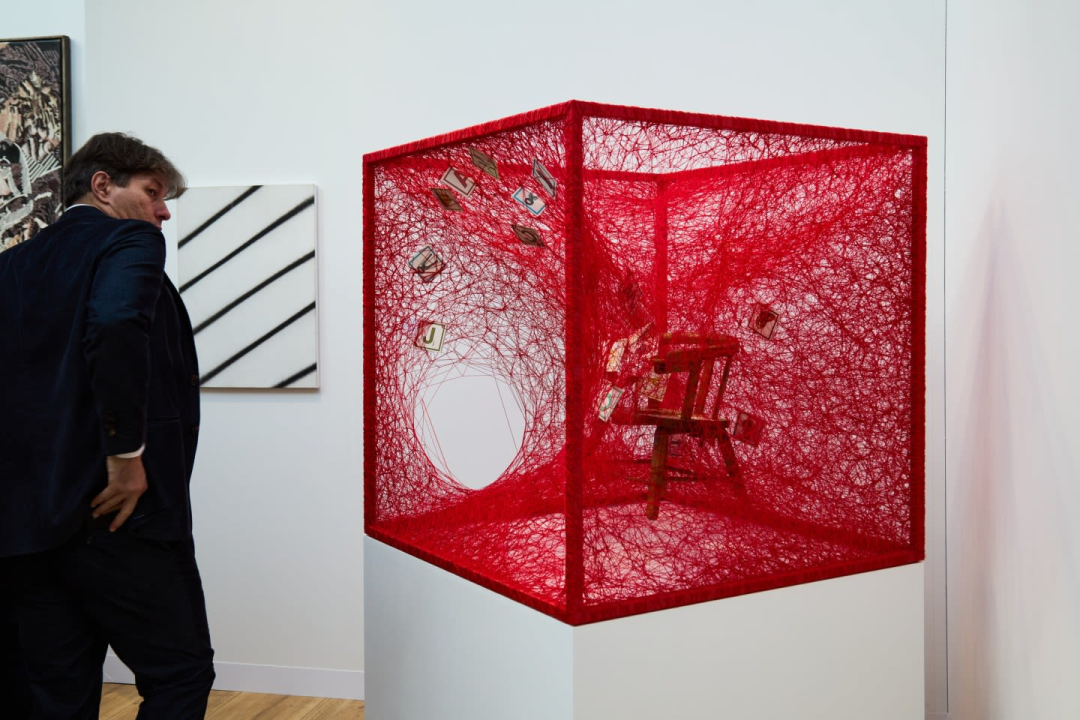
Xavier Hufkens brought works by Xu Xiaofei, who had just entered the collection of the Centre Pompidou, as well as a monumental wooden owl by Hauser & Wirth. Lisson Gallery booth, Art Basel Paris, 2024. Mennour booth, Art Basel Paris, 2024. The most conspicuous work at Mennour was “Tower of Chairs” by Alicja Kwade, a female artist who has attracted considerable attention in recent years for sculptures made from natural stone. She was also presenting a solo exhibition at Mennour’s space in Paris’s Sixth Arrondissement.
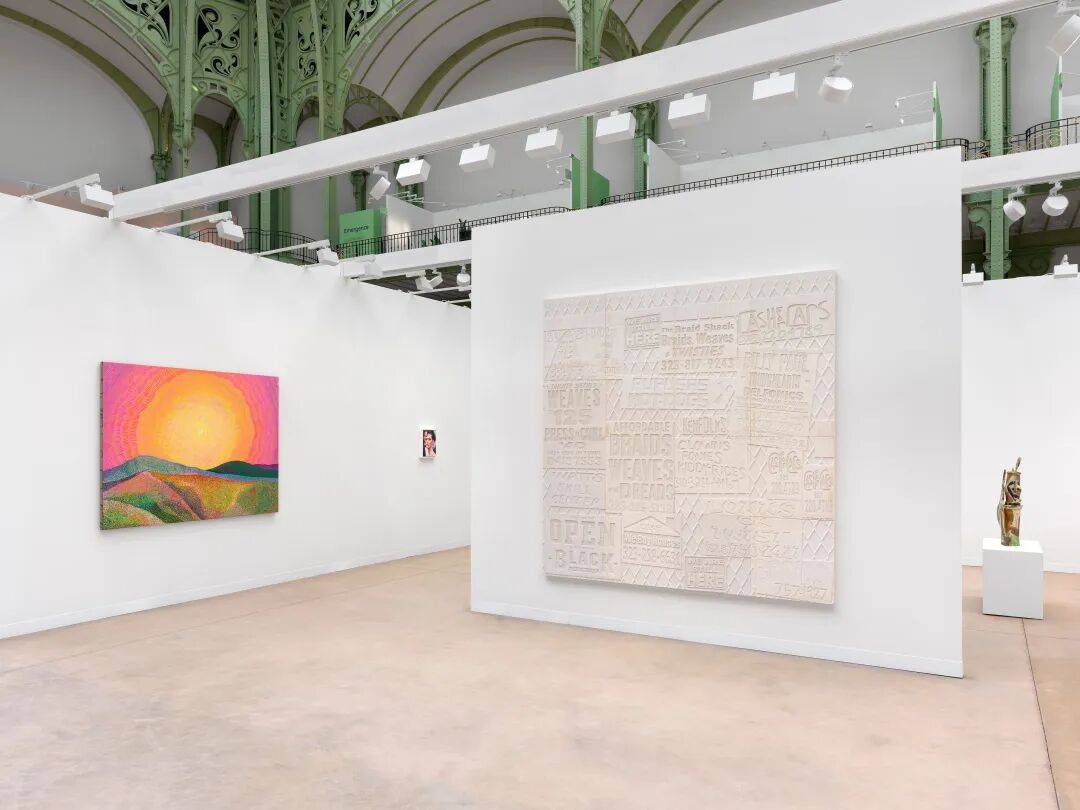
David Kordansky booth, Art Basel Paris, 2024. At David Kordansky, a monumental work by Lauren Halsey occupied the most prominent position, directly facing visitors. The young artist, born in 1987, also presented a series of monumental columns in the Armory section of this year’s Venice Biennale. Vitamin Creative Space booth, Art Basel Paris, 2024. Compared with the handful of Chinese artists at Frieze London, more international galleries in Paris brought works by Sun Yitian, Lu Yang, Cui Jie, Yu Hong, and Yan Pei-Ming.
Making its debut, Vitamin Creative Space devoted an entire booth to a solo presentation by Shao Fan, steeped in the character of Chinese Daoist philosophy and carrying us into an ancient world in which humans, gods, animals, and objects once coexisted. Antenna Space booth, Art Basel Paris, 2024. Upstairs were Emergence, the section for young galleries, and the new Premise section. Shanghai’s Antenna Space, participating for the second time, was installed there. Its large bow prompted many international collectors to exclaim, “Love it.”
The pink draped-fabric work was by the Korean artist Lee Mi-rae, whose exhibition had opened the previous week in Tate Modern’s Turbine Hall in London to considerable acclaim. Hong Kong’s Gallery Exit, the German gallery Société, which brought works by Lu Yang, and Antenna Space happened to be neighbors. Yang Peikeng, Chaotic Solar Group, 2024, Art Basel Paris, 2024. Upstairs, we also encountered a familiar old Hong Kong lightbox sign. The moment we sounded out the romanized words beneath it, we all laughed: wasn’t it the Cantonese phrase “Cha Chaan Teng,” meaning a Hong Kong-style café?
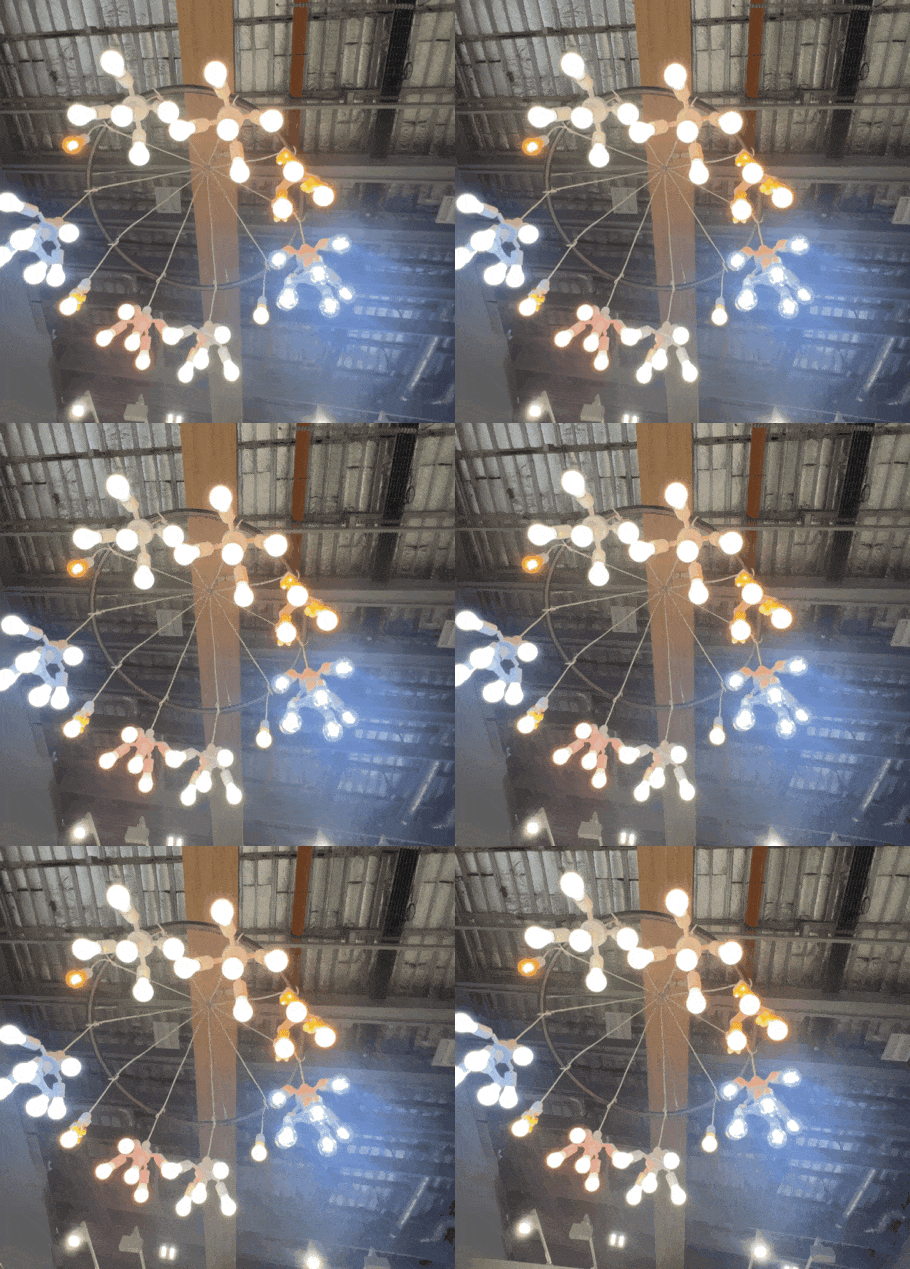
It was, in fact, a real cha chaan teng, the result of an amusing first collaboration between Art Basel Paris and Art Basel Hong Kong. The pendant lights in the restaurant were new works by Yang Peikeng, a Hong Kong artist whose work has attracted considerable international attention and entered the collections of major institutions including M+. The work, Chaotic Solar Group, was itself rooted in the restaurant’s history: in the artist’s childhood memory, his father’s restaurant was lavishly decorated, with elaborate lighting.
We also encountered Leung Sze Yeung, director of Art Basel Hong Kong, who joked, “Actually, we created this ‘cha chaan teng’ project simply so we could eat authentic char siu rice, pineapple buns, and silk-stocking milk tea at the Paris fair. Ha ha.” Art Basel Paris, 2024. The three collectors Zhang Qiong, Zhang Ran, and Zhou Chong came from different generations, but all were attending Art Basel Paris for the first time. Their shared impression was that the circulation through the fair was logical, the quality of the works brought by the galleries was generally high, and the venue was incomparable. Add the agreeable weather, and the experience could be summed up in four words: relaxed and refreshed.
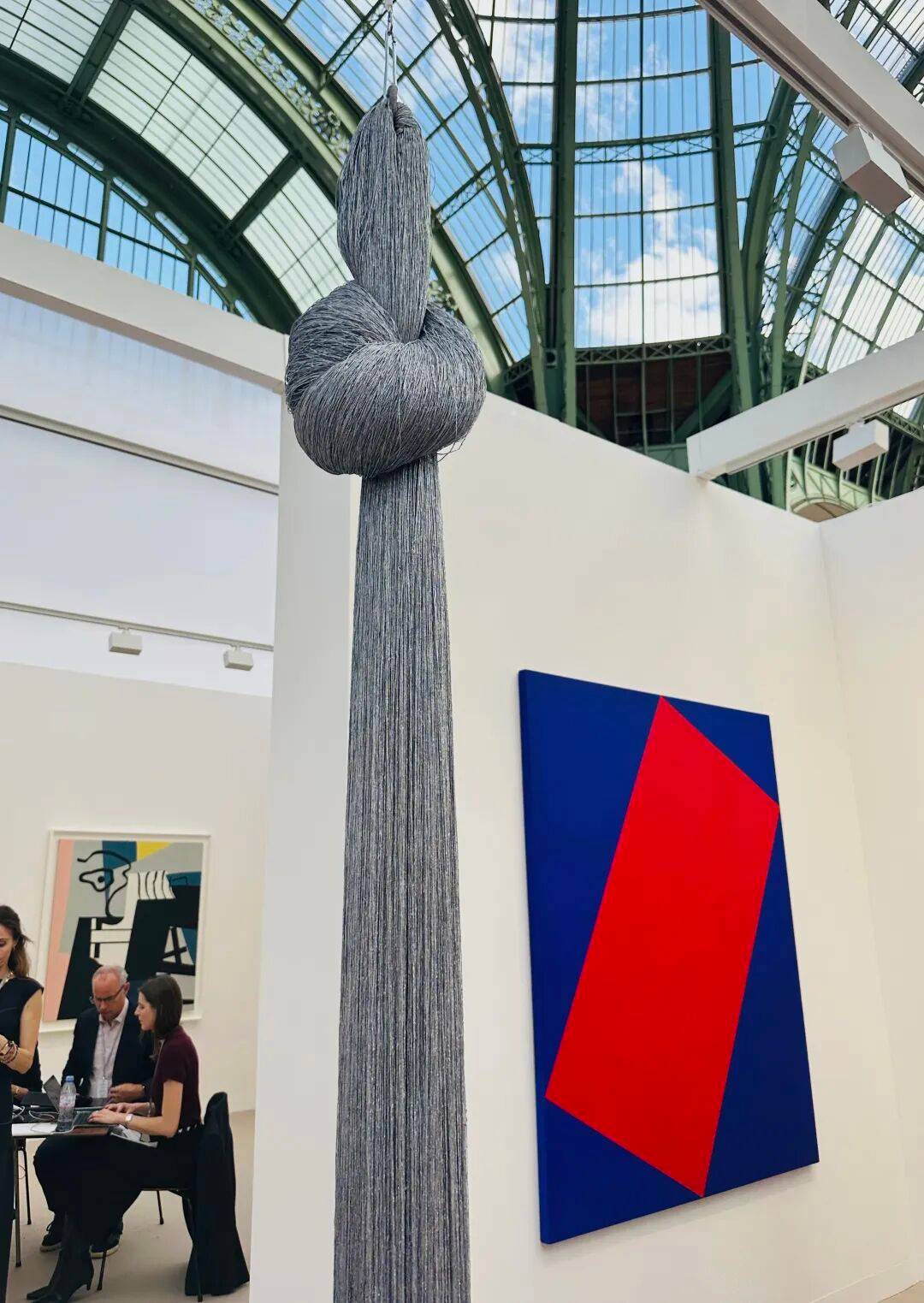
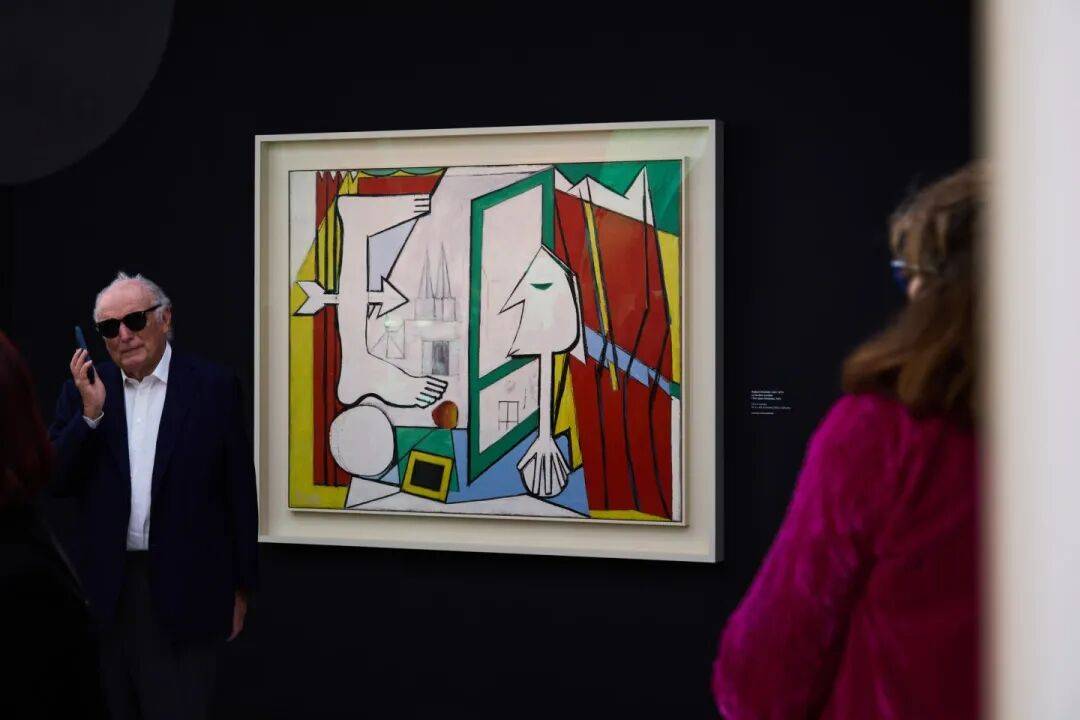
“My first impression upon entering the fair was that the Grand Palais itself has a sense of culture and history. It’s beautiful, and it reminded me of Shanghai’s Exhibition Center. The sun was wonderful today, which put everyone in a good mood. My second impression, after seeing the fair overall, was that because there are so many galleries in the main venue, each booth is not very large, and the aisles are close together and narrow, so it felt slightly crowded. Entrance to Art Basel Paris, 2024. Olga de Amaral presented at the Lisson Gallery booth, Art Basel Paris, 2024. My third impression, having just come from Frieze London, was that the works brought by the galleries in Paris were generally more colorful and immediately striking.”
“That may have something to do with the market now. Galleries still want visitors to feel happy, which is good for sales, so the works are generally conservative. Compared with Art Basel in Switzerland, there were fewer forward-looking works; it felt more like a traditional fair. Pace booth, Art Basel Paris, 2024. The booth I liked most, and found most distinctive, was Pace’s: painted deep purple throughout, it presented a group exhibition of four women artists. It had the character of an exhibition curated by an artist, rather than being simply about selling.”
SECTION 02 | What do Chinese collectors who come here for the first time think of Paris Basel?
David Kordansky booth, Art Basel Paris, 2024. “The work that stayed with me was Lauren Halsey’s stone sculpture at David Kordansky. I loved the five Greek-column sculptures she showed at the Venice Biennale. She is actually a young Black female artist, but she has no anxiety about identity. The words carved into the stone—including American license-plate numbers—refer to things she often sees in everyday life. Yet she uses a material with an intensely ancient Greek character to depict scenes from ordinary life. I found that quite interesting.”
“We also cannot see a Black identity being emphasized in the work. That may differ considerably from the work of Black artists in the 1960s and 1970s, and it seems like a sign of cultural confidence and progress. Coming from London to Paris, my feeling is that everyone in the art world is working very hard now. In terms of the art ecosystem, it is remarkably complete. With every major fair, galleries launch solo exhibitions by important artists, institutions coordinate major openings, and there are also secondary-market auctions.”
Art Basel Paris, 2024. “Frieze London and Art Basel Paris are quite different. London is more academic and professional, more serious, and it brings in many researchers. When I was in London, I attended several forums, including a conversation between Hans Ulrich Obrist and an artist at the Serpentine. I went to many galleries, learned about what was happening, and looked for new artists. Paris is different because it is a fusion of cultures: lifestyle, fashion, and art all come together. The overall atmosphere is more relaxed and distinctly urban.”
Public art, Musée des Beaux-Arts, Petite Église Saint-Augustin, Jean-Charles de Quillacq exhibition, 2024. Public art, garden of the Palais Royal, work by César, 2024. “Compared with China, however, the academic dimension in China is weaker. In terms of the audience, Paris may be slightly better, while London is especially clear: visitors are generally of a certain age. In China, by contrast, you see mostly young people.”
“From a collector’s perspective, you still need time, experience, and accumulated knowledge. That is why the backbone of the European art market has such depth, and why its academic character is relatively strong. At the root of it, I think, is a direct relationship with the tastes and preferences of the audience. This year’s Art Basel Paris venue, the Grand Palais, was spacious and bright, and it felt comfortable. The works were excellent; several gallery owners even said they had brought works more impressive than those at Art Basel in Switzerland.”
Pace Gallery booth, Art Basel Paris, 2024. Above: works by Kiki Smith. Below: paintings by the booth’s curator, Paulina Olowska. “My favorite booth was Pace’s, curated by the artist Paulina Olowska around a mystical theme. She invited several artist friends to participate, including works by Kiki Smith, whom I like very much. It was a complete viewing experience.”
Sprüth Magers booth, Art Basel Paris, 2024. “My second favorite was Sprüth Magers. It included a work depicting Andy Warhol, photographed by the artist Louise Lawler, whom I admire. Lawler is particularly adept at photographing and appropriating the works of famous artists. The Fondation Beyeler had shown this work before.”
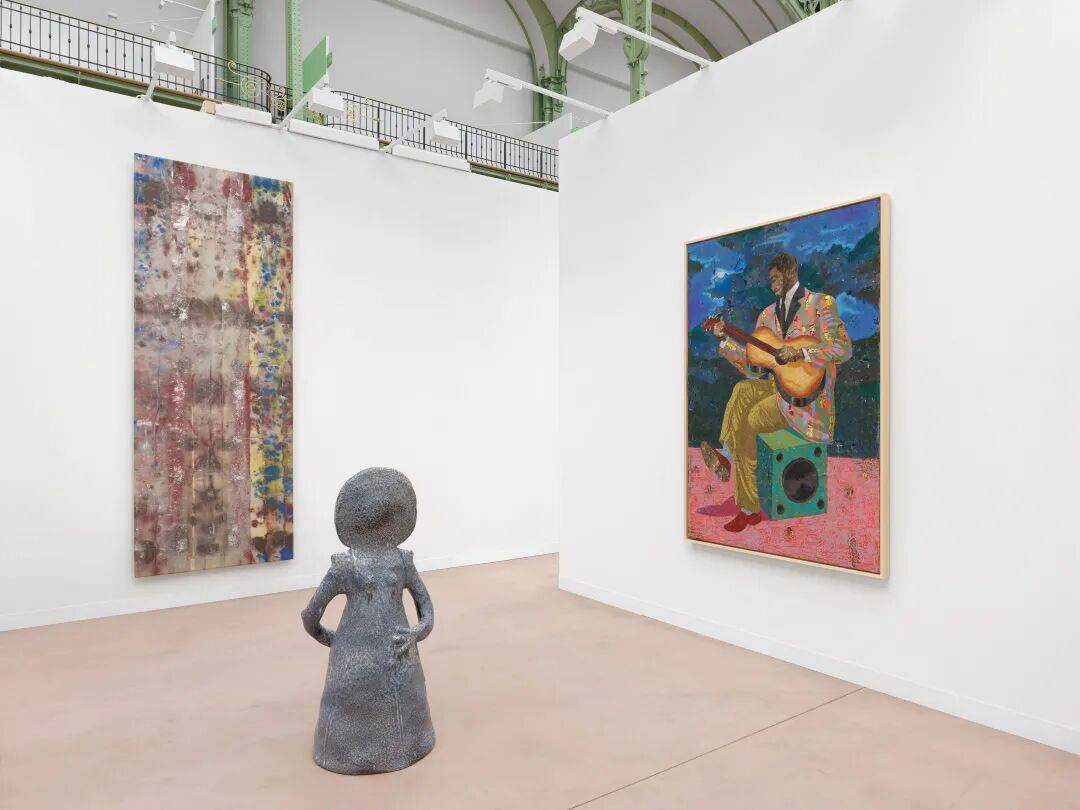
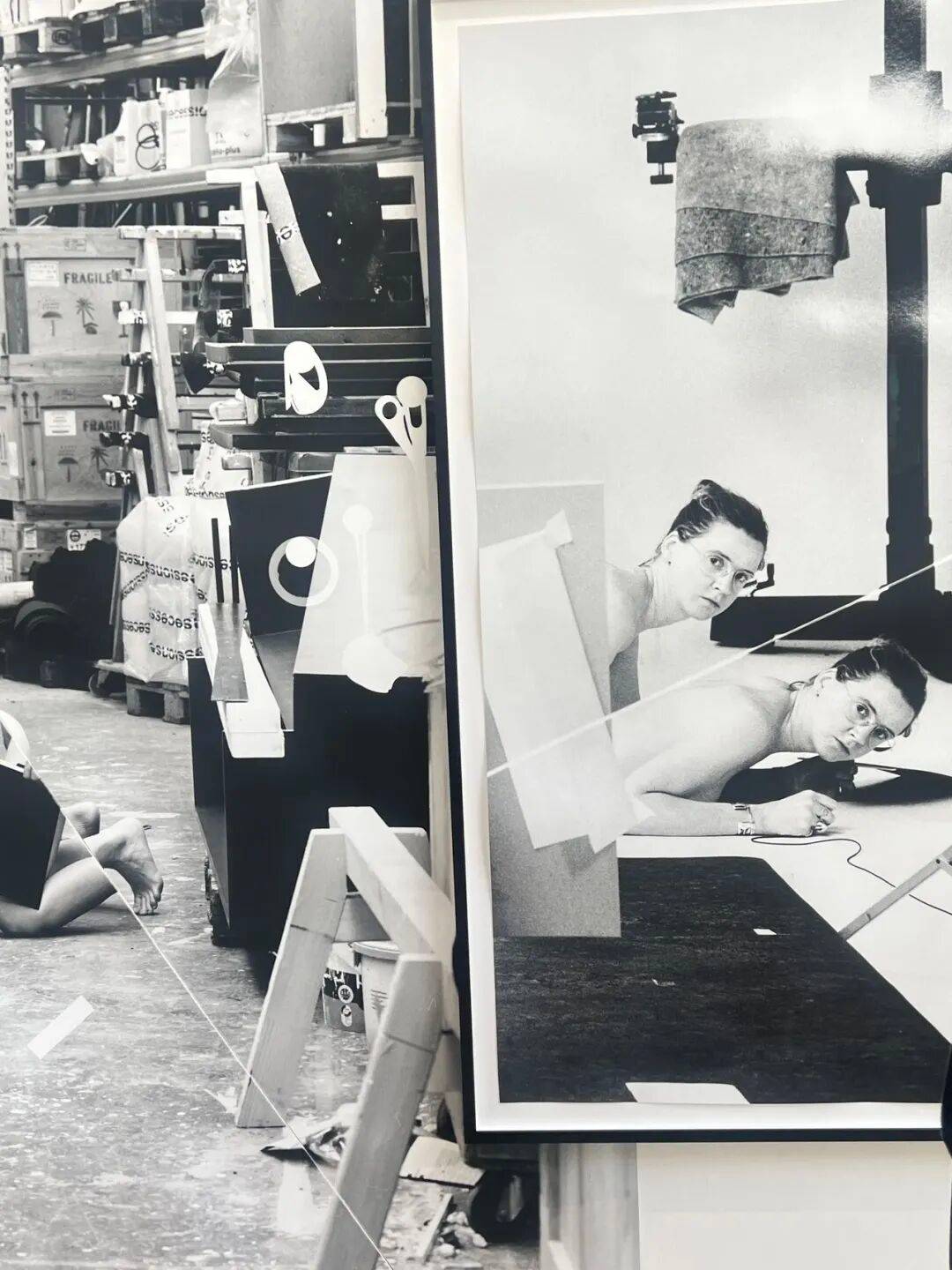
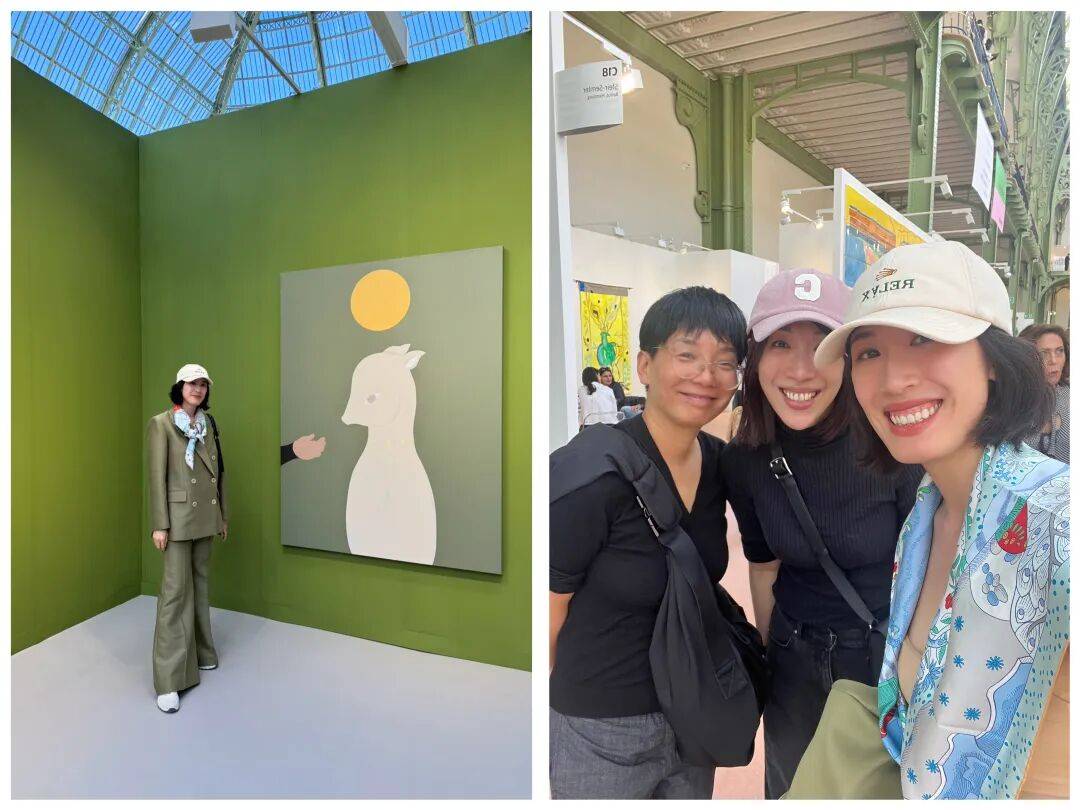
Sprüth Magers booth, Art Basel Paris, 2024. “My third favorite was a presentation by the Vienna gallery Sophie Tappeiner in Emergence, upstairs, featuring black-and-white photographs by the female artist Sophie Thun, who photographs her own body. Left: Zhang Ran at the blum & poe booth at Art Basel Paris, in front of a work by Asuka Anastacia Ogawa. Right: with Li Lin and Xie Yingying, founders of Tianmu Li by art matters. Paris is a city that feels full of vitality. Alongside its long history, so many new things are always happening. I was also happy to see so many familiar friends.”
“That includes the people who came to the fair today. Everyone was dressed beautifully, in a way that suited Paris’s character. Holding Art Basel Paris at the Grand Palais was an enormous advantage. Quite apart from anything else, once you entered, even a few casual shots of empty space looked cinematic. Of all the art fairs I’ve visited around the world, I think this one photographs best. In a meaningful sense, this was my first time coming to Paris in the name of art. The last time was two months ago, during the Paris Olympics, when the Grand Palais was inaccessible.”
“The ecology of Paris’s art world is actually very familiar to me. Seeing it fully realized this time, I felt that the atmosphere was excellent. Works by Zhou Chong that he admired at the fair. I did notice some noteworthy emerging artists, such as Yamashita Hiroka. Major galleries also use fairs like Art Basel as platforms to promote their own young artists. Some galleries brought works by twentieth-century modernist masters, which overlapped to some degree in format with the Masters section at Frieze London.”
“Compared with Frieze, the major galleries clearly favored Paris in the resources and concentration of the works they brought, and Paris also had more exhibitors. After comparing London and Paris side by side, what struck me most was that Paris’s appeal is not simply the kind of beauty that fulfills everyone’s expectations of the city as a tourist. When Parisians really care about doing something, their ceiling can be extraordinarily high.”
“That inevitably made me wonder whether the different Art Basel fairs compete with one another, particularly with Switzerland, the European home base of Art Basel. As a collector, although Art Basel in Switzerland is very prestigious, I can’t say the experience there is always the best. First, you can’t always find a suitable hotel. Second, the spaces feel somewhat oppressive. Third, the food hardly bears mentioning. How could it compare with Paris? It is even a step below London.”
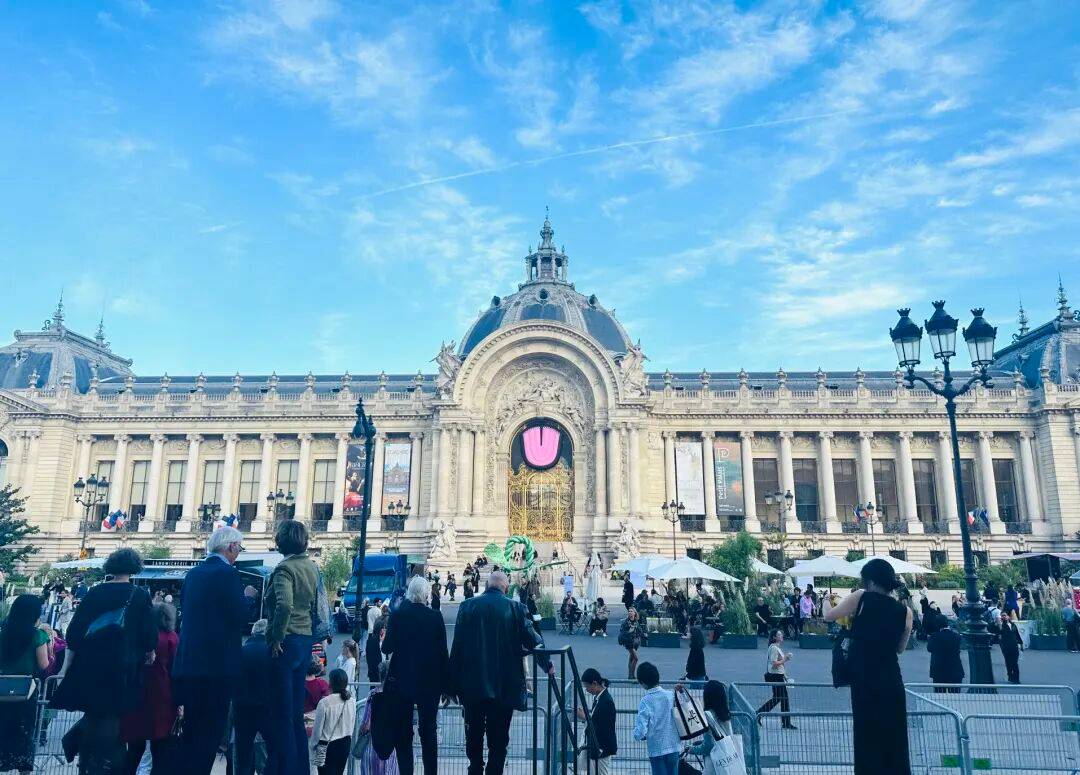
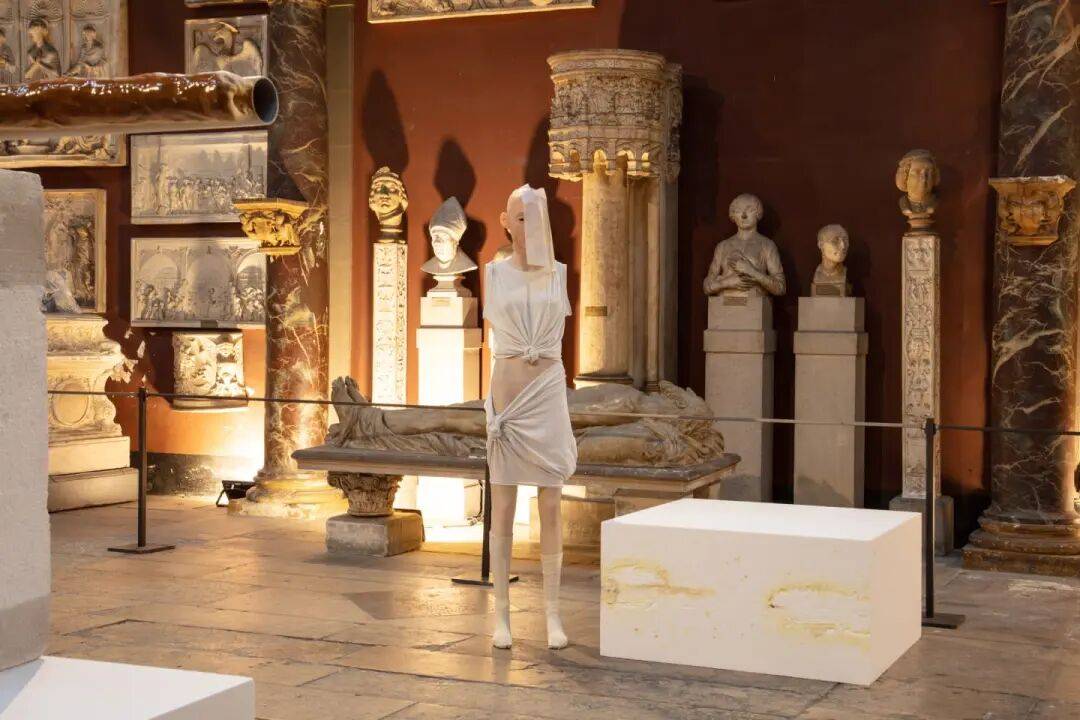
Art Basel Paris, 2024. “Having visited so many art fairs around the world, I may put Art Basel Paris directly in first place. My only concern is that the interval between the French and Swiss fairs is not very long. How will the European galleries allocate their resources? Where should they place their emphasis?” Avenue Winston Churchill outside the Grand Palais, 2024. Leaving the main venue in the Grand Palais, we found Avenue Winston Churchill transformed into a pedestrian zone during the fair, connecting seamlessly with the Petit Palais opposite. Both formed part of Art Basel’s public-art project.
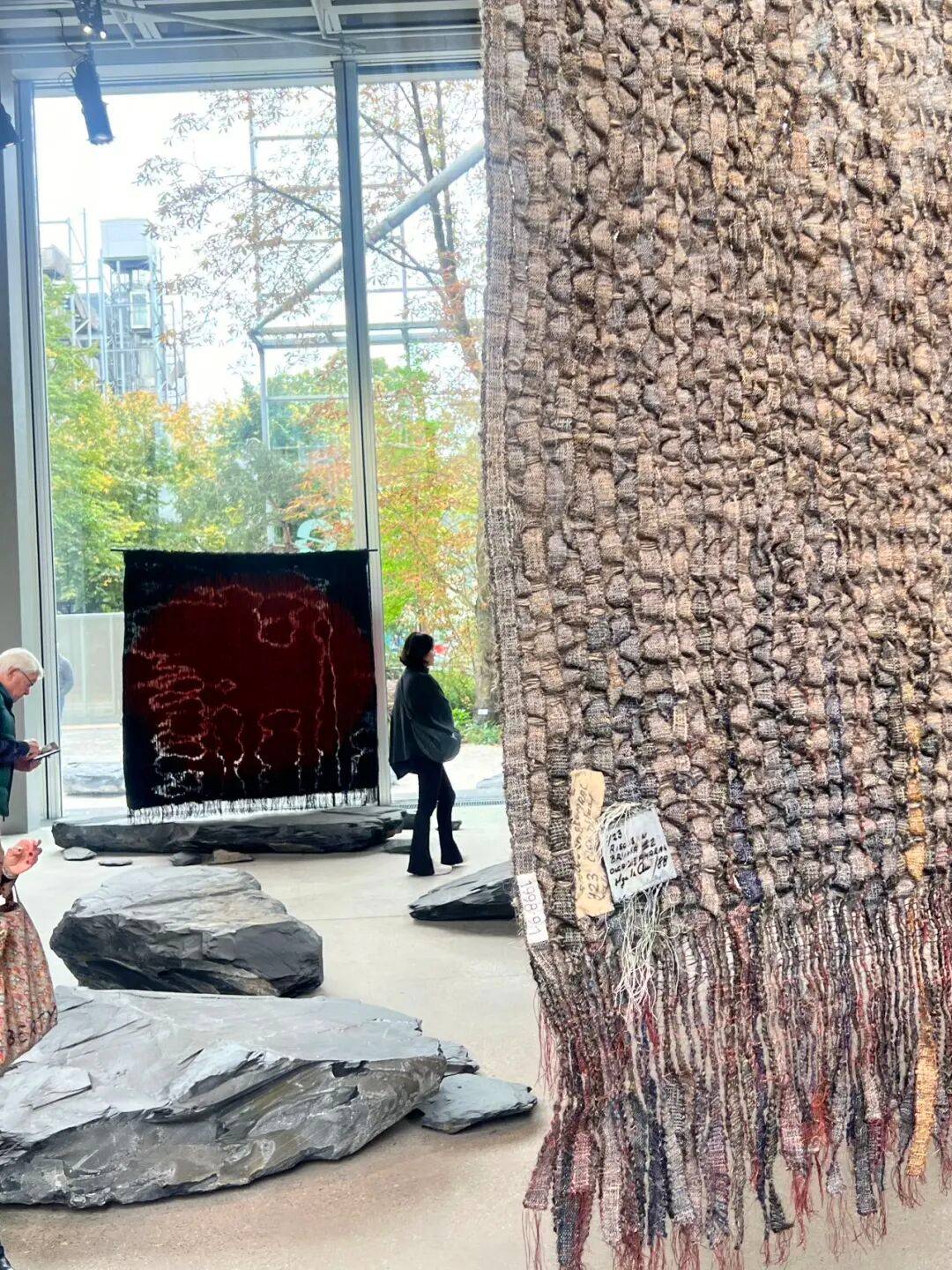
Alongside the public art, institutions and galleries were opening major exhibitions one after another. Zhang Ran and Zhang Qiong were particularly taken with the major retrospective of the fiber artist Olga de Amaral at the Fondation Cartier pour l’art contemporain, which made deft use of the exhibition halls, garden, and underground spaces. Olga de Amaral retrospective, Fondation Cartier pour l’art contemporain, 2024. Moving from flat, two-dimensional surfaces to three-dimensional woven forms, and from fixed, blocklike tapestries to immense suspended and shifting installations of colored fiber, Amaral’s work spans sixty years.
Through woven tapestries, fibers, strands, ropes, and related forms, the artist pushes the possibilities of fiber as a material to their limit. Olga de Amaral retrospective, Fondation Cartier pour l’art contemporain, 2024. “Olga de Amaral’s exhibition is the best institutional exhibition I’ve seen in Paris so far. The way the entire space is used, the extension of the works, and the circulation through the exhibition are all excellent. I was also drawn to the foundation’s architecture, and the installation is perfectly judged.”
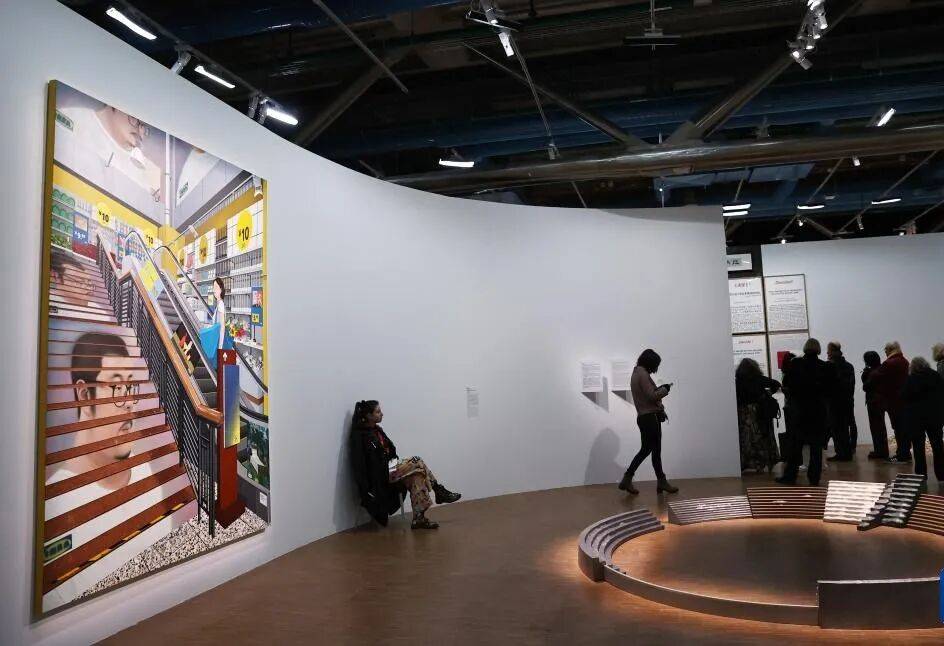
Zhang Ran told us. 2024 Marcel Duchamp Prize nominees group exhibition, Centre Pompidou. Another exhibition that made a deep impression on Zhang Ran was the group show at the Centre Pompidou devoted to this year’s four artists nominated for the Marcel Duchamp Prize.
“One of the artists exhibiting at the Pompidou is Noémie Goudal, one of the four artists who made this year’s final Marcel Duchamp Prize shortlist. I heard that she lost to this year’s winner, Gaëlle Choisne, by a single vote. But Goudal is an artist very much worth watching. She works across installation, photography, moving image, and performance, and is highly versatile.”
2024 Marcel Duchamp Prize nominees group exhibition, Centre Pompidou. The exhibition also came as a surprise to Zhang Qiong, who had gone to the Centre Pompidou to see the centenary Surrealism exhibition and the group show of Chinese artists.
“I originally went to see the centenary Surrealism exhibition and the group show of Chinese artists. When I arrived, I saw so many people waiting in line and realized that the Duchamp Prize group exhibition was on. After seeing it, I was surprised and also found it stimulating.”
SECTION 03 | Art institutions are holding major exhibitions, you must not miss these!
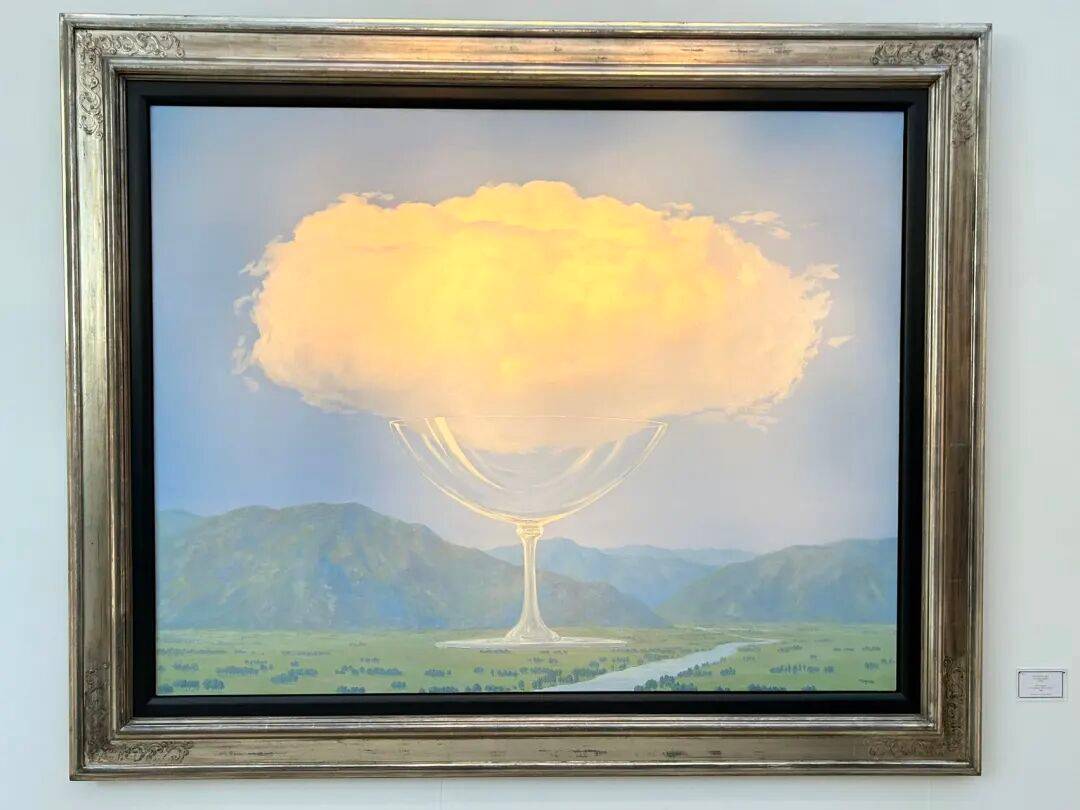
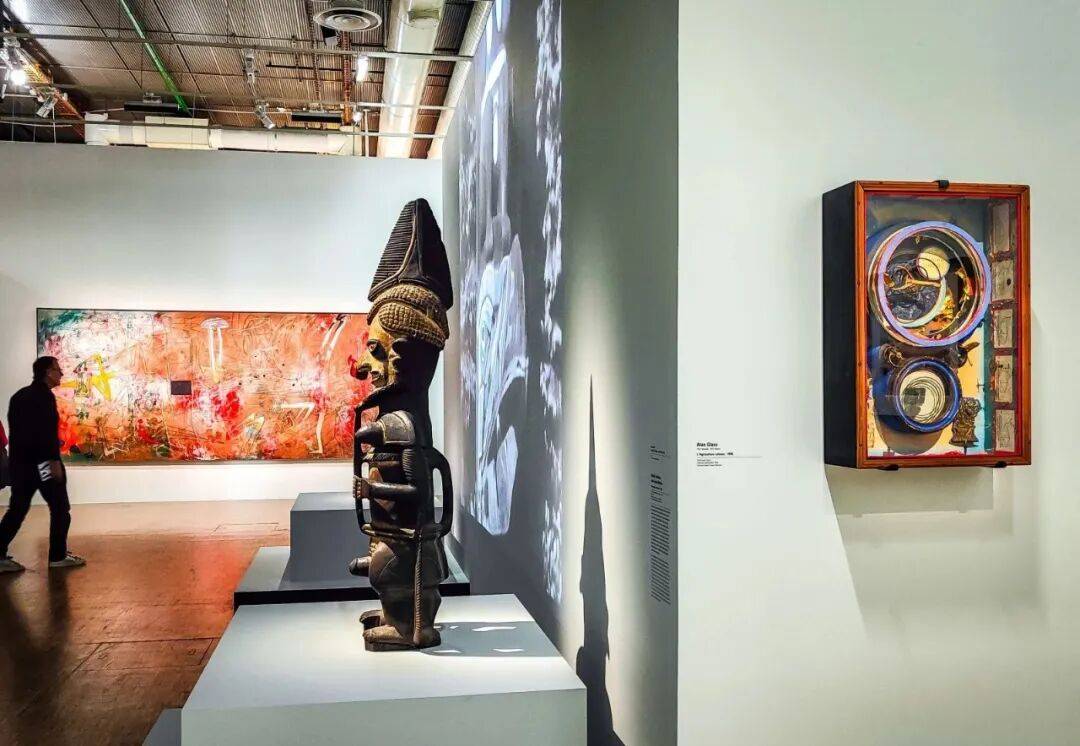
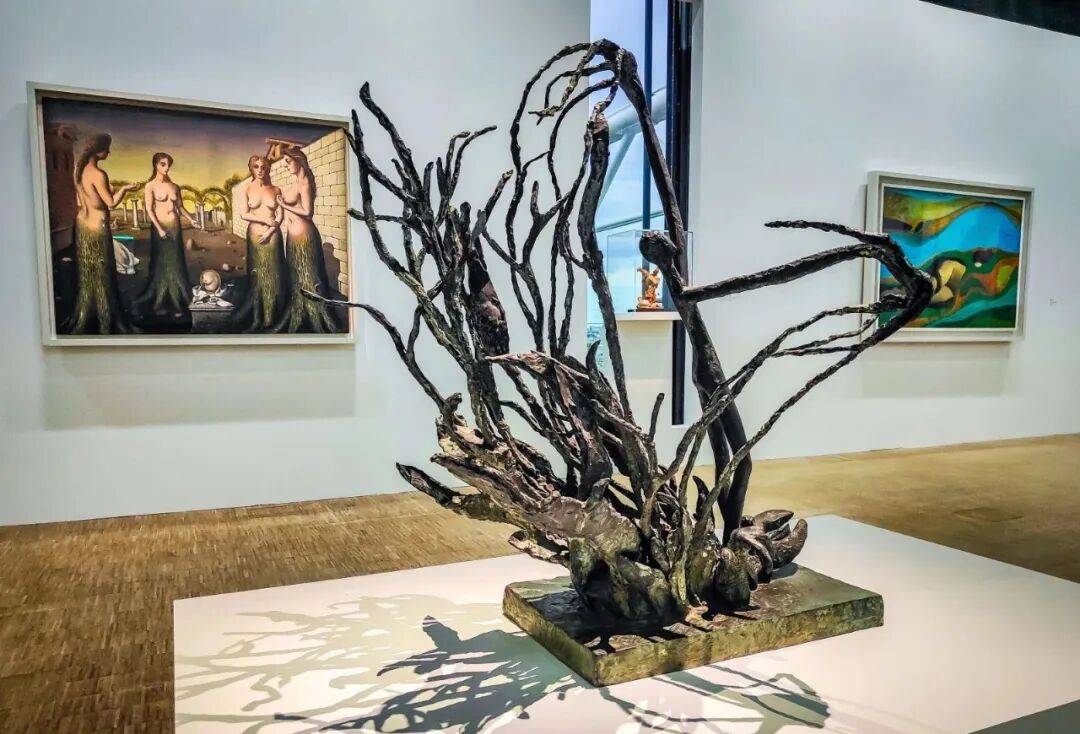
“This is another endearing quality of the French. For such an authoritative prize, the nominated artists are all highly conceptual. Each has a small room, using all kinds of materials: video, installation, small sculptures, and so on. One artist even used Chinese cigarettes in a work. It was particularly interesting,” Zhang Qiong told us. Surrealism: Centre Pompidou Celebrates 100 Years of the Surrealist Movement, Centre Pompidou, 2024. The other exhibition Zhang Qiong mentioned was a survey of the Surrealist masters, organized to commemorate a century of Surrealism. Highlights included Salvador Dalí’s The Great Masturbator; René Magritte’s Personal Values and The Human Condition; Giorgio de Chirico’s The Song of Love; Max Ernst’s The Great Forest; and Joan Miró’s Dog Barking at the Moon. Miró was represented by an especially large number of works.
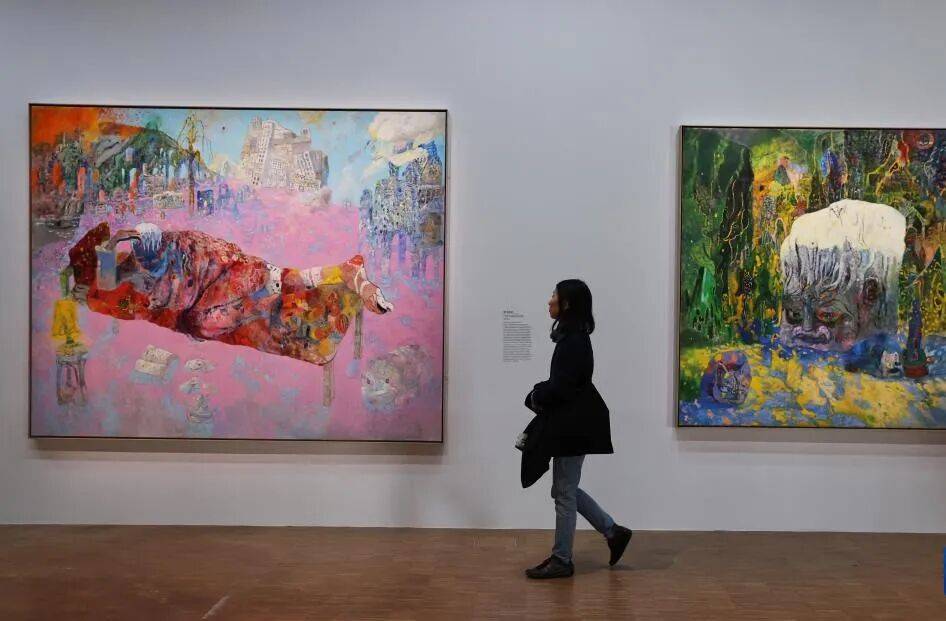
Surrealism: Centre Pompidou Celebrates 100 Years of the Surrealist Movement, Centre Pompidou, 2024. The exhibition was organized chronologically and thematically into 13 sections, creating a spiral-like labyrinth radiating outward from a drum-shaped glass case at the center. Inside the “drum” was the original manuscript of the Surrealist Manifesto, borrowed specifically from the Bibliothèque nationale de France. The group exhibition Seeing: Chinese Contexts, Centre Pompidou, 2024. The other show focused on young Chinese contemporary art. Seeing: Chinese Contexts presented work by 21 Chinese contemporary artists born from the late 1970s through the early 1990s, across video, painting, sculpture, installation, photography, new media, and other mediums.
Twenty-one of the works entered the Centre Pompidou’s permanent collection. On the day Cui Jie’s work was acquired, Zhang Qiong encountered the artist herself in Paris.
“Pop Forever, Tom Wesselmann & …,” Fondation Louis Vuitton, 2024. On the afternoon we spent talking with collectors at the fair, many said they were heading to another institution for the opening of a major exhibition: the Fondation Louis Vuitton’s retrospective “Pop Forever, Tom Wesselmann & …”
The exhibition centered on the leading Pop artist Tom Wesselmann and presented 150 paintings and works in various materials. Alongside him were 70 works by 35 artists of different generations and nationalities, tracing a line from the roots of Dadaism to contemporary practice, and from the 1920s to the present. Familiar names including KAWS, Jeff Koons, Yayoi Kusama, Roy Lichtenstein, Claes Oldenburg, Robert Rauschenberg, Do Ho Suh, Andy Warhol, and Tadanori Yokoo were all represented. The exhibition occupied four floors of galleries in the foundation’s building and was immense in scale.
“Arte Povera,” Bourse de Commerce–Pinault Collection, Paris, 2024. On the other side of the city, “Arte Povera” filled the entire space of the Bourse de Commerce. Entering the hall, we encountered heaps of accumulated elements: “natural” and “rural” materials such as soil, potatoes, lettuce, water, coal, trees, and living animals and people; “artificial” and “urban” materials such as stainless-steel plates, lead ingots, light bulbs, wooden beams, and neon tubes, along with piles of old clothing.
“Arte Povera,” Bourse de Commerce–Pinault Collection, Paris, 2024. The small galleries on the second floor offered a more detailed account of the work of 13 artists across different periods. Michelangelo Pistoletto occupied an entire gallery. More than 250 works by 13 of the most important Italian representatives of Arte Povera entered into dialogue within the space designed by Tadao Ando, setting in motion a kind of physical, chemical, and even spiritual energy beneath the domed architecture.
Photo credits: Art Basel Paris, the galleries mentioned in the article, and the collectors interviewed.