How many exhibitions did you make it to during Shanghai’s November art season? With nearly 200 openings, two major fairs, and packed nights of receptions, the city became a temporary meeting ground for artists, collectors, curators, and galleries from across China and beyond......
By / Xirui Huang · 20 min read
How did nine practitioners use Shanghai’s 2023 art season to discuss sustained support for art?
The nine interviews from Shanghai’s 2023 art season look beyond a crowded opening calendar to the work behind exhibitions. Xu Zhen discusses David Chau’s collection as an example of active engagement and support for experimentation across media. Other contributors respond through their positions as artists, curators and gallerists. Their different accounts form a particular portrait of the city, drawing attention to the sustained research, exhibition-making and support that sit behind a brief season of activity.
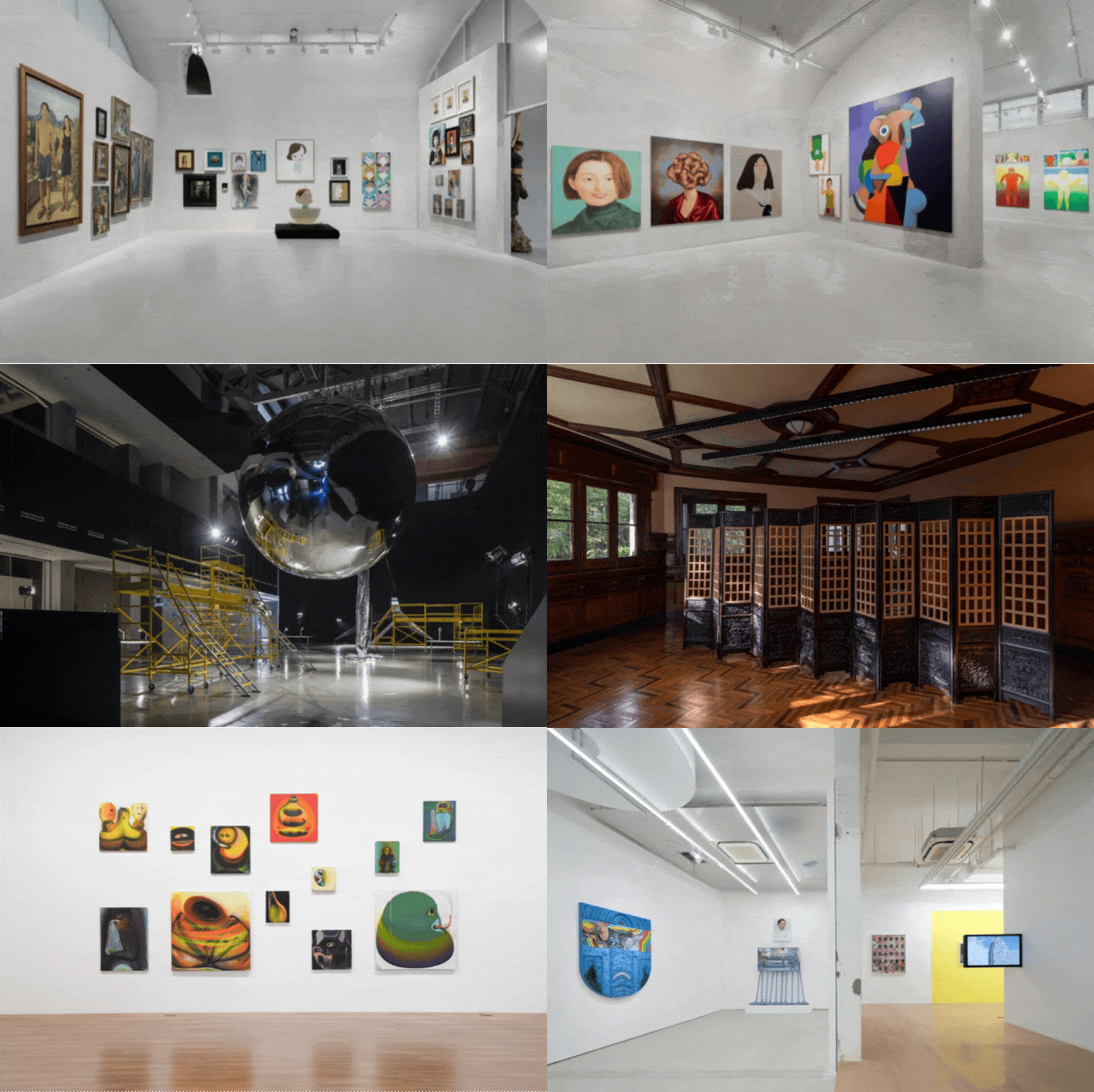
How many exhibitions did you make it to during Shanghai’s November art season? Many people in the art world complained, with a touch of “humblebrag,” that they could not possibly attend every reception: “There are simply too many to get to. On some nights, you might have to make it to three.” Among them were collectors and other professionals who had flown in especially from Hong Kong, Taiwan, and elsewhere. Exhibitions opened throughout Shanghai beginning in the first week of November; according to official figures, nearly 200 exhibitions opened across the city in succession.
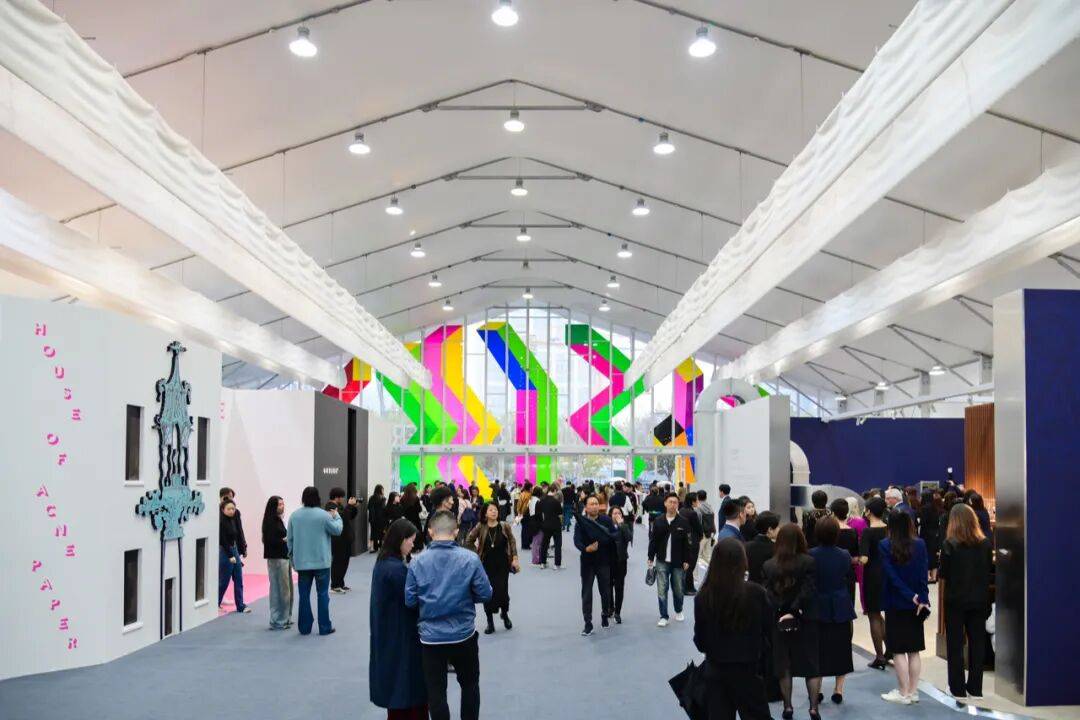
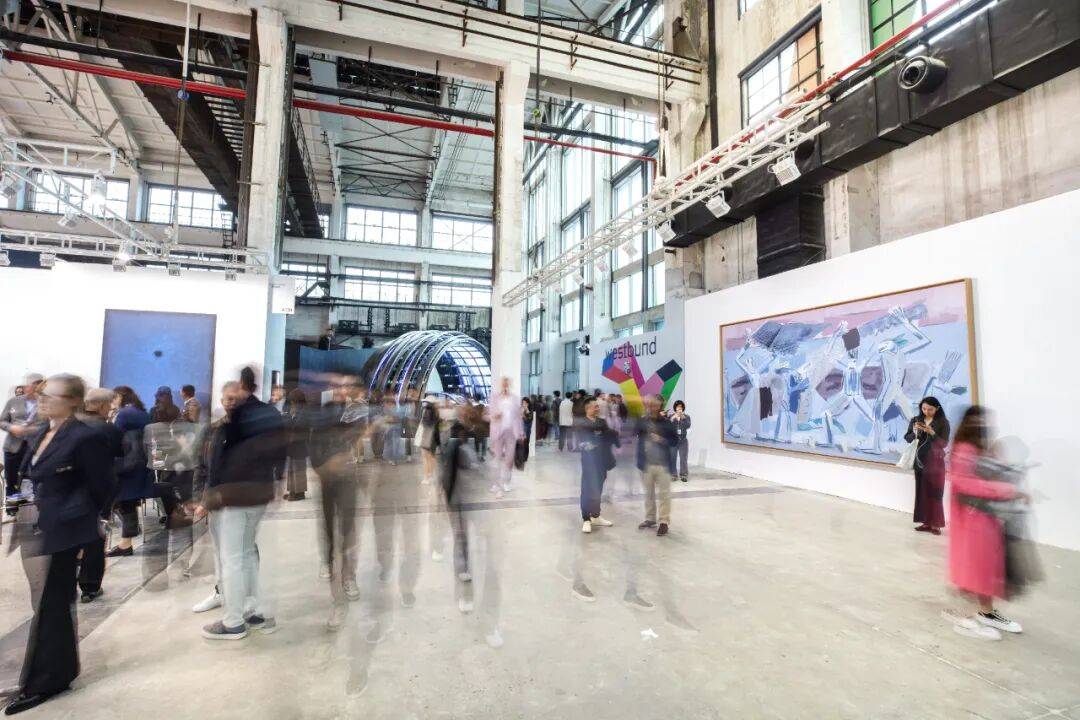
Museums and art institutions of every size presented major new exhibitions. Galleries mounted solo and group shows at the same time, ranging from young artists to modern and contemporary art, in an equally broad array of forms. From November 9 to 12, the West Bund Art & Design and ART021 fairs opened simultaneously, pushing the city’s art atmosphere to its peak. Even ride-share drivers heading toward West Bund were asking, “Are you going to see some kind of art exhibition?…” The scene on November 9, the opening day of West Bund Art & Design and ART021. As November drew to a close and the excitement of racing from show to show began to fade, what sharp impressions did professionals take away?
We spoke with nine active artists, curators, and gallery owners about the exhibitions and experiences that stayed with them during Shanghai’s November art season, as well as their observations and reflections on today’s art market from their respective positions in the field. Xu Zhen, known as “No Boss,” has an unusually layered identity in the art world: artist, founder of MadeIn Gallery, director of MadeIn Art Museum, curator… Having lived and worked in Shanghai for many years, he was naturally on the front lines of the November art season. Here are his observations.
Zhou Dawei Collection—Crossing the River by Feeling for the Collectors, iag Art Line exhibition view, 2023. I think the most talked-about exhibition during this Shanghai art season was undoubtedly Crossing the River by Feeling for the Collectors—Zhou Dawei Collection. Zhou Dawei’s contemporary-art collection reveals his capacity and initiative in shaping his own growth as a collector. This can be seen, for example, in the cultural diversity of the collection, the range of media, and the artists and works he has identified, from various perspectives, as representative.
SECTION 01 | Artist Xu Zhen
Artist Wang Jianwei has said that the works Zhou Dawei collects are, by and large, “works recognized by artists.” Only by plunging into the uncertain world of artists, exhibitions, and art itself, rather than simply waiting for results, can one develop this kind of collecting attitude. For him, the question is not whether he “collected correctly” or “collected incorrectly,” but whether he participated—whether his presence was indispensable. The unselfconsciousness that emerges in the process is what makes it most interesting. Zhou Dawei Collection—Crossing the River by Feeling for the Collectors, iag Art Line exhibition view, 2023. We saw that this collection exhibition unexpectedly encouraged many colleagues in the field.
Of course, Zhou Dawei’s e-mail inbox suddenly filled with works from galleries in China and abroad—unsold installations, sculptures, and videos of real quality. It is easy to see how much the art world needs collectors this brave. Looking at the season as a whole, I still think there are too few artists and works attempting breakthroughs—in terms of knowledge, subject matter, language, and technique—and too little experimentation. Institutions such as Ming Contemporary Art Museum, Red Art Museum, and MadeIn Art Museum, which support experiments across media and pursue independent innovation and an international orientation, remain too few.
Serious contemporary group exhibitions organized by curators are rare; exhibitions related to painting still account for 99 percent of the total. During the art season, middle-aged and older artists—those working outside painting—seemed to disappear from exhibitions altogether, making clear how difficult it is to maintain a presence in this industry after the age of 40. And from last year into this one, a group of curators producing “variety-show contemporary art” also emerged, turning contemporary art into feel-good soup under the banner of positive energy.
Wang Ziquan’s solo exhibition “Nerve Sea,” an artist represented by MadeIn Gallery, exhibition view, Qiao Space, 2023. Photograph: JJYPHOTO. The gallery system is already being punished by the state it has entered over the past few years: the rapid mass production of infantilized, fast-moving art products and artists, and its unquestioning accommodation of collectors. Because their entire operating systems have moved in this direction, many galleries can no longer sustain artists whose work has real value. Then they fall into the cycle of having their own hyped-up “talent” poached by foreign galleries, while accepting, overnight, the secondary market’s caresses toward the primary market.
SECTION 02 | Artist Long Di
We have now reached the appalling point at which a selling point is that “this artist resembles a certain master more than anyone else.” The new art fast-consumer products keep pushing past the industry’s limits. The post-1980s artist Long Di was born into a four-generation artistic family. She has been drawing since childhood and is now a full-time painter. During this Shanghai art season, she came from Beijing with her own work to participate in the art fairs and also visited many exhibitions. Here are her observations and takeaways.
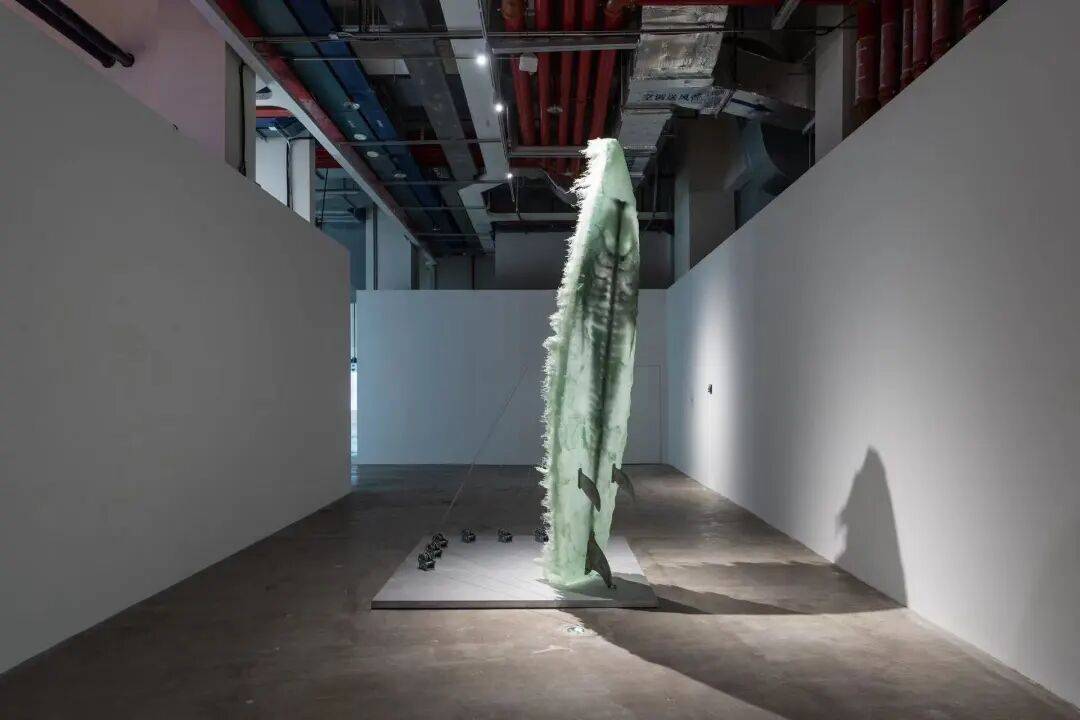
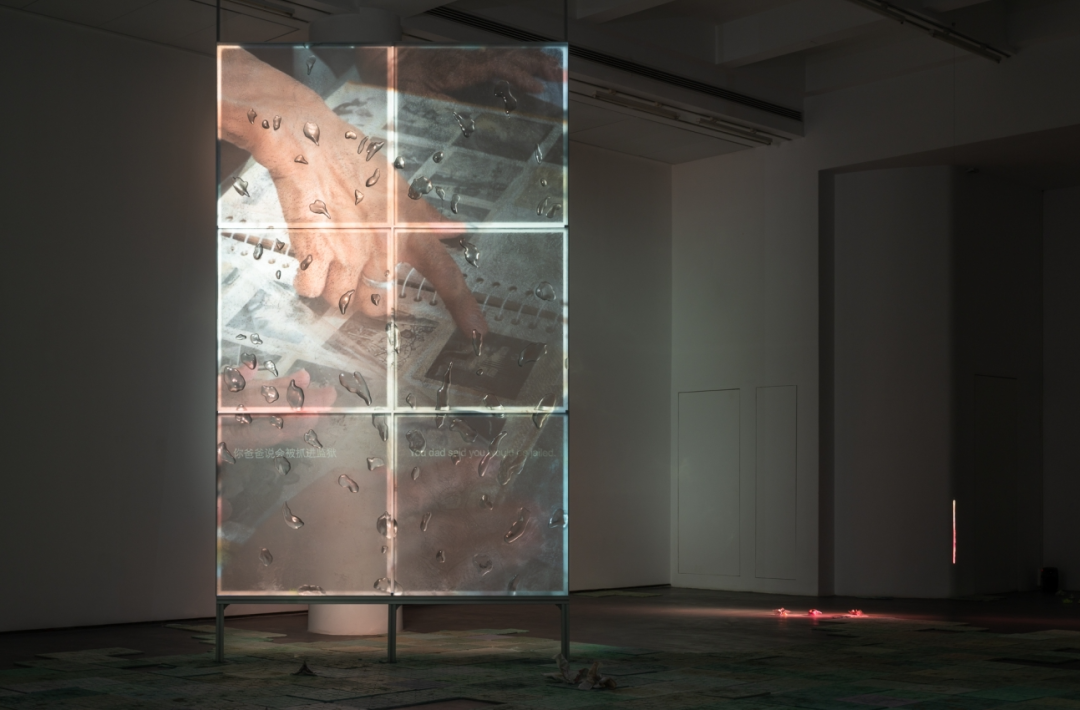
Tan Jing: Dry Dream Beach, exhibition view, Rockbund Art Museum, 2023. During this art season, the exhibition by Tan Jing at Rockbund Art Museum made the deepest impression on me. From the booklet to the installation, the exhibition was a show with a scent; the presentation of video on glass helped form an independent, self-contained field. It was very complete, and moving. He Xiangyu’s eponymous solo exhibition, Sifang Art Museum’s Shanghai Tongren Road space, 2023. He Xiangyu’s exhibition was also quite interesting. I had known of him before, but had not looked closely at his work.
After seeing his project, I realized how funny he is. My strongest impression of coming to Shanghai was seeing so many friends I had not encountered in the past few years. It felt intimate; I exchanged a lot of greetings. The schedule of Shanghai Art Week was extremely full, with everyone looking at exhibitions in concentrated, “special-forces” fashion. Sometimes that meant overlooking friends, but it was unavoidable. Institutions and galleries were also actively producing good exhibitions outside the shows they held alongside the fairs.
SECTION 03 | Artist Zhang Yibei
Mounting more particularly avant-garde exhibitions would do a great deal to advance the field. After finishing my Shanghai itinerary, I returned to Beijing for a day and then flew to the United States, where I spent more than a week seeing exhibitions. Every show I wanted to see exceeded my expectations; the trip was worthwhile. None of those exhibitions had anything to do with art fairs. As for observations about the field and strategies for responding to it, I don’t dare speak casually. For artists, I think the most important thing—whatever the era—is to remain oneself, be honest with oneself, read more, think more, and make work that is genuinely meaningful to you.
The young artist Zhang Yibei was born in Daqing, Heilongjiang, in 1992 and returned to China after receiving a master’s degree from the Sculpture Department of the Royal College of Art in 2017. Unlike her own reserved, scholarly manner, her work combines an array of “hard-core” materials—bronze, glass, ceramic, resin, stainless steel, malachite—with found objects such as oxygen tanks and industrial waste, assembling them into new, large-scale “artificial things.” She is currently living and working in Shanghai as a resident artist at the Longlati Foundation.
Here are her thoughts on Shanghai’s art season. Thomas Houseago’s solo exhibition “Lover,” exhibition view, Tank Shanghai, 2023. The exhibition that impressed me most during Shanghai’s art season was Thomas Houseago’s solo exhibition “Lover” at Tank Shanghai. When I was in college, I had seen his exhibitions, and was already somewhat stunned by his control of emotion and material. I never imagined that his large-scale works could be exhibited in China. I was genuinely astonished.
There were also many excellent, very large sculptures brought in—most of which I had never seen—and I was thrilled to encounter them. Gallery in HAUS, Balice Hertling booth, SUHE HAUS, exhibition view, 2023. Kayode Ojo, Untitled (Green), 2023. One artist I began following during this period was Kayode Ojo, whose work was shown in an exhibition at SUHE HAUS.
He uses many found objects. The works look almost casual, but I really like the way their overall state is presented; there is much to learn from it. His photographs, too, do things I could not do myself, but which I like very much. There is also the artist Wen Jue, whom I already knew. This time I saw some of his very large works, including combinations of found objects and paint, and I liked his direction and arrangement of the image. BANK tenth-anniversary exhibition view, Wen Jue’s work at left, 2023. Wen Jue, The King’s Game, 2023. This year’s ART021 and West Bund Art & Design marked the first time in several years that I had seen so many exhibitions, so many works, and so many people. It was wonderful to see such a thriving scene.
At the fairs, however, I saw far more works on the wall. There did not seem to be many sculptures, installations, or videos. Since I am a sculptor, that was a little disappointing. I also felt that whether one was attending an opening or simply walking through an exhibition, it was almost impossible to become quiet and absorbed. That, too, was regrettable. Fang Fang began his career in the media and opened Star Space Gallery in 2005.
SECTION 04 | Gallery main room
Star Space also participated in West Bund Art & Design this year, bringing major works by more than ten Chinese artists from two generations, young and established. Here are his impressions of Shanghai’s art season. Li Shan, Sumerian Echoes, 2023. This work was created by the artist especially for West Bund Art & Design. At the fair, I saw a new work by Mr. Li Shan. The five-meter-wide Sumerian Echoes was unforgettable. At the opening dinner, I happened to meet Mr. Li again. He was spirited and full of energy.
Seeing the work and vitality of this 81-year-old artist was an enormous encouragement to me. Our gallery also brought works by such senior artists as Liu Heung Shing and Zhang Wei. In the future, we hope to cross generations and present artists of every age to the public. West Bund Art & Design, Star Space booth A212, exhibition view, 2023. Xiang Jing, Self · At Ease, 2013. The exhibition that stayed with me most was “Cosmos Cinema,” the 14th Shanghai Biennale. It struck an apt balance between contemporary art’s professional character and the need for public participation, allowing us, as we recovered from the Covid-19 pandemic, to rethink the world and savor life.
“Cosmos Cinema,” the 14th Shanghai Biennale, exhibition view, Power Station of Art, 2023. Shanghai’s hundreds of art exhibitions left me dazzled. The city has unquestionably become Asia’s most radiant art capital. What excited me most was meeting so many collectors from across the country. Their ability to learn and their enthusiasm for putting ideas into practice are the source of confidence in the art market’s sustainable growth. Xu Wen (Kenna Xu) is a gallery owner born in the 1980s.
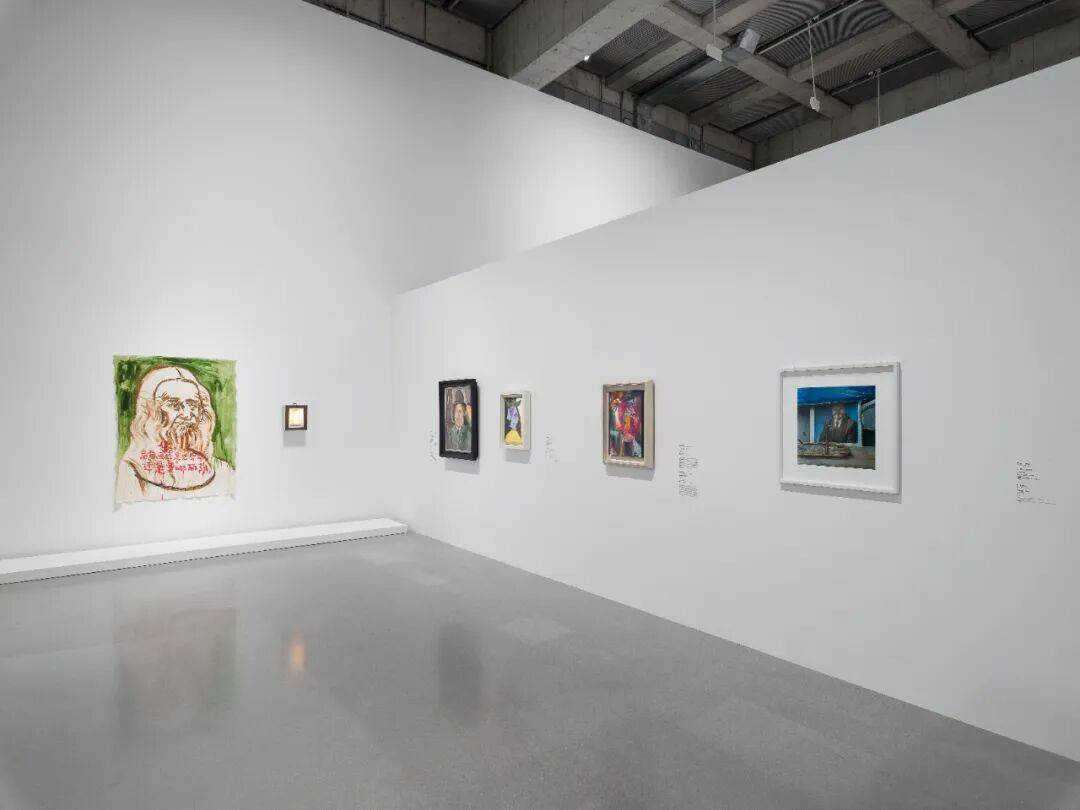
2023 was the fifth year since he opened his gallery, and he has witnessed the explosive development of contemporary art in Shenzhen. His gallery is also one of the mainland’s fastest-growing young galleries in recent years. His commitment to running a gallery and working with art is so intense that friends in the field jokingly call him the “king of overwork,”. Here are his observations and reflections on Shanghai’s art season. “Reflections of Portraits,” the permanent exhibition created through the five-year exhibition partnership between West Bund Museum and Centre Pompidou, exhibition view, West Bund Museum. Photograph: Alessandro Wang. There were simply too many good exhibitions in Shanghai’s art season. Take the major exhibition “Reflections of Portraits” at West Bund Museum: its scholarly rigor and care demonstrated Centre Pompidou’s regard for and respect toward Chinese audiences.
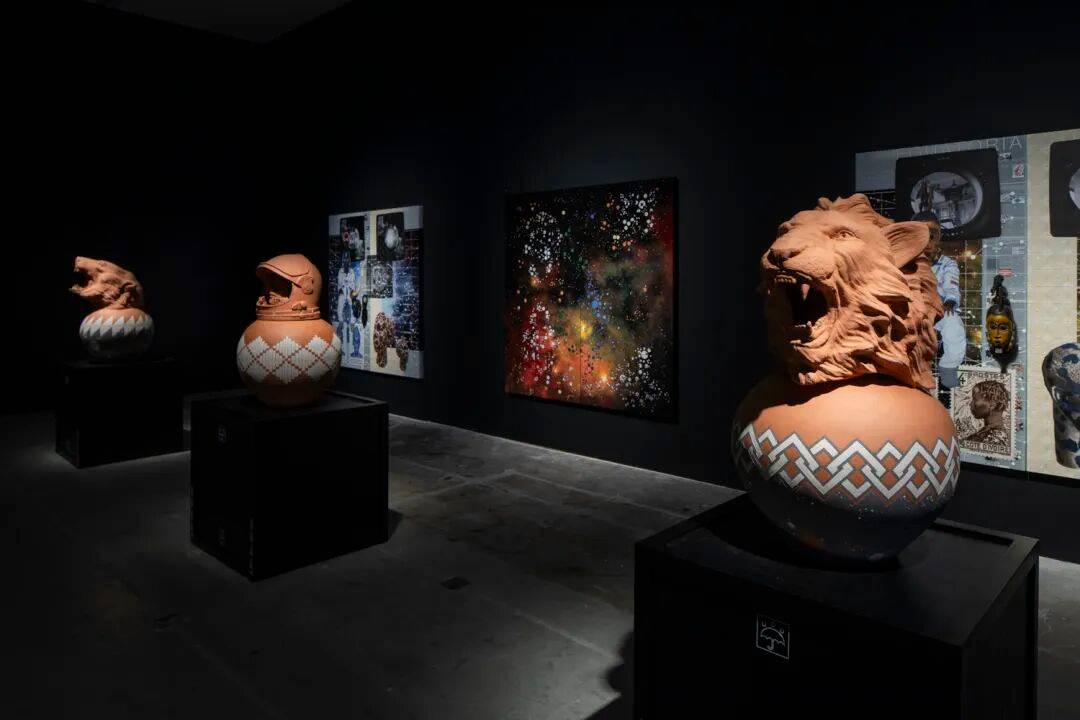
Or Zhang Enli’s solo exhibition at Long Museum West Bund, which traced the different periods of this important Chinese artist’s practice. Zhou Dawei’s collection exhibition was also highly personal and refreshing. “JAY CHOU: Art Exhibition” exhibition view, scene reconstructed from the music video for “Still Wandering,” 2023. A giant screen at the entrance projected multiple “Jay”-style art elements. “JAY CHOU: Art Exhibition” exhibition view, 2023. Yet the exhibition I discussed most with people in Shanghai was Jay Chou’s “JAY CHOU: Art Exhibition.”
The exhibition, of course, received mixed reviews, but it combined commerce and art extremely well. The art world may not be especially fond of exhibitions that reproduce music-video sets, but each work was given its own small gallery, and the museum-level lighting and display made me feel that the exhibition respected art itself. It made me wonder whether people in the art world are sometimes too arrogant and self-righteous.
I have that problem myself; I often complain that a commercial exhibition in a mall or elsewhere is “too low-end.” But then I think again: as art professionals, we have not done enough to communicate with the public. The enormous audience generated by someone like Jay Chou can help more people understand what contemporary art is. We cannot keep saying that the bad money has done things unprofessionally when the good money, as we see ourselves, may be doing even less to communicate art.
SECTION 05 | Gallery owner Xu Wen (Kenna)
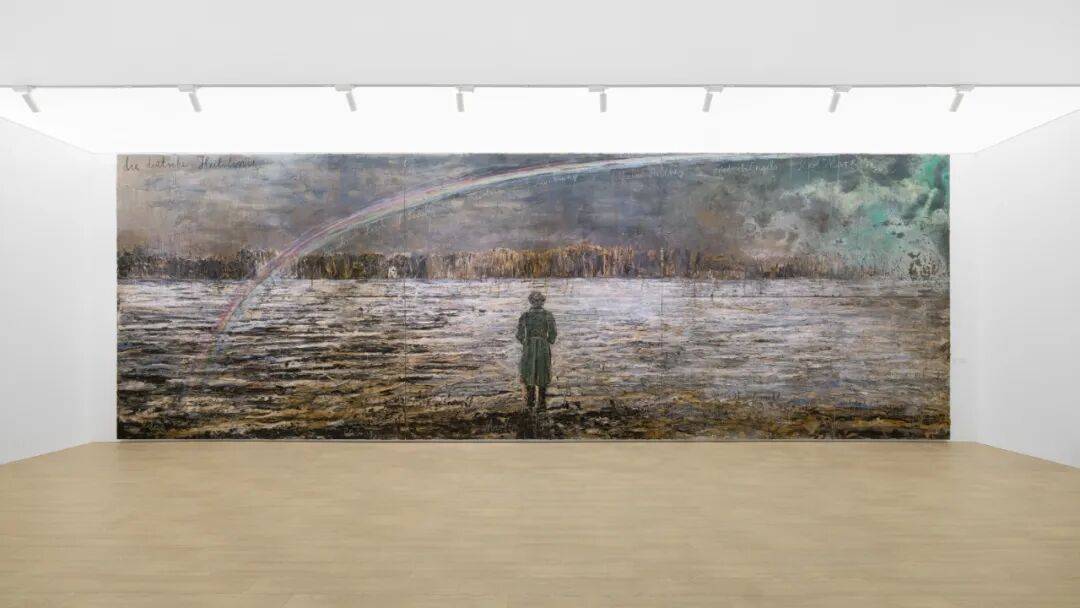
Anselm Kiefer, Die Deutsche Heilslinie. Anselm Kiefer, 2012–2013. “JAY CHOU: Art Exhibition” exhibition view, 2023. Artist Xu Bing and Jay Chou jointly created Book from the Ground: “Love Confession.” “JAY CHOU: Art Exhibition” exhibition view, 2023. At the same time, important works such as Anselm Kiefer’s are not often seen in exhibitions here.
Several collector friends of mine had never seen a Kiefer original of such scale. Experiencing the force of his work at the exhibition made them want to own one. That may be something even Kiefer’s representing gallery, Gagosian, had not anticipated. The exhibition showed me that art needs to cross boundaries and reach a broader public; it cannot remain aloof forever inside its own comfort zone. Xu He, The Confusion of the Horse Marathon, 2023. Among the artists, Xu He left a particularly strong impression on me.
I rarely see a traditional painter address, within the image itself, the development of technology, the virtual world, and AI. Usually, artists working in new media are the ones discussing these issues. Xu He is genuinely thinking about where humanity is headed, perhaps because, living in Berlin, Germany, he enjoys contemplating such vast human questions. I’m an Aquarius myself and think about strange things like that every day, so I felt a connection with him. It was wonderful.
“Cui Jie: Gift,” exhibition view, West Bund Museum, 2023. Amid the countless exhibitions, dinners, and parties—the apparently joyous and feverish spectacle of an art carnival—I kept asking myself what I could do as a gallery owner. I think the industry now faces several main problems. First, the influence and impact of international galleries and artists on the domestic market as the world reopens after the pandemic. Second, amid the broader economic downturn, people are trading down in their consumption of art.
Third, after the pandemic, a wave of collectors and art operators with a stronger investment orientation entered the field. How should traditional, academically oriented galleries respond? Fourth, in the generational succession of Chinese collectors, do you adapt to younger people, or share more knowledge and guide them? I think the response comes down to three keywords: internationalism, professionalism, and openness. From an international perspective, we remain far behind mature Western art markets—in collectors, nonprofit institutions, art schools, art foundations, museums, and public collections alike.
We cannot be complacent or keep imagining that we are already very good. They have been developing for so many years; we have only had a few decades. Some people feel that foreign galleries come to China to “harvest” the market. I think going through that process is necessary. You cannot simply become the best out of nowhere.
“Zhang Enli: Expression,” exhibition view, Long Museum West Bund, 2023. Photograph: shaunley. Every industry has to go through this process—learning, copying, and imitation. Only after achieving sufficient commercial scale can one innovate independently and export more content to the world. Second is professionalism: we must hold on to our original purpose and truly promote good artists and good works, rather than follow some kind of trend marker.
Collectors are developing extremely quickly. There is not much time to fool them; soon enough, they will suddenly wake up and realize that they have been the “leeks”—the people harvested by the market. Third is openness. We need to become more open, rather than satisfy ourselves within a small circle. We need to communicate and cross boundaries. At West Bund Museum, I saw something that moved me deeply: a large group of elderly men and women visiting the museum’s collaboration with Centre Pompidou. It made me feel that even if many things cannot be commercialized in the short term, it is still worthwhile if more people can see them.
Musa, founder of Gaotai Contemporary Art Center, was the only interviewee not from the art world of Beijing, Shanghai, Guangzhou, or Shenzhen. He founded his gallery space in 2019 in Ürümqi, Xinjiang, offering us a fresh perspective. Here are his experiences and impressions of Shanghai’s art season.
“Han Mengyun: Endless Roses,” exhibition view, ShanghART Gallery, 2023. During the art fair, apart from representing my own gallery at its booth, I had time to see only one exhibition—on the day I returned to Xinjiang, I managed to catch one I had been looking forward to for a long time: “Han Mengyun: Endless Roses.” In ShanghART’s bright exhibition hall, I was deeply drawn to “Mirror Pavilion,” Han Mengyun’s translation of a story about painters from different cultures communicating with one another. Within its multiple visual registers, it also reflected Han’s own paintings.
Both the exhibition and the individual works showed me the elegance and intelligence often associated with painters from the East, while the golden leaves, delicate pearls, and Persian words for women conveyed the personalities of artists from other regions who fascinate her. Regardless of where the artist came from—though I did confirm once again where she was born—the work became a collision and interweaving of many elements. The use of woodblock printing, called mo-cuo printing in Kashgar, also felt especially familiar.
SECTION 06 | Gallerist Musa
Wang Hua, Talking Like People in the Stone Age, ART021 BEYOND exhibition view, 2023. In the public-art section at ART021, one group of kinetic installations could not be missed: Talking Like People in the Stone Age, made by Wang Hua, a young sculptor born in Xinjiang. The work stages an escape from modern life. Carrying humanity’s eternal dream from prehistoric times, the “elf tree people” navigate by bodily instinct. Wang Hua uses the work to ask a question that has played out countless times in history and will eventually fall upon us today: where, ultimately, will we “escape to”?
Wang Hua studied in London for many years and, after a residency in Jingdezhen, now lives in Beijing. In recent years, she has been known largely in the space where contemporary art intersects with home design. But the works she showed at ART021 this year, together with the artist party she held at System, made clear her determination and ambition to move fully from that intersection into a discourse controlled by her alone. Gaotai Contemporary ART021 exhibition view, 2023. The five ceramic platters at Gaotai’s booth, titled Delicacies, continued the fantasy of human escape through changing tongue-like forms: “A group of people fled the busy urban life and eventually arrived on a mysterious island.”
“However, they soon discovered that the island’s residents were all controlled by a being called the God of Wheat. Using barley as its medium, the God of Wheat connected people’s consciousness with food.” At System’s WISE party, an animated video from the same series by Wang Hua greeted every guest entering the “mysterious island” party. “Pilaf Party” by Ma Hailun, held by Gaotai Contemporary Art Center. During those days, I represented my gallery during the day and drank and celebrated at night.
My biggest takeaway was this: you have to sell well during the day in order to enjoy the night, and you have to train regularly to make it through an entire art season. Whether Wang Hua’s party, Red Art Museum’s stand-up comedy and annual party, or Gaotai Contemporary Art Center’s Ma Hailun Pilaf Party, all showed us how a hardworking art industry is trying every possible way to make art and pleasure coexist. The independent curator Yang Zi has nearly ten years of experience curating exhibitions and writing art criticism. He has served as curator and director of public programs at UCCA Center for Contemporary Art and as an editor at LEAP magazine.
He has also edited catalogues for such well-known artists as Wang Yin, Liu Wei, Xu Zhen, and Zeng Fanzhi, and has been highly active in recent years. Earlier this year, he curated an exhibition at Gagosian’s Hong Kong space; in the past, Gagosian had rarely worked with independent curators. Here are his impressions of Shanghai’s art season. He Xiangyu’s eponymous solo exhibition, Sifang Art Museum’s Shanghai Tongren Road space, 2023. During the art season, I found He Xiangyu’s eponymous exhibition, “He Xiangyu,” to be rather classical. It had the right flavor.
He Xiangyu is interested in many things and has much to say, but it also makes sense to sum it all up with a single word: “I.” Bao Ailun’s solo exhibition “Flowers of Yesterday,” exhibition view, totalab, Shanghai, 2023. Photograph: Zhang Hong. On the third floor of a commercially charged neighborhood in Xuhui District, I saw the work of the Hong Kong artist Bao Ailun in something close to its entirety for the first time. Born in the 1960s, she can hardly be called a “new” artist.
SECTION 07 | Curator Yang Zi
The exhibition “Flowers of Yesterday” was hidden away from the world and not open to the public without an appointment. There is no question that the works carefully conceal a specific political quality. But beyond politics, I was more drawn to the artist’s insight into and ability to express time. Shanghai in November was bustling; everything capable of provoking despair had been cleaned away. But that could not conceal the futility of our resistance to time. Bao Ailun did not romanticize helplessness. In a certain sense, she chose restraint, especially in the more recent works.
She expresses anxiety, then makes the anxiety seem less anxious, and finally leaves you feeling somewhat reassured.
“Paraventi: Screens,” exhibition view, Prada Rong Zhai, Shanghai, 2023. Photograph: Alessandro Wang. For this grand art season, I would like to make an analogy with Milan Kundera’s widely read novel The Unbearable Lightness of Being. Its protagonist, Sabina, has lived in both the socialist and capitalist camps and found exuberant scenes of celebration in each.
In either place, that exuberance was unbearable to her. In my memory, Sabina is the embodiment of art in the novel. The novel’s subtext may therefore be that celebration does not suit art—that they are fundamentally incompatible. The demands of the present age leave them awkwardly sharing the same frame. One final point: the appearance of an embodiment of art in literature is itself somewhat incongruous. Lin Zi is an art critic and curator in the field known for speaking his mind. His sharp writing has prompted wide discussion and debate in the art world.
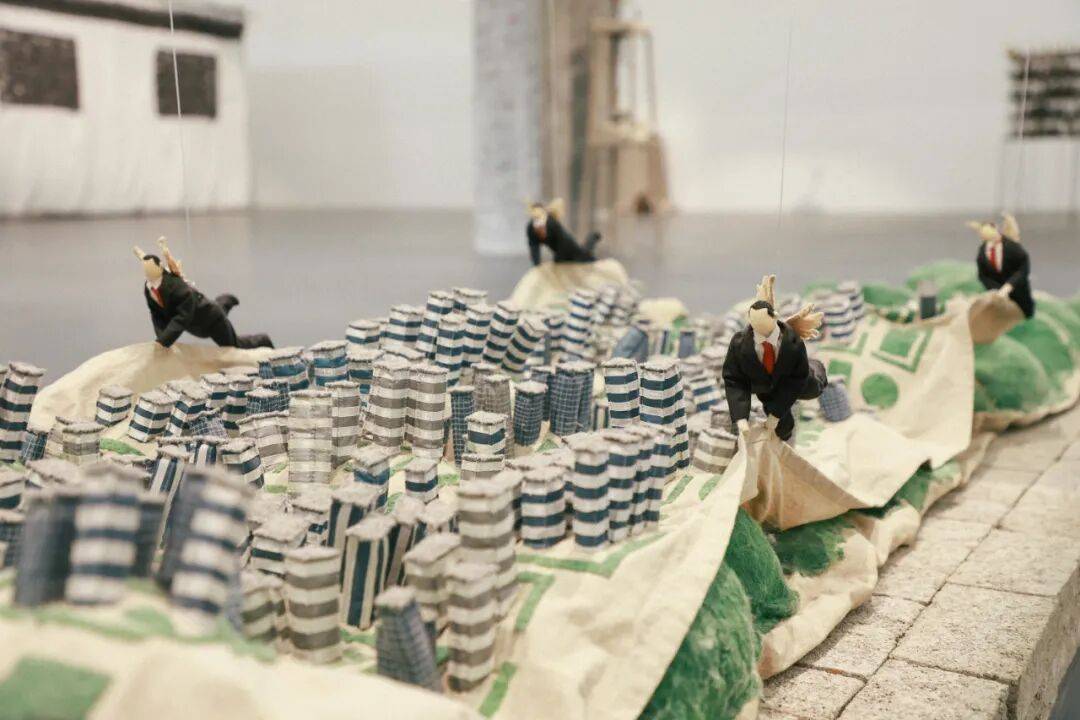
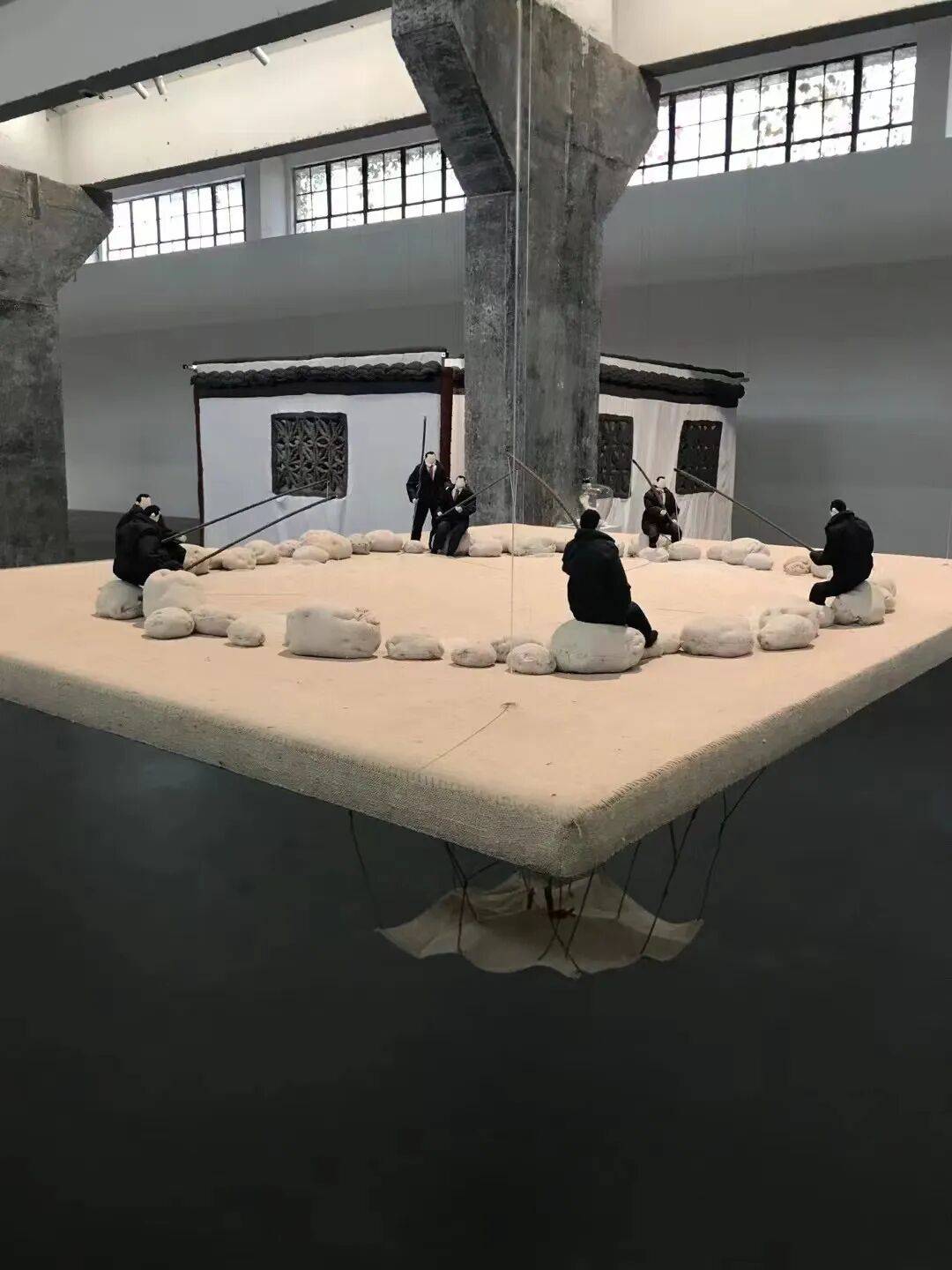
He received a master’s degree in art criticism from the School of Visual Arts in New York in 2017. He has also written columns for Collection, Art and Design, Art Panorama, Art China, and Degree Critical in New York. Here are his impressions of Shanghai’s art season. Ji Wenyu and Zhu Weibing, “Cloth Journey,” exhibition view, opening exhibition of AAEF Art Center, 2023. During art week, the exhibition “Cloth Journey” by Ji Wenyu and Zhu Weibing at AAEF Art Center in Zhujiajiao made a strong impression on me. I saw Shanghai’s real artistic ecology there.
“Cloth Journey” was also the center’s opening exhibition. Although Zhujiajiao is far from central Shanghai, it still drew a substantial number of local artists of different ages. I felt that the backgrounds of Shanghai artists were more dispersed and diverse, including artists trained at academies of fine arts around the world. There is considerable exchange and interaction between older and younger artists, and people visit and help one another frequently. This was very different from the vague impression people in Beijing had previously expressed when discussing Shanghai’s art communities.
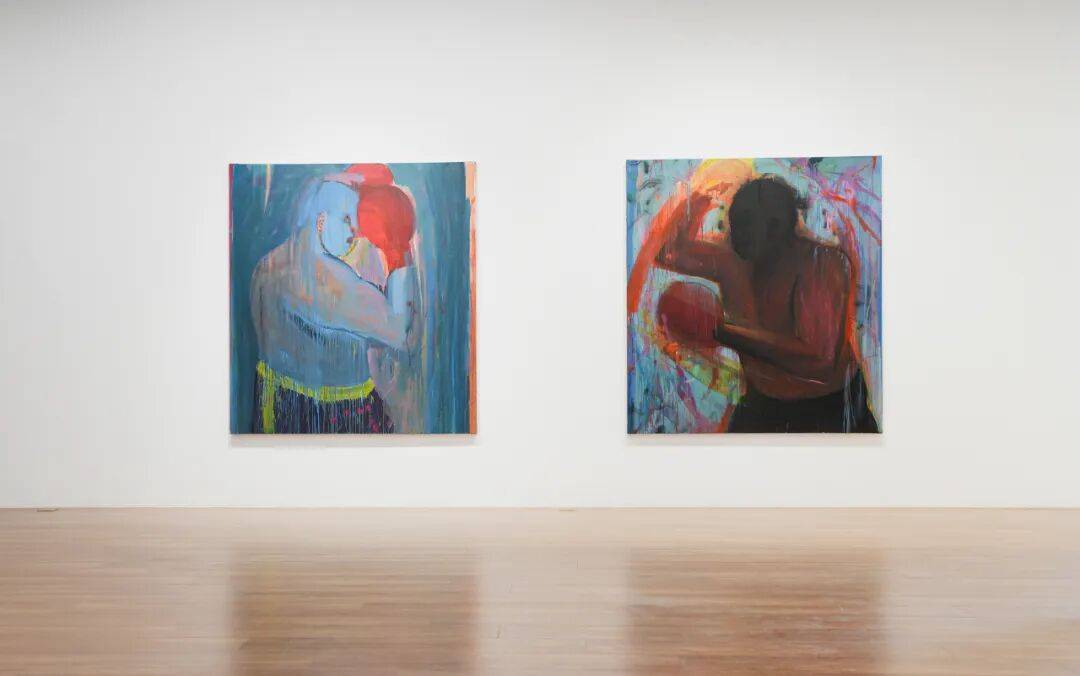
Jiang Xiaoyu’s work, “Brand-New,” exhibition view, inner flow Gallery, 2023. Among younger artists, I think Jiang Xiaoyu may be the one most worth discussing. Jiang is a painter who emphasizes the ontology of painting and the pleasures of form within an Expressionist trajectory. He has not made any earth-shattering “big move” in his working methods or path. I first became interested in him because I seemed to see a trace of his own image in every work—whether the figure was a boxer or a small monster.
Nine Art-World Insiders on Shanghai’s Art Season
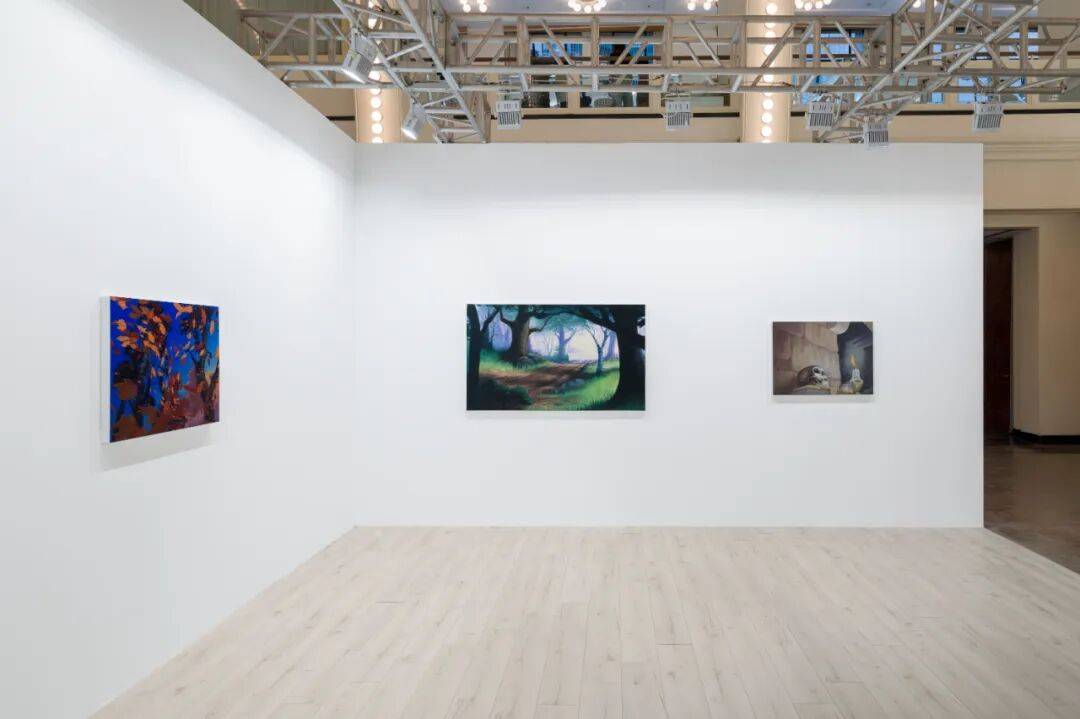
Later, in a group exhibition at innerflow, I saw two of his paintings of boxers. The lines on the canvas were exuberant, and every stroke carried tremendous confidence. Beneath the appearance of the work was his highly intelligent handling of his relationship with materials—materials at every stage. What I saw in his work was not simply technique, but the handling of relationships. Dan Colen, Mother (Flower), 2023. Photograph: Rob McKeever. Dan Colen solo exhibition, Gagosian booth, ART021, Shanghai, 2023. Photograph: Alessandro Wang. During my time in Shanghai, another phenomenon prompted me to think.
It concerned the two works Mother and Woodwork in Dan Colen’s solo exhibition at Gagosian, which were criticized by a great many people. Collectors’ opinions largely came down to “Is this a joke?” and “It’s attractive, but it doesn’t need any depth or meaning.” I think collectors’ failure to understand Colen’s work stems from the fact that most do not understand what “text” means in the context of contemporary art. They therefore do not know how to approach a particular painting through a textual lens.
The language these works use conceptually is a reconstruction and appropriation of the visual and narrative elements of Disney animated films, while omitting the images of all the characters in those stories. What finally appears on the canvas is the world we see in the paintings: somewhat childish, yet marked by a streak of indifference. I think the artist thereby constructs a fundamental skepticism about the possibility of personal narrative, as well as a critique of values under consumerism. Taken as a whole, the works trace these questions, while painting as a form critiques the text of Disney animation.
But almost no collectors recognized this structure, and no one pursued the questions behind the works. I think collectors’ reactions to and interpretations of Dan Colen’s work during the art season reveal a great deal. Zhang Jiarong is a curator who graduated from the Department of Philosophy at Tsinghua University and a visiting lecturer at the Chinese National Academy of Arts. He also founded the Hong Kong cultural channel Philosophy 01. He researches Marx and Deleuze and is a well-known representative of the field’s “academic” curators.
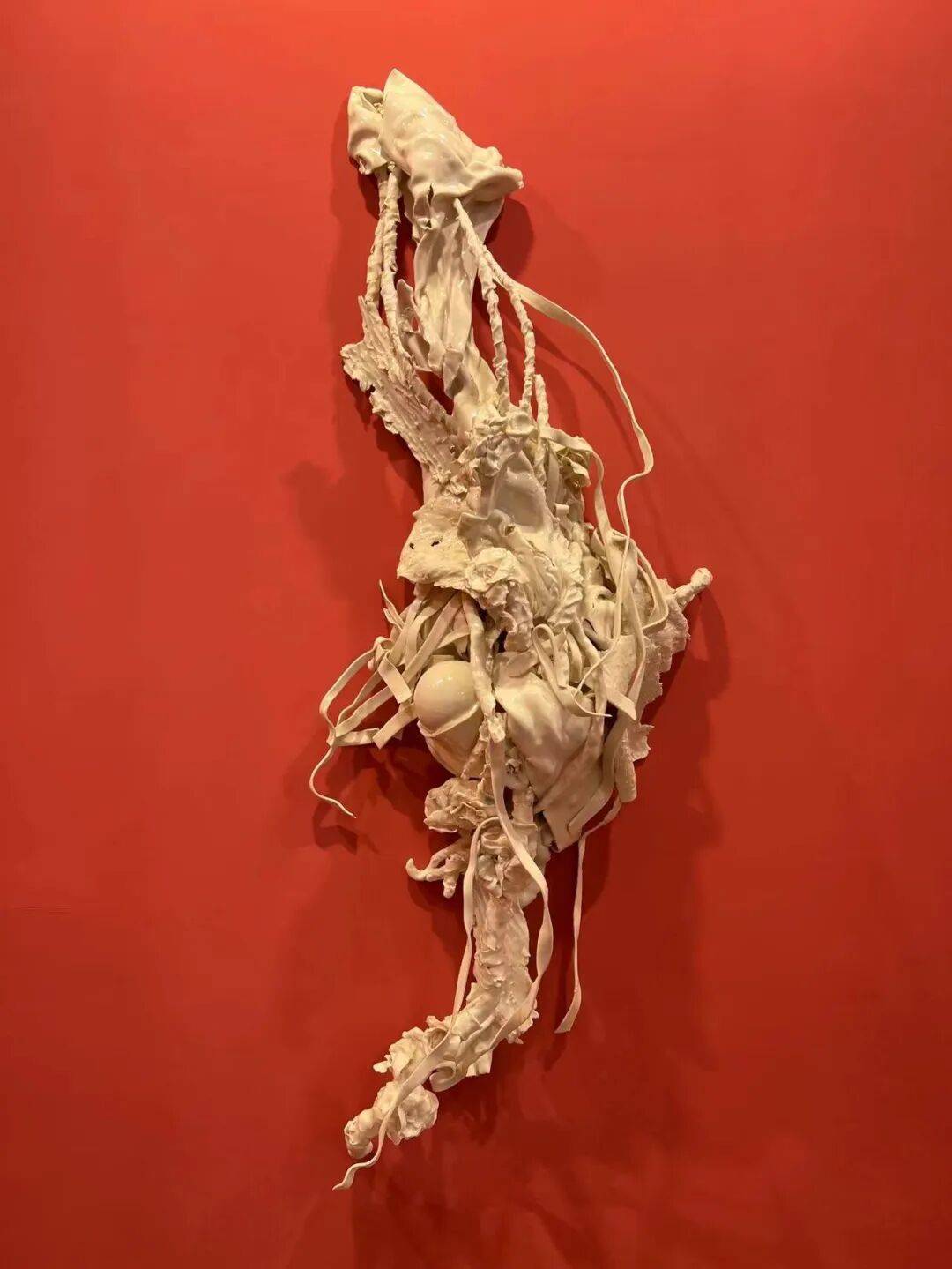
Here are his observations and reflections on Shanghai’s art season. Rachel Kneebone, White Cube booth, ART021, Shanghai, 2023. At the art fair, the work of the White Cube artist Rachel Kneebone was astonishing. Through ceramic sculpture, she depicts the deformation of bones, muscles, and organs, prompting viewers to reflect on the limits of the body and the mutability of organic functions. Mr. Han Jiaquan’s solo exhibition “Pregnant Pause” at Shanghai 166 Art Space was the exhibition I saw during art week that left the deepest impression.
SECTION 09 | Curator Zhang Jiahe
Han Jiaquan, “Pregnant Pause,” exhibition view, 166 Art Space, Shanghai, 2023. Mr. Han’s installation of paintings is highly playful: revolving double-sided paintings lead us to reconsider the relationship between illusion and vision, while engaging with gestalt psychology and the perceptual effects of the relationship between object and ground. In his work, fragments of the human body continually reproduce, merge, and cascade downward around complex images in which organic and geometric forms intersect.
This creates a sense of constant change, prompting the viewer’s attention “to alternate between the macro and the micro in order to interpret that action,” while eliminating any notion of a single narrative. Han Jiaquan, “Pregnant Pause,” exhibition view, 166 Art Space, Shanghai, 2023. In terms of color, most of Han’s paintings are extremely restrained: pale black, gray-white, brown-black, dark purple… Color in Han’s work acts like a dramatic intervention concealed behind the scenes. It is neither as rebellious as Matisse nor as minimalist as Mondrian, but an exploration of using color to connect the relationships among things within the image.
In the structure of the image, perfect still lifes give way to doll bodies missing parts, and portraits of figures without faces. A grotesque, frightening aesthetic of violence is repeatedly softened by gentle washes of color, producing a warmth with a palpable physical presence. In terms of the market, works on the wall remain easier to accept. Yet professional collectors—or those who intend to become professional collectors—are increasingly demanding a substantial academic and conceptual foundation in a work, believing that it is necessary to secure stable long-term value.