14 Art-World Figures on the November They Won’t Forget
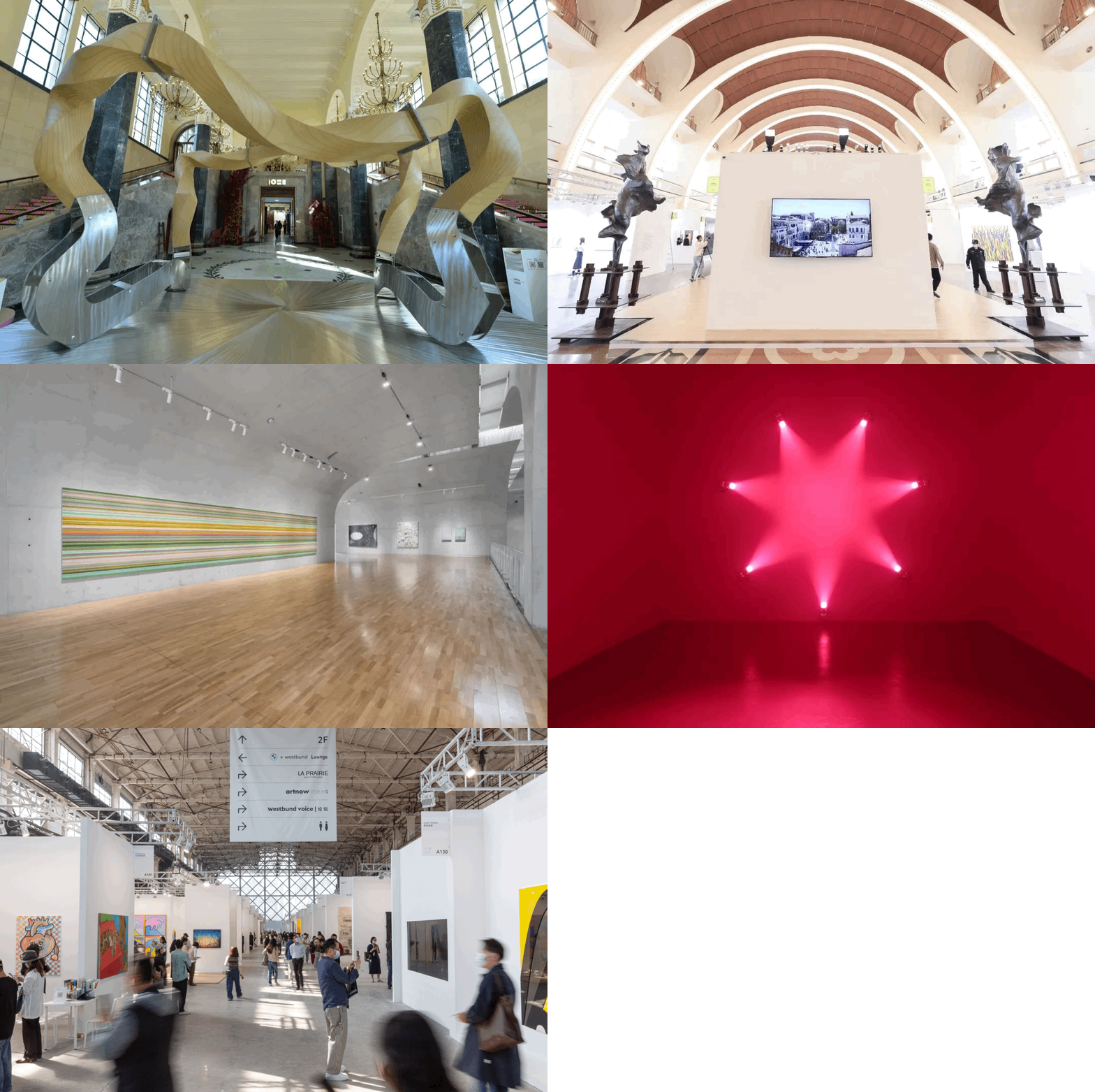
Shanghai’s art season came on at full force this November, with West Bund Art & Design and ART021 Shanghai Contemporary Art Fair opening alongside major year-end exhibitions at museums, galleries, and foundations. At its peak, more than 50 exhibitions were on view at once. Though both fairs were suspended soon after opening, the art world’s busy momentum continued......
By / Xirui Huang · 17 min read
How did fourteen practitioners keep looking at and discussing art during the disruptions of 2022?
Shanghai’s 2022 art season was disrupted by pandemic restrictions and interrupted fairs. These fourteen accounts record exchanges that continued nonetheless. Some contributors turn to online exhibitions and discussion, others respond to sound, materials and bodily experience in physical spaces, while others notice shop windows and urban settings. Artists, collectors, gallerists and curators preserve different judgments and encounters, documenting the particular difficulties and possibilities of that period.
Shanghai’s art season came on at full force this November, with West Bund Art & Design and ART021 Shanghai Contemporary Art Fair opening alongside major year-end exhibitions at museums, galleries, and foundations. At its peak, more than 50 exhibitions were on view at once. Though both fairs were suspended soon after opening, the art world’s busy momentum continued.
Which of Shanghai’s many art events made the strongest impression this November? Whose work came as a surprise? How did this year’s art month differ from last year’s? As November drew to a close, we spoke with Aria Yang, Bi Rongrong, Cai Lixin, Dong Daozi, Jin Youming, Joan, Kenna Xu, Li Qing, Liu Tao, Pu Yingwei, Sun Qidong, Sun Yitian, Xu Zhen, and Yuan Jiawei, listed alphabetically.
Together, they look at this year’s “Shanghai art season” from four perspectives: artist, collector, gallerist, and curator. (Responses are arranged alphabetically by respondent.) “Turning my attention to online exhibition projects” Because of the pandemic, I missed many opportunities to see exhibitions in person this year. Instead, I found myself paying more attention to online exhibition projects, as well as to art bloggers on Xiaohongshu and their assessments of the current market.
Some of the discussions and collisions that emerged from this process were fascinating; I think they reflect the growing diversity of art audiences. Ren Lili, “Sunset Like a Burn” exhibition view, image courtesy of Magician Space. Of the exhibitions presented in person this November, I would recommend two. Before art season began, I saw Ren Lili’s solo exhibition at Magician Space, and it made a deep impression on me. Visitors first entered a completely dark, enclosed space and had to feel their way forward with both hands. The process was full of uncertainty and fear.
She then unfolded a personal narrative through the exhibition, awakening the viewer’s sensations and memories. These seemingly absurd, dreamlike forms created an opening onto a reality beyond the everyday, carrying viewers into a place where the real and the imagined merged. That absurdity and dreaminess are precisely what I loved.
“Going Viral: Zombies, Pluribiosis, and Love of the Living Dead,” exhibition view, 2022, totalab x the soil collection, Shanghai. Image courtesy of totalab and the soil collection. At totalab, the special exhibition “Going Viral: Zombies, Pluribiosis, and Love of the Living Dead” was on view.
The exhibition presented a selection of contemporary artworks acquired by the soil collection over the past three years—from the outbreak of the global COVID-19 pandemic to the present. It responded to the game of life we are now living through, asking how viruses “make us rhizomatic with other organisms,” and how they compel us to dissolve, depart from, and alter our established ways of living.
“Meeting to see exhibitions and talk felt especially grounding” Despite the pandemic’s restrictions, the art months in Shanghai and other cities, including Hangzhou, were unusually active, with many high-quality exhibitions. During the fairs, friends from across the country gathered in Shanghai. Making plans to see exhibitions and talk with them felt especially grounding. I even made myself a viewing schedule: a few exhibitions each week. I’ve been at it for two weeks and still haven’t finished.
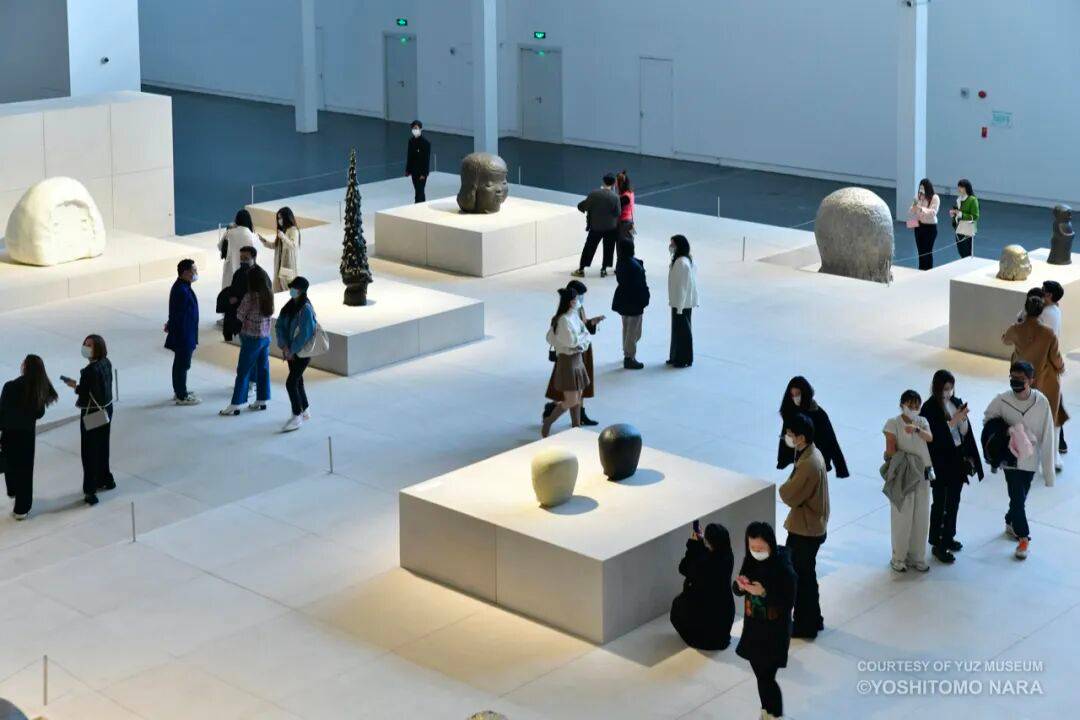
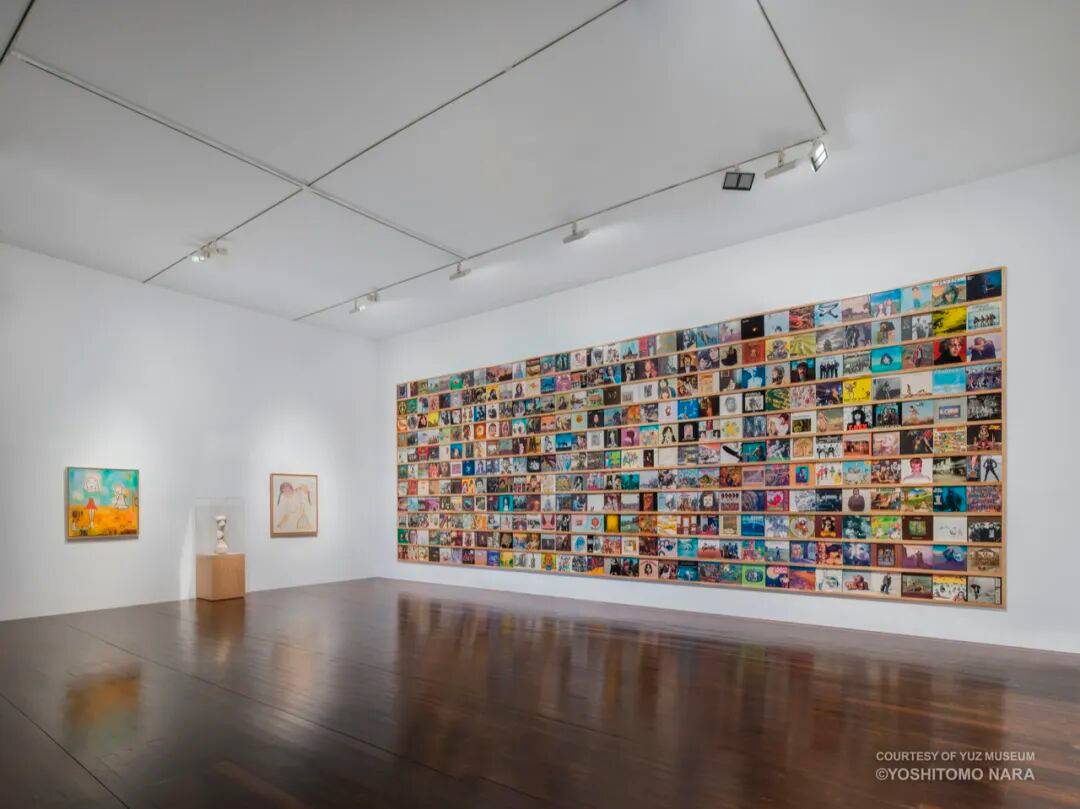
“Yoshitomo Nara,” exhibition view, Yuz Museum, 2022. Photo by JJYPHOTO. During this period I saw too many memorable exhibitions to count. The collection of Op and kinetic art from Tate at the Museum of Art Pudong; Yoshitomo Nara’s solo exhibition at Yuz Museum; the Long Museum’s tenth-anniversary exhibition; and Geng Jianyi’s exhibition at the Power Station of Art were all excellent. I also liked an exhibition at In the Park Art Space: a solo show by the French artist Benoit Vermander.
His perspective on painting Chinese ink works is very different from that of those of us trained in traditional Chinese painting—far freer—and that was instructive. Compared with previous years, this year’s Shanghai art season seemed to include more large-scale museum exhibitions running simultaneously, including major retrospectives and historical surveys of particular art movements, periods, or forms. There appeared to be more of these exhibitions than in previous years, and I benefited enormously from them.
“What moved me most was the determination and commitment of the participating galleries and collectors” What moved me most about this year’s Shanghai art season was the determination and commitment of the participating galleries and collectors. Many galleries from China and abroad had prepared for this “art month” over a long period. Overseas and Hong Kong galleries endured 7+3 quarantine in order to come to Shanghai. Many collectors traveling across provinces overcame considerable difficulties; some decided to come even with the return journey uncertain and the possibility of being flagged by the health-tracking system. In such an uncertain period, seeing everyone maintain their energy, confidence, and faith was deeply moving. As someone taking part, I found it touching.
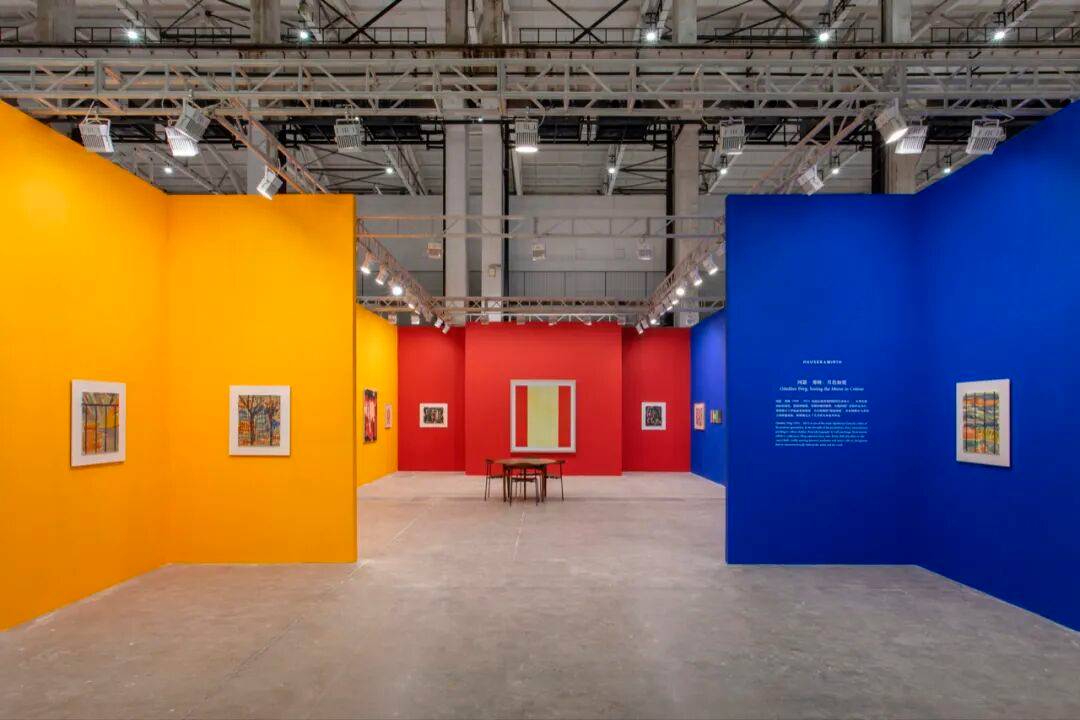
Compared with the 14+7 quarantine policy of the previous two years, this year’s 7+3 was considerably more relaxed. In previous years I came to Shanghai alone; this year I was happy that two more colleagues could travel with me from Hong Kong. I also saw many collectors and media friends I hadn’t seen in a long time. Hauser & Wirth at West Bund Art & Design, photo by JJYPHOTO. We were among the first international galleries to participate in West Bund Art & Design, and have taken part every year since its first edition.
West Bund has always placed particular emphasis on curatorial presentation, so this year we brought a carefully conceived solo exhibition by the artist Günther Förg. It was unfortunate that the fair ended a day earlier than expected, but during the days it was open, our booth received enthusiastic responses from collectors, media, and visitors. We sold 14 works, including to important private museums, corporate collections, and private collectors.
“Knowing that the organizers stood with us meant a great deal” Amid the pandemic’s uncertainty, enthusiasm for contemporary art did not diminish; if anything, it intensified. It was unfortunate that West Bund Art & Design ended early. Faced with a sudden challenge, exhibitors inevitably felt confused, anxious, and hesitant. Yet throughout the process we felt the organizers’ assistance, support, and understanding. As exhibitors, knowing that the organizers stood with us meant a great deal.
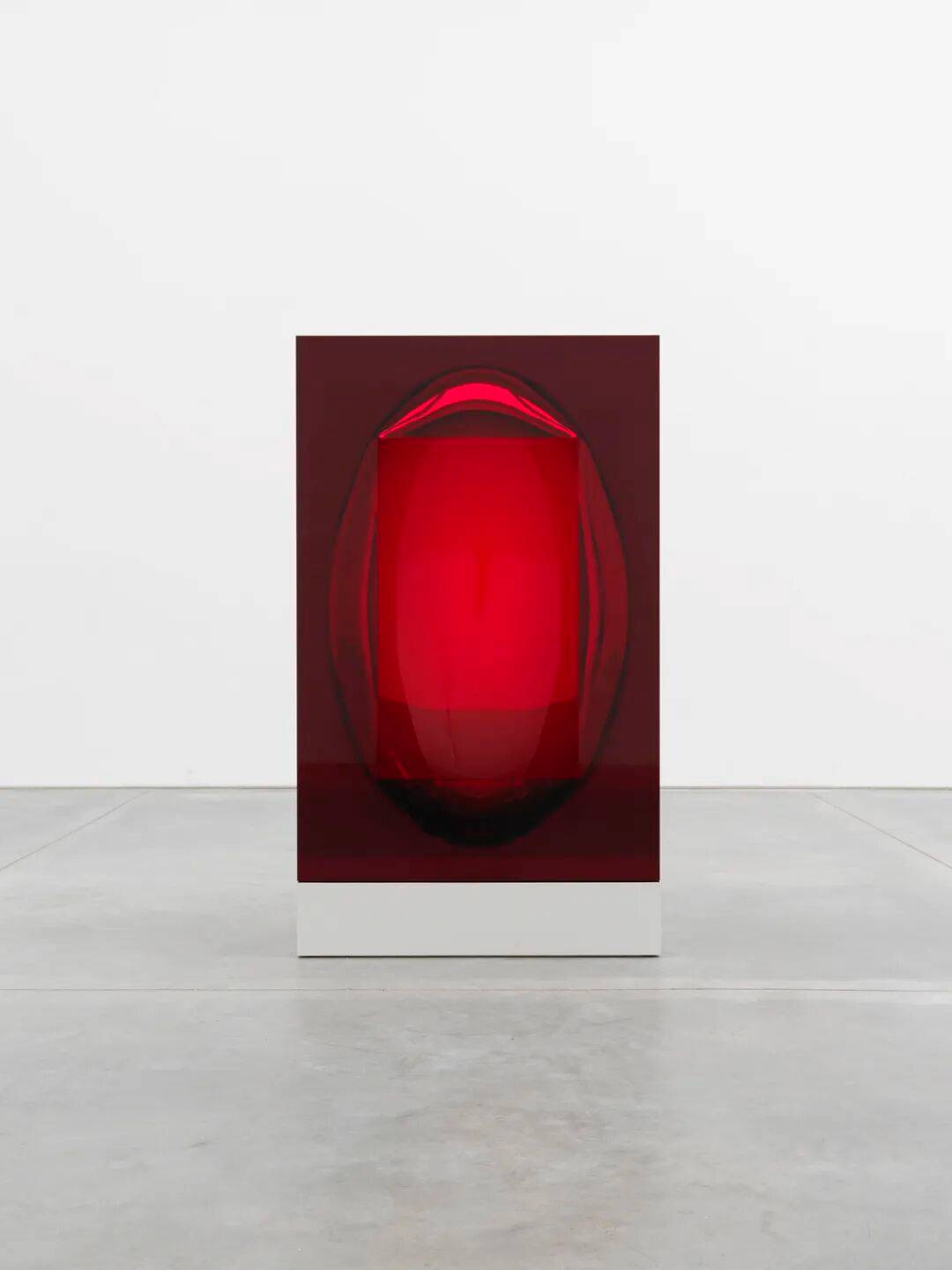
Chinese audiences have mostly encountered his mirrored and wax sculptures. This work revealed another side of Kapoor’s practice. As the viewer’s gaze approaches the sculpture’s hollow, the eye is drawn inward, toward the deeper center of the cavity. In the process, viewer and work unconsciously form a strange intimacy—an experience of being both outside and inside it. This month also saw the Long Museum enter its tenth year with an anniversary exhibition, while West Bund Museum presented abstract painting by women artists. Both exhibitions left a strong impression.
Another exhibition I would recommend is Richard Deacon’s current solo exhibition, “Harbour,” at Lisson Gallery Shanghai.
“Among the many new exhibitions, painting on canvas remained the dominant form” I spent six days in Shanghai and saw 30 exhibitions besides the fairs. Painting on canvas still seemed to rule the field. Shanghai’s art and design galleries, secondary-market dealers, museums, foundations, and other institutions are highly active. At the same time, large numbers of young galleries and art organizations are emerging, presenting exhibitions of a consistently high standard and revealing the city’s artistic caliber and collecting strength from many angles.
Because of the pandemic, relatively few visitors came from Beijing. And with so many exhibitions opening at once, many shows were not especially crowded.
“Being in the World—The Long Museum’s Tenth-Anniversary Exhibition,” exhibition view, Long Museum West Bund. Photo by shaunley. If I had to choose one exhibition to recommend above all others, it would unquestionably be the Long Museum’s collection exhibition. As one of the most internationally recognized museums in China, its holdings amount to an encyclopedia of art history. Many museums have been established in China in recent years, but few have developed their own collecting philosophy, trajectory, and collection. Building a world-class museum still requires a long accumulation of time.
Shanghai also consistently has a few young galleries that surprise me. I’ve long followed Gallery Vacancy, and I particularly like artists such as MEVLANA LIPP, presented by Capsule Shanghai; Li Heidi at Linseed; and Guo Yanfu at TATA Gallery. Pu Yingwei, “A Love Song for the Ages,” Hive Center for Contemporary Art, at West Bund Art & Design. My original plan was to spend the first day at West Bund and the second at ART021, but in the end I saw only West Bund.
The scale of West Bund Art & Design was also considerably smaller, and there were far fewer participating international galleries. The international galleries that did come mostly presented steady, conventional works, which seemed to reflect an uncertain attitude toward the domestic art market. This year, however, Hive Center for Contemporary Art’s solo presentation of Pu Yingwei was especially thoughtful. The red setting complemented the works, and the multidisciplinary artist has attracted considerable attention from collectors. We also took part in one of the group exhibitions at the design fair held at Cheng Art Museum in Zhongcheng Zhigu, Baoshan District.
I’ve been watching and practicing the ways contemporary art and design can cross boundaries and merge. “New faces, including galleries and artists, are emerging” One especially good thing this year was that, beyond the two major fairs, Shanghai’s entire “art month” generated a strong atmosphere. Around the art month, many galleries and museums introduced all kinds of exhibitions, making the season rich and layered.
In November, the event that made the deepest impression on me was the “Empower Her” forum, to which I was invited by The Art Newspaper and Christie’s. We had an in-depth discussion of “how to provide structural support for women in the arts,” which strengthened my determination to continue sponsoring and supporting contemporary art through the ASE Foundation I founded. If I had to recommend the exhibition most worth seeing in November, it would be “Who Is He?—A Retrospective of Geng Jianyi,” currently on view at the Power Station of Art.
“Who Is He?—A Retrospective of Geng Jianyi.” This year, my favorite artists included Sahara Longe at Timothy Taylor and Christine Sun Kim at White Space. Top: ART021 exhibition view. Bottom: White Space’s booth at ART021. Images courtesy of White Space. One particularly welcome aspect of the two fairs was the number of new faces at ART021, including emerging galleries and artists.
Perhaps also because of the pandemic, the overall participation of international galleries and the quality of the works were subject to certain limitations this year. Art itself is borderless and international. I hope that, as the pandemic eases, more international galleries will be able to bring strong works and artists to China. Although the art season ended abruptly because of the pandemic, every in-person gathering was precious. As countries around the world reopen, I’m looking forward even more to next year’s fairs overseas.
“It was bliss to see old and new friends together so often” What moved me most this year was seeing the eyes of people from all over the country who love art, especially when they looked closely at the works. The opportunity provided by art month allowed me to meet many new friends who share that love. To gather so frequently with old and new friends, to discuss art and talk about ideals—it was pure happiness. It felt like the art world’s Spring Festival Gala: each exhibitor was a separate act, and the audience could step onto the stage and move seamlessly from one performance to another, creating these wonderful programs together.
Wow, they have such an important representative work! The Long Museum’s tenth-anniversary exhibition and West Bund Museum’s exhibition of women abstractionists were, in my view, both essential November viewing. I had followed the latter closely since its presentation at the Centre Pompidou. It included several important women abstract artists whom I have long studied but who receive little attention. Seeing so many of their works together—and seeing those works receive broader attention—was deeply satisfying. Kenna Xu Gallery at West Bund Art & Design, image courtesy of Kenna Xu Gallery. The pandemic had a substantial impact this year, but one could feel that the organizers stood with the galleries, working hard to solve every problem. Their response time was instantaneous; at nine or ten in the morning, one could already see the fair’s directors carefully making their rounds.
In conversations with collectors who came to see the fair, I sensed an increasing degree of youthfulness, professionalism, and international perspective. People are embracing a wider range of artistic styles and are deeply committed to research and learning. Their progress in studying art within a global context has been remarkable.
“The many exhibitions showed resilience and enthusiasm, as well as a longing for normal life” Power Station of Art, “Who Is He?” exhibition view. Image courtesy of the Power Station of Art. Both fairs were suspended. The organizers and gallery owners had an extraordinarily difficult time, and I hope cultural life can return to normal soon. I went only to West Bund and hurried through a few booths. Several solo presentations were quite good, including Gunther Forg at Hauser & Wirth.
Compared with previous years, the greatest difference in this year’s art season may have been everyone’s state of mind. The many exhibitions showed resilience and enthusiasm, as well as a longing for normal life. The exhibition that made the strongest impression on me in November was Geng Jianyi’s retrospective at PSA. Shen Qilan’s “Sensuous Dialogue,” curated at Biyun Museum of Art Pudong, is another exhibition I highly recommend.
“If the two fairs had completed their schedules, they would certainly have delivered an impressive report card” During this art month, everyone made enormous efforts to ensure that the two major art fairs could take place as scheduled. This may have been the most difficult edition yet. In this era of recurring outbreaks, many art workers and enthusiasts from Beijing, Chongqing, and Guangzhou were unable to come to Shanghai. Even so, many exhibitors and collectors did everything they could to travel from across the country and around the world. It showed how genuinely people love art.
Both fairs had prepared thoroughly, whether for pandemic prevention and control or for unforeseen events. The experience on site was also very good, especially on the opening day, when West Bund and ART021 felt just like opening days in previous years. If the two fairs had completed their schedules as planned, they would certainly have delivered an impressive report card. Anonymous, Snake Dance [II], [June 19, 1897–June 19, 1899]. 35mm film, hand-colored, digital transfer, color, silent, 1 minute. Image courtesy of the Centre Pompidou. Looking at recent exhibitions on a broader scale, I would recommend West Bund Museum’s newly opened “Women and Abstraction.”
One work in particular made a deep impression on me: the dance Snake Dance by the female artist Loie Fuller, part of the exhibition’s early abstract series in dance and painting. The work was created roughly in the late nineteenth century, suggesting that women’s exploration of abstraction began much earlier than we have generally understood. Its form is highly avant-garde, and its effect is striking. For the past hundred years or more, the major figures of abstract art have been men. That makes this exhibition especially timely, allowing us to see the explorations and experiments of many women who had received little attention—work that was every bit as ambitious as that of their male counterparts.
Before Shanghai’s art month began, Zhang Zipiao’s solo exhibition at the Long Museum made a strong impression on me. As a young woman artist, her growth and transformation over the past few years have been remarkable. I also think the Museum of Art Pudong’s exhibition “Motion and Vision: Op and Kinetic Art from Tate’s Collection” is well worth seeing. Top: Mao Guanshuai, “Moon Shadow,” opening view, Deyutang Gallery. Bottom: Deyutang Gallery at West Bund Art & Design. If I think from the perspective of a collector, I’ve recently been following three artists. The first is Mao Guanshuai, currently showing at our Deyutang Gallery, an excellent young sculptor.
|
This is also his first attempt at working with metal and marble, and the final results are striking. Then there is Zhang Zipiao, whom I mentioned earlier. Finally, there is an artist I haven’t seen yet but very much want to: Alice Neel, currently on view at David Zwirner’s Hong Kong space. I think she is an unusually rare woman artist who continued to explore figurative painting. “Everyone is living amid enormous uncertainty, and that uncertainty is greater than art” What moved me most this year was how much everyone had given and endured.
I want to say: Don’t give up hope in your own field. Persist in building value through your work; that value should outlast the vitality of present reality. After the fair ended early, everyone found themselves amid enormous uncertainty—an uncertainty greater than art, and greater than the broad economic circumstances we so often discuss. West Bund Art & Design, visitors engaging with Pu Yingwei’s work. Image courtesy of the artist. Because I had a project at West Bund Art & Design, I stayed on site throughout the fair.
I didn’t get to ART021 before it closed. I think people were still enthusiastic—enthusiastic about seeing art, and about seeing one another—but for various reasons that enthusiasm was expressed cautiously. Ann Veronica Janssens, Rose, exhibition view, West Bund Museum. Image courtesy of the artist. The artwork that made the strongest impression on me in November was Ann Veronica Janssens’s Rose, in “Women and Abstraction,” an exhibition presented by West Bund Museum and the Centre Pompidou.
I also recommend the Long Museum’s tenth-anniversary exhibition. It shows how a museum and a generation of collectors have understood and participated in the exchange between Chinese and global contemporary art. The historical and regional perspectives embodied in the collection are both well worth considering.
“Art week shrank into a one-day trip” This year, Shanghai’s art month contracted into an art week, and then into a one-day art trip. The event that made the deepest impression on me was probably the outpouring of support for ART021 in colleagues’ WeChat Moments on the afternoon of November 11. As for a memorable work, I would recommend Good Hunter No. 19, a large painting in Shang Liang’s solo exhibition “Newcomer” at the Cc Foundation. The figure in the painting has its back to the viewer and is shrouded in mist, resembling the bewilderment each of us encounters.
If I were recommending an exhibition currently on view in Shanghai, many people would choose Geng Jianyi’s retrospective “Who Is He?” at PSA. I would instead recommend Wang Wei’s solo exhibition “Walking in the Mud,” curated by Lu Xinghua at MadeIn Gallery. In different interviews I have spoken about the concept of “intensive life.” Through their actions, Wang Jianwei and Lu Xinghua have shown us how to live an “intensive life” through art—and how to truly “love wisdom.”
“It felt as if it ended before it began” This year’s “art month” felt as if it ended before it began. I didn’t make it to West Bund Art & Design because the fair was suddenly suspended on its final day; I saw only half of ART021 before it was suspended on the second day. Sun Yitian’s first artist book, True Treasure Island, image courtesy of BANK Gallery. The most memorable events in November included the launch of my new artist book—my first, True Treasure Island—which was released at BANK Gallery on November 11, and the artist Tan Yongqing’s exhibition “Fanta” at Longlati.
If I had to recommend one exhibition, I would choose “Who Is He?,” Geng Jianyi’s exhibition at the Power Station of Art, curated by Karen Smith and Yang Zhenzhong. I noticed that the state of people, the subjects under discussion, and the atmosphere as a whole all felt different during this year’s art season. But I think we must continue to maintain our enthusiasm and our hope.
“Contemporary art gets more exciting the more it is put through the wringer” In 2022, the entire field moved from plans covering the whole year and even the next into a state of adapting through random, day-by-day adjustments. By November, it had fully entered the stimulation of calculating in half-day increments. The most memorable event was the entire field flooding WeChat Moments with encouragement for ART021 on the afternoon of November 11. The exhibition that impressed me most was Wang Jianwei’s show at MadeIn Gallery, which demonstrated the artist’s distinctive, penetrating consideration of contemporary circumstances and offered forceful evidence of his practice.
Feng Zhixuan, Vast Similarities Connect All Things—Standing: A Gigantic Columnar Sculpture, 2022. Oyster shells, volcanic stone, coral bones, polyurethane refrigerator-insulation and flame-retardant filler, permeable concrete, galvanized pipe, steel cable and other components, greenhouse ground anchors, 2000 × 1500 × 1400 cm. Image courtesy of MadeIn Museum. Speaking of memorable works, I would mention Vast Similarities Connect All Things—Standing: A Gigantic Columnar Sculpture, shown by Feng Zhixuan in the opening exhibition of MadeIn Museum.
This work is a global masterpiece of 2022 on themes including ecology and the Anthropocene. If I were recommending an exhibition currently on view, it would be the Geng Jianyi retrospective at PSA, jointly curated by Yang Zhenzhong and Karen Smith. It offers a highly professional and objective presentation of Geng Jianyi’s explorations and contributions in art, teaching, and other areas, and is a rare model for a retrospective of a Chinese artist. The field as a whole has been pushed to exhaustion and weakness this year, but its fundamentals are sound, because contemporary art gets more exciting the more it is put through the wringer.
“Galleries and other kinds of art institutions have become better at making immersive exhibitions” To be honest, I was extremely busy around and during Shanghai Art Week, but my main work bases were the Bund and the Hengfu area—Longlati Foundation and totalab. I have no hesitation in recommending the exhibition I curated, “Going Viral: Zombies, Pluribiosis, and Love of the Living Dead.” On one level, it reflects how the collection has expressed its methods of coping with and adapting to life from the outbreak of the global COVID-19 pandemic to the present. On another, as a curator, I used the collection to respond to the surrounding environment and defend the value of our lives.
Tan Yongqing, Luminous Night, 2021. Image courtesy of Longlati Foundation. During this period, Longlati Foundation presented, among other exhibitions, a solo show by the Chinese artist Tan Yongqing, born in the 1990s. What struck me most were three large paintings on space and science-fiction themes, each three meters high and six meters wide, commissioned by Longlati. I had assumed that bewilderment or alienation, powerlessness or boredom formed a stable atmosphere in Tan Yongqing’s work.
Yet in his recent practice, his thoughts on humanity’s fate have taken on a strongly romantic cast. Overall, Almine Rech introduced new works by the Chinese artists Li Qing and Huang Yuxing, whom it represents, giving local professionals encouragement. Linseed, an emerging Shanghai gallery, showed the recent practice of the London-based Chinese artist Li Heidi in its own space and also presented paintings by the British artist Patrick H. Jonesde in a shopfront retail space at the corner of Baoqing Road and Taojiang Road, operated by hAo mArket, arranging them across the windows with care.
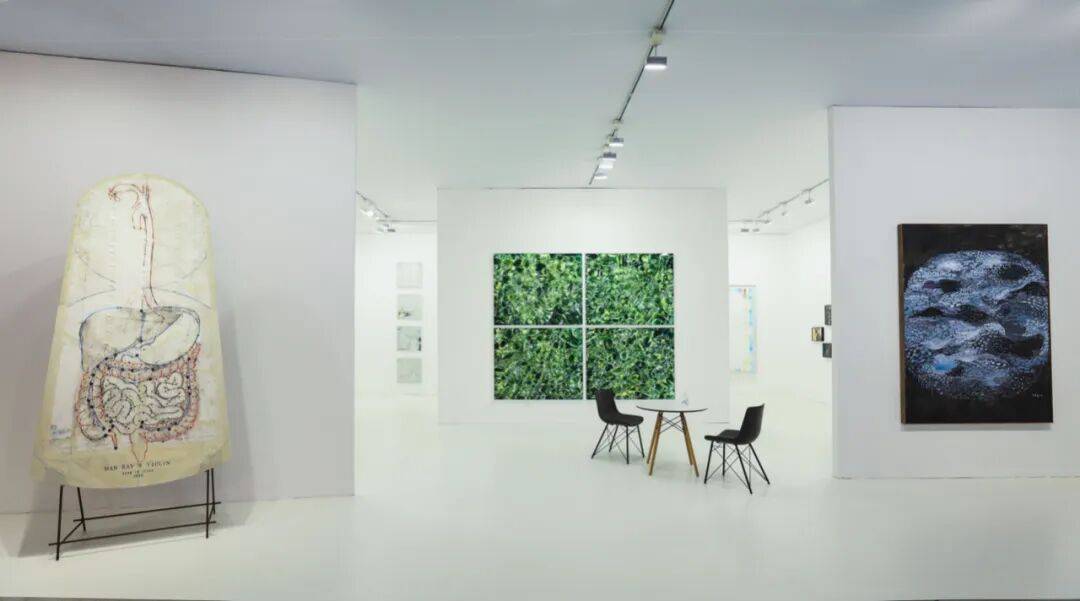
At the curatorial level, galleries and other kinds of art institutions have become better at making immersive exhibitions, giving them greater penetration within the city’s overall context. ShanghART Gallery at West Bund Art & Design. Unfortunately, as far as the fairs were concerned, I attended only West Bund this year. In Hall A, one could feel the importance that Western blue-chip galleries placed on and the support they offered to China’s art ecosystem, including a number of substantial, high-quality works. My favorite was ShanghART Gallery in Hall A, where Lu Lei’s monumental manuscript The Violin of Man Ray stood like a sculpture at the entrance to the booth. The digestive system depicted within it, traced in drafting materials, underscored the tension between the vulnerability and immortality of the human body and spirit. Its force seemed to exceed the usual consumerist magnetism of a fair.
The moment I saw the work, I felt as though everything around me had suddenly gone quiet. Editors: Luo Ziyan, Rui Xue, and Huang Xirui