The World’s Most Secretive Private Museum: More Than Two Thousand Forbidden Objects, Reachable Only by Boat
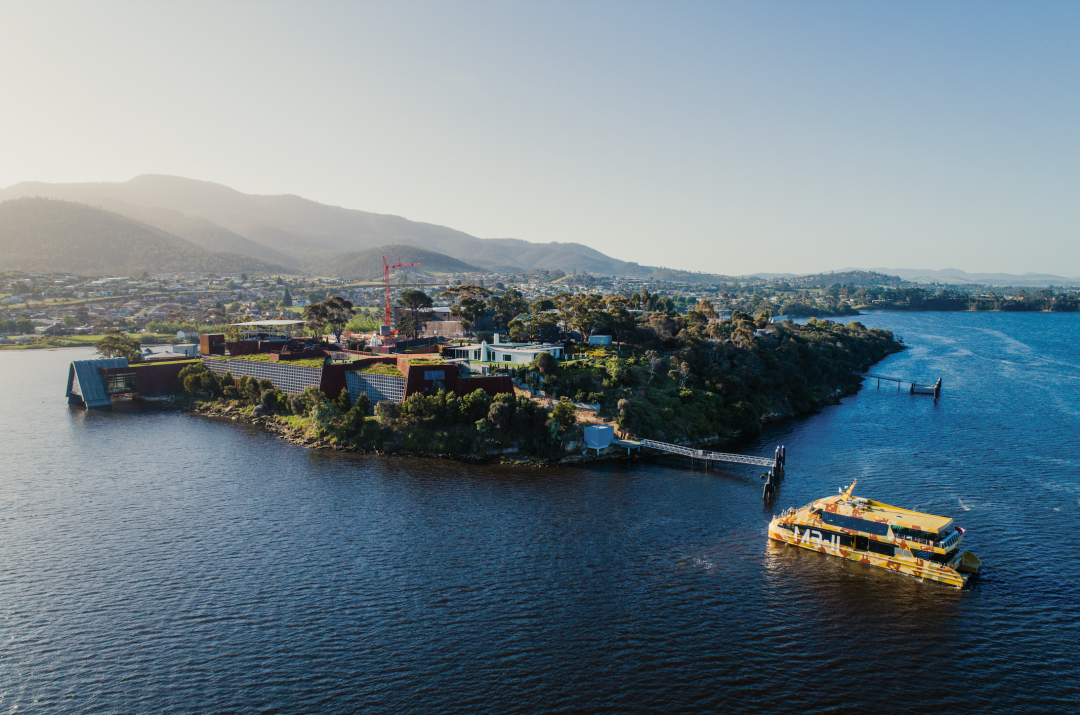
On the Berriedale peninsula in Australia’s Southern Hemisphere, far removed from the usual circuits of contemporary art, the Museum of Old and New Art, or MONA, has been called an “adult Disneyland.” It can be reached only by ferry, and, apart from its ground-level entrance, the museum is built three stories underground, in perpetual darkness......
By / Xirui Huang · 11 min read
Where is MONA in Australia, and what distinguishes its building and art?
MONA, the Museum of Old and New Art, is in Berriedale, Hobart, beside Tasmania’s River Derwent. Founded by collector David Walsh, it opened in 2011 and combines underground sandstone galleries with displays of antiquities and contemporary art. The article explores James Turrell’s light installations, Wim Delvoye’s Cloaca Professional and Sidney Nolan’s Snake, alongside Walsh’s collecting story.
In Australia, in the Southern Hemisphere, on the Berriedale peninsula, a place that might be said to lie a world away from contemporary art, there is a museum known as an “adult Disneyland”: the Museum of Old and New Art, or MONA. It can be reached only by boat, and, apart from a first-floor entrance, the main body of the museum is built three levels underground, in “utter darkness,” with no windows at all. Even Rihanna has made the trip there.
The collection is vast and various: more than two thousand objects, ranging from an ancient Egyptian mummy to works by such leading contemporary artists as Abramovic, Matthew Barney, Christoph, and Erwin Wurm; the world-famous curiosity of Wim Delvoye’s “poo machine”; and the interactive work “Ladies Lounge,” which only women may enter. The founder of MONA, David Walsh, is himself a legend: a mathematical prodigy who dropped out of college when he was young and devised an exquisitely sophisticated odds-making algorithm, then cleaned up in casinos in Macau, Las Vegas, South Africa, and elsewhere around the world.
He turned all of that gambling money into art, and, as the collection grew, he founded the Museum of Old and New Art in 2011. There are no wall labels. Visitors may get lost. They may also be startled by half-naked live performers.
SECTION 01 | Unique underground and above water structures
“Museums now are too boring. I had to make MONA more fun if I wanted to draw people in,” Walsh said. MONA is in Tasmania, Australia’s southernmost state, on Hobart’s Berriedale Peninsula, beside the beautiful Derwent River. The museum is built into a sandstone cliff and was designed by Fender Katsalidis Architects.
The exterior of the main structure is clad in weathered steel panels, whose rusty red tone blends harmoniously with the surrounding landscape. From outside, the museum appears to be only a single-story building, but in fact the entire sandstone cliff has been hollowed out to a depth of 17 meters, with an area of more than 7,500 square meters. Including the ground floor and the three subterranean levels, it is nearly twice the size of the Guggenheim Museum in New York. Those three internal levels have been inserted into the rock itself, entirely in darkness and connected by spiral staircases, giving the place the thrill of an expedition to the center of the earth.
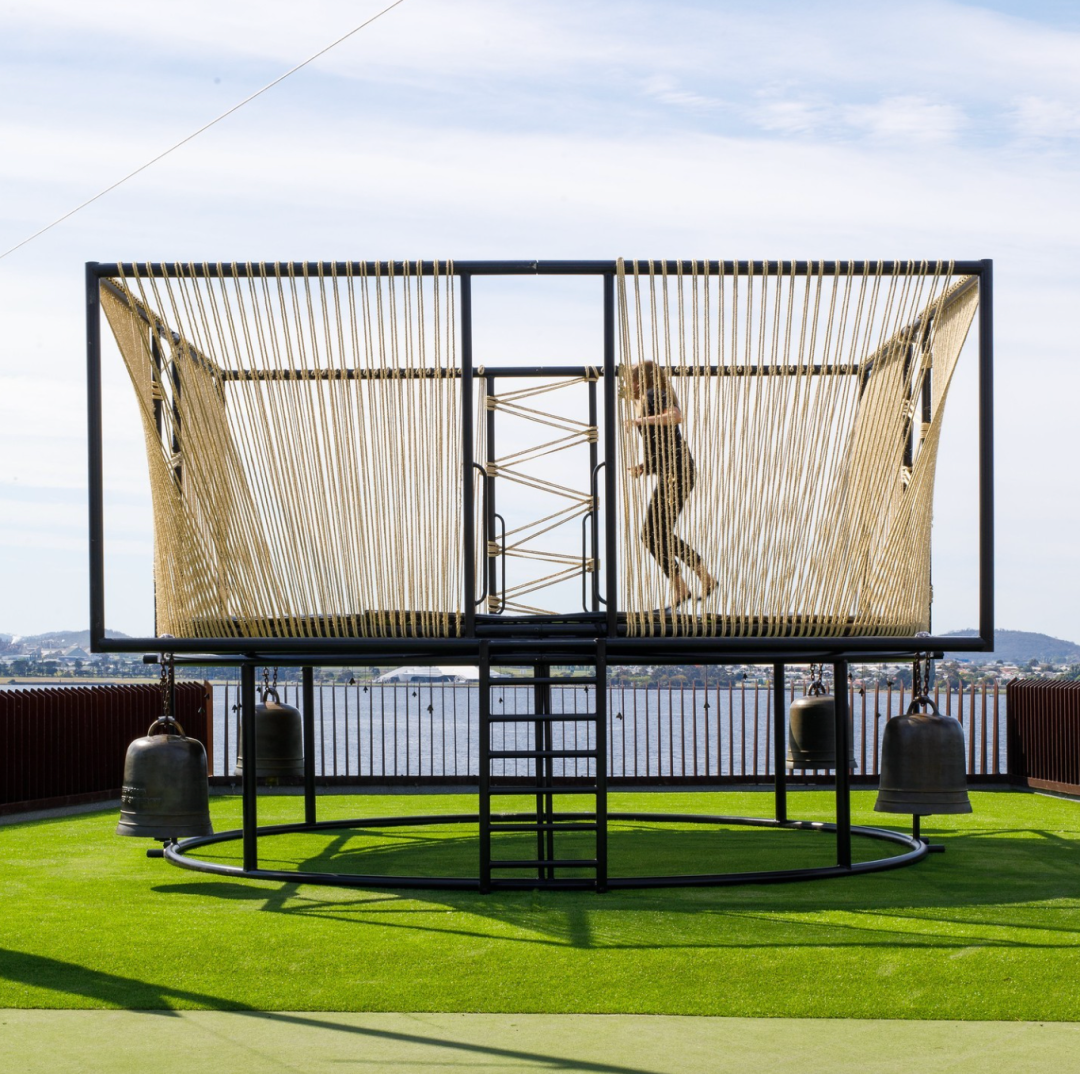
Walsh has said that he chose not to build a tall structure above ground partly to protect the island’s historic buildings and partly to preserve the surrounding ecology. The museum even has a rainwater-recycling station, allowing the cycle to be completed on the island itself. Beyond the main building, the grounds are given over to vineyards, restaurants, and a winery, and the outdoor spaces function as a sculpture park as well. Chen Zhen, Danser la musique, 2000. Roman Signer, Engpass, 2000. Christian Wagstaff and Keith Courtney, House of Mirrors, 2016. Tom Otterness, Girl Rules, 2016–18.
In the sculpture park are Tom Otterness’s tin doll figures, Roman Signer’s crash scene, the mirror house created by the duo Christian Wagstaff and Keith Courtney, and the dance platform by the noted France-based artist Chen Zhen, among others.
The new wing beside the main building, Pharos, seemingly floating on the water, also merits attention. Walsh spent 20 million Australian dollars to build this irregularly shaped addition above the waterline. Inspired by the ancient Lighthouse of Alexandria, it extends the architectural language of the main building, using concrete, steel, and granite while adding a fused sense of the modern and the primal. The space contains four site-specific works by James Turrell, one of America’s best-known “Light and Space” artists.
James Turrell, Unseen Seen + Weight of Darkness, 2017. Among them is the enormous white sphere Unseen Seen, the largest work he has made to date. It sits before a broad triangular picture window, where the geometric collision of circle and triangle is further amplified by the green landscape outside.
The sphere, notably, is open to visitors. One may enter, lie on a slanted bed beneath a curved white ceiling, and choose either an “intense” or a “gentle” sensory mode in order to “sleep” inside it for 15 minutes. Over the course of those 15 minutes, the installation delivers continuously shifting bright light accompanied by subtle background music. Even with eyes closed, viewers still register different colors and patterns, producing a psychedelic sensation; some visitors have even said that they perceived distinct objects or people.
James Turrell, Event Horizon, 2017. After the dazzling experience of the light installation, visitors enter another gallery, called Weight of Darkness. It is pitch-black, with a large armchair at the far end. One sits there for 15 minutes. The experience pushes sensory thresholds to an extreme, like a visual roller coaster, or blindness after staring into a kaleidoscope. Several of the other works are highly immersive as well: once inside a room, the viewer is warmly enveloped by orange, blue, yellow, or green light.
At the museum’s entrance, the ground-level threshold is lined with polished stainless-steel panels that form mirrored walls; across from them is a tennis court in red and green tones. Inside, the space opens unexpectedly, as tangled and intricate as a time tunnel. Exposed brick walls and concrete surfaces reinforce the industrial character; the architects preserved the natural roughness of the site, and the marks left by excavation are still clearly visible in the rock face. Visitors move through the museum without finding a single wall label, and there is no fixed route. Unlike many intensely academic museums and galleries, Walsh is more interested in whether people are enjoying themselves. “You don’t have to feel guilty for not learning anything, and it doesn’t matter if you don’t understand it. The works are there to give everyone an extraordinary experience of looking.”
SECTION 02 | A collection of "strange" objects in the dark
MONA’s collection spans several thousand years, and the displays change every month, so visitors continue to encounter surprises. In the galleries devoted to ancient and historical objects there is a precious ancient Egyptian mummy and sarcophagus of Pausiris, two thousand years old, along with Roman portrait heads and artifacts, including coins, sculptures, and other archaeological remains, as well as jewelry and amulets from ancient Egypt, ancient Greece, and Rome. Many of the contemporary works deal with death, love, and desire, and they do so with striking explicitness, fully earning MONA its reputation as an “adult Disneyland.”
There is a wall composed of 151 sculptures of female genitalia, a rack of rotting cattle carcasses, a waterfall that spells out the most talked-about headlines in droplets, a suicide bomber’s body cast in chocolate, an excessively obese red Porsche, a lavatory in which one may inspect one’s own anus using mirrors and binoculars, an X-ray image of a mouse with a cross, a library filled with blank books, cuneiform tablets, and stone from the Hiroshima train station destroyed by the atomic bombing. Among the best-known and most curiosity-provoking works is the Belgian artist Wim Delvoye’s Cloaca Professional (2010), a machine that simulates the human digestive system and produces excrement.
The entire gallery is devoted to that single work. Each morning when the museum opens, it begins to “eat,” and then, every afternoon at 2 o’clock, it performs its “daily duty,” producing foul-smelling feces on schedule. A crowd of humans invariably gathers beside the machine to watch it defecate, and in the museum shop one can even buy vacuum-sealed “souvenir poop.” The large-scale installation cost as much as 3.2 million Australian dollars. Beyond its novelty, it uses an intensely provocative sensory experience to press viewers into thinking about survival and the meaning of human life: what, after all, distinguishes us, these complicated bodies of flesh and vital activity, from a machine that likewise eats, drinks, and excretes?
Walsh’s own comment on it was: “Aren’t we just machines for manufacturing shit?” Sidney Nolan, Snake, 1970. Another deeply forceful work is Snake, by one of Australia’s most celebrated modern artists, Sidney Nolan: a giant mural made up of 1,620 individually hand-painted panels depicting flowers, birds, faces, and more. Stretching 46 meters, it forms a brilliantly colored serpent that winds across the walls and occupies an entire gallery.
The work takes its inspiration from the Rainbow Serpent of Australian Aboriginal legend, a figure symbolizing both the creation and the destruction of the earth. Snake, the largest painting in Australian history, has also been described as “a meditation on the relationship between myth and modernity.” If one passes through an underground tunnel inside MONA, one arrives at a mysterious infernal-red gallery containing The Divine Comedy, by Alfredo Jaar.
The three-part immersive installation is inspired by Dante’s 14th-century narrative masterpiece The Divine Comedy. The work guides the viewer through three sections: Inferno, Purgatorio, and Paradiso. The journey begins in Hell, with oppressive heat and sinister sounds that create a suffocating atmosphere, conveying with particular force the pain and torment of Dante’s underworld.
Alfredo Jaar and Joan Jonas, The Divine Comedy, 2011. In Purgatory, the mood gradually settles and takes on a meditative quality. A large screen in the gallery begins to play a film by the American performance artist Joan Jonas, symbolizing the soul’s passage and purification. The atmosphere of Purgatory stands in vivid contrast to Hell and prompts deep self-examination.
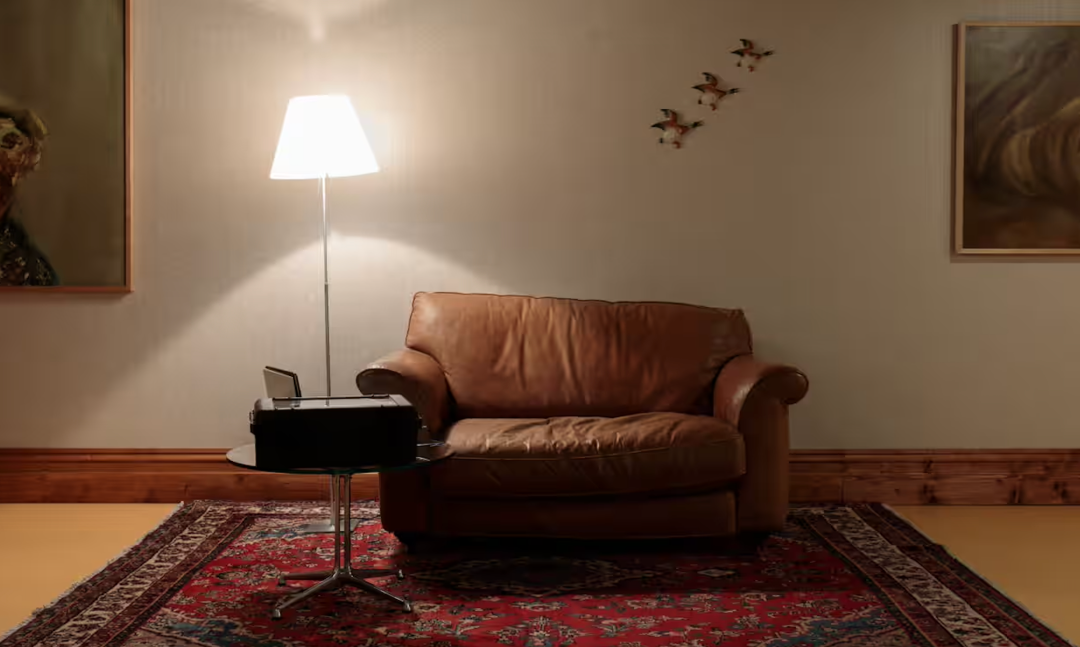
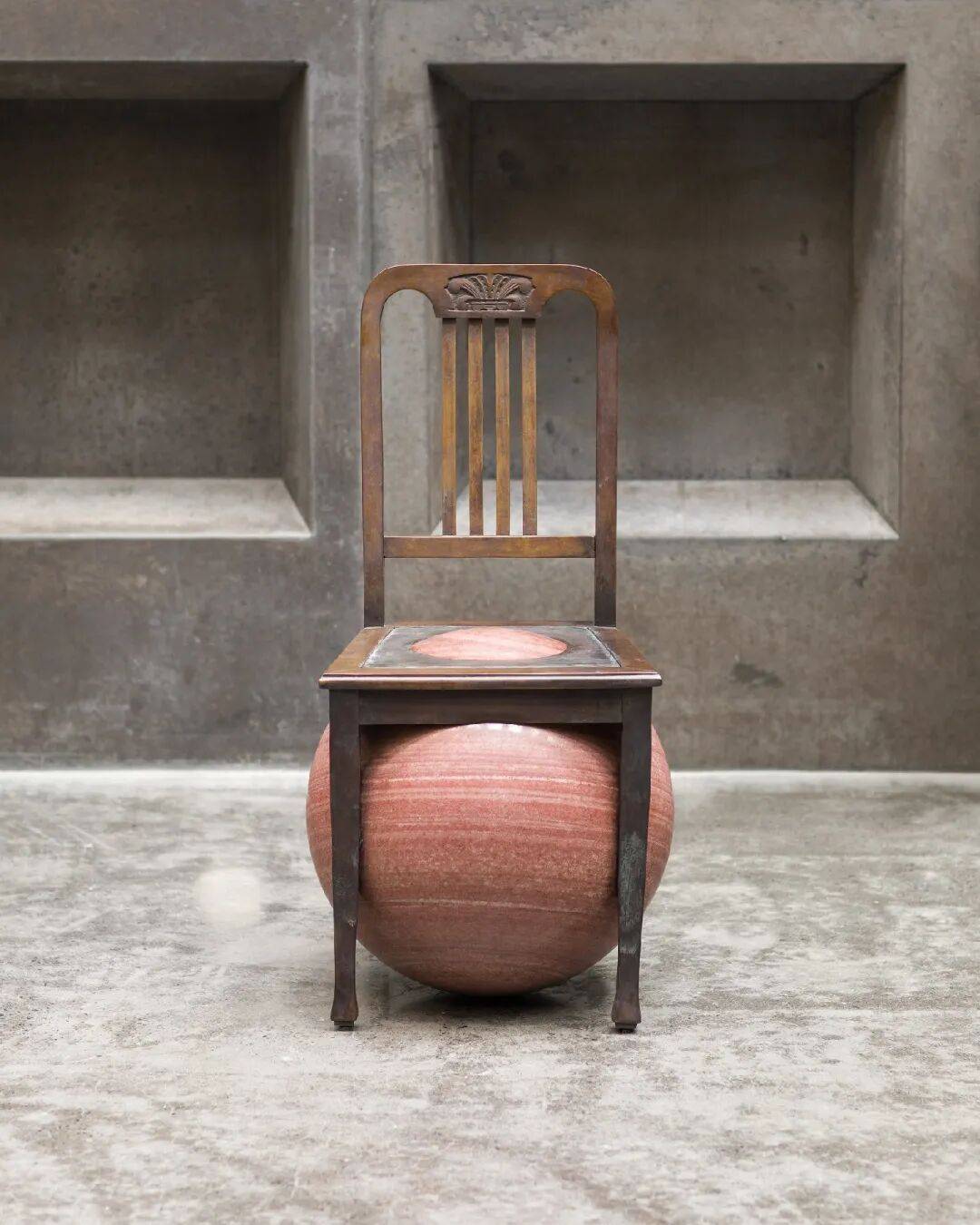
In the final section, “Paradise,” everything is a field of pure white, and viewers seem able to feel inner calm and spiritual elevation in its serenity and detachment. Greg Taylor and Philip Nitschke, My Beautiful Chair, 2011. Another work that allows us to experience death is the euthanasia installation My Beautiful Chair, created by the sculptor Greg Taylor and the euthanasia advocate Dr. Philip Nitschke.
The work simulates the process of euthanasia in the setting of a comfortable living room. In a typical euthanasia scenario, the machine is connected to a computer, which asks a series of questions to confirm a person’s wish to die before the final injection is administered. The version in the museum replicates that “fatal” scene exactly: once a visitor sits on the sofa, the installation activates itself and asks the same questions used in the euthanasia process.
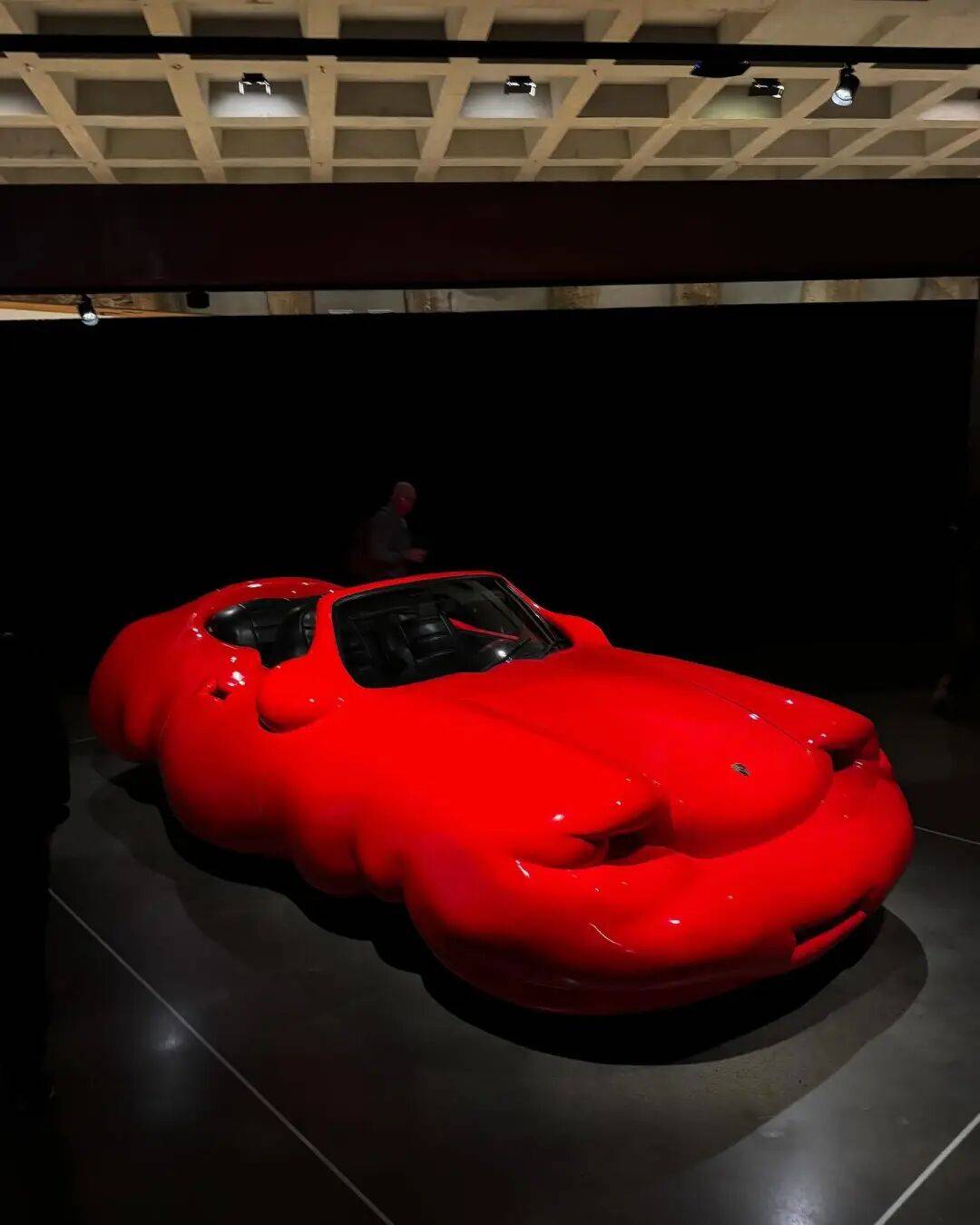
If the visitor agrees, the screen ahead describes the physiological reactions the body will undergo, until, at the end, it displays the words: “You are now dead.” Erwin Wurm, Fat Car, 2006. Alongside such sensitive meditations on death, the museum also contains many works that are playful and slyly amusing. There is, for example, Erwin Wurm’s Fat Car, a glossy red Ferrari swollen into obesity, a satirical image of the contemporary person, prosperous in life and insatiable in desire, that cannot help drawing a smile.
Wim Delvoye, Tattoo Tim, 2006. Then there is a man named Tim, covered in tattoos, sitting alone in a gallery for as long as six hours at a stretch. Passing visitors are often astonished to discover that he is in fact an “exhibit.” Tim is himself a tattoo artist, and, because he greatly admired the Belgian tattoo and installation artist Wim Delvoye, he wanted Delvoye to tattoo him as well. In exchange, the artist required Tim to assign him the rights to his skin.
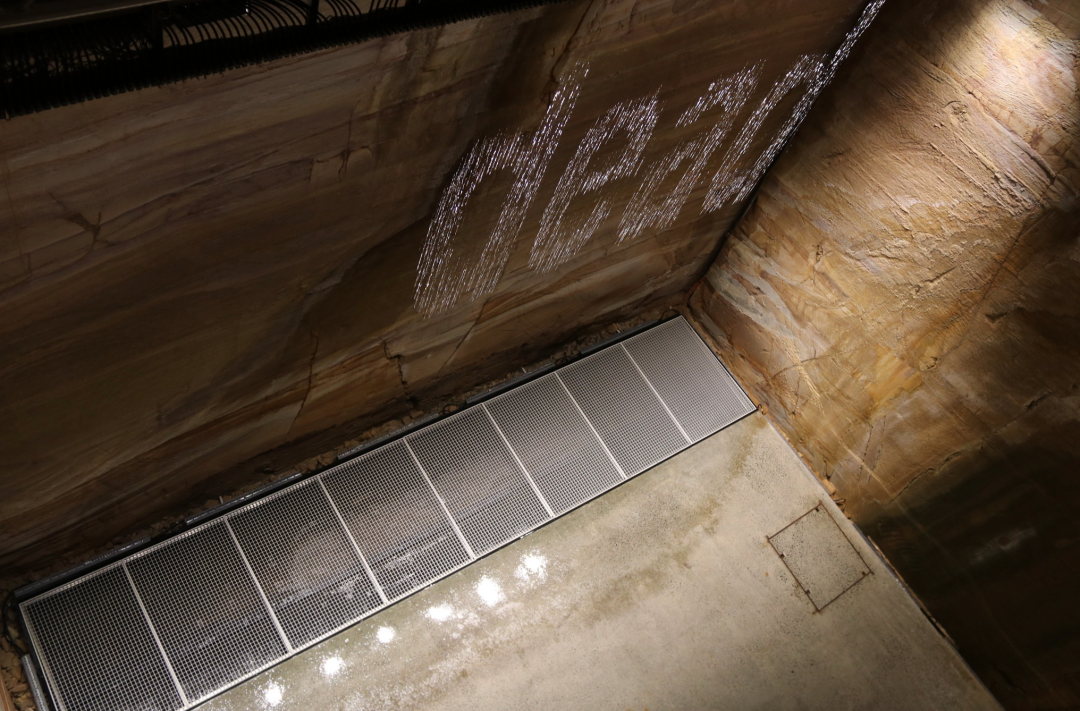
The Belgian tattoo master certainly did not hold back: the work took two years to complete. Tim, who was born in 1965 and is 60 this year, presumably never imagined that, until his death, the tattoos on his skin would belong to someone else, that he would have to appear regularly in museums around the world, and that the income would go to the collector who had bought that “piece of skin.” Julius Popp, Bit.Fall, 2006–2007. Among the large installations, the word-bearing water curtain of Julius Popp’s Bit.Fall is especially arresting.
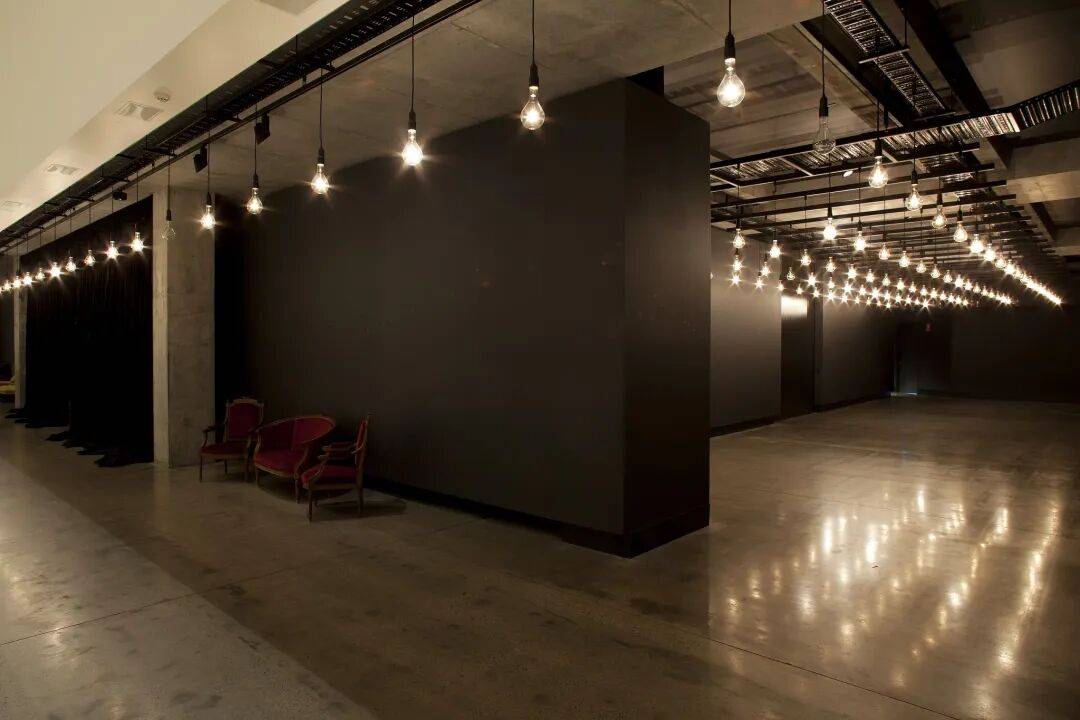
The water curtain is set before an enormous sandstone wall that is 240 million years old. It pulls, in real time, frequently searched hot words from the Internet and drops them in rhythmic cascades of water, addressing the speed and transience of information in the present age. Rafael Lozano-Hemmer, Pulse Room, 2006. Pulse Room is an interactive work by Rafael Lozano-Hemmer: masses of light bulbs hang from the ceiling, and instruments in the room capture the viewer’s heartbeat and translate it into flickering rhythms, rendering the presence of individual life visible in a way that is both direct and unexpectedly romantic.
The World’s Most Secretive Private Museum: More Than Two Thousand Forbidden Objects, Reachable Only by Boat
Randy Polumbo, Grotto, 2017. Another large installation using glass and light is Randy Polumbo’s Grotto, set in a stone tunnel. In this enclosed meditative cavern, viewers encounter transparent, iridescent hydroglass flowers. A 36-channel lighting system, electronic screens, and silvered-glass panels create a singular trajectory of light, making it feel as though one were passing through a track in space and time.
Returning to the museum’s founder: the story of the billionaire David Walsh. He was born in 1961 in Hobart, Tasmania, and grew up in Glenorchy, a poor district, in an ordinary working family. He showed unusual talent from an early age, excelling in mathematics. At his Catholic secondary school, among a student body of rule-followers, he was the one who stood out most for refusing to conform.
Greg Taylor, Cunts and Other Conversations, 2008. Jonsi, Hrafntinna, 2021. At 18, he naturally won admission to the University of Tasmania to study mathematics, but, finding the coursework too dull, he dropped out and began developing algorithms on his own.
At first, he applied his mathematical ability to counting cards in blackjack. After realizing he had become nearly unbeatable, he and his friends formed a team called Bank Roll and began writing extraordinarily complex algorithmic systems designed to exploit weaknesses in the gambling industry, making money from odds on horse racing, dog racing, and sports matches. As Walsh’s algorithms and systems became more refined, they amassed enormous wealth in casinos across Macau, Las Vegas, South Africa, and elsewhere, and he became one of the most famous figures in the global gambling world.
Rihanna at MONA. Then, in 1992, in order to take money he had won in South Africa out of the country without exceeding the amount of cash permitted under local regulations, he used the surplus to buy his first work of art: a palace door from the Yoruba. That was how Walsh fell into art, and once he did, there was no stopping him. His collection kept growing, and in 2006 he decided to build an entirely different kind of museum, one that would represent his own controversial self: a museum of the “Walsh personality,” built wholly according to his own philosophy.
Kirsha Kaechele, Ladies Lounge, 2011. Walsh’s wife, Kirsha Kaechele, strongly supported the idea. She is an artist and curator. At MONA there is an all-green room, the interactive installation Ladies Lounge, which is her work. Only women are allowed inside. Its purpose is to satirize male privilege in a traditionally patriarchal society.
At one point, a male visitor objected and threatened on social media to sue the museum, to rather absurd effect. Darren Sylvester, Filet-O-Fish, 2017. But the museum’s opening was not without difficulty. Though Walsh had made a fortune from gambling, MONA cost hundreds of millions to build, and after three years of construction the project was thrown into crisis by a shortfall of 10 million Australian dollars.
So he returned once more to his old trade. With a single win of 16 million Australian dollars at the Melbourne Cup carnival, he was able to bring MONA to a successful public opening in 2011. Berlinde De Bruyckere, P XIII, 2008. Alicja Kwade, Siege du Monde, 2021. But as soon as one crisis passed, another began.
Not long after MONA was completed, it came under scrutiny from the Australian Taxation Office, or ATO. The authorities accused Walsh of owing millions of Australian dollars in tax on gambling income and demanded that he pay 37 million Australian dollars plus interest, or else MONA would have to shut down. After a series of highly public disputes, the two sides reached a confidential agreement in 2012, and MONA survived. Walsh’s passion for art is unusual in its intensity. He has said that art is his way of searching for the meaning of life, and that after his death he will be buried in the museum, continuing his story with art from the far end of life.