Channa Horwitz’s First China Exhibition: A Lifetime of Innovation Within Rules and Limits, Recognition at Last
Channa Horwitz (1932–2013), a key figure in conceptual art and West Coast minimalism, developed a rigorous visual system around the number 8 and worked within it for decades before gaining recognition late in life......
By / Xirui Huang · 9 min read
Why did Channa Horwitz use strict rules and the number eight in her work?
In Xirui Huang’s 2022 interviews with Channa Horwitz’s daughter Ellen Davis and Lisson Gallery, a system based on eight, grids and a limited palette becomes a route into the artist’s practice. Although the works can look computer-generated, they were made by hand to explore line, rhythm, space and time. Restricting choices enabled deeper investigation. The studio and archive preserved by her daughter continue to make that sustained practice accessible after her death.
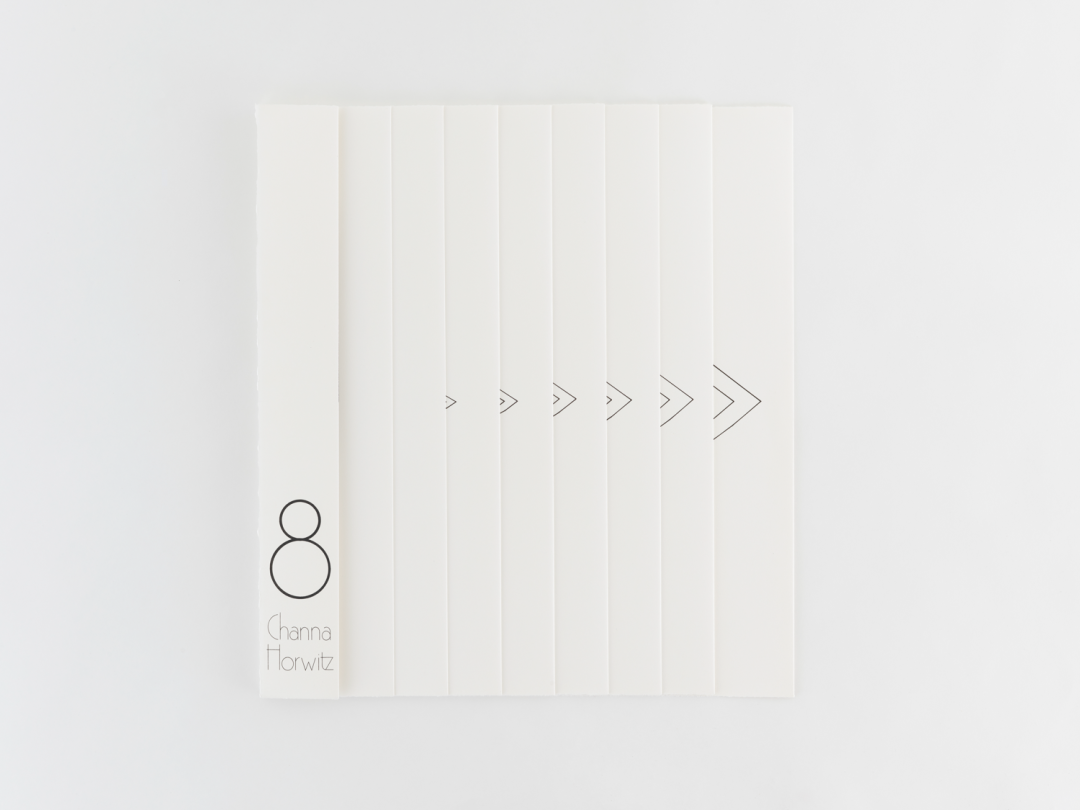
Channa Horwitz, Book “8,” Series 8, Eight, 1979. Channa Horwitz (1932–2013) was born in Los Angeles, where she lived and worked throughout her life. A leading figure in conceptual art and the West Coast minimalist movement, she came to prominence late, already well into old age. Her work can look computer-generated, but it actually emerged from an original system she developed in the 1970s and 1980s—when computer graphics had not yet become widespread. Every work was made by Horwitz herself according to the system’s precise mathematical models.
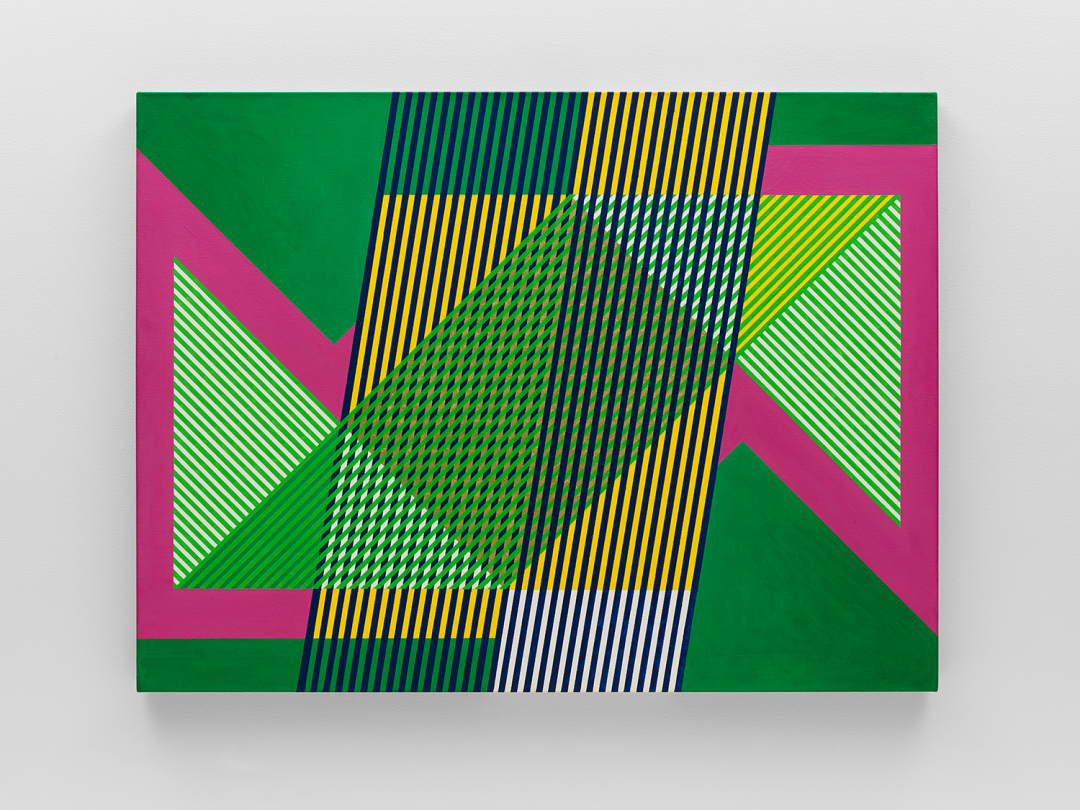
“The fewer choices I have, the more deeply I can explore,” she said. “I feel freedom within limitation and structure.” At the heart of this system was the number 8. Channa Horwitz, Rhythm of Lines, 1993; Channa Horwitz, Rhythm of Lines (detail), 1993. This fall, Channa Horwitz’s first solo exhibition in China opened in Shanghai.
The works on view trace the artist’s varied investigations of line, shape, and pattern, as well as her rigorous conceptual structures, self-imposed rules, and depictions of space, movement, and time. After Horwitz’s death, her studio was maintained by her daughter, Ellen Davis, and preserved intact. Davis hopes that more people will come to know both her mother’s work and her personality. At the opening of the exhibition, the art platform Yi Tiao conducted a remote interview with Ellen Davis and Dodoz, director of Lisson Gallery China.
SECTION 01 | Exploring Within Self-Created Rules
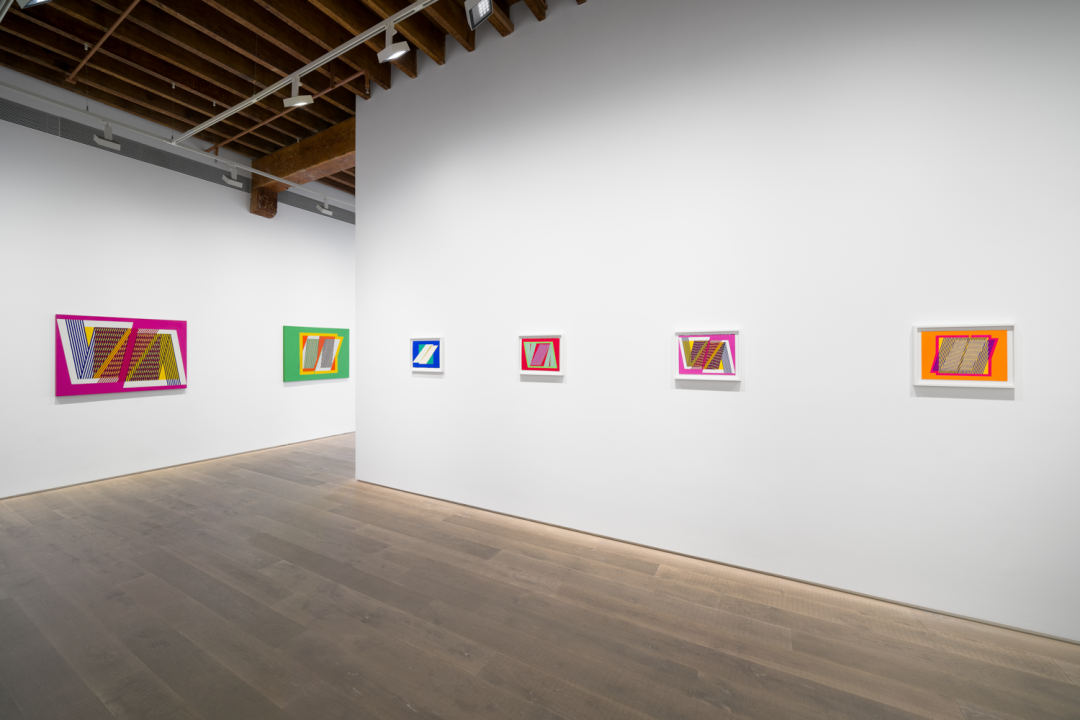
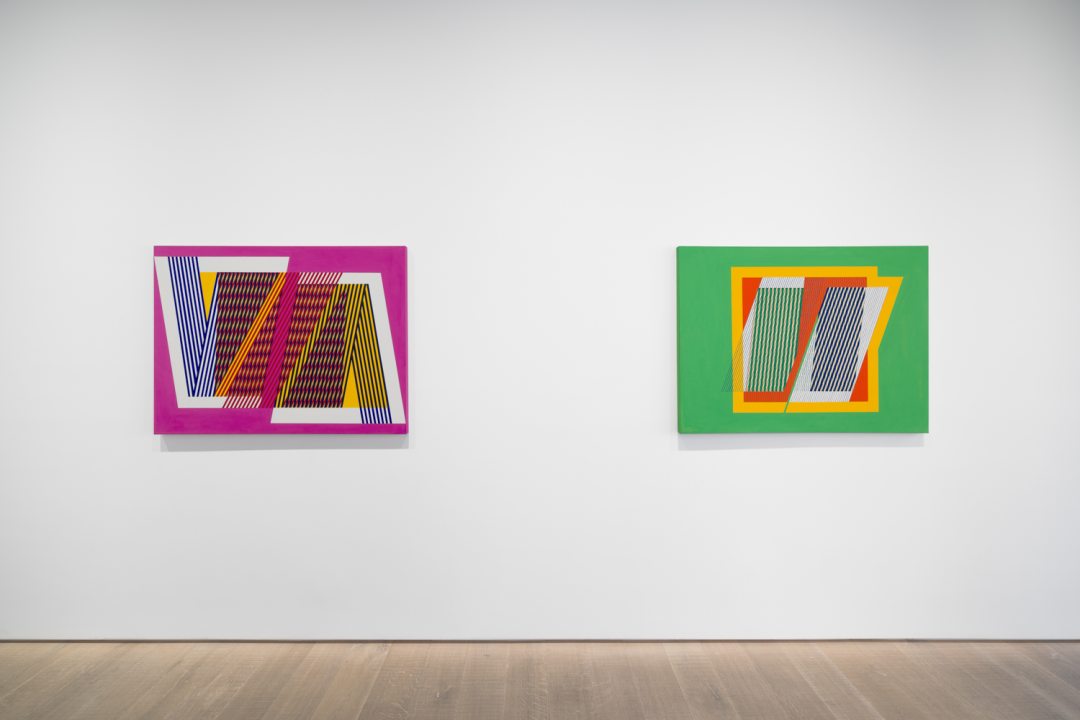
Channa Horwitz solo exhibition, installation view, Lisson Gallery, photographed by Alessandro Wang. Entering the gallery, we were immediately drawn to a field of vividly colored small squares: a series of white frames, in varying sizes, enclosing networks woven from countless fine lines. The works on view were made between 1984 and 1993. Among the most striking were the large, later paintings on canvas titled Rhythm of Lines.
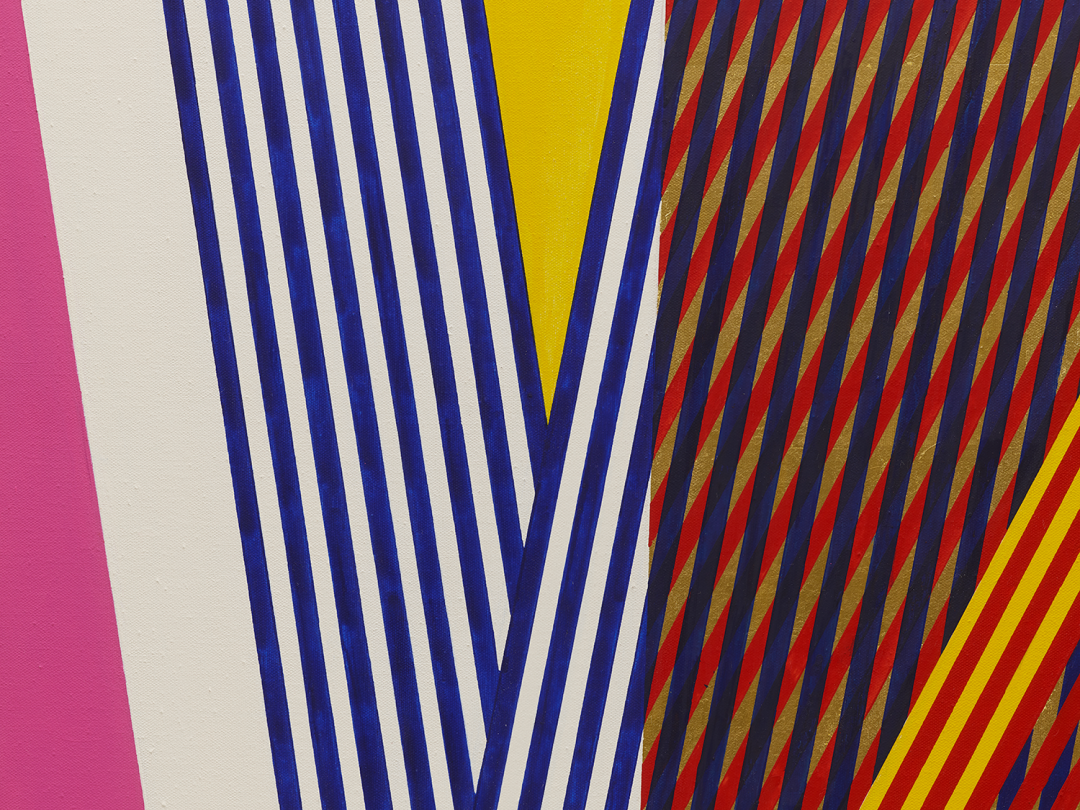
Their colors are bright and lively. The lines tilt, run vertically, or intersect and pull apart, producing two or more interlocking rectangles. The structures may appear loose, but they are all governed by exacting plans and calculations. The paintings are also larger and broader, with a stronger visual impact. Channa Horwitz, Rhythm of Lines (detail), 1993. Seen from a distance, Horwitz’s works can lead viewers to assume that the artist relied on computer calculations or modeling to make them, so orderly are the lines and blocks of color.
Up close, however, the distinctive, shimmering texture of the gold leaf comes into view. Along the edges where pink, orange, red, blue, and green blocks meet, brushstrokes reveal the work of the hand; beside the black grid lines, there are traces of roughness left by fine, pointed marks. Channa Horwitz, Canon, 1985. The earlier Canon series established a foundation for the other series represented in the exhibition.
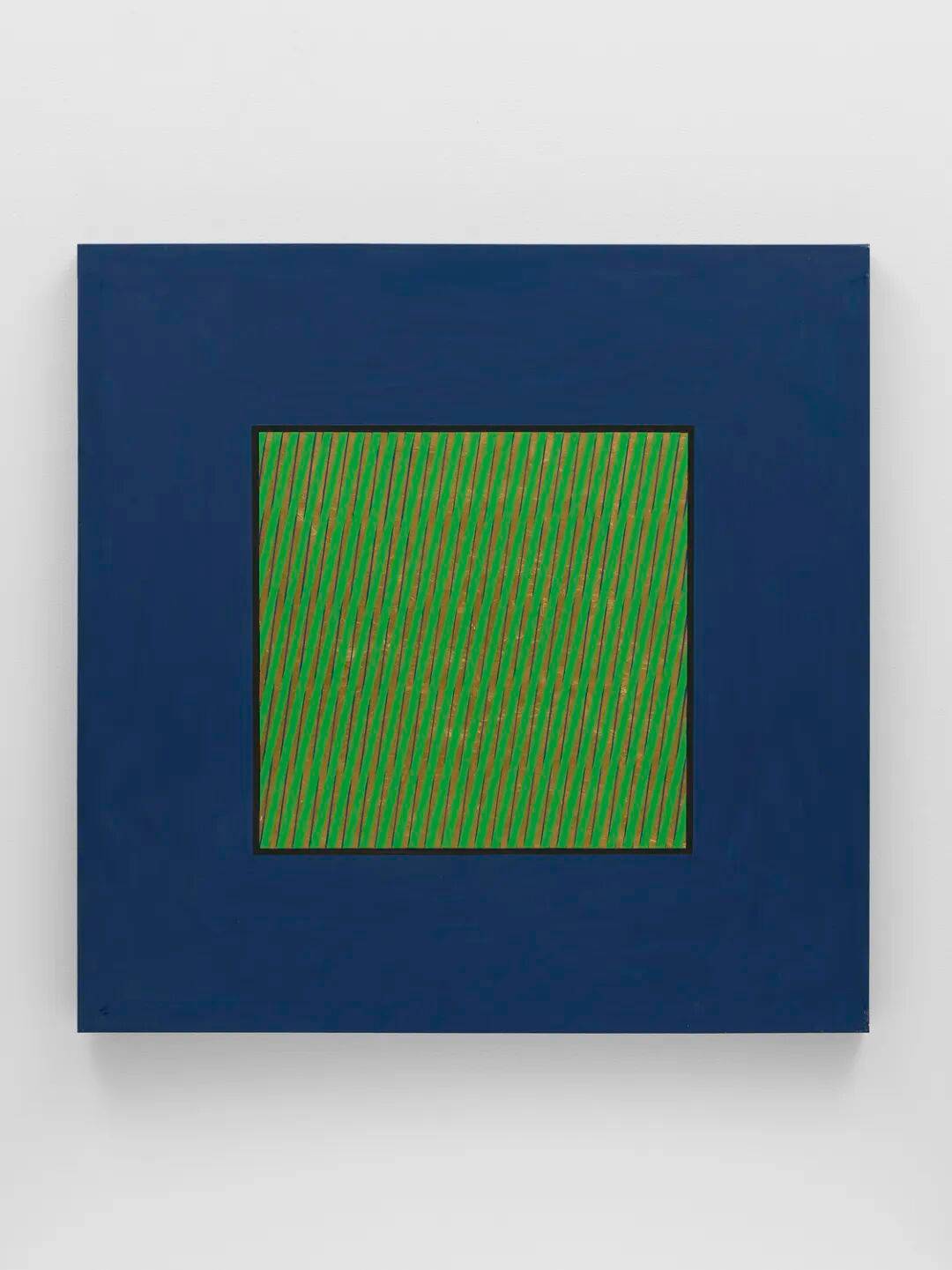
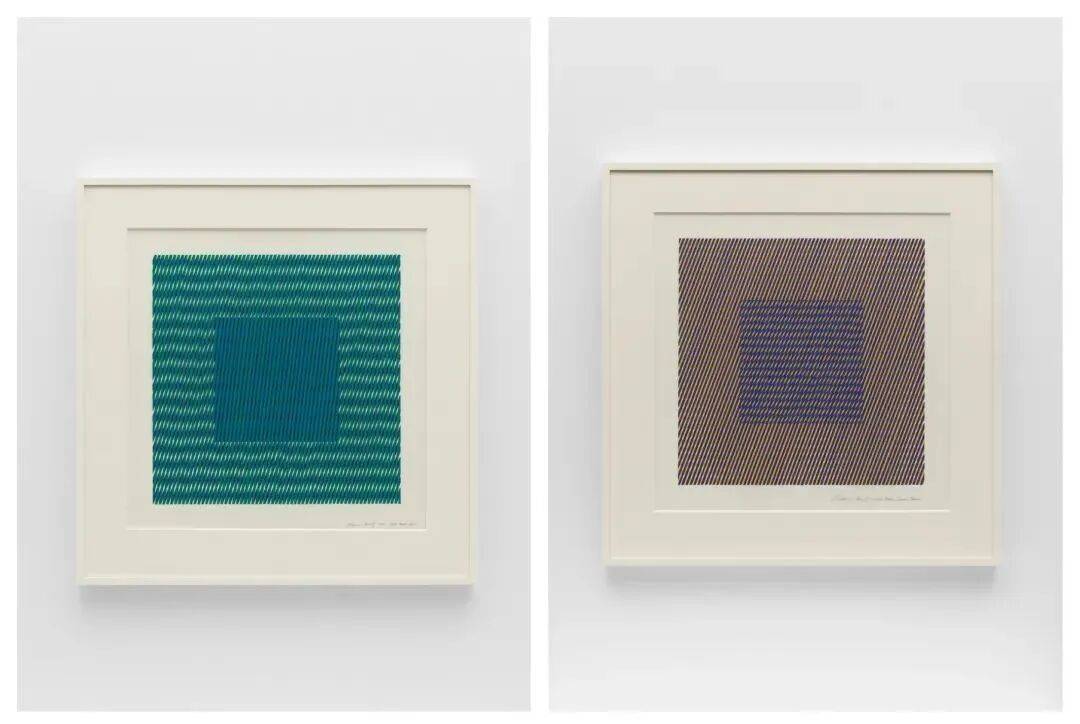
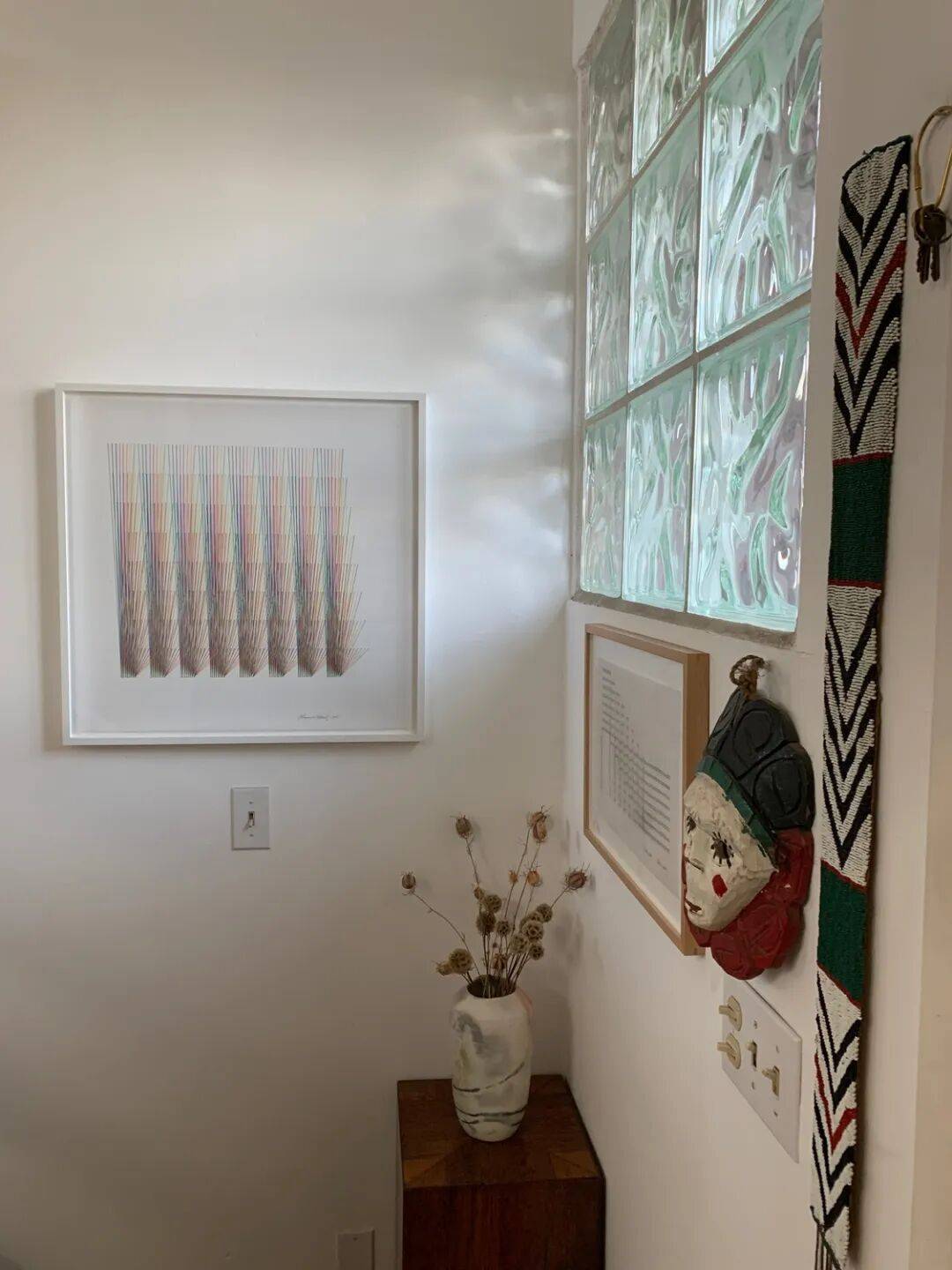
Grids in different colors are arranged in sequence, creating a rainbow-like progression. Where lines overlap and meet within the grids, they generate a sense of continuous movement. Channa Horwitz, Moire, 1993; Channa Horwitz, works from the Moire series, 1984. After Canon came the Moiré series, more romantic and free. Gold leaf became the dominant ground, while casein paint gathered, separated, crossed, and threaded its way through the interlocking grids at different angles.
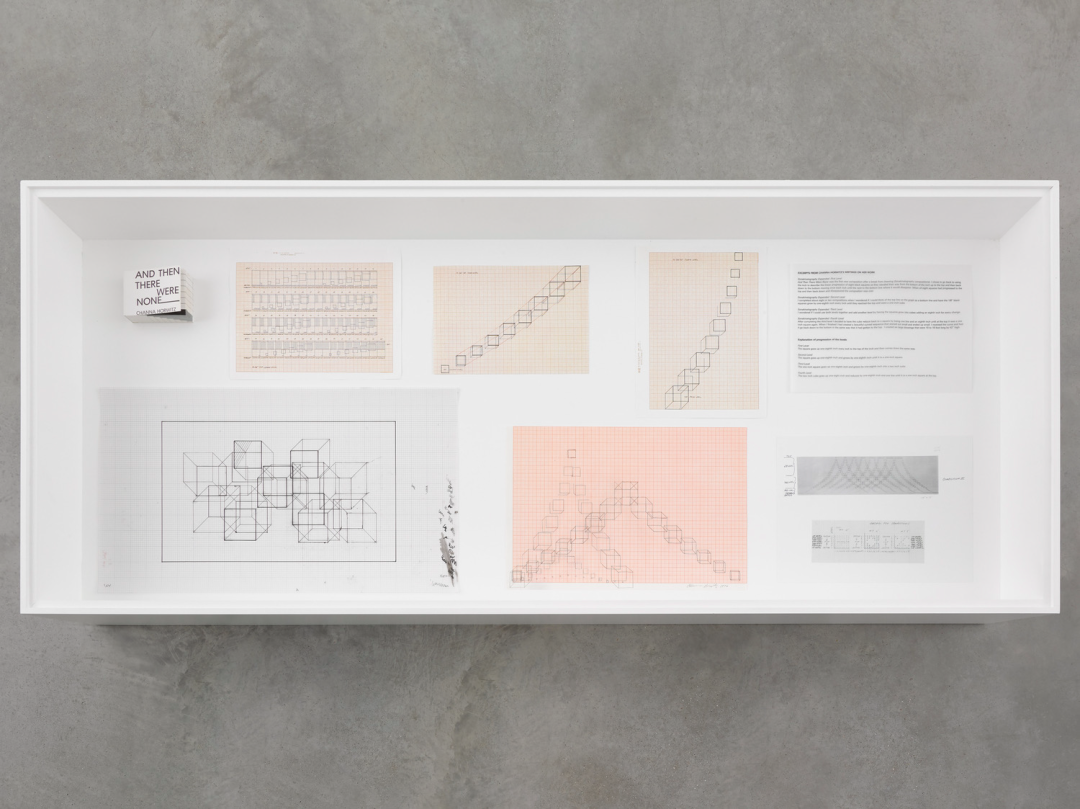
Again and again. In each work, Horwitz assigned a specific color to eight different angles and their reversals. The encounters between line and color formed interference patterns, making the works appear to vibrate energetically, as if activated by an electric charge. This was how the series acquired its name. It was also while making the Moiré series that Horwitz recognized the significance of the number 8 for her. Channa Horwitz, Rhythm of Lines (manuscript detail), 1983. The system can be traced back to the colors and numbers of Sonakinatography.
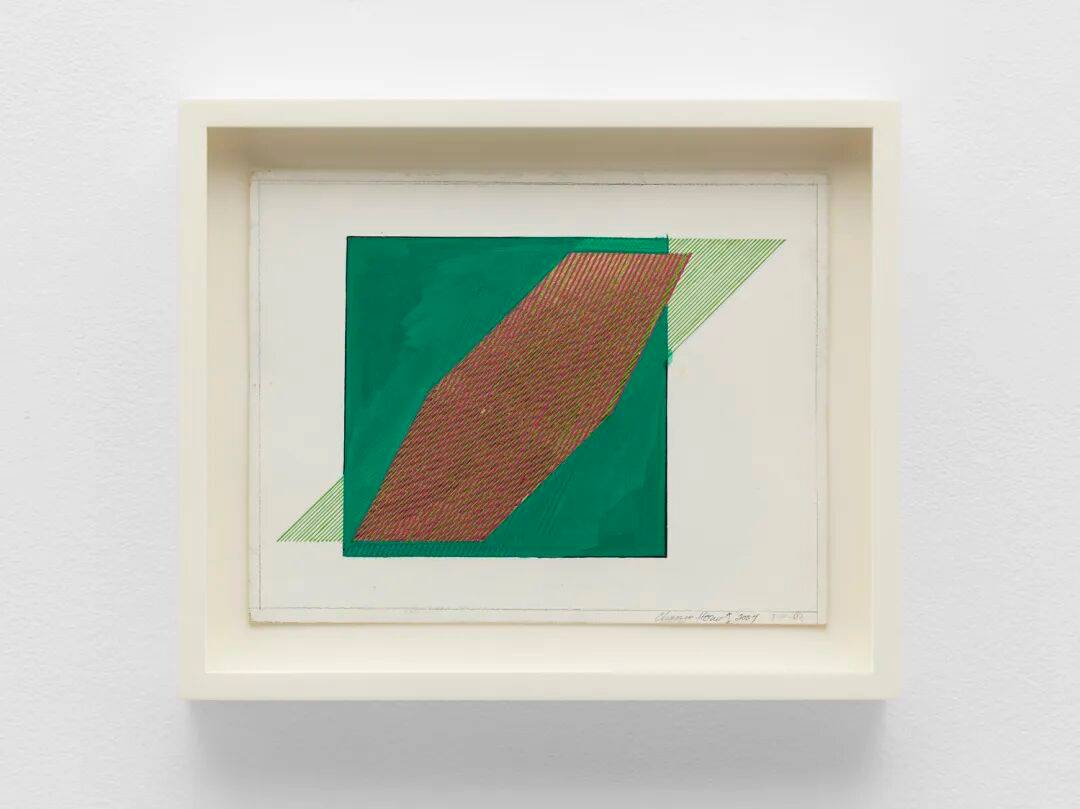
The manuscript details show Horwitz working on graph paper divided into eight squares per inch. Within the limited sequence of 8, the basic system could be extended and transformed into new sequences, yielding endless possibilities. Channa Horwitz, Moire Matrix, 1985; Channa Horwitz, Moiré on Blue—Rhythm of Line II Series, circa 1992; Channa Horwitz, 8-4-1, 2004. Across the different series, we can clearly follow the gradual development of Horwitz’s work. Using her self-created rules, she mapped out a distinct experience of time and space within her own universe.
“Her works are all highly representative; they show a very similar process of making and mark-making,” Ellen Davis told us. Dodoz, director of Lisson Gallery China, added: “The key to Horwitz’s process lies in returning to earlier work and synthesizing elements from numerous series. From that, her next series emerged.” Channa Horwitz working in her studio. In the early 1950s, Horwitz studied graphic design at the ArtCenter College of Design in California. In the 1960s, she continued her art studies at California State University, Northridge.
“After leaving school in 1963, the first thing I wanted to do was reduce my options to a minimum, so that I could explore more deeply the questions I wanted to investigate—what other possibilities were there on the level of the image? The fewer options I had, the more I could discover,” Horwitz once said in an interview. Channa Horwitz, The Real 8, Museo de Arte Contemporáneo de Castilla y León, Spain, 2019; Channa Horwitz, Language Series #18, 2003–2004. In the 1960s, she reduced the formal elements available to her to circles and squares, and the colors to black and white.
This experiment began with the Language Series, which she developed in the early 1960s. Horwitz combined eight graphic symbols on graph paper, creating repeated patterns and groups containing different numbers of forms. Channa Horwitz, Time Structure Composition III Sonakinatography I (detail), 1970. The Sonakinatograph works of the 1970s are among Horwitz’s most representative early pieces. The term refers to “sound, movement, and symbol.” Their linear progression offers a way of depicting movement and recording time, and embodies her visual philosophy of outlining four-dimensional space on a two-dimensional plane.
SECTION 02 | Unlimited possibilities with minimal options
Beginning with Sonakinatography, Horwitz created a visual system through which she produced a series of distinctive works and opened the possibility of using the system as a basis for performances and installations.
“It is a simple language system that is ‘universal’ in the art world, breaking down the barriers between different art forms,” Horwitz once said in an interview. Channa Horwitz solo exhibition, Lisson Gallery’s New York space, 2018. “I think she was subtly influenced by watching me learn ballet when I was a child. Eight colors, eight angles, eight sounds, eight instruments, eight shapes, eight designs, eight kinds of writing, eight ways of counting, and so on.”
This is how Ellen Davis, Horwitz’s daughter, understands the origins of the Sonakinatography works.
“I also studied tap dance when I was young, and Mom helped us count the beats from 1 to 8. She loved choreography and was interested in how dance movements could be designed in time and space, so she wanted to try interpreting the rhythm of dance through images.” This may also explain Horwitz’s enduring preoccupation with the number 8. Channa Horwitz, Rules of the Game, Lisson Gallery, London, 2019; Channa Horwitz’s work in the group exhibition Configured: Rules, Codes, and Choreographies in Art, Whitney Museum of American Art, 2018. To test whether the Sonakinatography system could be discussed simply and conveniently with other artists, she contacted choreographers, composers of electronic music, percussionists, and classical musicians, and worked with dancers to interpret her pieces through dance, music, synthesizer beats, and space.
In 1969, at the University of Southern California exhibition Experiments in Art and Technology, Horwitz staged the first interdisciplinary performance of her life. Eight dancers moved to choreography and music created by a choreographer and composer in response to her work. During the opening of the 1978 exhibition The Poetry of Systems, she used eight different percussion instruments in a live dance-and-music performance.
Channa Horwitz portrait. “The most important gift my mother gave me was her fluid understanding of identity and relationships. She could be a deeply devoted artist, working hard every day; she was also a deeply devoted mother, never missing an opportunity to be with her children. At the same time, she showed us her vulnerable, mischievous side, becoming a loving and loyal friend to her children. She taught me how to make mistakes, apologize, and learn from them.”
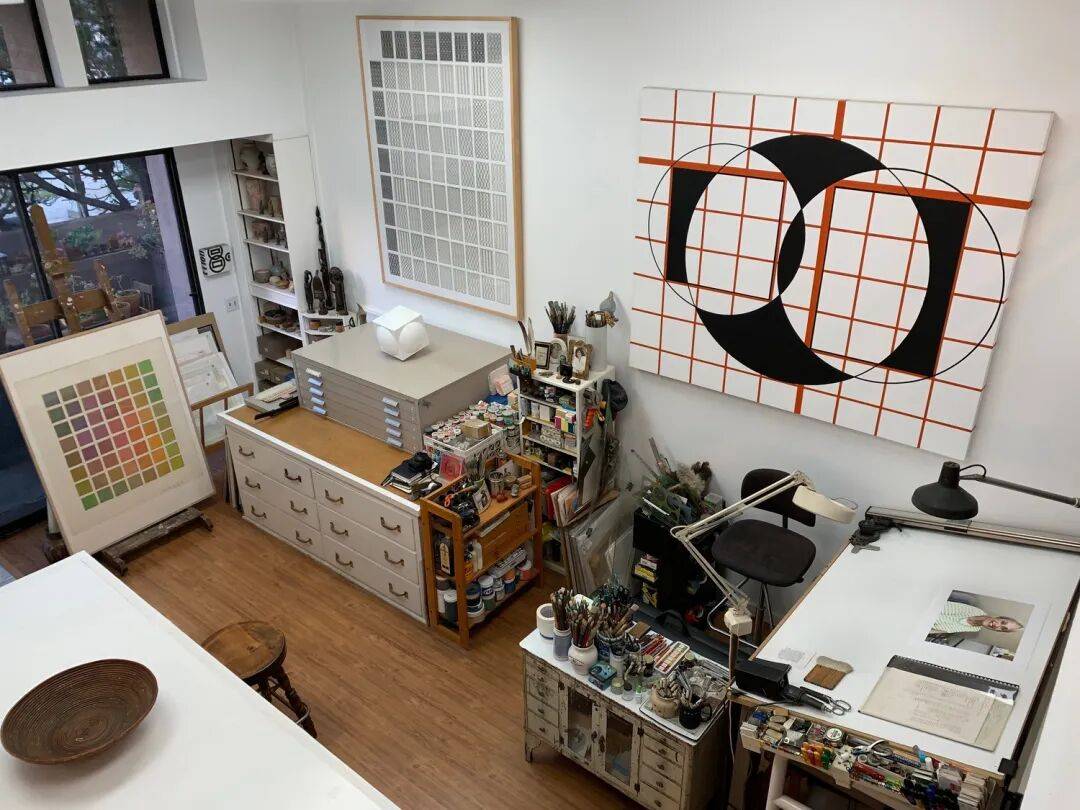
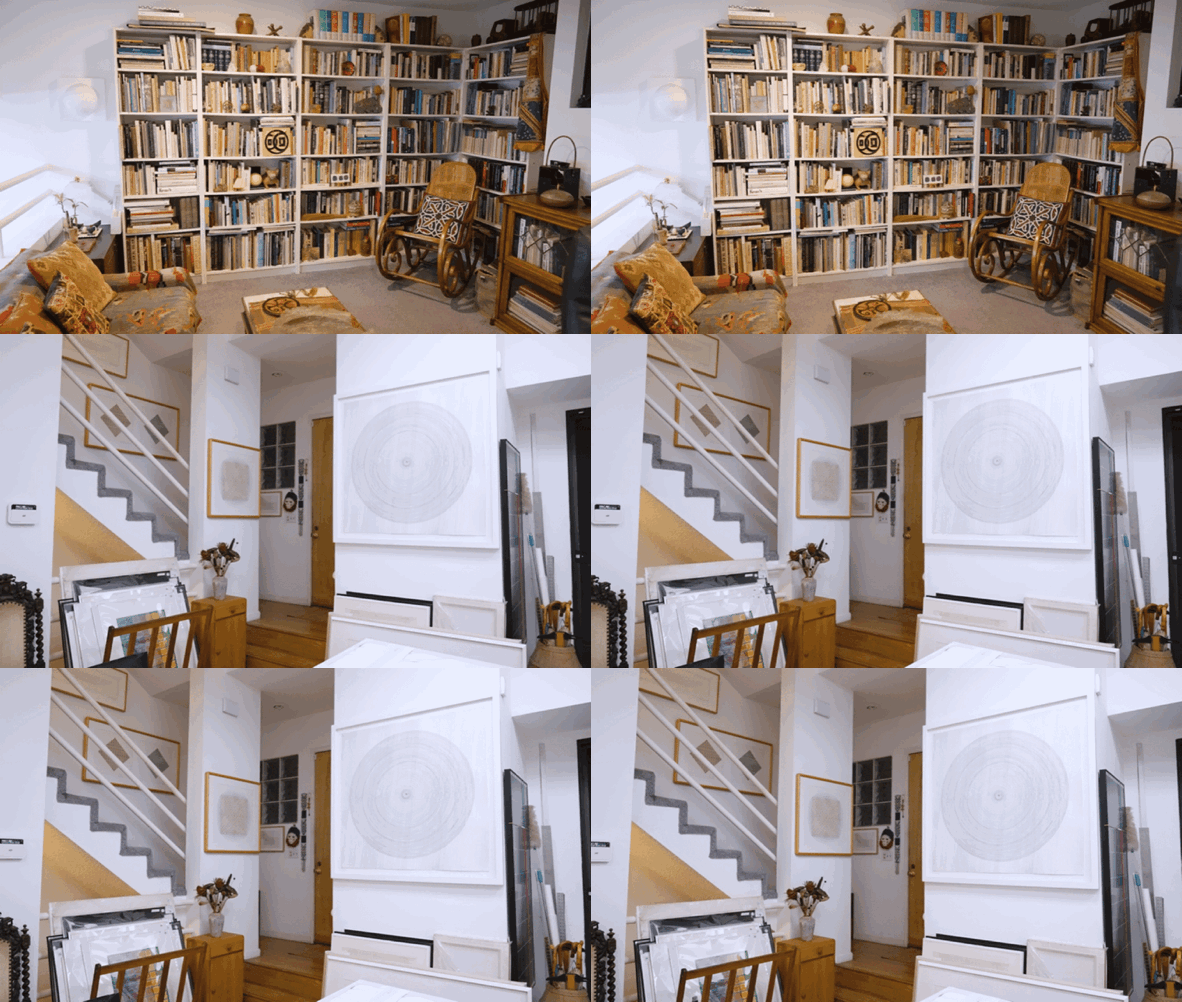
Ellen Davis told us. Horwitz also said that when the outside world focused less attention on her, she had more freedom to create. Channa Horwitz’s studio in Los Angeles. Horwitz spent almost her entire life in Los Angeles, and since the artist’s death in 2013, her daughter, Ellen Davis, has preserved everything in the studio there exactly as it was.
SECTION 03 | She was a devoted artist and a devoted mother
“People find her working process fascinating … and the rest of the house is like a Channa Horwitz gallery, because her work hangs on the walls. She was extremely organized. I began sorting and preserving her work before she died, and I’m still doing it,” Ellen Davis said. A corner of Channa Horwitz’s studio. Different tools were carefully arranged: pens, brushes, technical pens, ruling pens, wax, and more.
Ellen Davis told us that Horwitz used different tools when working in different media.
“When she painted with casein, she usually used a ruling pen as her drawing tool. Most of her colored works were made with that ruling pen, and she also often used a technical drawing pen.” Throughout her career, Horwitz, who held several jobs at once, typically rose at 5 a.m., worked until noon, had lunch with friends, and then returned to work.
“Of course, when she wasn’t making concept sketches or structural drawings for a new work—when she was simply ruling lines or filling in color—she could also chat with someone on the phone, or talk about anything with the other people in the studio,” Ellen Davis recalled. A corner of Channa Horwitz’s studio. Horwitz was the kind of artist whom the art world discovered only after she became known, saying, “My God, she’s that great.” From the 1960s until around 2010, she was at times saddened by her sense of being “invisible” in the art world and longed for greater recognition.
Ellen Davis also discussed why her mother was not recognized until late in life. “When we were very young, she had to ‘steal’ time to work in the gaps of everyday life—perhaps while we were at school, or late at night after everyone had gone to sleep. She liked being alone and did not place much value on the commercial side of her work, even though those social occasions and activities might have helped her become ‘famous’ sooner.” But when she did begin to gain recognition and exhibition invitations arrived one after another, she found that the demands placed on her by the outside world also grew, sometimes to the point of becoming difficult to manage.
Horwitz therefore remained wary of the fame that came late in her life.
“Although she was happy about it to some extent, she would say, ‘Be careful what you wish for,’” Ellen Davis told us. Channa Horwitz’s studio in Los Angeles. As an artist, Horwitz was rigorously self-defined and exacting, independent, and full of creative energy, capable of immersing herself in her art and creative investigations for long periods. At the same time, she loved her family and friends deeply and was willing to share her time with them generously.
“She was also a deeply compassionate person, very easygoing both emotionally and in her actions,” Ellen Davis told us when asked how Horwitz differed as an artist and as a mother. Horwitz herself once said that she could not entirely give up either art or family: “If my family made me give up my art, I would give up my family.”
“But if my art made me give up my family, I would give up my art.” Channa Horwitz’s studio in Los Angeles. Ellen Davis feels that her admiration for her mother has grown steadily since she began taking over the care of her work.