For the First Time, Rothko’s Children Unseal Their Entire Inheritance for a Retrospective
At the Fondation Louis Vuitton in Paris, an unprecedented Mark Rothko retrospective tracks the full arc of a fifty-year career, including the little-seen work that came before the floating fields of color......
By / Xirui Huang · 11 min read
Why should an understanding of Mark Rothko go beyond colour fields and his final years?
Published in 2024, Xirui Huang’s report records the 2023 Fondation Louis Vuitton retrospective and conversations with Christopher Rothko and Suzanne Pagé. Its chronological route follows Mark Rothko from street scenes and portraits into abstraction, rather than reading his whole career backwards from its end. Christopher challenges simple equations between dark colours and sadness or bright colours and happiness: colour becomes a means of emotional exchange with viewers.
For the First Time, Rothko’s Children Unseal Their Entire Inheritance for a Retrospective
Mark Rothko was one of the most important figures in the history of twentieth-century abstract art. Over a career that lasted fifty years, he created a new and impassioned form of abstract painting. Rothko’s name still summons those vast, sharply bounded fields of color, yet few people have seen the Rothko who came before them. In 2023, the one-hundred-twentieth anniversary of the artist’s birth, the Fondation Louis Vuitton in Paris mounted an unprecedented retrospective; twenty-four years had passed since Rothko’s last exhibition in France, in 1999.
At the Fondation Louis Vuitton in Paris in 2023, nine galleries and 115 works traced the most important pieces from every period of the artist’s career, many of them shown publicly for the first time. The exhibition took nearly five years to prepare. In addition to Christopher Rothko, Mark Rothko’s son, contributing the family’s entire collection, the Fondation Louis Vuitton assembled, for the first time, so many major works from the Museum of Modern Art in New York, the San Francisco Museum of Modern Art, the National Gallery of Art in Washington, D.C., Tate in London, and private collectors across several continents.
SECTION 01 | The Rothko You Don't Know
The exhibition was insured for as much as four billion dollars. Not long ago, we went to Paris to speak with Christopher Rothko and the curator Suzanne Pagé about the show and about Rothko’s life. Christopher Rothko spoke with us in the exhibition galleries: “A retrospective, by definition, has to tell the story of the artist’s whole career and his whole life.”
That, Christopher told us, was the exhibition’s most important task: to let viewers experience his father’s career from the beginning, to see the course of his painting, all the way to the end of his life.
“A lot of people start with the period of his suicide and read his career backward. I think that’s a distortion, because no one lives a life backward.” Mark Rothko (fourth from left) with his siblings and cousins in Dvinsk, Russia (now Latvia), 1912. Mark Rothko was born in 1903, into a Jewish family in what was then Russian Latvia; when he was ten, he immigrated to the United States with his parents.
In 1921, he entered Yale University, intending to become an engineer or a lawyer, but he could not bear the dullness and rigidity of the curriculum, or the school’s elitist academic atmosphere. He dropped out in his junior year and moved to New York City, where he worked as an actor, a prop man, a teacher, and a waiter. Left: Mark Rothko, Untitled, 1938, copyright Kate Rothko Prizel and Christopher Rothko; right: Mark Rothko, Street Scene, 1936-1937, collection of the National Gallery of Art, Washington. Mark Rothko, Self-Portrait (Untitled), 1939. While in New York, he visited a friend at the Art Students League, saw students sketching from a live model, and became deeply interested in art.
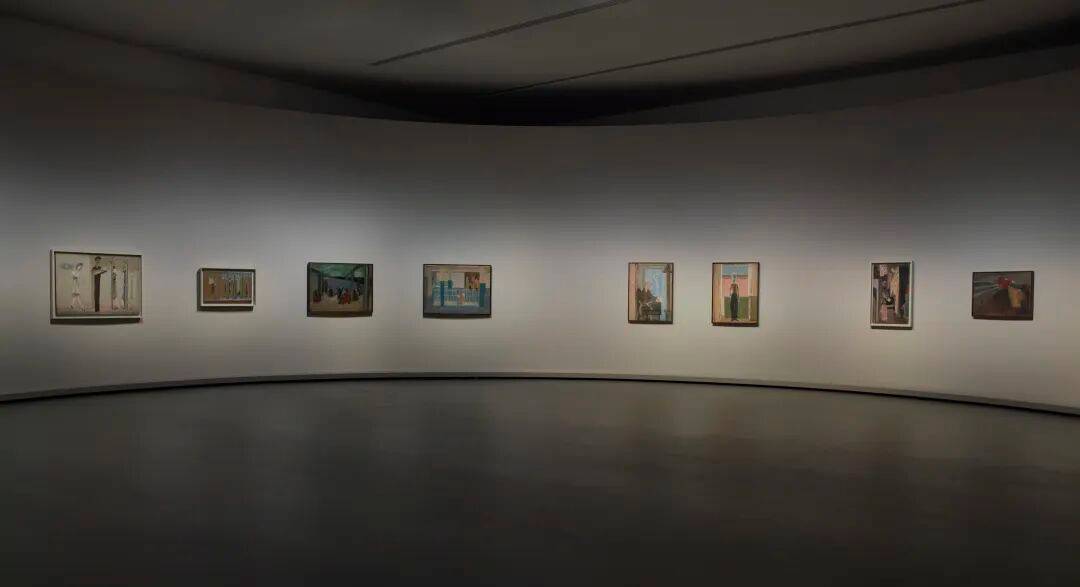
He later studied at Parsons The New School for Design, where he met the artists Max Weber and Milton Avery. The former taught Rothko to see art as a vehicle for emotional expression; the latter profoundly shaped his understanding of color. Mark Rothko, installation view, Fondation Louis Vuitton, Paris, 2023. The exhibition begins with Rothko’s artistic career in the nineteen-thirties and proceeds largely in chronological order.
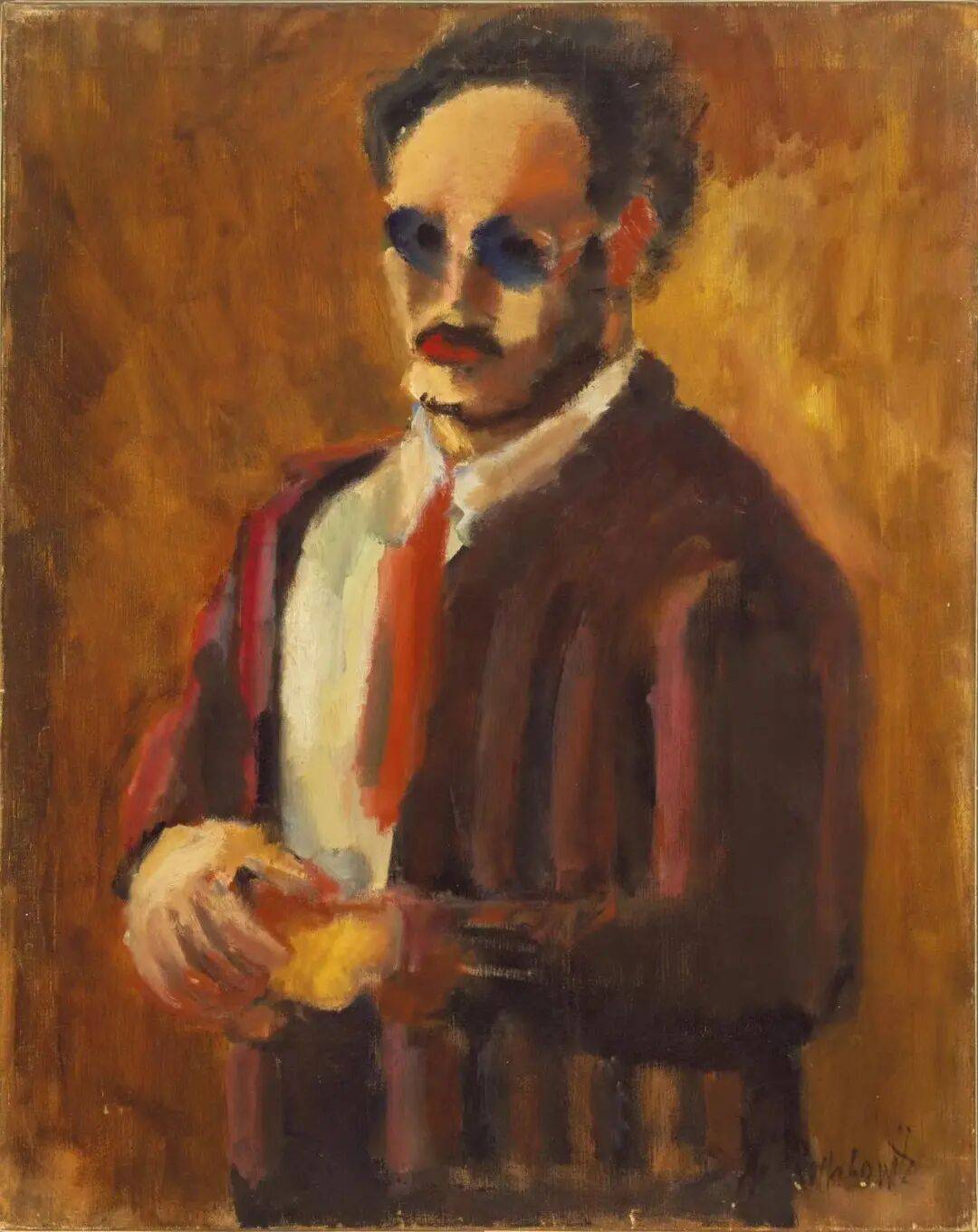
The first gallery, in the basement, presents his twenty-year exploration of different modes of figurative painting, from 1930 to 1950: street scenes, portraits, nudes, and studies of various faces. Many of these early works are unfamiliar, startling even, because they hardly seem like Rothko at all. Mark Rothko, installation view, Fondation Louis Vuitton, Paris, 2023. Mark Rothko, Self-Portrait, 1936, collection of Christopher Rothko. The exhibition’s narrative opens with the only self-portrait in the show.
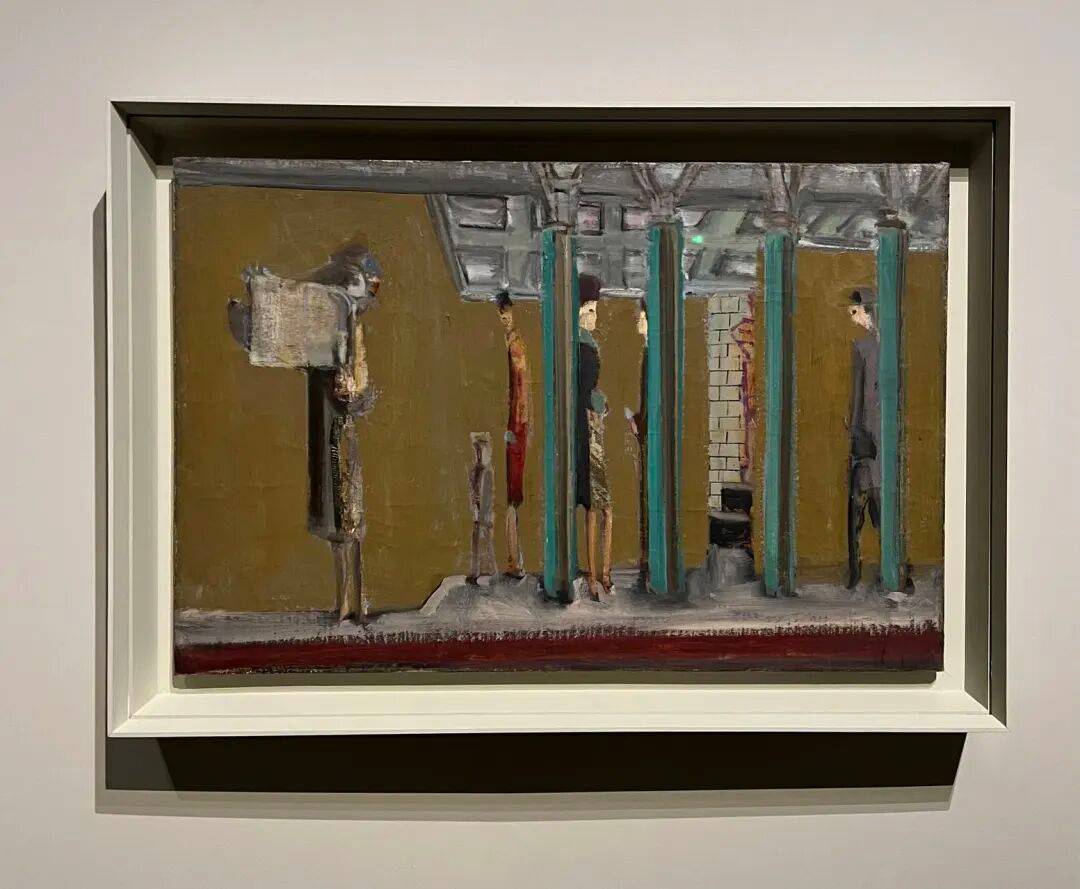
The artist, thirty-three years old, wears a brown suit and his signature black-framed glasses, and looks difficult to read. By then, as an immigrant, Rothko had gained a foothold in New York and begun to make a modest name for himself in the art world; he had founded The Ten, a group opposed to the artistic mainstream of the moment, and had participated in a number of group shows. Mark Rothko, Untitled (Subway), 1937, copyright Kate Rothko Prizel and Christopher Rothko. Mark Rothko, Untitled (Entrance to Subway), 1938, copyright Kate Rothko Prizel and Christopher Rothko. In Depression-era New York, Rothko’s “subway paintings” depict oppressive buildings, corridors, stairways, and tracks, whose structures form one square frame after another, like a kind of confinement.
Set against them are pale, gaunt, enfeebled figures, flattened almost beyond volume. One can just make out their identities: a man reading a newspaper, a housewife with a child, a professional woman, a clerk carrying a briefcase. Mark Rothko, Untitled (Subway), 1937, collection of the National Gallery of Art, Washington. Mark Rothko, Underground Fantasy, 1940, collection of the National Gallery of Art, Washington. They move through New York subway stations like ghosts, living as if in a waking death.
The gallery is dimly lit, in an effort to evoke the despondency and aimlessness of ordinary life in that period.
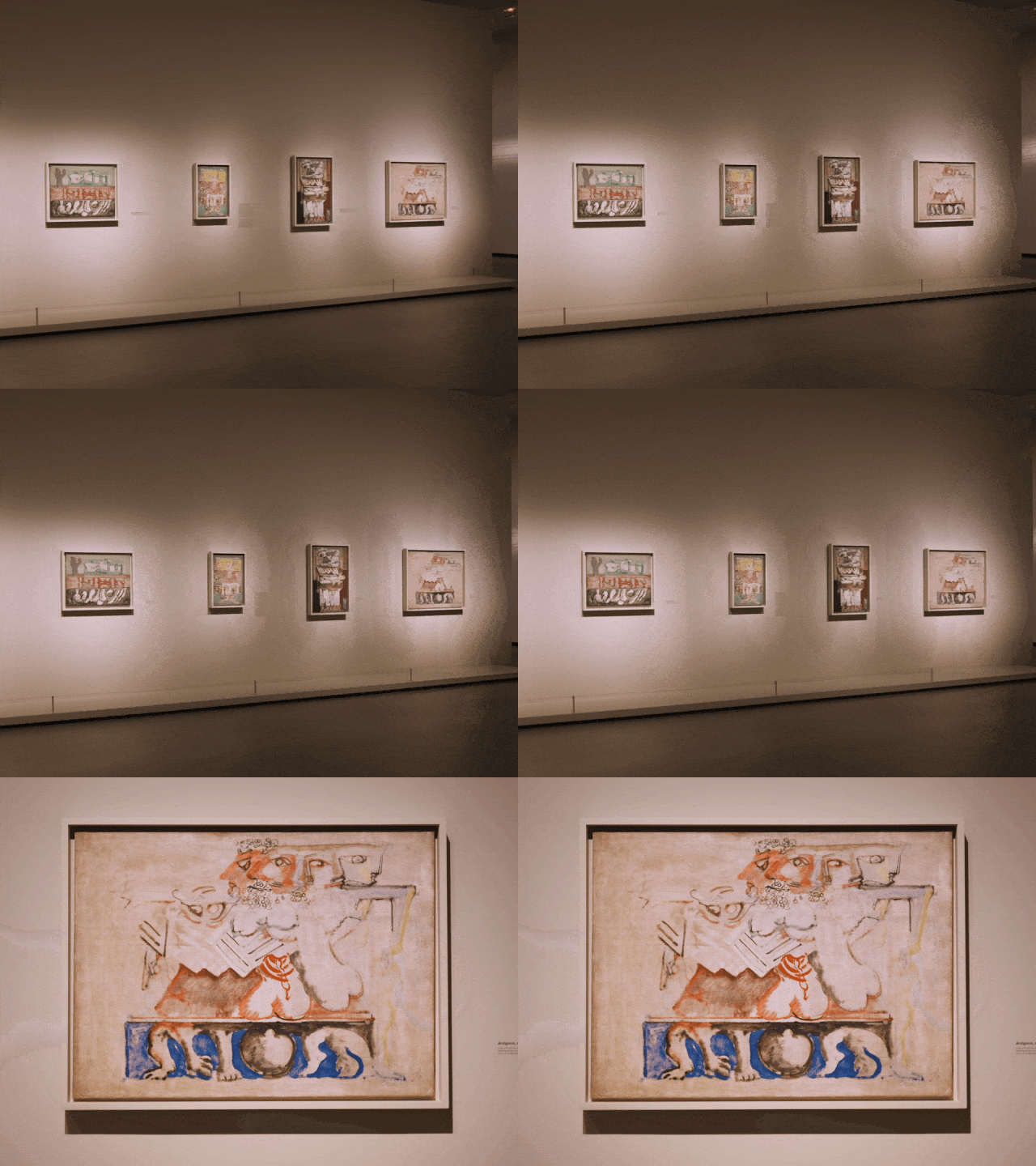
“My father wasn’t concerned with the specific identity of the people in the picture. He was thinking about what people become under the broader social conditions of the Great Depression. That feeling of helpless isolation, that high-pressure state of being pushed around by life, was what really concerned him,” Christopher recalled. Left: Mark Rothko, The Sacrifice of Iphigenia, 1942; center: Tiresias, 1944; right: Slow Swirl at the Edge of the Sea, 1944; installation view, Fondation Louis Vuitton, Paris, 2023. Mark Rothko, Slow Swirl at the Edge of the Sea, 1944, collection of Christopher Rothko. Beginning in 1941, Rothko’s style became markedly more abstract and symbolic, entering what later came to be called his “multiform surrealist” period.
He made a series of paintings drawing on Greek, Egyptian, and Babylonian mythology.
“During the Second World War, Rothko kept asking himself, ‘What can I do as an artist?’ He wanted to create modern myths, so he began studying ancient mythology and reading widely in Aeschylus and Nietzsche,” Suzanne told us. Mark Rothko, installation view, Fondation Louis Vuitton, Paris, 2023. Mark Rothko, Omen of the Eagle, 1942, collection of the National Gallery of Art, Washington. In this group of works, Rothko uses uneasy images that are repeatedly split, twisted, and anatomized to depict the slaughtered, shattered monsters of Aeschylus.
“These paintings are very strange. Some figures have multiple heads; their bodies are contorted; parts are broken off; some organs are not human but animal. All the bodies are damaged and recombined. It’s obvious that, when he made these works, he was thinking about the atrocities of the Holocaust. My father once said that his generation had to express emotion through acts of breaking,” Christopher told us. As a Jew in Russia, Rothko had also suffered religious persecution in childhood, and these works serve both as an attack on his present reality and a rendering of childhood shadows.
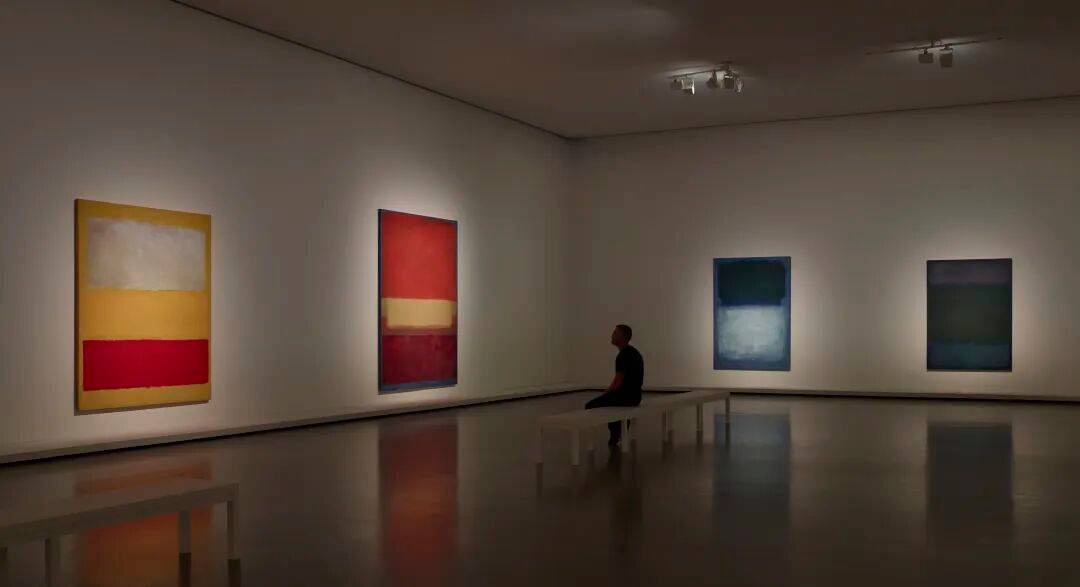
Mark Rothko, installation view, Fondation Louis Vuitton, Paris, 2023. In the next gallery, one finally encounters the Rothko most people know, the Rothko of abstraction. Seventy of the exhibition’s 115 paintings come from this period. Large fields of color float irregularly across the canvas, in shifting combinations, forms, and hues. Rothko himself once said, “If a thing is well painted, what it is is not important.”
Beginning in 1946, he turned fully to abstraction.
SECTION 02 | As long as you draw well, it doesn't matter what you draw
“My father thought abstract language was universal, an emotional language that comes before literal language. It is a language that can help us discuss what it really means to be alive,” Christopher said. That idea happens to echo Rothko’s own words on the gallery wall: “A painting is not a picture of an experience. It is an Experience.”
“A painting is not a picture of an experience. It is an Experience.” Mark Rothko, Untitled, 1948. Left: Mark Rothko, No. 17, 1949; right: Untitled (Multiform), 1948. Installation view, Fondation Louis Vuitton, Paris, 2023. Between 1946 and 1948, one can see irregular fields of color fully replacing the earlier linear elements. Pigment soaks into the canvas, leaving soft, blurred edges; white outlines, like halos, gather around the unstable forms.
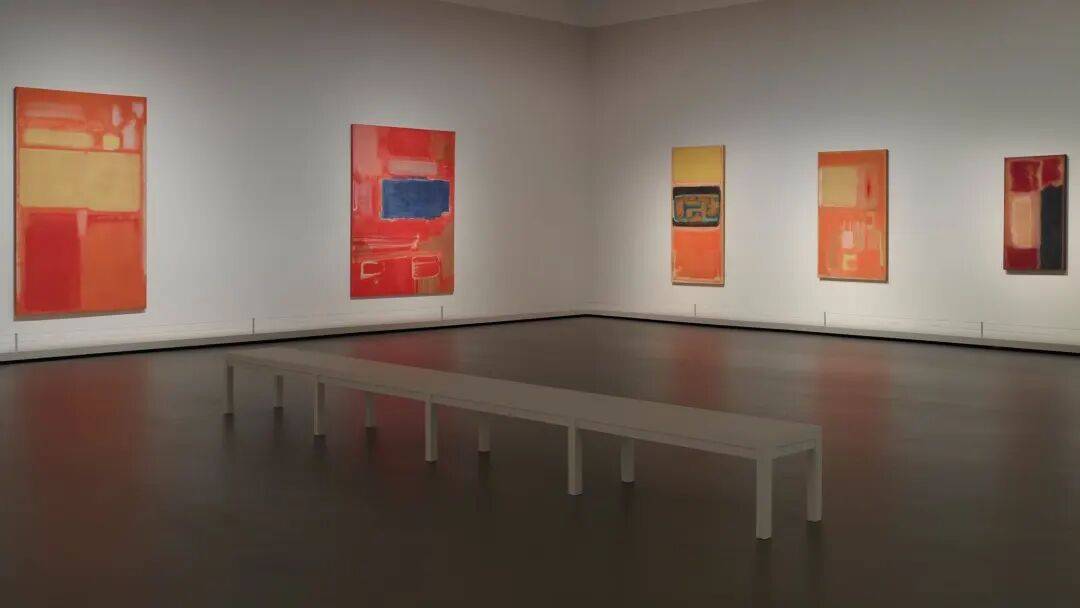
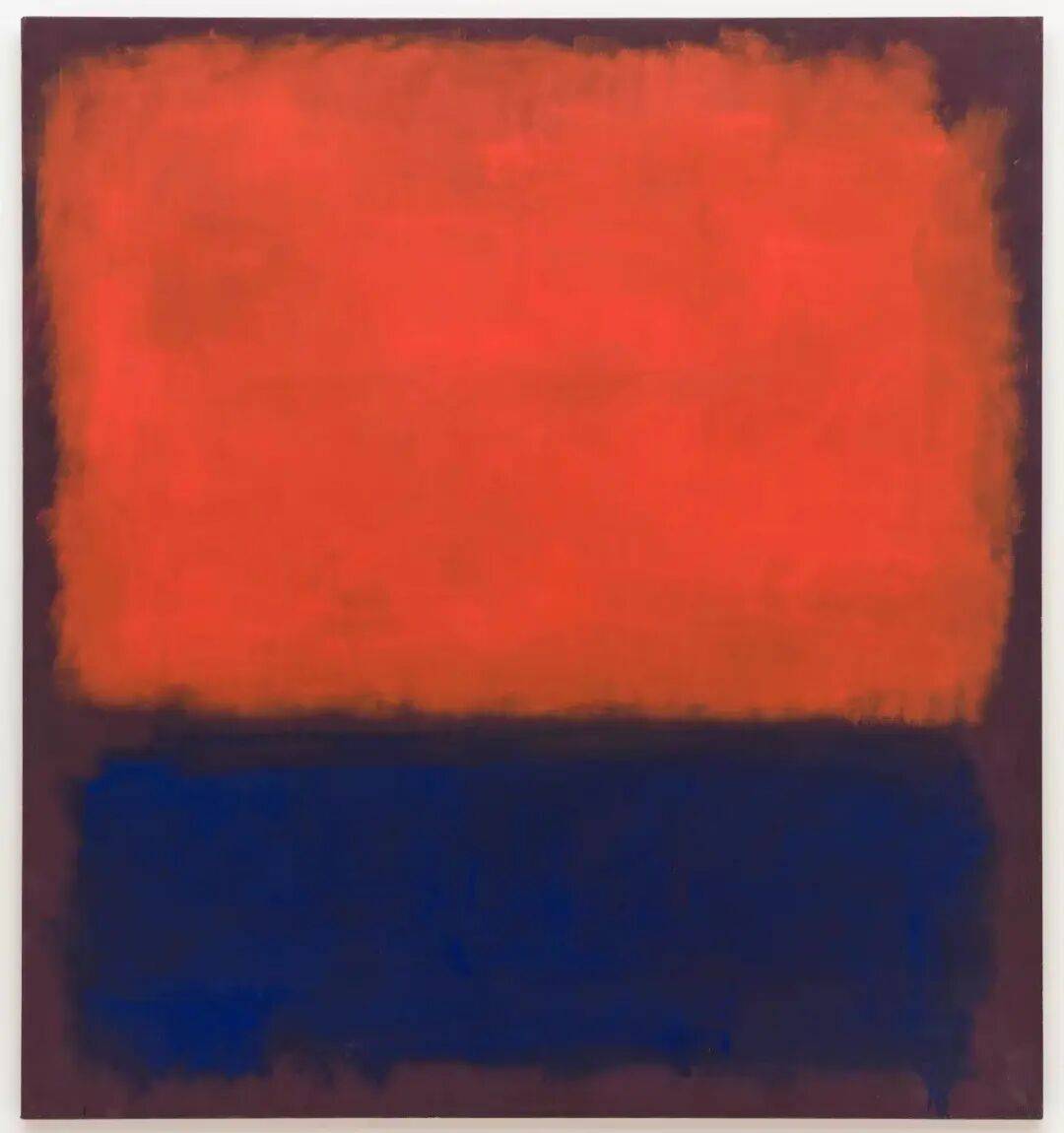
Gradually, the once-stacked shapes and color fields become more regular, and the formerly blurred boundaries of color grow clearer. It was also in this period that Rothko began painting the edges of his canvases, in the hope of creating a sense of endlessness unconstrained by the frame. From left to right: Mark Rothko, No. 8, 1949; Untitled (Blue, Yellow, Green on Red), 1954; No. 7, 1951; No. 11/No. 20, 1949; No. 21 (Untitled), 1949; installation view, Fondation Louis Vuitton, Paris, 2023. Mark Rothko, No. 21 (Untitled), 1949, collection of Christopher Rothko. Beginning in 1949, he entered the “classic period” for which he is best known, developing his signature format of two, three, or four rectangles, whose variations in color and arrangement produce subtle atmospheres and moods.
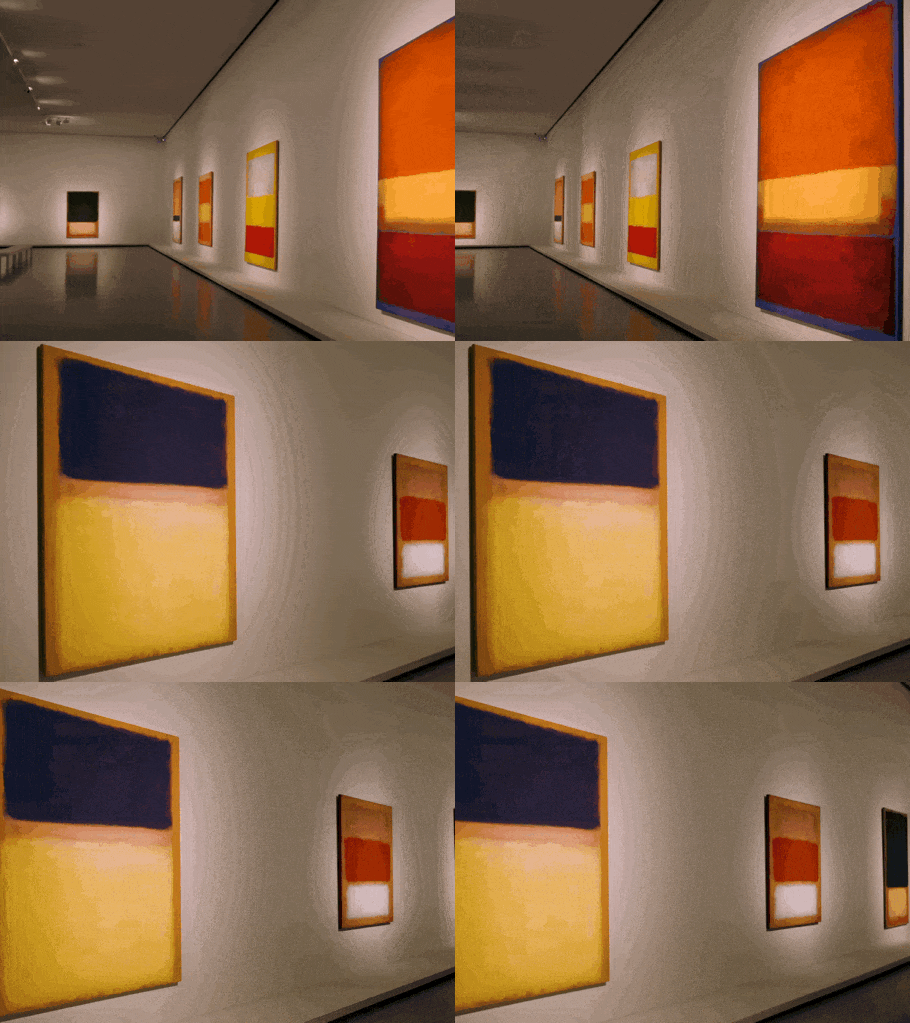
“The combinations of rectangles are different in every painting. I think he was using a flexible formula he could return to again and again, so that each painting begins as an experiment, but every one of them changes,” Christopher said. Mark Rothko, installation view, Fondation Louis Vuitton, Paris, 2023. Works from Rothko’s “classic period.” Mark Rothko, installation view, Fondation Louis Vuitton, Paris, 2023. The most saturated paintings in the exhibition hang in this gallery: startlingly bright yellows and reds, greens, pinks, purples, and blues.
“Such vivid color often leads viewers to mistake these ethereal, beautiful works for calm ones, even cheerful ones. But if you’ve seen the earlier galleries, you can feel that they are equally full of anxiety about human existence,” Christopher told us. Mark Rothko, Bright Cloud, Dark Cloud, 1957, collection of Christopher Rothko. Mark Rothko, No. 14 (Untitled), 1960, collection of Christopher Rothko; this work also appears on the exhibition poster. Rothko would often turn a painting upside down before the paint had dried; one can still see traces of pigment seeming to run upward across the surface.
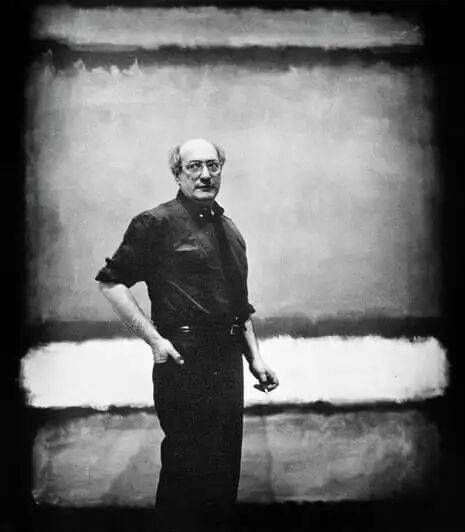
“The wall color, the height of the paintings, the density of the light, even the dimensions of the room, everything was arranged in strict accordance with Rothko’s instructions during his lifetime,” Suzanne told us. At the time, we found it striking that he had planned in advance how his work should be hung in a museum. Rothko in his studio on West 53rd Street, painting a version of Untitled, 1953; photograph by Henry Elkan, collection of the Guggenheim Museum Bilbao. In fact, as early as 1954, Rothko had insisted that museums hang his paintings in “the position in which the canvas was created,” linking the work to the gray walls and light of his studio so as to recover the original relation between the painting, the space, and the viewer.
We noticed that the paintings in this exhibition were hung unusually low and that the galleries were kept dim. Both choices serve Rothko’s wish to convey “the most basic human emotions.” Mark Rothko before his work, 1961; photograph by Kate Rothko. The final section of the exhibition presents a more somber, meditative Rothko, one who began to use large amounts of gray, black, dark brown, dark blue, and purple.
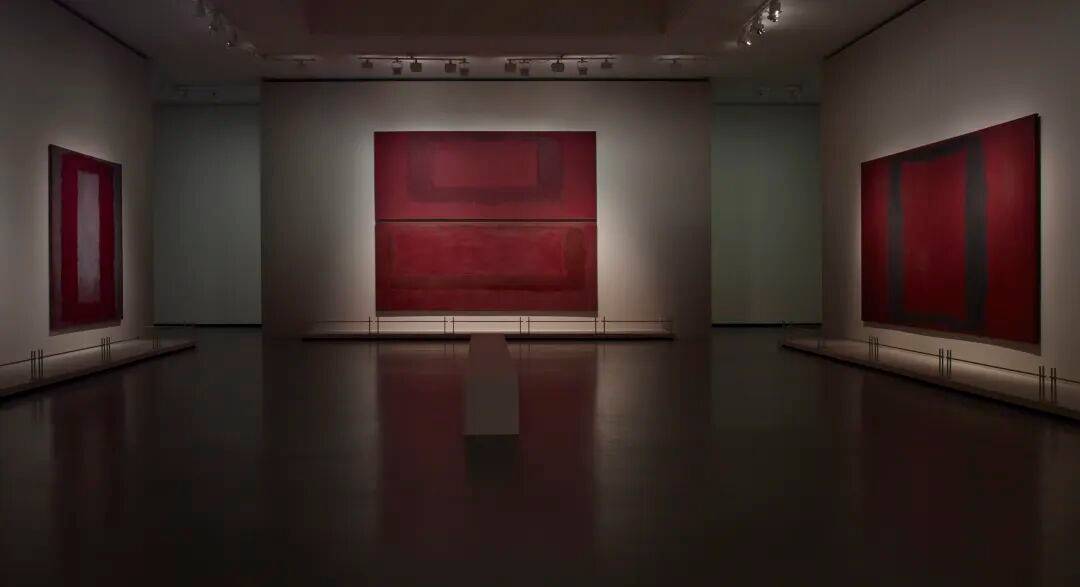
“In 1958, my father accepted a commission from the Four Seasons Restaurant, then New York’s most luxurious restaurant, to create works that would hang there permanently. He was actually very happy when he received the commission, because viewers would be able to spend a long time with his paintings in a permanent space,” Christopher recalled. To meet the conditions of the commission, Rothko changed the style of his “classic period,” adopting darker colors and broader, more open forms.
Left: Mark Rothko, Red on Maroon, 1959; center: Red on Maroon, 1959; right: Black on Maroon, 1959. Installation view, Fondation Louis Vuitton, Paris, 2023. Left: Mark Rothko, Untitled, 1960; center: Blue, Orange, Red, 1961; right: No. 14. Installation view, Fondation Louis Vuitton, Paris, 2023. As the artist himself once said, “My art is alive and breathing.”
With each breath, those darker, deeper colors slowly entered his inner world as well. He grew more restrained, more coolly composed, and gradually came to understand that a restaurant was not a place where art would be taken seriously.
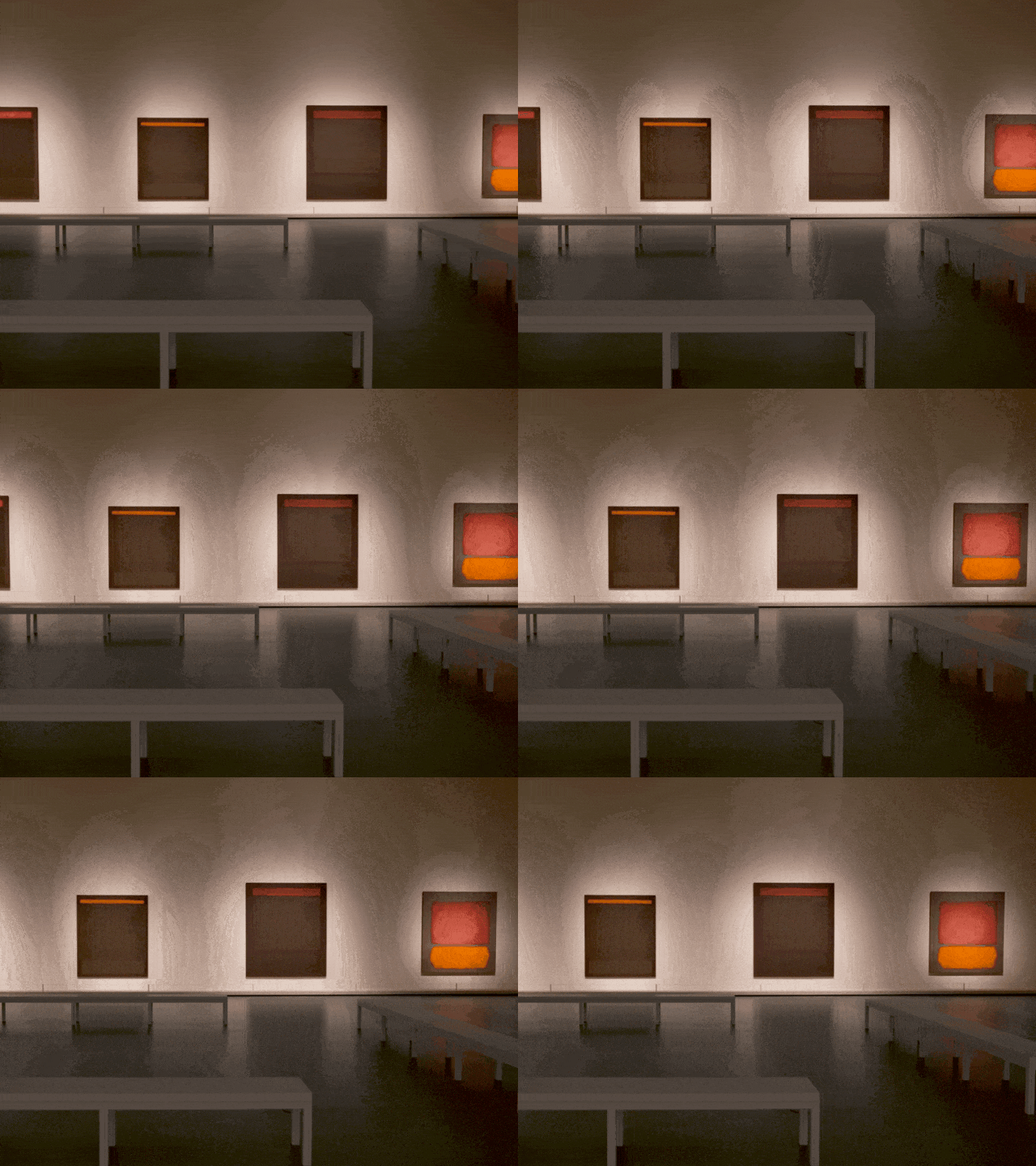
“A restaurant has only food, wine, laughter, and business deals. However overwhelming his paintings might be, they would ultimately be defeated there,” Christopher said. The following year, Rothko withdrew from the Four Seasons commission. Mark Rothko, installation view, Fondation Louis Vuitton, Paris, 2023. Left: Mark Rothko, No. 3 (Untitled Orange), 1967; right: Untitled, 1967. Installation view, Fondation Louis Vuitton, Paris, 2023. “People generally think that after the nineteen-sixties my father’s paintings became darker, and that this may have had something to do with his mental state.
SECTION 03 | My art is alive and breathing”
But I don’t think the dark paintings are sad, or that the bright ones are necessarily happy, because while he was making the dark paintings, he was also making brilliantly colored ones,” Christopher said. For Rothko, color was only a tool. He was not trying to explore color in itself. He was trying, through adjustments of color within the painting, to communicate with viewers at a deep emotional level.
“My father was full of contradictions. On the one hand, the surfaces of the works seem very calm; on the other, he often spoke about the ‘violence’ in his paintings.” By violence, Christopher did not mean anything as literal as hitting, smashing, or breaking, but something unsettling, agitating, a disturbance worked into the canvas by the brush. From left to right: Mark Rothko, Untitled, 1969-1970; Untitled, 1969; Untitled, 1969; Untitled, 1969; Untitled, 1969. Sculpture, left: Alberto Giacometti, Walking Woman I, 1960; Grande femme III, 1960.
Mark Rothko, installation view, Fondation Louis Vuitton, Paris, 2023. Left: Mark Rothko, Untitled, 1969; center: Alberto Giacometti, Grande femme III, 1960; right: Mark Rothko, Untitled, 1969. Installation view, Fondation Louis Vuitton, Paris, 2023. In the final gallery, Rothko’s gray-black paintings are placed alongside Giacometti’s bronze sculptures, answering one another not only in tone but in an atmosphere of meditation and reflection.
The pairing refers to a commission Rothko received from UNESCO in 1969 to make paintings for its new building in Paris; the finished works were to be shown together with Giacometti’s sculptures. Mark Rothko, installation view, Fondation Louis Vuitton, Paris, 2023. “My father loved the idea. He began making a series of paintings in a new style and produced far more works than the commission actually required,” Christopher said.
Regrettably, the project fell through. Rothko died by suicide the following year and never had the chance to see his work shown alongside Giacometti’s sculpture. The exhibition’s final chapter seems to write a more complete ending for that broken conclusion. The Rothko Chapel at the University of St. Thomas in Houston, Texas. A model Rothko made for the chapel, indicating how the works should be hung and how the benches should be arranged. “What concerned my father was never the everyday, but always the large questions of existence: Why are we here?
What does life mean? What happens after we die? Does anything we do have meaning?” Christopher said.