Turner Prize–Nominated Iranian-Born Artist Gets Her First Museum Survey in Mainland China, in Shanghai
On March 5, the Long Museum in Shanghai opened Shirazeh Houshiary’s first large-scale museum solo exhibition in mainland China, bringing together recent monumental paintings, modular sculptures, and Breath (2003/2013), the philosophical work she showed at the 2013 Venice Biennale......
By / Xirui Huang · 9 min read
How does Shirazeh Houshiary use breath and nature to explore connections across cultures?
In Xirui Huang’s 2023 interview, Shirazeh Houshiary describes light, trees and breathing as starting points for her work. Rhizome at Long Museum in Shanghai brings painting, modular sculpture and Breath into a relationship shaped by life and interconnection. Breath turns chanting and breathing across cultures into a shared sensory experience. Houshiary also reflects on how her 2018 visit to Dunhuang deepened her understanding of cultural exchange and fluid identity.
On March 5, the Long Museum opened Shirazeh Houshiary’s first large-scale museum solo exhibition in mainland China. On view in Shanghai are the artist’s recent monumental paintings, modular sculptures, and Breath (2003/2013), the deeply philosophical work she showed at the 2013 Venice Biennale. Houshiary is among the most closely watched women artists in the world today, and last year she was made a Royal Academician of the Royal Academy of Arts in Britain.
Shirazeh Houshiary: Capturing Life and Nature Through Art
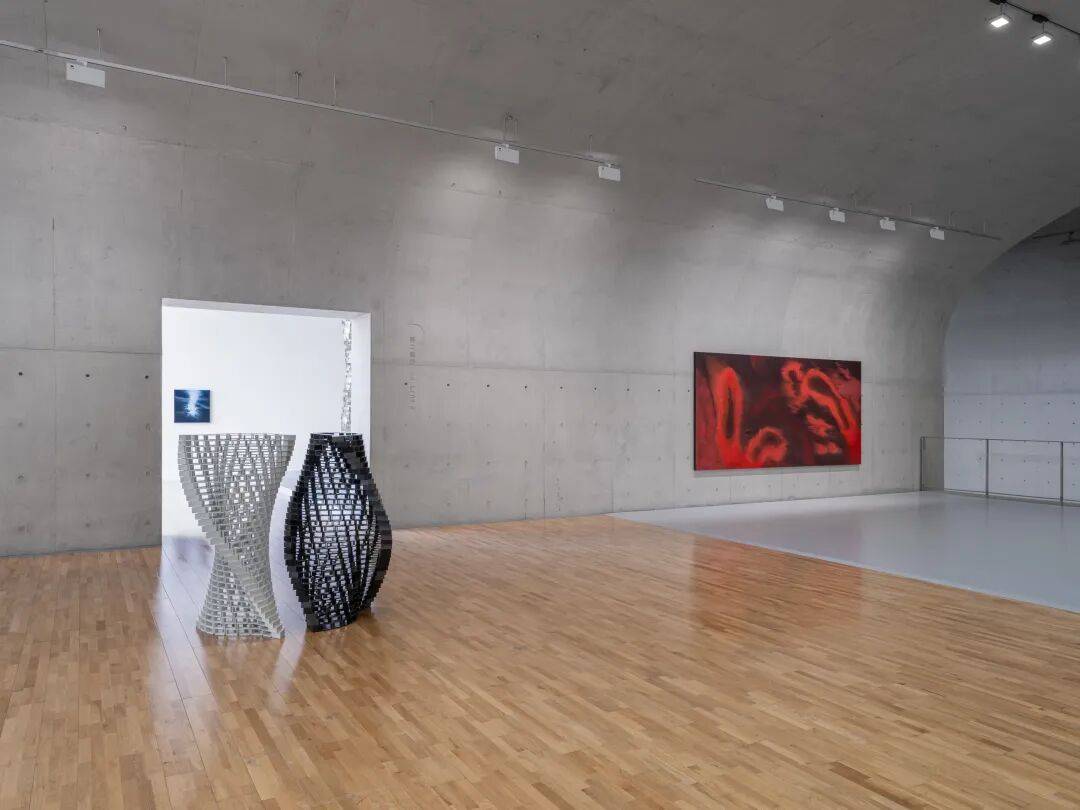
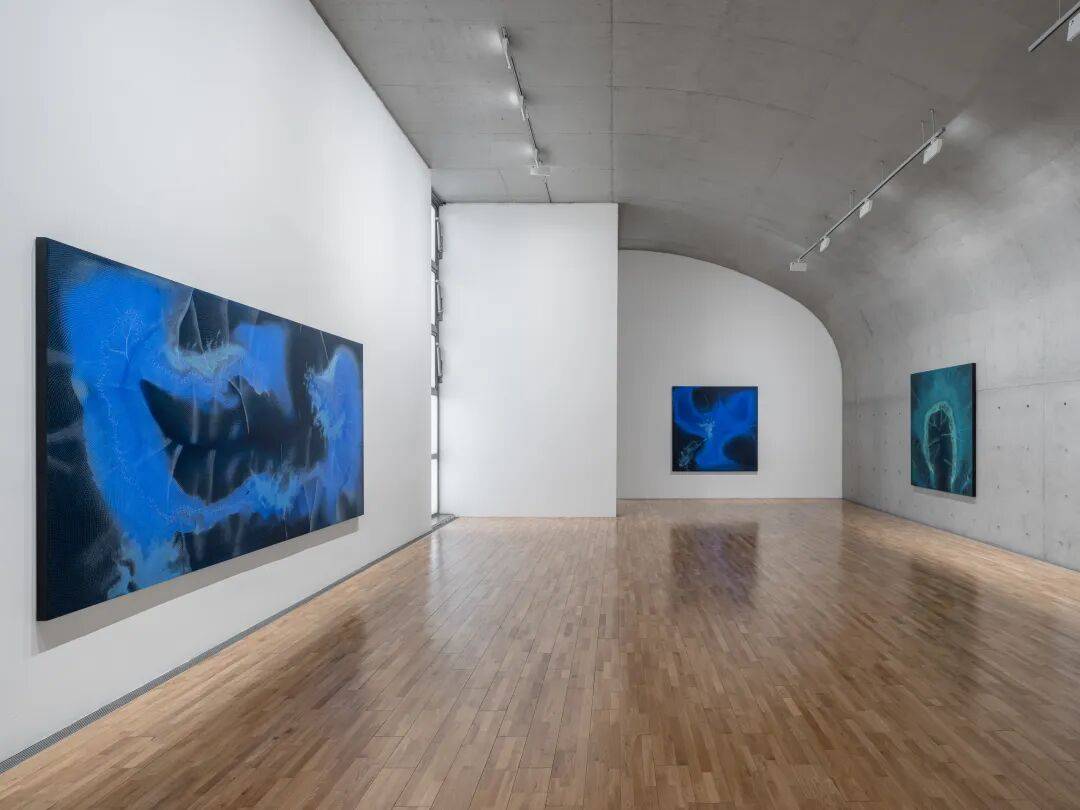
From Iran she went to Britain to study, and then was compelled to remain there. That unsettled life has kept her work in sustained dialogue with culture, identity, and borders. Installation view of Shirazeh Houshiary’s Rhizome, Long Museum (West Bund), 2023, photographed by Alessandro Wang. As early as 1994, she was nominated for the Turner Prize. Yet for all her stature, she is remarkably calm and modest, perhaps not unrelated to her affinity for ancient Chinese philosophy and art: Laozi, Zhuangzi, and Shitao have all profoundly shaped her work, and in 2018 she traveled to Dunhuang to experience the force of the murals in the Thousand Buddha Caves.
Before the exhibition opened, we spoke with the artist. Houshiary told us that she has always felt nature calling to her. “My studio is surrounded by trees, and they are like my companions.” Shirazeh Houshiary, photographed by George Darrell. On the day of the opening, the artist was there in person. She wore shoulder-length curls, a very simple navy sweater, and black trousers. Meeting her face-to-face, one had the sense of a powerful, quieting presence.
SECTION 01 | Life and nature are present throughout the exhibition
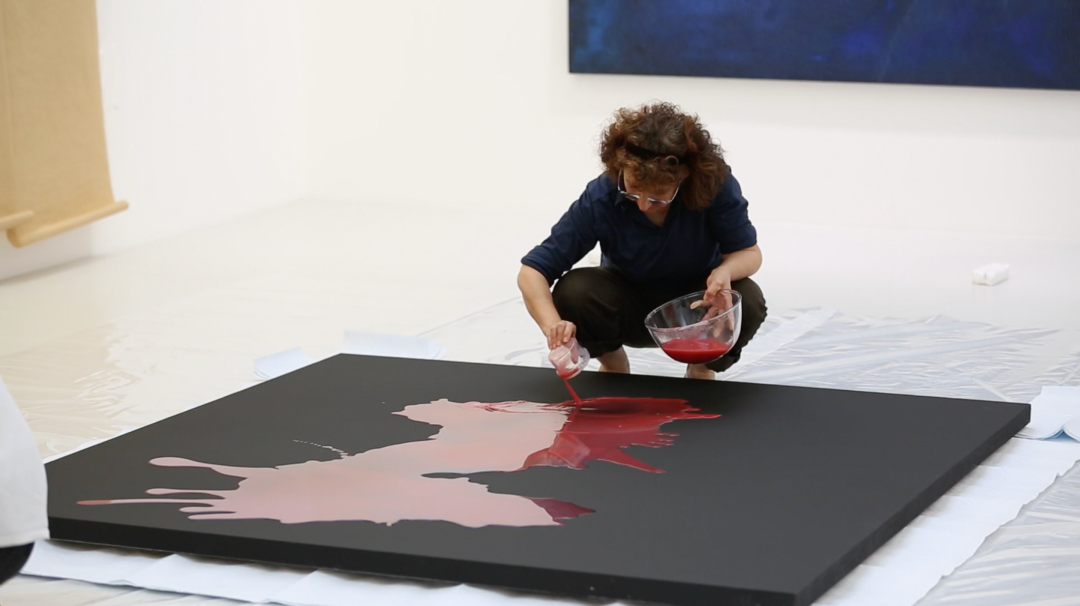
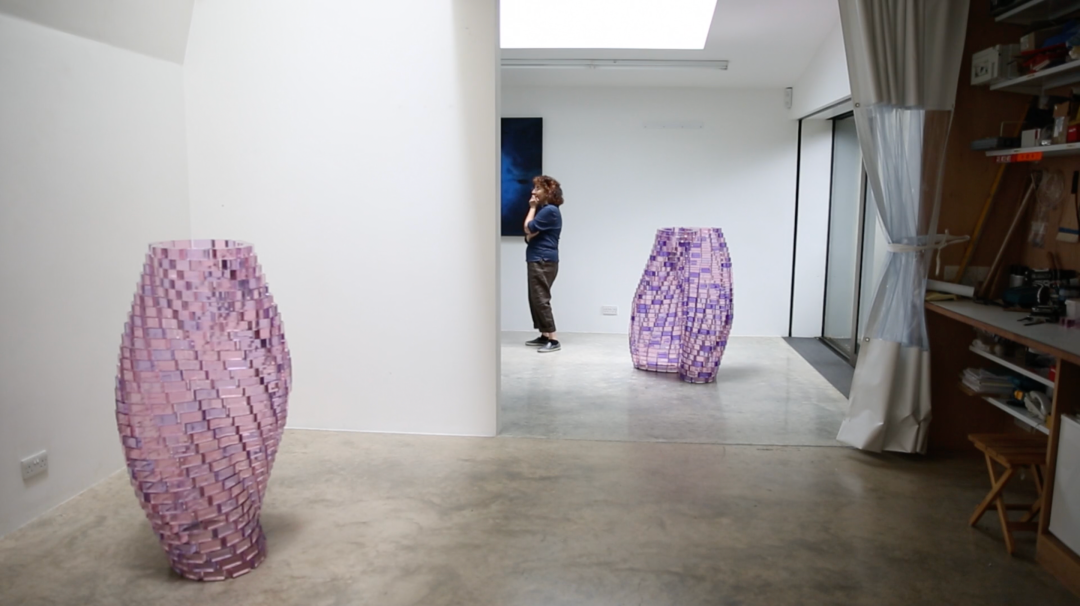
Shirazeh Houshiary at work in her studio, still from a studio visit video, 2017. “My studio in Britain is surrounded by trees; during the day, they are my companions. There are many windows, and the changing light at different times of day comes in and makes everything feel alive. Early in the morning, I walk along the river near the studio and take photographs, trying to capture the changing light on the water. After that, I work in the studio until noon.
In the afternoon, I spend a little time reading, then continue working until sunset or into the evening.” In our interview, Houshiary described her recent working rhythm. Installation view of Shirazeh Houshiary’s Rhizome, Long Museum (West Bund), 2023, photographed by Alessandro Wang. As with the environment she likes to work in, the ideas of life and nature run through the exhibition. The title, Rhizome, is a symbol of vitality: an ever-expanding, tireless network of branching veins.
“The rhizome is a map of life that you can enter from anywhere. It maps the traces left by nature as it follows different evolutionary paths.
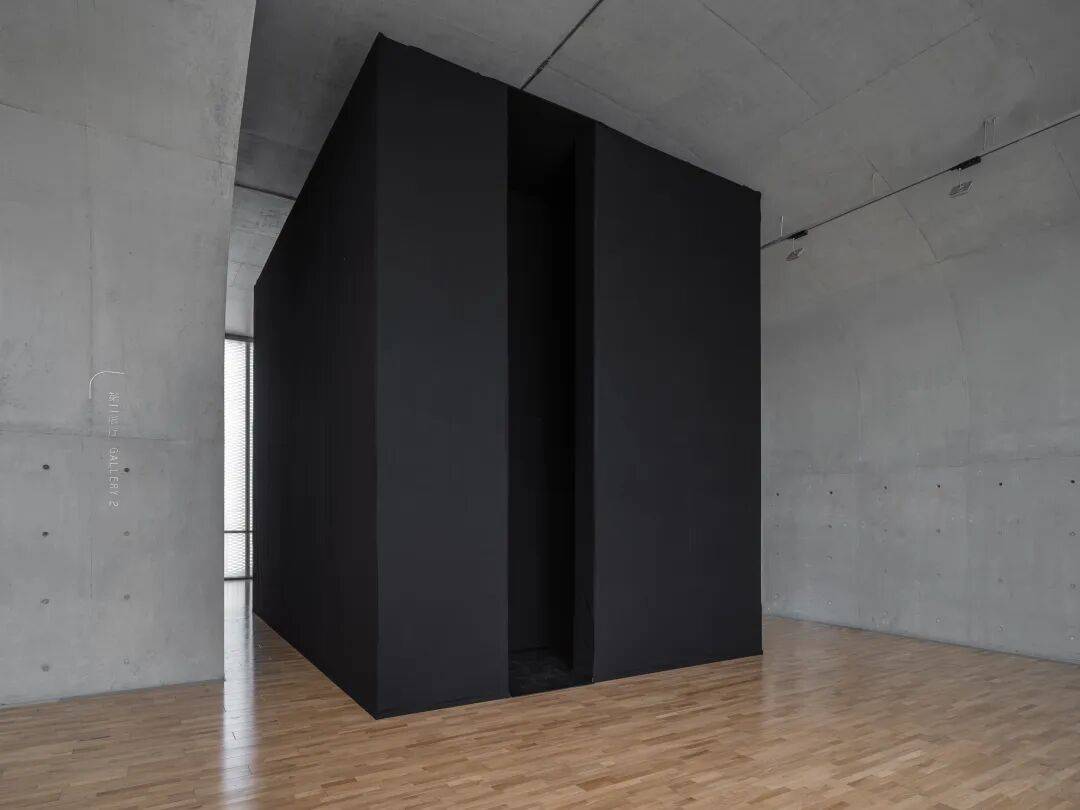
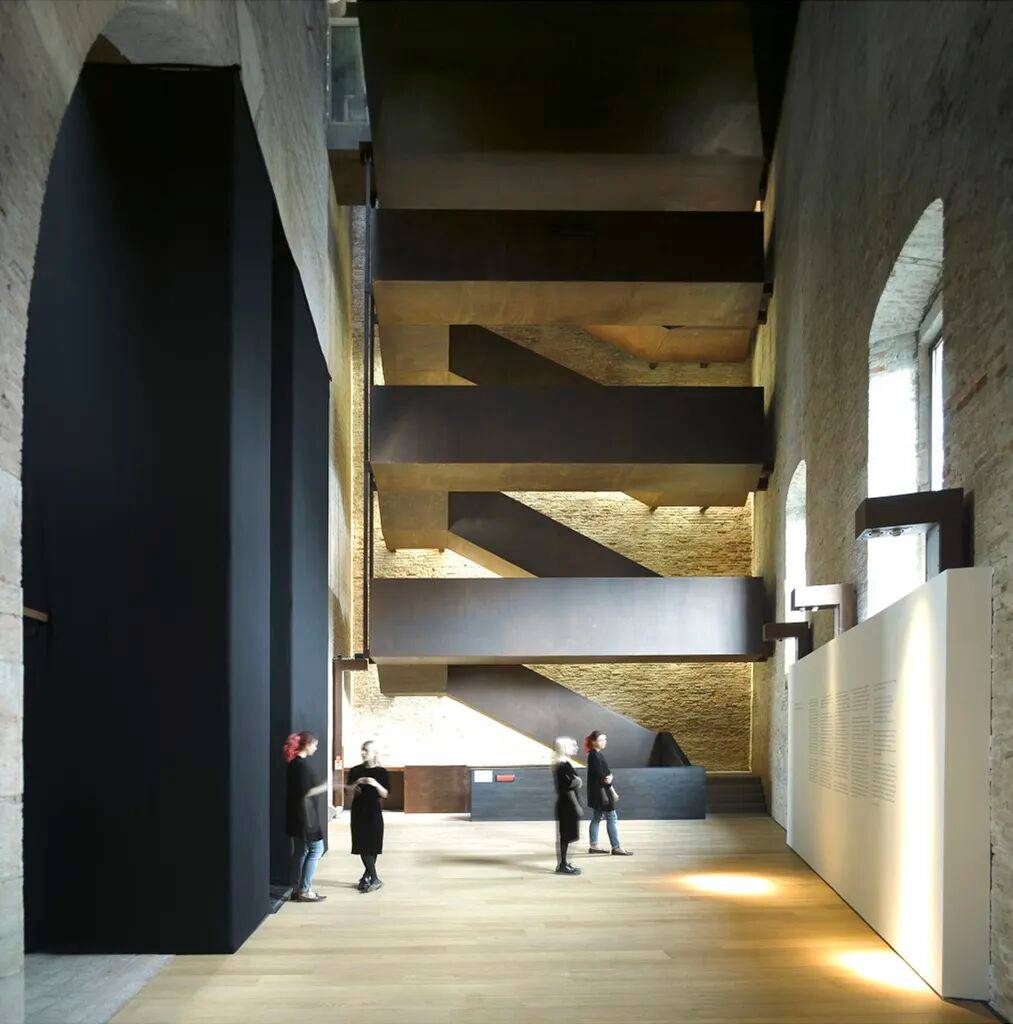
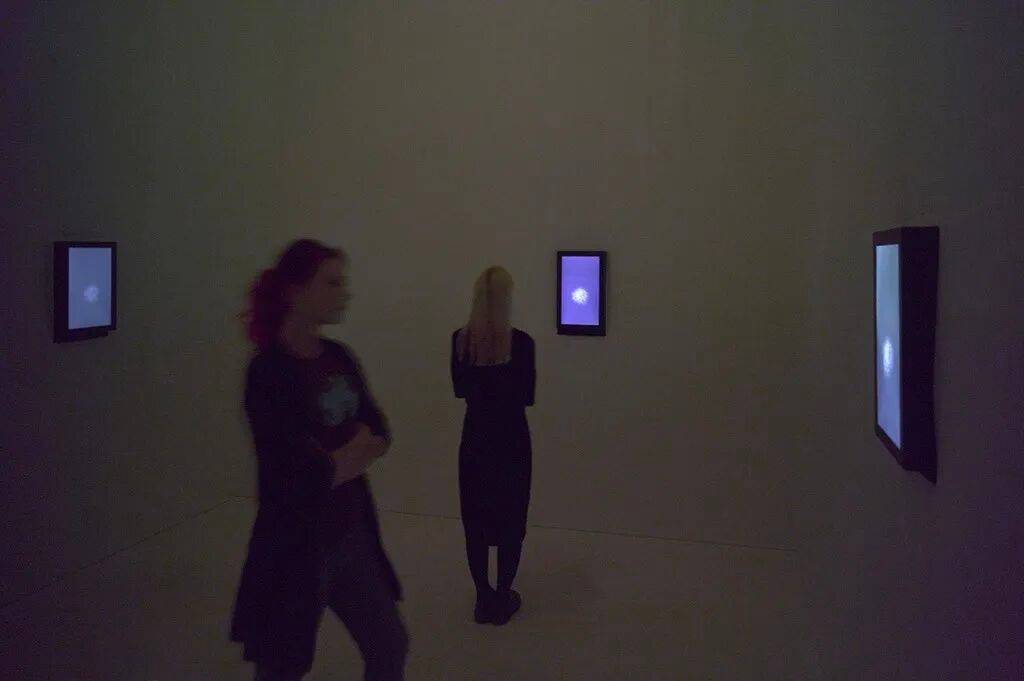
Houshiary said. Installation view of Shirazeh Houshiary’s Rhizome, Long Museum (West Bund), 2023, photographed by Alessandro Wang. The first thing to command attention in the gallery is a huge black box, five meters high. This is Breath, the astonishing work Houshiary presented during the 2013 Venice Biennale. Inside the felt-wrapped chamber, four screens project hand-drawn animated images that are unified but not identical: against a black-gray ground, a cloud of white mist stirs faintly, moving to the rhythm of a human inhalation and exhalation.
The imagery, accompanied by music of scriptures chanted in different languages, comes at the viewer from every side. Under this enclosure of image, light, and sound, there is almost nowhere to hide. The artist recorded the breathing frequencies of chanters from four religions as they intoned prayers from different cultures: in Buddhism, breath is air; in Islam, earth; in Judaism, fire; in Christianity, water. The four walls correspond to the four points of the compass, symbolizing the collision and convergence of world cultures. Shirazeh Houshiary, Breath, 2013 Venice Biennale installation view, image from the internet. “Breath is the only older work in the exhibition, but I still think it is deeply meaningful. We are all breathing.”
The artist told us that the idea of breath makes her think of single-celled algae, which created the biosphere and atmosphere that sustain more advanced species by releasing oxygen into the air and absorbing carbon dioxide.
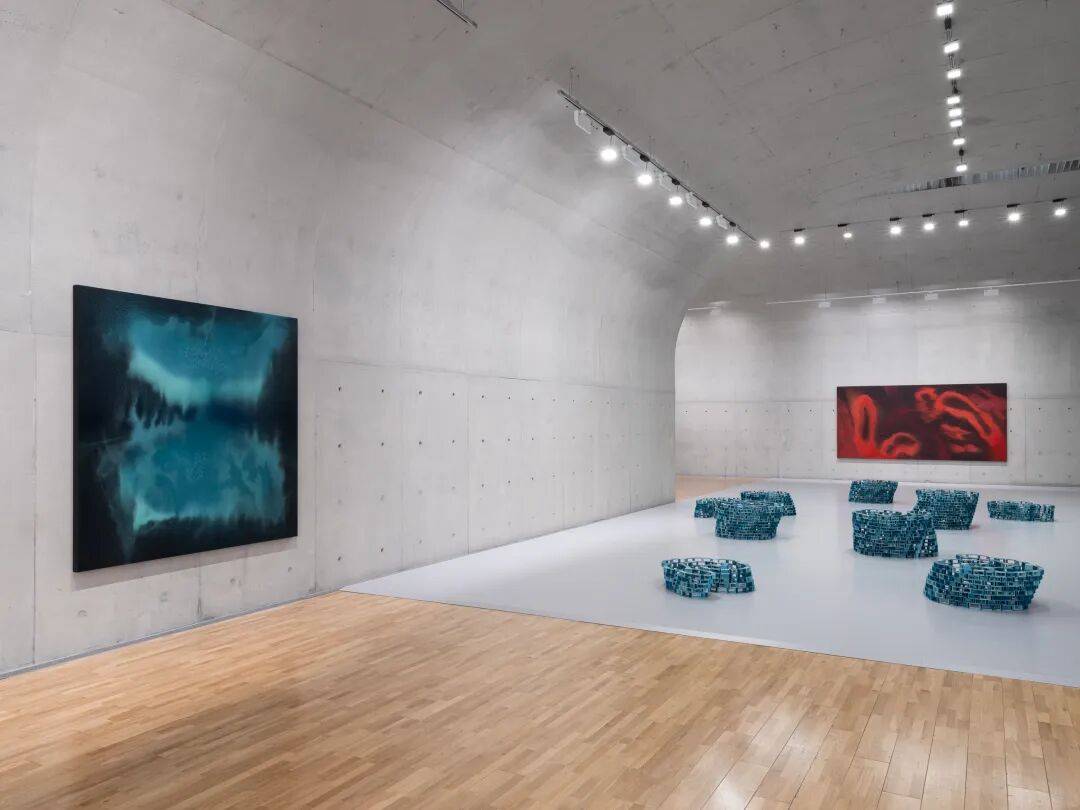
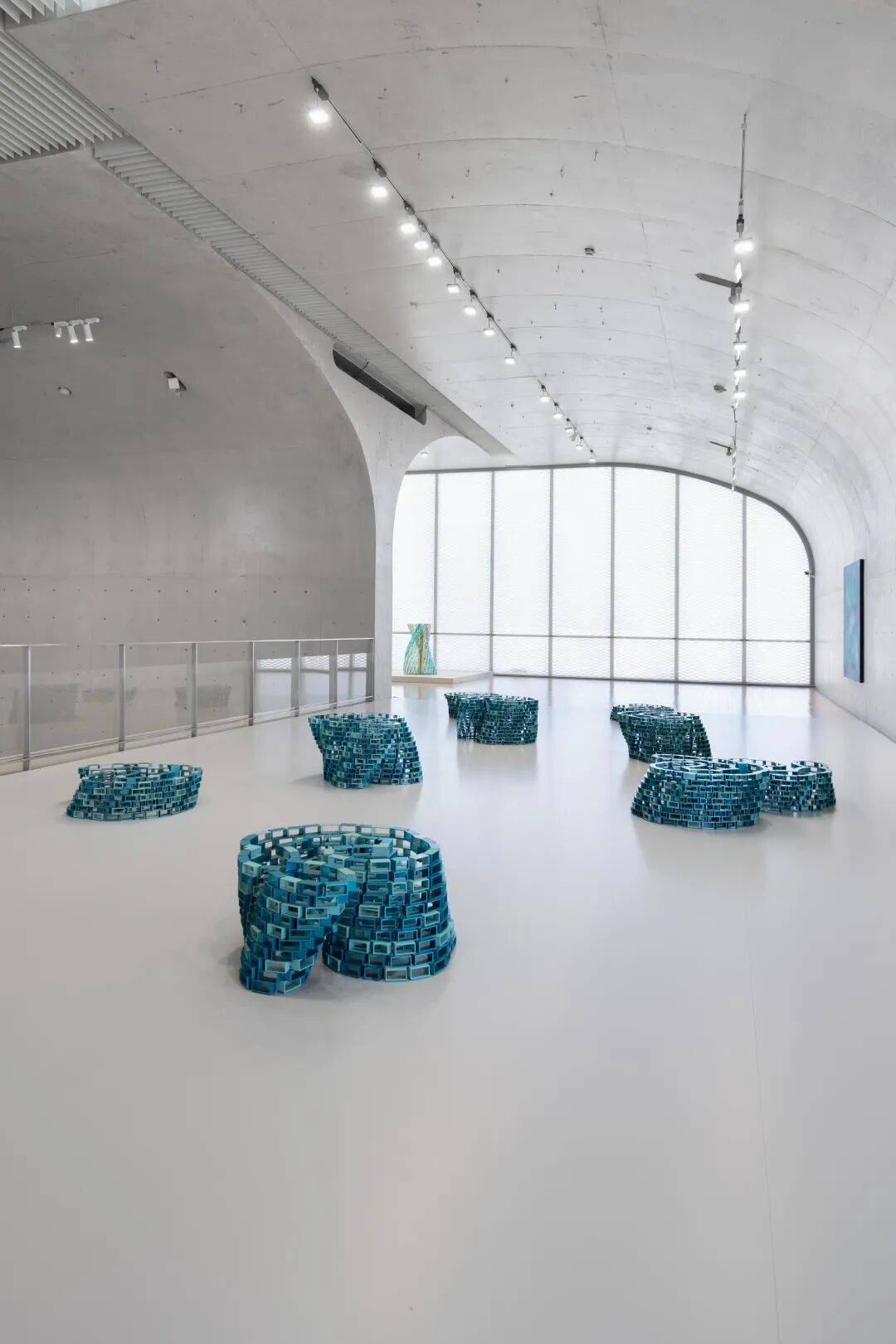
“The intelligence behind the breathing process is extraordinary. It reveals how life was created in the universe. For me, the story of breath is the story of life,” the artist said. Installation view of Shirazeh Houshiary’s Rhizome, Long Museum (West Bund), 2023, photographed by Alessandro Wang. The other works in the exhibition are all new pieces from the past three years. The largest and most complex sculpture, Vortex, consists of nine “whorls,” like nine translucent, sinewy azure dragons coiled through the gallery.
Hollow blue-green “bricks,” varying in depth of tone, wind upward and around an aluminum armature in a pattern of growth and spiraling. The stacked layers range from five courses at the lowest to thirteen at the highest. These bricks resemble dragon scales, and also cellular particles, at once extremely soft and extremely hard.
“The shape of a snake or dragon is a little like an early life-form. We can imagine the sinuous form of cell division, like a growing vortex of life. These are our origins; we were conceived from these spiraling, ascending geometric forms.” The artist has described this work as “primitive.” Installation view of Shirazeh Houshiary’s Rhizome, Long Museum (West Bund), 2023, photographed by Alessandro Wang. Shirazeh Houshiary, Mind (detail), 2022, photographed by Alessandro Wang. Mind (2022), like a crystalline spiral tower, is built from a combination of organic transparent glass and frosted glass; in the reflected sunlight of the museum, the shifting light and shadow take on an almost metallic texture.
Installation view of Shirazeh Houshiary’s Rhizome, Long Museum (West Bund), 2023, photographed by Alessandro Wang. The black-and-white Thus It Is (2022) consists of two sculptural elements that depend on and generate each other as they rise with vigorous growth. Near the gallery’s floor-to-ceiling windows, Cleavage (2022) is the most iridescent presence in the room, its malachite-colored transparent glass bricks forming a sculptural structure like DNA.
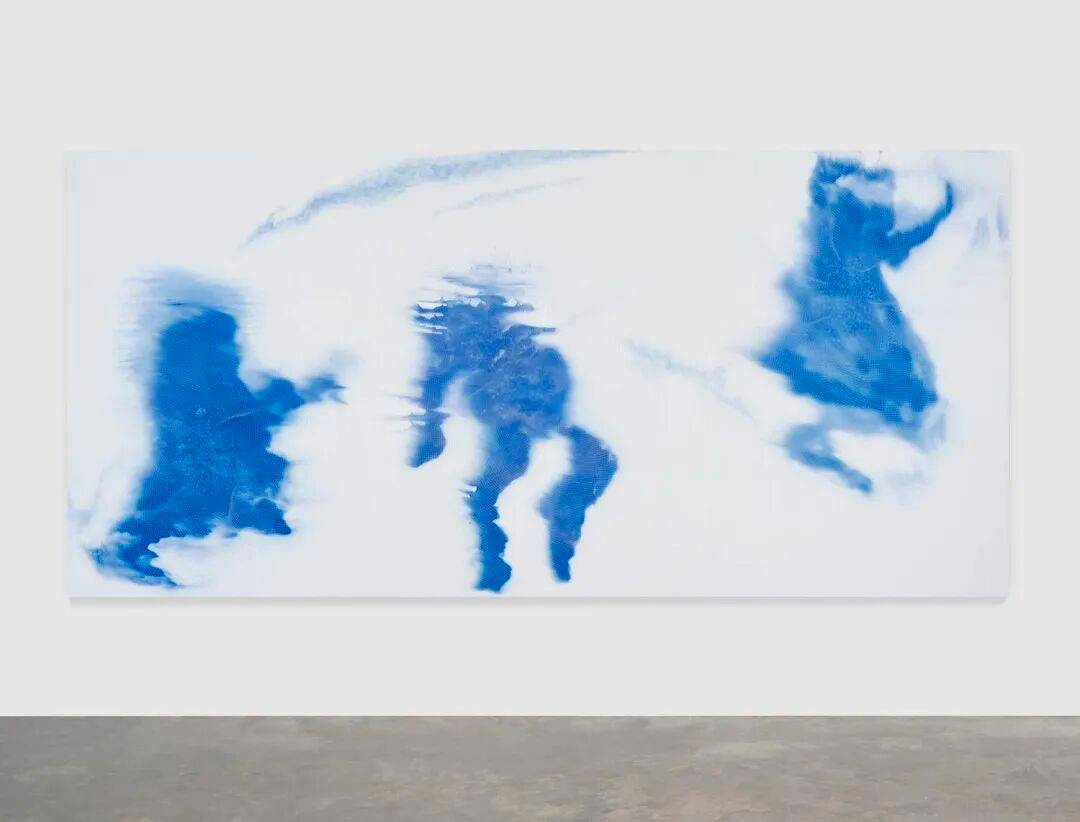
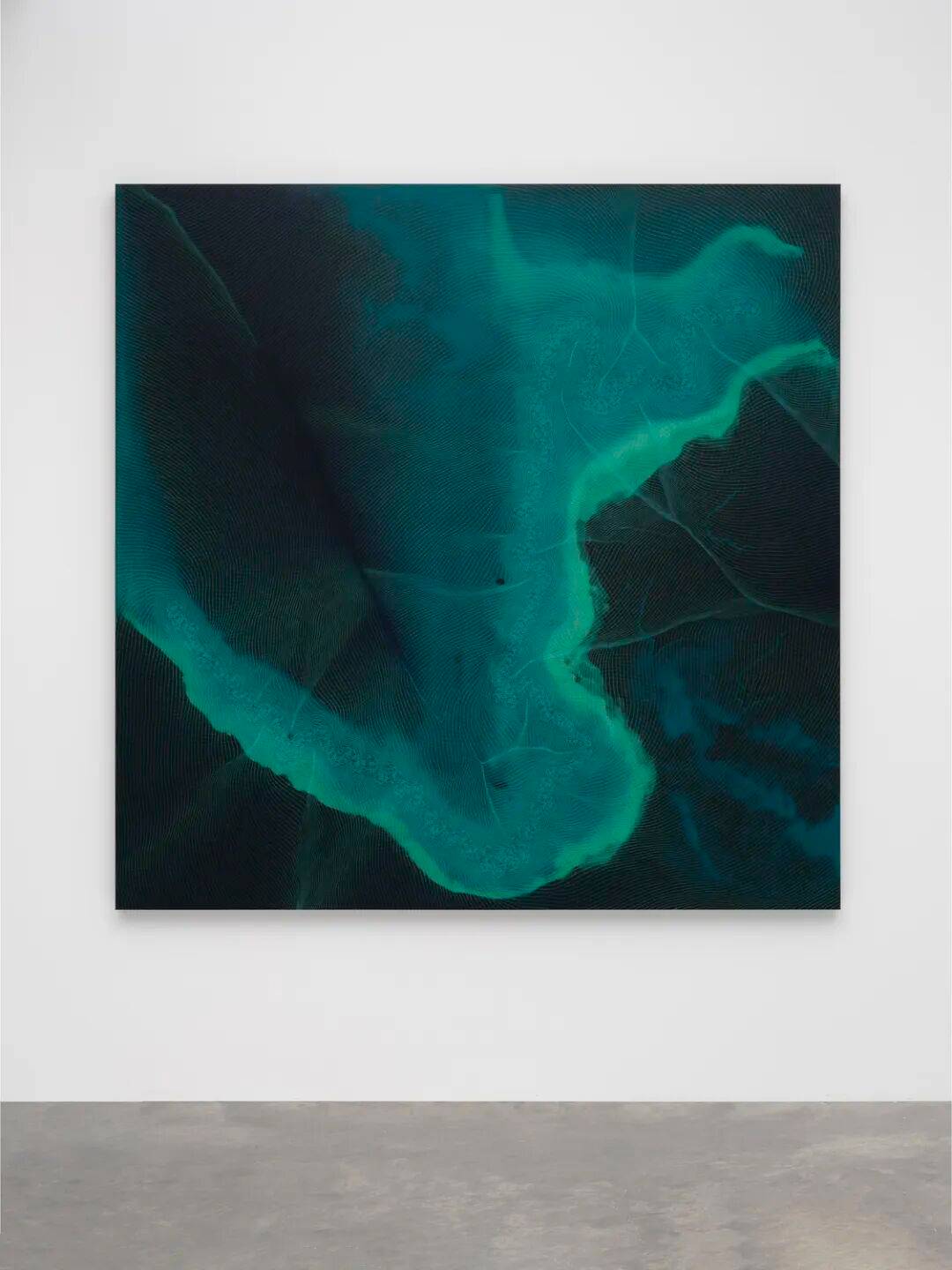
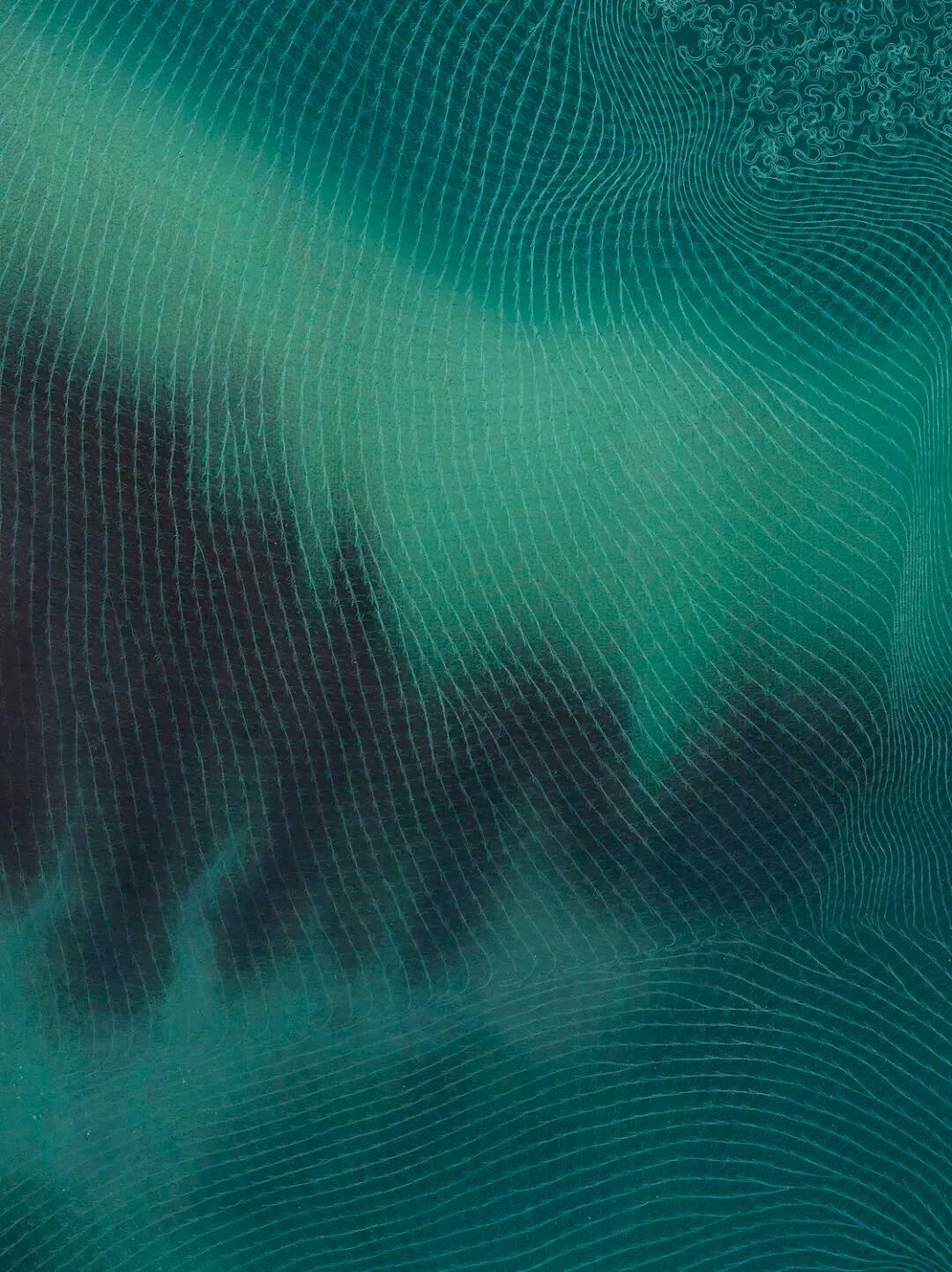
Through the layered stacking of bricks in different materials, these sculptures produce changing effects of light, shadow, and color, allowing viewers to see the same work shift and transform from different angles. Shirazeh Houshiary, Zygote, 2022. Shirazeh Houshiary, Zygote (detail), 2022. Houshiary’s paintings, no less than her sculptures, are filled with reflection and mystery about life. Red, blue, green: the artist uses these highly saturated colors in an effort to imitate the primal force of growth in nature.
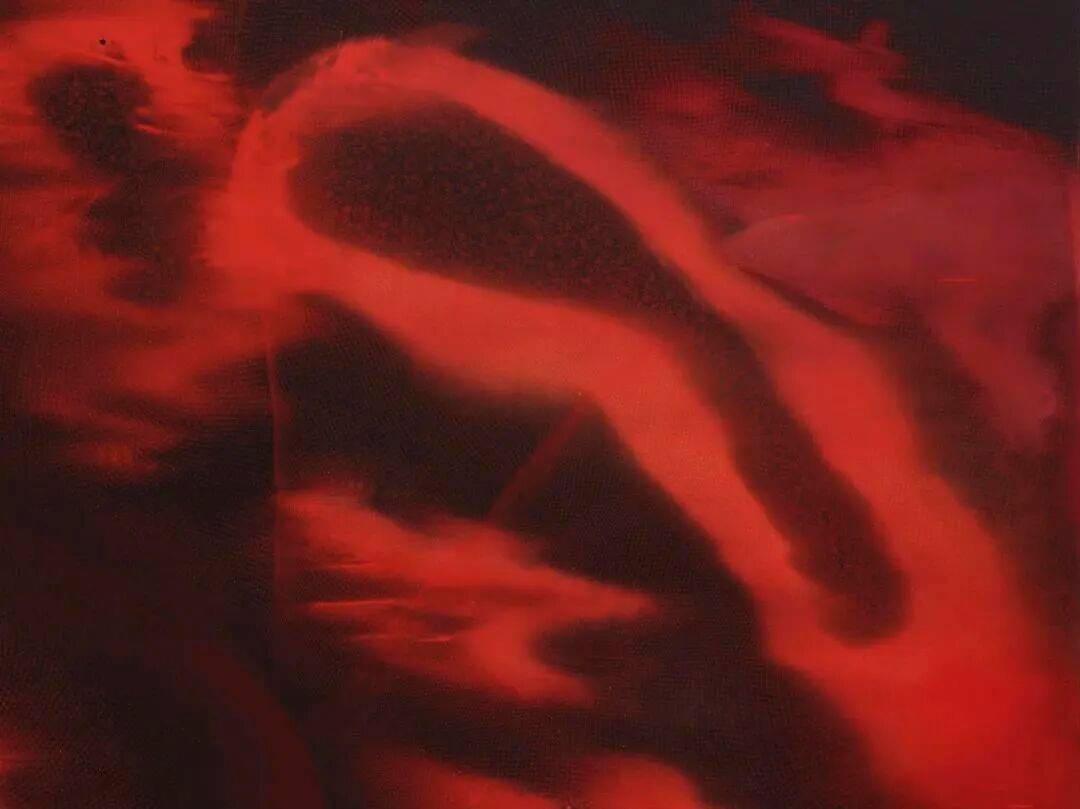
One of the largest works in the exhibition, Zygote (2022), is dominated by a vast field of red, like flowing blood.
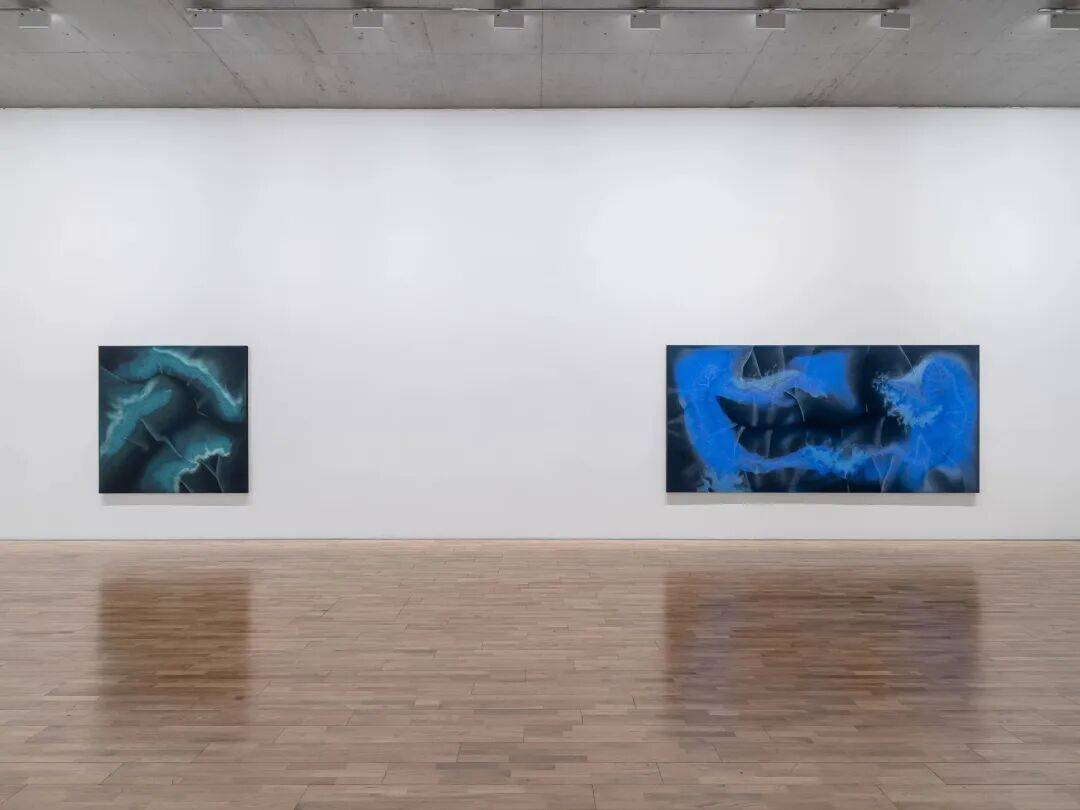
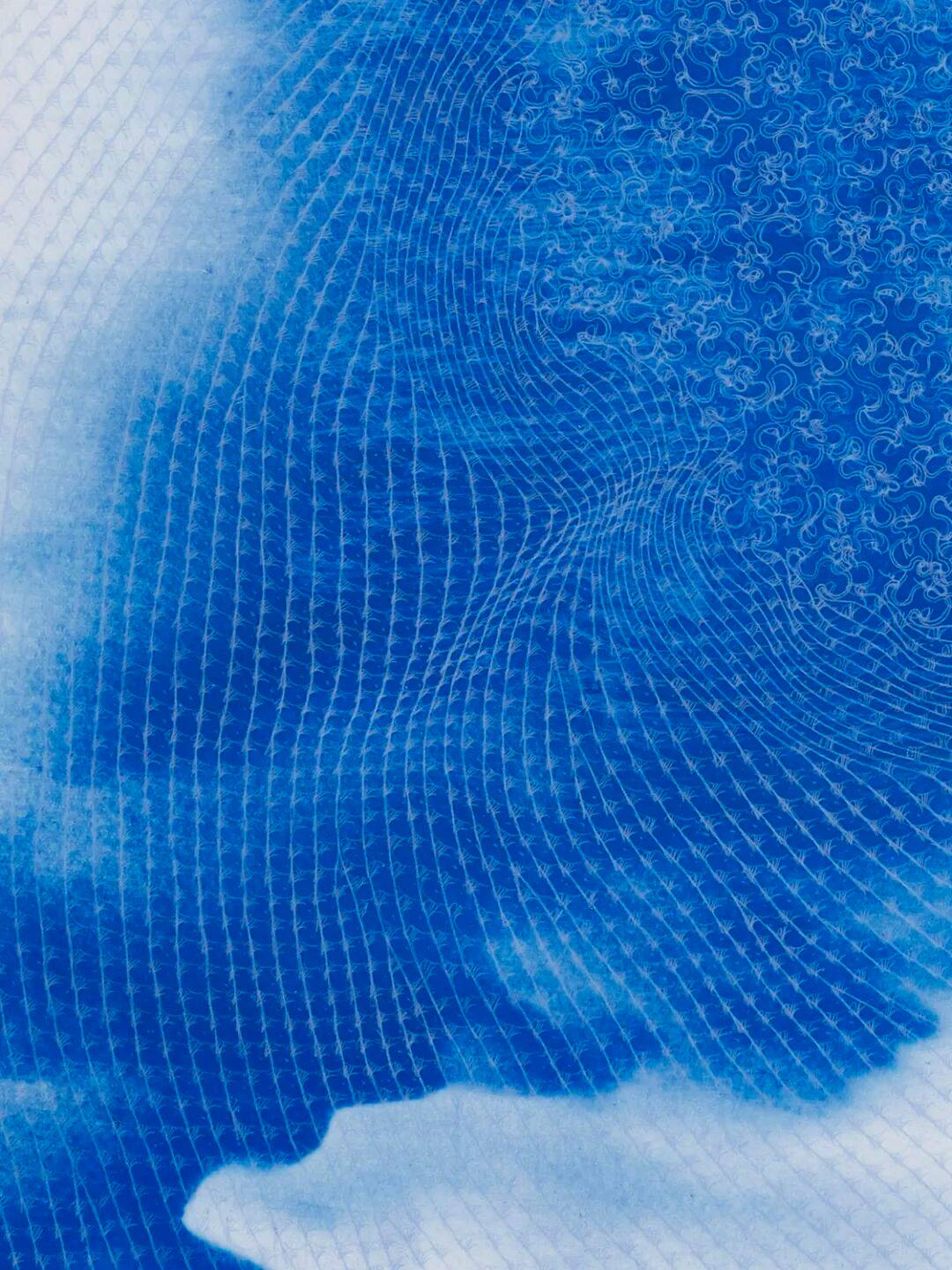
“Red is powerful; it is the color inside living things. You can call it energy, or heat. For me, color is everything, and an important part of all that exists.” Houshiary has said as much. Shirazeh Houshiary, Earth Song, 2021. Shirazeh Houshiary, Earth Song (detail), 2021. Shirazeh Houshiary, Tempest, 2022. Shirazeh Houshiary, Time Flies, 2021. Installation view of Shirazeh Houshiary’s Rhizome, Long Museum (West Bund), 2023, photographed by Alessandro Wang. “All colors are symbolic. Algae are green, oxygen is usually associated with blue, and you may feel that red is more vital.
Color has a great effect on our emotions and moods. I read a book about how emotions and feelings affect us biologically and regulate our bodies. In the end, emotions and feelings regulate and integrate human understanding of life and society. It was through painting these works that I gradually came to realize this.” Installation view of Shirazeh Houshiary’s Rhizome, Long Museum (West Bund), 2023, photographed by Alessandro Wang. Houshiary’s early works were dense in color and rough in structure; in recent years, her work has plainly become much softer and lighter.
Veils, membranes, and mist remain recurring threads in her work. Across forty years of making, Houshiary has developed a singular way of painting: first, she splashes pigment onto the canvas and lets it flow in every direction; then, over the sediments and forms that emerge, she lays a kind of white veil. Shirazeh Houshiary, The Big Picture (detail), 2020. That hazy covering is like the trace left on clear glass by an exhalation and inhalation, elaborately inscribed and layered by the artist, breath by breath, interwoven and entwined.
Shirazeh Houshiary at work in her studio, still from a studio visit video, 2017. Houshiary was born in 1955 into an intellectual family in Iran. Her father was an architect with deep knowledge of Persian culture, poetry, and art; her uncle studied Western philosophy and translated many of Nietzsche’s works into Persian. After completing her undergraduate studies in Iran, Houshiary came alone, still in her teens, to London to study.
By the time she graduated from Chelsea School of Art, revolution had broken out in Iran, and Houshiary was forced to remain in Britain, beginning the more than forty-year artistic career she continues today. Shirazeh Houshiary, Christmas Tree, 2016, Tate, Britain. Shirazeh Houshiary, A Corner in Hyde Park, 2016, London, image from the internet. Shirazeh Houshiary, Sand Dune, 2020, Rice University, United States, image from the internet. “I went back twenty years ago and found that society had changed; it was completely different from when I left.
The way people spoke had changed, too. Although I speak Persian, it was very hard for me to communicate with them. I left Iran feeling sad, feeling like an outsider, and knew I would never return.” Houshiary said this in a 2020 interview. Perhaps because of that experience, her work has consistently probed identity, borders, and interiority. Shirazeh Houshiary, Turning Around the Center, 1993, image from the internet. In the early 1980s, her sculpture began attracting wide attention in the art world, and she was often discussed alongside fellow emerging British sculptors of her generation, including Anish Kapoor, Tony Cragg, and Richard Deacon.
Later, her practice expanded across painting, video, installation, and other media, and in 1994 she was nominated for the Turner Prize. Shirazeh Houshiary, Park in Munster, Germany, 2003, image from the internet. Shirazeh Houshiary, East Window, 2008, image from the internet. A landmark work in Houshiary’s career is East Window, the installation she made in 2008 for St Martin-in-the-Fields in London.
She transformed one of the church’s windows into a distorted cross, as if a stone had been dropped into water and ripples were spreading outward ring by ring. Through the oval center, the viewer seems almost to glimpse a light leading upward. Houshiary has said that she sees this glass window as a medium for observing and connecting with the outside world, much as she has always tried to sense the spiritual and the interior and to externalize that mysterious, subtle perception through art. Shirazeh Houshiary, String Quartet, 2011. Shirazeh Houshiary, Bend, 2015. This remarkable inward sensitivity, and the capacity to send it back outward, is not unrelated to her childhood interest in science; when she was a little older, she even seriously studied theories of quantum mechanics.
SECTION 02 | Born in Iran, traveling among world cultures
“I think everything is fluid, and I am also very interested in the Dao of Laozi and Zhuangzi.” Houshiary has said that her connection to China runs far deeper than many people imagine, and that the paintings of Bada Shanren and Shitao have also strongly influenced the philosophical dimension of her work. Installation view of Shirazeh Houshiary’s Breathing, Lisson Gallery, London, 2021. “My birthplace was a city connected to the Silk Road. When I was a child, I was already deeply drawn to the stories and legends of the Chinese Silk Road. It was not just a trade route, but a ‘superhighway’ for the exchange of culture and technology.”
Houshiary said this in a 2020 interview. For her, this attachment to China was planted in childhood and, over the years, gradually took root. Shirazeh Houshiary, Glass Book White Light and White Heat, 2013, Berengo Centre for Contemporary Art, Venice, Italy, image from the internet. Shirazeh Houshiary, Lecithin, 2017, image from the internet. In 2018, she came to Dunhuang, where the murals in the Mogao Caves and the city’s deep artistic and cultural history made a tremendous impression on her.
“Dunhuang is a very important place for me. It lies on the edge of the Gobi Desert and at the starting point of the Silk Road, where the civilizations and diverse cultures of India, China, the Middle East, and Europe converge. It clarified for me an idea I have long held: the world is one whole.” Shirazeh Houshiary, String Quartet, 2011, image from the internet. In her conception, there is no Europe, Asia, or America; there are no absolute borders between races and cultures. Everything is fluid, and identity is fluid, too.
When she makes work, she never deliberately emphasizes her origins as an Iranian woman.
“Identity is only a derivative concept; it does not truly exist. Each of us possesses qualities more subtle than identity.” She does not believe herself especially unusual; like many people, she simply stands at the intersection of many cultures.
“I think this has made me richer and deeper. It has allowed me to choose, rather than blindly accept ideas because I was born into a particular culture. Persian culture gave me my poetic side; Western culture gave me a conceptual consciousness.”