Pierre Huyghe, One of the World’s Most Avant-Garde Artists, Lets His Works Grow, Change, and Decay
At Fondation Beyeler, Xirui Huang walks through eight galleries with Pierre Huyghe, discussing a breathing lung, living ecosystems, artificial intelligence, and works that need not wait to be seen in order to exist......
By / Xirui Huang · 16 min read
How does Pierre Huyghe let his works grow and change on their own?
Pierre Huyghe brings living organisms, environmental conditions, artificial intelligence, and mechanical systems into his works, establishing initial conditions before allowing them to interact and evolve. In this interview at Fondation Beyeler, he explains how Apnea, UUmwelt, Camata, and other works loosen the artist’s control and change the relationship between artworks and viewers.
He puts a “lung” that breathes on its own inside a tank, brings ants and an eyeless “worm” into the galleries, and makes works in aquariums inhabited by microorganisms and aquatic animals. His moving images produce spectacles of wonder and dread. Bees, dogs, natural environments, and artificial intelligence are among his nonhuman collaborators.
He is the French artist Pierre Huyghe, one of contemporary art’s most distinctive and pioneering figures. His practice ranges across film, installation, sculpture, generative and evolving situations, and dynamic environments incorporating artificial intelligence and neuroscience. It has fundamentally recast what an exhibition can be as a medium.
“I always feel there is something a little wrong with me, ha-ha,” the sixty-four-year-old artist said, joking about his particular way of working.
In the summer of 2026, at Fondation Beyeler in Switzerland, he turned the museum itself into a slightly dysregulated, continually changing living organism. We walked through its eight galleries and talked for forty minutes. From his early investigations of cinema, memory, and copyright to the bees, cancer cells, artificial intelligence, and machines he has brought into museums, his enthusiasm for change and chance remained undiminished.
For more than thirty years, Pierre Huyghe has been among the artists hardest to classify and most persistently engaged in shifting the boundaries of contemporary art.
Born in Paris in 1962, he studied at the École nationale supérieure des Arts Décoratifs in the 1980s. In the following decade, he was active in the French contemporary-art scene alongside Philippe Parreno, Dominique Gonzalez-Foerster, and others.
Huyghe soon moved beyond that framework. Rather than making an artwork for people to look at, he became increasingly interested in another question: could he create a field in which different entities, forces, and environmental conditions acted on one another and kept evolving, whether or not anyone was there to watch?
The approach we now associate with him—entrusting an exhibition to nonhuman participants—was already taking shape more than a decade ago. So radical and thought-provoking are these works that they have appeared across many of the world’s leading biennials and major museum surveys of the past thirty years.
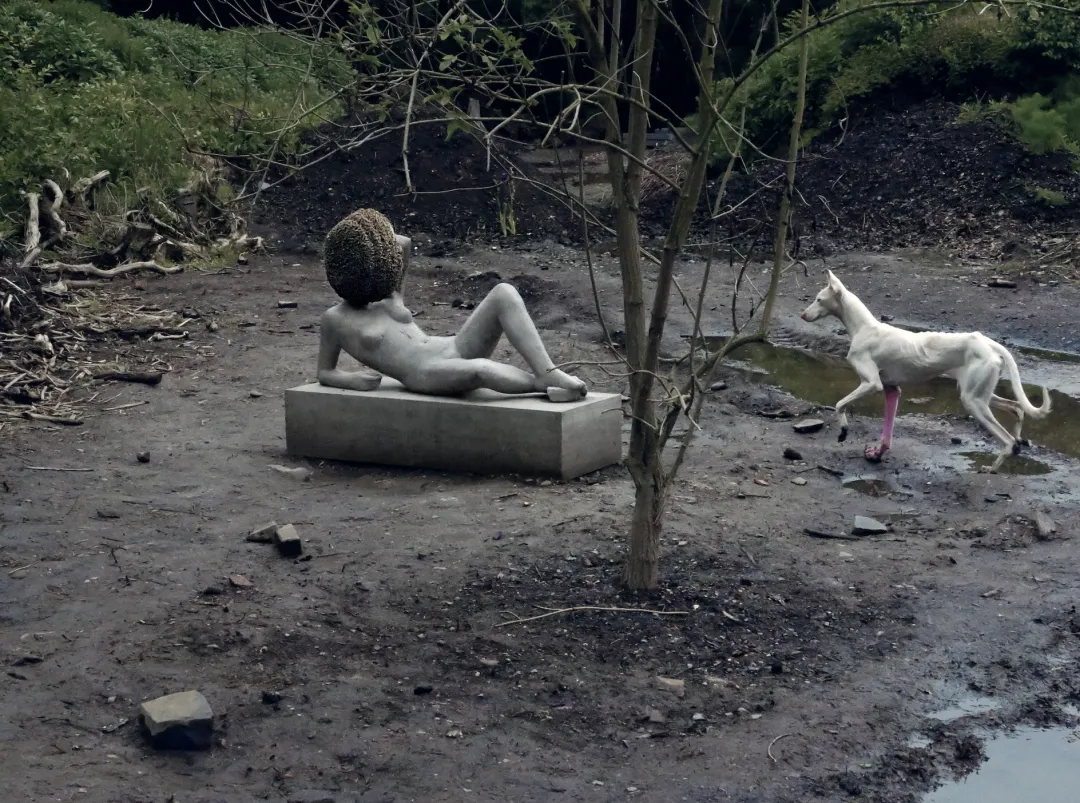
The thirteenth edition of Documenta, in 2012, marked a turning point in his career. Untilled occupied an abandoned composting site in Kassel’s Karlsaue park. Weeds, poisonous plants, ants, bees, and a white dog named Human lived there together.
A reclining female sculpture had a beehive in place of its head. The work was susceptible at any moment to local weather, the rate at which plants grew, and the activities of animals and insects.
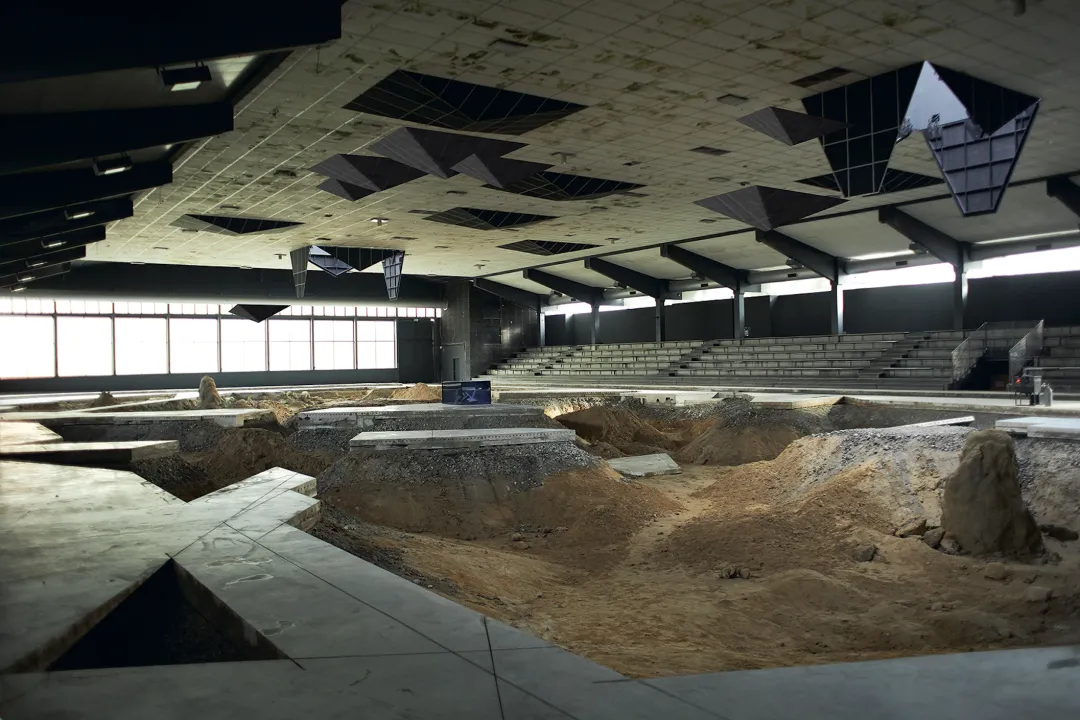
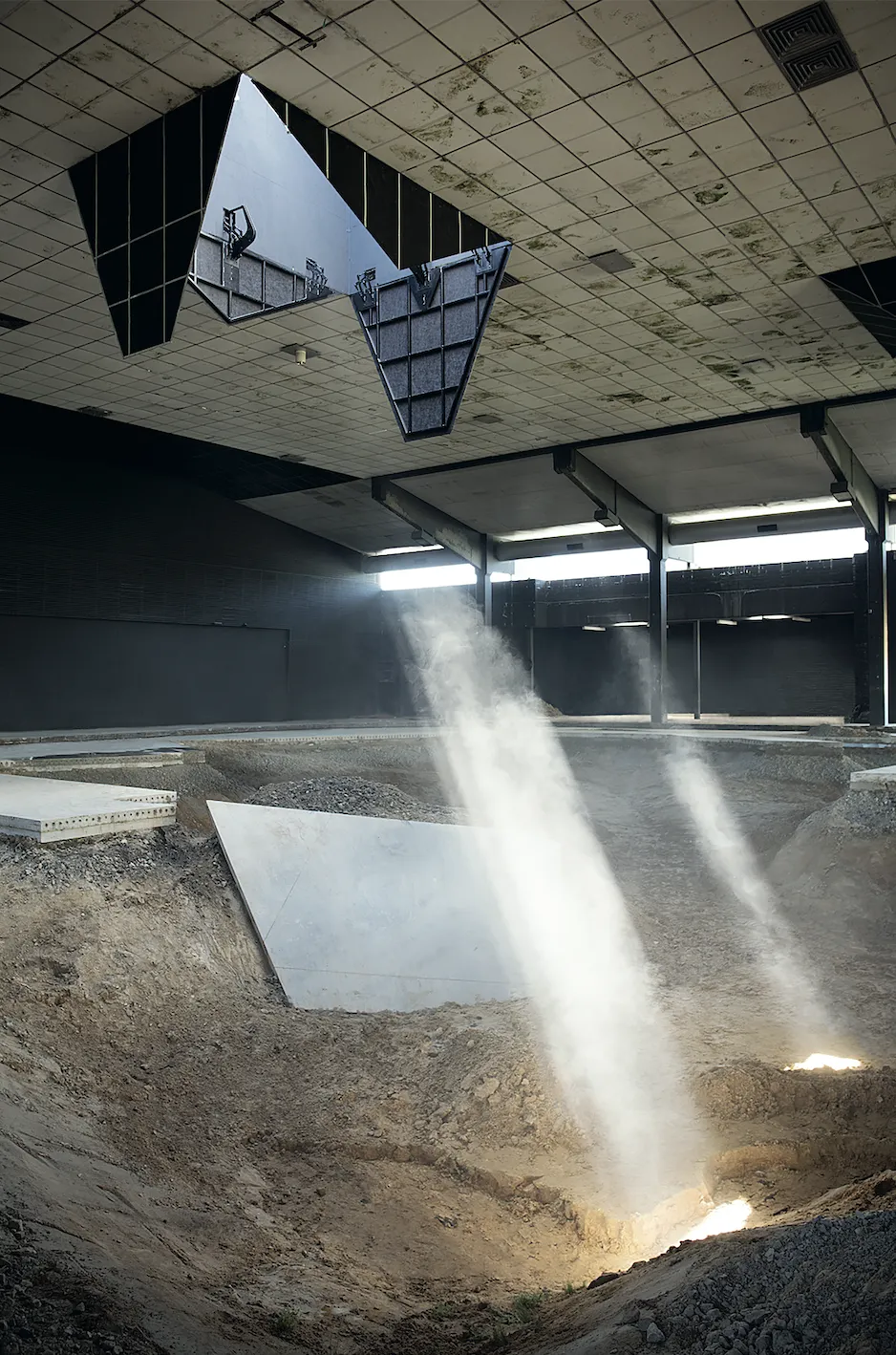
Five years later, in After ALife Ahead for Skulptur Projekte Münster in 2017, he excavated the floor of a disused ice rink, exposing concrete, clay, rubble, and layers of Ice Age sand. Rain fell through skylights that opened automatically. Algae, bacteria, bees, peacocks, and an aquarium coexisted, while the division of human cancer cells triggered augmented-reality forms.
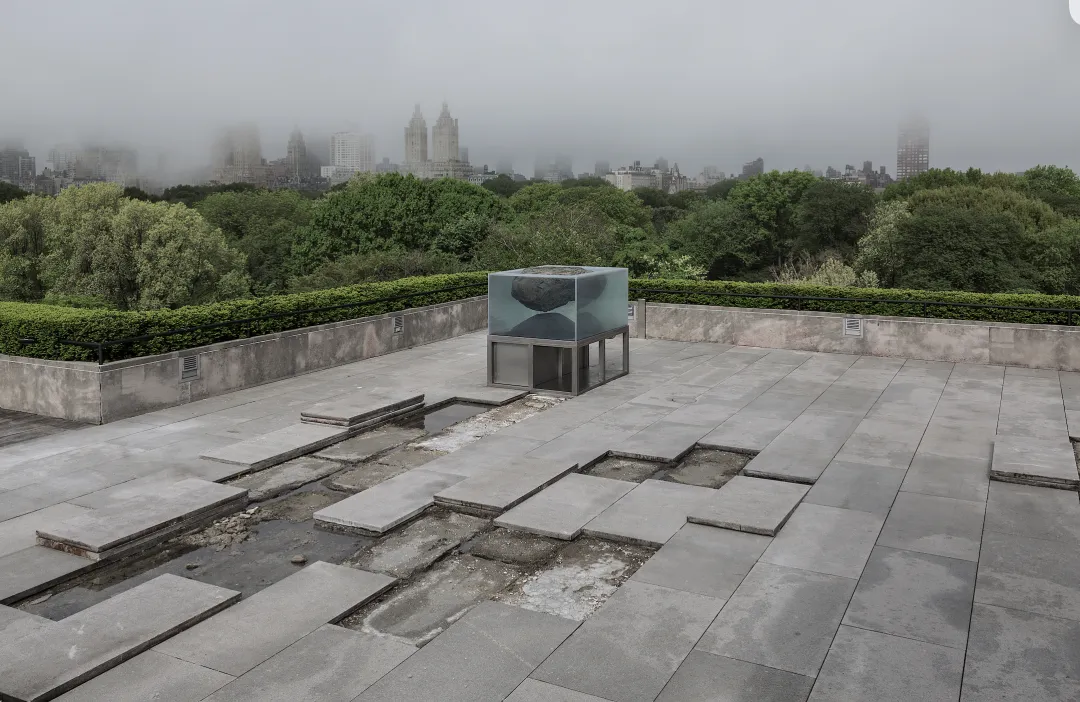
For his 2015 rooftop project at New York’s Metropolitan Museum of Art, he brought architectural fragments, an aquarium, and biological processes into a space overlooking Central Park.
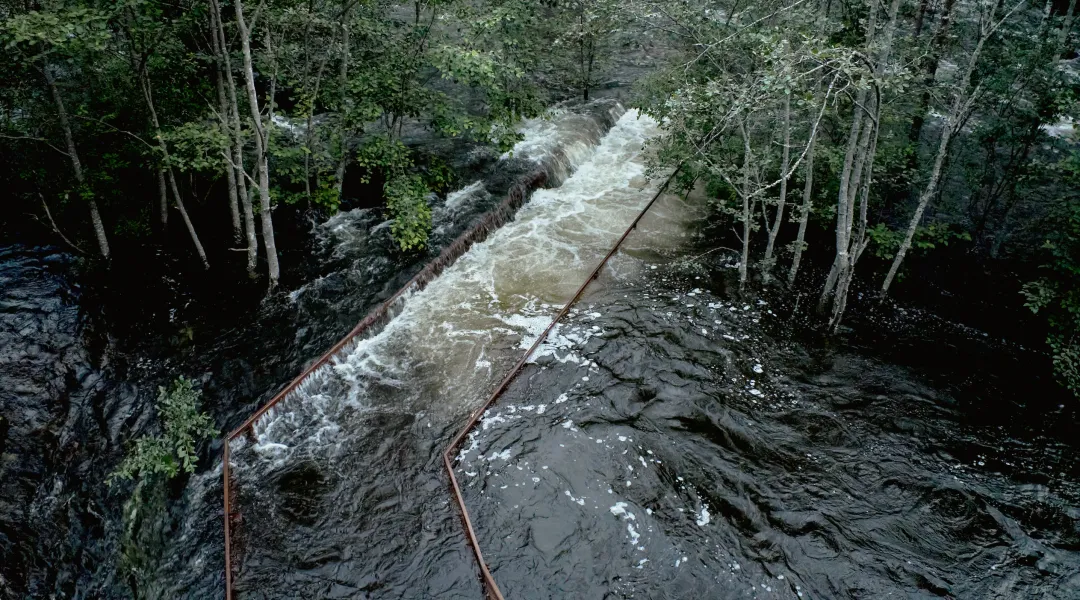
With Variants, on a small Norwegian island in 2022, he established an environment that continued to change, pursuing the question further: does a work end at the limits of its materials and site, or does it include changes that the human eye cannot continuously follow?
Museums have traditionally used lighting and stable temperatures to protect works and keep them in an almost unchanging state. Huyghe reverses that arrangement, allowing everything variable—temperature, humidity, cells, and accidental events—to determine, unpredictably, what a work becomes.
The exhibition at Fondation Beyeler is another substantial exploration of his ideas about change and growth.
His first major solo exhibition in a Swiss museum brings together sixteen works, including Max Ernst’s The Witch and Anna Huyghe’s L’adestinée. Of the fourteen works by Pierre himself, six are new creations being shown publicly for the first time.
Fourteen may not sound like many. But each work is either large enough to occupy an entire gallery or has been developing over several years, taking on successive forms as an ongoing extension of the artist’s practice.
An Exhibition Governed by the Nonhuman
Installation view of “Pierre Huyghe,” Fondation Beyeler, 2026. Photo: Ola Rindal. Courtesy of the artist and Esther Schipper, Berlin/Paris/Seoul.Pierre Huyghe, Sans titre, 2014. Installation view of “Pierre Huyghe,” Fondation Beyeler, 2026. Photo: Ola Rindal. Courtesy of the artist and Esther Schipper, Berlin/Paris/Seoul.
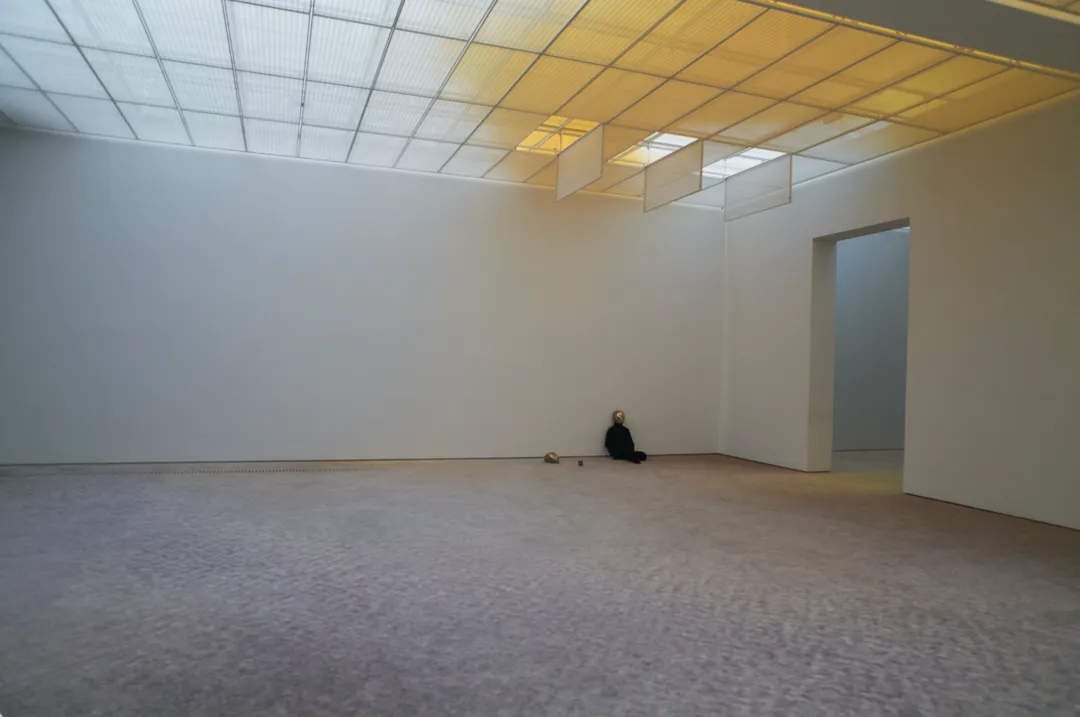
Entering Fondation Beyeler’s first gallery, we encountered a work with our feet before anything else. We were walking on Sans titre, an old carpet taken from Museum Ludwig in Cologne. Before it arrived here, a pale path had already been worn into it by staff members walking back and forth over the years.
As museum visitors, we added our own share of wear to that pale trace. We, too, became part of the exhibition.
Pierre Huyghe, Umwelt, 2011. Living ants. Installation view of “Pierre Huyghe,” Fondation Beyeler, 2026. Photo: Ola Rindal. Courtesy of the artist and Esther Schipper, Berlin/Paris/Seoul.
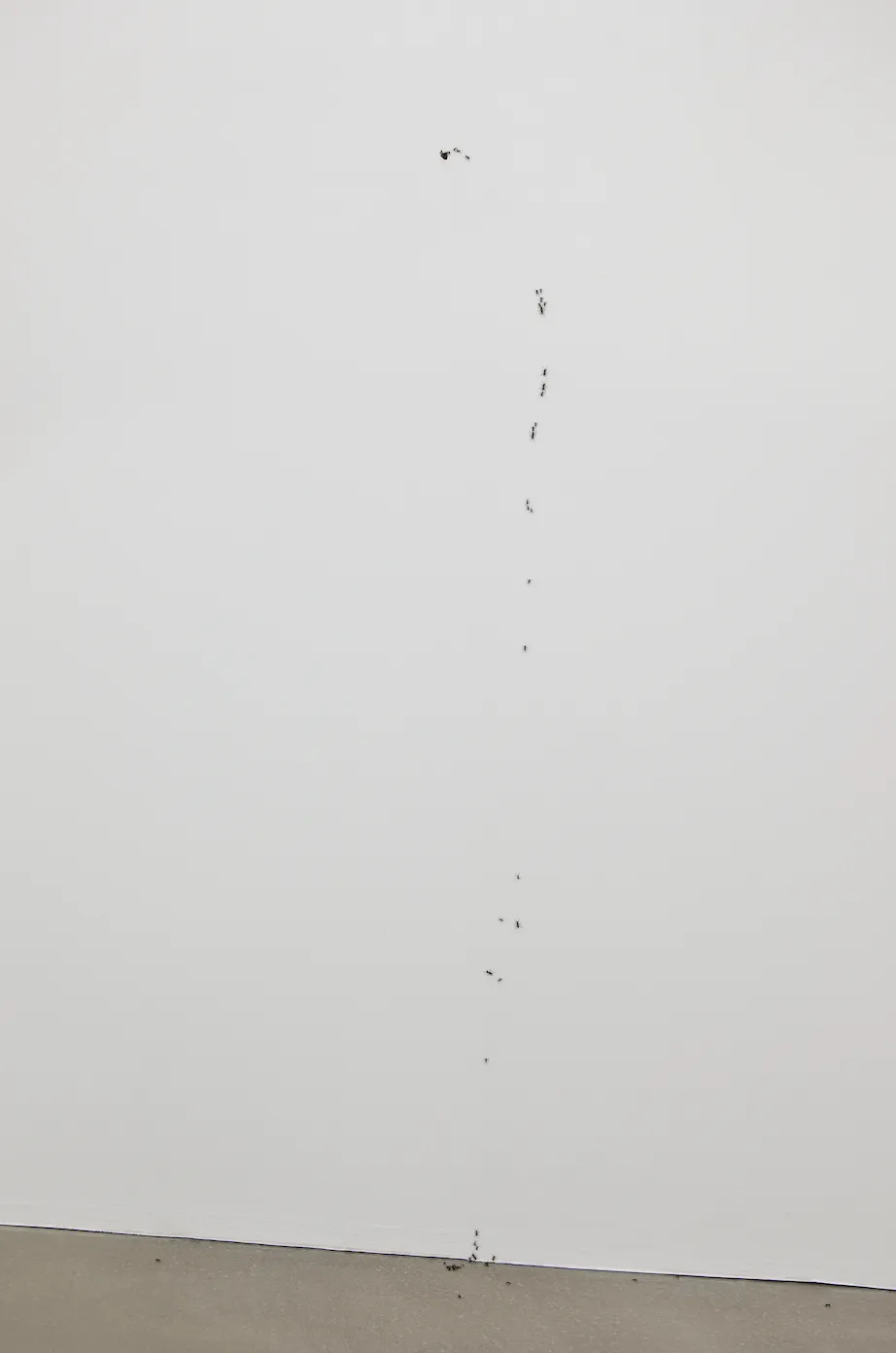
Nearby, a large colony of living ants kept moving in and out of a hole in the gallery wall. This was Umwelt, a work Huyghe made in 2011.
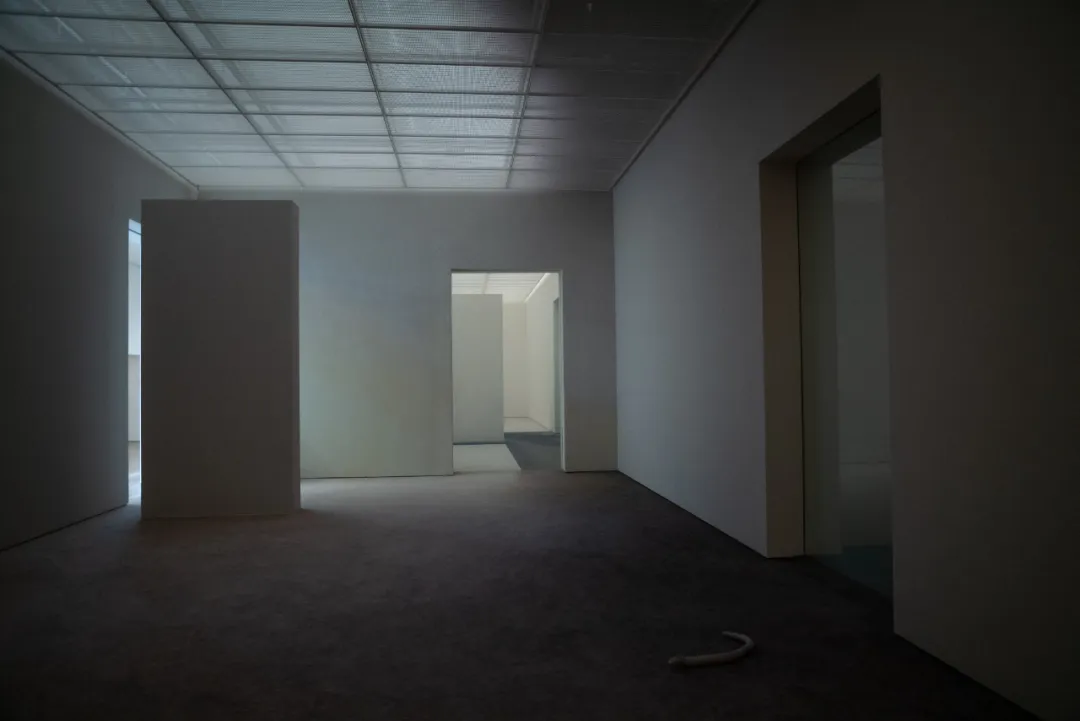
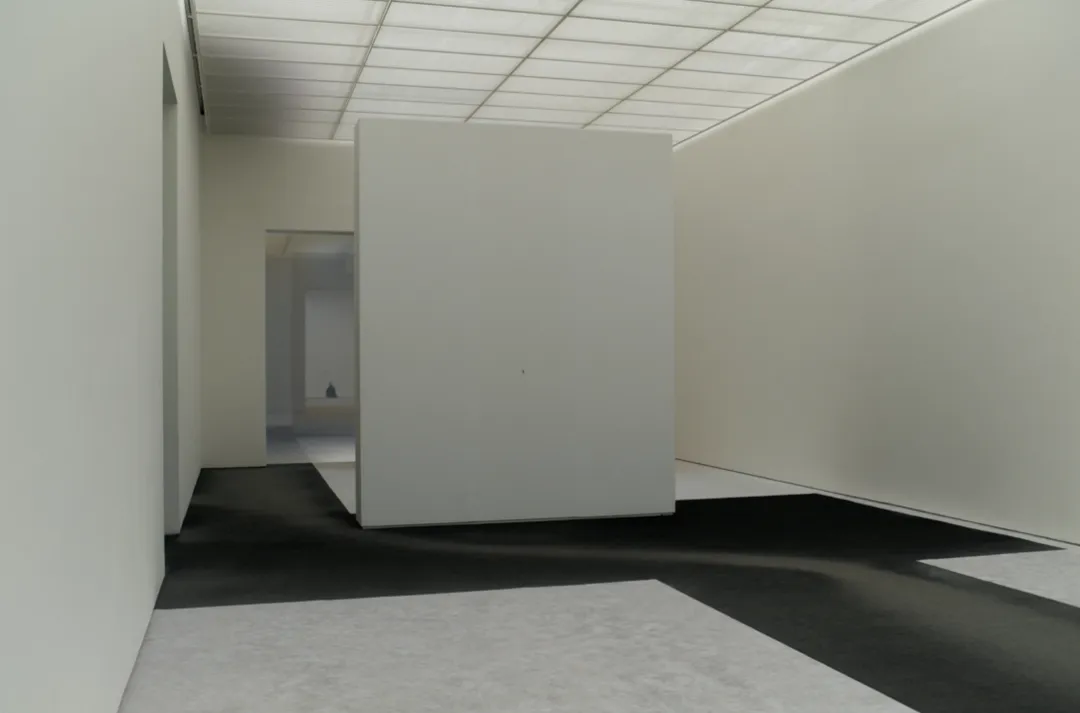
The ants paid no attention to visitors and did not know they were becoming an “artwork.” While we stood before the wall watching, they continued to find food, transmit signals, and build routes. The new work Light Dust also began in this first gallery: toner and nonexistent shadows printed on the carpet spread through all eight rooms.
“This carpet is like a solvent that can dissolve things, connecting all the works,” he said. “They leak into one another through it—the aquariums, for example, the films, and the shadows.” At the mention of shadows, Huyghe paused. “Because the galleries are dark, the light changes as you walk past. You take away the darkness of a shadow and scatter that darkness elsewhere. Sometimes, when you look at these things on the floor, they seem a little blurred, like a very poor-quality JPEG.”
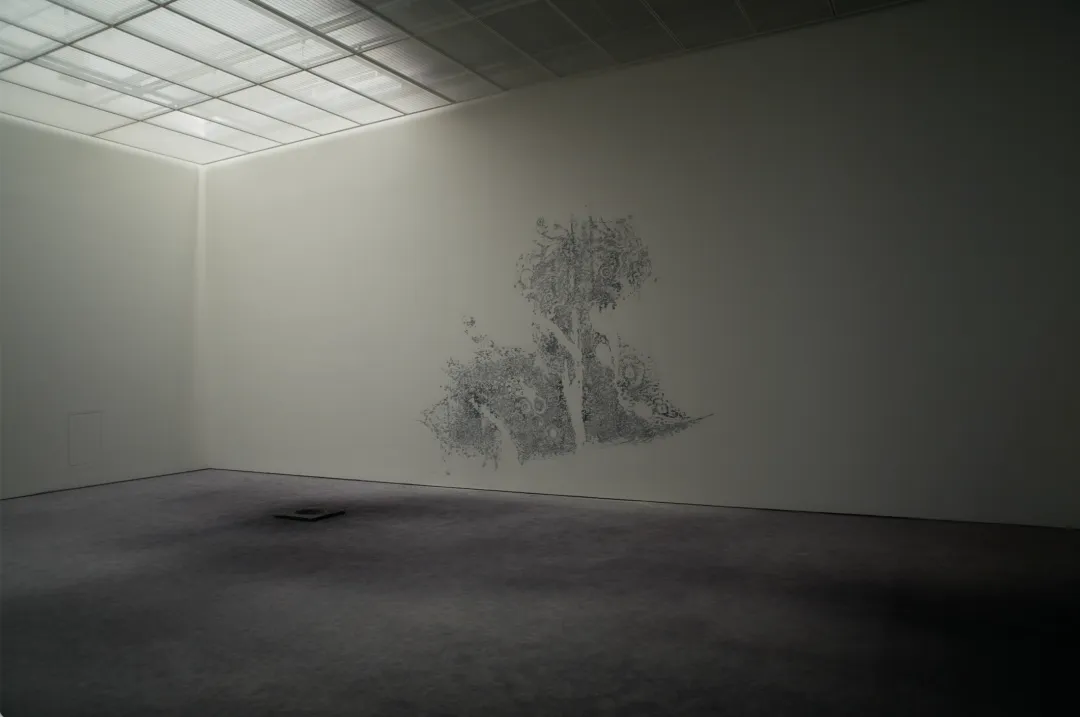
In the second gallery, a mottled white wall resembled the exposed cross section of a tree trunk. For the new Timekeeper, Huyghe sanded away the wall’s surface, revealing colors left by nearly thirty years of installing exhibitions and repainting at Fondation Beyeler.
“It is like cutting open a tree and reading its age in the rings,” Huyghe explained. “You can see the traces of every time this place has been used and changed. After sanding, the dust from all these periods suddenly mixes together and becomes matter again. It is a kind of time machine. I had no plan before I started sanding. As I worked on the wall, I thought, ‘This looks a little like something,’ and followed the shape. That is pareidolia: you see a cloud and say, ‘Oh, a horse.’ You project a shape into the image.”
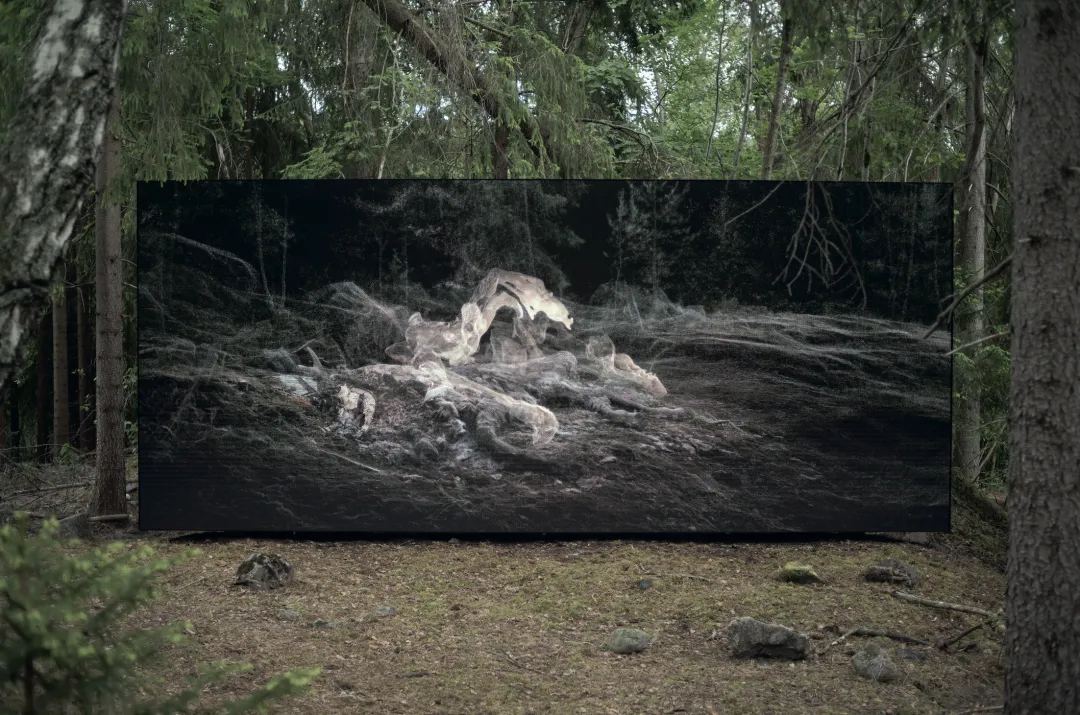
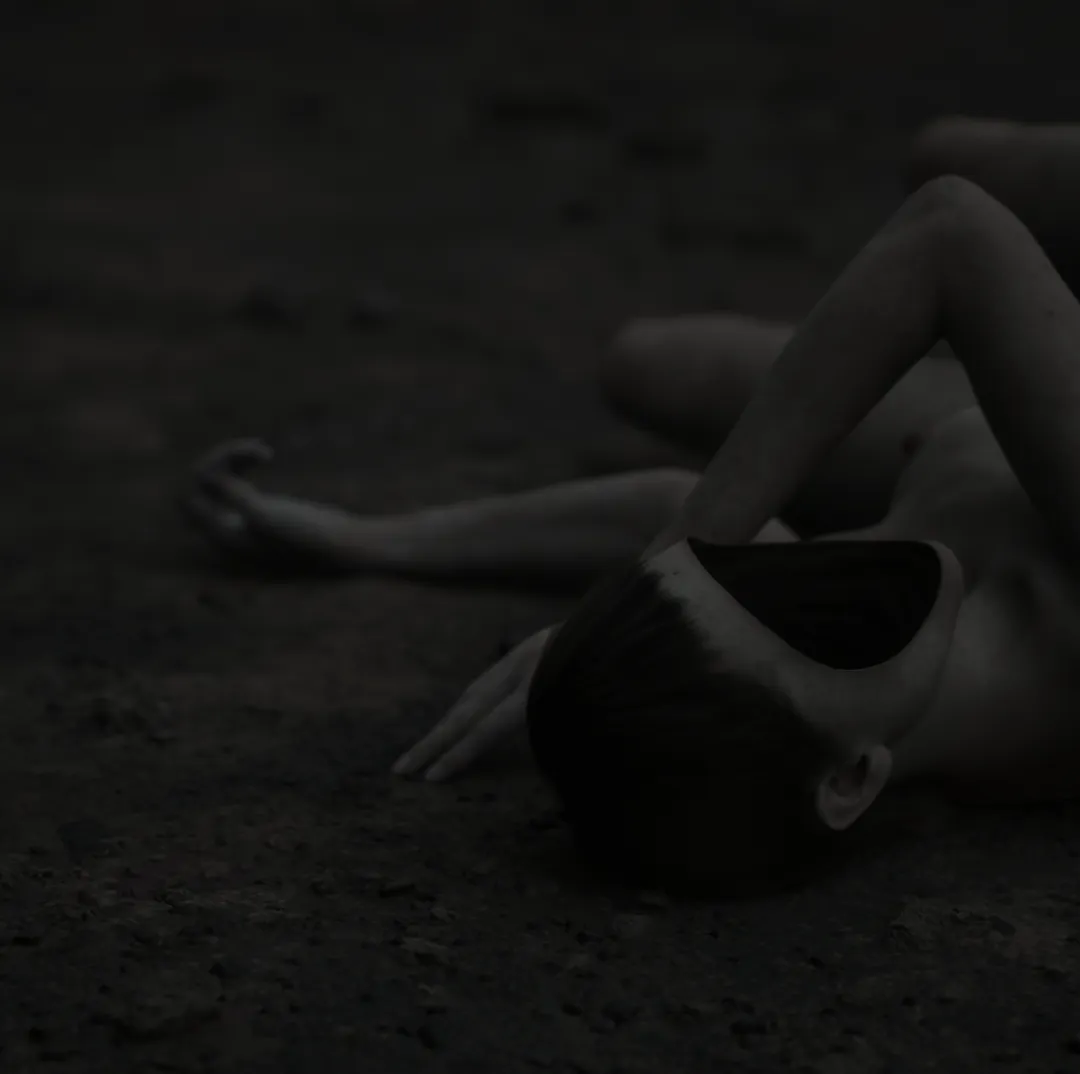
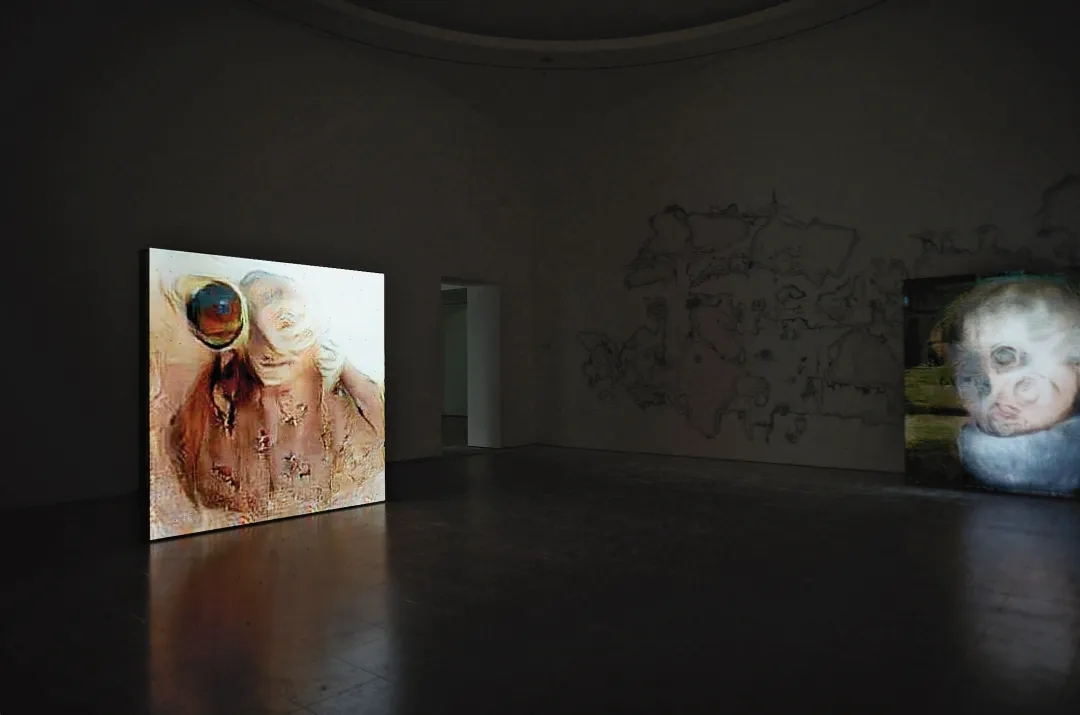
As we entered the third gallery, our field of vision suddenly darkened. The moving-image work Liminals occupied an entire wall from floor to ceiling. It felt as though we had walked into the film.
“The liminal is a condition inhabited by a being that does not yet exist,” Huyghe said of the character in the work. “It has a female human body, but no face. If you look carefully, it is empty inside, too—only a shell. This entity tries to exist in different states, fails, and tries again.”
It extends Liminal, Huyghe’s 2024 solo exhibition at Punta della Dogana in Venice, and has also appeared at Seoul’s Samsung Museum of Art and in Halle, a former power-station space within the complex of Berlin’s well-known Berghain nightclub.
“In the first version in Venice, there was only one character, like a digital pet raised in a monoculture,” he said, explaining why the title had become plural. “Liminals passes through many states of existence. Sometimes it is like a mineral, sometimes like a human, sometimes neither. All the possibilities are present at once. That is why the title acquired an ‘s.’”
Moving images were also what first drew international attention to him. Much of his early work concerned the ways images, narratives, and reality rewrite one another.
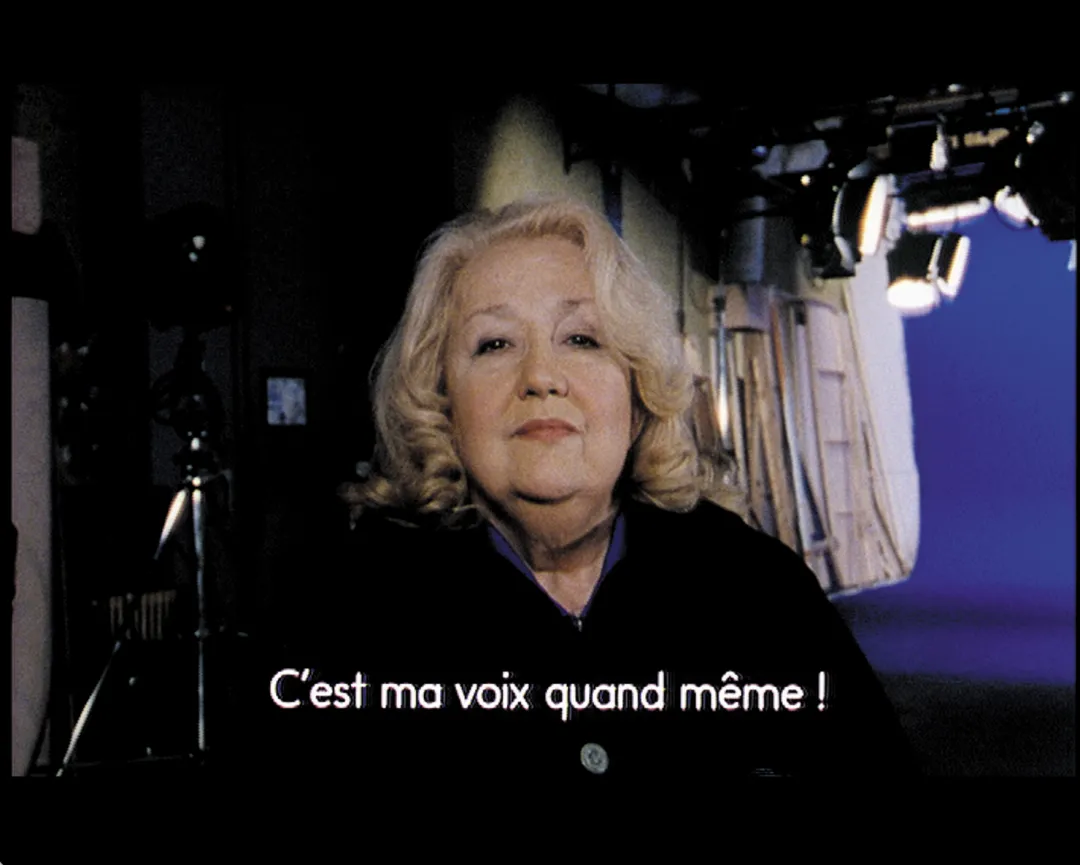
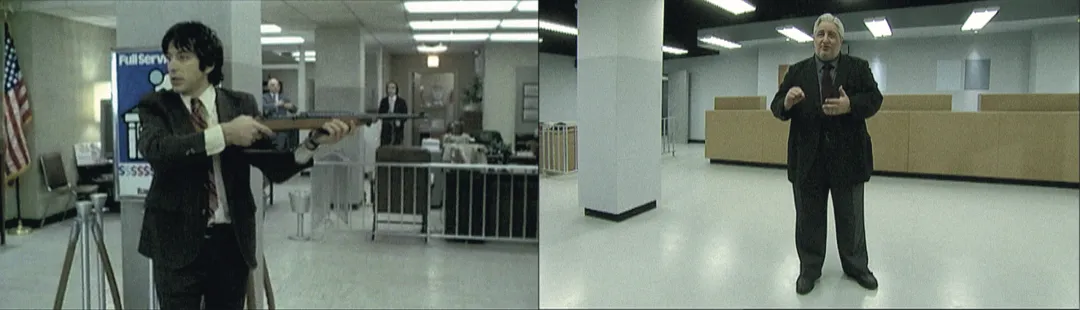
Blanche-Neige Lucie, for example, placed the actress who voiced Snow White in the French version before the camera, finally giving a face to the worker whose presence behind the screen character had been erased. For The Third Memory, he invited a participant in the 1972 Brooklyn bank robbery to re-enact his own experience.
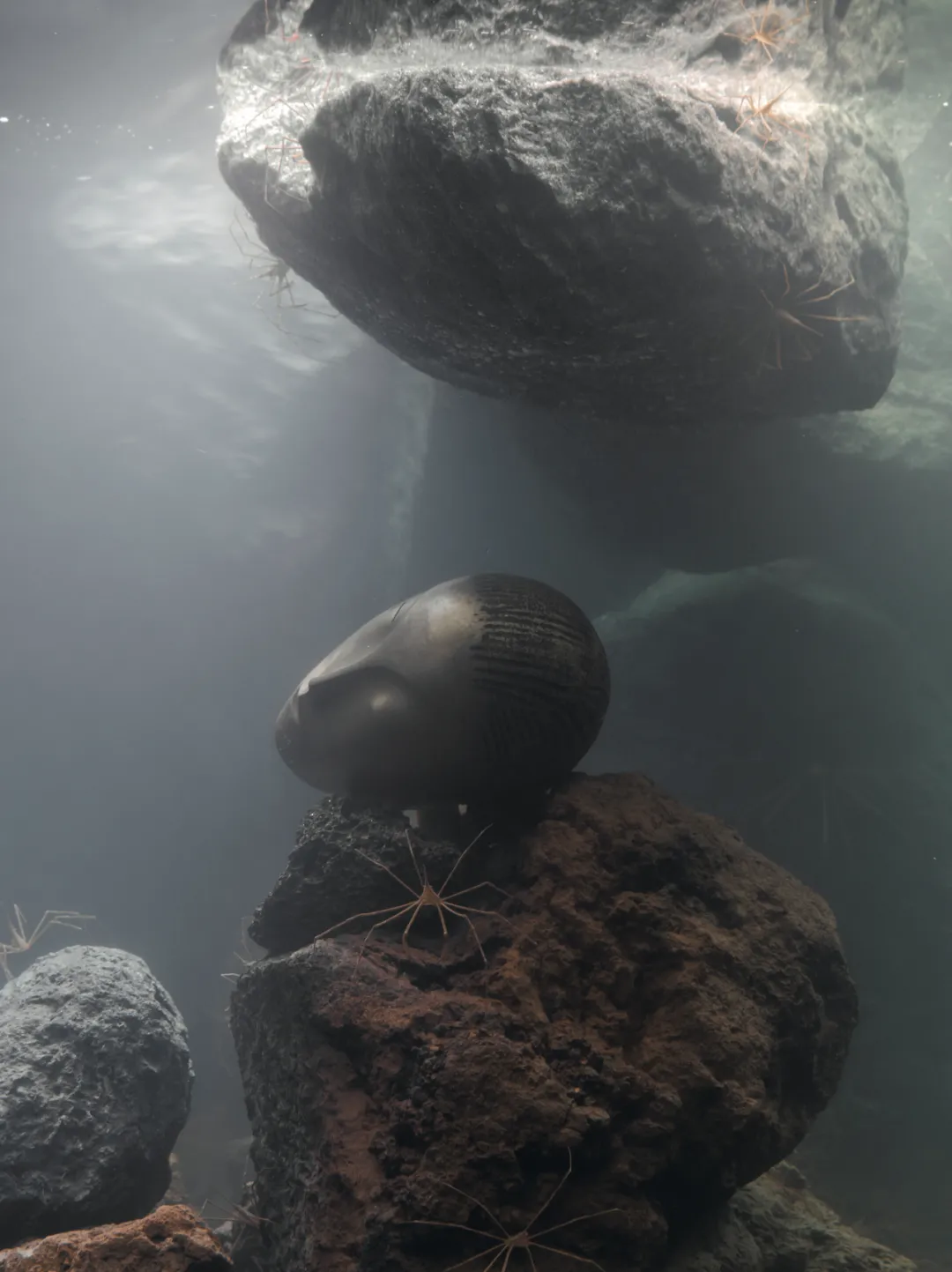
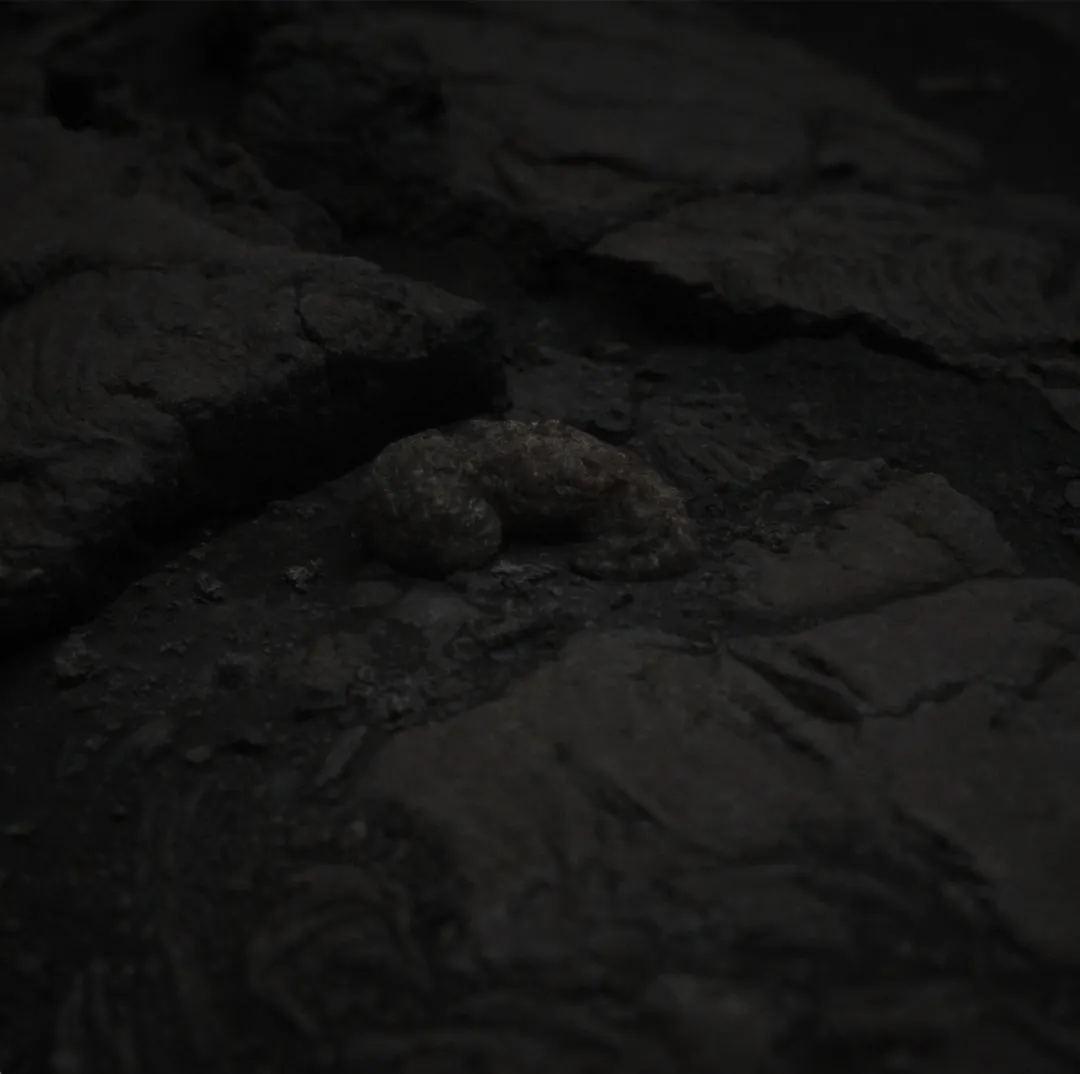
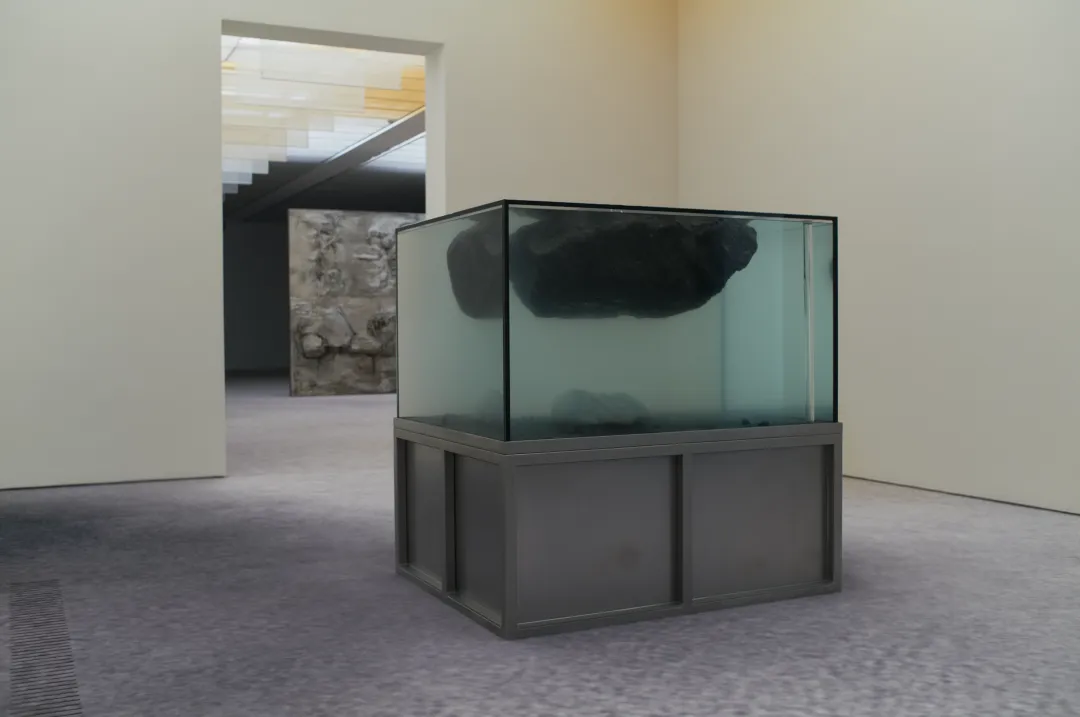
Emerging from the darkness of the third gallery, we came to Cambrian Explosion 19 in the fourth, part of one of Huyghe’s best-known series. Horseshoe crabs, arrow crabs, and sea anemones lived underwater. A volcanic rock containing trapped air floated on the surface, seeming to take us back more than five hundred million years.
In earlier presentations of the Cambrian Explosion series, the artist’s requirements for every species were exacting. Each time an exhibition was mounted, the museum generally had to complete unusually complicated import and export procedures for these particular organisms.
Each aquarium is a real marine ecosystem. Crabs, sea anemones, plants, and microorganisms are collaborators with their own agency and environments. Huyghe establishes only the initial conditions; afterward the work begins to escape his control, growing and evolving on its own.
The fifth gallery was the most startling of all. In a tank, a “lung” quietly breathed by itself. It looked like an organ, or a curled, translucent membrane. It swelled and subsided with something like the rhythm of human breathing, but sometimes stopped abruptly.
“It is called Apnea, a condition in which breathing goes wrong,” he said. “I have apnea myself. Once I stop breathing, I leave the unconscious state of dreaming and become awake. This is a very personal bodily condition. Bringing it into the exhibition mattered to me; it became a model for constructing the exhibition. But it is not just my own little apnea. It is a reflection on the dysregulation of living systems.” Made from a soft robot, silicone, a mineral-cast landscape, pumice, sound, and a ventilation system, the work appears simple. In fact, it is the exhibition’s control system: when it stops breathing, works in the distance respond.
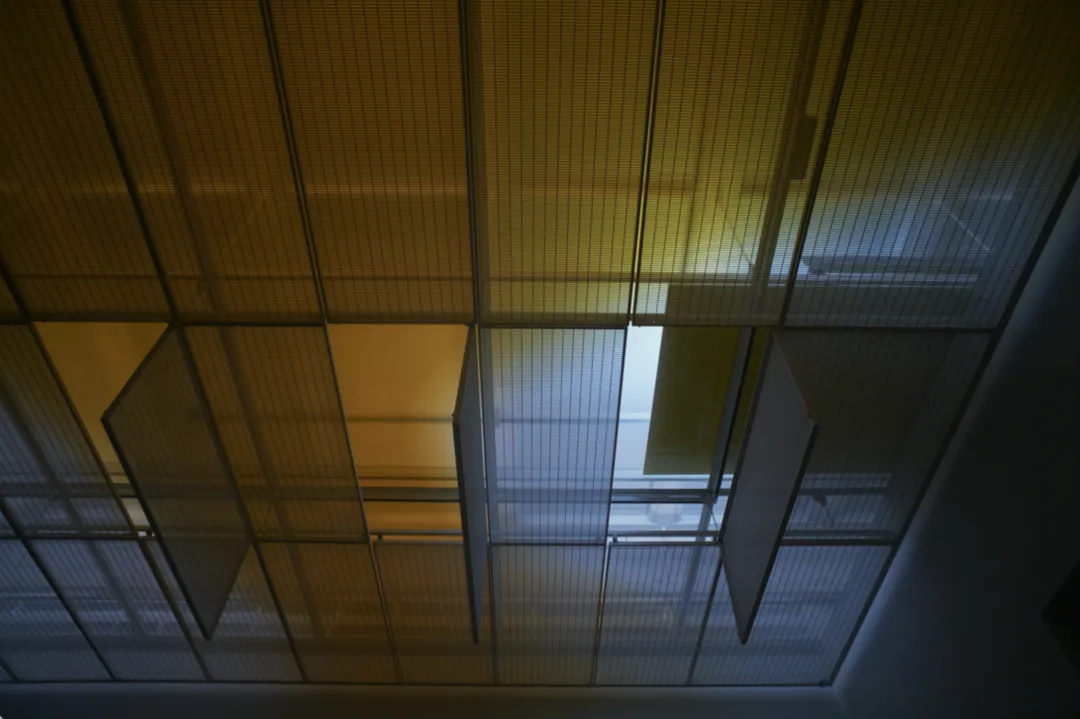
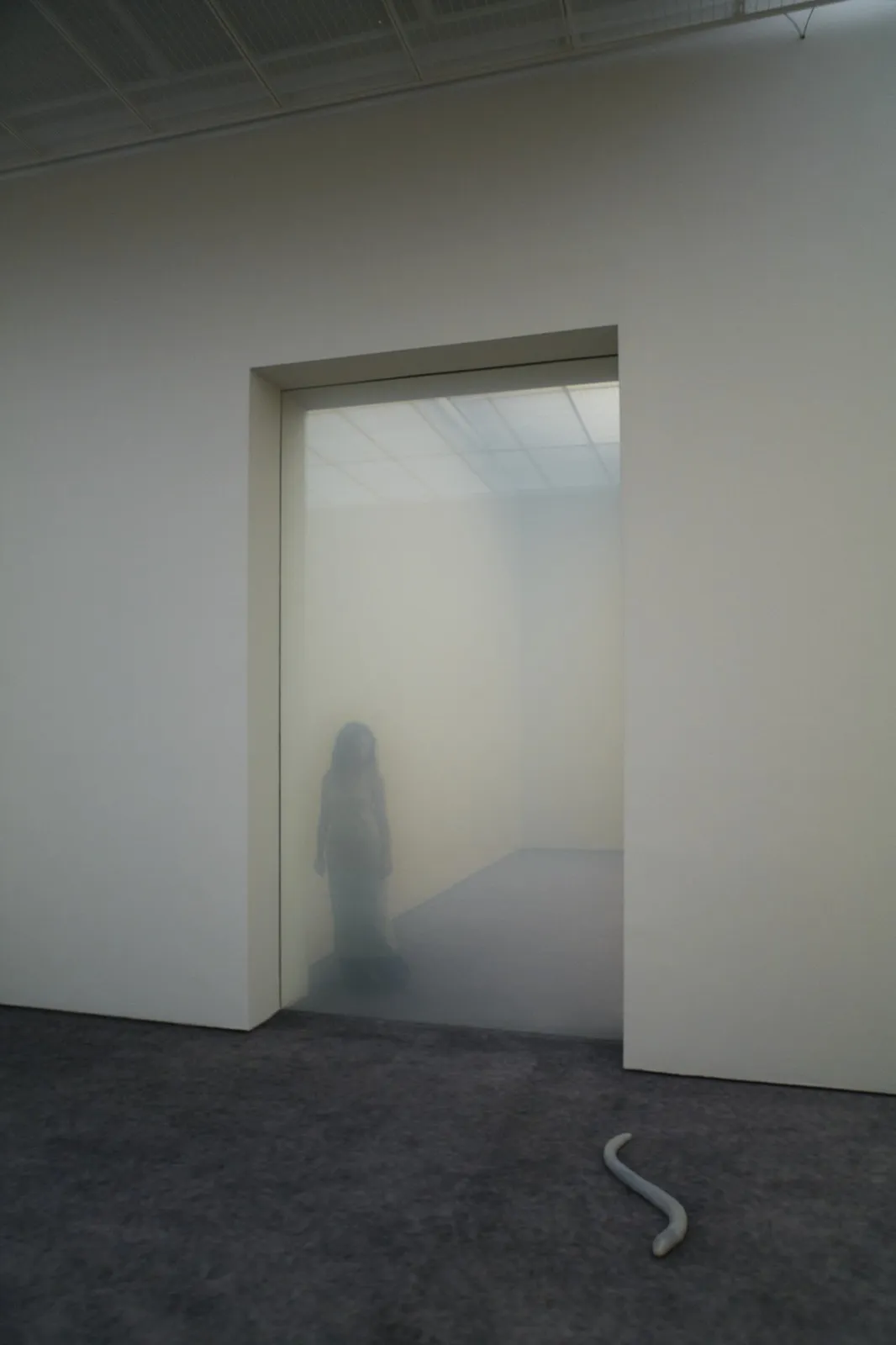
Switchable glass turns from transparent to milky white when the breathing pauses. The moving aluminum panel on the ceiling, L’hésitant, stops. In the final gallery, the slowly writhing “worm” Alchimia begins to convulse as if having a seizure.
Pierre Huyghe, L’hésitant, 2026. Steel rail, coated aluminum panel, motor, and control unit; dimensions variable. Installation view of “Pierre Huyghe,” Fondation Beyeler, 2026. Courtesy of the artist.
“We face a shared condition today,” Huyghe said. “The past few years have not been good. Everyone can understand that feeling of being compressed, squeezed, under pressure. Apnea certainly concerns the human condition, but it is not really a human lung. It could belong to any animal, or to an extraterrestrial being. I wanted something with a rhythm: a steady beat at first, then suddenly a burst of noise.”
Asked how this way of working had developed, he said it had grown intuitively over time. “I seem to feel uneasy with things that are fixed, rigid, forever unchanging, as though they had laid down the truth. I find it difficult to accept things that declare, ‘This is the truth,’ and ask you to bow your head and say, ‘I believe.’ Remaining critical, asking questions, and thinking again are important. What does it mean to think? Precisely because it is unstable, it opens a space for the freedom to think, and the freedom to experience things differently.”
“Of course, I am happy to go to the Louvre and see the same work that never changes. I have nothing against a beautiful painting or sculpture. We need these older ways. That is why we invented narratives: to protect ourselves against chaos and randomness. But we should also agree that the certainty and truth we invent are a fiction. What we call truth is a fiction.”
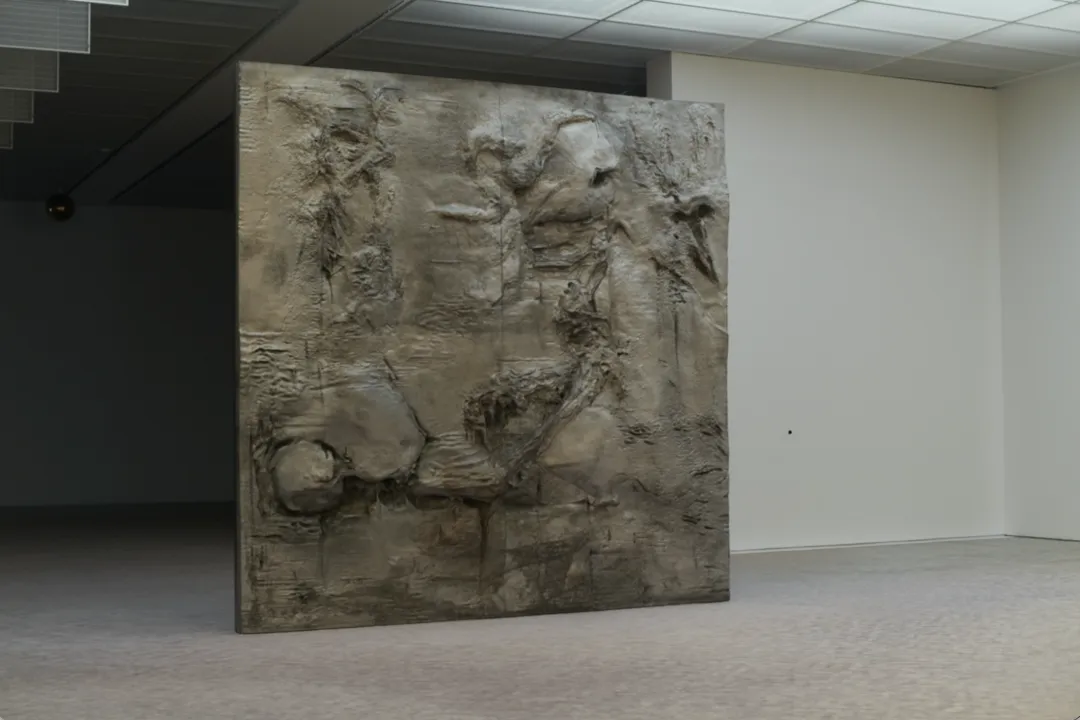
This idea took physical form in the seventh gallery as Adversary, a huge aluminum door without a frame that could not be pushed open.
The relief on its surface derives from UUmwelt, a work Huyghe made in 2018. Participants at Kyoto University imagined rabbits, tools, machines, or artworks while undergoing fMRI scans. An early generative adversarial network used their brain activity to try to reconstruct these mental images.
“Thousands upon thousands of images kept moving, and I chose just one,” he said. “Infinite possibilities existed at the same time. By choosing, I said, ‘This one.’ But when I chose it, I did not even know what it was. In the end, it became this door.”
Huyghe compared this act to a “collapse”: choosing allows countless possibilities to settle temporarily into one form. Yet the door remains a paradox. It suggests something important, enormous, even sacred beyond it, but offers no way in.
“It has become an entrance, but it is a freestanding door that cannot be opened. My daughter sees dragons. Everyone sees something different, just as we do through pareidolia when we look at clouds. The door does not move in this exhibition. It is a monumental door, like an entrance to a sacred place, suggesting that what lies behind it is important, immense, even boundless. I want viewers to feel that. For the not-too-distant future, I am working on a door that will actually open.”
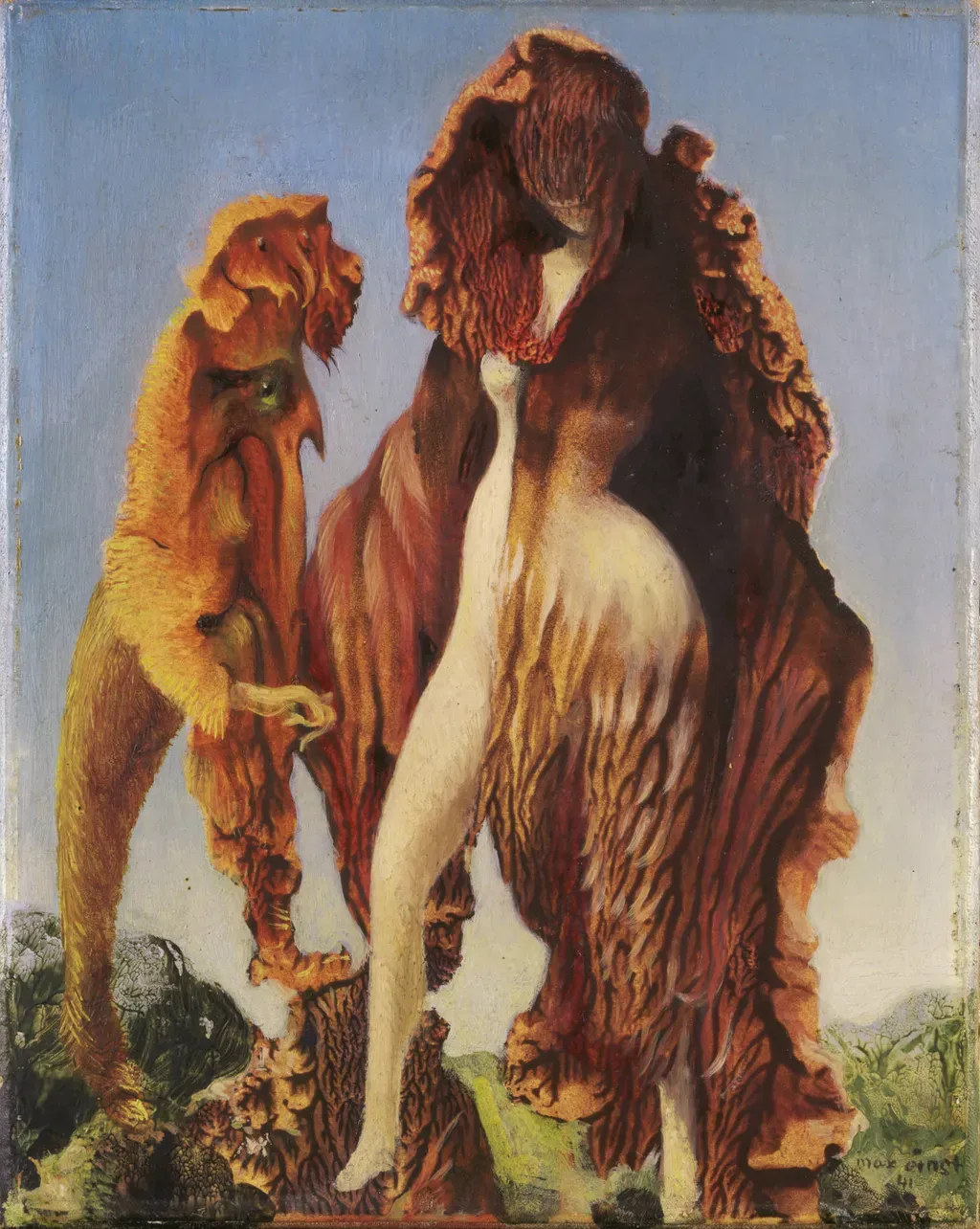
Beside the door hung Max Ernst’s 1941 painting The Witch. Huyghe told us he was almost madly fond of it. He had once owned the work.
“I am fascinated by the relationship between the creator and the created, as in Frankenstein: how a creation changes its creator, how the monster changes Frankenstein, and changes Mary Shelley, too. In Max Ernst’s painting, you cannot tell who made whom. The two entities begin to dissolve into one another. This kind of hybridity also exists in Adversary: billions of images in a database generate hybrid monsters. I think they resonate very precisely with Ernst’s work.”
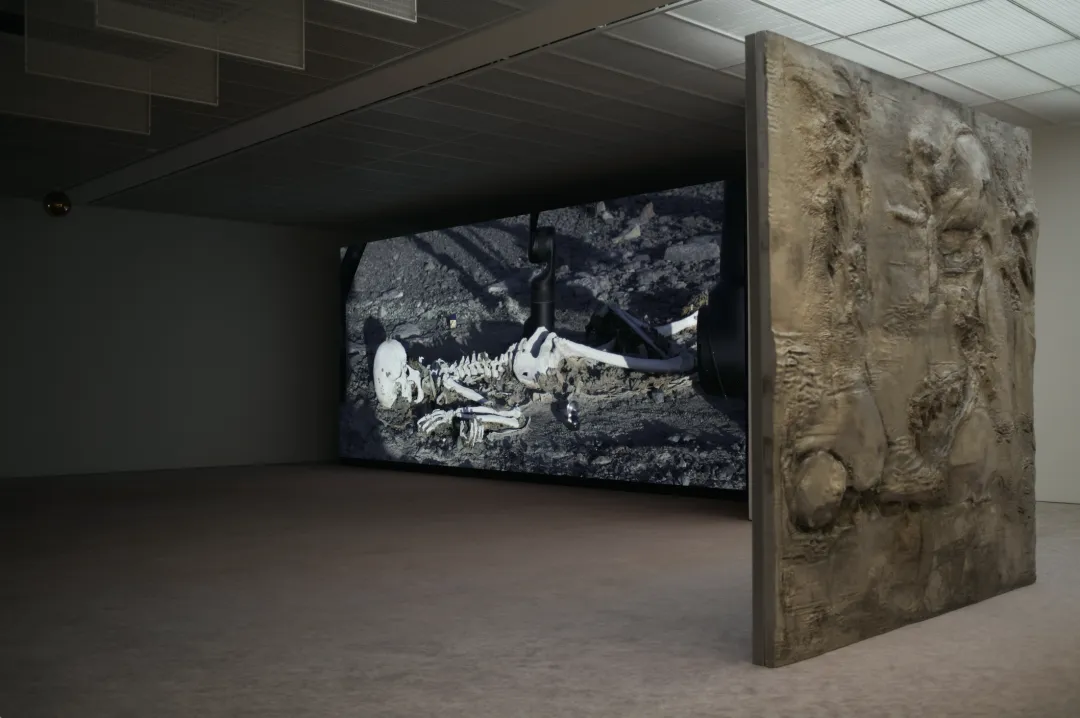
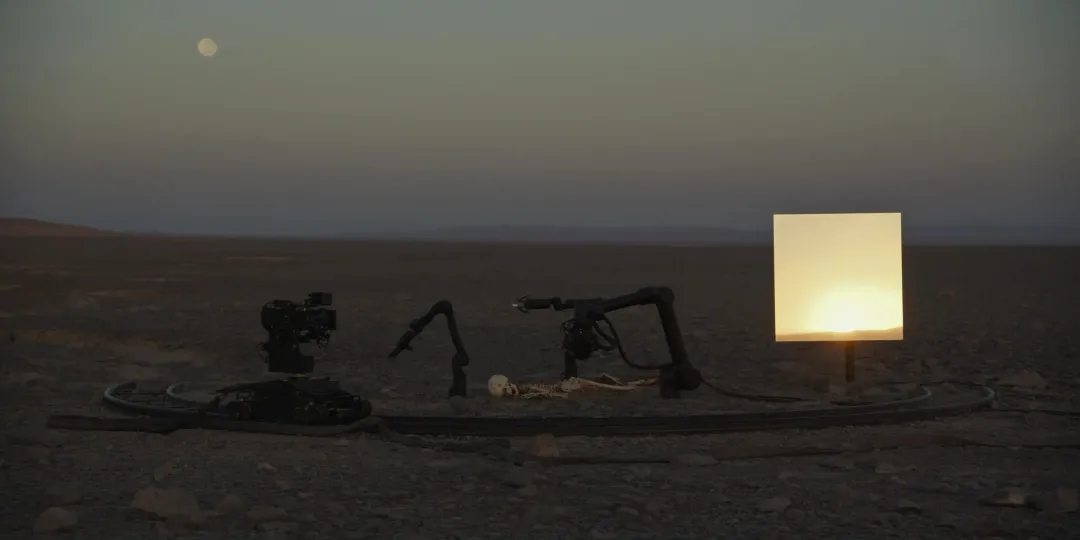
On the other side of the gallery was Camata, a moving-image series Huyghe began in 2024. Several robotic arms driven by machine learning surrounded actual human remains, said to have been found by the artist in Chile’s Atacama Desert. The machines performed a ritual with neither a beginning nor an end.
This work is closely bound to its audience. Gallery sensors capture the heat emitted by living bodies, and the film is re-edited in real time according to the number of people present. Viewers can change the version they see, but cannot “control” the work as they might by pressing a button.
“I try not to make it ‘interactive,’” he said. “When you are present, the work affects you. At the same time, your gaze—or simply your presence—affects the work. I want the line between object and subject to become less hard and fixed, more blurred. The difficulty is that you expect something to happen and it does not, or it arrives in a way you dislike. Then you have to say, ‘No, it must be free—but it cannot really be completely free.’”
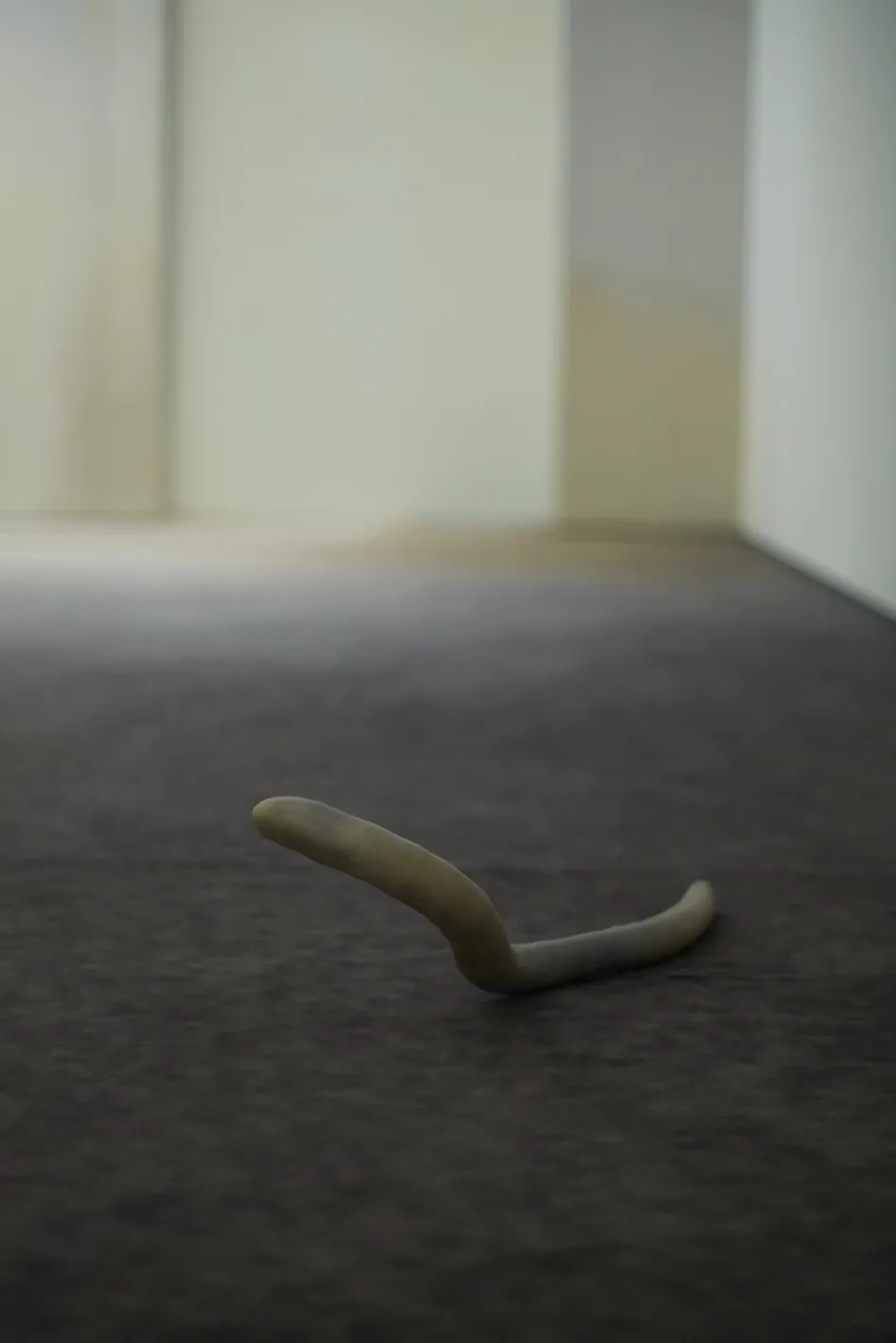
At the end of the exhibition, where we noticed many visitors stopping, was Alchimia: an eyeless, soft-bodied “worm” coiled in front of a switchable-glass door.
“The worm moves, but it does not wander around the room,” Huyghe said. “It stays in front of the glass door, guarding the passage and the threshold, between consciousness and the unconscious, like a sphinx. It has no eyes, so it does not actually look at you. I think of it as the earliest maker of images. When I dream, I think about particles in the brain: how must matter arrange itself to produce an image in consciousness? That fascinates me. It is what the worm does.”
Toward the end of the interview, we asked whether the exhibition would continue to breathe and change at night, after the museum closed, the lights went off, and the visitors left. Huyghe immediately laughed. “You make me think of Night at the Museum, when every character starts moving after closing time. That will not really happen here. Technically, it is impossible. But a few works are indeed set up to keep growing, digitally or biologically, even when the exhibition stops. I do not want a work to have to wait to be seen in order to exist. I want to change that relationship: it is not because I look at you that you exist. Perhaps even if you do not look at me, I still exist.”
This almost philosophical conclusion seemed to gather up the central idea of more than thirty years of Huyghe’s work. First he freed characters from cinema and the culture industry; then he freed works from plinths and white walls; and gradually he loosened the artist’s own control. He has not, however, wholly romanticized “freedom.”
Living organisms need care. Machines need programs. Cells need culture dishes. Exhibitions need museums. Freedom always takes place under certain conditions.
“I hope the confusion, ambiguity, disorientation, and uncertainty in the exhibition will make people continue to question themselves after leaving the museum,” Huyghe said.
With thanks to Esther Schipper, Berlin/Paris/Seoul, for this interview.