New York’s New Museum Reopens After Three Years and a $100 Million Renovation—with a Record-Breaking Exhibition
After nearly three years of closure and an expansion costing more than $100 million, New York’s New Museum has reopened. Its largest-ever opening exhibition, New Humans: Memories of the Future, asks through 732 works: as machines become more human, what are humans becoming......
By / Xirui Huang · 24 min read
What changed when New York’s New Museum reopened after nearly three years?
The New Museum reopened on Manhattan’s Bowery after nearly three years and a $100 million-plus expansion; OMA’s new spaces connect the old and new buildings and bring the museum to nearly 11,000 square metres. Its opening exhibition, New Humans: Memories of the Future, presents 732 works by more than 200 participants, examines technology, the body and humanity’s future, and has already set a museum attendance record.
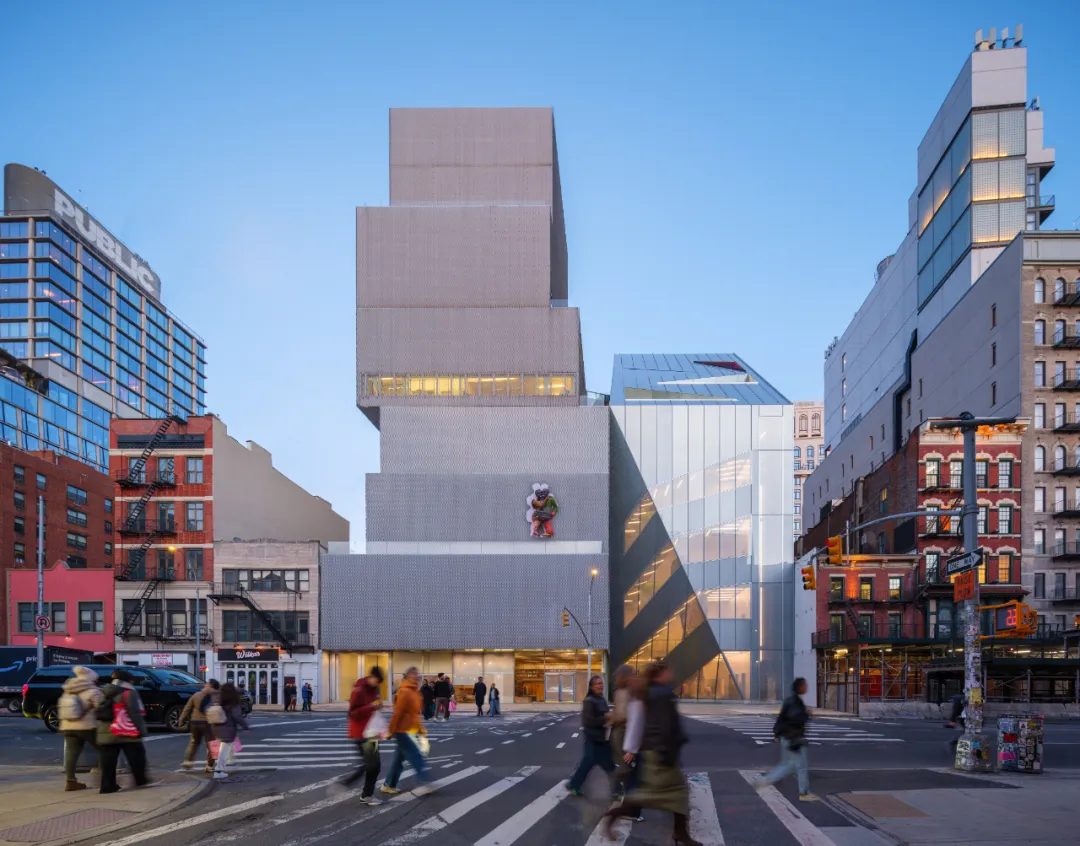
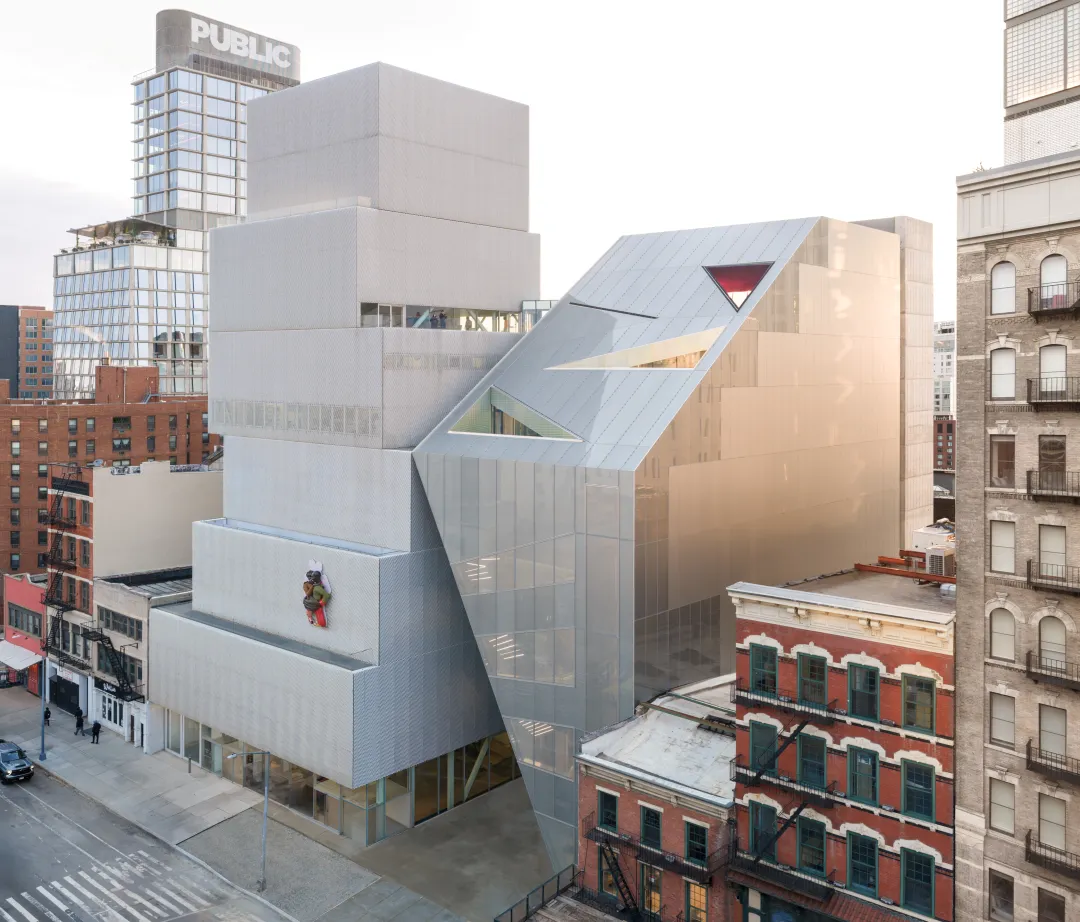
On the Bowery in Manhattan stands a seven-story, asymmetrical stack of silver metal boxes: the New Museum, one of today’s most adventurous art institutions.
The museum will turn fifty in 2027. After being closed for nearly three years for an expansion costing more than $100 million, its total area has grown to almost 11,000 square meters. This summer, it finally reopened to the public in an entirely new form.
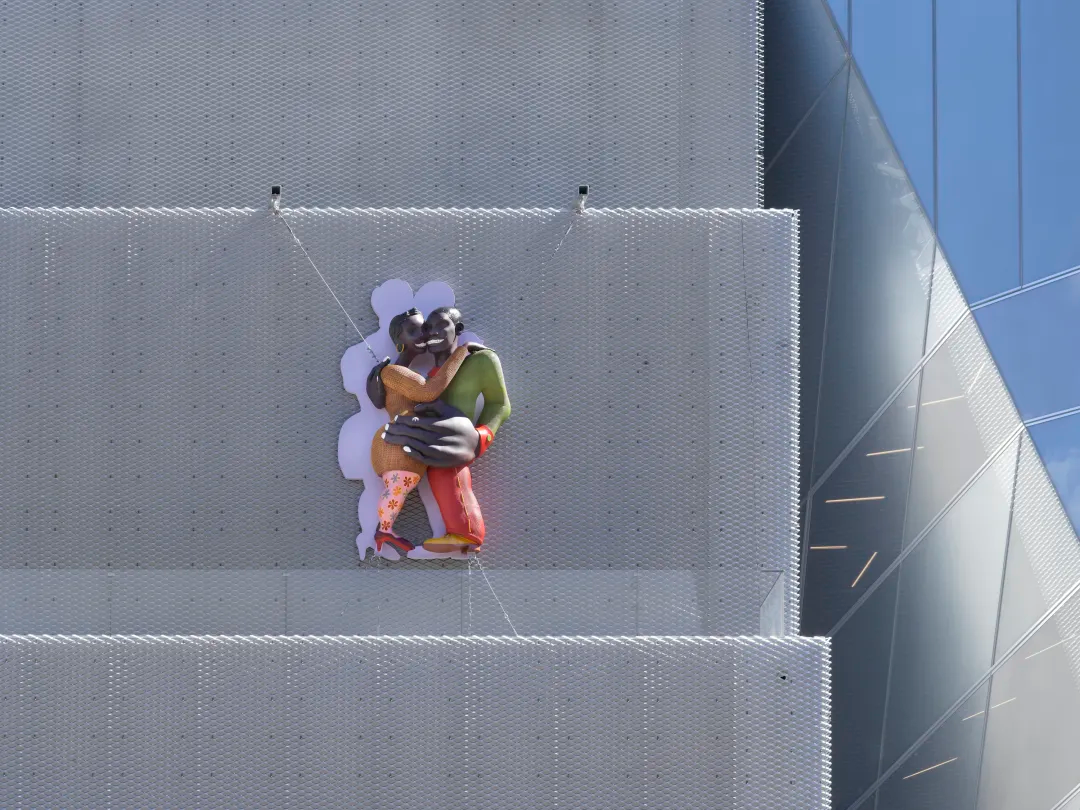
Above: The New Museum after the expansion. Below: The New Museum before the expansion.Tschabalala Self’s new commission for the museum, Art Lovers, climbs the exterior wall. Two enormous, gleaming bodies embrace, marking the “kissing point” between the SANAA building and OMA’s new addition.
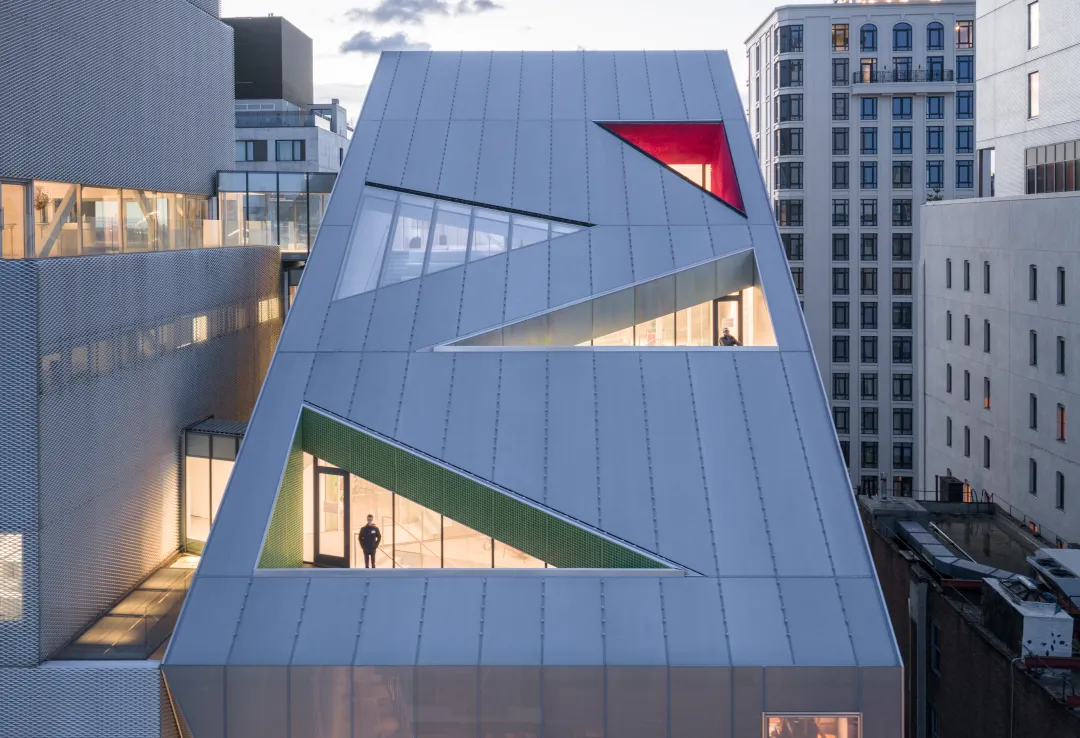
Alongside the museum’s original “silver metal boxes,” a sharply faceted, translucent “glass crystal” has appeared. Punctuated by several colorful triangular windows, it contrasts with the stacked form next door. Near the point where the two buildings meet, a pair of “lovers” hold each other in a tight embrace.
Inside, the largest opening exhibition in the museum’s history, New Humans: Memories of the Future, has already become the most-visited exhibition the New Museum has ever presented. It poses a question that feels impossible to avoid today: as machines become more and more human, what are humans becoming? We spoke with Gary Carrion-Murayari, the New Museum’s Kraus Family Senior Curator, about the reopened museum and about how the institution treats “newness” as a dangerous but necessary undertaking.
SECTION 01
An “Archaeology of the Future” of the Human
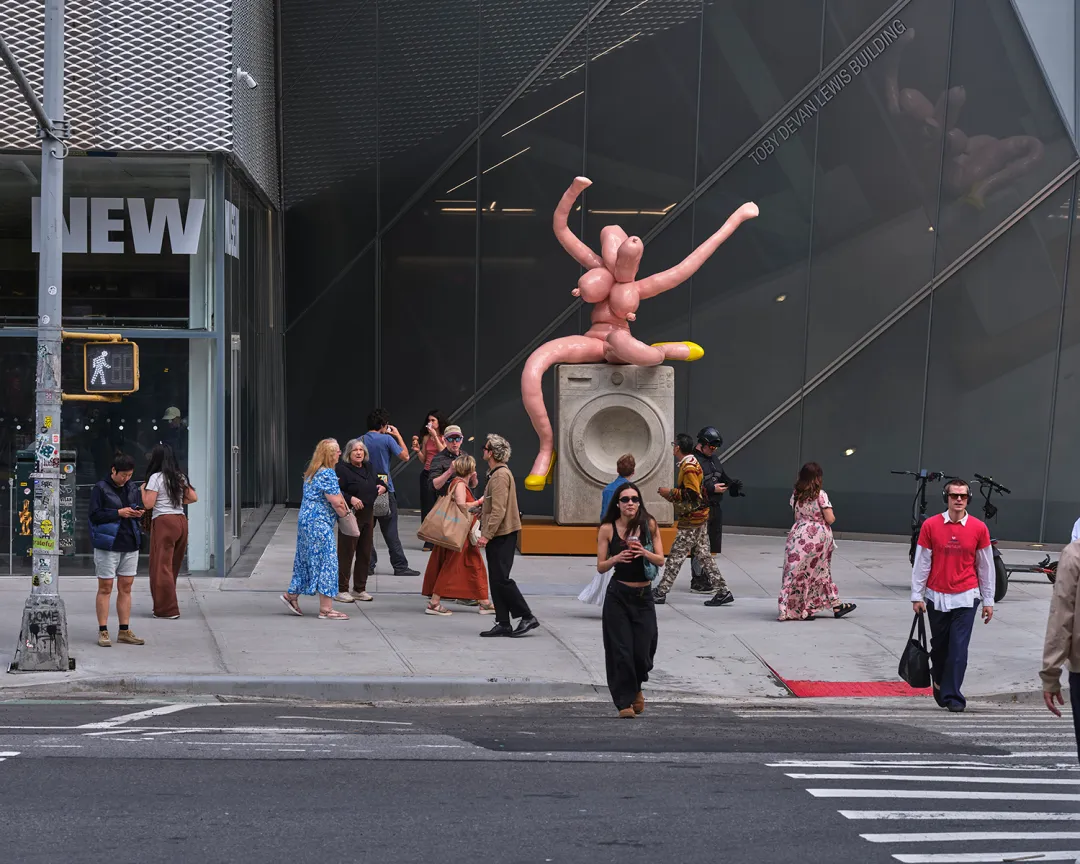
Sarah Lucas, VENUS VICTORIA, outside the New Museum, 2026.
Even before entering the galleries, we encounter Sarah Lucas’s monumental commission VENUS VICTORIA in the plaza, a sculpture that takes the measure of the human body and its desires.
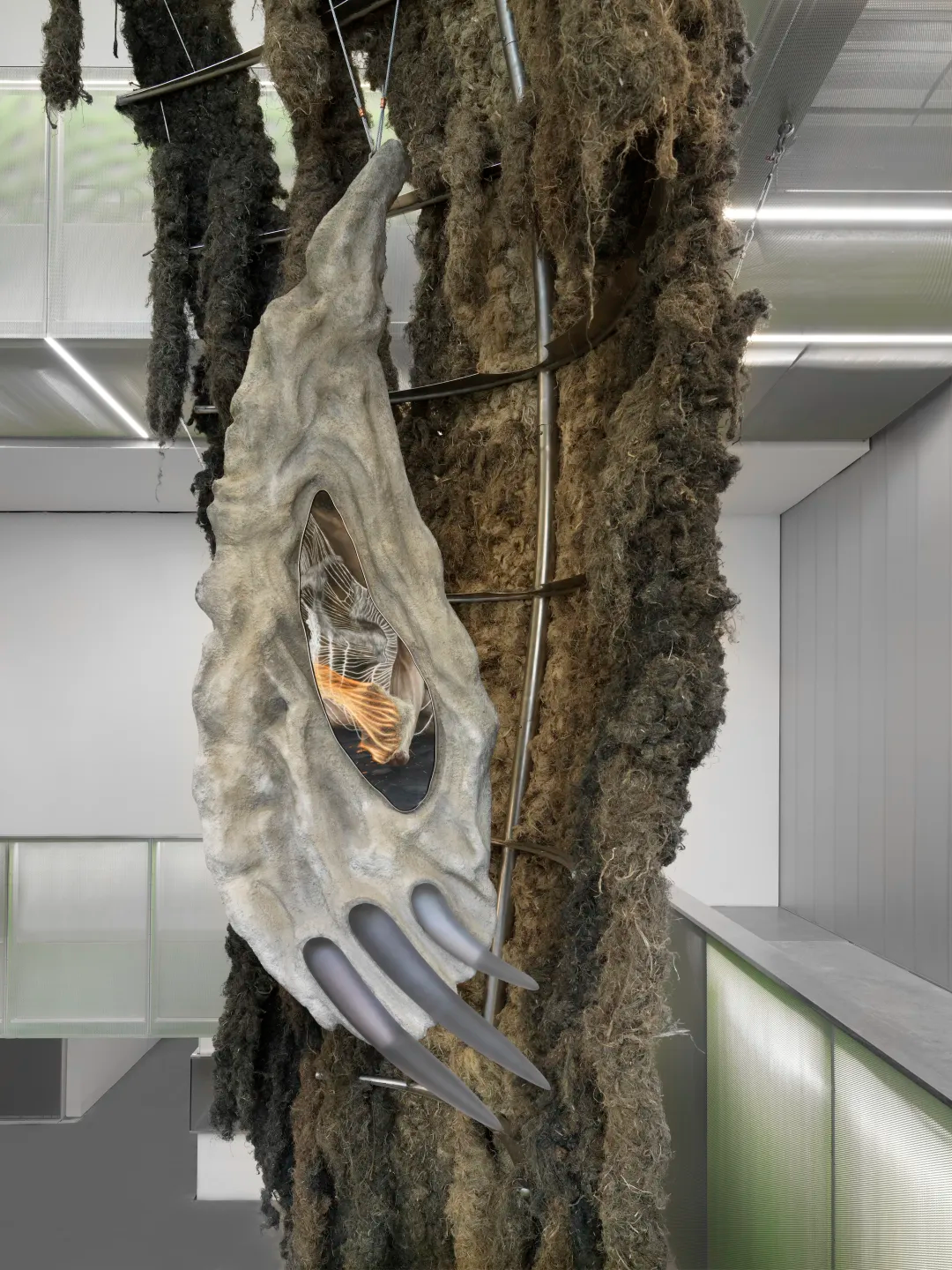
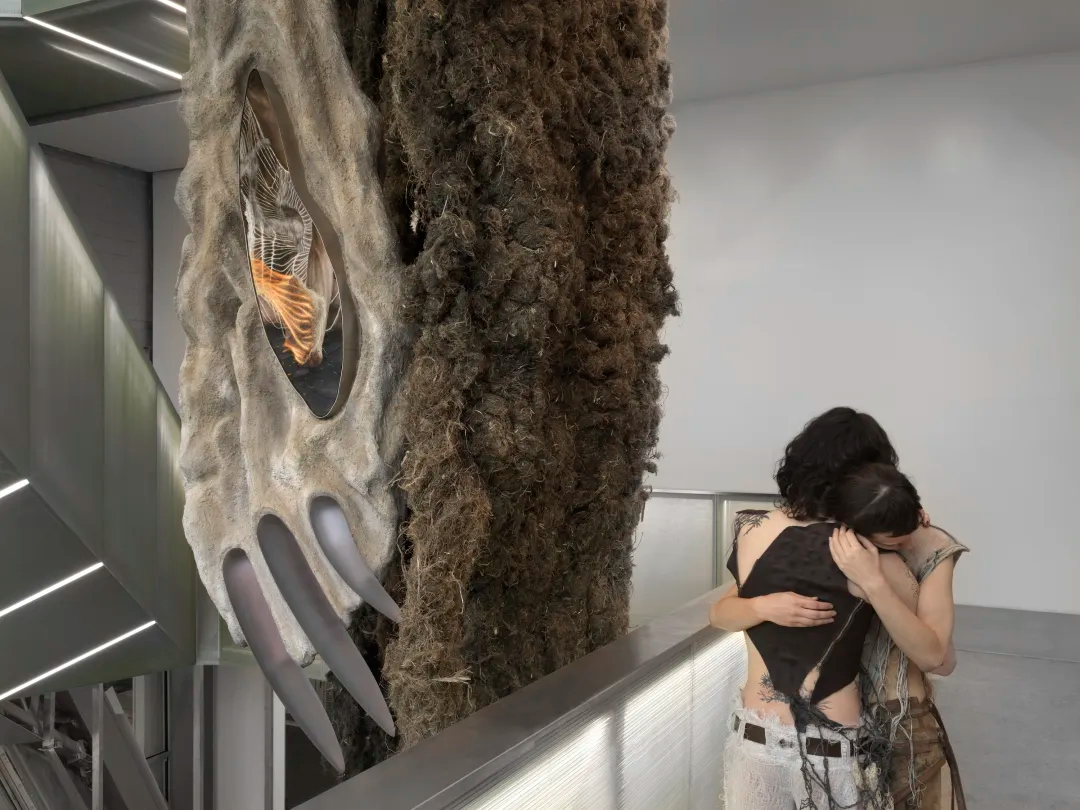
In the museum lobby, Czech artist Klára Hosnedlová’s Shelter, made with flax, hangs through the four-story stairwell like an enormous animal hide.
Klára Hosnedlová, Shelter, 2026. Installation view of New Humans: Memories of the Future, New Museum, 2026.
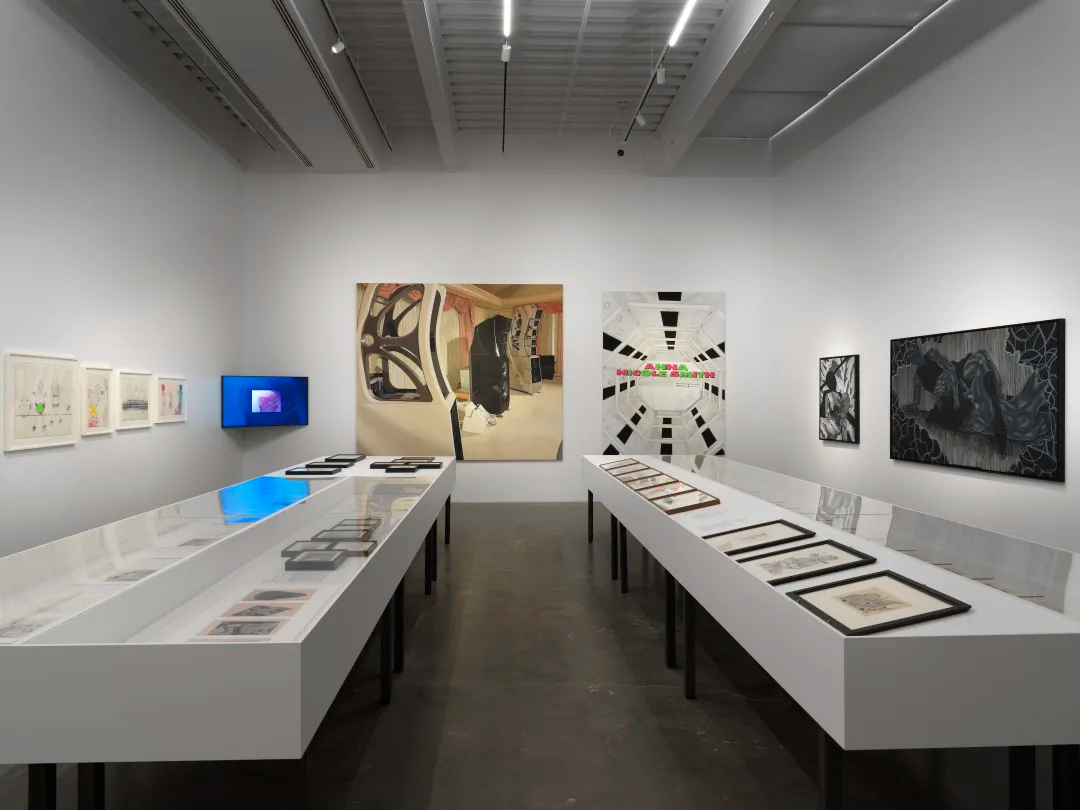
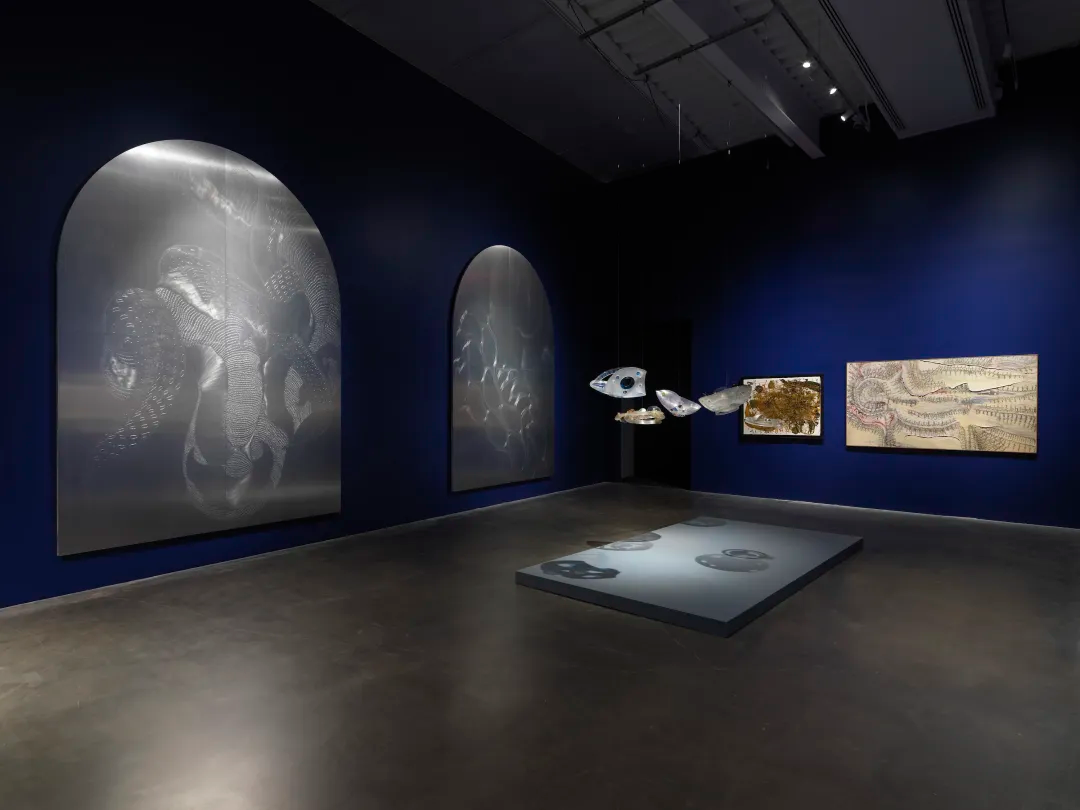
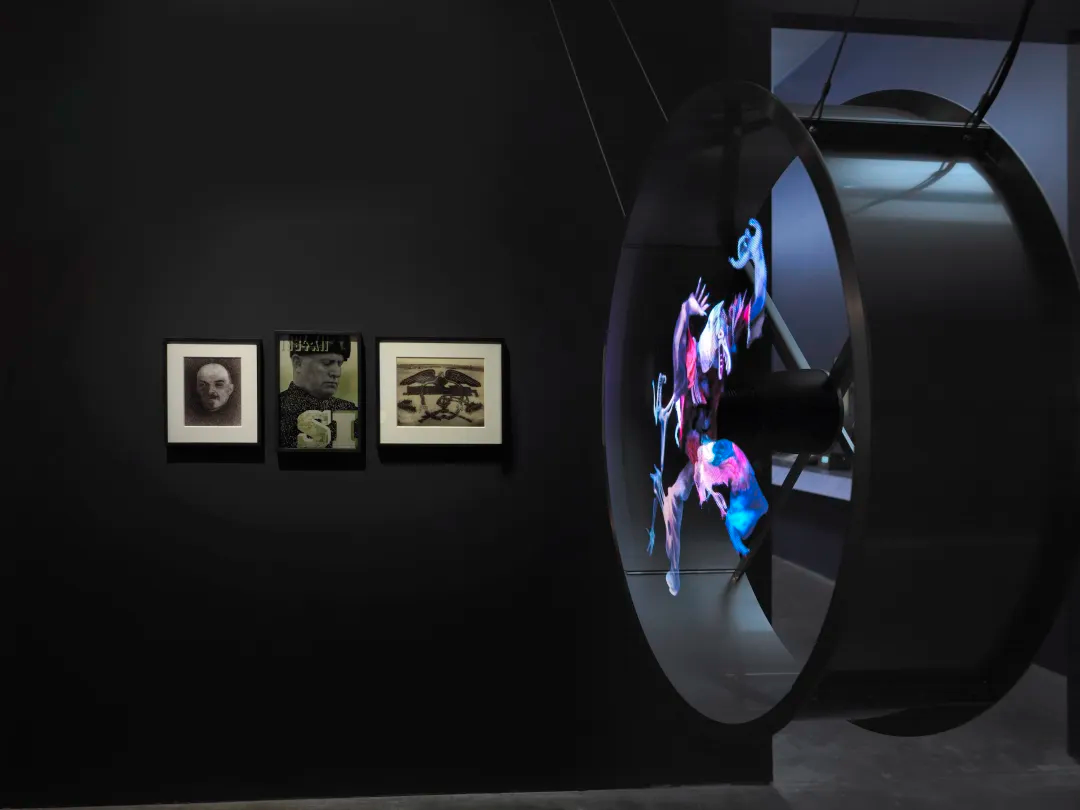
The exhibition is divided into fourteen chapters that stand independently while echoing one another, spanning a period from the 1920s to today’s generative-AI era. “You can think of them as fourteen small exhibitions,” Gary said. “Each gallery has its own theme, but after walking through the entire exhibition, we discover that together they form a history of how the human has been continually reinvented.”
With 732 works by more than 200 participants, it is an exhibition of extraordinary scale. And those two hundred-plus contributors include not only artists, but also writers, scientists, architects, and filmmakers.
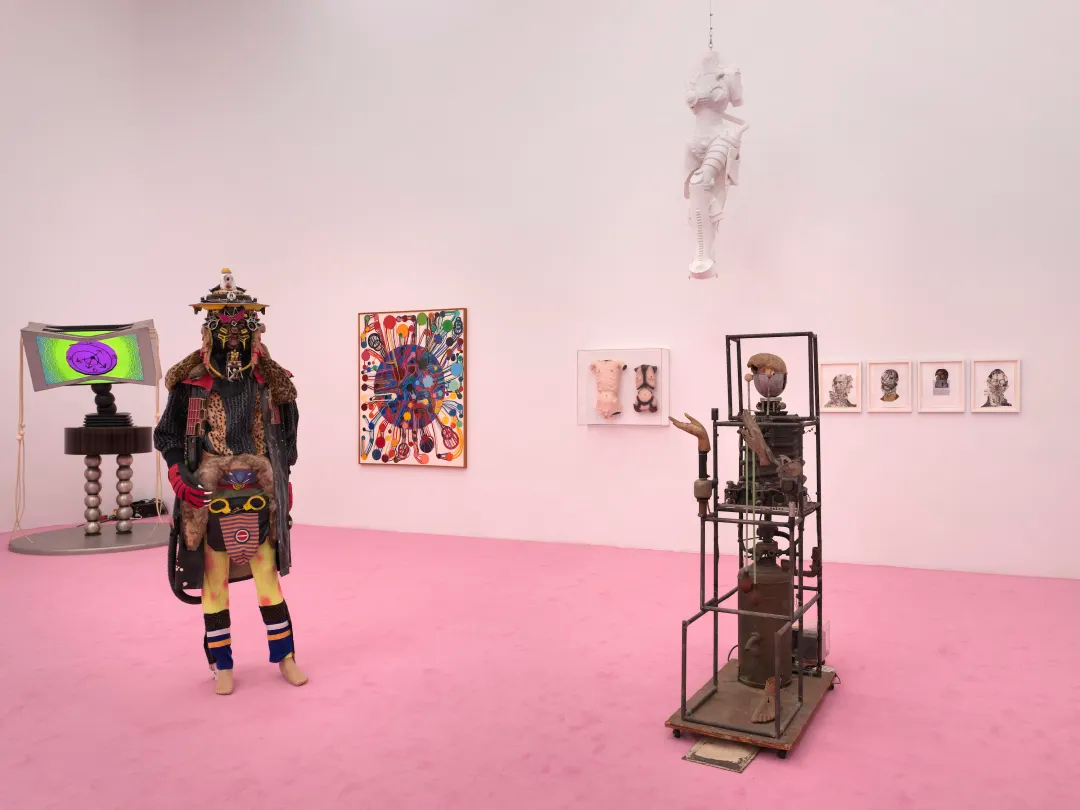
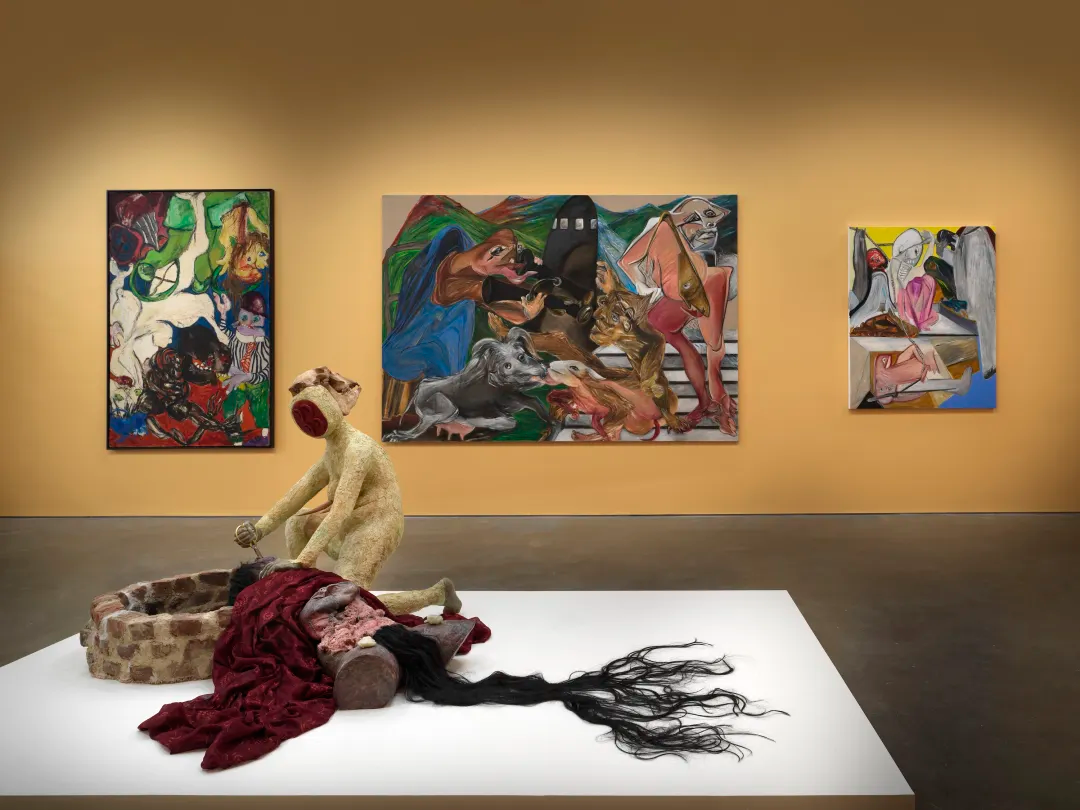
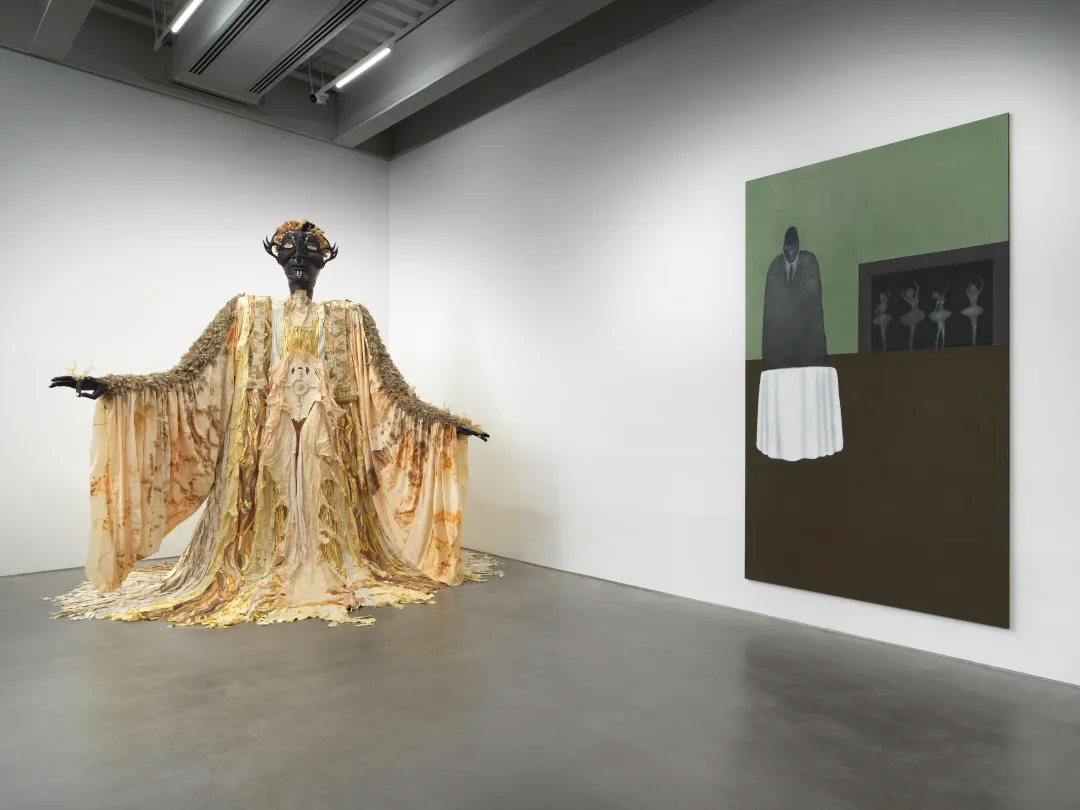
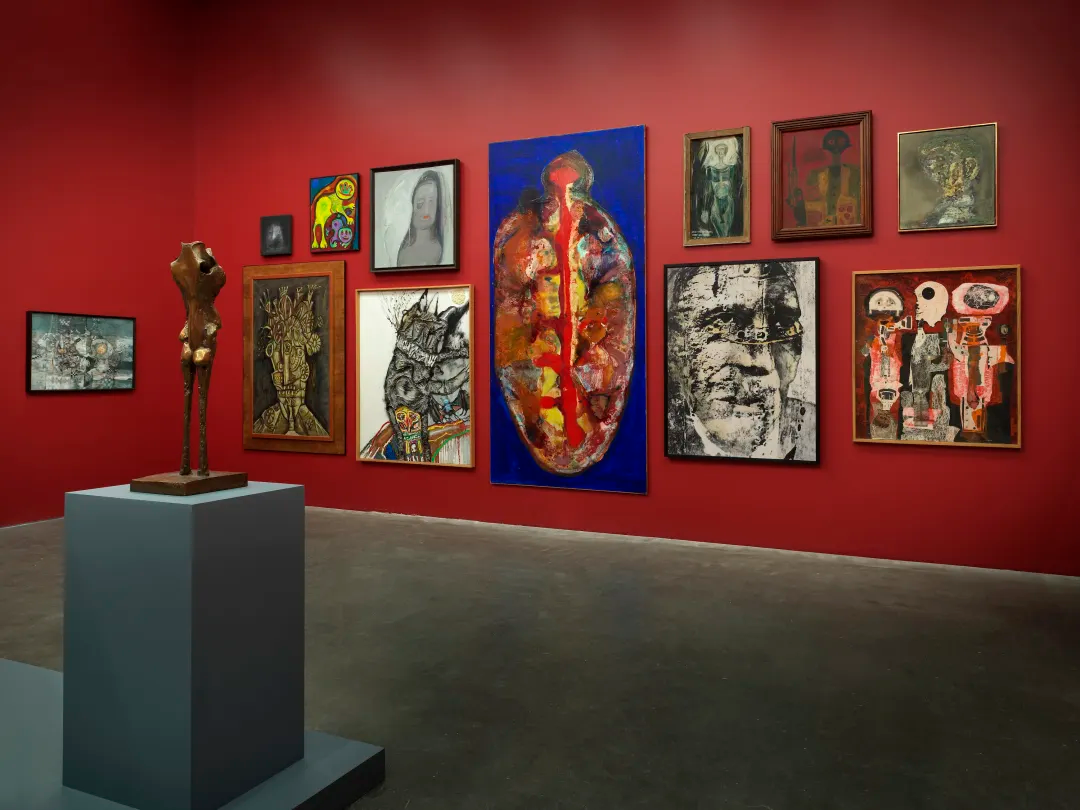
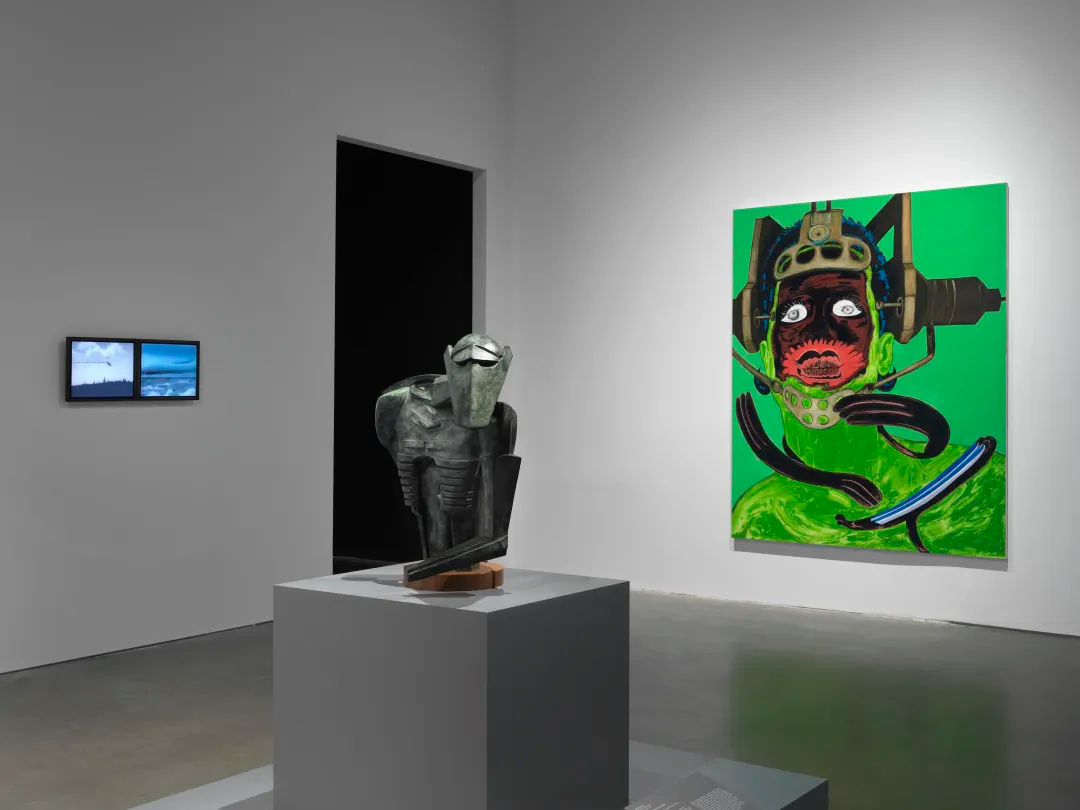
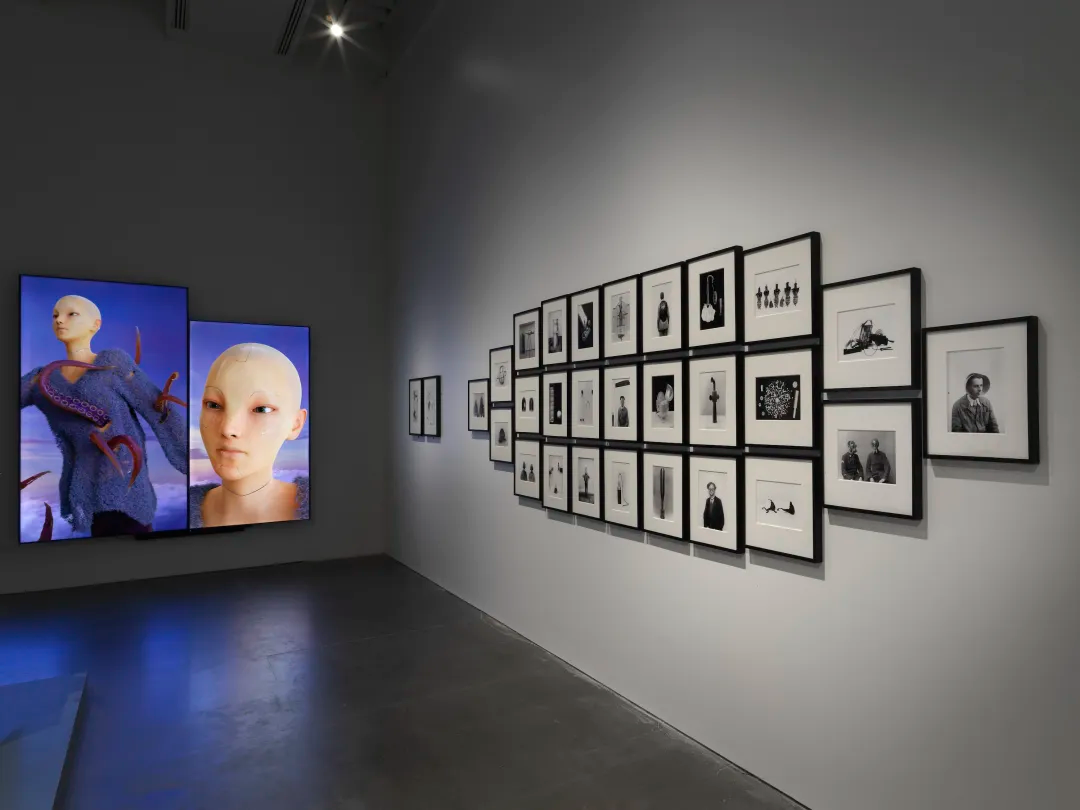
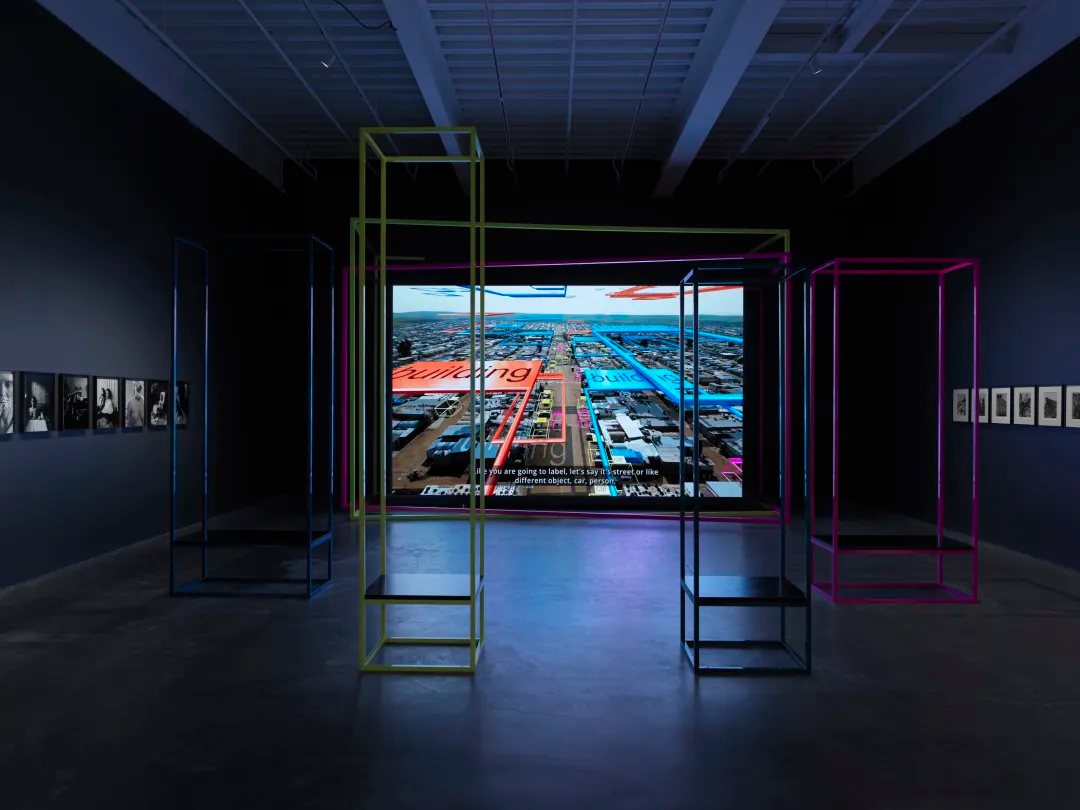
Installation views of New Humans: Memories of the Future, New Museum, 2026.
“Group exhibitions at the New Museum have always included figures from different disciplines, because art never exists in a vacuum,” Gary told us. “Artists draw on many kinds of research without fixed boundaries, and contemporary artists are always asking how their work relates to other forms of visual culture and to other fields of knowledge.”
Indeed, this is not simply a phenomenon of the present. The exhibition’s first section begins in the 1920s, when the work of early avant-garde artists was already in dialogue with literature, cinema, and advances in science and technology.
Maina-Miriam Munsky, Geburt III, 1967.
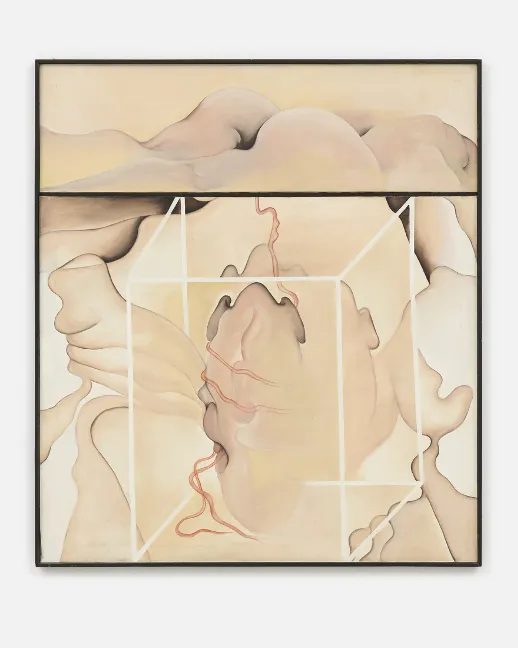
The first thing we encounter upon truly entering New Humans: Memories of the Future is not a robot, but a 1967 painting by the German artist Maina-Miriam Munsky: a cool, almost engineering-like framework attempting to contain a soft, ambiguous, dreamlike mass of flesh.
“The first gallery on the second floor is called ‘Reproductive Futures’ and examines how the early avant-garde imagined a ‘new human.’ Works by Francis Picabia and Marcel Duchamp, for example, sketched out the idea of the ‘machine child.’ At the same time, the gallery brings in contemporary visions of the technological future of reproduction and motherhood, including Lucy Beech’s new film Out of Body.”
Installation view of New Humans: Memories of the Future, New Museum, 2026.
The next chapter, “Mechanical Ballets,” shifts the focus from birth to labor. “‘Mechanical Ballets’ looks at automation and the interaction between humans and machines,” Gary said. “It includes films made by Frank Gilbreth in the early twentieth century as he tried to improve the efficiency of factory workers. That thread continues into the present—for example, in Jacqueline Humphries’s paintings, which use artificial intelligence to reconceive painterly abstraction as a kind of mechanized subjectivity.”
What we see is a feedback loop: humans build machines to increase efficiency, and machines in turn train people how to move, how to work, and even how to paint. So who is operating whom—the human operating the machine, or the machine operating the human?
Installation views of New Humans: Memories of the Future, New Museum, 2026.
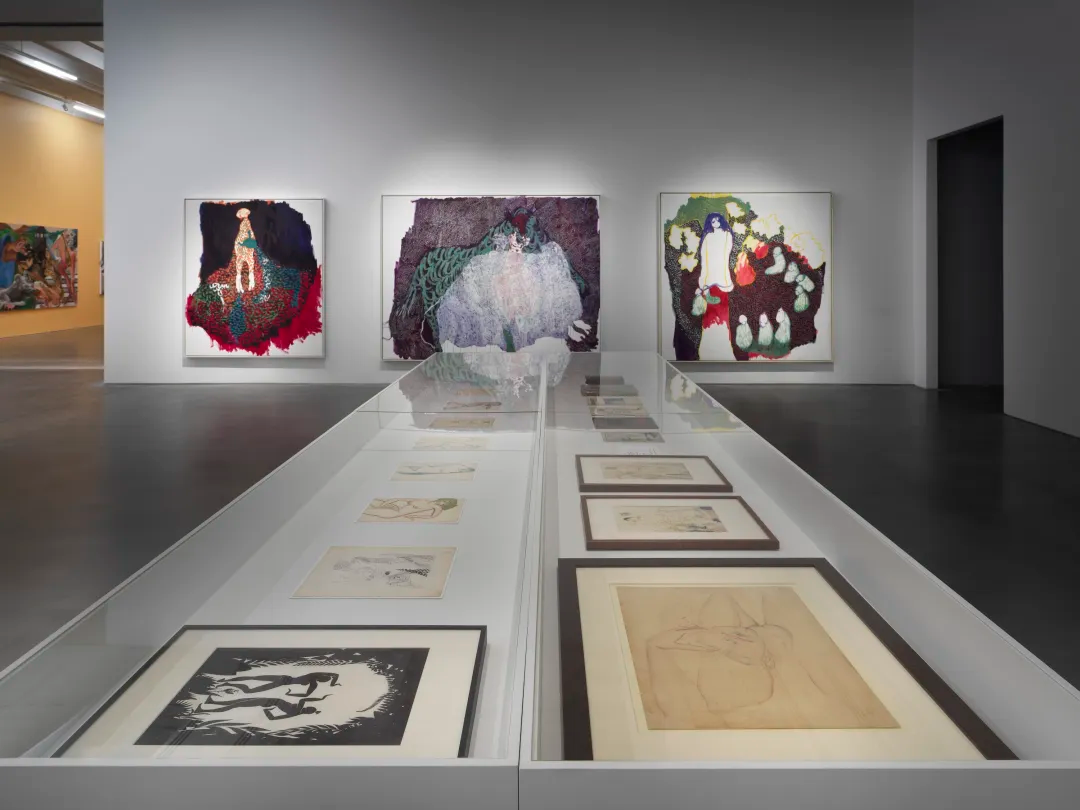
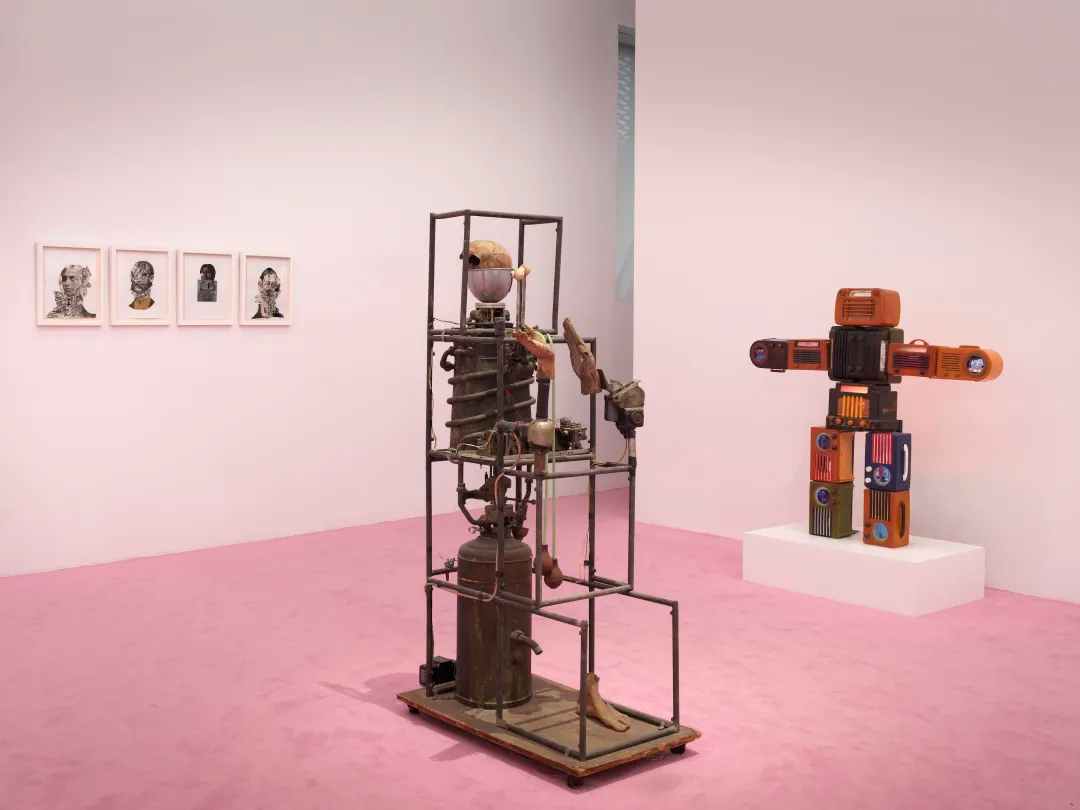
By the time we reach “Prosthetic Gods,” technology no longer simply extends the body; it is also charged with repairing bodies destroyed by war and social systems. “This chapter looks at technology’s capacity both to destroy the human body and to rebuild it,” Gary explained. “A group of drawings made by Heinrich Hoerle in the 1920s depicts the physical and psychological trauma inflicted on people by the First World War. The younger artist Berenice Olmedo, meanwhile, uses kinetic sculpture to consider the relationship between disability and technology in contemporary society.”
On one hand, these works remind us that the notion of a “whole” body is often merely an able-bodied fantasy. On the other, they transform the prosthesis from a tool for compensating for a perceived lack into a partner that can redefine the relationship between human beings and technology.
Installation views of New Humans: Memories of the Future, New Museum, 2026.
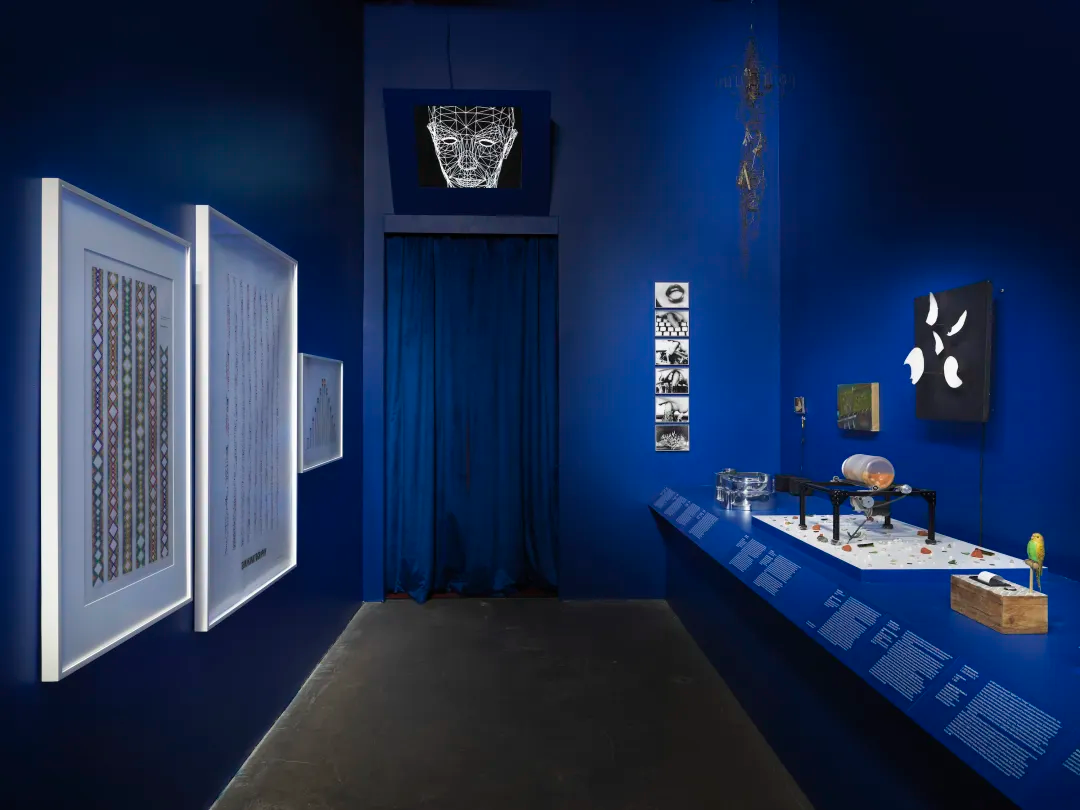
The “Dream Machines” gallery resembles an exceptionally dense cabinet of curiosities. It brings together dozens of works that trace how machine-like imagination evolved across the twentieth and twenty-first centuries.
Among them, Charlotte Johannesson moved from the loom to computer programming in the 1970s, treating pixels as a new warp and weft.
Installation views of New Humans: Memories of the Future, New Museum, 2026.
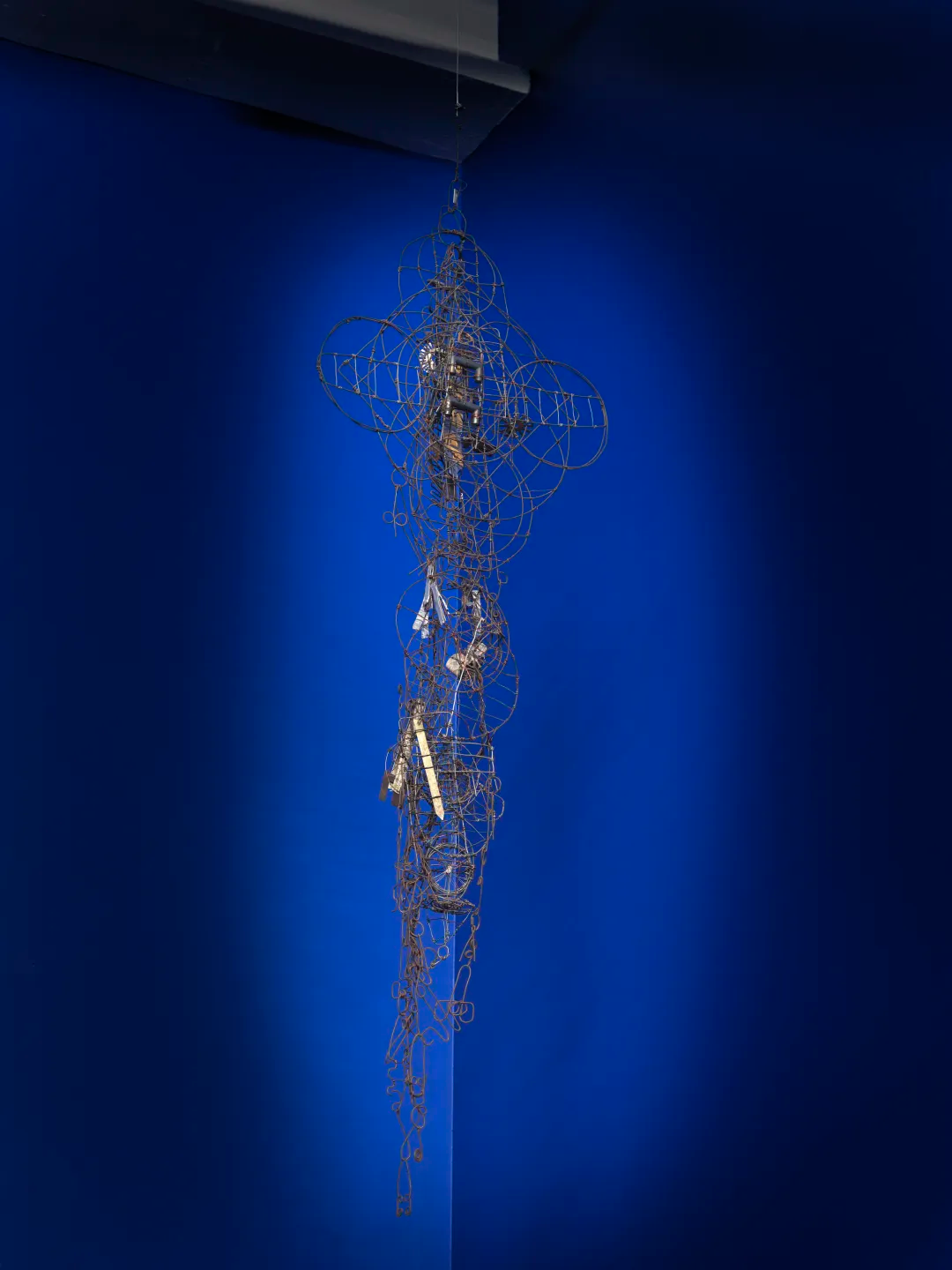
Nebraska farmer Emery Blagdon made hanging constructions out of wire, foil, bottles, and colored light bulbs, believing that these “healing machines” could accumulate and release curative energy.
Gary emphasized that the new architecture directly links the existing galleries on floors two through four. Broad passages have been cut into the brick walls, allowing visitors to move from the old building into the new one on a single level and creating a visible “spine.” Thanks to this renovated structure, the second-floor chapters are no longer a series of rooms interrupted by an elevator. Instead, they can unfold naturally like a four-act narrative.
Installation view of New Humans: Memories of the Future, New Museum, 2026.
Across the second and third floors, three galleries share the theme “Automatic Women.” The chapter title sounds strange, but it reminds us that whether machines can liberate people depends first on who has the power to design them—and on whose body is treated as replaceable or reproducible.
“This section seeks to present a radical lineage of women artists responding to technology, from women in the early avant-garde all the way to the present.”
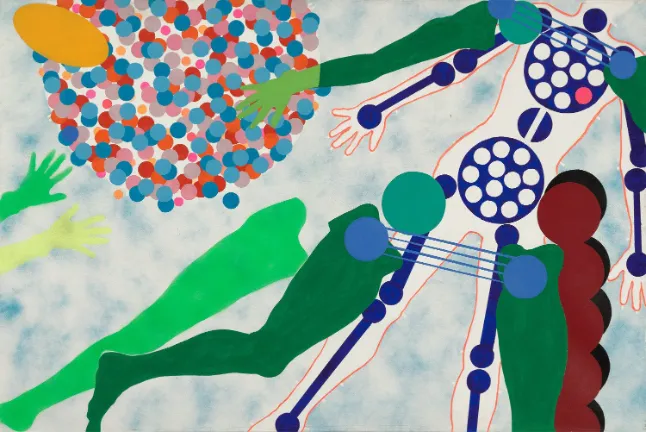
Kiki Kogelnik, Female Robot, 1964.
In the 1960s, Kiki Kogelnik flattened the body into brightly colored silhouettes, sending women through space like rockets, mannequins, and cyborgs. Toyin Ojih Odutola, meanwhile, invents an African feminist science-fiction world in her paintings, ensuring that “the future” no longer defaults to a white male face.
SECTION 02
The New Building Is Another Work of Art
OMA’s new wing and SANAA’s existing building stand side by side at the New Museum: one stacks vertically, while the other opens toward the street, 2026.
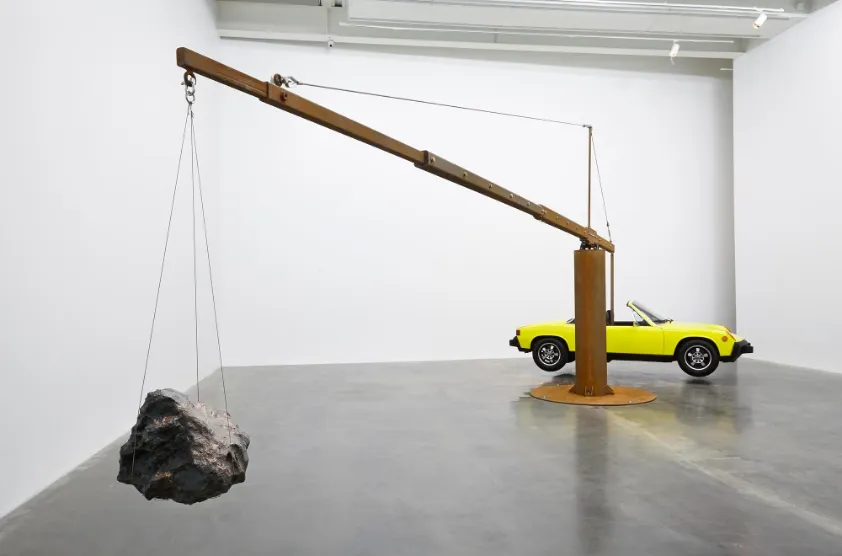
Looking back on the former building, Gary recalled: “In the original building, in order to answer artists’ ambitions, we repeatedly pushed the space to the limits of its potential—and sometimes beyond its intended limits. We used a crane to lift Chris Burden’s ‘skyscraper’ onto the roof; for Carsten Höller’s slide, we cut straight through the floors.
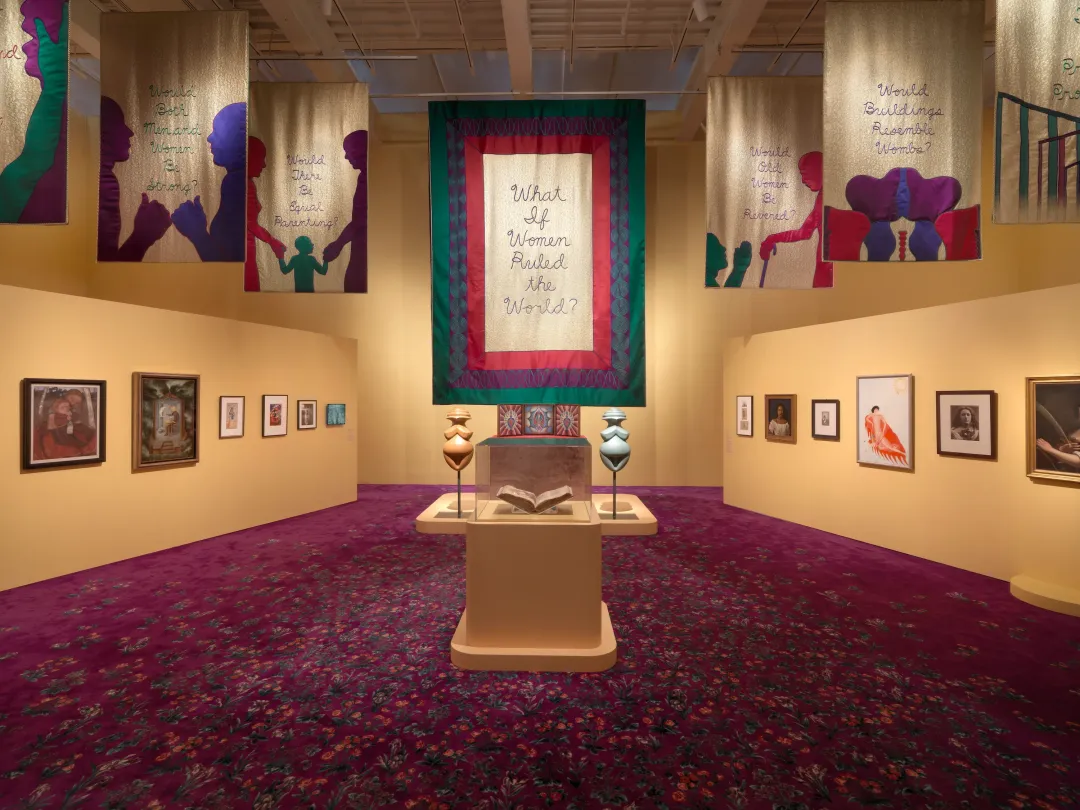
“Or we transformed the entire building into a museum that seemed to belong to one iconic artist alone, as we did for Faith Ringgold or Judy Chicago.” After the expansion, he added, “The biggest change is that we can now support artists’ ideas on a much greater scale.”
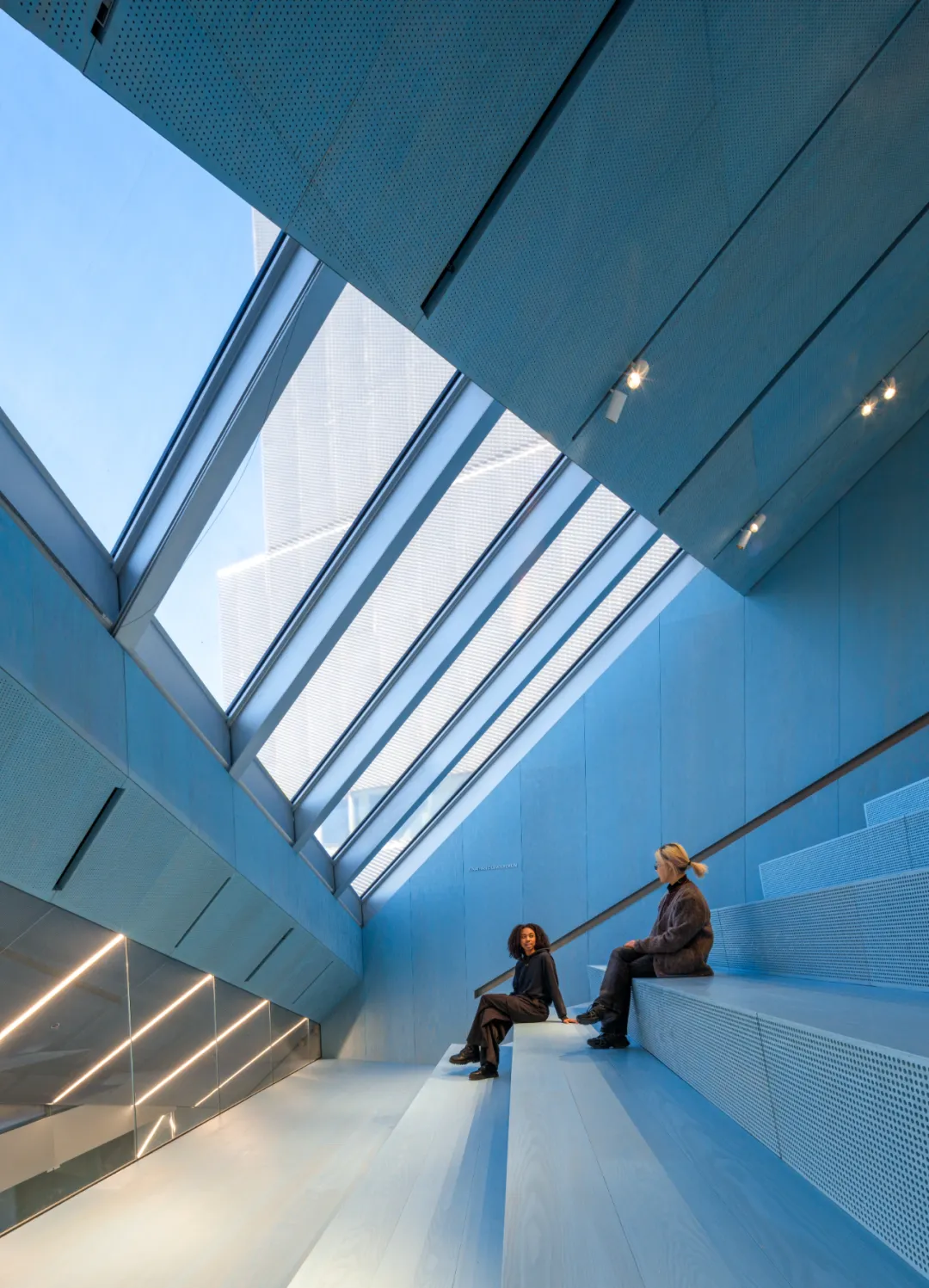
Interior of OMA’s new wing at the New Museum, 2026.Installation views of New Humans: Memories of the Future, New Museum, 2026.
Taking the new elevator to the third floor, we arrive at “New Images of Man,” which borrows its title from the Museum of Modern Art’s 1959 exhibition of the same name.
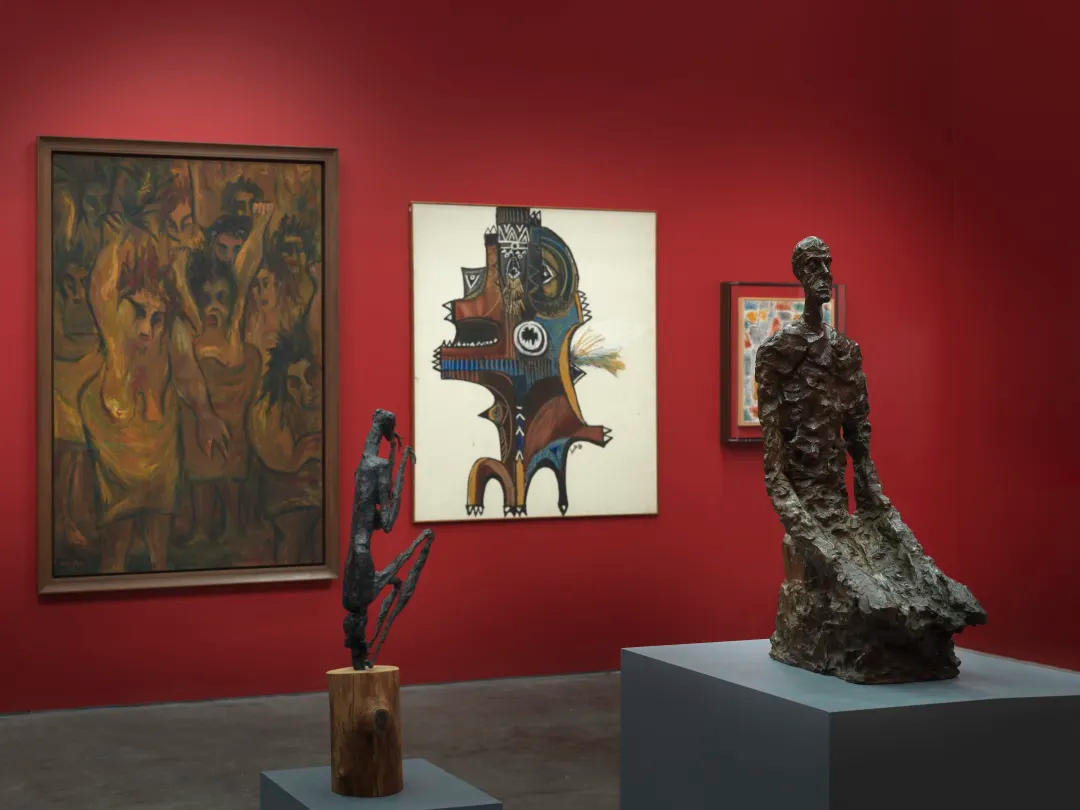
“This gallery traces the work of a postwar generation of figurative painters and sculptors,” Gary explained. “After the Second World War, European humanism was collapsing, while new postcolonial nations were emerging around the world. Artists responded to that historical situation.”
Pierre Huyghe, Untitled (Human Mask), 2014, film still.
On the same floor, “Maps of Humans” moves from Japan’s nuclear anxieties of the 1950s toward a posthuman future. The gallery includes Tatsuo Ikeda’s creatures of the post-atomic age, as well as Pierre Huyghe’s unsettling 2014 film Untitled (Human Mask), in which a monkey dressed as a young girl wanders through an abandoned village in Fukushima, Japan.
“‘Becoming Animal’ brings together works by women artists of different generations,” Gary said. “They depict grotesque human-animal hybrids in response to the violence imposed throughout the twentieth century on the body—especially the female body.”
Installation views of New Humans: Memories of the Future, New Museum, 2026.
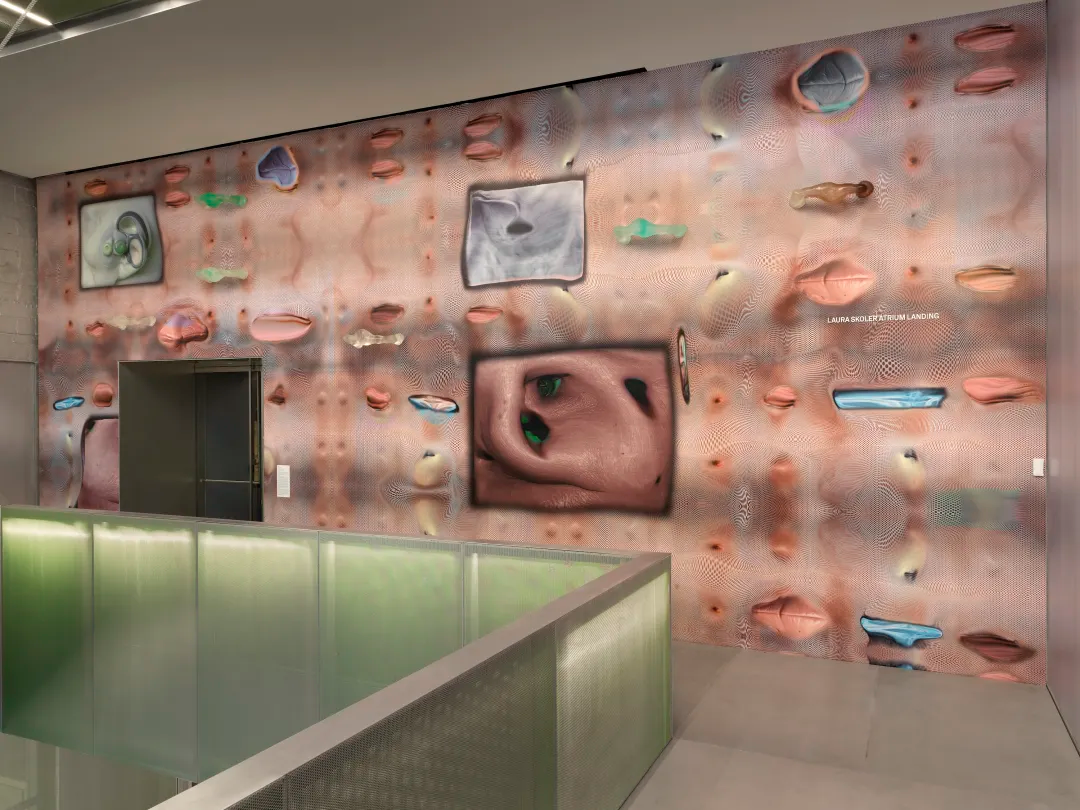
“Homunculi,” by contrast, hands the body over to neuroscience. “The chapter takes its title from a model proposed by the scientist Wilder Penfield,” Gary told us. “What would the human body look like if the size of each part corresponded exactly to the amount of space devoted to it in the brain?”
If we drew a person according to the sensory area assigned to each body part in the cerebral cortex, we would have enormous hands, lips, and tongues, with proportions so distorted that the figure would seem almost monstrous. The body we think we know so well has in fact always been recut and reshaped by sensation, medical imagery, and models of knowledge.
Installation view of New Humans: Memories of the Future, New Museum, 2026.Interior of OMA’s new wing at the New Museum, 2026.Installation views of New Humans: Memories of the Future, New Museum, 2026.
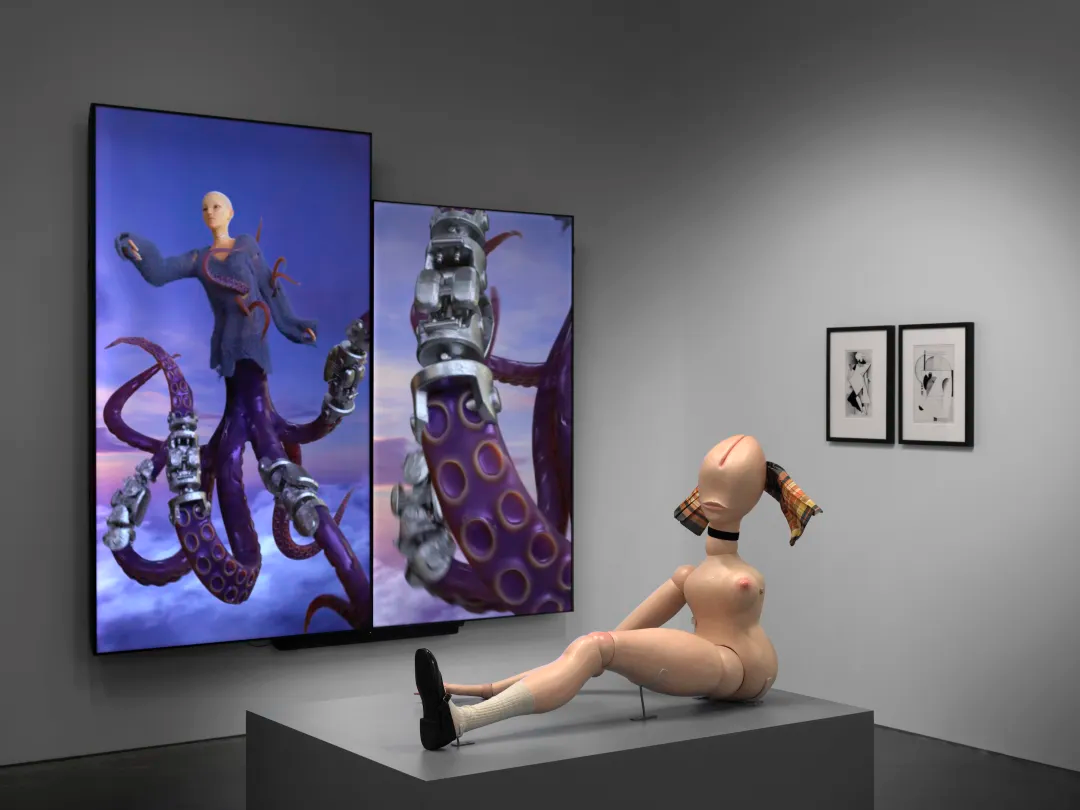
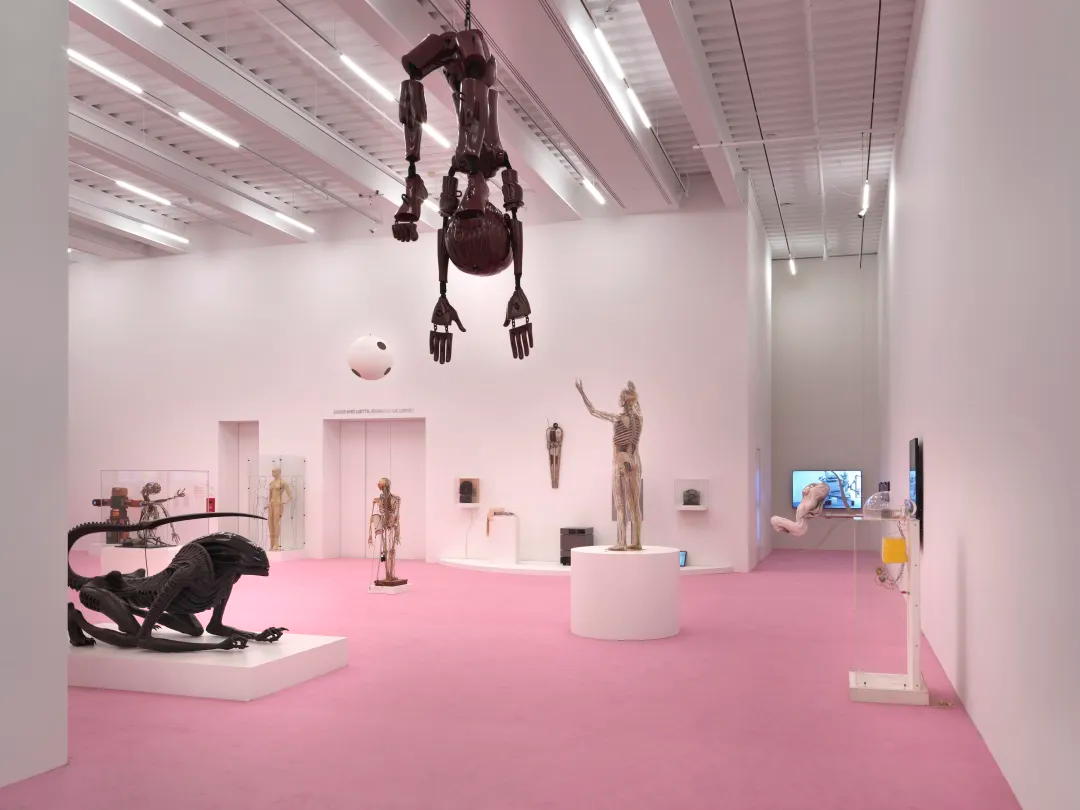
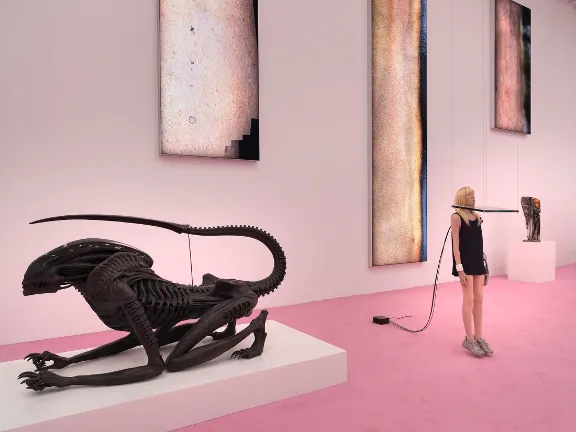
The fourth floor makes a still bolder shift in scale. “Hall of Robots” and “Uncanny Valley” finally bring the most familiar nonhuman figures of popular culture face to face with the audience.
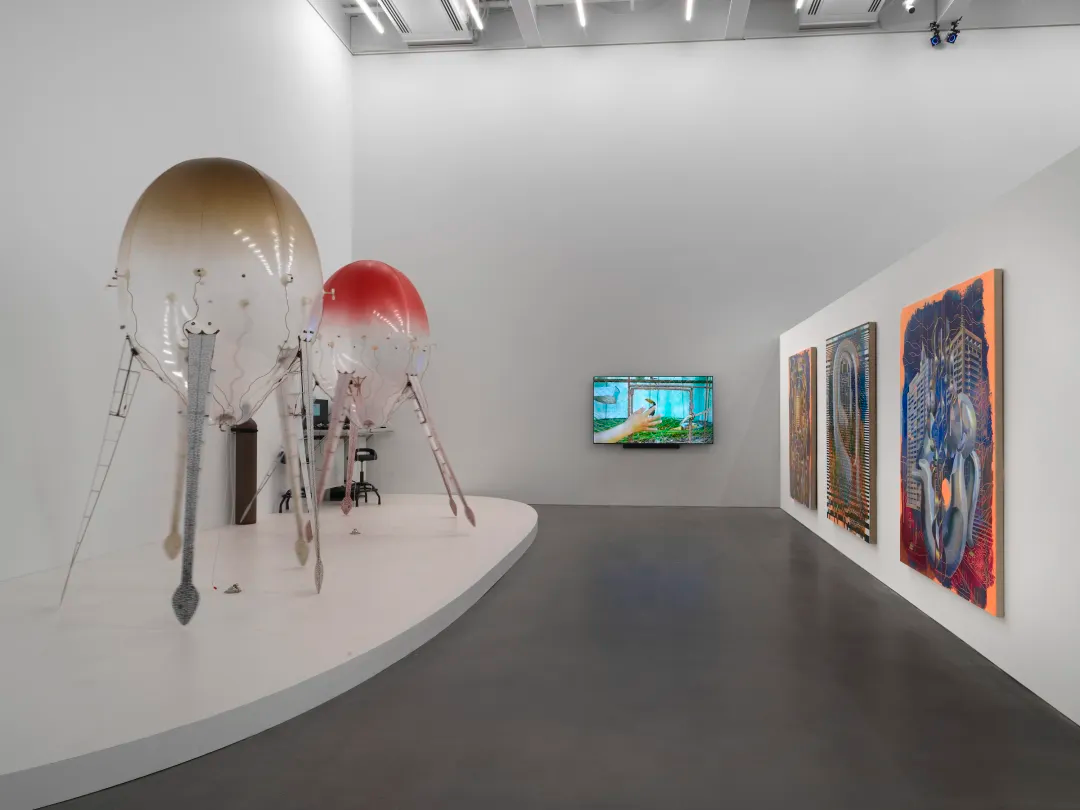
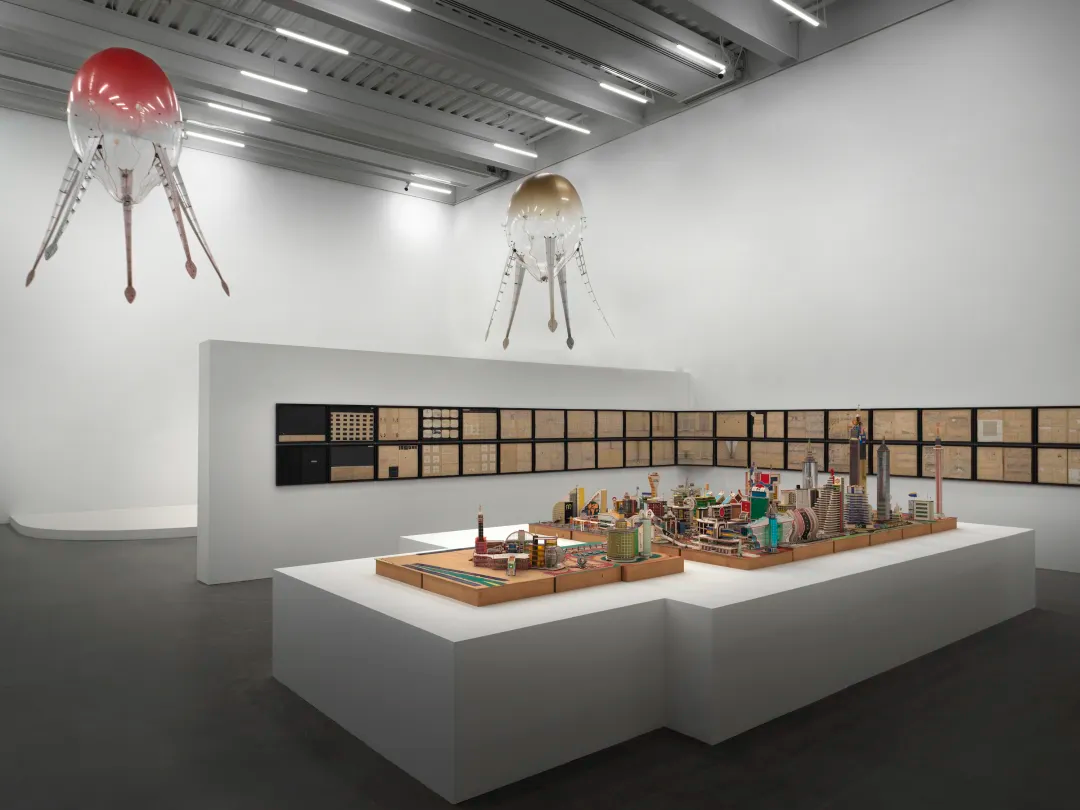
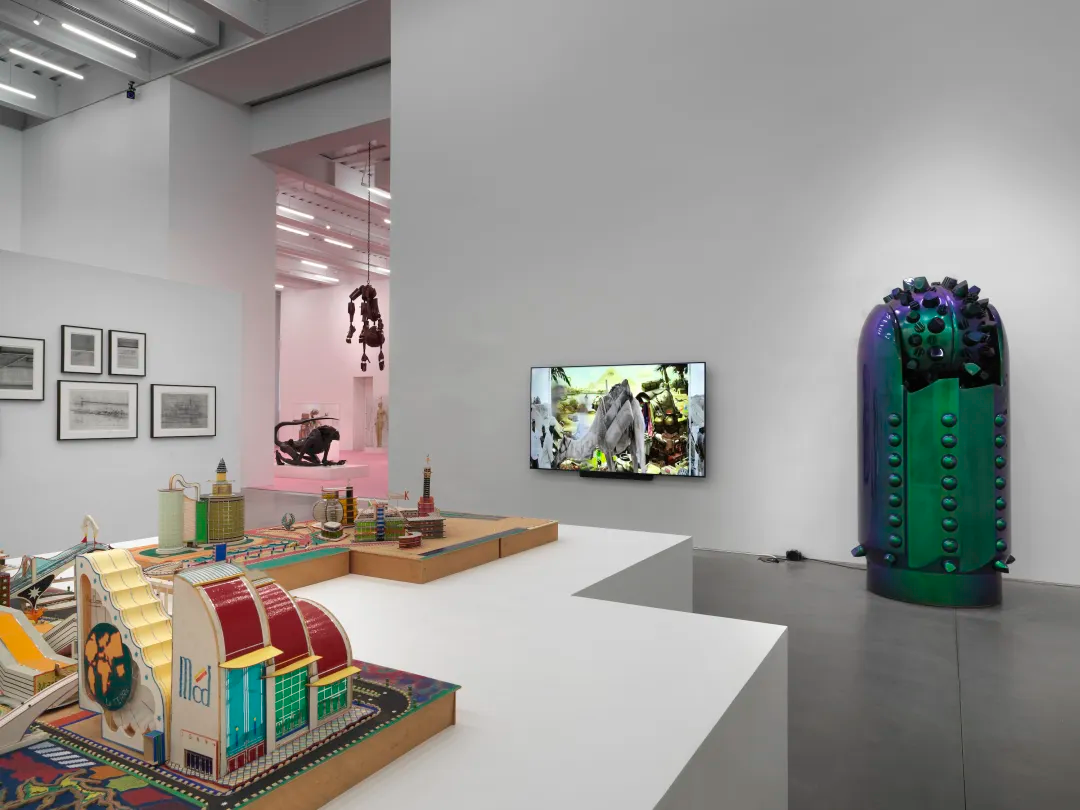
Visitors first encounter E.T. and the alien on the old-building side of the “Hall of Robots,” then cross into OMA’s tall, open new gallery, where Anicka Yi’s aerial life-forms truly take flight. Ambitions that once required the roof, holes cut through the building, or works compressed to fit the space can now become part of the architecture’s everyday life.
Installation views of New Humans: Memories of the Future, New Museum, 2026.
“OMA’s design allows us to organize the exhibition more narratively than we could in the past,” Gary said with a laugh. “The fourth floor best demonstrates what happens when the old and new buildings come together. One moment you are in a dense robot hall that feels almost like a film set; the next, the space suddenly opens up, and flying works and a future city appear above your head and beneath your feet. There are so many incredible ‘creatures’ here that it is difficult to choose just one. Creators from many different fields have tried to imagine how humans might live in the future.”
Installation view of New Humans: Memories of the Future, New Museum, 2026.
For this exhibition, the curatorial team selected more than seven hundred works from several thousand made since the institution was founded in 1977. “The chapters in this exhibition did not come out of nowhere,” Gary said. “Artists such as Anicka Yi and Camille Henrot have long been thinking about biology, technology, consciousness, and future bodies. The historical lineages traced through the exhibition also mirror the sources of inspiration and obsessions that have shaped their work over many years.”
Addressing the unease produced by the exhibition, Gary explained: “That tension between fascination and anxiety, or between fear and desire, reflects a natural human response to technology. The future of technology is always speculative to some degree. We hope the works in the exhibition can become a starting point, encouraging people to consider how complex our feelings about these changes really are—and how we have always faced the future with hope and fear at the same time.”
SECTION 03
As the Museum Turns Fifty, How Can It Remain “New”?
New Museum founder Marcia Tucker, 1977.
The New Museum will celebrate its fiftieth birthday in less than six months. Looking back at its beginnings, one cannot help applauding its audacity: “New Museum” is a name so bold that it is almost dangerous. What is new today may be old tomorrow. How can an institution remain “new” for fifty years, surviving half a century—and perhaps another half century beyond that? Part of the answer may lie in its collecting policy: rather than centering the institution on a permanent collection, it has focused on finding the most adventurous artists of the present.
On the first working day of 1977, Marcia Tucker founded the New Museum in an office at 105 Hudson Street in New York. At first, there were only Tucker, a few staff members, and volunteers. At the time, most museums around the world were organized around the masters of modernism and an established art history. Contemporary art—especially work by living artists who had not yet received recognition from the market or institutions—remained at the margins of museum collections. Tucker wanted to do something different: to establish an art institution capable of responding rapidly to contemporary social realities.
Installation view of “Bad” Painting, New Museum, 1978.
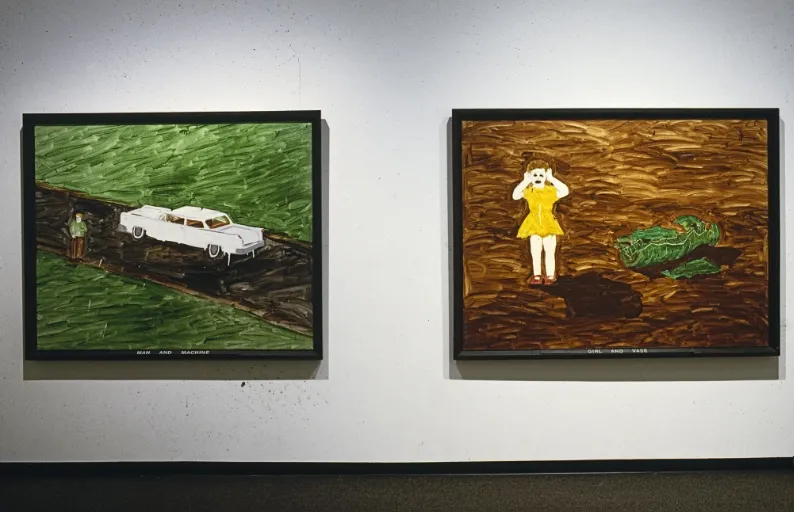
One example was “Bad” Painting, presented shortly after the museum opened. Fourteen artists deliberately rejected traditional draftsmanship, mixing art history, kitsch imagery, private fantasy, and acerbic humor. The exhibition challenged the art world’s standards of judgment by asking, “Who has the right to decide whether art is good or bad?” It used the museum’s own authority to question authority itself.
Installation view of Ana Mendieta: A Retrospective, New Museum, 1987.
In 1982, Extended Sensibilities became the first museum exhibition in the United States to directly ask how contemporary art reflected and engaged with sexual minorities. In 1987, the New Museum presented Ana Mendieta: A Retrospective, the Cuban-born artist’s first major retrospective. Mendieta had fallen to her death in New York in 1985, at the age of thirty-six. The exhibition brought together thirty color documents from her Silueta series, rupestrian works made in Cuba, leaf drawings, sculptures in sand and earth, and films of her performances, allowing her art about exile, the female body, the earth, and belonging to be seen with a new degree of completeness.
The exhibition also embodied one of the New Museum’s longstanding commitments: to use the retrospective as a means of giving artists their due when they have not yet received recognition commensurate with their work, rather than waiting until they are already celebrated and merely adding another laurel.
Archival image related to The Decade Show: Frameworks of Identity in the 1980s, 1990.
In 1990, The Decade Show: Frameworks of Identity in the 1980s expanded this revision from the individual to culture’s entire structure. Organized jointly by the New Museum, the Museum of Contemporary Hispanic Art, and the Studio Museum in Harlem, it presented more than two hundred works by ninety-four artists, including painting, photography, video, site-specific installation, and performance. The exhibition examined how identity is constituted by gender, race, religion, age, history, myth, politics, and the environment.
It gave wider visibility to many Latinx, Asian, Black, Indigenous, and European-background artists who had previously had little presence in mainstream narratives.
Installation view of Unmonumental: The Object in the 21st Century, New Museum, 2007–08.
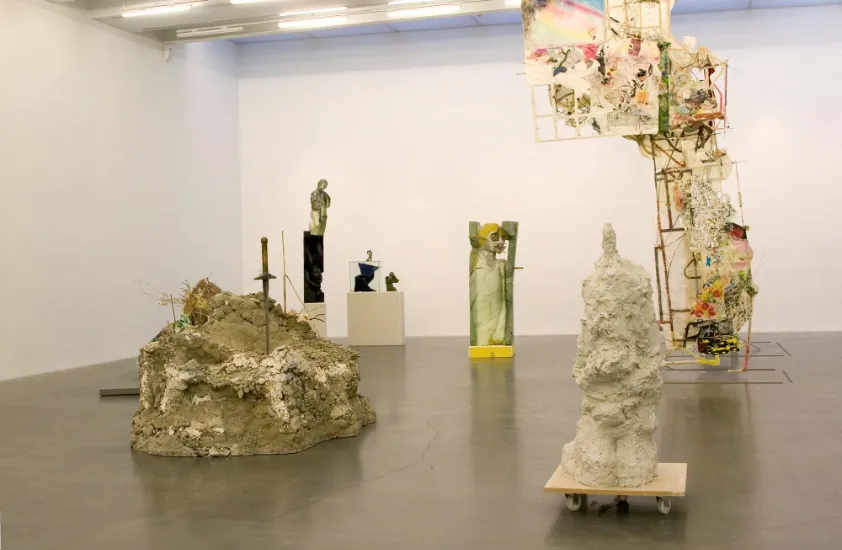
When the New Museum’s seven-story silver building on the Bowery opened in 2007, Unmonumental examined how twenty-first-century sculpture could emerge from fragile, temporary, and assembled materials.
Installation view of the inaugural New Museum Triennial, Younger Than Jesus, 2009.
In 2009, the museum launched its first Triennial, Younger Than Jesus, featuring approximately 145 works by fifty artists under the age of thirty-three from twenty-five countries. The media ranged from painting and video to internet art, dance, and video games. The series later became New York’s only international triennial devoted continuously to a new generation of artists from around the world. Artists who are now highly active internationally—and whose work initially struck many viewers as unusually eccentric—such as Austin Lee and Wong Ping, are among those whom the New Museum helped bring to a wider audience.
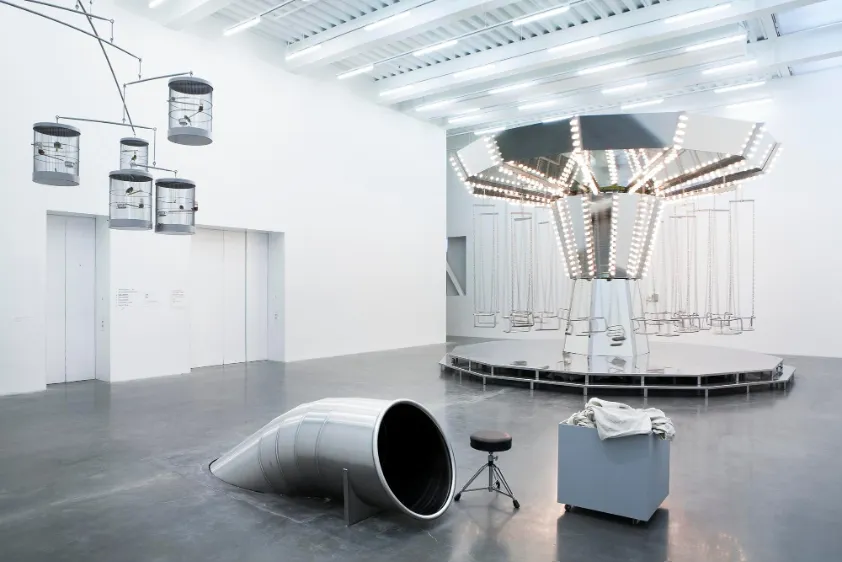
Installation view of Carsten Höller’s Experience, 2011–12, in which a carousel, sensory-deprivation pool, and slide occupied the museum.
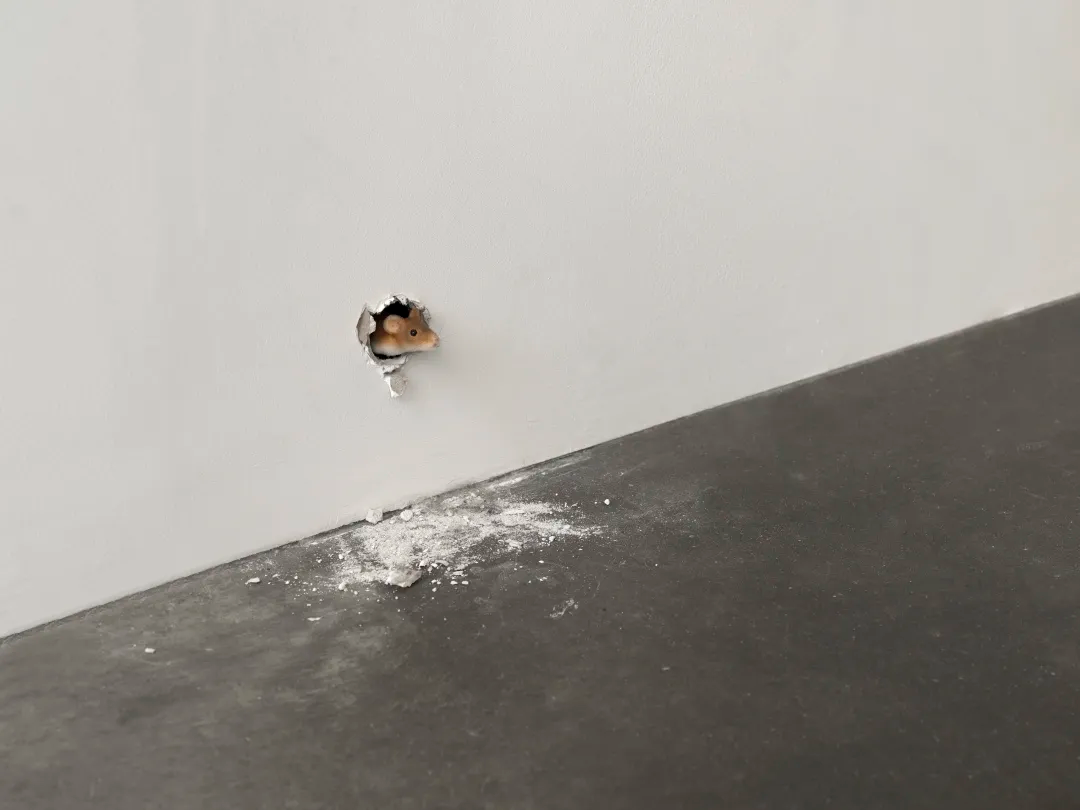
Other exhibitions repeatedly tested the limits of both the architecture and the audience. Carsten Höller’s 2011 exhibition Experience used a carousel, sensory-deprivation pool, and a slide running through the floors to alter visitors’ sense of time and direction. The artist’s current exhibition at UCCA has likewise attracted large crowds.
In 2012, Ghosts in the Machine combined art history, the history of technology, and visual culture into a machine-imagined utopia, foreshadowing today’s reopening exhibition, New Humans.
Installation view of Chris Burden’s Extreme Measures, 2013–14.Installation view of NYC 1993: Experimental Jet Set, Trash and No Star, 2013.
In 2013, NYC 1993: Experimental Jet Set, Trash and No Star confined the entire exhibition to a single year. Through illness, minority rights, healthcare, guns, and politics, it condensed 1993 into an unusually precise time capsule.
Installation view of Judy Chicago: Herstory, New Museum, 2023–24.
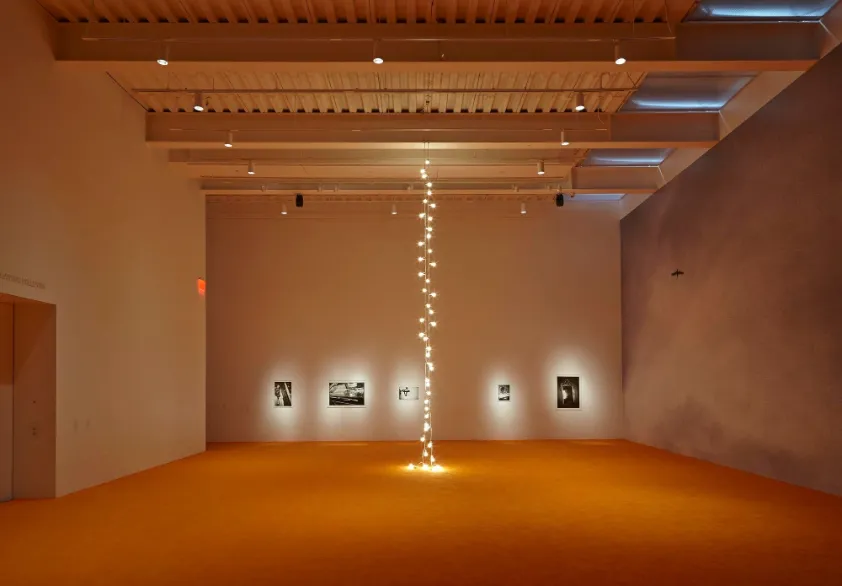
In recent years, the importance of women artists within the history of contemporary art has received growing attention. The 2023–24 exhibition Judy Chicago: Herstory occupied the second, third, fourth, and seventh floors and encompassed painting, sculpture, installation, textiles, photography, stained glass, embroidery, and printmaking. It also brought back into view women artists and thinkers from Chicago’s generation whom art history had overlooked.
“The museum’s reopening just before its fiftieth anniversary is tremendously important,” Gary said. “But it is not about redefining who we are. It allows us to keep doing what we have always done—supporting art and artists without boundaries—only now at a greater scale and with more tools.”
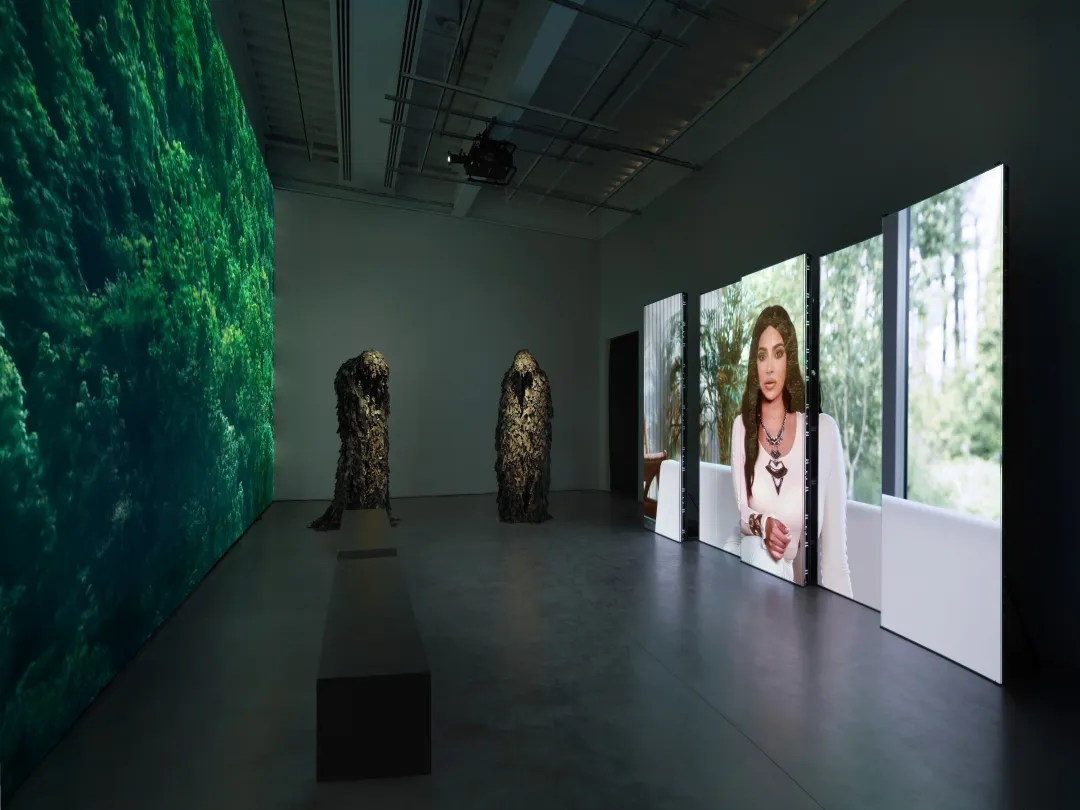
Installation views of New Humans: Memories of the Future, New Museum, 2026.
Looking to the next decade, Gary said that the New Museum has no desire to follow a narrative in which it simply becomes bigger and more like a comprehensive museum. He hopes it will become more ambitious—and more attuned to art as a critical instrument: one capable of responding to the most urgent realities while also protecting forms of imagination that appear, for the moment, useless or not yet understood.
The new building offers galleries, studios, an incubator, and public spaces. What will ultimately determine what those spaces become is still the work of artists—and whether audiences are willing to continue following the questions those artists pose.
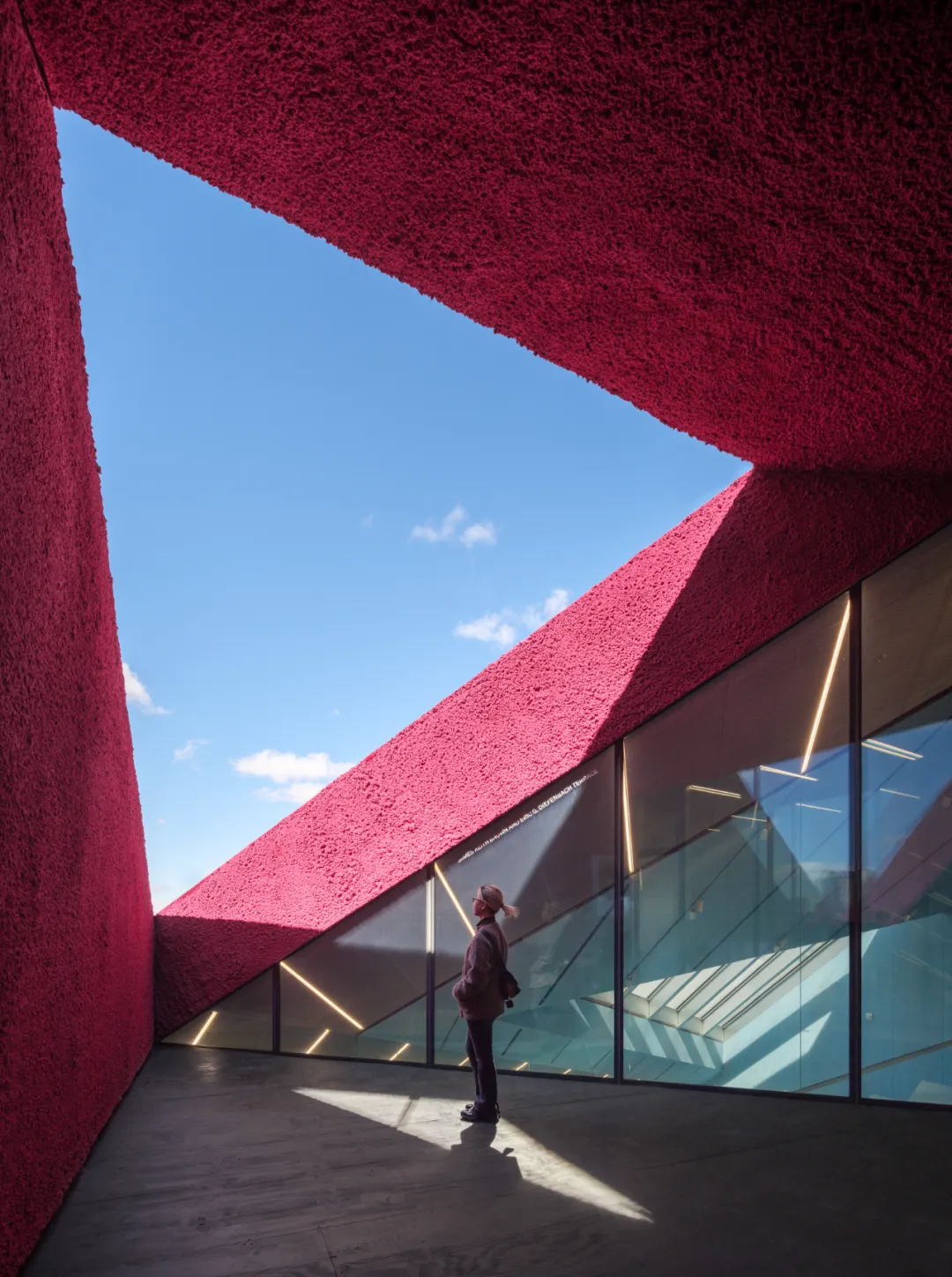
Terrace in OMA’s new wing at the New Museum, 2026.Upper exterior of OMA’s new wing at the New Museum, 2026.
As we leave the galleries and look back at the museum’s two buildings, old and new, their relationship begins to resemble the New Museum’s own relationship to “newness”: the new does not erase the old. Differences exist side by side, producing friction at the point where they meet.
At the heart of New York, the museum offers an open, undifferentiated space in which to imagine what kind of “new humans” we hope to become.