One of Germany’s Most Accomplished Contemporary Artists Brings a Riot of Color to Beijing
Anselm Reyle, one of the most accomplished figures in contemporary German art, is known for piling silver foil, neon, industrial scrap, and acrylic glass into museum installations whose clashing colors suggest a lurid, end-of-days ruin......
By / Xirui Huang · 8 min read
How does Anselm Reyle use industrial materials and intense colour to question taste?
In Xirui Huang’s 2023 Beijing interview, Anselm Reyle discusses bringing foil, neon, acrylic glass and industrial materials into painting and installation. Their surfaces and intense colours prompt questions about beauty, excess and roughness. The Berlin waterfront home he made with Tanja Lincke similarly combines raw architecture, changing light and self-designed furniture, extending an interest in contrast across art and daily life.
Anselm Reyle is one of the most accomplished contemporary artists in Germany. He is known for piling silver foil, neon, industrial scrap, acrylic glass, and other materials into museum installations whose violently colliding colors conjure a brilliant, apocalyptic ruin.
“I paint, and I also make work with readymades. But I actually wanted to be a musician at first, and I even started several bands.” That may explain why Anselm Reyle moves so easily among different media and materials.
At the exhibition “Anselm Reyle: Balance State,” at SPURS Gallery, Beijing, in 2023, and in “HOUSE ON THE SPREE,” the home Reyle shares with his wife, Tanja Lincke, in Berlin, Germany, in 2017, one sees the same sensibility at work. Reyle lives with the designer Tanja Lincke, his wife, and their two children in a waterfront villa on the outskirts of Berlin that they renovated themselves.
“Almost all the furniture in the house was designed and made by us, and that includes the garden behind the house as well,” Reyle told us in an interview. In April, his first gallery exhibition in China opened across the two floors of SPURS Gallery in Beijing. We spoke with the artist at the exhibition about his work and about his striking home. In “HOUSE ON THE SPREE,” in Berlin, Germany, in 2017, Reyle appears in a simple white shirt; on the day we met him, when he was not smiling, he looked every bit the serious artist.
SECTION 01 | The sweet challenge of building a waterfront house
But when we began talking about the home he built with Tanja, Reyle immediately broke into a wide smile, and his eyes lit up.
“When I presented Tanja with this extremely difficult challenge, we had only just gotten married,” Reyle said with a laugh, calling it “a sweet task.”
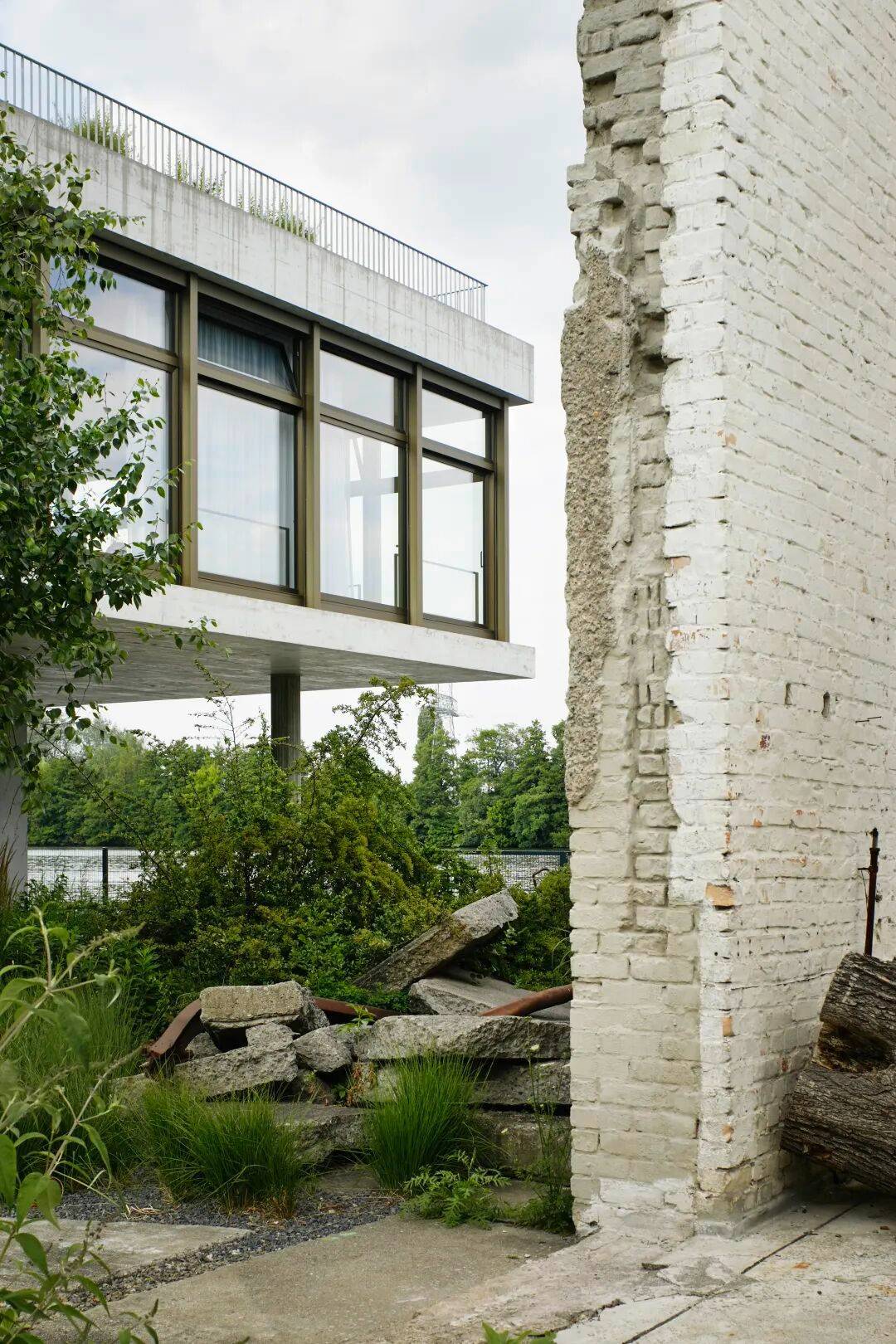
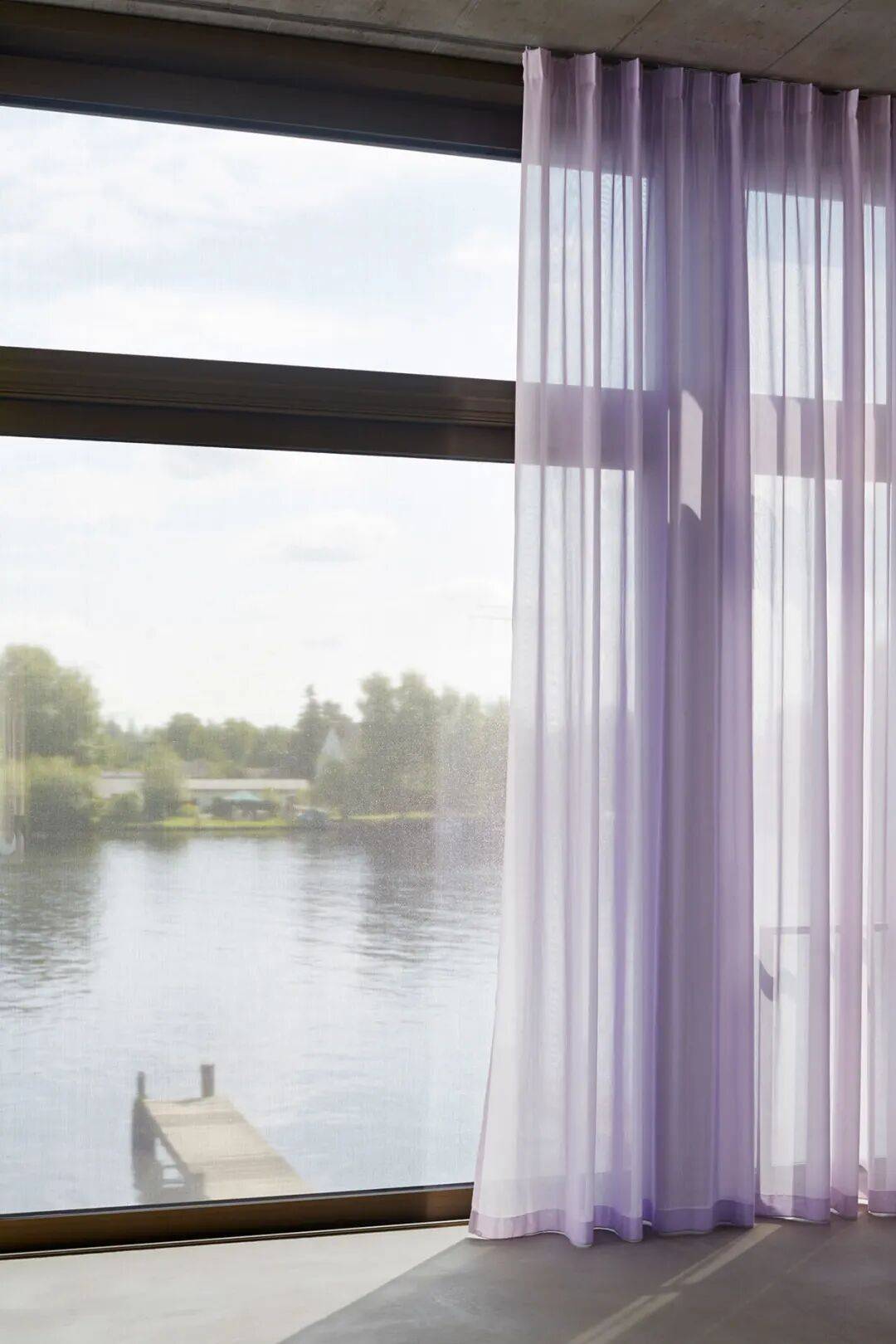
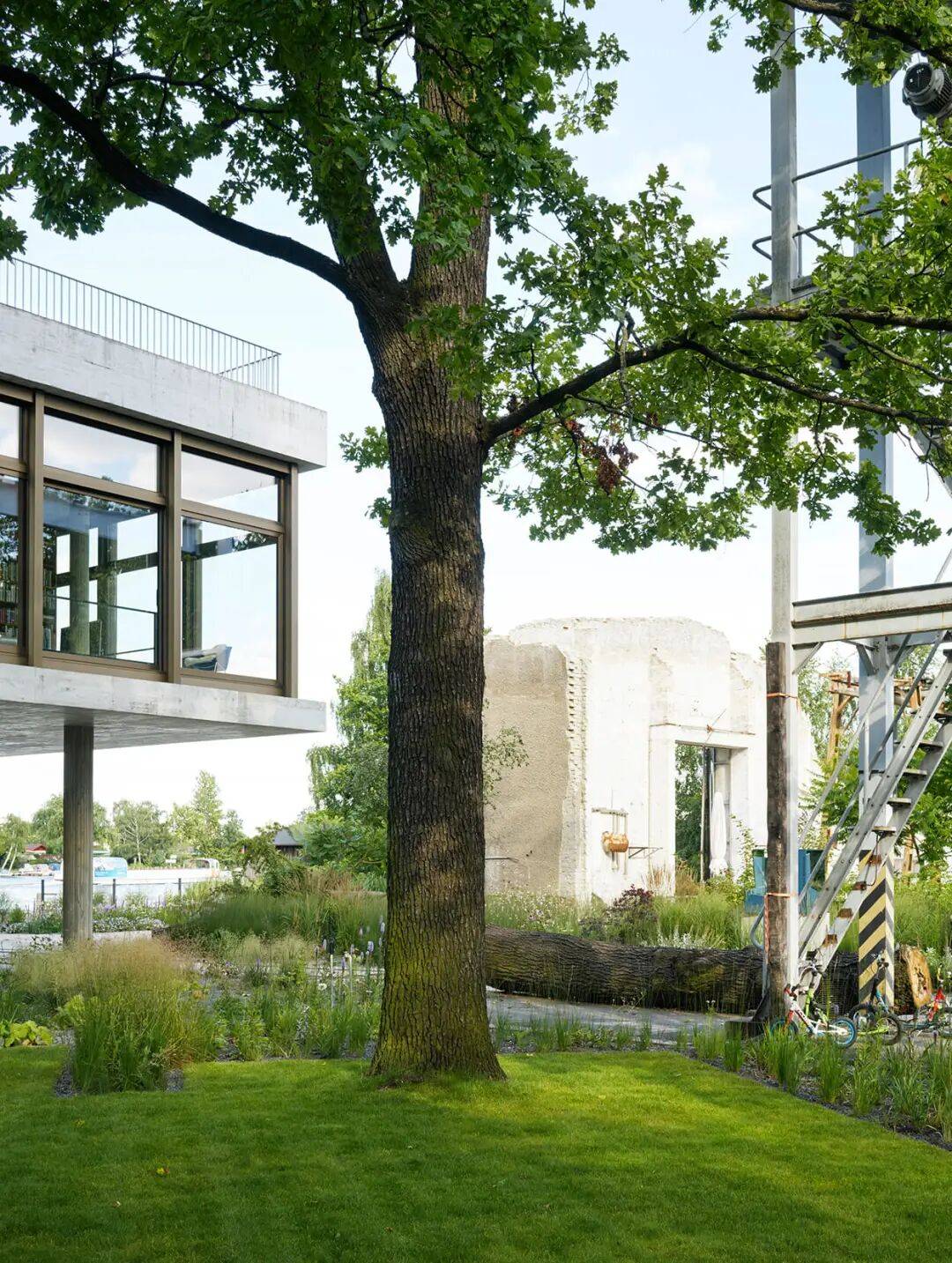
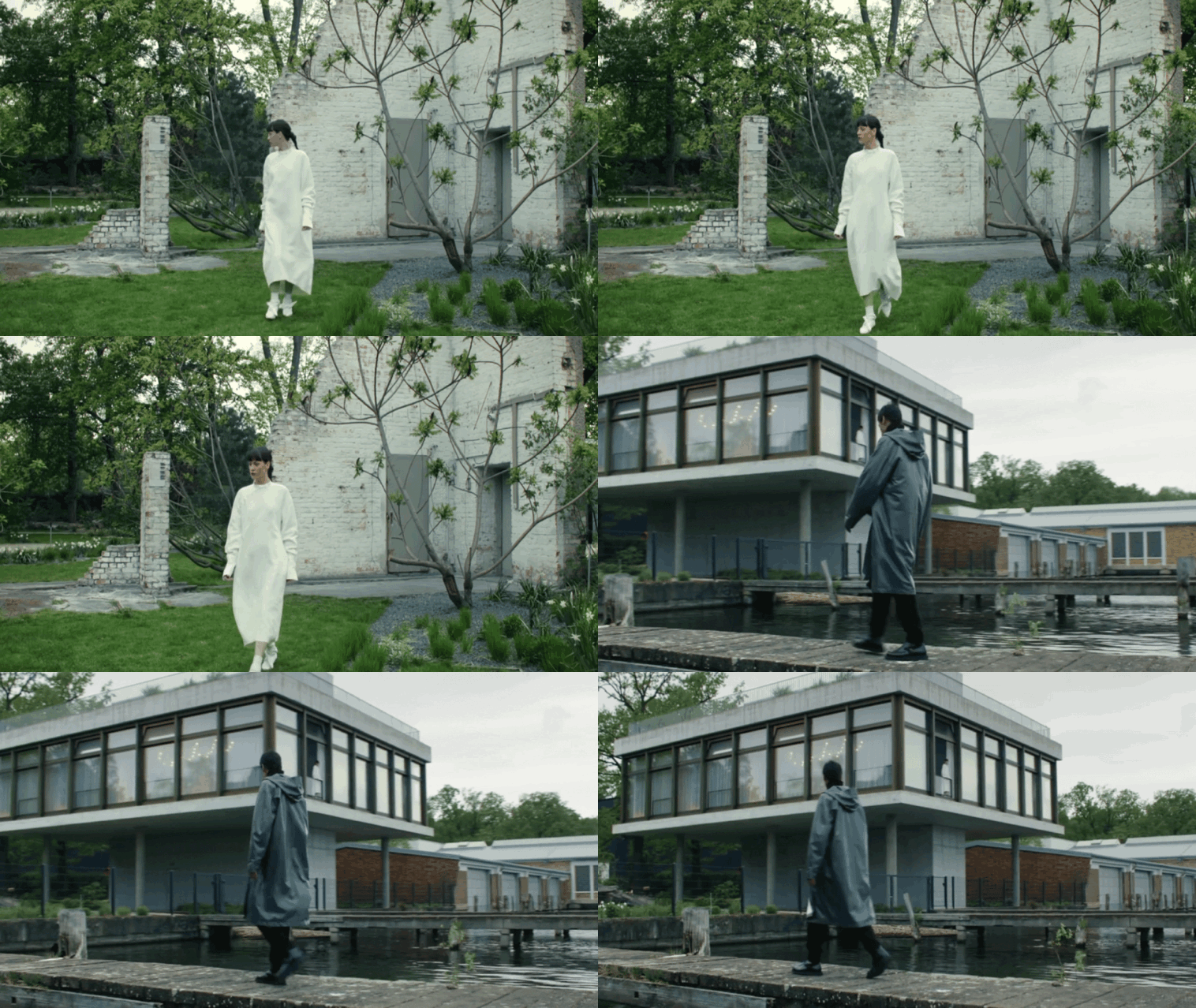
In “HOUSE ON THE SPREE,” a wall deliberately preserved in a ruinous state remains visible; from the first floor, the house opens toward the water. Together, on the outskirts of Berlin, the couple transformed a derelict building into a waterfront villa. The site had once been the headquarters of the East German water police, and it faces a quietly flowing river, seeming at once modern and old. The historical background therefore became an important part of the design.
Because the surrounding area contains many buildings from the 1970s, as well as abandoned aircraft hangars, the final form of the house took on a raw, rough, post-apocalyptic quality.
Inside “HOUSE ON THE SPREE,” the main structure is poured concrete. From the outside, it looks more like a wartime bunker. Six round concrete columns support the building and lift the entire ground floor, giving it a retro-futurist feel.
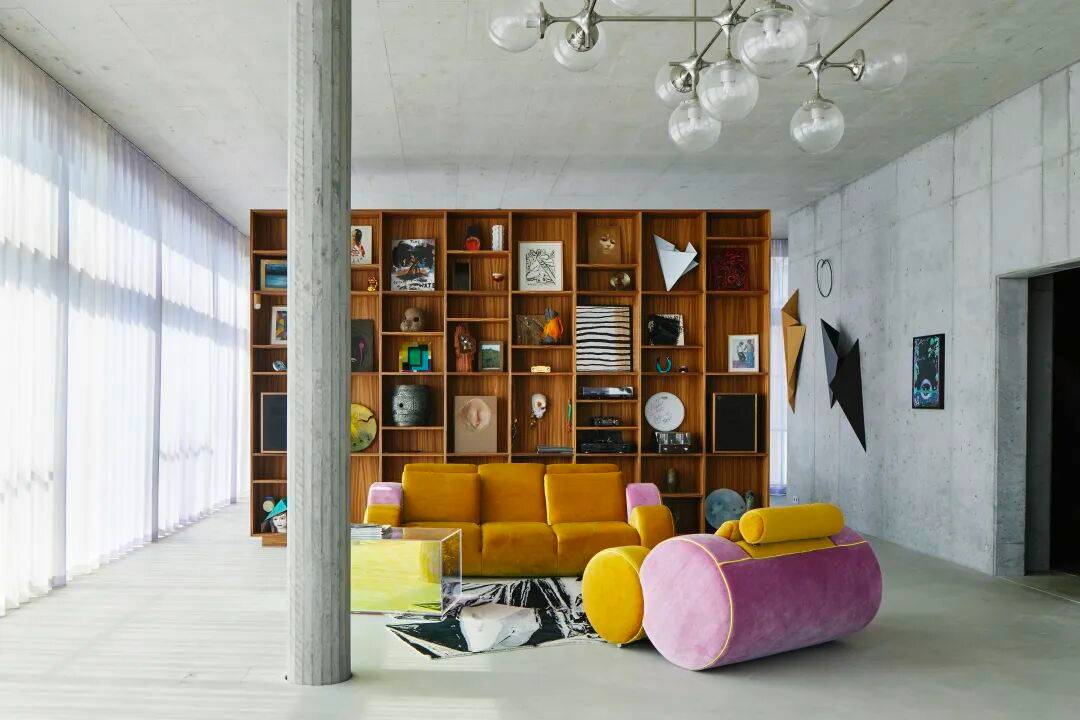
“Almost everything in the house was created by us. All the furniture was designed and made by us, and some things were acquired through exchanges with friends who are also artists. Everything in the house is unique and personal; almost nothing was simply bought.”
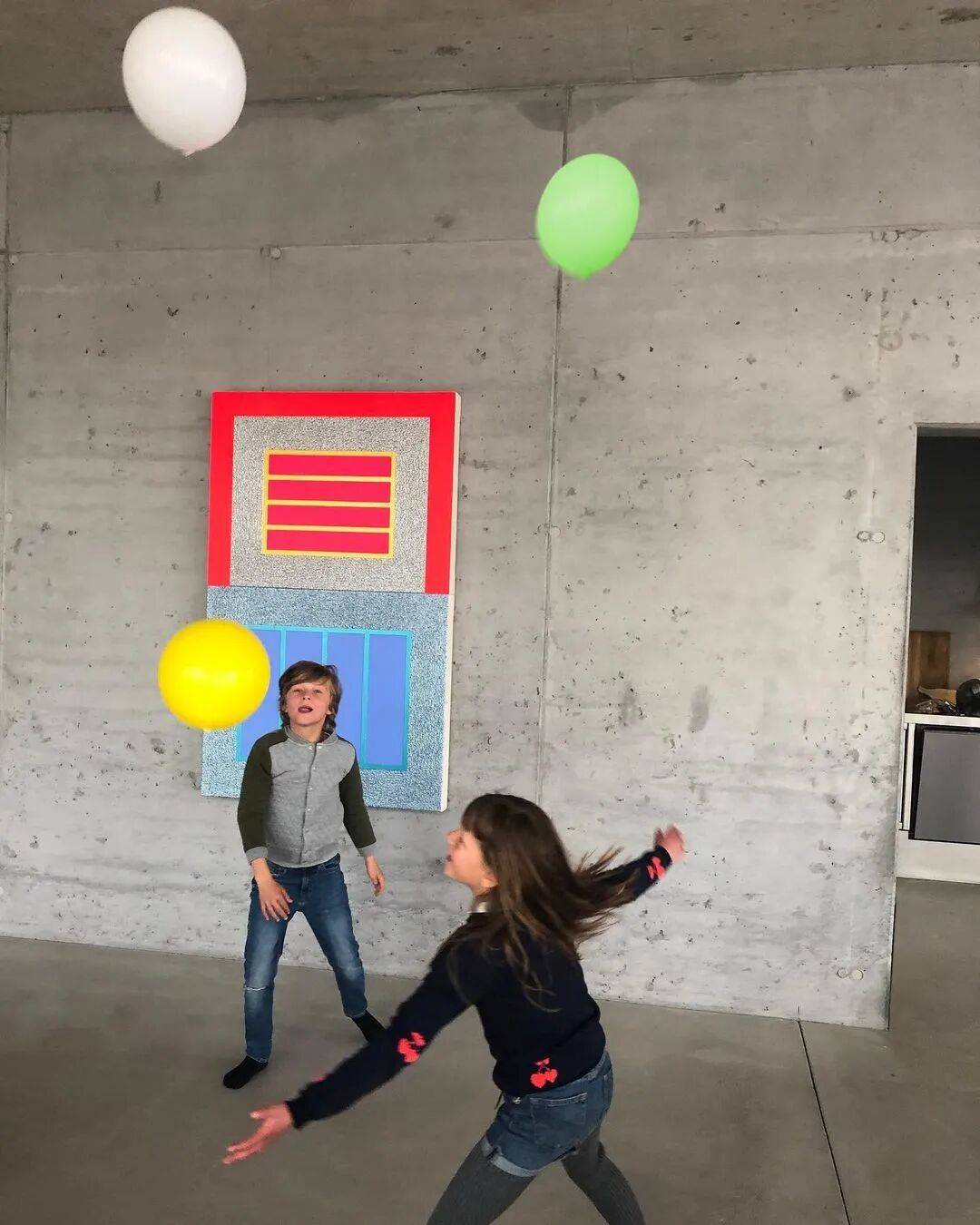
Inside “HOUSE ON THE SPREE,” Reyle said, “I’m a fan of Brutalist architecture, so when you first come in, it feels cramped and dark. But when you go up to the second floor, you see an open, light-filled space with many windows.” Just as Reyle likes to break the boundaries of traditional art, he also likes the sense of drama produced by abrupt shifts within a single space.
“My son and daughter especially love running back and forth through the second-floor space.”
One of Germany’s Most Accomplished Contemporary Artists Brings a Riot of Color to Beijing
The exterior and garden of “HOUSE ON THE SPREE” later served as the setting for a Jil Sander advertising campaign in 2018. Reyle said that he has a particular taste for the perversely exaggerated and likes bringing that quality into design, while his wife, Tanja, prefers clarity, functionality, and a minimalist style.
“We never compromise, but how to combine the two is the most interesting part.” That is also why, Reyle said, his wife used to complain, “Being your own client is really not easy.” Reyle is always imagining himself living in the house, and at every moment he notices where a solution lacks refinement.
The exterior and garden of “HOUSE ON THE SPREE” were also designed by the couple together. Because the building had originally been abandoned, parts of the back garden were already too damaged to repair. They did not consider tearing everything down. Instead, they shaped the remnants of the old structure into a “wasteland garden.”
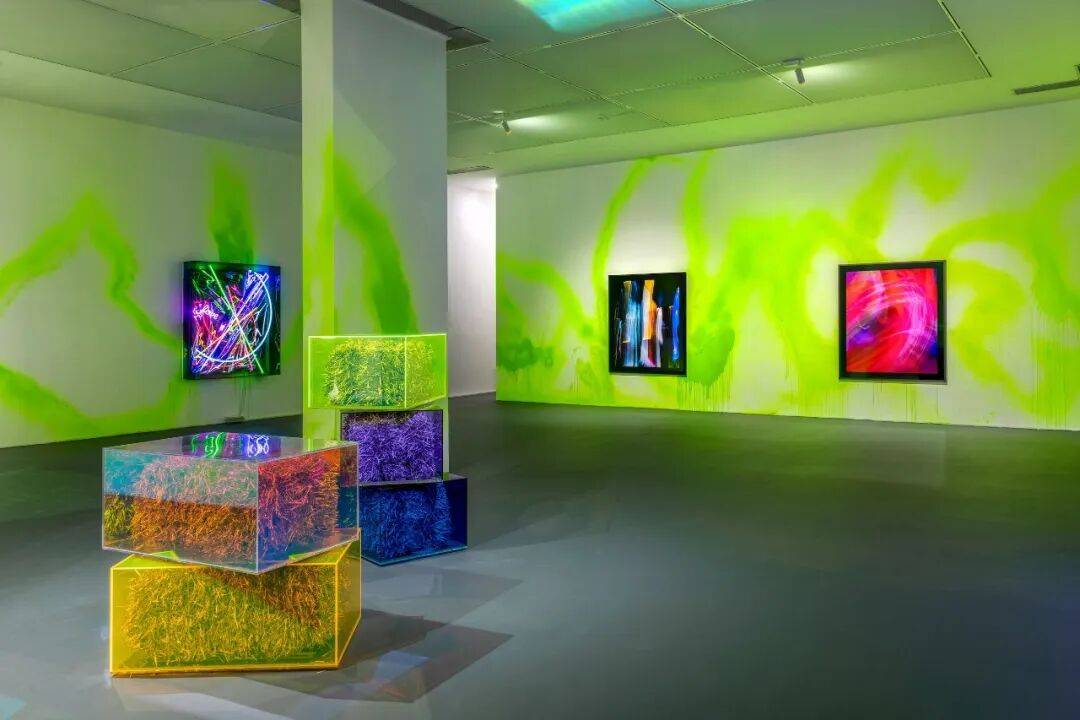
“This is exactly my dream home,” Reyle said. When he spoke about his wife and children, his expression turned especially warm and tender. He told us that his studio was also designed by his wife. Recently, they designed a new, gallery-like space together. At Reyle’s “Balance State” exhibition at SPURS Gallery, Beijing, in 2023, the white walls had been casually sprayed with fluorescent green paint: wavy outlines, circles, lines, and intersecting X shapes.
That freedom and casualness closely align with the artist’s principle of making whatever occurs to him.
At “Balance State,” at SPURS Gallery, Beijing, in 2023, Anselm Reyle’s Untitled, 2022, appears amid the green. Moving “through” it is the artist’s new body of work. Framed inside colored acrylic “picture frames” is his Metal Foil series, which he has continued for nearly 20 years; using ordinary aluminum foil from daily life, he bends and layers it to produce wholly different surfaces, depths, and textures. The highly reflective foil collides with differently colored acrylic boxes to create an optical illusion, as if the foil itself had been dyed with that translucent, gelatinous color.
In front of a work at “Balance State,” Anselm Reyle’s Untitled, 2023, the artist recalled that in 1997 he moved to Berlin, and his life changed. His most important body of work, the Metal Foil series, was born then and has continued for more than 20 years.
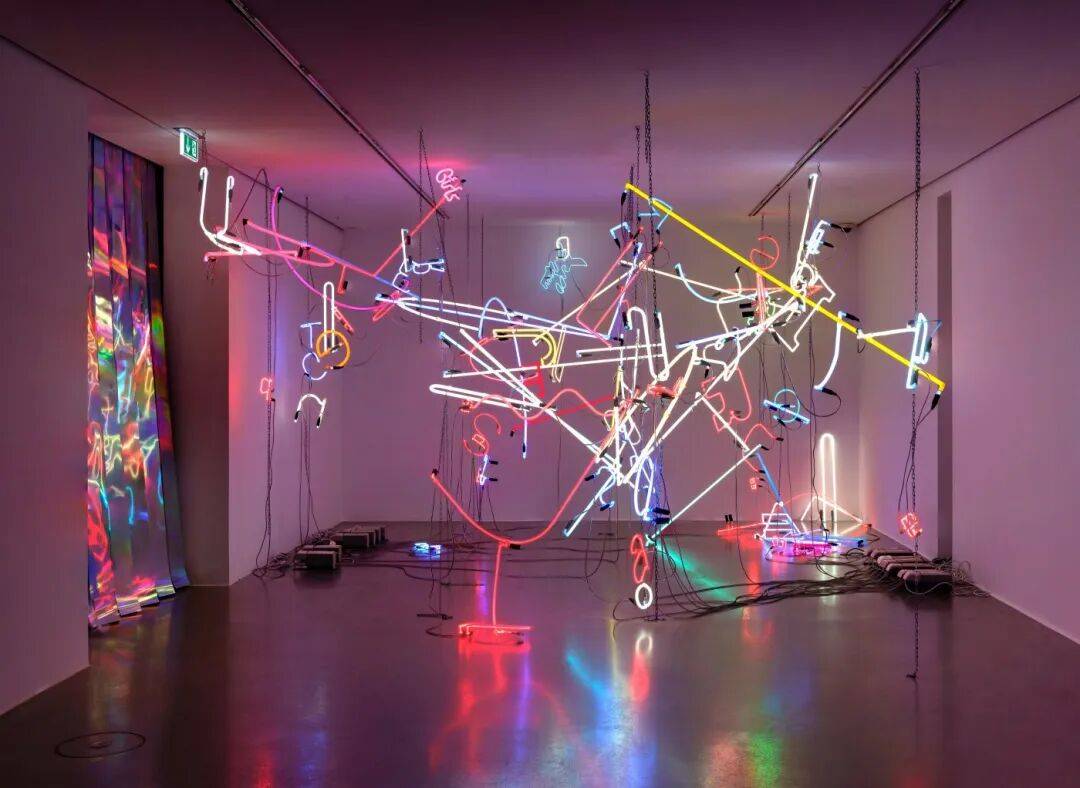
“When I moved to Berlin, I discovered different materials, like silver foil in shop windows and broken neon signs, and then I had the idea of making something like an installation, like a three-dimensional painting.” At “Balance State,” at SPURS Gallery, Beijing, in 2023, a first-floor neon installation is fixed to an irregular silver-foil surface; the colored luminous elements and the highly reflective material are “enclosed” by tinted acrylic glass, and the triple collision of color produces a dizzying effect.
This has long been Reyle’s style: using highly saturated color to leave viewers thoroughly dazed. He seems to have a special affection for industrial waste and scrap; he told us that he has even visited glassblowing factories to collect pieces that workers had botched.
SECTION 03 | 'Many People Hate My Art'
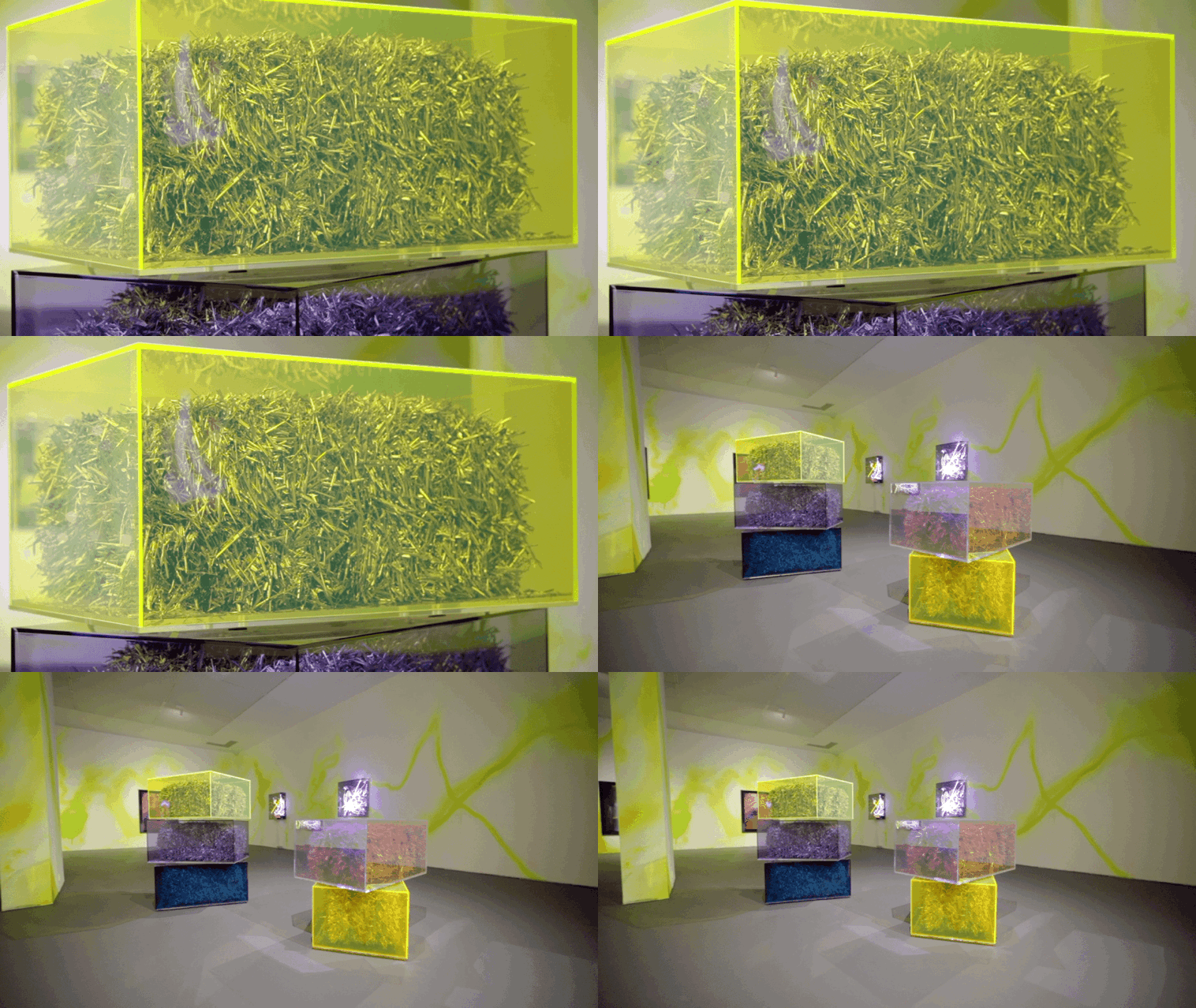
“These objects are like the castoffs of the city. They tell the story of our consumer society, and that is exactly where their charm lies.” At “Balance State,” at SPURS Gallery, Beijing, in 2023, another of the artist’s signature readymade series, Strawstack, also appears inside brightly colored acrylic boxes. They are stacked in twos and threes in the middle of the busy first-floor gallery. At first, we thought the “straw” inside was colorful too. Only when we moved closer did we realize we had been tricked again: the straw was entirely silver.
“Early in my career, I began making work with readymades from farms, for example old wagon wheels, these highly decorative objects. For me, there was pleasure in working with this discarded ornament and combining it with my paintings.
“That is where the prototype for the Strawstack series came from.” Anselm Reyle’s Untitled, 2023, and “Anselm Reyle: Balance State,” at SPURS Gallery, Beijing, in 2023, also introduced a new series that the artist had never previously exhibited: abstract oil paintings on coarse burlap.
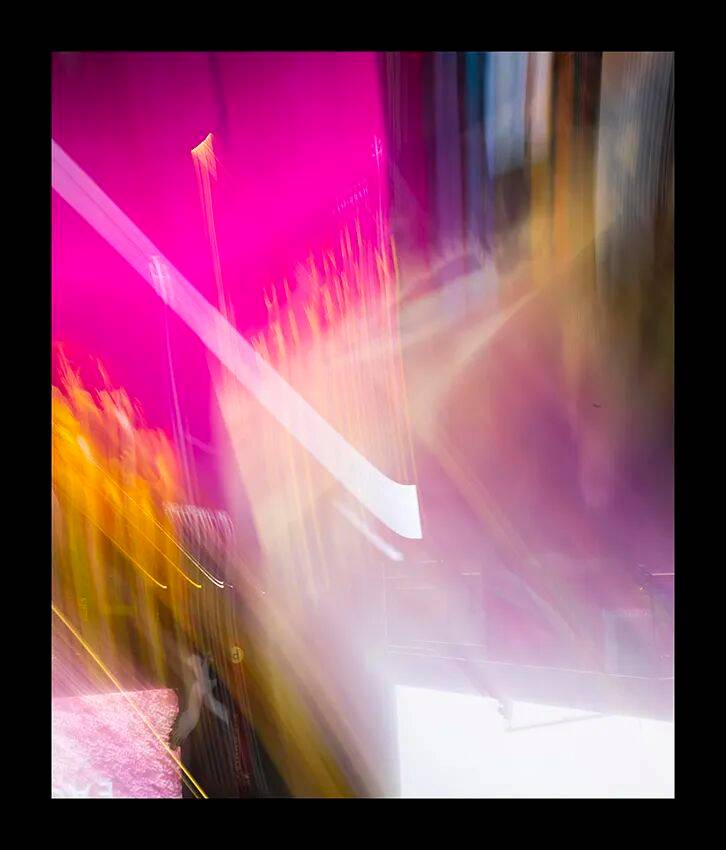
“This work is made up of different colors, textures, and materials, which I used before in my Stripe Paintings. Now I want to work in a freer, more spontaneous, more abstract, more grounded way.” His first photographic series was also on view in the gallery; for him, these photographs are like paintings made of light and shadow, and the camera is his brush.
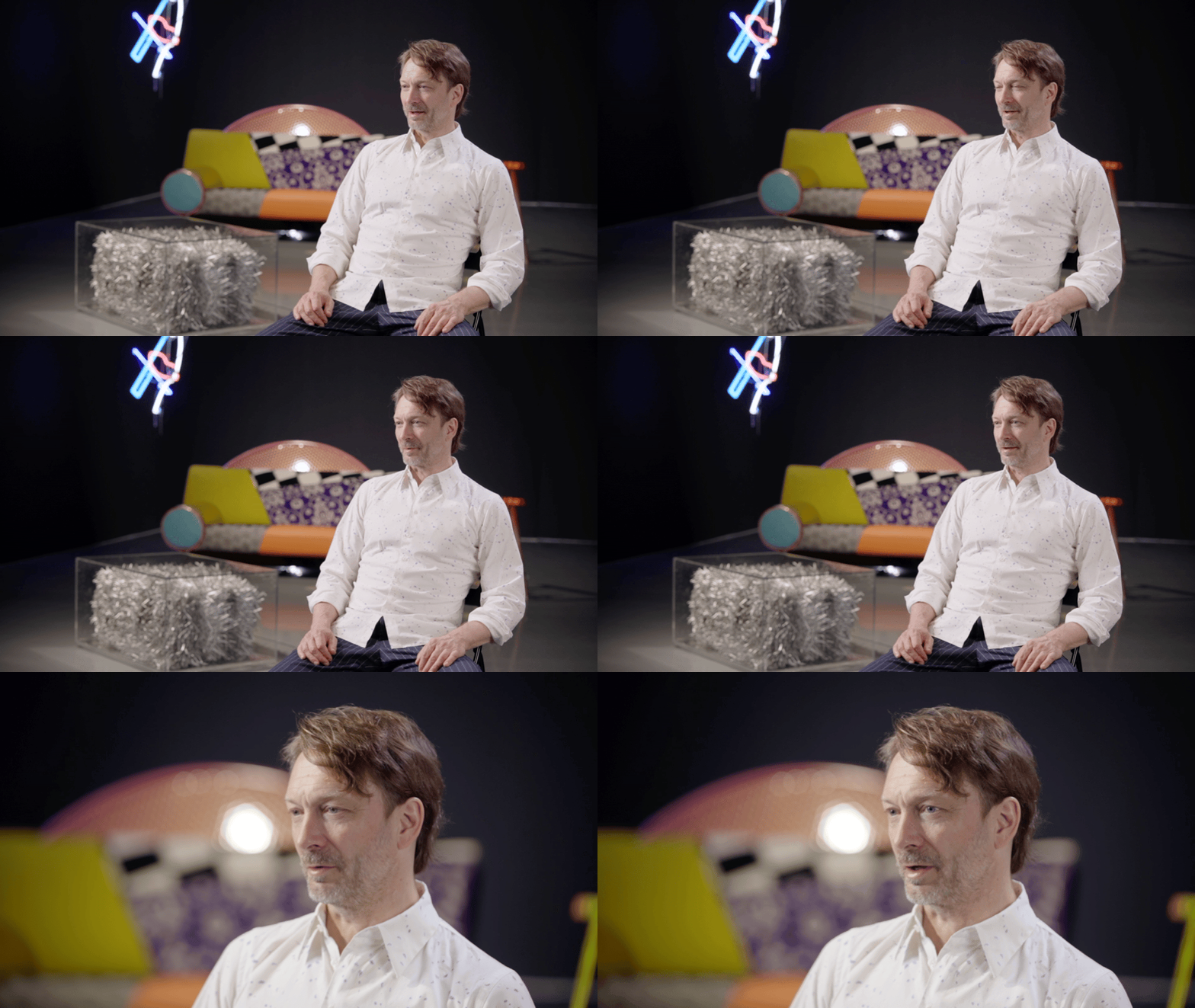
“I took several thousand pictures and then selected the images I found most interesting.” During an interview, we went upstairs with the artist and spoke face-to-face in this “black box,” painted in matte black. Against the dark surroundings, Reyle’s blond-brown hair seemed even brighter. In conversation, he was nothing like the stiffly formal German artist we had imagined; he was talkative, funny, and possessed an openness more often associated with American artists.
“I actually started out in design, which is very different from the art I make now. But later I became more and more interested in modern abstraction, and I wanted to break the boundary between design and art,” Reyle said. At “Anselm Reyle: Balance State,” at SPURS Gallery, Beijing, in 2023, he did exactly that, placing readymade sofas, a bar counter, and neon installations, objects suspended between art and design, in the same space as paintings and photographs.
Older work and newer work carried on a dialogue across time; standing there, we felt as if we were inside a disordered time capsule.
“The sofa is a work I made 10 years ago. At the time, I bought some fabrics on ebay with strange and interesting colors on them, then spliced them together using a modernist composition. As for the ceramic works, for me they are like painting on clay,” the artist said. At an open studio day for Anselm Reyle, he added, “My whole artistic practice has a lot to do with my childhood and youth. My mother was an artist, and she gave me enormous inspiration early on.
“She liked using different colors to maximize an artistic style, so I was never afraid of things that are grand and sweeping. She preferred traditional landscape painting and natural colors, but I prefer artificial colors, the colors of neon,” the artist said.
“When I was growing up, my parents were always trying to educate me with what they called ‘traditional good taste,’ but I was always interested in other, less respectable things.” Reyle said, with a laugh, that he used to be a rebellious problem teenager who threw himself into rock, punk, and underground music.
At “Anselm Reyle: When We Talk About Eternity,” at Aranya Art Center, in 2020, one might trace what came next. His turn toward art was driven, on the one hand, by the fact that he had always loved drawing since childhood and, on the other, by the influence of 1960s psychedelic art, which made him want to break with traditional aesthetics and with the barriers between different fields.
“The question I keep thinking about is: What is good taste, and what is bad taste? Maybe bad taste is more interesting than so-called good taste? And who is qualified to tell you what is good or bad? What you can do, and what you cannot do?” the artist said. He likes using industrial materials that would never be found in a home: “I think they represent the city and popular culture.” At an Anselm Reyle exhibition in Heilbronn, Germany, in 2022, he reflected, “For me, showing my work in galleries, museums, or art fairs is a strange experience.
“There’s no denying that many people hate my art, because they hate the materials I work with.” Reyle shrugged as he said this. He is deeply skeptical of what he called many viewers’ “bourgeois taste.” “I like playing with their aesthetics, and discussing these questions is part of what my work means.” Then Reyle smiled again, quite matter-of-factly: “Of course, I want viewers to like my work, but on the other hand, I know why certain people hate my work so much, and you have to accept that criticism, don’t you?”
At an Anselm Reyle exhibition in Seoul, South Korea, in 2013, another side of him was visible. “You know, I never actually imagined that I would become an artist. I was a terrible student and I skipped school all the time. Can you imagine? And now I teach in a school.” Reyle seemed entirely unembarrassed as he disclosed these youthful indignities. He said that he has never been a strategic person; making art, for him, has been a gradual process of coming to understand himself.
“Most important, I’m fascinated by the work I make myself. Art is about the self,” Reyle said with a smile. Image credits: SPURS Gallery, the artist’s studio, and Tanja Lincke Architekturburo.