Liu Jianhua’s New Shanghai Exhibition Charts Three Years of Inner Change
In “Metaphysical Vessels,” ten new bodies of work turn ceramic, metal, earth, and space into a meditation on uncertainty, memory, and the artist’s continuing search for form......
By / Xirui Huang · 13 min read
How does Liu Jianhua turn ceramics from everyday vessels into spaces for contemporary art?
In Xirui Huang’s 2022 interview, Liu Jianhua connects his early experience making ceramics in Jingdezhen with his later material experiments. At Fosun Foundation in Shanghai, Metaphysical Objects brings ceramics, wire, bronze and clay into a spatial encounter. Five container-like rooms evoke ceramic trade, while an expanse of clay and mud returns viewers to the material’s origins. Liu and curator Lu Mingjun explore how objects can move beyond utility to engage bodily perception, personal experience and philosophical questions.
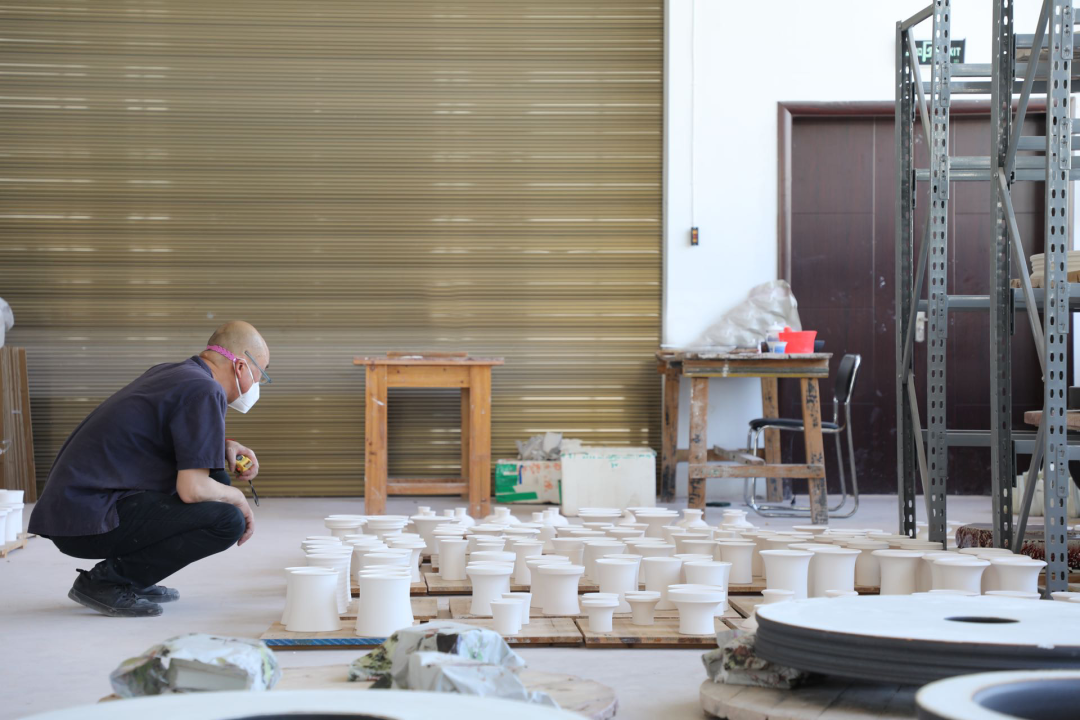
The artist Liu Jianhua with Taqi, a new work in the exhibition. In the summer of 1975, carrying his dream of becoming a painter, Liu Jianhua traveled from Ji’an to Jingdezhen. After moving between Yunnan and Shanghai, he has become one of the most experimental, representative, and internationally renowned artists in Chinese contemporary art. Liu has pushed ceramic material to its limits; his works are held in major museums around the world, and he has carried ancient Chinese modes of thought with him across the globe.
His work has also appeared in middle-school textbooks in France and Spain, introducing the world to an entirely new China through an unconventional artistic language. Installation view of “Metaphysical Vessels,” Liu Jianhua’s solo exhibition, Fosun Foundation, 2022. In early autumn, as the last heat of summer began to fade, Fosun Foundation in Shanghai opened “Metaphysical Vessels,” a large-scale solo exhibition that Liu had spent more than two years preparing. It presented ten new bodies of work made during the pandemic, charged with the feelings that moved him most deeply during that period.
Liu Jianhua’s New Shanghai Exhibition Charts Three Years of Inner Change
The institution remarked that it was the most difficult solo exhibition to install since its founding. On the second floor, the gallery was divided by “shipping containers” into five spaces, evoking the history of China’s porcelain trade as if it were floating on the Huangpu River. The third floor, meanwhile, was covered with slurry and ceramic clay, like a pool turned solid.
“I hope that when viewers walk in, they will feel ‘at a loss,’” Liu Jianhua told us. Before the opening, we spoke with Liu, who was busy overseeing the installation, and with the curator Lu Mingjun about this unusual exhibition and the artist’s work and life. Chi, Fosun Foundation outdoor plaza, first floor, 2022. A bright yellow “ruler,” rising from the plaza, forms a striking counterpoint to the museum’s red-copper-colored building.
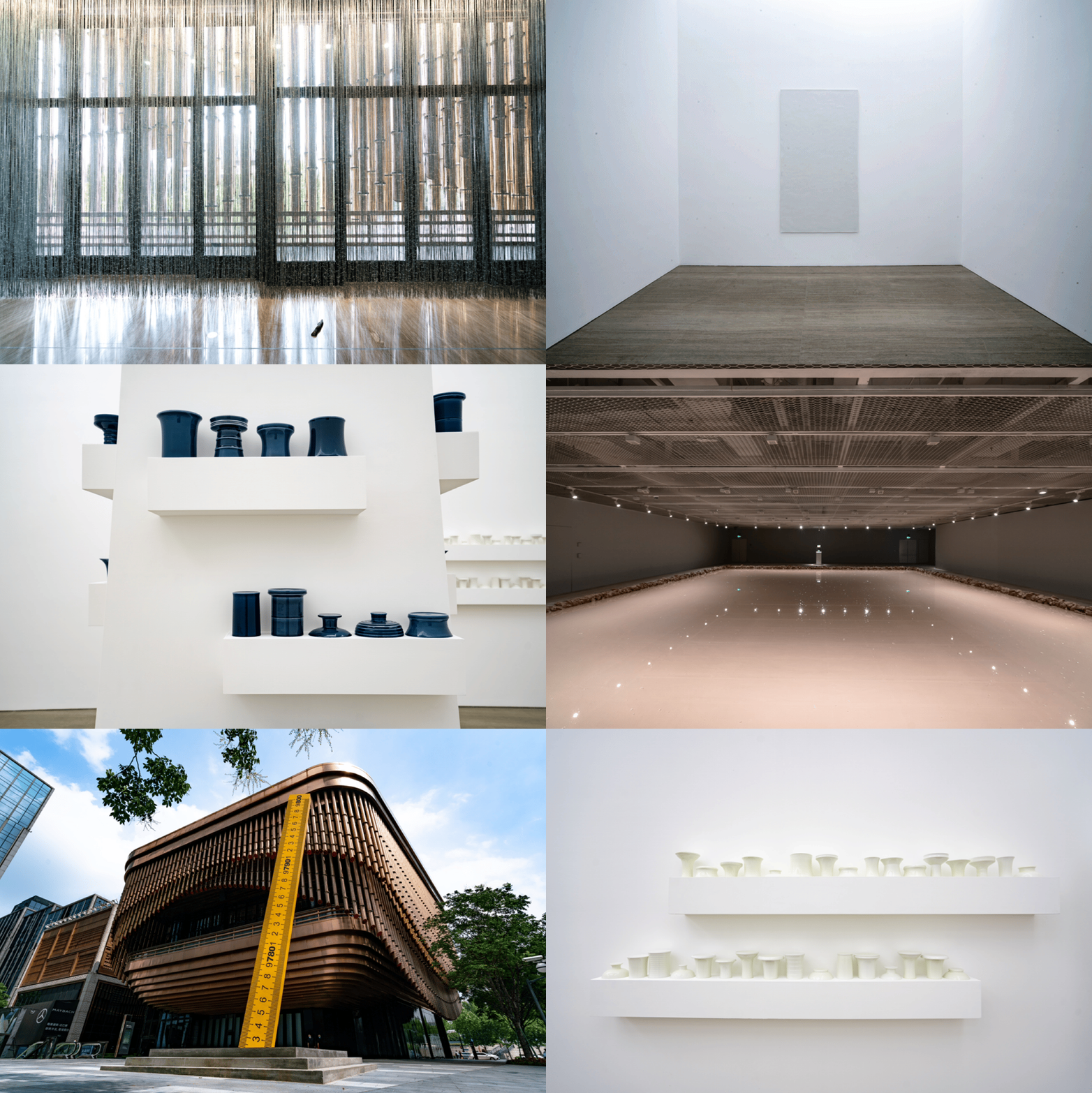
The 8.5-meter-high installation Chi is Liu Jianhua’s newest work of public art. The entire structure was welded and polished from steel, then finished using automotive paint. Cutting through the air and into the ground, it suggests that in ceramics, everything depends on the firing, while in all things, value lies in proportion. On the second floor, the gallery’s original openness had been divided into five separate rooms by ocher-yellow plasterboard walls. With the Huangpu River visible through 6.3-meter-high floor-to-ceiling windows, the rooms seemed like five “boxes” floating on the water—an immediate evocation of the exhibition’s subject: the history of Chinese ceramics exported abroad.
Installation view of “Metaphysical Vessels,” second-floor gallery, Fosun Foundation, 2022. “The space at Fosun Foundation is unusual. It isn’t a standard white-cube museum, with enclosed walls. In a sense, it has to be ‘tailor-made,’” the curator Lu Mingjun told us. “We imagined the entire second floor as a sea level—or, if you prefer, a wharf. The five spaces are like five shipping containers, filled with ceramic works.”
They also respond to Chinese ceramic trade in the early age of globalization. Jingxiang, 2016–2022. Installation view of “Metaphysical Vessels,” second-floor gallery, Fosun Foundation, 2022. The exhibition imposes no prescribed route. Viewers may enter any of the spaces and experience the relationship between the physical and the spiritual. Some of the five “containers” are painted entirely black, others entirely white; the abrupt shifts in color make each space feel like a different place of meditation.
“We don’t want to create a complete sequence, because the ocean has no logic,” Lu said. The exhibition’s works continue the artistic line Liu Jianhua has pursued throughout his career, but they are more private and inward. In an interview, the artist said, “In recent years I’ve sometimes read books on the history of ancient Chinese architecture and on Chinese philosophy. That’s simply my own interest; it doesn’t necessarily solve any particular problem right away.” Taqi, 2021–2022. Installation view of “Metaphysical Vessels,” second-floor gallery, Fosun Foundation, 2022. The works in the first “container” seem to restore ceramics to their basic vessel forms. Their shapes suggest elementary receptacles, but they are highly abstracted, as if fragments of familiar objects—a lid, a bottle neck, a bowl’s rim—had been isolated.
Liu Jianhua told us, “Ceramic material is actually connected to nature. Ancient people gathered mineral-rich clay from the mountains, smelted it, and then, through their understanding of the material, created those glazes. The colors resemble precious jade, but because the vessels have practical uses, they also possess an everyday quality.” Forms of Traces, 2016–2022. Installation view of “Metaphysical Vessels,” second-floor gallery, Fosun Foundation, 2022. Liu says he is especially fond of ceramics from the Song dynasty. He believes their atmosphere can be felt even through the glass of a museum display case, and that it cannot be replicated.
“The vessels we now see from the Jun and Ru kilns of the Song dynasty are extremely abstract. They embody a way of understanding and cultivating these objects that differs from that of other dynasties, and their aesthetic is remarkably pure. They are no less significant than Western abstract painting, or works of minimalism.” Lu Mingjun, for his part, said, “I think the artist has made a major breakthrough in this exhibition. He is no longer simply translating one or two kinds of objects into an artistic language, as he did in the past.
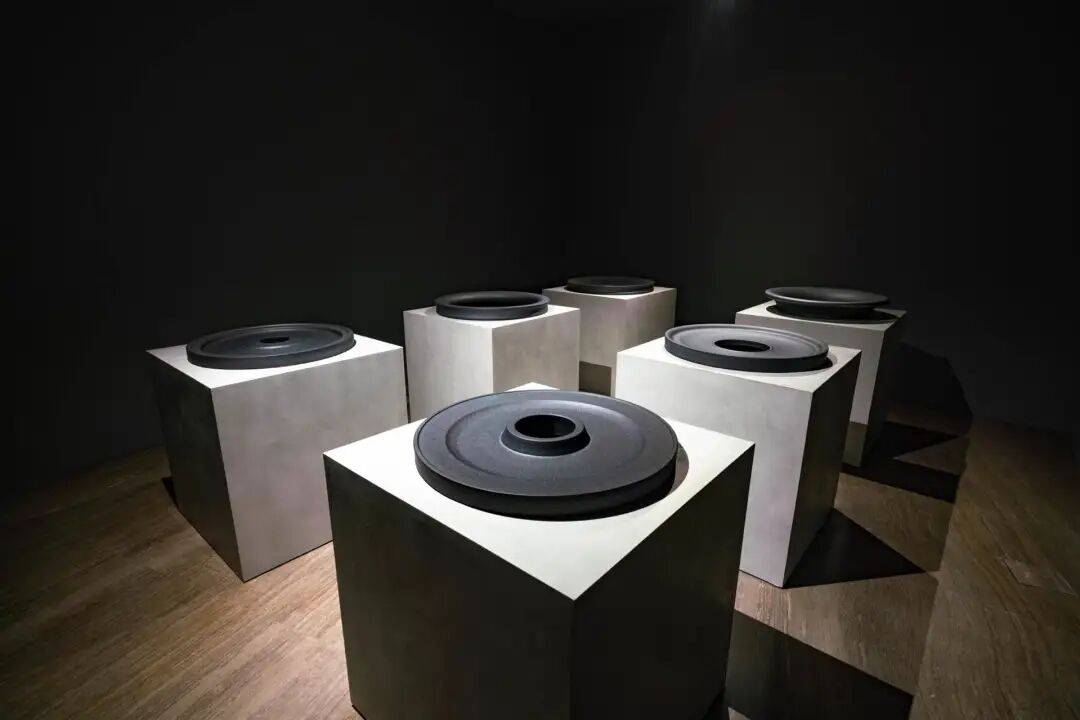
“He has invested a great deal of effort in the materials, including experimenting and creating with meteorite glaze, a distinctive method of production, in order to discover the energy it might release.” Gas, 2022. Installation view of “Metaphysical Vessels,” second-floor gallery, Fosun Foundation, 2022. Gas was made in March of this year and is a work the artist considers particularly private. Six differently shaped pieces, all black, were made entirely with meteorite glaze. Though ceramic, they have the feel of metal.
Liu Jianhua said, “Before, I was basically commuting between Jingdezhen and Shanghai. I went to Jingdezhen at the end of February, and then, because of the outbreak in Shanghai, I couldn’t get back. But my family was in Shanghai, so I was extremely anxious. In that environment, everyone was helpless; you didn’t know what was going to happen. The only thing you could do each day was work hard and video-call your family. This work emerged as many thoughts continued to deepen. It’s difficult to say that it had a direct relationship with the pandemic, but it certainly came from what I was feeling at that time.”
Gas during spraying. Installation view of “Metaphysical Vessels,” second-floor gallery, Fosun Foundation, 2022. At the center of Gas is a black hole containing a device that sprays water. Water and air, the elements on which human life depends, have been given concrete form by the artist.
“Many things you once possessed can suddenly disappear in a single moment. In the end, you discover that you have returned to the starting point, and this is something you cannot judge or foresee. Over several thousand years, we have developed from antiquity into modern civilization, and society has changed beyond recognition. Starlink, rockets, space tourism, human-machine brains. But in a particular situation, if we return to the most primitive stage, we discover that all we have is water and air.”
SECTION 02 | From Ji'an, Jingdezhen, Kunming to Shanghai, constantly challenge yourself
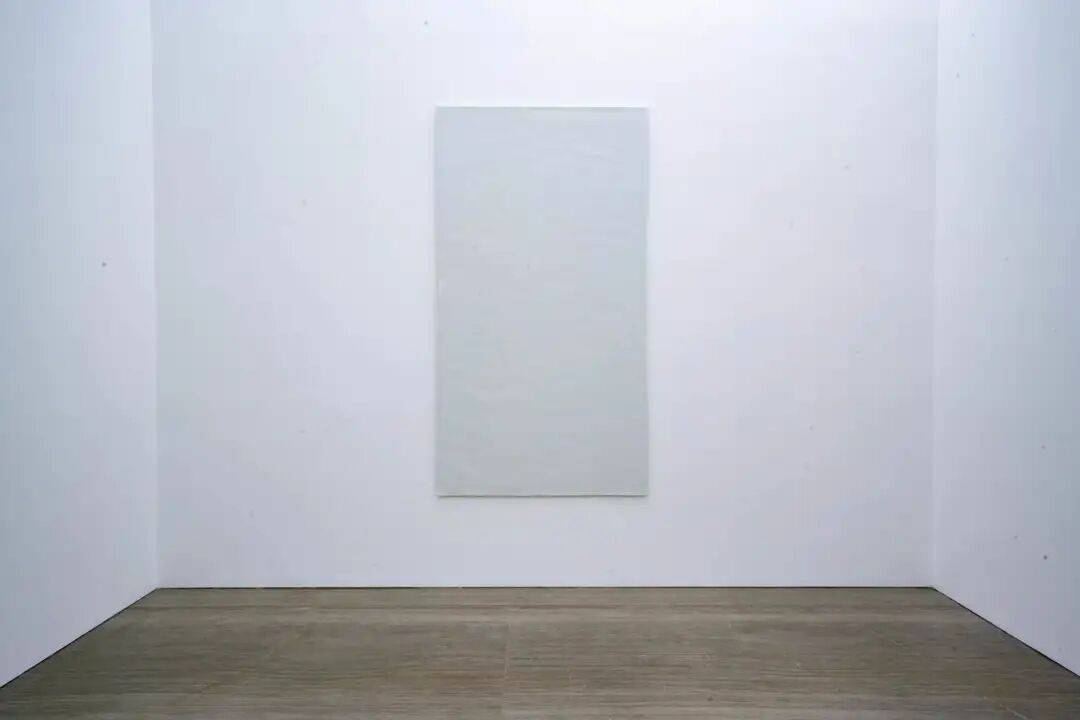
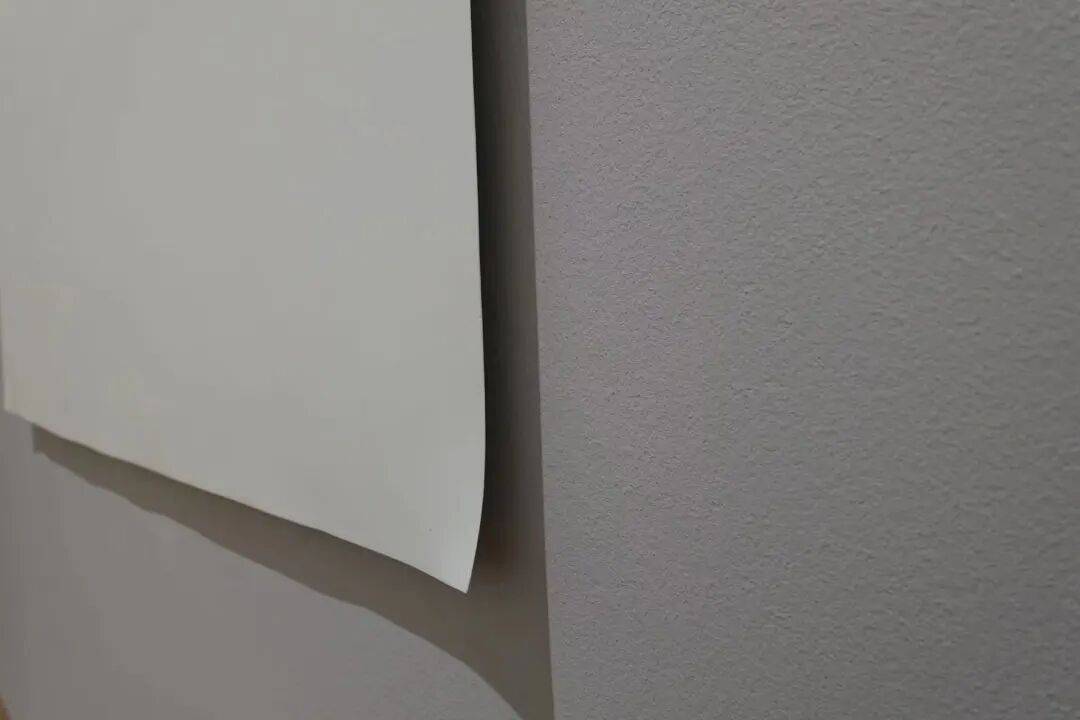
Liu Jianhua said. White Paper, 2008–2019. Installation view of “Metaphysical Vessels,” second-floor gallery, Fosun Foundation, 2022. Emerging from the black “container,” viewers enter an entirely white space in which a single enormous “sheet of paper” hangs. White layered upon white creates a kind of static resonance. This White Paper is also the largest “sheet” the artist has made.
The “paper” is unglazed. Its curvature, texture, and sheen closely resemble those of actual white paper, while a hint of hardness shows through from within. Since 2008, more than a decade of experience and practice has allowed the White Paper series to evolve into an organism. Compared with the artist’s earlier work, the new pieces on view possess a stronger sense of futurity and mystery, inseparable from his reflections on human philosophy.
“Where do you come from, and where are you going? In fact, no one really knows, right? Much of the time people are pursuing pleasure or possession, while many of the things confronting us today are actually connected to desire. I think art can produce a form of expression, and every artist may have a different way of doing that,” Liu Jianhua said. 1.2 Meters, 2012–2022. Installation view of “Metaphysical Vessels,” second-floor gallery, Fosun Foundation, 2022. Ceramics was not the only material he used in the exhibition.
Hanging before the second floor’s floor-to-ceiling windows, the “iron curtain” across the river produces an immediate shock, both visually and within the exhibition’s larger structure. Made entirely of wire, it spreads across the inner wall like a curtain, allowing light to pass through in places. The wire suggests unease and danger, seeming almost—but not quite—to move. Installation view of “Metaphysical Vessels,” second-floor gallery, Fosun Foundation, 2022. Connecting the five “containers” are “roots” cast in bronze, lying brutally across the floor and climbing the walls, insisting on their presence.
“Roots are full of vitality,” Liu Jianhua said.
“These ‘roots’ imitate plants on the sea floor. They spread onto the containers, as if the containers had been sitting here, unmoving, for a very long time,” Lu Mingjun said. The sea is still, and the containers are still, yet movement and vitality continue to grow without limit through the space. In the galleries, viewers sense a subtle spiritual tension that seems unrelated to reality and yet somehow inseparable from it. Intangibly, 2022. Installation view of “Metaphysical Vessels,” third-floor gallery, Fosun Foundation, 2022. The third-floor gallery is an entirely different world.
Liu Jianhua used ceramic clay and slurry to create a vast “flood pool.”
“I hope that, at the instant people enter this space, they will ideally feel ‘at a loss,’” he said. The artist believes that mud—a natural, gentle material and the substance from which ceramics are made—can give people the sensation of breathing in nature. Our dialogue with “nature” inside this enclosed space seems to take place in an entirely new language.
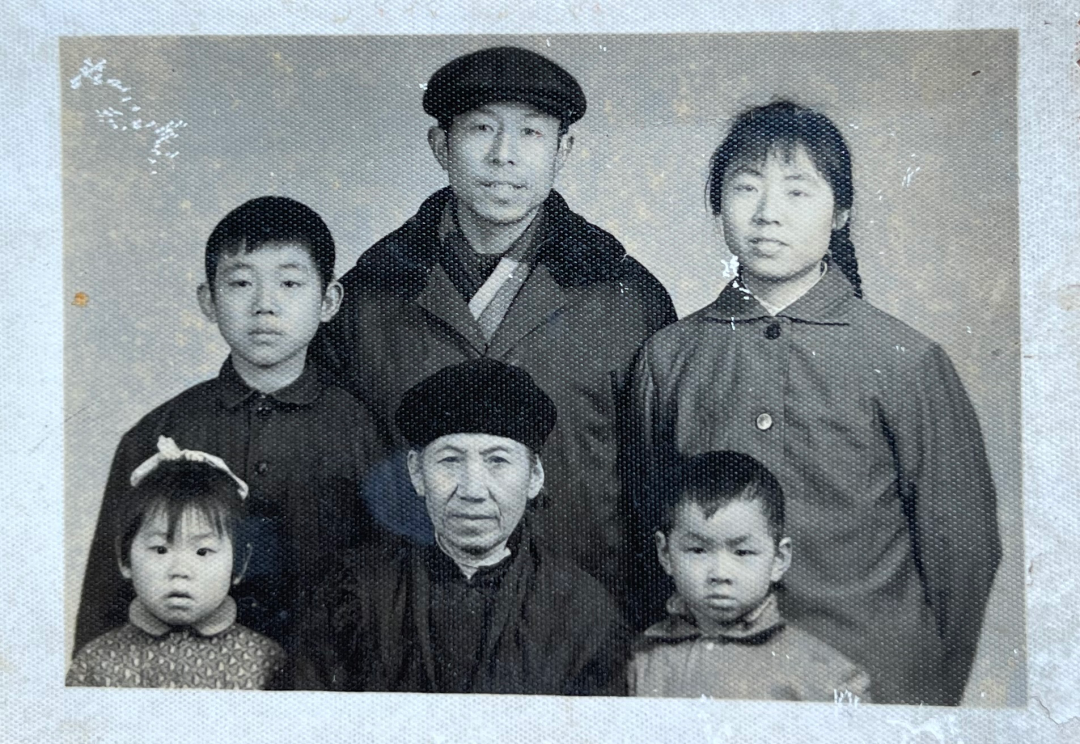
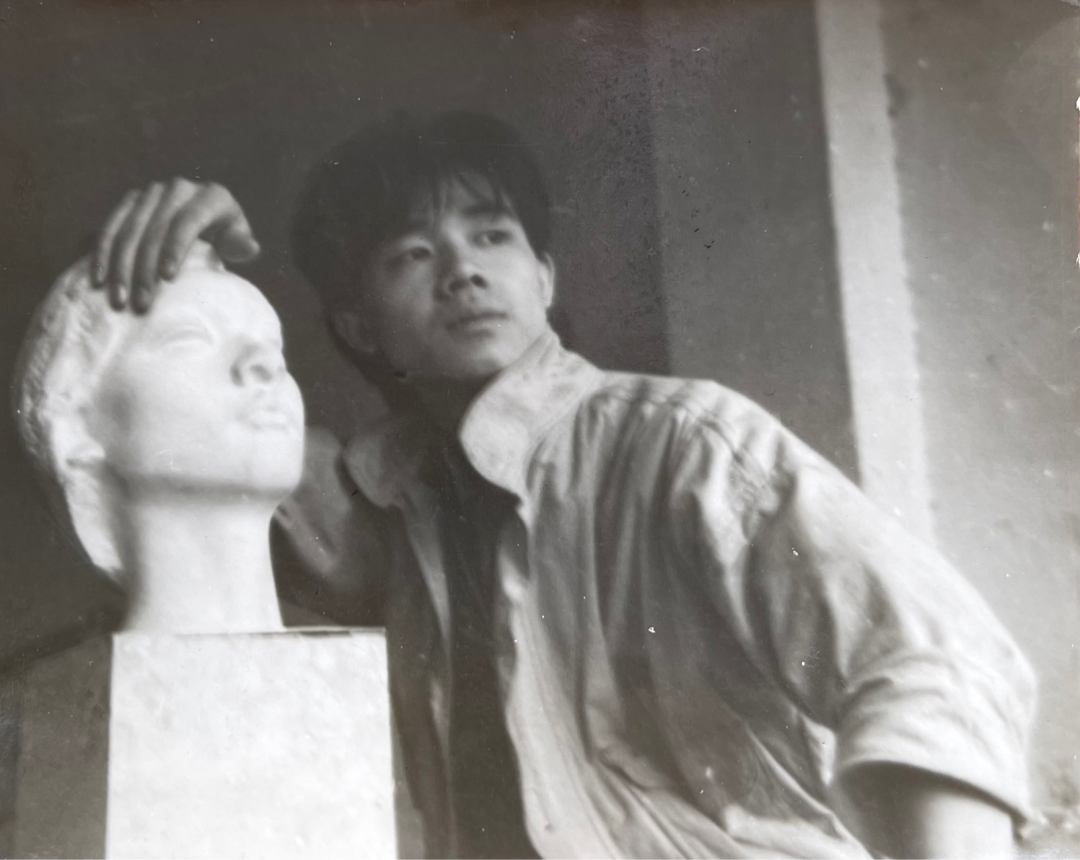
“Because the work is called Intangibly, it is inherently full of atmosphere. In that state of confusion, viewers will search for and contemplate many things, and everyone’s experience will be different,” Liu Jianhua said. For him, watching viewers seek out their own answers is also one of the greatest satisfactions of being an artist. Liu Jianhua with his maternal uncle’s family in Jingdezhen, 1976. Liu Jianhua, age sixteen, at the Jingdezhen Sculpture and Porcelain Factory, 1978. Speaking about his artistic path, Liu said that he is the kind of person who continually uses changes in his external environment to spur himself forward.
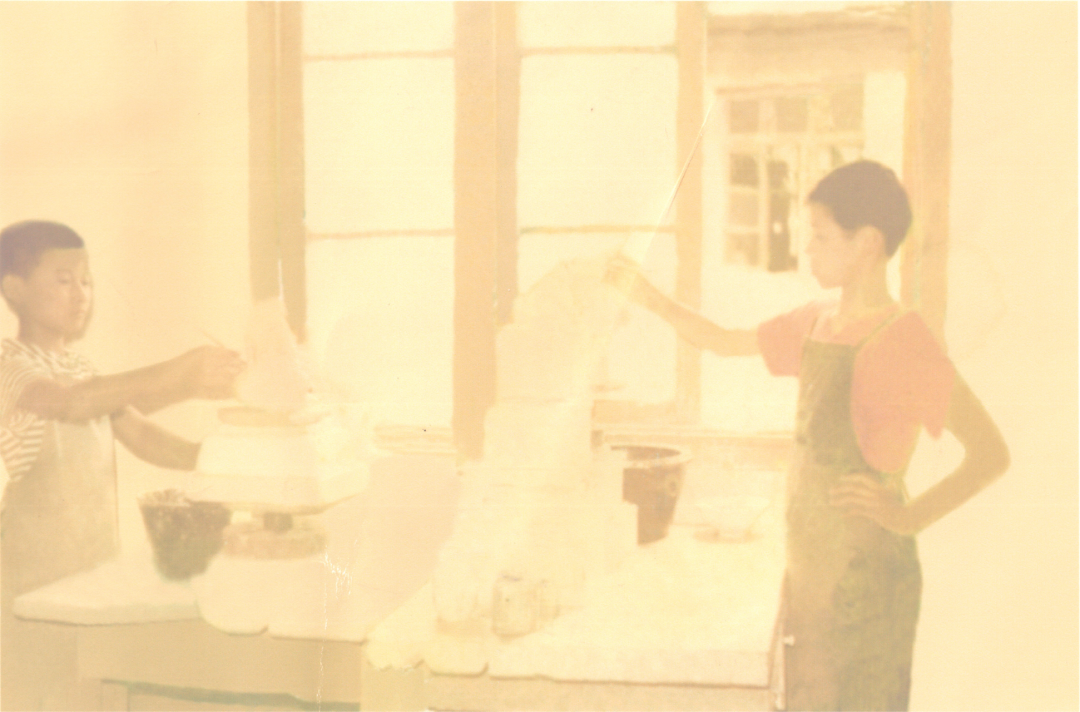
Liu Jianhua was born in Ji’an, Jiangxi, in 1962. In 1975, at the age of twelve, he left school and home to pursue his dream of painting, traveling from the small city of Ji’an to Jingdezhen to study with his maternal uncle, who worked at an art research institute. At fifteen, he entered the Jingdezhen Sculpture and Porcelain Factory, where he learned the entire sequence of processes, from clay to mold-making, modeling, pressing, slip casting, and glazing. All of it became his life.
“I spent eight years at the Sculpture and Porcelain Factory, and I felt constrained, as if I were growing inside a frame. But society and the era were changing dramatically, and I couldn’t bear to stay there forever,” Liu Jianhua said. At the time, the only way out seemed to be taking the university entrance examination. After work each day, he rode his bicycle to find people to draw with, becoming so absorbed that he even sought out fellow artists to sketch with on Lunar New Year’s Eve. Liu Jianhua at the rear hill of the porcelain factory, 1979. Photograph of Liu Jianhua during his university years in Jingdezhen. After two years of preparation, he was finally admitted to the sculpture department of Jingdezhen Ceramic Institute, now Jingdezhen Ceramic University.
“I chose sculpture first because I liked it, and second because although I was making traditional sculpture at the factory, it was still three-dimensional. I loved and was sensitive to that form and mode of expression,” Liu Jianhua said. After graduating in 1989, Liu moved to Kunming to teach at Yunnan Arts University. There he met many friends working in experimental art, which broke open the limitations of his inherited ideas about artistic expression.
“I often say that exchange is important. An artist is like a confined, sealed space; artistic exchange creates cracks that allow you to breathe and take in air again. Changes in your knowledge and ideas enable you to express thought through materials, let works converse with space, and create a field for thinking,” Liu Jianhua said. Liu Jianhua, Direction of the Spirit—Drifting Series, 1992–1993. Liu Jianhua, Painted Sculpture Series—The Secret, 1993–1995. He remained in Yunnan for fifteen years.
“Actually, artists were quite comfortable there, and quite free.” During those years, he created a series of works related to the body. They were inseparable from the Western sculptural forms he encountered while studying in the sculpture department—figures and heads—and from his exposure to the work of Michelangelo, Phidias, Rodin, Brancusi, Henry Moore, and many other masters. Liu Jianhua, Painted Sculpture Series—The Memory of Infatuation, 1997–1999. “People born in the 1960s were relatively repressed. At that time, boys and girls didn’t talk much.”
The headless, armless female bodies in Liu Jianhua’s works of the 1990s invite endless speculation. He outlined the women’s qipao with black-gold glaze and gilt lines. At a time when ceramics were still regarded, in the popular imagination, simply as a material for arts and crafts, reclaiming the material and bringing it into contemporary art seemed, for Liu, almost preordained.
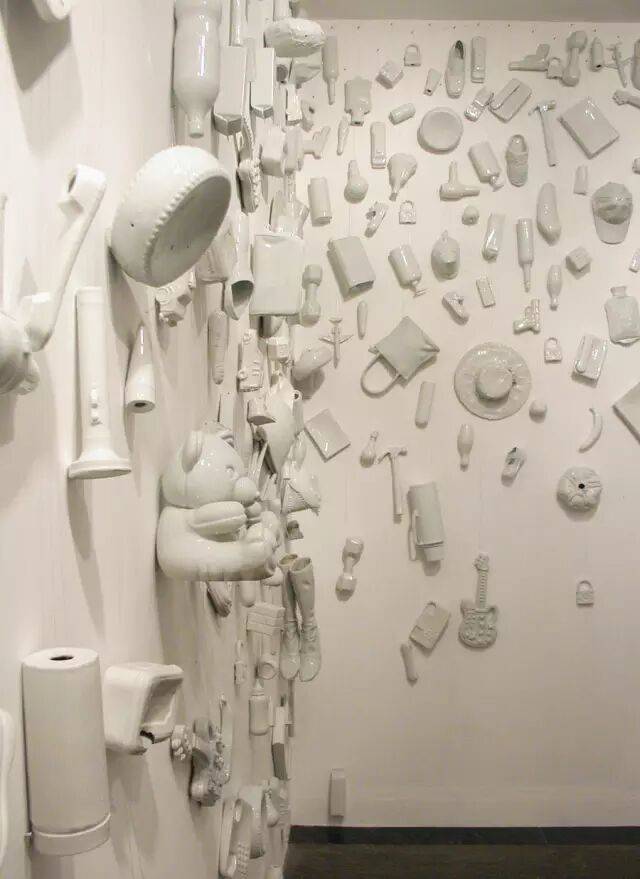
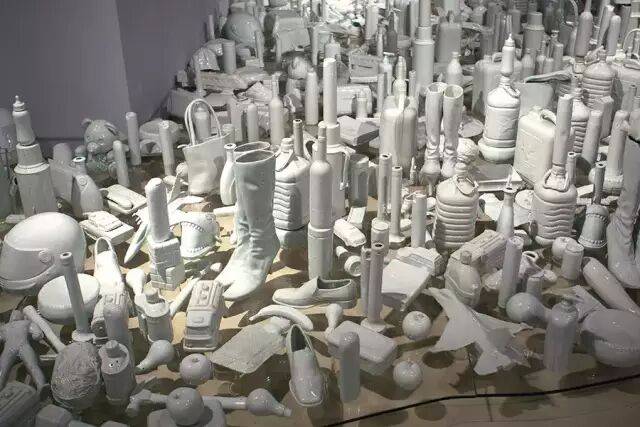
“My entire adolescence was connected to ceramics. It accompanied me as I grew up; you could say it entered my bloodstream. My interaction with ceramic material, and the process of deepening that relationship, may make my understanding of ceramics different from other people’s. There’s no hierarchy in that; I simply think it has its differences.” Liu Jianhua, Daily · Fragile series, 2001–2003. Liu Jianhua, Reflection in Water, 2002–2003. Liu Jianhua, Floating Landscape—Both Banks of the Pujiang, 2010. Daily · Fragile used more than 1,000 reproduced everyday objects in ceramic to form a portrait of China’s rapidly developing cities around 2000.
“At that time, I hoped to bring art into the changes taking place in society,” Liu Jianhua said. In 2004, he moved from Yunnan to Shanghai. For someone accustomed to Yunnan’s leisurely way of life, the shift from one city to another was a profound shock.
SECTION 03 | I really like the profession of artist
“I had an opportunity to transfer to the School of Fine Arts at Shanghai University. I’m naturally dissatisfied with the status quo, so I chose to accept that opportunity and challenge. Shanghai is like a mixer. Every morning you wake up and begin working; you face different things. Many forces push you forward involuntarily, and in the process you have to keep confronting and transforming the form of your work,” Liu Jianhua said. Liu Jianhua, Horizon series: Container, 2009; Horizon series: A Reed Boat, 2009; Horizon series: Bone, 2009; Liu Jianhua, Signs, 2011–2020. Perhaps Shanghai’s accelerated pace drove the artist to consume himself too quickly. In 2008, an old illness returned, and Liu wanted to slow down. He proposed “meaninglessness, contentlessness,” believing that artists should maintain a distance from reality.
His work shifted from intricacy and color toward the quiet and purity associated with minimalism.
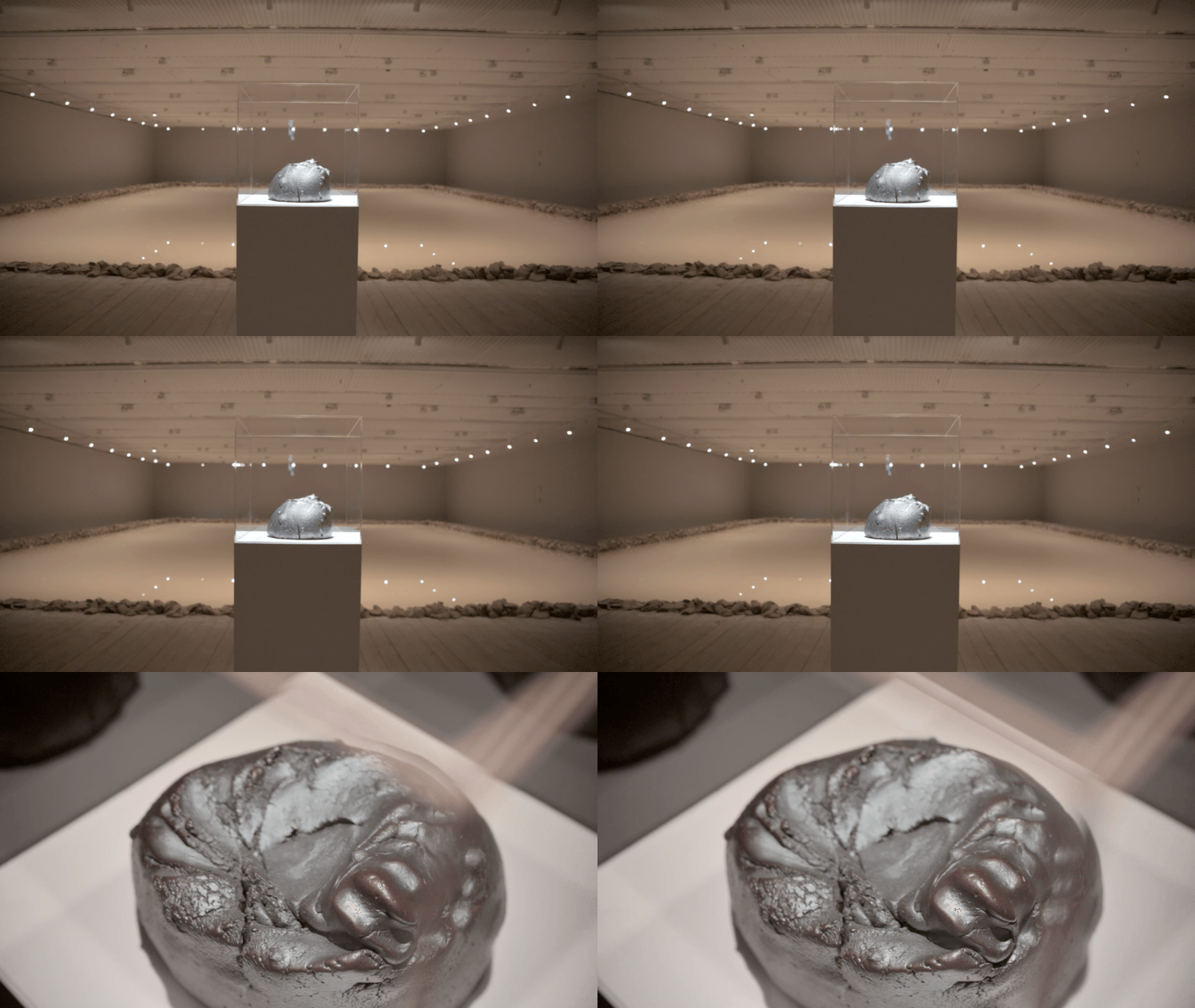
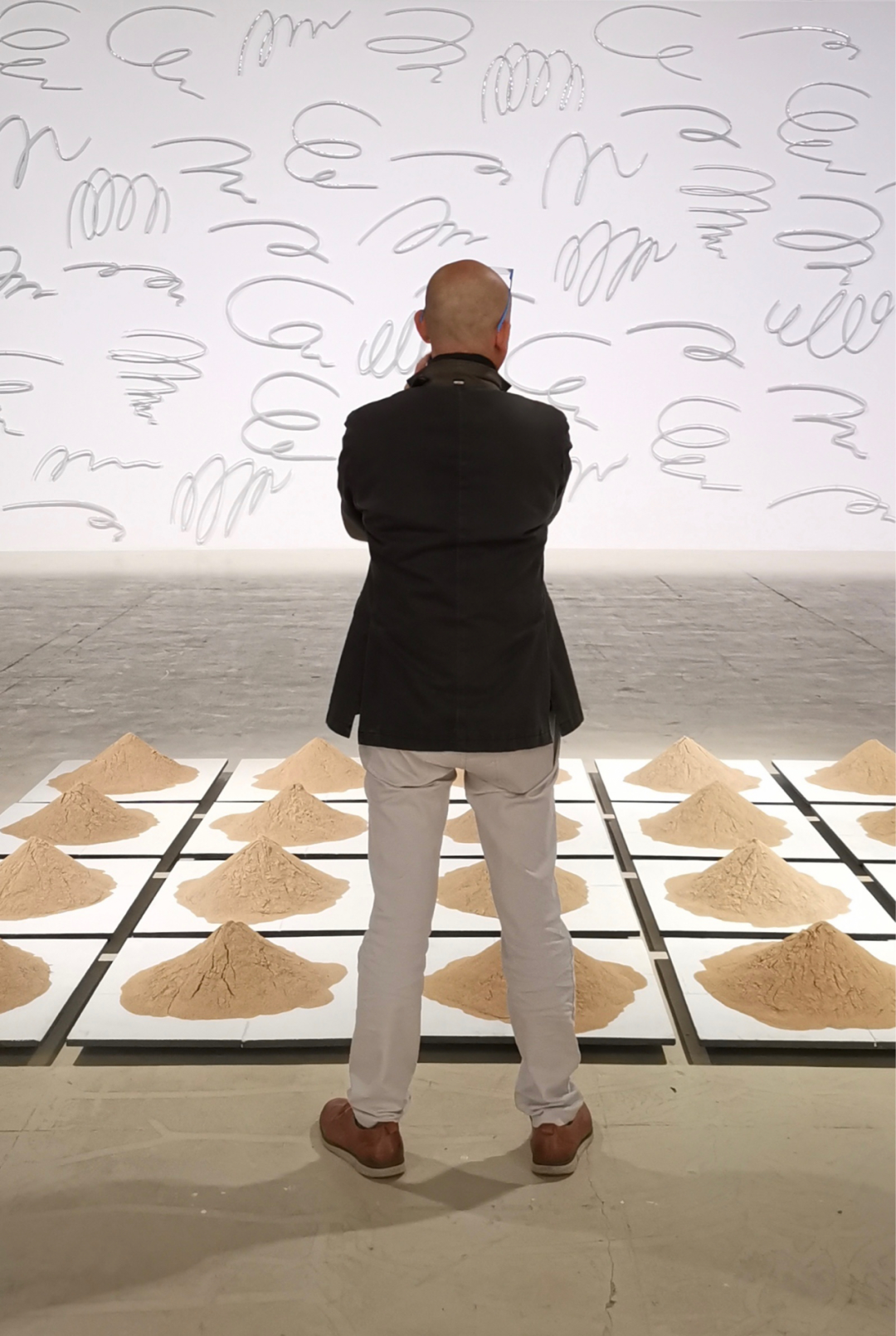
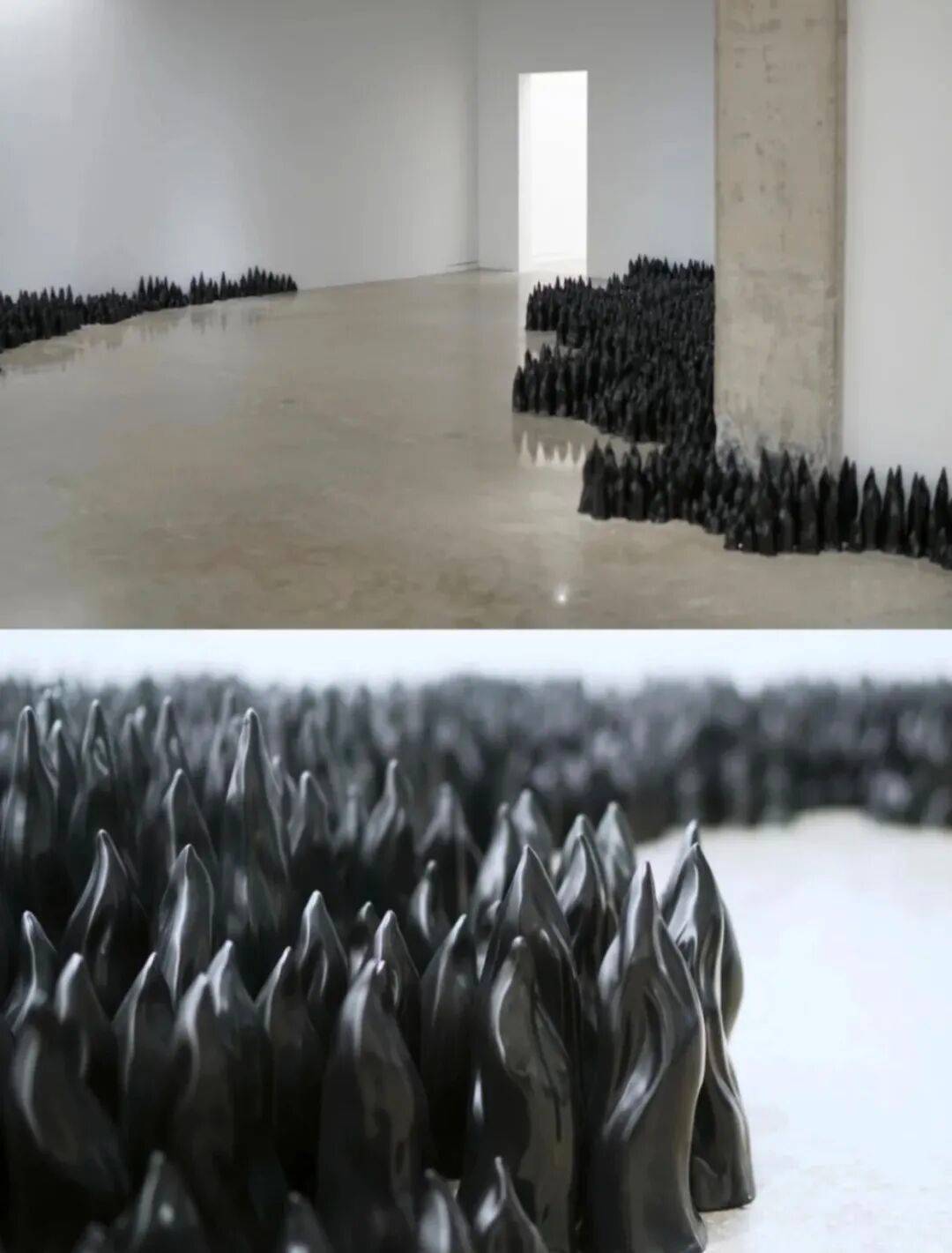
“A sheet of white paper,” “a reed boat,” “a drop of ink,” “a bone,” “a line” . . . By repeatedly polishing and caressing ceramic, he made the material take on a sacred and philosophical quality. Liu Jianhua with Sand. Liu Jianhua, Sand, 2012–2019. “It was only gradually, late in my career, that I realized the eight years at the ceramic factory were also a kind of fate. My intuition about ceramics and my understanding of the material mean that whether I’m drawing inward or opening outward, I can move in and out with great ease.
“That was when I realized that life really cannot be planned. You never know what will happen,” Liu Jianhua said of his relationship with ceramics. Liu Jianhua, Black Flame, 2016–2017. His work has also employed many other materials, including cast bronze, cast iron, glass, wood, plaster, wire, fiberglass, earth, and gravel. His exploration of unknown materials also represents a way of thinking through his identity as an artist.
“Everything is unknown, and we all have to face many problems. When you face reality, for example, you need a certain sensitivity, as well as a psychological forecast based on your structure of knowledge,” Liu Jianhua said. This is also why he likes being an artist: “As an artist, you can remain within your own system and let your imagination run freely, deepening yourself and creating continuously. In that space, you gain many forms of free expression.”
Liu Jianhua, Core Gathering, 2012–2018. Liu Jianhua, Breathing Landscape, 2018. Once this kind of expression accumulates to a certain point, a contextual relationship forms among Liu Jianhua’s works. Without the earlier “abundance,” there could be no later “simplicity.” To us, the artist’s style, use of materials, and concepts have changed dramatically since the 1990s.
Liu Jianhua’s New Shanghai Exhibition
Yet he told us that he had not changed.
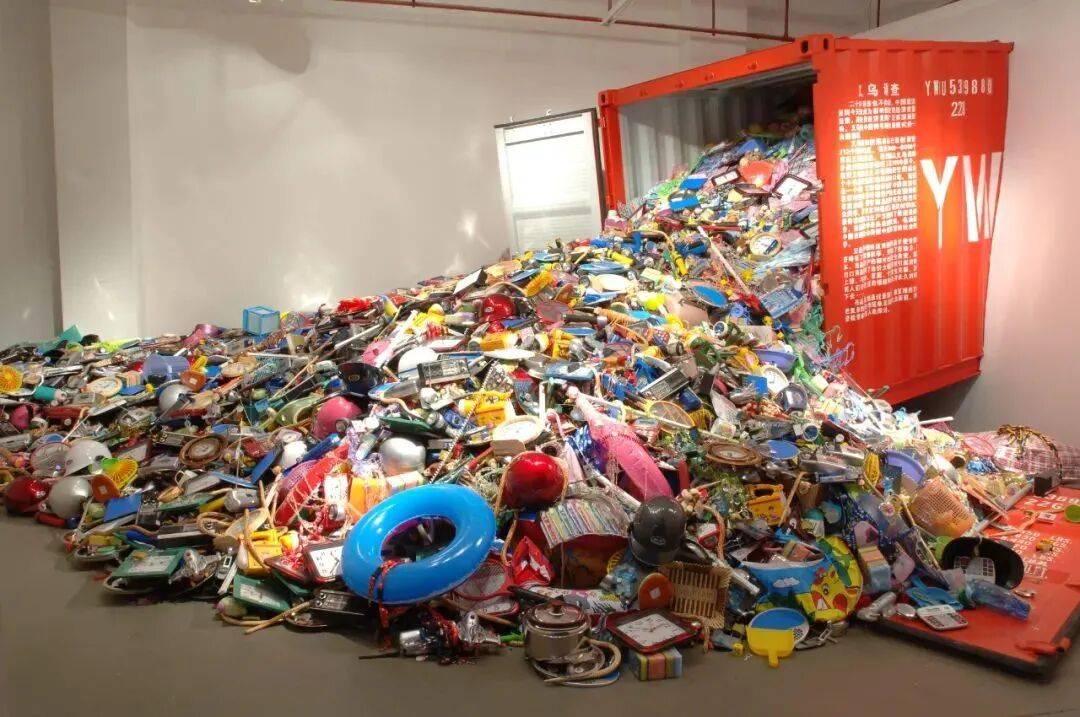
“My greatest change is that there has been no change. You see changes in the work; I see myself continuing to express within a personalized system of settings and according to my constant personal values,” Liu Jianhua said with a smile. Liu Jianhua, Yiwu Survey, 2006. Installation view of the Sixth Shanghai Biennale, Super Design, 2006. Liu Jianhua, Exit—Cargo Transshipment, 2007. The artist said what he finds especially interesting is that his works continue to develop conceptual changes over time.
Those changes may come from outside. One example is Yiwu Survey, a work that appeared in middle-school textbooks in Spain and France. Countless small commodities burst out of a shipping container; at the time, the artist wanted to discuss the dialogue in trade between developing and developed countries against the background of globalization.
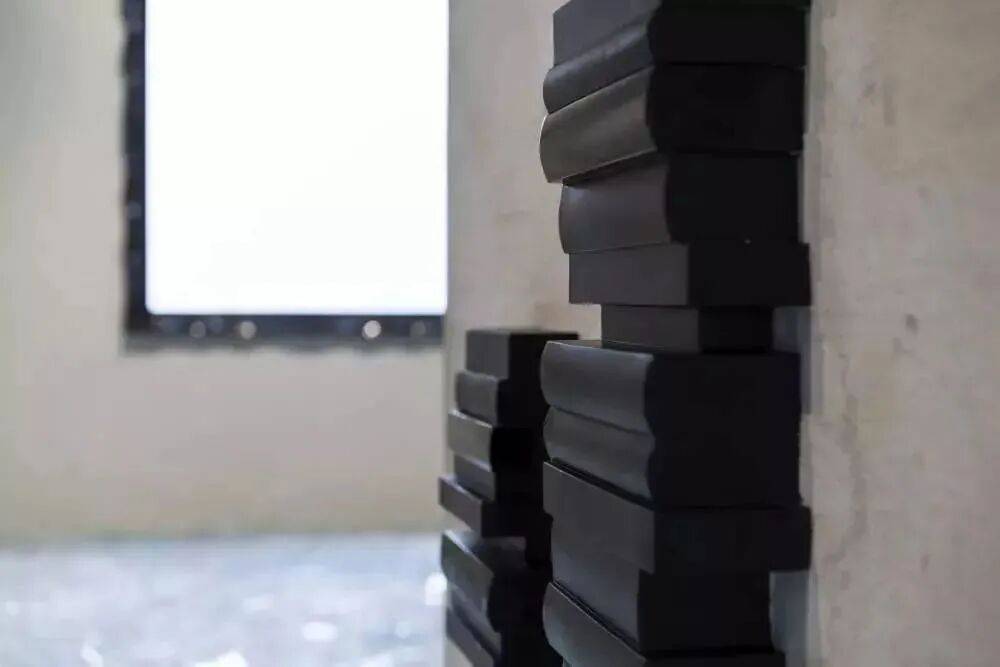
“But in the textbooks, they placed my work alongside Andy Warhol and Duane Hanson, a representative of superrealism. Why? Because that was a concentrated expression of American commercial consumer culture in the 1960s, while Yiwu Survey shows Chinese goods within the context of global consumerism, creating a contrast.” Liu Jianhua, Untitled, 2008. Liu Jianhua, Black Form, detail, 2018. “Contemporary art is a matter of ideas. We hope it is meaningful in the present, and that as later eras advance, that meaning can radiate into other forms of value.
“And that value may sometimes reveal itself only in a particular period,” Liu Jianhua said. Liu Jianhua in his Jingdezhen studio, 2022. In the interview, Liu told us that he felt fortunate still to be sitting here discussing art with us at a time when so many people had been forced into change.
“There’s no need to call myself an ascetic, but my life is simple. Every morning I get up at home, perhaps exercise a little, have breakfast, and then drive thirty minutes to the studio. At the studio I think, work, and make adjustments. Then, around evening, it’s time to go home for dinner.” He believes that this regular life is the guarantee of a healthy state and sustained creative energy.
“I think the greatest difficulty I face is figuring out how to break through my existing framework and continue digging deeper, as if sinking a well, to reveal what is most essential in people. I think the artist’s work is actually quite great—not because it changes the direction of human development, but because of the creativity contained in the individual labor of making.” Images courtesy of Fosun Foundation and Liu Jianhua Studio.