At Art Basel in Switzerland, Berlin kept surfacing in conversations about where people were headed next. One reason was the 13th Berlin Biennale, running June 14–September 14, with more than sixty artists and 170 works spread across four venues, under the theme “fugitive,” inviting viewers to face the work with no prior research and an “empty mind.”......
By / Xirui Huang · 11 min read
What are the essential Berlin Biennale venues, museums and private collections to visit in 2025?
A strong 2025 Berlin art itinerary begins with the 13th Berlin Biennale at KW Institute for Contemporary Art, Hamburger Bahnhof, Sophiensæle and the former Stasi headquarters, followed by Neue Nationalgalerie and Gropius Bau. Essential appointment-only collections include Boros, Feuerle, Hoffmann, Miettinen and Haubrok/Fahrbereitschaft.
At Art Basel in Switzerland, Berlin kept surfacing in conversations about where people were headed next. One reason was the 13th Berlin Biennale, running June 14–September 14, with more than sixty artists and 170 works spread across four venues, under the theme “fugitive,” inviting viewers to face the work with no prior research and an “empty mind.”
Beyond the Biennale, Berlin’s hold lies in the sheer number of its art institutions: public museums, private museums, appointment-only collections where photography is forbidden, project spaces, and the many galleries rooted in the city. Compared with the vitality and cultural stature of its art scene, Berlin remains inexpensive, drawing large numbers of young, experimental, and avant-garde artists to live and work there. By day they make art in their studios; at night they dance in the world’s best underground techco (electronic-music) clubs, living frugally but with an intense creative energy.
SECTION 01 | Four major venues are doing "art that refuses to be labeled"
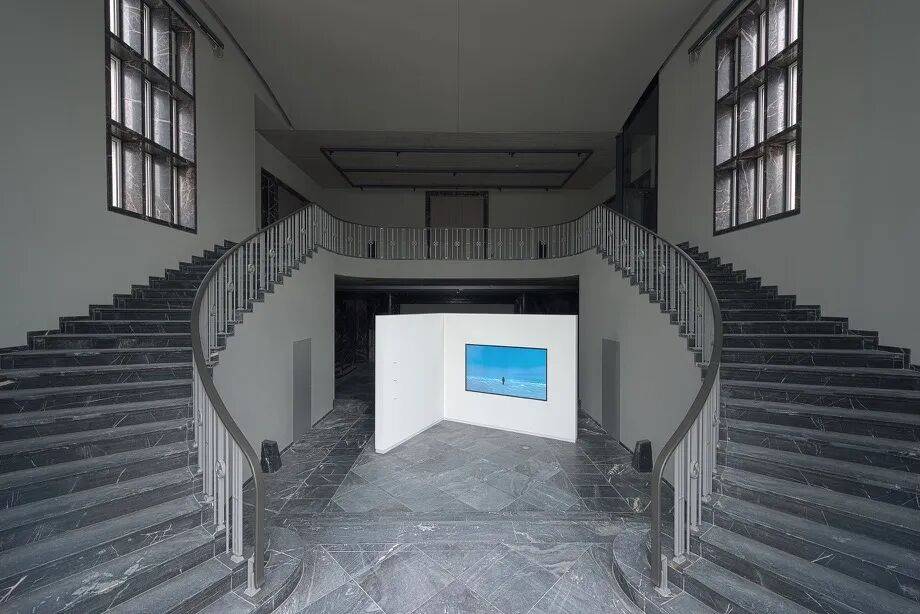
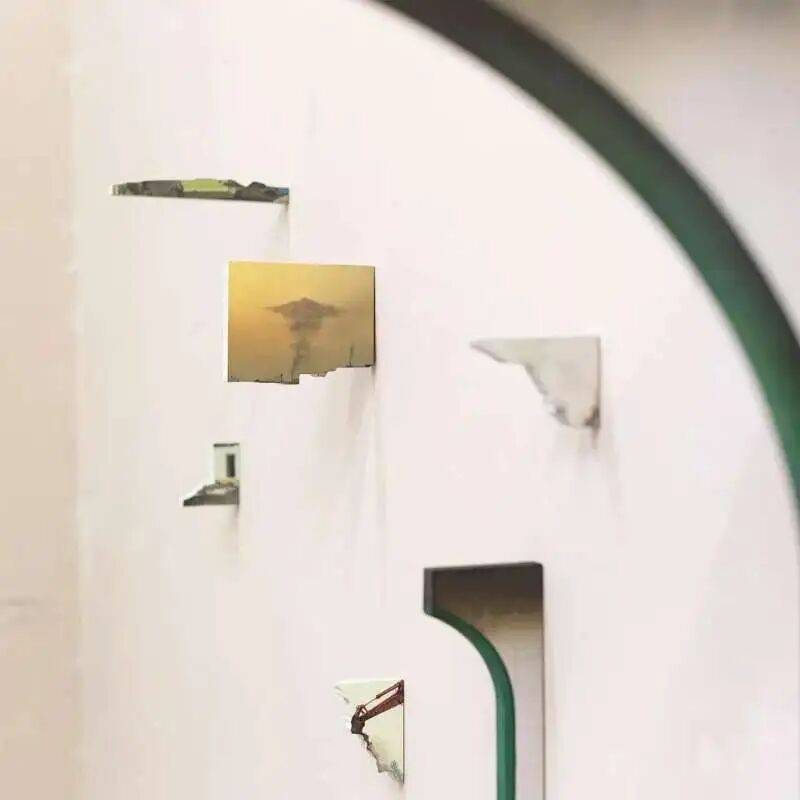
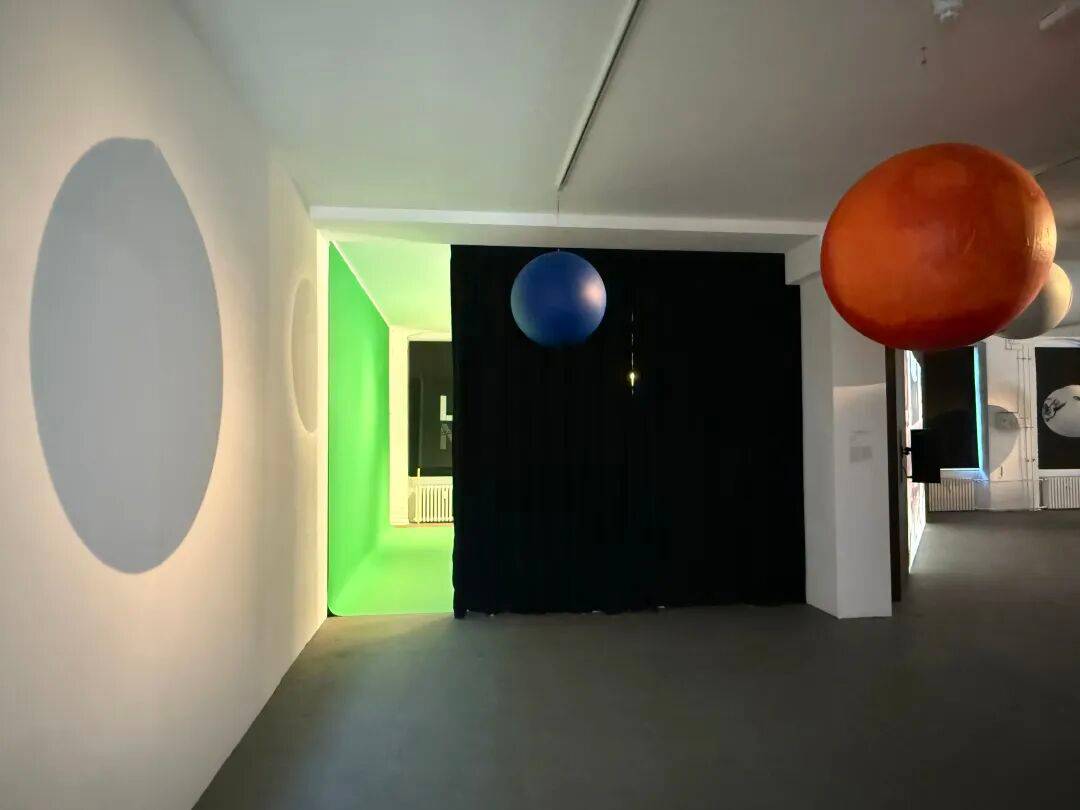
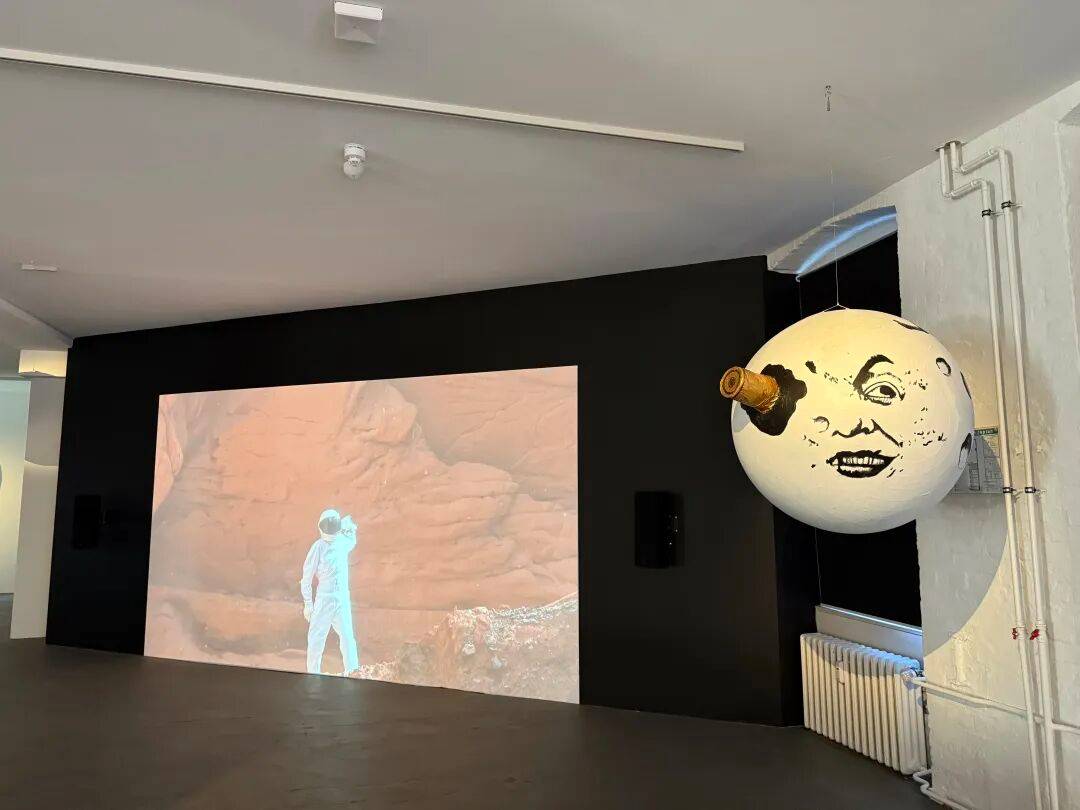
In June, we came to Berlin to explore what might be called the most avant-garde city in contemporary art. KW Institute for Contemporary Art, 13th Berlin Biennale, Experimental Art Center exhibition view, 2025. The Biennale has four venues: KW Institute for Contemporary Art, Hamburger Bahnhof, Sophiensæle, and the former Stasi headquarters. KW Institute for Contemporary Art was founded more than thirty years ago, in what was originally a margarine factory.
The space was conceived as a “curatorial center.” It has four floors, divided between a main building and an annex, with three entrances leading into the galleries. KW Institute for Contemporary Art, 13th Berlin Biennale, Experimental Art Center exhibition view, 2025. This echoes the curatorial team’s non-linear design. None of the venues imposes a fixed route; visitors are free to explore. The idea of exploration also connects to the Biennale’s intriguing curatorial premise: beginning with encounters with foxes in Berlin’s urban districts, it considers the idea of “fugitive.”
The fox itself is rich in metaphor: free, mysterious, wandering beneath the rules of the human city, resilient and tenacious.
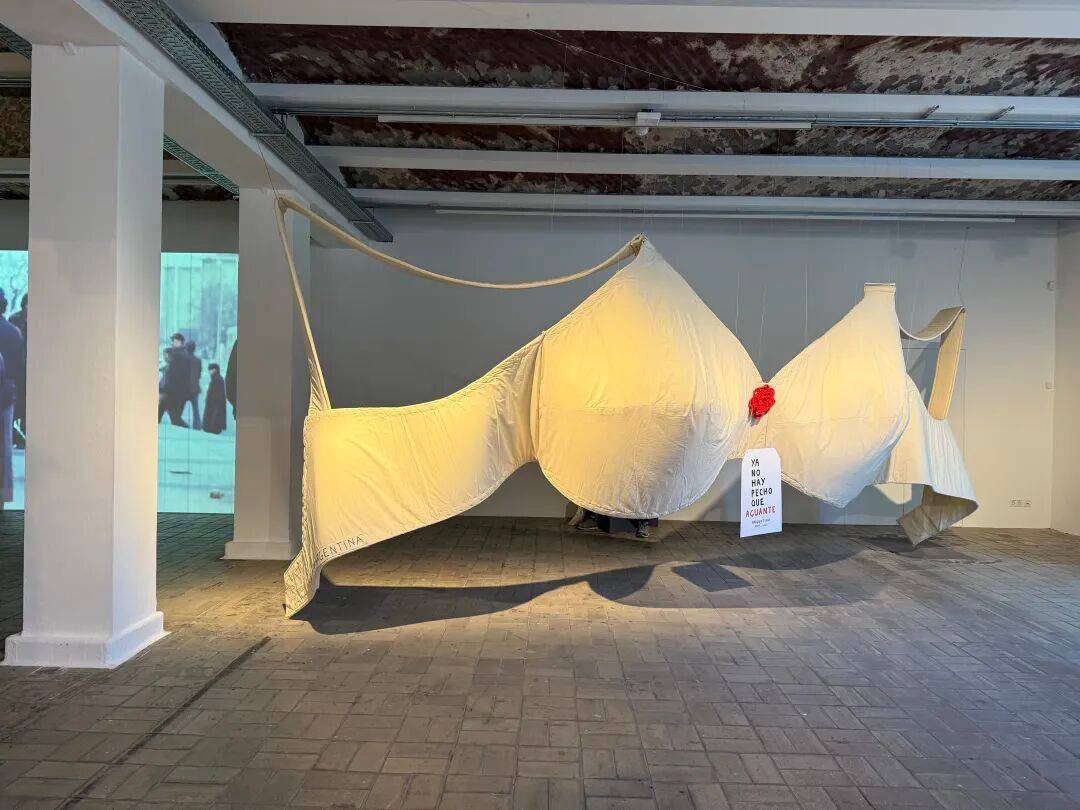
The “fox” is art. KW Institute for Contemporary Art, 13th Berlin Biennale, Experimental Art Center exhibition view, 2025. Here, a head resembling Trump is placed beside a gigantic piece of women’s underwear; a cabbage is being “walked”; and an underground jazz bar sits deserted. These images merge with immense narratives—the relationship between colonizers and Indigenous peoples, border policy, migration and linguistic escape, revolutionaries in Southeast Asia—to form a panoramic view of contemporary human society.
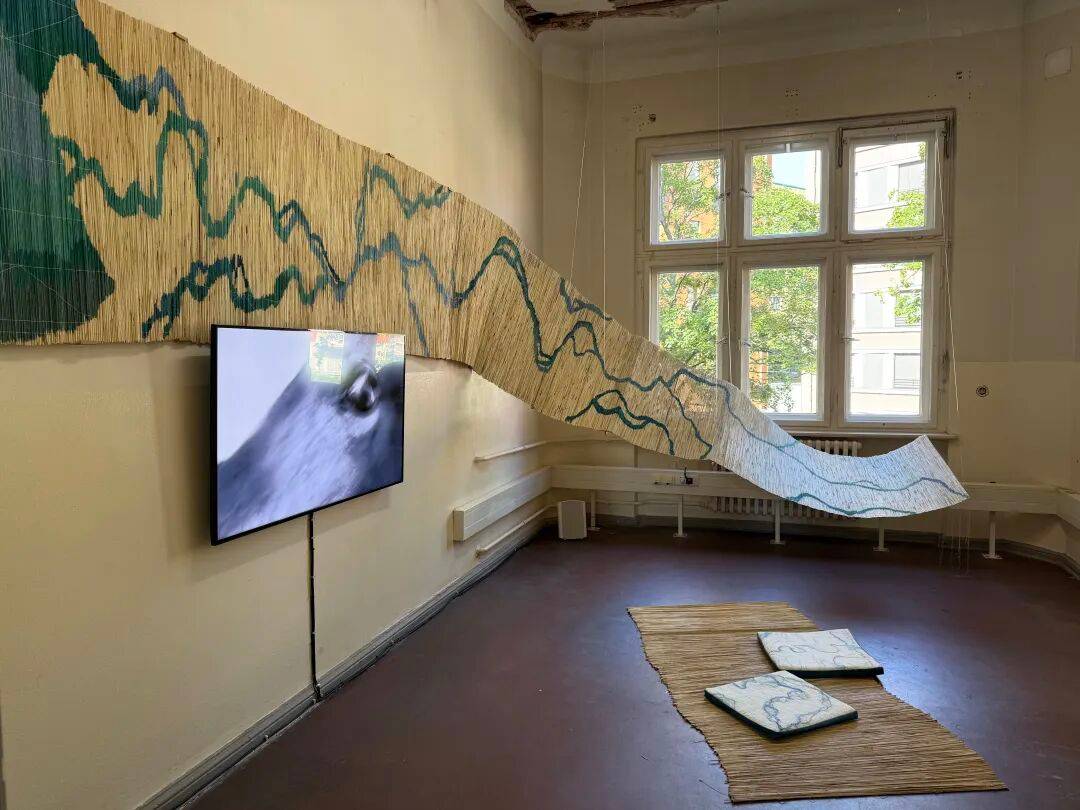
KW Institute for Contemporary Art, 13th Berlin Biennale, Experimental Art Center exhibition view, 2025. Former Stasi headquarters, 13th Berlin Biennale, exhibition view of a space marked by historical oppression, 2025. At the former Stasi headquarters, the themes are more serious and weighty, concerning historical oppression, the legacy of migration, and ecological violence. In the two-story building, works are divided among a series of small rooms as well as occupying the public spaces. Entering one room feels like entering a country or a fragment of a region’s history.
Former Stasi headquarters, 13th Berlin Biennale, exhibition view of a space marked by historical oppression, 2025. These memories of racism and violence may belong to individuals or to society as a whole. Some are news events discussed by solemn presenters on television; others are small incidents that occurred in ordinary homes. Overlooked or recorded amid violence and war, they flow like narrow streams into the current of history, while the ordinary people who suffer are worn down within it, in forms both familiar and changed.
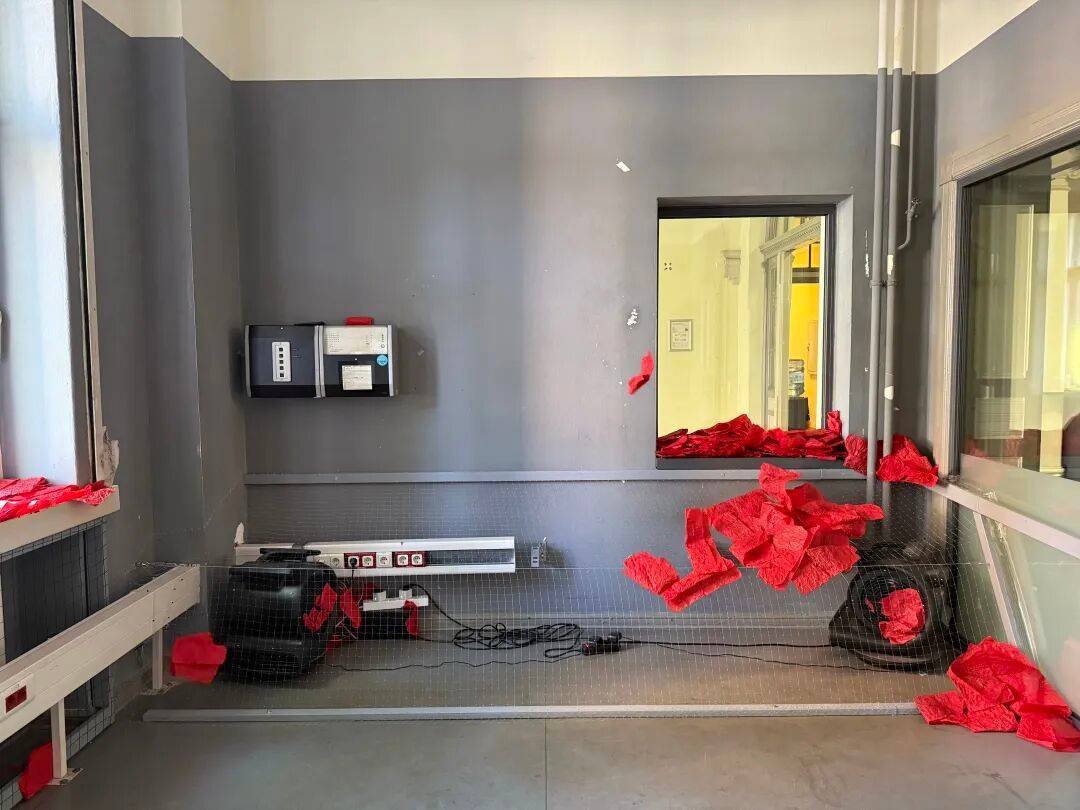
Some of the artists’ forms are light. One especially memorable work is Anna Scalfi Eghenter’s The comedy!: a roomful of red paper fragments blown into the air by a fan. Hamburger Bahnhof, 13th Berlin Biennale, main venue, historic industrial space, 2025. Another Biennale venue, Hamburger Bahnhof—Museum für Gegenwart, presents a major exhibition by the Korean artist Ayoung Kim, her first solo exhibition in Germany.
Born in Seoul, South Korea, in 1979, this digital artist is this year’s Guggenheim fellow. Ayoung Kim is known for combining generative artificial intelligence, video-game engines, motion capture, animation software, and live-action footage. Her work has a “webtoon” aesthetic that draws on mythology and cosmology, while engaging with questions closely tied to our time. Hamburger Bahnhof, 13th Berlin Biennale, main venue, historic industrial space, 2025. For this exhibition, Kim created a series of works set in a fictional future Seoul and centered on women delivery drivers and their twin doubles.
In her “Delivery Dancer” universe, two female characters move through worlds of infinite possibility. Time loops rather than proceeding linearly, recalling films such as Inception and Interstellar. The virtual landscapes she constructs also reconfigure the museum’s architecture. In the galleries, the boundaries between time and space seem to dissolve: the protagonists step out of the screen to fight their future selves and their twin sisters.
Klára Hosnedlová, Embrace, exhibition view, Hamburger Bahnhof, 2025. One of the world’s most important public institutions for contemporary art, Hamburger Bahnhof was converted from a railway station. Alongside the Biennale, it is showing several parallel exhibitions. The most eye-catching is Embrace, a large-scale installation by the Czech artist Klára Hosnedlová in the museum’s public space.
This is the artist’s largest institutional solo exhibition to date, and her largest installation. It includes a nine-meter-high tapestry assembled from layers of linen fiber, from which sculptures made of glass, sandstone, and concrete slabs are suspended. They resemble animal bones, or prehistoric fossils. Klára Hosnedlová, Embrace, exhibition view, Hamburger Bahnhof, 2025. Up close, what appears to be painting is revealed as embroidery, made stitch by stitch by hand.
The entire installation hangs and cascades through the space. Accompanied by a humming sound installation, it transforms the museum’s 2,500-square-meter industrial interior into a utopian landscape. Inspired by the contemporary Czech countryside, the work considers the evolution from handicraft to industrial production and the history of shifting borders, quietly echoing the Biennale’s theme. The museum is also showing works by such masters as Joseph Beuys, Andy Warhol, and Bruce Nauman.
SECTION 02 | Amazing collection of public contemporary art museums
Yoko Ono, Dream Together, exhibition view, Neue Nationalgalerie, Berlin, 2025. Another important Berlin public institution is the Neue Nationalgalerie, currently presenting Yoko Ono’s major exhibition Dream Together. It brings together film documentation of significant performances from her career and live performance practices, seeking to restore a more accurate view of an artist who has long been misunderstood.
Gerhard Richter, 100 Works for Berlin, exhibition view, Neue Nationalgalerie, Berlin, 2025. The museum is also showing 100 Works for Berlin, a solo exhibition by Gerhard Richter, one of the major figures in contemporary art history. It spans sixty years of his career, from early photography to color-field paintings, mirror installations, and late abstract paintings.
Lygia Clark retrospective, exhibition view, Neue Nationalgalerie, Berlin, 2025. The museum is simultaneously presenting a major retrospective of Lygia Clark, a leading figure of twentieth-century Neo-Concrete art. One of Brazil’s most important artists, Clark treated the surface of painting as a three-dimensional architectural space, experimenting with the modulation of form, color, and plane. Her compositions challenged the edge of the canvas and extended painting’s visual field into the viewer’s physical realm.
Berlin, the Art Capital of 2025’s Avant-Garde
Collection of the Neue Nationalgalerie, Berlin, 2025. The museum’s permanent collection includes important twentieth-century works from Europe and North America, with representative works by Francis Bacon, Salvador Dalí, Max Ernst, Hannah Höch, Rebecca Horn, Paul Klee, Edvard Munch, Pablo Picasso, and Andy Warhol, among others. Yoko Ono, Music of the Mind, exhibition view, Gropius Bau, Berlin, 2025. Another of Berlin’s landmark public art institutions, Gropius Bau is also hosting an Ono exhibition. Beneath its signature transparent canopy is Ono’s enlarged slogan: “PEACE is Power.”
The exhibition also includes many interactive installations. In the final room, a small white boat rests in the center while the walls are covered with blue writing—some blessings, some names, some wishes. Packed closely together, the words have an unexpectedly tender, moving effect. Vaginal Davis, Fabelhaftes Produkt, exhibition view, Gropius Bau, Berlin, 2025. The museum is also presenting a solo exhibition by the American queer artist Vaginal Davis, who came from Los Angeles and later settled in Berlin for twenty years.
Pink is the exhibition’s dominant color. Its simulated settings—a library, bedroom, cinema, and bar—reflect intertwined themes of punk and glamour, queer activism and Black counterculture, resistance and desire. Exterior of the Sammlung Boros gallery. Berlin has many private museums, each with its own style and collecting focus. What can feel especially forbidding is that private collections generally accept visitors by appointment only; one must arrive on time, follow the guide closely, and refrain from taking photographs throughout.
Yet this very structure makes visitors more attentive inside the private collections, deepening their connection with the works and the spaces. He Xiangyu, Asian Boy, 2019–2020, interior of the Sammlung Boros. Interior of the Sammlung Boros. Among them, the most memorable is the Sammlung Boros, founded by Christian and Karen Boros.
The museum admits only twelve visitors at a time. It occupies a bunker built during the Second World War; bullet marks from the Battle of Berlin remain on the exterior, while the bunker’s internal steel structure has been preserved intact. The building covers more than 30,000 square feet and houses works by leading international contemporary artists, including Olafur Eliasson, Anna Uddenberg, Anne Imhof, Wolfgang Tillmans, Sarah Lucas, Martin Eder, and Elizabeth Peyton.
Works by Asian and Chinese artists—including Danh Vo, Lee Me-Lee, Guan Xiao, and He Xiangyu—also appear in the galleries. The film Tár, starring an Oscar-winning actress, was shot here. Exterior of The Feuerle Collection. Interior of The Feuerle Collection. Housed in another bunker, The Feuerle Collection is entirely different in character: discreet and the only Western museum devoted primarily to ancient Chinese culture.
The conversion was designed by the British architect John Pawson, who retained the building’s industrial aesthetic. On entering, we stood against the walls in darkness as music by the American minimalist composer John Cage began to play. The experience is intended to evoke the cosmic darkness at the beginning of time and to recalibrate the senses. Interior of The Feuerle Collection. Its founder, Desiré Feuerle, ran a contemporary gallery in Cologne during the 1990s and founded the private museum in 2016.
The collection includes imperial furniture from China’s Han through Qing dynasties; wooden and stone furniture made for Chinese literati; and antique lacquerware. It also includes Khmer stone sculptures from Southeast Asia dating from the seventh to the thirteenth centuries, Ban Chiang vessels, Thai and Burmese ceramics, and terracotta objects ranging in date from 3600 B.C. to the eighteenth century. These works are placed in dialogue with contemporary artists including Cristina Iglesias, Anish Kapoor, Zeng Fanzhi, James Lee Byars, Nobuyoshi Araki, and Adam Fuss.
Erika Hoffmann in the private museum. Sammlung Hoffmann, interior of the private collection. The collection of Rolf and Erika Hoffmann began in 1968. In 1997, they purchased and renovated a vacant former East German textile factory in Berlin’s Mitte district as a residence for themselves and their tenants, while also displaying their collection there. The space covers more than 1,000 square meters.
In this intimate setting, Erika Hoffmann rearranges the works each summer around a new theme, establishing fresh connections and uncovering deeper meanings. Their collection includes works by Frank Stella, Nan Goldin, Félix González-Torres, Franz West, Gerhard Richter, Andy Warhol, Jean-Michel Basquiat, Hiroshi Sugimoto, and Fang Lijun, among others.
Interior of the Miettinen Collection. If the private collections described above can feel thoroughly “museum-like,” the Miettinen Collection, founded by Timo Miettinen, feels more like a home. Housed on the second and third floors of a private residence in Berlin, it includes a dining room, living room, and library—an exact enactment of “Living with Art.”
The collection spans contemporary artists of different generations and nationalities, focusing mainly on paintings, drawings, and sculpture, along with a series of marble sculptures from ancient Rome. Representative artists include Georg Baselitz, Louise Bourgeois, Albert Oehlen, André Butzer, and Reiko Ikemura, among others. Exterior of the Haubrok/Fahrbereitschaft Collection. Interior of the Haubrok/Fahrbereitschaft Collection. Housed in a gray building with a weathered gate, the Haubrok/Fahrbereitschaft Collection was once a service station for the secret passage of vehicles between East and West Germany during the Cold War.
Collector Axel Haubrok began collecting in 1988, when he bought a work by Raoul de Keyser. His early collection focused on abstract minimal painting. Through acquiring works by Gunter Forg, Haubrok and his wife began collecting conceptual and minimalist art. Interior of the Haubrok/Fahrbereitschaft Collection. Alongside painting, sculpture, and photography, installations, objects, performances, invitation cards, posters, and publications are also important parts of the couple’s collection.
For the past twenty years, they have regularly organized exhibitions of works from the collection, including a collaboration with Hamburger Bahnhof in 2021. Among Haubrok’s more than 1,000 works are pieces by Olafur Eliasson, Martin Boyce, Christoph Büchel, Martin Creed, Haegue Yang, Wolfgang Tillmans, and Tobias Rehberger. Museum Frieder Burda | Salon Berlin. The Library Berlin / Sammlung Christian Kaspar Schwarm. In Berlin, devotees of contemporary art are unlikely to be bored: the city is full of museums, galleries, and art spaces.
Relatively low studio rents have drawn large numbers of young artists together, helping to create an environment of experimental, avant-garde production. The contradiction is that Berlin is, on one hand, rigorous, restrained, and clean-lined in the German manner—its architecture marked by square, unbending lines, its classical concerts at the Berlin Philharmonie defined by absolute precision. On the other, once night falls, someone begins pulling a sound system with flashing lights down the street, followed by a crowd wearing headphones and dancing along.
Perhaps it is this contradiction and mixture that have made Berlin the most avant-garde art capital.