Three Collectors on the Venice Biennale: We’re Looking at the Art of the Few
Since the first Venice Biennale in 1895, the exhibition has endured 120 years of upheaval while retaining its place as the elder statesman of the biennial world. Each edition registers shifts in global art, helps shape the years ahead, and maintains an elusive relationship with the art market......
By / Xirui Huang · 13 min read
How did three collectors respond to the outsider theme at the 2024 Venice Biennale?
In the 2024 Venice Biennale interviews, three collectors consider migration, minority experiences and overlooked art histories through Foreigners Everywhere. Some value the widening of representation and the inclusion of different identities; another finds aspects of the presentation repetitive and tiring. Loans, national pavilions and exhibitions elsewhere in Venice offer more personal discoveries. The article preserves these differences, treating the theme as a starting point for discussion rather than a conclusion everyone must share.
Counting from the first Venice Biennale in 1895, the exhibition has now passed its 120th year. Though it has weathered every kind of upheaval, it remains the elder statesman of the world’s biennials. Each edition registers a shift in global art, symbolizes and helps propel trends for the years ahead, and maintains an unusually subtle relationship with the art market. On April 20 this year, the 60th Venice Biennale opened as scheduled.
SECTION 01 | Collector Yao Qian: What we look at is the art of “a few”
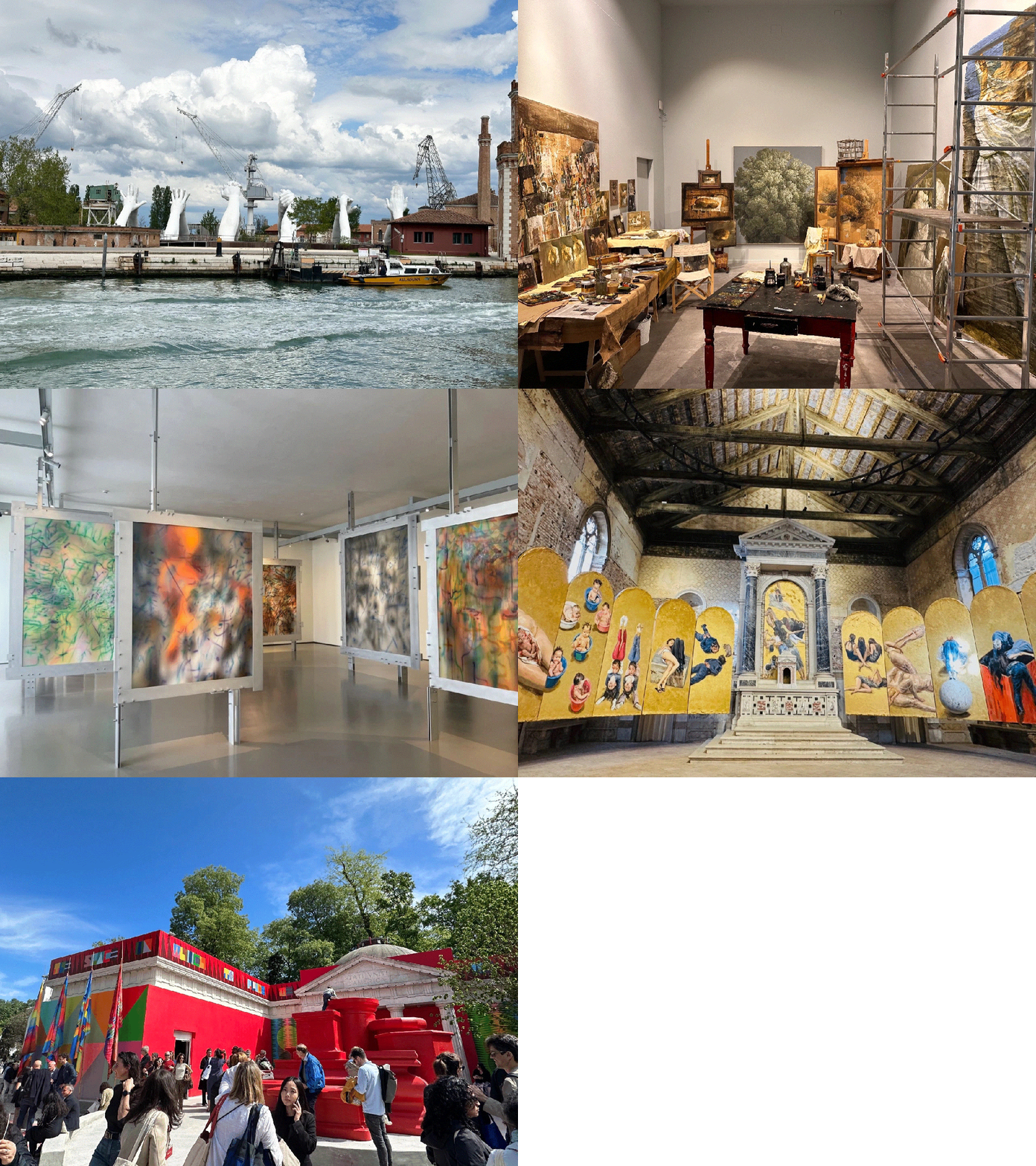
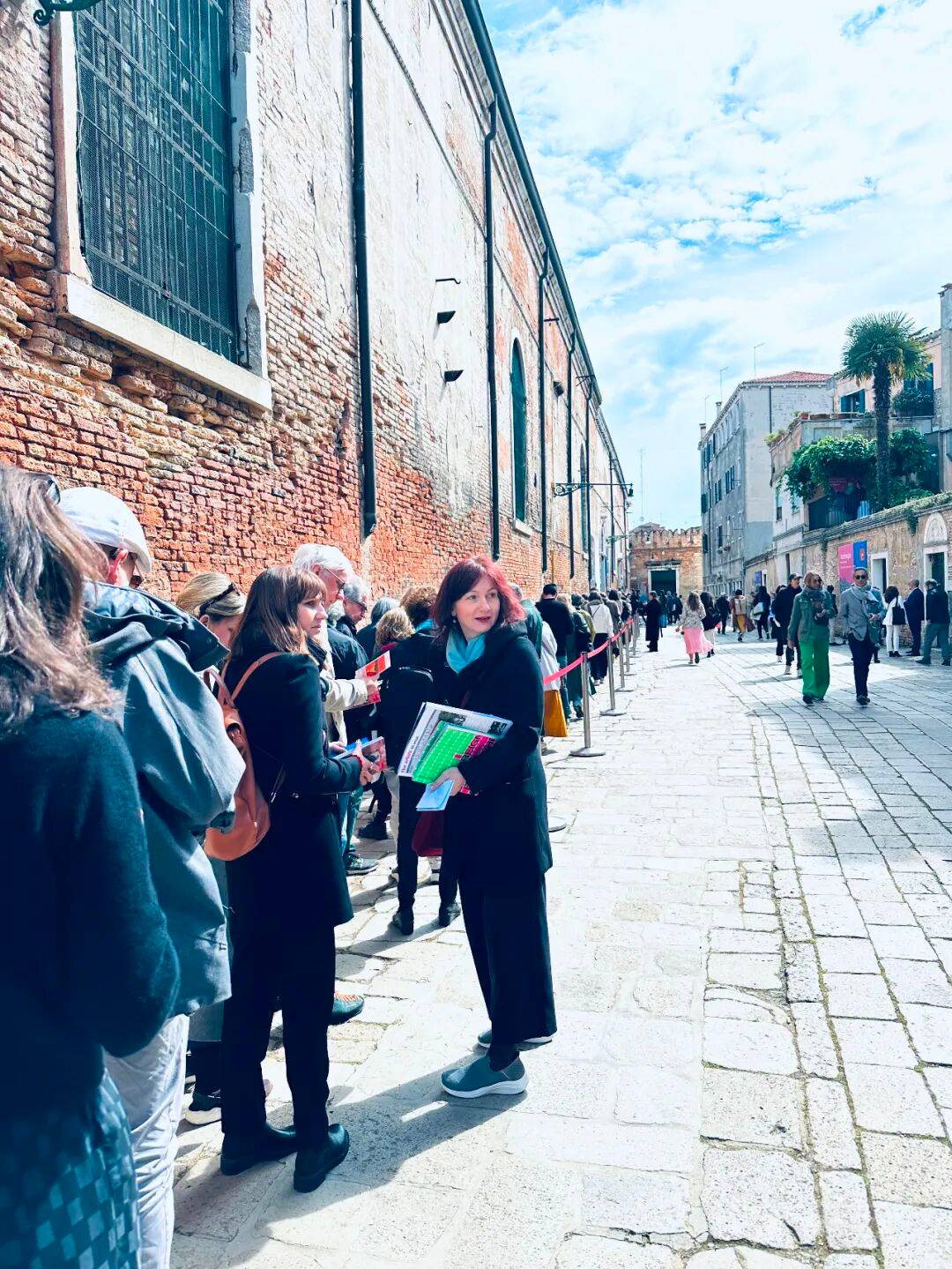
Many Chinese collectors we know also traveled to see it. Yao Qian, Joan, and Olivia—collectors from three different generations—shared their impressions from Venice with us across the time difference at the earliest opportunity. Editors: Huang Xirui and Luo Ziyan. A person sketching on a bridge in Venice; a painting of the entrance sign at the Church of San Marco and Paolo; Venice seen from the balcony of Yao Qian’s hotel. The last time I came to the Venice Biennale was in June 2011. This year I went to the main exhibition on the third day of the opening, and it was absolutely packed; there were lines everywhere.
The weather was reasonably good, though changeable, and the temperature had dropped. The hotel had stopped running its heat early this year, so I specifically asked for another blanket. I had one very clear impression: Venice has become cleaner. When I came in 2011, there was rubbish on the ground and the water was quite murky. This year, you can see fish in the city’s canals; looking down from my hotel balcony, the water was clear. Venice is not large, and I took boats to the exhibitions. The distance between stops was about five or six minutes, and after a few stops you were there. I liked traveling that way, with the scenery along the route.
Pan Yuliang’s 1946 work Moonlit Back View at the 2024 Venice Biennale. The main exhibition included only one work by an Asian artist. The Biennale had officially borrowed it from me: Pan Yuliang’s Moonlit Back View. Pan went from China to France, and the Black model in the painting was her close friend. Both were strangers living far from home, which suited this year’s theme very well, so I was rather pleased with myself for lending the work to the exhibition.
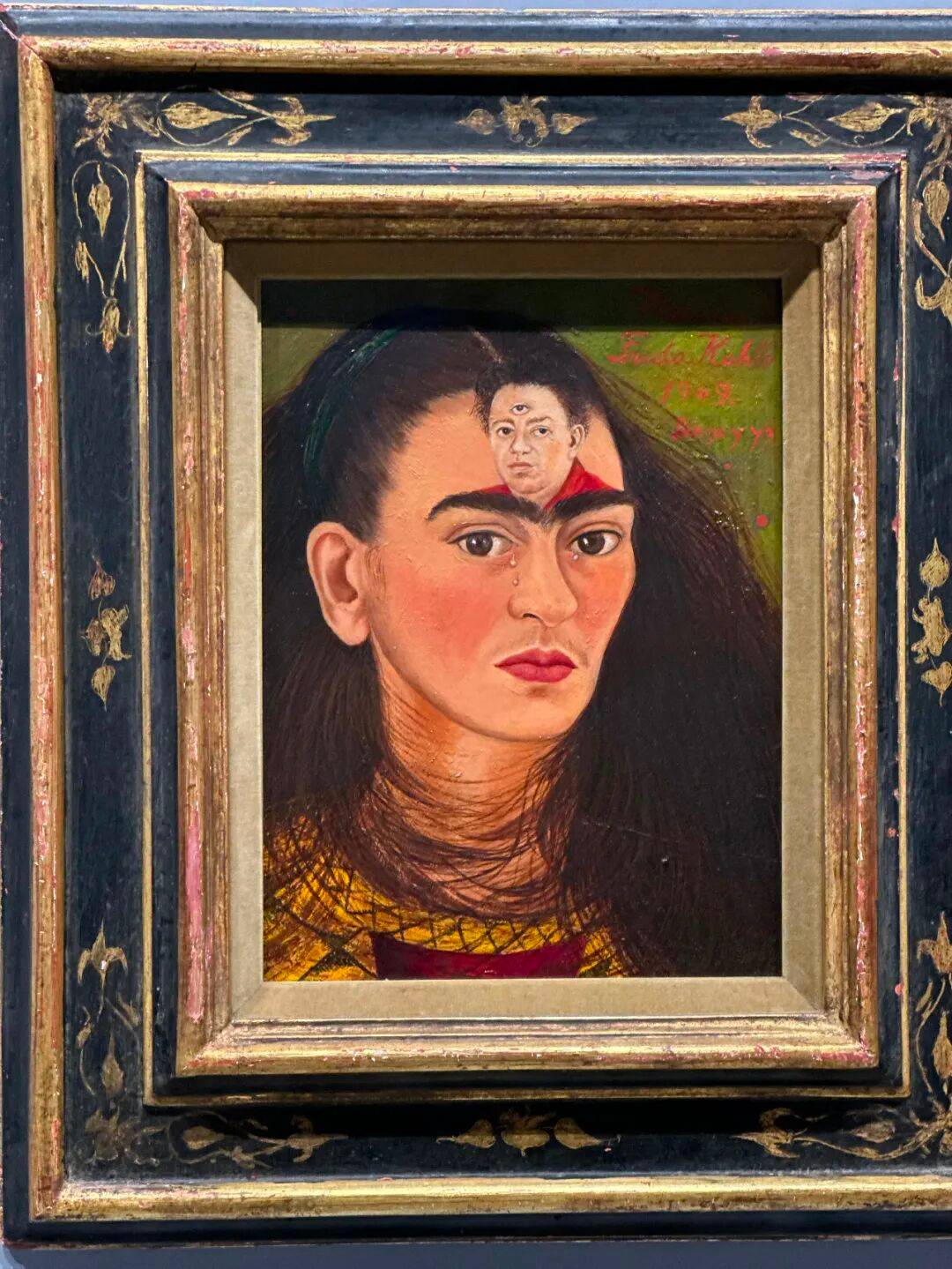
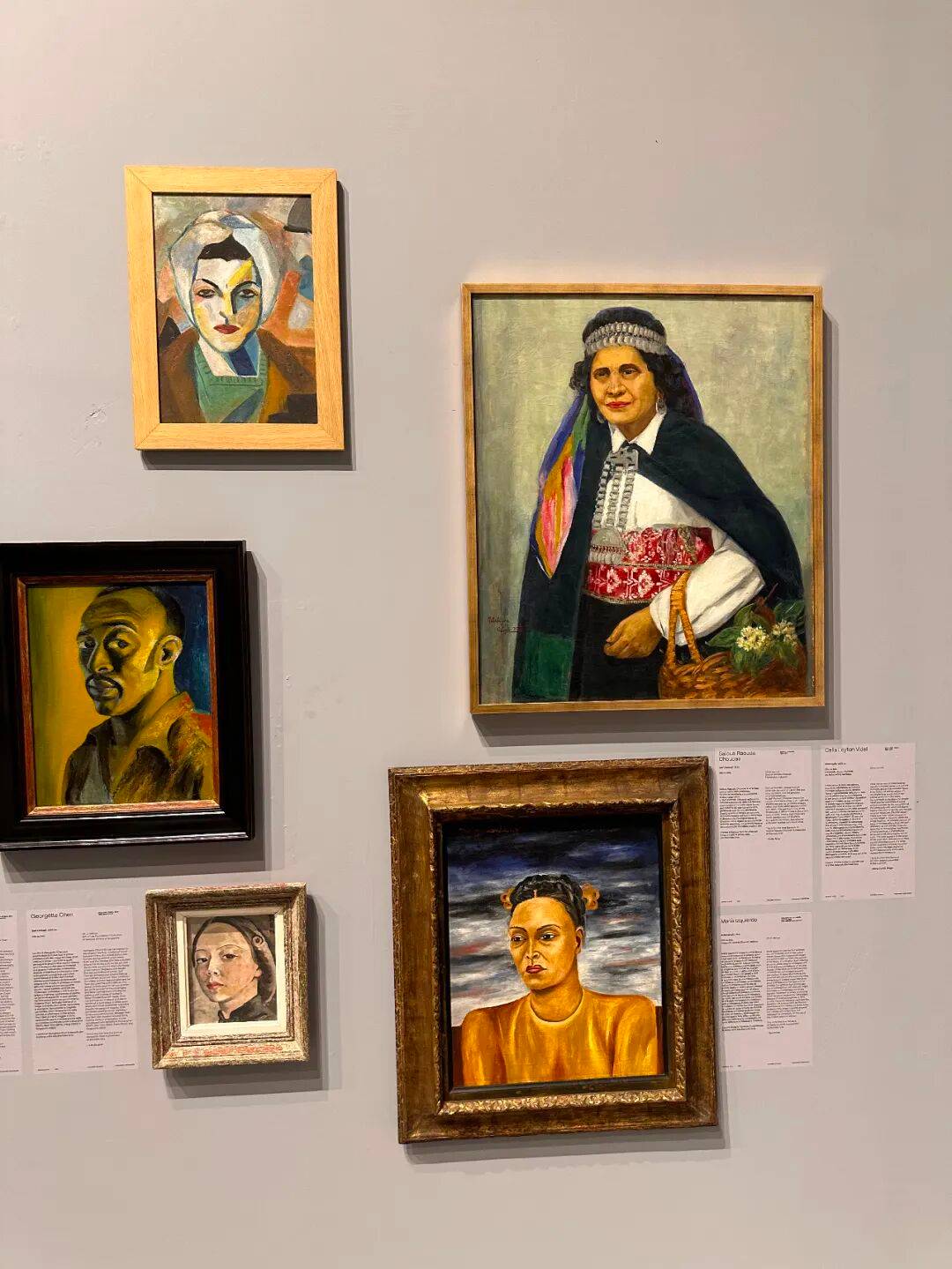
Frida’s work; the Singapore Art Museum’s signature piece, Lai Fong Moy’s Self-Portrait; a portrait in the main exhibition. There was another painting in the main exhibition that I loved, displayed beside the Singapore Art Museum’s signature piece, Lai Fong Moy’s Self-Portrait: an important work by Frida. It was also the only work on site that always had a guard standing beside it; they must have hired someone specifically for the painting. The portrait section of the main exhibition, whose theme was “Foreigners Everywhere,” seemed to redefine the idea of the outsider. What we were really seeing was art by minorities and marginal groups, rather than by the mainstream. Colonial art, Indigenous art, and South American art became central narratives. In previous main exhibitions, the newest and largest technological installations were often given pride of place, with a sense that the work had to shock in order to matter.
A work by one of this year’s Golden Lion winners, Nil Yalter; portraits in the main exhibition. On the second floor, more than 100 portraits from the twentieth century were brought together—works depicting immigrants, expatriates, and related figures, including pieces by artists who received Golden Lions this year. They did not make a special point of it. Nil Yalter, for instance, made something resembling a Native American-style tent. I also very much liked the abstract-painting section of the main exhibition.
These are only my subjective observations; other visitors may have had entirely different reactions. In the section devoted to queer art, works by the twentieth-century Indian self-taught artist Bhupen Khakhar were set against pieces by the highly fashionable young artists Salman Toor and Louis Fratino. It felt as if the exhibition were championing those two younger artists.
I spent a long time in the main exhibition, which meant that I probably visited only five or six national pavilions on May 1. I skipped many of the most popular ones because the lines were so long—and many people were queuing for the souvenir tote bags. So I went to some less popular pavilions instead. Malta Pavilion exhibition view. The work at the Malta Pavilion made a strong impression on me. The artist Matthew Attard used eye-tracking to create a video work approximately four or five meters across. As we looked at an aerial view of the ocean, eye detectors installed in the gallery were also “watching” the viewers in front of the screen. The paths of their pupils were ultimately traced as curves across the moving image of the sea, opening a discussion of the relationship between the viewer and the viewed.
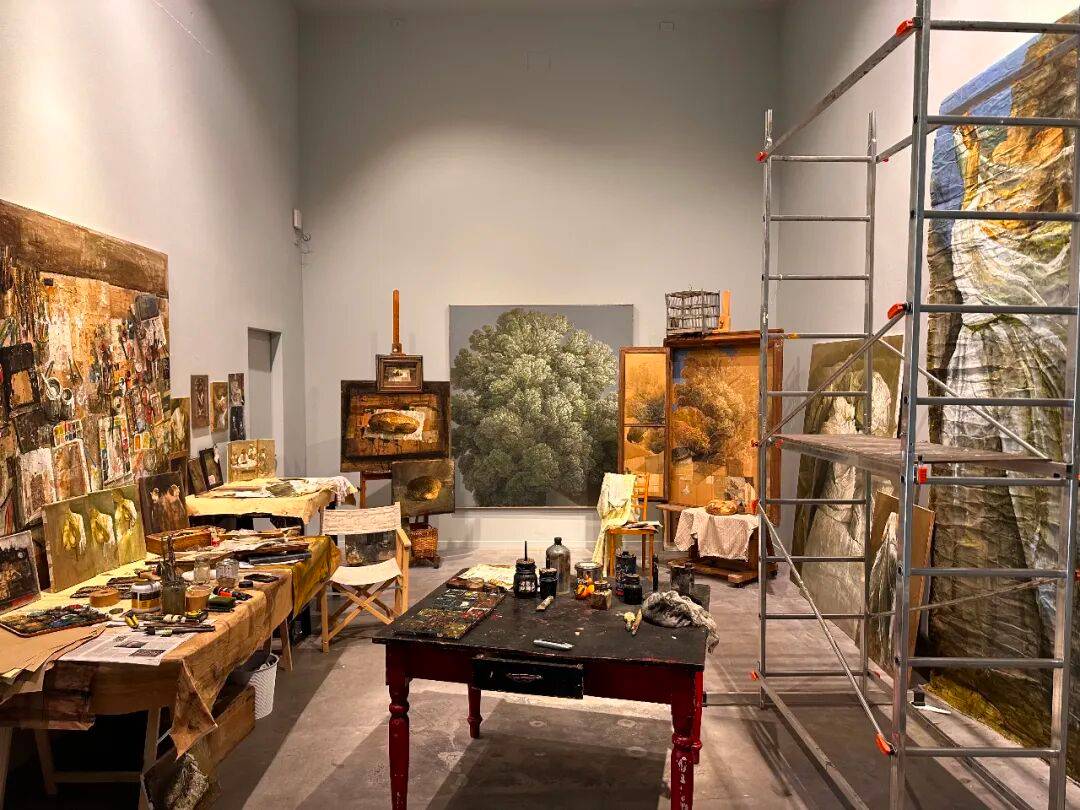
It also spoke to the network tracking and surveillance without privacy that define our time. It was not especially lyrical, but it moved me. Ethiopia Pavilion exhibition view. I especially liked Tesfaye Urgessa’s work in the Ethiopia Pavilion. I have wanted to collect this artist for a long time, and I had seen some of these works in other exhibitions before they were brought into the national pavilion. I particularly preferred the small paintings to the large ones. PADIGLIONE VENEZIA exhibition view. In the PADIGLIONE VENEZIA exhibition space, there was a huge oil painting lit so beautifully that it looked like a cinema screen, drawing viewers slowly into the image.
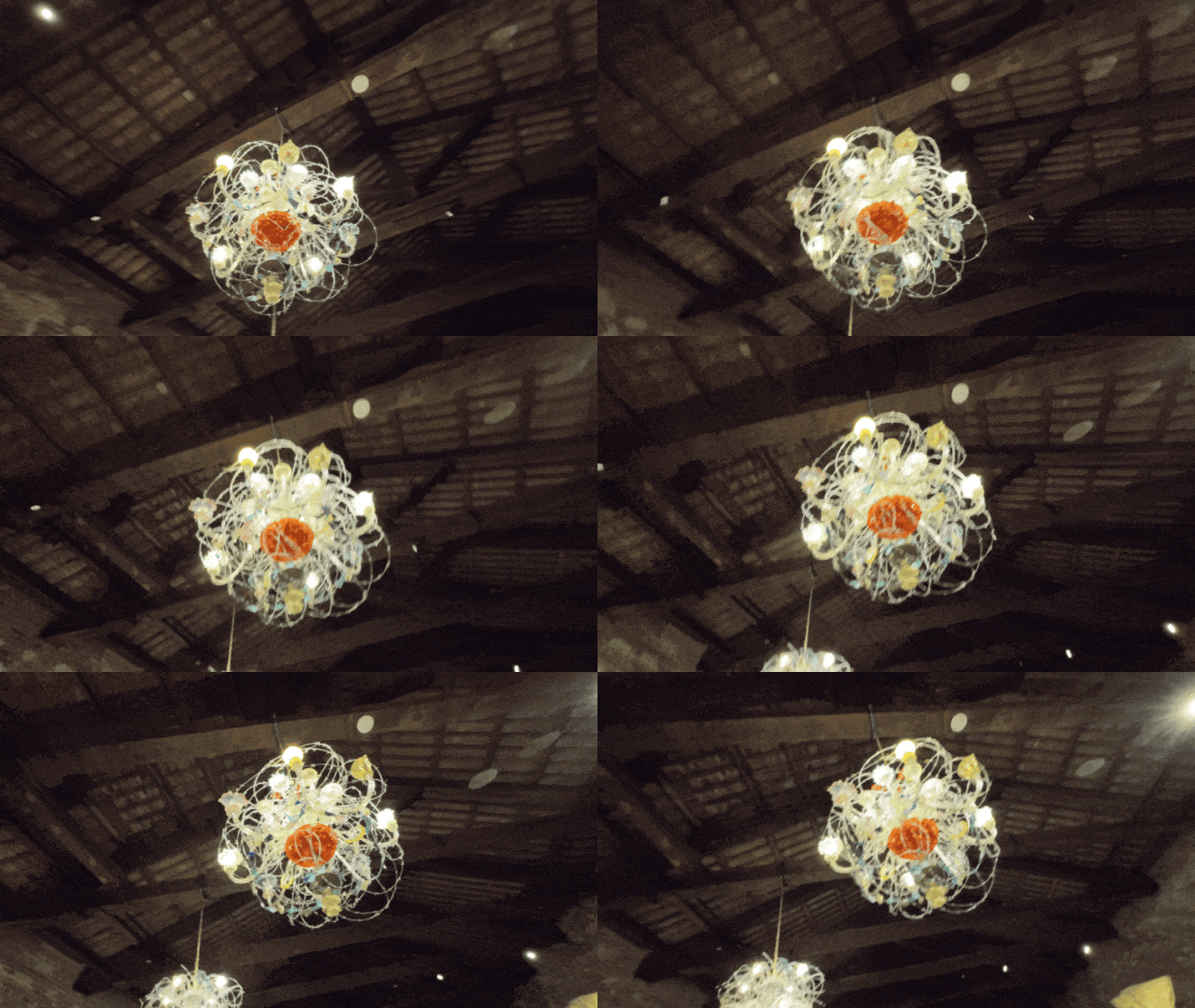
When I came out, I saw a miniature studio at the side, where a man in his seventies or eighties sat painting. He was Safet Zec, the artist whose work was on view, and a staff member was handing him water. His works concern life and death, and memories of friends and relatives who have been lost. I found them deeply moving. Turkey Pavilion exhibition view. The Turkish Pavilion included a captivating work of colored crystal chandeliers wrapped in wire mesh. Each chandelier represented a religious faith: Christianity, Judaism, or Islam.
These illuminated symbolic objects were enclosed in barbed wire, conveying the historical tensions and disputes among the religions and using them as a lens through which to consider the state of the world today. Zhu Dequn exhibition view. Among the surrounding exhibitions, my favorites were those by Zhu Dequn and Berlinde de Bruyckere. Zhu’s exhibition was organized by a French gallery and included several distinctly “uncharacteristic” works by him. They seemed influenced by Nicolas de Staël, which surprised me.
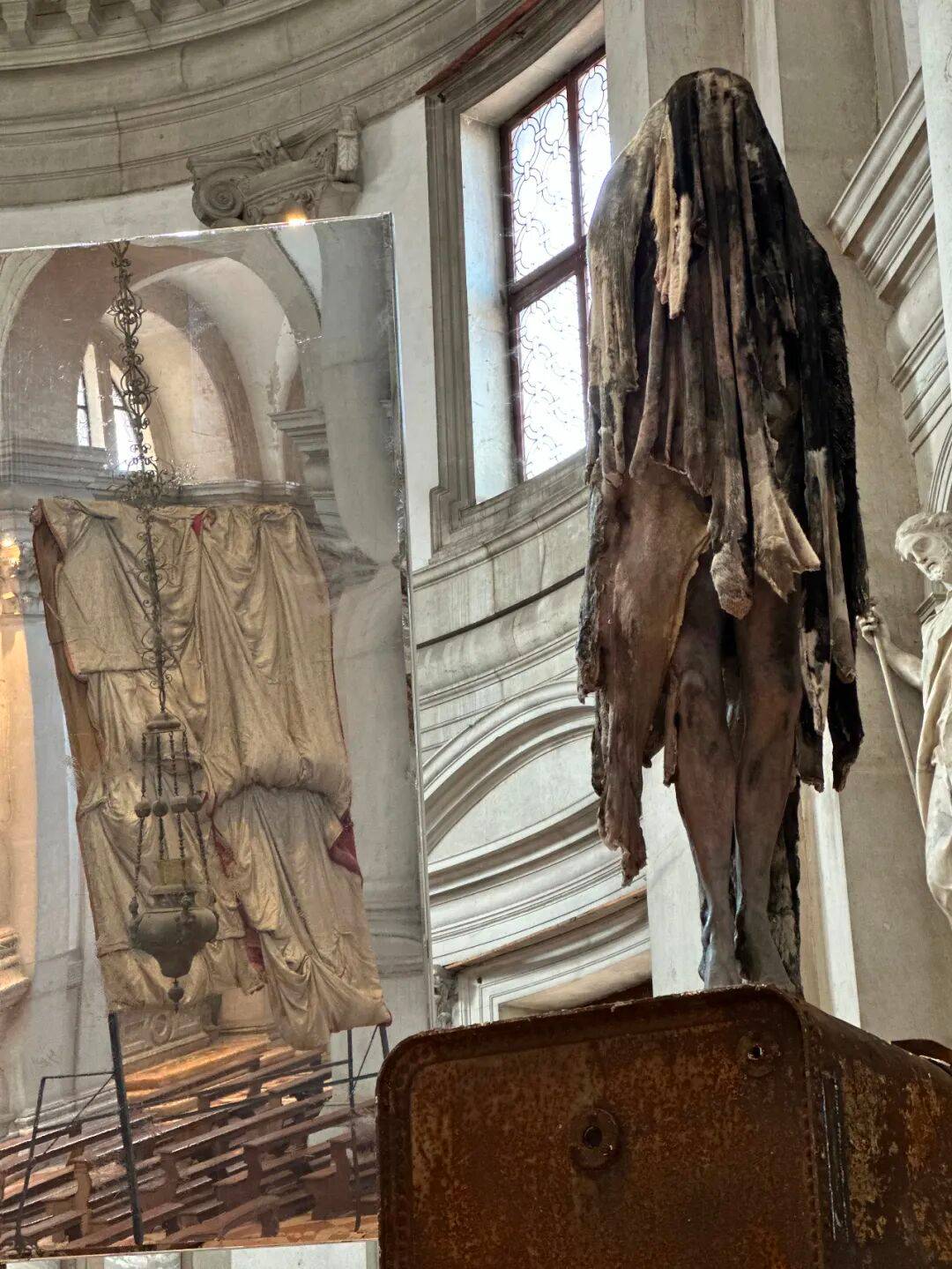
Berlinde de Bruyckere exhibition view. Berlinde’s work was installed in the Abbazia di San Giorgio Maggiore. I consider it one of Italy’s most important historic religious spaces, and the relationship between the architecture and the work was astonishing—more so than the “big hunks of meat” I had seen in her work at museums. Her pieces included horse skin, dead trees, and objects that had lost their life. Many people might find them frightening, but this time I felt no fear at all.
Looking at the layers of skin and cotton, the organic matter and body fragments frozen in wax, I thought about the artist sealing away finite moments—or things on the verge of death. The works address the futility of existence, and the need for a larger faith to sustain humanity’s pursuit of eternity. De Kooning exhibition; crowds leaving the exhibition hall in the Venetian sunset. I will remain in Europe for another week, though no longer in Venice. I’ll go to Naples, Positano, Amalfi, and finally Rome. The latter three places were filming locations for the 1999 movie The Talented Mr. Ripley. I’ll look at more exhibitions along the way and spend time wandering.
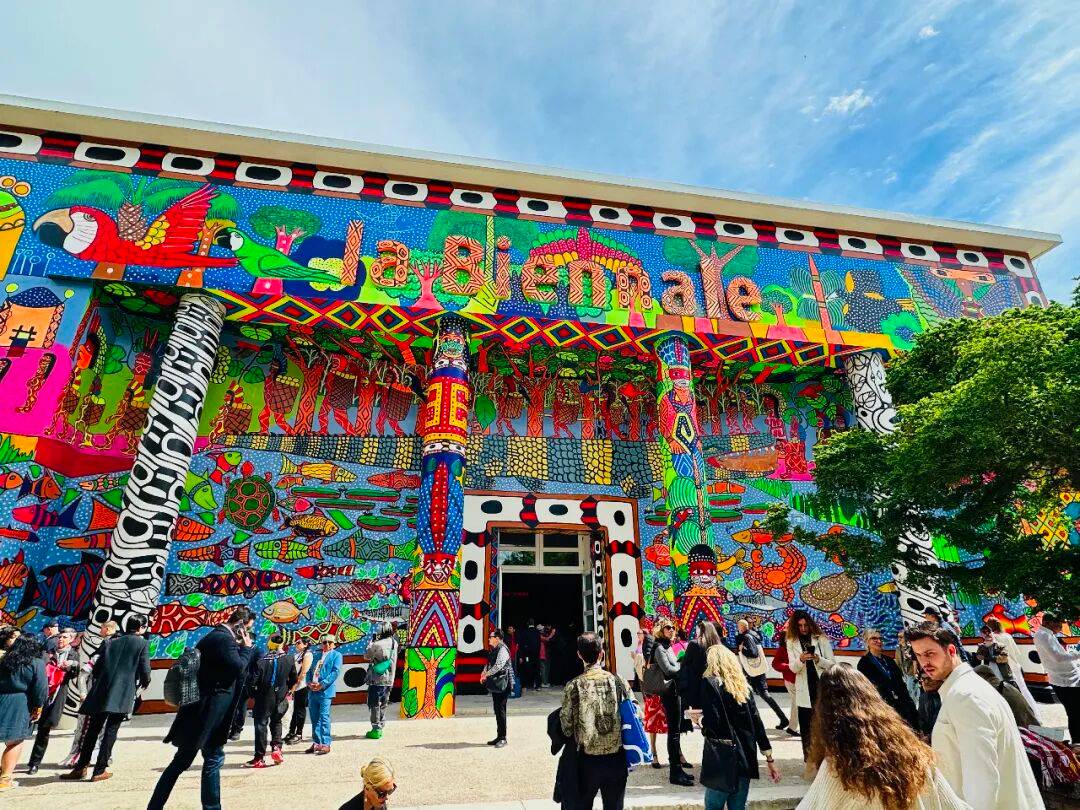
Venice cityscape; crowds outside the main exhibition of the 2024 Venice Biennale. I arrived in Venice during the preview days before the Biennale opened. This was my second Venice Biennale. The weather was good—sunshine and blue water made the city feel easy and cheerful—and by April there were already plenty of tourists. This time I truly understood what “crowded” meant: every exhibition required a wait. I also noticed that many visitors were arts professionals, including art-media people and researchers. The Biennale gave everyone a platform for exchanging ideas.
In a changing global order, the art market has also been unsettled in recent years. I imagine people wanted to use this opportunity to look for new breakthroughs and directions. Main exhibition of the 2024 Venice Biennale. The chief curator, Adriano Pedrosa, is from Brazil. He is the first Latin American chief curator in the Biennale’s history. His upbringing and career have enabled him to focus on marginalized groups and on art from the Global South that has long been overlooked—concerns that align closely with current discussions of minority perspectives and decentralization.
The world we live in is turbulent and changing: population movement, racial struggle, widening inequality. Crisis has accompanied human development throughout. Whether the previous Biennale’s focus on women or this year’s “Foreigners Everywhere,” both reflect broader changes in the world. That is what I find most interesting and valuable about the Biennale: it acts as a kind of prompt, playing an avant-garde and guiding role in the realm of ideas. Claire Fontaine’s work at the 2024 Venice Biennale; Zhang Qiong with the Claire Fontaine collective. I also encountered Claire Fontaine, a wonderful artist couple consisting of Fulvia Carnevale and James Thornhill.
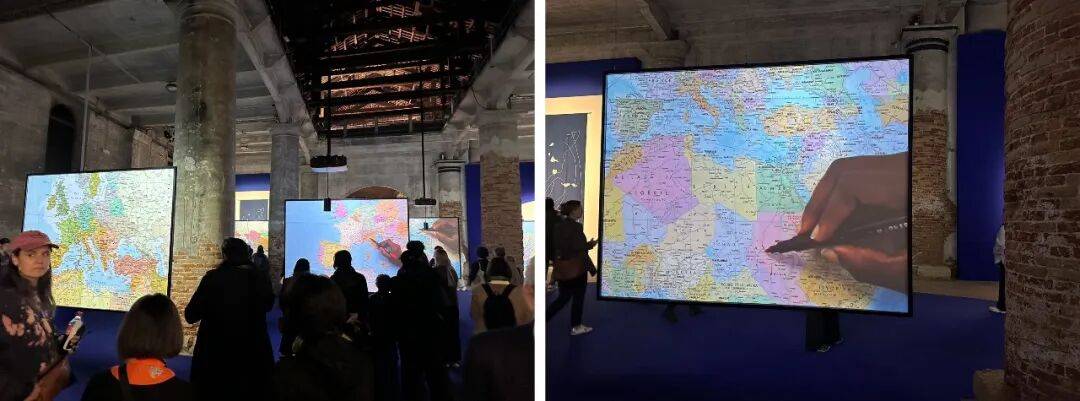
It was their neon installation Foreigners Everywhere that inspired curator Pedrosa’s theme for this Biennale. In 2004, the two translated the phrase “Stranieri Ovunque” into multiple languages and produced a series of neon sculptures. The series was installed at the entrance to the Biennale’s main exhibition. 2024 Venice Biennale main exhibition view. In the main exhibition, the artist Bouchra Khalili’s The Mapping Journey Project affected me deeply.
Several enormous screens filled the room, showing a hand drawing across a map of the world. In fact, the images depicted migrants tracing their journeys from their homelands to the places where they now lived. Through this seemingly light gesture, the artist conveyed the weight and helplessness felt by people in exile. When I thought again about the theme “Foreigners Everywhere,” I found my emotions more complicated. People waiting in line. Among the national pavilions, my favorite was Germany’s, despite the considerable wait.
The artist Ersan Montag used the pavilion’s space effectively, presenting viewers with the life trajectory of an ordinary worker during industrial development. The immersive theater experience created a profound sense of identification with an otherwise minor figure. Germany Pavilion exhibition view. The pavilion’s video and sound installations also left a strong impression. Yael Bartana’s video work, for example, told a story about a journey into space and gave me a sense of humanity’s collective identity—something that transcends race and religion.
Unlike the other pavilions, Germany’s also extended into the more remote island of Certosa, a destination many people may not have noticed or visited. This unusual exhibition layout subtly echoed the Biennale’s theme. Egypt Pavilion exhibition view. The work Drama 1882 in the Egypt Pavilion also moved me. Wael Shawky evoked memories of Egypt’s national revolution. The story began in a small café, where a simple brawl eventually developed into a large-scale battle entered into the history books. Everything felt intensely theatrical.
I think the artist was also using this method to reflect the present: in the face of war and conflict, people cannot know whether they are agents of history or helplessly swept along by it. That is what makes the film so thought-provoking. I also admired Wael Shawky’s ability to stage and organize the work. The grand yet finely made theatrical sets, the strange and powerful installations, and the opera singers’ charged performances all gave the story greater force.
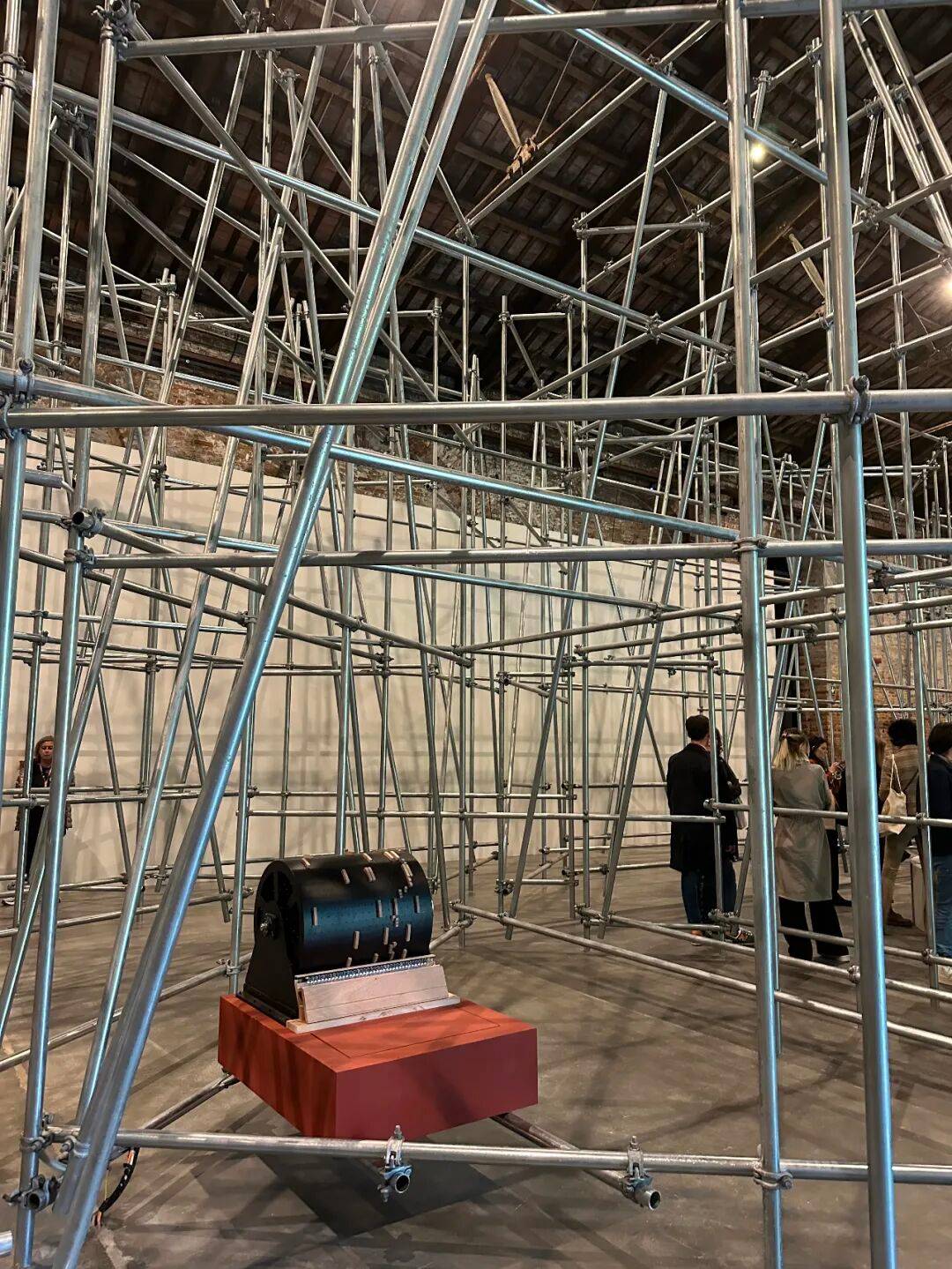
Italy Pavilion exhibition view. The giant spatial installation Due Qui / To Hear in the Italy Pavilion was also fascinating. Intersecting steel pipes enclosed a vast, transparent space. I was told that the artist Massimo Bartolini drew inspiration from Italian towns and local village festivals. On the surface, the installation established spatial boundaries, but people could move through it and talk within it; in the process, the boundaries became blurred.
Zhang Qiong with the artist Yu Hong; Yu Hong solo exhibition view. Of the collateral exhibitions accompanying the Biennale, my favorites were those by Yu Hong and Pierre Huyghe. Yu has long been one of my favorite women artists, and I also collect her work. I met the artist herself at the exhibition. Her show, Turning in the Red Dust, was installed with unusual sensitivity in an old monastery church. The entire space felt both sacred and familiar.
SECTION 02 | Collector Zhang Qiong: Seeking new breakthroughs in the changing world landscape
Yu Hong’s paintings are highly symbolic and narrative, qualities that unexpectedly corresponded with the church’s architecture and cultural history. Her figures often stand in contorted poses, their body language seeming to convey confusion and unease. At the same time, they are ordinary, unadorned people. Immersed in the paintings, I felt myself becoming part of the multitude. Pierre Huyghe solo exhibition view. Huyghe is a prominent French avant-garde artist, and Liminal was his largest solo exhibition in Europe in recent years, presenting important works from the past decade alongside numerous recent pieces.
Huyghe’s videos and installations have a strong personal character, and the artist is deeply interested in the relationship between humans and nonhumans. This made me think about what the human future might look like as AI technology advances at extraordinary speed. Zhang Qiong with the writer Jesse Serus. While visiting exhibitions, I ran into many friends. The happiest encounter was with Jesse Serus, the author of Decoding Contemporary Art. Joan’s ASE Foundation supported the publication and distribution of the Chinese edition.
Left: Zhang Qiong with the artist Kimsooja; right: Zhang Qiong with friends. I also met the Korean artist Kimsooja and discussed several art-related questions with her. In general, the company of artist friends added surprise and pleasure to my trip. Their ideas and observations often offered me new angles of thought. Exterior of the United States Pavilion at the 2024 Venice Biennale; Venice cityscape. My only regret was that four days at the Biennale were too short. There were many exhibitions and works I did not have time to examine or appreciate carefully.
During this trip to Venice, I also stopped in Brussels and then went to Germany. All across Europe, I felt an atmosphere of vitality and human energy. Next time, I think I’ll avoid the peak crowds around the opening and leave more time to experience the art slowly. 2024 Venice Biennale; Julie Mehretu solo exhibition at Palazzo Grassi. This was my first Venice Biennale. I arrived just as the exhibition opened and stayed for four days.
The weather in Venice was poor throughout those days—particularly cold, with frequent rain—but there were still plenty of visitors. To be honest, this year’s Venice Biennale was not as startling as I had expected. The excessive similarity among the works left me somewhat exhausted by the end. This year’s theme was “Foreigners Everywhere,” with the emphasis on “foreigners.” In the curator’s terms, that meant questions of colonialism, immigration, and population movement. The works also revealed, to me, the direction of global art.
“Foreigners Everywhere” exhibition view. More specifically, I observed several defining features in the exhibition “Foreigners Everywhere.” First, there were a great many Black elements at this year’s Biennale. Many works addressed racial minorities, especially African tribes and colonialism. Black artists seem genuinely gifted in the realms of color and abstraction. I was sometimes astonished by their command of color, and by the wildness and ease of their painting.
But I have to admit that I felt no connection or resonance with the Black figures, African elements, or works whose main purpose was to represent tribal identity and Black movements. In addition, “Foreigners Everywhere” included many works about sexual minorities, who can also be considered “foreigners” in relation to the social mainstream. Unfortunately, I saw no new perspective or mode of expression in this material. Overall, it felt somewhat dull.
Three Collectors on the Venice Biennale: We’re Looking at the Art of the Few
Some artists even used their identity as members of a minority group as a label to attract attention, while the work itself was shallow. This Biennale included many works using fiber as a material. Worth noting was the large number of pieces employing collage, textile work, and weaving, with a greater emphasis on figurative forms. The exhibition also contained many scenes resembling the genre paintings of Pieter Bruegel. Flat little figures were spread across the compositions—crowds of people recording daily life or special rituals.
I don’t know whether this might, in some sense, count as a “Renaissance.” Work by Julien Creuzet in the French Pavilion. In addition to the main exhibition, I saw many national pavilions. Yet these pavilions contained a great deal of stereotyping about their respective countries, which was disappointing. Overall, none of the national pavilions particularly astonished me, but if I had to recommend one, it would be France. Representing France was Julien Creuzet, from the French Caribbean. He was the youngest professor at the École des Beaux-Arts in Paris and a rising star of the Prix Duchamp.
Creuzet explored historical questions of ethnic migration and colonialism by tracing his own experiences. He chose objects associated with his homeland, including chains used at sea or to bind enslaved people. Using unusual plastics and thread, he wrapped these objects into specific forms. Although the subject matter was grave, the presentation was not heavy; it was instead romantic and bright. The work’s beautiful, dreamlike colors were soft and affecting, like poetry.
Berlinde de Bruyckere’s City of Refuge III exhibition view. In Venice, the exhibition that impressed me most was City of Refuge III by the Belgian artist Berlinde de Bruyckere, at the Abbazia di San Giorgio Maggiore. The instant I entered the church and saw the work, I could not help opening my mouth in astonishment and breaking out in goose bumps. De Bruyckere made her sculptures from wax, animal hair, metal, and other materials.
In the church, gaunt, even scarred “bodies” were shrouded beneath enormous, oppressive “blankets.” A sense of suffocation and reverence for death arose at once. Li Na at the City of Refuge III exhibition. Even without knowing the background of the work, viewers can immediately feel the oppressive atmosphere of death and injury. The message arrives with such force that you are both frightened and unable to look away. The church’s grandeur and luminosity gave the work an additional, inexpressible sense of sanctity and devotion.
As we look up at each work, it is as if we are praying over our own fate. Even though we know that death will come, even though the human body is so fragile and vulnerable, we continue to hold on to hope and love. All photographs were provided by the collectors.