Echoes at Song Art Center: Looking Back on Twenty Years of Chinese Contemporary Art
Any account of Chinese contemporary art since 2000 has to pass through Beijing’s 798 Art District. During the pandemic, the complex endured repeated temporary closures, thinning crowds, and a degree of retreat, yet “798 is always 798”: its particular pull remains. This fall, a new institution, Song Art Center, opened there......
By / Xirui Huang · 10 min read
How did Song Art Center’s opening exhibition connect contemporary Chinese art with 798?
In 2022, Song Art Center opened in Beijing’s 798 with Song of Soul, bringing together 42 works by 22 artists. Conversations with Su Mang, Zhang Zikang, Duan Shaofeng and artists trace relationships between Eastern abstraction, lived reality and landscape traditions. Window light, sculpture and intervals of empty space shape the encounter. Wang Mai’s use of old industrial materials connects the exhibition directly with the site’s manufacturing history and the artists who later worked there.
Looking back over the more than twenty years of Chinese contemporary art since 2000, there is no way around Beijing’s 798. During the pandemic, the 798 Art District went through repeated brief closures; crowds thinned, and some people left the scene. But “798 is always 798”: it still has a distinctive allure. This fall, a new institution, Song Art Center, opened in the 798 Art District. Its inaugural exhibition, “Echoes of Song,” brings together twenty-two major Chinese contemporary artists, nearly all of whom have unforgettable stories tied to 798.
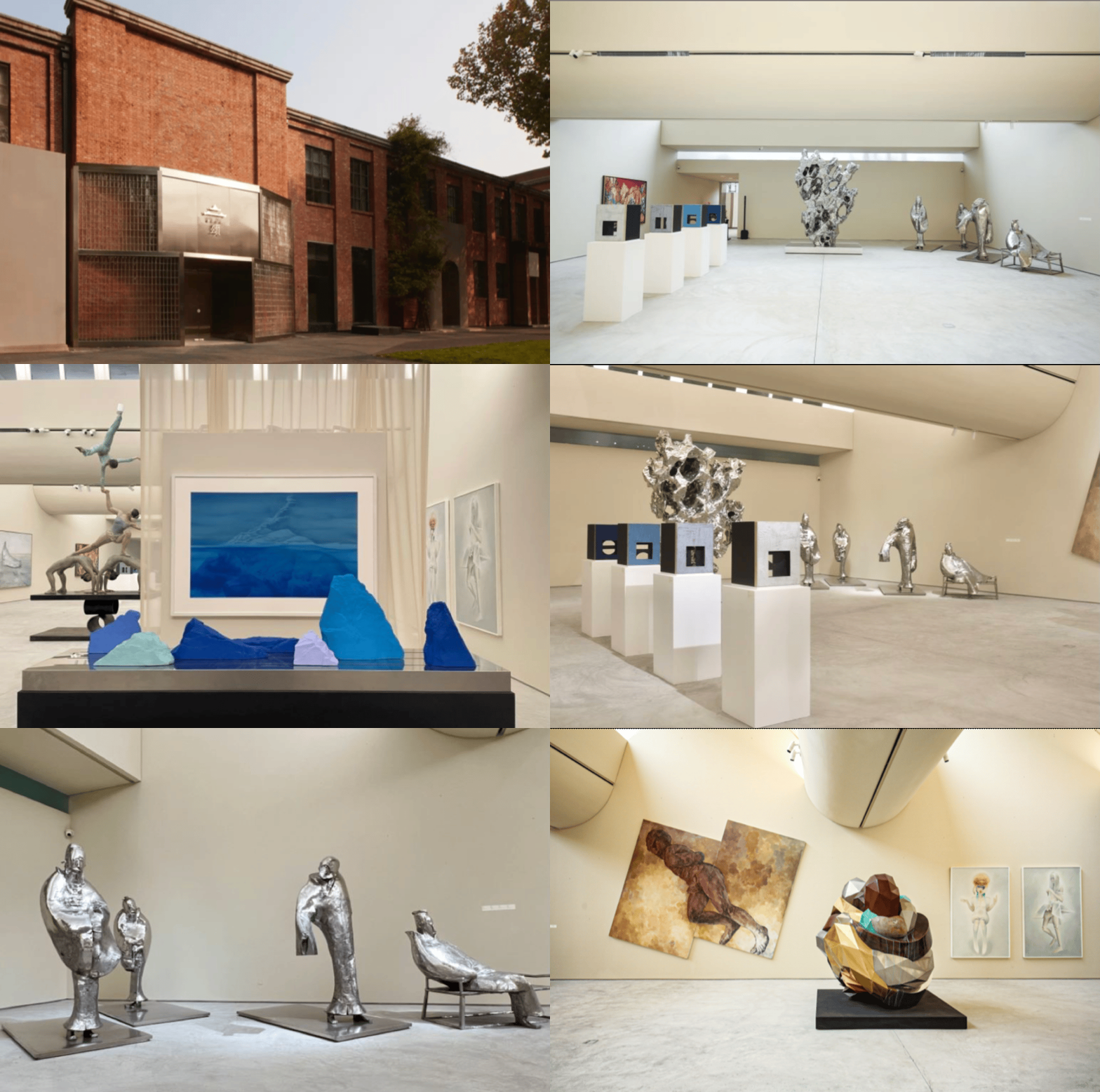
The exterior of Song Art Center and the installation view of its inaugural exhibition, “Echoes of Song”; director Su Mang at the exhibition. Su Mang, the founder, occupies an unusual position, having crossed over from fashion editorship into contemporary art. She hopes that everyone who comes here can feel “the beauty of the East traveling through time and space.” At the start of the exhibition, we spoke with the curators Zhang Zikang and Duan Shaofeng, the director Su Mang, and a number of the artists about the show and about 798’s past twenty years. Installation view of Song Art Center’s inaugural exhibition, “Echoes of Song,” 2022. The exhibition is divided into three sections.
As soon as you enter the space, the first section presents abstract works marked by an Eastern sensibility, creating a meditative environment. Farther in are works bound up with the era we live in now, works that reflect reality. At the end of the exhibition, many landscapes appear, and the content of the work rises toward matters of faith associated with the Chinese literati: ritual feeling and the ultimate longing to entrust oneself to mountains and waters. The exhibition title, “Echoes of Song” (Song of Soul), is a pun.
SECTION 01 | 42 works, telling the story of the "Orient"
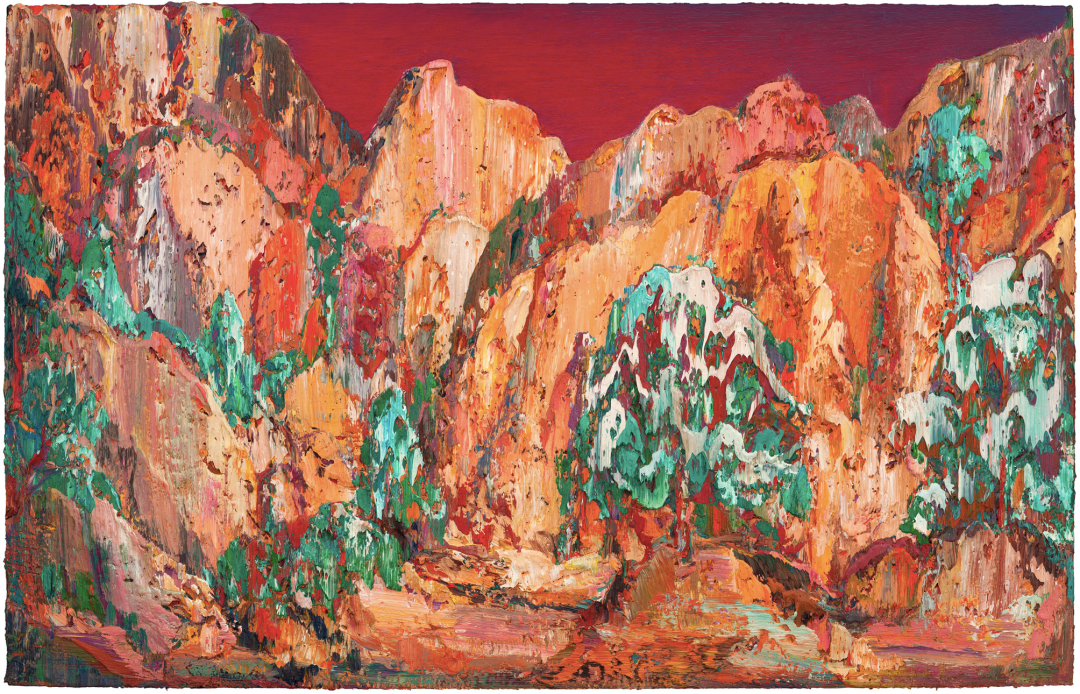
“Song” refers not only to Song Art Center, but also to a “song of art,” and it can also evoke the Song dynasty, neatly introducing the idea that runs through the exhibition: a tracing and examination of “Easternness.” Installation view of Song Art Center’s inaugural exhibition, “Echoes of Song,” 2022. Participating artists include Cai Guoqiang, Huang Rui, Xu Bing, Sui Jianguo, Xu Lei, Tan Ping, Qiu Zhijie, Yan Ping, Shang Yang, Su Xinping, Zhan Wang, Liu Ye, Li Xiangqun, Zeng Fanzhi, Wang Mai, Jia Aili, Ma Ke, Xiang Jing, Song Kun, Wang Yuyang, Wu Jian’an, and Yin Chaoyang. The roster is dazzling: it includes pioneers born in the 1950s and 1960s, among the first and most important trailblazers of Chinese contemporary art, such as Cai Guoqiang, Huang Rui, Xu Bing, and Sui Jianguo, as well as central figures of the younger and middle generations, born in the 1970s and 1980s, such as Jia Aili, Ma Ke, Xiang Jing, and Wang Mai.
Each artist is represented by one or two signature works; twenty-two artists are included in all.
On view in “Echoes of Song” is Zhan Wang’s Artificial Rock No. 117#. The largest work in the exhibition is Zhan Wang’s four-meter-tall Artificial Rock No. 117#, standing along one side of the gallery. Seen through Bauhaus-style window frames, the silver, gleaming “rock” converses with the daylight and throws the light back into the room; it looks different at different hours. It is full of Eastern suggestion and echoes the exhibition title. The curator Duan Shaofeng told us that the original plan was more confrontational: “We had wanted to shatter a seven-meter Taihu rock and point it outward through the window, but the work was too tall and potentially dangerous, so in the end it couldn’t be realized.”
“In the end, this four-meter work is still very satisfying in the way it appears.” Installation view of Song Art Center’s inaugural exhibition, “Echoes of Song,” 2022. For the exhibition’s “Song” theme, Huang Rui created a special installation, Li Bai Drunk on the Moon, a set of four works that from a distance look like four small boxes. Up close, each box represents a line by the poet Li Bai; it stages a dialogue between Huang Rui and Li Bai, between the greater self and the selfless self, in response to an Eastern spirit. The group belongs to Huang Rui’s newest “spatial structure” series. To show it in the 798 district, where he once held his first solo exhibition, carries particular meaning twenty years later.
Huang Rui; from left to right, the works are Li Bai Drunk on the Moon: Raising a Cup to Invite the Moon, Li Bai Drunk on the Moon: Facing My Shadow, We Become Three, Li Bai Drunk on the Moon: Songs Follow Dancing Shadows, and Li Bai Drunk on the Moon: We Meet Again in the River of Stars, 2022. Huang Rui was one of the most important forces behind the rise of the 798 Art District and one of the earliest artists to move in. In 2002, he wanted to find a factory space in 798 to use as a studio. At the time, the whole complex was still in production, employing nearly five thousand workers, and at commuting hours the crowds streamed past in dense flows.
Huang Rui recalled that period twenty years ago this way: “I fell in love at once with 798’s architectural style and craftsmanship. I compared it to a princely compound under the Qing official system.” Speaking of the new work in this exhibition, Huang Rui said, “The original line in Drunk on the Moon answers the moon and the moonlight. I set up an echo between two parts, like ‘inhale, exhale,’ opening and closing, motion and stillness. The poetic world of Li Bai is boundless, infinitely free. That is ‘song’: praising the moon, praising people, praising art.”
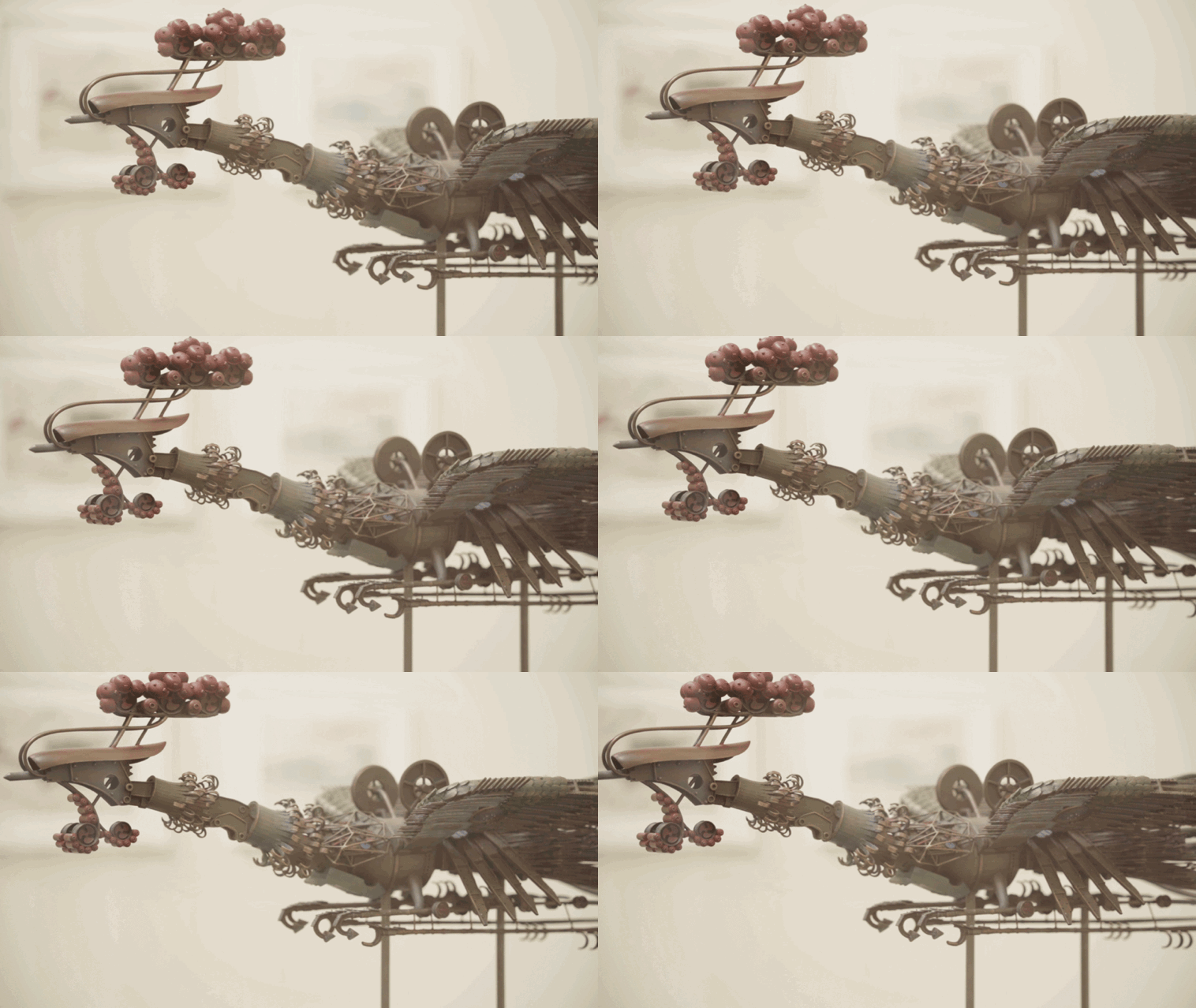
On view in “Echoes of Song” are works by Li Xiangqun; from left to right, the works are Ni Zan, 2013, Huang Gongwang, 2013, Wu Zhen, 2016, and Wang Meng, 2015. Li Xiangqun’s four sculptures produce an effect not unlike Huang Rui’s: viewers seem to enter into an exchange across time with Wang Meng, Ni Zan, Wu Zhen, and Huang Gongwang, as if amid a lively banquet. Installation view of Song Art Center’s inaugural exhibition, “Echoes of Song,” 2022. Another work steeped in Eastern spirit is Xu Bing’s Bronze Phoenix, a comparatively small version from the “Phoenix” series, though its details remain exquisite and moving.
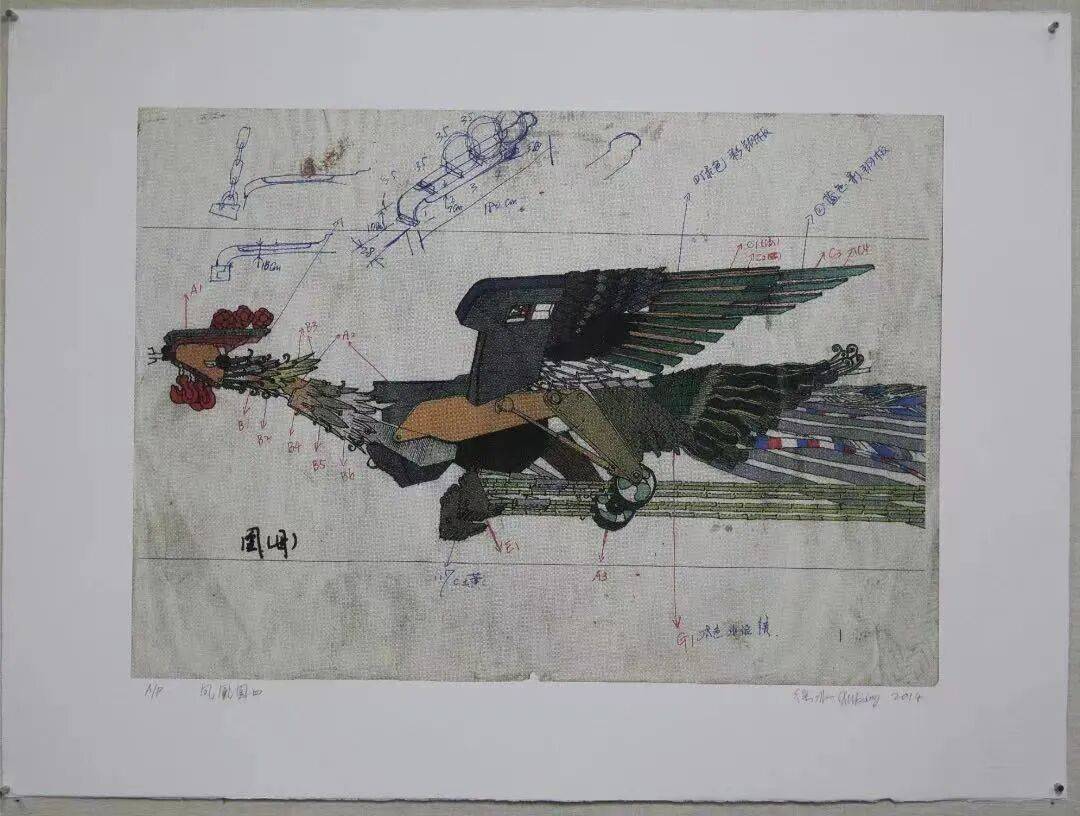
Also on view is a sketch for Phoenix. From two dimensions to three, from beginning to end, the group is presented to viewers in full, and it, too, stands for a kind of “echo.” Xu Bing, Phoenix Drawing IV, 2010. Xu Bing’s “Phoenix” series was first shown in Beijing around 2011, then appeared in the main exhibition of the 2015 Venice Biennale. Over the past decade or so, it has traveled around the world, and the work itself has undergone many changes.
The two most recent works are forty to fifty meters long and are currently on view at the Museum of Art Pudong in Shanghai.
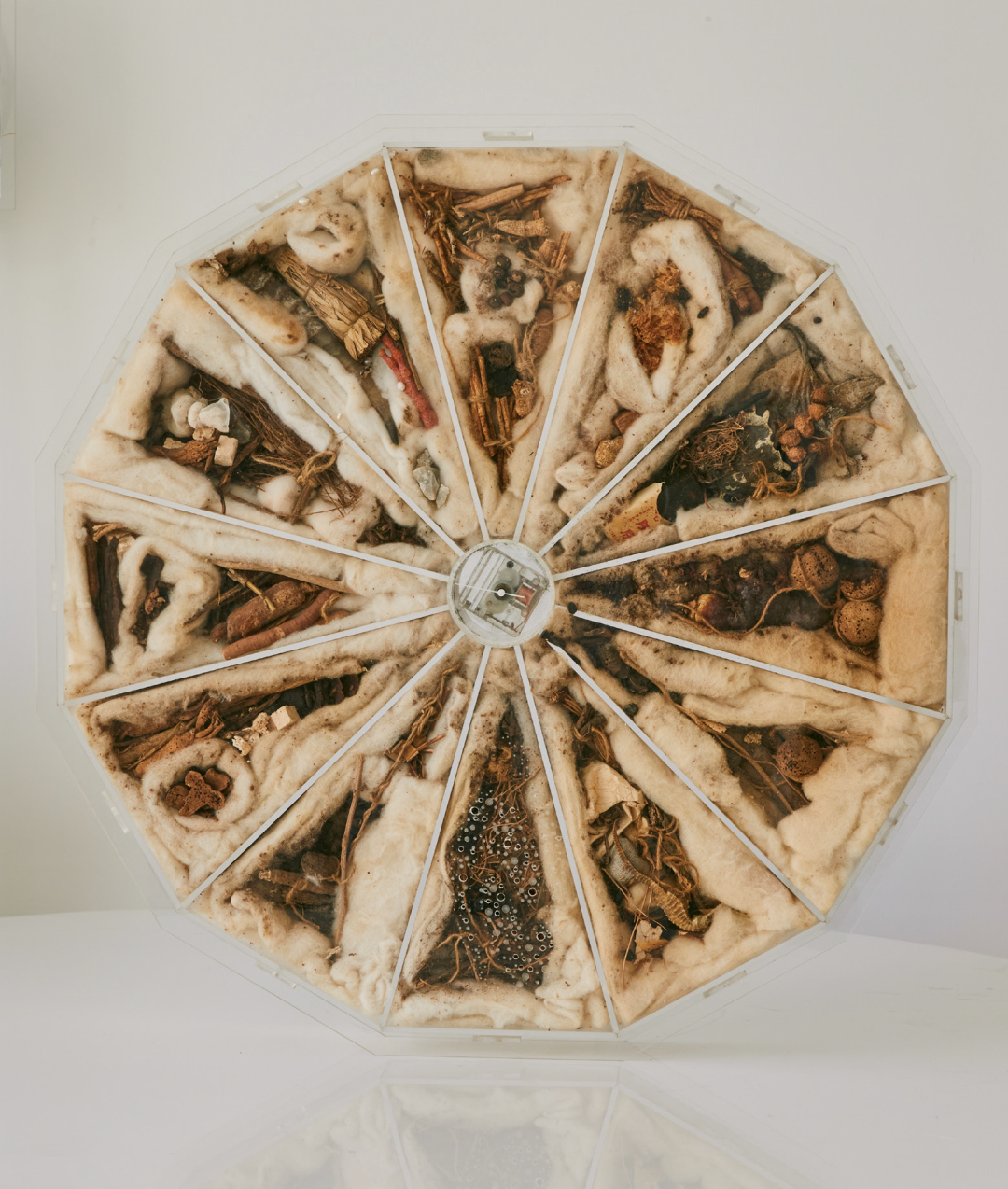
“Phoenix has charted China’s rise all along the way, the concurrent development of globalization, localization, and urbanization,” Duan Shaofeng said. Cai Guoqiang, Life Calendar No. 1, 1994, lent by a collector. There are also works from much earlier dates, such as Cai Guoqiang’s Life Calendar, made in 1994. On a circular disk eighty centimeters in diameter, star anise, atractylodes, cotton, and all kinds of Chinese medicinal materials are arranged in the form of a modern clock.
The twelve hours on the clock are divided by different Eastern medicinal materials, all fragrant with herbs: a “life calendar” that belongs distinctly to Chinese experience.
Echoes at Song Art Center: Looking Back on Twenty Years of Chinese Contemporary Art
On view in “Echoes of Song” are works by Xu Lei. Xu Lei’s two works consist of a landscape handscroll mounted against the wall and accented with indigo mountain forms, and, in front of it, a rocky form made from stone and steel plate. Visually, the object in front creates an “echo” with the painting behind it.
On view in “Echoes of Song” is Xiang Jing’s Mortal: Perhaps I Ask for Everything, Every Endless Plunge Into Darkness and Every Flicker of Climbing, 2011. The installation of the exhibition also struck Su Mang as very special: “You can look at the works from very close range, almost as if you were in love with them, and experience them in a three-hundred-and-sixty-degree surround.”
Echoes at Song Art Center
“In Professor Xiang Jing’s work, the four acrobat girls, every detail, made me reluctant to leave.” The curator Duan Shaofeng told us that paintings hang around the perimeter of the gallery, while sculpture and installation occupy the center, creating two shapes like the character kou, which together happen to resemble the hui in the word for echo. The final wall of the gallery holds no work at all; it is simply white.
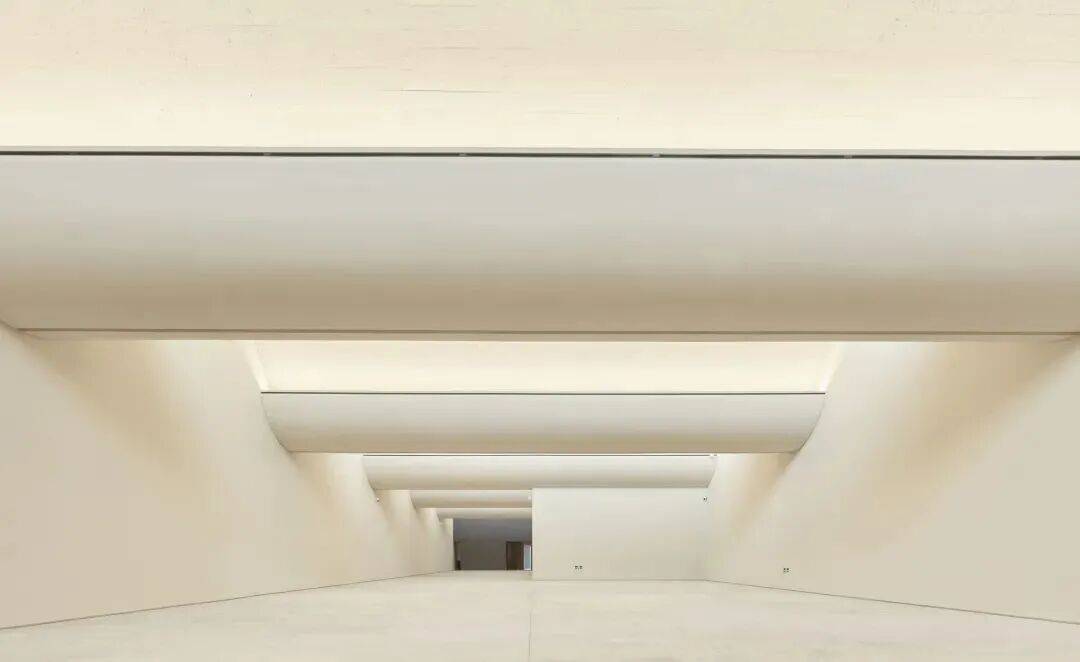
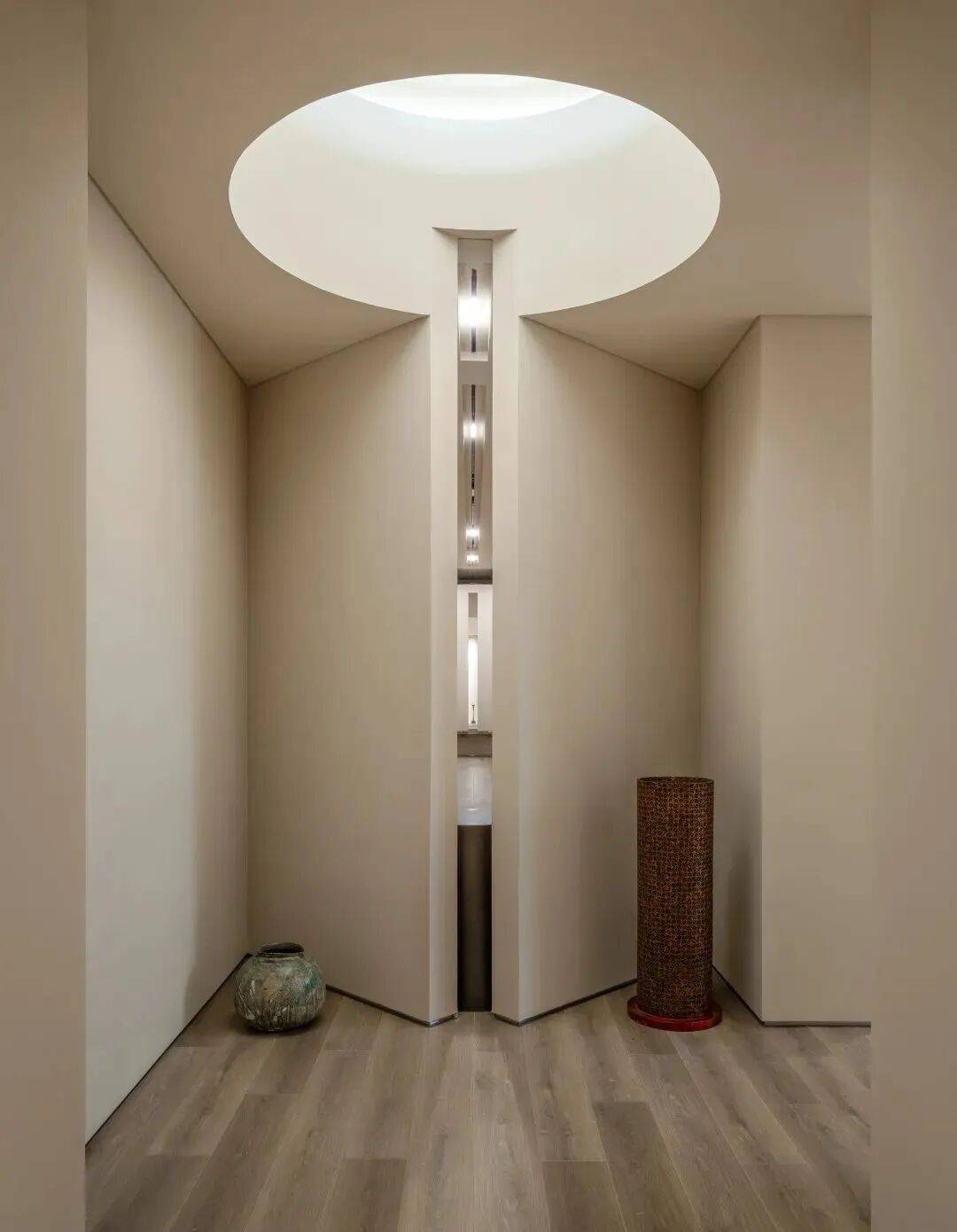
“I think blankness is the lingering aftersound of the echo. In Chinese culture, reserved emptiness is very important. As the artist Nam June Paik said, the work an artist provides is only a box; what the viewer puts into it is what matters more.” The exterior and interior of Song Art Center. At a moment of aesthetic fatigue with all-white cube galleries, the architecture of Song Art Center feels distinctive. Su Mang considers herself very fortunate to have obtained the rights to renovate and use this twentieth-century building. “It’s very beautiful, a classic Bauhaus style, and far larger than I had imagined,” she said.
The main space is toned in cool gray and off-white, yet once inside there are many contrasts and collisions: warm and cool colors set against each other, wood tones beside concrete, sharply cut straight lines of color softened by gentle vaulted arches. The arches of Song Art Center are the only exposed structural element in the space. Su Mang invited the noted architect Kim Ji-hoo, who previously worked on X Museum; preserving the texture of the original black concrete vault, he repainted it a wood tone.
SECTION 03 | Looking back at 798, what do we see?
Light and the green of foliage enter the art center through the side wall, and the whole space suddenly seems to be in dialogue with daylight and nature, becoming bright and open.
“At first I only wanted to make a small art space, a place for myself and my friends to settle our spirits and some of our spiritual interests. But since I was fortunate enough to get a space of this scale, I had to prepare it very seriously. We spent half a year refining and discussing it with care. The thoughtfulness is in places you can’t see. This space is also my own solemnity and reverence toward art.” Song Art Center’s second floor. Upstairs, Su Mang has created what she calls a ‘living art space,’ something seldom seen in art institutions.
The second floor is divided into seven galleries, each like a room in a home with a different function. The smallest feels like a little cloakroom; the largest, like a family living room. There is even a tea room, realistically reconstructing scenes of everyday life. These smaller galleries are a bold experiment, an attempt to break down the boundary between art and life and to let viewers who have not yet entered art collecting feel what it might be like to “live” with works of art.
You can see quite clearly how different combinations of artworks might enrich a home and shape the overall character of a space. The design of Song Art Center’s second floor. The unusual idea for this “private art space” on the second level came out of Su Mang’s own experience.
“A lot of my close friends really love art, but when it comes to buying works, they always hesitate. Their biggest problem is, Where would I hang this? Would it even fit in my home? Not everyone has a feel for space or the ability to imagine it.” Once the editor in chief of a top fashion magazine, Su Mang said that after living that busy, glittering life, she now longs instead for a quiet, detached way of living. Song Art Center’s second floor. She wants to make the Song art space into what she thinks of as a “three-dimensional magazine,” using spatial presentation, new curatorial methods, and artists’ free creation to give viewers a chance to look inward and to offer them a multidimensional experience of beauty, art, and life.
“I have a small dream, perhaps an unrealistic one: that every person, whatever their income, job, or living conditions, might be able to add a little atmosphere of art to some corner of home, even if it’s only a dressing table or a balcony. I want to open a window onto the longing for art amid the weight of real life.”
On view in “Echoes of Song” are Qiu Zhijie’s Form of Meditation, 2022; Yin Chaoyang’s Song Gu, 2022; and Yan Ping’s Time Flies, 2022. “It has been very difficult to bring these twenty-two artists together, from those born in the 1950s and 1960s all the way to the 1980s, forming a lineage of Chinese contemporary art. Under the pandemic, an exhibition like this has an inspiring force.”
Yu Ding, dean of the School of Arts Management and Education at the Central Academy of Fine Arts and the academic chair of “Echoes of Song,” told us that the purpose of this inaugural exhibition went far beyond simply putting on a show.
“This exhibition gives people a way to look back at the artistic phenomena of the past twenty years and to think about the relationship between our art today and tradition,” Zhang Zikang, the exhibition’s chief planner, told us.
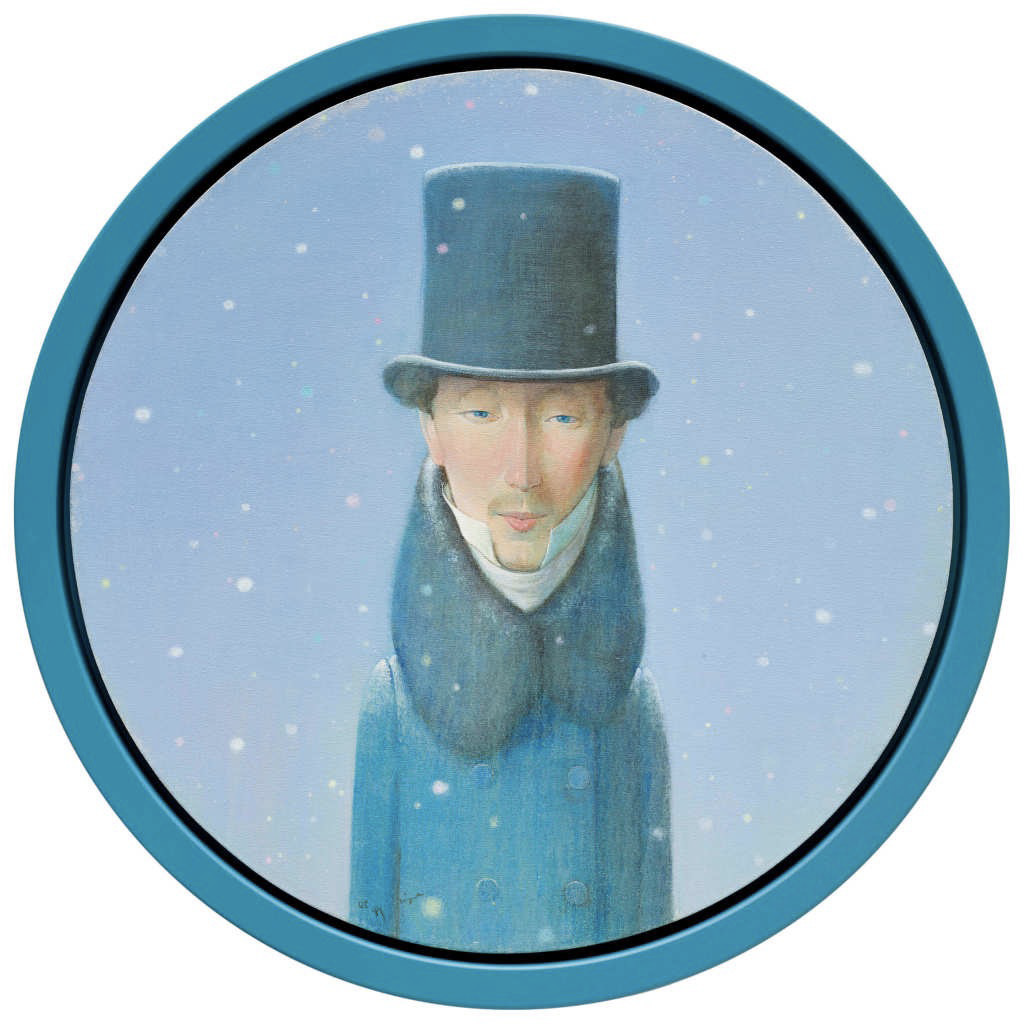
On view in “Echoes of Song” are Liu Ye’s Andersen in the Snow, 2008; Wu Jian’an’s With All Limbs Intact, Near Immortality Upon Attaining the Way, 2015; and Sui Jianguo’s Cloud Garden: Handwriting No. 56#, 2022. Looking back over the past twenty-two years of Chinese contemporary art, Beijing’s 798 is impossible to avoid. It can be said to be the place “where many art people’s dreams began.”
“I lived through the entire course of 798’s development in Beijing. As early as the 1990s, the Sculpture Department of the Central Academy of Fine Arts rented 798 spaces for large sculptures; later, teachers from our Sculpture Department and other departments rented studios here.” Yu Ding told us that 2000 became a turning point. After that, along with artists’ studios, large numbers of galleries and other art institutions moved in.
“Especially between 2006 and 2007, the number of galleries in 798 suddenly went from a dozen or twenty to more than three hundred. After the 2008 financial crisis, it finally stabilized at more than seventy,” Yu Ding recalled.
On view in “Echoes of Song” is Wang Mai’s 798 Military Industry Curio Shelf No. 2. The work Wang Mai brought to the inaugural exhibition is inseparable from the land of the 798 district itself. He explained that the piece was made twelve years ago, and that the wooden materials it uses were all collected from factories in 798 around 2000; most were industrial molds from the 1950s and 1960s.
“Later, all of it became unwanted industrial trash.” He felt a particular attachment to those materials, gathering them up, cleaning them, carving them, and reassembling them into an installation resembling an ancient curio shelf, complete with many discarded industrial instruments. Wang Mai told us that to look back on 798 at this moment gave him a particularly deep feeling.
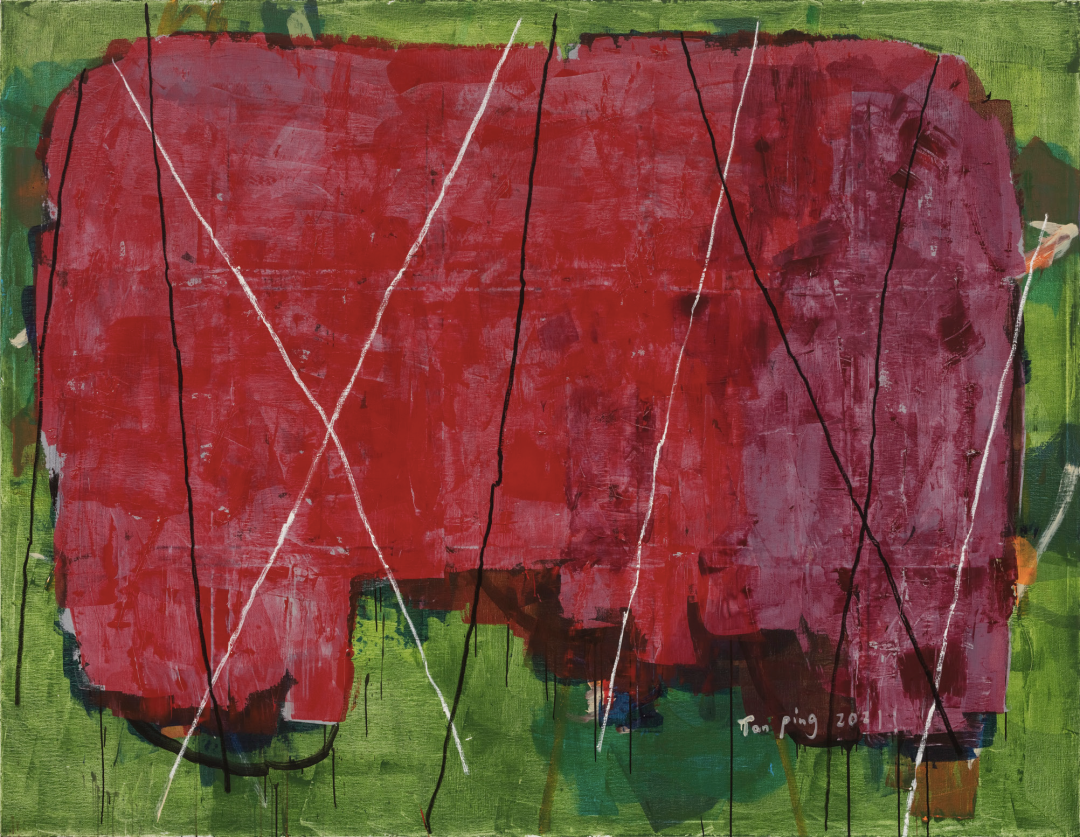
“It’s almost as if we’ve forgotten that more than twenty years have already passed at 798, which is astonishing. I even made a special trip to look at my old studio. My first exhibition was also held in 798.” Ma Ke, Journey to the West: Dark Lady, 2022. On view in “Echoes of Song” is Tan Ping’s Untitled, 2021. Installation view of Song Art Center’s inaugural exhibition, “Echoes of Song,” 2022. 798’s first glorious era came between 2005 and 2008.
In 2006, 798 was officially designated an “art district.” That same year, UCCA Center for Contemporary Art opened, becoming a phenomenon-level center of contemporary art and, to this day, a landmark destination for exhibition-going.
“If there is such a thing as a Chinese Dream, then the ‘contemporary art dream’ swelled rapidly during those three years,” Huang Rui said. At the time, the cost of making art in 798 was very low, the atmosphere was open, and because the world was in a wave of globalization, attention also turned to China’s art market, allowing a large group of artists to become famous quickly.
On view in “Echoes of Song” are Song Kun’s Ksitigarbha’s Six Messengers: Messenger of Great Strength and Ksitigarbha’s Six Messengers: Messenger Who Commands Heaven, 2015. Many of the people we interviewed also mentioned that 798 had gone through low periods in the past. During the pandemic in particular, visitor numbers dropped sharply; some people left, and many art institutions were, as they put it, “hanging on.” But there was still a shared consensus: whatever happens, 798 changes, but 798 is always 798.
Now, with a new art institution arriving in 798 after twenty years of accumulated contemporary-art development, how does Song Art Center define itself? Su Mang’s answer was notably modest, without much ambition in it.
“We are still a very small and very young art institution. We hope that, amid busy working lives, people might go not only to the gym, play frisbee, or sing karaoke, but also visit museums and art institutions, and see whether art might, in some measure, heal them and brighten their lives.”