Raw, Reckless, and Rough: How Did He Become One of the Hottest Artists of His Generation?
Daniel Crews-Chubb is one of Britain’s most sought-after artists born in the 1980s, and in recent years his work has found an expanding audience among collectors and institutions in Asia and China. His paintings arrive with a raw, reckless, even rough-edged force: he applies paint with his fingers, smears charcoal, dyes, cuts, and tears the canvas, sprays it with sand and ink, and staples layer upon layer of cut canvas onto the surface beneath......
By / Xirui Huang · 11 min read
How does Daniel Crews-Chubb build pictorial order from rough, layered materials?
In Xirui Huang’s 2024 interview, Daniel Crews-Chubb describes using finger painting, charcoal, cut canvas and accumulated layers to let figures emerge through repeated work. His interest in ancient sculpture and depictions of deities across cultures feeds into bodies that resist a single fixed identity. At Long Museum in Shanghai, the concrete architecture gives the paintings room to be encountered, while grey backgrounds in some works respond to the building itself.
Daniel Crews-Chubb is one of Britain’s most sought-after artists born in the 1980s, and in recent years his work has found an expanding audience among collectors and institutions in Asia and China. His paintings arrive with a raw, reckless, even rough-edged force: he applies paint with his fingers, smears charcoal, dyes, cuts, and tears the canvas, sprays it with sand and ink, and staples layer upon layer of cut canvas onto the surface beneath.
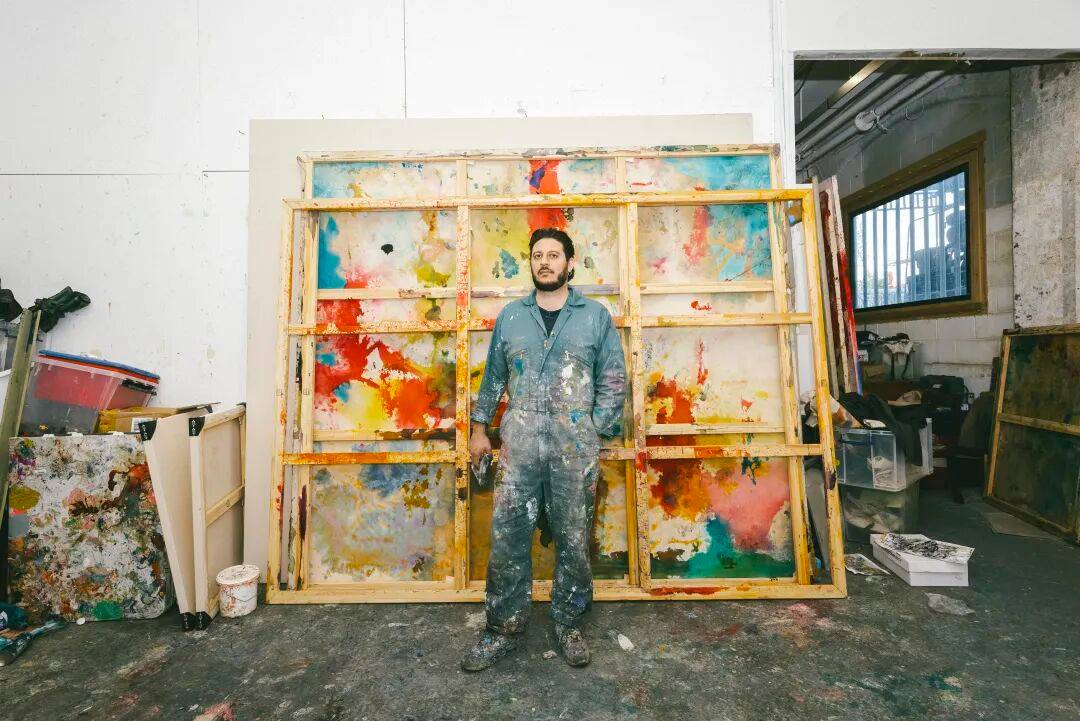
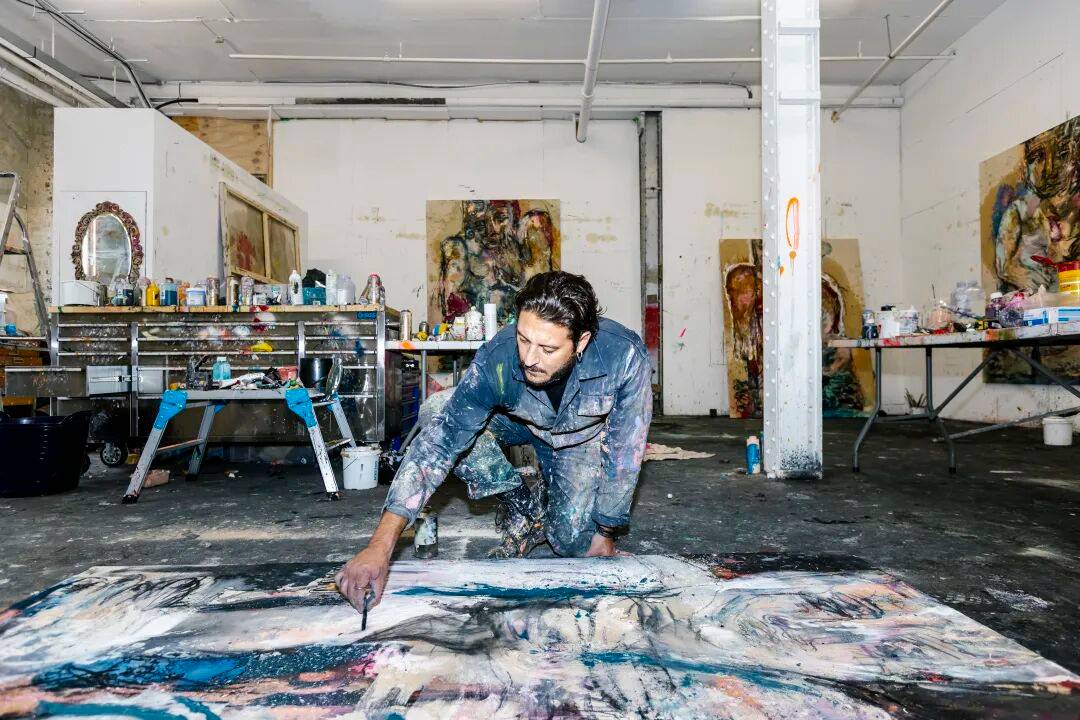
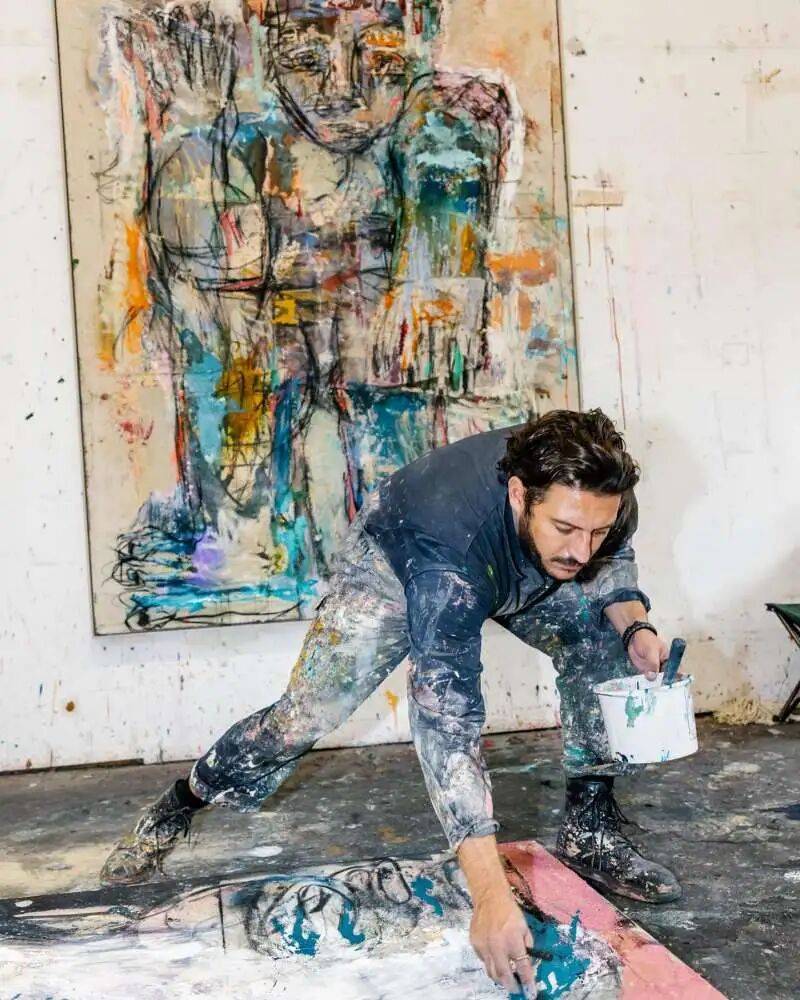
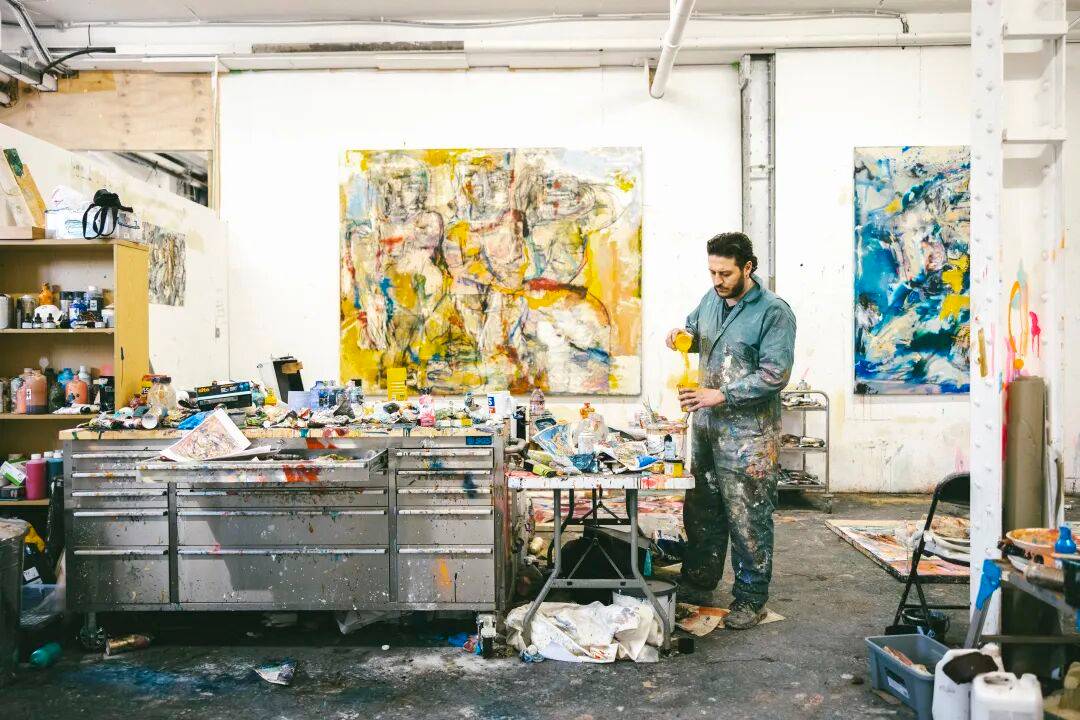
Daniel painting in his studio. “My initial inspiration came from ancient artifacts and sculptures from different cultures. About 10 years ago, I began traveling around the world, observing how Mexico, Southeast Asia, Greece, and ancient Rome depicted their gods,” Daniel told us. The exhibition at Long Museum this November is Daniel’s first major museum exhibition in China. It presents more than 30 paintings, including 9 works from the Immortal series and 5 new works from the Out of Chaos series, all made in 2024.
SECTION 01 | A new order emerges from the chaos
We spoke with Daniel after he had returned to his London studio from Shanghai, discussing his work and his “trip to Shanghai Art Week.” Installation of Daniel’s solo exhibition at Long Museum. This is Daniel’s second visit to Shanghai; 6 years have passed since his previous trip in 2018.
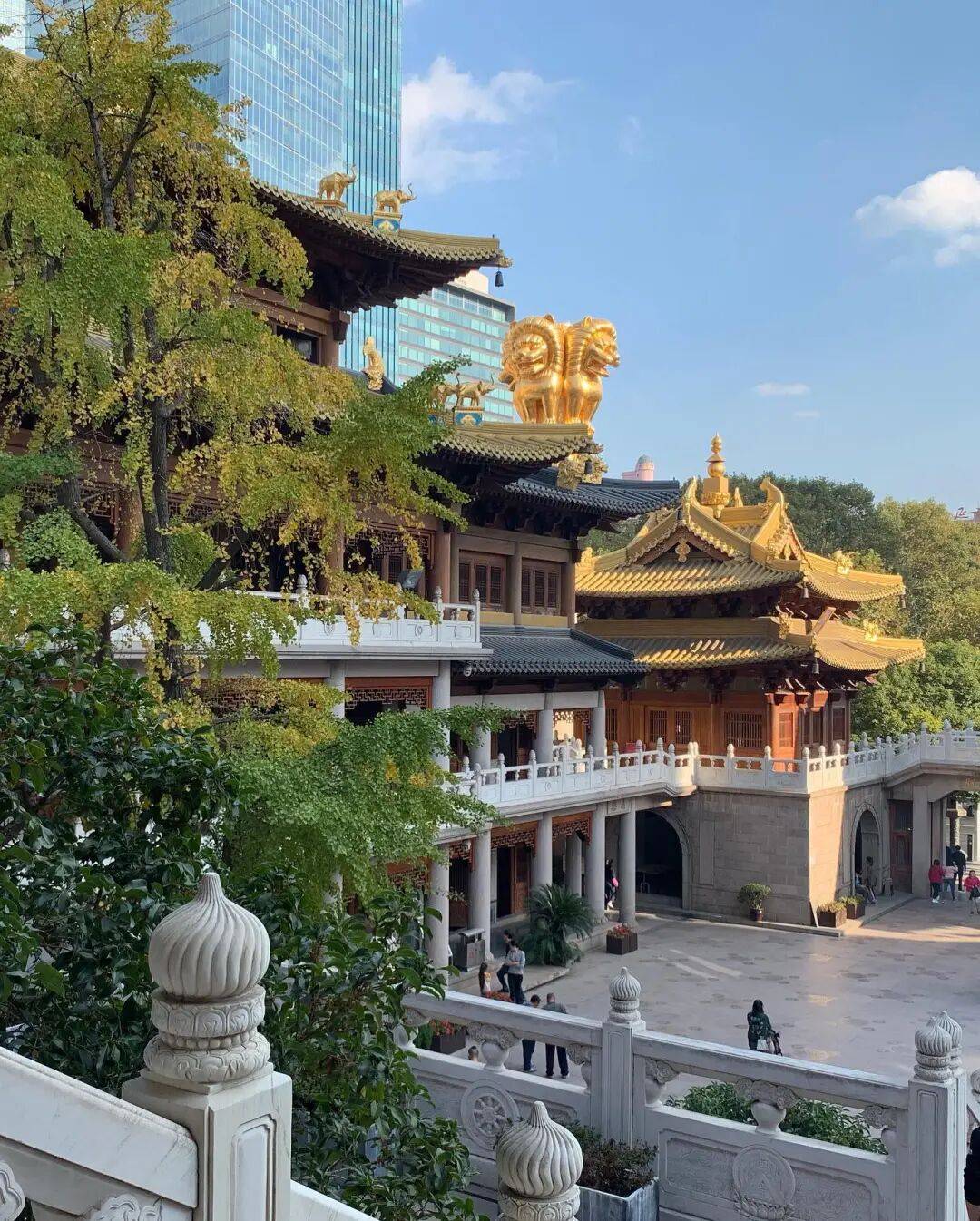
“My impression of Shanghai is that it’s an astonishing city. Especially during Art Week, it’s full of energy and reminds me of Frieze Week in London.” Whenever he arrives in a new city, Daniel hopes to experience a culture beyond the center, in the outskirts as well. The Jing’an Temple photographed by Daniel. “I remember that last time I came, I went to an old water town near Shanghai, Zhujiajiao, and encountered something intensely smoked: stinky tofu.”
“European blue cheese has some very strange smells, too, but stinky tofu really is powerful,” Daniel told us with a laugh. This time, however, he had converted: “I tried stinky tofu again and discovered that I actually quite liked it.” What affects him most, naturally, are encounters with ancient cultures. At Jing’an Temple, he heard monks chanting sutras.
“It was a very emotional moment for me. It helped regulate my emotions; even my heartbeat followed the rhythm of the chanting. It was beautiful.” Daniel Crews-Chubb: Immortal, installation view at Long Museum, 2024, photograph by shaunley. Daniel told us that he enjoys exhibiting in countries such as China, with their rich cultural and historical backgrounds.
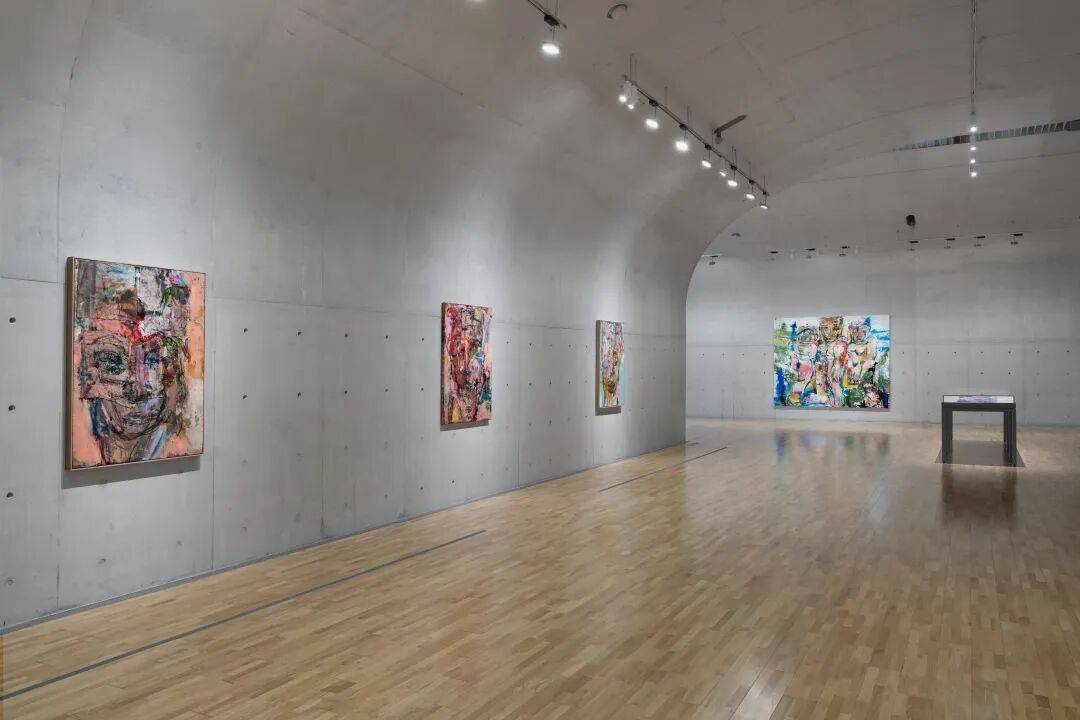
“I feel that there are many references to history in my work. I don’t feel estranged from other cultural groups. I’m always pursuing universality in my work, hoping that audiences from any country and of any age can connect with it.” Daniel Crews-Chubb: Immortal, installation view at Long Museum, 2024, photograph by shaunley. Entering Daniel’s exhibition, one is struck by the distinctive collision between his works and Long Museum’s gray concrete spaces.
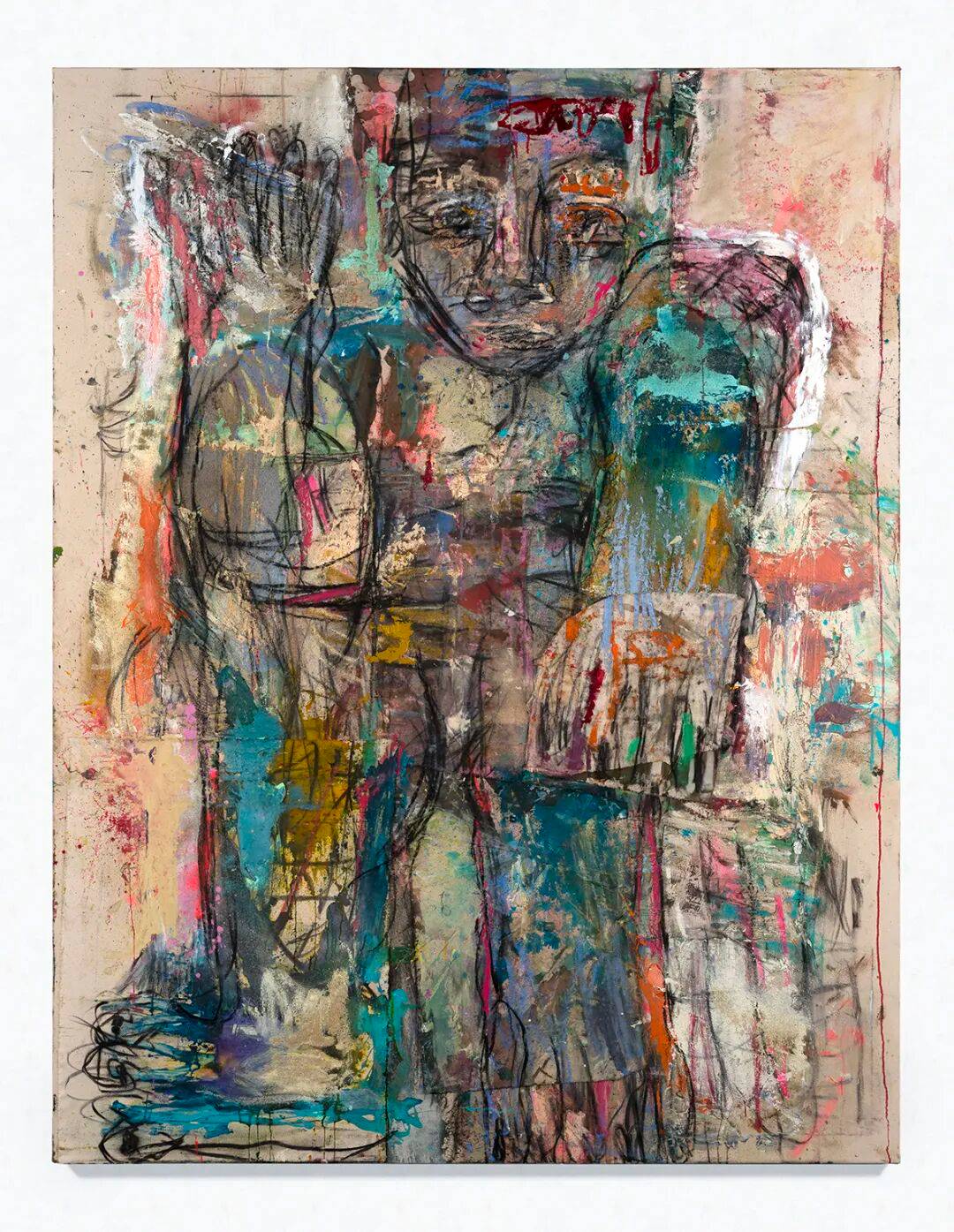
“My works are large, messy, and abstract, and I think they need room to breathe. The scale of Long Museum and its concrete walls have a distinctive industrial aesthetic that allows the works to reveal their character. I deliberately used gray backgrounds for several pieces to respond to the museum’s environment,” Daniel told us. Daniel Crews-Chubb, Angel II, 2024. The exhibition is titled Immortal, sharing its name with Daniel’s largest series, which comprises more than 60 paintings.
The Angel in the exhibition is a kind of extension of the Immortal series, with only 3 works in existence.
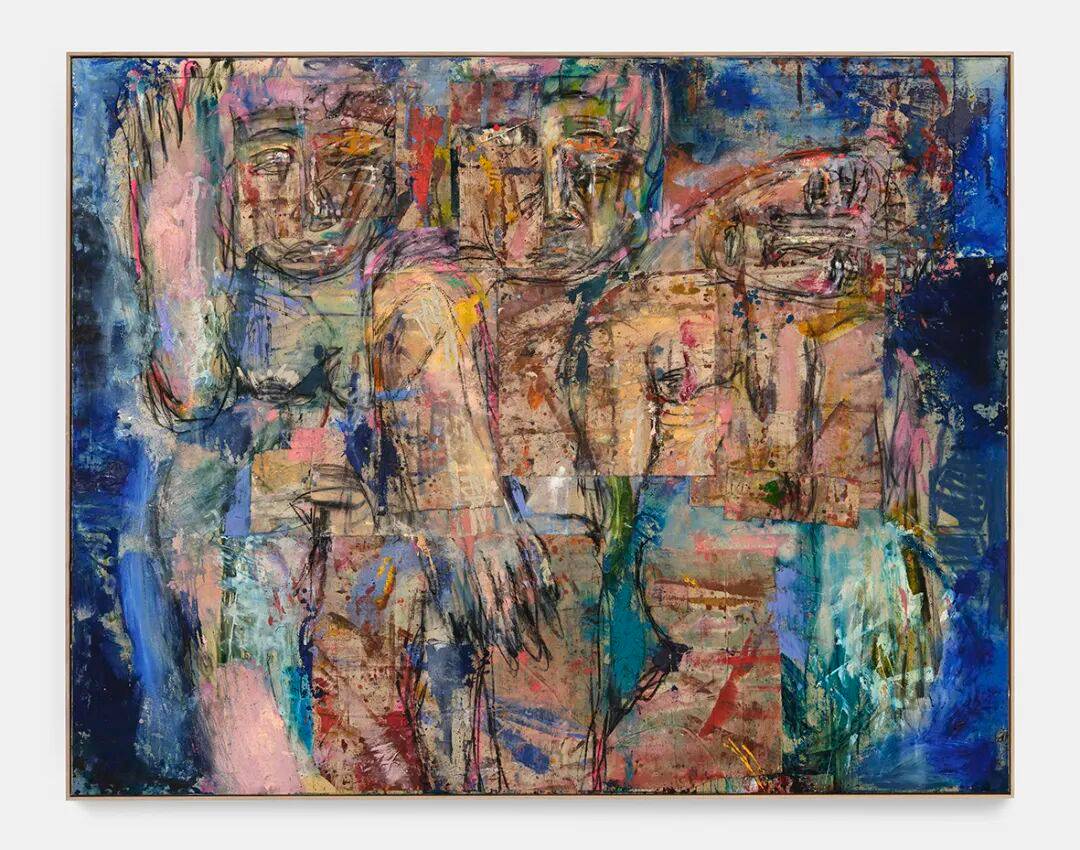
“The Angel series appeared accidentally while I was making Immortal. As I was painting, suddenly the image of a wing emerged. I stared at the surface for a long time before realizing that it was the outline of an angel.” For Daniel, the series is deeply personal. Daniel Crews-Chubb, Immortal II (Turquoise), 2022. Daniel Crews-Chubb, 3 Immortals (Ultramarine), 2023. “The painting takes me back to memories from when I was about 6 or 7. In a religious-education class at primary school, our teacher asked the whole class to draw an image of ‘God.’ The students came from different cultures—European, East Asian, Southeast Asian, South Asian, and American—and our religious beliefs were entirely different. The ‘God’ each of us drew belonged only to our own system of belief.”
“I found that extremely moving. It opened my curiosity about unknown worlds and cultures.” More remarkably, Daniel’s Angel series is entirely spontaneous. He simply follows his instincts, moving the brush until the image is complete; only then may he discover that an angel has “descended.”
“It appears roughly once a year. Sometimes it’s one wing, sometimes two. The image completes itself, and that feeling is very special,” he told us. Daniel Crews-Chubb, Mask III (Peach Pink), 2023, the soil collection. Another series in the exhibition, Mask, resembles a succession of uncertain faces, or entirely abstract lines and blocks of color.
The series led him to take an interest in pareidolia, the phenomenon of seeing meaningful forms in random or abstract patterns.
Raw, Reckless, and Rough: How Did He Become One of the Hottest Artists of His Generation?
“Many viewers may want to work hard to find figures within my fragmented images—their partial limbs and outlines,” Daniel said.
Pareidolia describes the human brain’s attempt to find meaning in abstraction. When we look at clouds, for example, we instinctively imagine them as something concrete: a sheep, a dog, or a person.
“Pareidolia is human nature. For people with religious faith, the desire to see religious images can be even stronger—for instance, seeing Jesus’s face in a bowl of cereal, or the outline of God in a mountainside.” Daniel clearly draws many of his observations about pareidolia from everyday life.
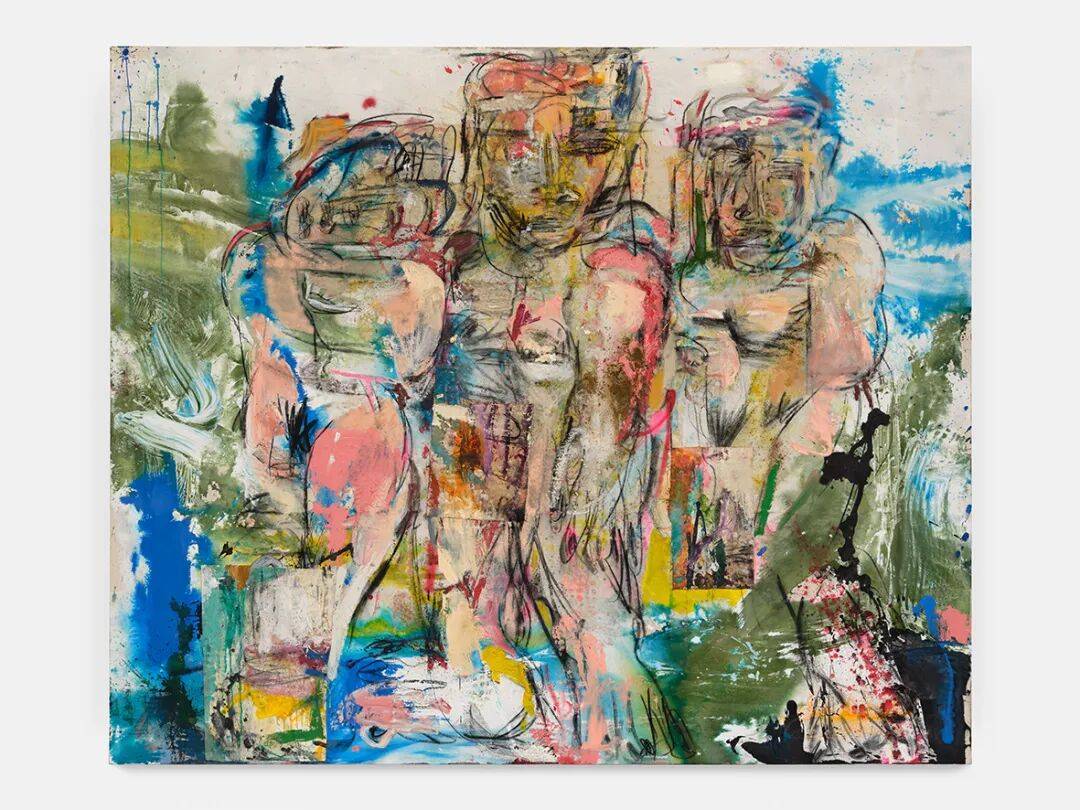
“Children also have a strong capacity for pareidolia. They’re always looking for their mother’s face. So from a very young age, humans have this tendency; it’s the brain trying to understand irrational things.” Daniel Crews-Chubb: Immortal, installation view at Long Museum, 2024, photograph by shaunley. The 5 new paintings in the Out of Chaos series represent another breakthrough in Daniel’s approach to the image. Daniel Crews-Chubb, Out of Chaos VI, 2024.
The new Out of Chaos works place greater emphasis on the entanglement of multiple figures and the reciprocal transformation of the energy between them. Looking closely, the figures seem perpetually incomplete, like the sculptures of ancient Greece and Rome: an arm may be broken, or a leg missing. This incompleteness is precisely what Daniel wants to convey. “This visual incompleteness reminds us of our own fragility and brevity. It reminds us that we are mortal, that we truly exist.”
Daniel Crews-Chubb: Immortal, installation view at Long Museum, 2024, photograph by shaunley. The title Out of Chaos likewise expresses an idea continuous with the imagery of Daniel’s work, and is closely connected to Greek creation mythology.
“Order was born out of chaos. Our existence and energy cannot be destroyed; they can only be transferred. Energy is conserved. When we die, it transfers into other things—perhaps the earth, the atmosphere, or even the universe.” Daniel Crews-Chubb, Out of Chaos VIII (Gray Blue), 2024. Daniel in his studio. Daniel’s paintings recall the earliest cave paintings made by humans, as well as the ancient Indigenous cultures of Africa, Australia, and Mexico. Their surfaces are richly textured, and the faces of his figures possess an almost irresistible force and expressiveness.
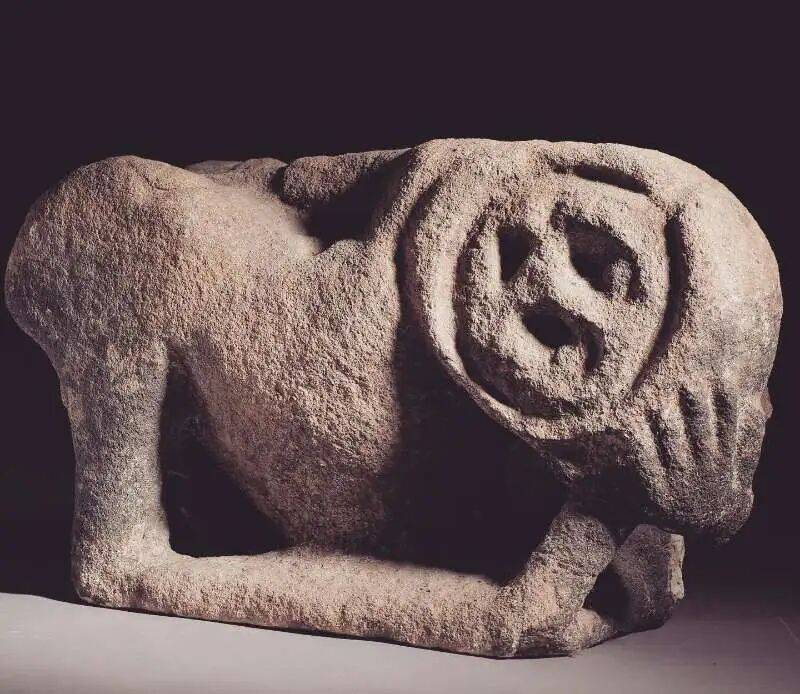
The figures he depicts seem to have no gender, transcending time and space. Travel, he told us, is essential to him. As he moves around the world, he continually observes the ways gods are depicted in ancient artifacts, murals, and temple sculptures, drawing from them inspiration, recognition, and even a kind of mysterious energy. Daniel has said that the medieval stone carvings known as Sheela Na Gig are among the sources of his inspiration. “About 5 or 6 years ago, I went to Bali, Indonesia, and visited an ancient monkey forest.”
“There were many Hindu sculptures there, usually placed at the entrances to temples. One sculpture in particular fascinated me: a half-human, half-animal figure making a pushing gesture. The locals told me that the gesture was meant to prevent evil energy and demons from entering the temple.” As he spoke, Daniel reenacted the sculpture’s pushing gesture. A pyramid photographed by Daniel in Mexico City. Coatlicue, the fertility goddess, at the National Museum of Anthropology in Mexico City; image courtesy of the museum’s official website. Another trip that left a deep impression on him was his visit to Mexico City and the National Museum of Anthropology.
SECTION 03 | Compared with the ancients, we have regressed.”
“There was a huge stone disk carved with an image of a fertility goddess named Coatlicue, the fertility goddess of Mexican culture. She was very beautiful, but also very ugly—her limbs had been severed, and her head had been cut off,” Daniel said. Compared with the figurative depictions of gods in Greece and Rome, he prefers nonhuman forms, such as the animal-headed deities of Egypt—things that, within conventional visual experience, could not be called “beautiful.”
The artist in his studio. “Beauty and ugliness must coexist; light and shadow must coexist; male and female must coexist. If something is too beautiful, it can seem unreal, as if it were synthetically made. What I’m pursuing is a more authentic, ancient beauty,” Daniel said.
“I always feel like a magpie. I like to ‘steal’ things from everywhere. I’m interested in everything—for instance, the colors of a pair of sneakers: red, blue, green. I might use those colors in a painting, too.” As an artist, he remains curious about everything, drawing nourishment from his surroundings and expressing it in a new form. Daniel Crews-Chubb, Out of Chaos III, 2024. The irregular layers of canvas and distinctive collage in his paintings came from an accidental experiment.
“During one painting, the work became increasingly complex and heavy, and I wasn’t happy with it. There were many pieces of freshly cut canvas on the studio floor. They weren’t clean, but somehow I suddenly picked one up and attached it to the painting. That instant changed the balance of the entire work, and the breathing space the image needed appeared naturally.” From that moment on, Daniel said, collage became part of his “toolbox” as a painter.
The artist in his studio. He often describes his works as 2.5-dimensional, rather than simply flat paintings.
“I’ve always felt like a sculptor trapped inside a painter’s body. Most of the artists I like are sculptors, such as Huma Bhabha and Thomas Houseago.” Although Daniel says he generally uses collage and other techniques spontaneously, the conditions for that spontaneity may lie in his repeated study of Rauschenberg and the collage practices associated with Italy’s Arte Povera.
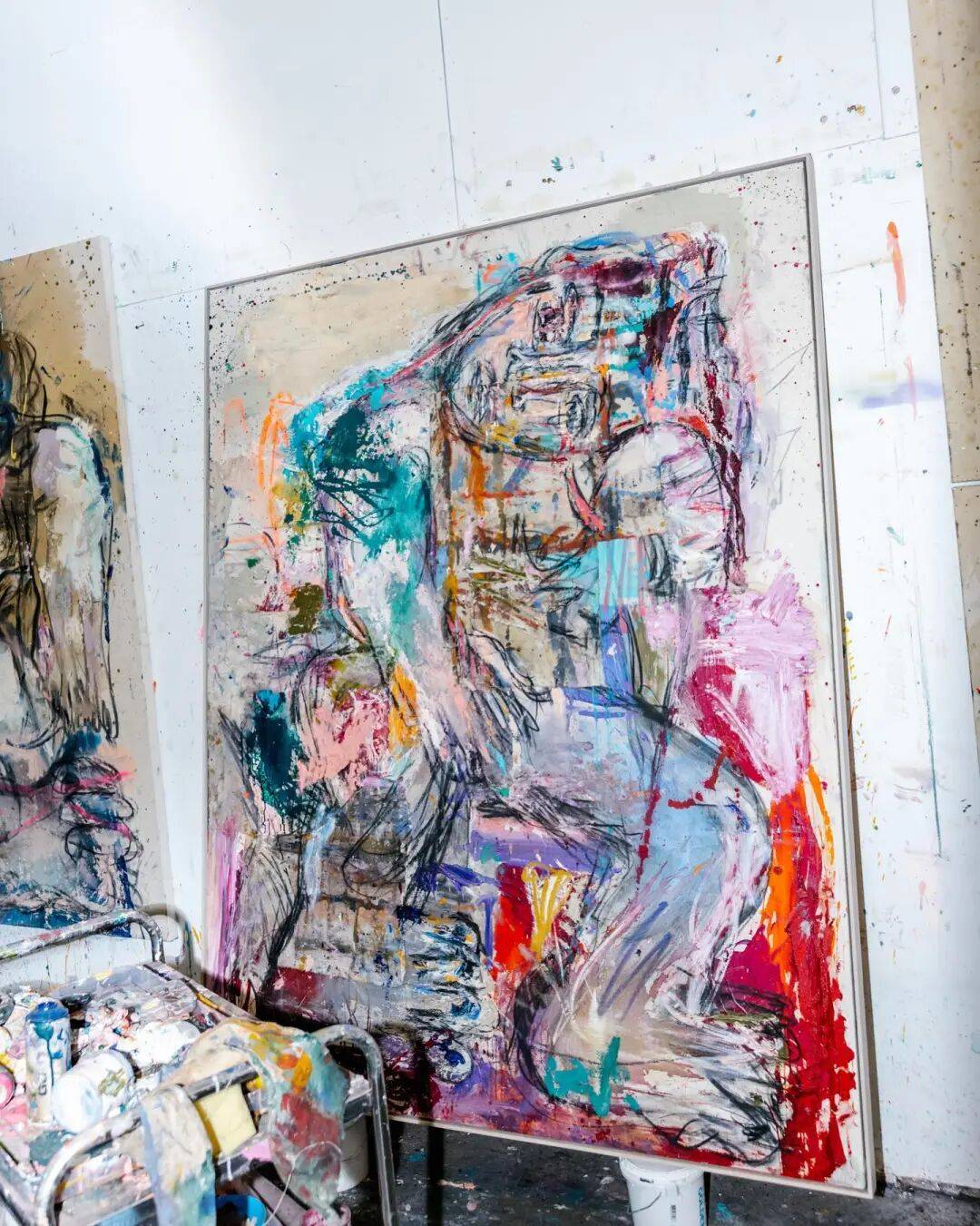
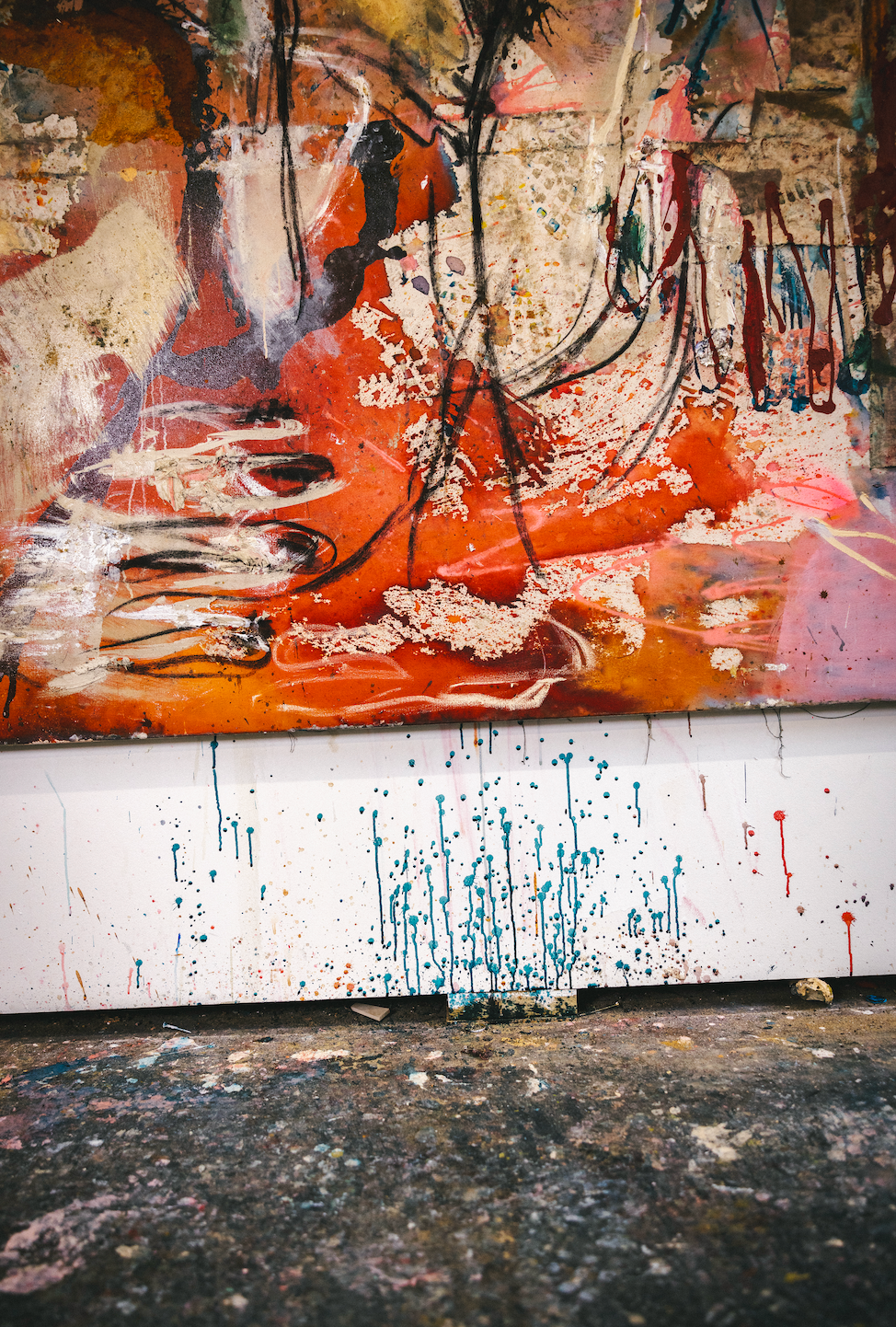
Daniel’s distinctive painting technique. Though he is a painter, his works are closer to mixed-media pieces, combining paint with collage elements, charcoal, sprayed ink and sand, spray paint, and an array of other improbable materials.
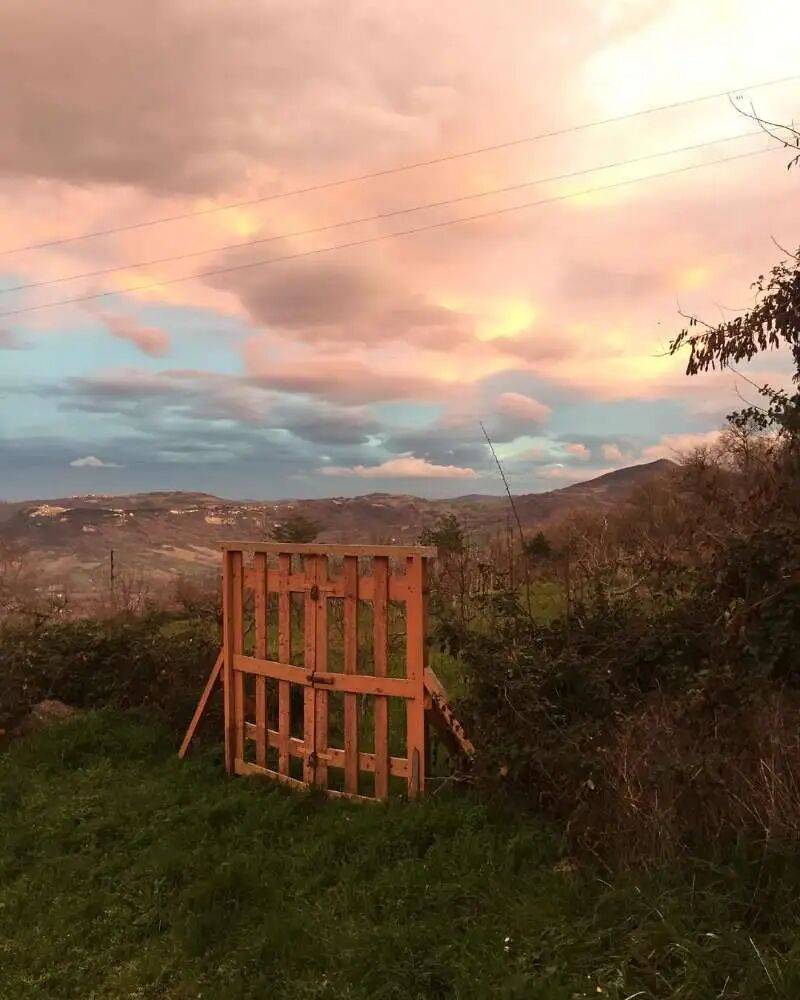
“Many of the marks made by paint aren’t applied with a brush. They’re thrown or stepped on. Sometimes I press and smear the paint directly with my fingers, so that it looks more like earth than paint,” Daniel said. A landscape in southern Italy photographed by Daniel. He also told us that his fascination with sculpture has led him to build a new studio in southern Italy, where the terrain and environment are better suited to sculptural work. The climate is warm year-round, allowing him to work outdoors throughout the year.
“I’ve had the idea for 5 years. It’s extraordinarily beautiful, with broad red wastelands and ancient olive trees. I’m considering making sculptures from natural wood and clay.” The artist in his studio. His current studio is in the London Borough of Southwark, in southeast London. Every morning at 10, he appears there punctually, as if reporting for work.
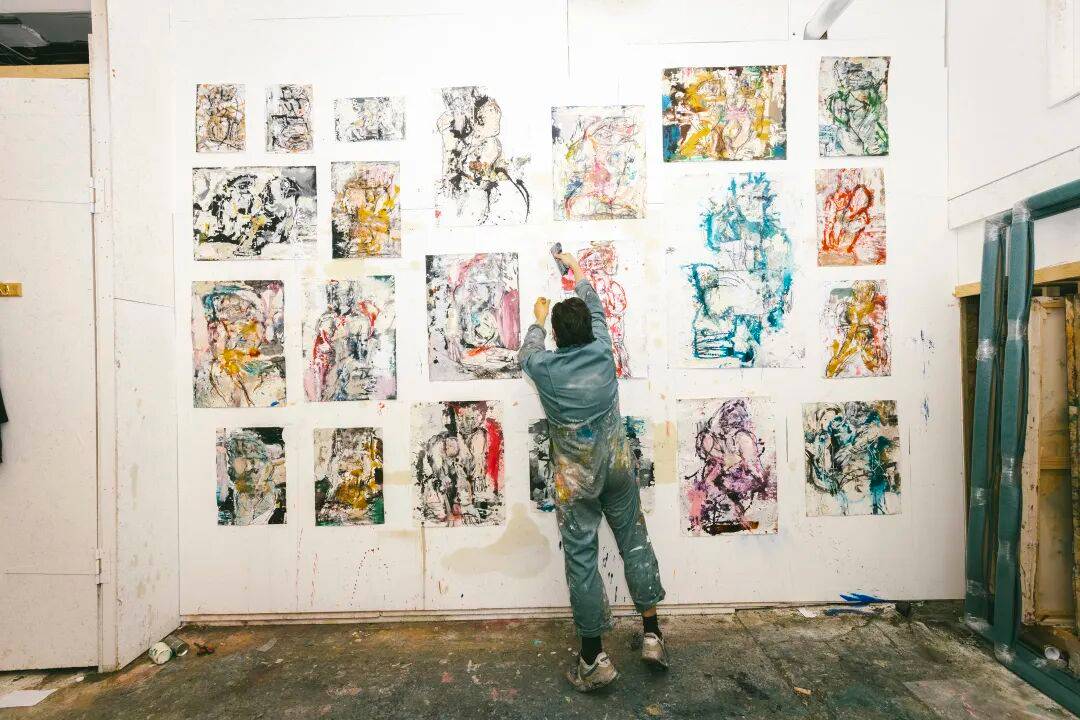
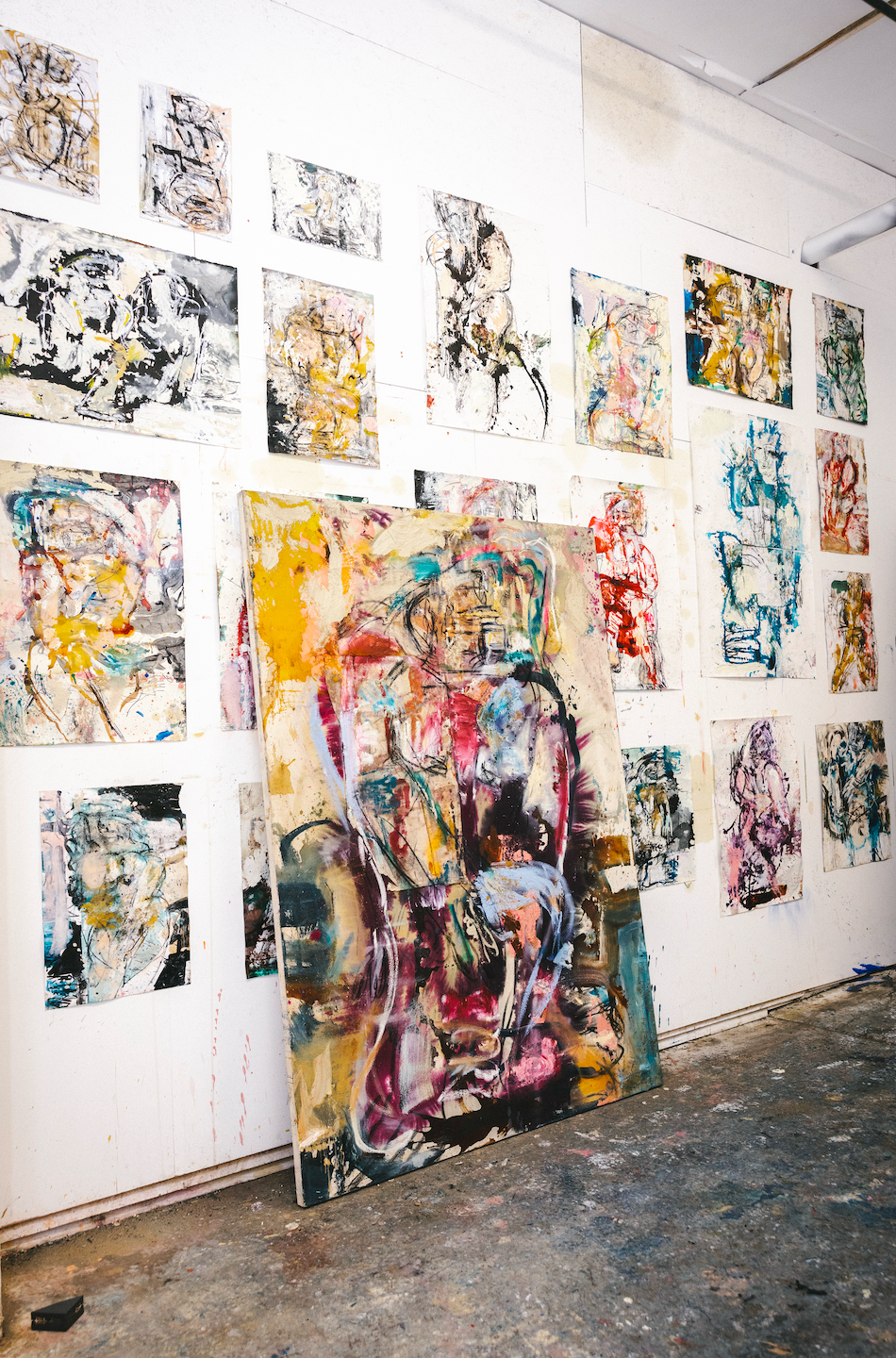
“My studio is somewhere between a factory and a laboratory. If it’s too much like a factory, you just keep producing the same things and lose your passion; if it’s too much like a laboratory, you just keep failing. Failure is certainly part of artistic work, but I also hope to succeed.” Daniel laughed as he showed us works in progress around the studio. In the studio, whose ceiling rises more than 4 meters, about 20 works were spread across the walls, floor, tables, and easels, all in progress at once.
Several unfinished works offer glimpses of his method. Sometimes he begins with a single deep crimson; sometimes he builds different surfaces through splashes or thick applications of paint. His two daughters often come to the studio to “visit,” he told us, and can accurately identify which paintings are unfinished. Daniel’s elder daughter Alba in his studio. “My elder daughter Alba really likes my work. Her intuition is very accurate. She’ll say, ‘Dad, I like this painting, but you need to finish it.’”
“That amazes me, because even when my work is finished, it often still looks somewhat ‘unfinished.’” His younger daughter, Roma, is quieter; when she comes to the studio, she usually says nothing.
“I always feel that a good work of art should be able to move both a four-year-old child and the chief curator of MoMA. That’s the beauty of visual art: it doesn’t require a background in knowledge to move people.” The artist in his studio. Born in 1984, Daniel spent his adolescence before the arrival of digital technology, and feels that, in some ways, he still resists modern technology.
“When I was younger, there was no internet. We had CDs and developed photographs; music and photography were tangible. That’s also why I remain fascinated by eras that were more real, more tactile, and more human.” Daniel feels that many ancient cultures had a stronger connection to nature than we do today. Their architecture aligned with the constellations, and science and spirituality were inseparable.
“Human beings have certainly advanced in modern technology, but in some ways we’ve regressed.” The artist in his studio. He told us that he had loved making things and drawing since childhood.
“I remember that when I was about 11, my mother wanted to put new wallpaper in my room. I told her, ‘No, I want to paint it myself.’ I went out and bought all the materials, then painted a prehistoric jungle scene on the wall. When my mother came home, she was stunned. She had thought I would simply use paint to make the wall one color.” It is clear that, from an early age, he possessed the independent creative instinct of an artist. One might even say that art had entered his bloodstream; making art was how he drew intangible philosophies and inspirations out of his body and rendered them, figuratively or abstractly, on the surface of the image.
The artist in his studio. “For me, art has always been a calling, but I never thought it could become a career. It was more a choice of lifestyle.” In fact, Daniel once wavered over whether to become a professional artist. After completing his master’s degree, he still had not made work that satisfied him, and he had to coach children’s soccer to afford the rent on his studio.
“I remember saying to my mother, ‘I’m thinking about opening a soccer school and teaching children to play.’ She looked at me in amazement: ‘What are you talking about? You’re an artist. This is the path you chose. You can’t give up; you have to keep going.’” Daniel laughed. Looking back on this episode from 12 or 13 years ago, he finds the idea absurd. At the time, however, he truly needed that affirmation—and a reason to persist.
Unfinished paintings in the artist’s studio. He has also long been drawn to artists, both predecessors and contemporaries, whose styles are intensely distinctive: Picasso, Georges Braque, and the contemporary artists Huma Bhabha and Rose Wylie.
“I think establishing a strong artistic identity is a constantly developing process, an endless journey. I want my work to be inclusive, not exclusionary. I hope every viewer can enter the work with their own feelings and understand it in their own way. I don’t provide any answers; I simply provide an opportunity to experience the making of art.” Image courtesy of the artist, Pilar Corrias, and Long Museum.