Yan Ming: Fifteen Years on the Road, Recording Forgotten Real Landscapes
The photographer and writer Yan Ming has spent years making lucid, unsentimental pictures of overlooked places and lives; a major exhibition in Wuhan traces that journey and introduces a new turn toward color......
By / Xirui Huang · 10 min read
How does Yan Ming find photographic poetry in overlooked everyday landscapes?
In Xirui Huang’s 2022 interview, Yan Ming describes travelling, attending to ordinary people and noticing unexpected moments as central photographic experiences. His exhibition at the Wuhan image art centre brings different periods together: square-format black-and-white photographs make everyday settings concise yet suggestive, while new colour works explore another visual language. Conversations with Yan and organiser Yang Da consider how selection and composition allow poetry to emerge from real scenes.
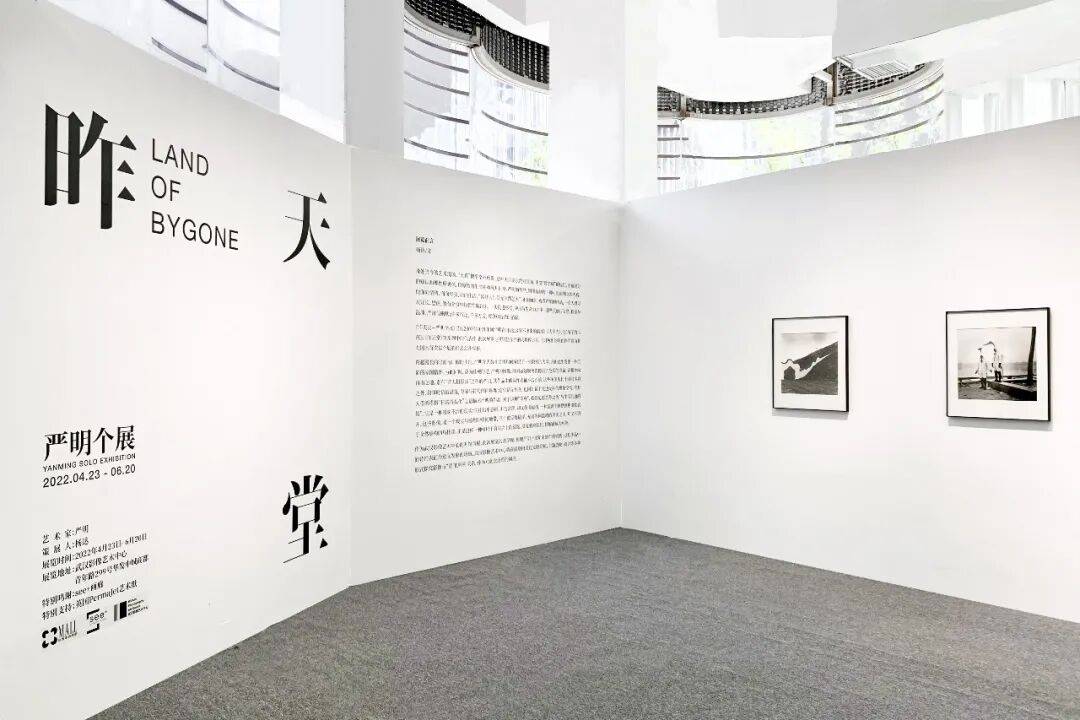
Yan Ming, who was born in Dingyuan, Anhui, in the 1970s generation, has received the Hou Dengke Documentary Photography Award and France’s Prix Talents Photographie. He is often described as a “poet-photographer.” He is also a rare best-selling author to cross beyond the art world: in 2021, his latest photobook, Yesterday’s Paradise, ranked in Douban’s annual Top 10 art books. From April 23 to June 20, 2022, the Wuhan Center for Photography opened with Yan Ming’s solo exhibition Yesterday’s Paradise, which brought together nearly fifty works and was one of his largest solo shows in China.
The exhibition presented representative works made between 2007 and 2021 from the series I Love This Romance That Cannot Cry Out, Chronicle of a Great Nation, Wrinkled Child, and Yesterday’s Paradise. For the first time, Yan stepped outside his habitual reliance on black-and-white images and premiered a new body of color work, the Wall-Breaking series. At the opening, we spoke with Yan Ming and with Yang Da, the director of the Wuhan Center for Photography, about the new work and the course of his career.
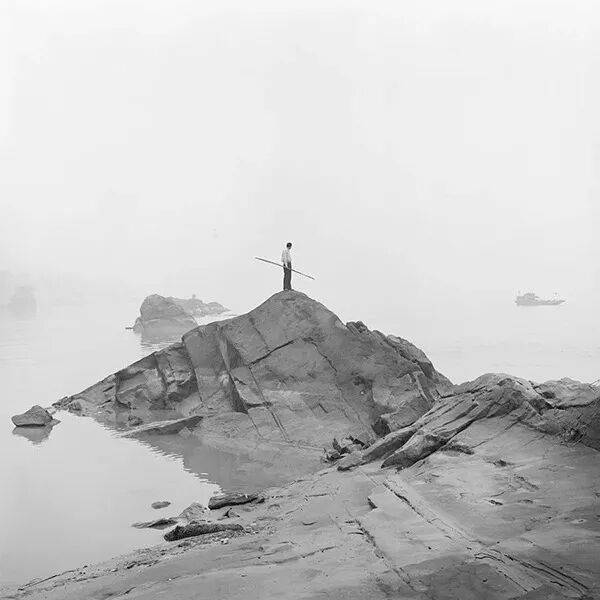
Before becoming an artist, Yan Ming had been a middle-school teacher, a rock musician, a magazine editor, a record-label publicist, and a newspaper reporter. For all those years spent making his way through different trades, his photographs have retained a rare and independent innocence. Using black-and-white film and square compositions, he has recorded the forgotten real landscapes scattered across China’s vast terrain.
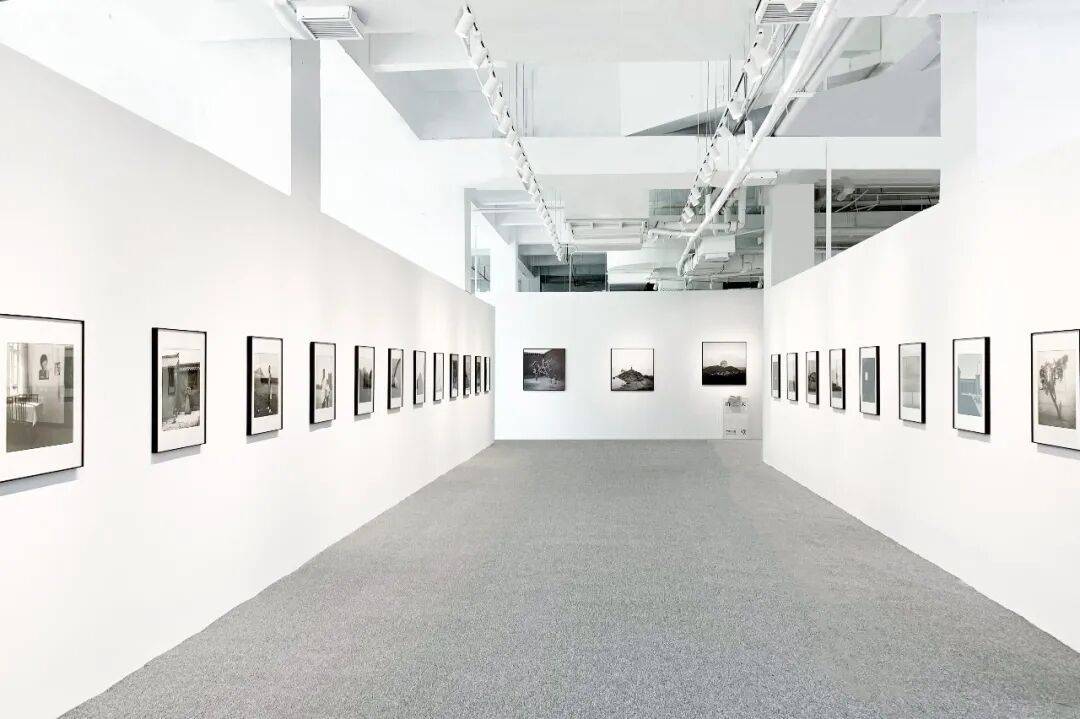
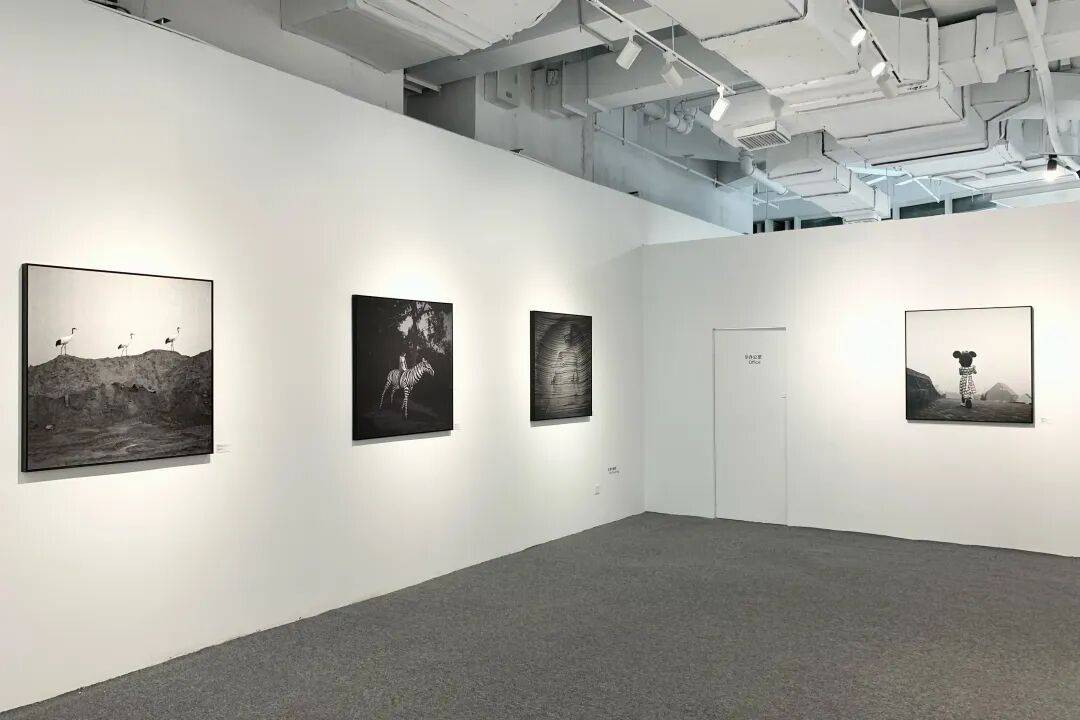
Jia Zhangke once said, “Each of Yan Ming’s photographs is not a record but a profound act of creation.” Entering the exhibition, the first impression is of cleanliness. Black, white, and gray are the only colors in sight, and they carry a power that quiets you at once. The show is divided into three sections. In the first gallery, two fully symmetrical white walls run in long bands to the far end of the room, set off by a pale gray floor. On the walls hang black-and-white film photographs, all the same size, all square, spaced with disciplined regularity.
SECTION 01 | Wuhan new exhibition displays colorful works for the first time
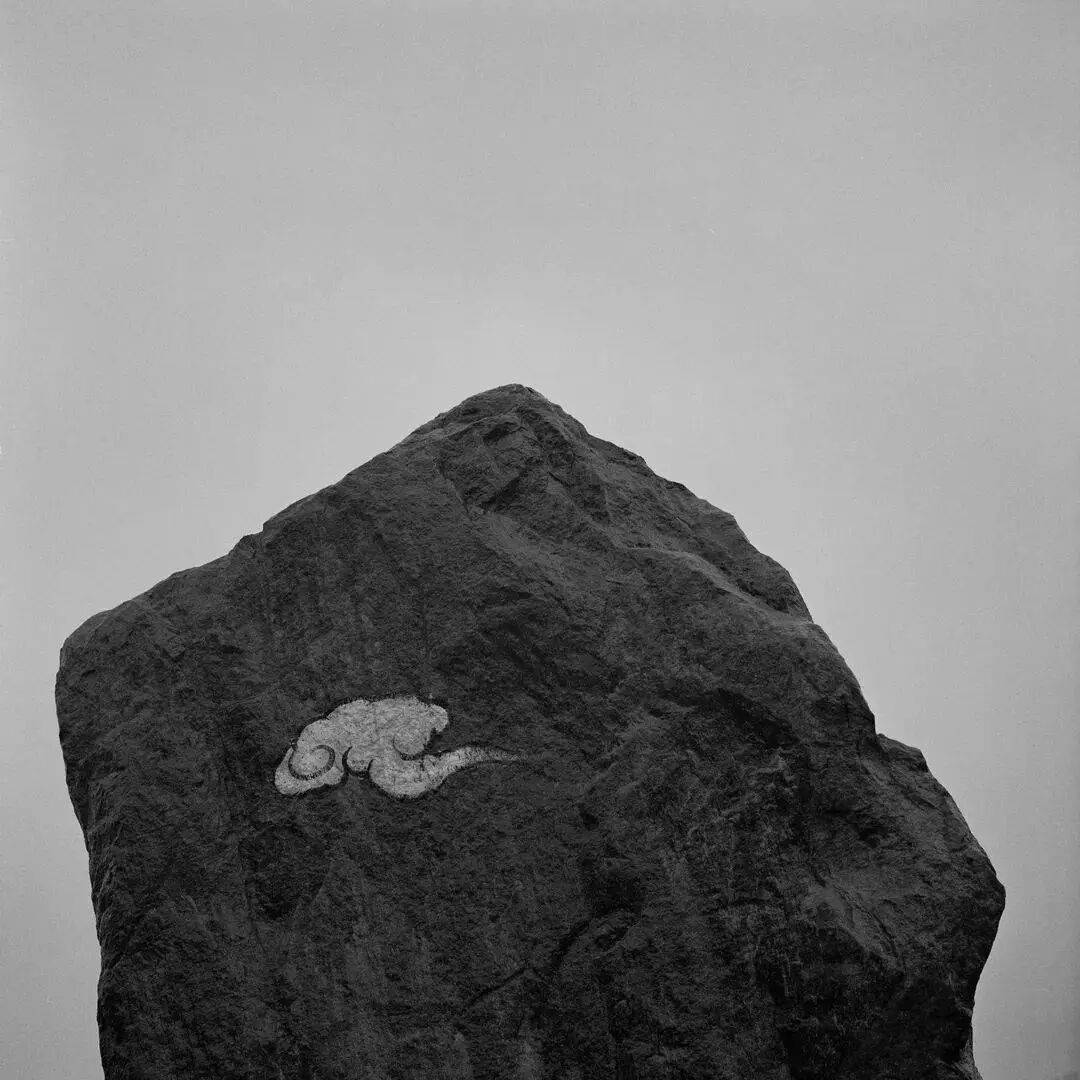
This silver-gelatin group consists of works Yan made between 2009 and 2020 while traveling across the country, recording the truest textures of landscape, terrain, and human feeling in villages, at the water’s edge, in mountain fields, on city outskirts, and across the grasslands. Cloud Wall, Chongqing, 2011; Stone With Clouds, Chongqing, 2011. Both Cloud Wall and Stone With Clouds came out of chance encounters in the wilderness. An unnamed designer shaped the wall to follow the mountain’s slope in an ancient cloud motif. In the middle of the wilds, a solitary white wall can seem pointless, yet it carries a distinctly idealistic romance.
The white auspicious clouds painted on a black rock are another kind of futile labor. On a barren mountain, who would ever see them? But Yan Ming did see them. The collision of black and white, of stone and cloud, of hardness and softness, is unexpectedly poetic. Yan was nearly forty when he decided to quit his job and devote himself fully to making photographs. Chongqing was the first stop on his professional path.
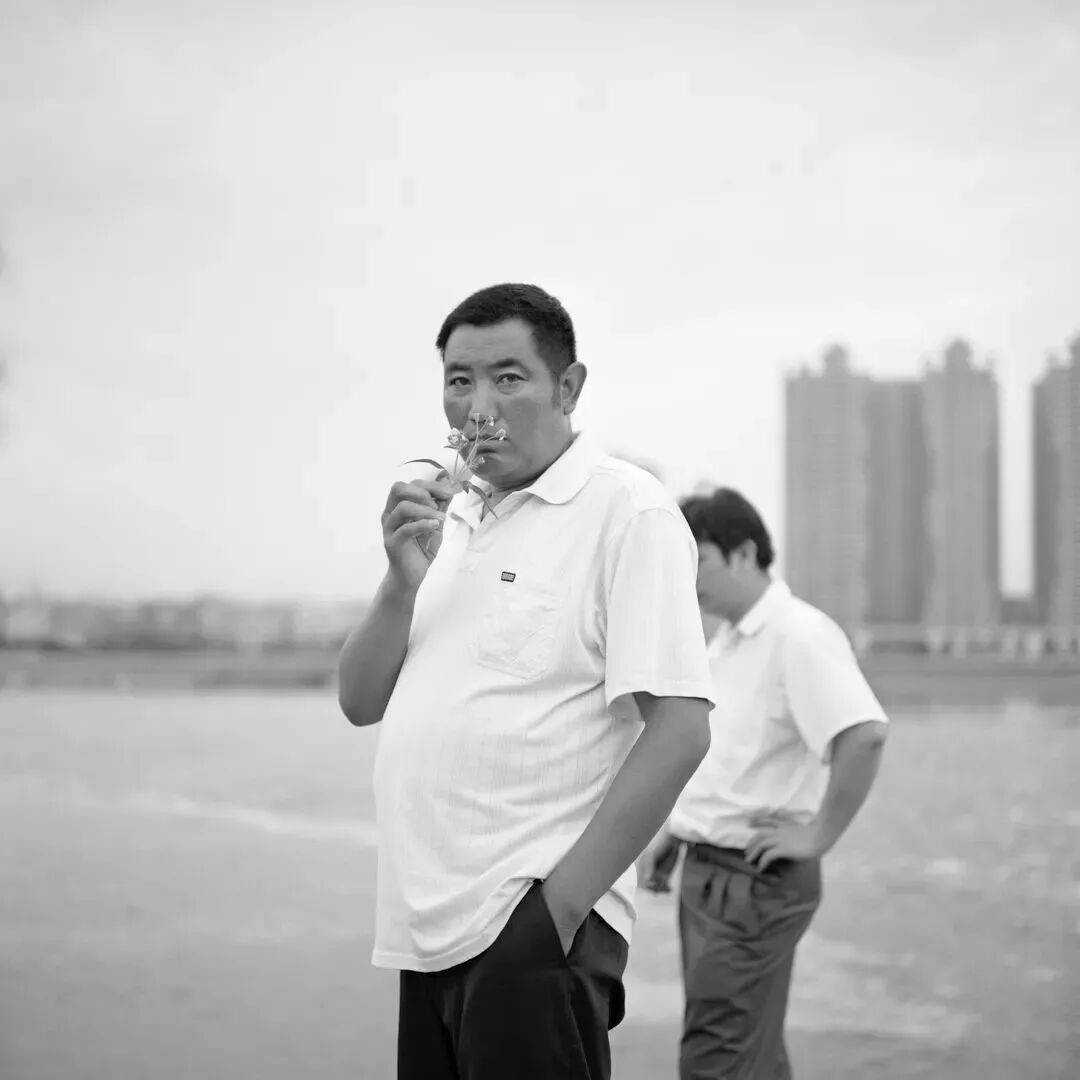
“Looking back, I was extremely fortunate. Almost everything there seemed designed for photography. The landscape of the Three Gorges gave me a large background for shooting. Working in the Three Gorges shaped my style, because it was simple and clean, and it made me feel that simplicity is good, that simplicity is the result of complexity hammered and refined. That style really continued into my later work,” he said. Flower-Holding Uncle, Qingyuan, 2009; Lady at Chaotianmen Wharf, Chongqing, 2009; Monkey at Qimen, Fengjie, 2009. Yan believes that a good moment is almost sculptural.
In the photograph, the uncle turns back while holding a flower and looking over his shoulder. Yan caught, in an instant, the contrast between the man’s sturdy, blunt physical presence and the delicate, weightless gesture.
“The scene was not staged, not fictional, yet it was still a little unexpected. It brought a brief tremor to ordinary life, a life continually decoded, and that is how ‘poetry’ grows,” the curator Yang Da said, describing his first response to the work. The elegant woman descending the steps in Lady at Chaotianmen Wharf, and the monkey in Fengjie’s Qimen turning its profile toward the distant mountains, were both snapped in an instant by Yan Ming, yet both also possess a powerful sense of story and a quiet force.
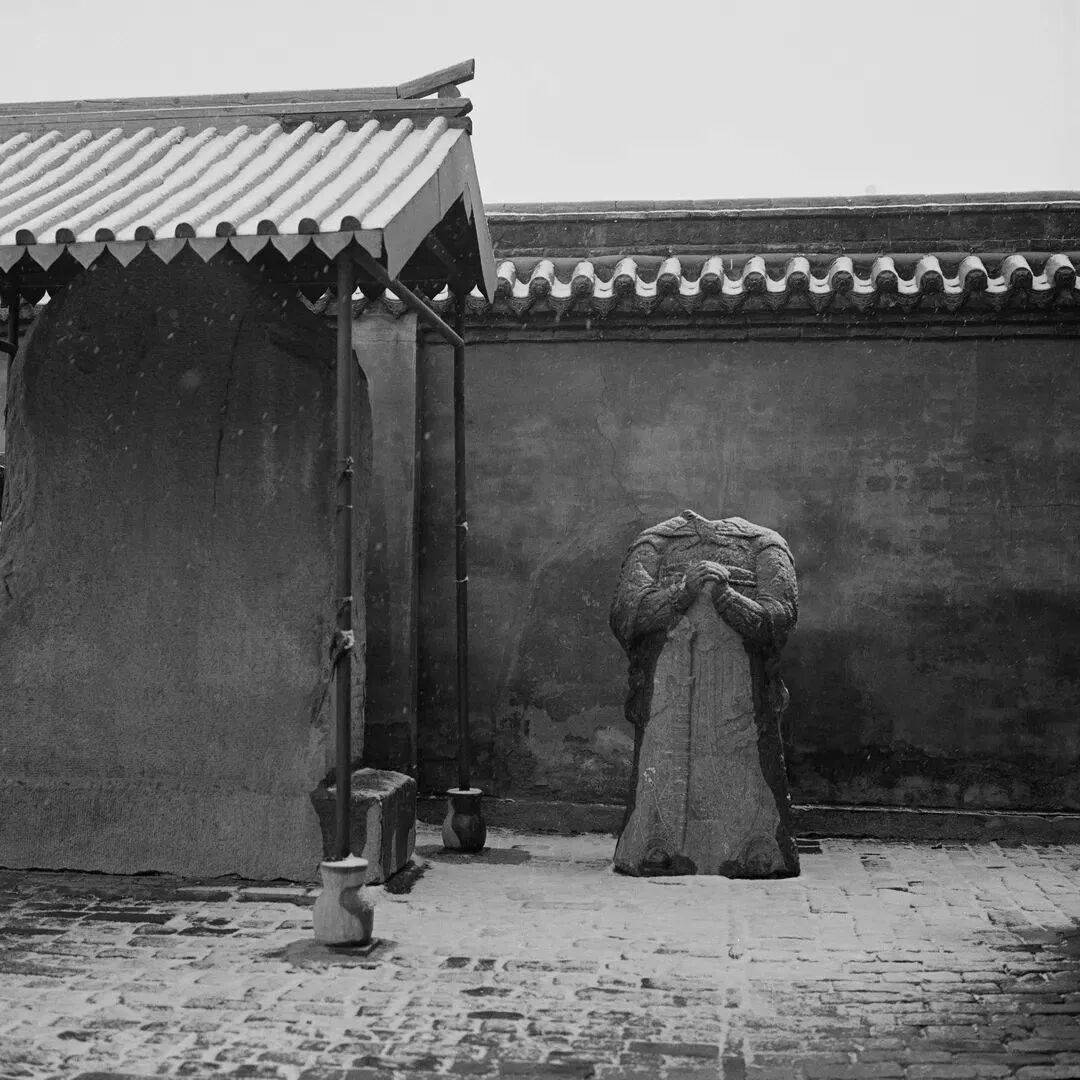
“Looking back now, my earlier experience using a 35-mm camera for street photography, including my time as a photojournalist, was very important. Later, when I used a 120 camera to photograph scenes and atmospheres, there was still candid capture inside it,” Yan Ming said. Headless General, Junxian, 2011. At first glance, this headless general standing in wind and snow in a village in northern Henan is a little eerie. But if you linger over the gesture of clasped hands with which he greets passersby, a note of warmth and wit emerges.
“People ask me, if there were intact stone figures, why didn’t you photograph those, and why did you insist on photographing damaged ones? That makes me angry. I say: our ancestors left good things to us, and when I see them destroyed, I feel sad, so I photograph them and show them to everyone.” Small-Town Youth, Jincheng, 2011. The young man in the picture is tall and thin, wearing black skinny pants and leaning his body off to one side.
“He had dyed his hair yellow, and that gesture was something he suddenly did on his own. I thought it must be some kind of beauty in his mind,” Yan Ming said. It feels like a concrete emblem of youth in small cities: always in motion, never quite able to arrive at the summit of modernity or fashion. Yan Ming solo exhibition Yesterday’s Paradise, installation view, Wuhan Center for Photography, 2022. Boy in Floral Clothes in the Snow, Longxian, 2019. The exhibition’s second section presents larger black-and-white classics, still in square format, printed as archival inkjet works.
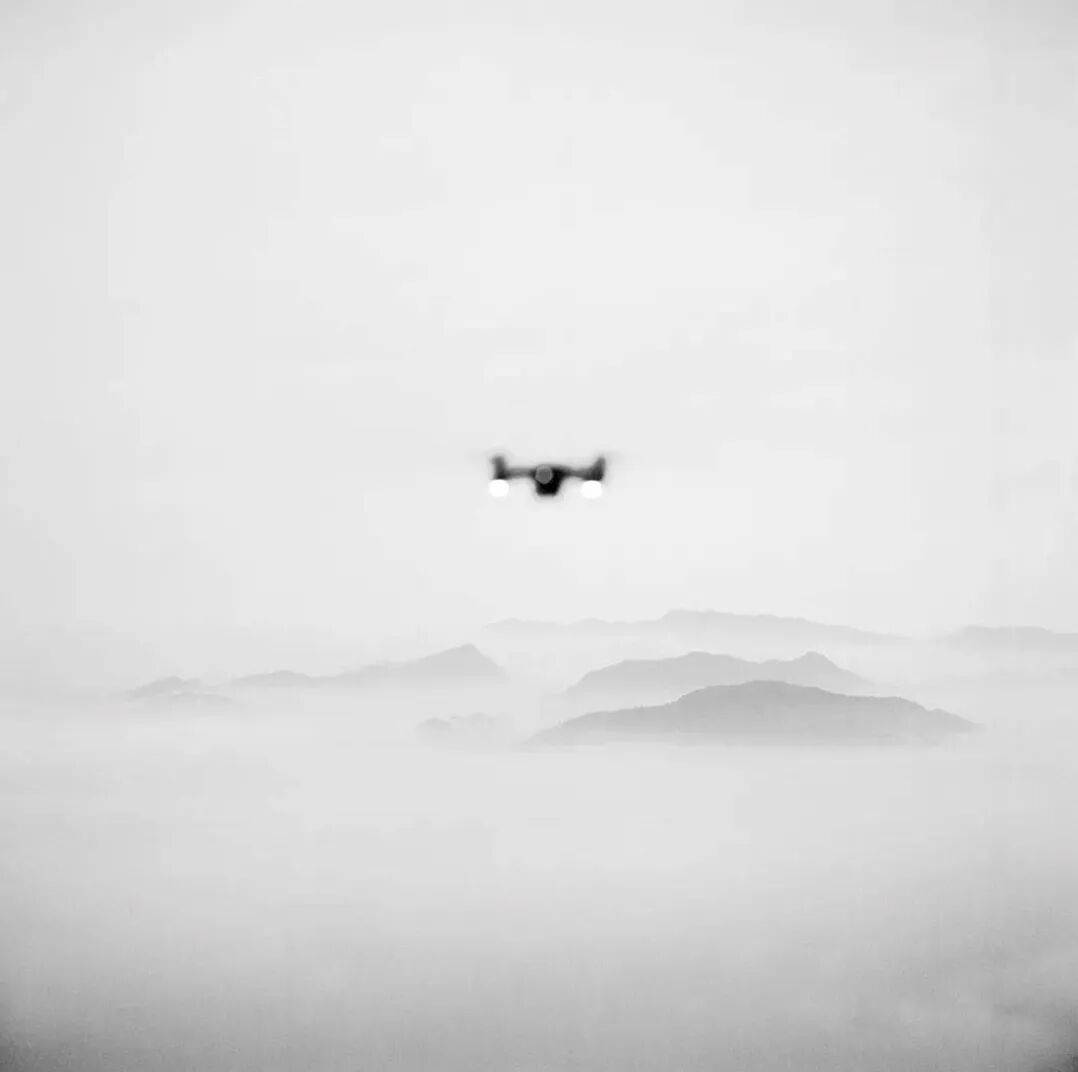
Among them is the boy in floral clothes who appears on the cover of Yan Ming’s newest photobook, Yesterday’s Paradise. His lips are slightly parted, his cheeks reddened by the cold, his arms held a little away from his body by the thickness of his padded coat, as he stands in an empty expanse of white snow. Abandoned Buddha Head, Shizuishan, 2011; Weathered Buddha, Anyue, 2020; Jiuhua Mountain and Aircraft, Jiuhua Mountain, 2017. Yan Ming solo exhibition Yesterday’s Paradise, installation view, Wuhan Center for Photography, 2022. In this section, the space and the works enter into a subtle relation.
Interview | Yan Ming: Fifteen Years on the Road, Recording Forgotten Real Landscapes
There is a Buddha head abandoned in the wilderness, and a weathered Buddha eroded by nature until only an indistinct outline remains; a person walking home from work in a Minnie headpiece, their back conveying an unusual ease and pleasure; and an aircraft above Jiuhua Mountain. The works are filled with an improbable science-fiction aesthetic, like scenes from a blockbuster film.
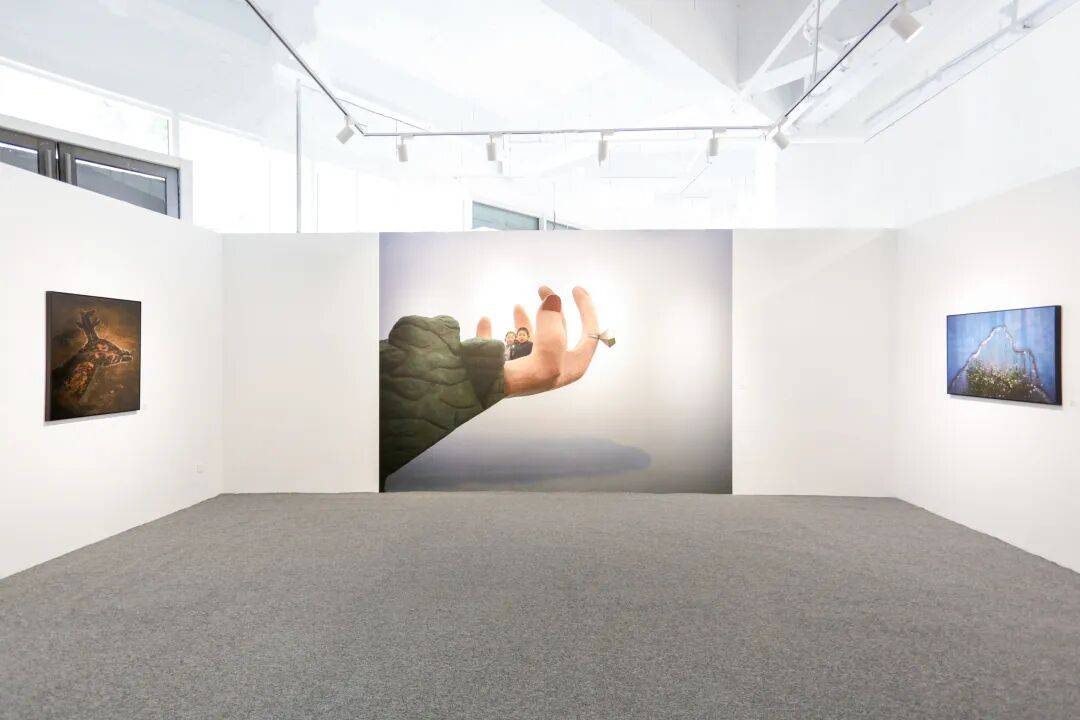
“These works in particular create a kind of field when the viewer enters them: the work, the space, and the person all build it together,” Yang Da said. Wall-Breaking: Wildflowers; Wall-Breaking: Beauty. In another separate gallery, Yan Ming’s color series Wall-Breaking was shown for the first time, and it was also the first time his color work had appeared publicly in China in the form of a solo exhibition. For Yan, who had always worked in black-and-white film, it was plainly a major turning point.
Yan Ming told us that he had no intention of giving up black-and-white as a form.
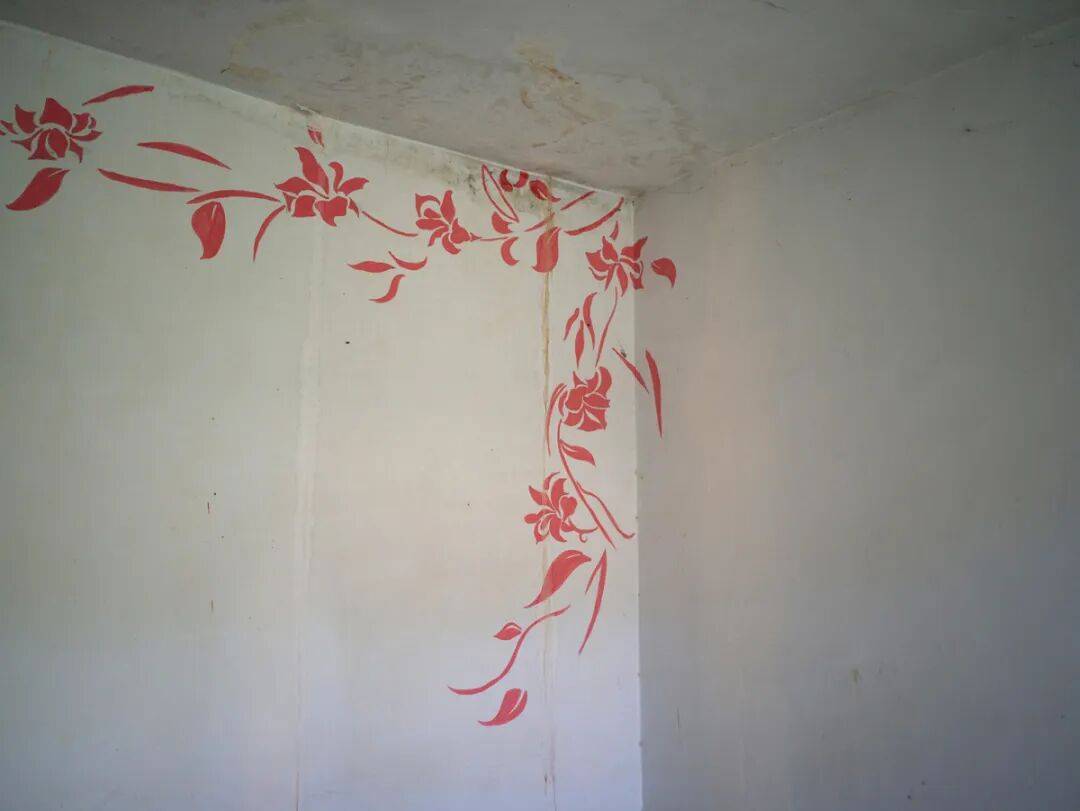
“The main reason is that the quality of black-and-white film has been getting worse. At the same time, over the course of long-term shooting, I’ve always known that I was letting go of many subjects suited to color, and that felt like a pity.” Yan Ming solo exhibition Yesterday’s Paradise, installation view, Wuhan Center for Photography, 2022. Wall-Breaking is a new series that Yan has only recently begun. It mainly involves walls: weathered walls, dilapidated walls, murals, and also things wholly unrelated to walls, which is why he calls it Wall-Breaking.
There is the “wall,” and there is also the breaking of the “wall.” For Yan Ming, the title carries a deeper meaning as well: change and breakthrough.
“This series has only just begun. It can be photographed anytime, anywhere. I’m very interested in cultural and artistic traces that are about to disappear, tucked away in unnoticed corners, and I’m very willing to give them a ceremonious image in my own way.” Yan Ming was born in a small county town in Anhui, and he laughingly calls himself a “small-town youth.” In 2017, after his father fell ill and died, this wanderer who had traveled all over the country returned to the county town where he was born. In his life, his father had undoubtedly been a mountainlike presence.
Throughout his career, from his beginnings as a musician to his work now as an artist, his father’s influence has never left him.
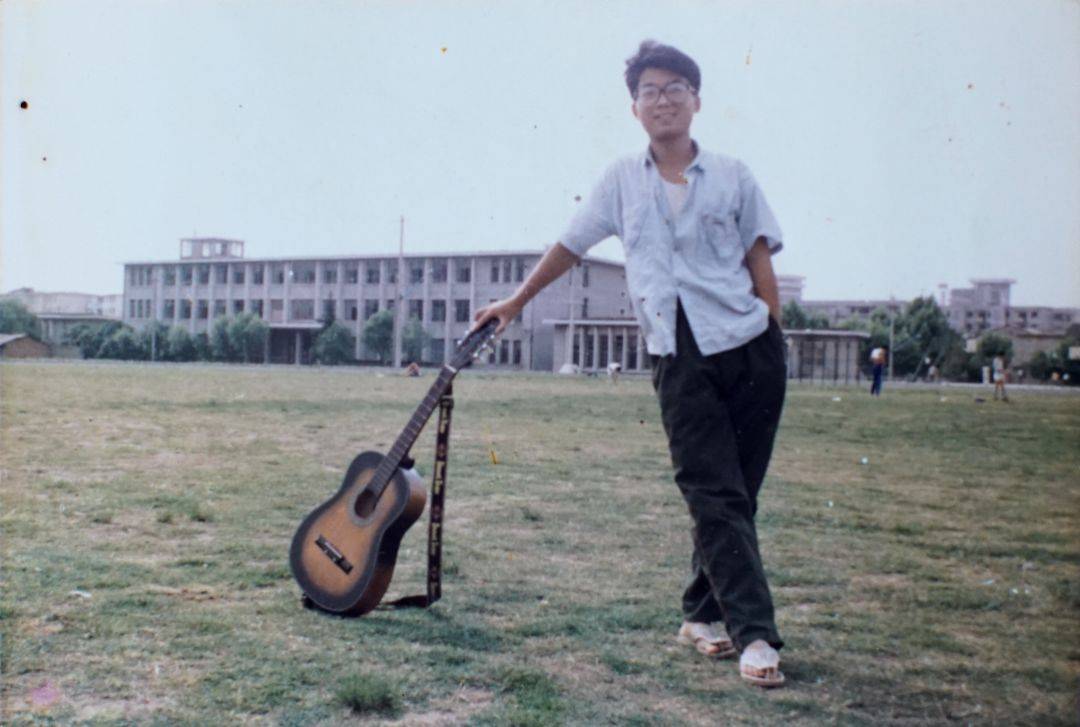
“Before I graduated from high school, my father said that if I got into college, he would buy me a little camera. But when I left home for school, he went to the department store and bought me a very ordinary Guangdong Kapok-brand wooden guitar instead, and that sent me off into rock music and bands. I think the guitar and the camera were things my father had wanted to reach for when he was young but had no conditions to touch.” Yan Ming said. At just over twenty, in his college years, eager to prove himself and to show his family that music could also make for a decent life, he joined the tide of Reform and Opening and headed for the newly rising nightclubs and dance halls along the southeastern coast, one of many young musicians in the country with a dream.
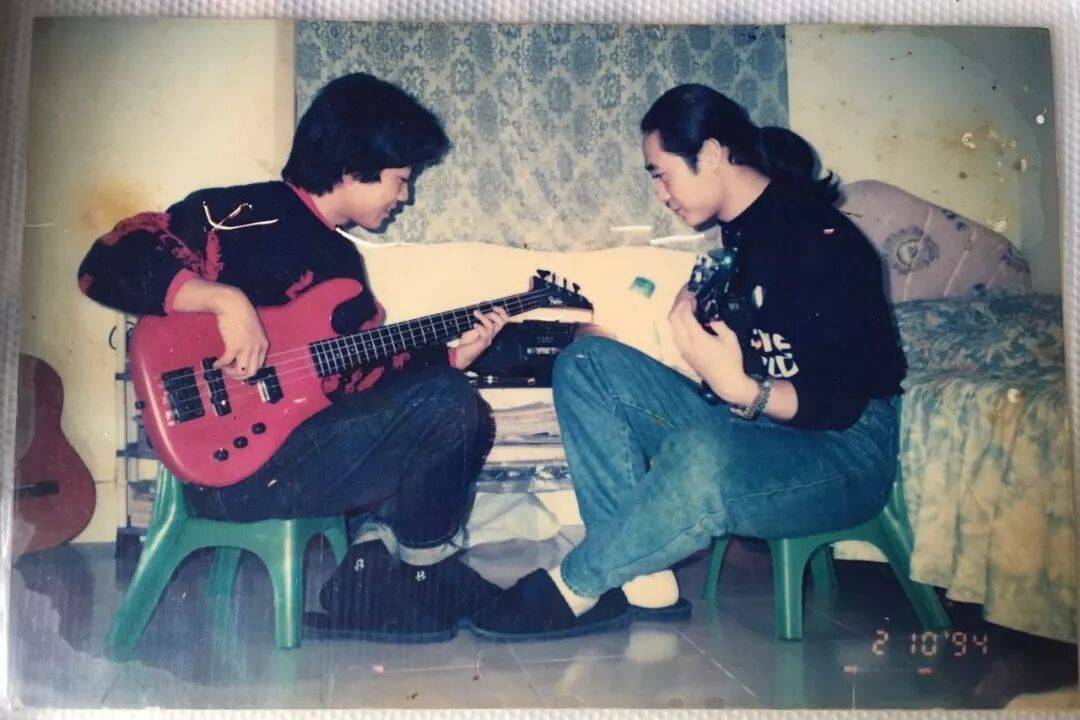
“Once I got there, I found out that wages were paid daily. I had never felt money was so easy to earn. Every day it was several hundred yuan. Later I went to Xiamen to study guitar with stronger musicians, and that lasted a full ten years.” In the end, though, Yan Ming realized that he was not playing music so much as being played by it.
“No one told me what was most important and fundamental. I became obsessed with equipment, trained technique obsessively, competed for speed, copied idols, and only after youth had run out did I realize that none of this was rock music.” Even if Yan now regards that period of “playing music” as a failure, it taught him one thing clearly: not to become infatuated with equipment, and not to repeat in photography the mistakes he had made in music.
“So I just treated the camera honestly as a tool, spoke through it about my attitude toward the world, and built my own work,” Yan Ming said. In 1994, after studying guitar in Xiamen and leaving bands behind, Yan went to work in the media at Southern Metropolis Daily. He started as a text reporter, and later, because he fell in love with cameras, he asked to transfer from the writing department to the photography department.
“As someone from a small place, when I first became a photojournalist, I was tremendously pleased with myself. It was 03, and in my first month I earned more than ten thousand yuan. With my Southern Metropolis Daily press card in my pocket, walking down the street after work, crossing the pedestrian overpass on Guangzhou Avenue and looking at the stream of traffic below, I would secretly thrill to it and even laugh out loud. On weekends, my wife and I would push a cart full of food and drink through the supermarket, rent some movie discs, put our legs up on the coffee table and watch them, and I would think: life like this is already pretty good.”
Two-Crane Man, Huaiyang, 2011; Dancer in the Snow, Jiayuguan, 2020; Man on the Reef, Chongqing, 2009. Yan Ming said that he shook all over while chasing this photograph. But as the years of interviews and assignments piled up, day after day and year after year, he began to find this kind of news photography highly repetitive. During the Spring Festival travel rush, you went to the train station; on Children’s Day, you found a kindergarten; on the Double Ninth Festival, by convention, you went to a nursing home. The next year, it was the same workflow all over again, like the labor of a news migrant worker.
He began to wonder whether it was time to say goodbye again. After resigning, he shot from January straight through to the end of the year, walking until even his knees burned. Many photographs were made after he scrambled and crawled to catch up with them. For a single moment, he might end up covered in mud and moss. The decade he had spent in rock music seemed, on the surface, unrelated to photography, but the directness, sincerity, and ardor of rock had in fact shaped his way of living and ran through his way of thinking as a photographer.
Because of those abundant life experiences, his sensitivity to art, and that precious awkwardness, his photographs are charged with dramatic tension, erupting in silence within stillness. As the critic Roland Barthes observed, photography is linked to art not through painting but through theater. The scenelike quality of photography, its sense of story, its feeling for character and stage, the stories it seems about to tell and then withholds: these are often what move people most deeply.
There were reasons, certainly, that Yang Da, the director of the Wuhan Center for Photography and the exhibition’s curator, chose Yan Ming for the institution’s opening exhibition. In Yang’s view, many people today either feel some intimidation in the face of “art” or have been steered by capital and immersed for too long in terms like “internet-famous” and “check-in,” which have eroded their understanding of art and dulled their capacity to perceive it. He therefore wanted the opening show of an image center to be direct rather than obscure or difficult, something anyone could understand.
Yang Da said, “Mr. Yan Ming’s work carries a rare and independent innocence. Anyone can see an evident aesthetic pleasure in it, and anyone can also find some sharp point in it that touches him.” The solidity, calm, and sincerity of Yan Ming’s work, its sensitivity to ordinary life and its broad love for all living things under heaven, happen to align closely with the founding impulse of the center.
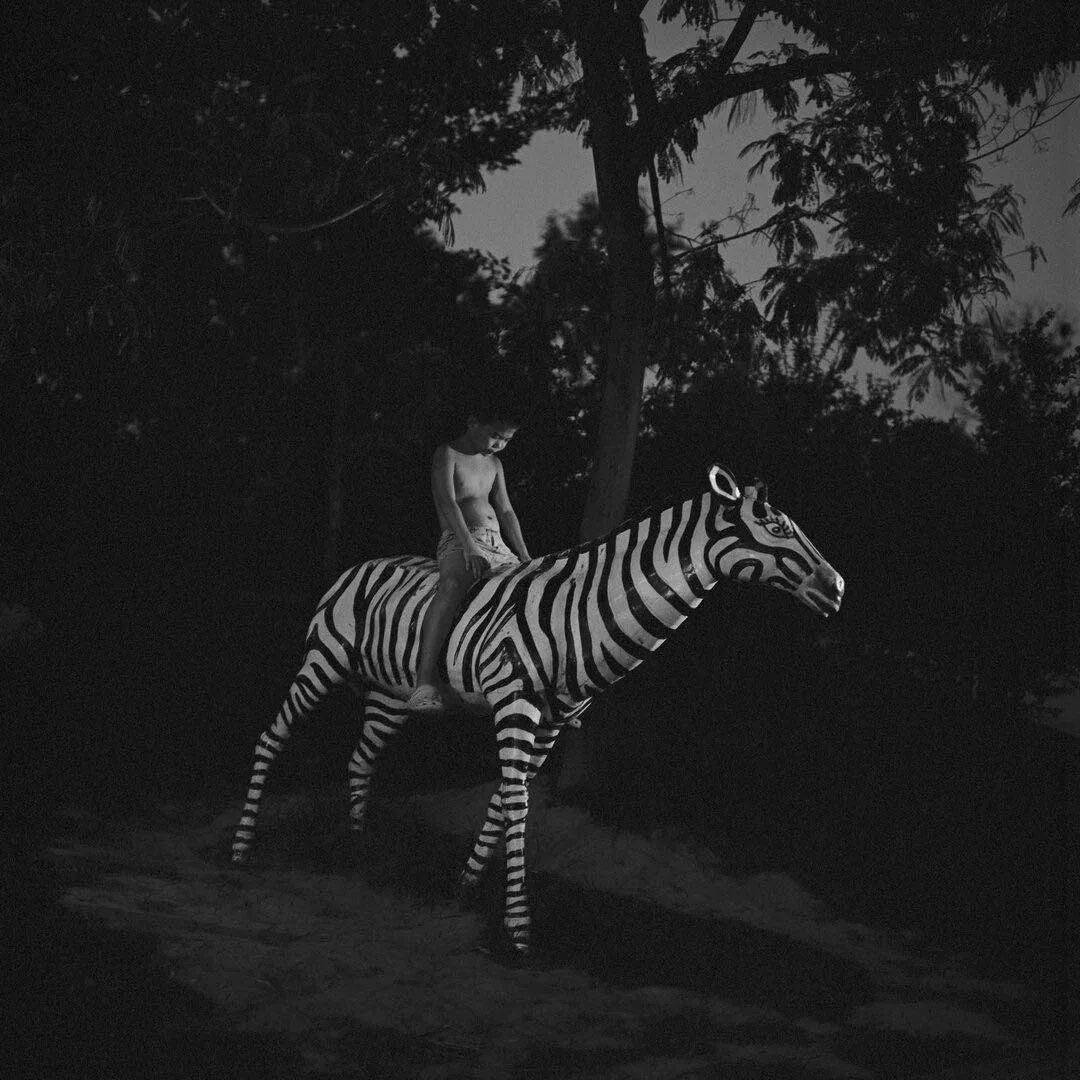
“We very much hope that before the public pursues ‘another way of seeing,’ it first acquires some basic understanding of exhibitions, and that before learning to run, it first walks quietly for a while.” Yan Heng and the Zebra, Dingyuan, 2012. Two years later, the zebra had already collapsed. In the exhibition guide, Yang Da made a point of introducing this photograph, Yan Heng and the Zebra, in detail to viewers. The child riding the zebra is Yan Ming’s son, Yan Heng. It is the only photograph in all of Yan Ming’s work made through the collaboration of three generations of one family.
At the time, Yan Ming’s father had already been diagnosed with lung disease, though he was still able to move around, and he had brought Yan Heng, then a first-grader on summer vacation, back to their hometown. One evening, Yan Ming saw the little zebra in front of a stand of trees, and so he and his father took young Yan Heng to “ride the zebra.” Yan took a small flashlight from his camera bag and asked his father to light the scene from the roadside until the photograph was finished.
“That beam of light seems like a kind of reconciliation between the father and Yan Ming’s unsettled life. I find the story especially moving,” Yang Da said. Wall-Breaking: Peach Tree; Wall-Breaking: Red Vine. In Yang’s view, what makes Yan Ming’s visual language so moving, beyond indispensable talent, is the long stretch of time, the breadth of the land, and the monotonous training that must be passed through. It also lies in the kind of instinct that hits the mark in a single strike, the instinct left behind after feeling, experience, growing up, and walking on, after some things have been discarded and others kept.
For viewers, Yan Ming’s work offers another kind of perception as well: it is those intimate pains and the din of everyday life that better heal people struggling through urban lives mired in cliche. From rebellion to equanimity, Yan Ming is always on the road. His experience may encourage some young people today, in whom dreams and confusion exist side by side.