One of Shanghai’s Biggest Exhibitions of the Second Half of the Year: More Than 200 Original Works from the Pompidou Collection
The 1960s were an era of intense international tension and turbulent social thought......
By / Xirui Huang · 11 min read
What are the highlights of Chance! Fluxus! at West Bund Museum Shanghai?
The exhibition uses more than 200 works from the Centre Pompidou to trace Fluxus through chance, play and everyday action, including works by Duchamp, Cage, Yoko Ono and Beuys. It also places Chinese artists such as Huang Yong Ping, Geng Jianyi, Yin Xiuzhen and Shi Yong within the story of Fluxus’s influence in China since the mid-1980s.
One of Shanghai’s Biggest Exhibitions of the Second Half of the Year: More Than 200 Original Works from the Pompidou Collection
The 1960s were an era of intense international tension and turbulent social thought.
Fluxus swept through the global art world like a current that resisted definition. Anti-art, anti-commercial, and anti-authoritarian, it fused life, games, poetry, and music, challenging the boundaries of art with an almost playful irreverence. More than half a century later, that “flux” has reached Shanghai, at the West Bund Museum of Art. The exhibition is a major component of the five-year exhibition partnership between the West Bund Museum and the Centre Pompidou, and the first large-scale exhibition in China to examine Fluxus comprehensively and systematically.
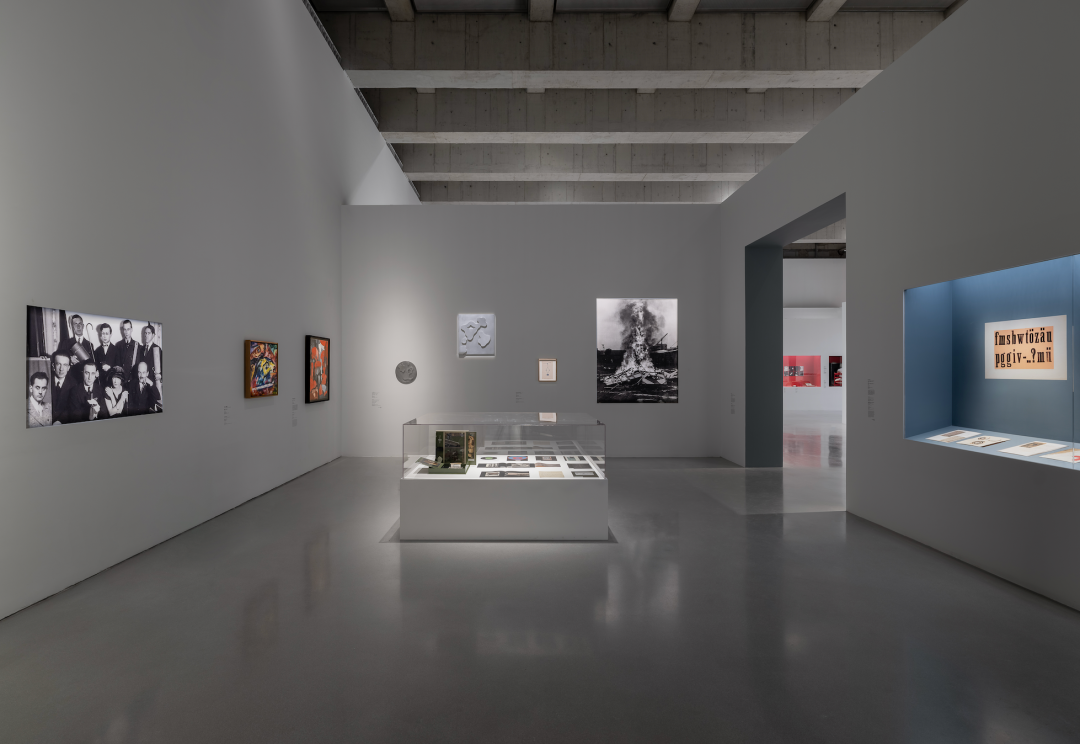
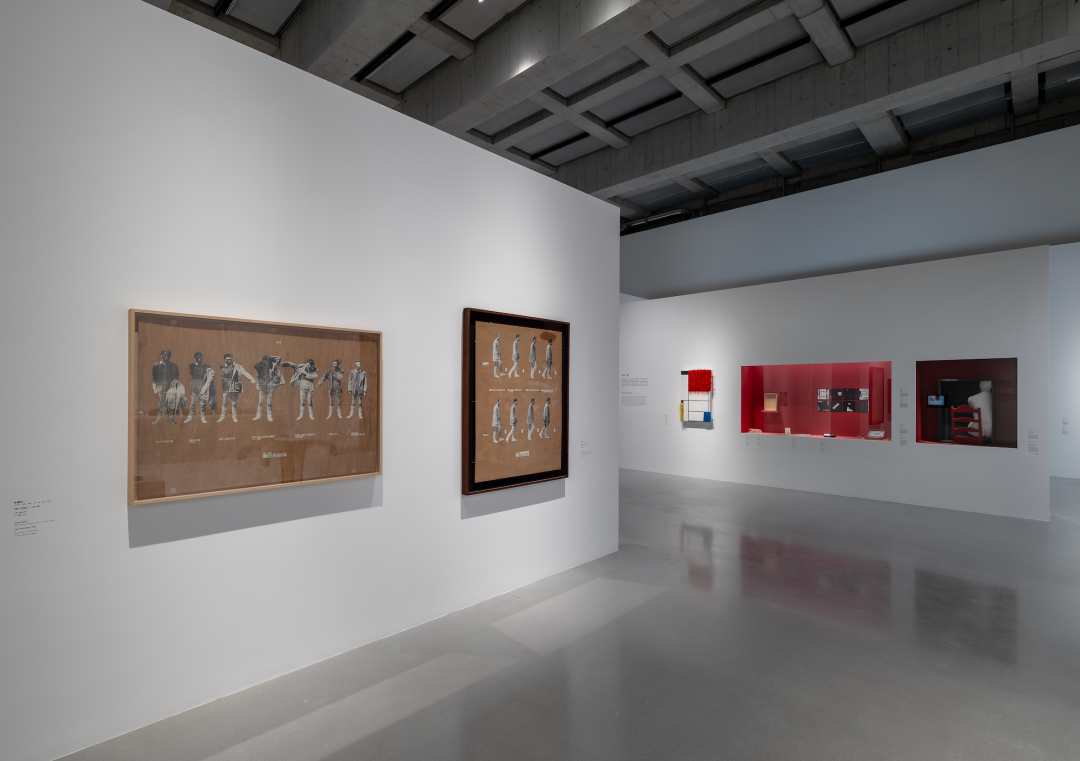
“Chance! Fluxus!” installation view, West Bund Museum of Art, 2025. Robert Filliou, Principle of Equivalence: Well Done, Poorly Done, Not Done, 1968. More than 200 original works from the Centre Pompidou’s collection in Paris—including important works by such towering figures as Marcel Duchamp, the “father of conceptual art”; Man Ray, a pioneer of modern photography; George Maciunas, the founder of Fluxus; Joseph Beuys, the “social sculptor”; and Yoko Ono, a pioneer of feminist art—enter into a long-distance dialogue with representative works by major Chinese contemporary conceptual artists including Huang Yong Ping, Geng Jianyi, Yin Xiuzhen, and Shi Yong. Together, they explore Fluxus’s deep and lasting influence on the Chinese art world from the mid-1980s to the present.
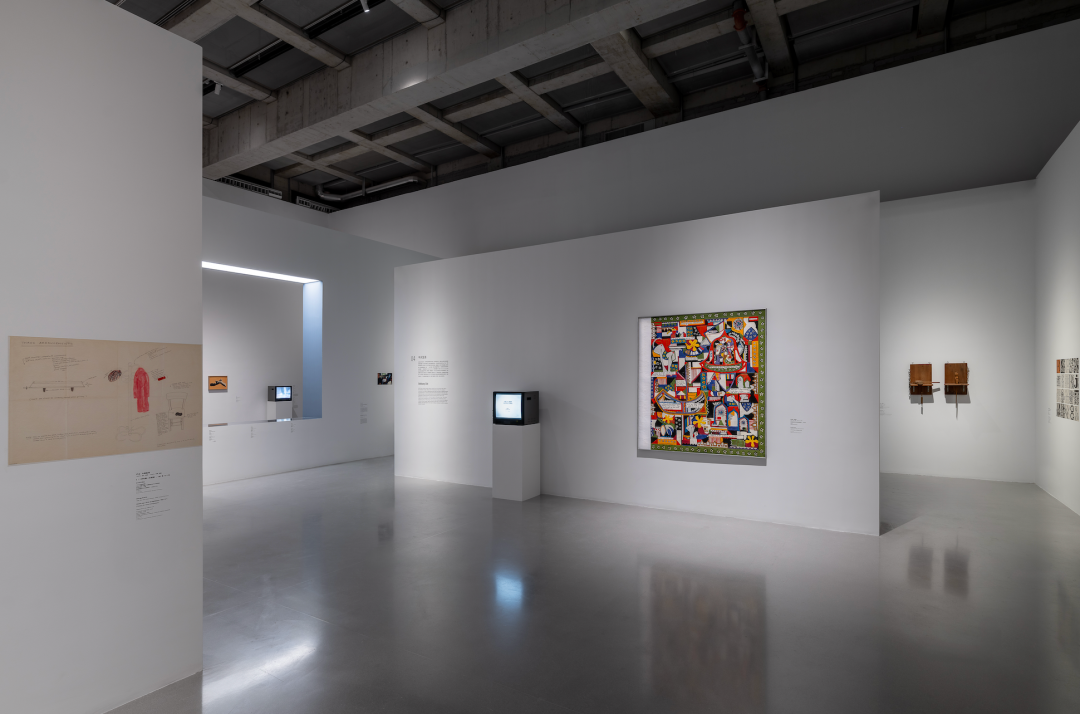
At the opening of the exhibition, its curator, Frédéric Paul, spoke with us about this most subversive of art movements and its relationship with Chinese artists. “Chance! Fluxus!” installation view, West Bund Museum of Art, 2025. Entering the exhibition, we found that it was structured not as a linear or chronological narrative, but as a winding, apparently loose yet internally coherent arrangement.
The galleries are transparent, so from almost any position one can see works in other sections and notice the intriguing connections between them. Paul said that when he first received the curatorial commission, the title “Chance! Fluxus!” immediately flashed through his mind.
“The title has two meanings. One is ‘chance’ or ‘contingency,’ and the other is ‘opportunity.’”
“Chance! Fluxus!” installation view, West Bund Museum of Art, 2025. This is closely tied to the exhibition’s curatorial premise. The idea of chance existed before Fluxus; artists associated with Surrealism and even Abstract Expressionism also used chance procedures in their work.
SECTION 01 | 11 chapters, over 200 works, a textbook-level artist lineup
Fluxus was closely connected with poetry, performance, and music. These modes of creation, with their theatrical dimension, contain considerable uncertainty, and their final presentation is often itself a form of enactment. Accordingly, the first three of the exhibition’s eleven sections—“Genealogy,” “How Did They Meet?,” and “When Did It Actually Happen?”—follow Paul’s initial conception by tracing the intellectual foundations of the early avant-garde movements, including Surrealism and Abstract Expressionism, and reconstructing the cultural and artistic context before Fluxus came into its own through event scores and documentary archives.
“Chance! Fluxus!” installation view, West Bund Museum of Art, 2025. “Fluxus was born during a period of intense international tension, and it was also an artistic movement with an exceptionally broad geographic reach. Japanese artists went to the United States; some American artists went to Europe. Take the French artist Robert Filliou: he was initially an economist, but he loved traveling around the world, and he conducted in-depth research into such questions as the impact of war on the economy.”
“These artists wanted to escape the constraints of rationality and a state of unchanging sameness through their work,” Paul told us. The second half of the exhibition moves deeper into Fluxus through sections titled “Ordinary Life,” “Box in a Box,” “Chess and Other Games,” “Infinite Time and Space,” “Keep Silent (Homage to John Cage),” “Enact, Display,” and “Deciphering,” revealing the wave Fluxus generated among artists around the world.
This includes contemporary Chinese artists. The exhibition concludes with “Enter Exit,” which closes the show while opening the viewer’s thoughts onto infinity, leaving a sense of something still unfinished.
“Chance! Fluxus!” installation view, West Bund Museum of Art, 2025. For Paul, Fluxus is not merely a sealed chapter of art history, but a state of mind closely bound to life in the present. If the spirit of Fluxus is fluid and open, then an exhibition embodying that spirit is itself an enactment of it.
“The connections between the sections are like a series of boxes. I put different works into different boxes,” Paul said. The metaphor is apt. It calls to mind the Fluxus artists’ beloved Fluxkits. The exhibition’s sections likewise function as independent “boxes”: each has its own theme, but visitors can move freely among them, making connections across their boundaries.
SECTION 02 | The most subversive art genre in history: the “art revolution” that breaks boundaries
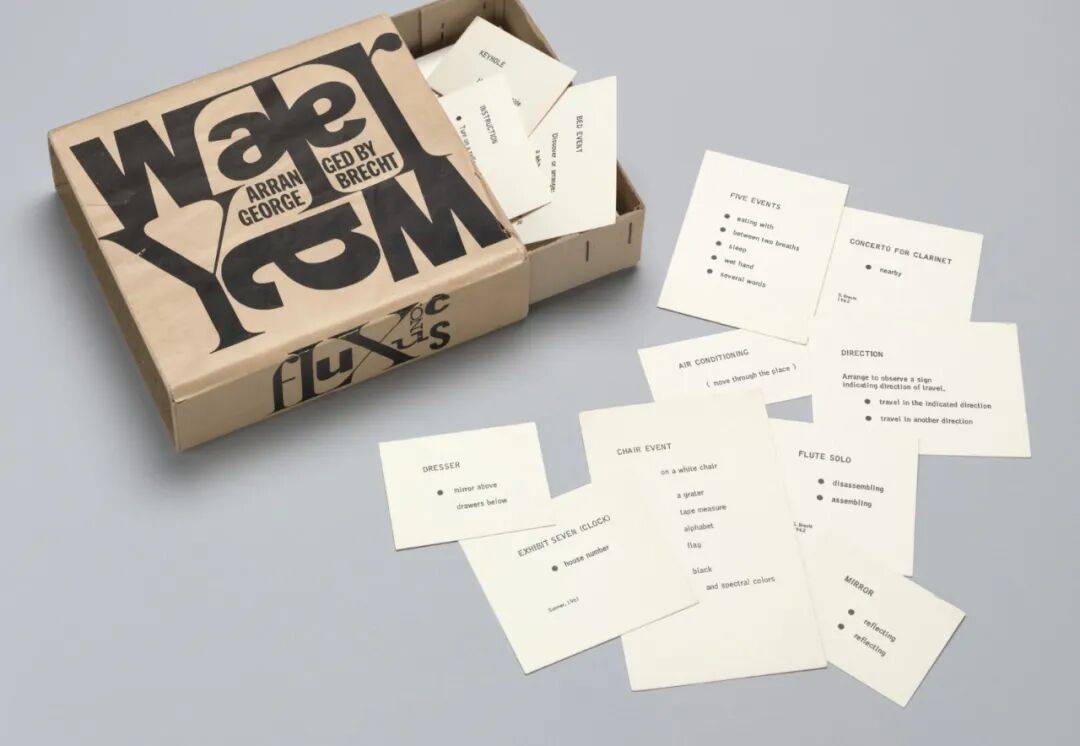
“Chance! Fluxus!” installation view, West Bund Museum of Art, 2025. Asked which work he most hoped visitors would notice, Paul first mentioned George Brecht’s Water-Yam. It is not an artwork in the traditional sense, but a box containing a collection of event scores—an object that also resonates with the exhibition’s “box” motif.
“In the ‘Box in a Box’ section, there are boxes made by various artists. Water-Yam is a representative work: it brings together scores for different performances. If the small box were simply placed in the gallery, it would be rather discreet and easy to miss. At the entrance, we present its contents through projection, in English on one side and Chinese on the other.” George Brecht, Water-Yam, 1963. The instructions in these scores are stripped down to the extreme—for example, “Open/close an umbrella” or “Event for three lights: On.”
“Off. Off.” They elevate the most ordinary actions of daily life to the level of art, challenging the traditional notion that art must be complex, grand, and dependent on advanced technical skill. Paul understood that if the inconspicuous box were simply placed in the gallery, visitors might overlook it. This mode of presentation deftly transforms a static, private piece of documentary material into an open and compelling public text.
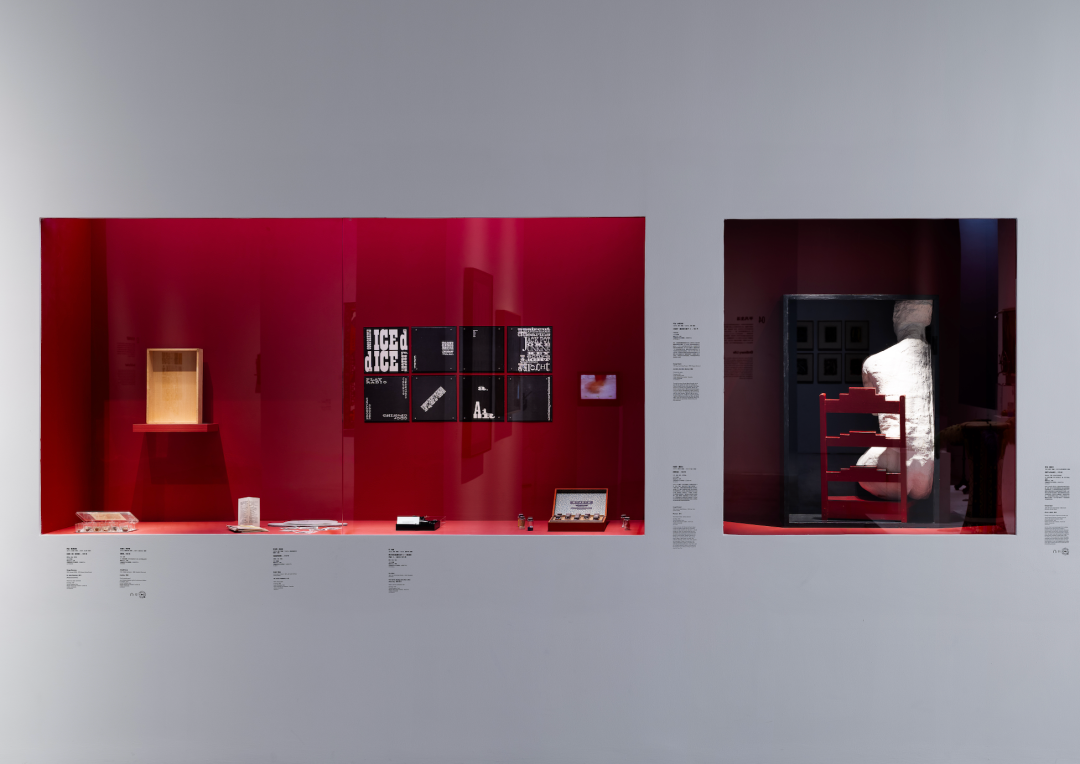
“Chance! Fluxus!” installation view, West Bund Museum of Art, 2025. We found that, just as the exhibition’s sections function like boxes, their definitions are also open to interpretation. Visitors can follow a loose through line while observing how the works themselves stimulate and generate the sections. This curatorial logic is especially clear in the second and third sections, which examine how artists met and how Fluxus actually came into being; their boundaries, however, remain blurred and porous.
The exhibition boldly includes artists not usually classified strictly as Fluxus, such as Robert Rauschenberg and Dorothy Iannone. By making room for these peripheral or intersecting figures,
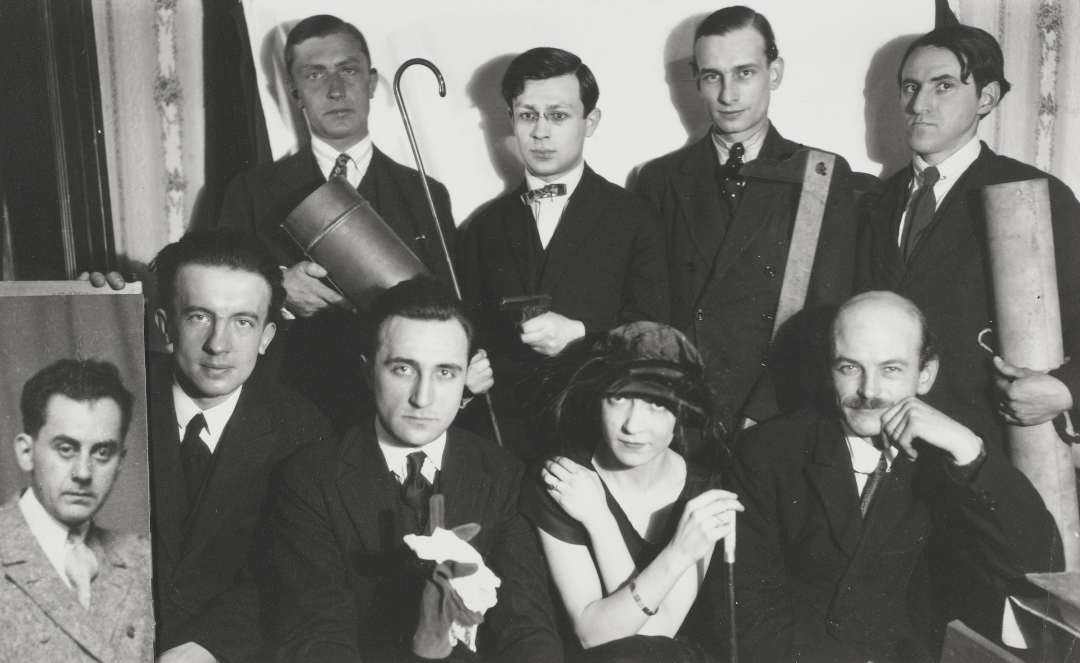
“Dorothy Iannone was very close to many important Fluxus artists, but she herself did not consider herself part of Fluxus,” Paul told us. The exhibition vividly conveys Fluxus’s true character: not a closed group with fixed membership and a clear program, but an open, dynamic, continually changing ecosystem. Man Ray, Dada Group, circa 1922. “The artists involved in Fluxus did not remain the same; it was a very open form.”
Paul said. As we proceeded through the exhibition, we gained a clearer understanding of how the core idea of chance was rendered visible.
SECTION 03 | The 'Fluxus' Moment of Chinese Artists
Fluxus was one of the most avant-garde and rebellious movements in art history. It inherited Dada’s anti-rational spirit from the period of the First World War, but broke even more decisively with the boundaries between art and life, and between the elite and the public. Art did not have to be an expensive canvas or sculpture; an everyday box, a coat hanger, a game—even silence and breathing—could serve as its vehicle.
“Chance! Fluxus!” installation view, West Bund Museum of Art, 2025. Many members of the Fluxus circle were not artists in the traditional sense. They might have been chemists, economists, musicians, designers, or anthropologists. Charts, disordered music, pills, string, and calculation sheets could all become art. These cross-disciplinary, cross-field creators broke through the professional barriers surrounding artistic production and redefined the relationship between art and life, and between art and its audience.
That is precisely why Fluxus was able to sweep across the globe, inviting more people from more diverse backgrounds to participate in and experience it. John Cage, Strings 1–62 24, 1980. Another work in the exhibition not to be missed is John Cage’s series of drawings Strings 1–62.
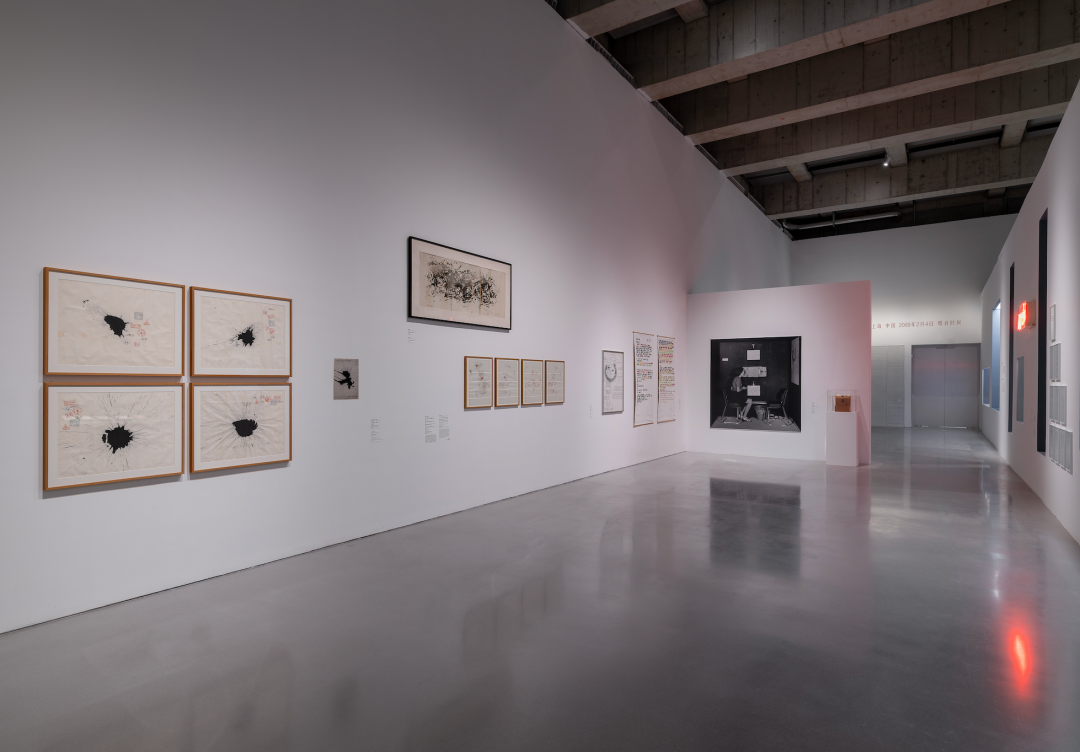
As Fluxus’s spiritual mentor, Cage introduced the idea of chance music into composition; his work 4'33" has become a landmark in the history of modern music. His visual art, too, was an enactment of chance as a central concept. Paul noted, “John Cage’s series of drawings Strings 1–62 is a body of work based on the concept of chance.” The works may use random procedures—tossing coins or consulting the I Ching, for instance—to determine the placement, color, and form of lines, reducing the artist’s subjective will as far as possible.
Cage sought to escape the constraints of personal taste, emotion, and habit, allowing the work to arise naturally, “as it is.” These drawings offer a direct visual manifestation of the philosophy of chance and form an intriguing intertextual relation with Brecht’s event scores.
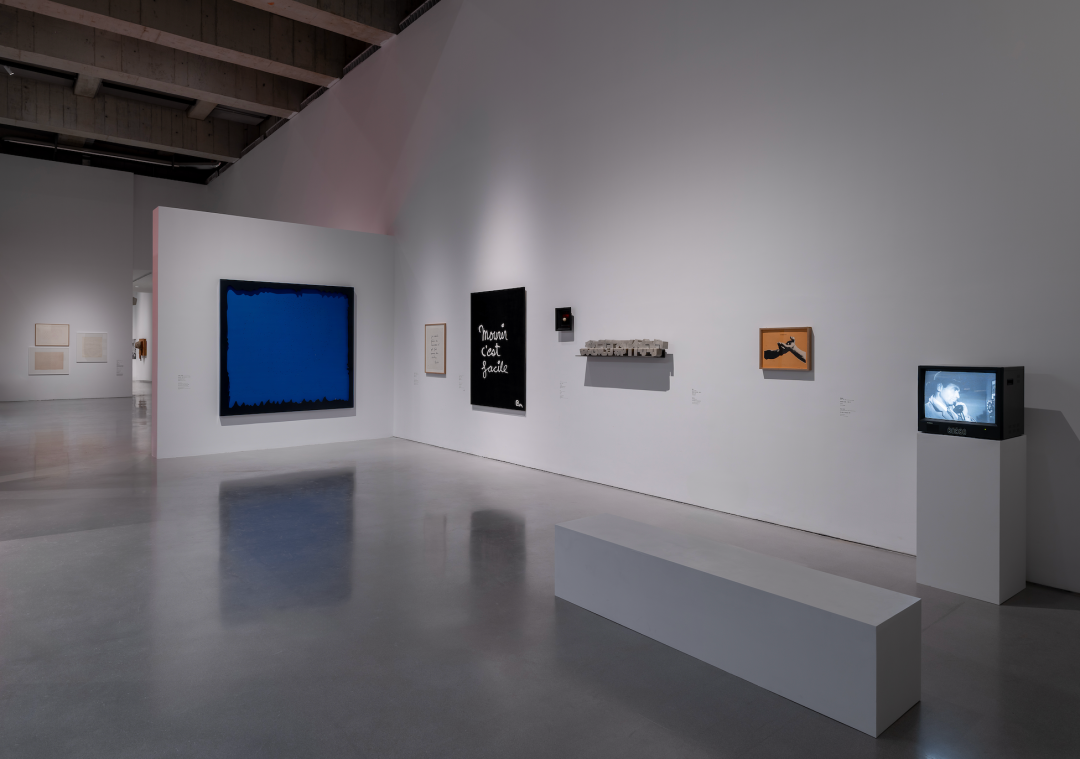
“Chance! Fluxus!” installation view, West Bund Museum of Art, 2025. Joseph Hartwig, Chess Set, 1923–1924. Alongside chance, another defining feature of Fluxus is playfulness—Go, assemblages of miscellaneous objects, assorted powders, stones, wooden blocks. Through a series of works, the exhibition vividly shows how artists turned art into a game full of intelligence and humor. Ben Vautier’s works, for example, often inscribe philosophical aphorisms or provocative questions on everyday objects, such as “Art is everything” or “I am art,” prompting viewers to reconsider the definition of art with a knowing smile.
Nam June Paik, TV Buddha, 1974. Paik’s TV Buddha uses a closed-circuit television system to make an ancient Buddha statue gaze at its own live image, creating a Zen-like game involving tradition and modernity, contemplation and media. These works shed art’s solemn face and invite viewers to participate in a lighter, more engaged way.
The exhibition’s structure echoes this playful spirit. Its freely flowing route encourages visitors to move through it as they might through an amusement park, choosing paths according to their interests and discovering surprises of their own.
“Chance! Fluxus!” installation view, West Bund Museum of Art, 2025. The exhibition’s final sections also mark an important stage of localization. Works by familiar Chinese artists—including Huang Yong Ping, Geng Jianyi, Yin Xiuzhen, Shi Yong, and others—are placed alongside works by the masters of Fluxus. This was not an attempt to accommodate the fact that the exhibition is being held in Shanghai, but a considered scholarly judgment and an indispensable part of its narrative.
The curator believes that these artists’ practices share profound internal affinities with the spirit of Fluxus. Their inclusion moves the discussion beyond a Western-centered narrative and opens it onto a global perspective.
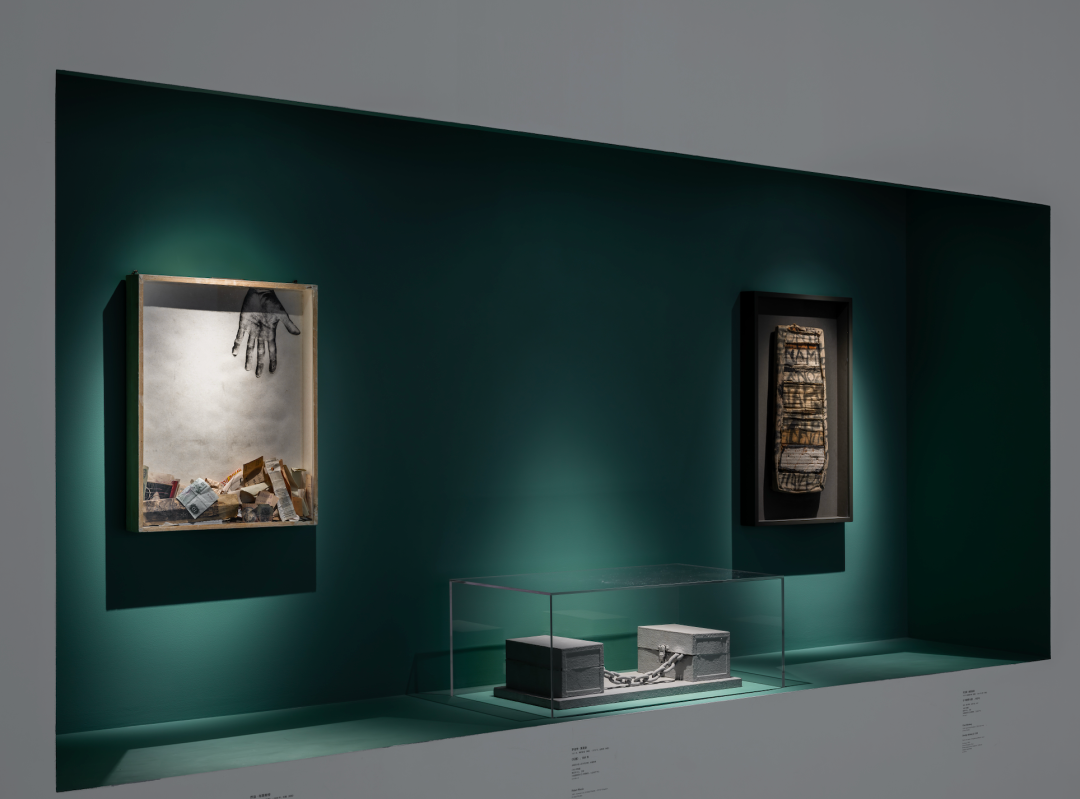
“Chance! Fluxus!” installation view, West Bund Museum of Art, 2025. “I chose these works by Chinese artists not because the exhibition is being presented in China, but because each work has a reason to be here,” Paul said. These works demonstrate that the freedom, openness, rebelliousness, and playfulness advocated by Fluxus have taken root in different cultural soils in different forms, producing deep echoes.
This not only enriches our understanding of Fluxus but also offers a new perspective from which to reconsider the intrinsic relationship between Chinese contemporary art and global art history. Huang Yong Ping, Untitled, 1991–1992. Huang Yong Ping is unquestionably the Chinese artist most closely associated with Fluxus. As the founder of Xiamen Dada, a radical group within the ’85 New Wave, he was deeply influenced by Duchamp, Cage, and Wittgenstein, and his practice is marked by a challenge to authority and an embrace of uncertainty.
“The Chinese artist most closely associated with Fluxus is probably Huang Yong Ping. He was one of the founders of Xiamen Dada, and he had a very deep understanding of Western art.”
“Chance! Fluxus!” installation view, West Bund Museum of Art, 2025. Huang’s work appears in three different sections of the exhibition, demonstrating both the range of his practice and its close alignment with the Fluxus spirit. His presence in the section on Dadaism is self-evident, since Xiamen Dada was itself a distant tribute to the Dada spirit. In the section on games, an aerial photograph of him burning his work is included because it resembles a game board, echoing Fluxus’s playfulness. In “Infinite Time and Space,” his work resonates with the artistic philosophies of numerous Fluxus artists.
Huang Yong Ping’s celebrated action of placing History of Chinese Painting and A Brief History of Modern Painting in a washing machine and agitating them for two minutes, turning them into paper pulp, closely parallels Fluxus’s strategy of creating through destruction and resisting rationality through irrational means.
“Chance! Fluxus!” installation view, West Bund Museum of Art, 2025. Another artist given particular emphasis is Geng Jianyi, a Chinese contemporary conceptual artist familiar to many of us. Paul acknowledged that he had only recently learned about Geng, but was immediately and profoundly attracted and shocked by the work. The reason for its inclusion lies in its strong qualities of chance, contingency, and play.
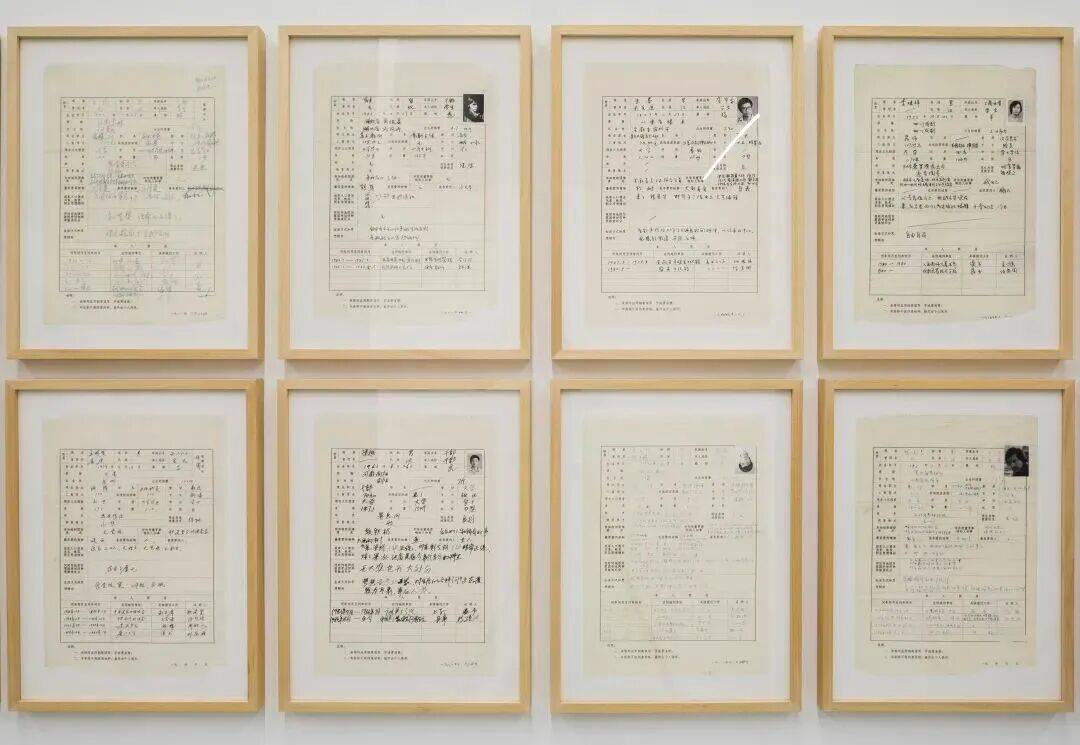
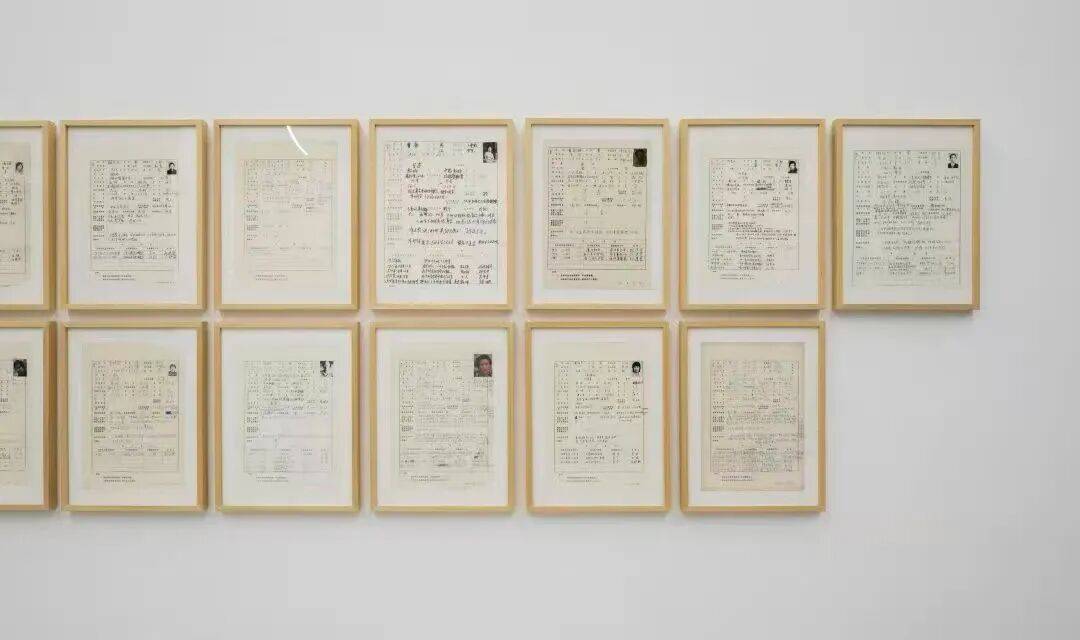
“Geng Jianyi was chosen because his work has the characteristics of chance and contingency, which fit very closely with Fluxus’s ideas. There is also playfulness. For example, the work in the final section, A Clap of the Hands, conveys the idea of applauding the audience, cheering them on, and encouraging them to stay through the end of the exhibition.” Geng Jianyi, Forms and Certificates (detail), installation view of “Who Is He?—A Retrospective of Geng Jianyi’s Works,” Power Station of Art, Shanghai, 2022. His Forms and Certificates series, which asks people to fill out various seemingly absurd forms, examines identity, discipline, and individual existence. Its parody of bureaucratic systems and rational logic recalls Fluxus’s anti-authoritarian stance.
“If Geng Jianyi came to see this exhibition himself, I hope he would not be disappointed.” Although the artist died several years ago, the remark reflects a profound understanding of and respect for the spirit of his practice.
“Chance! Fluxus!” installation view, West Bund Museum of Art, 2025. At the exhibition’s final exit, a line of red text by the artist Jonathan Monk is especially striking: “Lion Mountain Shanghai Zoo Changning District Shanghai China February 4, 2069.” Amusing as it is, the inscription also makes us ask: Why now? Why Shanghai? What does it mean to present, on a large scale in Shanghai today, a Western art movement born in the 1960s?
“I think Fluxus should be relatively easy for Chinese audiences to accept, because it is a relatively free and uninhibited artistic state. In some ways, curating this exhibition in China is more challenging, but Chinese audiences seem more open than Western audiences. For me, presenting Fluxus in Shanghai is more interesting than presenting it in Paris.”
“Chance! Fluxus!” installation view, West Bund Museum of Art, 2025. “More interesting than Paris”—the conclusion is bold, but it also points to a deeper reality. In Paris, a Western art center, audiences may already possess a relatively fixed understanding of Fluxus. In Shanghai, for many viewers, Fluxus may still be a relatively new concept. That unfamiliarity, in turn, allows for fewer preconceptions and a more open mode of reception.
The significance of this exhibition may lie in what Paul revealed at the end of our interview: “Actually, I also have a small personal motive: these works have allowed me to see, learn, and experience many things myself.” The ultimate attraction of art lies in this reciprocal process of stimulation and transformation.