A major retrospective in Shenzhen returns the underrecognized twentieth-century painter Georgette Chen to China for the first full survey of her career there since 1947......
By / Xirui Huang · 8 min read
What are the highlights of Georgette Chen: Where the Heart Is in Shenzhen?
Where the Heart Is presents 62 paintings and more than 80 archival items, offering the first full survey of Georgette Chen’s career in China since her 1947 Shanghai solo exhibition. It follows her from Paris and wartime China to Singapore, showing how she joined Post-Impressionist painting with Chinese experience, Nanyang landscapes and tropical still lifes.
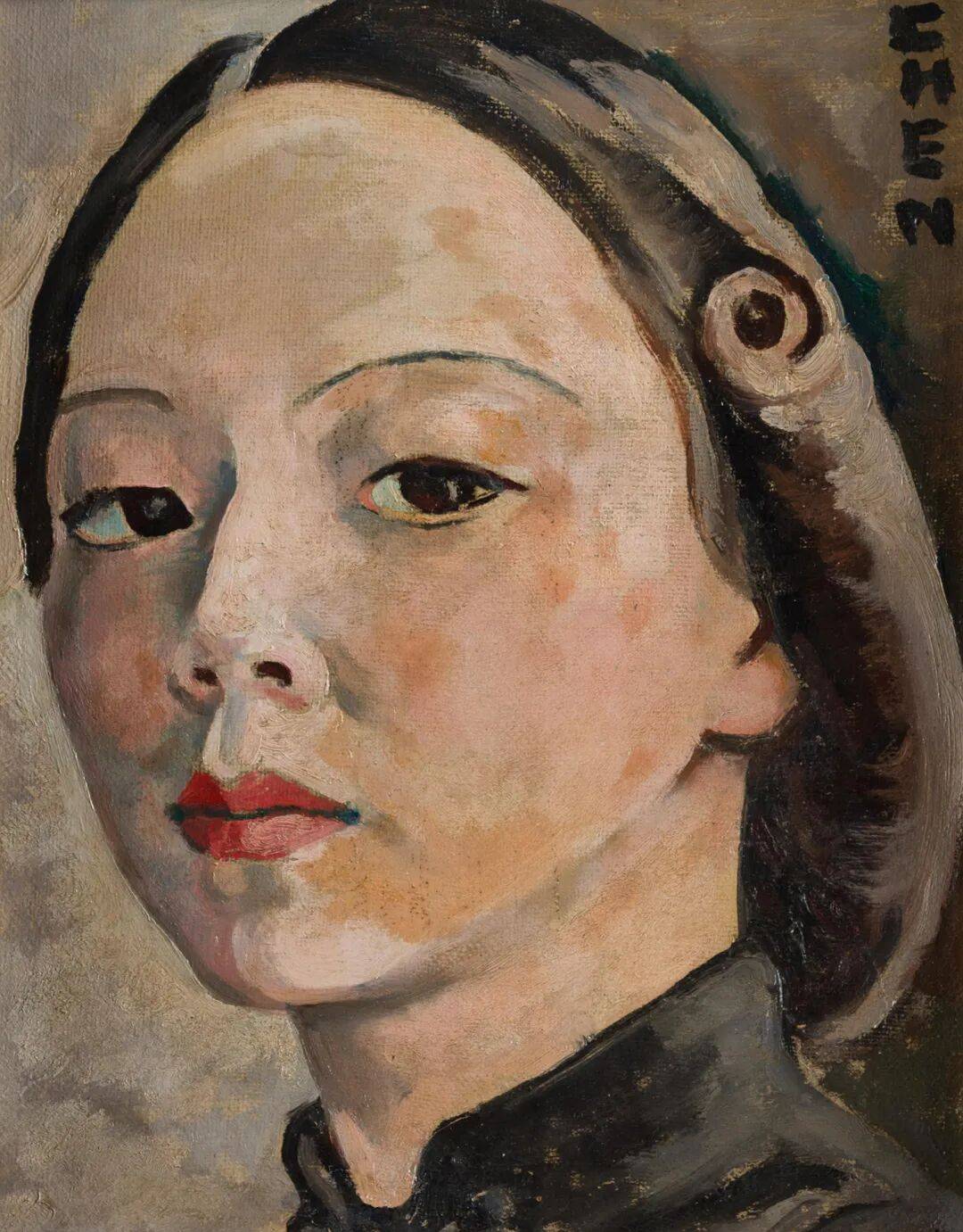
Georgette Chen was one of the most important, and most underestimated, artists in twentieth-century Asian art. Born in Zhejiang in 1906, she was also one of the most noted society women of the Republican era. In 1930, with an introduction from Soong Ching-ling, the "Mother of the Nation," Chen married the famed "iron-fisted diplomat" Eugene Chen, who was 32 years older than she was. After years of wartime movement through Shanghai, Paris, New York, Hong Kong, and other cities, she eventually settled in Singapore, where she taught, lived out her days, and became a leading painter of the vivid, sensuous Nanyang mode, deeply shaped by Post-Impressionism.
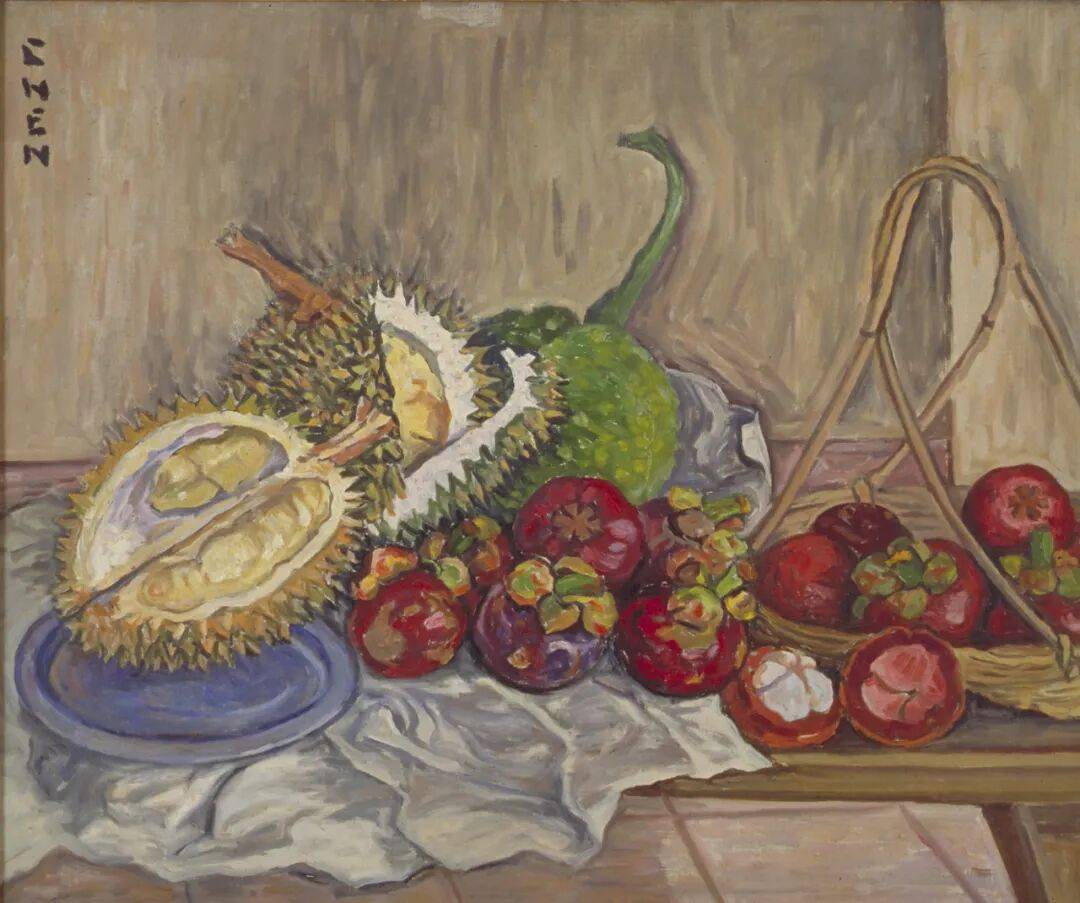
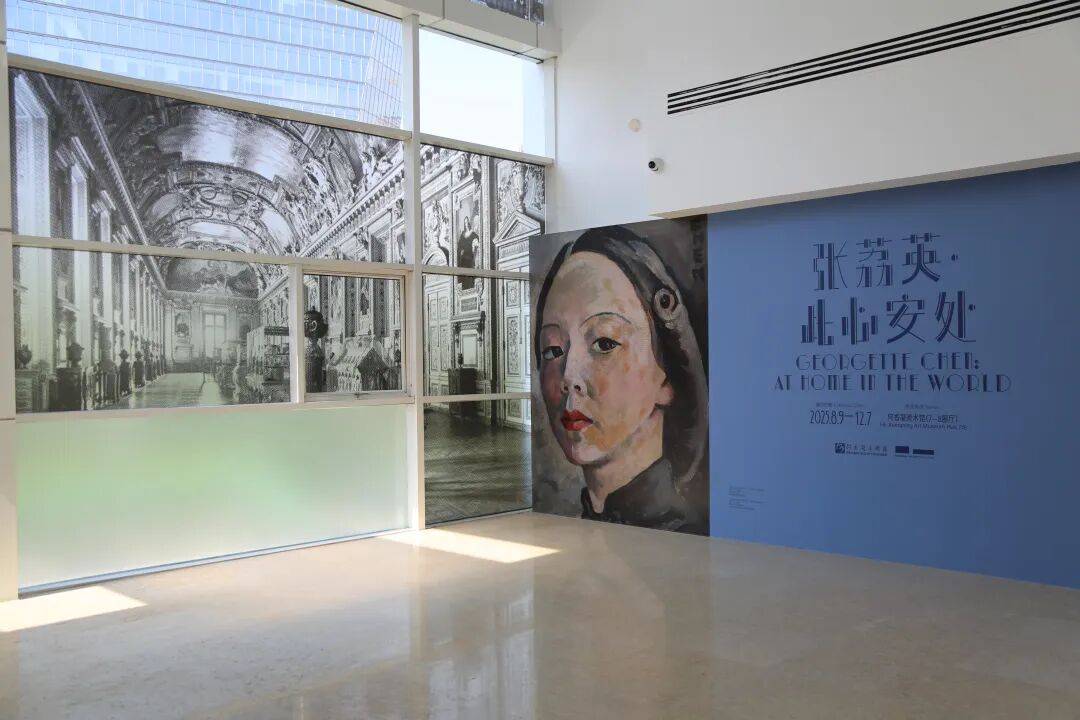
In recent years, her stature has been reassessed by a growing number of people. In the main exhibition of the 2024 Venice Biennale, she and Pan Yuliang were the only twentieth-century Chinese women artists included; on the secondary market, prices for her work have repeatedly reached new highs, entering the ten-million range in 2023. Georgette Chen, "Durians and Mangosteens," 1965, collection of National Gallery Singapore. Installation view of Georgette Chen: "Where the Heart Is," Shenzhen, He Xiangning Art Museum, 2025. On August 9, 2025, the major retrospective "Where the Heart Is" opened at the He Xiangning Art Museum in Shenzhen.
It is the first presentation in China since her 1947 solo show in Shanghai to offer a full view of her artistic career. Through 62 paintings and more than eighty archival documents, the exhibition traces Chen's turbulent life. Before the opening, we spoke with Cai Heng, senior researcher at National Gallery Singapore and one of the exhibition's curators, as well as the curator Lim Shujuan, about the lesser-known details of this Republican-era artist's life and work. Installation view of Georgette Chen: "Where the Heart Is," Shenzhen, He Xiangning Art Museum, 2025. After nearly eighty years, a major exhibition of Georgette Chen has once again landed in China.
The Belated Homecoming of Georgette Chen
The exhibition's title, "Where the Heart Is," suggests a beautiful wish for her creative life. "Georgette Chen's generation lived amid chaos, upheaval, and instability," Cai Heng said. "Throughout her life, she was always traveling, living temporarily, or immigrating from one place to another, and that was always somehow out of step with her wish to find a place where she could devote herself to art in peace. So we felt that 'peace of heart' was what she was always searching for. The phrase also comes from a line by Su Dongpo, which is especially fitting for Chen's experience and her state of mind as a creator."
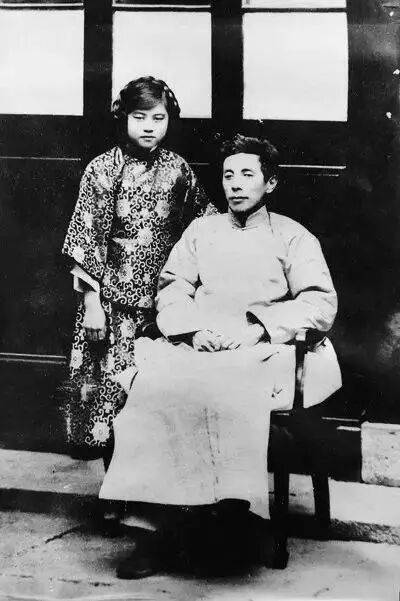
Portrait of Georgette Chen. Georgette Chen's father, Zhang Jingjiang, and her mother, Yao Hui. Her life was itself a history of moving cultural dialogue: she was born into an eminent Chinese mercantile family. Her father, Zhang Jingjiang, was a wealthy businessman from Nanxun with immense holdings. In his early years he ran businesses in Paris dealing in Chinese antiques, silk, tea, and other goods; after making a great deal of money, he also financed Sun Yat-sen and the Tongmenghui. Sun therefore addressed him as a "revolutionary sage." Her mother, Yao Hui, was a classic well-born young lady from an elite family.
Georgette Chen on the cover of the pictorial magazine Young Companion. Of the five sisters in the family, Chen was the standout. She had resolved from childhood to become an artist, and she studied for three years at the McTyeire School for Girls in Shanghai, from 1923 to 1926, under the well-known White Russian émigré artist Viktor Podgoursky. Installation view of Georgette Chen: "Where the Heart Is," Shenzhen, He Xiangning Art Museum, 2025. The exhibition is organized into eight sections: "Parisian Crucible," "Pictures of Rural China," "Creation in Confinement," "From Homeland to Nanyang," "Tropical Color," "Making a Living by the Brush," "Life in Still Life," and "Epilogue."
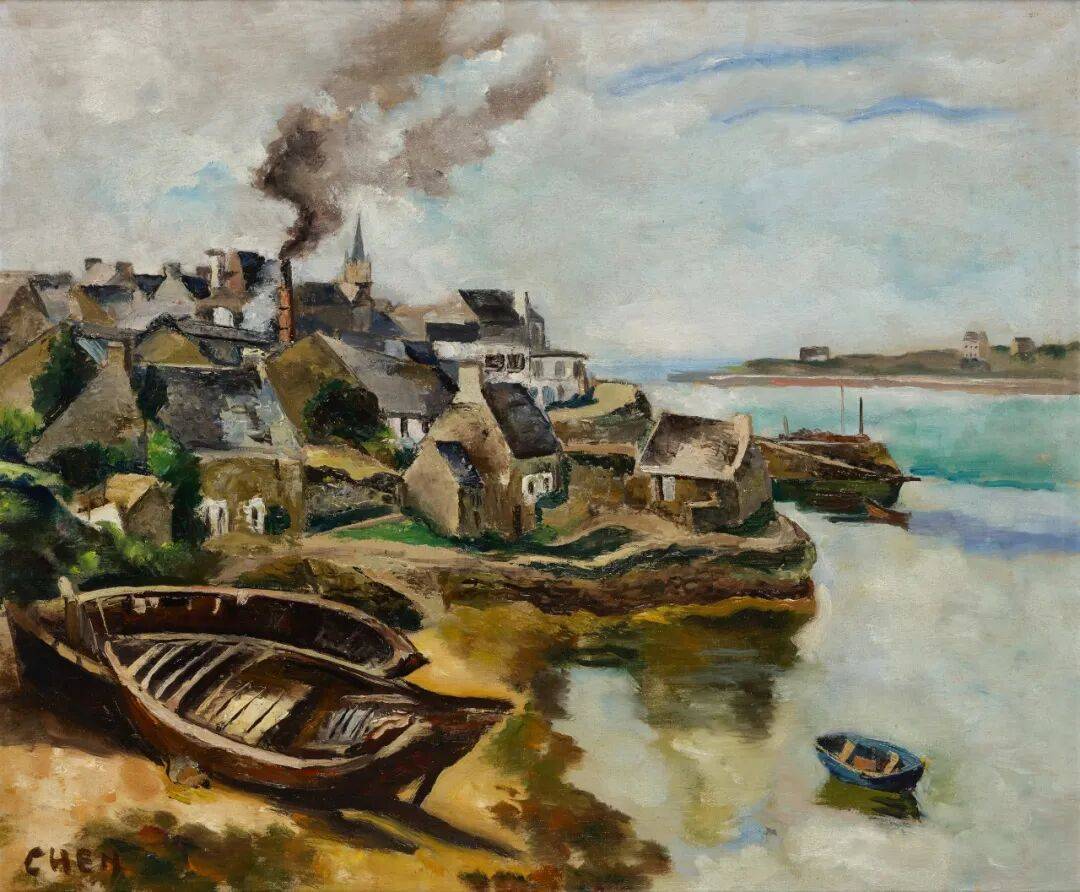
Using works and archival materials as its thread, the exhibition links the artist's more than forty years of life and work, beginning with her studies in Paris in the late 1920s, the decade of 1920-1929, and ending with her settlement in Singapore. For that reason, the show is a collaboration between the He Xiangning Art Museum and National Gallery Singapore, and most of the works come from the Singapore museum's collection. Georgette Chen, "Coast of Brittany," about 1930, collection of National Gallery Singapore. After arriving in Paris, Chen, then only 24, was selected for the Salon d'Automne in 1931; she was later chosen repeatedly for the Salon des Independants and the Salon des Tuileries, winning high praise from critics.
At the time, the Jeu de Paume also acquired one of her works, now in the collection of the Centre Pompidou in Paris, an extraordinary distinction for an Asian woman artist of that period. Georgette Chen and her husband Eugene Chen. In 1930, she married her first husband, the celebrated diplomat Eugene Chen. It was Soong Ching-ling, the "Mother of the Nation," who introduced Chen to Eugene Chen, her senior by 32 years, and the two fell in love. Because of the considerable age difference, Zhang Jingjiang gave his consent to the marriage only with difficulty.
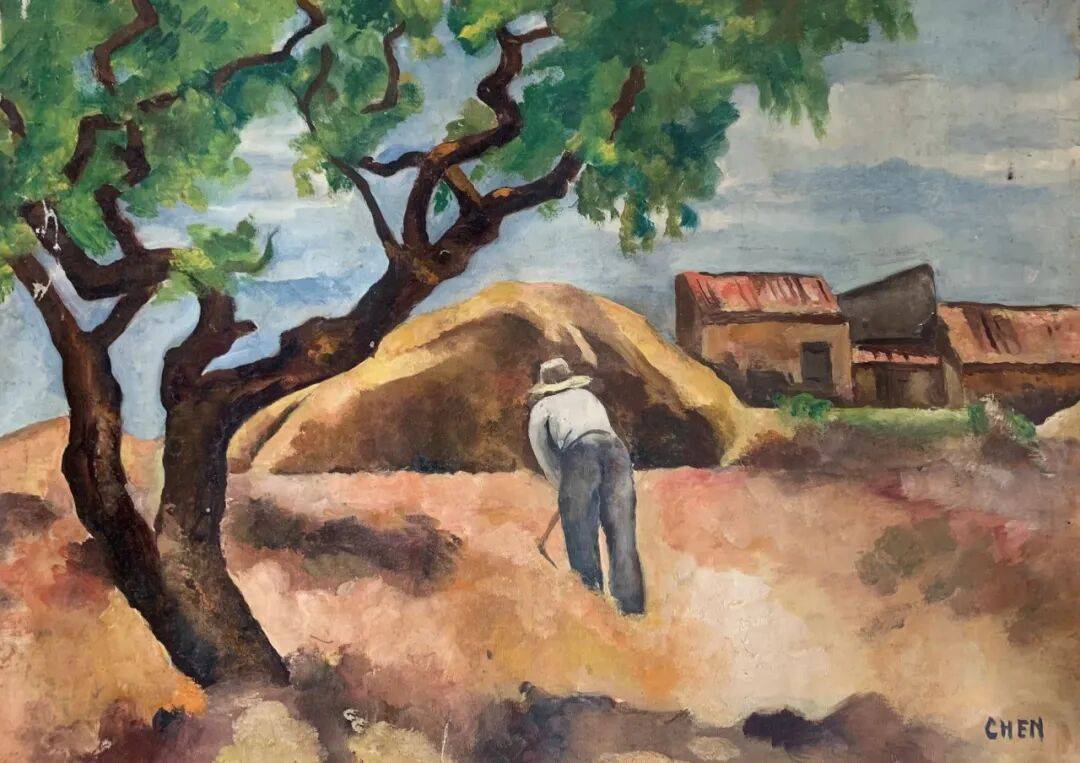
Eugene Chen strongly supported her ambition to become a professional artist. In 1935, he accompanied her and her French painting teacher and his wife to Provence, in the south of France and the home of Cezanne, where they painted from life for four months. Two especially precious works in the exhibition were produced during that period. Georgette Chen, "Haystack," 1935, collection of National Gallery Singapore. Georgette Chen, "Untitled (Haystack)," 1930s, collection of National Gallery Singapore. In them one sees "haystacks," "farmers," and "landscapes," subjects beloved of the Post-Impressionists; Chen's deep engagement with Post-Impressionism is inseparable from this experience.
"The works that survive from this period are quite precious. In fact, many artists who studied in France left behind very few early works from Paris, but Georgette Chen's surviving body of work is comparatively complete, and the arc of her training is very clear. When she held a solo exhibition in Paris in 1936, she also showed these two works," Cai Heng told us. Installation view of Georgette Chen: "Where the Heart Is," Shenzhen, He Xiangning Art Museum, 2025. The second and third sections of the exhibition focus mainly on works from the 1940s, after Chen returned to China, following Eugene Chen from place to place and later painting during the period in which she stayed with him under house arrest in Shanghai.
"After Georgette Chen returned to China, she began thinking about how to localize Western technique and color, and how to use oil painting to reflect the lives of ordinary Chinese people as well as her own life," Cai Heng told us. By then, Eugene Chen's diplomatic career was already in decline. Installation view of Georgette Chen: "Where the Heart Is," Shenzhen, He Xiangning Art Museum, 2025. Georgette Chen, "Boat (Barge)," about 1935-1940.
Collection of National Gallery Singapore. Georgette Chen, "Hong Kong Harbor View," about 1938-1941, collection of Khoon Weng Chan and Soh Fong Chye. In 1939, with the outbreak of the Pacific War and the intensification of the Sino-Japanese War, Eugene Chen hoped to return and join the national resistance effort, and so he brought Georgette Chen from Paris to live for a time in Hong Kong. But when the war spread to Hong Kong in 1941, the couple were arrested by the Japanese army and later transferred to Shanghai. Because Eugene Chen firmly refused Japanese efforts to persuade him to surrender, Georgette Chen remained with him under house arrest in a small Western-style house on Yuyuan Road in Shanghai.
SECTION 02 | Return to homeland and localize Western techniques
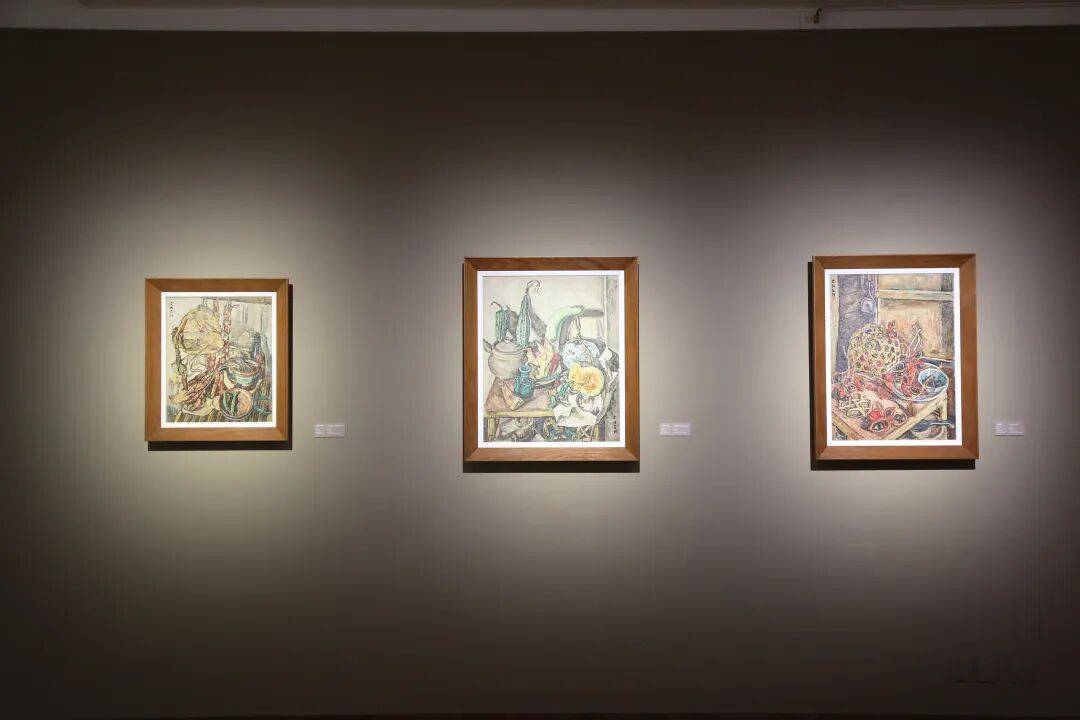
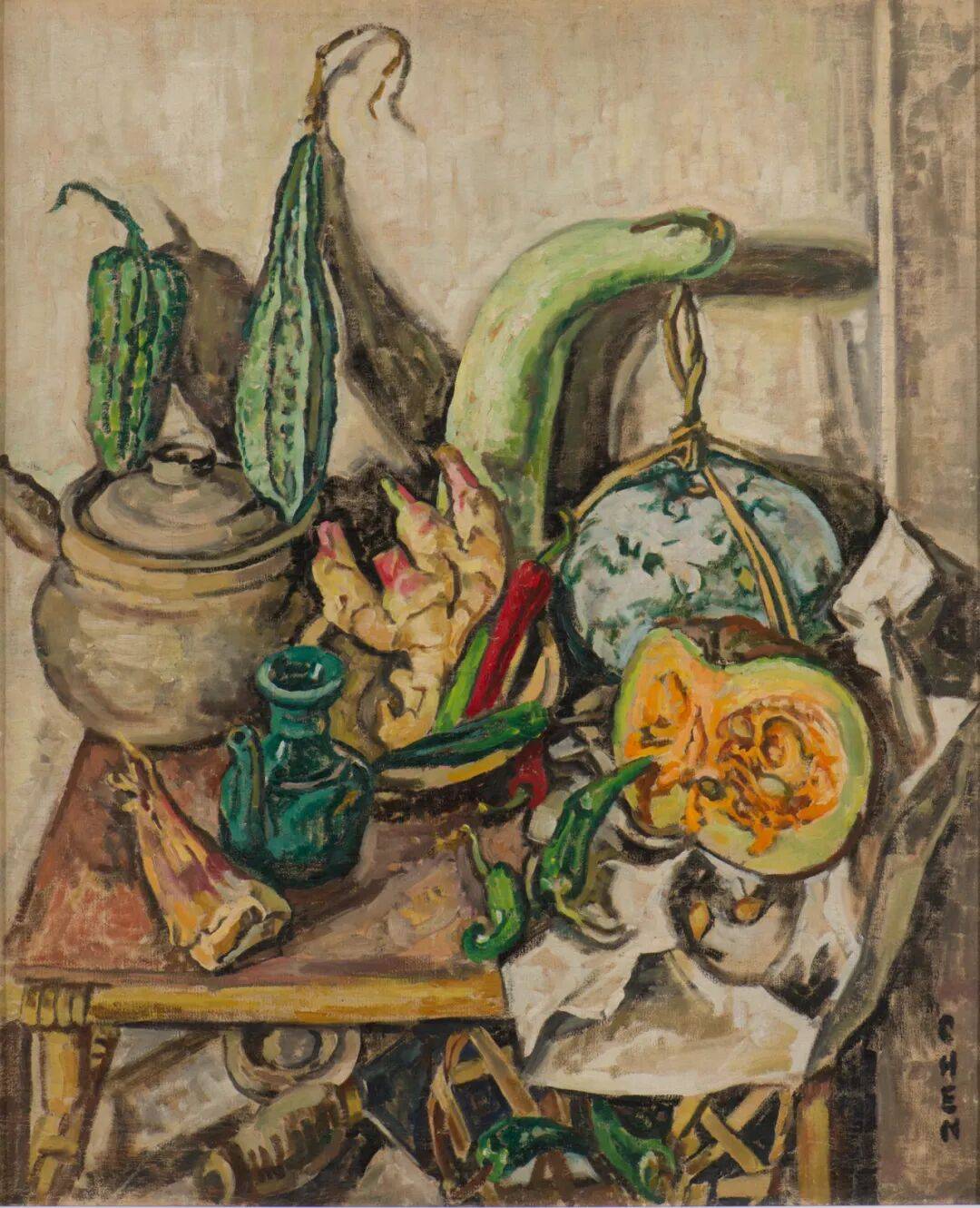
Even though her choice of subjects was sharply constrained, she never stopped painting. During her confinement, she even found an opportunity to mount a solo exhibition at Shanghai's New China Hotel in 1943. Georgette Chen, "Dragon Tray," about 1940-1949, collection of National Gallery Singapore. Georgette Chen, "Vegetables and Clay Pot," about 1940-1947, collection of National Gallery Singapore. Georgette Chen, "Sausage and Preserved Duck," about 1941, collection of National Gallery Singapore. She painted everything around her: vegetables, sausages, chilies, preserved duck, condiments, plates, soup ladles, Hakka women, children, and her beloved husband, Eugene Chen.
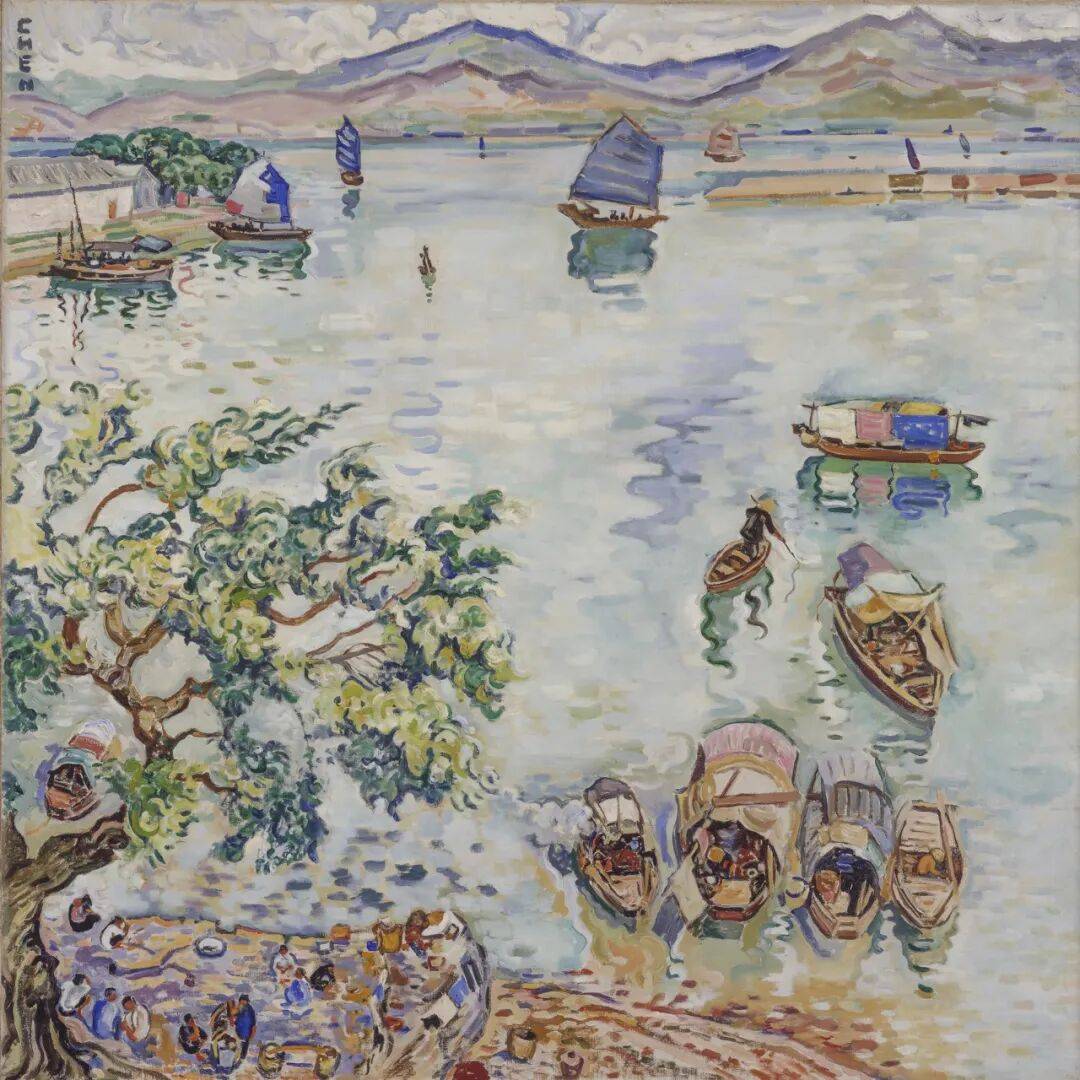
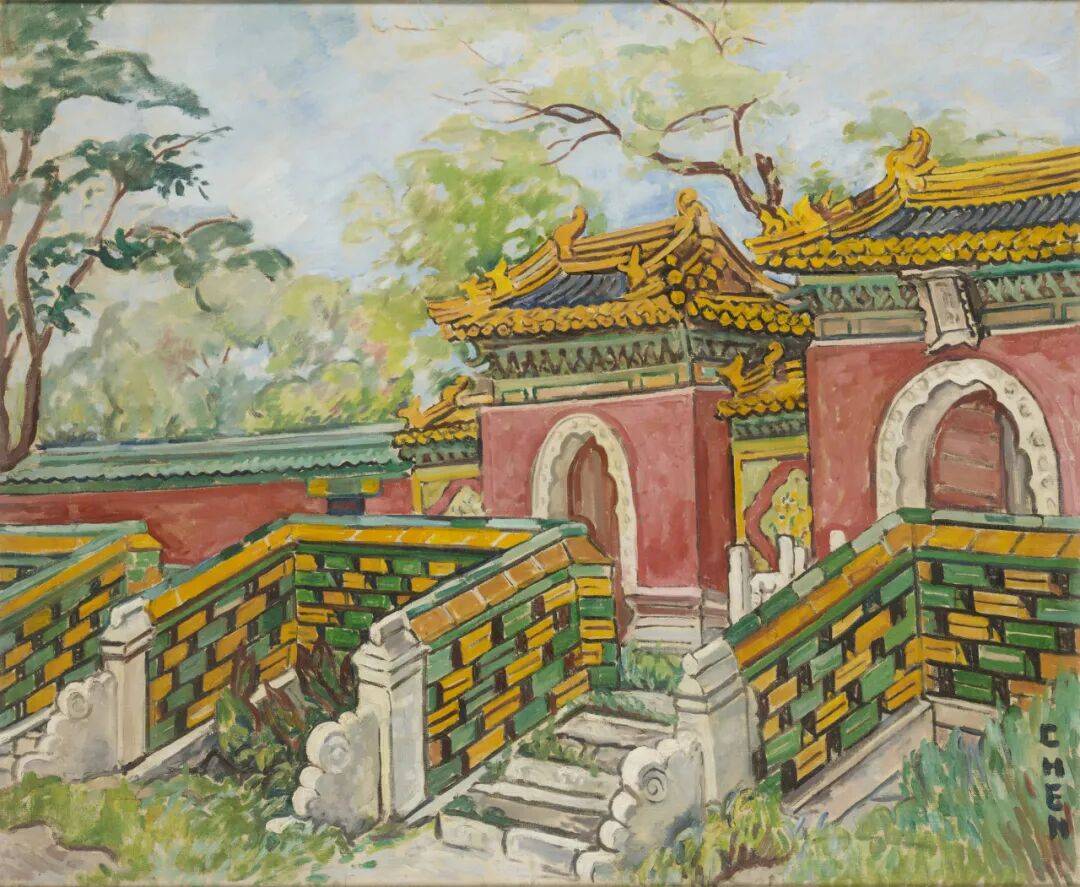
"Eugene Chen was always very supportive of Georgette Chen's work, so his portrait and the still lifes from this period are all very important works. And because the place where they were confined was small, the paintings are small too. Perhaps viewers in Shanghai may be able to sense something of the French Concession in them; we even went to visit the little house on Yuyuan Road where they were confined," Cai Heng told us. Georgette Chen, "Portrait of Eugene Chen," about 1939-1944, collection of National Gallery Singapore. Georgette Chen, "Boats in Suzhou," about 1946, collection of National Gallery Singapore. Georgette Chen, "Temple of the Heavenly Emperor, Beihai, Beijing," about 1945-1949, collection of National Gallery Singapore. Tragically, Eugene Chen died in 1944.
The final phase of Georgette Chen's life in China can be understood as a "long farewell." "After Japan surrendered, she was preparing to leave China. She knew then that she might never return, so she undertook a very long journey: she went to Beijing to see her older sister, then traveled through Suzhou and Jiaxing, painting a series of postwar landscapes and cityscapes, including the Temple of Earth and Beihai in Beijing and Xueyin Temple in Jiaxing," Cai Heng explained. Perhaps that also had something to do with her desire to fulfill Eugene Chen's long-cherished wish.
In 1951, she received an invitation to teach in Penang, Malaysia, and her second husband, Ho Yong Chi, went with her. Installation view of Georgette Chen: "Where the Heart Is," Shenzhen, He Xiangning Art Museum, 2025. In her early years in Penang, she painted the "Penang Landscapes" series; life gradually became calmer, and her paintings took on a new warmth. But the calm did not last long, and problems began to emerge in her marriage to Ho Yong Chi. Georgette Chen, "Batu Ferringhi (Penang)," 1952, collection of Benny and Rosemary Oh. Installation view of Georgette Chen: "Where the Heart Is," Shenzhen, He Xiangning Art Museum, 2025. In 1953, Chen was invited to present a solo exhibition in Singapore, and it was a great success.
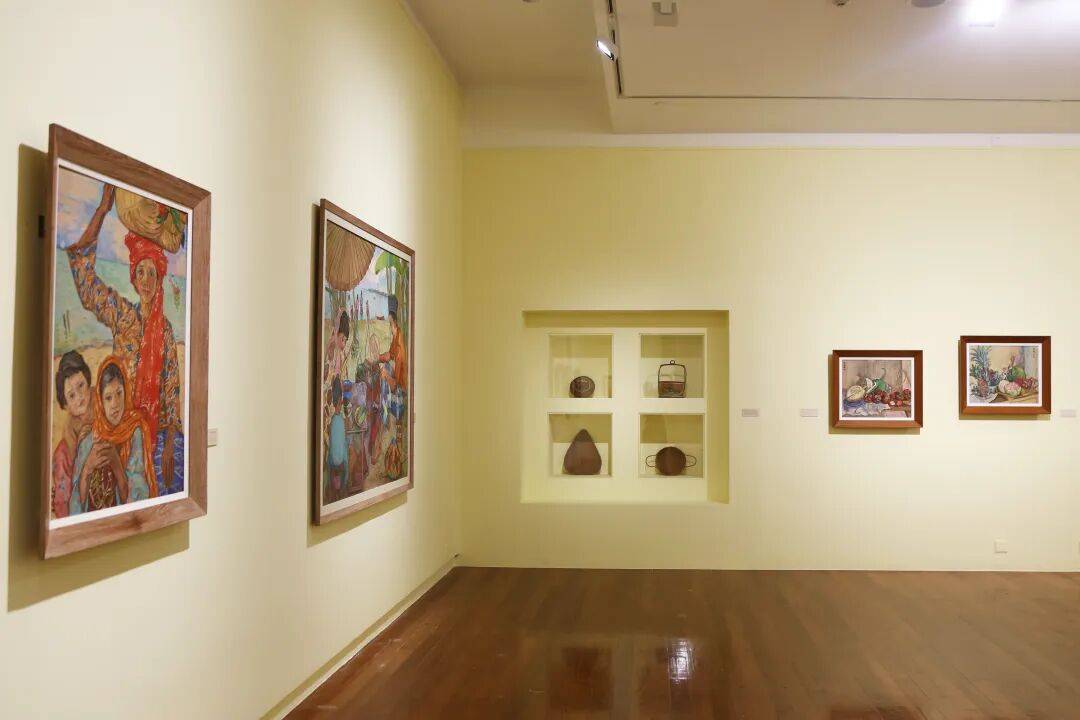
Lim Hak Tai, the principal of Nanyang Academy of Fine Arts, also invited her to teach in Singapore, a move that meant she was finally free of a dependent identity: she was no longer someone's wife, but "the artist Georgette Chen." Georgette Chen, "By the Singapore River," about 1963, collection of National Gallery Singapore. After living alone in Singapore beginning in 1954, Chen quickly became part of the local community. "By this stage she was settled and integrated into local society. There is a particularly interesting work called 'Malay Wedding,' which depicts a traditional Malay wedding scene, with very vivid colors and people coming and going in traditional dress of many different hues."
"Curator Lim Shujuan told us that this was in fact a lawn in front of Nanyang Academy of Fine Arts, and perhaps it was simply an everyday scene that Georgette Chen saw on her way to teach. Georgette Chen, "Malay Wedding," 1962, collection of National Gallery Singapore. Georgette Chen, "Trengganu Market Scene," 1960, collection of National Gallery Singapore. Brilliant garments and lush green banana leaves wind together, and one can almost hear the lively clatter of the band from within the painting.
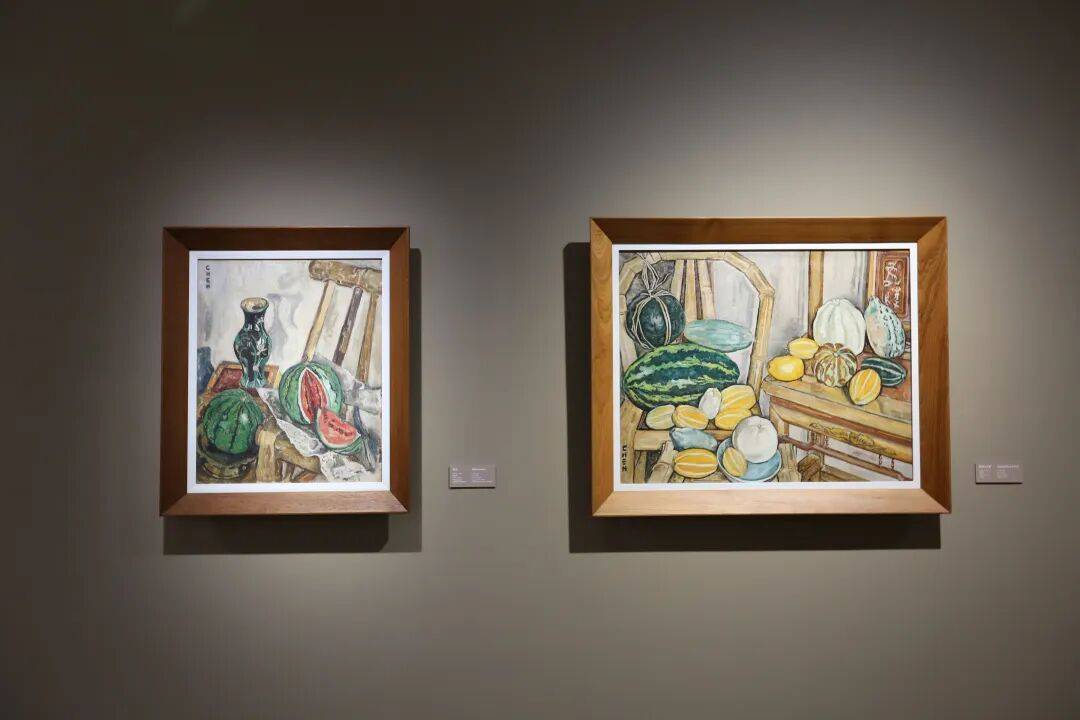
Another equally vivid group scene appears in her depiction of a market in Trengganu, where exuberant yellows, blues, and greens also show how familiar she had become with local life and custom. "She learned Malay, and she even had a Malay name, Chendana, which in Chinese means sandalwood," Lim Shujuan said. Georgette Chen, "Malayan Fruits," 1965, collection of National Gallery Singapore. Georgette Chen, "Still Life (Mid-Autumn Festival Tabletop)," 1962, collection of National Gallery Singapore. Her Nanyang-period still lifes also deserve mention: they always seem to hold a kind of excitement and surprise, ardent and full of life.
"In fact, from the moment Georgette Chen arrived in Penang in 1951, she found the fruits of Southeast Asia strikingly novel and wanted very much to bring them into her paintings," Lim Shujuan told us. Still life was also the subject for which Chen became best known. Georgette Chen, "Still Life with Blue Vase," 1960, collection of National Gallery Singapore. Georgette Chen, "Durians and Mangosteens," 1965, collection of National Gallery Singapore. In these paintings, durians, mangosteens, rambutans, and pineapples are always rendered in irresistibly rich color, their exposed flesh plump and juicy, with a freshness that nearly seems to spill out of the frame.
"Georgette Chen was especially fond of durian. In a letter to Soong Ching-ling, she wrote, 'After I tasted durian, I suddenly felt that my life had become richer by another layer,'" Lim Shujuan told us with a laugh. Georgette Chen, "Lotuses in the Wind," about 1970, collection of National Gallery Singapore. In the final section of the exhibition hangs a quiet painting of lotus blossoms. "She painted this in the garden. The stems are tall and the leaves are large, much like lotuses in Chinese painting, but it is also an oil painting, with the pictorial language of Post-Impressionism."
"Georgette Chen integrated her own cultural perspective very well, and you can also see her resilience in the face of life. She spent so many years in motion before finally settling in Singapore, where she was at last able to make work in peace," Cai Heng said. Installation view of Georgette Chen: "Where the Heart Is," Shenzhen, He Xiangning Art Museum, 2025. At the end of our conversation, the two curators told us an intriguing historical footnote about staging a Georgette Chen exhibition at the He Xiangning Art Museum: her second husband, Ho Yong Chi, was He Xiangning's nephew.
SECTION 03 | Becoming 'Artist Georgette Chen'
Although Georgette Chen and He Xiangning never crossed paths, there is something uncannily apt about Chen having an exhibition here: two great women born into a time of upheaval, one, He Xiangning, pressing for change with her own flesh and blood, the other, Georgette Chen, using a small stretch of canvas to give the soul a place to rest.