One of America’s Most Influential Artists of the Past 20 Years Left Behind 2,500 Works
At Hauser & Wirth Hong Kong, Mike Kelley’s 2022 solo exhibition “Subharmonic Orange Abyss” surveys the kaleidoscopic Kandor series and the artist’s enduring preoccupations with popular culture, memory, and childhood......
By / Xirui Huang · 9 min read
Why does Mike Kelley use bottled cities and discarded toys to explore memory?
Published in 2023, Xirui Huang’s report approaches Mike Kelley through his 2022–2023 Hauser & Wirth Hong Kong exhibition and conversations with the foundation and gallery. Kelley turns the comic-book city of Kandor into models, projections and sound within glass enclosures, exploring home, estrangement and the persistence of the past. Discarded toys and everyday objects bring childhood, emotional investment and popular culture into these questions. Tenderness and satire often coexist in the work.
Installation view of Mike Kelley’s solo exhibition “Subharmonic Orange Abyss,” Hauser & Wirth Hong Kong, 2022. Mike Kelley was one of the most influential American artists of the past 20 years. Over the course of his life, he produced nearly 2,500 works across installation, performance, sculpture, painting, and video. He also created Kandor, Superman’s comic-book hometown, materializing its many two-dimensional versions as sculptures, installations, and models that became known around the world.
One of America’s Most Influential Artists of the Past 20 Years Left Behind 2,500 Works
Through performance, painting, film, and text, Kelley satirized American consumerism and the country’s social and political structures. Recent portrait of Mike Kelley. The artist’s first solo exhibition in China since his death, “Subharmonic Orange Abyss,” recently opened at Hauser & Wirth in Hong Kong, presenting one of the most important series of his later career: the kaleidoscopic city of Kandor. The exhibition was realized through the combined efforts of Hauser & Wirth and the Mike Kelley Foundation for the Arts.
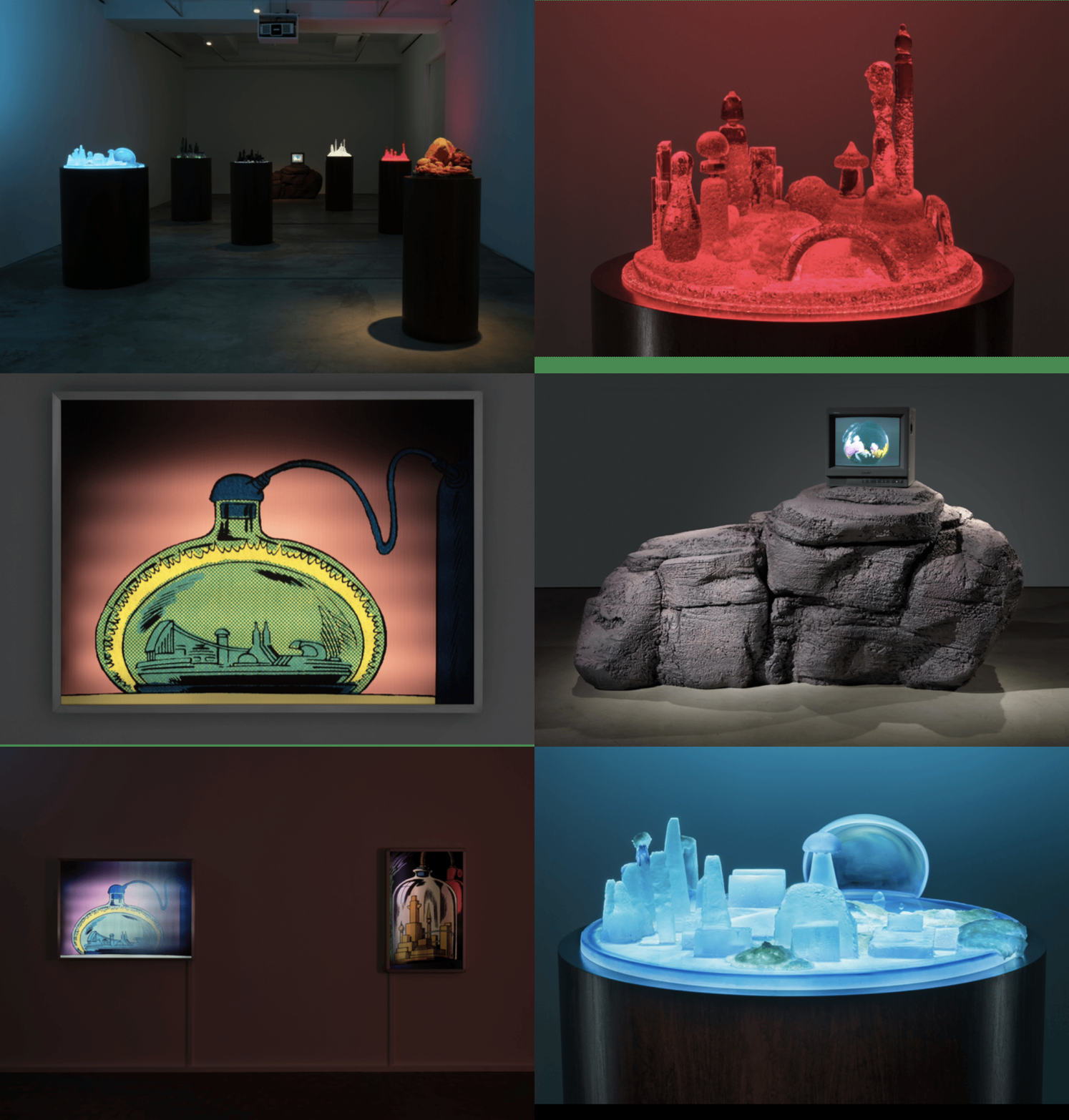
On the collaboration, MC Stevens, executive director of the Mike Kelley Foundation, told us that they were pleased to have mounted the exhibition: “It deftly demonstrates how Kelley’s Kandor works developed in dialogue with one another.” We also spoke with Ying-Hui Li, director of Hauser & Wirth, and Stevens about Kelley’s work and life. Installation view of Mike Kelley’s solo exhibition “Subharmonic Orange Abyss,” Hauser & Wirth Hong Kong, 2022. As soon as we entered the gallery, we encountered a strange landscape bathed in dazzling green, blue, red, black, and white halos. The glass’s translucent surfaces made the city glow faintly, creating the otherworldly sensation of a futuristic cityscape from an obsolete age brought back to life.
SECTION 01 | The work is both tender and ironic, bringing the audience together to reminisce and heal.
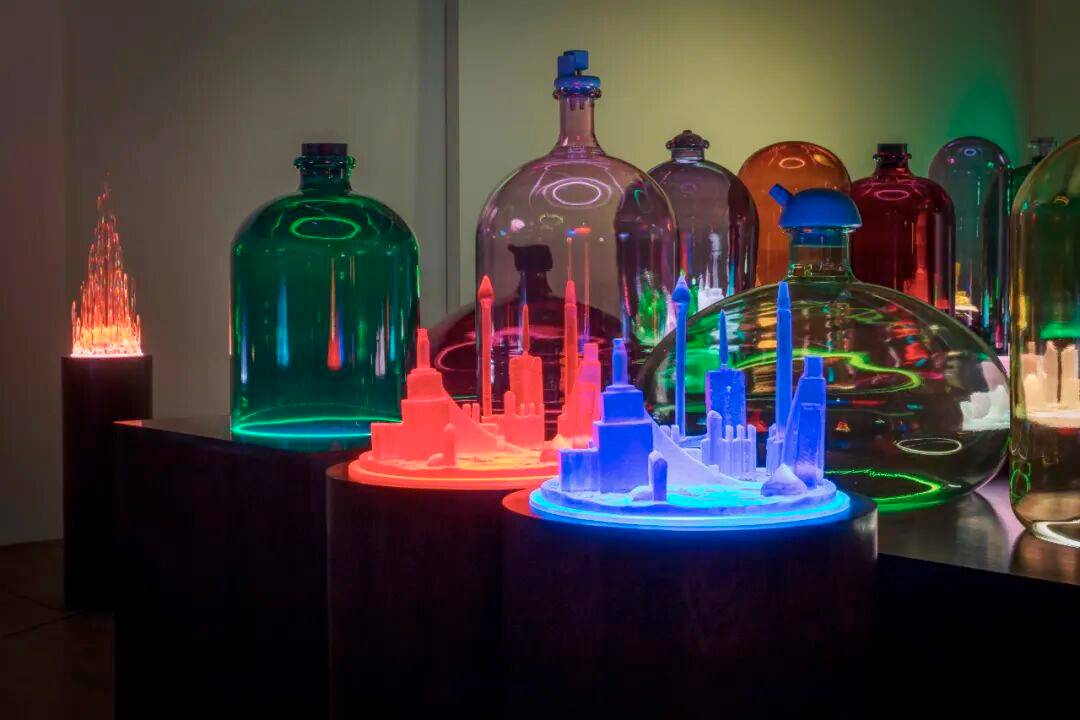
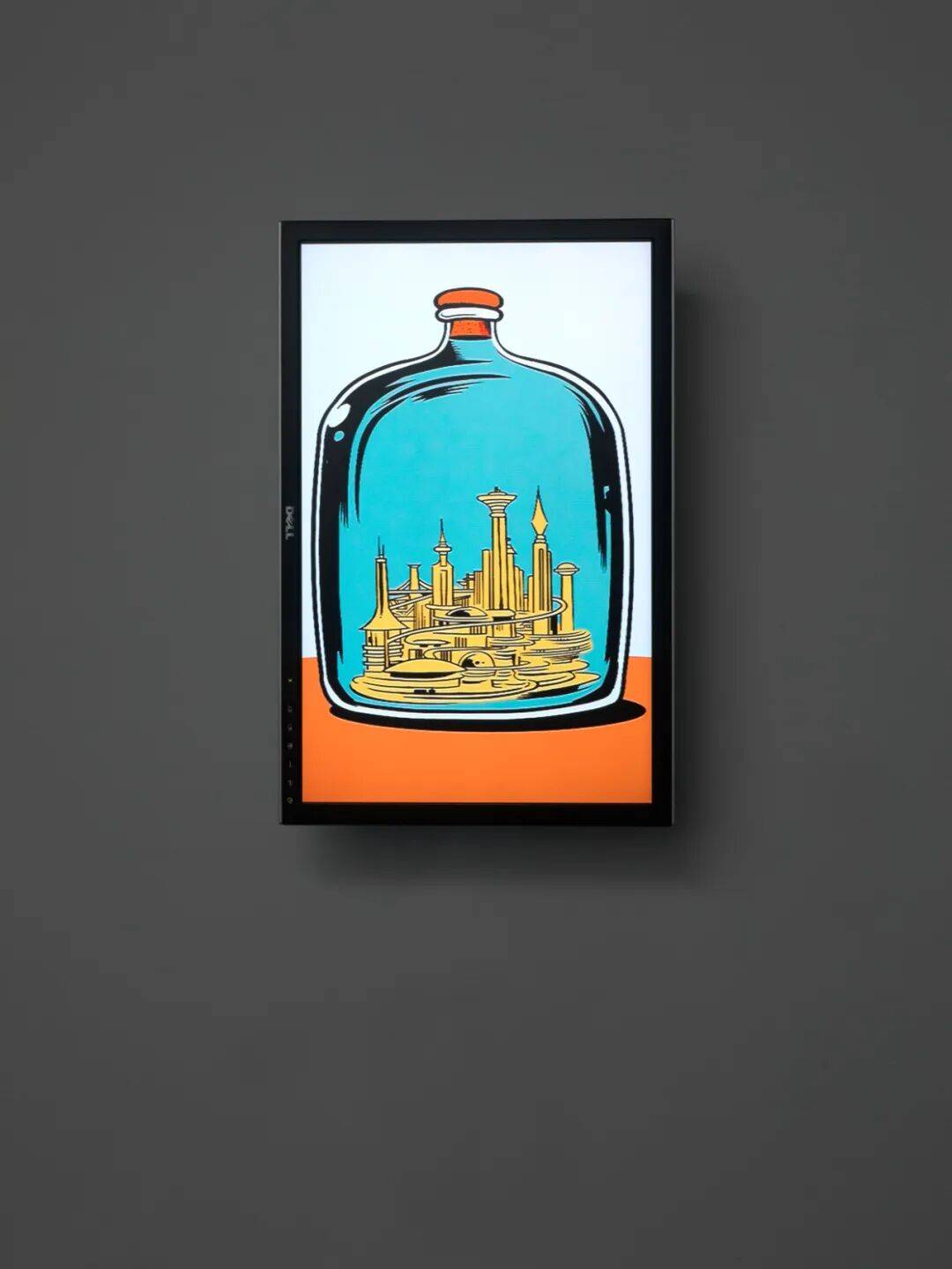
These miniature cities inside bottles are Kelley’s vision of Kandor, Superman’s comic-book hometown. He began working on the series in 1999. Mike Kelley, Kandor Full Set (detail), 2005–2009. Installation view of “Mike Kelley: Kandor 1999–2011,” Hauser & Wirth Los Angeles Arts Center, 2017. In the comics, Superman is sent to Earth as an infant to escape Kandor, his doomed home on the planet Krypton.
Though Superman suffers exile, loneliness, and homesickness on Earth, he chooses to become the hero who uses his powers to protect the planet. He later discovers that, shortly before Krypton was nearly destroyed, the villain Brainiac had shrunk Kandor to toy size and placed it inside a glass bottle. Mike Kelley making the Kandor series in his studio. Superman eventually wrestles Kandor back from Brainiac and preserves it in his Fortress of Solitude, injecting Kryptonian gas into the bottle to sustain the lives of its shrunken inhabitants.
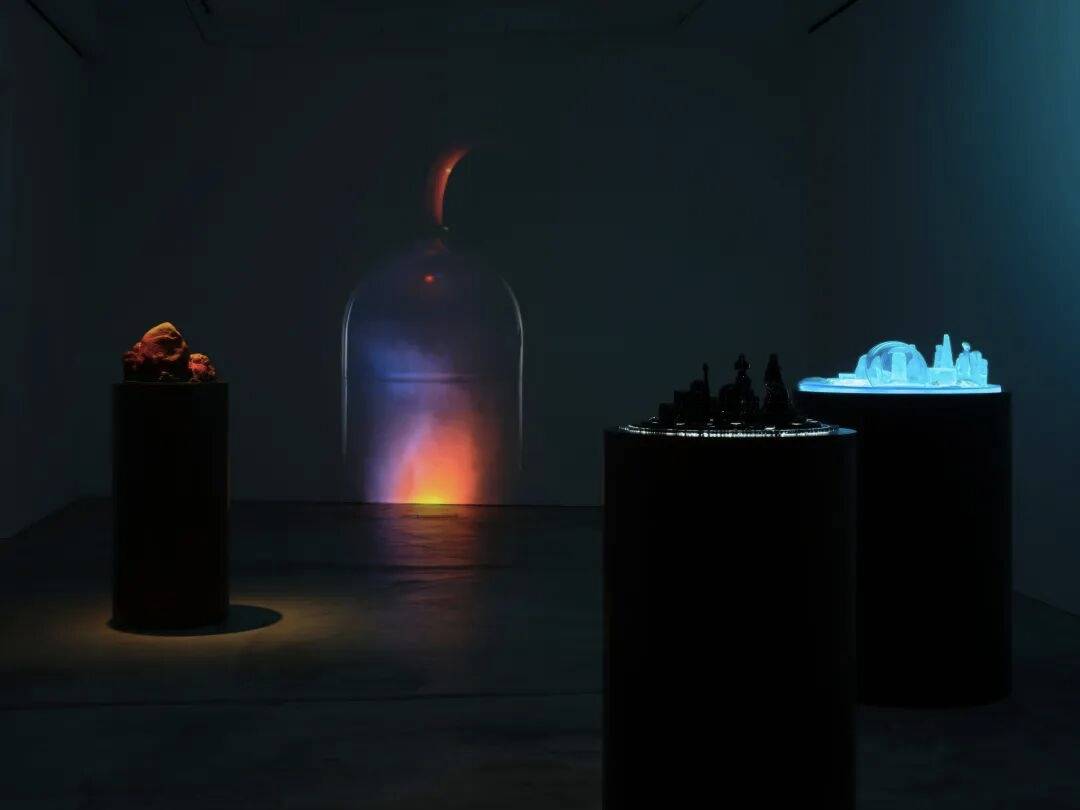
Kelley once explained in an interview what Kandor meant to Superman: “a constant reminder of the past he could not escape, and of his alienated relationship to Earth, where he now lived.” Installation view of Mike Kelley’s solo exhibition “Subharmonic Orange Abyss,” Hauser & Wirth Hong Kong, 2022. Mike Kelley, Bottle 4, installation view of “Subharmonic Orange Abyss,” 2022. On one wall, a large “bottle” was projected. Inside it, mysterious, vaporous colors spun and folded through the space. Accompanied by ethereal music composed by Kelley himself, the work gave viewers the sensation of entering a hallucinated realm in four dimensions.
The artist said in an interview that these glass installations might look simple, but were extraordinarily difficult to produce technically; he visited many glass manufacturers before achieving an effect he found satisfactory. Mike Kelley, City 20 (detail), 2011. Mike Kelley, City 3, 2007–2011. Installation view of Kelley’s solo exhibition “The Melancholy of the Candy Foam Dolphin Portal,” Hauser & Wirth Hong Kong, 2022. At the far end of the same gallery, a small screen was set into a dark-gray foam-plastic mountain, showing a classic American children’s science experiment: how crystals grow inside a jar.
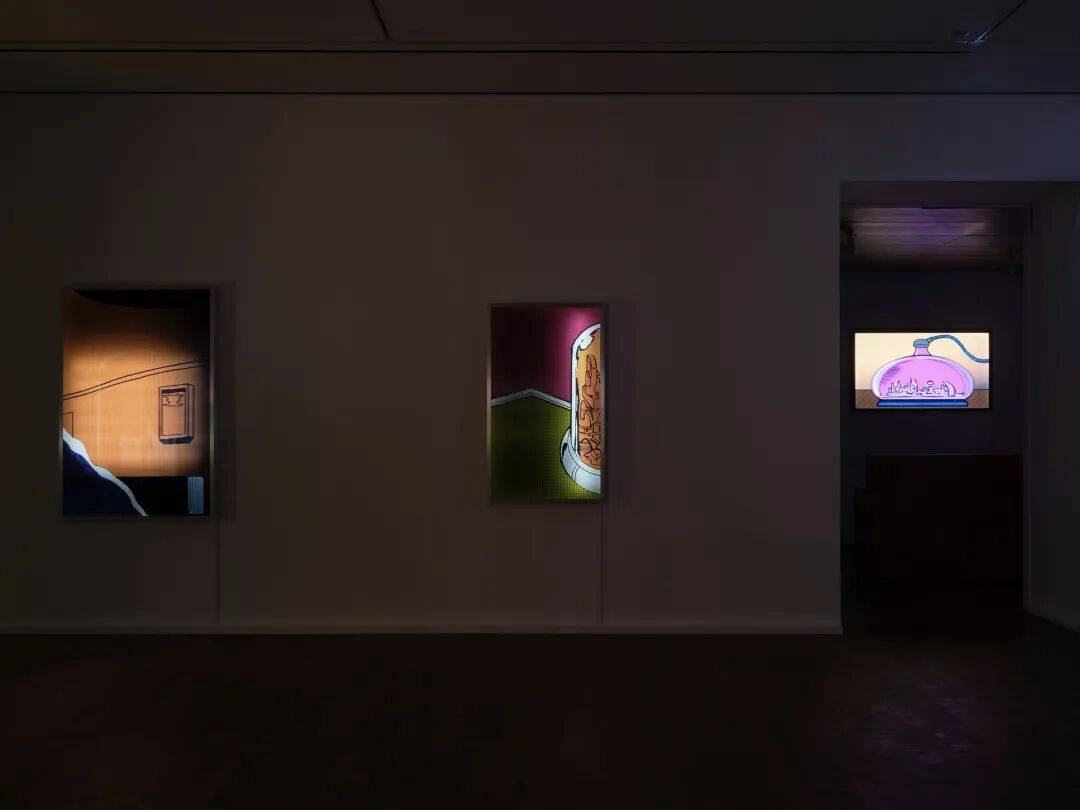
This formed a strange intertextual echo with the city of Kandor, “sealed” inside its glass dome. The music in the video was also composed by Kelley. It sounded avant-garde, punctuated by bizarre instrumental noises that recalled heavy-metal rock. Installation view of Mike Kelley’s solo exhibition “Subharmonic Orange Abyss,” Hauser & Wirth Hong Kong, 2022. Mike Kelley, Animation 2, 2007. In the lower gallery, animations, light boxes, and sculptures formed a three-dimensional city of Kandor.
At first glance, viewers might have taken the objects hanging on the walls for paintings. Then, suddenly, the bottles began to seem alive, shrieking, laughing, or breathing before moving, filling the gallery with an uncanny sense of animation and vitality. Mike Kelley, The Melancholy of the Candy Foam Dolphin Portal, 2007–2009. Another especially distinctive work placed an alien, a mouse, and a blue-green frog beneath the same transparent glass dome.
Its base was an irregular spherical stone, at once rounded and sharp, smooth and jagged. The three toys looked ugly and strange, like cheap souvenirs discarded by a shop. Ying-Hui Li, the gallery’s director, said that this was also the work in the exhibition most representative of the artist. Judging from its peculiar title, Topo Gigio Topographical Model, “Topo Gigio” refers to an Italian children’s puppet show from the 1960s, while “topographical model” points to Sigmund Freud’s theory of the unconscious mind and its structure. Their combination becomes a metaphor for the displacement of childhood.
Mike Kelley, Kandor 12, 2010. Installation view of “Mike Kelley: Kandor 1999–2011,” Hauser & Wirth Los Angeles Arts Center, 2017. The works reveal the artist’s sustained interest in psychology, nostalgia, and repressed memories of childhood—subjects that ran through his entire career.
“He had the ability to examine popular culture and expose what it concealed or repressed; to me, that was an extraordinarily moving combination of tragedy and humor,” Li said. Photograph of the artist in his youth. In 1954, Mike Kelley was born in a suburb of Detroit, Michigan. Both of his parents were ordinary working-class people, and the environment in which he grew up had little connection to art. His father maintained the public-school system and later became a school principal; his mother was the head cook in a cafeteria at Ford Motor Company.
Born into a working-class family, Kelley nevertheless held a firm belief in becoming an artist and using his work to do something for society—to help heal people who had experienced trauma, speak for those at the bottom, and challenge cultural inequity. Li told us that this conviction was closely tied to Kelley’s intense teenage passion for experimental music and rock. He loved its noise and clamor, its subversion and anti-aesthetic, and was strongly influenced by artists including Sun Ra, the Stooges, and MC5.
Group photograph of the members of Destroy All Monsters. Loud hard rock was immensely popular in the United States during the 1960s and ’70s, and it accompanied Kelley throughout his youth. In the 1970s, he co-founded the proto-punk band Destroy All Monsters with three other artists—Jim Shaw, Niagara, and Carey Loren—as well as other musicians.
He later became fascinated by psychedelic rock and turned toward avant-garde music, electronic music, and free jazz. Ultimately, it was the subtle relationship between experimental music and artistic practice that led him to become an artist. Page from a 1970s issue of Artforum. After graduating from the University of Michigan, Kelley moved to the avant-garde city of Los Angeles and studied at the California Institute of the Arts. He soon developed a deep attachment to Los Angeles and settled there.
SECTION 02 | The American 'Small Town Artist'
Early on, he explored the forms of his work with great boldness. Alongside traditional painting and sculpture, his practice included performance and video. He sought, with a highly radical attitude, to satirize the darker side of American society—consumerism, racism, and its complex social phenomena. He believed that art possessed immense power: it could inspire change and make society better. His first video work, Banana Man, appeared in 1983; its character evolved indirectly from the children’s television program Captain Kangaroo.
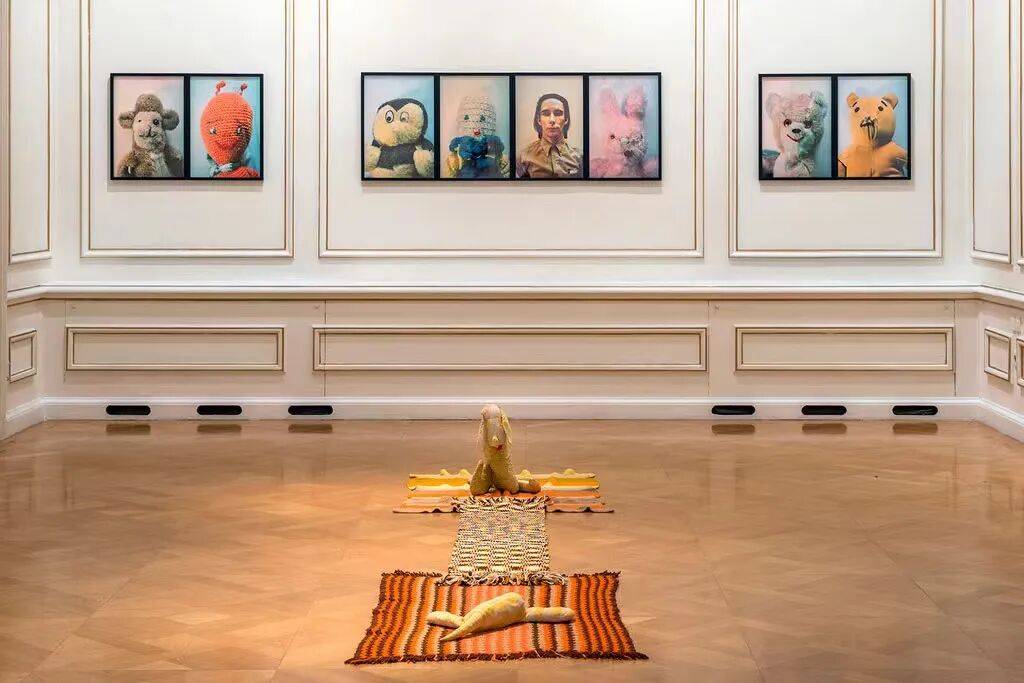
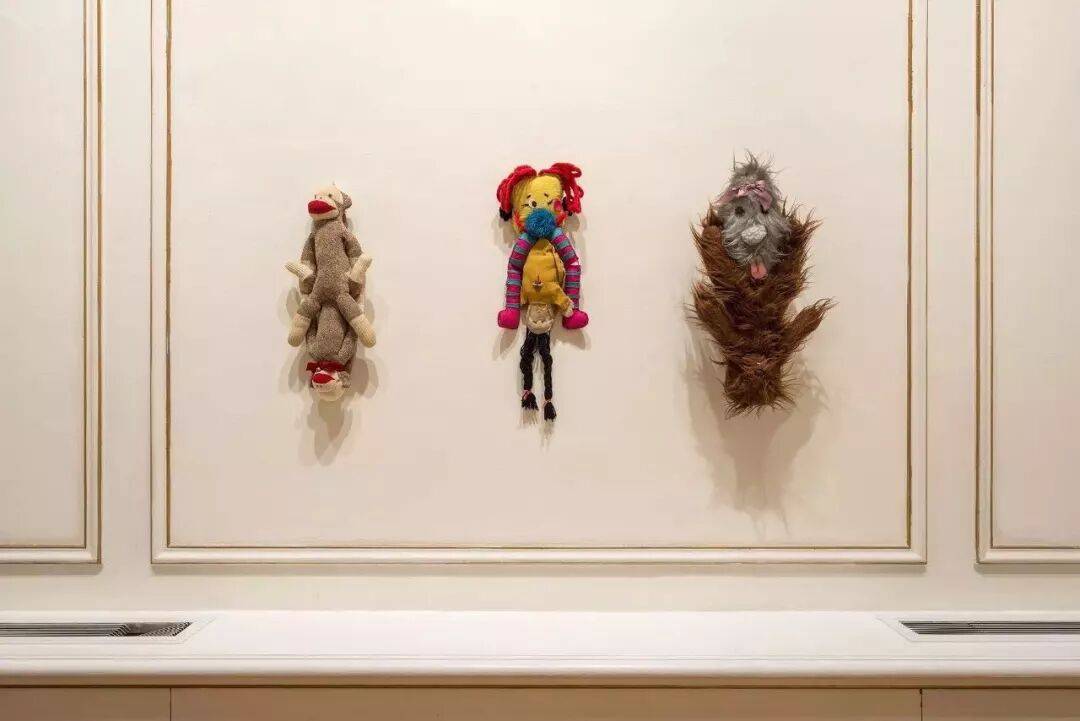
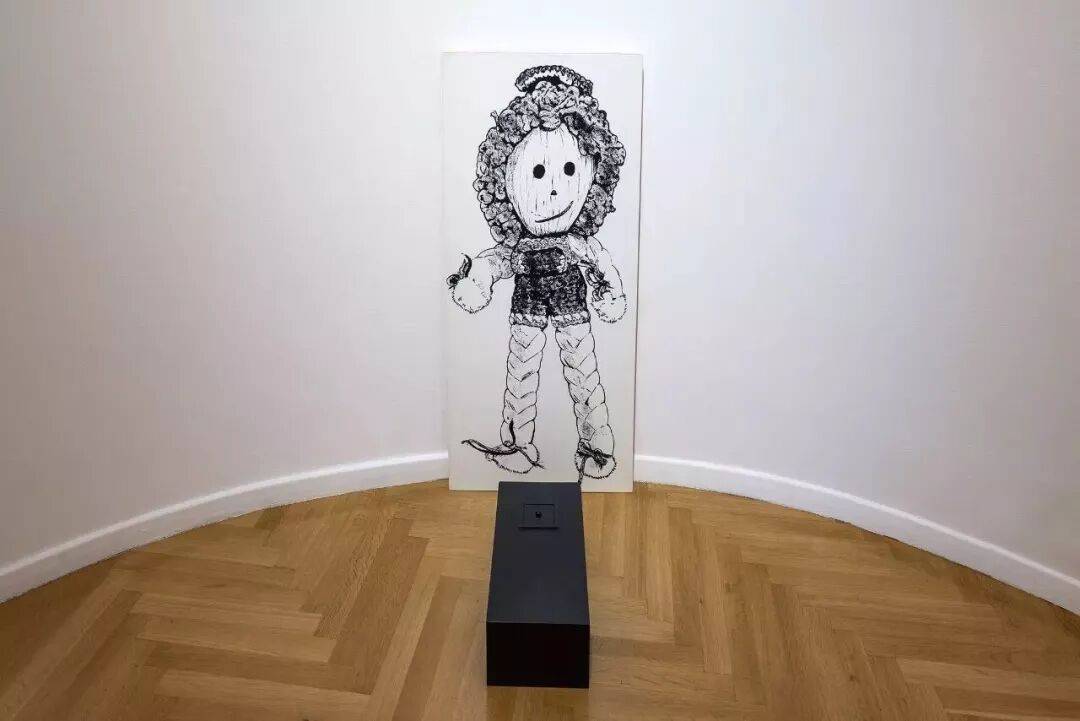
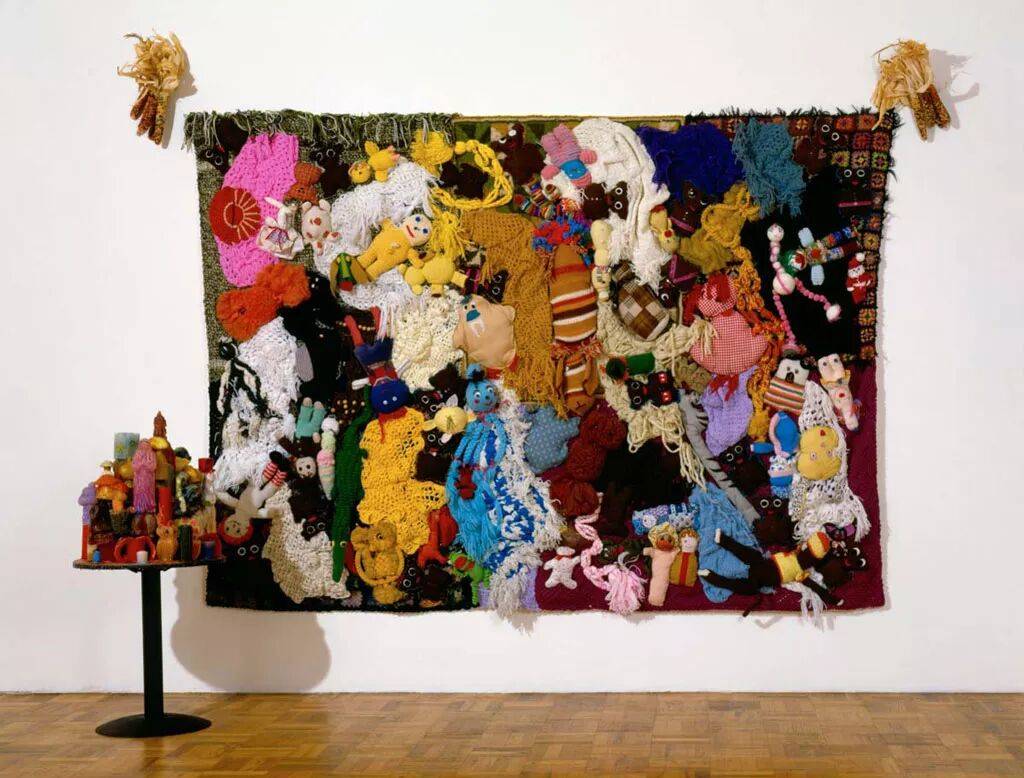
Installation view of Mike Kelley’s solo exhibition, Museum of Cycladic Art, 2017. In 1987, Kelley began teaching at the ArtCenter College of Design in Pasadena, California. Among artists of his generation, this was a sign that he had “made it.” It was also during this period that he created the Half Man series, centered on stuffed toys. The series drew on the hand-knit dolls and secondhand toys he had spent years finding in flea markets and trash bins.
Kelley raised a question that few artists of the time were asking: how much love and time had the older women who sewed these dolls invested in them, and how much had they received in return? Installation view of Mike Kelley’s solo exhibition, Museum of Contemporary Art, 2018. Installation view of Mike Kelley’s solo exhibition, Museum of Cycladic Art, 2017. He combined crocheted blankets, yarn dolls, and rag toys found in thrift stores and secondhand markets into assemblages.
Used dolls, animals, and blankets lay scattered across canvases, nailed to walls, or abandoned on the floor. Kelley infused the works with an imagined fictional childhood and an inner sense of sorrow, turning them into memories, tools for capturing complicated social realities, and emotionally charged mementos. They were sad and ironic, yet also full of naïve romance. Mike Kelley, Educational Complex, 1995. Installation view of Mike Kelley’s solo exhibition, Malmö Rosentam Contemporary Art Center, Switzerland, 1997. Li told us that although Kelley’s work differed greatly from one period to the next, it could not be divided neatly into distinct phases.
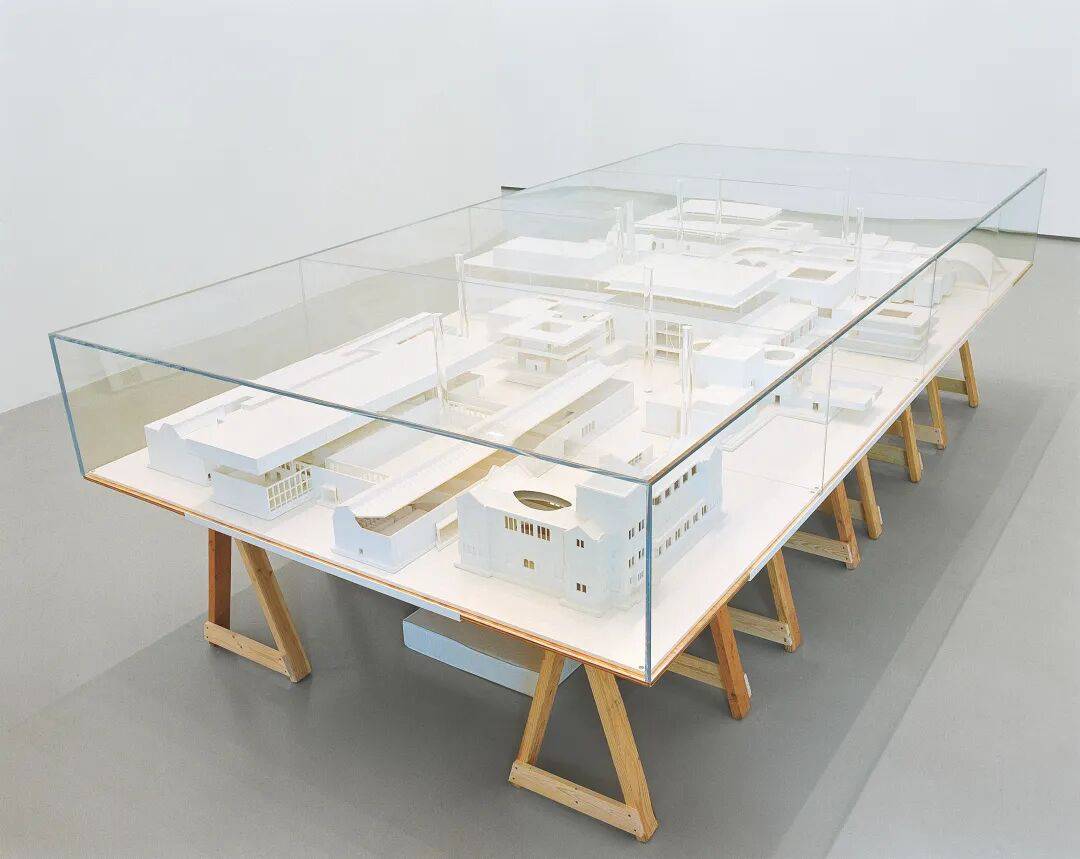
“His work was a response to what concerned him in the present. He was always drawn to different philosophical and psychological theories, and projected them into his work in poetic and abstract ways.” In 1995, he created Educational Complex, based on the schools he had attended. In this group of large architectural models, Kelley fused every school he had attended into a kind of stew.
“He copied only the parts of the buildings he could genuinely remember, leaving blank the parts he could not recall, to reflect a social phenomenon of the time: repressed-memory syndrome,” Li said. Installation view of Mike Kelley’s solo exhibition, Museum of Contemporary Art, 2018. Mike Kelley, The Balance of Quality and Value, 2001. Mike Kelley, Memory Ware Wall #27, 2001. The warmth in Kelley’s work was not confined to stuffed toys. In the Memory Ware series, he used everyday found objects—bottles, buttons, picture frames, ashtrays, beads—to construct upright human figures within framed compositions, seemingly asking viewers whether abandoned objects might possess vitality of their own.
Installation view of Mike Kelley’s “Time Turns: The Prospects” exhibition. Kandor Exhibition 2000, 1999–2007. Kunstmuseum Bonn, Germany, 1999–2000. Although Kelley achieved extraordinary success compared with many artists of his generation, he established his own foundation early, supporting impoverished young artists and musicians while using his art to offer viewers encouragement and inspiration.
Installation view of Mike Kelley’s solo exhibition, Museum of Contemporary Art, 2018. Mike Kelley, Kandor 7, 2007. Installation view of Mike Kelley’s solo exhibition, Museum of Cycladic Art, 2017. In 2012, shortly after Kelley’s death, people spontaneously organized a memorial on a vacant lot near Highland Park in Los Angeles, where the artist had lived and worked for much of his career. As more people received news of his death, the “tombstone” grew larger and larger.
Candles, stuffed dolls, dried corn, knitted blankets, and other objects associated with Kelley’s work accumulated in a corner, gradually forming a heap. People wrote poems, drew pictures, and scrawled graffiti on the white walls to commemorate this “art hero,” who had died young, championed ordinary people, and supported countless impoverished artists. Photograph of the memorial for Mike Kelley in an abandoned garage in Los Angeles, 2012. Someone once recalled the artist when he was young, before he had been overwhelmed by depression.
“Once, I saw him dancing with the band.
“‘Mike’s here,’ someone said with a laugh, pointing to the edge of the dance floor. Then he sprang up, and his elegant arms and legs seemed to leap out from his body. In that moment, he appeared completely immersed in pure passion.” The spontaneous memorial to Mike Kelley continued for more than a month, until the objects in the abandoned garage were ordered cleared by the government of Los Angeles. All the dolls, textiles, and candles placed there were packed together and given to the Mike Kelley Foundation.
SECTION 03 | I've spent my whole life trying to be an artist, so there's nothing left
Installation view of Mike Kelley’s “Kandor” exhibition, Galerie Jablonka, Berlin, 2007. Mike Kelley’s backyard in Los Angeles, 2000. But this was not the end. Over the course of his life, Kelley left nearly 2,500 works across many fields. His work will continue to look upon the world with warmth, innocence, and irony. Viewers can continue to use it to reconstruct their understanding of society through his unruly spirit, renew their perceptions of popular culture, and reimagine themselves.
Editor: Huang Xirui. Some images provided by the artist’s foundation and Hauser & Wirth. Other images sourced online.