The Most Comprehensive Showing Yet of China’s Post-90s Artists
At Song Art Museum, the group exhibition “Generation of Rupture,” organized with the curator Cui Cancan, brings together fourteen of the most representative Chinese artists born in the 1990s. Born in the late nineteen-eighties through 2000, they have lived and worked in Beijing, Shanghai, London, Berlin, New York, and Paris, and the fractures within their generation may occur even more frequently than before, with wholesale shifts in outlook every five years, or even every three......
By / Xirui Huang · 15 min read
Why does rupture in Song Art Museum’s 2022 exhibition mean more than a divide between generations?
The 2022 report from Song Art Museum considers rupture through conversations with Cui Cancan and participating artists. Internet culture, games, consumption and global movement shape distinct experiences rather than one generational style. Separate spaces for 14 artists and groups allow different images, materials and narratives to emerge. Even people close in age may inhabit very different worlds. Rupture thus opens a discussion about rapid change and individual differences, instead of simply labelling a birth cohort.
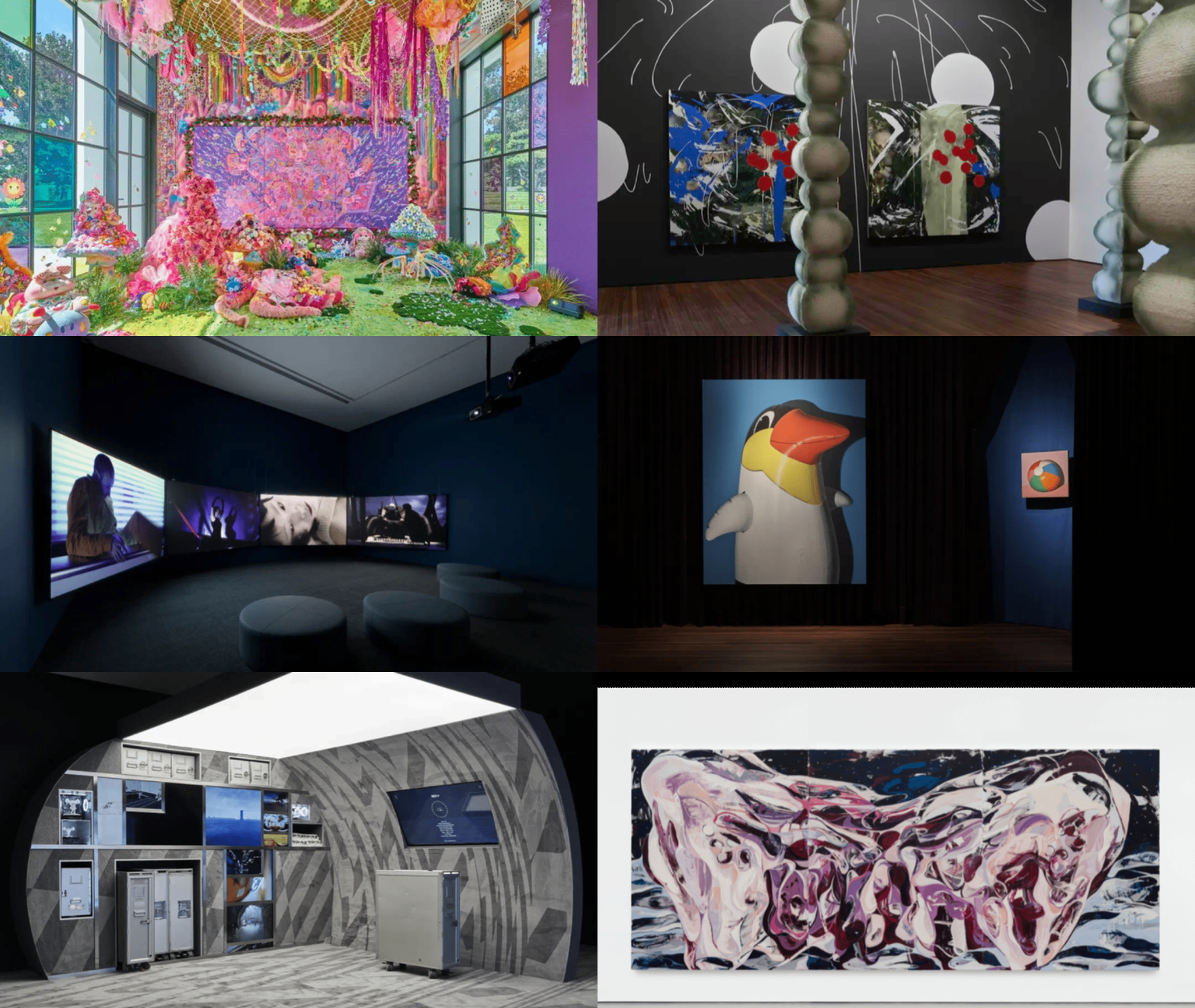
Installation view of “Generation of Rupture” at Song Art Museum. Organized by Song Art Museum and the curator Cui Cancan, the group exhibition “Generation of Rupture” brings together, for the first time, fourteen of the most representative Chinese artists of the post-90s “generation of rupture.” The participating artists were born from the late nineteen-eighties through 2000, and traces of their lives and work can be found in Beijing, Shanghai, London, Berlin, New York, Paris, and elsewhere. For them, the internal “ruptures” may come even more frequently; every five years, or even every three, can bring a thorough renewal of ideas.
Fei Yining, Guo Yuheng, Hou Zichao, Liu Xin, Ma Hailun, Pu Yingwei, Slime Engine, Sun Yitian, Wang Ziquan, Yuan Keru, Zhang Ji, Zhang Yibei, Zhang Yuewei, and Zhang Zipiao present more than one hundred works across fourteen separate galleries, many of them specially commissioned for this exhibition. Together they mark a major turn in Chinese contemporary art: electronic color, internet culture, fashion consumption, science-fiction prose, and globalized identity have shaped them directly, pulling them decisively away from the very different course of artists from the sixties, seventies, and eighties.
“I wrote the longest curatorial essay of my career because I wanted to discuss how a system of values and methods for looking at a new generation might be formed,” Cui Cancan told us. On the eve of the opening, we spoke with him, as well as three participating artists, Hou Zichao, Zhang Zipiao, and Pu Yingwei, about the word “rupture.” Slime Engine, OVO Mixing, 2021. Installation view at Song Art Museum. Entering the first gallery feels a little like slipping onto the tracks of our own era: the aviation galley and work station presented in Slime Engine’s OVO Mixing are instantly arresting.
The work’s form is modeled entirely on a modular aircraft galley. It also calls to mind a space capsule or an Apple store. Slime Engine, OVO Mixing (detail), 2021. Song Art Museum. Installation view of Slime Engine’s gallery. On a large screen at the front of the room-sized installation, visitors use a game controller placed before the screen to choose among dense streams of information, advertisements, images, landscapes, airline meal carts, virtual media, and digital sculpture, in something uncannily like today’s information overload and an “amusing ourselves to death” condition.
With its grounding in the internet, video games, consumerism, and wall-to-wall advertising, the work constructs a rich contemporary social landscape.
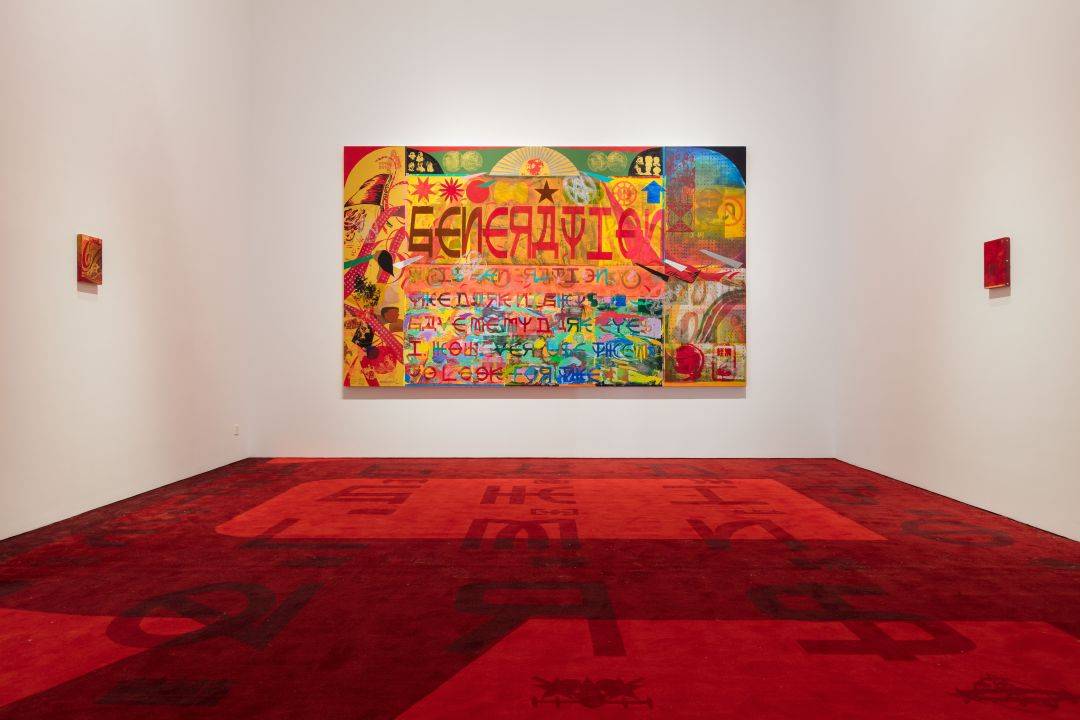
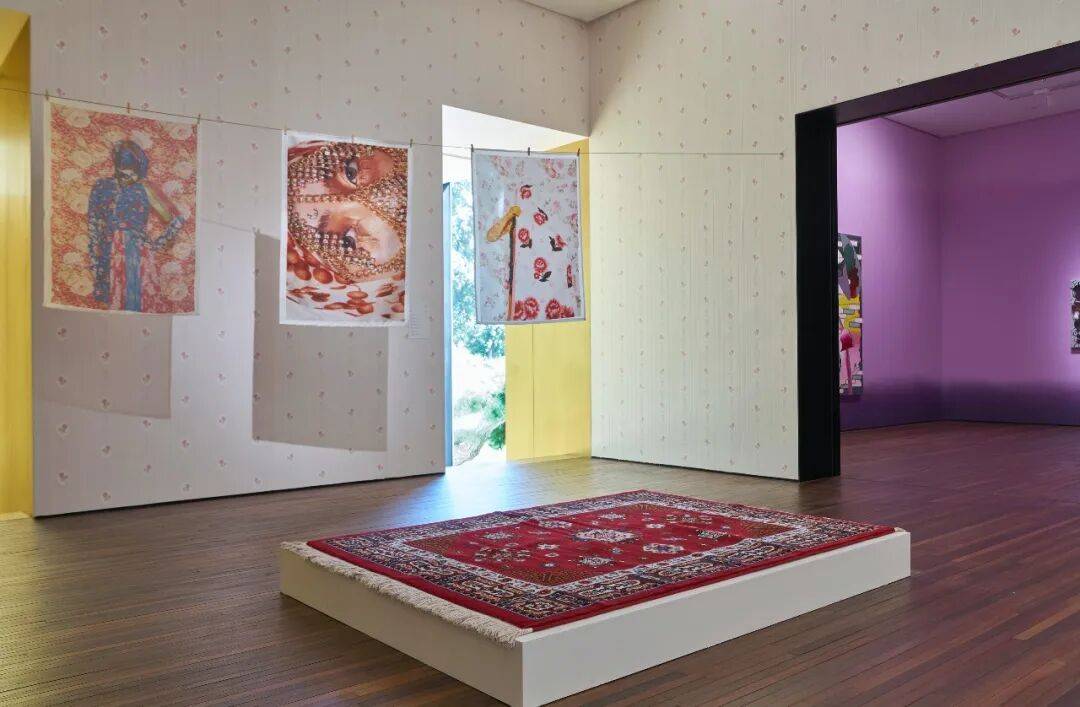
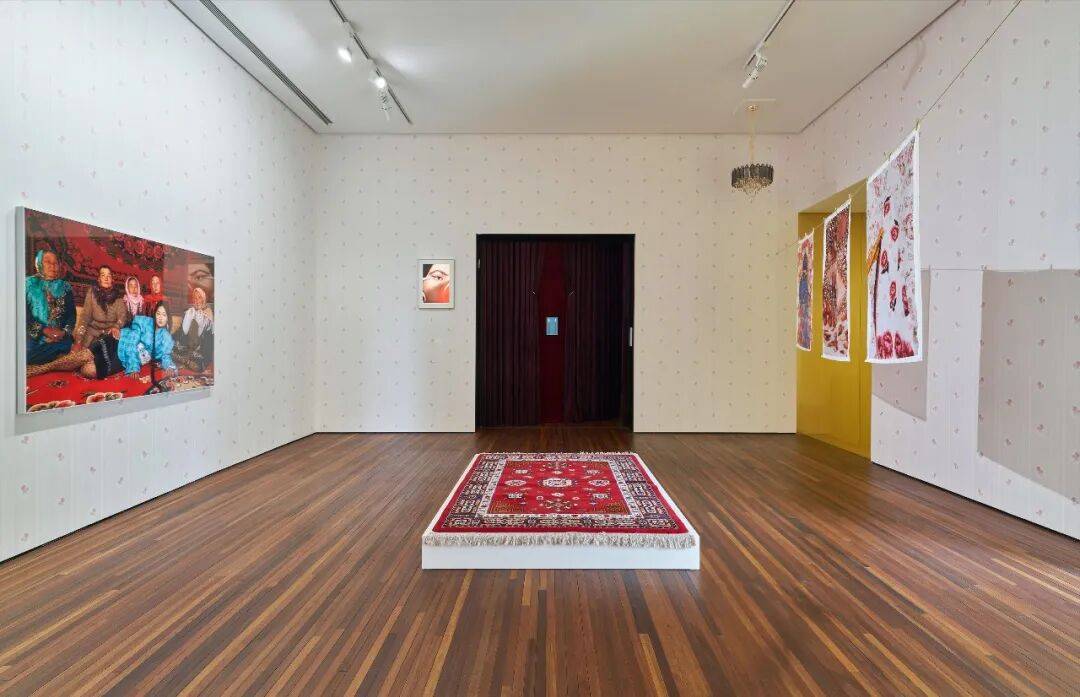
“I think it captures this era in the most vivid and fully dimensional way,” Cui Cancan said. He especially wanted to make an exhibition that would be visually compelling for viewers. “If the opening of an exhibition is like the opening of a novel, then the broad background of an era is the best way to bring viewers quickly into the mood.” Installation view of Pu Yingwei’s gallery at Song Art Museum. Pu Yingwei, The Contemporary (New Pantheon), 2022. Installation view at Song Art Museum. What first meets the eye in the artist Pu Yingwei’s room is red: red paintings, a blood-red carpet, in striking contrast to the white of Slime Engine’s installation before it.
A single one of his paintings may contain hundreds of different kinds of information, as if mirroring the pluralism and complexity of our age. The work of both artists offers a rich, intricate, expansive account of the times; as the exhibition’s opening gesture, it is hard to imagine anything more apt.
“Slime Engine represents the visual language of our era of electronics, the internet, and gaming, while Pu Yingwei’s work reflects the structure of our time: complex, plural, ambiguous,” Cui Cancan said. Installation view of Zhang Ji’s gallery at Song Art Museum. Zhang Ji, Riding the Purple Wife’s Body, Gnarled Festival Lantern, Rain Finds Fox and Badger, Heart Attains Zhou Tian, 2022. Installation view at Song Art Museum. The exhibition’s second chapter feels like fourteen miniature “parallel universes,” each created by a different artist.
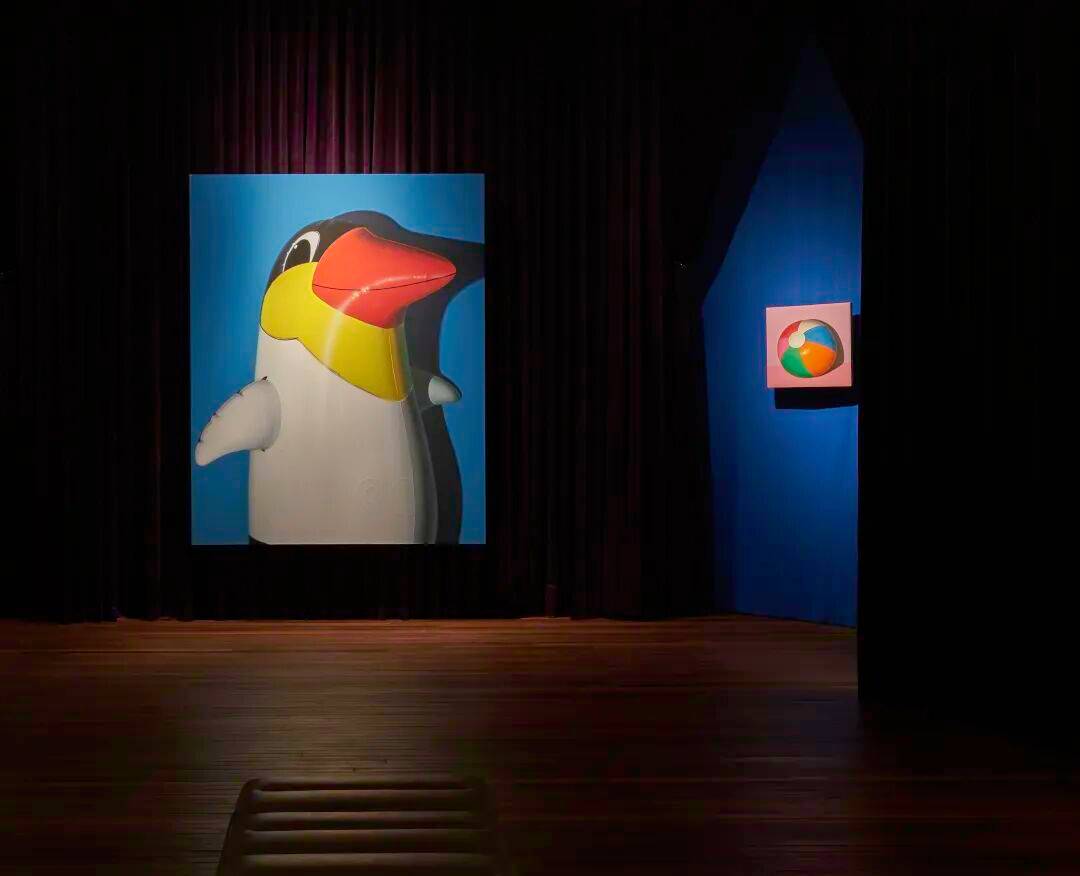
These post-90s artists work in very different forms, including video, photography, painting, installation, design, and text, all suspended within a context of electronic color, internet culture, fashion consumption, space-age science fiction, and globalized identity. Installation view of Zhang Zipiao’s gallery at Song Art Museum. Zhang Zipiao’s and Zhang Ji’s rooms are the only two white cubes; every other artist’s “room” has been painted in a color of the artist’s own choosing, some dazzlingly bright.
They have also made new cuts in space itself, as if each artist had gone to great lengths to push a singular mode of expression to its limit within that room. Cui Cancan told us that this curatorial experience was new even for someone like him, an “old curator.” Because Song Art Museum has fifteen galleries in all, he asked each of the fourteen artists to design a plan for his or her own room.
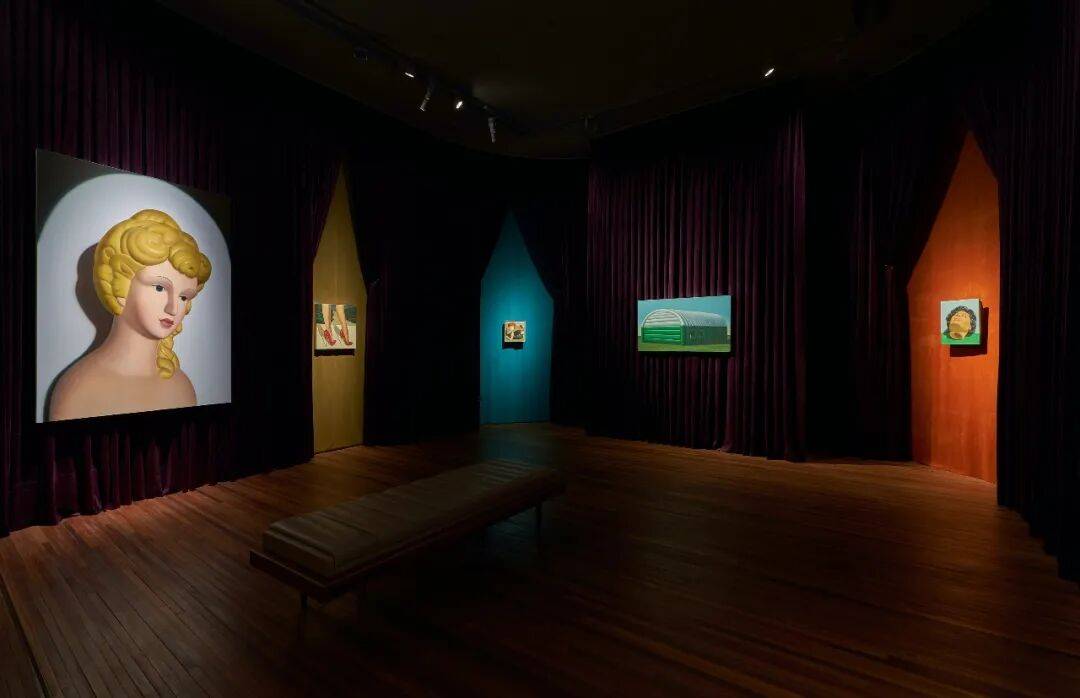
“I let go,” he said. “Only when you hand over authority do you discover that expression imposes limits; not expressing comes closer to infinity.” Installation view of Ma Hailun’s gallery at Song Art Museum. Installation view of Sun Yitian’s gallery at Song Art Museum. Sun Yitian, Dionysus’s Obsession III, 2022. Installation view at Song Art Museum. For the artist Sun Yitian, who was born in 1992, “rupture” stands for a kind of satire of fashion and consumerism. At first glance, her works often seem “so pretty, so cute,” but a closer look reveals that the dolls in the paintings are cold and hollow, fast-moving consumer goods turned out by modern industrial assembly lines, without feeling and without warmth.
Sun Yitian grew up holding brightly colored plastic toys made in Yiwu, watching imported cartoons, and drinking bubble tea. These ordinary materials of childhood become elements in her work, underwritten by a resistance to consumerism and popular culture: beneath the gleam of beauty, perhaps, lies an increasing lack of security. Yuan Keru, Moon and Sixpence, 2021, courtesy of SPURS Gallery. Installation view of Yuan Keru’s gallery at Song Art Museum. In the past two years, as the concept of the metaverse has taken shape, questions of space and speculative futures have drawn even greater attention.
“At the root of the desire to explore space are two supporting forces: the development of technology and the philosophical reflection that human imagination projects onto space,” Cui Cancan said. Installation view of Liu Xin’s gallery at Song Art Museum. Liu Xin, who graduated from Tsinghua University in Precision Instruments and Mechanical Engineering, is passionately devoted to science-fiction film. Yet the digital drafting in her work, with its grand discussions of vertical space, extraterrestrial exploration, and cosmic metabolism, may also bear, because of her education, a scientist’s seriousness and rationality.
Wang Ziquan, video work Sequela, 2020. Installation view of Wang Ziquan’s gallery at Song Art Museum. Installation view of Zhang Yibei’s gallery at Song Art Museum. Zhang Yibei, When Spring Comes, the First Ray of Sunlight Belongs to Me, 2022. Installation view at Song Art Museum. This essayistic, stream-of-consciousness mode of expression may be another mark of post-90s “rupture.” These artists are reluctant to define anything; they prefer blurred boundaries and equivocal meanings. For the museum space, Zhang Yibei specially created When Spring Comes, the First Ray of Sunlight Belongs to Me: aluminum panels suspended inside transparent glass cases give us the feeling of spying on someone else’s life.
Installation view of Zhang Yuewei’s gallery at Song Art Museum. Zhang Yuewei, Archean, 2020. Installation view at Song Art Museum. Fei Yining, Love and Interference I, 2022. Installation view at Song Art Museum. Installation view of Fei Yining’s gallery at Song Art Museum. The upper half of Fei Yining’s large-scale sculpture Love and Interference I, made for the exhibition, appears calm and peaceful, but the tightly clenched hand in the lower half is suffocating. The sculpture carries a narrative quality, yet a complete story remains elusive; it is fractured and sad.
Before the exhibition opened, we interviewed three artists: Hou Zichao, Zhang Zipiao, and Pu Yingwei. All three share what might be called a “globalized background,” having studied respectively in the United Kingdom, the United States, and France. In conversation, they spoke with us about their work and about what “rupture” means to them. The following are their statements: installation view of Hou Zichao’s gallery at Song Art Museum. I am someone who expresses myself through visual thinking, beginning with impulse and ending with reason. This time I presented three relatively large new works and one installation made in response to the space.
The Most Comprehensive Showing Yet of China’s Post-90s Artists
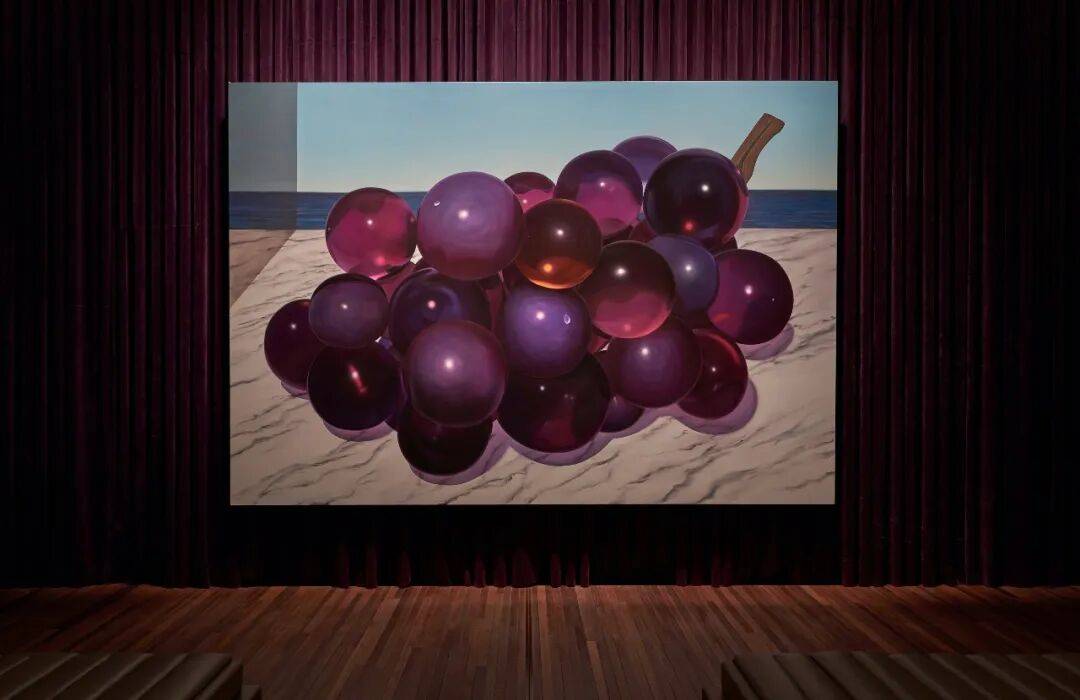
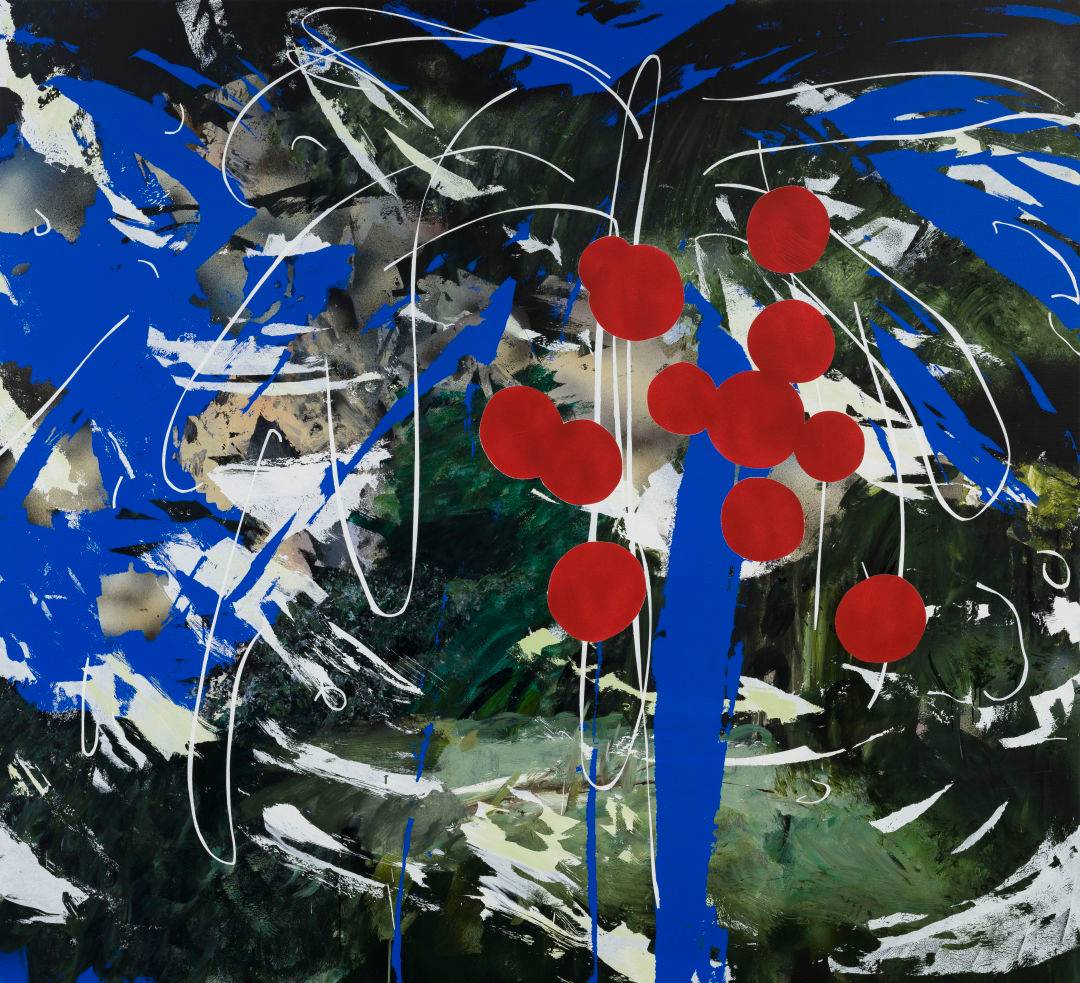
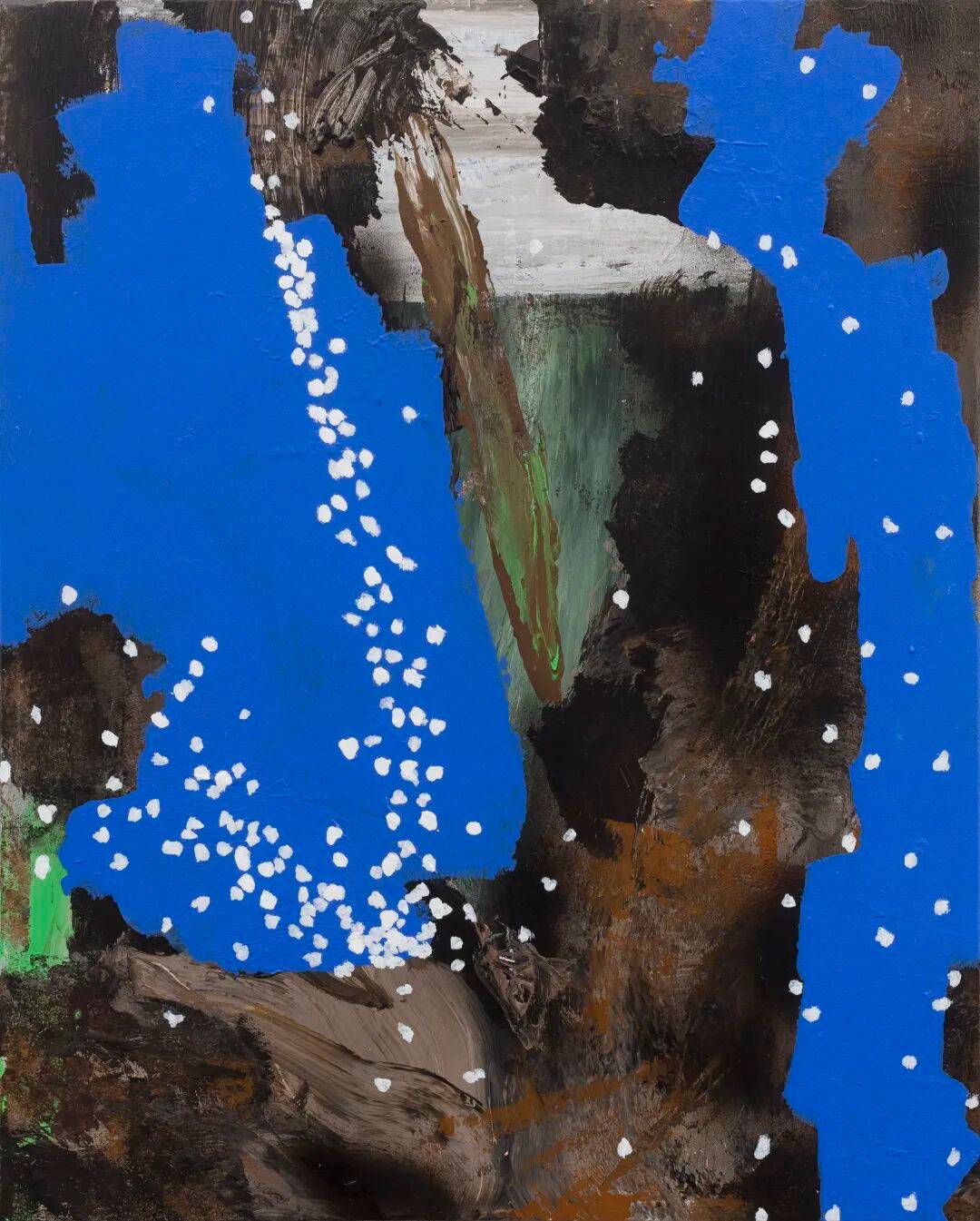
The paintings revolve around fruit, with the sphere as a primary element. These fruits are like a free lunch in a chaotic world, and also a coordinate for seeing. Hou Zichao, Ben Lu Cao Yu Po Chu Mei Zao, 2022. My gallery is a space with passages on three sides, and I used four columns built up from fruit imagery to break the space into something more fragmented, creating an interaction of space and content between the installation and the paintings. Natural subjects are probably what I do best and what I most enjoy.
When I first began painting this material, I relied on a relatively clear image; the way elements were combined, and their logical relation to actual nature, all made me want the paintings to be more carefully worked out. But now that my method is more practiced, what I need more is to trigger chance within that fluency, like an experienced deer hunter shooting blindfolded: it becomes more a matter of pleasure and judgment. Installation view of Hou Zichao’s gallery at Song Art Museum. This exhibition counts as a personal experiment in expressing an individual mental space within the chaotic world of the present.
When I was adjusting the lighting in the final gallery, there was an interesting detail. If I wanted to imitate sunlight as a natural source, I needed to align the shadows of the four columns in one direction; if I wanted to express a worshipful sense of a center, I could have the four shadows converge toward the middle or radiate outward. In the end, I chose a relatively random arrangement, first because, after adjusting it for a long time, I felt that this light was the most comfortable for viewing the paintings, and second because I don’t much like that kind of creator’s-eye perspective.
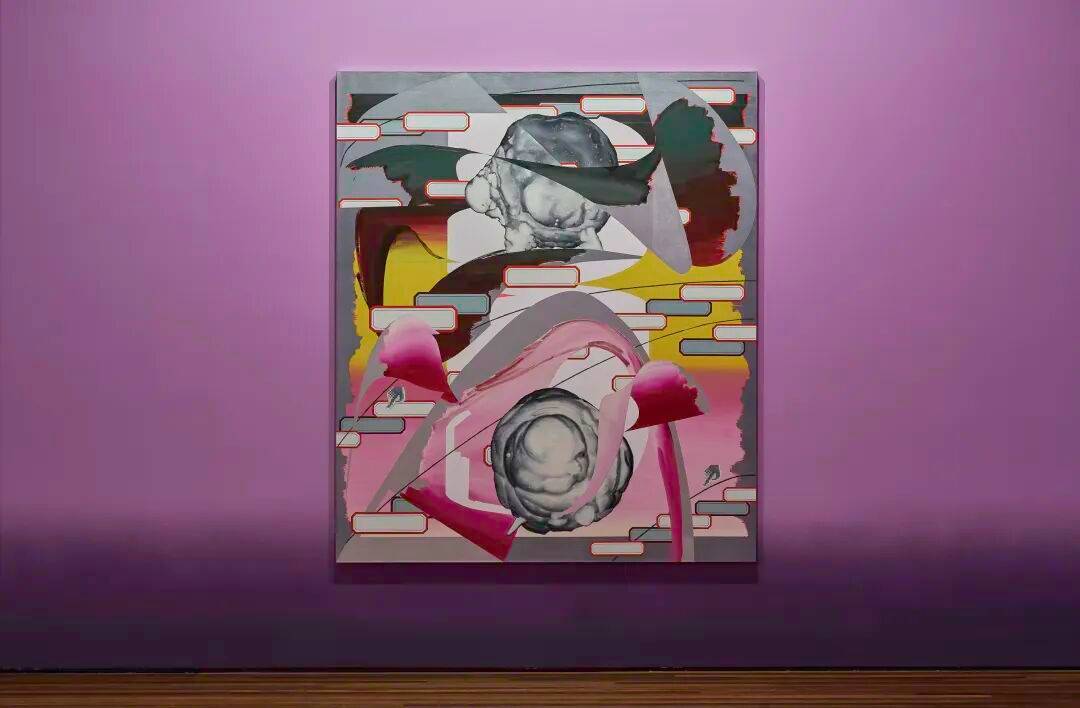
What usually satisfies me most in a work is that it surprises me. For instance, during the process you may set out to paint a certain kind of diagram, but after many revisions it ends up taking another form entirely, or completely negating the initial image; that result is what pleases me most. Hou Zichao, Wei Neng You Bao Nu Bi Xu You, 2022. I think ideal expression is a state of blur. My work tries to embody that elusive ambiguity: in a chaotic world, outlines may seem clear, yet they lack precise detail. That allows a basis of understanding to be built through familiarity while still leaving enough room for the imagination to expand.
“Fake, grand, and empty” used to be the ultimate term of contempt when I was studying academic painting, but in a present saturated with informational detail and trivial daily life, that feeling is precisely what I want to describe. Installation view of Hou Zichao’s gallery at Song Art Museum. Hou Zichao, Reward of the Peach Tree, 2022. Rupture needs a point of reference; it arises after connection and disconnection, and to my mind it is part of an artist’s temperament, something carried in the blood, part of the process by which a personal style is formed.
The rupture with the previous generation is first of all a rupture in living environment; the ways of receiving and processing information are different. In my work, the most visible rupture is methodological. In painting, for example, I stack layers, and every time I face a new layer I am making a break from the one before it, to achieve visual richness and conflict. At the same time, in terms of the image’s content, it is also a process of simplification: every choice at each layer can push the picture’s intention toward a completely different result.
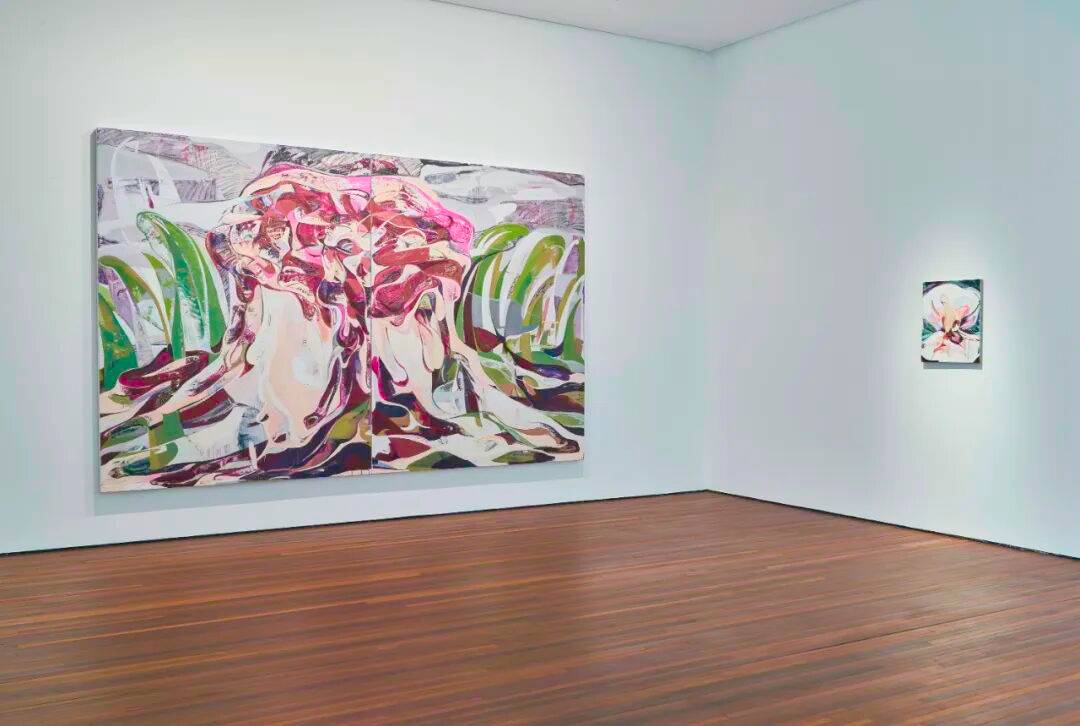
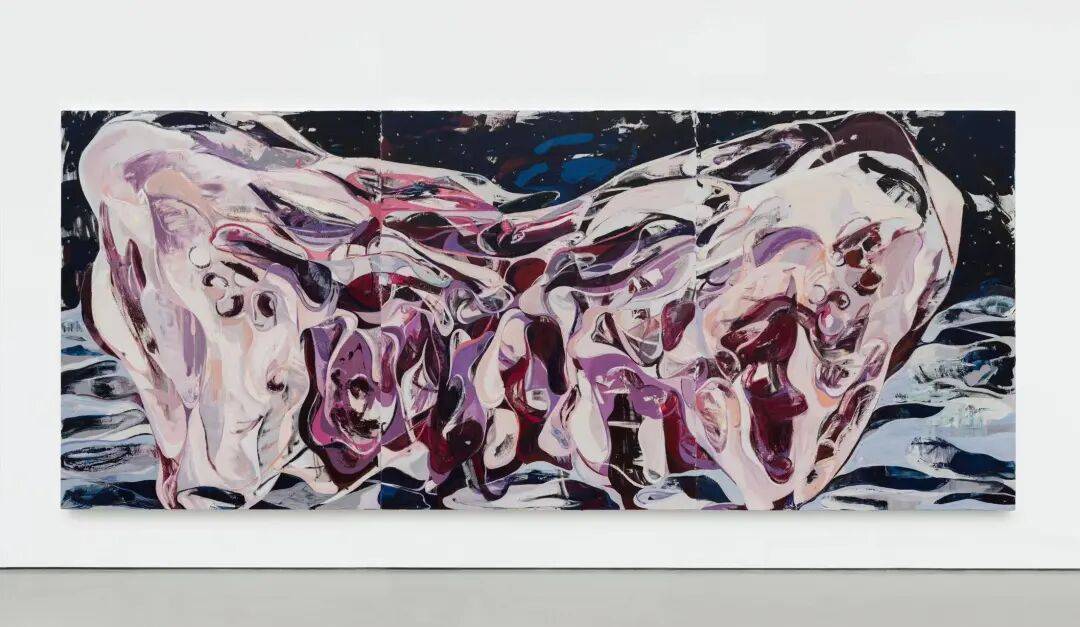
Changes in one’s living environment inevitably affect what one notices in both work and daily life; themes, tools, and color choices all change. But I don’t think of that as rupture, because in the end all those outside changes remain connected to the self; they are all fluctuations and adjustments based on the central line of “I.” Zhang Zipiao, Mother-of-Pearl 04, 2022. Installation view at Song Art Museum. Image courtesy of Tabula Rasa Gallery. Zhang Zipiao, Rosebud 02, 2022. Installation view at Song Art Museum. Image courtesy of Tabula Rasa Gallery. Zhang Zipiao, Paradise Lost 03, 2022. Installation view at Song Art Museum. Image courtesy of Tabula Rasa Gallery. The themes of my work mainly revolve around vitality and a carnivalesque decadence.
The works I made for this exhibition focus primarily on gender and vitality. I hope viewers understand that the resilience and fragility of vitality are really part of the same dimension. My father did not have any direct influence on my work, but the cultural education I absorbed from him while growing up may have had some indirect influence. It may have led me to think more about human history, human nature, and certain social questions. I hope to carry on art, though that is difficult. Everyone now is scrambling to occupy the newest and fastest territory of the age, but I don’t think the foundations of art change from day to day or are overturned with each passing era. Someone has to carry that foundation forward.
Zhang Zipiao, Mother-of-Pearl 05, 2022. Installation view at Song Art Museum. Image courtesy of Tabula Rasa Gallery. Perhaps most artists of this generation are not working from the perspective of “inheritance”; perhaps they are more influenced by the internet, and that has sparked their work. But I have always lived in a relatively primitive way, and I don’t really feel that I am very ruptured. I didn’t study painting as a child. I only came into contact with it after going abroad. Although I later returned to China and the creative environment changed, there was no rupture because of geography; maybe I’ve simply never thought in those terms.
Installation view of Pu Yingwei’s gallery at Song Art Museum. The painting in the center is The Contemporary (New Pantheon). I hope that in front of my work viewers can sense certain clues from history and reality, and from there be prompted to think about the real world they inhabit. I hope my work can carry a certain power of appeal and encouragement. I began conceiving and making these three works only after receiving the invitation from the curator and the museum. They include reflections, in both theme and space, on the exhibition’s presentation: the visual tension between large and small images, the display of my working archive, and the atmosphere conveyed by the red carpet.
Although the three works differ greatly in scale, they all belong to a kind of grand narrative: questions of nation, generation, and the global, which is what I wanted to express within the framework of “Generation of Rupture.” Pu Yingwei, Red Infant, 2022. Installation view at Song Art Museum. The large-scale The Contemporary (New Pantheon), together with the two smaller works Red Infant and All Nations Come to Court, were all newly created for this exhibition. The Contemporary is more directly aimed at the exhibition’s theme, “Generation of Rupture.” Its significance lies in describing how the art of New China after the founding of the state, the new painting of the 1980s, the early avant-garde art of the 1990s, and Chinese contemporary art today may appear to be broken from one another, but are in fact part of a whole conceptual continuum.
SECTION 02 | Stories from 3 Participating Artists
Red Infant and All Nations Come to Court, meanwhile, may be seen as the origin and flourishing of a thing’s development, and both works use silk as their material while drawing, in their imagery and style, on the traditions of folk New Year prints and court painting. I am an enthusiastic person, someone willing to believe in certain things, and I have always considered myself a conceptual artist. That may also be why I can move among text, photography, painting, video, installation, graphic design, and even fashion design without much burden.
Pu Yingwei, All Nations Come to Court, 2022. Installation view at Song Art Museum. What I may do best is “to translate a concept into a visual form, and then to refine that visual form into a proposition.” That may sound somewhat abstract and complicated, but I think this is precisely the way of art. “The avant-garde” and “communism,” or “Dadaism” and “postmodernity,” for example, all involve a process that moves from concept to image and ultimately develops into a mode of thought.
I also hope that my own work passes through that entire process. In addition, these different media themselves create a good working rhythm. When one medium enters a period of fatigue, ideas from another medium appear in alternation. After all, a person is not only a rational subject but also a biological one, and creation itself needs this kind of rich interactive relation.” Installation view of Pu Yingwei’s gallery at Song Art Museum. We are always talking about “rupture,” but what I want to say is that when we speak of a rupture with the past, we also prove that we have observed and thought about the past in some way. For me, then, “rupture” is still a form of continuation and correction.
My undergraduate study at Sichuan Fine Arts Institute gave me many deeply local perceptions. Like Chongqing, the city where it is located, it has the Red Crag revolutionary tradition, dock culture, and the culture of the Paoge brotherhoods; it has a strong jianghu atmosphere. That kind of real-world perception only became more firmly connected to my desire to practice a social art after I went to France and lived through social events such as the Charlie Hebdo attack and Nuit Debout. Of course, the teaching styles in the two places are different. At Sichuan Fine Arts Institute the academic atmosphere is free; teachers and students often gather together to discuss art, and to this day we remain close friends.
The École nationale supérieure des beaux-arts de Lyon, on the other hand, offers a very systematic education, with professors guiding everything from writing texts to installation practice to the interpretation of one’s work. I value both of these very different forms of education. Installation view of Pu Yingwei’s gallery at Song Art Museum. People often assume that my work inherits many classical lineages and currents of thought, but in essence the most “ruptured” part may come precisely from that fusion and inheritability. It involves a fusion of theory and practice, of criticality and popular culture, of the local and the international.
Perhaps among an earlier generation of makers, each person was more focused on a single field or a particular range of problems, or people believed that these areas should not be touched at the same time; that also involves a question of the ethics of artistic labor. But I think there is a kind of shared underlying narrative among these frameworks. Especially as society develops and information opens up, many ideas can move among different social textures. But that requires a great deal of “interpretive” work, done in different ways on different occasions. That is why I have always been willing to maintain a high frequency of exhibitions and artistic output, as well as conceptual and written output, and why I enjoy meeting and collaborating with people from different fields.
One of my ideals is that only when all cultural forms can be fully excavated and presented, rather than divided in advance by preconception, can cultural energy truly arrive.
“We have entered a technological society, but it has also brought crisis. The speed at which society updates itself is extremely fast, and the pace of rupture, iteration, and fault lines is becoming faster and faster. What might once have taken 20 years may now produce a rapid rupture even between those born after 1990 and 1995, or after 2000 and 2005,” Cui Cancan told us. That is also why he chose Guo Yuheng, the only artist among the fourteen who was born after 2000, to serve as the exhibition’s coda.
Installation view of Guo Yuheng’s gallery at Song Art Museum. The visual shock of the artist Guo Yuheng’s space is immense. Densely arranged dolls and innumerable fluorescent colors, vivid to the point of glare, leave the mind blank the instant one walks into the gallery. The sensation is uncannily like the state of mental overload and lost judgment that comes after absorbing too much chaotic information on social media. The novel visual experience produced by Guo Yuheng’s work thoroughly challenges our previous habits of exhibition-going.
Even Cui Cancan said that the youngest artist in the group show came as a major surprise to him.
“When Guo Yuheng first gave me her proposal, I was a little stunned. With my own artistic experience, I had no way to judge whether it was good or bad; it lay completely outside my value system. At that point, I felt the best thing was to keep quiet,” Cui Cancan said with a laugh. Installation view of Guo Yuheng’s gallery at Song Art Museum. “Guo Yuheng also said something very interesting. She said that she only uses QQ, not WeChat, while her younger brother, who is three years younger than she is, only uses Douyin.”
Cui Cancan believes that this rapid turnover in social tools accelerates the pace of change in the era, and that placing Guo Yuheng’s work at the end means directing the whole exhibition toward the future. He also told us that every artist in the group show possessed a great deal of drive, something rarely seen in traditional curating.
“Quite a few artists went back and forth revising their work more than a dozen times, and were still making changes the day before the opening. Everyone was thinking very seriously, and that thinking wasn’t limited to their own work. They would go look at another artist’s gallery next door, then come back and wonder, ‘Should I make another change?’” Cui Cancan was also highly satisfied with the final result of this exhibition, whose workload was enormous. Artists installing work at Song Art Museum. Installation view of the installation of “Generation of Rupture” at Song Art Museum, with the curator Cui Cancan discussing plans with an artist. “The most important value of this exhibition is that it builds a road. An exhibition cannot guarantee that viewers will truly understand this group of post-90s artists, but at least we have provided a path for looking.
It is like building a road between Beijing and another city. I am only responsible for building the road; as for what that city is like, viewers can go there and see for themselves.”
“In the end, I can’t define this group of artists. An eighties-born person like me, full of ‘dad energy,’ has no way to generalize this generation completely. All I can do, after talking with everyone, is offer a few key words, and even those are only a slice of them,” Cui Cancan said with a laugh. At the entrance to “Generation of Rupture” at Song Art Museum, the exhibition begins with the sharply defined background of our era, a “rupture” from the previous age on the scale of large history; in the middle comes the dense, ambiguous, expansive artistic expression of distinct individuals, a “rupture” from one individual to another; and at the end, the presence of a Gen Z artist symbolizes a new artistic force, an approaching “rupture” that gathers speed and never stops.
Wave after wave, the tides of society come toward us, and those of us living within large history have nowhere to hide.