Thirty-two Artists Who Signed With Blue-Chip Galleries in 2024
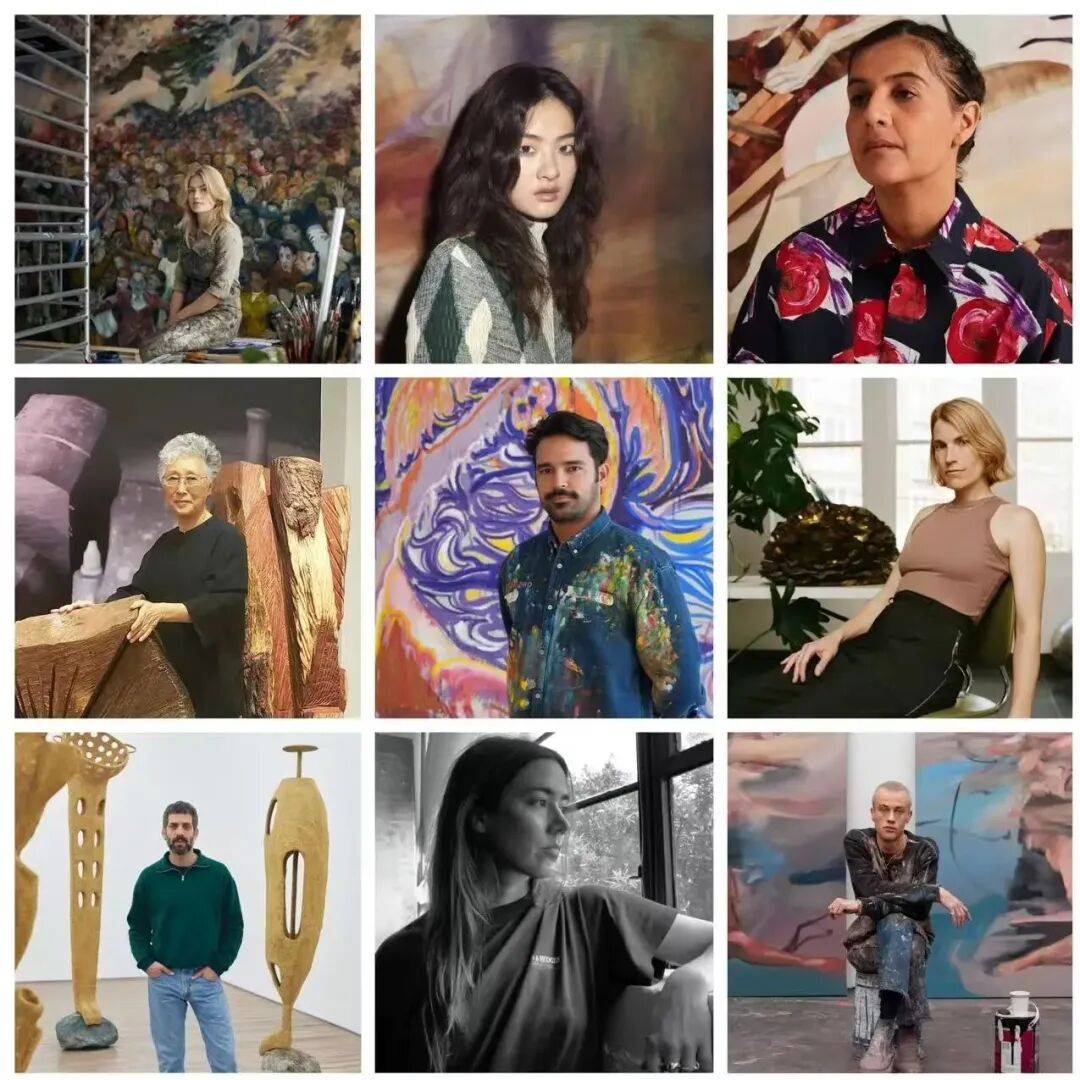
With January 2025 already half over and Lunar New Year close at hand, people across the art world are trying to shake off the gloom of last year’s downturn and trust that this year may go better. The artists who secured blue-chip gallery representation in 2024 are also preparing for the exhibitions ahead. Looking across last year’s signings, one shift stands out: rather than pursuing the aggressive strategy of signing only young artists, as many did in previous years, blue-chip galleries have begun building rosters more deliberately across generations......
By / Xirui Huang · 30 min read
Why does the 2024 gallery representation review go beyond a list of young artists?
Published in 2025, the review gathers 32 representation announcements from eleven galleries during 2024. Young artists such as Li Hei Di appear alongside established practitioners including William Kentridge and Howardena Pindell. Moving images, performance and interdisciplinary work broaden the account beyond painting. Read historically, the announcements offer clues to galleries’ exhibition and research interests across generations; they do not guarantee artistic importance or future prices.
With January 2025 already half over and Lunar New Year close at hand, people across the art world are trying to shake off the gloom of last year’s downturn and trust that “this year will be better.” The artists who secured blue-chip gallery representation in 2024 are also beginning to gear up for exhibitions. Looking across last year’s signings, one shift stands out: rather than pursuing the aggressive strategy of signing only young artists, as many did in previous years, blue-chip galleries have begun building rosters more deliberately across generations.
SECTION 01 | PaceGallery
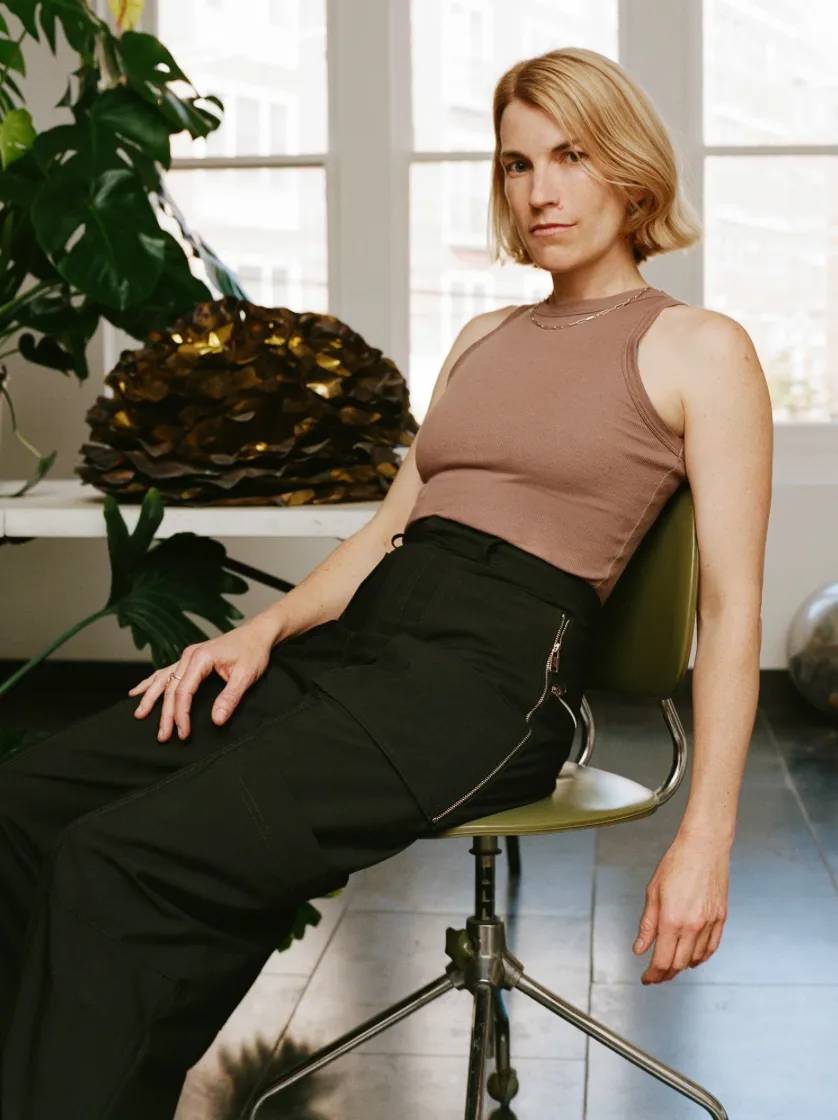
These artists, born from the 1930s through the 1990s, span six decades in age. Some are already household-name heavyweights; others are barely emerged artists born after 1995. We have compiled thirty-two artists represented in 2024 by eleven blue-chip galleries, and we are hoping they will give us something different to look at in 2025. Li Heidi. Portrait of Li Heidi, photographed by Frederike Helwig. In September 2024, Pace Gallery announced its representation of Li Heidi.
Born in 1997 in Shenyang, China, she is currently the youngest artist on Pace’s roster. She received her M.A. from the Royal College of Art in London in 2022 and now lives and works in London, England. Her paintings shimmer with color, fusing abstraction and figuration; within these bright, vivid, dreamlike images, one seems to glimpse ghostly translucent bodies and broken limbs.
Li Heidi never prepares sketches. Instead, she improvises directly onto the canvas, laying out latent narratives of gender, desire, and emotional fluidity for viewers to read alongside her.
Installation view of “Li Hei Di: 700 Nights of Winter,” Pippy Houldsworth Gallery, London, 2024. “They are possibilities, not conclusions,” Li Heidi once said of the figures in her paintings. “They are always in transition, never in a hurry to become anyone.” Her work is held in the collections of the Los Angeles County Museum of Art, the Columbus Museum of Art in Ohio, the Institute of Contemporary Art, Miami, the Fondazione Sandretto Re Rebaudengo in Turin, and the Rachofsky Collection in Dallas, among other major institutions.
In 2025, she will present her first solo exhibition since signing with Pace at the gallery’s Hong Kong space. Alejandro Piñeiro Bello. Portrait of Alejandro Piñeiro Bello. In June 2024, Pace Gallery announced its representation of Alejandro Piñeiro Bello.
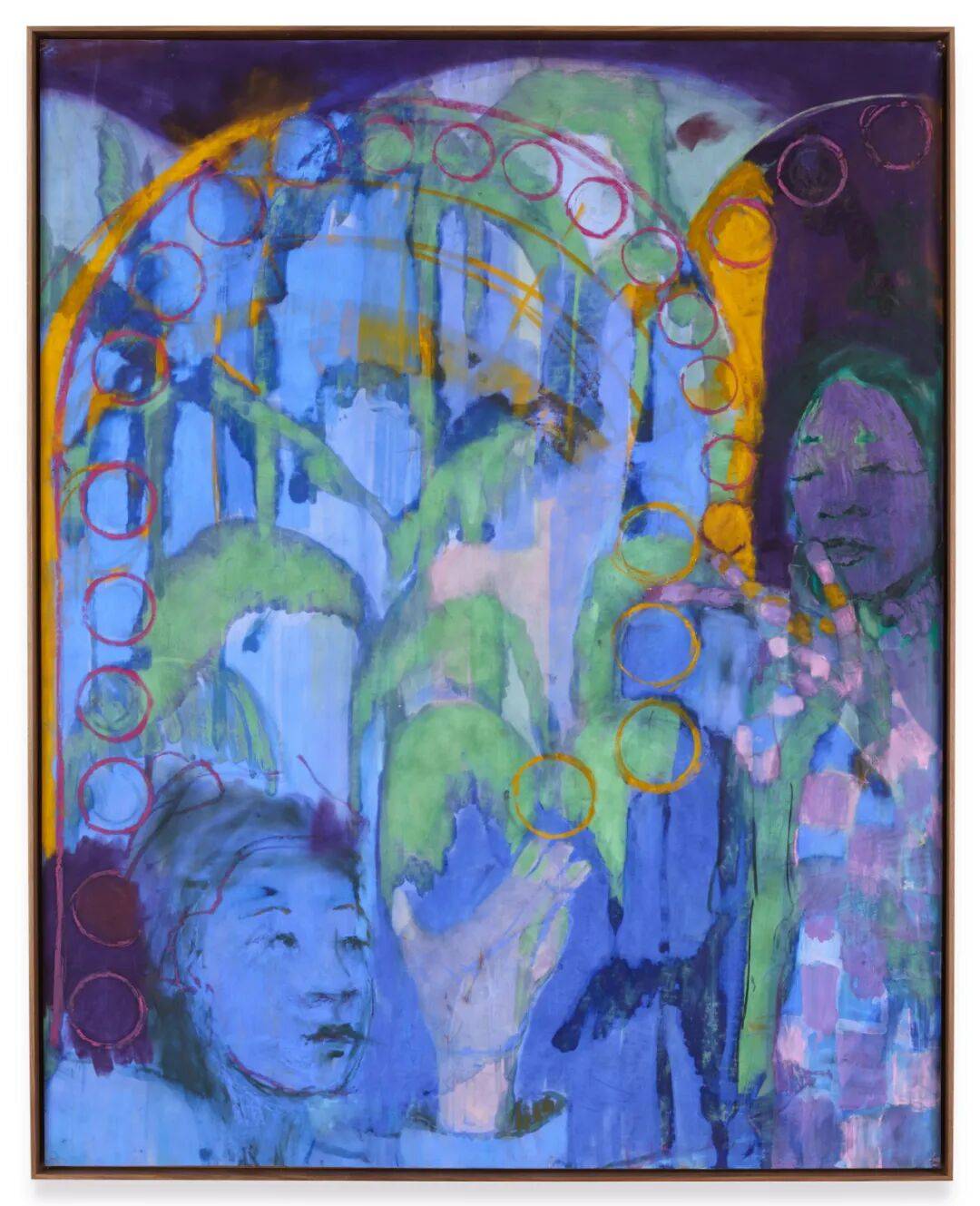
He was born in 1990 in Havana, Cuba, and now lives and works in Miami. Piñeiro Bello’s practice is deeply shaped by life in both Havana and Miami. Working with richly saturated oil paint on raw linen, burlap, and canvas, he sets deep beige, emerald green, orange, purple, teal, and other vivid colors into motion, as if they were circling an unseen center. Installation view of Alejandro Piñeiro Bello’s solo exhibition “Entre El Día Y La Noche,” Pace Gallery, London, 2024. In these paintings, Bello depicts the mysterious, radiant social landscape of Caribbean culture, drawing on the writings of Cuban poets and philosophers while bringing together masterpieces by Paul Gauguin, Katsushika Hokusai, Vincent van Gogh, Edvard Munch, and Wassily Kandinsky with dreams and memories from his own childhood, in an effort to seize fleeting moments on the canvas.
His work is held by major institutions including the Amorepacific Museum of Art in Seoul, the Brownstone Foundation in Paris, the Chrysler Museum of Art in Norfolk, Virginia, the Institute of Contemporary Art, Miami, the Leeum Museum of Art in Seoul, Marquez Art Projects in Miami, and the Rubell Museum in Miami. Kenjiro Okazaki. Kenjiro Okazaki in his studio, photographed by Risaku Suzuki. In August 2024, Pace Gallery announced its representation of the Japanese artist Kenjiro Okazaki. Born in 1955 in Tokyo, he is a widely admired artist, architect, and theorist whose work spans painting, sculpture, robotics, costume and stage design, and architecture, and he is regarded as one of the most consequential figures in contemporary Japanese art.
In 2002, Okazaki also served as commissioner of the Japan Pavilion at the 8th International Architecture Exhibition of La Biennale di Venezia.
Installation view of “Kenjiro Okazaki: Eranos, Here and Now,” Pace Gallery, Seoul. Beyond his art practice, Okazaki is also a critic known for redefining abstract art. He has published several books, including “Renaissance: Conditions of Experience,” as well as the best-known “The Power of Abstraction: An Analysis of Modern Art,” for which he received the Minister of Education’s Art Encouragement Prize in 2019.
Okazaki’s work is held in many public collections across Japan, including the National Museum of Modern Art, Tokyo; the Museum of Contemporary Art Tokyo; the Setagaya Art Museum; the National Museum of Art, Osaka; the Ohara Museum of Art in Okayama; and the Hiroshima City Museum of Contemporary Art. William Kentridge. Portrait of William Kentridge, photographed by Norbert Miguletz, copyright DACS 2024. In March 2024, Hauser & Wirth announced its representation of William Kentridge. Born in 1955 in Johannesburg, South Africa, he has worked across an unusually broad range of media over more than forty years, including painting, sculpture, printmaking, film, theater, opera, and other interdisciplinary forms.
He grew up under the shadow of apartheid and still lives and works in his birthplace, Johannesburg. Beginning with “The Magic Flute” in 2005, his operas and theatrical productions have been staged at festivals and theaters around the world. Installation view of “William Kentridge. Single Solo,” Tarmak22 and Gstaad Promenade, Gstaad, 2022, photographed by Jon Etter. Last year, his solo exhibitions around the world included “Self-Portrait as a Coffee Pot” at the Arsenale in Venice; the opera “The Great Yes, The Great No” had its world premiere at the Festival d’Aix-en-Provence on July 7; and the Museum of Contemporary Art Taipei presented his largest institutional exhibition in Asia.
SECTION 02 | Hauser & Wirth
His work is held in numerous public and private museum collections, including the Amorepacific Museum of Art in Seoul, the Art Institute of Chicago, the Carnegie Museum of Art in New York, the Centre Pompidou in Paris, the Fondation Cartier pour l’art contemporain in Paris, the Fondation Louis Vuitton in Paris, the Guggenheim Abu Dhabi, the Los Angeles County Museum of Art, the Louisiana Museum of Modern Art in Humlebæk, the MAXXI in Rome, the San Francisco Museum of Modern Art, the Sifang Art Museum in Nanjing, and Tate Modern in London, among others.
In 2025, Kentridge will have a solo exhibition at Hauser & Wirth’s New York space. George Rouy. Portrait of George Rouy, photographed by Kemka Ajoku. In May 2024, Hauser & Wirth announced its representation of George Rouy, who was born in 1994 in Britain and now lives and works in Faversham, Kent.
He graduated from Camberwell College of Arts in London in 2015. The flowing, ever-distorted bodies in his work make the paintings feel both figurative and abstract. Rouy has an irrepressible fascination with French and Dutch painting, and in his work one can sense hard-edged Gothic postures and intense color. These bold strokes, combined with the mineral particles in thick, unmixed pigment, embody fierce emotion and draw uncannily close to our most primal desires.
George Rouy, “Stains on the Scenery,” 2024, photographed by Damian Griffiths. George Rouy, “Sequences,” 2023, photographed by Damian Griffiths. The gradated layers on the surface of his paintings reflect the age of Photoshop and digital identity, while carrying qualities that feel both mutable and enduring.
Rouy has described his work as “neither portrait nor recollection, but symbols of the instantaneous.” His work is held in the collections of the Albertina Museum in Vienna, the Institute of Contemporary Art, Miami, the Fondation Cartier pour l’art contemporain in Paris, Lafayette Anticipations in Paris, the M WOODS Museum in Beijing, 69 Art Campus in Beijing, and the Sifang Art Museum in Nanjing, among other internationally known institutions. Michaela Yearwood-Dan. Portrait of Michaela Yearwood-Dan, 2024, photographed by Ollie Adegboye. In September 2024, Hauser & Wirth announced its representation of Michaela Yearwood-Dan.
Born in London in 1994, Yearwood-Dan works across painting, works on paper, ceramics, and site-specific murals and sound installations. She graduated from the University of Brighton in 2016 and now lives and works in London. Her exuberant, intensely saturated color comes from the convergence of multiple cultures and identities, including Black culture, queer identity, femininity, and healing rituals; across her two-dimensional surfaces, she often incorporates elaborate decorative elements such as gold leaf, Swarovski crystals, and jeweled nails.
She moves freely between media, from large-scale painting to everyday ceramics and works on paper, and there is often a sense of domestic warmth in her work. Michaela Yearwood-Dan, “Keeping On,” 2022. Michaela Yearwood-Dan, “It’s never over,” 2023. Her work has been shown at the Contemporary Arts Center in Cincinnati, the Scottsdale Museum of Contemporary Art in Arizona, the Green Family Art Foundation in Dallas, and Palazzo Monti in Italy; it has also entered the permanent collections of the Speed Art Museum in Kentucky, the Nasher Museum of Art in North Carolina, the Dallas Museum of Art, the Institute of Contemporary Art, Miami, and the Jorge M. Pérez Collection in Miami.
In 2025, she will have her first solo exhibition in London. Jeffrey Gibson. Portrait of Jeffrey Gibson, 2024, photographed by Inez and Vinoodh. In October 2024, Hauser & Wirth announced its representation of Jeffrey Gibson. He was born in 1972 in Colorado and grew up in major cities across the United States, Germany, and South Korea; he now lives and works in Hudson, New York.
It is easy to see from his appearance that he is Native American: he is a member of the Mississippi Band of Choctaw Indians and also of Cherokee descent. Last year, he became the first Indigenous artist to represent the United States with a solo presentation at the Venice Biennale, where visitors entering the U.S. Pavilion were stunned by the highly saturated, brilliantly colored sculptures, paintings, and beadwork.
Installation view of “Jeffrey Gibson: Infinite Indigenous Queer Love,” deCordova Sculpture Park and Museum, 2021, photographed by Julia Featheringill. Installation view of Jeffrey Gibson’s “the space in which to place me,” U.S. Pavilion, 60th Venice Biennale, 2024, photographed by Timothy Schenck. Over the past three decades, Gibson has drawn on American, Indigenous, and queer histories, as well as pop music, literature, and art history, to make work across a wide range of media, from painting and sculpture to installation, video, and performance.
His work is also held in the permanent collections of major museum institutions including the Denver Art Museum, the Museum of Fine Arts, Boston, the Museum of Modern Art in New York, the National Gallery of Canada, the Portland Art Museum, and the Whitney Museum of American Art. In September 2025, Gibson will become the sixth artist commissioned to create an outdoor work for the facade of the Metropolitan Museum of Art in New York, and his first Hauser & Wirth solo exhibition after signing will open in Paris in October 2025.
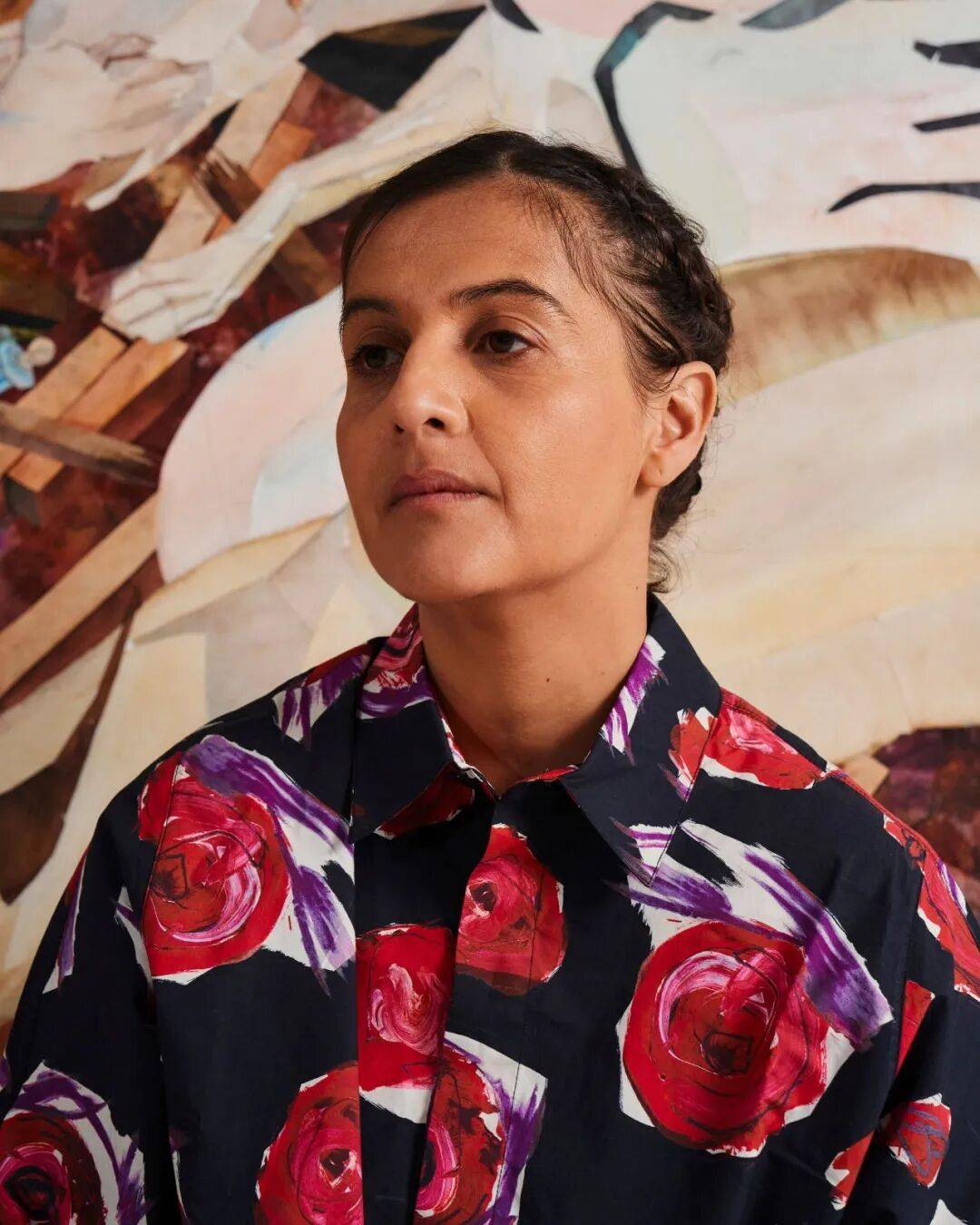
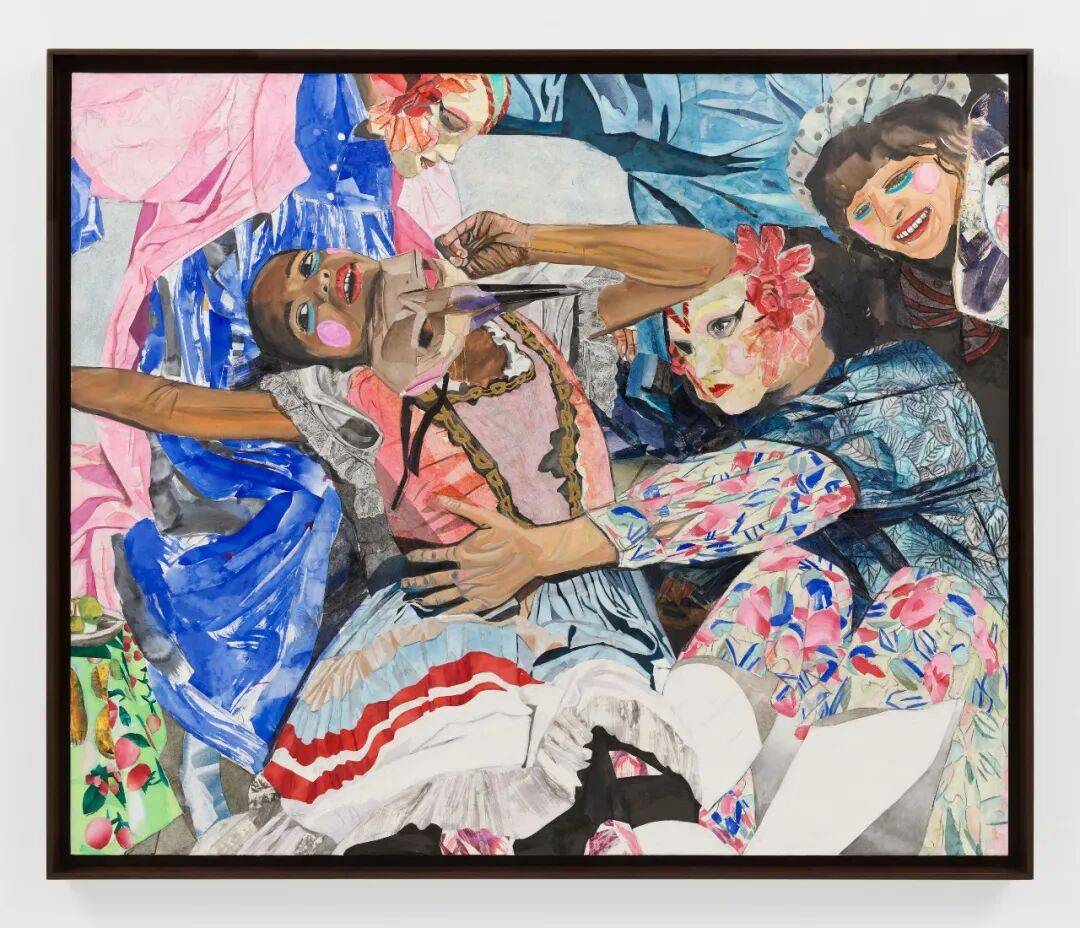
María Berrío. María Berrío in front of her work “The Crossing” (2023), 2023, photographed by Kyle Dorosz. In November 2024, Hauser & Wirth announced its representation of María Berrío. She was born in 1982 in Bogotá, Colombia, moved to New York at eighteen, studied at Parsons School of Design, and in 2007 received an M.F.A. from the New York School of Visual Arts.
As a child, she spent time with her two brothers on the family farm outside the city, an experience that left an indelible mark on her work. Her large collages, tied to childhood memory, dreams, and South American folklore, place figures and nature together in dreamlike color, blurring the boundary between traditional portraiture and landscape. María Berrío, “Distant Gods and Aging Suns,” 2024, photographed by Sarah Muehlbauer. Her work is held in many important collections, including the Brooklyn Museum, Crystal Bridges Museum of American Art, the Institute of Contemporary Art, Boston, the Institute of Contemporary Art, Miami, the Los Angeles County Museum of Art, the Metropolitan Museum of Art in New York, the Museum of Contemporary Art Chicago, the Whitney Museum of American Art in New York, and the Yuz Museum.
Christina Kimeze. Christina Kimeze in her studio, 2024, photographed by Lily Bertrand-Webb. In December 2024, Hauser & Wirth announced the final artist it signed that year: Christina Kimeze.
She was born in London in 1986 and still lives and works there. Interestingly, she cannot quite be called a conventionally trained artist: she studied biology as an undergraduate at Oxford University and only later began formal study in painting at the Royal Drawing School in London, where she received the Sir Denis Mahon Award in 2022. Christina Kimeze, “Soaring,” 2024, photographed by Matthew Hollow. Christina Kimeze, “Pleasure,” 2023, photographed by Matthew Hollow. She often works on suede mat board, using dry pastel, oil stick, and wet paint to create a soft, velvety texture that echoes the quiet female figures in her images and suggests an attachment to belonging and domestic space, a deep reflection on interior life, and a searching exploration of women’s private spaces and inner feeling.
On January 31, 2025, Kimeze’s solo exhibition at the South London Gallery is set to open. At the same time, her first gallery solo exhibition after signing, “Christina Kimeze: Between Wood and Wheel,” will be presented this summer at Hauser & Wirth’s West Hollywood space in Los Angeles. Kathleen Ryan. Portrait of Kathleen Ryan. In November 2024, Gagosian announced its representation of Kathleen Ryan, a sculptor born in 1984 in Santa Monica, California. She grew up in California and, after graduating from the California College of the Arts in 2007, now lives in New Jersey.
Anyone with even a passing familiarity with her work is likely to remember the “jewel-encrusted rotten fruit.” Her sculptures often take decaying fruit as their subject, rendering spoiled apples, lemons, watermelons, and cherries in semiprecious stones and crystals. Kathleen Ryan, “Bad Lemon (Old Money),” 2023, Hamburger Kunsthalle, 2024, photographed by Stefan Altenburger. Kathleen Ryan, “Screwdriver,” 2023. Installation view of Kathleen Ryan solo exhibition, Hamburger Kunsthalle, 2024, photographed by Stefan Altenburger. As for why fruit became her first inspiration: she grew up in California, where fresh fruit of every kind is abundant.
SECTION 03 | GagosianGagosian
Beyond fruit, Ryan also turns to flowers, bowling balls, and industrial vehicles. Through them, she means to evoke contemporary consumption and hedonism, extravagance, waste, and the abuse of power. Her work is held by public institutions including the Art Gallery of New South Wales in Sydney, Crystal Bridges Museum of American Art, the Hammer Museum in Los Angeles, the Institute of Contemporary Art, Boston, Kistefos Museum in Jevnaker, Norway, the LAM Museum in Lisse, the Los Angeles County Museum of Art, the Museum of Fine Arts, Boston, and the Museum of Fine Arts, Houston, among others. Gagosian plans to present her first solo exhibition with the gallery in 2026.
Tyler Mitchell. Portrait of Tyler Mitchell. In November 2024, Gagosian announced its representation of Tyler Mitchell, an American photographer and filmmaker who graduated from the Tisch School of the Arts at New York University and now lives and works in New York. His breakthrough into the wider culture came in 2018, when, at just twenty-three, he photographed Beyoncé for the September cover of American Vogue, becoming the first Black photographer to shoot the cover in the magazine’s 126-year history and, at such a young age, entering fashion history outright.
Mitchell, who turned thirty this year, was born in 1995 in Atlanta, Georgia, and developed a strong interest in photography as a teenager, first through shooting street skateboarding videos. Tyler Mitchell, “Untitled (Communion in a Landscape),” 2023, copyright Tyler Mitchell. Tyler Mitchell, “A Gradual Shining Light,” 2023, copyright Tyler Mitchell. Among artists of his generation, he stands out for work focused on the style and beauty of Black subjects, often set against pastoral scenery or familiar domestic spaces, combining elements of fine art and fashion to portray his sitters with intimacy and tenderness.
Last year, Mitchell received the Isabella Blow Award for Fashion Creator, presented by the British Fashion Council. Gagosian director Antwaun Sargent described him this way: “Tyler has become a pioneering photographer of this generation.” His first exhibition with the gallery will open in New York in spring 2025.
Victor Man. Victor Man, “K,” 2014. In March 2024, David Zwirner announced its representation of Victor Man, a Romanian artist born in 1974 in Cluj-Napoca who now lives in Europe. He is known for his small-scale portraits and still lifes, often painted in dark tones that combine the manner of the old masters with the strange procedures of Surrealism.
The figures in his paintings often seem inscrutable: leaning against chairs, holding flowers in their mouths, or merging with nature. Reality and fiction, past and present, are brought together in a single image as if time had collapsed. The figures are shrouded in shadow, with an inexpressible melancholy. Victor Man, “Puppeteer,” 2023. His work is in major international collections, including the Centre Pompidou in Paris, the Los Angeles County Museum of Art, the Grand Duke Jean Museum of Modern Art in Luxembourg, the Pinault Collection in Paris, the San Francisco Museum of Modern Art, the Städel Museum in Frankfurt, and Tate in Britain.
In fall 2025, Zwirner will present his first solo exhibition after signing at its London space. Emma McIntyre. Portrait of Emma McIntyre, photographed by Brad Torchia. In March 2024, David Zwirner announced its representation of Emma McIntyre, a painter born in 1990 in Auckland, New Zealand. After receiving her second M.F.A. in fine art from ArtCenter College of Design in Pasadena, California, in 2021, she has lived and worked in Los Angeles.
McIntyre’s abstract works are lively and full of chromatic and kinetic energy. David Zwirner once said in an interview that he “fell in love with her work at first sight.” She is especially adept with oil paint and other nontraditional materials, including resin and iron oxide. Installation view of “Emma McIntyre: An Echo, A Stain,” David Zwirner, New York, 2023. Looking at her paintings, one can trace influences from Renaissance and Rococo artists such as Piero della Francesca and Jean-Antoine Watteau, as well as important twentieth-century abstractionists including Helen Frankenthaler, Sigmar Polke, and Cy Twombly.
SECTION 04 | David Zwirner
Her work is held by many important institutions and private collectors, a sign of her place in contemporary art. It is in the permanent collections of Auckland Art Gallery, City Gallery Wellington, the Museum of Contemporary Art, Los Angeles, and ArtCenter College of Design in California. In 2025, David Zwirner plans to present a solo exhibition of McIntyre’s work at its Hong Kong space. Sasha Gordon. Sasha Gordon, 2024, photographed by Jason Schmidt. In September 2024, David Zwirner announced its representation of the New York-based painter Sasha Gordon. Born in 1998 in Somers, New York, she is also the youngest artist currently represented by the gallery.
In 2020, she received her B.F.A. from the Rhode Island School of Design in Providence. In her work, one often sees the artist’s own likeness set within surreal scenes. Her paintings have the beauty of classical oil painting, but also an almost frighteningly real, utterly unvarnished treatment of the body; the paint is bright as electricity, the tones half-transparent and layered, tracing and translating a range of emotional faces.
Sasha Gordon, “Tell Me,” 2023. Gordon’s work is held in the collections of the Baltimore Museum of Art, the Cantor Arts Center at Stanford University, the Dallas Museum of Art, the Hammer Museum in Los Angeles, the Institute of Contemporary Art, Miami, the Los Angeles County Museum of Art, the Serralves Museum of Contemporary Art in Porto, and the Museum of Fine Arts, Houston. In September 2025, David Zwirner’s 19th Street space in New York will present her first solo exhibition after signing.
Elaine Cameron-Weir. Portrait of Elaine Cameron-Weir. In January 2024, Lisson Gallery announced its representation of Elaine Cameron-Weir. Born in 1985 in Red Deer, Alberta, Canada, she is known for sculpture and now lives and works in New York.
In her sculptures, one can see the combination of found objects and handmade elements: candles, leather jackets, enamel, glass, and militarized metal goods. These installations are often suspended from the ceiling, seeming to float above the ground while in fact being held in tension through the combined action of gravity, pulleys, and cables. Installation view of “Elaine Cameron-Weir: A Way of Life,” Lisson Gallery, New York, 2024, photographed by Mark Waldhauser. Cameron-Weir also incorporates fleeting elements into her work, including heat, light, and scent, suggesting the process by which physical matter turns to dust and disperses into the atmosphere.
She has shown at the SCAD Museum of Art, the Henry Art Gallery at the University of Washington, the Dortmunder Kunstverein, and the New Museum, among others, and has also participated in the 59th Venice Biennale in 2022, the Belgrade Biennale in Serbia in 2021, and the Montreal Biennale in Canada in 2017. Hiroshi Sugimoto. Portrait of Hiroshi Sugimoto, courtesy of Lisson Gallery. In January 2024, Lisson Gallery announced its representation of Hiroshi Sugimoto.
One of the most distinguished living artists, Sugimoto was born in 1948 in Tokyo and is known for photographs that explore time, memory, and history. In 1970, he received a B.A. in sociology and politics from St. Paul’s University in Tokyo, and in 1974 a B.F.A. from ArtCenter College of Design in Pasadena, California. After graduating, he settled in New York and began his artistic career; he now lives and works between Tokyo and New York.
Hiroshi Sugimoto, “Opticks 147,” 2018. Hiroshi Sugimoto, “Studio Drive-In, Culver City,” 1993. Working across photography, sculpture, and architecture, Sugimoto manipulates the rush of time and the inscrutability of the cosmos. He approaches the man-made with the eye of nature: whether making realistic records of museum dioramas or wax figures, or “melting” solid presence in photographs of architecture and interior spaces, he has shown himself to be one of the great innovators of the camera as a medium.
His signature series include Seascapes, Theaters, and Portraits of wax figures, among others. Sugimoto’s work is held in many renowned collections worldwide, including the Museum of Modern Art in New York, the San Francisco Museum of Modern Art, Tate Modern in London, the Centre Pompidou in Paris, the National Museum of Modern Art, Tokyo, the Guggenheim Museum in New York, the Metropolitan Museum of Art in New York, and the Art Institute of Chicago. Josh Kline. Portrait of Josh Kline, 2024, photographed by Isabel Asha Penzlien. In May 2024, Lisson Gallery announced its representation of Josh Kline.
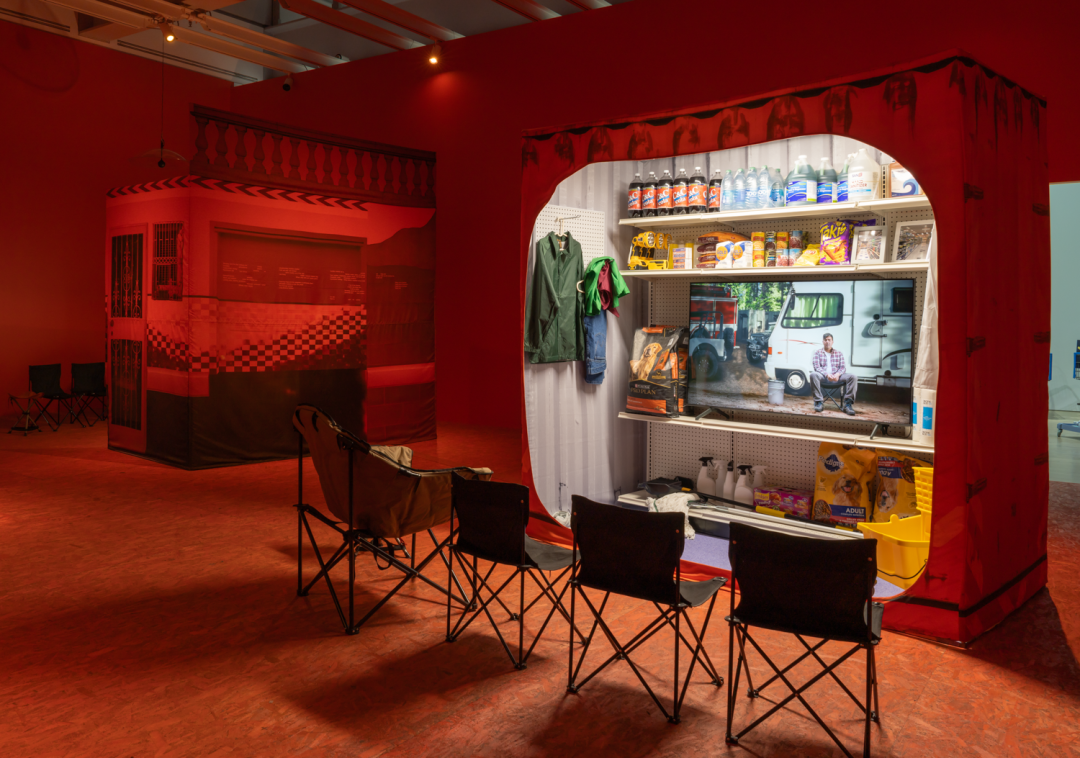
Kline was born in 1979 in Philadelphia and now lives and works in New York. He is regarded as one of the strongest artists of his generation and is known for immersive installations across video, sculpture, photography, and other media. His work examines technology, politics, and labor, asking how emerging technologies are changing human life in the twenty-first century. Installation view of “Josh Kline: Climate Change: Part One,” 47 Canal, 2019. Josh Kline, “Personal Responsibility,” Whitney Museum of American Art, 2023. Over the past decade, he has divided this body of digitally produced, image-processed, 3-D-printed work into several chapters, including a 16-mm film, “Adaption,” and a group of science-fiction video sculptures depicting the impact of climate change in the 2050s on working people, probing social fractures such as mass displacement and class upheaval.
SECTION 05 | Lisson Gallery Lisson Gallery
He has also imagined the 2030s as a period of severe collapse for the American middle class, using sculpture to depict damaged homes and property. Kline’s work is held in major museum collections including the Museum of Modern Art in New York, the Solomon R. Guggenheim Museum, the Whitney Museum of American Art, and the Museum of Contemporary Art, Los Angeles. In 2023, the Whitney organized his first American museum retrospective; in 2024, he had a solo exhibition at the Museum of Contemporary Art, Los Angeles, and participated in the 24th Biennale of Sydney and the 8th Yokohama Triennale.
Ding Yi. Portrait of Ding Yi, photographed by Li Xiaoliang, courtesy of Ding Yi Studio. In June 2024, Lisson Gallery announced its representation of the Chinese artist Ding Yi, jointly with ShanghART Gallery, Karsten Greve, Timothy Taylor, and RGR Gallery. A central figure in contemporary Chinese art, Ding Yi was born in 1962 in Shanghai and has always lived and worked there. His practice encompasses painting, sculpture, spatial installation, and architecture.
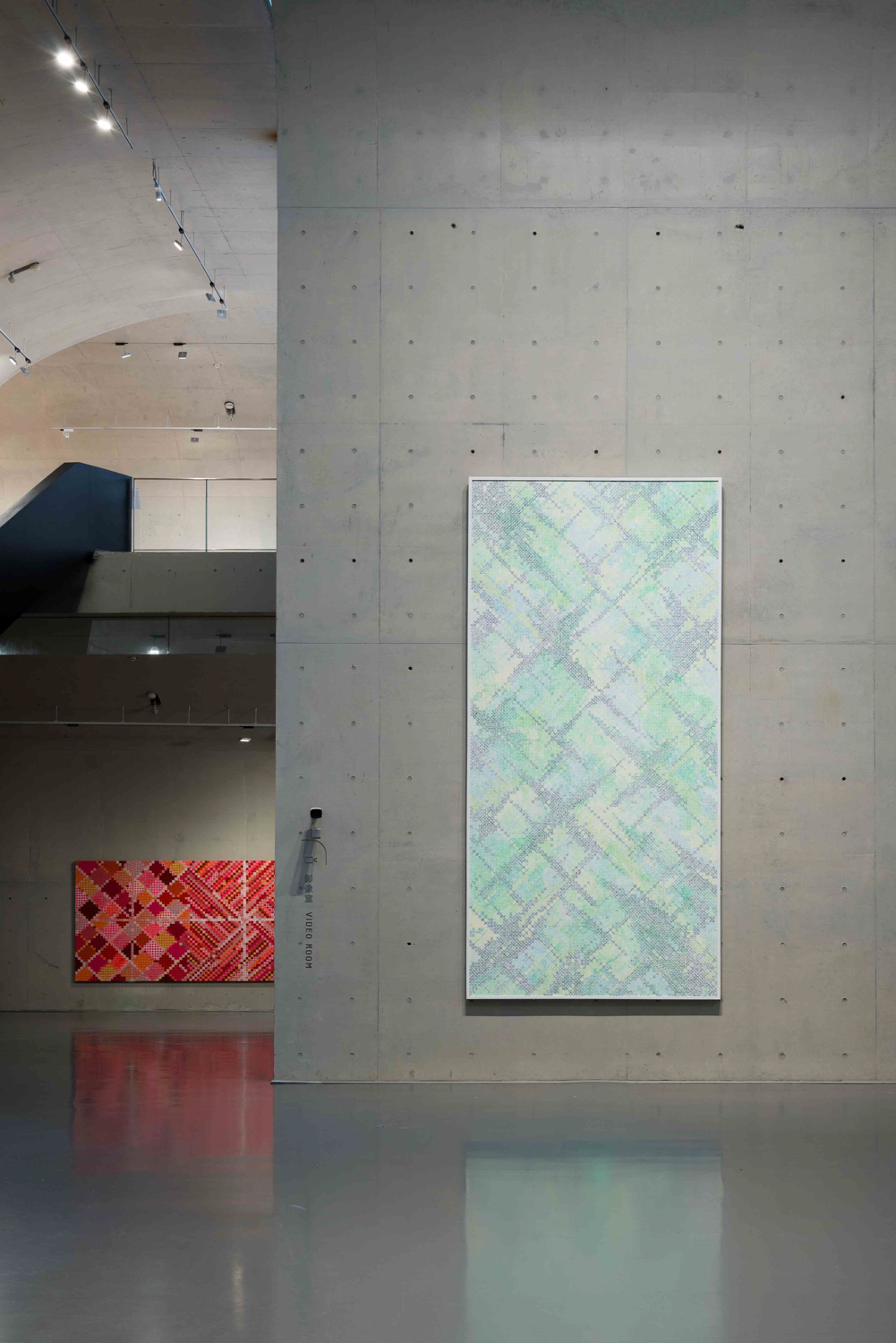
During the ’85 New Wave period, Ding Yi was deeply inspired by Western contemporary art; among those influences, Piet Mondrian and Frank Stella were especially important and helped set the course of his style. In 1987, with the ambition of pursuing “an exceptionally pure path of abstraction,” Ding Yi began making the sketches that would eventually develop into his signature “Appearance of Crosses” series.
Installation view of “Ding Yi: What Is Showing,” Long Museum, Shanghai, 2015, image courtesy of Ding Yi Studio. Installation view of “Ding Yi: Flowing Infinite,” Xihai Art Museum, Qingdao, 2022, image courtesy of Ding Yi Studio. Ding Yi’s work is held in the collections of the British Museum, the Centre Pompidou in Paris, the Leeum Museum of Art, M+, the Power Station of Art in Shanghai, the Long Museum in Shanghai, the He Art Museum, and others. Leiko Ikemura. Portrait of Leiko Ikemura, photographed by Robert Schittko. In July 2024, Lisson Gallery announced its representation of Leiko Ikemura.
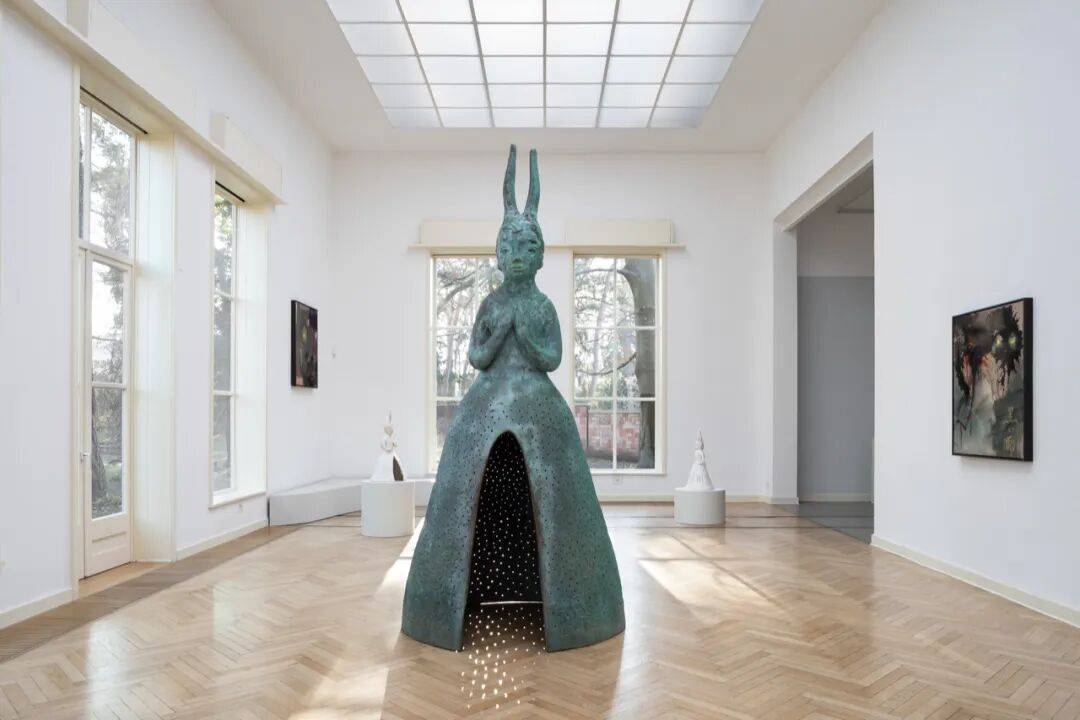
Born in 1951 in Tsu, Mie Prefecture, Japan, and now living in Berlin, she is a Japanese-Swiss painter and sculptor. Her practice spans many media, from bright large-scale oil paintings to introspective watercolors and drawings, as well as glazed terracotta, glass, and ceramic sculpture. Her work often merges dreamlike landscapes and female figures, using delicate color to create a hazy atmosphere. Installation view of “Motion of Love,” Museum de Fundatie, Zwolle, 2023, photographed by Philipp von Matt. Installation view of “Witty Witches,” Georg Kolbe Museum, Berlin, photographed by Enric Duch. Fictional hybrid creatures combining rabbit ears and broken human faces also recur throughout her work. After the 2011 Great East Japan Earthquake and the Fukushima nuclear disaster, reports of congenital defects in newborn animals appeared one after another; the rabbit first entered her work then and has remained there ever since.
Ikemura’s work is held in the permanent collections of many important institutions, including the Centre Pompidou in Paris, the Albertina Museum in Vienna, the Kunstmuseum Bonn, the Sainsbury Centre in Norwich, the Kunstmuseum Basel, the Museum of Contemporary Art Tokyo, the National Museum of Art, Osaka, the National Museum of Modern Art, Tokyo, the Aichi Prefectural Museum of Art, the Shiga Museum of Art, the Toyota Municipal Museum of Art, and the Mie Prefectural Art Museum in Tsu. Her first exhibition with Lisson Gallery after signing will open in spring 2025 at its New York space, and this year she will also have a solo exhibition at the Bündner Kunstmuseum in Chur, Switzerland.
Howardena Pindell. Portrait of Howardena Pindell, photographed by Nathan Keay. In May 2024, White Cube announced its representation of Howardena Pindell. She was born in 1943 in Philadelphia and now lives and works in New York.
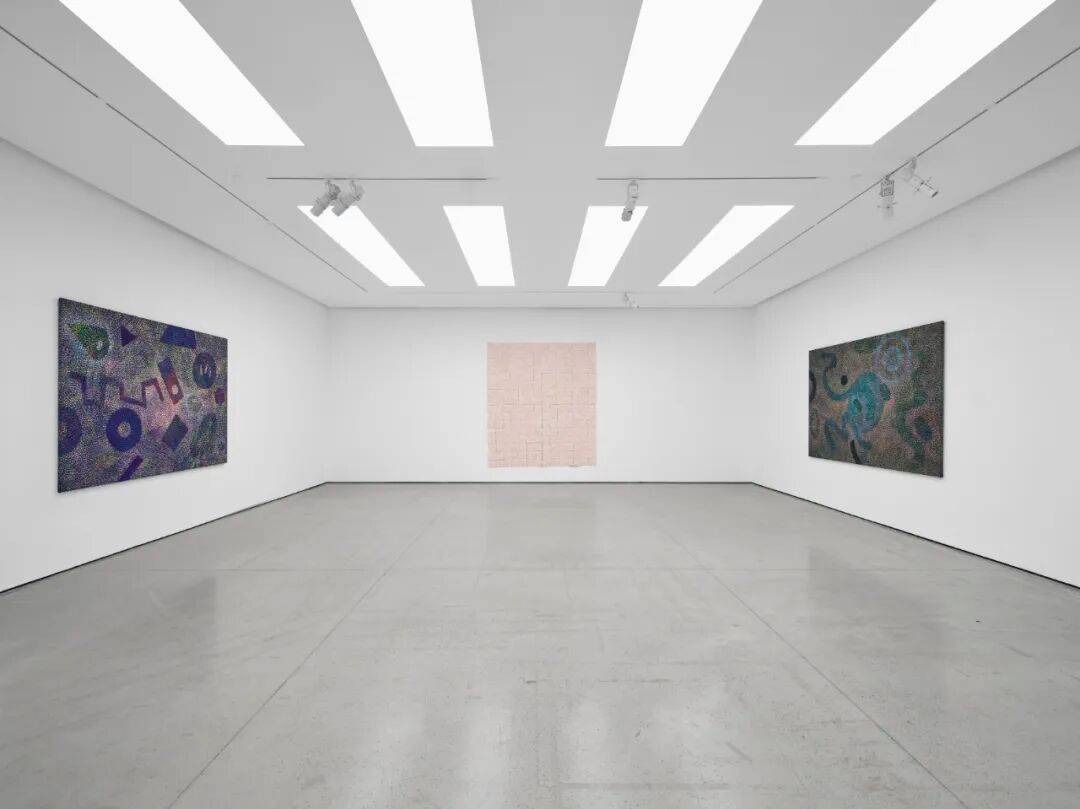
She is also a curator, critic, and educator. Through abstract painting, collage, video art, and process art, she addresses political subjects including racism, feminism, violence, slavery, and exploitation. The textures, colors, and structures of her work shift from the microscopic to the cosmic, calling to mind cells, marine life, celestial bodies, even the Big Bang. Installation view of “Howardena Pindell: Deep Sea, Deep Space,” White Cube, Hong Kong, 2024. Howardena Pindell, “Tesseract #17,” 2024. The element one encounters most often in her work is the circle, which appears in many variations, including ovals, holes, and sprayed dots.
The original inspiration came from a childhood memory during the era of racial segregation in the United States. In 1951, when Pindell was eight, she traveled with her family in northern Kentucky. Her father stopped at a roadside root-beer stand to rest, and Pindell later recalled that the bottoms of the cups they were given were marked with red circles. Only later did she learn that these circles were how the restaurant identified dishes set aside for Black customers. Her work is held in the collections of many internationally renowned museums, including the Museum of Modern Art in New York, the Whitney Museum of American Art, the Brooklyn Museum, the Philadelphia Museum of Art, the Museum of Fine Arts, Boston, the Museum of Contemporary Art Chicago, the National Gallery of Art in Washington, D.C., the Smithsonian American Art Museum, the Virginia Museum of Fine Arts, and the Walker Art Center.
Alia Ahmad. Portrait of Alia Ahmad. In September 2024, White Cube announced its representation of Alia Ahmad, a young Saudi woman artist born in 1996, from Riyadh, where she still lives and works. She graduated from King’s College London in 2018 and went on to complete an M.A. in fine art at the Royal College of Art in 2020.
Alia Ahmad, “Nousi/ نصي | Stipagrostis,” 2023. Ahmad’s work centers on the natural and urban landscapes of Riyadh. Bold and vivid in color, it is shaped by the industrial and desert terrain of her home, often taking the form of dreamlike landscapes that reflect the capital’s rapid and continuing transformation. Her work is held in public collections including the Saudi National Museum of Art and the Museum of Modern Art in Kuwait.
In February 2025, White Cube will present Ahmad’s solo exhibition at its Mason’s Yard space in New York. Gwen O’Neil. Portrait of Gwen O’Neil, 2024, photographed by Paris Mumpower. In April 2024, Almine Rech announced its representation of the American artist Gwen O’Neil.
Gwen O’Neil was born in New York in 1992 and now lives and works in Los Angeles. In 2015, she received a B.F.A. from the Savannah College of Art and Design. Installation view of “Gwen O’Neil: A Glimmer in the Shade,” Almine Rech, New York, 2025. Gwen O’Neil, “Mountain Passage,” 2024. Her paintings are bright and warm, evoking the atmosphere of Los Angeles at dusk, the hypnotic formations of migrating starlings, and the palm-lined length of Sunset Boulevard.
On the surface of the canvas, these paints collide, spin, and dance, forming a dynamic harmony. Her work is held by institutions including X Museum in Beijing and the Museum of Contemporary Art, Los Angeles. At present, Almine Rech’s New York space is showing her solo exhibition “A Glimmer in the Shade.” Inès Longevial. Portrait of Inès Longevial. In May 2024, Almine Rech announced its representation of the French artist Inès Longevial.
Inès Longevial was born in 1990 in Agen, France, and is known for her brightly colored, geometric female portraits; she now lives and works in Paris. From childhood onward, she explored color continuously in everyday life, completing her first work at the age of eight. She has been deeply influenced by artists including Paula Modersohn-Becker, Georgia O’Keeffe, Niki de Saint Phalle, Picasso, Matisse, and Modigliani.
Inès Longevial, “Black Tulip,” 2024. Self-portraiture is Longevial’s favorite subject. The faces she paints of herself may appear melancholy, angry, or confused, almost like landscapes, using shifting light and shadow to explore female identity, interior life, and self-expression. The abstract geometric forms and warm tones seem to capture women’s softest, most secret emotions. In June 2025, she will have her second solo exhibition after signing at Almine Rech’s New York space.
Ali Cherri. Portrait of Ali Cherri, photographed by Boris Camaca. In March 2024, Almine Rech announced its representation of Ali Cherri. Cherri was born in 1976 in Beirut, Lebanon, and now lives and works in Paris. Over a career spanning more than thirty years, he has worked across film, performance, sculpture, painting, and installation. Rooted in ancient art and often using natural materials such as clay in his sculptural practice, he is chiefly concerned with how political violence affects the human body, society, and natural and cultural landscapes.
The primal force in his work feels perfectly at ease even beside paintings by masters of the sixteenth and seventeenth centuries. Ali Cherri, “The Toilet of Venus,” 2022, in the National Gallery exhibition “Ali Cherri: If you prick us, do we not bleed?,” photographed by the National Gallery. Cherri’s work has been exhibited at many leading institutions around the world, including the National Gallery in London, the Secession in Vienna, the CAPC musée d’art contemporain de Bordeaux, the Petits-Augustins in Paris, and the Guggenheim Museum in New York.
In October 2024, his work entered the collection of the Museum of Modern Art in New York, and Almine Rech plans to stage his first exhibition after signing in early 2026. Paul Anthony Smith. Portrait of Paul Anthony Smith, photographed by Andre D. Wagner. In May 2024, Timothy Taylor announced a collaboration with Paul Anthony Smith.
Born in 1988 in Saint Ann’s Bay, Jamaica, raised in Miami, and now based in New York, Smith makes work focused on themes of diasporic identity, community, and cultural memory. Paul Anthony Smith’s work at the Timothy Taylor booth, Frieze London, 2024. He first studied ceramics before turning to painting and photography, and from earlier ceramic-carving techniques he developed his distinctive “picotage” method.
Through the delicate picking and carving of textural patterns into the surface of a photograph, this technique adds depth and complexity to the image. In this way, Smith physically intervenes in the photograph itself, blurring the boundary between viewer and image and suggesting the layered, multifaceted nature of cultural identity. His work is held in the collections of many prominent museums and institutions, including the Museum of Modern Art in New York, the Whitney Museum of American Art, the Museum of Fine Arts, Boston, and the Brooklyn Museum.
Alice Tippit. Portrait of Alice Tippit, photographed by Evan Jenkins. In September 2024, Timothy Taylor announced its representation of Alice Tippit. Tippit was born in 1975 in Kansas and now lives and works in Chicago. She is known for sharply defined hard-edge oil paintings, using expanses of color and the most economical images and symbols as metaphors; ordinary objects, animals, and body parts are assembled in her paintings to produce wholly altered meanings.
Alice Tippit, “Scout,” 2022. Installation view of “Surely Any S is Welcome,” Nicelle Beauchene Gallery, 2023. For example, female figures in her paintings may appear through high heels, cats, and roses, drawing on the literary blazon, a poetic form in which female features are described through comparisons to natural phenomena or rare and beautiful objects.
SECTION 06 | WhiteCube
Her work is also held in the permanent collections of several well-known institutions, including the Art Institute of Chicago, the Museum of Contemporary Art Chicago, the Kemper Museum of Contemporary Art, and the DePaul Art Museum. Oren Pinhassi. Portrait of Oren Pinhassi, photographed by Tom Carter. In May 2024, Grimm announced its representation of Oren Pinhassi.
Born in 1985 in Tel Aviv, Israel, Pinhassi is known for large-scale sculpture and installation that continually explores the complex relationship between architectural space and the human body. After receiving an M.F.A. from the Yale School of Art in 2014, he now lives and works in New York. Oren Pinhassi, from the “Thirst Trap” series, in the Chicago Architecture Biennial exhibition “This Is a Rehearsal,” Graham Foundation, 2023, photographed by Tom Harris. Oren Pinhassi at the exhibition “Movables,” The Fabric Workshop and Museum, Philadelphia, 2023. He works primarily with sand and plaster, in ways that recall artists associated with Arte Povera.
Looking at his large-scale sculptures, one often thinks of ordinary things: palm trees, showerheads, lounge chairs. His work also frequently takes anthropomorphic form, rising as high as 2.44 and suggesting a giant human presence examining the vulnerability and fluidity of the individual in architectural environments. Pinhassi’s work is held by notable institutions around the world, including the Metropolitan Museum of Art in New York, the Castello San Basilio in Basilicata, Italy, the KADIST Art Foundation in Paris, Palazzo Monti in Brescia, the Museum of Contemporary Art Chicago, and the Petach Tikva Museum of Art in Israel.
Kim Yun Shin. Kim Yun Shin in her studio. In January 2024, Grimm announced its representation of the Korean artist Kim Yun Shin. Born in 1935 in Wonsan, Korea, she is now ninety years old. Kim currently works between Buenos Aires and Seoul and is regarded as one of the earliest Korean women to receive formal training in sculpture; she remains active in contemporary art to this day.
She works primarily with hardwood, along with other natural materials such as onyx and stone. Her sculptural practice embodies oppositions between art and nature, culture and landscape, geometry and the organic. Kim Yun Shin, “Earth’s Vitality,” 2023. Kim Yun Shin, “Origin Building Series,” circa 1970. Over the past sixty years, her art has challenged conservative social norms, including patriarchy, and has offered courage and inspiration to a younger generation of women artists.
Confronting the difficulties of a male-dominated field, she went to Paris to pursue her artistic ambitions and taught at several universities. In 1974, she co-founded the Korean Association of Women Sculptors to support emerging artists. And in 2008, she established the Kim Yun Shin Museum in Buenos Aires, the first and only museum created by a Korean Argentine. She has had important solo exhibitions around the world, and her work is held in the collections of many major institutions, including the National Museum of Modern and Contemporary Art, Korea, the Museum of Modern Art in Mexico City, the Museum of Modern Art of Buenos Aires, the Seoul Museum of Art, and the Archives of the Venice Biennale.
Joan Snyder. Portrait of Joan Snyder. In February 2024, Thaddaeus Ropac announced its representation of the American artist Joan Snyder. She was born in 1940 in Highland Park, New Jersey, into a working-class Jewish family. Snyder’s childhood was shaped by the natural environment, and she was sharply observant of the struggles within family and community; that attachment to the land and sensitivity to social questions later became central themes in her art.
For sixty years, Snyder has explored the narrative potential of abstraction through painting, manuscript, and printmaking. Joan Snyder, “Buried Images,” 1978, collection of the Brooklyn Museum, New York. Joan Snyder, “Summer Orange,” 1970, collection of the Harvard Art Museums, Cambridge, Massachusetts. Her work can be divided into three broad categories: “Stroke paintings,” “Symphony paintings,” and “Field paintings,” all of them addressing four central themes: feminism and social activism, motherhood and love, health and loss, and Jewish identity.
Her work is held in the collections of many major international institutions, including the Art Institute of Chicago, the Harvard Art Museums in Massachusetts, the Jewish Museum in New York, the Metropolitan Museum of Art in New York, the Museum of Fine Arts, Boston, the Museum of Modern Art in New York, the National Gallery of Art in Washington, D.C., the San Francisco Museum of Modern Art, the Solomon R. Guggenheim Museum in New York, and Tate Modern in London.
Lee Kang-So. Portrait of Lee Kang-So. In September 2024, Thaddaeus Ropac announced its representation of the Korean artist Lee Kang-So, who was born in 1943 in Daegu and is widely recognized as one of the most important figures in Korean contemporary art. Since the 1970s, Lee has worked across photography, painting, printmaking, sculpture, installation, and performance, exerting a profound influence on the development of contemporary art in Korea.
From early in his career, his practice was highly experimental, engaging avant-garde movements including Japan’s Mono-ha, Korean experimental art, American Minimalism, and Italian Arte Povera. Lee Kang-So, “Emptiness,” 1971, National Museum of Modern and Contemporary Art, Korea, 1971. Lee Kang-So, “Wind-Blowing-240546,” 2024. His expressive, spare monochrome compositions draw at once on calligraphy and the East Asian literati landscape tradition, while also pointing to the aesthetics of Western Minimalism.
Lee prefers the long-handled East Asian brush because it more closely registers the subtleties of the holder’s bodily movement, allowing brush and hand, body and feeling, to come into alignment. His first gallery solo exhibition after signing will open in spring 2025 at Thaddaeus Ropac Seoul. The following September, a major career retrospective will be presented at the Daegu Art Museum. Eva Helene Pade. Portrait of Eva Helene Pade. In October 2024, Thaddaeus Ropac announced its representation of Eva Helene Pade.
Born in Denmark in 1997, she now lives in Paris. Through a distinctive approach to painting, she explores human subjectivity. Her work reflects the age we live in while continuing the tradition of Nordic figurative art, and mythic elements are everywhere in her vividly colored pictures. Eva Helene Pade, “Morning,” 2024. Eva Helene Pade in the studio. Her paintings are both immersive and provocative, continually extending the artistic possibilities for representing female subjectivity.
She works from art history as a point of departure, and one can clearly see the particular influence of Edvard Munch, James Ensor, and Otto Dix. Her first solo gallery exhibition after signing will open in London in October 2025. Before that, her first institutional solo exhibition will open in April 2025 at ARKEN Museum of Contemporary Art in Denmark. Mark Manders. Portrait of Mark Manders, photographed by Tim Van de Velde. In the first half of 2024, Xavier Hufkens began a collaboration with Mark Manders and, in October, presented his first solo exhibition after signing at the gallery’s Brussels space.
SECTION 07 | Almine RechAlmineRech
He was born in 1968 in Volkel, the Netherlands, and now lives and works in Ronse, Belgium. His practice includes installation, painting, and sculpture, and he is especially known for large bronze sculptures that look like rough, damp, or flaking clay. Everyday things often appear in his work seemingly at random, among them tables, chairs, lightbulbs, blankets, and animals, creating a distinct visual language. Mark Manders, “Room with Chair and Factory,” 2002–2008. Collection of MoMA, New York. His work is held in many major collections around the world, including the Museum of Modern Art in New York, the Art Institute of Chicago, the Irish Museum of Modern Art, the Carnegie Museum of Art in Pennsylvania, the Kunsthaus Zürich, the Museum of Contemporary Art, Los Angeles, the Pinakothek der Moderne in Munich, the San Francisco Museum of Modern Art, and the Walker Art Center in Minneapolis, among others.