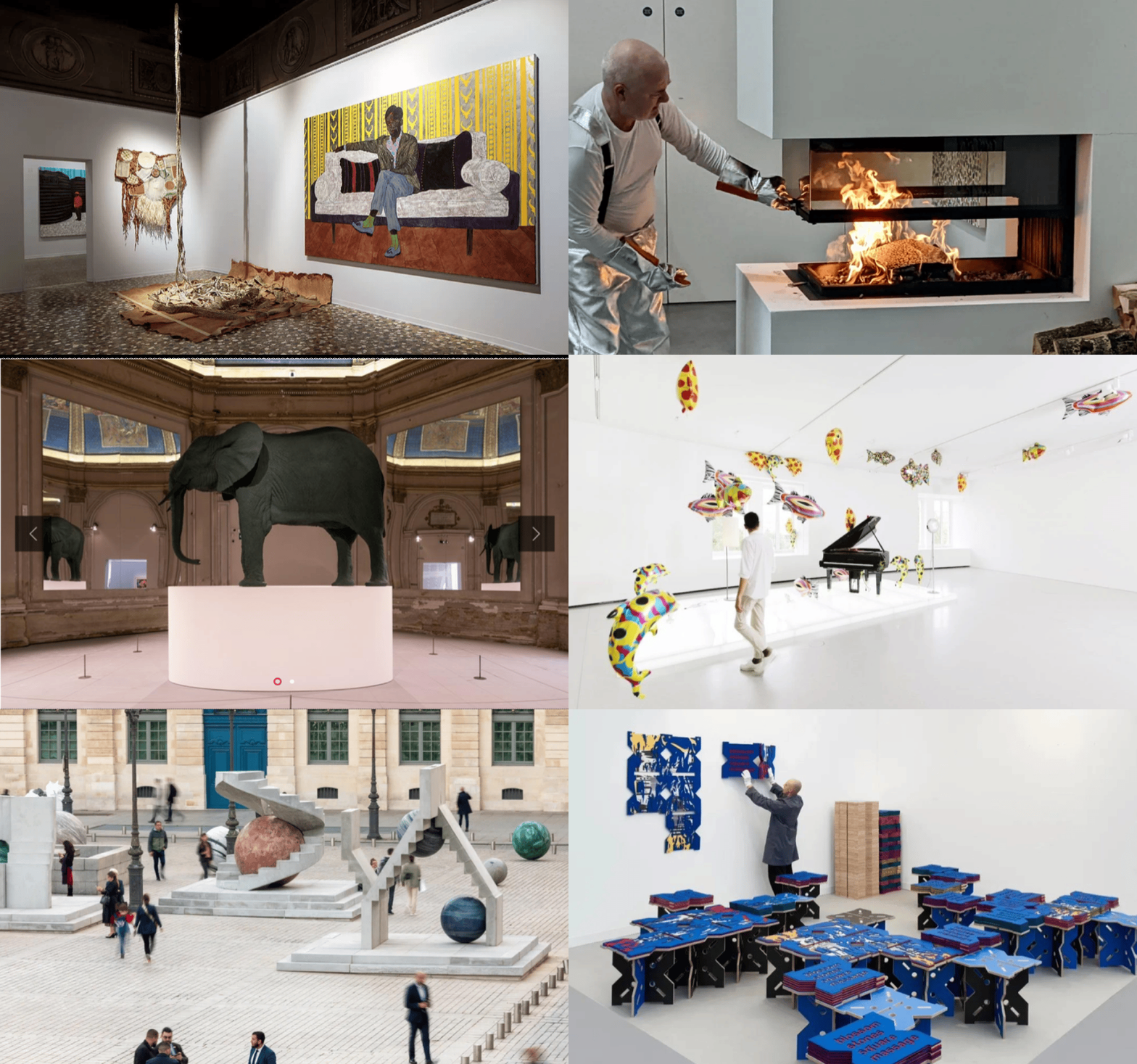
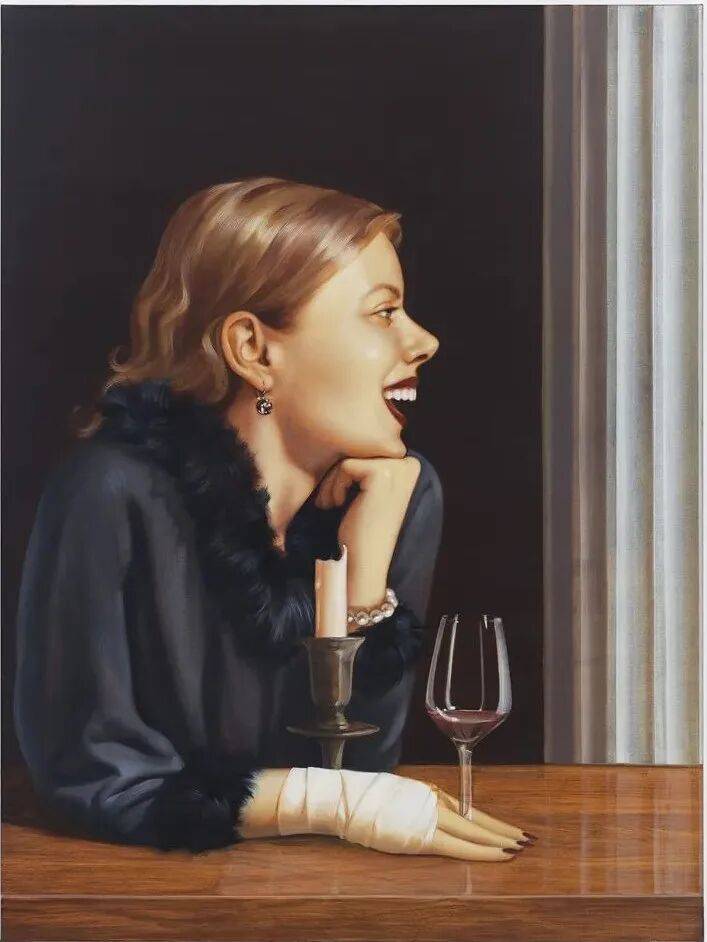
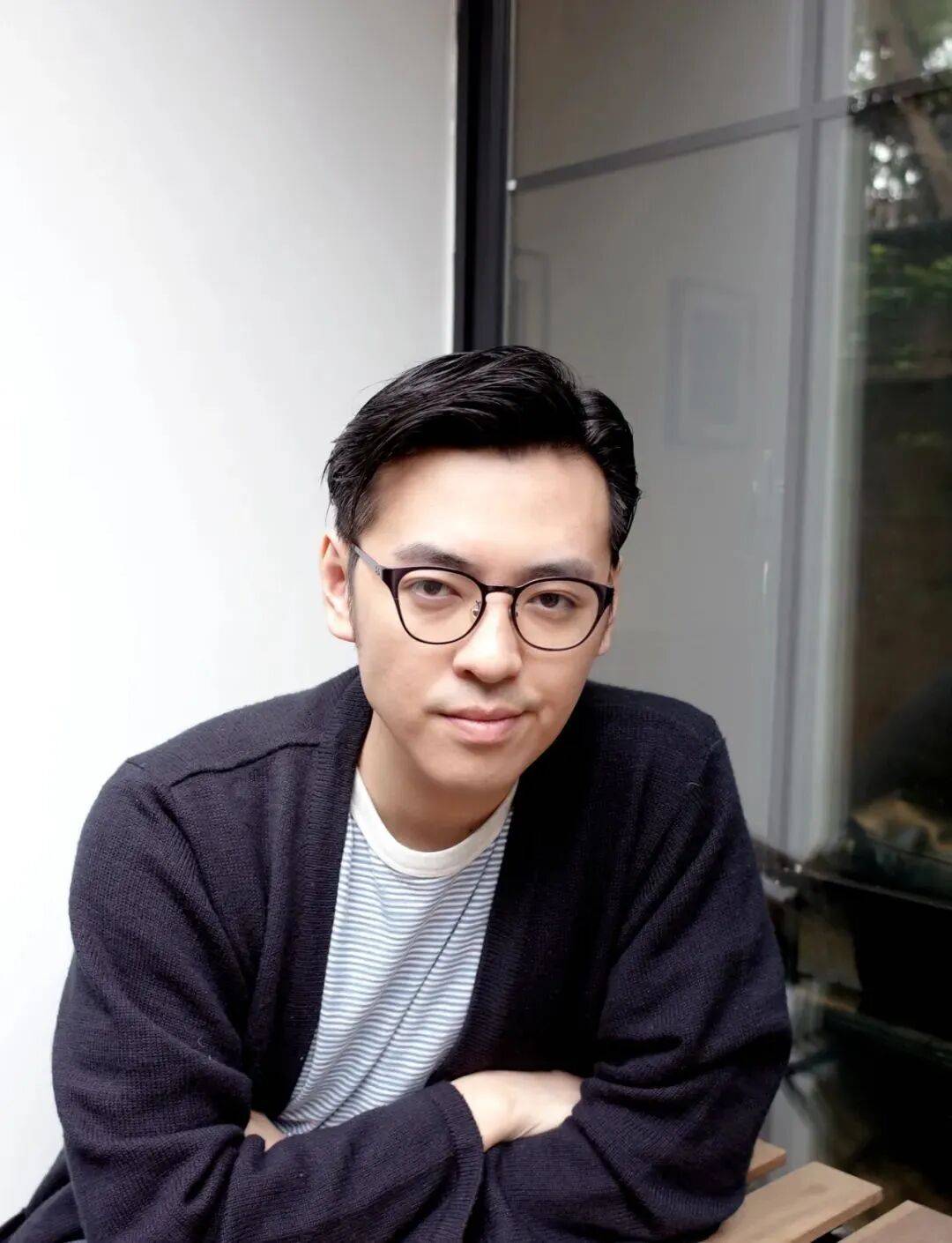
The 17 Young Artists Signed by Blue-Chip Galleries in 2022
For the art world, 2022 was a year of post-pandemic revival. The Venice Biennale, documenta, and major international fairs in Basel, Frieze, and Miami returned to full scale, while collectors, artists, and audiences surged back into circulation. Artists born in the 1980s and 1990s emerged as a force in both the primary and secondary markets......
By / Xirui Huang · 19 min read
How can a 2022 gallery representation list draw attention back to artists and their work?
The 2022 representation review introduces seventeen younger artists through images and experience as well as gallery announcements. Jadé Fadojutimi develops abstraction through colour and space, while Danica Lundy draws on sport, adolescent memory and the mechanisms of looking. Other practices consider identity and cultural experience. Gallery relationships can offer a route towards further study of the work, but they are neither the sole measure of artistic value nor a guarantee of prices or career outcomes.
For the art world, 2022 was a year of post-pandemic “rebirth from the flames.” The Venice Biennale, documenta, and major international art fairs in Basel, Frieze, and Miami returned to their original scale. With travel once again convenient, the enthusiasm of collectors, artists, and audiences even rebounded. At these exhibitions, artists born in the 1980s and 1990s had become a central force in the art market, performing strongly in both the primary and secondary markets.
Among the exhibitions that opened around the world in 2022, the leading blue-chip galleries showed a growing tendency to seek out younger artists when making signings; the youngest were even born after 1995. We have assembled a list of 17 mid-career and younger artists signed by major international galleries this year, and, as 2023 approached, looked ahead to these “dark horses,” poised to advance rapidly through the art market. As the undisputed “elder statesman” of the international gallery world, Gagosian inevitably attracts intense discussion and attention whenever it signs an artist.
This year, the gallery signed two highly talked-about young artists born in the 1990s: the Black woman artist Jadé Fadojutimi and Anna Weyant, born in 1995. Weyant is the youngest artist Gagosian has signed since its founding, and the announcement immediately dominated art-media headlines. Both women have performed well at auction, and their work has already become difficult to obtain on the primary market.
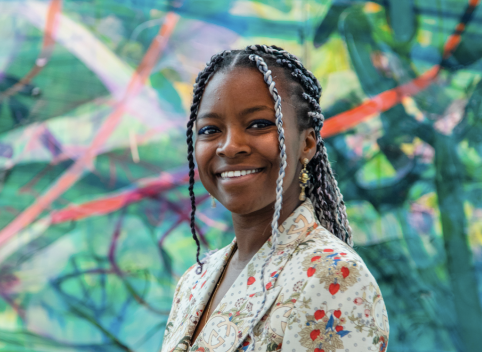
Portrait of Jadé Fadojutimi, 2022. Copyright: The Hepworth Wakefield. Jadé Fadojutimi signed with Gagosian in July this year. At Frieze in October, collectors snapped up her work, which sold out. Born in London in 1993, she now lives and works there.
Her paintings are typically large-scale, with vivid colors moving through carefully constructed spaces and structures. Looking at them, one may think of plants, microorganisms, and seascapes, built up layer by layer in paint and sometimes disrupted in places by oil crayon. The visual effect is richly varied. Born into a Nigerian immigrant family in Britain, she says she draws inspiration from particular places, cultures, objects, and sounds, with a special fascination for Japanese anime, clothing, and music.
From 2016 until the pandemic, she frequently traveled between Japan and Britain as a resident artist. Jadé Fadojutimi, Untitled, 2022. Photograph: Mark Blower. Copyright: the artist and Gagosian. Jadé Fadojutimi, Visual and Reality, exhibition view, 2022. Photograph: Nick Singleton. Copyright: the artist and Gagosian. Writing is also central to her process: sometimes she uses it to elaborate on the subtleties of her paintings; at other times, she connects writing and painting through a more poetic approach.
“We are all beautiful; that is what the word life contains,” she said in an interview. Jadé Fadojutimi, Your Majesty I Present to You, 2018. Tate Britain acquired the work in 2019. Though she is only 29, her work has already entered the collection of a major institution such as Tate, making her the youngest artist in its holdings. In the secondary market, her work has sold for more than £1 million.
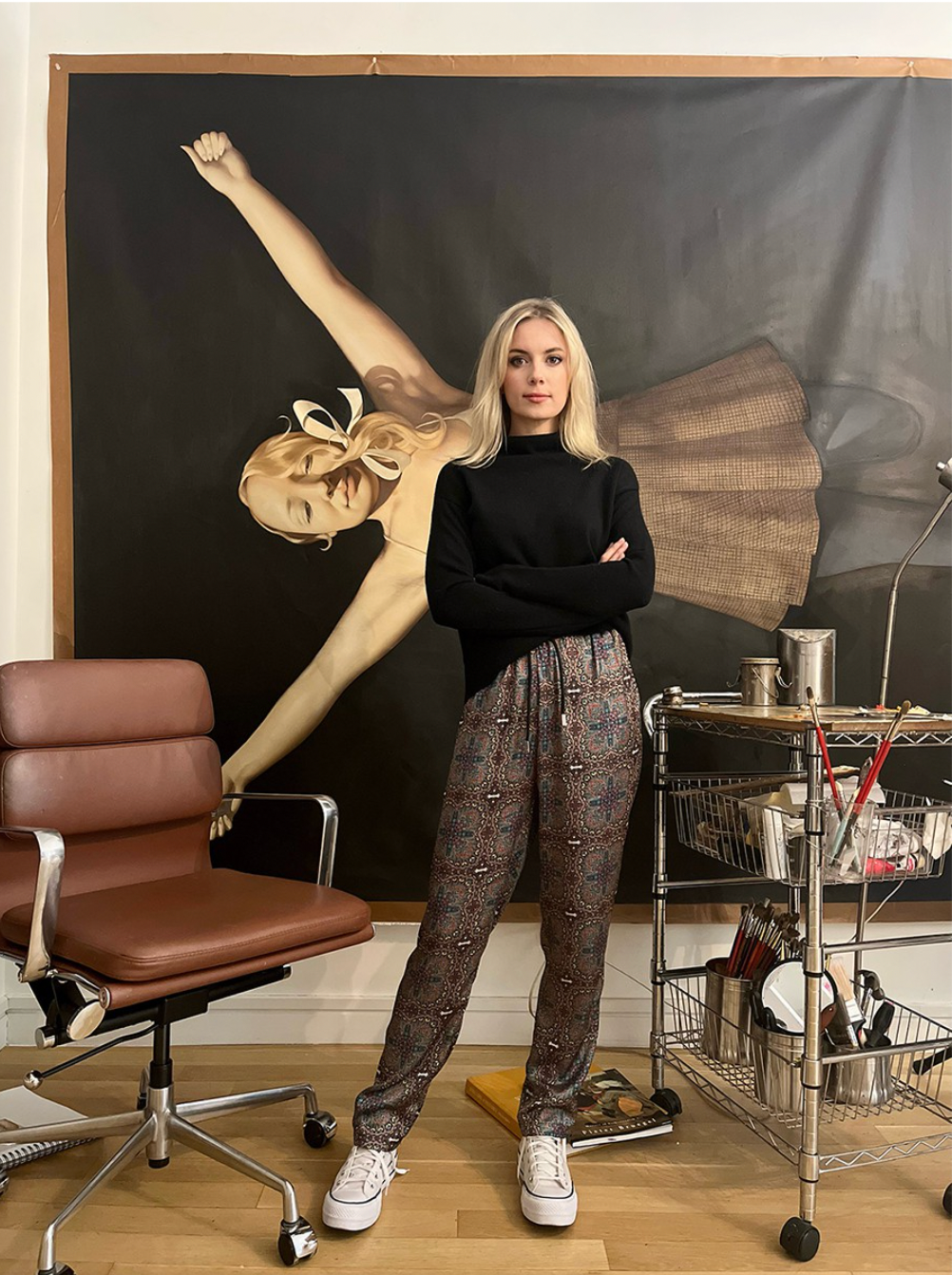
It is reasonable to believe that within the next three to five years, she will become one of the fastest-growing artists in the market. Portrait of Anna Weyant. Anna Weyant signed with Gagosian in May this year. Born in New York in 1995, she is the youngest artist the gallery has signed to date. Her secondary-market prices have already reached what might be called the “ceiling” for an artist her age—up to RMB 11.2 million.
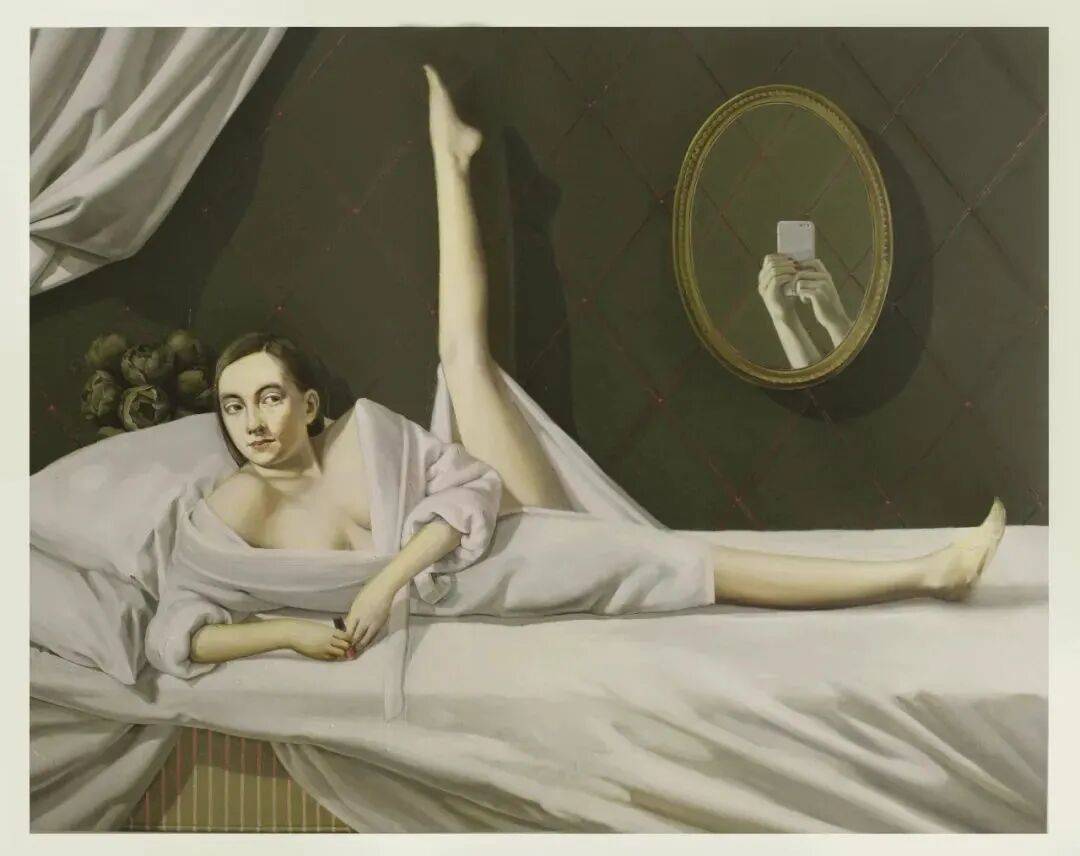
She is also the girlfriend of the 77-year-old gallery owner Larry Gagosian, a fact that once placed her at the center of public attention. Anna Weyant, Reposing V, 2019. This was the first of her paintings to appear on Instagram. Her work depicts a range of female figures and still lifes, like portraits painted by a girl for herself or for her closest female friends: intimate, private, and relaxed.
Precise brushwork and brownish tones make the paintings look at once like sixteenth-century Dutch still lifes and like the work of the contemporary artist John Currin, who often depicts sexually glamorous women. In 2017, after graduating from university, Weyant came to Hangzhou and studied for six months at the China Academy of Art. She has said that Hangzhou’s dark-brown palette influenced the highly personal colors of her paintings today. Anna Weyant, Feted, 2020. Image copyright: the artist and Blum & Poe. Anna Weyant, Loosen the Screw, 2020. Image copyright: the artist and Blum & Poe. The Wall Street Journal and other media have called her “the Botticelli of the millennials,” while others have described her sometimes melancholy, sometimes playful portraits of women and girls as “sentimental erotica.”
Around 50 of her paintings have entered the collections of top collectors, including the investor Glenn Fuhrman and the plastic surgeon Stafford Broumand. More than 200 collectors are on her waiting list. The prominent curator Francesco Bonami said in an interview that he expected her to appear at the Venice Biennale soon—another milestone in her career.
Portrait of the artist Kylie Manning. Photograph: Meghan Marin. Kylie Manning signed with Pace Gallery in July this year. Born in Juneau, Alaska, in 1983, she now lives in Brooklyn, New York. Raised by parents who were both art teachers, Manning moved frequently as a child, traveling with her family from Alaska to different parts of Mexico.
As a child, she witnessed the social, political, and economic changes unfolding across these regions. She worked on fishing boats in cold Alaska and surfed in hot Mexico. The radically different atmospheres, latitudes, and colors of these places, along with her personal experiences, enter her paintings, whose vivid colors make viewers feel transported into expansive and varied natural landscapes. Kylie Manning, Dog Days, 2021. Kylie Manning, Clove Hitch, 2021. Kylie Manning, Squall, 2021. Her technique recalls that of the Dutch Baroque painter Johannes Vermeer: she uses pure pigments ground with safflower oil, broad chip brushes, and paint rollers, then works in a manner resembling ink painting.
Her work has been acquired by authoritative institutions including the Columbus Museum of Art, the Institute of Contemporary Art, Miami, Yuz Museum Shanghai, and X Museum in Beijing. Portrait of the artist Li Ran. Li Ran signed with Lisson Gallery in March this year. Born in Hubei, China, in 1986, he moved from Beijing to Shanghai in 2018 and graduated from the oil-painting department of Sichuan Fine Arts Institute in 2009. Among China’s younger contemporary artists, Li Ran occupies a singular position.
His practice spans performance, installation, painting, and video. Some works begin with the grand sweep of modern Chinese history, excavating forms ranging from literature, film, theater, and comics to stage design from the 1950s. Others begin with contemporary life and address the questions that have long concerned him. Li Ran, The Orphan’s Struggle, 2021. Photograph: Mark Waldhauser. Copyright: the artist and Lisson Gallery. Li Ran, The Orphan’s Struggle Transformed, 2021, still. Photograph: Mark Waldhauser. Copyright: the artist and Lisson Gallery. Li Ran, Untitled—The Future Play, You Say What You Mean, 2022, detail. ON | OFF 2021: Back to the Future, He Art Museum, exhibition view. Growing up in a family of teachers, Li Ran feels that the questions he examines remain inseparable from humanistic concern and the broader discourse of intellectual life.
“The subjectivity of the individual,” “the conflict between intellectuals and their environment,” and “the role of art history and art institutions” recur across his work in different media. His work has been exhibited at major institutions around the world, including Art Sonje Center in Seoul; the Centre Pompidou in Paris; the San Francisco Museum of Modern Art; the Haus der Kulturen der Welt in Berlin; and UCCA Center for Contemporary Art, He Art Museum, and Sifang Art Museum in China.
Almine Rech, a major gallery devoted to exploring the connections between modern and contemporary art, has paid particular attention in recent years to artists working across disciplines and media. The two artists born in the 1980s whom it signed this year have both had unusual paths through the art world. Mehdi Ghadyanloo has painted countless murals in war zones, marked by a strong humanistic concern. Oliver Beer fuses music and visual art so seamlessly that even ordinary viewers seem to experience “synesthesia.”
The 17 Young Artists Signed by Blue-Chip Galleries in 2022
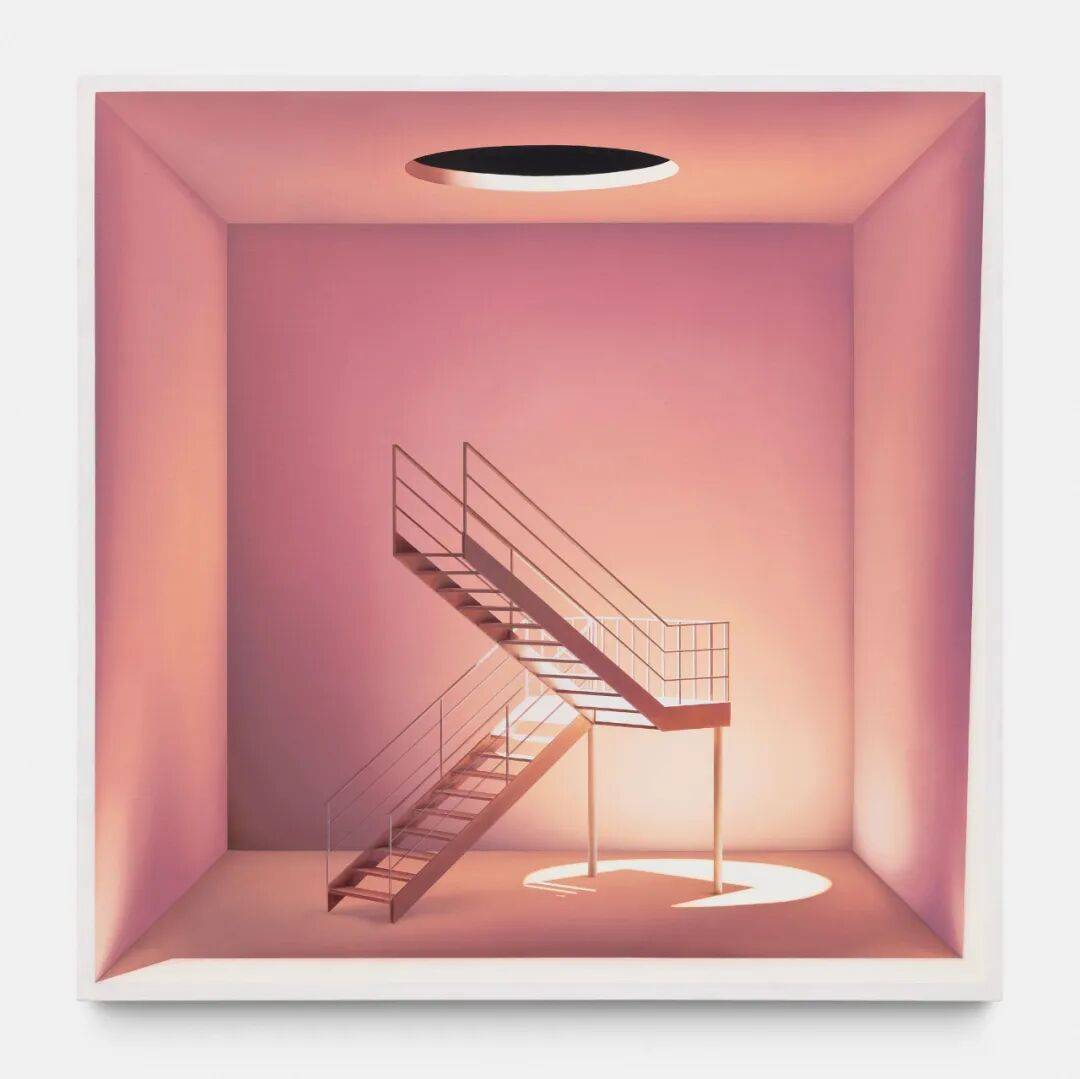
Portrait of Mehdi Ghadyanloo, 2022. Image copyright: the artist and Almine Rech. Mehdi Ghadyanloo. Almine Rech announced in May that it would represent Ghadyanloo, who also works with Gagosian. Born in Karaj, Iran, in 1981, he now lives and works between New York and Saarbrücken, Germany.
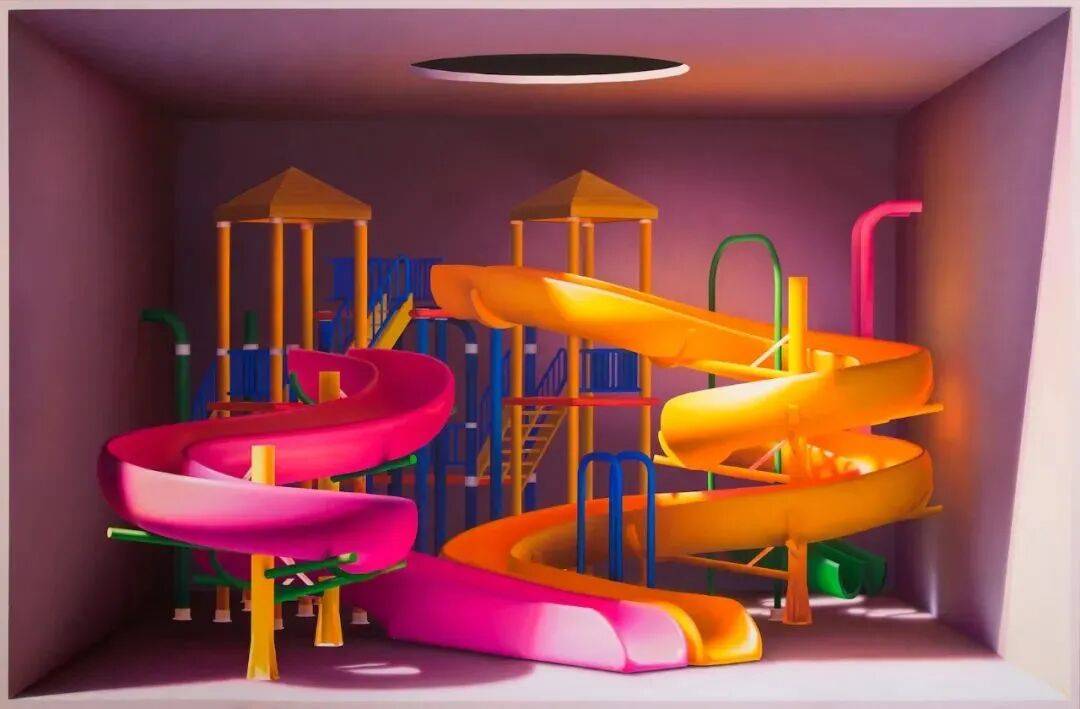
Ghadyanloo’s work moves between Minimalist style and Surrealist aesthetics. He creates optical illusions that turn the canvas into a boxlike space, making viewers feel as if they are walking through a dream. The artist has said that as a child he often watched his mother care for brightly colored Persian carpets. These handwoven carpets, with their elaborate craftsmanship and beautiful patterns, were his earliest artistic education. Mehdi Ghadyanloo, Starting from the Stairs, 2019–2020. Mehdi Ghadyanloo, Toy Factory, 2020. Murals Ghadyanloo painted on ruined buildings in Tehran. Between 2004 and 2011, he created more than a hundred Surrealist murals around Tehran, trying to use art to illuminate streets overshadowed by war.
The humanitarian spirit of his work has led many prominent international organizations to commission him for public mural projects, including the Tehran murals (2004–11), Village Underground in London, Dulwich Museum, the University of Michigan, the Ross Fitzgerald Kennedy Greenway Conservancy, OK Contemporary Art Center, and the World Economic Forum in Davos, Switzerland.
Portrait of Oliver Beer, 2021. Photograph: Jae Kim. Image copyright: the artist and Almine Rech. In April this year, Almine Rech announced its collaboration with Oliver Beer. Born in Kent, England, in 1985, he now lives and works between London and Paris. Before studying art and film theory, Beer studied composition as an undergraduate.
Music, visual art, sculpture, and performance therefore intersect throughout his work. Through immersive live performances, vocal works, films, and installations, he draws viewers fully into intense visual and sonic experiences. At the 59th Venice Biennale this year, he collaborated with the Venice Conservatory of Music on a 24-hour live performance and interactive installation. Oliver Beer, Little God (Chamber Organ), 2022. Oliver Beer, Recomposition (Orpheus and Eurydice), 2020. Oliver Beer, The Resonance Project, Turkish Bath, Istanbul, 2008. Even his visually oriented works contain abundant elements related to sound.
Sculptures made by cutting various vessels, for example, look as if they have been scanned by “ultrasound.” His ongoing Resonance Paintings series is made through sound waves. Beer’s cross-disciplinary practice has taken him to important museums and institutions around the world, including the Metropolitan Museum of Art and MoMA PS1 in New York; Palais de Tokyo, the Centre Pompidou, the Louis Vuitton Foundation, and the Palace of Versailles in Paris and France; the Musée d’art contemporain de Lyon; and Ikon Gallery in Birmingham, England.
White Cube, founded in the 1990s, has a particular fondness for young artists who combine classical and contemporary styles. Of the artists it signed this year, three are roughly “the same age” as the gallery itself. They include Danica Lundy, a former athlete; Ilana Savdie, who brings Colombia’s “carnival” into her work; and Louise Giovanelli, who has seemingly inscribed the language of classical painting into her DNA.
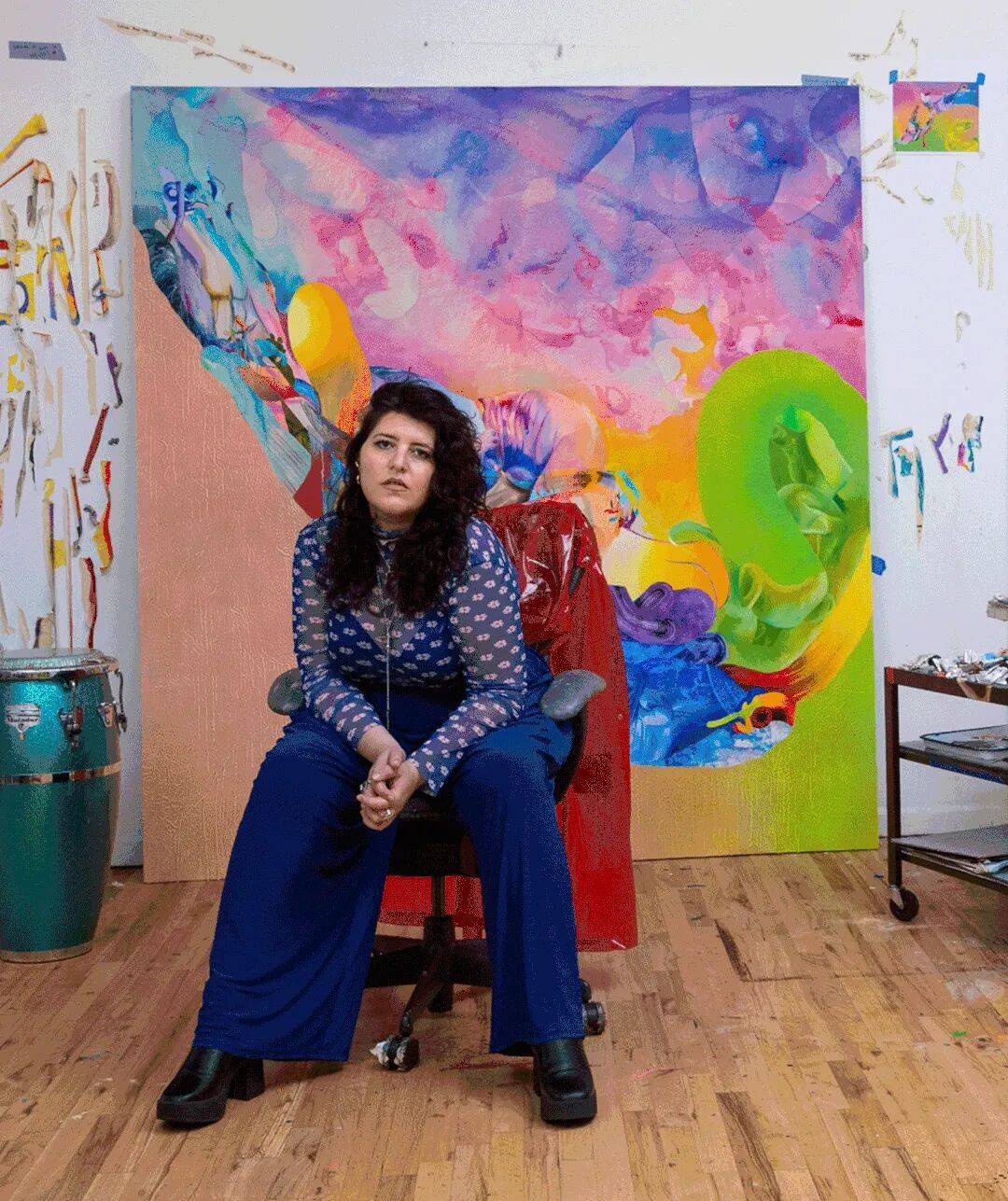
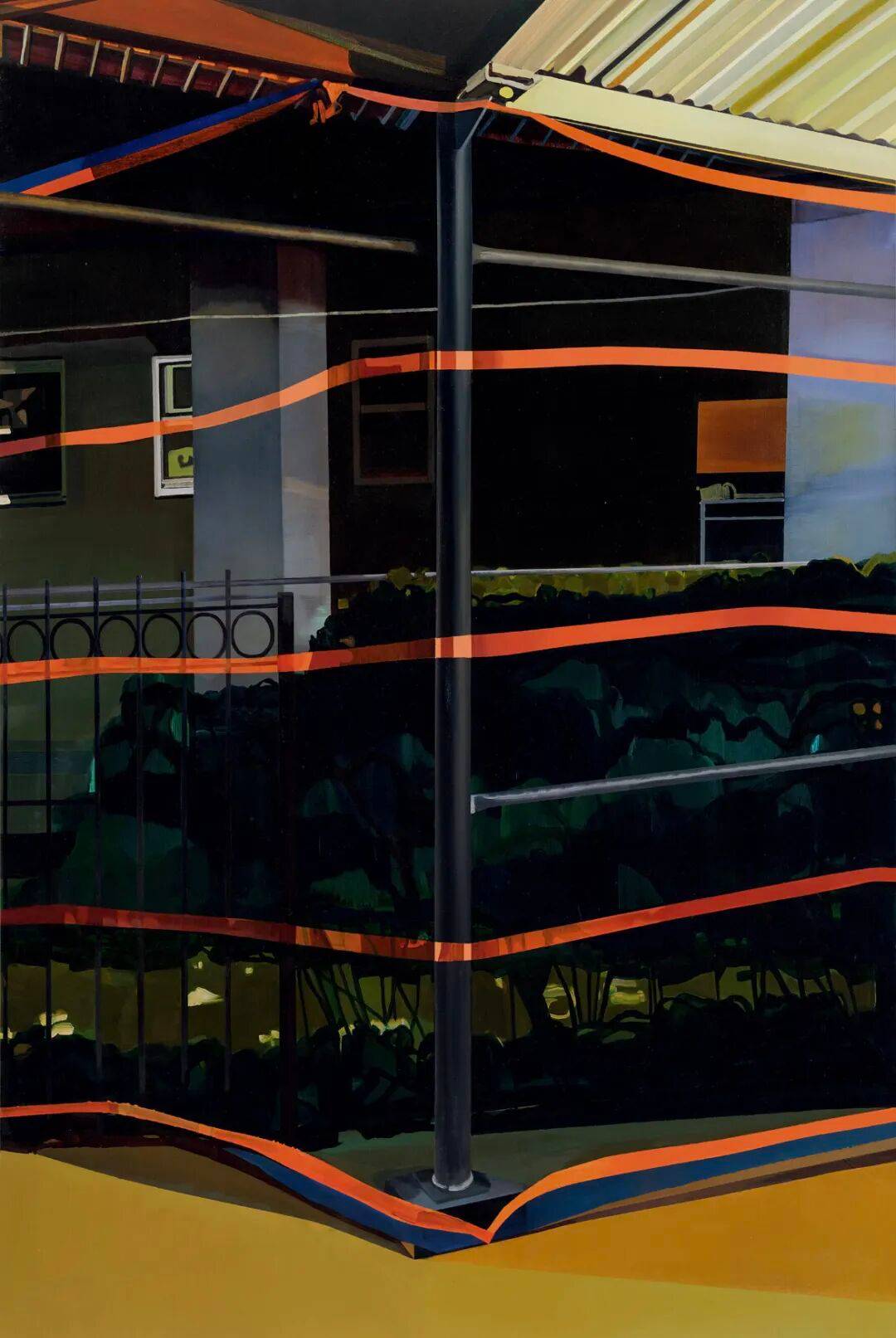
Portrait of Danica Lundy. Image copyright: White Cube. Danica Lundy signed with White Cube in July this year. Born on Salt Spring Island, Canada, in 1991, she now lives and works in Brooklyn, New York. Lundy was an athlete as a teenager, and her paintings contain recognizable scenes of classrooms and sports fields, portraying the vitality, strength, and emotional intensity of young people in motion, as well as the sensory experience of adolescence.
Her father was a photographer for a Canadian newspaper. Remembering him prompted the artist to explore the mechanics of looking and the relationship between “seeing and being seen.” Danica Lundy, Romancing the Sink, 2022. Danica Lundy, Chamber, 2022. Danica Lundy, Stop Bath, solo exhibition view, White Cube, 2022. She says, “Painting can become a poem, a nightmare, or a construction site; painting can be an arena, testing the limits of each person’s own strength.”
She has received the Elizabeth Greenshields Foundation Grant three times. Her work has been widely exhibited in the United States, Canada, Italy, and Germany, and is held by important institutions including the Dallas Museum of Art and the Institute of Contemporary Art, Miami. Portrait of Ilana Savdie. Ilana Savdie. White Cube announced its representation of Savdie in March this year.
Born and raised in the port city of Barranquilla, Colombia, in 1986, she now lives and works in Brooklyn, New York. Her paintings erupt like fireworks, their intense colors bursting before the viewer. She assembles, blends, and merges fragments of physical matter into intricate compositions, using hazy illusions and subtle cuts to suggest the direct relationship between image and body. Ilana Savdie, The Pitch Y Su Torpe Semejanza, 2021. Ilana Savdie, Waiting to Emerge as Catastrophe, 2021. For her, art is a “carnival.” She says she draws on the carnival tradition of her hometown, an annual weeklong period of uninhibited “transgression.”
The roles within a “carnival” are fluid and unrestricted, embodying the idea of performance as a potential tool for transformation. She received a bachelor’s degree in art from the Rhode Island School of Design in 2008 and a master’s degree in art from Yale University in 2018. Her work has been exhibited at numerous international institutions, including the Museum of Contemporary Art San Diego, the Museum Barberini in Potsdam, the Museum aan de Stroom in Antwerp, and the Frankfurt Biennale. Portrait of Louise Giovanelli. Louise Giovanelli. Giovanelli began working with White Cube in March this year.
Born in London in 1993, she now lives and works in Manchester. Giovanelli’s paintings reveal extensive research into art history and a close study of the techniques of classical painting. Her surfaces combine pointillist methods with the cultural currents of the present. Louise Giovanelli, Vanitas, 2022. Louise Giovanelli, Consumer, 2022. Her handling of light derives from classical painting: through the traditional technique of applying successive thin layers of paint, she gives the image remarkable depth, making it seem almost to emit light.
Giovanelli’s work has also been welcomed by academically oriented institutions, including the Hayward Gallery in London, the AkzoNobel Art Foundation in Amsterdam, and the Art House in Worcester, England. Portrait of Angel Otero. Angel Otero. Otero became a Hauser & Wirth artist in February this year. Born in Santurce, Puerto Rico, in 1981, he now lives and works in the United States.
In 2004, he moved from Puerto Rico to the United States and studied at the School of the Art Institute of Chicago. His work exceeds the traditional boundaries of painting, and the process itself becomes a form of art. He fuses collage, sculpture, and painting, moving between abstraction and figuration while exploring history, memory, and identity. He paints figurative images in oil on glass panels; once the paint has partially dried, he scrapes away the layer that has solidified on the surface.
He then reattaches the resulting “skin” of paint to canvas. Angel Otero, Blue Dream (For Arnaldo Roche), 2019. Photograph: Elisabeth Bernstein. Image copyright: the artist and Hauser & Wirth. Angel Otero, Naked Island, 2021. Photograph: Elisabeth Bernstein. Image copyright: the artist and Hauser & Wirth. In interviews, he has said that his inspiration comes from lived experience and art history, and that he has been deeply influenced by Pierre Bonnard, Georges Braque, and Joan Mitchell, among other artists of the New York School’s Abstract Expressionism.
Otero’s work has been exhibited in museums around the world, including the Bronx Museum of the Arts in New York; the Contemporary Arts Museum Houston; the Atlantic Center of Modern Art in Las Palmas, the Canary Islands; the Savannah College of Art and Design Museum of Art; and the Contemporary Art Museum of Raleigh. Portrait of Michael Armitage, 2022. Michael Armitage. Armitage signed with David Zwirner in April this year.
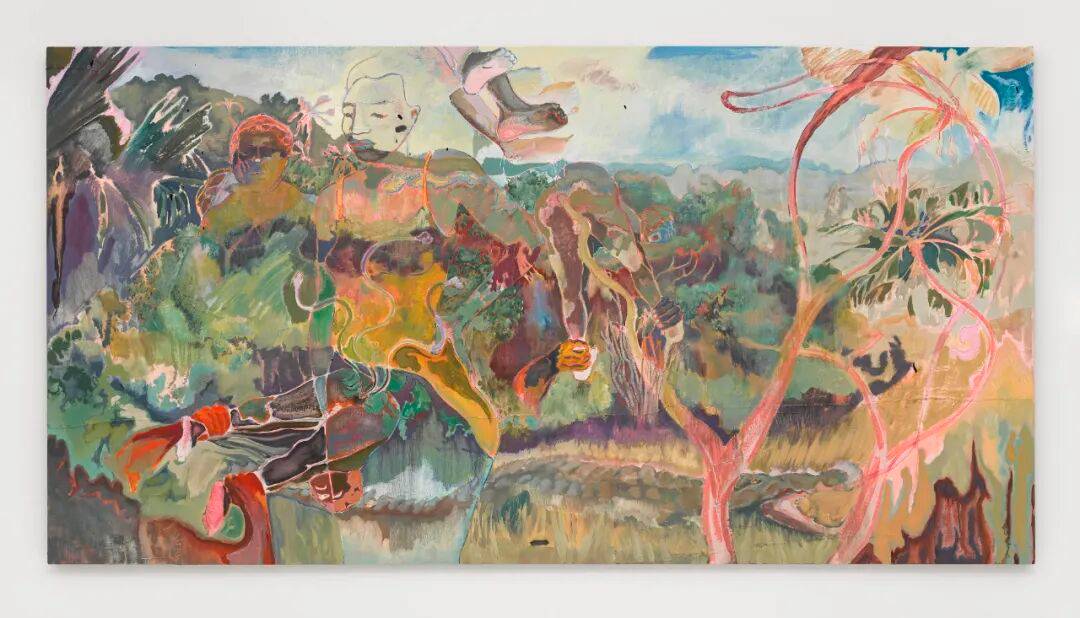
Born in Kenya in 1984, he now lives and works between Nairobi and London. His identity has shaped his painting style. His seemingly dreamlike works condense the social, cultural, and political realities of East Africa, including women’s rights, political conflict, social inequality, violence, extreme disparities of wealth, and the cruelty, desire, love, and sex that people express within such societies. Michael Armitage, Gondola Musicians, 2022. Michael Armitage, The Accomplice, 2019. Day after day, the artist gathers and researches source material in Nairobi and its environs, then brings it back to his London studio to paint.
These large-scale works often take months or even years to complete. To convey the most authentic African cultural colors, Armitage uses Lubugo bark cloth from Uganda as his canvas, embedding the work in Africa’s “land” and “bloodline.” Michael Armitage, The Promised Land at the Mouth of the Mwachema River, 2019. Collection of the Yuz Foundation. Michael Armitage, Paradise Edict, 2019. Interestingly, Armitage has also collaborated with the Royal Mint in Britain to design a one-pound coin scheduled for release in the New Year of 2023.
The intense, direct humanism of his work has led major art institutions around the world to acquire it early, including the Art Institute of Chicago, the Dallas Museum of Art, the Metropolitan Museum of Art, the San Francisco Museum of Modern Art, the Solomon R. Guggenheim Museum, and Tate. Portrait of Zhang Zipiao in her studio. LGDR announced in July this year that it would collaborate with the Chinese artist Zhang Zipiao.
Born in 1993 into an artistic family in Beijing, Zhang Zipiao graduated from the School of the Art Institute of Chicago at 15 before returning to China to begin her career. Her paintings are often enormous. Flowers, fruits, and vegetables are dissected and reconstructed, evoking flesh, organs, bones, and meridians. A forceful sense of life surges from the surface. She uses curves to shape the body into masses; paint flows, fusing or “colliding,” so that the image is no longer static and its movement becomes more pronounced.
She says, “I still cannot balance ‘flesh and spirit’ particularly well, which is why my paintings are so conflicted and entangled.” Zhang Zipiao, Pomegranate 04, 2021. Image courtesy of the artist and White Space. Zhang Zipiao, Battlefield 11, 2021. Image courtesy of the artist and White Space. Her signature Battlefield and Floral Field series began with a medical photograph of human bones and flesh from research materials belonging to her mother.
Vivid pinks and reds, together with enlarged images of throats, occupied the artist’s childhood. They also constitute her tribute to Figure with Meat, painted in 1954 by Francis Bacon and held by the School of the Art Institute of Chicago. This year, Long Museum presented a large exhibition of her work from more than two years, which received a strong response in the field. In an interview, she said, “I let those lines, forms, and images lead me into the next stage.”
Portrait of the artist Han Bing. Han Bing. Thaddaeus Ropac announced in June this year that it would represent the Chinese artist Han Bing. Born in Shandong, China, in 1986, she graduated from the Central Academy of Fine Arts in 2008 and now lives and works in Paris. She is the youngest recipient of the Contemporary Oil Painting Research Award from the National Art Museum of China. Urban elements recur throughout her work, including city streets and building facades, because she has lived in New York, Los Angeles, Shanghai, Beijing, and Paris. The textures and patterns of these cities have left different traces on her surfaces.
She uses oil paint and spray paint to break down, filter, and deconstruct recognizable urban elements into fragments, then recomposes them into new abstract effects. Han Bing, Apartment, 2022. Han Bing, St. James, 2014. For Han Bing, “painting is a way of resisting the excess information forced upon us.” Her work has also been collected by major international museums and private institutions, including the Los Angeles County Museum of Art.
Portrait of Tammy Nguyen. Photograph: Annie Ling. Tammy Nguyen. Lehmann Maupin announced in May this year that it would represent the artist Tammy Nguyen. Born in San Francisco in 1984, she is a Vietnamese American artist who now lives and works in New York. Her oil paintings, prints, drawings, and lacquer works carry a strong Southeast Asian character. Many are inspired by history books, current-affairs reporting, and illustrated volumes on plants and animals, including the Bandung Conference, the first major Asian-African conference attended by the leaders of 29 nonaligned countries during the Cold War, forest cities, Malaysian coastal-development projects, and red-shanked douc langurs.
Dense, layered brushwork combines fictional imagery with geopolitical subjects and Southeast Asian myths and legends. Looking at her paintings is like reading a book: they contain an abundance of cultural questions to discuss. Tammy Nguyen, Anno Domini 40, 1945, 1969, 2022. Tammy Nguyen, Deep Time, the Hours, and Trajectories: Treasure, 2021. Tammy Nguyen exhibition view, 2021, MoMA PS1, New York. Photograph: Martin Seck. Image copyright: MoMA PS1. Nguyen is also the founder of Passenger Pigeon Press, an independent publisher devoted to bringing scientists, journalists, writers, and artists together to create politically engaged interdisciplinary projects.
Her paintings and artists’ books have been collected by numerous art institutions and public libraries, including the Center for Book Arts and the New York Public Library; the Clark Art Institute Library in Williamstown, Massachusetts; the Mayer Library of the Dallas Museum of Art; and the Museum of Modern Art Library in New York. König Galerie is one of Germany’s most authoritative galleries. This year marks exactly 20 years since its founding, making it a relatively young major gallery by European standards.
Its youth has also given it an international and unrestricted outlook, and it has discovered many interdisciplinary, emerging, and conceptual artists. This year, König Galerie signed two internationally rising stars: Ayako Rokkaku, one of Japan’s most popular artists, and Arghavan Khosravi, an Iranian woman artist trained in graphic design.
Portrait of Ayako Rokkaku. Ayako Rokkaku. After the Los Angeles edition of Frieze in May this year, König Galerie announced that it would represent Rokkaku. Born in Chiba, Tokyo, Japan, in 1982, she now lives and works between Berlin, Porto, Tokyo, and Amsterdam. Unlike many formally trained artists, Rokkaku began creating art seriously only at the age of 20 and is self-taught.
She is known for painting with her bare hands, and painting live on canvas has become another signature of her practice. Ayako Rokkaku working in her studio. Image copyright: Avant Arte. She says she was inspired by the Italian Arte Povera movement of the 1960s and likes to work with everyday materials, such as discarded cardboard and wood. She often applies acrylic paint directly by hand, painting intuitively.
Ayako Rokkaku, Untitled, 2011. Ayako Rokkaku, Untitled, 2021. Her free and spontaneous style—adorable girl figures, bright colors, and a loose, graffiti-like directness—has quickly made her one of Japan’s most popular contemporary artists and an emerging star on the international art scene. In recent years, her work has repeatedly broken auction records; her most expensive work has sold for more than $1.3 million.
Rokkaku’s work is held by institutions including the Museum of Contemporary Art, Gunma; the Museum of Contemporary Art, Karuizawa; the Sehwa Museum of Art in South Korea; the Danubiana Meulensteen Art Museum in Slovakia; and the Voorlinden Museum in the Netherlands. Portrait of Arghavan Khosravi. Arghavan Khosravi. In July this year, König Galerie announced its representation of Khosravi.
Born in Shahrekord, Iran, in 1984, she now lives and works in New York. Khosravi received a bachelor’s degree in graphic design from Azad University in Tehran in 2006 and a master’s degree in illustration from the University of Tehran in 2009. She later went to the United States, where she repeated undergraduate and graduate study at Brandeis University’s Studio Art program and the Rhode Island School of Design. Arghavan Khosravi, Garden, 2022. Arghavan Khosravi, Untitled, 2018. Female figures appear frequently in Khosravi’s work, which is steeped in Iran’s historical circumstances, political forces, and persistent cultural ideas.
Her work is visually arresting as well as socially and politically charged. Working between sculpture and painting, she uses vivid colors and loosely abstract collage to express her country, her era, and her concerns in ways that are not overtly aggressive but remain metaphorically charged. Portrait of Sahara Longe. Sahara Longe. Taylor Gallery announced its representation of Sahara Longe in April this year. Born in London in 1994, she is a British artist of Sierra Leonean heritage who lives and works in London.
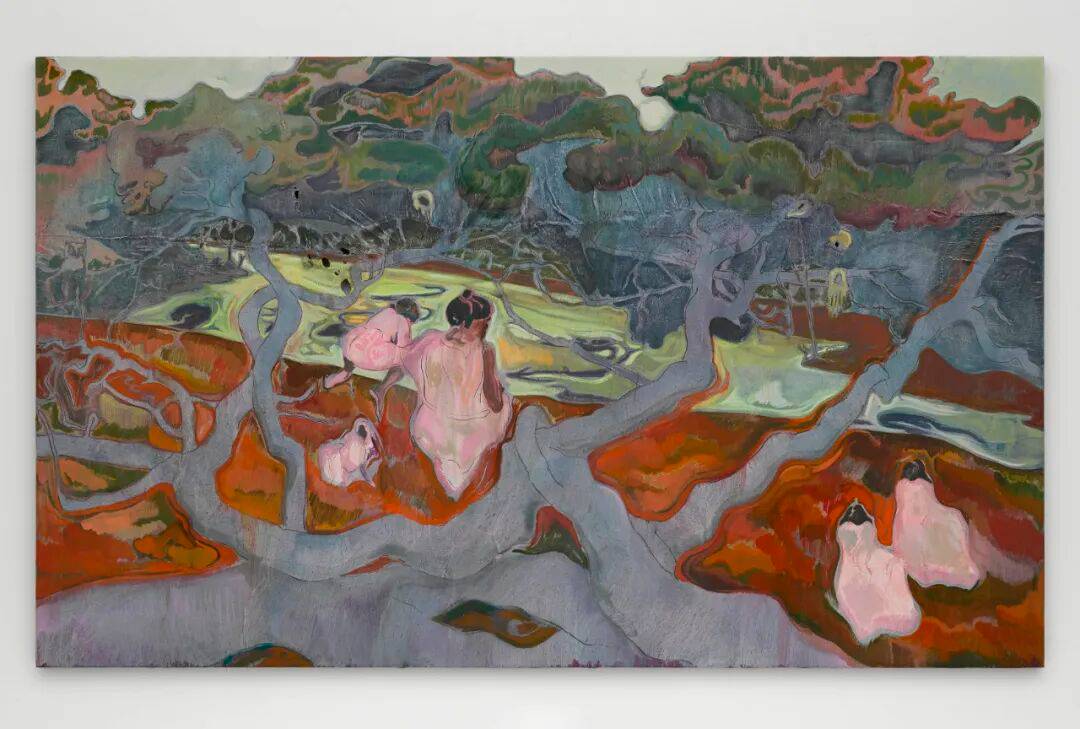
Her paintings are primarily portraits. The figures are often depicted with stiff gestures and ambiguous expressions, posing within mysterious social relationships. The velvetlike surfaces and the finely rendered unease of the figures merge with a vivid naturalism, recalling Gauguin’s paintings of Tahiti. Sahara Longe, Street Scene, 2022. Image copyright: the artist and Taylor Gallery. Sahara Longe, Party Scene (Red and Green), 2022. Image copyright: the artist and Taylor Gallery. Her paintings are richly colored and monumental in scale. In a contemporary context, they reinterpret the styles of classical masters including Anthony van Dyck, John Singer Sargent, and Gauguin, while reconsidering visual hierarchy and the traditions of art history.
Her work has also entered the collections of important private collectors and institutions, including the Beth Rudin DeWoody Collection, the Linda Pace Collection, the Zabludowicz Collection, and Simon Nixon. Louise Giovanelli, Prairie, 2021. Among the artists born in the 1980s and 1990s signed by these international blue-chip galleries in 2022, one can see the galleries’ attention to pluralism in art, minority voices, cultural identity, and artistic geography. Artists from Africa, Asia, and Latin America, including many young Chinese artists, have come to the attention of these authoritative galleries and begun to make their voices heard internationally.
In the coming year of 2023, we hope that the young artists discovered by these major galleries will use new work to shake up the art world, illuminating through art the trauma and gloom left by three years of the pandemic. Editor: Huang Xirui. Image copyright: the respective artists and their current or former representing galleries.