Eight Years in the Making: Why Is This Summer’s Most Anticipated Museum in Oslo?
This summer, Norway’s New National Museum opened in central Oslo after eight years of planning, nearly $700 million in construction costs, and a vast new home for the country’s art, design, and cultural history......
By / Xirui Huang · 13 min read
How did Norway’s new National Museum rethink the visitor’s encounter with art in 2022?
Following the 2022 opening, Xirui Huang interviews Stina Högkvist about Norway’s National Museum in Oslo. The Munch room and coloured galleries provide a route into the display: blue walls respond to Munch’s paintings, while relationships between art, design and craft encourage visitors to move across disciplines. Digital interpretation and public communication also form part of the discussion, connecting the breadth of the collection with a more accessible cultural experience.
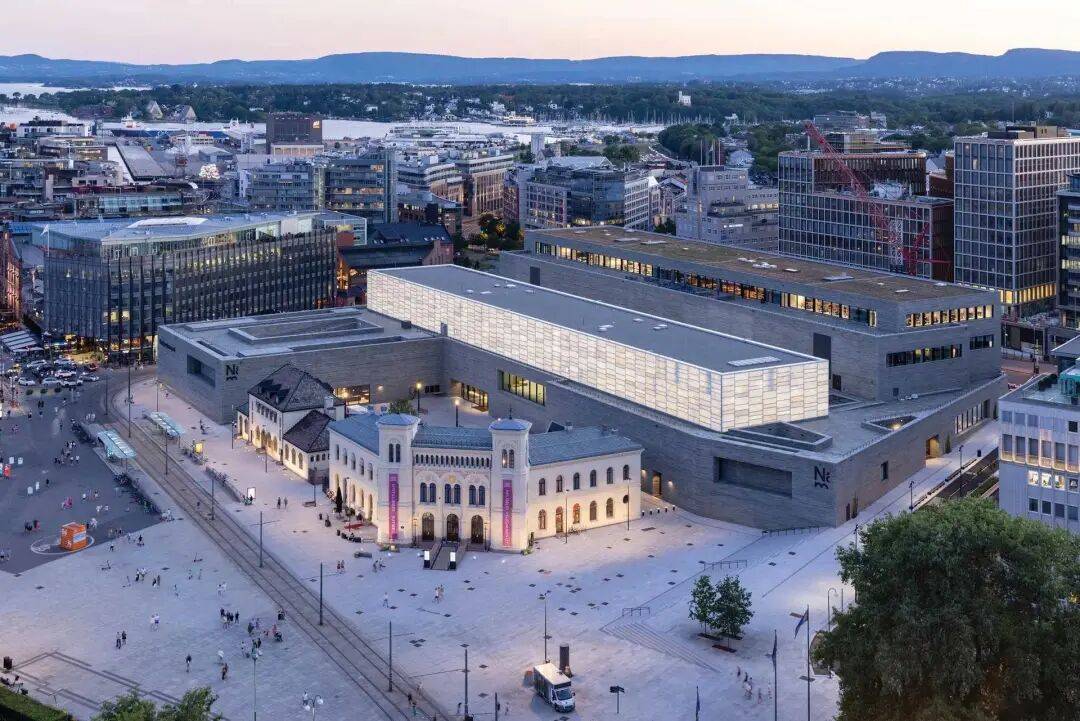
This summer, a much-anticipated museum opened to the public in central Oslo, Norway: the New National Museum. Planned beginning in 2014, built over eight years, and costing nearly $700 million, it encompasses 54,600 square meters, including 13,000 square meters of exhibition space, and can display 6,500 works. In scale, it surpasses Amsterdam’s Rijksmuseum and the Guggenheim Museum Bilbao, making it Europe’s newest—and largest—art museum.
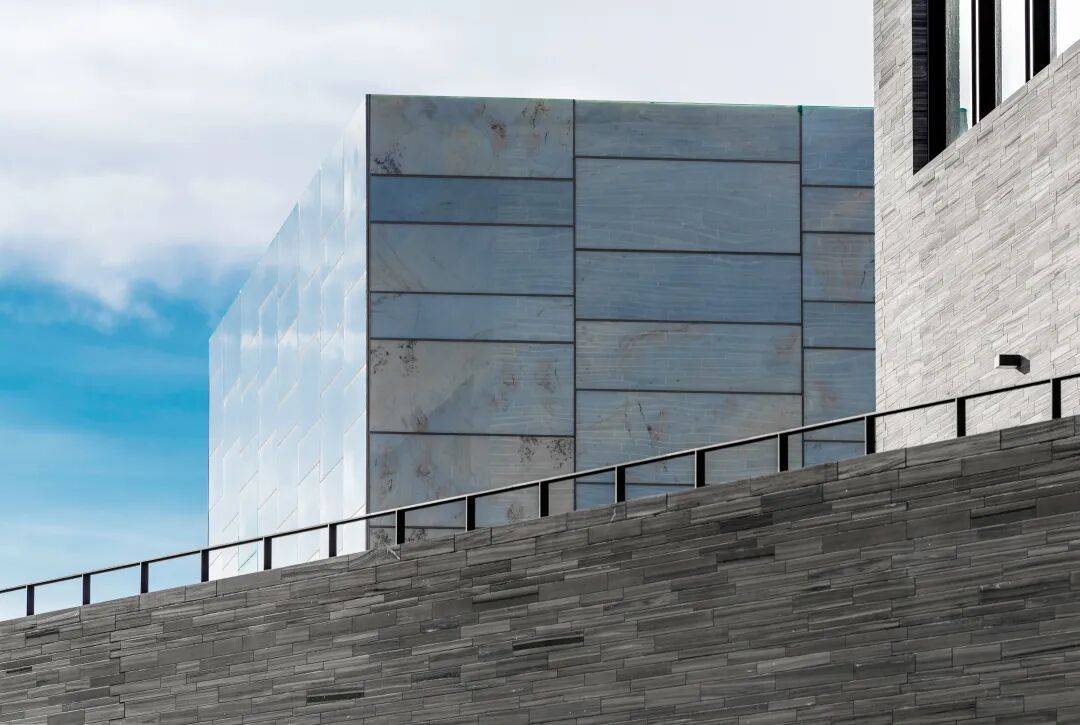
The exterior of the New National Museum, photographed by Iwan Baan, 2022. The museum brings together four institutions: the National Gallery of Norway, the Architecture Museum, the Museum of Decorative Arts and Design, and the Museum of Contemporary Art. Its holdings are remarkable, numbering more than 400,000 objects. A new Munch Room presents Norway’s national artistic treasure, Edvard Munch’s The Scream, alongside 18 of his central works in a new setting.
SECTION 01 | The Return of Munch and the Unique Colorful Exhibition Wall
A month after the opening, Yi Tiao Art had the good fortune to become the first domestic publication to interview Stina Högkvist, the New National Museum’s director of exhibitions, in an exclusive conversation about the museum’s work behind the scenes and in its galleries.
Installation view of the Munch Room, New National Museum, photographed by Iwan Baan, 2022. Visitors entering the New National Museum can choose among as many as 87 galleries, encountering works from antiquity to the present: antiques, sculpture, design, painting, fashion, and contemporary art. But without question, the Munch Room is the museum’s star gallery. In 2019, the old National Gallery, founded in 1842, closed. The Scream and the other works by Edvard Munch in its collection had spent three years out of public view.
Edvard Munch, The Scream, 1893. Photograph by Børre Høstland. Edvard Munch, The Dance of Life, 1899–1900. Photograph by Børre Høstland. The New National Museum designed the Munch Room specifically for Munch’s work. Its walls are painted a quiet, muted blue that echoes the blue in The Scream while colliding with the orange tones of the painting’s central figure, producing a powerful visual effect.
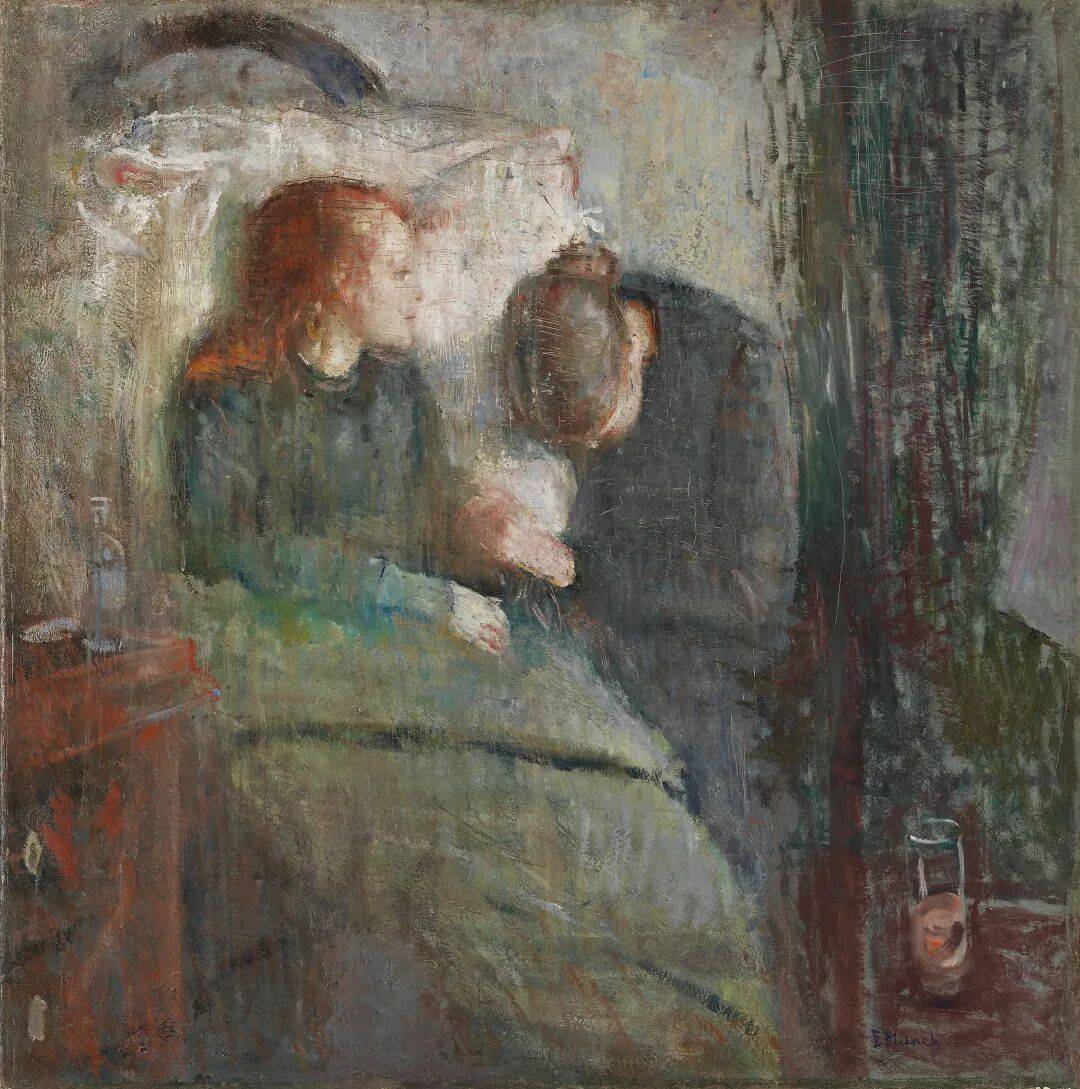
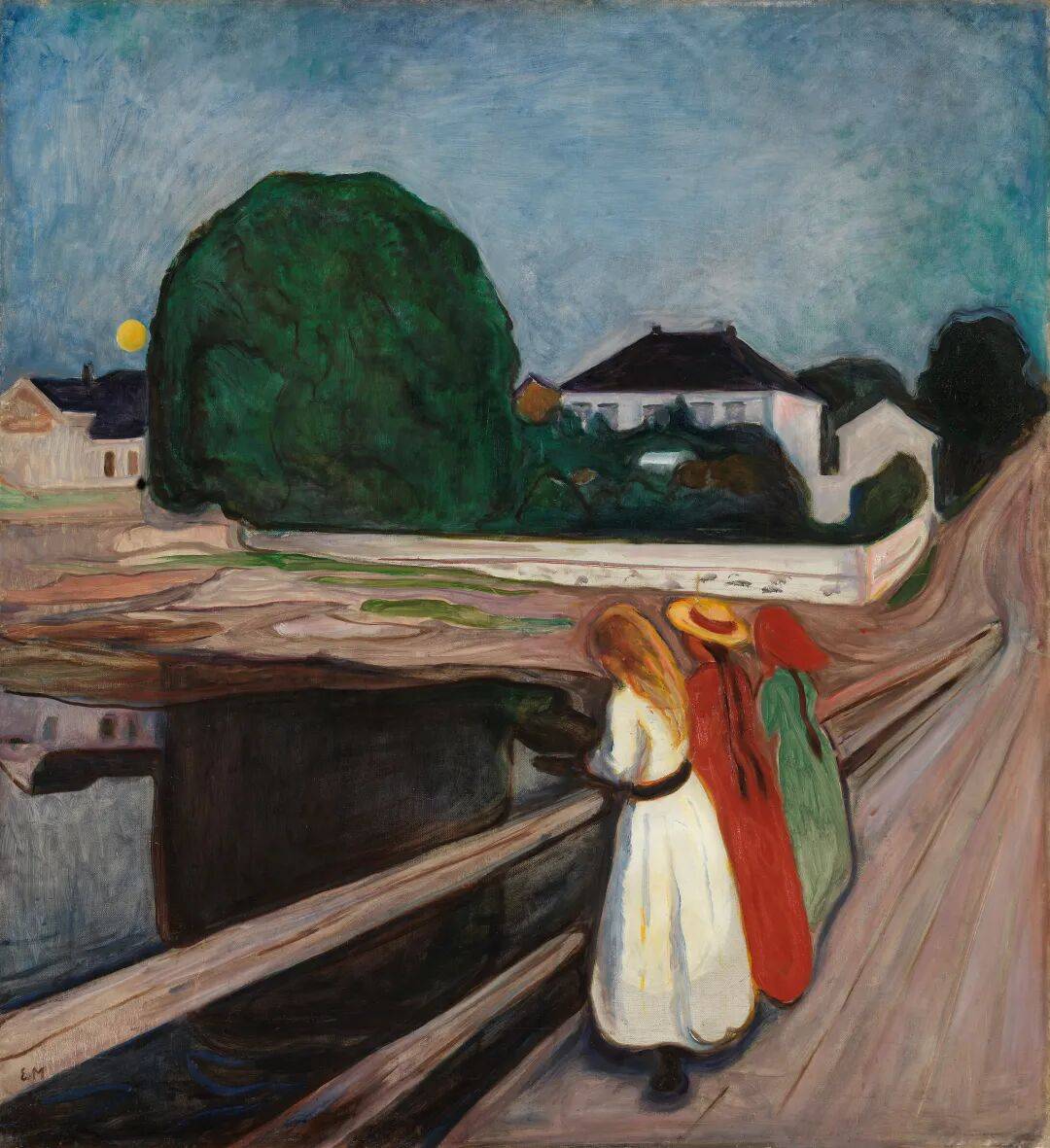
The most intriguing aspect of the Munch Room is the museum’s attempt to reconstruct the kind of gallery Munch designed for his own work in the 1930s. By then, Munch, born in 1863, was approaching seventy. Edvard Munch, The Sick Child, 1885–1886. Photograph by Børre Høstland. Edvard Munch, Girls on the Bridge, 1901. Photograph by Børre Høstland. “At that time, Munch designed a gallery in the old National Gallery to hang his own work. The original display included The Scream, although in the 1890s it was called The Face of Life. The gallery also contained Madonna.”
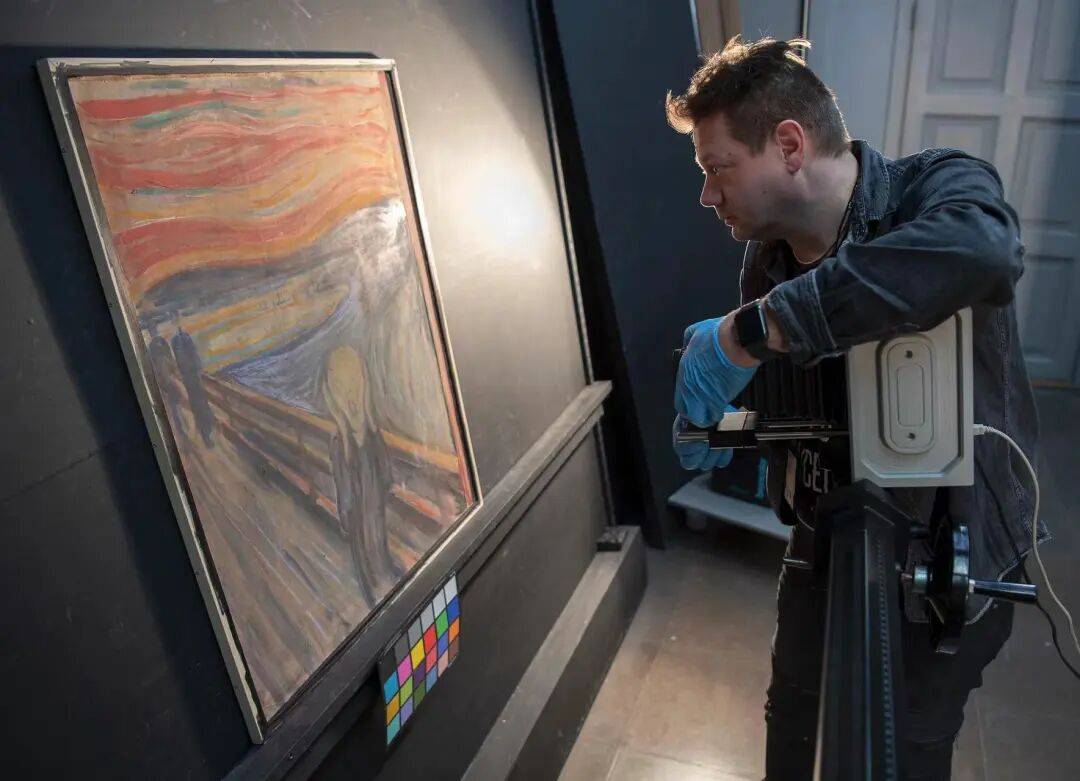
Högkvist explained. Following reference materials and documentary records, the new museum has reconstructed Munch’s design as fully as possible. Högkvist added, “We have 53 works by Munch in the collection. The Munch Room displays the 18 most important; the others are scattered throughout the regular galleries.” The Scream undergoing X-ray scanning by the museum’s conservators. Photograph by Annar Bjorgli. The new museum also contains enormous storage facilities for 400,000 objects, along with conservation and research studios.
The exhibitions department made a number of new discoveries while sorting through the old paintings from the former gallery’s collection.
“Munch’s The Scream originally existed in four versions. Through X-rays, we discovered that the one in our collection is the first version.” Edvard Munch, Madonna, 1894–1895. Photograph by Børre Høstland. X-ray image of Madonna. Photograph by Annar Bjorgli. The research team also found a handwritten inscription by Munch on the underpainting of Madonna. “Some people had previously suspected that the work was a forgery, but the inscription proves that the one in the collection is certainly an original by Munch—and the first version.”
Högkvist grew visibly excited when she spoke of these discoveries. Installation view, New National Museum, photographed by Iwan Baan, 2022. Alongside the widely admired Munch Room, Winter Night in the Mountains—repeatedly voted Norway’s most popular painting—hangs with celebrated classical sculptures in a central gallery on the first floor. The Norwegian painter Harald Sohlberg was Munch’s contemporary, but his style belonged to the New Romantic movement.
He rendered the Nordic landscape with reserve and restraint. Harald Sohlberg, Winter Night in the Mountains, 1914. Photograph by Børre Høstland. In the distance, snow-covered mountains rise beneath a sky of deep blue. Between two peaks, the North Star seems to be the only color in the darkness; in the foreground, the sharp points of bare trees thrust upward like drawn swords, introducing a tensile movement into the stillness.
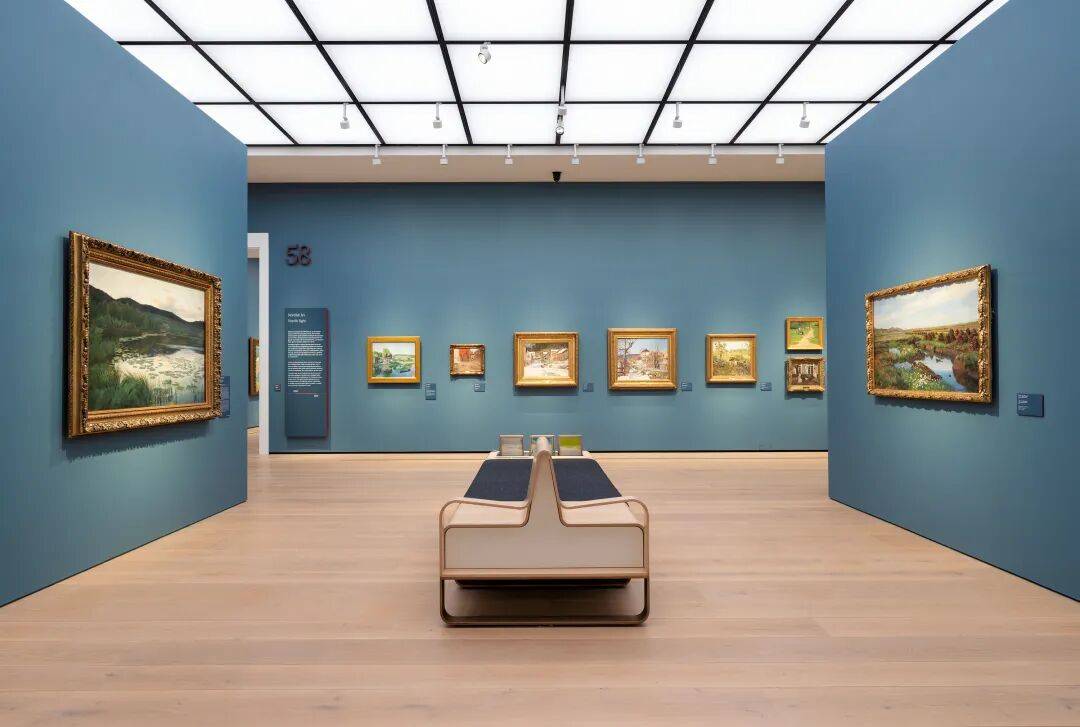
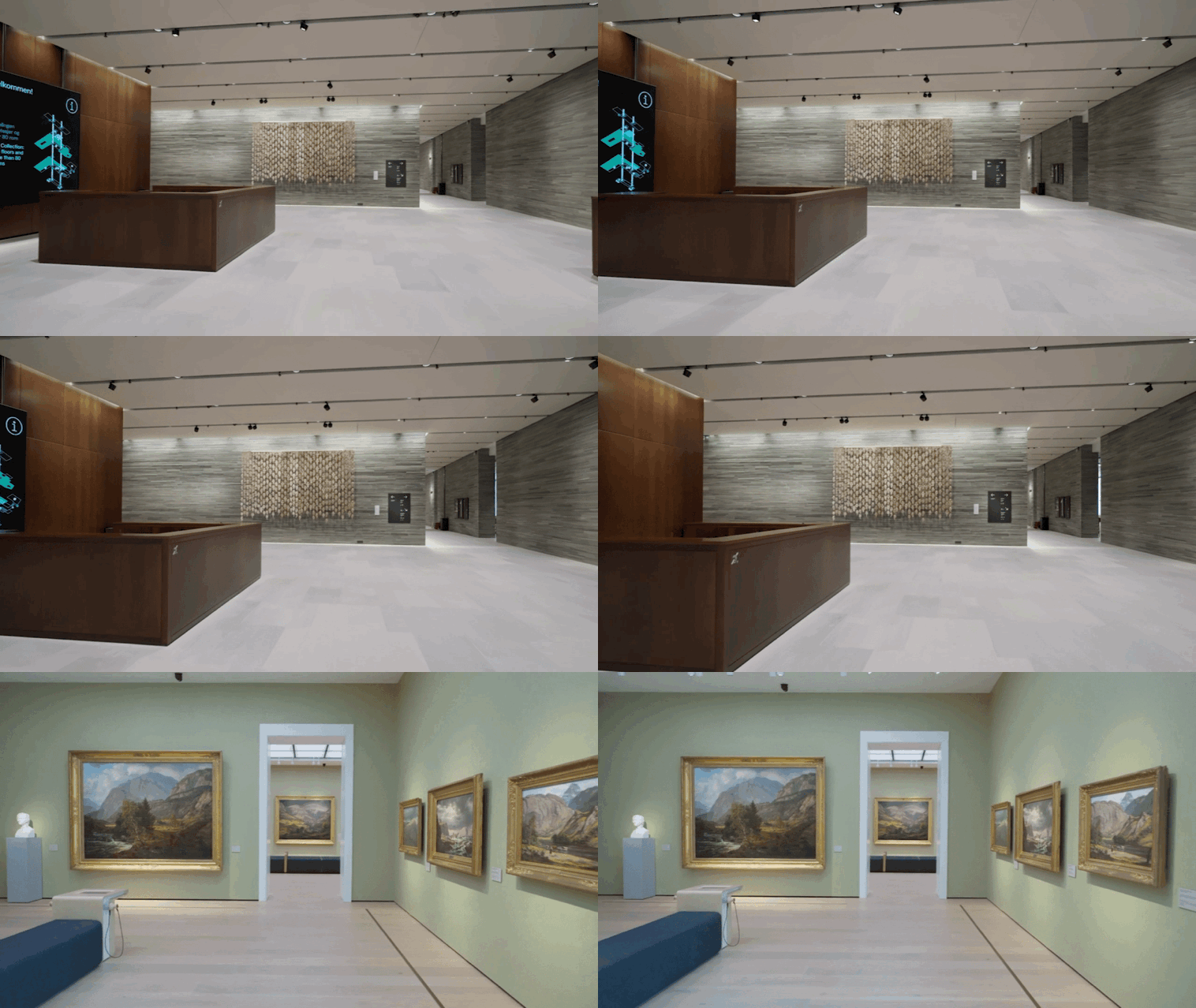
To echo the painting, the gallery walls are also painted deep blue. Entering the room, visitors may feel the chill and solitude of a Norwegian winter night. Installation view, New National Museum, photographed by Iwan Baan, 2022. The colors of the gallery walls are among the new museum’s major innovations. “Visitors absolutely love these multicolored walls,” Högkvist told us. Nearly all 87 galleries use different colors, sometimes responding to the works and sometimes setting off pieces from a particular period.
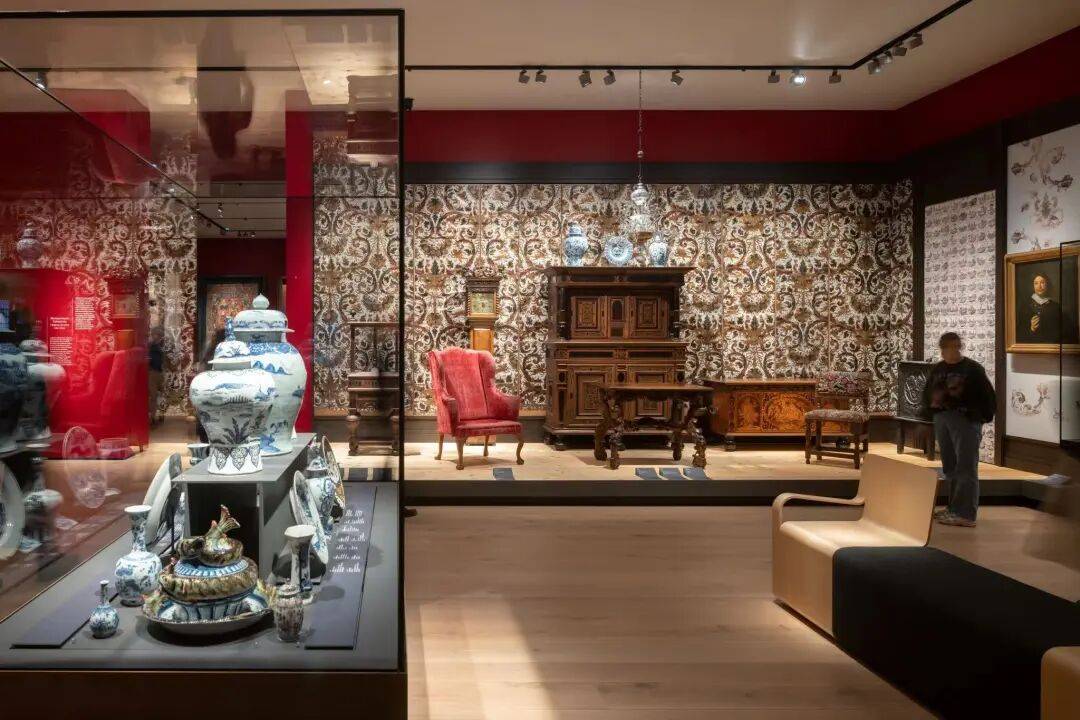
In the room devoted to Impressionist painting, the walls are sky blue, softening the hazy halos of light in the pictures. In the Nordic landscape galleries, a fresh pale green seems to carry visitors, in an instant, into the natural world. Installation view, New National Museum, photographed by Iwan Baan, 2022. Simone Leigh’s sculpture is in the center. Installation view, New National Museum, photographed by Annar Bjørgli, 2022. In the gallery displaying Chinese Ming-dynasty export porcelain and antique furniture sent to Europe, the walls are painted a particularly vivid Chinese red.
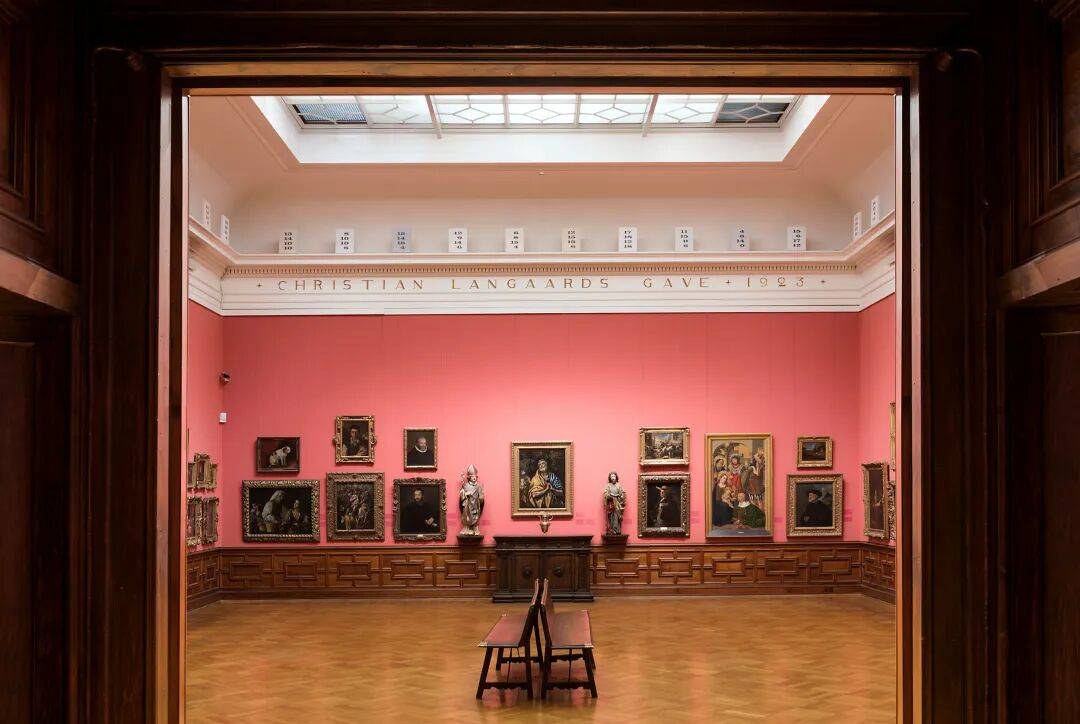
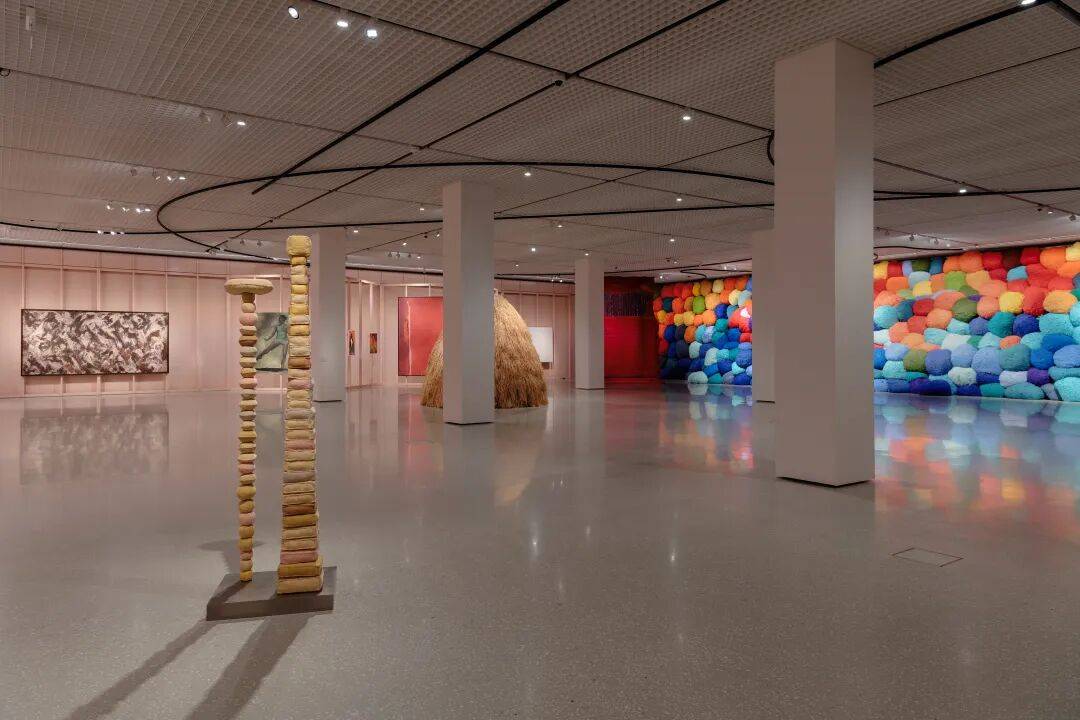
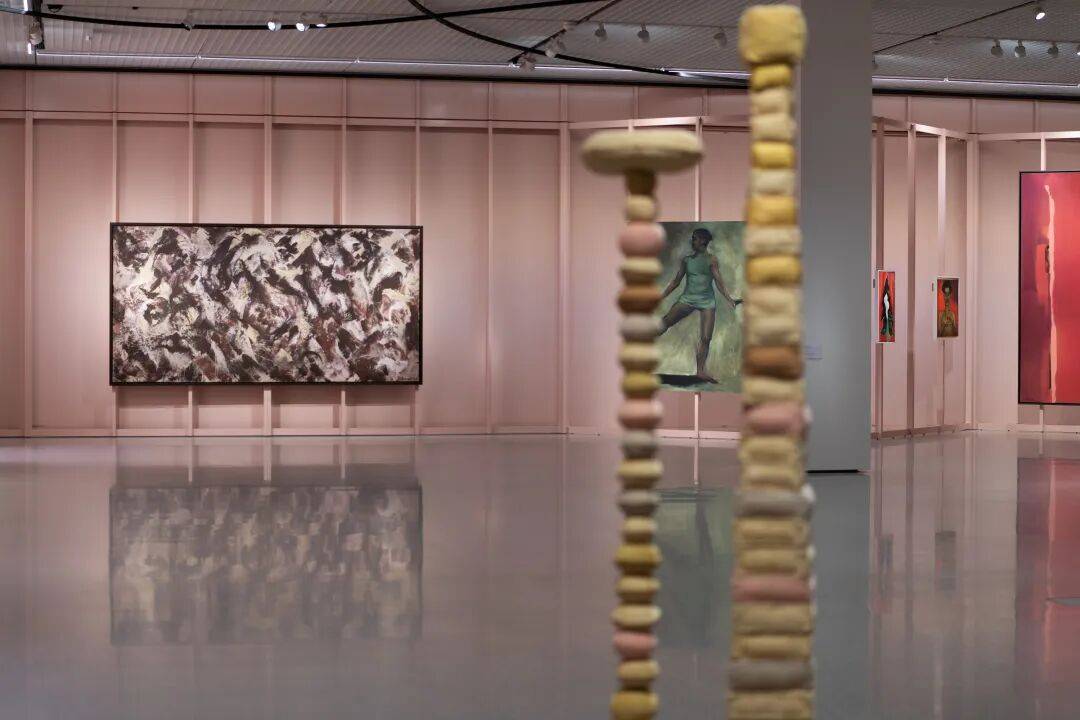
The most avant-garde contemporary-art gallery has subtly pink walls. Sculptures by Simone Leigh, who received the Golden Lion at this year’s Venice Biennale, stand against them, creating a strong visual impact. For the exhibitions team, the use of colorful walls is, in a sense, a revival. The old National Gallery, founded in 1842, before its closure; installation view, 2018. “Before the 1960s, the concept of the ‘white cube’ did not exist. The walls of many museums were brightly colored.”
But once the idea that “white walls make paintings stand out” became widespread, museums and galleries around the world almost universally adopted all-white walls. White, however, is not a universal solution. When the color is right, a wall can enhance a work’s effect many times over. The team initially considered using dark gray throughout, but Högkvist recalled an experience in a large German museum: “Gray, gray, and more gray. By the end of the day, I was visually exhausted.”
Installation view, New National Museum, photographed by Iwan Baan, 2022. As director of exhibitions, Högkvist led her team through a lengthy process of choosing a color for each gallery. Every color was debated and adjusted over an extended period before being finalized.
“Our museum is so large that I don’t want visitors to become visually fatigued. I want them to feel something new each time they enter the next gallery.” In the future, the museum will also change wallpapers, carpets, and other elements for new exhibitions, so that every visit offers a different experience. Installation view, New National Museum, photographed by Iwan Baan, 2022. The New National Museum opened with four major exhibitions, each with its own character. Exhibition 1: The permanent collection, highlighting Nordic art and culture. The first is the permanent exhibition, which presents the museum’s holdings. It contains the largest number and range of objects, spanning the broadest period, with galleries on both the first and second floors.
SECTION 02 | Viewing the Four Inaugural Exhibitions at Once
The first-floor permanent galleries use a chronological structure to connect Nordic culture and history through objects in the collection: eleventh-century devotional sculpture; Chinese Ming-dynasty blue-and-white export porcelain, evidence of maritime trade; antique furniture reflecting different decorative traditions; and jade jewelry. Installation view, New National Museum, photographed by Iwan Baan, 2022. The design section includes medieval Norwegian tapestries, eighteenth-century glassware, and everyday objects that demonstrate Nordic design, such as an early bicycle and early posters, as well as works by many emerging designers of recent years.
Installation view, New National Museum, photographed by Iwan Baan, 2022. The fashion section includes the gown worn by the Queen of Norway at her coronation, as well as the glittering royal garments of Queen Maud and Queen Sonja. The architecture gallery uses models to reconstruct celebrated buildings from European architectural history and introduces projects designed around the world by influential contemporary Norwegian architects. Hans Gude and Adolph Tidemand, Bridal Procession on the Hardangerfjord, 1848, was among the works that toured Norway after the National Gallery closed in 2019.
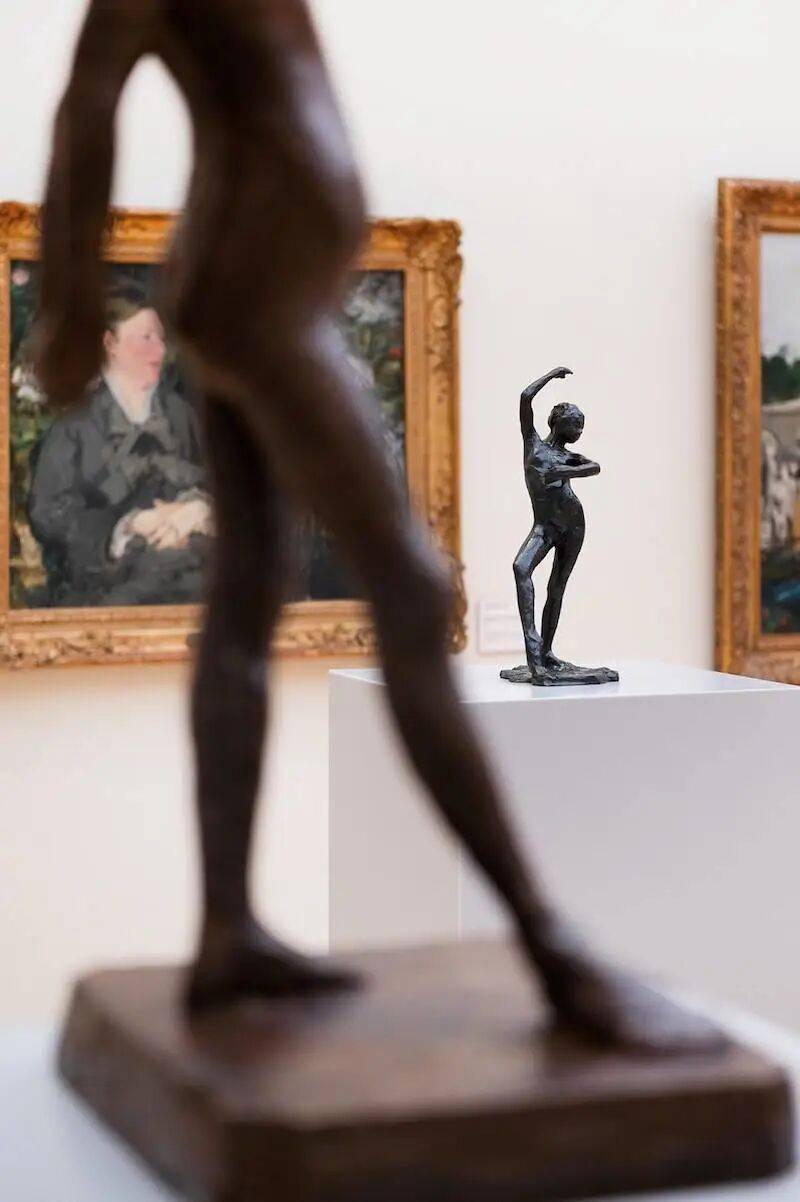
A landscape by “the father of Norwegian landscape painting,” Johan Christian Dahl, 1842. Vincent van Gogh, Self-Portrait, 1889–1890. The second-floor permanent galleries are likewise organized chronologically. Titian, Rodin, Munch, Cézanne, van Gogh, Dürer, Manet, Picasso, and other towering figures of art history enter into a dialogue across time with artists in the contemporary galleries, forming a condensed history of Western art.
Exhibition 2: The young family collection, highlighting women artists. Fredriksen special-exhibition space, New National Museum, photographed by Annar Bjørgli, 2022. Another opening exhibition presents the Fredriksen Family Collection. The family’s holdings were assembled by the billionaire sisters Kathrine and Cecilie Fredriksen in memory of their mother.
The museum received more than seventy works from the Fredriksen family collection and selected, for this presentation, “works by women artists from the 1920s to the present, shown together for the first time.” Among the most striking are a monumental sculpture by Simone Leigh and a woven sculpture by the prominent American fiber artist Sheila Hicks. Fredriksen special-exhibition space, New National Museum, photographed by Annar Bjørgli, 2022. Högkvist explained that the Fredriksen collection is relatively young. In the future, the museum will use themes such as Minimalism, figurative painting, and Abstract Expressionism as curatorial strategies for selecting works and developing special exhibitions.
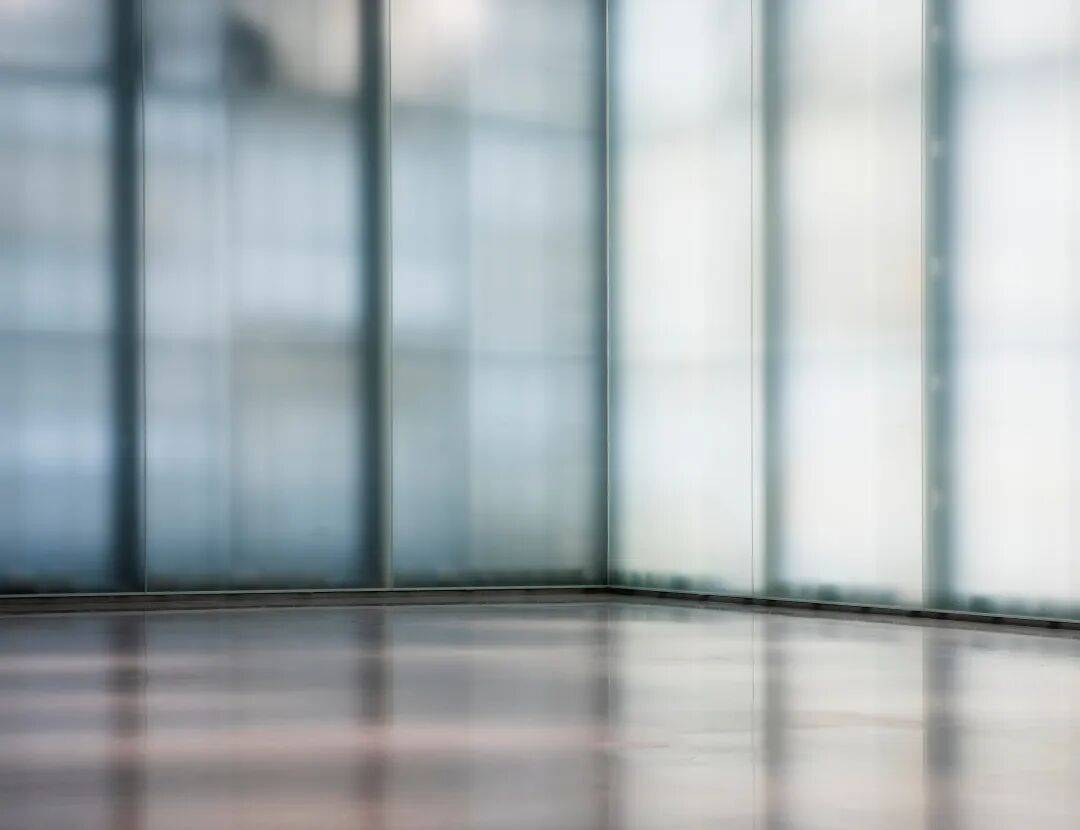
The gallery itself is distinctive. Its central partitions are movable, allowing the museum to shift the walls and create a new, appropriate space when the next group of works is installed. Exhibition 3: Norwegian contemporary art, with 147 Norwegian contemporary artists. The interior of the Light Hall on the top floor, photographed by Iwan Baan, 2022. The Light Hall is the new museum’s signature space and its most conspicuous interior.
Its exterior walls are made of translucent material, while the interior contains 9,000 LED lights. Seen from inside or out, it radiates a white, almost sacred glow worthy of its name, the Light Hall.
“I Call it Art” space, New National Museum, photographed by Annar Bjørgli, 2022. The opening exhibition I Call it Art takes place in this space. A major survey of Norwegian contemporary art, it brings together more than 1,000 works by 147 Norwegian contemporary artists. The artists range in age from twenty-one to eighty-two, encompassing practitioners active across several generations. The exhibition also includes foreign artists who live and work temporarily in Norway, among them the Chinese visual artist Lin Wang.
Högkvist said the purpose of the exhibition was to use the opening to draw global attention to contemporary art in Norway.
“Some people had suggested that I organize exhibitions of internationally famous contemporary artists. I told them that we could exhibit those artists in the future, but for the opening exhibition, I wanted to ‘return to Norway.’”
“I Call it Art” space, New National Museum, photographed by Annar Bjørgli, 2022. To prepare the exhibition, the curators traveled throughout Norway, speaking with museums and active artists before completing the process of gathering and organizing the works. The title, I Call it Art, is an open-ended statement that also poses a question to visitors: Who decides what counts as art?
Is it the artists? Is it the art galleries?
“We want to return the power to define art to artists, so that they can use it for self-reflection and self-criticism. Then we want to see what we have missed, and why we can see or understand only certain parts of art.” Exhibition 4: Norwegian fairy-tale illustration, youth- and child-friendly. Left: Theodor Kittelsen, The Forest Troll, 1906. Right: Theodor Kittelsen, A Cat So Greedy, 1906. “East of the Sun, West of the Moon” space, New National Museum, photographed by Annar Bjørgli, 2022. Another special exhibition takes particular care with the museum’s younger visitors.
SECTION 03 | Spending US$700 million to build buildings with "light"
“East of the Sun, West of the Moon” is the poetic title of this temporary exhibition of prints and paintings. It presents original drawings made 150 years ago by the artists Erik Werenskiold and Theodor Kittelsen for Norway’s first illustrated children’s book.
“In Norway, fairy tales are an important part of Norwegian culture, as indispensable as a hearth. Visitors of all ages will see stories here about trolls and clever little boys, cats and the moon, and death.” Exterior and aerial view of the New National Museum, photographed by Iwan Baan, 2022. The New National Museum stands in central Oslo, beside the harbor and across from City Hall. It was designed by the renowned German-Italian architect Klaus Schuwerk.
Before this, the studio’s projects had spread across Europe and the United States, including the Museum of Contemporary Art Chicago, Berlin’s Museum of Modern Art and Pergamon Museum, Frankfurt Airport, and Helsinki Central Library in Finland. From the pier, looking toward the museum, one sees a long, smooth, square gray stone box. In form, it resembles “an elegant gray leopard” lying behind the Nobel Peace Center and the old dockside railway station.
At the top of the building sits a translucent marble pavilion glowing white. At night, it appears to float in the air, an arresting sight. This is the Light Hall, nearly 2,400 square meters and one of the building’s architectural highlights. Exterior and facade of the top-floor Light Hall, photographed by Iwan Baan, 2022. Up close, the facade reveals varying shades of white and gray. The exterior is clad in cross-cut slate quarried in Norway; from different angles, the divisions of color and texture create an unusually rich visual effect.
The walls are also secured with bronze fittings. Before long, green vines will climb across the entire exterior during spring and summer. Interior of the New National Museum. Inside, the lobby is spacious, with a ceiling 4.6 meters high. The broad doorways are lined with slate, while the gallery floors are made entirely of fine oak. The museum’s regular galleries occupy two floors—the gray volume visible from outside.
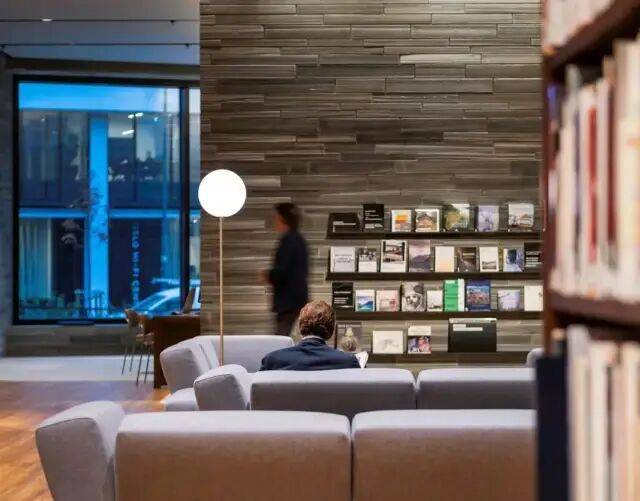
Higher up, beyond the Light Hall, there is a garden terrace where visitors can drink coffee and watch the sunset over the Oslo Fjord after seeing the exhibitions. Interior of the New National Museum. The museum’s art library is shown below. Beyond its 13,000 square meters of exhibition space, the museum offers a full range of facilities: a restaurant, café, shop, auditorium, and the largest art library in the Nordic region. The new museum cost $700 million, with materials accounting for a substantial portion.
Högkvist explained that the museum had considered cheaper materials, but Norwegian slate can reduce greenhouse-gas emissions by at least half. Because it is extremely resistant to aging, the building should still have a fresh, enduring presence a century from now. The same principle guided the interior design, including the oak floors. Replacing oak with linoleum would have made construction easier and cheaper, but the floors would need to be replaced every five to ten years, which would be far less sustainable.
“From the beginning, the museum was designed with the goal of remaining sustainable for the next several centuries.” Portrait of Stina Högkvist, director of exhibitions at the New National Museum. Beginning in 2006, Högkvist worked at Norway’s Museum of Contemporary Art. In 2018, she was appointed director of exhibitions at the new museum. She was delighted, but not without apprehension, and told us frankly: “My specialty is contemporary art. Now I have to deal with so many other kinds of objects, which is a completely new field for me. There is so much to learn!”
The curatorial team she leads is also unusually large, consisting of 23 curators, each with a different area of expertise. They work both independently and collaboratively. Yet the challenges remain immense for a project of this scale, as museum director Karin Hindsbo put it: “This is a completely blank canvas. Choosing what to do is very difficult.”
The team was gratified that, one month after opening, the new museum had received an enthusiastic response. “I see many visitors coming to the museum and often spending the entire day here, arriving when it opens in the morning and staying until closing.” A visitor’s tour posted on the New National Museum’s Instagram page. The museum has opened itself not only to the city but also to “embracing new media” online. Högkvist pointed out that the official website now features information about works in the collection and interviews with artists in the contemporary exhibitions. On social platforms, the museum also selects photographs taken by visitors, working to make art feel more accessible and grounded in everyday life.
A view over part of Oslo. Since opening this summer, the New National Museum has joined the Munch Museum, which opened in 2019, the Astrup Fearnley Museum of Modern Art, opened in 2012, and the Oslo Opera House, completed in 2008 and standing on the waterfront, to form a cultural cluster within the city.
“To make art accessible to everyone, and to reflect our time and the society in which we live.” That may be the most generous vision of Norway’s New National Museum—and of every museum in the world.