The Year’s Most Vivid Exhibition: Starting with Everyday Food
During the 2026 Lunar New Year, an exhibition about food is unfolding in Wenzhou. Using familiar ingredients—apples, milk, rice, blood clams, spices, canned goods—as its point of departure, the work of eleven artists or artist groups places the everyday back within larger historical and social contexts, from oceans, forests, and factories to home kitchens and multinational supply chains. Food is not only a matter of taste; it also reveals the tangled relations among labor, capital, and power......
By / Xirui Huang · 15 min read
What does Selective Eating: Digestive Ethics at Hong Art Museum explore?
At Hong Art Museum in Wenzhou, 11 artists and collectives use apples, milk, rice, blood clams, spices and canned food to trace invisible labour, industrial agriculture, logistics and global supply chains. The exhibition also connects Wenzhou’s manufacturing, migrant networks and local food traditions to questions of profit, ethics and social responsibility.
Partial Eclipse: An Exhibition About More Than Just Food
During the 2026 Lunar New Year, an exhibition about food is unfolding. Using familiar ingredients—apples, milk, rice, blood clams, spices, canned goods—as its point of departure, the work of eleven artists or artist groups places the everyday back within larger historical and social contexts: from oceans, forests, and factories to home kitchens and multinational supply chains. Food is not only a matter of taste; it also reveals the tangled relations among labor, capital, and power.
The exhibition is taking place at Hong Art Museum in Wenzhou. But neither the timing nor the location is accidental. Wan Qing, *Open Wide*, 2022, *Selective Eating*, exhibition view, Hong Art Museum, Wenzhou, 2026. *Selective Eating*, exhibition and public-program views, Hong Art Museum, Wenzhou, 2026. “Wenzhou is an extremely lively city during the Spring Festival, and many people from Wenzhou who live elsewhere, even overseas, return home at this time.”
“Our museum actually opened on the fourth day of the Lunar New Year. We hope the exhibition will be seen by more people during this period of intense population return, and that discussion will take place when the city is most active.” For Pan Hongzheng, the museum’s director, Wenzhou itself is a window onto global systems of production and trade.
“From private manufacturing to immigrant networks spread around the world, Wenzhou has always been on the front line of capital flows and the circulation of goods. If food is understood as a highly systematized commodity—involving land, labor, processing, transportation, and sales—Wenzhou happens to occupy several points within that system.” Taking advantage of the festive energy of the New Year, we spoke with Pan Hongzheng and the two curators, Guo Hetian and Qin Kechun of te editions, about how the exhibition came together.
SECTION 01 | Starting from an apple, we enter an "invisible food chain"
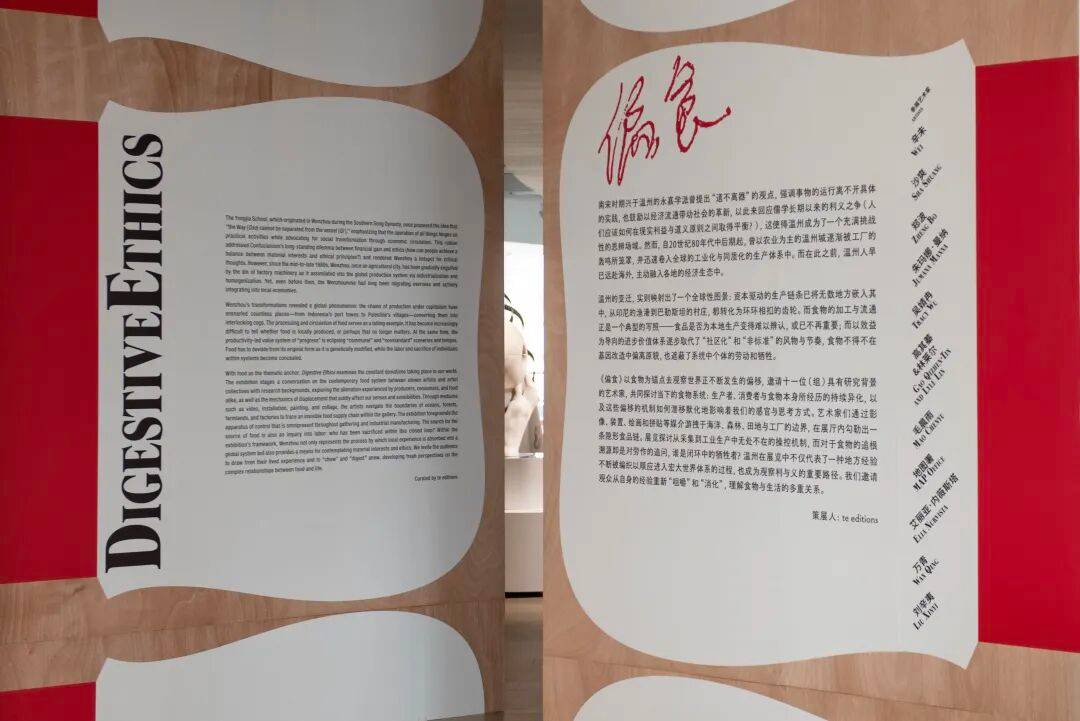
*Selective Eating Digestive Ethics*, entrance, Hong Art Museum, Wenzhou, 2026. At the entrance to *Selective Eating Digestive Ethics*, we first encounter three questions: “Think back to the food you ate most recently. Where do you think it came from? And where was it actually produced?”
“What invisible labor lies behind a meal? Who has been overlooked?”
“As food becomes increasingly standardized, do our tastes and sensations change along with it?” The idea for these questions came to Pan Hongzheng after he saw an exhibition entrance at Museum Kunstpalast in Düsseldorf, Germany, last May, where visitors were invited to respond to participatory questions.
“I remember standing in front of those questions for a long time. I paused not because they were complicated, but because they brought me directly back to my own experience. At that moment, I realized that the relationship between a museum and its audience does not have to be established only through artworks. Sometimes a question itself is enough to create a connection,” Pan explained.
*Selective Eating*, exhibition view, Hong Art Museum, Wenzhou, 2026. Before entering the galleries, then, he wanted visitors not to confront an “already completed exhibition narrative,” but first to pause and chew over their own memories of food and bodily experience—to recognize that the exhibition’s concerns are not remote abstractions, but closely bound to everyday life.
“Fifteen years ago, eating a mangosteen was still something unusual. You might buy only five, and if two were bad, you would have to return to the market the next day and ask the vendor to exchange them. Today, mangosteens have become fruit that can be purchased at any time through online channels. This change is not simply a shift in eating habits; it is the result of purchasing power, transnational trade systems, and modern logistics networks acting together. So rather than telling visitors directly that we are going to discuss global production chains and ethical structures, it is better to invite them first back into their own bodies and lives.
“Starting with personal experience and then entering into a discussion of systems makes the path more natural, and more powerful.”
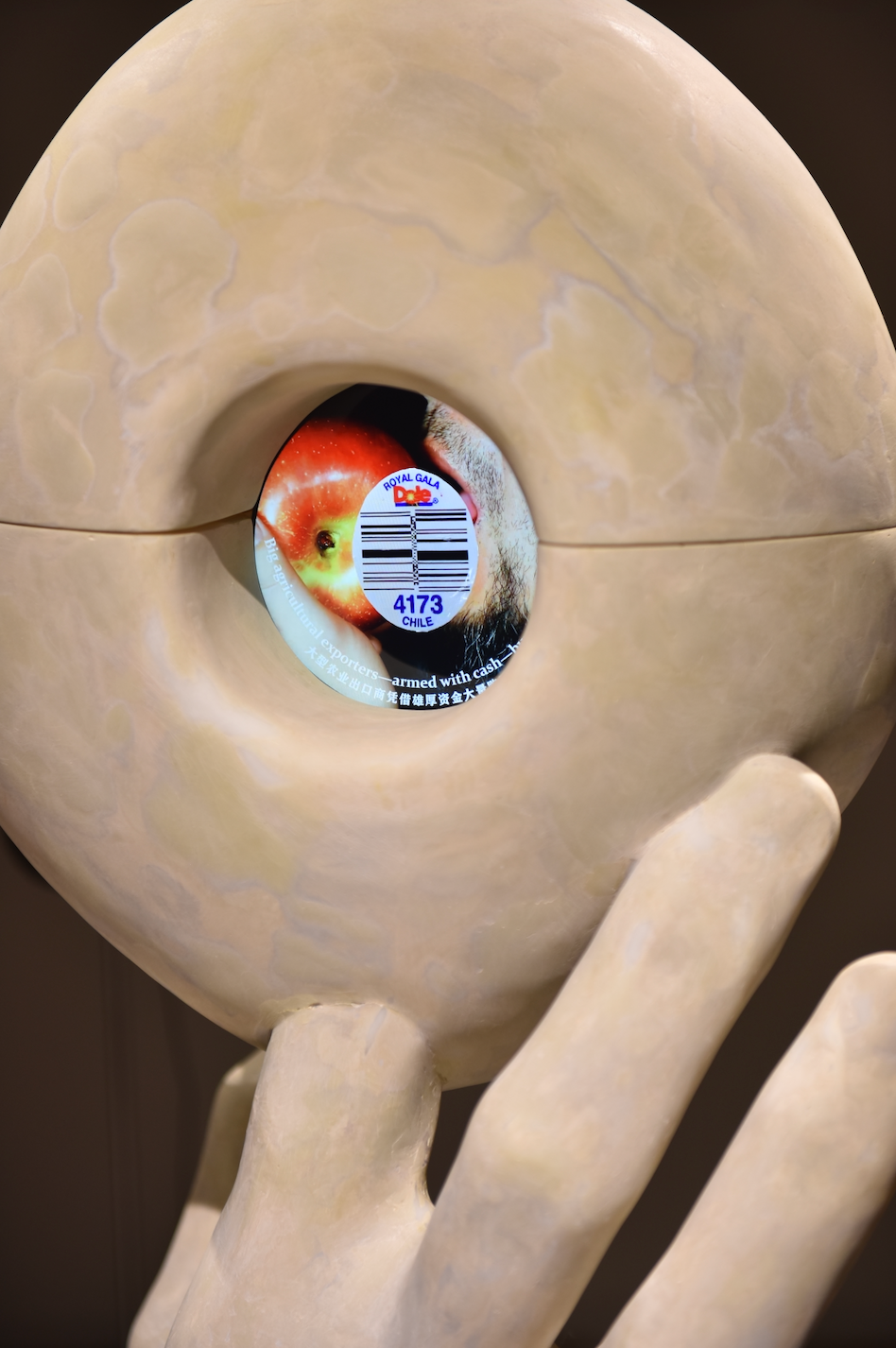
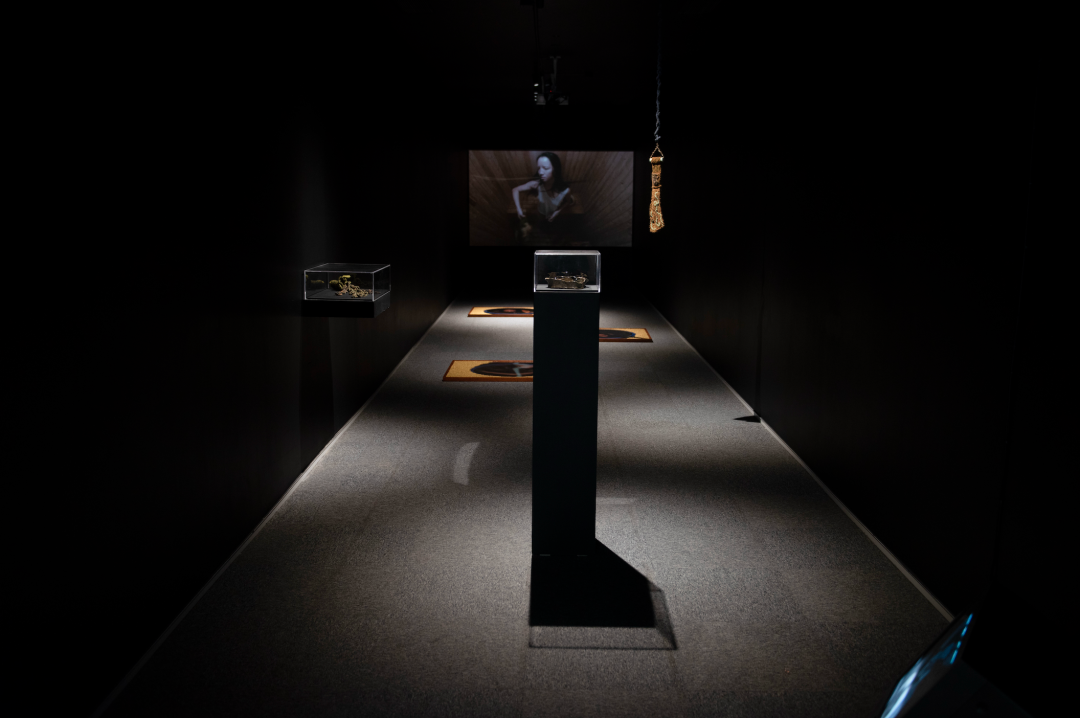
*Selective Eating*, exhibition view, Hong Art Museum, Wenzhou, 2026. Xin Wei, *Apple*, 2025, *Selective Eating*, exhibition view, Hong Art Museum, Wenzhou, 2026. The exhibition truly begins with an utterly ordinary apple. At one end of artist Xin Wei’s two-channel video installation, an enlarged apple turns slowly on screen; at the other, the camera takes viewers to an apple-processing plant in distant Chile, in South America. Beside the conveyor belt, female workers repeat the same actions: selecting, wiping, and packaging.
SECTION 02 | Milk, blood clams, pickles, locality of food
An entirely ordinary fruit is suddenly drawn into a complicated global network: land, labor, logistics, capital exploitation, supermarket shelves, and the sweetness in a bite at our tables.
“The apple has always seemed like a starting point for history and imagination. In myth, it becomes the forbidden fruit eaten by Adam and Eve, setting human destiny in motion; Newton’s discovery of universal gravitation also comes through the apple; and today, the iPhone has become a symbol of the age of technology and consumption. From myth and science to capital and technology, the apple is continually given meaning in different contexts. That is precisely why it is both concrete and symbolic, both everyday and metaphorical—a seemingly simple beginning that touches complex structures.”
The curator told us. Liu Xinyi, *Guerilla Squad*, 2018, *Selective Eating*, exhibition view, Hong Art Museum, Wenzhou, 2026. As we continue through the galleries, the space gradually opens up. Hong Art Museum’s exhibition space is circular, and this production-line-like form becomes an important thread in the exhibition’s narrative.
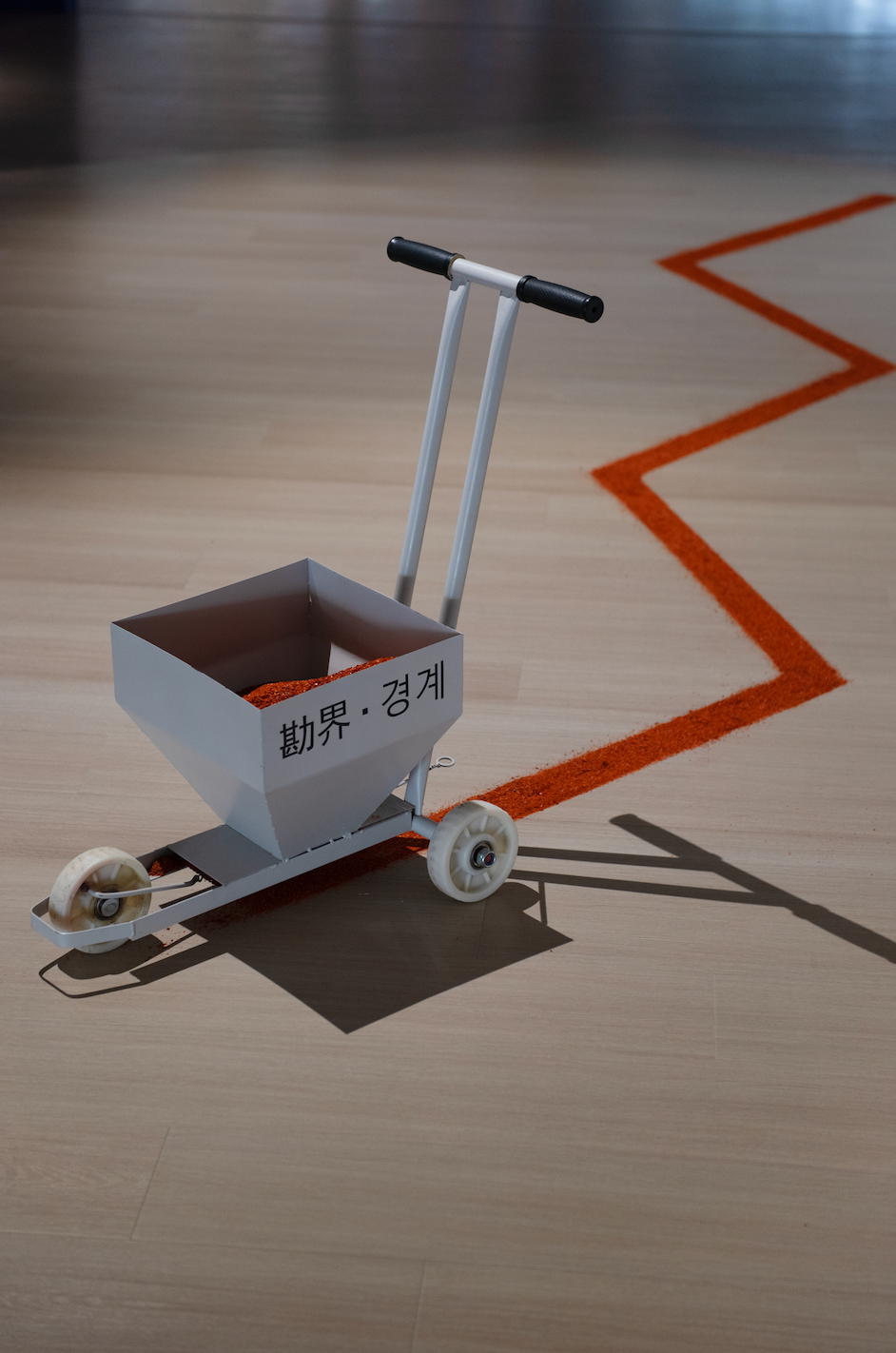
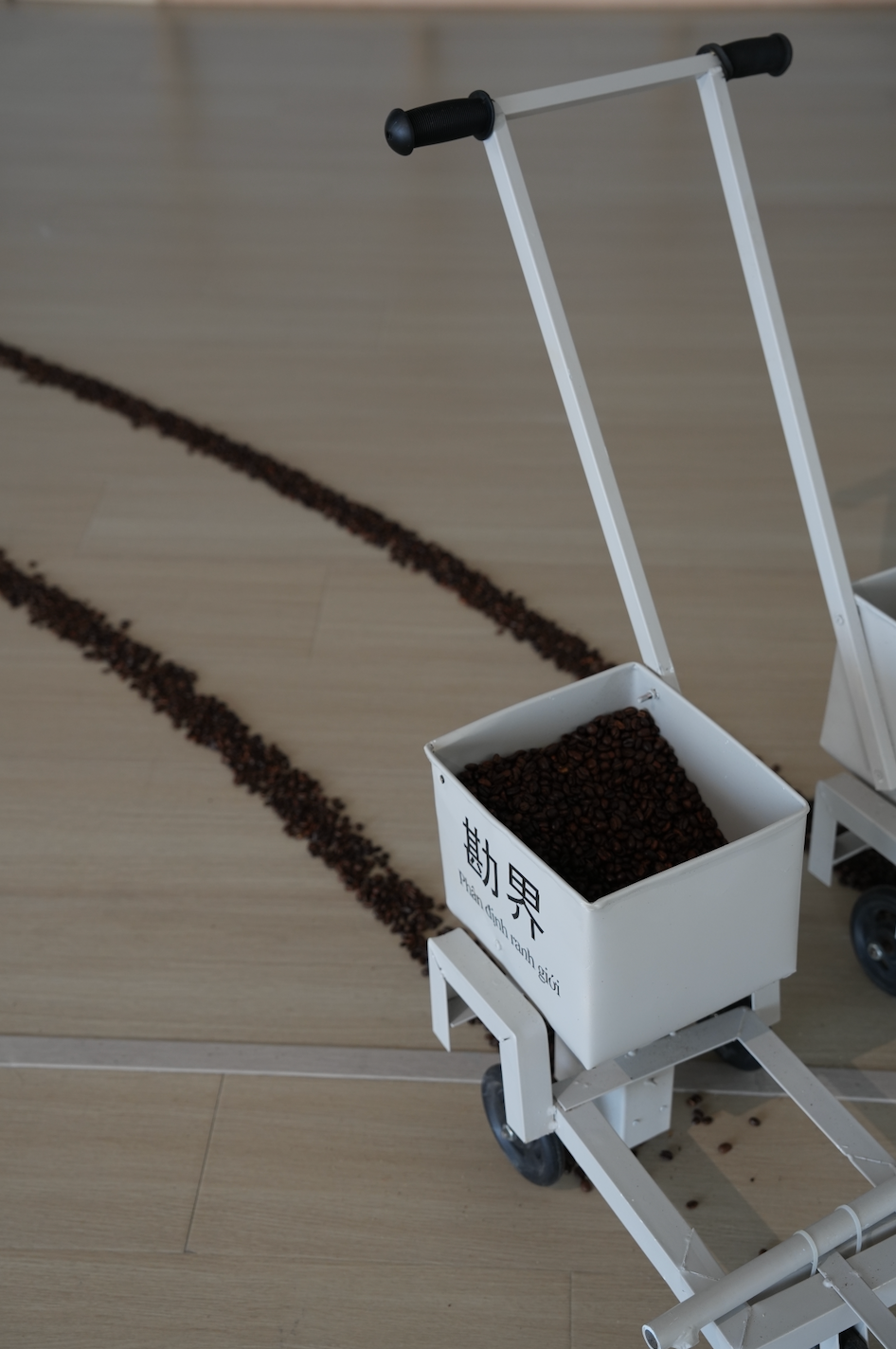
“When we saw this circular space, we naturally thought of the concept of a ‘production chain.’ As visitors move through the galleries, it is almost as if they are walking along an invisible food chain.” Liu Xinyi, *Guerilla Squad*, 2018, *Selective Eating*, exhibition view, Hong Art Museum, Wenzhou, 2026. Along one side of the gallery, coffee beans, chili powder, and coarse sea salt are arranged on the floor. At first glance, they resemble an abstract territorial boundary. These materials make up Liu Xinyi’s work *Guerilla Squad*.
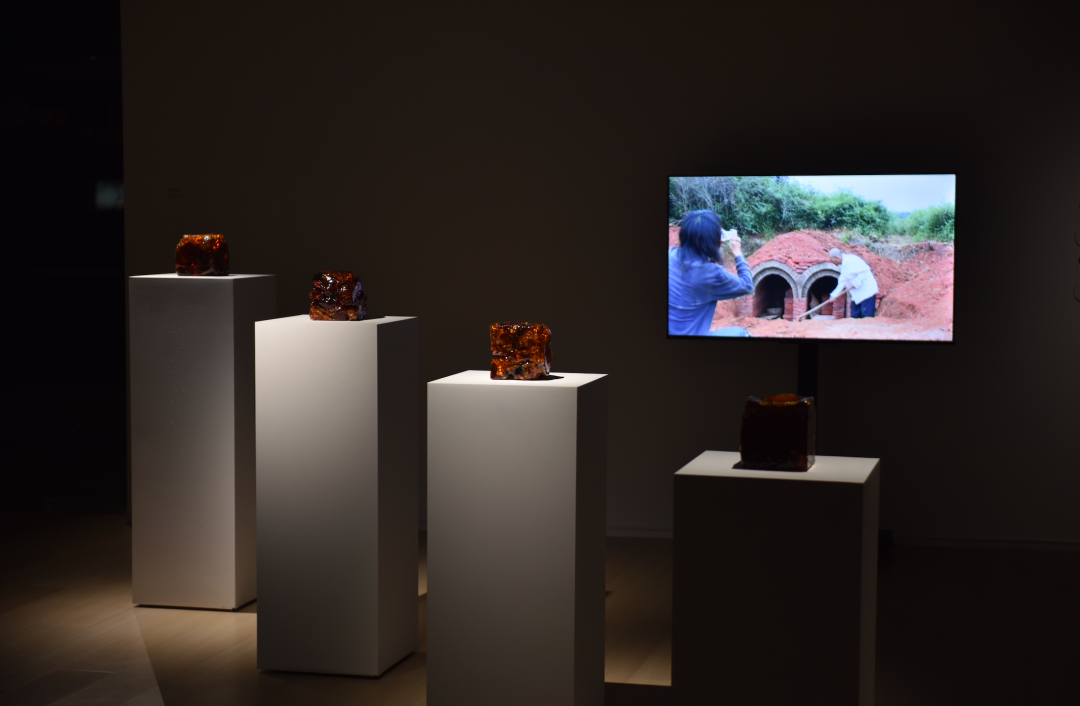
These spices were once among the most important commodities in colonial trade. Over the past several centuries, they crossed oceans in ship holds, driving maritime trade, colonial expansion, and the formation of global capitalism. Today, they look like a small jar of seasoning in a kitchen; like food itself, they have been “digested.” Mao Chenyu, *Geological Memory 2025*, 2025, *Selective Eating*, exhibition view, Hong Art Museum, Wenzhou, 2026. Another work that sets the present systems of food against those of the past is Mao Chenyu’s *Becoming a Rice Seed*.”
Starting from the realities of agricultural cultivation, she introduces a deeper temporal line through a video and four rosin installations. She observes that rice seeds are continually altered by human technology, environmental change, and outside influences, then “reassembled” into new varieties; their life cycles are accelerated and calculated, while their origins and natural qualities become unstable. The curator also explained the composition of one of the works: “One piece incorporates an old rice variety that has now become extremely rare.
“Before modern industrial agriculture took shape, traditional local varieties were preserved and selected by farmers over generations, gradually adapting to local ecologies. In the work, the seed becomes a material vessel carrying memory, local character, and a history of labor.” Zheng Bo, *Survival Manual I*, 2015, *Selective Eating*, exhibition view, Hong Art Museum, Wenzhou, 2026. Artist Zheng Bo’s *Survival Manual I* comes from his recopying, by hand, of a 1961 booklet titled *Wild Edible Plants of Shanghai*.
The book introduced Shanghai residents to edible wild plants in and around the city during the famine years. The handwritten copy is spread out, character by character, beside the museum’s floor-to-ceiling windows.“Zheng Bo’s work was one of the first pieces for which we determined the location. Its plain materials suit natural light, and the work can also extend outdoors,” exhibition designer Wang Yiqi explained.
“When an existing system fails, people are forced to return to an almost primitive state of foraging, relearning survival skills that were preserved in so-called ‘primitive societies’ but forgotten in modern life. Yet this state does not belong only to one particular historical moment. Whether the crisis occurs in the past, present, or future, we seem to have to respond in similar ways. So the work is both a look back at a historical experience and a potential reality that continues to exist.”
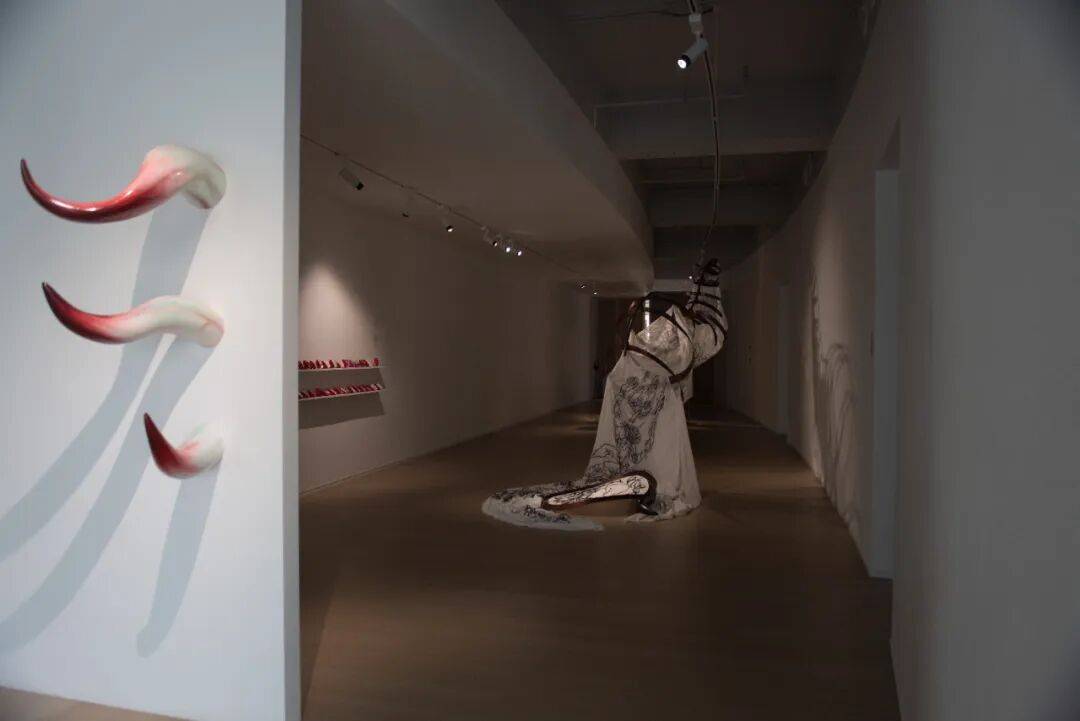
The curator said. Sha Shuang, *Milk Network*, 2025, *Selective Eating*, exhibition view, Hong Art Museum, Wenzhou, 2026. At the center of the gallery, an installation resembling a bull’s horn draws the eye. Fabric and fibers hang from a metal frame, like a giant net or some kind of bodily structure. Its materials include metal, milk fiber, canvas, linen, and yak hair. The materials themselves suggest a complicated relationship: the continually reconfigured connection between industrial production and natural resources.
This is artist Sha Shuang’s *Milk Network*. She is also one of the artists in Hong Art Museum’s residency program, the *Returning Home Project*. During her residency in Wenzhou, she observed the production system of a local dairy plant. Unlike a traditional pasture, the modern dairy industry has formed a highly enclosed production chain. Sha Shuang and workshop participants, *Little Zine*, 2025, *Selective Eating*, exhibition view, Hong Art Museum, Wenzhou, 2026. “As a native of Wenzhou, I discovered that although the city’s humidity and temperature are unsuitable for raising cattle, it nevertheless has several publicly listed dairy companies.”
“I may have been familiar with some of their milk drinks since childhood, but I had never understood how these companies’ internal systems operated, so I used Wenzhou’s dairy products as the entry point for this work.” On one exhibition wall, a Yiming “Lishi Red Egg” milk drink has been cut in half. It is a childhood memory shared by virtually every local child in Wenzhou. Local Wenzhou buffalo, no longer needed for plowing and now devoted to milk production, 2025. Research into Wenzhou dairy companies, photograph provided by artist Sha Shuang, 2026. While visiting factories, Sha also managed, with some difficulty, to find a very old local dairy product at a mobile morning market: Wenzhou salted milk curd.
SECTION 03 | To be an art museum with sociological temperament
It tastes much like the white of a salted duck egg. One bite is enough to understand that it is a “canned protein food” invented under conditions in which storage was difficult.
“I had a very preconceived idea that this food must have poor sales, and might even disappear in a few years. So after I arrived in Taoshan County, I asked the workshop if I could buy several more boxes, hoping to support them in that way. To my surprise, they refused to sell me extra boxes, because vegetarians and elderly people in Wenzhou place orders with them, and if I bought more, those customers would not be able to get any. The seller’s WeChat Moments could be viewed as a map of vegetarians and religious practitioners in the Wenzhou area—they ride their bicycles from house to house to deliver the product to temples or to the places where it has been ordered.
“What this taught me is that a more primitive mode of production may, through its own experimentation, develop another kind of gentler, more intimate connection—and survive very well.” Wu Jingran, *I’m More Familiar with Talking to a Clam Than with This*, 2025, *Selective Eating*, exhibition view, Hong Art Museum, Wenzhou, 2026. Another work closely tied to local eating habits is *I’m More Familiar with Talking to a Clam Than with This*, by Wu Jingran, an artist in the *Returning Home Project*.
At the exhibition, we saw a round table common in Wenzhou food stalls, with traditional tall-footed bowls filled with blood-clam shells.
“I discovered that blood clams are called ‘Wenzhou dark cuisine.’ Some people are afraid of the blood; some find them unclean; some use them as a gimmick for food-streaming videos. Yet they are also a home-cooked dish for older local residents. So, with a certain degree of curiosity, I began the project. Throughout the process, I also loved eating blood clams with people from outside Wenzhou and observing their first experiences. Descriptions that stayed with me included ‘like going to the dentist’ and ‘like a cat licking its own wound.’”
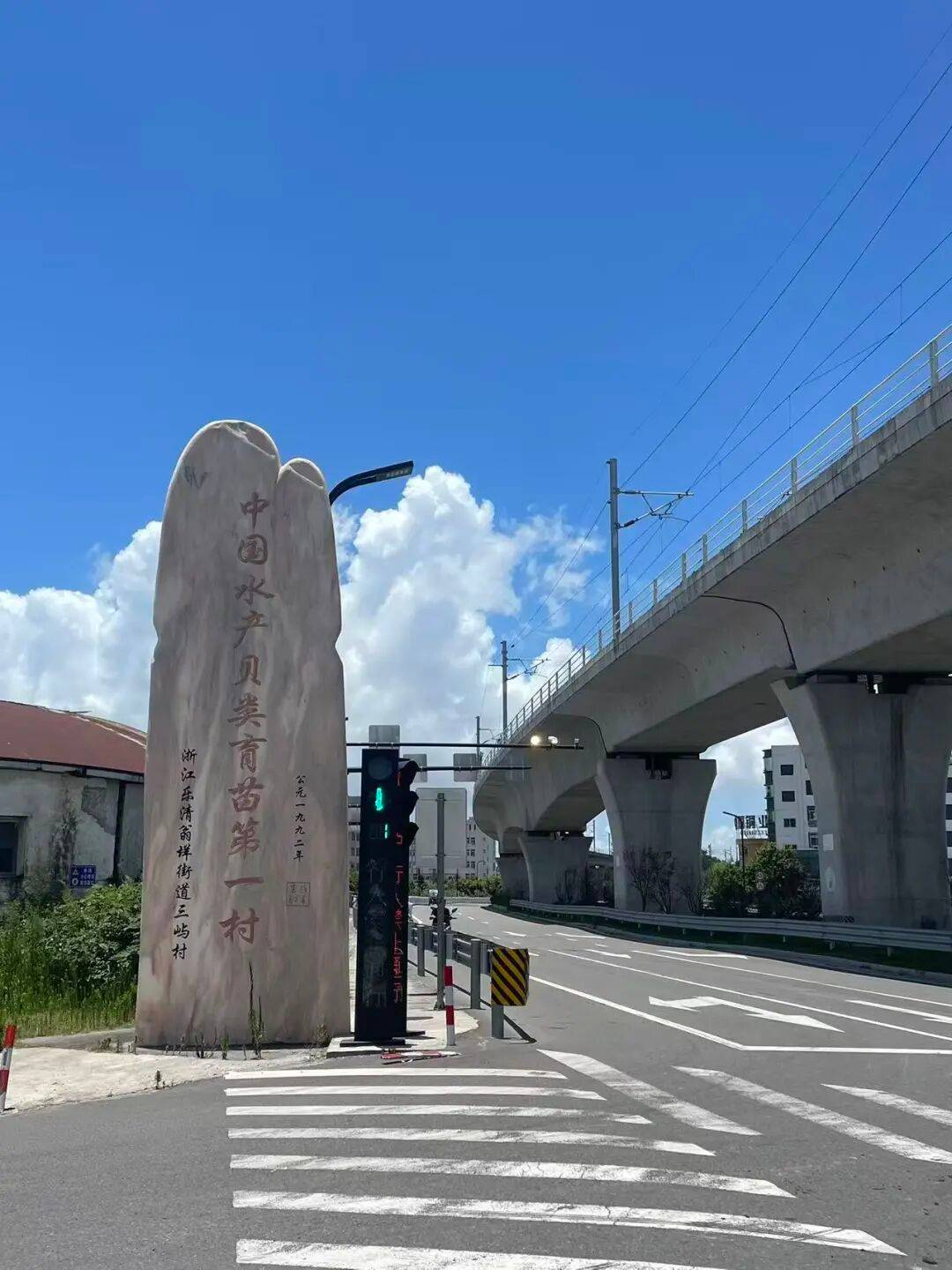
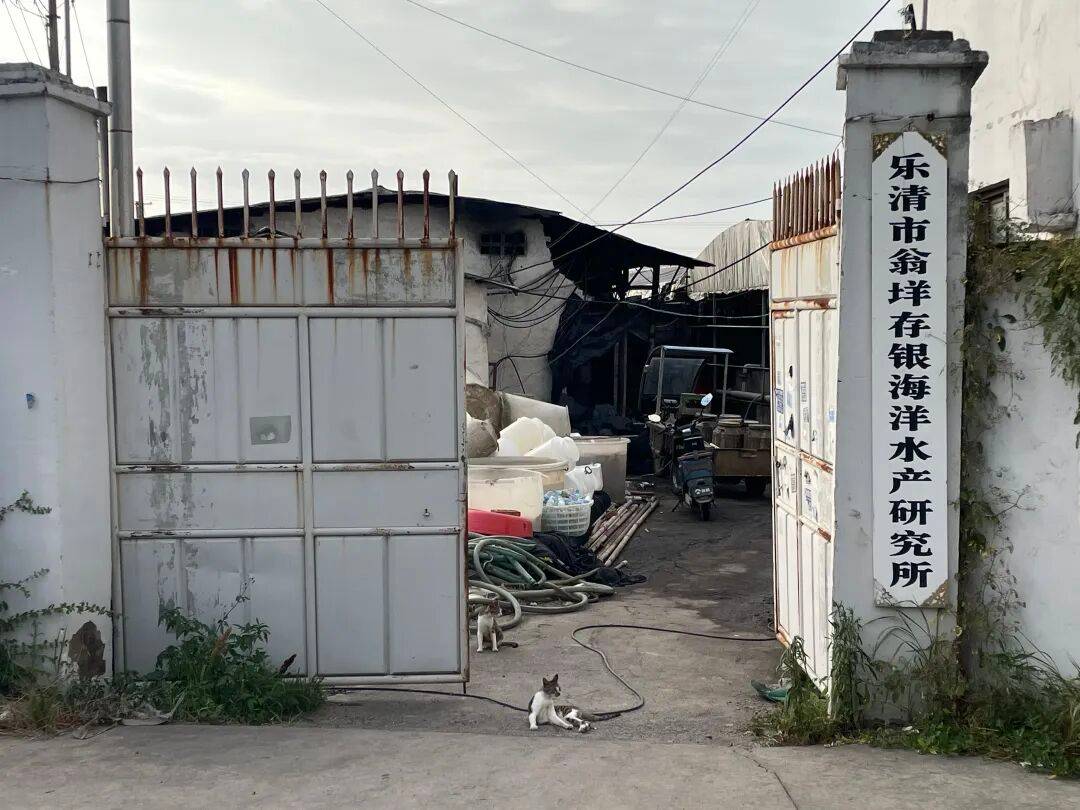
Artist Wu Jingran shared these stories from her research with a laugh. At the entrance to Sanyu Village, where she conducted her residency research, a gateway bears the words “China’s First Village for Shellfish Seedlings.” Wu discovered that dozens of the village’s nurseries were mostly family-run workshops and looked quite old-fashioned. The first time she went to the village near Yueqing Bay, she rode a bicycle in search of a blood-clam nursery. On the right were large ponds; on the left were a mine and a liquefied-natural-gas plant. The air carried an indistinct smell: the acidity of chemicals mixed with the briny odor of seawater.
“The sensory experience of nature and industry mixed together—disordered and conflicting—summarized my overall impression of the village. Large expanses of tidal flat have been taken over by industrial parks, and shellfish cultivation, which depends on the weather, has become a sunset industry here. The village’s ambiguity and conflict as it undergoes transformation strangely correspond to the qualities of the blood clam as food. Discharged blood is regarded as bodily waste and carries connotations of dirt and violence; people may think, for example, of menstruation.
“As food, blood clams are ambiguous and impure, from their preparation to the way they are eaten. They are half-raw, their juices splattering, disrupting the modern dietary norms of cleanliness, order, and the removal of anything bloody.” During the northward and southward migration of egrets, they rest on the shellfish ponds in Sanyu Village; chemical factories and an industrial park under construction lie in the distance. Another aspect of Wu’s research was the unusual relationship she formed with the local “blood-clam people” of Yueqing, Wenzhou.
“The day I first rode to the village, the sun was blazing. I finally found a nursery that was open, though somewhat dilapidated. Two uncles and aunts there thought I was a college student looking for a job. They invited me in for tea and asked me to go home with them for lunch. As I visited the village more often, I gradually became familiar with the woman who ran the snack shop at the entrance and with the blood-clam vendors at the market. Seeing people’s lives, working and sharing with them, may be the most important thing for me.”
Gao Qizhen and Lin Laier, *Dusting New*, 2025, *Selective Eating*, exhibition view, Hong Art Museum, Wenzhou, 2026. In contrast is a group of strongly cave-like video works by Gao Qizhen and Lin Laier. Gao, also an artist in the *Returning Home Project*, was born in Wenzhou. The two artists connect the making of Wenzhou’s traditional salted greens with domestic labor, identity structures, and the intergenerational transmission of women’s knowledge, revealing a social fabric that is both ordinary and profound.
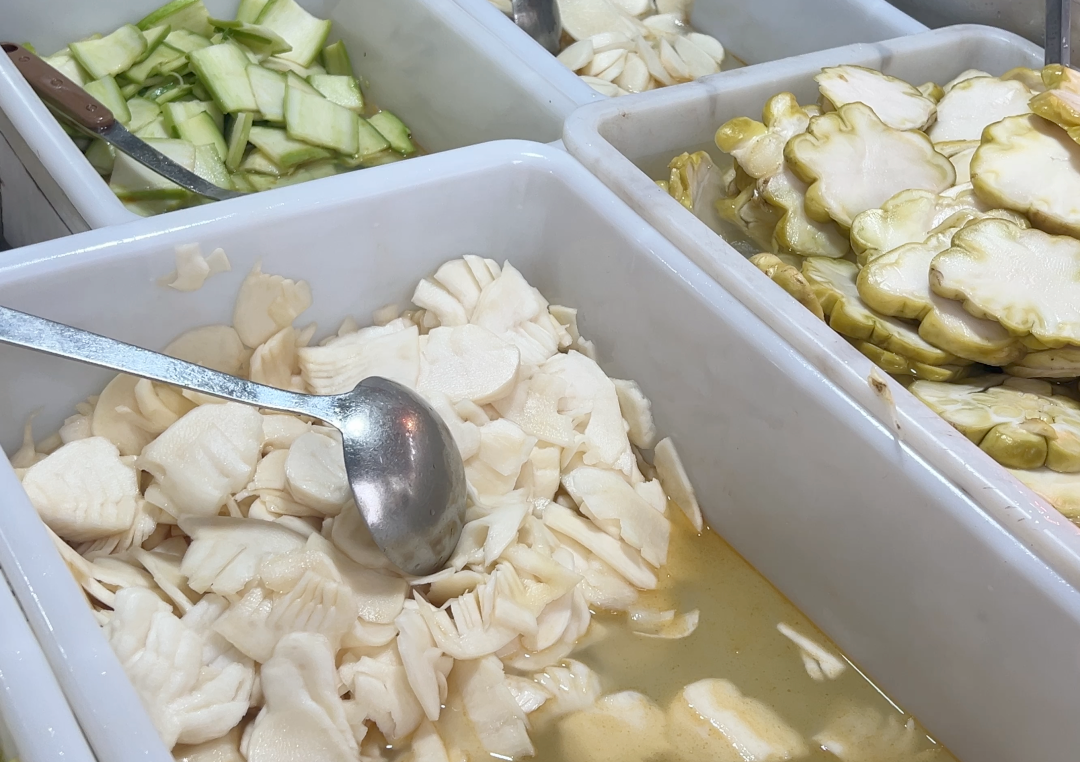
A salted-greens factory visited by Gao Qizhen during her research. Delicious salted greens photographed by Gao Qizhen. “I arrived at this medium naturally. As a child, I disliked the food because it had such a strong smell. I would go to the market and smell it before I saw it; the memory stayed with me. After studying away from home for a long time, I returned and found myself suddenly enjoying the oil-bright, stir-fried mustard greens on the table—this food that smelled overwhelming and tasted delicious. Its appearance is strange, each one distinctive, and its uncanny texture inspires both love and aversion. Perhaps I feel the same way about Wenzhou: the sticky humidity characteristic of southern cities, but also a briskness and clarity full of stimulation.”
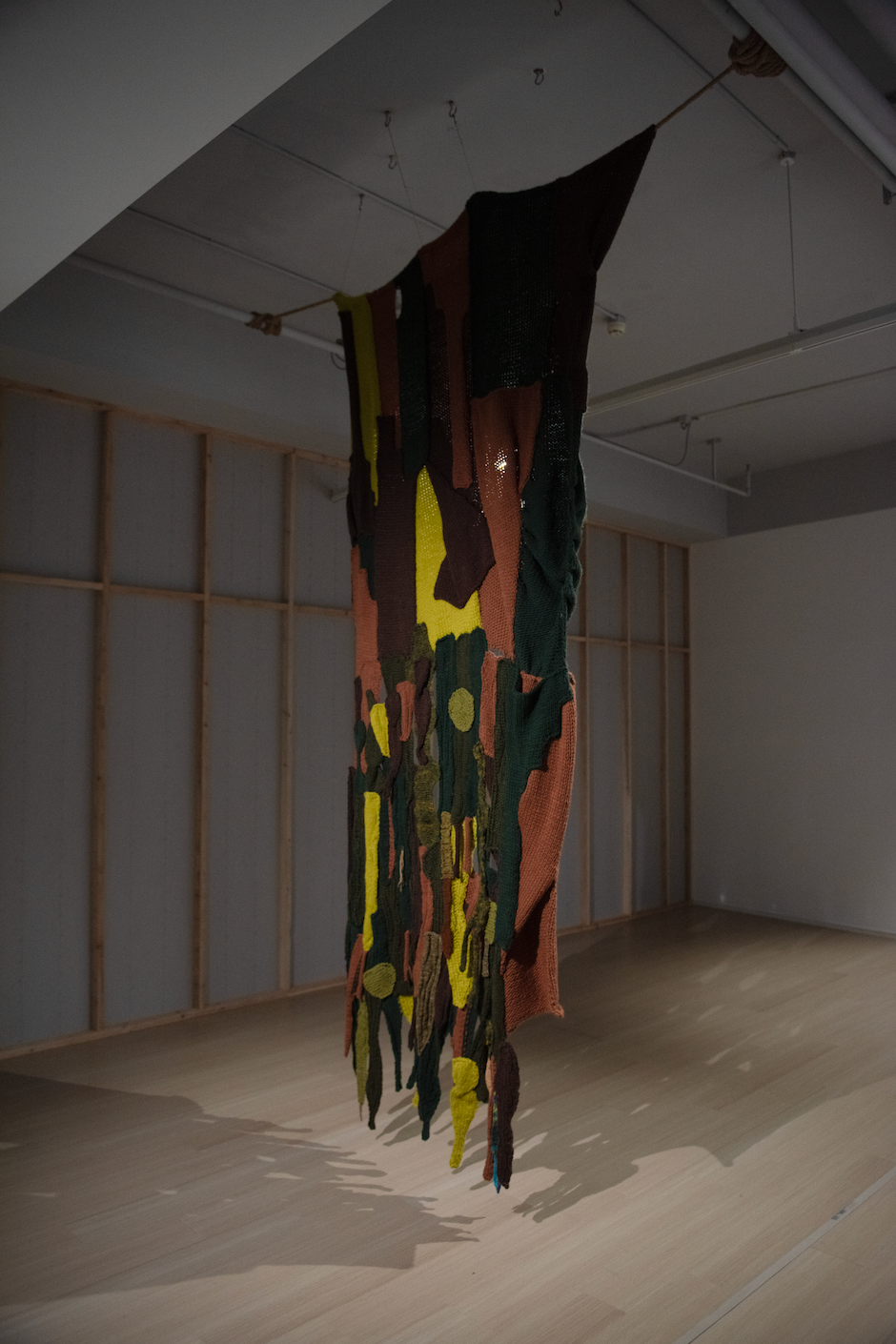
Gao told us that her initial conversations with the salted-greens vendors were somewhat difficult. But after she showed them her sketches of the vegetables, the couple happily told her that their daughter was studying eyewear design, and the conversation continued smoothly. Gao Qizhen, *Quilt*, 2025, *Selective Eating*, exhibition view, Hong Art Museum, Wenzhou, 2026. Gao’s knitted mustard greens, *xuelihong*. This mode of production is often closely tied to family structure. Knowledge shared among mothers, grandmothers, and neighbors is passed on through this labor.
Echoing the video work are three installations, *Quilt*, *Would You Marry Me?*, and *Fu Talisman*, knitted by Gao using techniques she learned from the older women in her family. They point toward the complicated, contradictory intimacies of family ethics: protection, expectation, and dependence.
“When we discuss global production chains, labor, and ethics in *Selective Eating*, it is difficult to avoid Wenzhou itself. Wenzhou represents not only a local experience, but also a way of observing how ‘profit’ and ‘righteousness’ are negotiated in reality. What makes Wenzhou distinctive is that it is not passively embedded in the global system; it is a local force actively participating in the structure of global division of labor. From the rise of private manufacturing to immigrant networks spread across Europe, Southeast Asia, and Africa, Wenzhou has always been on the front line of capital flows and the circulation of goods.
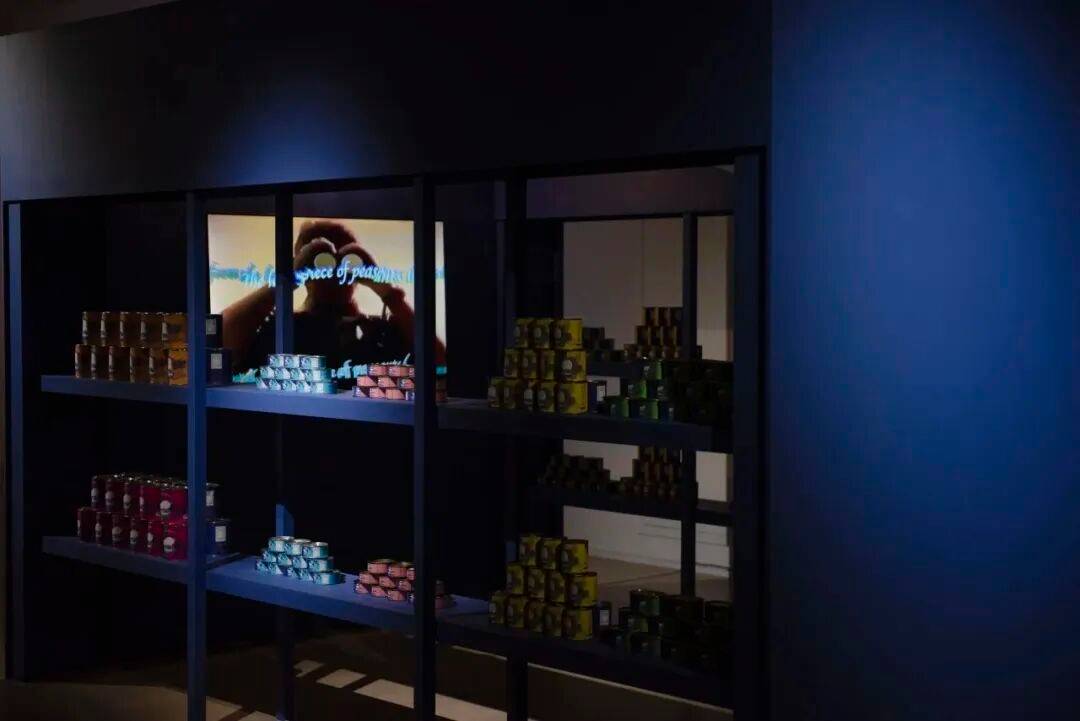
“It is both a site of production and a site of trade; both a link in the manufacturing system and a city that enters global markets through overseas commercial networks,” Pan Hongzheng, the museum director, told us. Map Office, *The Story of the Ama*, 2018, *Selective Eating*, exhibition view, Hong Art Museum, Wenzhou, 2026. Alongside works rooted deeply in Wenzhou are Map Office’s account of Japan’s ama divers; Jumana Manna’s *Foragers*, which records how the Israeli government criminalized traditional public foraging in the name of ecological protection; and Elia Nurvista’s *Food Epoch*, which lightly but sharply exposes one corner of the global processed-food chain by stacking six different kinds of canned food.
What these international artists address is not merely a matter of diet. Their inclusion is not intended to make the exhibition appear “international,” but to discuss locality from a global perspective—an entirely natural approach for a city as deeply embedded in global circulation networks as Wenzhou. Jumana Manna, *Foragers*, 2022, *Selective Eating*, exhibition view, Hong Art Museum, Wenzhou, 2026. Elia Nurvista, *Food Epoch*, 2021, *Selective Eating*, exhibition view, Hong Art Museum, Wenzhou, 2026. The curatorial team is less interested in regional labels than in placing different kinds of questions side by side, allowing viewers to see their potential connections.
Nearly three years after the museum opened, Pan Hongzheng has continued to understand Hong Art Museum as “a museum with a social-scientific character.” He would rather exhibitions begin with our lived reality and social structures. During research at Shuangjingtou Market, the team found a fresh-shrimp stall claiming to sell “an authentic Qi Baishi”; they also found a fruit stall whose lettering was notably “aggressive.” The exhibition’s public programs were correspondingly grounded in everyday life.
One example was the field study at Shuangjingtou Market, which encouraged participants to begin with familiar daily experience and reconsider the connections among food, the city, and social relationships. Over two days of observation, conversation, and note-taking, participants gathered material from different perspectives and ultimately made small zines.
“Many interesting details emerged. When a pork vendor was asked what had made him happy recently, he answered: ‘Everyone who comes to our shop is a regular. We don’t need to call out. We’ve been open for many years, and everyone knows and trusts us.’ Someone else discovered a fresh-shrimp stall claiming to sell ‘an authentic Qi Baishi,’ or a fruit stall whose lettering was remarkably ‘aggressive.’ These scattered observations are all part of understanding the city’s food system and its community relationships.”
Oumiao, a museum colleague, shared this with us with a laugh. The day after *Selective Eating* opened, game designer Lian Ziyi led a workshop for *The Homesick Food Bureau*, a card game. Another especially engaging public program, the board game *The Homesick Food Bureau*, was designed for the exhibition by Lian Ziyi, who studied social design at Design Academy Eindhoven in the Netherlands.
“She visited many Chinese restaurants in the Netherlands and developed the board game from that fieldwork. Participants play Wenzhou immigrants who arrive in the Netherlands in different periods to run restaurants, making decisions amid visa regulations, choices about taste, and shifts in the market. In this way, they enter an immigrant history concealed by everyday eating, and see the complicated relationship among food, identity, and survival.” Pan Hongzheng told us that, judging from the response on site, once people became immersed in the game, their emotions were clearly stirred; they were no longer merely spectators of the exhibition.
“For example, an event card in the game might say, ‘The baby-boom generation loves Chinese food in the 1960s, coins +1,’ or, ‘The oil crisis brings economic decline in the 1980s, daring spirit -1.’ The same character can follow entirely different paths in the hands of different participants, giving everyone a more direct sense of the relationship between individual choices and the circumstances of an era.” A scene from the research at Shuangjingtou Market. The exhibition actually consists of four parts: the *Returning Home Project* residency program; *Selective Eating*; fifteen parallel talks, *Food Day Talks*; and a subsequent publication project.
This is also the mode of production Pan hopes future exhibitions will follow. As for future plans, he told us that he will travel to this year’s Venice Biennale in Italy and to the Prado, exploring the close, significant ties between Wenzhou and Italian culture in preparation for the museum’s parallel project for the 2028 biennale. The gelatinous collective in Hong Art Museum’s *Returning Home Project*, *Imagining an Island*, exhibition view at Ken’en Library, 2026. His confidence in taking the exhibition to such an influential biennale comes from Wenzhou’s importance within global capitalist society.
“In my view, Wenzhou’s importance lies not in its ‘representativeness of place,’ but in the concrete form it gives global capitalism within a local society. Through Wenzhou, we can see how production chains extend, and how ethical structures are adjusted, resisted, or reconstructed as capital moves.”
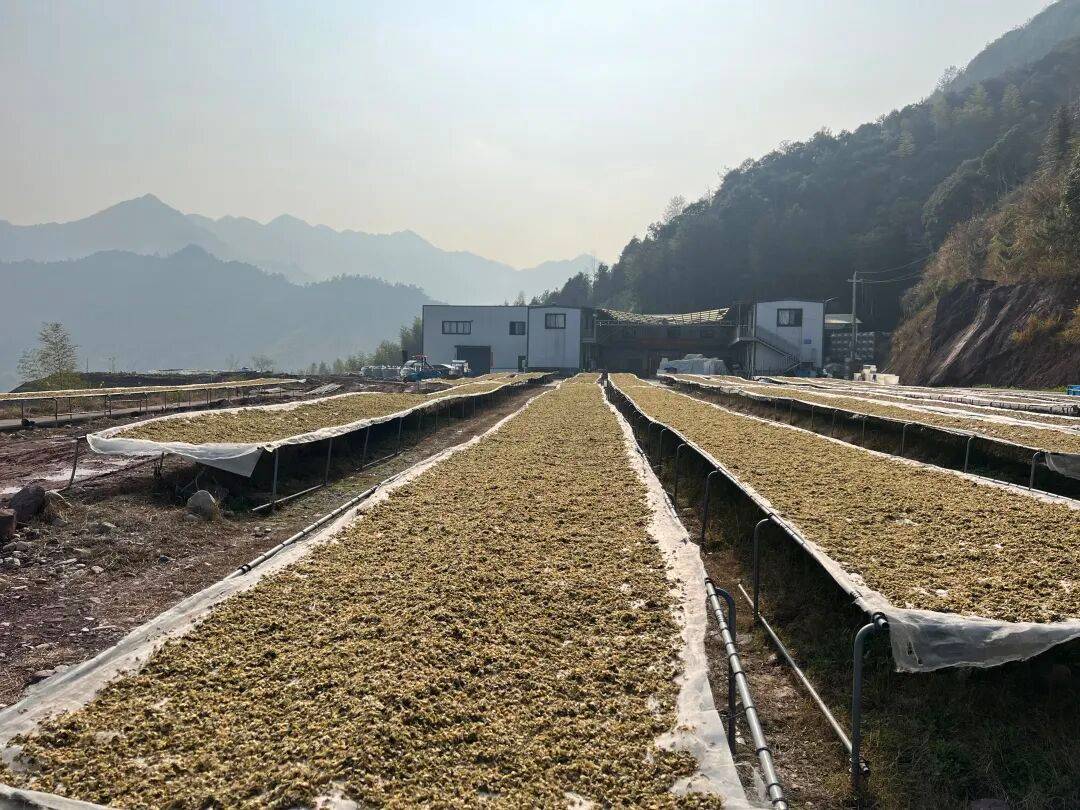
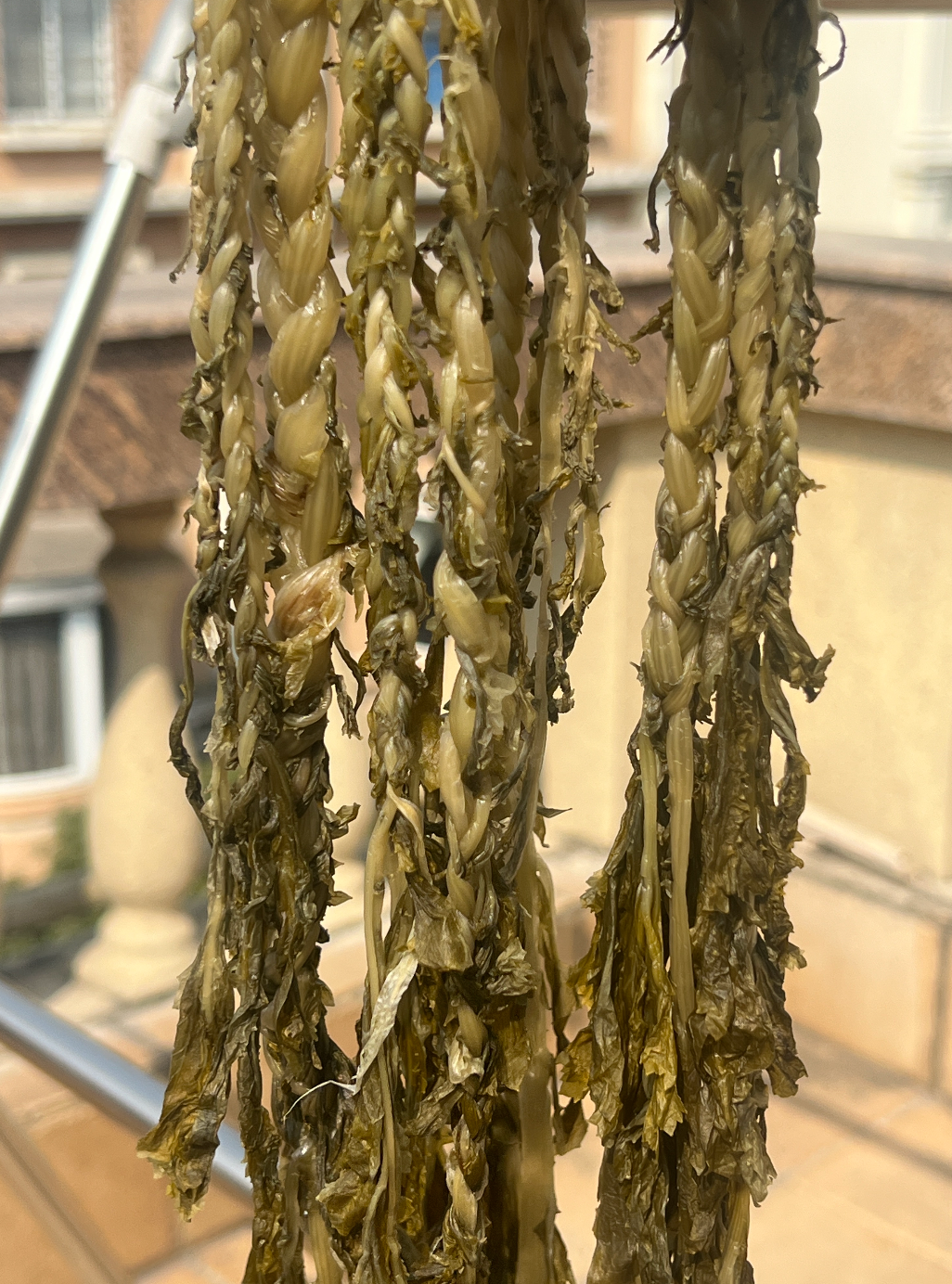
“Wenzhou’s commercial culture emphasizes efficiency and market judgment, while also relying on strong structures of regional, kinship, and interpersonal trust. The logic of profit and ethical order are not mutually exclusive; they are continually renegotiated in practice. Among manufacturing plants, trading companies, family businesses, and overseas communities, interests and moral obligations remain in a state of dynamic balance.” As a native of Wenzhou, Pan feels a particular affinity with the city’s cultural phenomena. Chen Jiacheng, a resident artist in Hong Art Museum’s local-food residency program, the *Returning Home Project*, researched the distinctive dish *pancai* during his residency in Wenzhou. Raw *pancai* growing in Shuntai Township, Mayu Town, Rui’an. *Pancai* growing in the field. Returning to the exhibition’s opening question: “Think back to the food you ate most recently. Where do you think it came from?”
“And where was it actually produced?” Perhaps because the Spring Festival was approaching, many visitors wrote “soy-sauce meat.” This is a characteristic Wenzhou winter food. But when visitors were asked, “Where does it come from?” the answers became increasingly uncertain. Some wrote: from a local workshop. Others wrote: from an agricultural country in Southeast Asia; from a farm in some village; or, “from Dad’s kitchen and balcony.”
That uncertainty may be another measure of the exhibition’s success: it prompts us to reconsider where a meal comes from, and what it means.