Touch, Wrap, Entangle: How Fiber Became the Art World’s New Favorite Medium
At Hong Kong’s CHAT, two spring exhibitions ask what we are really seeing when we look at a piece of cloth, tracing fiber from labor and domestic life to contemporary art’s renewed attention......
By / Xirui Huang · 10 min read
Why is fiber art being rediscovered, and how do CHAT’s exhibitions explain its relevance?
In interviews at CHAT in Tsuen Wan, curators connect renewed interest in fiber art to the recognition of women artists, Asia’s textile histories, and the desire for tactile experience in a digital age. The 2025 exhibitions Lining Revealed and Busy Needles use woven installations, Dong cloth, homespun textiles and beadwork to connect bodily experience, women’s labor and local history.
Touch, Wrap, Entangle: How Fiber Became the Art World’s New Favorite Medium
When we look at a piece of “cloth,” what, exactly, are we seeing? In recent years, more and more fiber artists have been reconsidered and rediscovered, whether in last year’s blockbuster first large-scale retrospective of Olga de Amaral at the Cartier Foundation, in the large installations by Sheila Hicks appearing on the streets of more and more cities, or in the work of the much sought-after Asian artist Haegue Yang, for whom weaving has remained a central creative element.
This spring, CHAT, in Tsuen Wan, Hong Kong, brought the medium of “fiber” back into public view with two exhibitions.
SECTION 01 | Fiber art connects people’s daily life and spiritual world
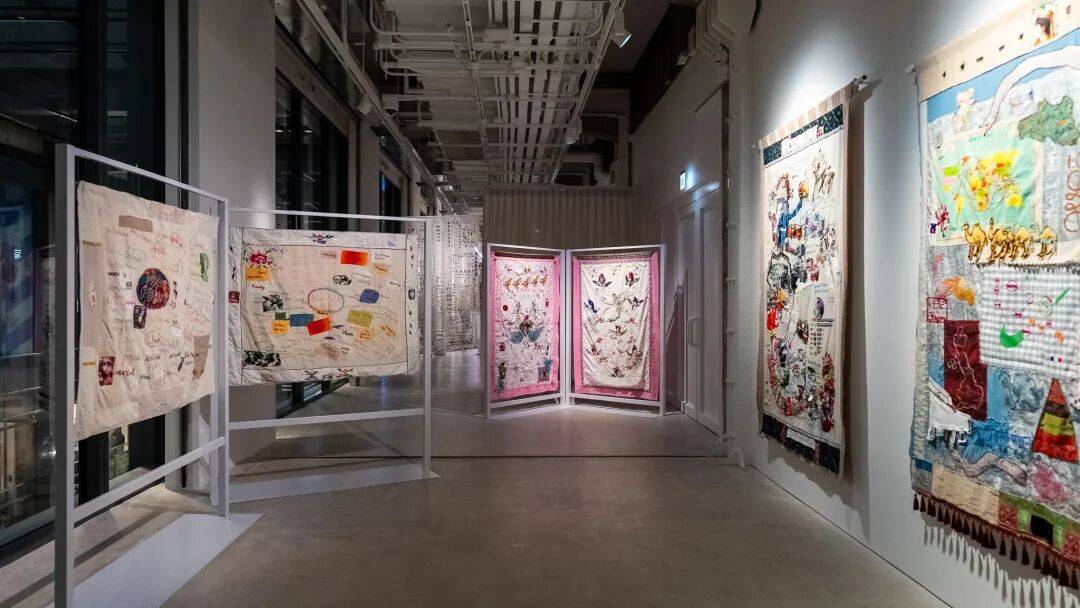
Installation view of “Lining Revealed: A Journey Through Folk Wisdom and Contemporary Vision,” CHAT, Hong Kong, 2025. “Lining Revealed” brings together 13 fiber artists from mainland China, Taiwan, Japan, Korea, Indonesia, Kazakhstan, and Turkey, among other places, to address the relationship between labor and the body.
“Busy Needles: Textile Embellishments of Hong Kong” looks back at the local tradition of beadwork embellishment, tracing Hong Kong’s development from a small fishing village into an international financial center through small beaded sweaters and beaded handbags. In March 2025, we visited this art space, converted from the former Nan Fung cotton mills, and spoke with the curators Wang Weiwei, Li Shaoyan, and Mizuki Takahashi about the exhibitions and the fiber art that has been reexamined in recent years. This former textile factory, established in the 1950s, was once one of Hong Kong’s most productive spinning mills.
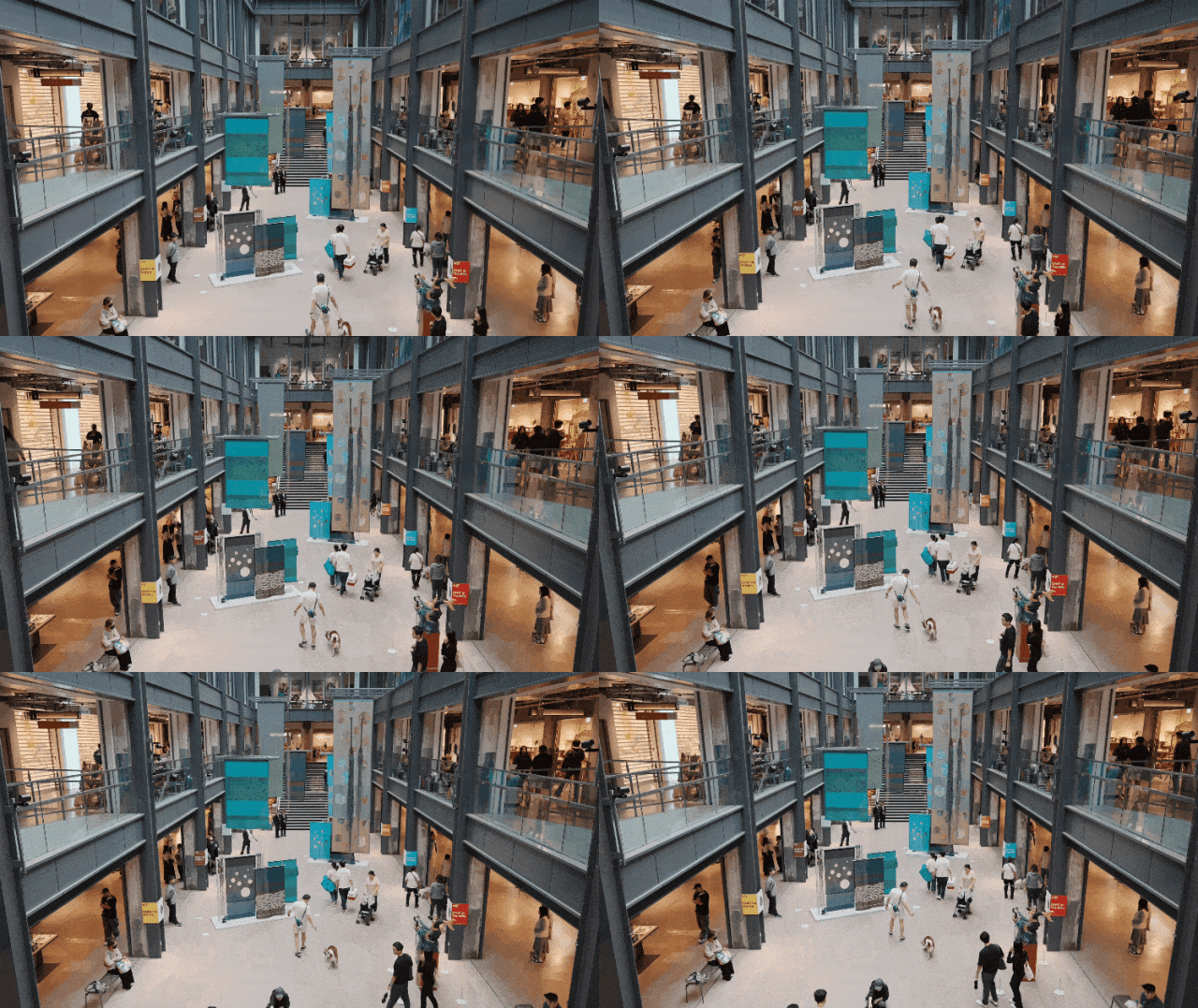
After its renovation, the building retained its industrial character, with red-brick walls, steel beams and columns, and lofty ceilings, while adopting a distinctly modern spatial layout, with three main galleries and fiber art in various forms scattered through the atrium and corridors. The first thing one sees upon entering CHAT is a suspended installation in the atrium, more than ten meters high, woven by the Indonesian artist Ari Bayuaji from discarded plastic rope and fishing nets collected in Bali. It resembles a giant tapestry, or perhaps a stretch of open sea.
He is also one of the artists in the new exhibition “Lining Revealed: A Journey Through Folk Wisdom and Contemporary Vision.”
Installation view of “Lining Revealed: A Journey Through Folk Wisdom and Contemporary Vision,” CHAT, Hong Kong, 2025. Before we even entered the main gallery, we encountered an installation of woven straw shoes by the Korean artist Hong Young In. Their sizes and shapes varied; they did not seem made for humans so much as for animals, for bears, birds, camels, chickens. The effect was gently comic.
“This work is really about the relationship between people and nature,” the curator Wang Weiwei told us. “We chose it to open the exhibition as a way of giving viewers a cue: our connection to nature is the most fundamental one, because our feet stand on the earth.”
Installation view of “Lining Revealed: A Journey Through Folk Wisdom and Contemporary Vision,” CHAT, Hong Kong, 2025. She said that she, too, had once wondered why anyone would wear woven straw sandals, since to people living in cities their surfaces feel exceedingly rough.
SECTION 02 | The Art That 'Tells Stories' Best
“Only later did I understand that in the past people’s feet stepped on dirt and sand, not concrete. Our skin is very different now. For people then, wearing cotton or linen socks inside straw sandals was actually close to nature and labor, and comfortable.” The work also allows viewers to enter the exhibition’s context quickly and grasp what folk craft is, and how its language can be transformed by contemporary art.
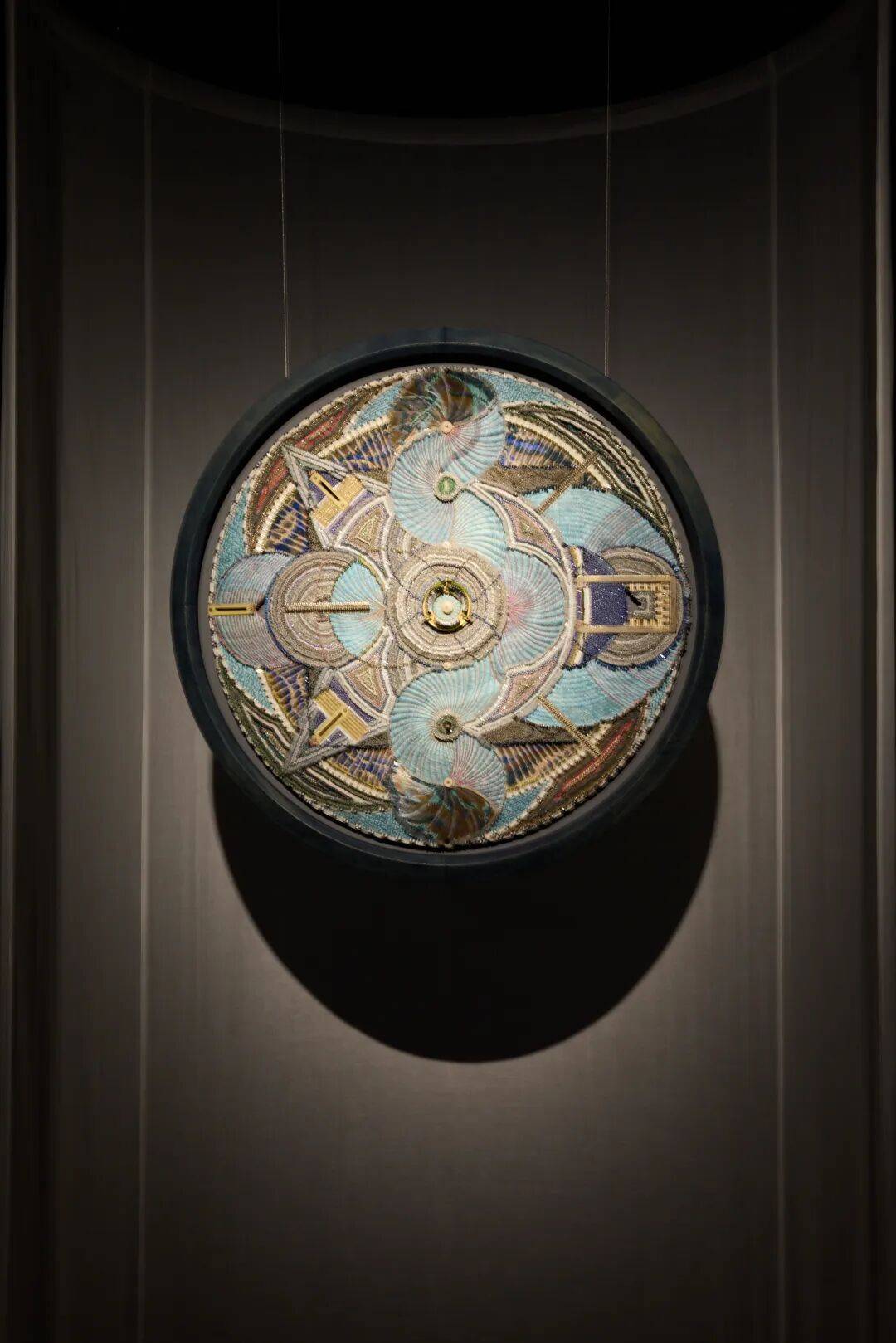
Installation view of “Lining Revealed: A Journey Through Folk Wisdom and Contemporary Vision,” CHAT, Hong Kong, 2025. Entering Gallery 1, the curatorial logic becomes clear: everyday objects made by ordinary folk artisans are placed alongside artworks by contemporary artists using the same or similar materials, making movingly clear how art reflects daily life and how it connects to the spiritual world. The first darkened space holds beadwork and video by the Japanese artist Nanase Kobayashi, as if the work itself were a medium linking the world of faith with the world of reality.
“The artist uses techniques somewhat like beaded embroidery, stringing together very tiny beads to form fairly abstract patterns, and even embedding video and sound pieces within the beaded works. It is extremely delicate, yet it also feels fractured,” Wang Weiwei said.
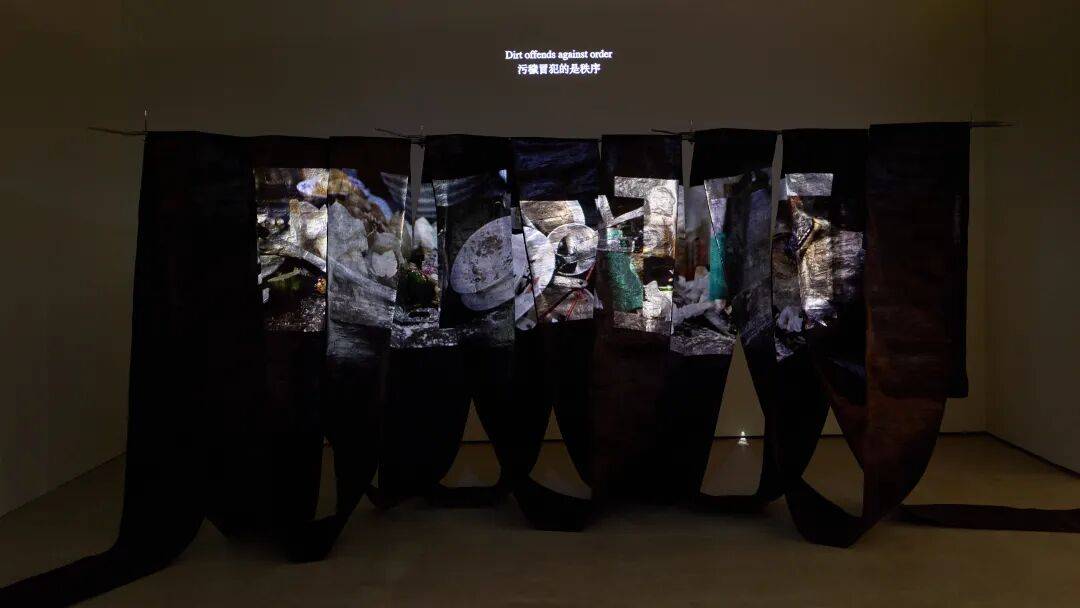
Installation view of “Lining Revealed: A Journey Through Folk Wisdom and Contemporary Vision,” CHAT, Hong Kong, 2025. Turning around, we saw work by the mainland Chinese artist Han Mengyun on Dong cloth, with her video projected onto glossy black Dong fabric. It was specially commissioned for the exhibition.
“Han Mengyun has long studied a kind of polished cloth produced in Dong communities. For this exhibition, it is the first time she has used that glossy cloth as a screen for a video work, taking a critical view of handicraft,” Wang Weiwei told us. The face in the fan belongs to the artist Han Mengyun. Installation view of “Lining Revealed: A Journey Through Folk Wisdom and Contemporary Vision,” CHAT, Hong Kong, 2025. “Many people praise handicraft in a very romantic way, but behind it lie intense labor, bodily depletion, and even structural gender oppression directed at women.”
One especially striking element of the piece is a row of paper fans placed beside it, which viewers can pick up and use to catch the projected image on their surfaces.
“You find that the details of the image are immediately sharpened. The blurred image and the clear image overlap. The artist allows viewers to bring their own bodies into the work and to discover the intense physical toll behind manual labor,” Wang Weiwei said.
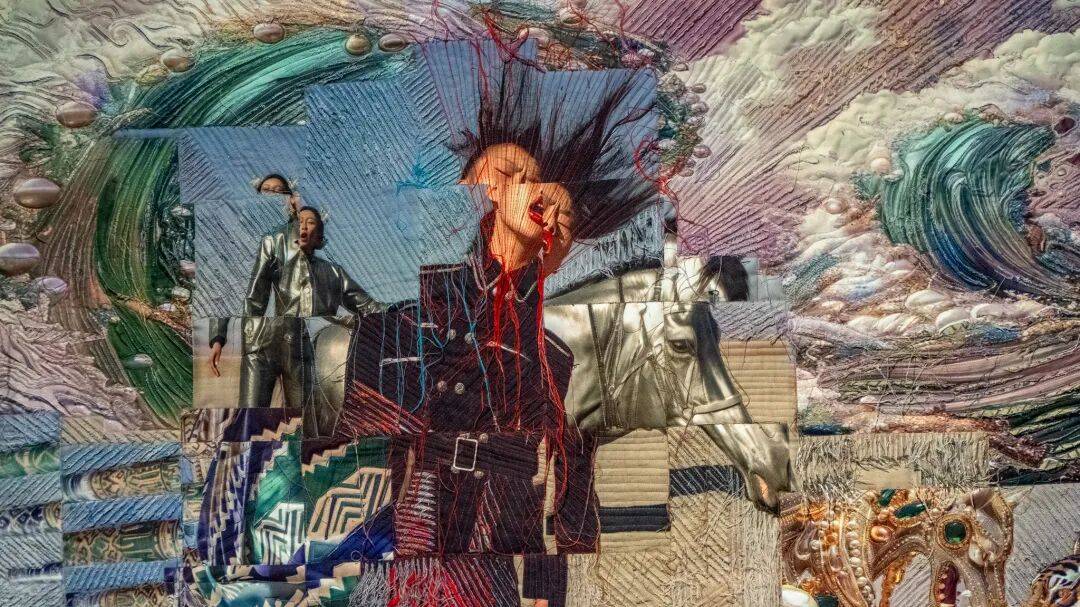
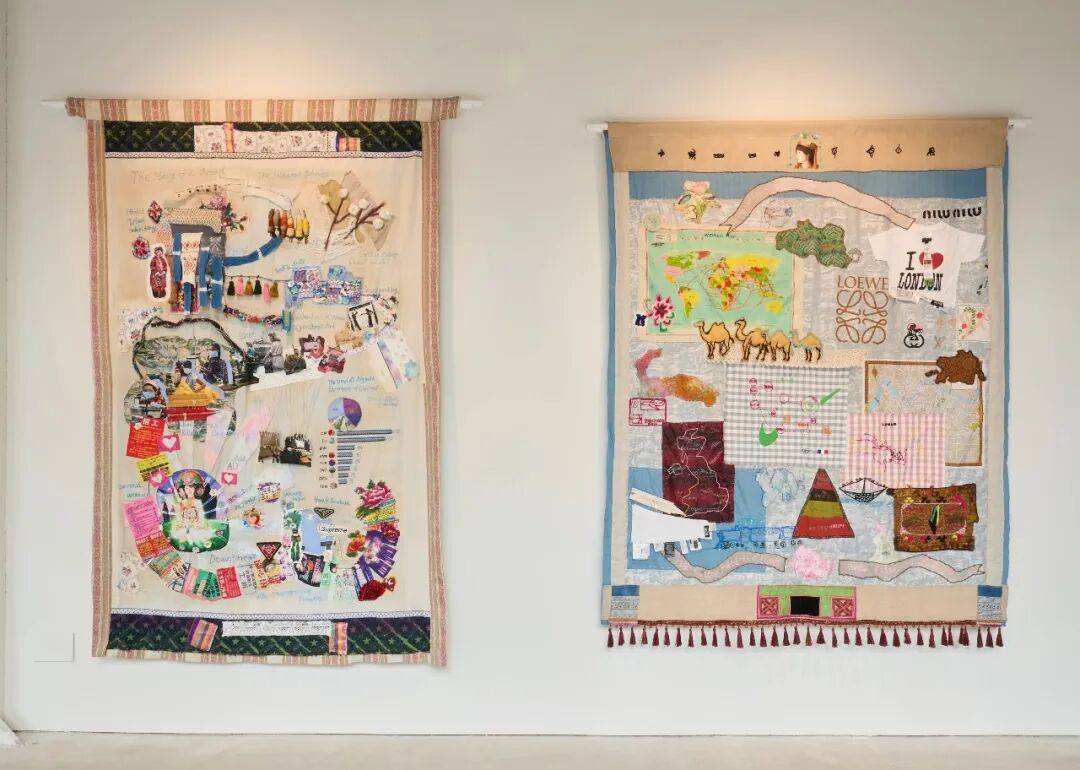
Installation view of “Lining Revealed: A Journey Through Folk Wisdom and Contemporary Vision,” CHAT, Hong Kong, 2025. Another commissioned work, by the mainland Chinese artist Yefuna, concerns the process by which a single thread moves from cotton to its manufacture as ready-to-wear clothing for a global fashion brand.
SECTION 03 | Fiber art belongs to Hong Kong, Asia and the world
“We in China have our own network system, and the cities are highly developed and advanced, but there are also many young people in relatively rural areas. They, too, are influenced by overseas popular culture, yet what they make retains more of a local character. So the artist began, 3 years ago, to work with a great deal of cloth and fiber, creating together with her mother and her classmates,” Wang Weiwei told us.
Installation view of “Lining Revealed: A Journey Through Folk Wisdom and Contemporary Vision,” CHAT, Hong Kong, 2025. In the next gallery, brighter in its lighting, the emphasis shifts to dialogues among fiber artists from different countries. We saw artists from Indonesia, Kazakhstan, Malaysia, Turkey, and Indonesia, their works shown together, using fiber materials to weave the cultures and stories of different nations.
One large suspended installation in CHAT’s central corridor is Her Skirt, by the Kazakh artist Aisisha Shadinova, presenting a highly traditional Central Asian mode of domestic arrangement.
Installation view of “Lining Revealed: A Journey Through Folk Wisdom and Contemporary Vision,” CHAT, Hong Kong, 2025. “It was originally meant to be a cloth spread on the floor, where everyone would sit together and share food. The artist has lifted the entire table setting into the air, so it looks like a skirt that could be worn. What she wants to discuss are those women who marry into a family at a very young age and take on the responsibility of caring for it. In domestic labor, they are indispensable figures.”
Wang Weiwei told us with a laugh that in Central Asia, the colors and patterns of the cushions beside a tablecloth typically indicate whether a woman’s married life is a happy one. “The woman we see in this exhibition seems to have married rather well.”
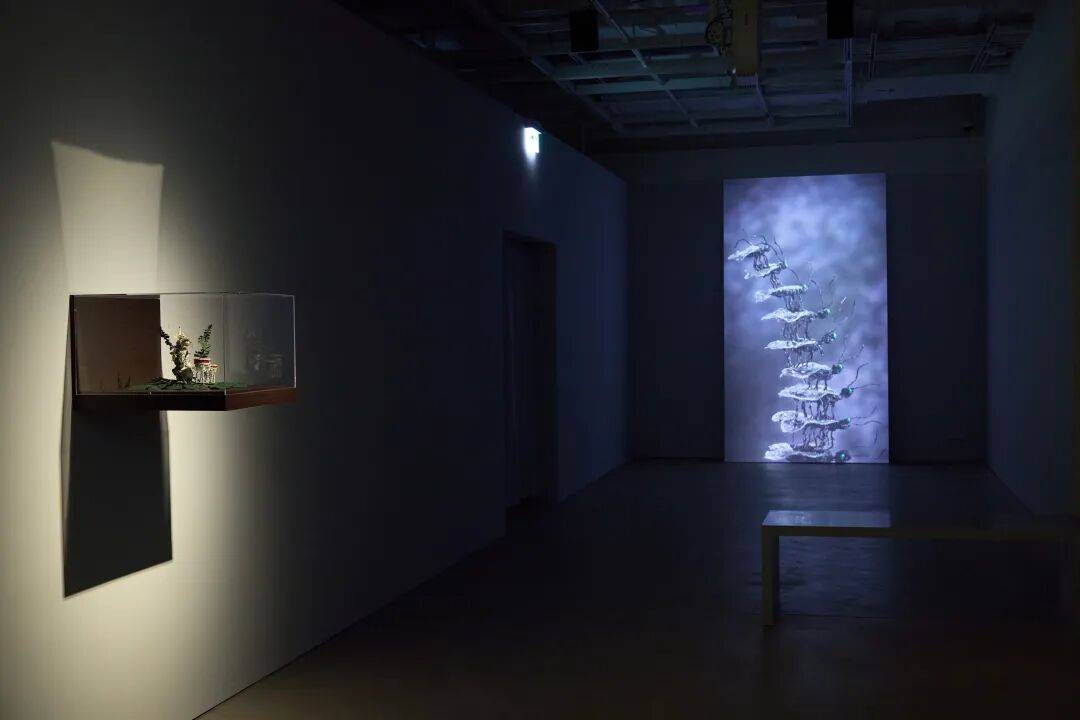
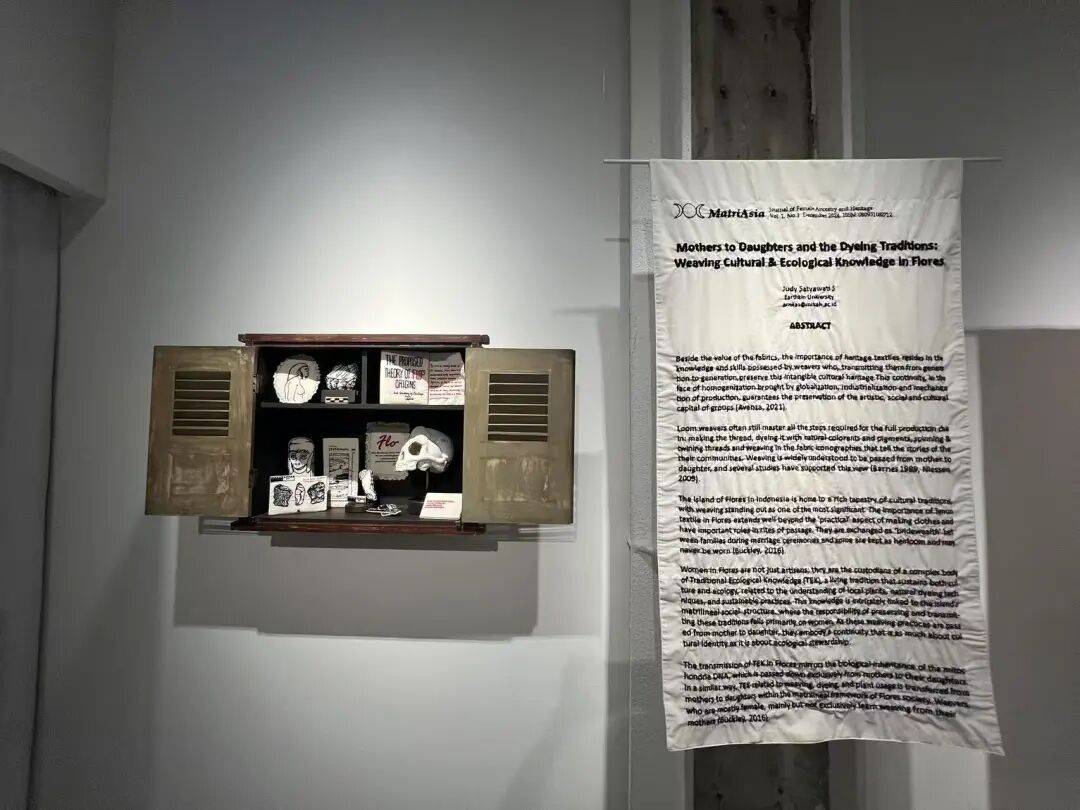
Installation view of “Lining Revealed: A Journey Through Folk Wisdom and Contemporary Vision,” CHAT, Hong Kong, 2025. A group of “cabinets of curiosities” in the exhibition, also specially commissioned, belongs to a series by the artist Salima Hakim, another version of which is on view this year at the Sharjah Biennial.
“The work makes us think of the cabinets of curiosities once beloved by Western aristocrats, where merchants and scholars traveling to the Far East and Africa placed all the strange things they collected. They were, in fact, one of the prototypes of the museum.”
Installation view of “Lining Revealed: A Journey Through Folk Wisdom and Contemporary Vision,” CHAT, Hong Kong, 2025. Wang Weiwei said that what is interesting about Hakim’s “cabinet of curiosities” is that it begins from a female point of view; even the evolutionary diagram of “human origins” inside uses the image of a female ape-like figure.
“In the history of scientific development, women have in fact always been marginalized, doing work that was relatively undervalued, such as translation or illustration. So imagining human evolution from a female perspective is quite interesting.”
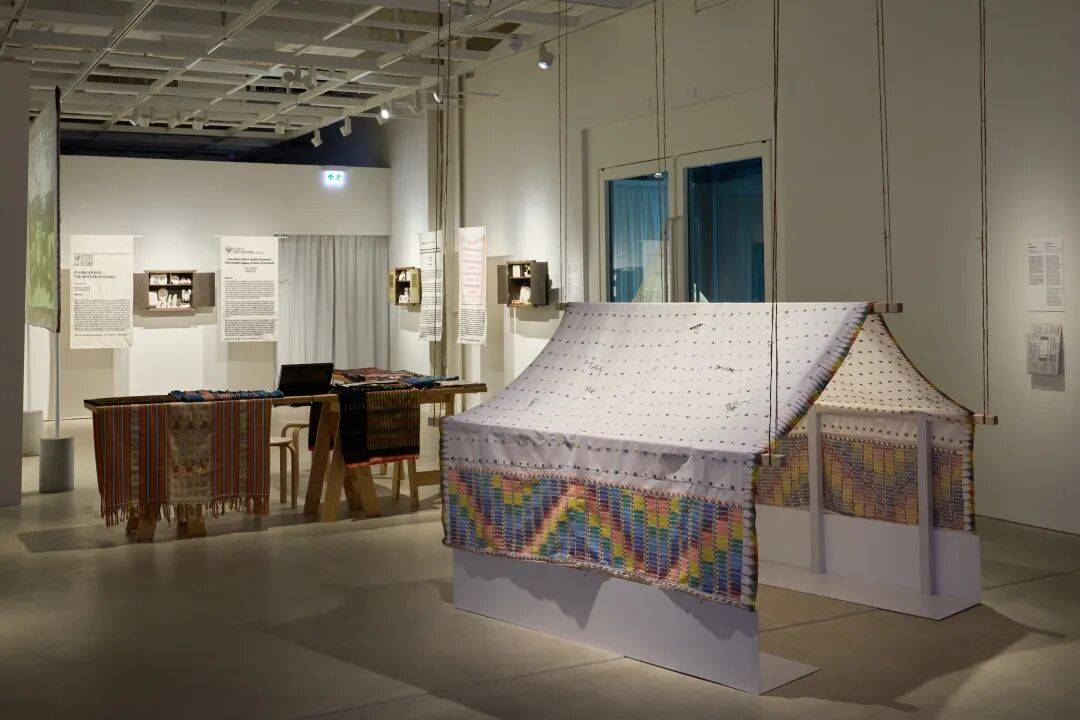
Installation view of “Lining Revealed: A Journey Through Folk Wisdom and Contemporary Vision,” CHAT, Hong Kong, 2025. The Malaysian artist Yee I-Lann, meanwhile, uses cloaks woven in the traditional Indonesian songket style to make a small tent that viewers can crawl into and embroider their own names onto. What surprised us most in the exhibition was the work brought by He Yongdi, who is not, in fact, an artist but a native weaver from Chongming Island, in Shanghai, and a collector of textiles.
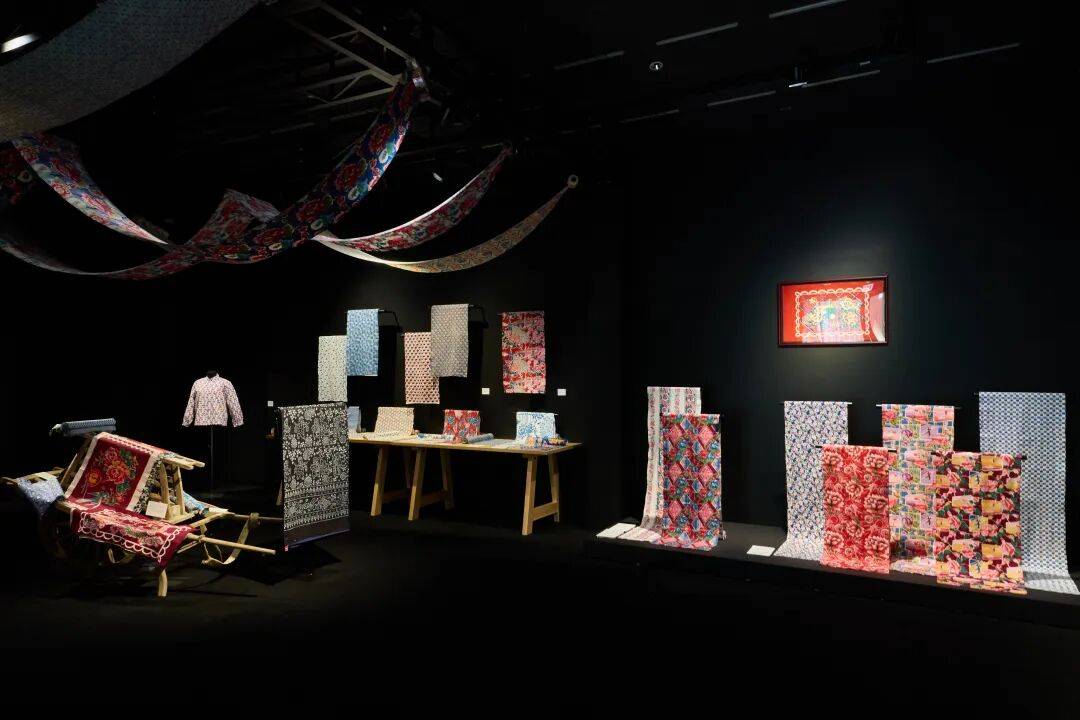
Installation view of “Lining Revealed: A Journey Through Folk Wisdom and Contemporary Vision,” CHAT, Hong Kong, 2025. “We are showing more than sixty very rare pieces from her group of silkscreen-printed cloths. Chongming has a weaving custom; every household used to weave its own fabric. This kind of cloth from Chongming is what we now usually call tubu, or homespun cloth, and it is still a material that many young designers love to use.” Wang Weiwei told us that it was not until the 1990s, with the arrival of the commodity economy, that Chongming Island stopped its weaving practice. As a result, the tubu that survives today was basically produced in the 1960s, 1970s, and 1980s, and carries a strong sense of its era.
Through these fabrics, we see a stretch of China’s experience, a stretch of history. Above is tubu about “ping-pong diplomacy”; below is tubu printed with television antennas. There are fabrics about current events such as “ping-pong diplomacy,” and others painted with television antennas and radios, and these are only a tiny fraction of He Yongdi’s collection.
“Her collection probably reaches the tens of thousands, but this group is the most realist,” Wang Weiwei said. For the museum, what matters most is using fiber art to tell stories and to draw more ordinary viewers toward recognizing the history and social trajectories embodied in textiles.
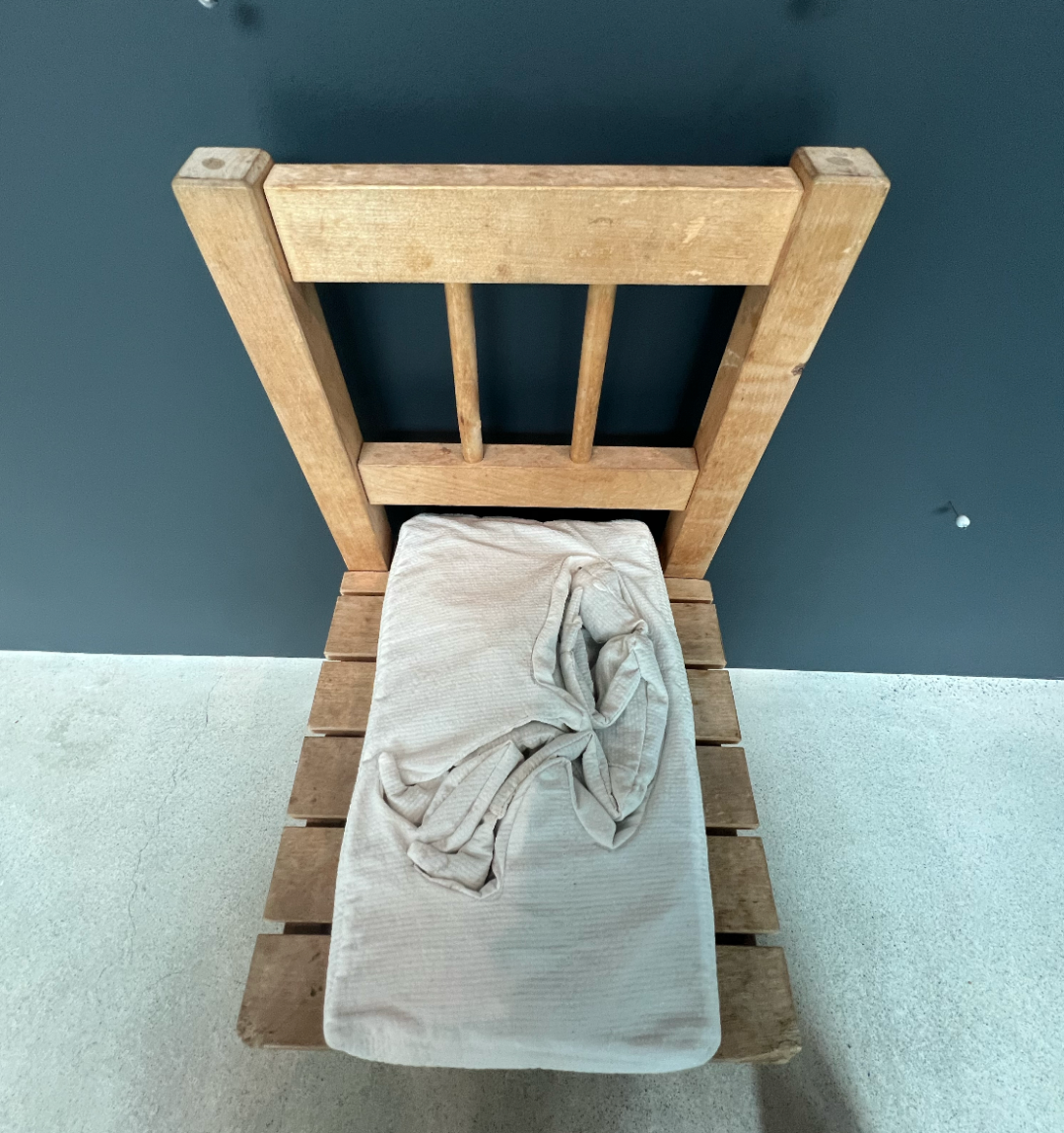
Installation view of “Lining Revealed: A Journey Through Folk Wisdom and Contemporary Vision,” CHAT, Hong Kong, 2025. After all that sweeping history, the final work in the exhibition is intensely intimate and personal. The young Hong Kong artist Yao Junjie has turned her childhood experience of taking medicine, the illness borne by her body, and the emotional currents of family life into a bed, a tapestry covered with medicinal materials, pill boxes, dream catchers, and more, sharing her life experience and feelings with viewers through self-mockery and humor.
“This is, in fact, a curatorial approach based on equality,” Wang Weiwei said. “We are not lining up artists and artisans to compare who is nobler; we are placing their works side by side and letting them cross through one another in the exhibition, so that each can tell its own story.”
Installation view of “Busy Needles: Textile Embellishments of Hong Kong,” CHAT, Hong Kong, 2025. In CHAT’s permanent exhibition gallery, “Busy Needles: Textile Embellishments of Hong Kong” tells a story about craft and weaving in Hong Kong as a cultural field.
“What interests me is whether Hong Kong has its own ‘craft,’” the curator Li Shaoyan said. Starting from that question, the exhibition focuses on textile-embellishment techniques that flourished in Hong Kong in the mid-twentieth century, including bead setting, drawnwork, and embroidery.
Installation view of “Busy Needles: Textile Embellishments of Hong Kong,” CHAT, Hong Kong, 2025. These intricate techniques once underpinned a major export industry in Hong Kong: made locally, yet almost entirely shipped abroad, with labels that were not even in Chinese.
“In the exhibition, you see filmed records of women workers, their hands fastening beads onto cloth, stitch by stitch. But they often said, ‘We could never afford to wear the clothes we made ourselves,’” Li Shaoyan told us.
Installation view of “Busy Needles: Textile Embellishments of Hong Kong,” CHAT, Hong Kong, 2025. We also saw in the exhibition a qungua from the 1970s. Its decoration was not gold thread or silver thread, nor densely packed beading, but plastic sequins. In that era, the plastics industry was thriving and raw materials were abundant, so these materials were used to make a dazzling wedding dress. Li Shaoyan said with a laugh, “This was a wedding dress a Hong Kong bride could actually afford, beautiful but inexpensive. That is the wisdom of working people.”
Installation view of “Busy Needles: Textile Embellishments of Hong Kong,” CHAT, Hong Kong, 2025. We also saw a great deal of drawnwork in the gallery, graceful in pattern, semi-transparent, and very light, though in fact extremely laborious to produce. Li Shaoyan explained, “Hong Kong is close to Shantou. Many people know only that Shantou was famous for drawnwork around 1900, but what they do not know is that a large portion of those fabrics were first woven in Hong Kong and only then sent to Shantou for embroidery.”
We often think of “craft” as unique, handmade, anti-industrial, but in Hong Kong, “craft” and “industry” are intertwined.
“This ‘Made in Hong Kong’ experience may well redefine the boundaries of craft,” Li Shaoyan said.
Installation view of “Lining Revealed: A Journey Through Folk Wisdom and Contemporary Vision,” CHAT, Hong Kong, 2025. At the end of the interview, we spoke with Mizuki Takahashi, CHAT’s Executive Director and Chief Curator, about the way fiber art has been rediscovered in the Western contemporary-art world in recent years and has entered the mainstream. She believes that this is closely tied to the rebuilding of an Asian context.
“In the West, fiber art was a marginal branch of 1960s modernism, but in Asia, textiles had long been part of everyday life. Many Southeast Asian artists were already using textiles in the 1960s as a language of ‘postmodern’ expression. It has simply returned to the place it should always have held in art history, becoming, like painting and sculpture, a fulcrum for narration.” When asked about the reasons for this wave of “fiber art revival,” Mizuki Takahashi’s view closely matched Wang Weiwei’s: “Besides the renewed attention to women artists, another thing is crucial: the warmth of the material.
We live in a highly digitized age. People long to touch, they long for what is real, and textiles provide precisely that bodily connection.”