She Put Her Body into the Earth, Searching for a Home to Return To
From leaving Cuba at 12 to returning her body to the earth: a conversation with Tate Modern curator Valentine Umansky about Ana Mendieta’s life, work and unfinished possibilities......
Who was Ana Mendieta, and why does her Silueta series connect the body with the earth?
Ana Mendieta (1948–1985) was a Cuban-born artist who moved to the United States at 12. Her Silueta series connected her body, or its outline, with earth, flowers, fire and water to explore exile, belonging and change. She later made cave carvings in Cuba and developed sculpture in Rome. Drawing on Tate Modern’s 2026 exhibition in London, Xirui Huang interviews curator Valentine Umansky about the relationship between Mendieta’s life and these works.
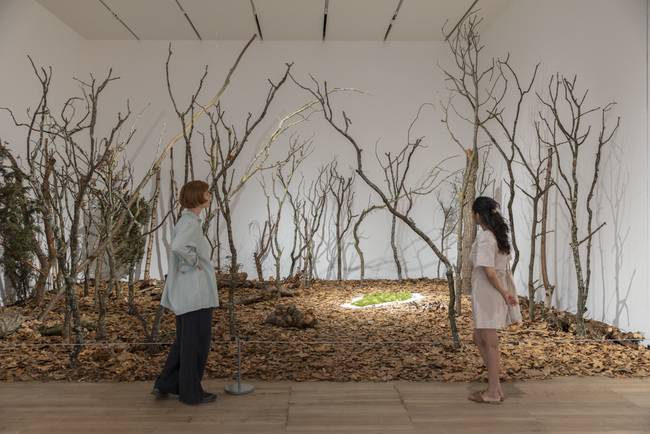
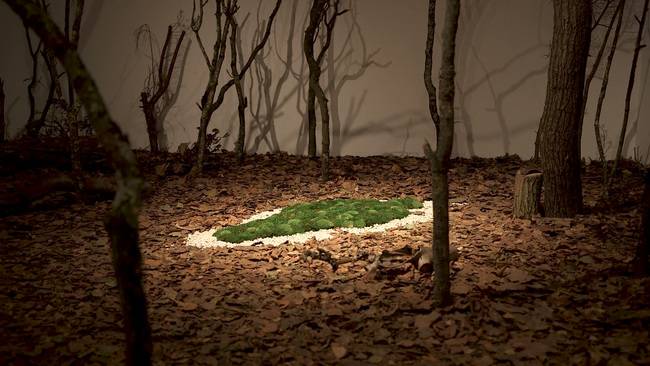
A small forest has appeared inside Tate Modern in London. Branches, fallen leaves and soil cover the floor. Among them lies a human outline edged with moss and white stones. It is about the size of an adult woman, with no facial features and green plants growing where the body would be. It looks as though someone has just lain down there, or is slowly becoming part of the earth again.
This is a work the Cuban-born artist Ana Mendieta created in 1978, reconstructed by Tate for this exhibition using photographs of the original.
Many of Mendieta’s works took place outside conventional museums: in woods, beside rivers and inside caves. They still feel unusual today. It is hard to imagine that most were made half a century ago.
Yet for a long time, discussions of Mendieta have tended to begin with her sudden death at 36 and the controversy surrounding it.
On the occasion of Tate Modern’s exhibition, we spoke at length with curator Valentine Umansky about this deeply underestimated and often misunderstood woman artist. We wanted to understand why a girl who left home at 12 would keep returning her body to the earth. How did works that can seem solitary, even unsettling, connect with the life she actually lived?
SECTION 01 | Leaving Home at 12, Searching for Her Place Abroad
Mendieta was born in Havana, Cuba, in 1948. She spent part of her childhood with her family in the seaside town of Varadero.
That peaceful, happy childhood changed abruptly in 1961. Amid political upheaval in Cuba, 12-year-old Mendieta and her 15-year-old sister were sent to the United States through Operation Pedro Pan. Their parents did not accompany them. The sisters travelled through Miami and eventually reached Iowa, moving between institutions and foster homes during a deeply unsettled adolescence.
They were not reunited with their mother and younger brother until 1966. They would have to wait until 1979 to see their father again. For a child who left home at 12, that meant spending almost her entire adolescence waiting.
Knowing this history makes something in her work easier to understand: why the connection between a body and a particular piece of land mattered so much to her.
Home was more than Cuba on a map. It was a familiar language, her family and the routines of everyday life. In the United States, all of these suddenly felt very far away. As a Cuban girl in a new country, she also had to live with being seen as an outsider.
Mendieta later studied art at the University of Iowa, beginning with painting. She then encountered intermedia practice and started bringing photography, film, actions and her own body together.
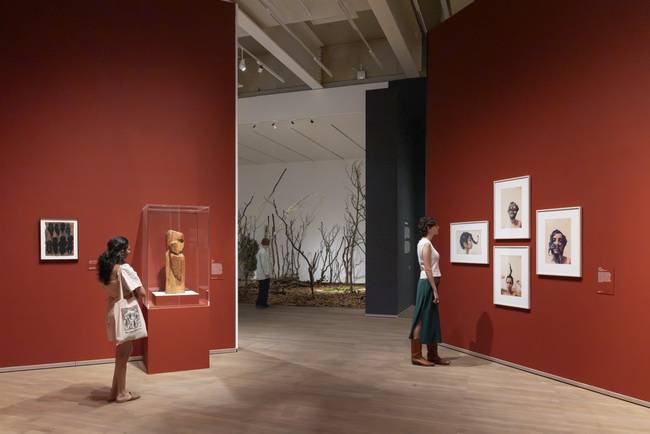
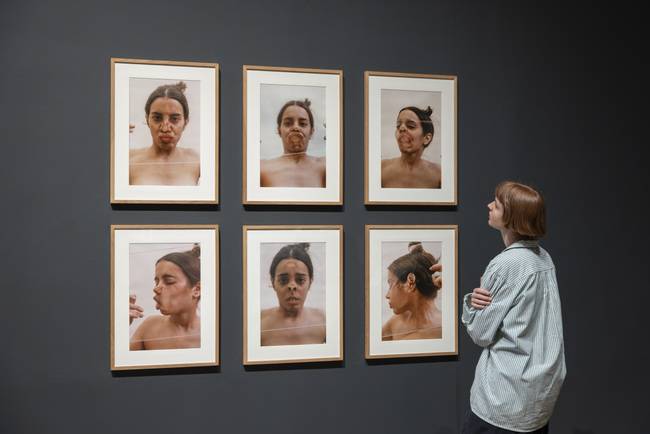
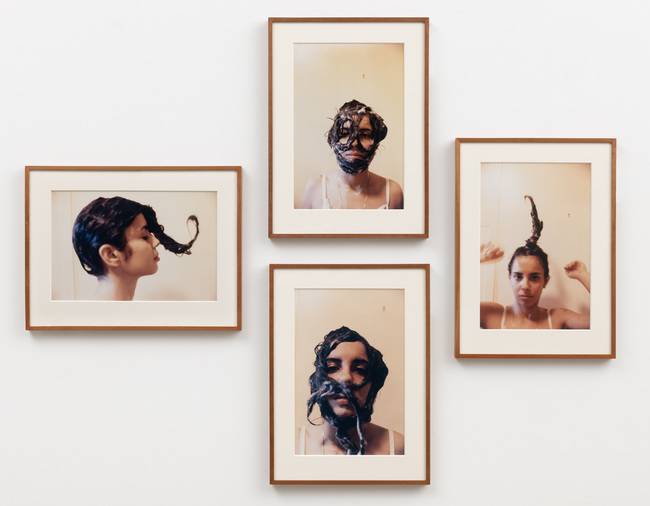
Some of her early experiments involved performance. In Untitled (Glass on Body Imprints), she pressed her face against glass, flattening her nose and distorting her lips and cheeks. In another work, she attached hair cut from a male collaborator’s beard to her own face, asking how much a little facial hair could change the way we read a face, or a person.
In 1973, a female student at the University of Iowa was raped and murdered. Mendieta responded by making a work in her apartment that became known as Untitled (Rape Scene). She invited fellow students to visit, confronting them with the sight of her bloodied body bent over a table.
Violence that had appeared in the news was laid bare in her work. Those who saw it could hardly remain uninvolved spectators. In Moffitt Building Piece, made the same year, she placed blood at the entrance to a building and filmed the reactions of passers-by. Some stopped, some walked around it, and others simply carried on.
Looking back, these works already contain questions she would return to: will a person’s presence be noticed? When someone’s body is harmed, how will the people around them respond?
But there is much more to Mendieta’s work than blood and violence. She soon took her body into more open spaces, searching for ways to live and work with nature.
SECTION 02 | Lying among Flowers, Giving Her Body Back to the Earth
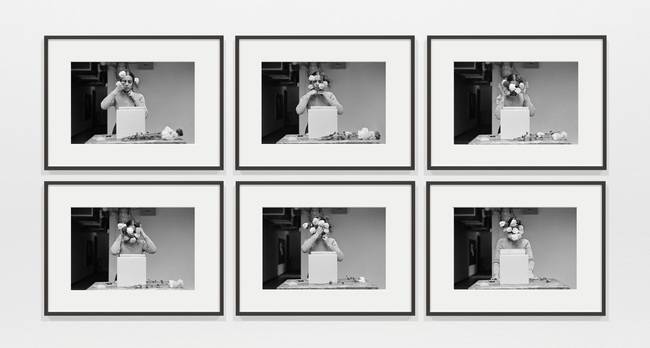
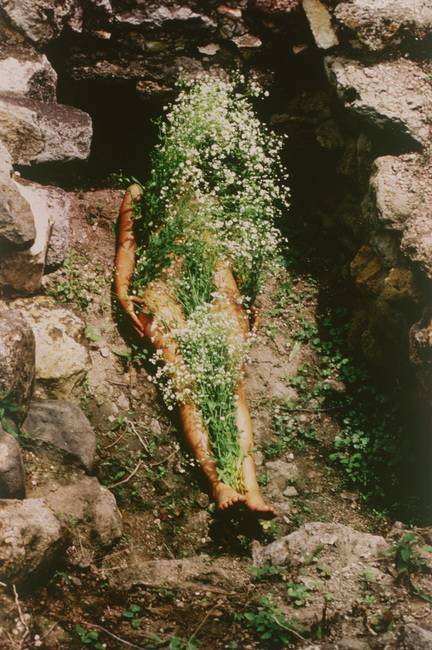
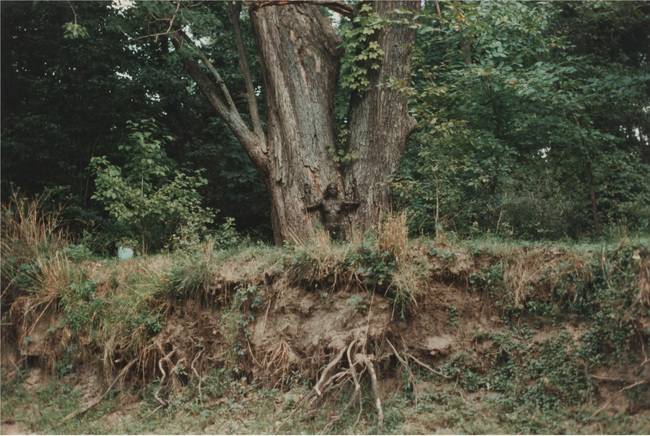
In 1973, Mendieta travelled to the archaeological site of Yágul in Oaxaca, Mexico. She lay inside an ancient tomb and covered her body with white flowers. In the photograph, the blossoms almost conceal her face and torso; only her arms and legs remain faintly visible. The plants seem to grow from her body. For a moment, it is hard to tell whether this is a burial or the beginning of new growth.
Imágen de Yágul would become the starting point for one of her most important bodies of work: the Silueta series.
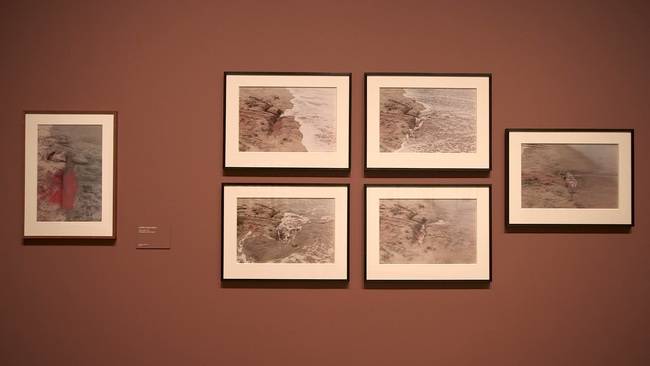
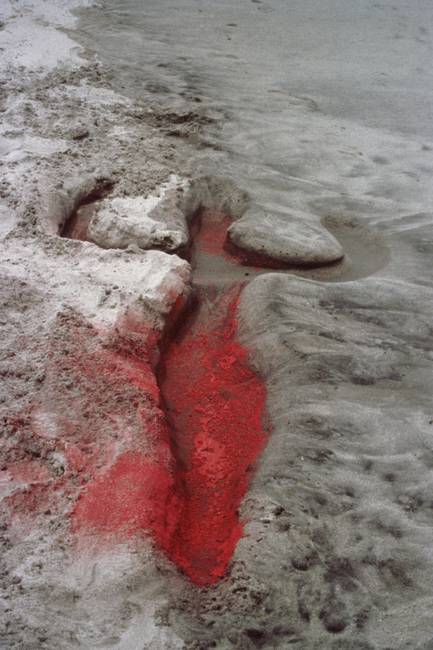
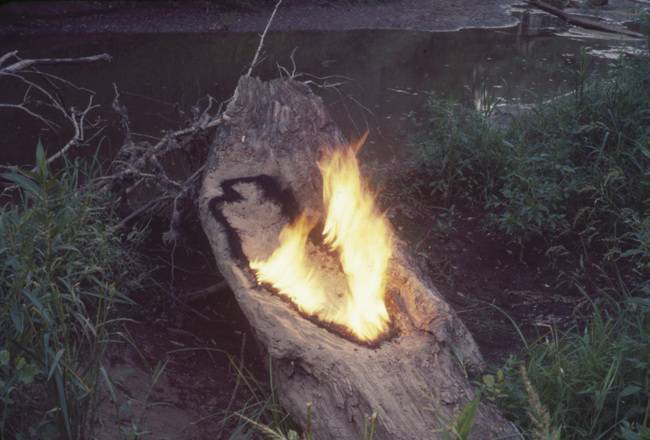
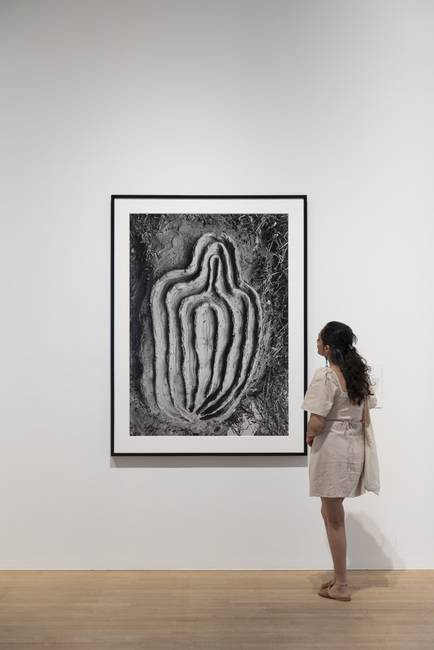
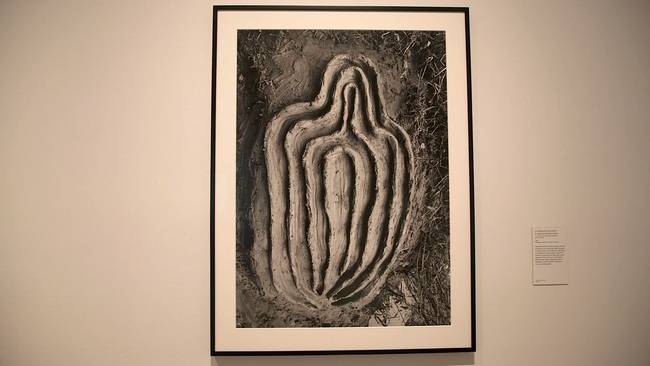
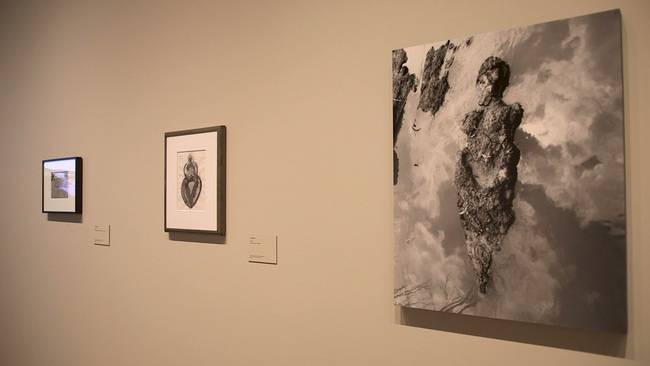
Over the following years, she repeatedly made works involving the body’s outline in Mexico and Iowa. Flowers, branches, earth, stones and gunpowder became her materials. At first, her body was physically there. Later, she gradually disappeared from the image, leaving only a figure shaped like herself.
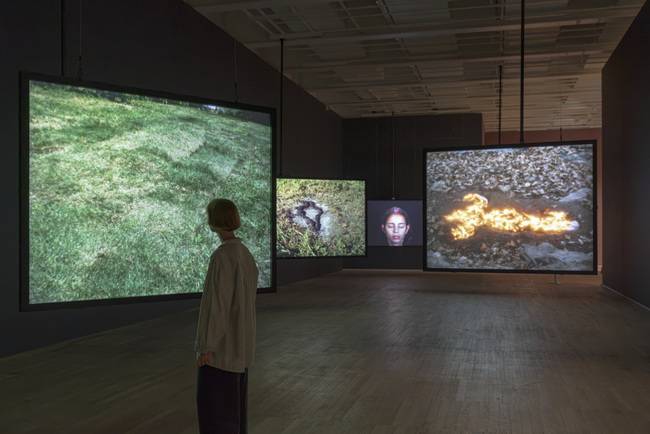
Sometimes the outline appeared in wet sand. Waves washed over it again and again, softening its edges. Sometimes the body became a mass of flame, leaving only a trace on the ground once it had burned.
For someone forced to leave home so young, this practice can also feel like a way of learning to settle again. She could not bring back her childhood exactly as it had been. But she could choose a piece of land and build a connection with it through her body.
This is also why the curatorial team chose to begin the exhibition with the cave.
Umansky told us that Mendieta described her work as sitting “in the tradition of a Neolithic artist.” This helped the curators recognise that, even as she used modern media such as photography and film, Mendieta remained fascinated by ancient images, ruins and rituals. The cave is a real place, but it can also suggest shelter, the womb and the earliest space of life.
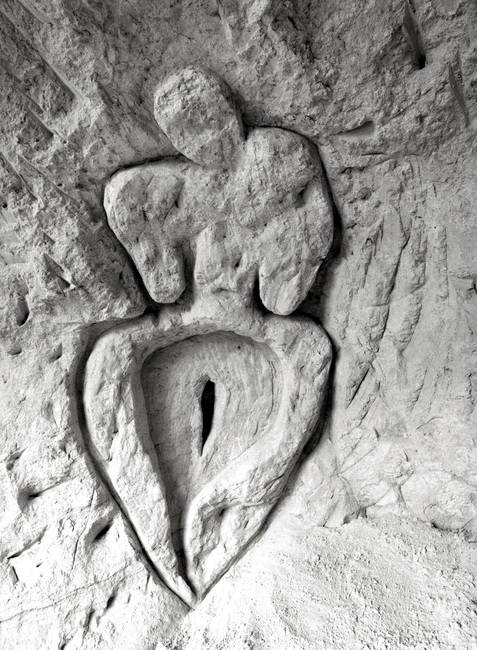
In 1980, almost two decades after leaving, Mendieta finally returned to Cuba. The following year, she carved a group of sculptures into limestone caves in Jaruco, near Havana. Female forms emerged along the rock walls, named after goddesses from Indigenous cultures.
These figures look as though they have been there for a very long time. Returning to Cuba also allowed Mendieta to keep searching, through her work, for an older and deeper connection with the land.
How can works like these be brought into a museum? The indoor forest at Tate, assembled from branches, earth, moss and stones, offers a very concrete answer.
In 1978, at the invitation of fellow artist Luis Camnitzer, Mendieta worked with a group of students to bring a forest into an exhibition space at the State University of New York College at Old Westbury. Almost half a century later, the Tate team reconstructed it from historical photographs, working with her niece and estate administrator, Raquel Cecilia Mendieta.
Umansky explains that “we chose to reconstruct works that had been first exhibited within a museum context (for an audience)”. Some other works were never intended to be encountered in person. They were meant to reach people through documentation, or, as Mendieta put it, to exist only “eroding away in nature.”
The forest may look small and fairly straightforward, but preparing it took a great deal of work. The team began collecting leaves, branches and tree trunks around a year and a half in advance. They also had to consider how bringing natural materials into the galleries might affect the other works on display.
Umansky says: “With this work, there was a degree of experimentation as we had about 20-25 photographs of the original piece to work from.”
Today, many people approach Mendieta through ecofeminism, but that alone is a limited way of understanding her. Umansky reminds us: “While Ana Mendieta did not use the term ecofeminism, she did speak of ecology in some of her talks, and researched and cared for nature.”
Her relationship with the land also encompasses exile, homecoming, the body and belief. Throughout the exhibition, these threads keep intertwining. It is hard to sum them up with a single term.
SECTION 03 | A Spacious Studio, and So Much More She Wanted to Do
In 1983, Mendieta received the Rome Prize and travelled to Italy for a residency at the American Academy in Rome. This time, she finally had a spacious studio of her own.
For an artist who had spent so long searching for places to work outdoors, that sounds like good news. But the new space brought a new question. Before, the earth, weather and flowing water had taken part directly in her work. Could that experience survive indoors?
Umansky explains: “This gave her access to a large studio and a new challenge – to harness the ‘magic qualities’ she experienced working directly with nature, while working indoors.”
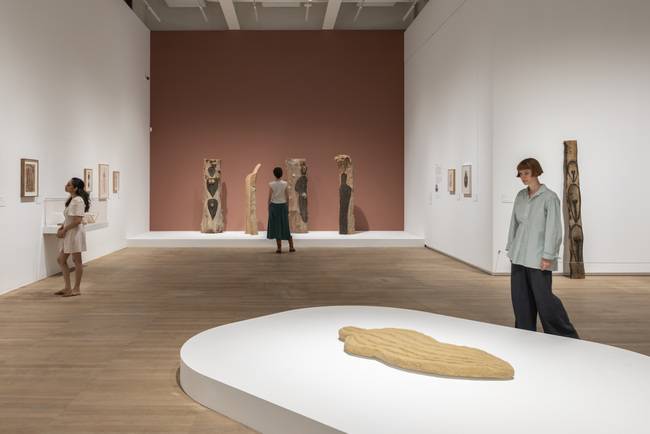
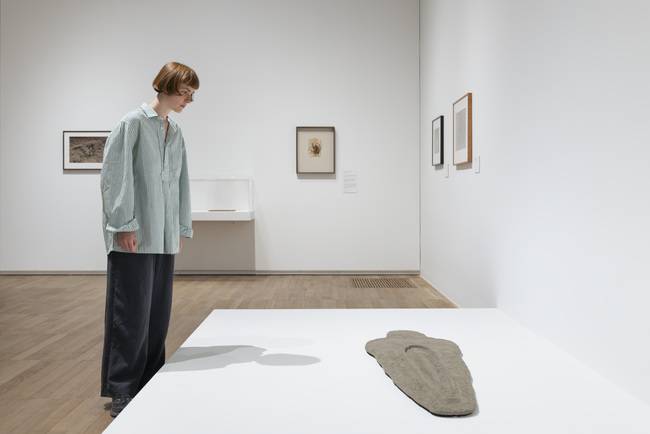
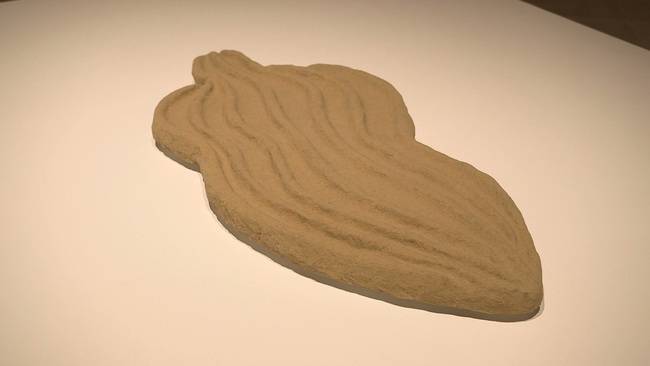
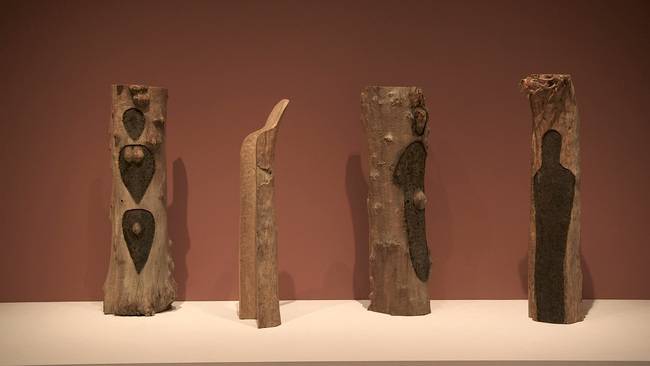
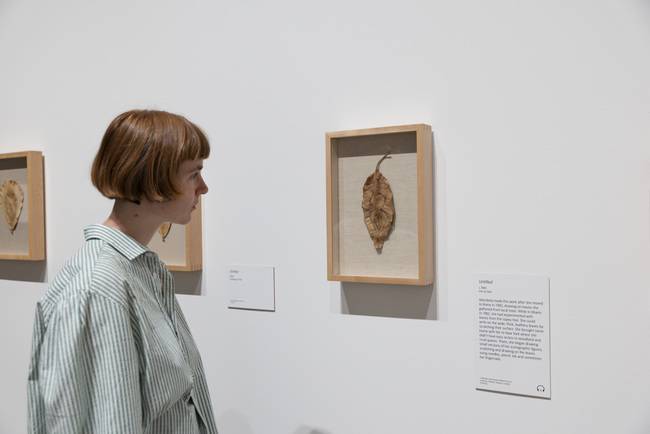
Mendieta brought wood, leaves and earth into the studio and began experimenting more intensively with materials. Forms that had appeared beside rivers, on sand and in grass gradually became sculptures that could stand on their own: low-relief works made from sand, wooden sculptures marked with human shapes, as well as drawings and prints.
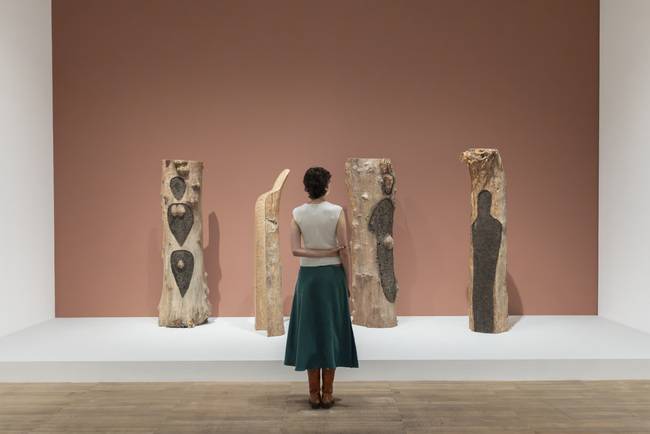
La Jungla (Totem Grove), on view at Tate, gives a sense of the direction she was exploring. Several tree trunks stand together, their surfaces bearing forms burned with gunpowder. The wood’s curves and rough textures overlap with the human outlines, like a small group of people standing quietly together.
Nor did she spend all her time in Italy inside the studio. She visited Hadrian’s Villa in Tivoli, the ruins of Pompeii and the Etruscan necropolises at Cerveteri, and travelled to Malta to see its Neolithic temples. The arrangement of stones, the carving of forms and the relationship between people and ritual all became things she continued to think about.
Umansky especially hopes visitors will discover this part of Mendieta’s life. Many people first encounter her through the Silueta series, without realising that, in her final years, she was already entering another phase of her practice.
Her life kept moving: from Cuba to Iowa, Mexico and New York, and then to Rome. In each place, she searched for materials and ways to keep working. The human forms that recur in her art changed along with her.
On 8 September 1985, Mendieta fell to her death from a high-rise apartment in New York. She was 36. Her husband, the artist Carl Andre, was subsequently charged with murder and acquitted in 1988. The case and verdict have remained controversial, profoundly shaping how people have come to know her.
This painful history needs to be remembered. But when every discussion stops at how she died, it becomes easy to forget how she was living and working at the time.
During our interview, we asked Umansky why the exhibition addresses Mendieta’s death with such restraint.
Umansky replies: “We chose to focus on her practice, as this is what we felt she would have wanted, instead of taking her biography –something that is often done for/to women artists– as an entry point into her practice.”
That does not stop us from learning about Mendieta’s life. Knowing about her departures and reunions, the places she visited, and how she studied and worked brings us closer to the art. But her life should not be written in advance as a tragedy, as though every work were a prediction of its ending.
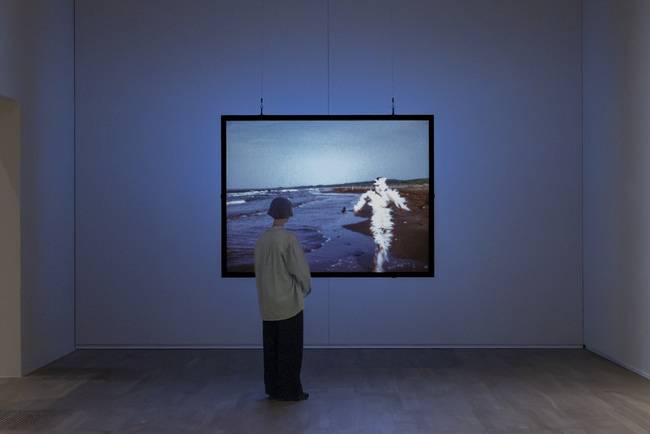
In Bird Run, Mendieta, covered in white feathers, runs towards the camera along a beach. She gradually comes closer, her body rising and falling as she runs, the feathers moving in the wind. Watching it, we can almost feel her energy across time, and her continuing curiosity about what else a human body might become.
Umansky says: “I hope it allows people to understand how, while being at the cutting-edge of the contemporary, Ana Mendieta’s practice was also rooted in a deeper sense of time.”
Leaving the exhibition, I thought again about this woman artist, so deeply underestimated and overlooked by art history. I found myself wondering what she might have been thinking when she left home at 12: I still have so much I want to do.