Zhang Hui After Three Quiet Years, Painting Takes a New Turn
Born in Heilongjiang in 1967, the artist Zhang Hui has taught at the Central Academy of Drama since graduating in 1991. He has worked in design, installation, and film, but has returned, finally, to painting, which for him is both livelihood and life......
By / Xirui Huang · 10 min read
How does Zhang Hui bring different times and scenes together within one painting?
In Xirui Huang’s 2023 studio interview, Zhang Hui describes painting as an ongoing process of revision and renewed attention to life. He sets works aside and returns later, allowing new experiences to enter earlier scenes. The paintings shown at START Museum recombine memories, surroundings and cultural references. Through layers that conceal and reveal, different moments gradually form a personal structure of time within the image.
The artist Zhang Hui was born in Heilongjiang, China, in 1967. After graduating from the Central Academy of Drama, he stayed on to teach there, and has done so from 1991 to the present. He has worked in design and installation, and has also made films, but in the end he came back to painting. For him, painting is both work and life, a vast pit that, once entered, cannot be escaped. It has been three years since Zhang Hui last held a solo exhibition.
Artist | Zhang Hui: Leaping into Painting's "Giant Pit"
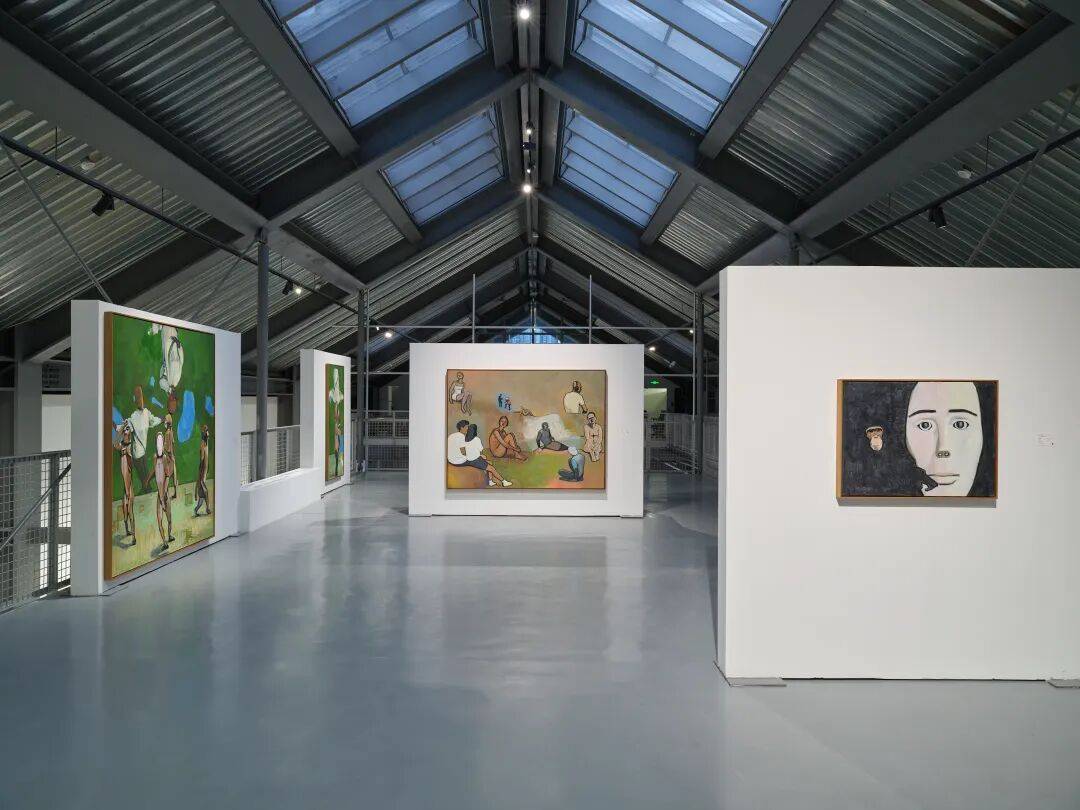
In the meantime, with no exhibition plans pressing on him, Zhang Hui found himself recovering moods and thoughts he had once misplaced, and sensing the world around him anew. Out of that came a composite artistic language, distinctly personal, at once new and old. At the exhibition site, START Museum, on August 28, 2023, the artist presented these fifteen new works, which mark an important turning point in his life as a painter, giving form to the surroundings of his life, the condition of his body, and this particular period as he has lived through it over the past three years.
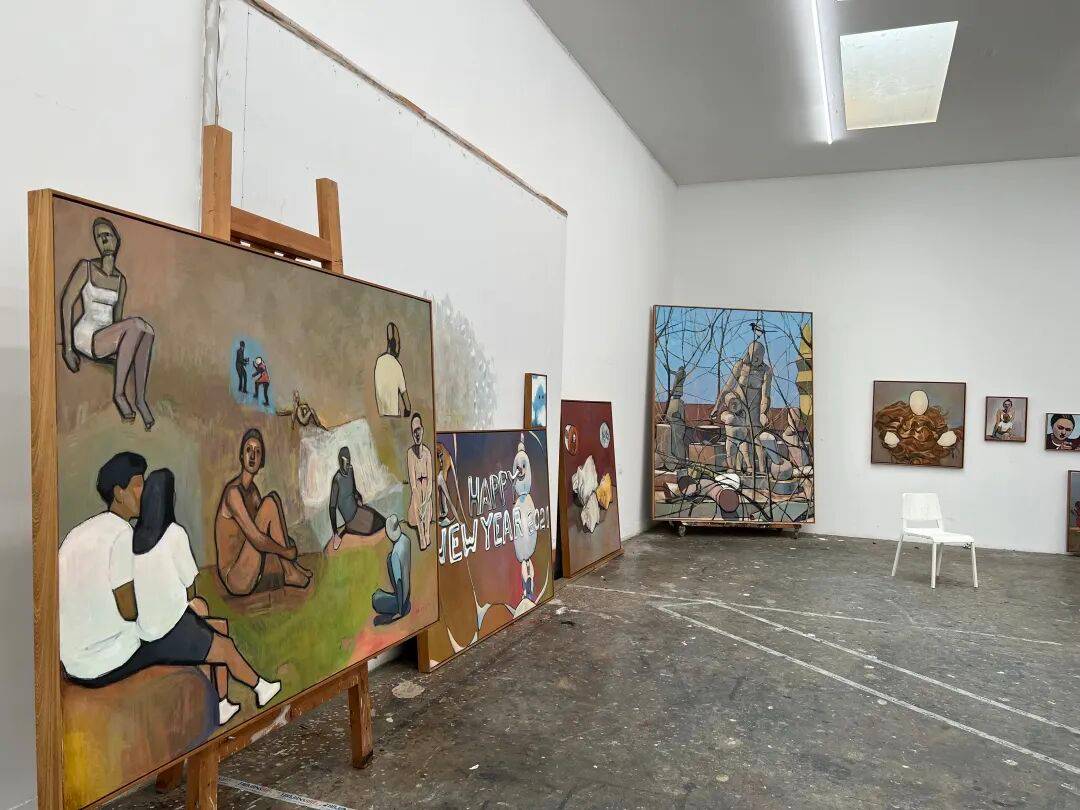
“How to construct things from different scenes, times, and cultural backgrounds within a single picture plane was the subject I set myself this time,” Zhang Hui said. Before the exhibition opened, we went to his studio in Hegezhuang, Beijing, and sat down with him in front of this newly completed group of works, soon to go on view, to talk about the changes in his work and life over the past three years. Left: Zhang Hui’s studio in Beijing. Right: grapes in the courtyard of Zhang Hui’s studio in Beijing; Zhang Hui at work in the studio. In August, in Beijing, we met the artist at the studio he has rented for nineteen years.
SECTION 01 | A new work that looks a bit "Japanese"
Entering the red-brick courtyard, we looked up to see clusters of grapes still unripe overhead; before we saw the artist himself, we had already encountered his feeling for daily life. Zhang Hui, dressed simply in a white T-shirt, dark navy knee-length pants, and black sneakers, stood smiling at the door to greet us. His studio is a large open room, and at a glance it was filled, wall to wall, with the new works for this exhibition. Photo: Zhang Hui being interviewed in the studio. “I dawdled over these dozen or so paintings for three years. I just finished them, and they’re still drying.”
That was how Zhang Hui put it. Yet although all the works are new and were made within the past three years, he does not think of their artistic language as entirely “new.” It comes, rather, from a renewed understanding of himself, his surroundings, and the social environment, joined to a certain longing for the past.
“These three years were rather unusual. I wasn’t rushing around to exhibitions or planning a solo show, and that slower pace of life let me pick up a lot of things from the past that I had dropped along the way. There wasn’t much planning in these paintings either. I painted wherever my thoughts led me, and before I knew it, these works had accumulated.” Exhibition view, Zhang Hui Painting Research, the fifteenth installment of Artist Genealogy Research, START Museum, 2023. Zhang Hui, Once (Happy New Year), 2023. The first painting he began was Once (Happy New Year), with a snowman and the enormous words “HAPPY NEW YEAR 2021.”
At first glance, the work looks somewhat cartoonlike, its colors gentle, easy, even cute. But on closer inspection, beneath the snowman there is also a human head wearing headphones; in the upper left corner is a four-legged creature of no identifiable species. The whole image is absurd and surreal. Although it was the first of the works that the artist began, it was not the first one he finished.
“Basically all of these paintings were only finally completed this year.” Zhang Hui likes to set a painting aside once it reaches a certain stage, then return to it after it has dried, again and again, searching between concealment and revelation for new visual possibilities. This has become an important part of his working method. Zhang Hui, Once (Happy New Year) (detail), 2023. “In fact, this painting began as a normal figurative scene, something you could find in real life.
I painted it in summer and left it sitting in the studio. Then, when winter came in 2021, there was a snowfall like something out of a fairy tale. The snow hung halfway on the trees, crystalline and especially beautiful. I drove to the studio, and the moment I walked in and saw my painting, I felt something was off, so I made it snow inside the painting too.” Zhang Hui told us that the work also has a special significance for him personally. It marked a turning point in his visual art, the beginning of layering personal thought and time together within the same image.
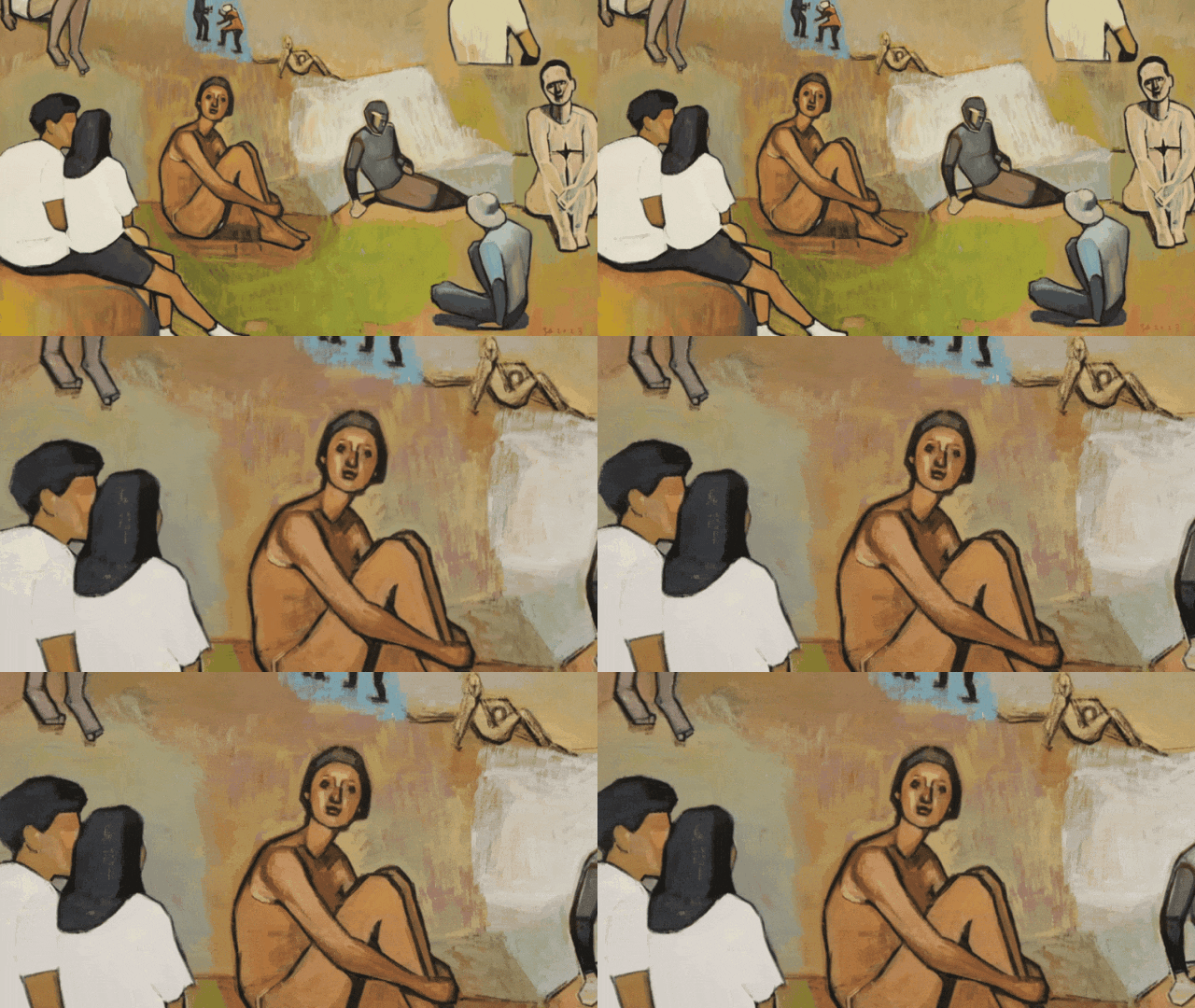
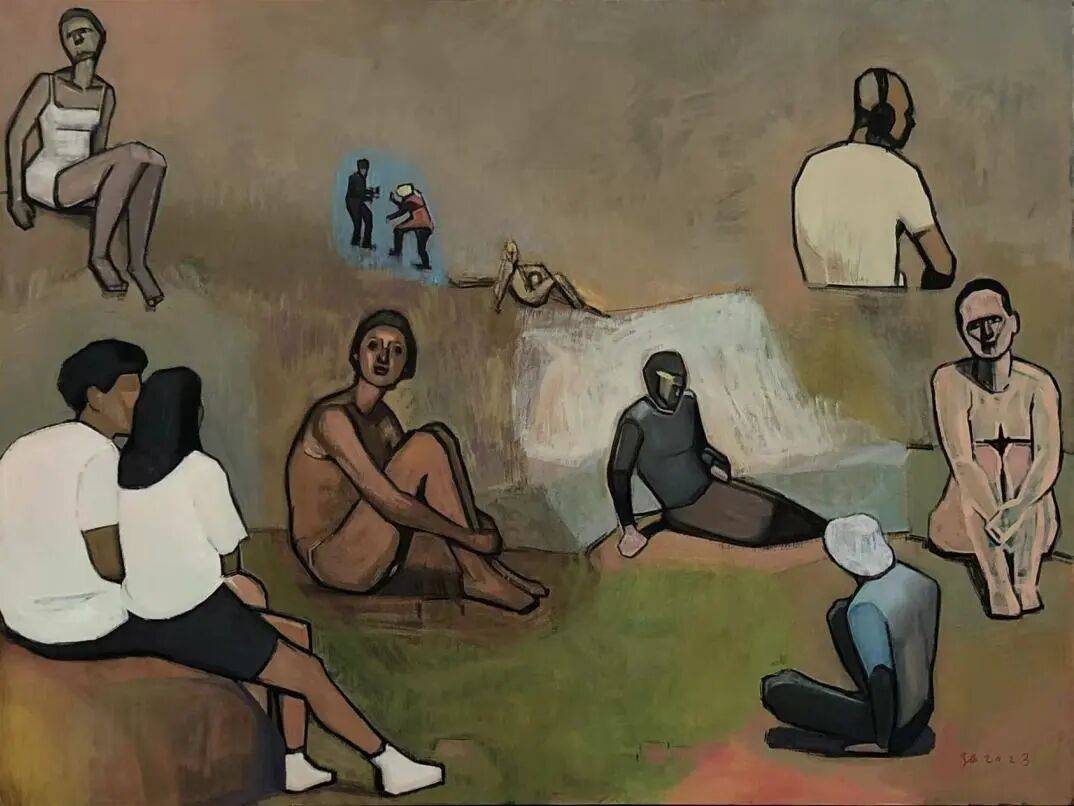
Zhang Hui, Once (Sunny Day), 2023. Exhibition view, Zhang Hui Painting Research, the fifteenth installment of Artist Genealogy Research, START Museum, 2023. Two paintings placed together in Zhang Hui’s studio. “The staggered structure you see in the painting also has something to do with my physical condition at the time. That year I had four-fifths of my stomach removed. It was quite a major surgery, so I wanted to paint it as a kind of commemoration,” Zhang Hui said. In the upper right corner of the painting there is also a very small blue-and-white abstract image, like a cloud with a pair of eyes, or perhaps the sea.
“This painting, Once (Sunny Day), exists as a single work together with the large painting below it, Once (Happy New Year),” Zhang Hui told us. Exhibition view, Zhang Hui Painting Research, the fifteenth installment of Artist Genealogy Research, START Museum, 2023. Zhang Hui, Message (Lifebuoy), 2023. Looking closely at these new works, it is hard to find a single image that corresponds to a real scene in life; all of them have been recombined and pieced together.
“To deconstruct things from different scenes, times, and cultural backgrounds and then reconstruct them within one picture plane is one of the subjects I set myself this time, and also the direction I want my future work to take.” Exhibition view, Zhang Hui Painting Research, the fifteenth installment of Artist Genealogy Research, START Museum, 2023. Zhang Hui, Away (On the Hillside) (detail), 2023. Zhang Hui offered a particularly vivid analogy for his pictures: “When we were in college, a class would include students from the South, the Northeast, the Northwest. Painting is the same. These things that are not especially related come together and need an institution, like a school, and I am the creator of that institution. Through color and form, I shape that structure and make it coherent; only then can the picture stand.”
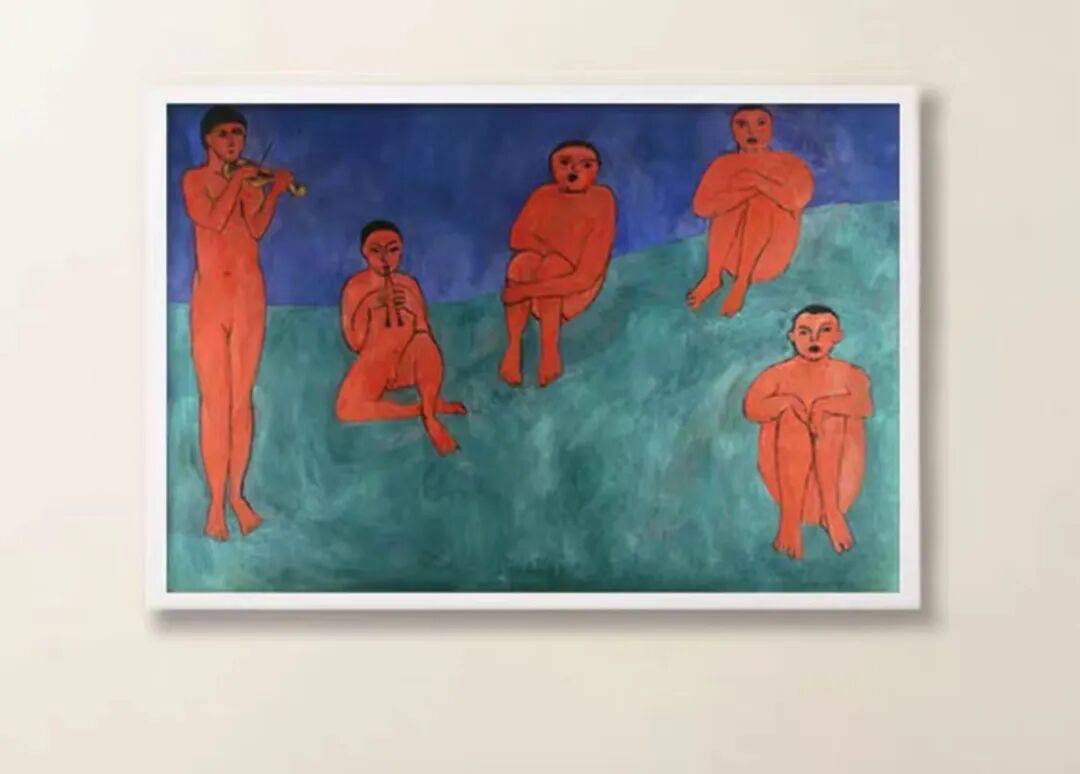
Zhang Hui, Away (On the Hillside), 2023. Matisse, Music, 1910. When we saw Away (On the Hillside), we could not help thinking of Matisse, and later in conversation the artist confirmed it: the seated sideways figure in the painting was inspired by Matisse’s early work Music.
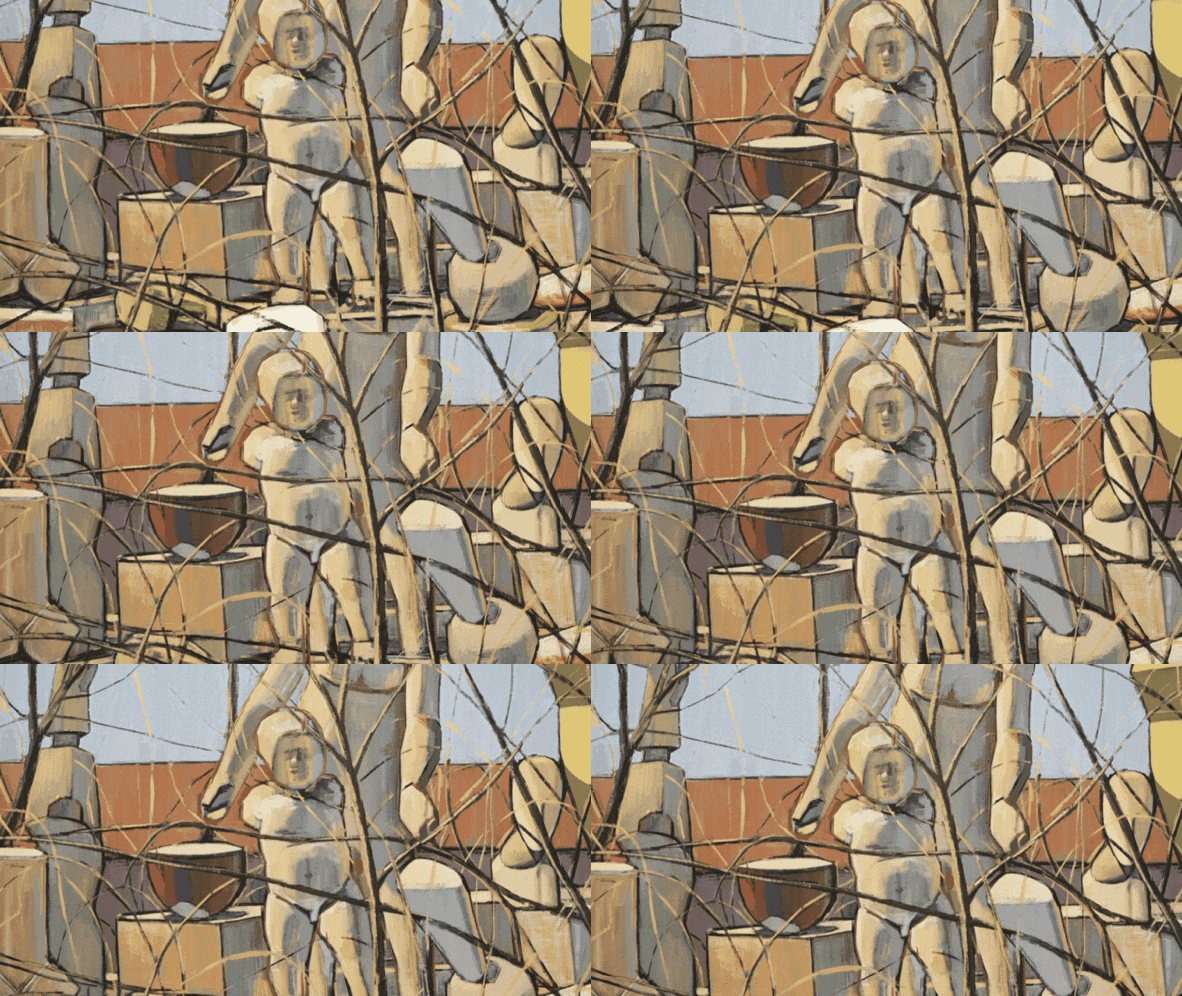
“Matisse and Picasso were both masters of the highest order. My ability to make structural compositions comes from studying them,” Zhang Hui said. Zhang Hui, Fularji (Connection), 2023. Exhibition view, Zhang Hui Painting Research, the fifteenth installment of Artist Genealogy Research, START Museum, 2023. Zhang Hui, Fularji (Connection) (detail), 2023. Looking around at these new works, we found that nearly half of them are in curious conversation with one another.
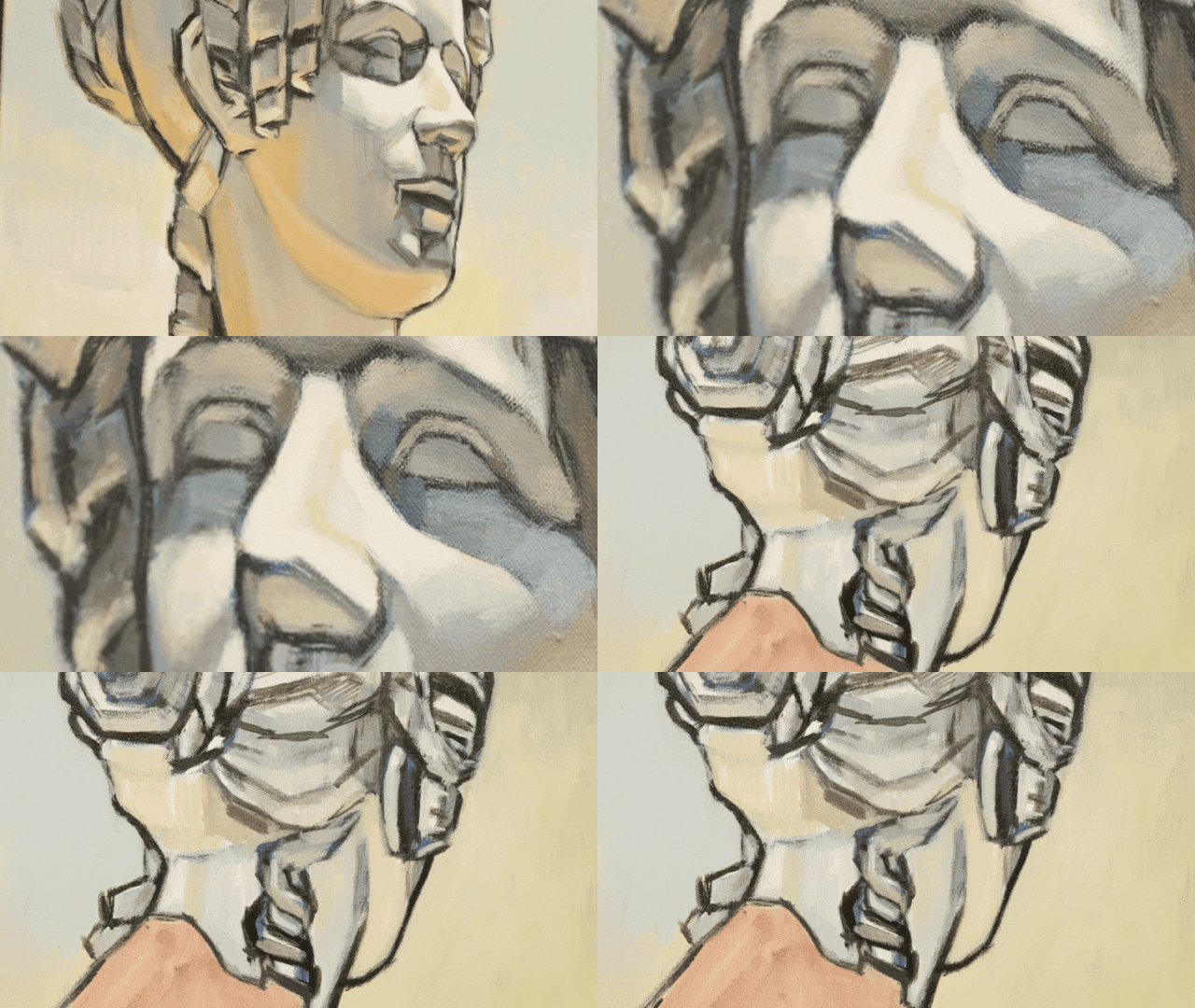
In some cases the relation is obvious from the images themselves. The three panels of Fularji (Connection), for instance, are different views of a single sculpture, while Makeup (Face) and Makeup (Yellow Hair) both show faces in wigs, their features erased. Exhibition view, Zhang Hui Painting Research, the fifteenth installment of Artist Genealogy Research, START Museum, 2023. Left: Zhang Hui, Makeup (Face), 2023. Right: Zhang Hui, Makeup (Yellow Hair), 2023. Left: Zhang Hui, A Kind of Life (Tent), 2023. Right: Zhang Hui, A Kind of Life (Mother and Child), 2023. In both A Kind of Life (Mother and Child) and A Kind of Life (Tent), an enormous orange-red tent appears, impossible to ignore.
“I think the tent is a particularly strange kind of public space. In Beijing I often go out to exercise, and I kept seeing people setting up tents on the grassy riverbanks. It’s a type of urban scene that has only appeared in the past few years, so I wanted to paint my visual impression of it,” Zhang Hui said. Exhibition view, Zhang Hui Painting Research, the fifteenth installment of Artist Genealogy Research, START Museum, 2023. Left: Zhang Hui, Reflection (Two Days), 2023. Right: Zhang Hui, Reflection (Pose), 2023. In other cases, the links between paintings emerge through color and composition. Reflection (Pose) and Reflection (Two Days), for example, share green backgrounds and inverted figures, and there is a certain resemblance between the monkey in the lower half of one image and the person in the other.
“Whenever a picture contains a lot of people, I paint it over many times, turning it upside down and around as I study the structure. Maybe one person was there at first, and then I realize the placement is wrong, so I have to invert the figure. I’m always looking for a new surreal image.” Exhibition view, Zhang Hui Painting Research, the fifteenth installment of Artist Genealogy Research, START Museum, 2023. Zhang Hui, Face (Projection), 2023. Zhang Hui, Face (Opening), 2023. With Face (Opening) and Face (Projection), the connection becomes clear only after reading the titles and then looking back at the pictures: from the expressions on the faces to the pictorial structure, even to the use of color, there are subtle logical similarities, and the recognition brings a small thrill of discovery.
This logic of dialogue from one work to another has gradually become an increasingly pronounced tendency in the artist’s practice. The “Blueprint Series” of 2013-16, along with the image of “Two Tigers,” returned unexpectedly when Zhang Hui later painted the “Chinese Eastern Railway,” creating a distant conversation with the earlier work. Zhang Hui, Fularji (North of the Tracks), 2023. Exhibition view, Zhang Hui Painting Research, the fifteenth installment of Artist Genealogy Research, START Museum, 2023. Zhang Hui, Fularji (Brancusi) (detail), 2023. “The things you have created enter your memory like stored reserves. They work on the body. Sometimes when something happens, those old reserves suddenly come to call, and that’s how a new work links up with an earlier one.”
SECTION 02 | I want to turn decades of paintings into a whole
Zhang Hui said that this kind of connection is sometimes unconscious, and may well be inseparable from the fact that he graduated from the Central Academy of Drama and stayed on there to teach. Zhang Hui, Away (Family), 2023. Exhibition view, Zhang Hui Painting Research, the fifteenth installment of Artist Genealogy Research, START Museum, 2023. “There is something special in theater, and that is temporality. I often give this example: if the first act of a play is a battlefield and the second act is a bedroom, then when the audience is watching the bedroom scene, they can still smell a trace of gunpowder from the battlefield. That is because time continues; it carries many things into the next scene, so it can never be that pure. Painting works by the same principle. Past experience acts on new work without your intending it.”
The artist said this by way of explaining why, despite the considerable change in these recent works, one can still trace a line of development from the earlier ones. Zhang Hui, Blueprint: Before, 2013. Zhang Hui, Still in the Mirror 1, 2018. Zhang Hui, Accompanying, 2019. Zhang Hui, Blueprint: Folds, 2012. In the past, Zhang Hui painted many flight attendants, train attendants, doctors, nurses, and workers in the midst of their jobs. That figurative attention to people is still present in the new works, but now space and time have been broken open, and people and scenes are pieced together in a surreal state.
The abstraction he painted before has also been distilled here and mixed into those figurative scenes.
“I’ve talked with many friends about this: when I’m close to death and look back over these decades of work, if the hundreds of paintings I’ve made in this life all turn into a mortise-and-tenon structure, each logically locking into the next, wouldn’t that be interesting?” Zhang Hui said with a laugh. As the artist put the finishing touches on Fularji (Brancusi) in the studio, we asked whether the work was exploring a relationship between mother and child. In fact it was not. It continues his previous project, “Chinese Eastern Railway,” and takes as its setting a large abandoned factory in Qiqihar, Heilongjiang, in the Northeast, modeled on Russia’s Ural industrial region. Zhang Hui, Mudanjiang, 2020.
In the Northeast there are many such abandoned factories. They stand for the first Five-Year Plan in China’s modernization process, a blueprint that was once glorious. Born in Heilongjiang, Zhang Hui witnessed the prosperity of the Northeast as a major industrial province when he was young, and he has also seen its present decline and desolation after “hollowing out.” Zhang Hui, Square (Huashi Square), 2020. Zhang Hui, Outdoor Life (2020 Happy New Year), 2020. In 2019, he and the artist Zhao Gang retraced the route of the “Chinese Eastern Railway.” Zhang Hui set out from Lushun, Zhao Gang from Manzhou, and the two met in Harbin, after which Zhang Hui painted a series of works on the subject.
The project began with a casual conversation over drinks. Zhao Gang, traveling the roads of the Northeast by motorcycle, had discovered that many of the region’s important cities had grown up along the route of the “Chinese Eastern Railway,” which runs from Lushun to Manzhou, and he found the fact deeply affecting.
“As it happened, my family was in the railway system. My father was a train driver, and my mother worked in passenger service on trains, so I was especially familiar with this railway from childhood. That’s how the two of us made the plan,” Zhang Hui said. Zhang Hui, Architecture (Moses), 2020. “When I was organizing a series of documents, I used the phrase ‘half an elegy.’ I think this is a kind of decline, but you can still see the former prosperity. Because it truly transformed a generation of people; it changed their lives.”
He said that, in painting this series, he wanted only to be a little plainer in method, a little more candid in reflecting the era. And painting his own time, writing the life around him, has by now become the axis of Zhang Hui’s work over the past three years.
“Over these past three years, because of the stomach surgery I had earlier, I have to exercise after eating, so I started hiking and wandering around Beijing. I feel I’ve come to know Beijing all over again. Maybe because I used to go everywhere by car, I hadn’t known even one-tenth of the city, and it felt as if my vision had opened up. It was quite interesting,” the artist said. Zhang Hui mixing colors in the studio. When we asked why simply walking around outside could give him so many ideas for new work, Zhang Hui said with a laugh that it was an “occupational disease.”
“Sometimes reading a book, chatting with a friend, watching a video, moving through life, exercising, any of these can trigger an artist’s visual logic and imaginative analysis. I first photograph the things that interest my intuition and keep them. Then, when the feeling arrives one day, I can begin composing and painting.” People who paint are also able to catch things others do not see, such as the very subtle changes of color in nature.
“The glow at sunrise leans slightly rose, while backlight turns purple, tending toward a cool blue,” he told us. Zhang Hui, Square (Huashi), 2020. After decades of observing his surroundings with a painter’s eye, this way of seeing has all but become Zhang Hui’s muscle memory.
“Painting really is a huge pit, incredibly deep, because you always feel there are a pile of problems you can’t solve. Maybe today you think, ‘I painted so well,’ and tomorrow you think, ‘How did I paint so badly?’ There is no end to it. I truly mean that from the bottom of my heart.” And yet the artist’s passion for painting has never diminished.
“In my state of mind, I’ve always thought of myself as a teacher. Painting is what I love. The thing I’m so willing to do can also earn me money, make a living for me, and let me live quite well. That seems like good luck too,” Zhang Hui said with a laugh.