A First Look at Art Basel Hong Kong: Three Films by Chinese Artists That Stand Out
In late March, the annual Art Basel Hong Kong fair returns at full pre-pandemic scale, with 242 galleries from 40 countries and territories exhibiting from March 28 through March 30, including a free public film and talks program at the Hong Kong Convention and Exhibition Centre......
By / Xirui Huang · 11 min read
How do three artists bring personal experience and overlooked stories into film?
The 2024 interviews connect three approaches to moving images. Qiu Jiongjiong begins with his grandfather’s Sichuan opera experience to link individual lives with historical change. Wong Ping turns diaries and fragments of everyday life into absurd animation. Yang Yuanyuan draws on Chinese American performers’ accounts to revisit Chinatown stories missing from formal records. Art Basel Hong Kong’s film programme brings these practices together and offers another route into contemporary art.
A First Look at Art Basel Hong Kong: Three Films by Chinese Artists That Stand Out
In late March come the "Big Days" that the Asian art world waits for each year: the annual Art Basel Hong Kong fair. This year's edition will return in full from March 28 through March 30, finally recovering its pre-pandemic scale, with 242 galleries from 40 countries and territories, 65 more than last year. Among the five sections familiar to visitors, the film program, "Film," and "Conversations" will be held this year in a dedicated auditorium at the Hong Kong Convention and Exhibition Centre, and will be free to the public.
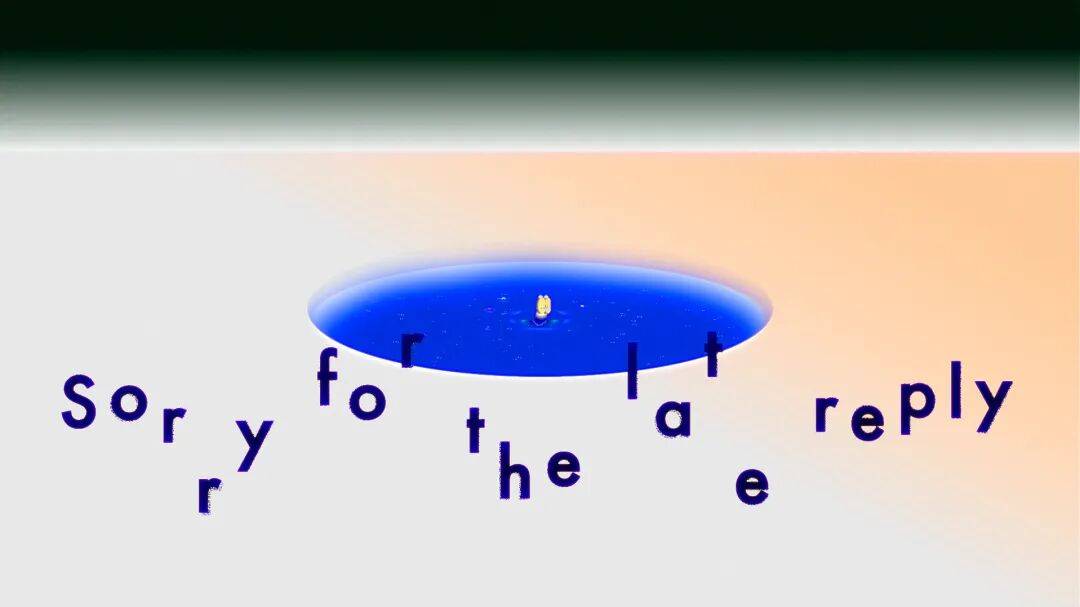
Art film, as a relatively accessible popular art form, offers outsiders perhaps the smoothest entry into the world of contemporary art. Of the ten screenings in this year's "Film" program at Art Basel Hong Kong, three films and shorts by Chinese artists are especially likely to draw attention. They are Qiu Jiongjiong's feature-length Pepper and Fire, created with his grandfather as its model; Yang Yuanyuan's short Chinatown Cha-Cha, based on the stories of second-generation Chinese American performers in San Francisco; and the Hong Kong artist Wong Ping's animated short Sorry for the Late Reply.
SECTION 01 | Qiu Jiongjiong: Carry out the "clown spirit" to the end
On the eve of the fair, I spoke with these three artists, each also a filmmaker, about their work and the bittersweet realities of the creative process. The film Qiu Jiongjiong is screening at the fair, Pepper and Fire, is a three-hour feature that he wrote and directed himself. He told us that it is his seventh independent film, and that he has long hoped to bring this story of his grandfather, the Sichuan opera clown actor Qiu Fuxin, to a wider audience, and to carry forward the "spirit of the clown."
Since its release, the film has been widely praised at home and abroad. When it premiered in Switzerland in 2021, it won the Jury Grand Prix at the Locarno International Film Festival. A still from Pepper and Fire: "pepper and fire" is a thoroughly authentic Sichuan flavor.
"Tanghui" refers to the old custom by which wealthy families entertained guests by inviting performers to their homes to stage a show. In Qiu Jiongjiong's view, each individual is in fact taking part in the era's own tanghui. Qiu, who is from Leshan, Sichuan, began drawing at the age of two or three, dropped out in his second year of high school, and, out of sheer stubbornness, went to Beijing to study painting at an art school. Partway through, unwilling to stay in school, he began mounting exhibitions and selling paintings with friends. From the age of 23 to 29, he worked as a freelance artist and gradually managed to save a little money.
In 2006, he bought a DV camera, began teaching himself film history, and started making independent films by what he called a wild, unorthodox route, gradually forming his own aesthetic.
"Fellini, Jacques Tati, Kobayashi Masaki, Chaplin, Buster Keaton, these are all 'teachers' who directly nourished me," the artist said. Pepper and Fire tells the long, turbulent life story of its protagonist, Qiu Fu, modeled on Qiu Jiongjiong's grandfather Qiu Fuxin, a clown actor once known as the "living dictionary" of Sichuan opera, spanning more than half a century, from the 1920s to the 1970s, amid the sweep of history.
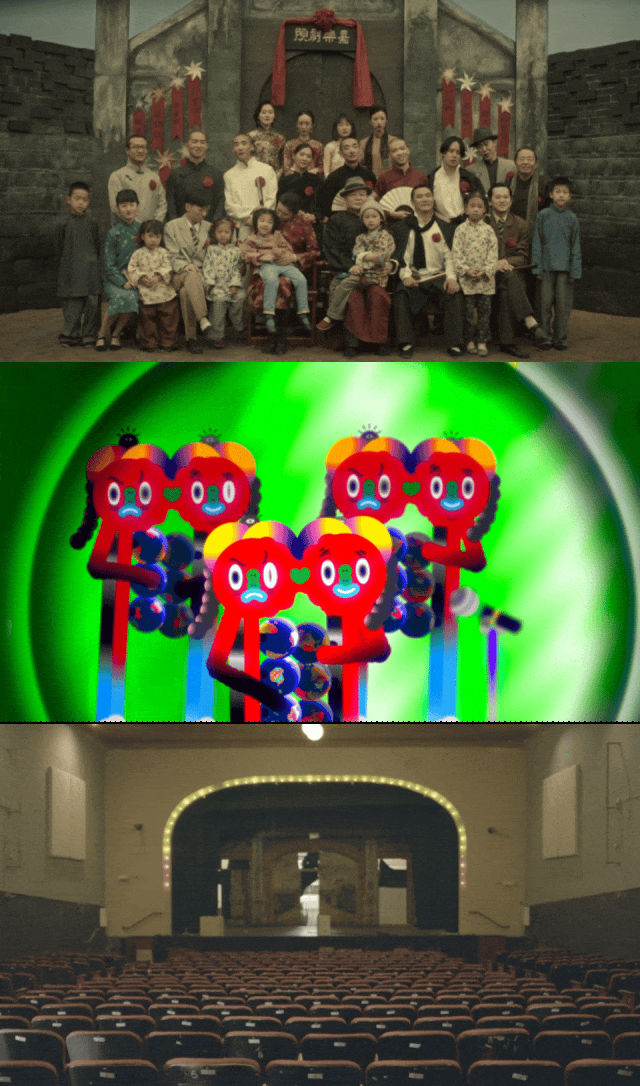
The protagonist of Pepper and Fire is Qiu Fu. At the start of the film, Ox-Head and Horse-Face come to escort Qiu Fu to the underworld. The opening scene shows two underworld minions under the King of Hell, Ox-Head and Horse-Face, pulling a tricycle strung with colored light bulbs to take Qiu Fu to report below. It is pitch-dark. Along the way, Qiu Fu encounters old acquaintances running farmhouse inns on the road to the afterlife; together they drink, trade toasts, joke around, and keep glancing back at the world on the other shore, life and death echoing one another on the yellow-spring road.
By building the story around this act of looking back, Qiu Jiongjiong tells the legendary life of his grandfather. Qiu Fuxin played clown roles onstage. As for why he begins with Qiu Fu's death, Qiu Jiongjiong said that his grandfather's death was full of drama, entirely fitting for "the way a clown says goodbye to the world."
"I was in elementary school then, and I had made a Mickey Mouse river lantern that would be lit on the water at night. My grandfather was so happy that day. He said he had to go see the river lantern his grandson had made. He had been drinking a little, and he tried to climb over the railing from the seventh floor to the sixth, but lost his footing and fell. He hit the back of his head and was gone immediately. A Sichuan opera clown going to meet another clown, Mickey Mouse, and that was how he completed his life," the artist said. As a child, Qiu Jiongjiong performed onstage with his grandfather. The film recreates the state of the audience in a Sichuan opera theater. For years, he had wanted to film his grandfather's story, but had not found a way in.
That changed in 2017, when his father, Qiu Zhimin, wrote a biography to mark the 30th anniversary of Qiu Fuxin's death and asked Qiu Jiongjiong to illustrate it. From then on, the artist became absorbed in his grandfather's life story, bound up with changes in family and nation, and in one burst wrote a first draft of the screenplay that ran to 130,000 words.
"I grew up following my grandfather around the Sichuan opera troupe, living troupe life, and it was an intensely seductive, exuberant everyday world," Qiu Jiongjiong told us. "It's like the way we scroll our phones now, a state of complete relaxation. The actors perform onstage; the audience below cries together, laughs together, lives together, dies together, or falls asleep with their heads down and snores, and when they wake there is no distinction between them." On the set of Pepper and Fire, he told us, in order to save money, they shot only in a factory workshop in Leshan, Sichuan, where a ring of steel frames and white rainproof sheeting formed a 400-square-meter set.
"I'm actually a very conservative director. I'm especially afraid of wasting money, and that's because I've been poor for so long making independent films." All the actors in the film were nonprofessionals. Some were Qiu Jiongjiong's friends; some were staff members from art festivals. He also brought in his father, Qiu Zhimin, to play the Sichuan-opera-loving warlord Ma'er. The three-hour film was shot entirely in that crude 400-square-meter shed, an ambition of no ordinary kind. In Qiu Jiongjiong's words, it was "building a ritual ground inside a snail shell, using four ounces to move a thousand pounds."
SECTION 02 | Wong Ping: The Artist Who Calls Himself a Comedian
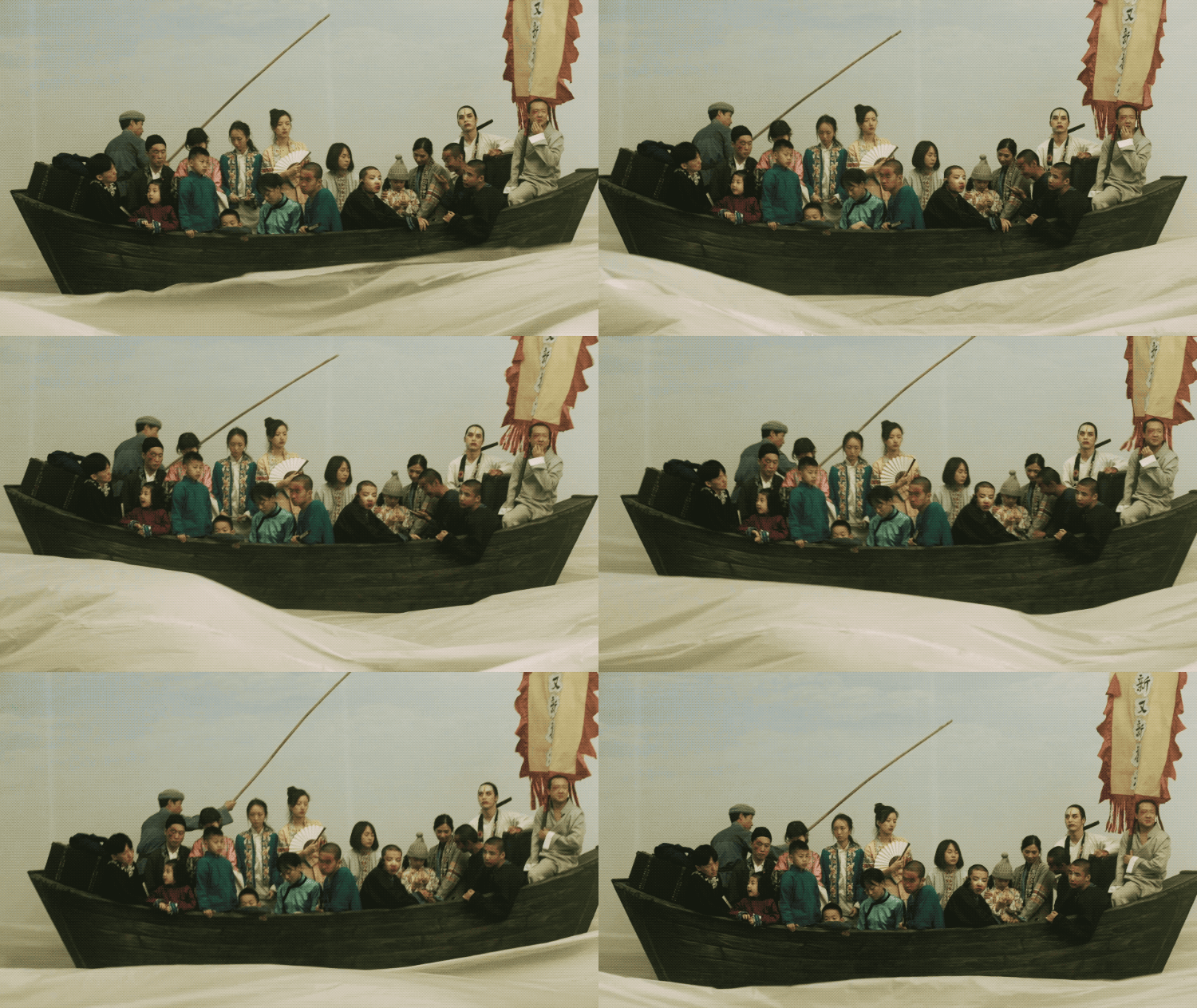
On set, mountains were painted on wooden boards. Qiu Jiongjiong, storyboard for Pepper and Fire, 2019. Because of the limitations of the site, he had to prepare exhaustively in advance. Sometimes, for a single scene, he would draw 20 storyboard panels, planning every detail, integrating resources, and achieving what he imagined as a "lightness of narration." Every prop and set in the film was designed by the artist himself and drawn entirely by hand, stroke by stroke. In addition to the storyboards already mentioned, the narrative boards and set-design drawings were also made by Qiu in the intervals between shooting, in color and in black and white, like a daily discipline.
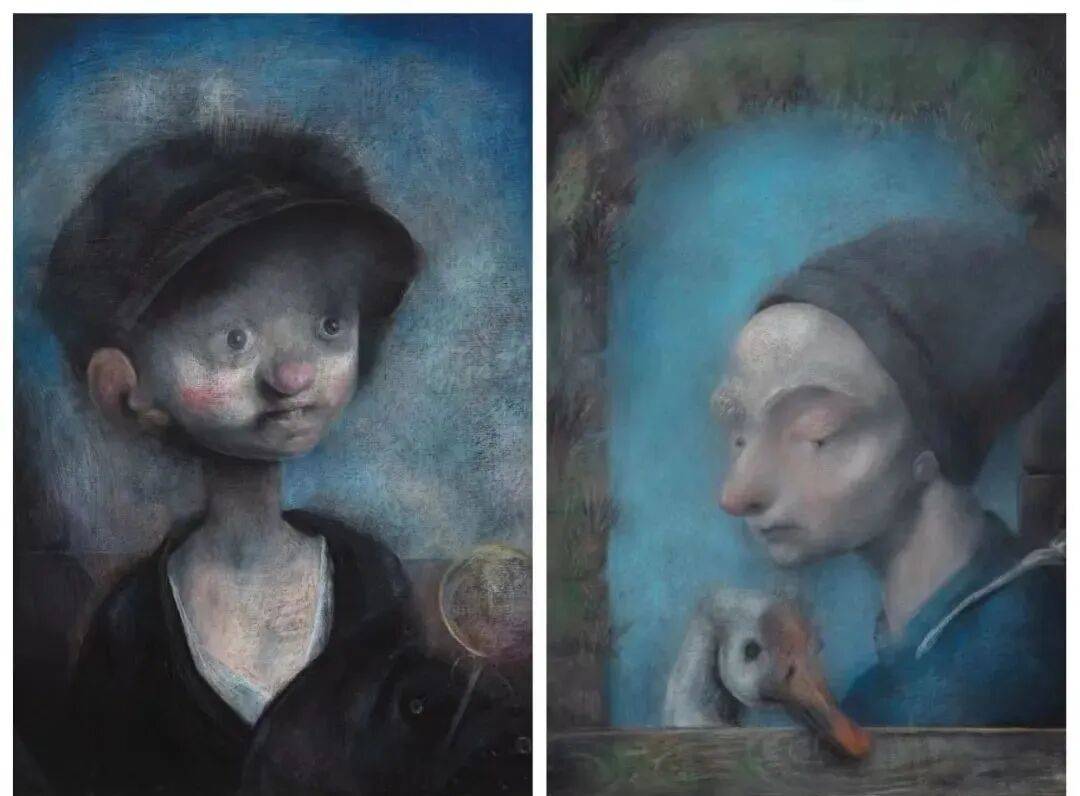
Qiu Jiongjiong, portrait studies for Pepper and Fire, 2020. Right after the film was completed, he was still immersed in his feelings for the various characters, and, while the emotion was fresh, he used pastel to make a set of portraits of the protagonist.
"Pepper and Fire is really an ode to everyday life. Human beings are dust motes; even in desperate circumstances, they still have to go on living. So no matter how grand the narrative, it still has to land on the individual. Whether in film or in art, the subject we ultimately have to confront is human life," he said. Images from Pepper and Fire courtesy of the artist and Star Gallery. The animated short Sorry for the Late Reply, screened in Film, is by the Hong Kong artist Wong Ping.
Field | A First Look at Art Basel Hong Kong: Three Films by Chinese Artists That Stand Out
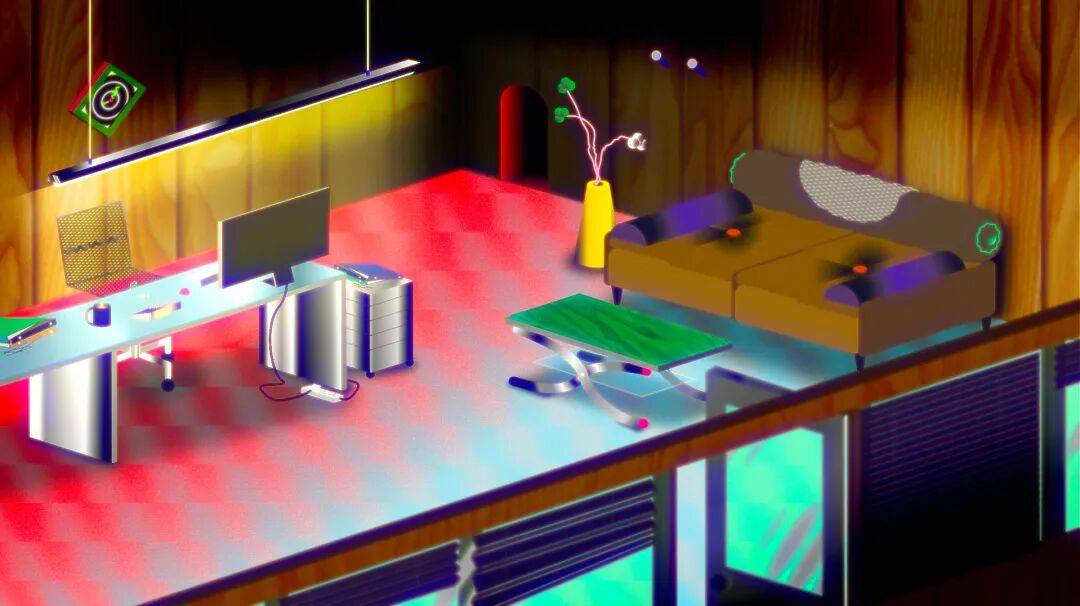
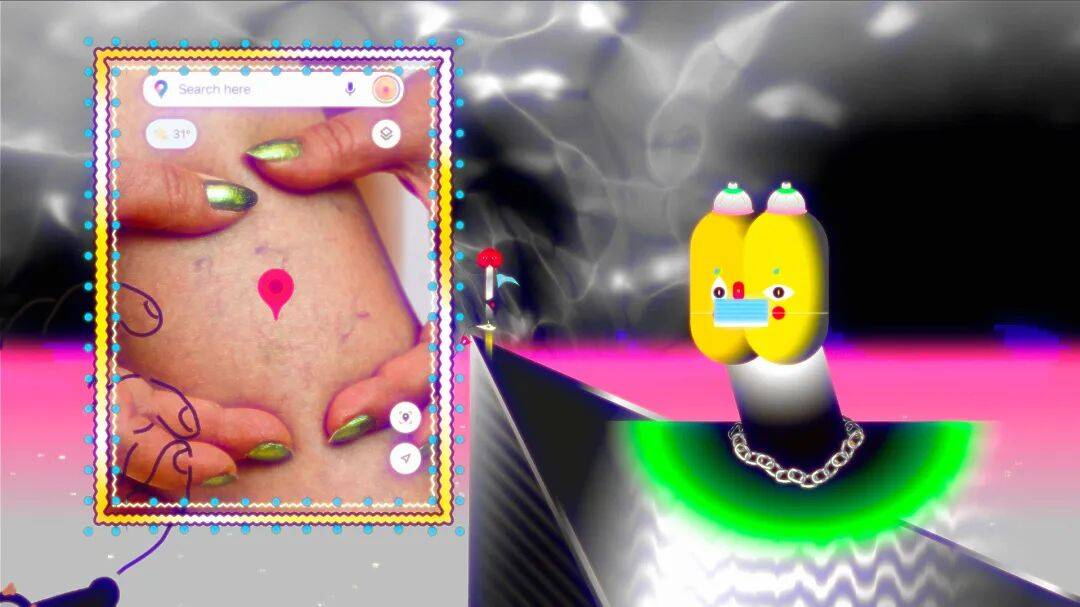
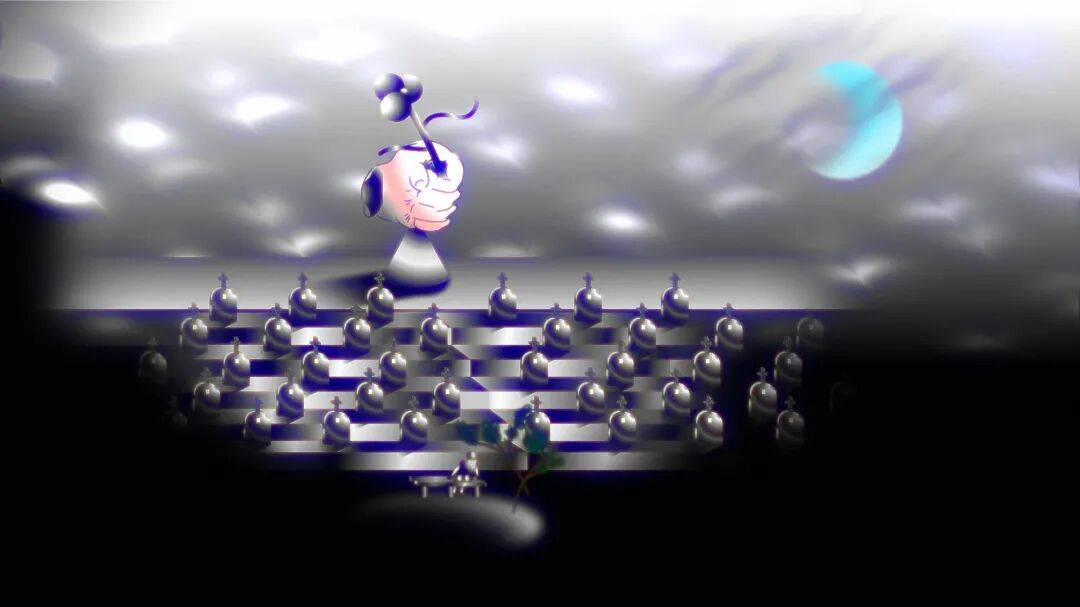
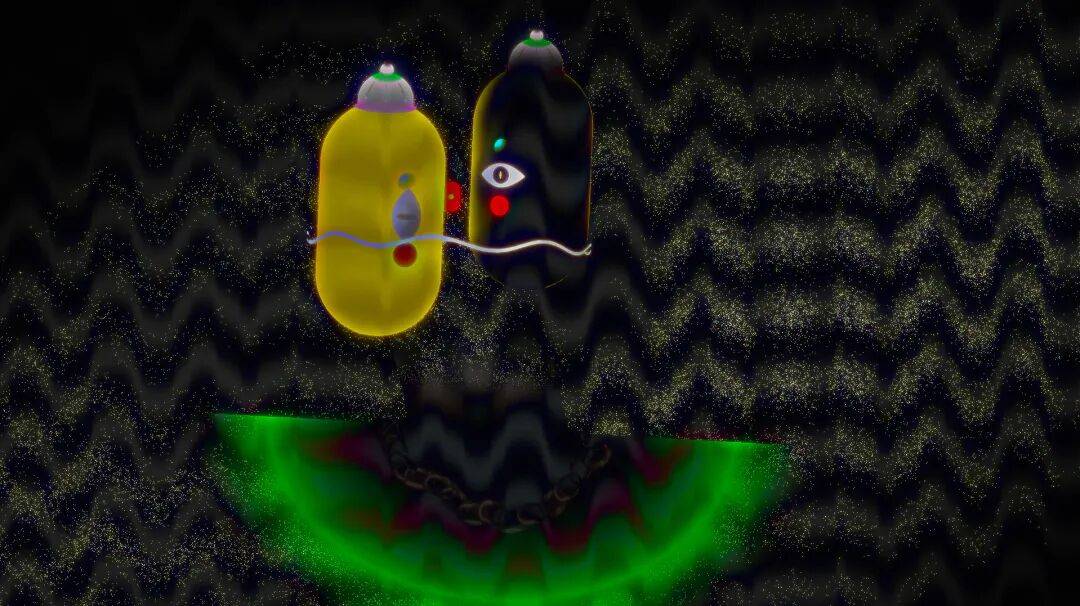
In the short, the "I" enters the interior world of a middle-aged female shop clerk in a mall by way of the varicose veins in her calves, then becomes trapped there, recalling all kinds of past events: childhood visits to sweep graves, a friend's experience of keeping a chameleon, being moved to tears by the third-rate jazz playing in the mall, and so on.
The thoughts of this "I" keep drifting until, at last, an exit is found and the film returns to ordinary life. The whole work is filled with absurdity and deadpan nonsense. Wong Ping, Sorry for the Late Reply (still), 2021. This has long been Wong Ping's signature mode. He is without question one of the Hong Kong artists to have received the most international attention in recent years, and his résumé is, as they say, glittering: commissioned collaborations with M+, the Institute of Contemporary Art, Miami, the Guggenheim Museum, and Kunstmuseum Basel, among others. He is also a regular presence at Art Basel, and during this fair his solo exhibition will open at Kiang Malingue.
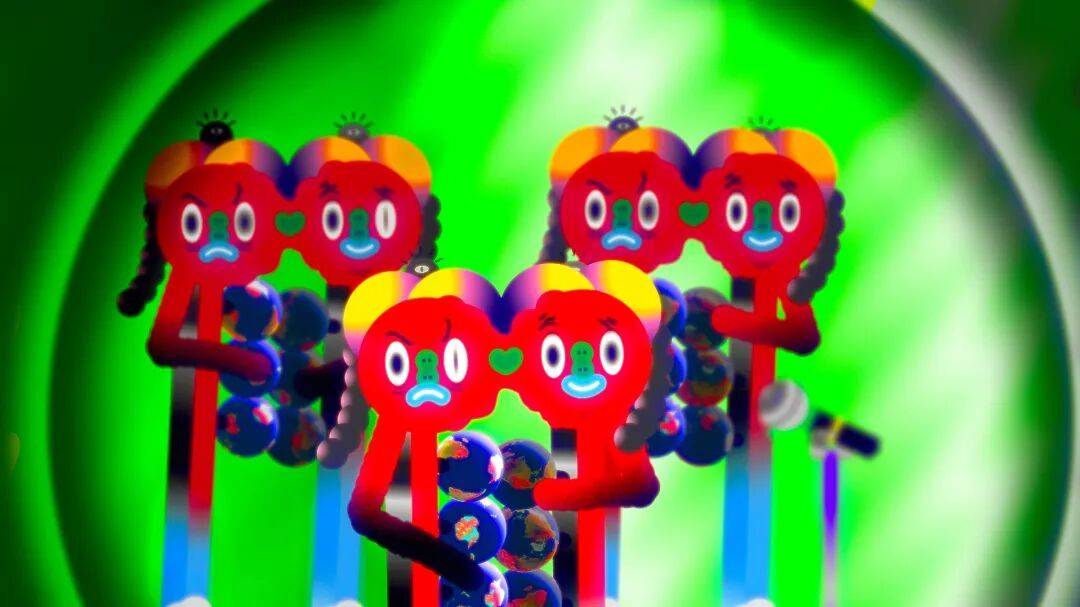
His animations are usually absurd and comic. With figures rendered in an almost pixelated style, lurid to the point of visual abrasion, he satirizes social problems while also writing stories of personal desire and repression. The works may look nonsensical, but they are often freighted with meaning, leaving viewers, after the afterglow of laughter, to register what the artist is really getting at. Wong Ping, Sorry for the Late Reply (still), 2021. "Most of my works come from my own life.
As the old saying goes, find the absurd in the everyday; absurdity produces the joke; and when the laughter stops, the problem begins. In my work, I don't provide answers or take a position. What the audience laughs at is themselves," Wong Ping told us. The voice-over in the film is performed in his own voice. We could not help asking whether the "I" in the story was in fact really him. Wong Ping, Sorry for the Late Reply (still), 2021. "Everything in the film comes from my personal experience, unless I've remembered it wrong.
SECTION 03 | Yang Yuanyuan: Making documentaries is about the fate and connection between people
What moves me most is that whenever I go into a restroom where no music is playing, I miss the third-rate jazz that plays in other restrooms. That attentiveness, that warmth, when I hum it in my head, time in the restroom hurts a little less. What I want to express is this: don't wait until you've lost something to know how to value it."
"Take grave-sweeping, for example. That experience taught me that you have to rehearse the bad person once before you understand what it means to be a good person," Wong Ping said. At the beginning of the story, he describes becoming obsessed with fishing, then seeing lightning and leaping from that to varicose veins; the associative logic is wild, a full flight of fancy. To us, the film's fantastical opening on varicose veins seemed almost impossible to account for.
"The inspiration came simply from my infatuation with varicose veins. I don't dare look at them directly, yet I want to be surrounded by them. Maybe it's just unrequited love," Wong Ping replied with a straight face. In his earlier films, too, he has never avoided showing his own or other people's strange desires, and in interviews he can speak about them with complete candor, nothing like the term he uses to describe himself, "slippery-slimy"-a plump, slick feeling, like slime. "As long as you're not embarrassed, the embarrassed one is someone else.
'Sex' is only an element, not the theme. If a gun appears in a gangster movie, you wouldn't say the gun's presence was inappropriate, would you?" Wong Ping, Sorry for the Late Reply (still), 2021. Wong Ping's work is also loved for its distinctive "Hong Kong humor," though he says this is not something he sets out to create.
"My work doesn't deliberately begin from Hong Kong culture. If you live somewhere, you're naturally shaped by your surroundings every day. When I first started making animation, it was also because I was bored at work and wanted to escape. Hiding in the company restroom to sleep and write stories, then messing around in software and drawing whatever came out, seemed a perfectly good form of mental excretion." Wong Ping, Sorry for the Late Reply (still), 2021. When we asked whether he worried that A.I. might erode moving-image artists' work in the future, his answer was characteristically Wong Ping: "A.I. really will have a huge impact on the future, on the world, on love.
I'm terrified, terrified to the point of tears. I'm practically about to lose my job! It's like asking a middle-aged person who's about to need reading glasses, Are you afraid? Who could confidently shout, 'I'm not afraid'?" Images from Sorry for the Late Reply courtesy of the artist and Kiang Malingue. The film Yang Yuanyuan is screening at Basel this time, Chinatown Cha-Cha, is a short derived from her feature Woman's World, which is due for theatrical release this year. In it, we follow the Chinese American nightclub dancer Cynthia Yee on a "ghost story tour" of San Francisco's Chinatown.
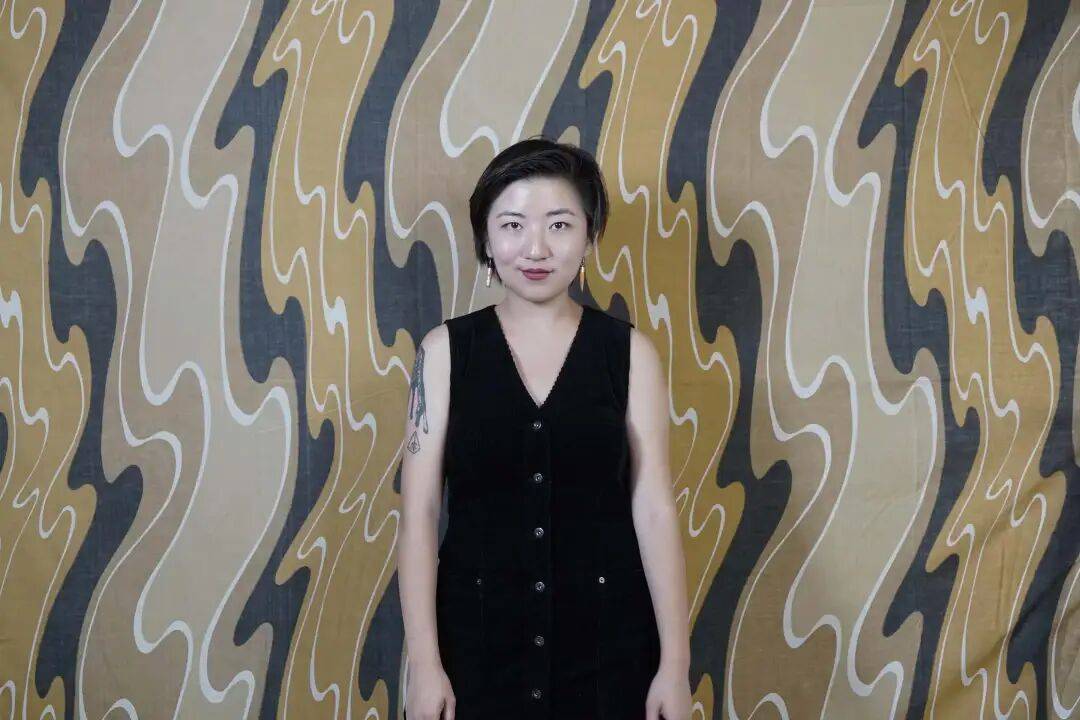
"The film tells so-called ghost stories from Chinatown. History is interesting: what gets rigorously documented is called 'history,' but many Chinese stories were never properly preserved, so they become urban legends passed from mouth to mouth. Cynthia told me many ghost stories, and I adapted one of them," Yang Yuanyuan told us. The woman in red is the film's "guide," the Chinese American nightclub dancer Cynthia Yee. Yang Yuanyuan, Chinatown Cha-Cha (still), 2019. Yang Yuanyuan, born in Beijing in 1989, is a moving-image artist and director.
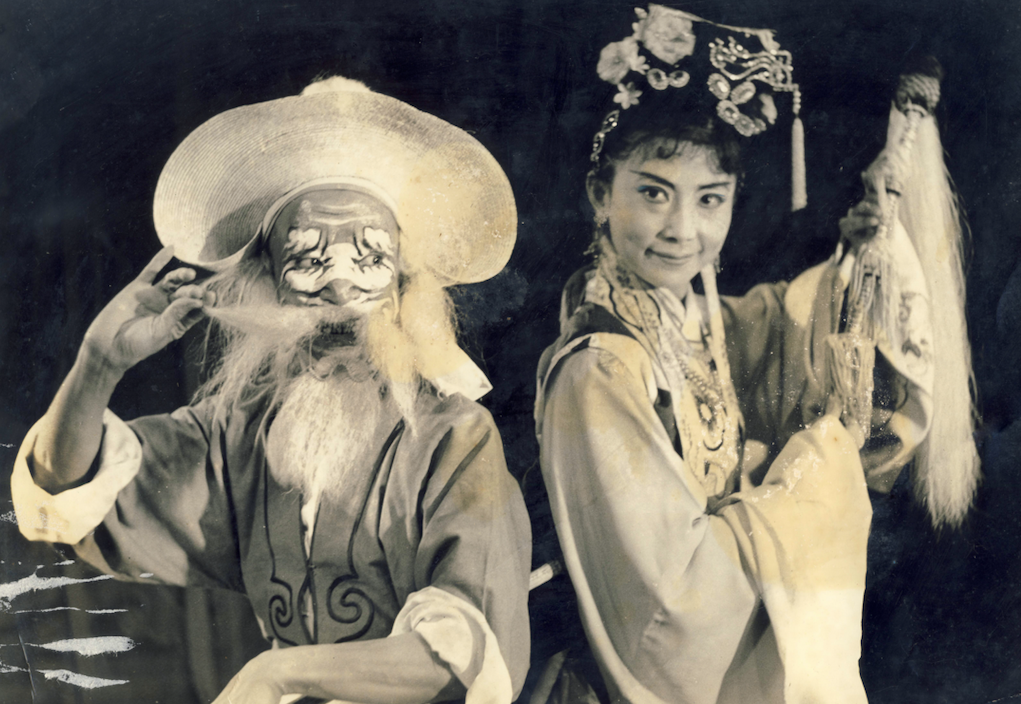
In 2013, she graduated from the University of the Arts London, where she studied photography, a training that gave her a solid professional foundation for the documentaries she would later make. In her earlier work, she mainly made photography, performance, and installation. During a six-month residency in New York in 2018, she carried out extensive research on Chinese women in the performing arts in Chinatown since the 20th century, including Cantonese opera performers, film actresses, and nightclub dancers.
Yang Yuanyuan, Chinatown Cha-Cha, 2019. Over the next two years, she went to San Francisco, Hawaii, New York, and Havana, where she met and came to know many Chinese women performers now advanced in age. Touching sparks flew from those encounters. She recorded, one by one, these moments of human warmth together with historical black-and-white photographs, and over five years made the feature film Woman's World. Yang Yuanyuan, Chinatown Cha-Cha, 2019. Of the experience of making the documentary, Yang's description was that it was "full of uncertainty and contingency."
Many of her subjects, she decided to film only after meeting them. She met her cinematography partner at a film workshop in New York. As for the important stock of old photographs from early Cantonese opera theaters in Chinatown, one of her subjects, the collector Wylie Wong, had rescued the archive from destruction decades earlier only because he happened to pick up a color photograph on the street. Yang Yuanyuan, Chinatown Cha-Cha, 2019. "Before this, I had actually never thought about making a feature film. During that residency I was there as an individual artist. My previous projects basically had no crew, there was no budget for making a film, and on top of that I'd never made one before. There were all kinds of difficulties, but I wanted to do it so badly then that I carried it all."
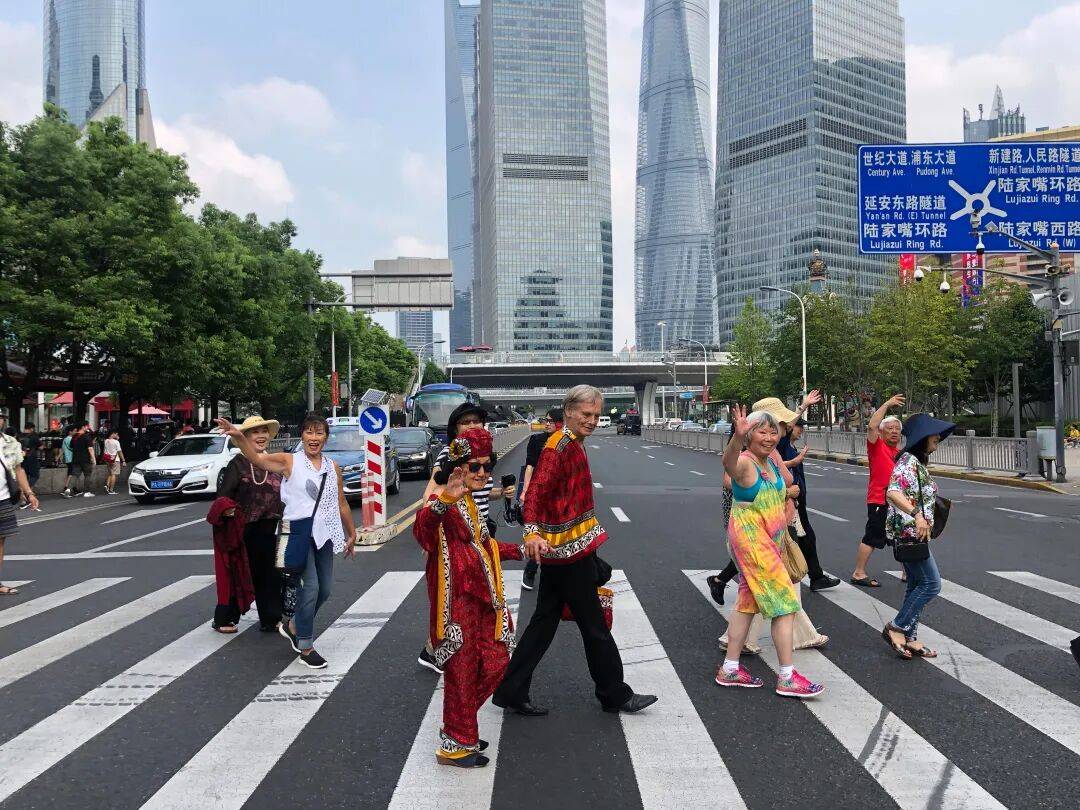
"These Chinese women had gone through so many setbacks and so much discrimination, including the Chinese Exclusion Act, and yet you can still see in them an extraordinarily vigorous life force. They are so full of charm. I felt I absolutely had to record them." Yang Yuanyuan, far left, poses with participants in San Francisco, 2018. Yang Yuanyuan brought the film's cast to China; here they are on a street in Shanghai, 2019. Yang told us that throughout the shoot she felt deeply the ties and affinities between people.
"One of the subjects made a sudden decision once and said, 'I'm single anyway, why don't you come stay at my place tonight and keep me company? We'll talk more, and I'll show you my love diary.' I was stunned." Another short film subject, the 92-year-old Chinese dancer Coby, who is also the central heroine of the feature Woman's World, was a tremendous inspiration to Yang.
"The first time I saw her, she was performing onstage. From a distance she looked petite, her figure was in great shape, and she gave off an especially girlish air. When I later learned her real age, I simply couldn't believe it." Yang Yuanyuan with 92-year-old Coby. Yang Yuanyuan, Coby, and a group of performers and staff sing "Hey, Jude" together. "Her secret to staying young is that no matter how many hardships and setbacks she has gone through, she never magnifies those troubles, and she never dwells on the future of illness, aging, and death that awaits a 92-year-old person."
"Her philosophy of life is: whatever I want to do at this moment, I do it-making clothes, playing cards, dancing, eating. She is a classic person who lives in the present, and I hope I can bring that quality to viewers." Yang Yuanyuan, Chinatown Cha-Cha, 2019. The people Yang has filmed are already second-generation Chinese Americans, yet they still cannot enter mainstream Western historical narratives, and they also sit uneasily with the Chinese-speaking world. They are outsiders caught in the cracks of history, with homes but no secure sense of identity.
"I hope that through my work I can tell these stories that exist in gray areas, so that people like this, and beautiful moments like these in their era, can be seen and remembered," Yang Yuanyuan said. Images from Chinatown Cha-Cha courtesy of the artist and Flowers Gallery. Interested viewers may reserve seats for Film free of charge on the Art Basel Web site.