The Private House He Built in the Heart of the City
Javier Peres brings twenty years of high-level collecting into a six-story Milan home shaped by Asian influences, African art, and a restless sense of visual harmony......
By / Xirui Huang · 11 min read
How does Javier Peres connect works from different cultures within his home?
In the 2023 visit to his Milan home, Javier Peres brings African art, contemporary painting and sculpture into rooms used every day. Colour, material and personal memory connect the works: purple recalls his mother, while arrangements in the kitchen and dining room belong to family life. He describes collecting as a combination of affection, research and attention to relationships with existing works. The changing home becomes part of the collection’s continuing development.
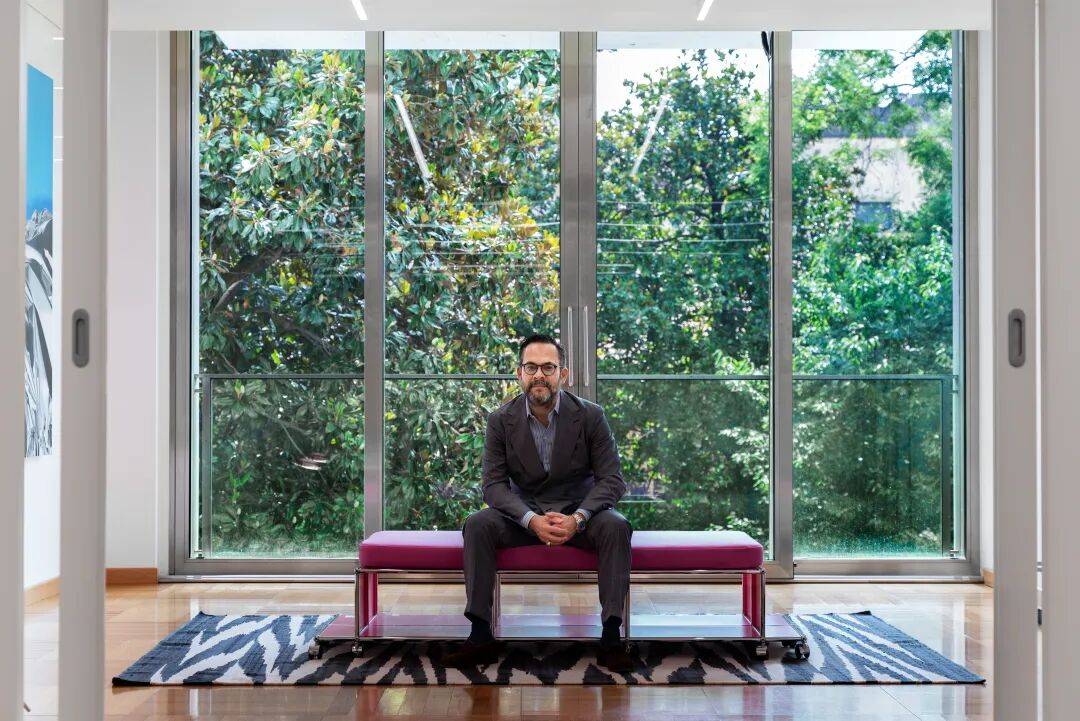
Javier Peres at the floor-to-ceiling window on the ground floor of his new home, 2023. Javier Peres, with his charming mustache, has an innate refinement and elegance. Born in Cuba, he grew up in a family whose grandparents had already begun collecting art. At thirteen, he acquired his first piece. “An interest in art is something that exists in my blood,” Peres says. In 2022, he and his family moved into a six-story white Modernist house in central Milan. Its design incorporates elements from China, Korea, Japan, and elsewhere in Asia, while every room is filled with works—from contemporary art to exotic African sculpture.
Collector | Collector Javier Peres's Home in Milan
The interior is spare, but art is everywhere. Twenty years ago, Peres founded Peres Projects. Today, the flourishing gallery is known as a “machine for discovering young artists.” Internationally celebrated artists such as Austin Lee and Rebecca Ackroyd were first discovered by him. The gallery has spaces in Berlin, Milan, and Seoul, and regularly appears at leading international art fairs, including Art Basel and Frieze. I was the first Asian media representative to visit his new home in Milan to talk with him about collecting and the business of art.
Left: Each level has a different facade. Right: The view from the floor-to-ceiling window on the second floor. Peres’s new home sits in the center of Milan, where space is at a premium, surrounded by greenery and insulated from the bustle. The house is entirely white and comprises six levels: four above ground and two below. “The history of the house goes back to the beginning of the twentieth century. We spent five years renovating it. We needed a great deal of space because we have several pets and often entertain many guests at home,” Peres tells us. Seen from the ground, each level has a distinct design: the first combines floor-to-ceiling windows with a transparent glass terrace; the second has movable floor-to-ceiling windows; the third features a larger, projecting glass balcony; and the fourth is enclosed entirely by floor-to-ceiling windows. From the top floor, one looks down onto a garden shaded by trees and out toward the buildings of the city center.
SECTION 01 | A white home surrounded by art
Painting on the wall: Donna Huanca, Haploid Multicellular, 2022; installation on the floor: Shuang Li, Thank you for the venom, 2022. Upon entering, we first encounter a purple metal shell sculpture by the artist Shuang Li. On the wall behind it hangs an oil painting by Donna Huanca. The purple tones of the two works echo one another, establishing the home’s artistic register: colorful, playful, and resonant. “Purple was my mother’s favorite color, so I often acquire works in that color. They remind me of her. I bought the purple shell sculpture at one of our artists’ solo exhibitions, while the painting was a gift from Donna herself several years ago,” Peres tells us. Beyond their chromatic affinity, Huanca’s skin imagery and Li’s “snail” both address the perception of the body and the body’s presence in space.
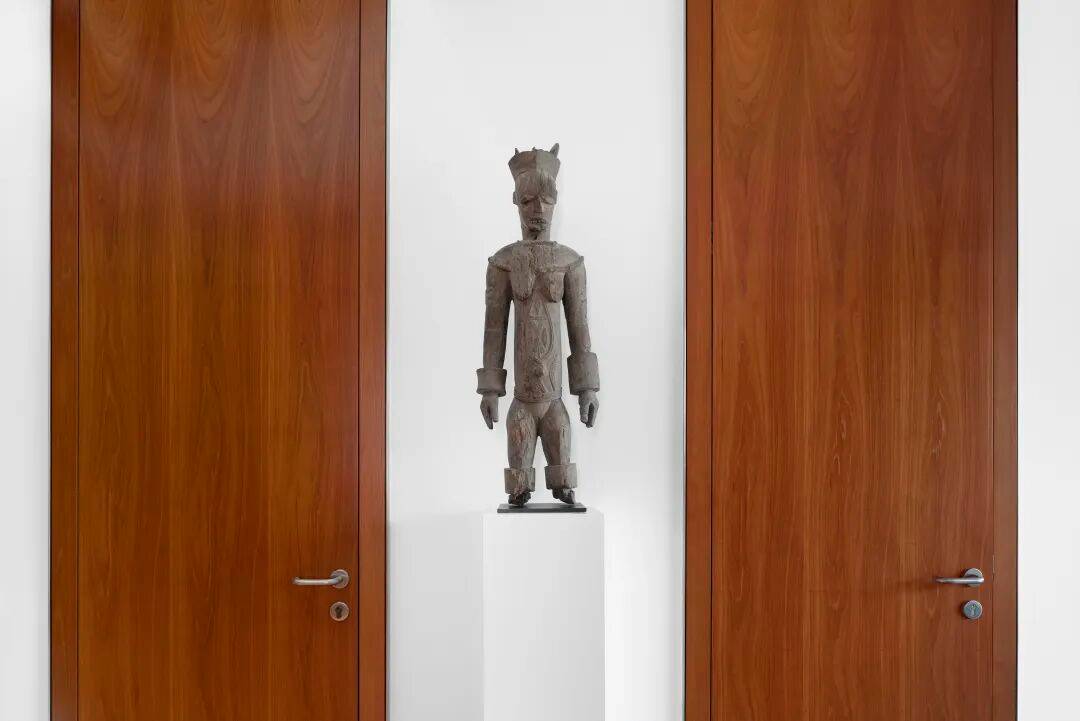
An ancient wooden sculpture from Nigeria. At the entrance is another work: an ancient sculpture by Jukun craftsmen from Nigeria, standing like a solemn gatekeeper.
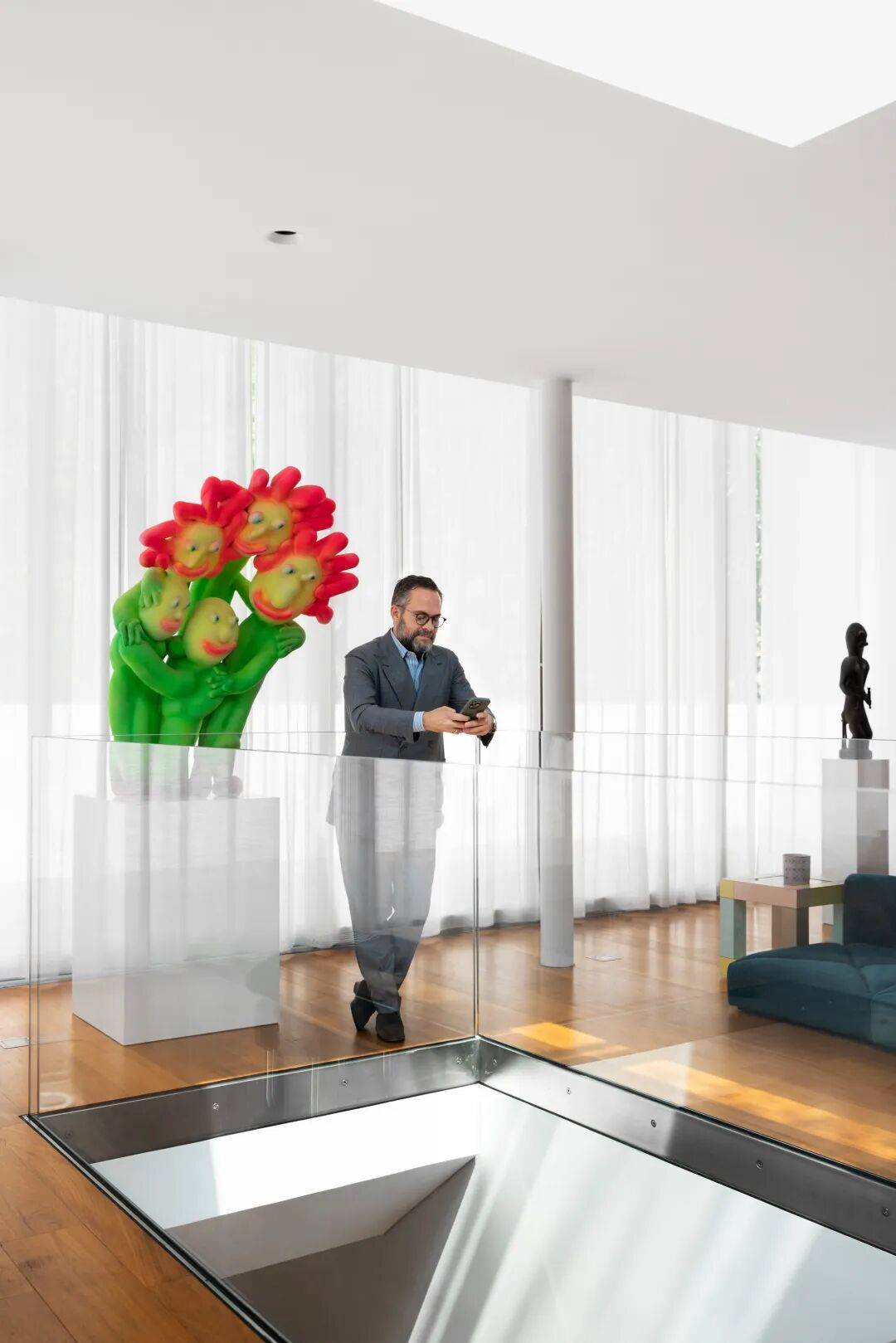
Behind it is Austin Lee’s 2019 work Family.
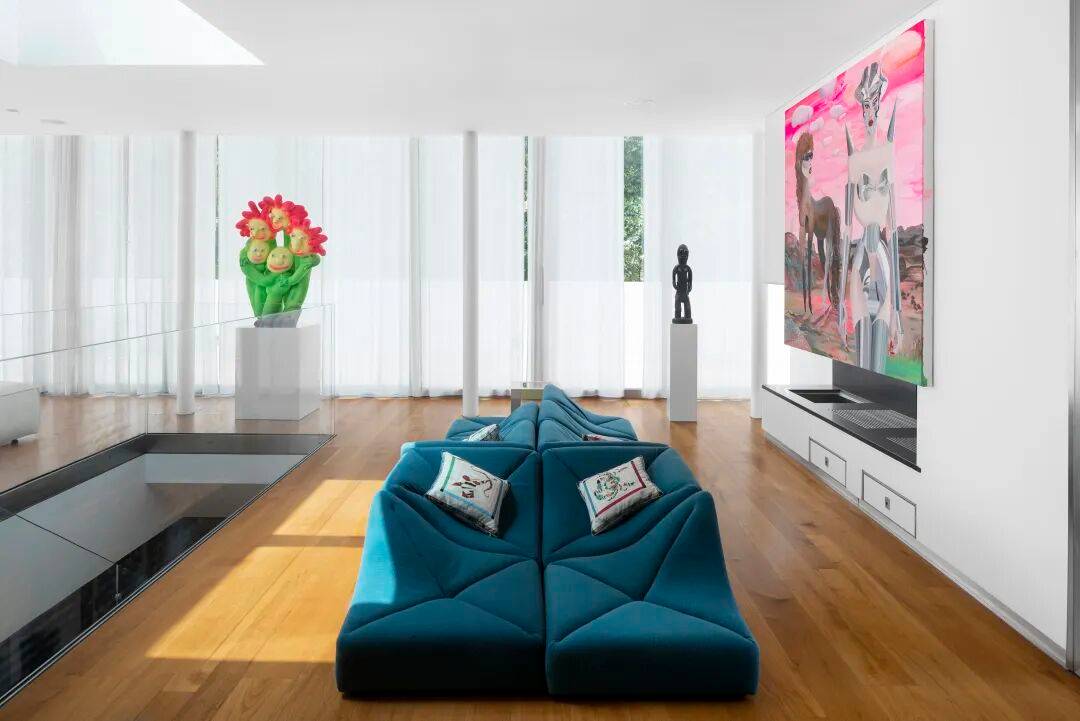
Painting on the right wall: Dalton Gata, Pink Sunset, 2021; sculpture on the right: African male deity figure, 1897. In the living room on the first floor, Austin Lee’s signature sunflower man bends toward us in a bow. Beside it hangs a work by Dalton Gata. Like Peres, Gata is from Cuba. His work is deeply rooted in his Caribbean background, drawing on African and Spanish histories—cultural references with which Peres identifies. The living room also contains two sofa groupings, one white and one blue. Beside the blue sofa stands a wooden sculpture of the male body by an ancient Nigerian artist. The juxtaposition of avant-garde contemporary art and ancient African art is unexpectedly harmonious. Describing the arrangement, Peres says, “We often change the positions of the works in the house, and we are constantly adding or removing pieces. How many works are there altogether? We may not even know the exact number ourselves.”
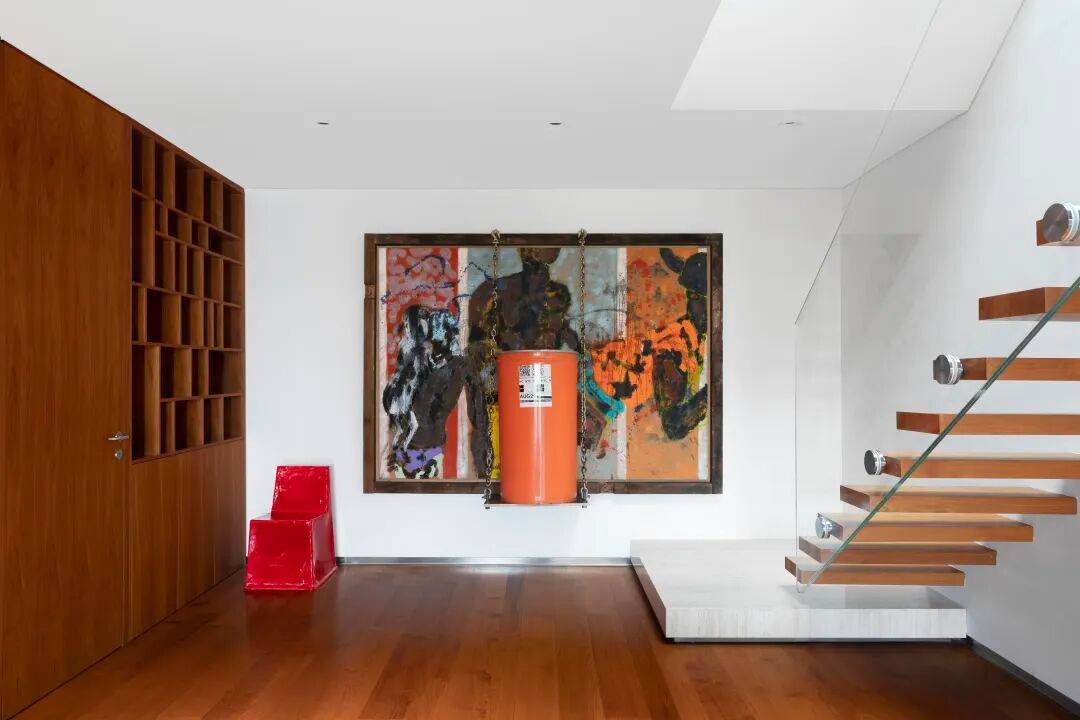
Work on the wall: Alvaro Barrington, Black Power, 2021; red chair: JP furniture, COME STAI BOTTEGA chair. Beside the staircase hangs an installation painting by Alvaro Barrington, Black Power. An orange oil drum is suspended before a slightly worn brown frame, next to a red ceramic chair. The collision of colors is striking: the orange of the drum and the red of the chair both find corresponding blocks of color in the painting. “Putting them together was primarily an aesthetic decision. Visually, the three works complement one another. But we never regard the works in the house simply as ‘decoration.’ On the contrary, we want the surrounding environment to accommodate the artworks. We observe the space and its surroundings, and then decide where each work should go,” Peres says.
Painting on the wall: Rebecca Ackroyd, Fresh cut, 2022. Since moving into the house last year, many of the works have been rearranged, continually creating new experiences for visiting friends. “Of course, there are works we may not move, either because they look especially good in a particular position or simply because they are too difficult to carry,” Peres says with a laugh.
Painting on the wall: Marc Padeu, Dans la plantation, 2023; chair: OrtaMiklos, Arnold, 2018.
Chair on the left: OrtaMiklos, Jimmy, 2018; sculpture in the center: Oliver Laric, Yuanmingyuan Column, 2014; sculpture on the left: African female sculpture, approximately late nineteenth to early twentieth century. In the sitting room on the third floor, two chairs that at first glance seem entirely mismatched sit alongside a pale blue leather sofa. On closer inspection, both seats use red mesh upholstery, creating an echo between them. The red of the chairs also balances the small flash of red on the low table, while another patch of blue corresponds to the sofa. Moving through Peres’s home, one encounters so many vivid colors, yet nothing feels chaotic. Perhaps, as he puts it, what matters is “correspondence and resonance.” Behind the blue sofa is a group of brown wooden cabinets displaying a modern sculpture by Oliver Laric, along with ancient African wooden sculptures by Senufo craftsmen from present-day Mali and Kaka craftsmen from present-day Nigeria. They do not seem out of place; instead, they possess a quality of unadorned directness.
Painting on the wall: Emily Ludwig Shaffer, Flowers to Share, 2022; purple chair in front of the painting: Dozie Kanu, Chair [ iii ], 2022; red low table: Dozie Kanu, negative (Blood Type), 2021. In conversation, we discover that Peres is exceptionally funny, with a highly distinctive sense of humor. Some of his arrangements make you pause for a moment before the idea clicks and elicits a private smile. Our favorite room is his study on the third floor. It is a completely open square, but Peres divides it with remarkable subtlety through color. On the warm-toned side, four red leather sofas and a pale purple chair define a sitting area, with paintings in corresponding colors on the walls.
From left to right, the paintings on the wall are: Dylan Solomon Kraus, Pompeii (ExHypnosis), 2023; Yaerim Ryu, Rites of Baptism, 2021; Cece Philips, In the Quiet, 2022.
Installation on the left wall: Blair Thurman, Perfect Foil, 2016. The warm-toned side is an inviting conversation area; the cool-toned side is a restrained workspace. Three paintings in different shades of blue, along with black-and-silver tables and chairs, establish the cooler register. Curiously, Peres has placed black-and-white striped rugs in both the warm and cool areas, making the two spaces seem to merge once again. It is hardly surprising to find another sculpture by an unidentified African artist in this room. Why is he so drawn to early African art? Peres laughs and tells us that the answer begins with his childhood.
African art is visible throughout Peres’s home: an early wooden Mumuye male sculpture, early twentieth century. Peres spent his childhood in a remote Cuban town, where traces of African culture are pronounced. As a child, he says, Cuba inspired him to dream of experiencing different places and cultures. “At the time, I was deeply interested in the ancient art of Greece and Rome, and in the ancient art of Egypt.” As he grew older, he encountered more art history, developing an interest in African art and drawing inspiration from celebrated modern and contemporary artists such as Picasso and Basquiat. “Because African art had such a profound influence on both of them.”
The Private House He Built in the Heart of the City
African sculpture on the left: helmeted horn face mask of the Su people, late nineteenth to early twentieth century.
African sculpture on the right: male headdress by the Master of the Webster Ogbom, from the Ogbom region, approximately late nineteenth to early twentieth century. In 1984, the Museum of Modern Art in New York (MoMA) presented an exhibition titled “Primitivism in 20th Century Art,” which had a major impact on his understanding of African art. Peres began collecting classical African art in 2000, and has now been doing so for 23 years. “It is something I greatly enjoy, because it requires constant research and learning.” His interest in African art also lies in understanding its history and culture and connecting it to daily life, “rather than simply looking at it aesthetically.”
African art from Peres’s collection: female figure wearing a domed helmet mask, early twentieth century. He tells us that some of the sculptures in the house are occasionally lent to museums. “The works you see here are not my entire African collection. Some were away for a time, and when they came back, we had to find new places for them.” In 2019, he also donated one particularly cherished African sculpture, along with five other important works of art, to The Metropolitan Museum of Art in New York. Describing the work he loved so deeply, Peres says, “It began in 1996, when I visited the Royal Academy of Arts in London for the exhibition ‘Africa: The Art of a Continent.’ During the exhibition, I was especially drawn to a sculpture by a Nigerian master, and I could not stop thinking about it. Nearly 20 years later, in 2014, I saw the same sculpture in Paris, displayed in the window of the Lance Entwistle gallery. I could hardly believe my eyes. I also could not believe that the sculpture was available on the market. Without hesitation, I acquired it.”
African art from Peres’s collection: Mende Sande society helmet mask (ndoli jowei), made by Master Nguabu, early twentieth century. Less than five years after he acquired the sculpture, in 2019, as The Metropolitan Museum of Art celebrated its 150th anniversary, a curator contacted him to ask whether he would consider making a donation. “I had always felt that this sculpture was something special. Although I waited nearly 20 years to buy it, I have never forgotten that great art is the property of all humanity; it belongs to everyone. It is certainly a pleasure to own a masterpiece for a time, but it gives me even greater satisfaction to allow more viewers to see it.”
Peres in the dining room of his home. He considers himself a more qualified “collector of classical African art” than a contemporary-art collector. “After all, I have been collecting African art for more than 20 years, while I have collected contemporary art for only six.” The kitchen and dining room, among his favorite spaces in the house, are also closely connected to African art and multiple regional cultures. “I really like Dylan Solomon Kraus’s paintings in the kitchen, and our chef likes them very much too,” Peres says. “In the dining room, I like the interaction between Alvaro Barrington’s paintings and sculptures, Rebecca Ackroyd’s paintings, and two African works by Nigerian and Mumuye artists.”
Painting on the wall: Nicholas Grafia, Seeing Through Their Mouths More Than Ours (Cleaning Out the Closet), 2023.
Installation on the left: Diamond Stingily, Kaas (Punishment), 2019; sculpture on the right: Oliver Laric, Hermanubis, 2017.
Drums on the left and right: Dozie Kanu, Drum Beam Energy 5, 2023; painting on the wall: Rafa Silvares, Stinking Rubbish, 2021. Among all the rooms, one is the most unrestrained and eclectic: a “dojo” built in an Asian style and touched with religious overtones. “Across all of Milan, there may be no other house with a space quite like this. Here we can hang very large-scale artworks, and it is also our gym.” As he speaks, Peres’s expression softens. “My partner and I are preparing to welcome our first child. Soon this will become the child’s playroom.”
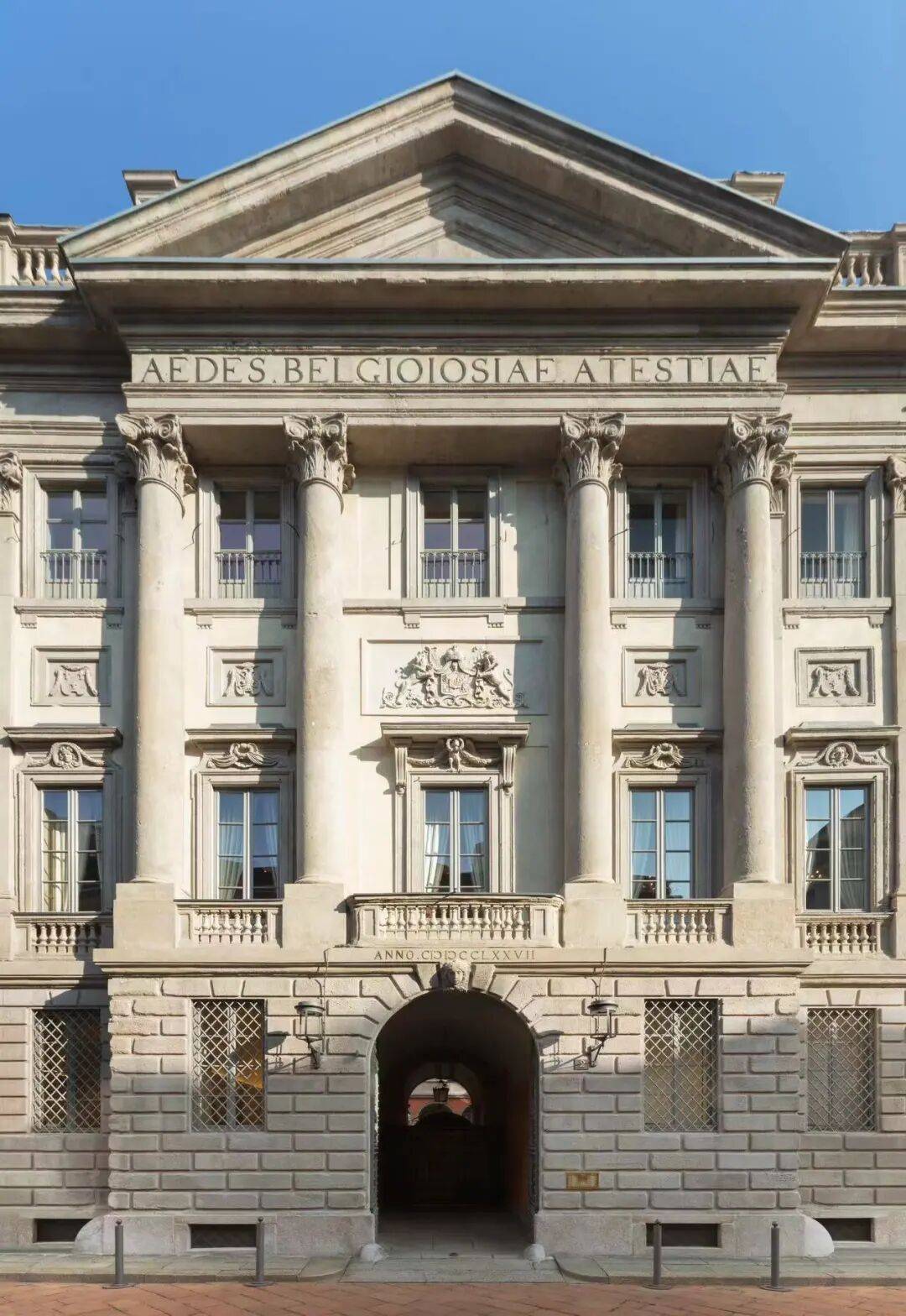
Exterior of Peres Projects’ Milan space. The generation before Peres’s family came from Spain, and they had already begun collecting art before moving to Cuba. From childhood, his grandparents encouraged him to observe, study, and collect art, and taught him how to live with it. Since acquiring his first piece at thirteen, he has collected French primitive art, classical African art, and then modern and contemporary art. Art has remained an important part of his life.
SECTION 03 | A 'Non-Typical' Collector and Gallerist
Dylan Solomon Kraus’s solo exhibition ExHypnosis, Peres Projects’ Milan space, 2023. “My family merely collected art; they never paid attention to its commercial side. Becoming an art dealer was not what they expected or wanted for me,” Peres says with a laugh. Before founding the gallery, he studied law and initially worked in the field. After some time, however, he felt that the room for him to develop had reached its limit. He urgently needed something “new.”
Kiyan Williams’s solo exhibition Between Starshine and Clay, Peres Projects’ Seoul space, 2022. Photograph by Song Hyunju.
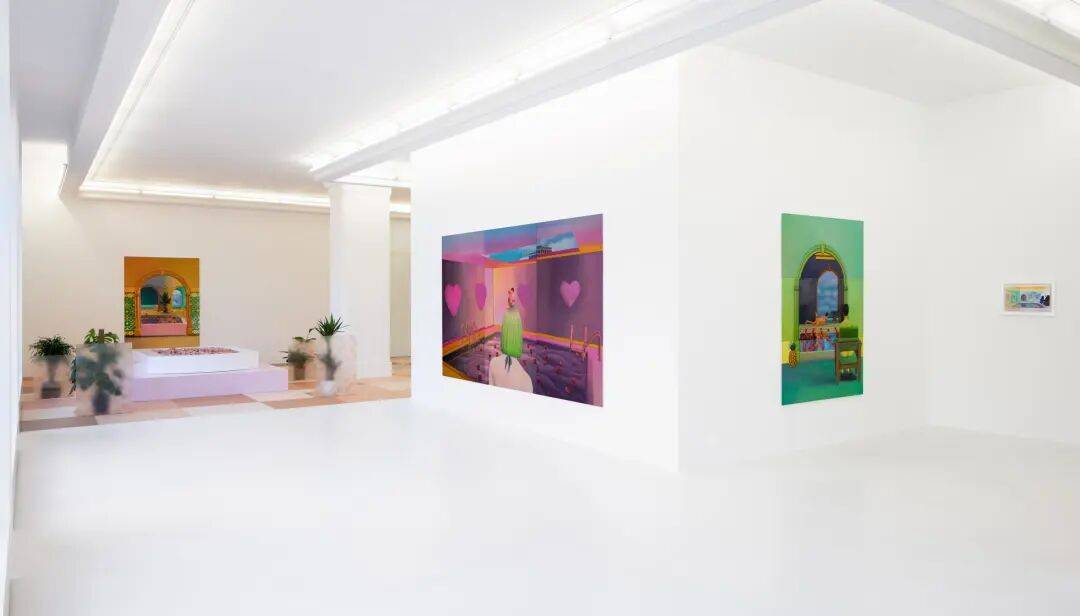
Mak2’s solo exhibition Love Pool, Peres Projects’ Berlin space, 2023. Photograph by Timo Ohler. Peres recalls the impetus for founding the gallery more than 20 years ago: “In 2002, I saw an exhibition of Eva Hesse at the San Francisco Museum of Modern Art. The exhibition ignited my passion. Hesse died young, but left a huge mark on art history. That made me want to make a major change in my own life, to focus on contemporary art and leave a mark of my own.” At first, his gallery occupied a small space in San Francisco. After moving to Los Angeles, it quickly attracted the attention of critics and the media because of the pioneering and diverse character of the artists it represented. Today, Peres Projects has spaces in Europe and Asia, and many of its artists are planning major museum-level exhibitions around the world. The gallery has succeeded both commercially and academically.
Shuang Li’s solo exhibition Nobody’s Home, Peres Projects’ Berlin space, 2022. Photograph by Timo Ohler.
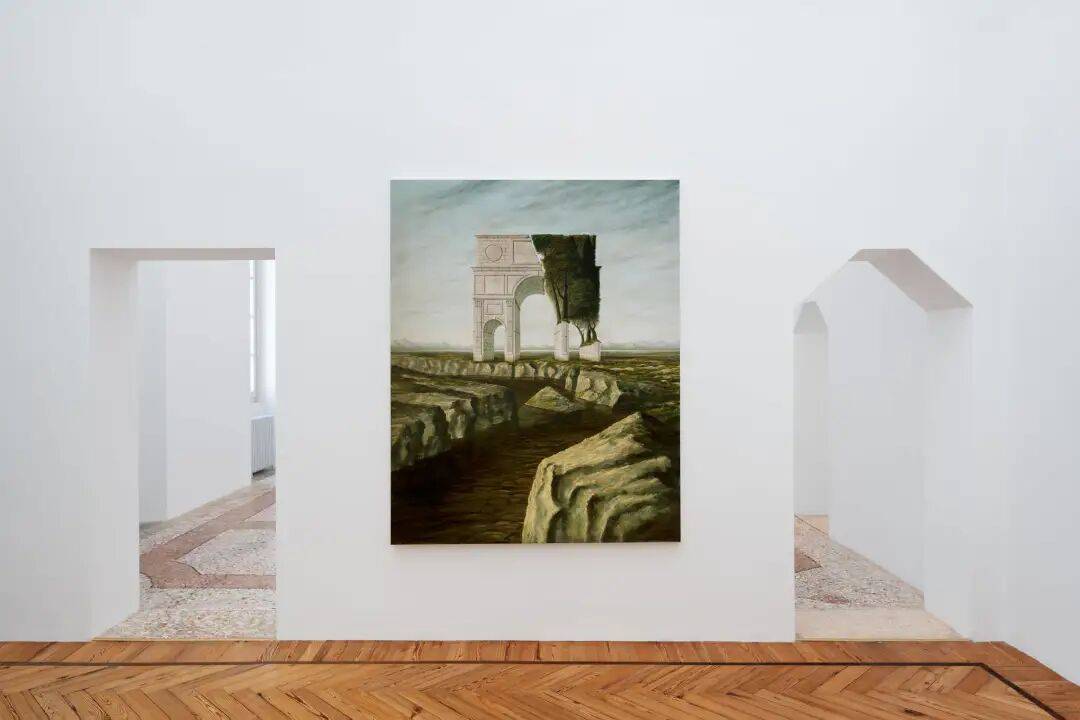
Sholto Blissett’s solo exhibition Arboreal, at Peres Projects’ Milan space, 2023. Photograph by t-space. Returning to his personal philosophy of collecting, Peres says it has never changed. “My primary standard in collecting art is that, within my financial means, I want to buy the best work, rather than a representative work by a particular artist.” He considers not only an artist’s background and reputation but also studies the work closely, weighing its place in contemporary art history. He also cares about how future acquisitions will interact with the collection he already has. “I always want to ensure that collecting remains an organic process, rather than one driven by market trends or style. Acquiring a work is a personal decision. It involves emotion and aesthetic judgment, but it is also closely tied to my deep understanding of the artist and the work.” Contributing writer: Huang Xirui. Editor: Ye Li. Image courtesy of Peres Projects and Javier Peres.