The Godfather of Graffiti Brings His Famous Friends to Hong Kong
Basquiat, Keith Haring, FUTURA, KAWS, Lady Pink, Barry McGee, Mr. Cartoon, and more than thirty other major artists come together in a sweeping survey of graffiti’s passage from the street into the gallery......
By / Xirui Huang · 12 min read
Why does City As Studio tell the history of graffiti and street art through cities?
In Xirui Huang’s 2023 Hong Kong interviews, Jeffrey Deitch explains that street art develops distinctive styles and methods in different cities. City As Studio at K11 MUSEA links early graffiti with later generations through New York, San Francisco, Los Angeles and other contexts. AIKO’s practice and works in the venue bring the discussion back to public space, connecting a shared history with particular communities, places and ways of seeing.
Basquiat, Keith Haring, FUTURA, KAWS, Lady Pink, Barry McGee, Mr. Cartoon … You may never have seen so many names legendary in graffiti appear together at a single exhibition. With more than thirty major artists and more than one hundred works, Jeffery Deitch, the “godfather” of global graffiti art, has brought an art form born on the street to Hong Kong, China, for the first time in the form of a historic survey. It is an ambitious undertaking.
Exhibition | Graffiti Is Art
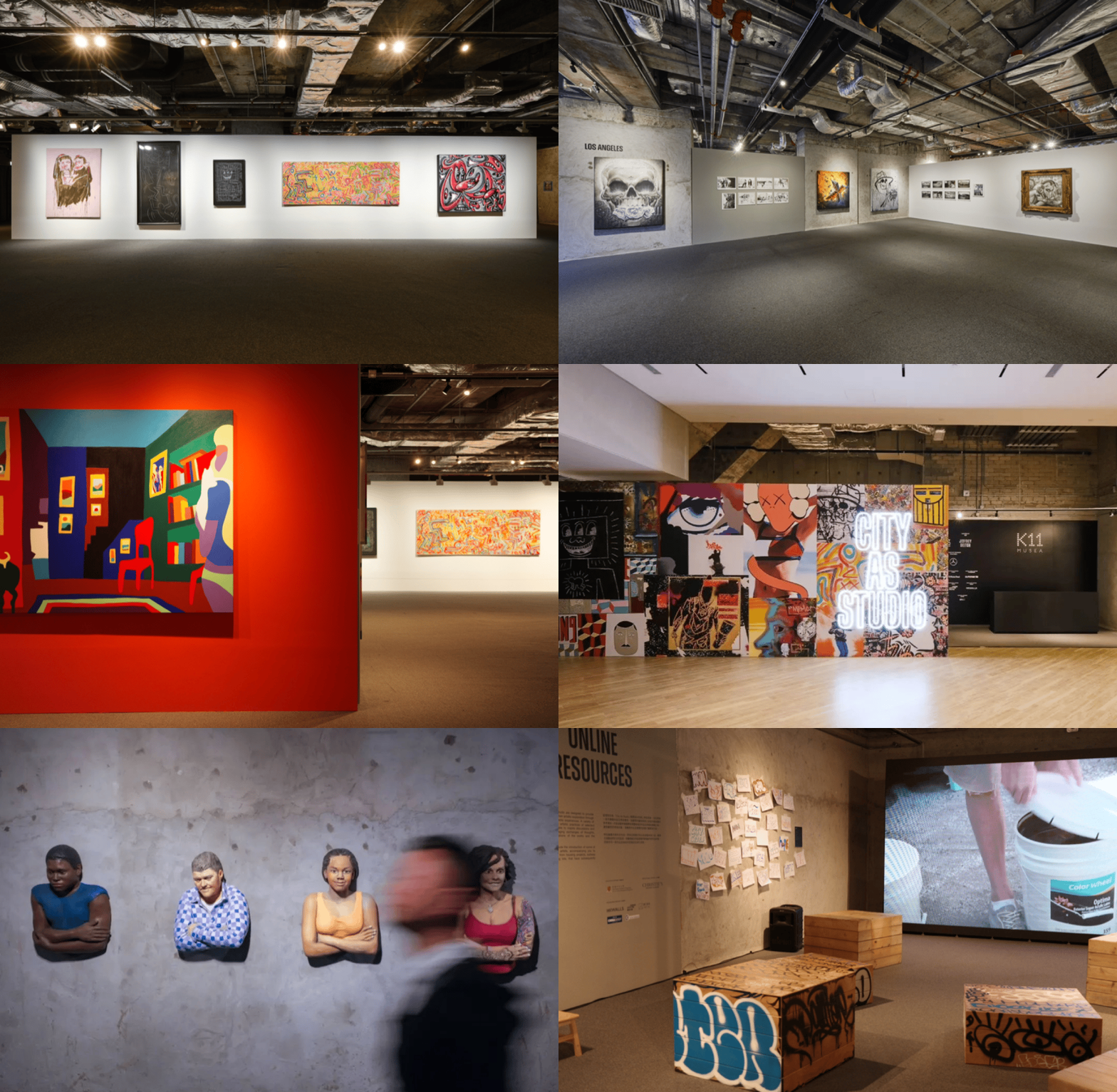
“City As Studio,” K11 MUSEA, 2023. “Let me put it this way: I’m friends with every artist in the exhibition. Some of them are even very close friends,” curator Jeffery Deitch told us in an interview. At “City As Studio” at Hong Kong’s K11 MUSEA, we met Deitch and the participating artist AIKO (Aiko Nakagawa) to talk about graffiti as they see it.
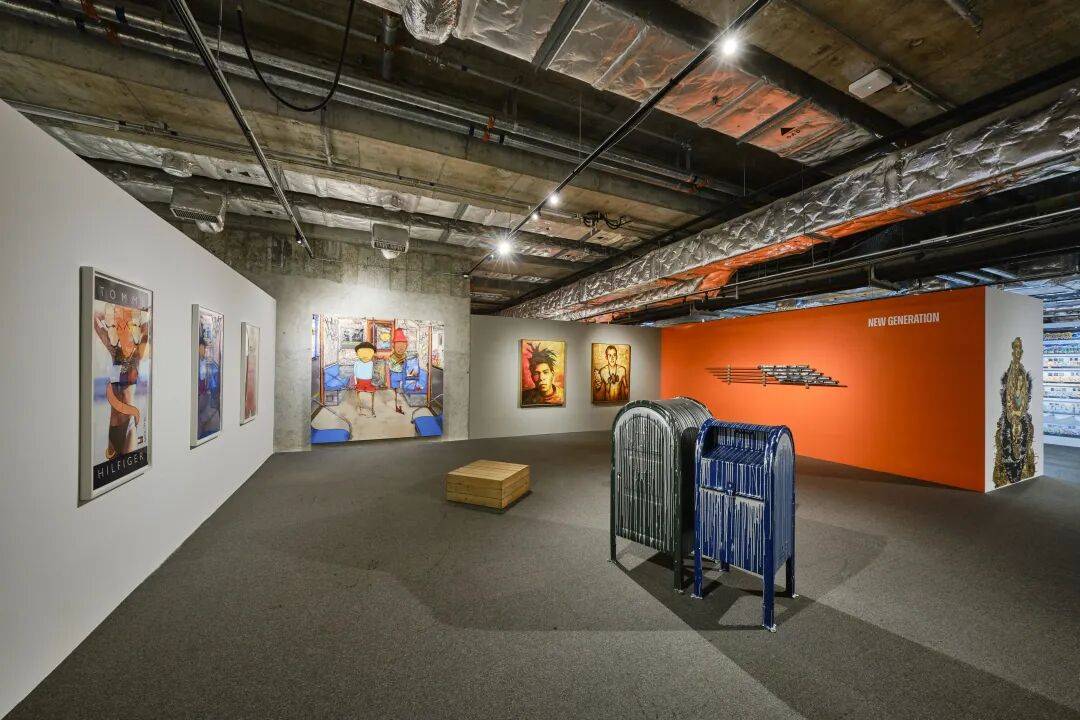
Curator Jeffery Deitch at “City As Studio,” in an interview. The exhibition is divided into five sections: New York, San Francisco, Los Angeles, the new generation, and local artists. “Why divide the exhibition by region? Because graffiti has highly distinctive styles and methods in each city,” Deitch said. New York street graffiti in the 1970s was where it all began.
SECTION 01 | The first graffiti artists have now become famous
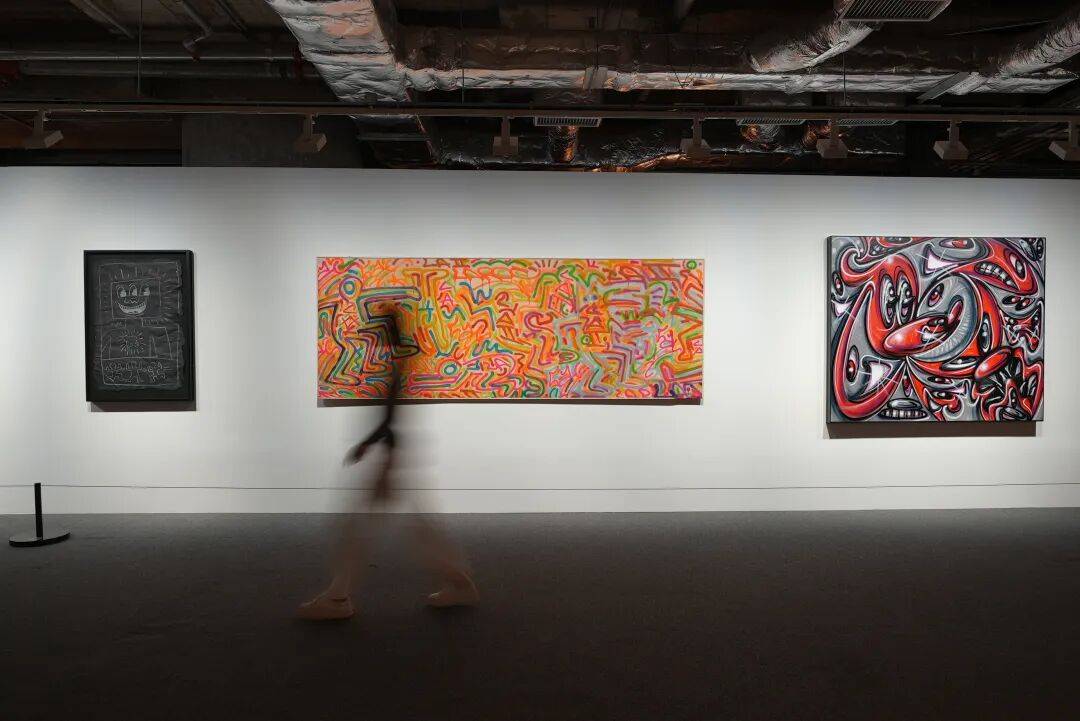
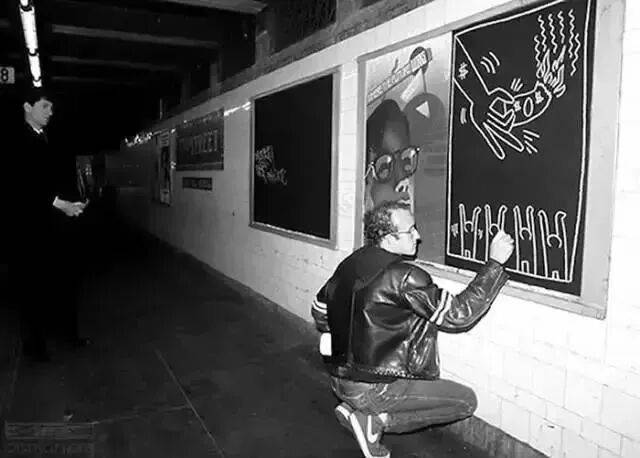
Keith Haring, Untitled, 1980, private collection. Beside the colorful graffiti are two black-and-white works, also by Haring. Their unusual feature is that they were torn directly from New York subway stations. In New York in the 1980s, economic stagnation left advertising spaces in subway stations unsold, and the government covered them with black paper. Haring thought, “Isn’t this just like a blackboard?” He then used white chalk to draw more than 20,000 such “subway drawings,” covering stations throughout Manhattan.
Keith Haring graffiti in a subway station, image source: online. “They were never supposed to be torn off the walls, but some people simply couldn’t resist. Sometimes they would pull down the entire advertising frame,” Deitch told us with a laugh. Graffiti was prohibited by the government at the time, and Haring was arrested several times. By then, however, he had already become famous through his graffiti. “When he was arrested, the police wanted to have their pictures taken with him because he was a major celebrity.”
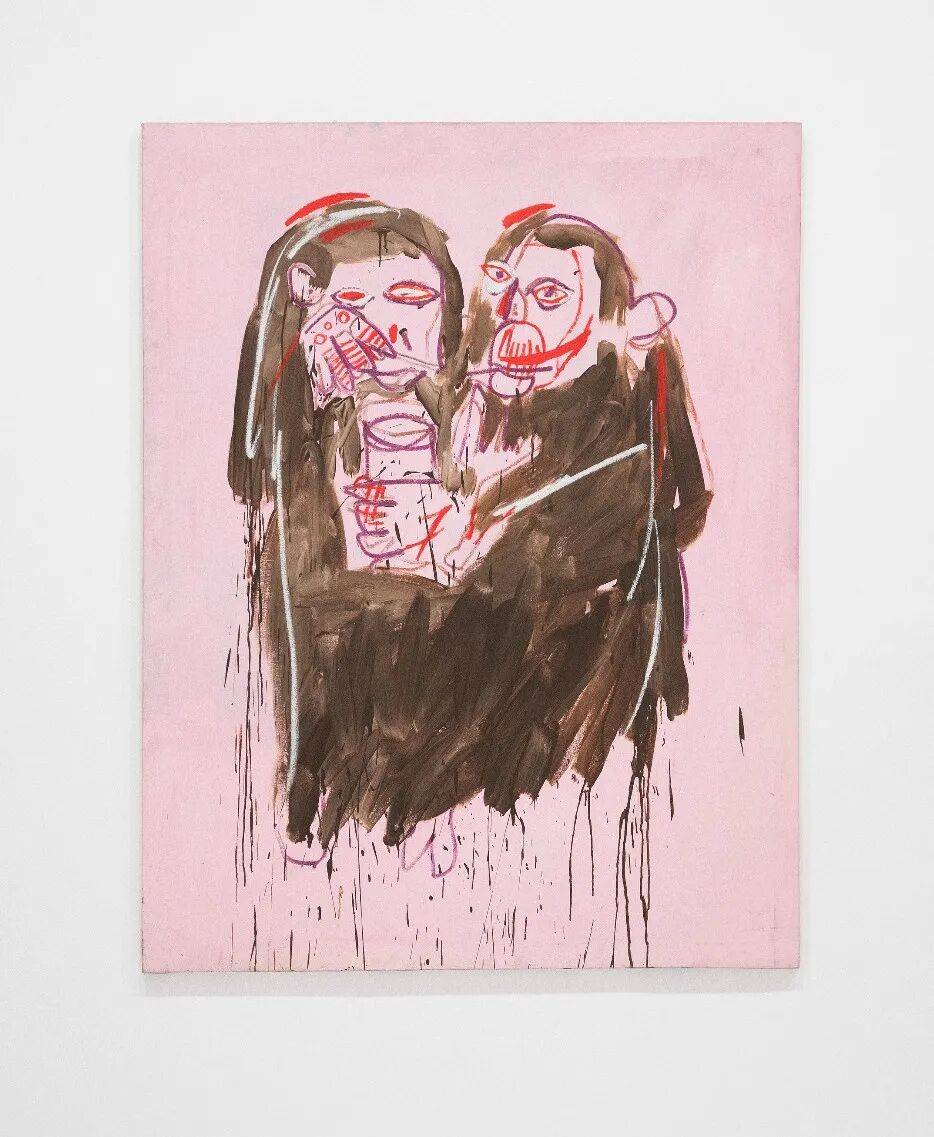
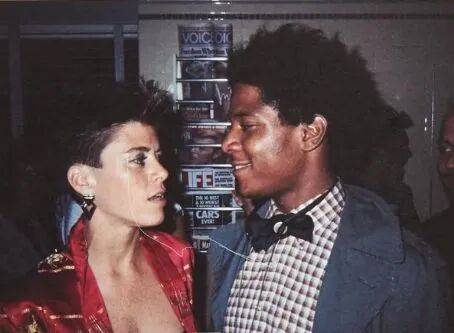
Jean-Michel Basquiat and Paige Powell, image source: online. Basquiat’s pink Lovers reveals a sweetness and romance we have rarely seen in his work. Most of the paintings we had encountered before were angry and rough. The artist gave this painting to his girlfriend, Paige Powell, as a Valentine’s Day gift in 1984. “This is his most romantic painting. Basquiat’s girlfriend at the time, Paige, liked to talk about working at a zoo and taking care of chimpanzees. So he created this double portrait, in which he and Paige appear as chimpanzees, embracing and feeding each other.”
“City As Studio,” K11 MUSEA, 2023.
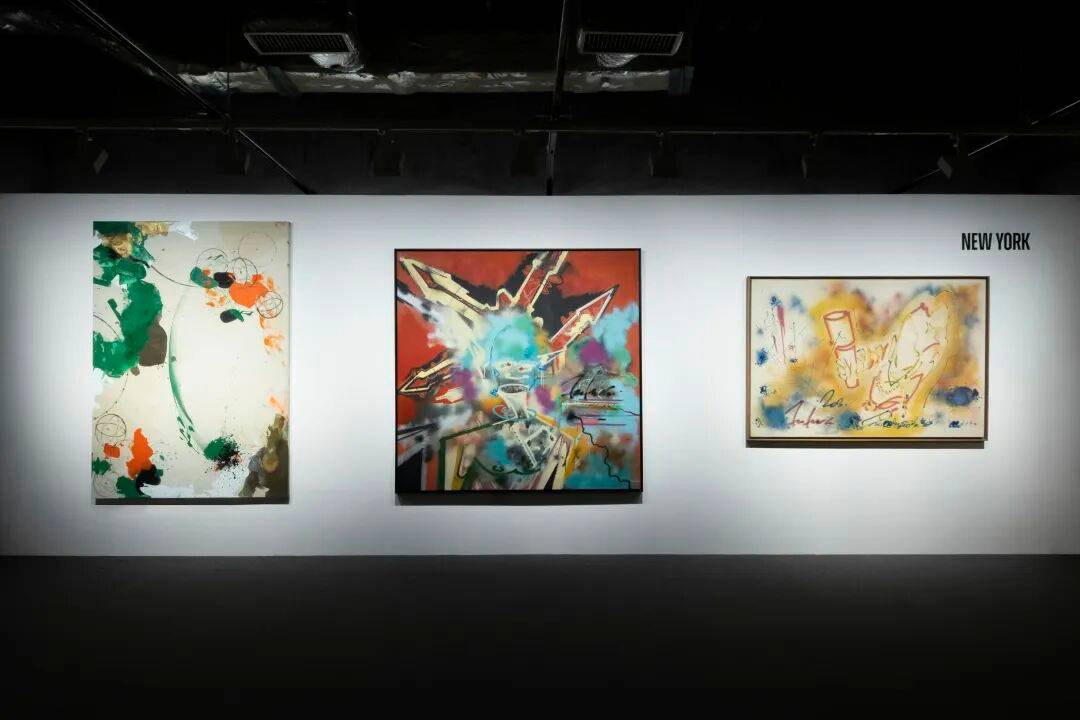
FUTURA, Vengeance Demon, 1985. On the exhibition wall opposite Basquiat’s work hang three large-scale paintings by FUTURA, a pioneer of abstract street art. Arranged from right to left, they trace the artist’s development from his early work to maturity. The work in yellow and white is among FUTURA’s earliest pieces. The red, clawing demon at center was made in 1985 and is one of the artist’s greatest works. The painting on the left is the most abstract and is a recent work.
A photographic record of Deitch with FUTURA in Hong Kong in 1982. “FUTURA was one of three graffiti artists I brought to Hong Kong in 1982. At that time, he was nowhere near becoming an international graffiti ‘star,’” Deitch told us.
“City As Studio,” K11 MUSEA, 2023.
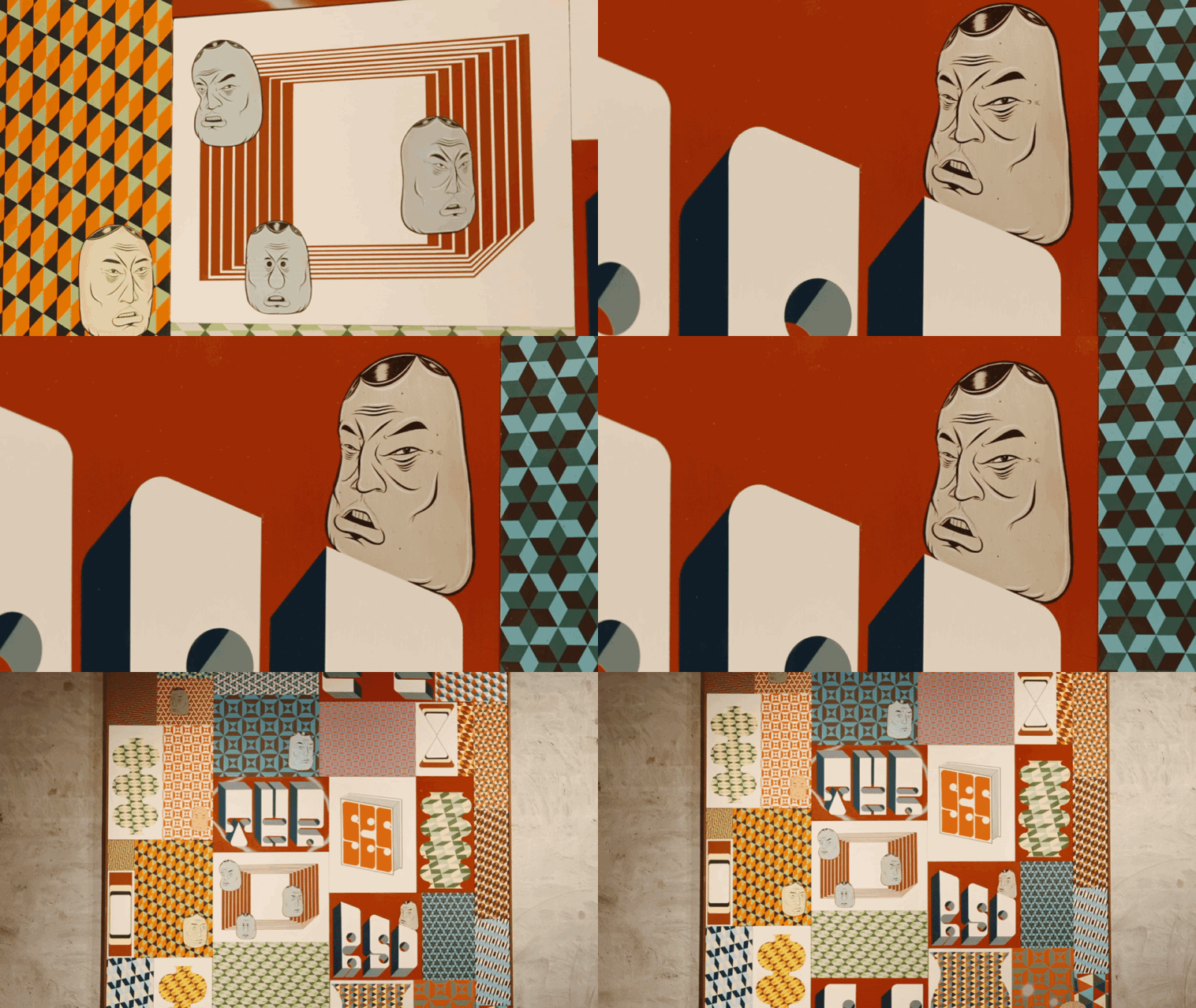
Barry McGee, Untitled, 2023. From the 1970s to the present, graffiti that emerged from the streets of New York has transformed and developed into countless forms. In San Francisco, the visual language of street art is equally distinctive, and more literary. Its images maintain subtle relationships with traditional crafts such as collage, sign painting, and bookbinding. Barry McGee, one of its representative artists, turns abstract, collaged street art into a poetic melancholy. He studied at the San Francisco Art Institute, making him one of the relatively few street artists with formal academic training. “This collage of abstract shapes reflects his current artistic language. It contains his signature faces, and every face is different. Barry’s mother was Chinese American, and he strongly identifies with his Chinese roots,” Deitch told us.
“City As Studio,” K11 MUSEA, 2023. Beside it, a mechanical graffiti mannequin suddenly came to life and startled us. “It was actually modeled on one of Barry’s friends. The lettering it is painting is the ‘graffiti signature’ of XEME, a local Hong Kong artist.”
“City As Studio,” K11 MUSEA, 2023.
Chaz Bojórquez, Lucky Man, 2022. Courtesy of the artist. The exhibition moves to Los Angeles, where street art is deeply connected to Mexican gang culture; even the name “Cholo” sounds distinctly Mexican. The skeletons we see are not frightening. In Mexican culture, the skeletal rider represents a connection with departed loved ones, and a kind of ideal of immortality. “Their graffiti lettering is connected to the ancient Mexican language. That is also the source of the headline typeface used by the Los Angeles Times,” Deitch told us.
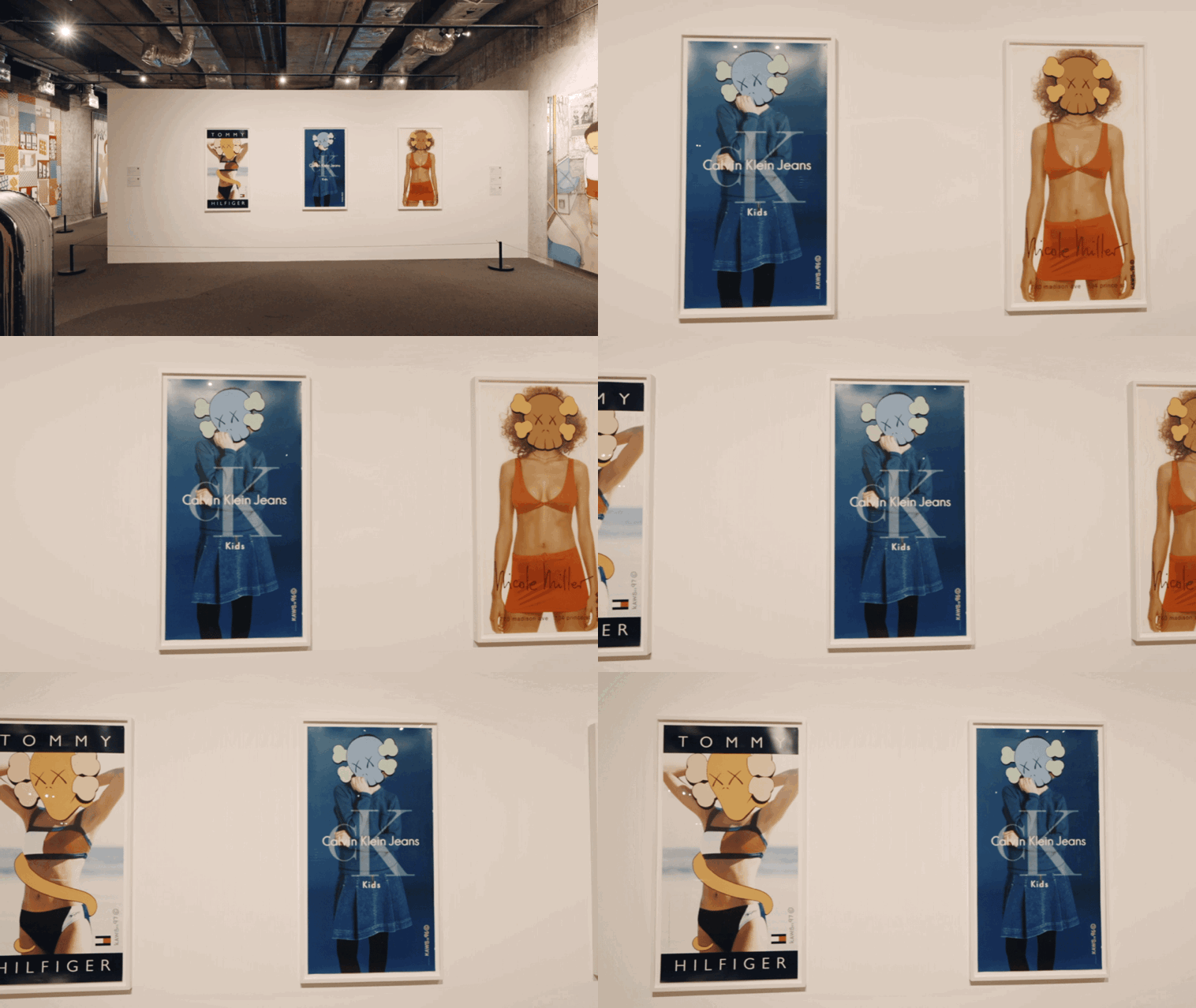
“City As Studio,” K11 MUSEA, 2023. One of the most compelling things about street art is that it forms a complete “community.” Artists help, connect with, and pass things on to one another; many are extremely close friends. KAWS is now one of the best-known artists in the world. But when he began making graffiti, he was still working on the street. Older street artists helped him considerably. “Barry McGee gave him a key that allowed him to enter New York City bus shelters. He could remove the posters from inside, paint them with his original ‘KAWS heads,’ and then secretly put them back,” Deitch said, dispensing with apparent ease the gossip—large and small—of the graffiti world.
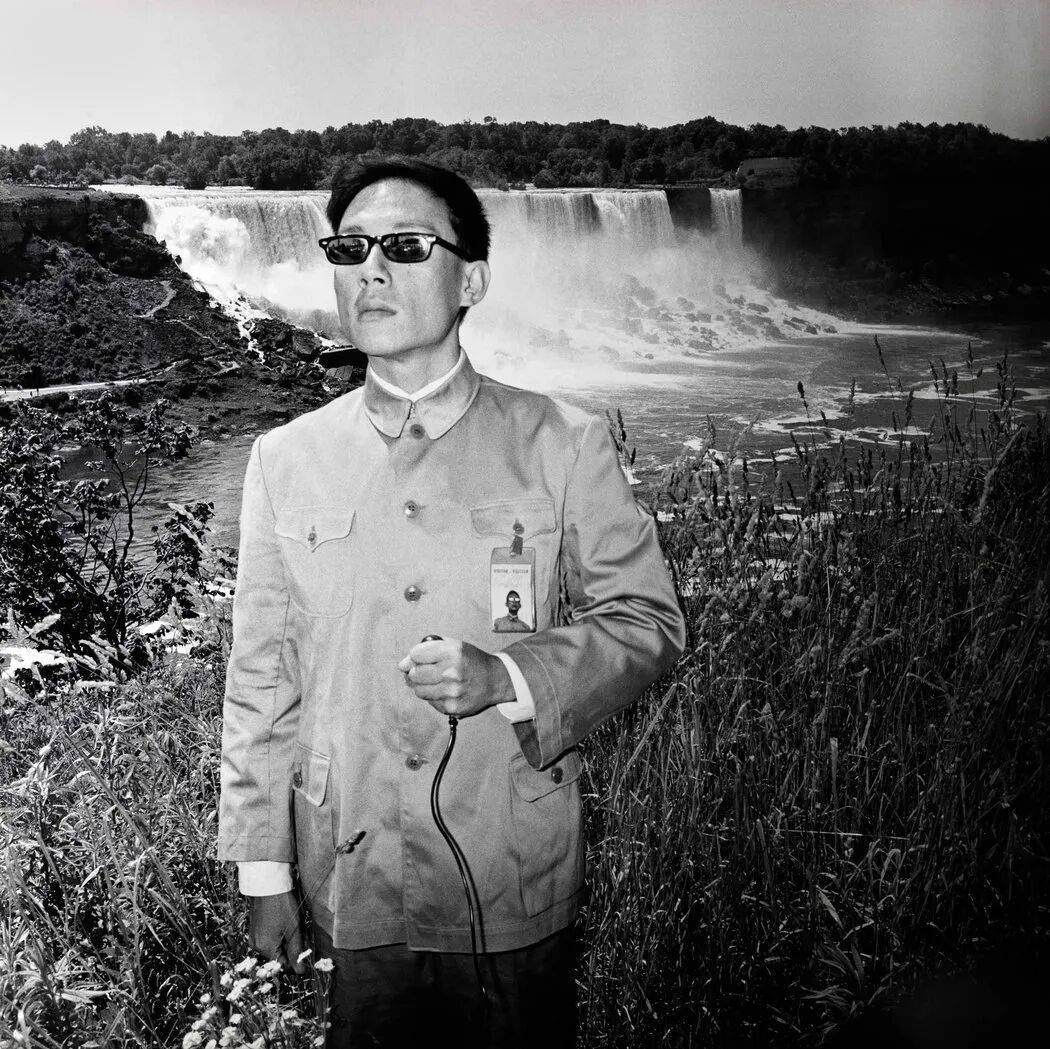
Tseng Kwong Chi in front of Niagara Falls, 1979. Chinese faces also belong to the “community” of street art. Alongside Barry McGee, whose mother was Chinese, there was the outstanding Hong Kong photographer Tseng Kwong Chi. He invented what has now become ubiquitous as the “selfie,” more than twenty years ahead of everyone else. “Kwong Chi was a good friend of mine. He liked to wear a Zhongshan suit and take selfies in front of famous landmarks around the world: the Eiffel Tower, the World Trade Center in New York, the Colosseum in Rome … As a young Chinese man, he was challenging the world,” Deitch said of his friend.
SECTION 02 | Street art, the earliest Chinese face
Tseng Kwong Chi (right) and Keith Haring (left), 1986, image source: online.
Keith Haring photographed by Tseng Kwong Chi, 1984, image source: online.
Andy Warhol and Jean-Michel Basquiat photographed by Tseng Kwong Chi, 1987, image source: online. Beyond his self-portraits, Tseng’s relationship with Haring could be described as that of “old-iron” friends. Every time Haring made a sudden excursion to draw his “subway drawings,” Tseng followed with a camera, documenting the improvised works. Altogether, he took more than 20,000 photographs. Many of the arrest photographs seen online, with Haring in the foreground and New York police officers behind him, as well as photographs of Warhol with Basquiat, were taken by Tseng. As a celebrated photographer, he was an essential participant in, and chronicler of, the graffiti community.
The Godfather of Graffiti Brings His Famous Friends to Hong Kong
Martin Wong in his apartment, 1984. Photograph by Baird Jones. Another Chinese artist, Martin Wong, had a double claim to importance as a central figure in New York’s street-art community. He was both a street artist and one of the most important collectors of street art in the 1980s. “He specialized in collecting street artists’ sketchbooks. He had every artist sell him their sketchbook, and those books contained many of the works the artists later painted as graffiti on New York trains. Martin was generous. He eventually donated the entire collection to the Museum of the City of New York. As a result, many precious graffiti works that the government ordered erased from trains were preserved in another form,” Deitch said.
“City As Studio,” K11 MUSEA, 2023. When we asked Deitch how he viewed street art’s journey from the street into galleries and museums, he said, “Street art is not a subcategory of art. Street art is art, just like pop art and minimal art. It is another expression of the artistic impulse.”
Entrance to “City As Studio,” K11 MUSEA, 2023.
SECTION 03 | Female artists make graffiti art richer and more diverse
Lady Pink, TC5 at the Ghost Yard, 2020. Courtesy of the artist. Women artists have not been absent from graffiti’s “Boys Club.” Lady Pink, Margaret Kilgallen, and Aiko Nakagawa (Lady AIKO), each with distinctive styles and backgrounds, have made graffiti more diverse and expansive.
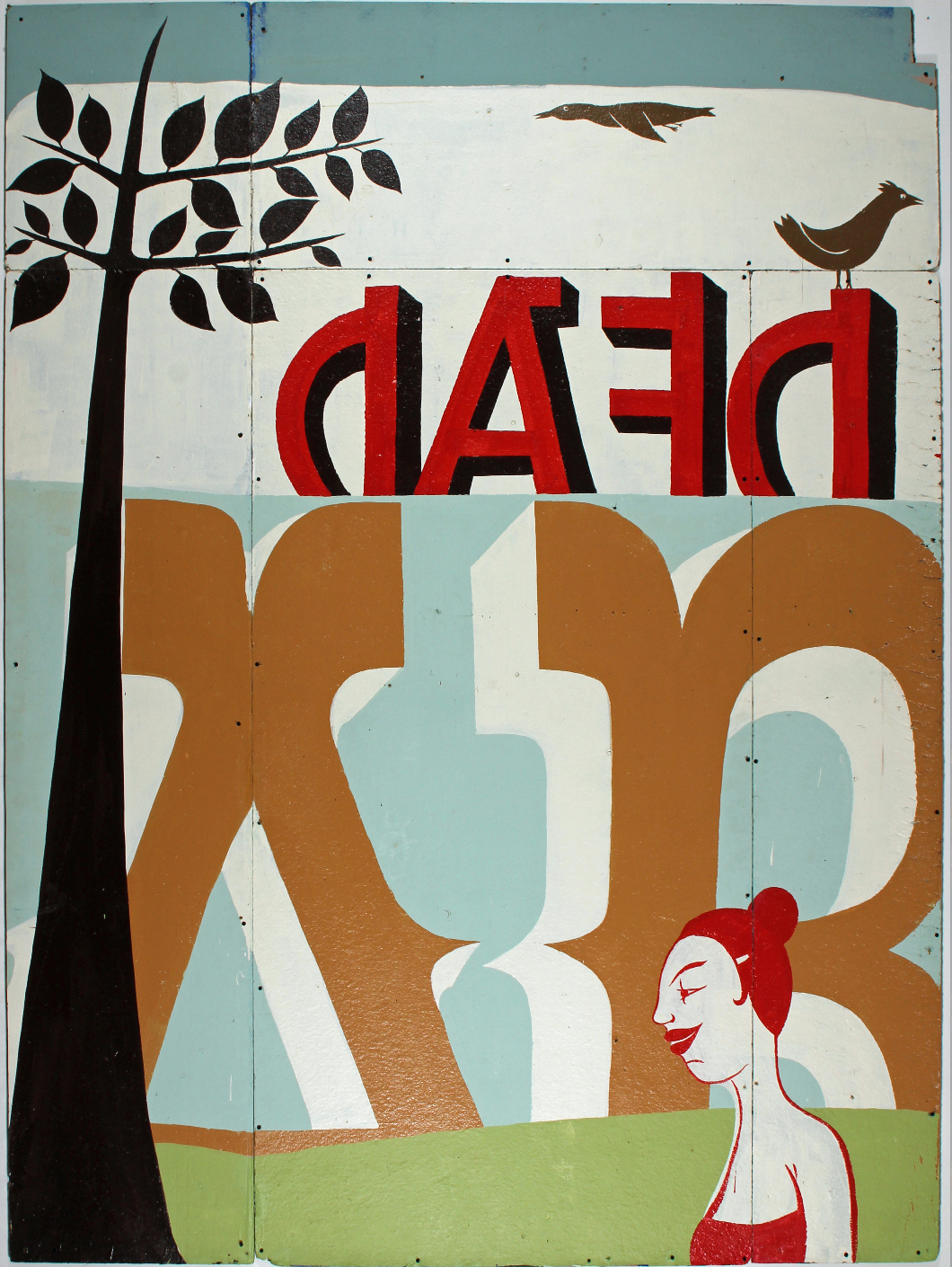
Lady Pink, The Death of Graffiti 3, 2018. Courtesy of BEYOND THE STREETS and Roger Gastman. Lady Pink was among the earliest prominent women artists in the male-dominated field of street art. By day, she attended traditional academic classes at New York’s art school; at night, she slipped out to paint trains with the male artists. The two works in the exhibition represent her leadership within the street-art “community.” “Her celebrated large-scale work The Death of Graffiti shows, against an unforgettable New York nightscape, one half of a train painted white while the other is covered in graffiti.”
Margaret Kilgallen, Untitled, 1999. Collection of Michael and Teresa Fazio. Photograph by Tiana Fazio. As Barry McGee’s partner, Margaret Kilgallen was a librarian, and the assembled edges in Untitled have the feel of bookbinding.
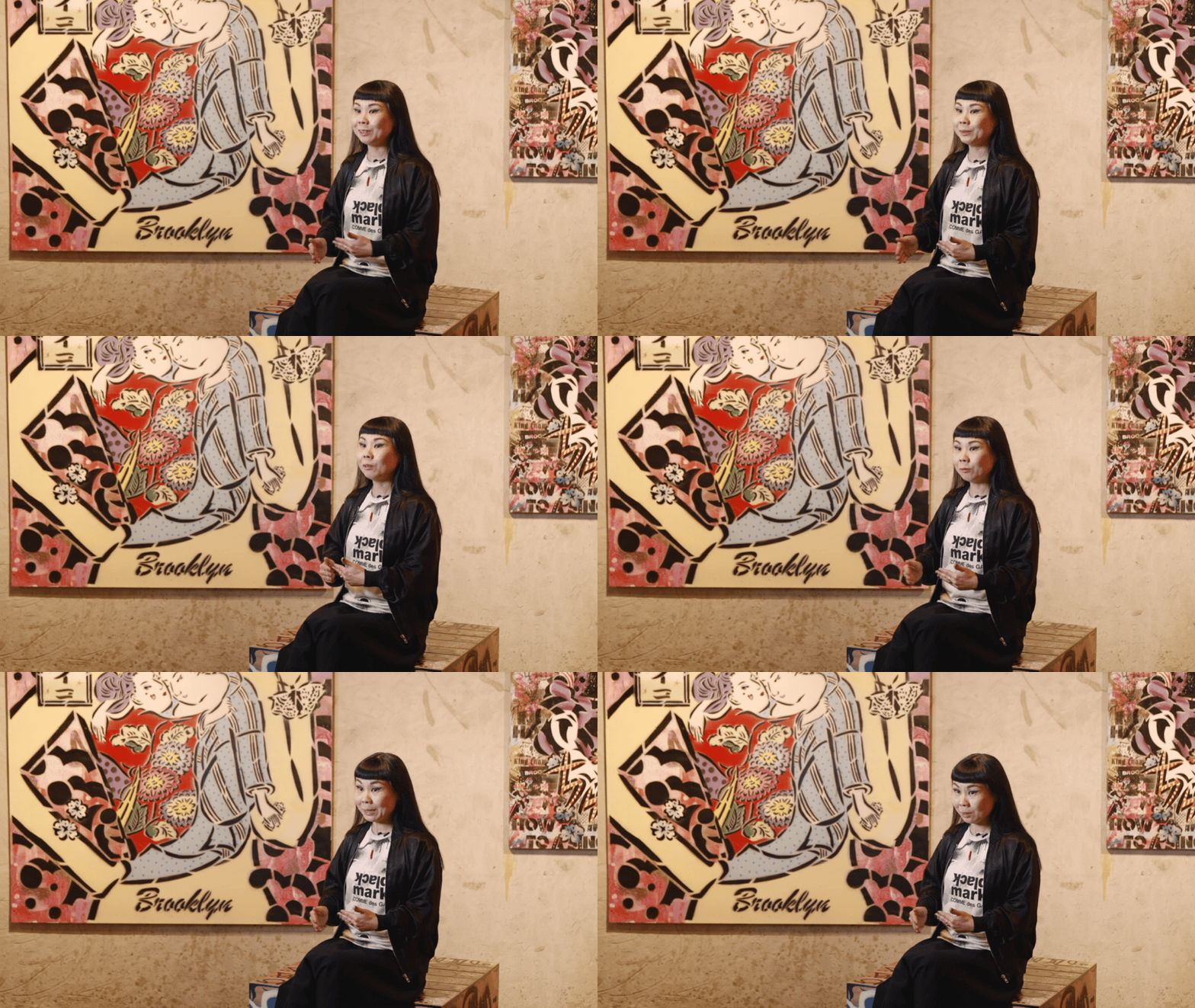
Aiko Nakagawa (Lady AIKO) in an interview. The morning we met the Japanese street artist Aiko Nakagawa (Lady AIKO) at the exhibition, she wore a black coat, with bangs above her eyebrows and slightly long, straight black hair. She looked crisp and self-possessed, as she describes herself. She grew up in Tokyo and now lives in New York. In her work, we found more Eastern elements with which to identify. “I came to New York as a teenager, and every day at that time was a tremendous cultural shock. Gradually, I realized how unique my cultural background was. You can see the dual influence of Eastern and Western cultures in my work,” AIKO said, with evident pride, speaking about her Eastern side.
AIKO, Kiss, 2017. Courtesy of the artist. AIKO exhibited three works on site, and we could clearly see how deftly she combines pop art and Japanese ukiyo-e with her distinctive techniques: stencil printing, spray paint, screen-printing, and collage. “My work reflects my life experience. This is who I am—a Japanese woman living in Brooklyn. The screen-printing process gives my work greater depth,” AIKO said of the paintings on view.
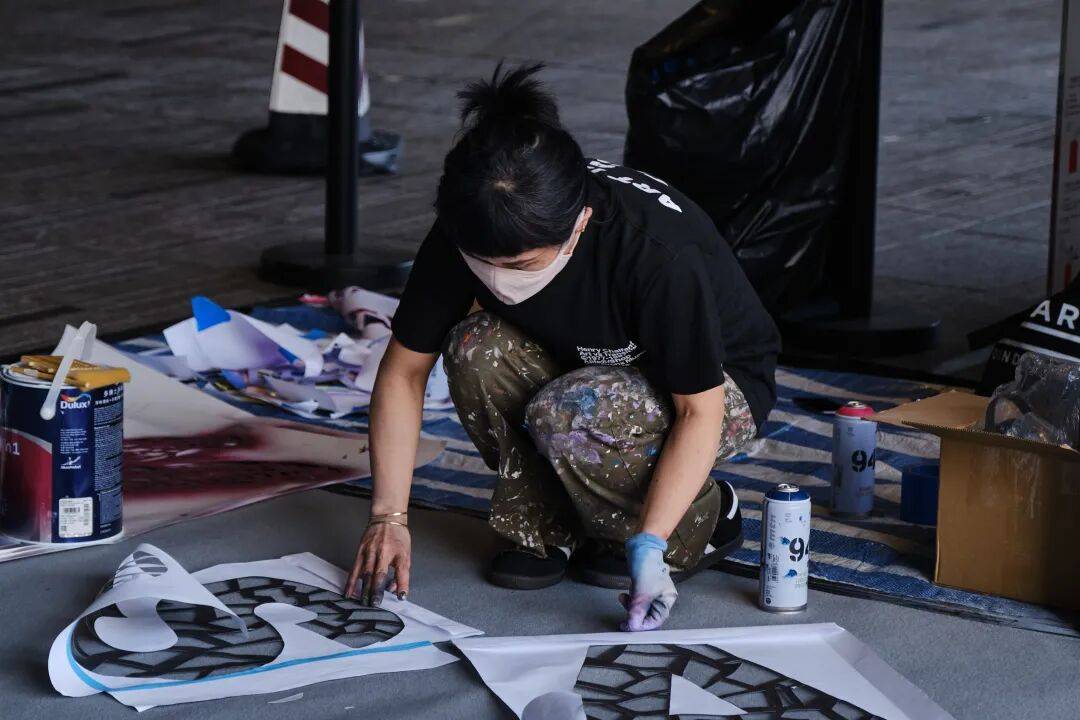
AIKO cutting on site at K11 MUSEA. She also told us that she likes using a knife to cut things out. If she were making a huge mural, she might need to cut hundreds of stencils in the studio and then assemble them. “I spend most of my creative time doing this,” she said with a laugh. In 2012, she became the first woman to take over the Bowery mural in Manhattan, New York—a significant moment for her. “At first, as a woman street artist, I encountered many difficulties and forms of discrimination, because no one had ever seen a Japanese woman making graffiti in New York or anywhere else in the world. A lot of people looked down on me because I was a woman, because I was Asian. My abilities were seriously underestimated,” AIKO recalled, calmly.
AIKO at K11 MUSEA. On site at “City As Studio,” she said that this unjust treatment inspired her work and enabled her to grow into her current position. In fact, AIKO had already exhibited in China in 2010, and she considers this exhibition a breakthrough in her career. “After the exhibition, I received many commissions. They gave me the funds to pursue my own private projects—I went to South Africa 15 times to paint with children and local people, and I also spent about three years in Scandinavia.” Looking back on the past 13 years, AIKO believes that what she gained most was personal growth.
AIKO making rabbit graffiti at K11 MUSEA. Interestingly, AIKO also treated K11 MUSEA as her “studio,” creating a charming rabbit graffiti piece on the building’s first floor. It was the Year of the Rabbit, and she herself was born in the Year of the Rabbit. “Everyone likes rabbits. They are a symbol of freedom,” AIKO said.
Interior view of K11 MUSEA. AIKO is not the only artist to treat K11 MUSEA as a “studio.” The entire space is like a vast art “studio,” with numerous artists designing works specifically for the site. During the Hong Kong Art Basel fair, we took the opportunity to explore the building and found a number of hidden treasures.
SECTION 04 | A 'Studio' in Another Sense
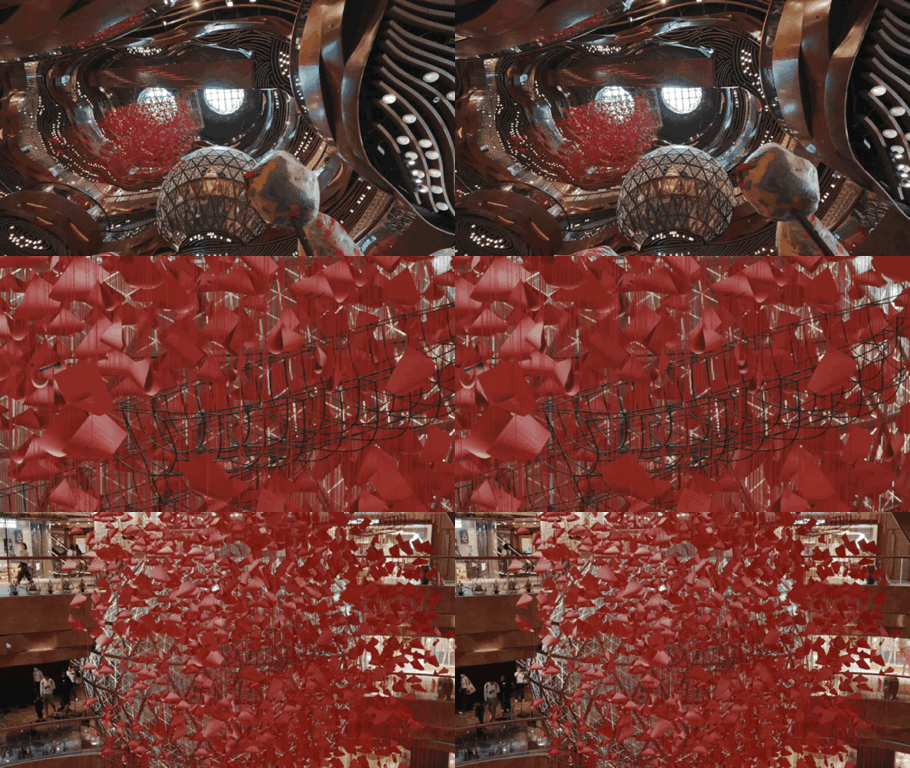
Chiharu Shiota, I hope..., 2021. Suspended from the atrium are 5,000 letters tied together with red thread. This commissioned site-specific work comes from Chiharu Shiota, one of today’s best-known fiber artists and the first to push thread to its limits. Her signature “boat” also appears in the work, carrying the viewer’s emotions toward an uncertain distance.
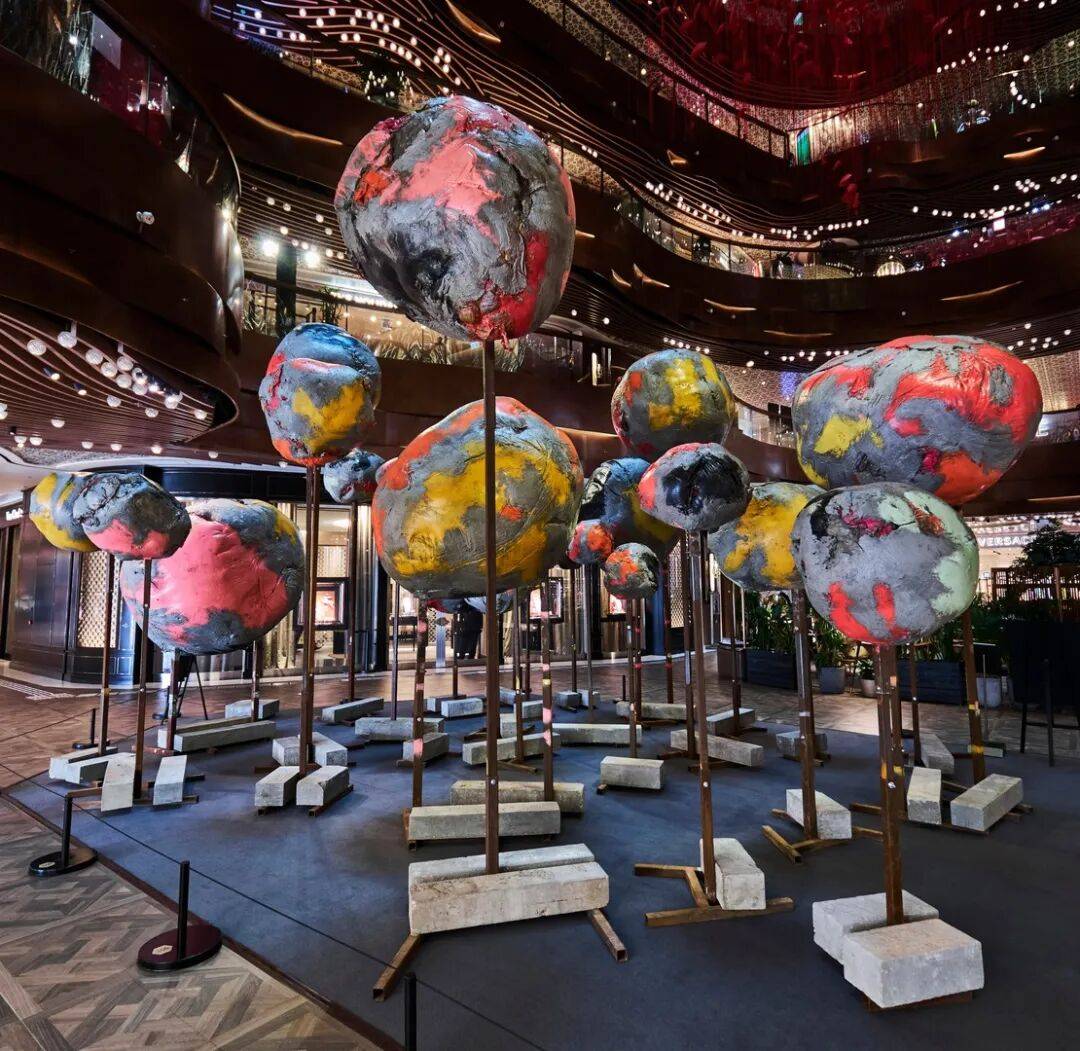
Phyllida Barlow, Untitled: Big Architecture; Decorative Ball, 2016–2017.
Interior view of K11 MUSEA, skylight. Phyllida Barlow, an award-winning artist at the Venice Biennale, has placed undulating decorative balls on the first floor. They create a visual dialogue with the Golden Opera House in the middle of the venue while also echoing the Baroque-style circular skylight. Natural daylight pours down from above, meeting the simulated galaxy of circular lights, large and small, bright and dim, inside. The visual effect is hard to resist.
Zhang Enli, Five-Colored Parrot, 2018. Zhang Enli’s Five-Colored Parrot was also commissioned specifically for the venue. The lush branches above the rotating parrot were painted on the ceiling by the artist himself, on site.
Sterling Ruby, Procrastination, 2013.
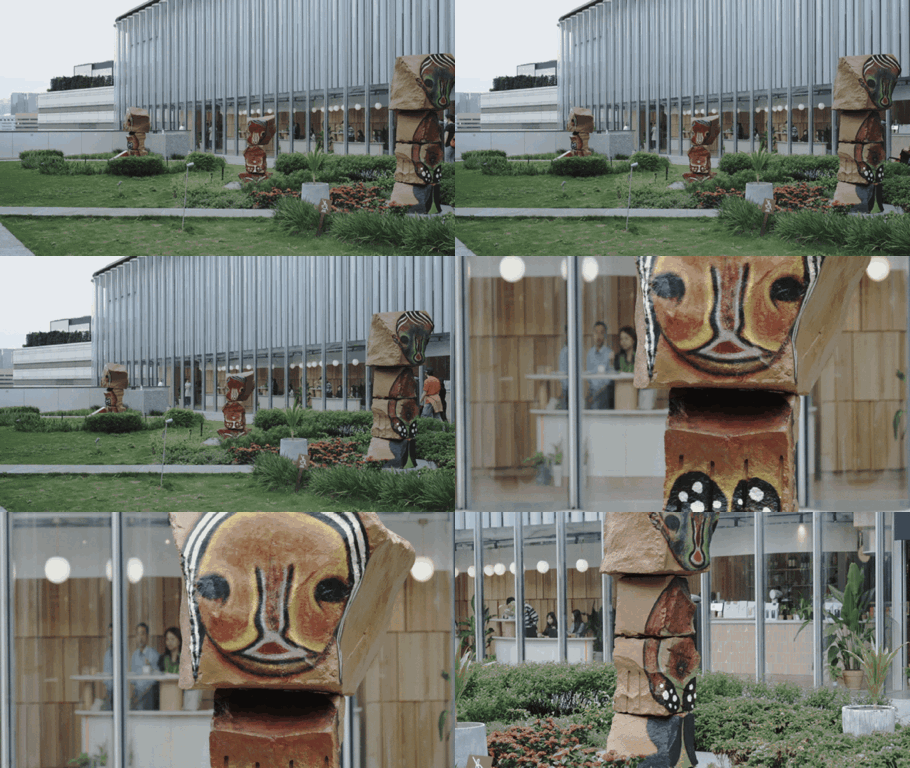
Izumi Kato, Untitled, 2021. We also saw Sterling Ruby’s Procrastination occupying the venue’s main entrance, while a group of Kato’s stone human sculptures appeared in the “City Garden” on the sixth floor. This open-air garden feels like a pavilion in the sky, with views of Victoria Harbour. If AIKO treated K11 MUSEA as her “studio,” then K11 MUSEA is the “studio” of many artists and designers. Figures of every kind are at work here, which brings us back to the title of the exhibition: “City As Studio.”
Editor: Huang Xirui. Managing editor: Deng Kailei. Image credits: my images and online sources. Special thanks to K11 Art Foundation and K11 MUSEA.
Photo credits: my images, online sources, K11 Art Foundation, and K11 MUSEA.