With borders fully reopening in 2023, Hong Kong again became a first stop on the global art circuit, its museums, fairs, and new cultural landmarks drawing visitors back to the city......
By / Xirui Huang · 13 min read
What changes beyond the fair shaped a return to Hong Kong’s art scene in 2023?
The 2023 report places a return to Hong Kong within several years of cultural development. M+ and the Hong Kong Palace Museum offer different perspectives on collections and display, Tai Kwun connects heritage buildings with contemporary programmes, and Central’s galleries create a dense exhibition network. Art Basel Hong Kong provides an occasion to move between these places. The article is a historical snapshot; its specific exhibitions and arrangements should not be read as current visitor information.
In 2023, the art world had plenty to celebrate, but nothing mattered more than the full reopening: at last, we no longer had to tour fairs, exhibitions, and new cultural landmarks from home, and could once again travel freely to see them in person. On February 3, Hong Kong announced that it would fully reopen on February 6, and the government even said it would give away 700,000 airline tickets to encourage travelers to visit. For many people, that made Hong Kong the first stop on their 2023 art itinerary.
Direction | 2020-2023: A New Ecology for Hong Kong's Art World
Against the backdrop of Art Basel Hong Kong in 2022, this March is set to become an exceptionally lively art season in the city. Art Basel Hong Kong has officially announced that it will open on March 23, with its largest edition since 2019. Other institutions, including K11 MUSEA and Art Central, are also mounting exhibitions and events during the fair. We have assembled a guide to Hong Kong’s latest art developments: after three years of disconnection, what new cultural landmarks has the city gained, what exhibitions are there to see, and how has its art environment changed?
Since opening in November 2021, the M+ museum in Hong Kong’s West Kowloon Cultural District has become the eye of the storm for the art world in China and across Asia. People often say that a decade is needed to sharpen a blade; from the moment construction began ten years ago, M+ was aimed at becoming Asia’s first world-class museum of visual culture. The museum occupies 65,000 square meters in West Kowloon and, at twice the size of London’s Tate, was designed by Herzog & de Meuron.
SECTION 01 | Art galleries and museums that are open to the public
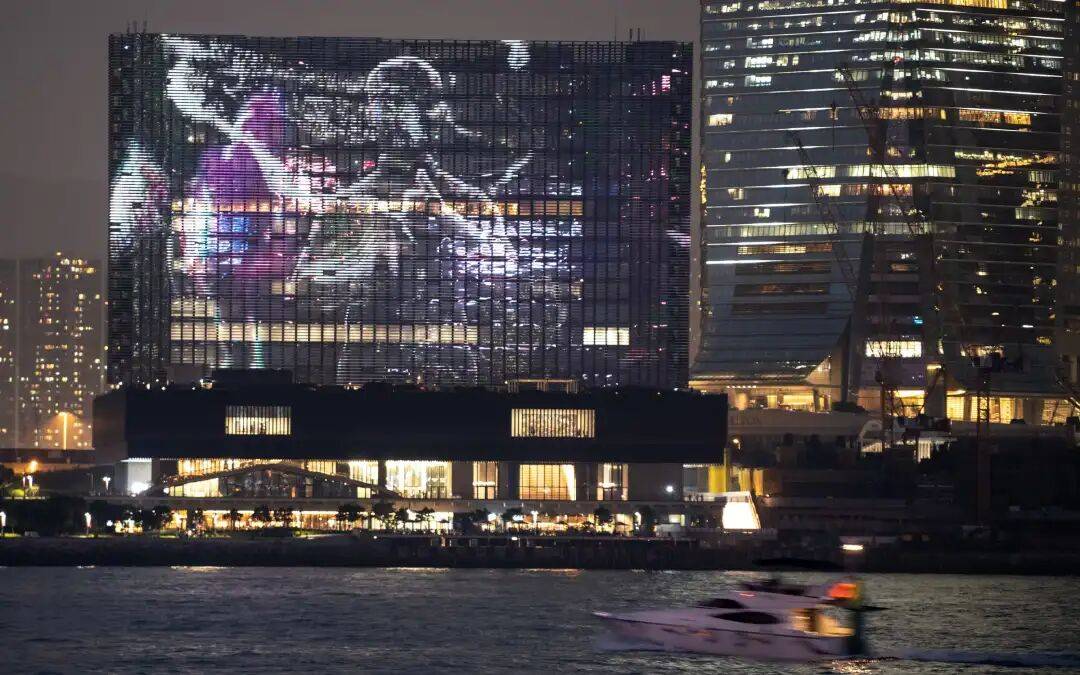
From the outside, its vast facade reads like an upright urban screen planted on Victoria Harbour. In an interview, the architect Herzog once put it vividly: “The building is like a human body, with its feet rooted in the ground, its head against the sky, while looking out toward the vast sea before it.” In addition to its 33 galleries, the museum includes cinemas, a learning center, restaurants, and a roof garden, and is devoted to collecting, exhibiting, and interpreting visual art, design, and architecture from the 20th and 21st centuries.
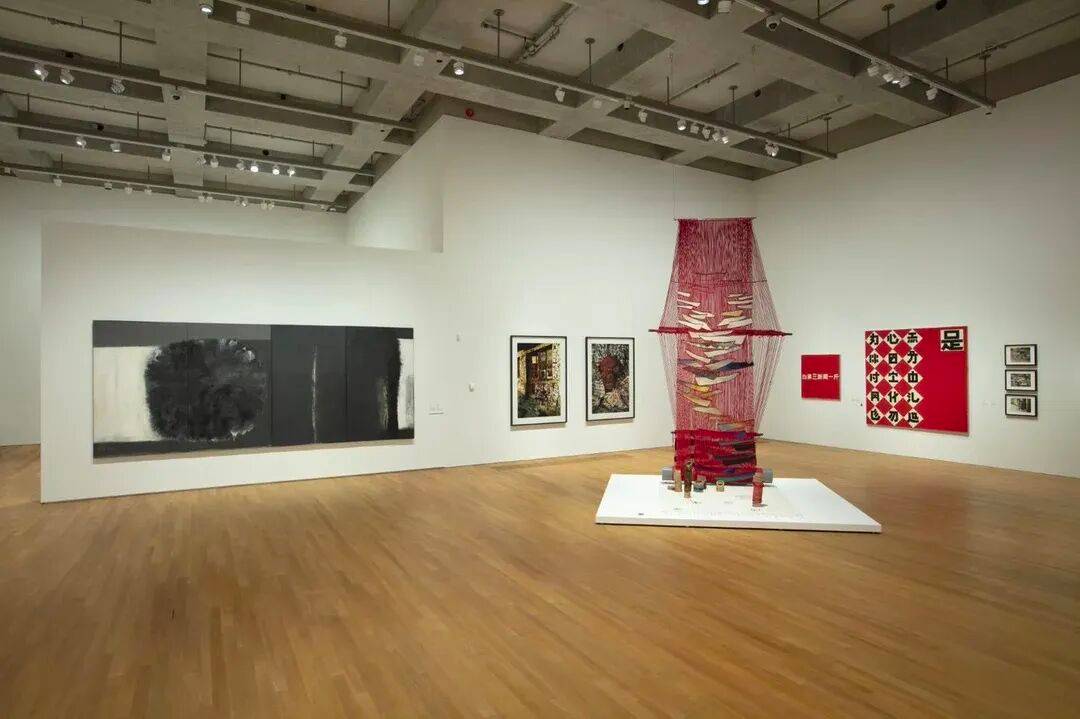
With nightfall, M+ itself becomes an artwork. Its enormous LED facade, 66 meters high and 110 meters wide, faces Victoria Harbour and presents arriving travelers and returning residents with one of the city’s most conspicuous electronic calling cards, attempting to send art farther and deeper into the night through light. Among the exhibitions now on view is From Revolution to Globalisation, built from a donation by the former Swiss ambassador to China, Uli Sigg, and focused on Chinese contemporary art. Using 1,463 works as its measure, it traces China’s cultural, spiritual, and economic development from the reforms of the 1970s to the present.
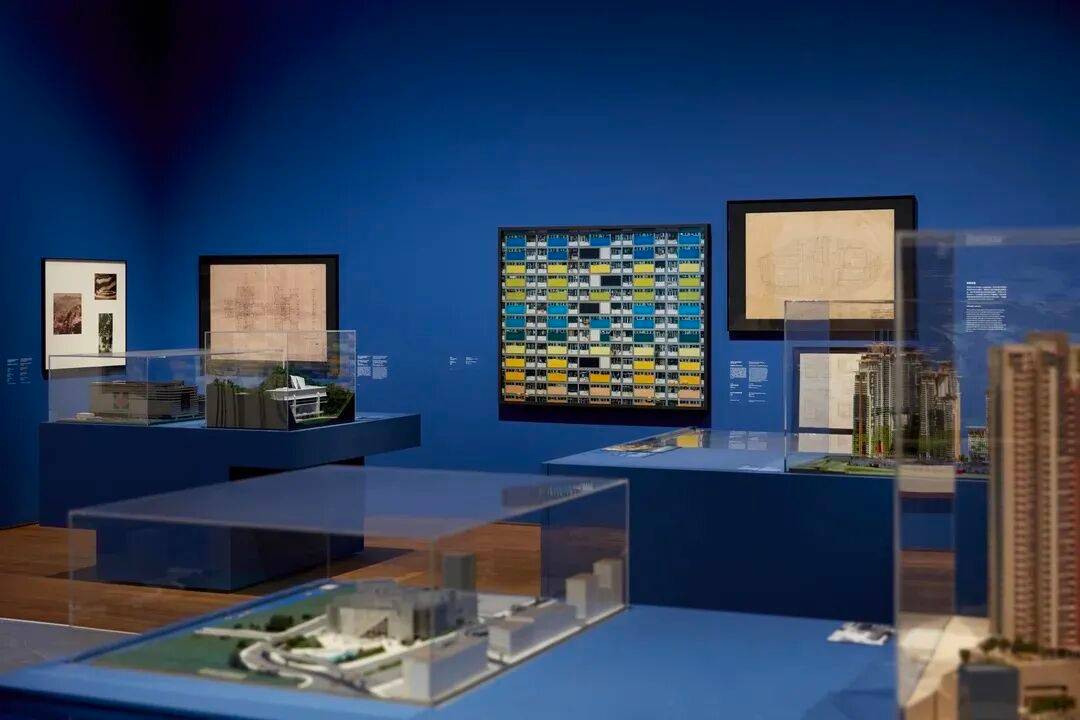
Valued at about $167 million, these works span forty years of Chinese contemporary art and form M+’s first group of holdings. The museum is also notably supportive of Hong Kong artists. Hong Kong: Here and Beyond begins with local artists, architects, designers, and film workers to tell the story of the city from the 1960s to the present. Another special exhibition in the museum is Yayoi Kusama: 1945 to Now, a retrospective surveying more than seventy years in the career of the artist often called the queen of polka dots.
The exhibition includes more than 200 representative and recent works by Yayoi Kusama, making it the largest presentation of her work ever held in Asia outside her native Japan. The newest show in the Focus Gallery follows one of the art world’s hottest subjects: the NFT artist Beeple’s Human One occupies a gallery of its own. The first virtual human born in the metaverse, dressed in a space suit, strides endlessly through digital landscapes inside a constantly rotating box made of LED screens on all four sides.
For art professionals and devoted enthusiasts alike, M+ alone is reason enough to make a special trip to Hong Kong. In July 2022, the museum gained an imposing new neighbor: the Hong Kong Palace Museum. Built at a cost of 3.5 billion and prepared over five years, its opening drew intense attention. Covering more than 40,000 square meters and rising seven stories, the museum takes the Forbidden City in Beijing as its design inspiration. Its form, broad at the top and gathered at the base, solid below and open above, resembles an ancient Chinese ding, creating a sense of historical gravity and stability.
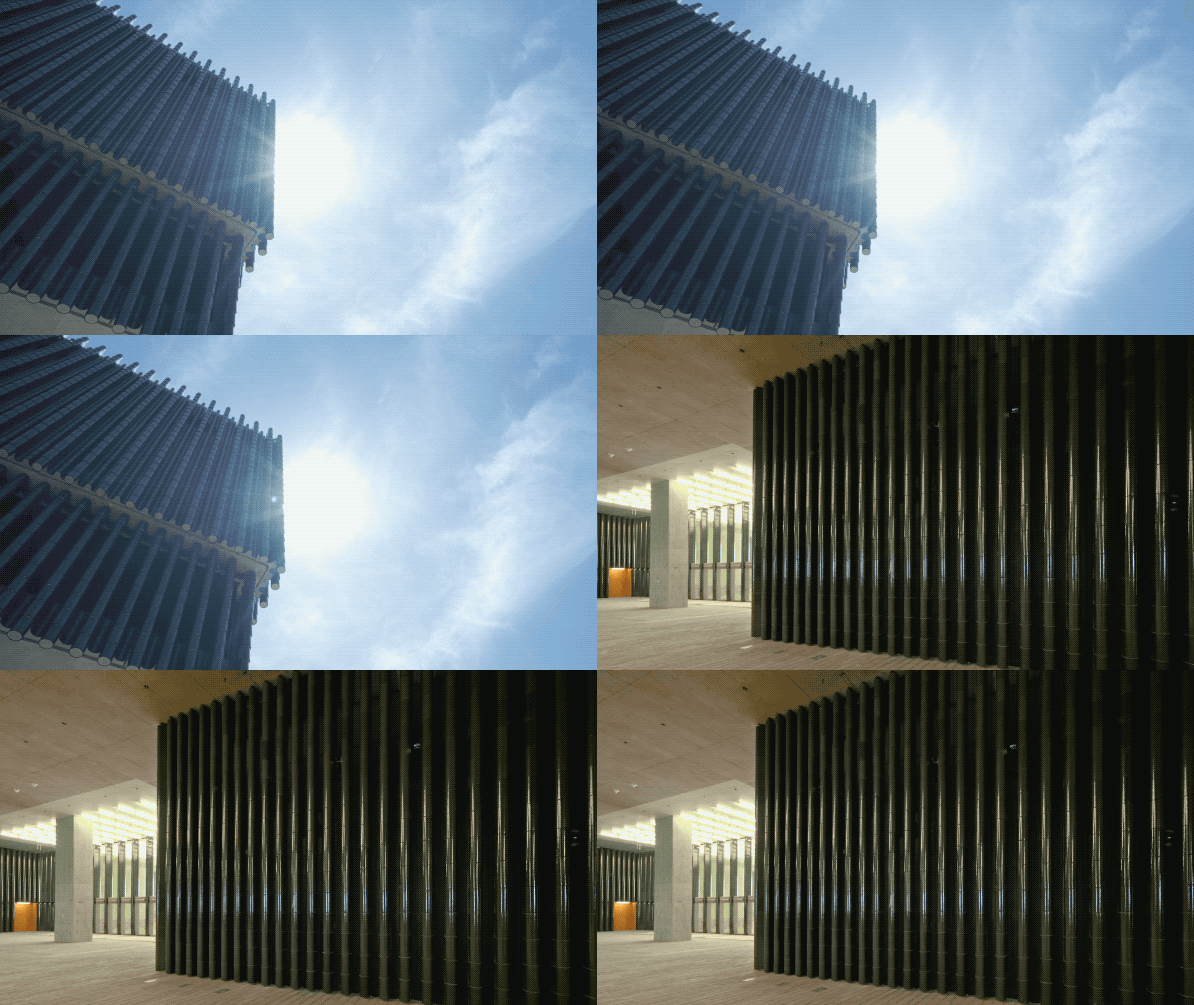
Inside, the museum’s main gate echoes the gate of the Palace Museum in Beijing: entirely vermilion, accented with silver studs. Both the building’s exterior and its internal layout refer to the central axis of the Beijing palace complex, emphasizing square symmetry. There are three atriums inside; after finishing one gallery, visitors return to an atrium and proceed along the axis to the next. The interior outer walls are clad in 3,999 perforated curved aluminum panels of varying arcs, together with 7,000 wave-shaped ceiling panels, creating a shimmering effect reminiscent of glazed roof tiles.
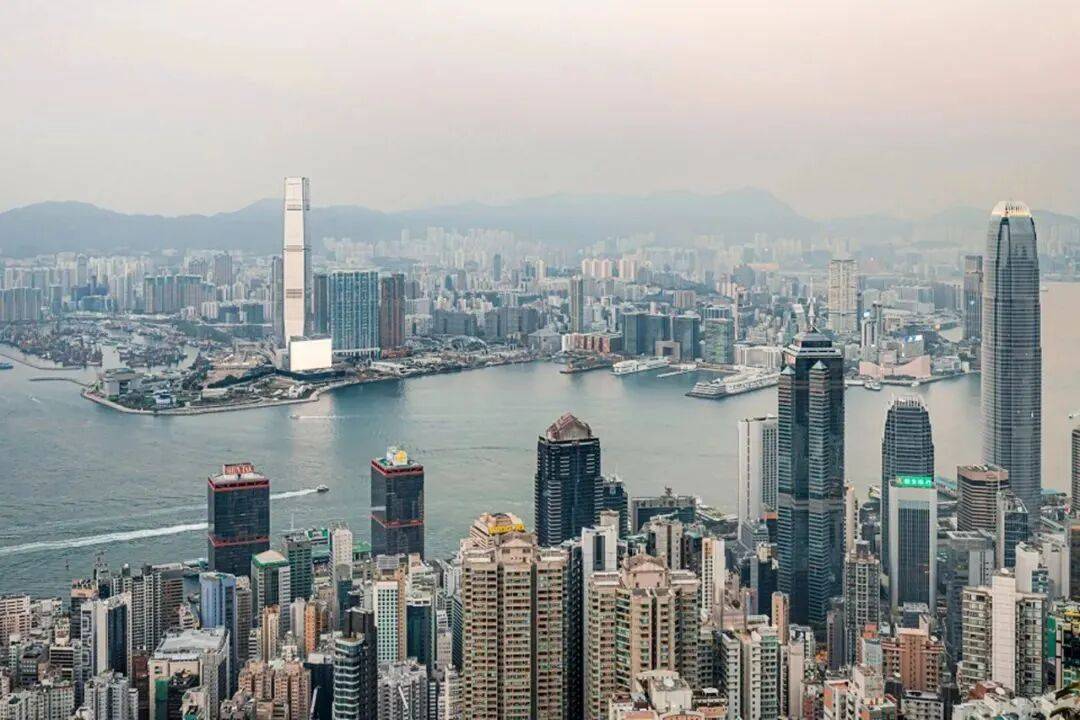
From the museum’s upper levels, one can look south to Central, west to the sunset, and take in the full skyline of Hong Kong Island. The 914 objects in the regular display were selected over more than a year by the Hong Kong Palace Museum team working closely with the Palace Museum in Beijing, from that institution’s collection of 1.86 million works. Spanning five thousand years of Chinese history, they are broad and rich in kind, including painting and calligraphy, bronzes, ceramics, gold and silver objects, enamelware, jade, and 25 categories in all.
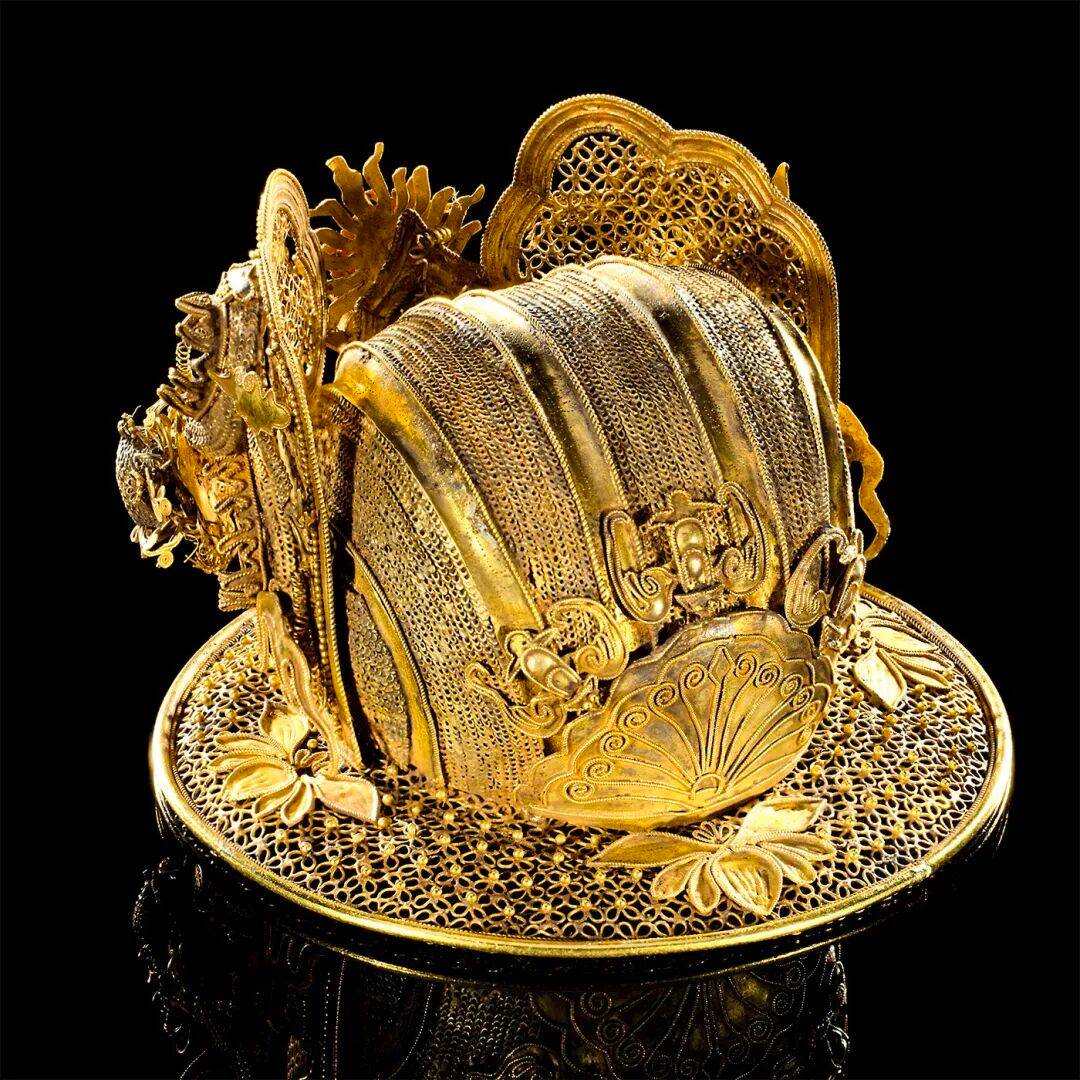
In addition to the regular displays, one current exhibition presents works from the princely collections of Liechtenstein, including nearly forty highly important originals by Peter Paul Rubens (1577–1640) and Anthony van Dyck (1599–1641). Another special exhibition opening in late February, organized in collaboration with the owner of Mengdiexuan and the Hong Kong Palace Museum, will be the largest exhibition of ancient gold objects seen in Hong Kong in recent years. Among the works to appear is a double-dragon pearl-motif beam crown from the Ming dynasty, 1368–1644.
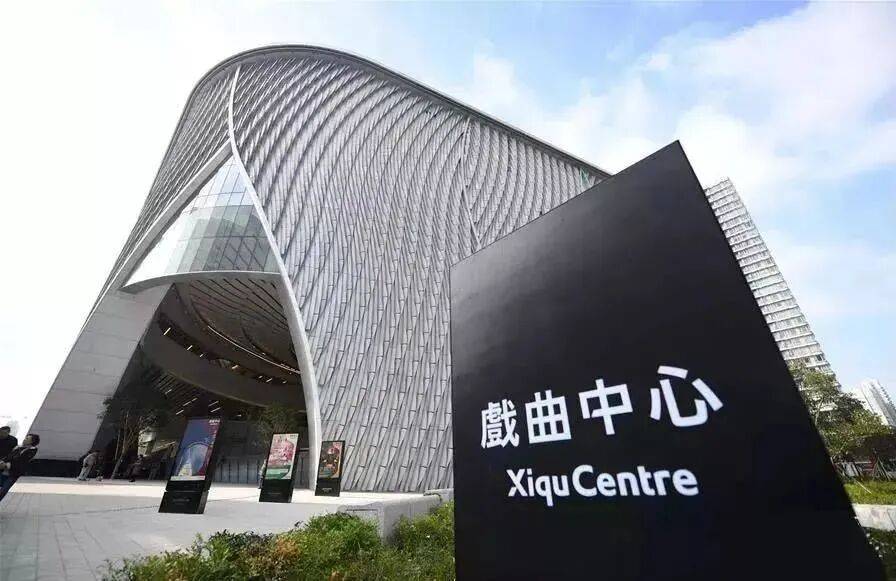
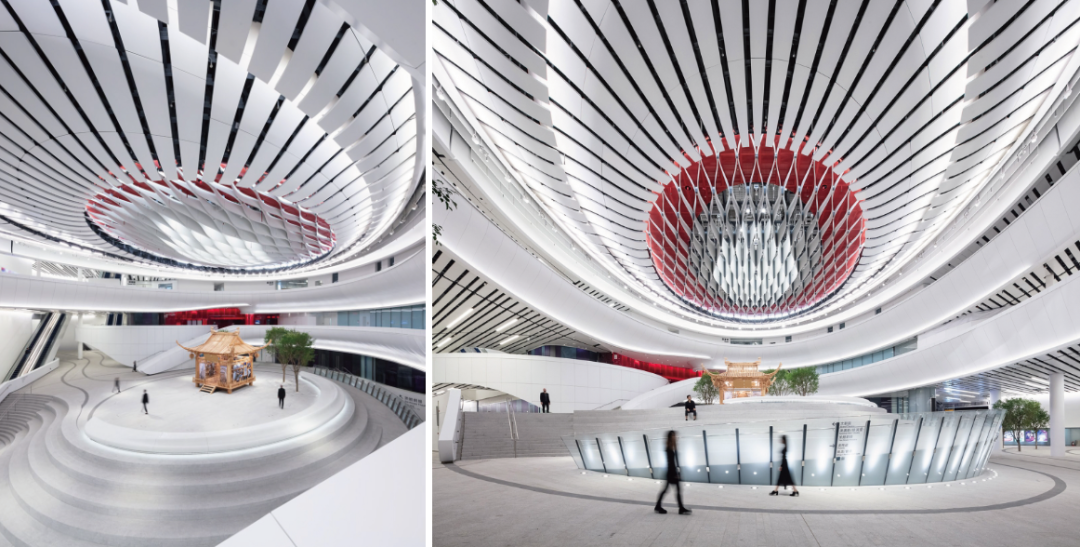
On view will be gold ornaments dating as far back as the 18th century B.C., from the Eurasian steppe, Tubo, and the Central Plains. The Hong Kong Palace Museum and M+ are only a five-minute walk apart, one ancient and one contemporary, shining all the more brightly in each other’s presence. The Xiqu Centre in West Kowloon, which opened in 2019 after eight years of work, was designed by Ronald Lu & Partners together with the Canadian firm Revery Architecture as a world-class performance venue covering about 13,800 square meters.
To build a new home for traditional opera in the middle of one of the world’s densest commercial districts took a certain boldness. The building’s exterior uses sweeping, distinctly modern curves and richly textured metal cladding that suggests both armor and bamboo grain. Inside, at the center of the circular atrium, stands a traditional Chinese wooden pavilion. Most striking of all, the center’s main theater is suspended, raised high above the ground at a height of 27 meters.
Drawing on the traditional Chinese architectural idea of the pavilion, the building opens on all four sides. This both helps block noise from the surrounding rail lines and encourages airflow, bringing audiences a naturally circulating breeze during the hot summer months. Spending an afternoon in this unusual building, then sitting in the ground-floor teahouse to listen to a song or two over tea, makes for an engaging experience. The renovated Hong Kong Museum of Art, meanwhile, remains distinctive in its own way: approachable, yet willing to embrace change.
The Hong Kong Museum of Art began as the City Museum and Art Gallery, which opened in 1962 as the city’s first public art museum. In 2015, it began a four-year renovation and expansion, and in 2019 it reopened to the public on its original Tsim Sha Tsui site with an entirely renewed appearance. After the overhaul, the museum’s exhibition area reached 10,000 square meters, and its collection grew to more than 17,000 works.
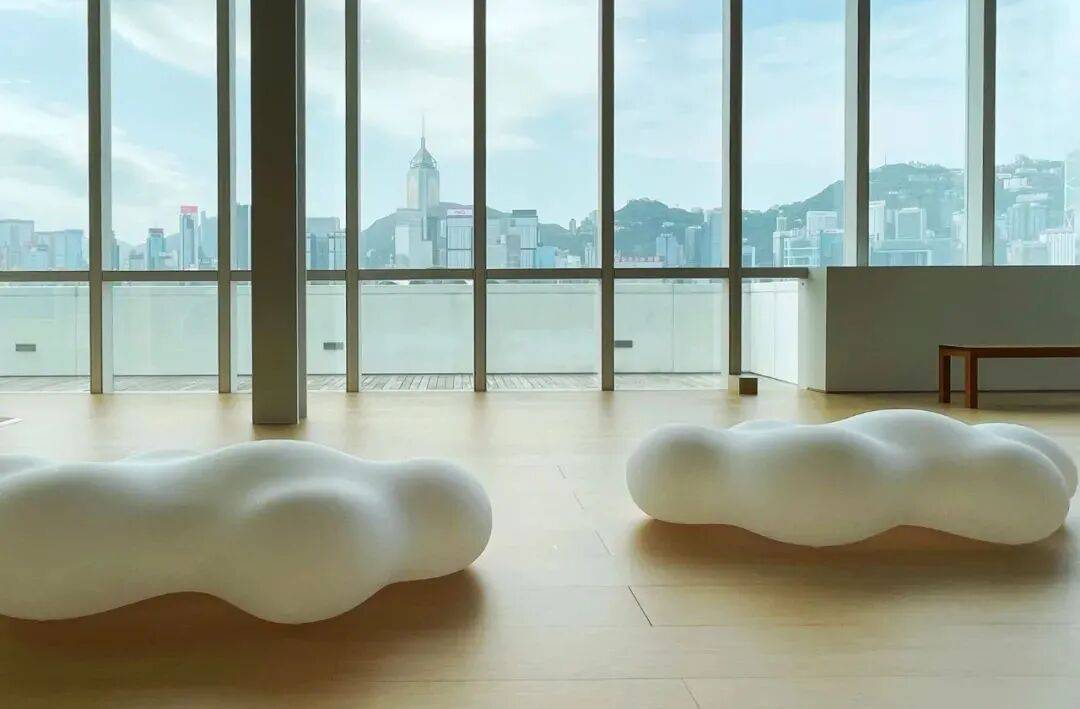
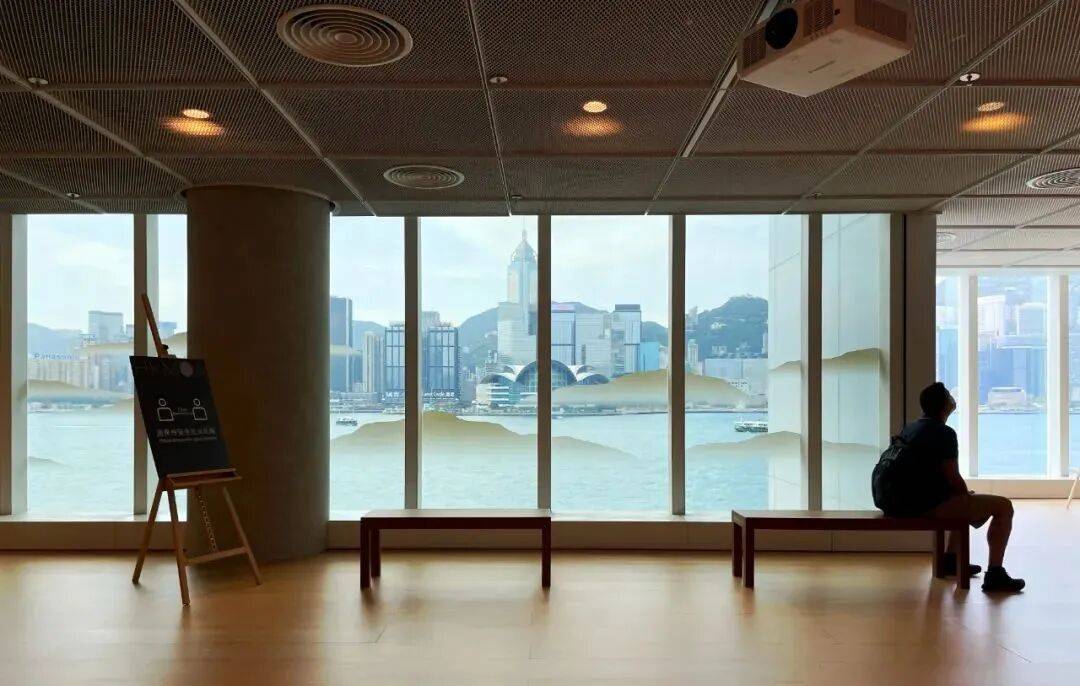
The public spaces on every floor have been remade with floor-to-ceiling windows, allowing unobstructed views of the bustle and brightness of Victoria Harbour. On the museum’s glass curtain wall, works created in collaboration with different artists rotate throughout the year; one current example is Eternity Landscape, specially commissioned from Zheng Chongbin to mark the museum’s 60th anniversary. Inside, visitors can also see exhibitions on calligraphy, Chinese characters, export art, and imperial ceramics from the Jiajing reign, among others.
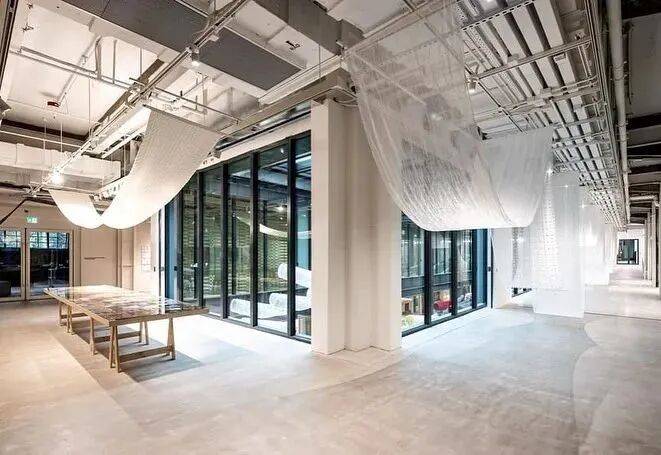
Opened in March 2019, CHAT, the Centre for Heritage, Arts and Textile, was converted from the former Nan Fung textile mills. In the transition from factory to museum, the graffiti at the entrance, the worn old staircases, and the lingering traces of the industrial workshop on the ceiling all give the place a rugged character. CHAT aims to be more than an industrial museum displaying textile craft; it also wants viewers to take part in art and experimentation.
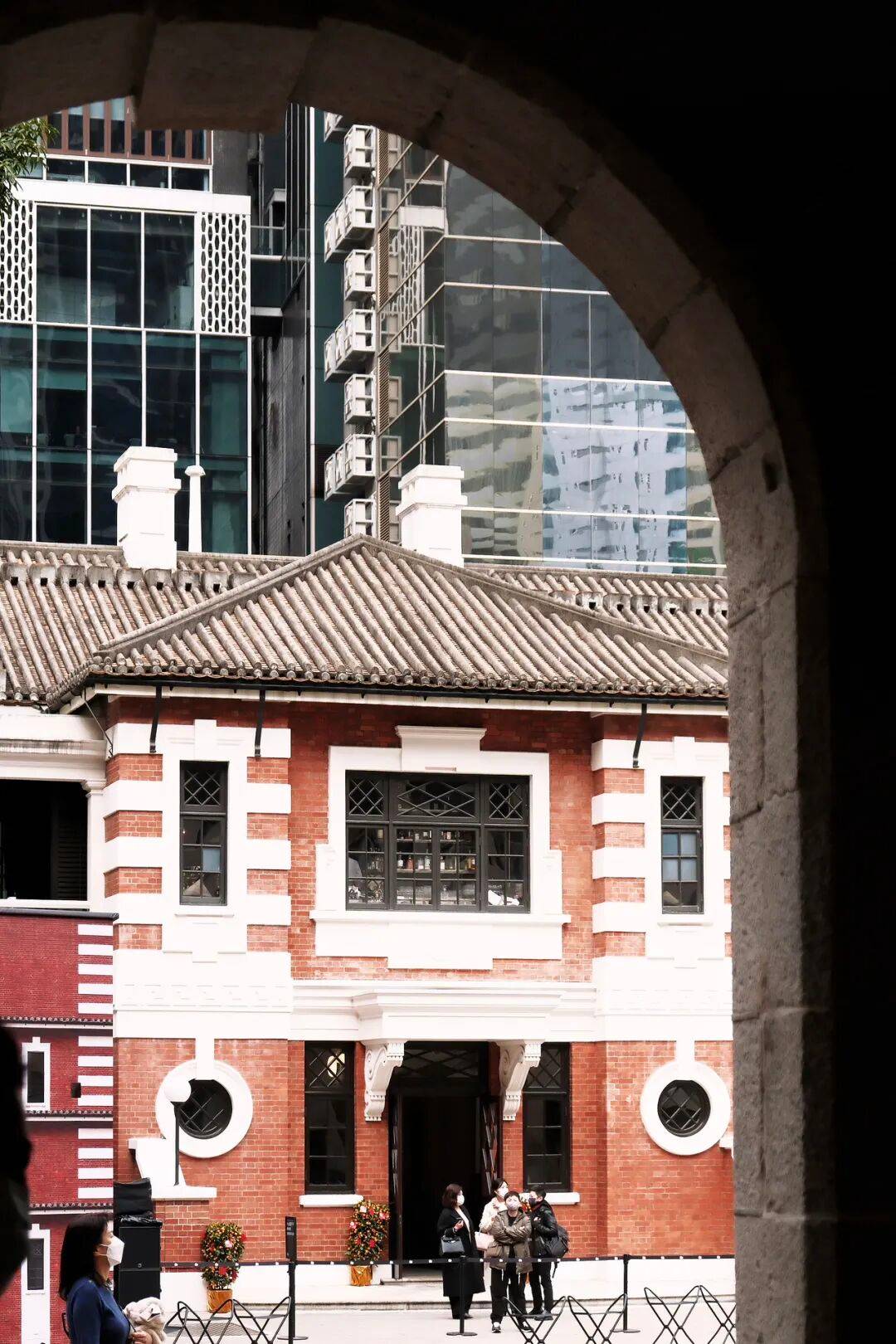
The institution regularly organizes themed exhibitions and events. Now on view is the craft practice of the Tokushima-based BUAISOU studio, which uses a traditional fermentation method to produce natural blue dye and create a dazzling range of blues. Tai Kwun, the restored heritage and arts center, was not completed during the three years when travel was restricted, having opened to the public in 2018, but it received the Award of Excellence in the 2019 UNESCO Asia-Pacific Awards for Cultural Heritage Conservation and remains one of Hong Kong’s most worthwhile cultural landmarks.
Tai Kwun encompasses three declared monuments of Hong Kong: the former Central Police Station, the Central Magistracy, and Victoria Prison. Nearby are many new buildings associated with the Jockey Club, and the whole complex is closely bound up with local Hong Kong history. After its restoration, the historic site became an arts and cultural center. In addition to the heritage buildings themselves, it regularly hosts themed art exhibitions, concerts, circus performances, screenings, and other live events.
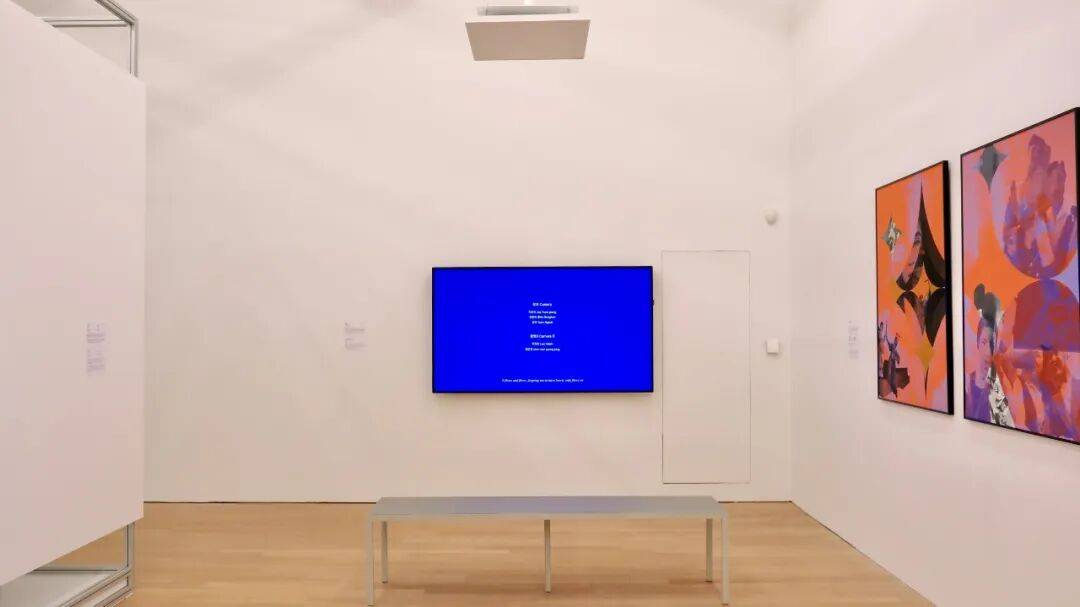
Its current experimental project is Myths Makers-Spectrosynthesis III, curated by Chantal Wong and Inti Guerrero. Turn then to Queen’s Road Central, where the H Queen’s building, named for the avenue on which it stands, has in recent years become a new engine of Hong Kong contemporary art.
In this 24-story tower are gathered many of the most influential blue-chip galleries in the world, facing across less than 1,000 meters to another gallery cluster in Central, the historic Pedder Building. One is modern, the other old; the two stand in counterpoint. In Hong Kong, for visitors and residents alike, the highest efficiency often lies in a one-stop experience. Verticality and efficiency were also the original intentions of the designer William Lam when he conceived this art-and-commerce tower.
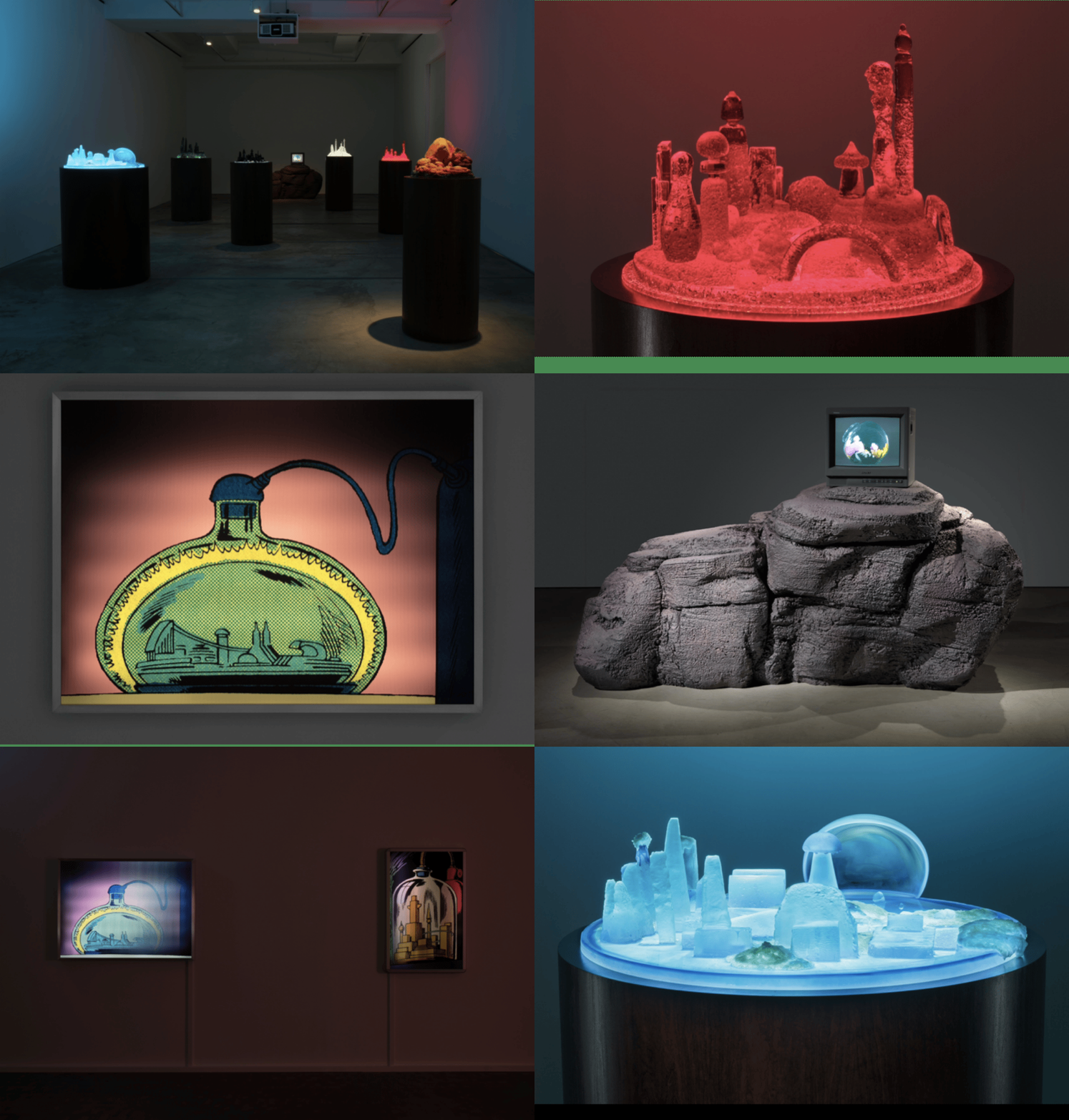
It is not surprising, then, that top galleries long attentive to the Asian market seized the opportunity to move into H Queen’s, while some local galleries also relocated there in search of stronger resources and better opportunities. Hauser & Wirth’s new Hong Kong premises at H Queen’s mark the gallery’s first branch in Asia. On view there now is Subharmonic Orange Abyss, a Mike Kelley exhibition mounted by Hauser & Wirth in Hong Kong in 2023.
Occupying the 15th and 16th floors, the gallery’s high-ceilinged spaces allow artists’ works more room to breathe. The gallery plans to open the Asian market quickly by staging four high-quality exhibitions a year. Its current exhibition is a retrospective of the late American artist Mike Kelley, featuring the largest presentation in China to date of Kandors, one of the most important bodies of work from the later part of his career.
At the entrance to David Zwirner, one encounters Christopher Williams’s German Coke (Ashtray), Manufacturer: E. & A. Böckling, Neudenau 6956, Germany, Production Date 1980-1989, Photographed by Douglas M. Parker Studio, Los Angeles, California, November 26, 2005 (1 & 2), 2005, together with Christopher Williams’s Model: 1421, Model: 2401, Model.
92173, Model 92182 (Discussion) Studio Rhein Verlag, Dusseldorf, January 21, 2017, 2017. The 5th and 6th floors of H Queen’s are home to David Zwirner’s first space in Asia. The gallerist has said that, in addition to introducing the gallery’s existing artists to Asian audiences, the Hong Kong branch is intended to foster collaborations with more artists from China and elsewhere in Asia.
Currently on view at David Zwirner Hong Kong is a solo exhibition by Christopher Williams, a leading figure in contemporary photography and conceptual art. With ordinary objects and familiar scenes, his work uses humor to satirize the fate of photography in consumer society: its reduction to a vehicle for spectacle. The 12th floor houses Pace Gallery. There, the current exhibition is Yin Xiuzhen: Everywhere, photographed by Louise Lo in Hong Kong in 2023.
Before moving into H Queen’s, Pace had spent nearly five years tucked into a much smaller space in the Pedder Building. Its current show is the latest solo exhibition by Yin Xiuzhen, Everywhere, curated by the artist Song Dong, who is also Yin Xiuzhen’s husband; both its form and its content are notably distinctive. Tang Contemporary Art, one of the earliest long-term tenants of H Queen’s, is also represented here by earlier exhibitions including Wu Jingyu’s Water exhibition in Hong Kong in 2022 and You Jin’s Linghui Xiangxing, 2022.
After moving from its space on On Lan Street in Central to the building in 2017, the gallery went on to mount solo exhibitions by artists including Huang Yong Ping and Zhao Zhao. Over the past year, it has devoted greater support to younger artists and women artists, organizing a series of related group shows. Opening on February 10 is a solo exhibition by You Jin, whose works introduce a Cubist mode of looking into classical landscape painting, using signs and shapes to break open pictorial space and produce a strikingly novel viewing experience.
The 7th and 8th floors belong to Whitestone Gallery, whose distinctive design uses wave-like paper forms across the ceiling and walls, giving the space a distinctly Japanese character. Before moving into H Queen’s, Whitestone maintained two comparatively small spaces in Hong Kong, one devoted chiefly to Gutai masters and the other to original works and prints by younger artists. Now on view is a solo exhibition by the Chinese artist Liu Ke, Left Side Is the Sea, at Whitestone Gallery, Hong Kong, 2023.
Last year, the gallery presented solo exhibitions by the Chinese artists Chen Yingjie and Wu Shuang. Among the galleries now in H Queen’s, Pearl Lam Galleries is the only one that also keeps a space in the Pedder Building. Founded by the Hong Kong gallerist Pearl Lam, it has long paid close attention to young artists on the international scene who may not come through conventional academic training, but have emerged with unusual force. One recent exhibition there was Marco Lu’s No Man’s Land, at Pearl Lam Galleries, Hong Kong, 2022.
This year, Pearl Lam Galleries is presenting a solo exhibition by Marco Lu in its Hong Kong space; afterward, Philip Colbert’s Lobsteropolis will travel from Japan to Hong Kong. Any discussion of the fusion of art and commerce in the city has to include K11 MUSEA, the ten-story retail and cultural complex that opened in August 2019.
Entering K11 MUSEA, one encounters a vaulted ceiling reminiscent of an opera house, which deftly draws daylight from outside into the interior. Oversized chandeliers, the design of the escalators and elevators, a giant figurative escalator spanning three floors, and the outdoor garden all bind art and commerce together so closely that the place might be described as one shifting scene after another. Soon to open there is a large solo exhibition by Liu Jianwen; his brightly colored graffiti style and lovable Garden People figures seem to celebrate, alongside the audience, the first spring after reopening. The works include Packaging and Two Figures, 2019, and Let a Hundred Flowers Bloom, 2022.
Back to Hong Kong’s Art World, Three Years Later
Beyond the cultural landmarks already open, March will also bring a move by Phillips, which in its eighth year in Asia will relocate to a new headquarters in the West Kowloon Cultural District, becoming a new neighbor to M+ and the Hong Kong Palace Museum. Phillips will become the first auction house in Hong Kong with permanent exhibition galleries, an auction room, a cafe, and multifunctional VIP spaces. These venues will host exhibitions, salons, conversations, and other events in the future.
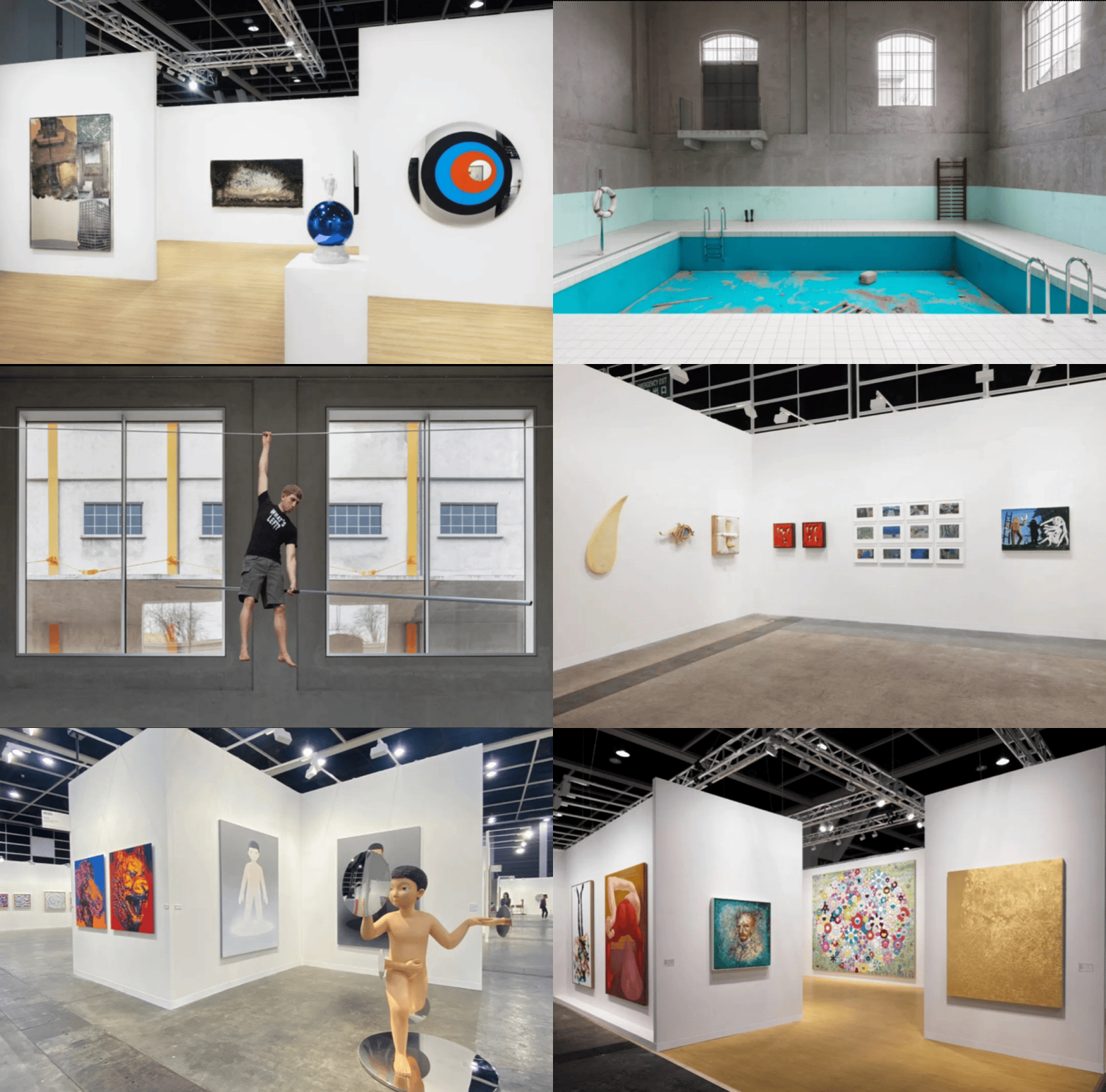
Art Basel Hong Kong has officially announced that it will open on March 23, 2023, and this edition will be its largest since 2019. A total of 177 galleries from 32 countries and territories across Asia, Europe, North and South America, and Africa will participate. Happily, the curated Insights sector is returning, and Encounters, the section devoted to large-scale works, remains a major draw. After the pandemic, the return of all these signature sections at once has left the art world genuinely excited. In 2018, Yu Hong’s work She Left appeared in the Insights sector.
The Hong Kong government has just announced the lifting of entry restrictions and, with a grand gesture, plans beginning in March to give away 700,000 airline tickets to Hong Kong, encouraging people to revisit the Pearl of the Orient after a long absence. It is easy to foresee that this year’s Hong Kong art season will be exceptionally lively. Anticipating the large crowds expected in March, many art institutions have already scheduled exhibitions to coincide with Art Basel Hong Kong. The fair itself was held on site in 2022.
On March 20, K11 MUSEA will open City As Studio, its first large exhibition devoted to graffiti and street art, bringing together more than 100 works by more than thirty artists from China and abroad. The show includes Kaws, AR Sculpture, 2023; Timothy Curtis, Things to Remember, 2019; and Barry McGee, Untitled, 2020. It tells the story of how graffiti and street art, once regarded as forms that could scarcely enter polite cultural company, climbed step by step from New York subway stations and parking lots in the 1970s into the halls of the most authoritative museums.
The more than 100 works on view are substantial, including pieces by Jean-Michel Basquiat, Futura, Barry McGee, Kaws, and Aiko, artists whose work has commanded astonishing prices at auction. As a central event of Hong Kong Art Week, the eighth edition of Art Central will also take place alongside Art Basel Hong Kong.
Art Central 2023 has invited more than seventy galleries from around the world, including participants from Hong Kong, Busan, Johannesburg, New York, Madrid, and Tokyo. The fair ranges from painting and sculpture to mixed-media works and large installations. Talks, video presentations, performances: whatever one expects from an art week, Art Central appears determined not to leave it out. In addition, the opening of Phillips’s new space will coincide with Art Basel Hong Kong, heightening anticipation for its first auction in April.