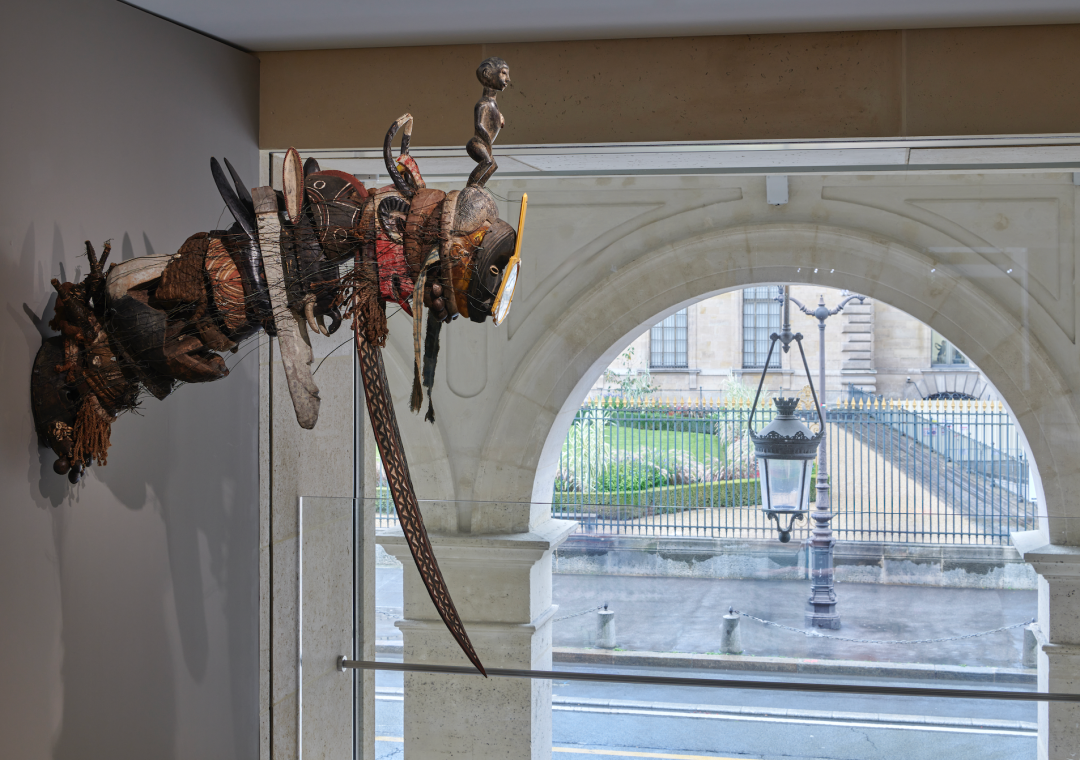
At Place du Palais-Royal, between the Louvre’s dome and the glint of the Seine, a row of glass panes poised between classicism and futurism announces the new home of the Fondation Cartier pour l’art contemporain. There, Jean Nouvel has turned a 1855 Haussmann building into a mutable machine for seeing......
By / Xirui Huang · 15 min read
What are the highlights of the Fondation Cartier’s new Paris museum?
The Fondation Cartier’s new home at Place du Palais-Royal is Jean Nouvel’s transformation of an 1855 Haussmann building. Its 6,500-square-metre interior uses five movable platforms, while the opening exhibition Exposition Générale selects nearly 600 works from a collection of more than 4,500 to trace forty years of commissions and exhibitions.
A New Museum in Paris, and Forty Years of Looking
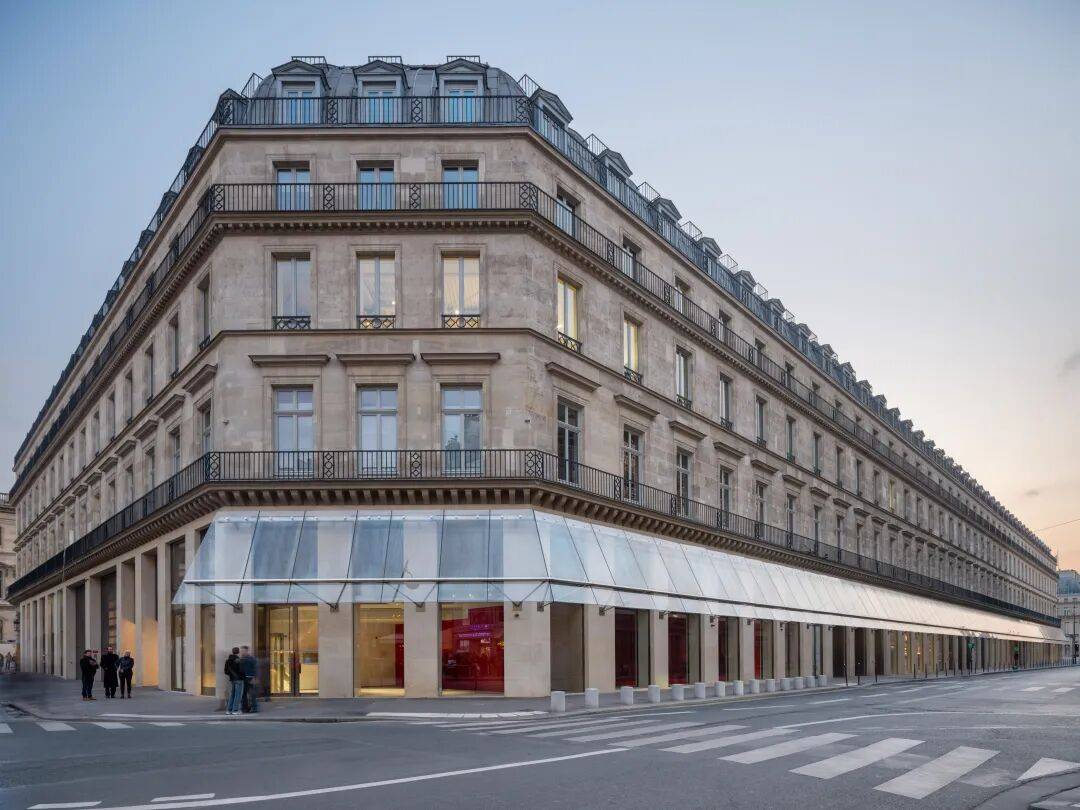
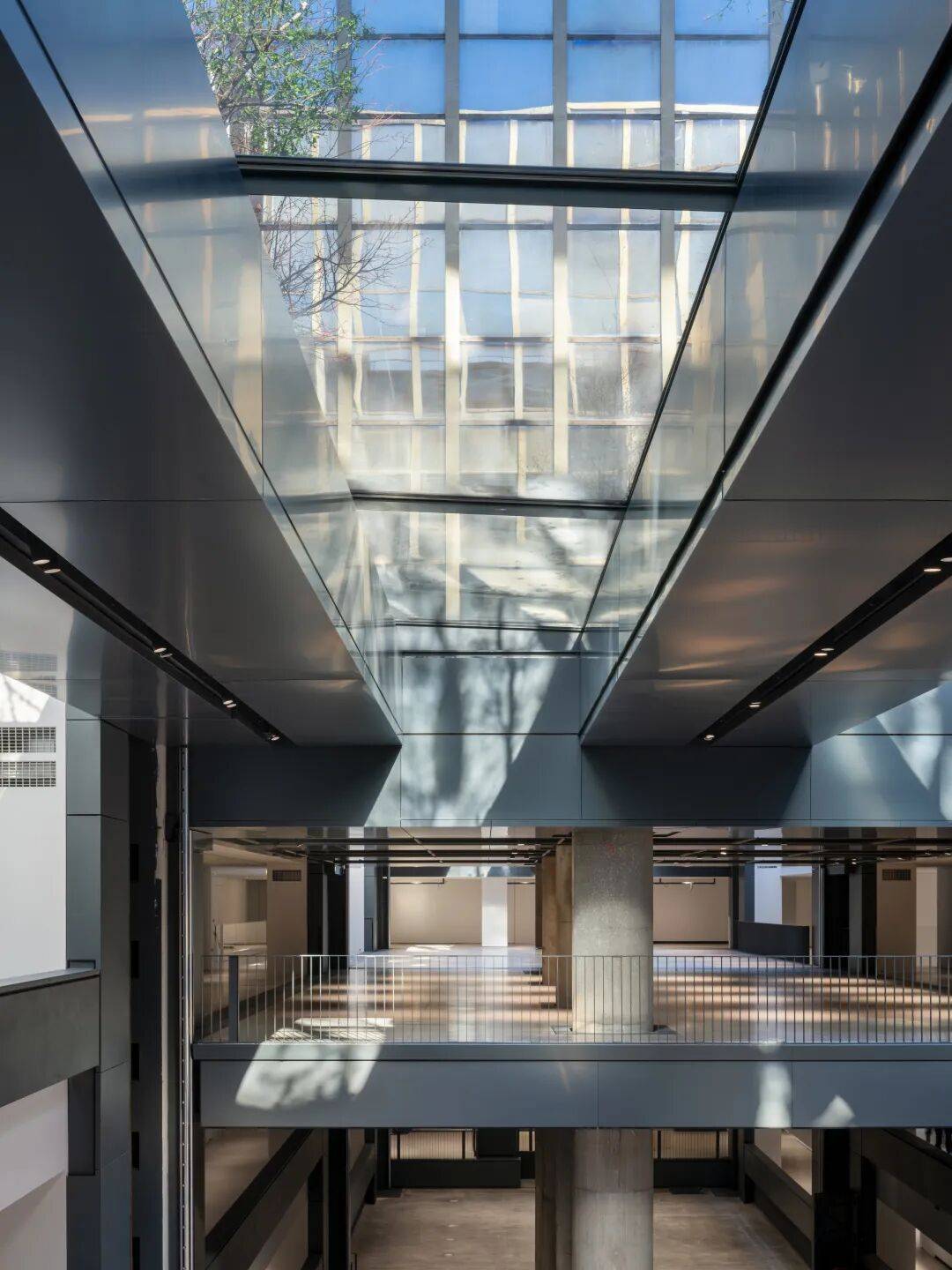
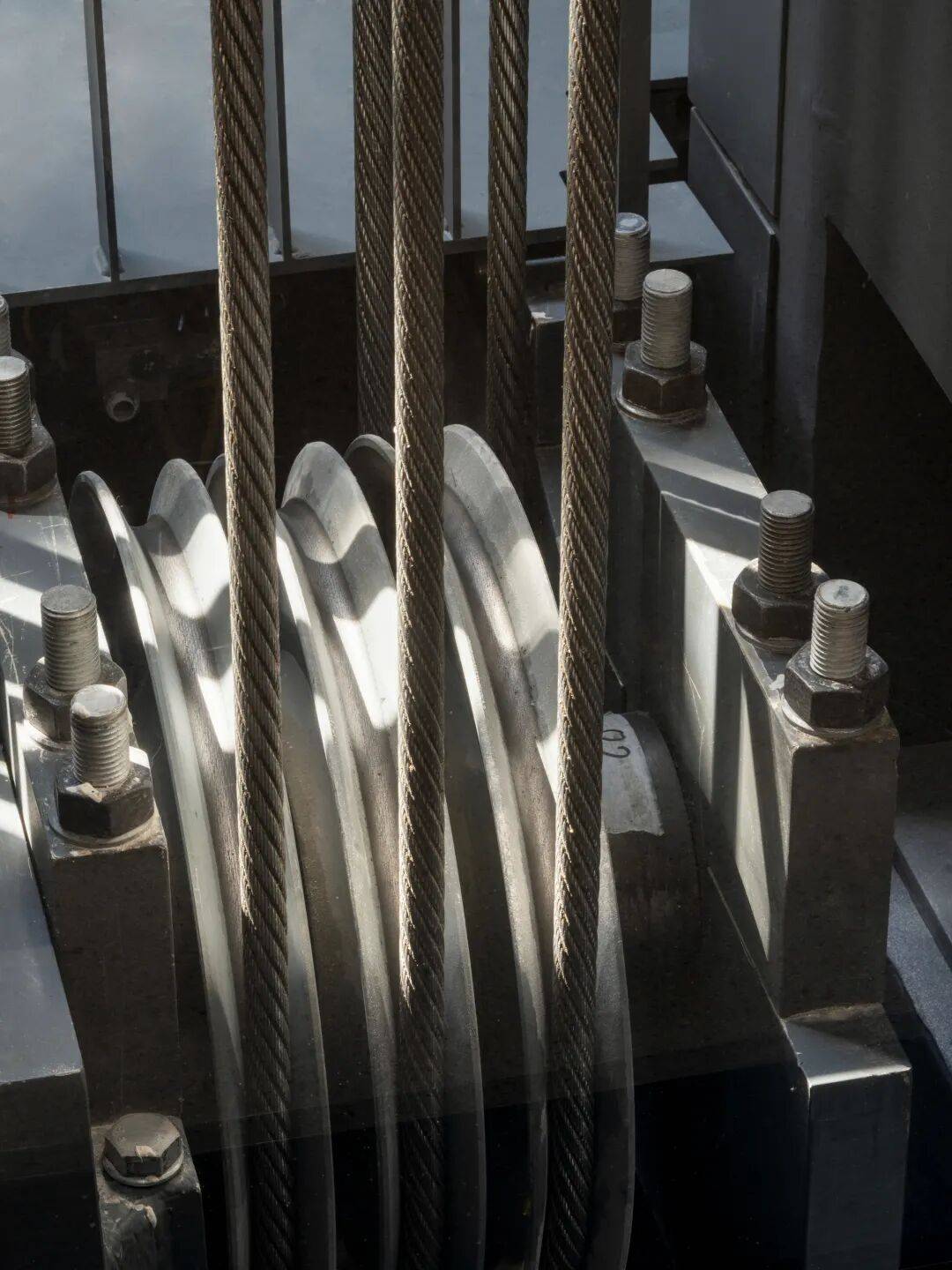
In the heart of Paris, at Place du Palais-Royal, between the Louvre’s dome and the shimmer of the Seine, a row of glass panes poised somewhere between classicism and futurism catches the eye. This is the new home of the Fondation Cartier pour l’art contemporain. The Pritzker Prize-winning architect Jean Nouvel has thoroughly hollowed out this Haussmann building, originally erected in 1855 for the Exposition Universelle. He kept the classical facade and arcades, but transformed the interior into a vast, breathing spatial machine: beneath a glass canopy, an “internal crane” made up of five enormous platforms, steel cables, and pulleys turns the entire hall into a stage that can rise and fall.
Interior of the Fondation Cartier pour l’art contemporain’s new building. Installation view of “Exposition Générale,” the افتتاح-opening exhibition at the Fondation Cartier pour l’art contemporain’s new building, 2025. Photograph by Marc Domage. On October 25, 2025, the new building opened to the public. Its inaugural exhibition presents the most significant commissioned works from the foundation’s forty years: nearly 600 works, with more than one hundred artists reunited in a building that belongs at once to the nineteenth century and to the present. Many of those artists were little known when the foundation first commissioned them; they have since become central figures in contemporary art.
“We have always imagined the foundation as a living organism, not a sealed museum,” the exhibition’s curator, Grazia Quaroni, told us in an interview. “This move is not about staging a nostalgic historical exhibition in a new space, but about using the collection to respond to what is happening in the world now.” Before the exhibition opened, we spoke with Quaroni about the Fondation Cartier’s new building, its new exhibition, and the institution’s forty-year history.
SECTION 01 | 6,500 square meters, 5 lifting platforms completely change the way of viewing the museum
Interior of the Fondation Cartier pour l’art contemporain’s new building. The exhibition brings together works from the foundation’s collection since its founding in 1984. From a total of more than 4,500 works by more than five hundred artists from more than fifty countries and regions, the curatorial team selected nearly 600 especially representative pieces. The scale of the task, and the difficulty of the choices, is hard to overstate.
“There is no chronology in the exhibition, and no division into chapters,” she said. “We did not want to make an encyclopedia. We wanted visitors to feel a world happening all at once.” For her, the key word in contemporary art is “simultaneity”: an artist from the Congo, a painter from Brazil, an architect from France, a photographer from China, all responding to the world at the same moment, ought to be read in the same field, “rather than split up on different floors and in different sections.”
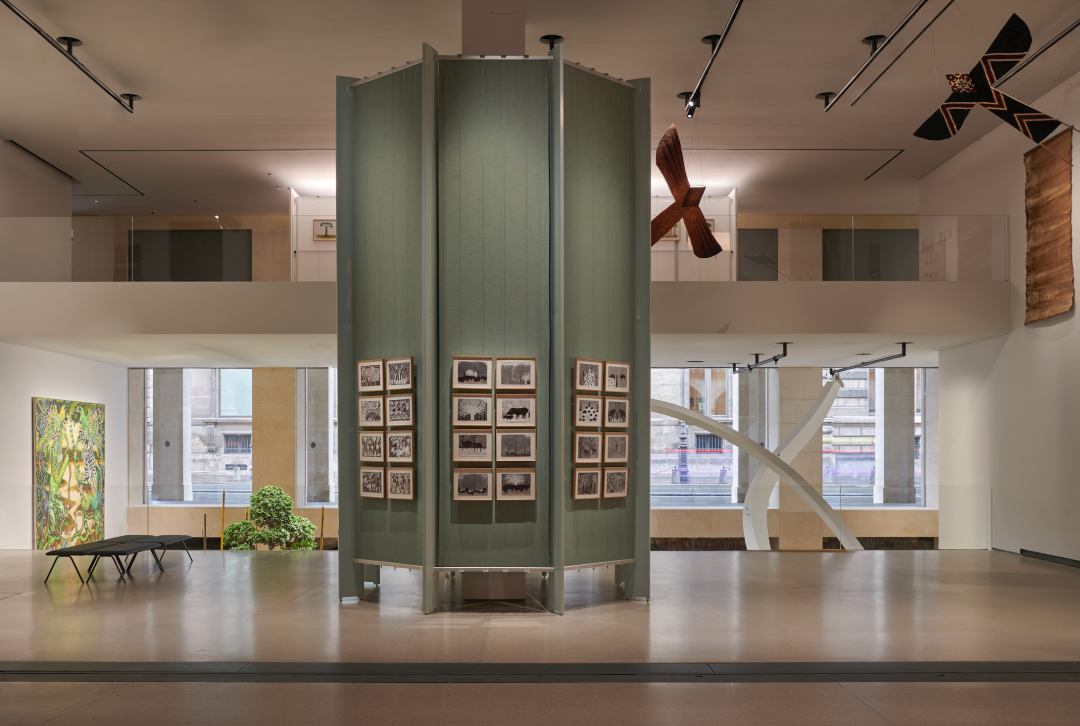
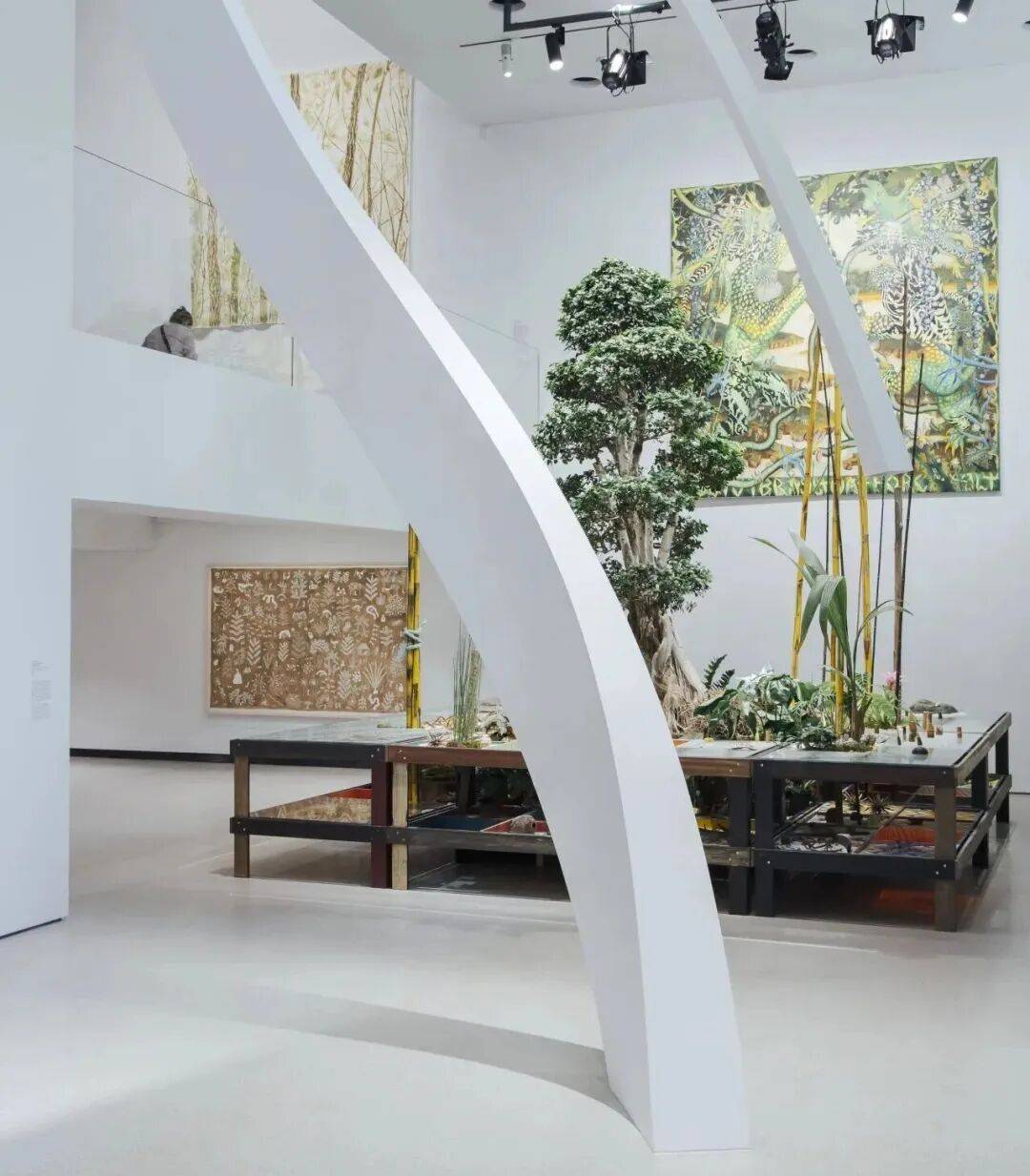
Interior of the Fondation Cartier pour l’art contemporain’s new building. The building Jean Nouvel designed also changes the way we look. There are 6,500 square meters of space, five movable platforms with a combined area of about 1,200 square meters, and ceiling heights that reach as much as 11 meters. Outside, three glass roofs and a 150-meter wall of floor-to-ceiling windows allow daylight and the Paris cityscape to enter the exhibition almost of their own accord. Once you step inside, it becomes difficult to say, in a single sentence, what “floor” you are on; the staggered platforms blur the very idea of floors.
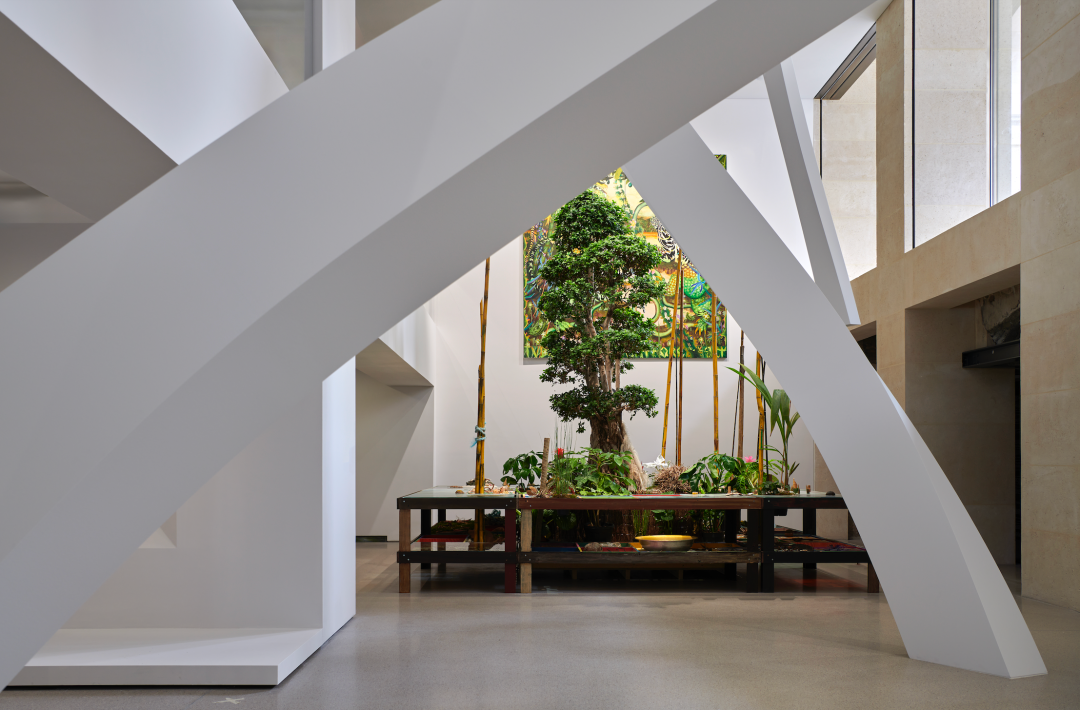
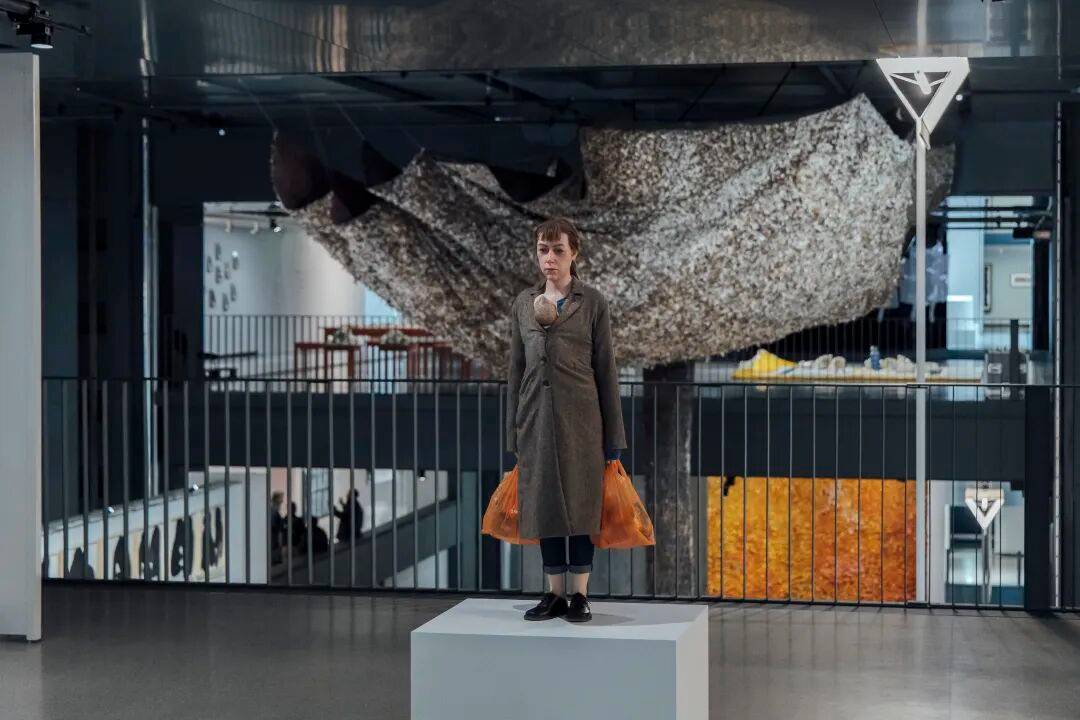
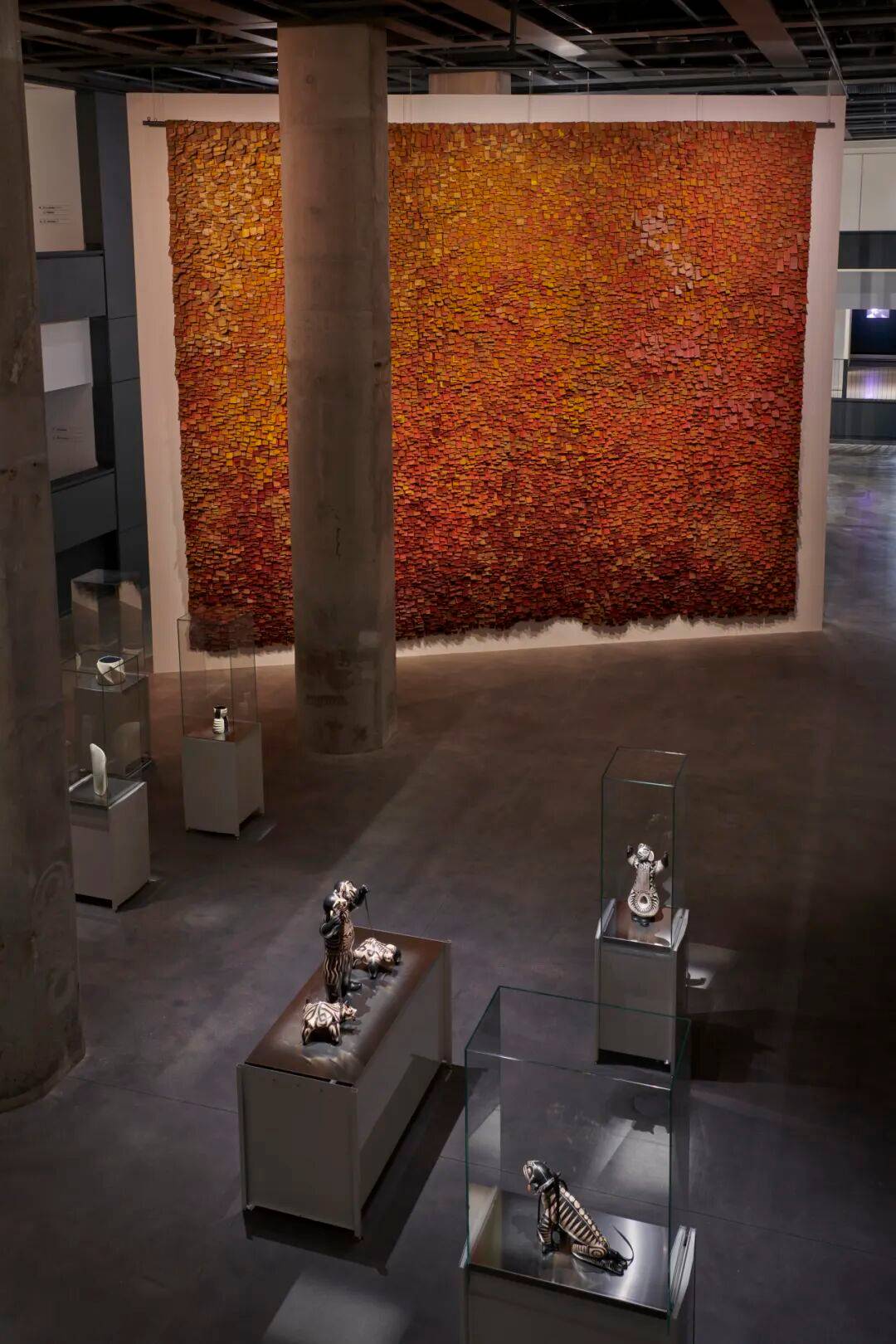
Interior of the Fondation Cartier pour l’art contemporain’s new building. In some sections, the platforms sink close to ground level, and you seem to be walking along a street enclosed by sculpture and installation. In others, the platforms rise to the limit of your sightline, leaving only narrow walkways suspended in the air, and you become an “observer” of the building’s interior space. From Platform 2, works by Ron Mueck, Solange Pessoa, and Olga de Amaral come into view. Photograph by Cyril Marcilhacy. Installation view of “Exposition Générale,” the opening exhibition at the Fondation Cartier pour l’art contemporain’s new building, 2025. Photograph by Cyril Marcilhacy. “This transformable space responds perfectly to our refusal to classify,” Quaroni explained. “When you stand on a platform and look down, you see architecture, nature, technology, craft, and artists speaking different languages all at once. It is very hard to cut them into separate pieces.”
“What you see is a whole, the state of the planet as it is unfolding.” Quaroni told us that the artists were even more excited than the curatorial team. “They say, ‘I’ve never shown work in a place like this before!’” That also means that Ron Mueck’s sculptures of the human body can be encountered from above, at eye level, and from below, offering three ways of knowing a body. Sarah Sze’s fragmentary installations extend into the gaps between the platforms, as if spreading across different dimensions.
Installation view of “Exposition Générale,” the opening exhibition at the Fondation Cartier pour l’art contemporain’s new building, 2025. Photograph by Cyril Marcilhacy. A mythological painting from the Amazon hangs beside an installation by Annette Messager; farther off, a flying-machine model by Panamarenko seems to hover in the air. The most interesting thing is that the arrangement does not feel like juxtaposition. The works simply seem to belong there, answering one another, forming a kind of three-dimensional narrative.
Speaking of this “multidirectional viewing,” Quaroni said, “A lot of works of art have only one viewing angle, but not here. You see work A extending beneath work B, and work C almost responding to the sound of work D. The space makes every work more complex and more open.” She placed particular emphasis on the word “complex.” For her, the real force of contemporary art lies not in offering clear answers, but in presenting the complexity of the world.
And this building creates the conditions of space for that complexity. Installation view of “Exposition Générale,” the opening exhibition at the Fondation Cartier pour l’art contemporain’s new building, 2025. Photograph by Marc Domage. Follow a winding staircase downward and you enter the most spectacular space in the building: a fully opened subterranean gallery, 11 meters high. Light here comes from a glass skylight that rises three stories. Shadows cast by the various platforms and steel beams cut the light into sharp geometric forms, falling across the floor, the works, and the visitors.
SECTION 02 | Four chapters, nearly 600 works, a real "big exhibition"
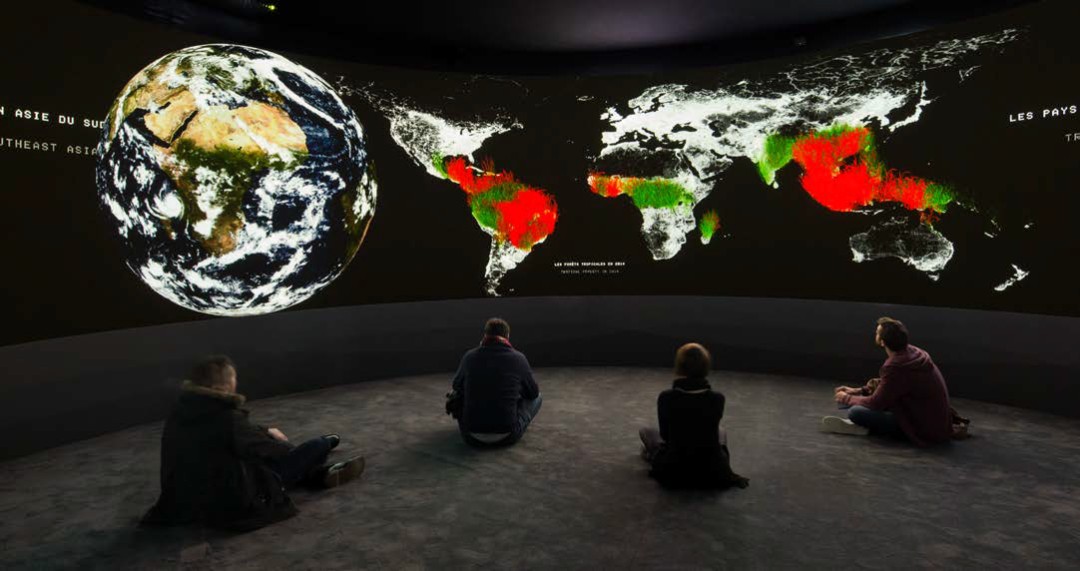
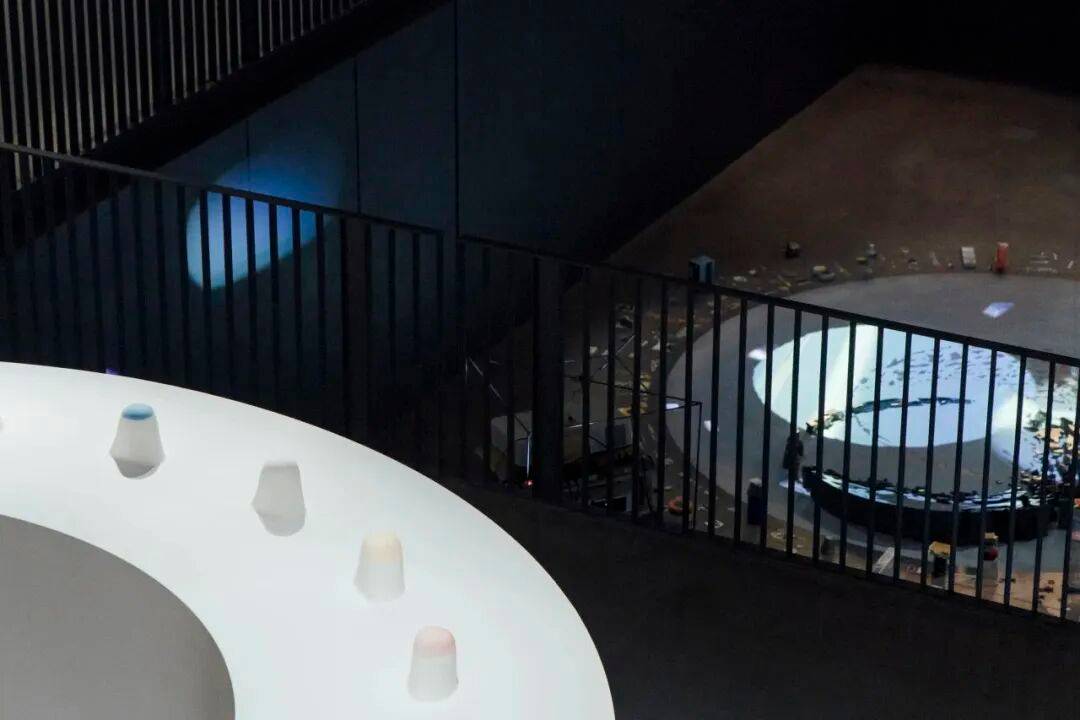
Diller Scofidio + Renfro, in collaboration with Mark Hansen, Laura Kurgan, Ben Rubin, Robert Gerard Pietrusko, and Stewart Smith, “EXIT,” 2008–2015, immersive audiovisual installation based on a concept by Paul Virilio; installation view at Palais de Tokyo, 2015; collection of the Fondation Cartier pour l’art contemporain. The space is at once like a factory, a stage, and a church without religion.
Bill Viola’s slow-moving video magnifies the movement of light and shadow. The vast data wall of “EXIT” resembles a pulse chart for the world. Solange Pessoa’s cave-like sculptures seem, in the dark, like breathing life-forms. And the pioneering bioacoustician Bernie Krause created a sound installation for the new building, “Without Crickets There Is No Night,” weaving field recordings from 5,000 hours of natural soundscapes into an acoustic environment that turns the underground space into an immersive sonic forest.
A New Museum in Paris, and Forty Years of Looking
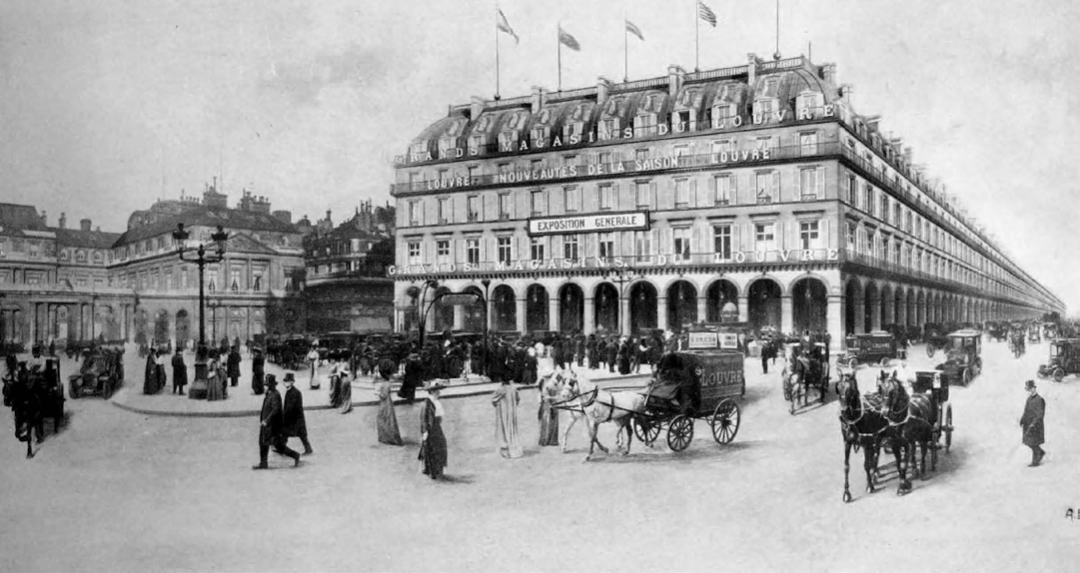
When Quaroni spoke of the lower level, her tone suggested that she was letting us in on a tremendous secret. “The light is never the same here. Three in the afternoon and five in the evening are two different worlds. When some artists first came to the site, they said, ‘I want to live here forever.’” She laughed. Installation view of “Exposition Générale,” the opening exhibition at the Fondation Cartier pour l’art contemporain’s new building, 2025. Photograph by Marc Domage. The title of the exhibition, Exposition Générale, which sounds faintly old-fashioned, comes directly from the building’s previous life.
At the end of the nineteenth century, this was one of Paris’s earliest department stores: the Grands Magasins du Louvre. Grands Magasins du Louvre, 1880. Exterior of the Fondation Cartier pour l’art contemporain’s new building. Quaroni told us, “When we were researching the building’s history, we found an old photograph with a huge ‘Exposition Générale’ sign hanging on the facade.”
“At that moment, we felt that the title itself carried the spirit of an era. Through those comprehensive exhibitions, Parisians of the nineteenth century first realized that they were living in a modern world surrounded by commodities, images, and new technologies.” The foundation’s decision to use this old term for an exhibition about the contemporary is both a tribute to the building’s history and a rewriting of the experience of exhibition-going today. From the display of goods to the presentation of art, from the glass windows of a department store to the transparent facade of an art foundation, the building has witnessed the emergence and transformation of exhibition-making as a way of urban life.
Installation view of “Exposition Générale,” the opening exhibition at the Fondation Cartier pour l’art contemporain’s new building, 2025. Photograph by Marc Domage. The exhibition is organized into four sections that run through forty years of the foundation’s exhibition history: “Machines d’architecture,” “Etre nature,” “Making Things,” and “Un monde réel.”
The first section, “Machines d’architecture,” takes architecture not as a subject from architectural history, but as a mode of thinking about the world. Many of the works respond directly to changes in public space, the built environment, and urban planning. Installation view of “Exposition Générale,” the opening exhibition at the Fondation Cartier pour l’art contemporain’s new building, 2025. Photograph by Cyril Marcilhacy. In “The Small Chapel,” for instance, Alessandro Mendini plays with scale through a miniature universal church, upending sensory perception and blurring the boundaries among art, design, and architecture.
In “Valley Chapel,” the architect Junya Ishigami tries to break free of convention, imagining a future in which nature and architecture have almost dissolved into one another. The sculptor Bodys Isek Kingelez’s “extreme model,” “Kinshasa: Project for the Third Millennium,” together with Mamadou Cissé’s meticulously rendered aerial cityscapes, sketches a utopian urban vision of progress, one that reveals both architecture’s deep effect on social organization and the power latent within the individual.
Installation view of “Exposition Générale,” the opening exhibition at the Fondation Cartier pour l’art contemporain’s new building, 2025. Photograph by Marc Domage. Guillermo Kuitca’s works draw on theaters, cities, and geographic structures. He paints seating charts from auditoriums onto mattresses, abstracts city streets into lines, and folds the order of space into a kind of emotional cartography. Installed along a vertical axis visible across three levels, these works read like a form of structural poetry.
Raymond Hains’s photographs record the scaffolding, construction barriers, and “temporary state of the city” during the building of the Louvre Pyramid. Shown at Place du Palais-Royal, they unexpectedly form a kind of submerged thread in the architectural history of Paris.
“Architecture is not a theme. It is a way of seeing the world. Every artist reorganizes space in his or her own way. Some spaces are architectural, some are bodily, some are imaginary,” Quaroni said of this section of the exhibition. Installation view of “Exposition Générale,” the opening exhibition at the Fondation Cartier pour l’art contemporain’s new building, 2025. Photograph by Cyril Marcilhacy. The second section, “Etre nature,” turns to a subject the foundation has long sustained: forests, animals, plants, and ecosystems.
From early exhibitions devoted to animals to more recent large-scale projects on trees and forests, a clear line runs through the collection. Suspended in the center of the gallery is “Miracle,” a monumental installation by Solange Pessoa made from thousands of bird feathers. The work carries spiritual and shamanic resonances, inviting viewers into the wild, animal core of human experience. Claudia Andujar’s black-and-white photographs document the lives, rituals, bodies, firelight, and nights of the Yanomami in the Amazon. Shown together with paintings by members of the Yanomami community, they present both the crisis of disappearance facing Indigenous people in the northern Amazon and their struggle to protect the culture of their land.
SECTION 03 | Forty years, an ever-expanding art world
Robert Adams’s photographs capture not only the sweeping beauty of the American West, but also the wounds left by industrial expansion, consumerism, and pollution. Installation view of “Exposition Générale,” the opening exhibition at the Fondation Cartier pour l’art contemporain’s new building, 2025. Photograph by Cyril Marcilhacy. The third section, “Making Things,” places ceramics, textiles, comics, craft objects, painting, and sculpture side by side.
“In our collection, there is no hierarchy between ‘high art’ and craft. Materials and techniques are simply different languages artists use to speak about the world,” Quaroni said. Indeed, woven art occupied a substantial place in the foundation’s early collection, even though many people at the time did not consider it art at all. Andrea Branzi’s “Pavilion,” installed beneath Platform 5, is a roofless square structure enclosed by slender steel rods, expressing his idea of architecture as fragile and diffuse, with flexibility and permeability in place of rigid structure.
Installation view of “Exposition Générale,” the opening exhibition at the Fondation Cartier pour l’art contemporain’s new building, 2025. Photograph by Marc Domage. Set against it is the large-scale “Red Wall” by Olga de Amaral, whose exhibition was the last held at the foundation’s former building last year. The work reflects her exploration of the occupation of space. Since the late 1960s, her practice has gradually moved beyond the constraint of hanging on a wall, becoming instead a set of autonomous, movable elements.
Jean-Michel Othoniel, who not long ago had a solo exhibition at the Long Museum in Shanghai, has given new life to glass sculpture. His knots, arches, and springs made of glass beads keep changing hue in the natural light of the new building; they appear weightless, yet carry a palpable spatial gravity. Damien Hirst and Joan Mitchell, through experimental means, also depict nature through painting actions charged with energy.
Installation view of “Exposition Générale,” the opening exhibition at the Fondation Cartier pour l’art contemporain’s new building, 2025. Photograph by Cyril Marcilhacy. The fourth section, “Un monde réel,” explores the relationship among science, fiction, and artistic creation. Scientists, philosophers, anthropologists, shamans, mathematicians: in the foundation’s exhibitions and publications, such figures often appear alongside artists to discuss forests, the cosmos, artificial intelligence, climate change, and other subjects.
“We have always tried to reconnect different forms of knowledge, so that art can become a site for interdisciplinary discussion,” she said. Installation view of “Exposition Générale,” the opening exhibition at the Fondation Cartier pour l’art contemporain’s new building, 2025. Photograph by Marc Domage. Diller Scofidio + Renfro’s immersive installation “EXIT,” created in 2008, is a characteristic example of this section.
Based on an original concept by the philosopher Paul Virilio, the work uses data gathered by scientists to map patterns of migration driven by economic, political, and climatic forces. For this opening exhibition, the artists specially updated the installation’s data. Across the four sections, these dimensions permeate one another like a spectrum in space: you may find yourself in an area devoted to forests and suddenly come upon a model of urban high-rises; in a gallery centered on technology and moving images, you may chance upon a small corner of ceramics and textiles.
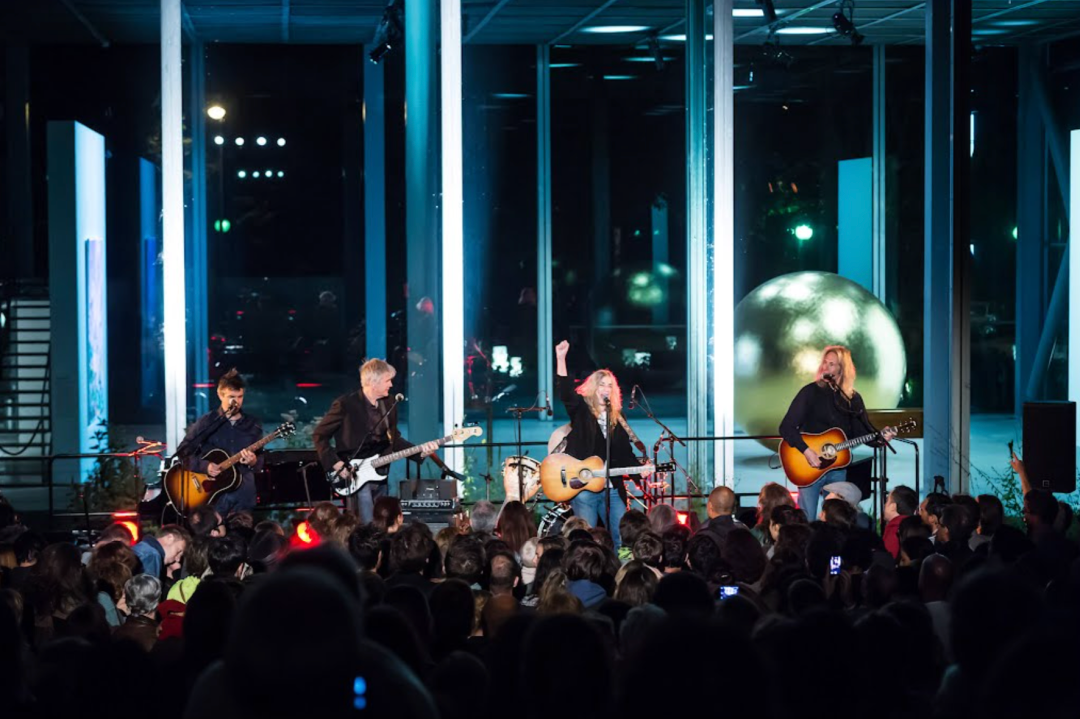
Installation view of “Exposition Générale,” the opening exhibition at the Fondation Cartier pour l’art contemporain’s new building, 2025. Photograph by Marc Domage. Within the weave of the four major sections, the curatorial team has also created small solo or two-person displays for several artists with whom the foundation has maintained long relationships. In the vast openness of the exhibition hall, these “quiet rooms” offer viewers moments of pause and intimacy. Among them are many familiar names: Matthew Barney, James Turrell, Vija Celmins, Patti Smith.
“They are like solo passages within an ensemble, reminding us that the basis of the foundation’s collection has always been its relationship with particular artists,” Quaroni said. Installation view of “Exposition Générale,” the opening exhibition at the Fondation Cartier pour l’art contemporain’s new building, 2025. Photograph by Marc Domage. “As we prepared the opening exhibition for the new site, we realized that we were not trying to tell a ‘finished’ story. On the contrary, what we saw were countless lines, countless directions, all of them still extending outward.”
“These artists are different from one another, and they work in different languages, but together they form a kind of diversity that we value deeply, an open, continuously growing energy,” Quaroni told us. The remark is almost a gloss on the foundation’s forty years. At the moment of 2025, it is impossible to speak about art without confronting the great pressures of the present: the acceleration of climate change, the incursion of data and technology, the redefinition of the city, global migration and movement, the rethinking of postcolonial narratives, the return of Indigenous knowledge systems, the restructuring of the relationship between artificial intelligence and human beings.
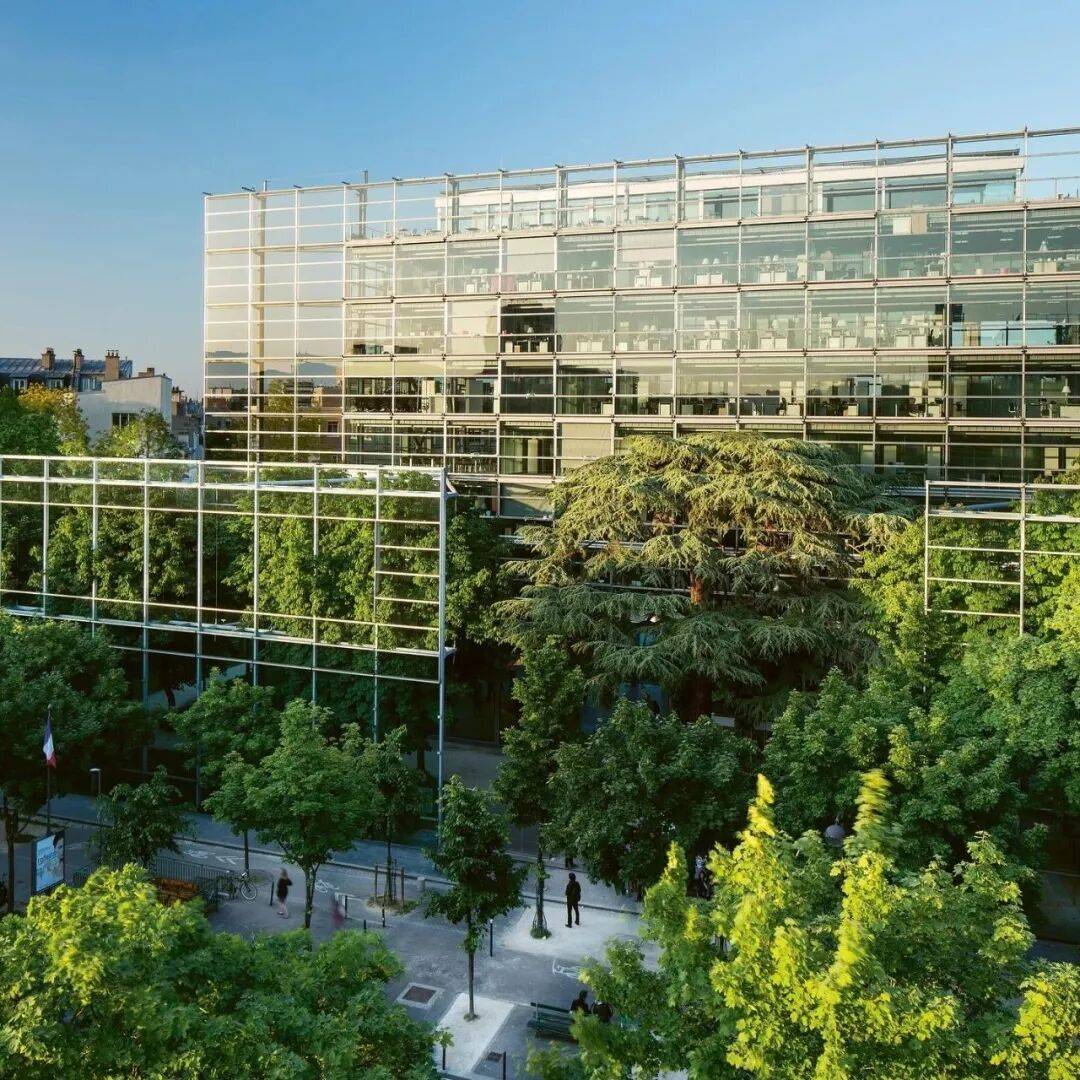
Exterior of the Fondation Cartier pour l’art contemporain’s former site at 261 Boulevard Raspail. For many people, the Fondation Cartier pour l’art contemporain is almost synonymous with the glass building at 261 Boulevard Raspail: a transparent curtain wall wrapped in greenery, with no clear boundary between the galleries and the garden. This building, also designed by Jean Nouvel, has been a landmark on the map of contemporary art since it opened in 1994.
But lengthen the timeline, and the foundation’s history begins a decade before that building. Fondation Cartier pour l’art contemporain, Château de Montcel, Jouy-en-Josas, 1984. In 1984, Alain Dominique Perrin founded the Fondation Cartier pour l’art contemporain, just after French law had formally established that corporations could support culture. Before that, corporate collections were generally decorative and internal. The foundation, as a public form, had almost no precedent.
As one of the earliest art foundations, however, Cartier had no model to follow. The institution first settled at the Château de Montcel in Jouy-en-Josas, outside Paris, a private residence with a classical garden: a greenhouse, old buildings, lawns, but no professional exhibition hall. Jean-Pierre Raynaud, “Le Pot doré,” 1985, commissioned especially for the estate. Chéri Samba in residence at the Château de Montcel in 1990. Precisely because there was no standard model, those early exhibitions were more like a laboratory. They still bore the exploratory character of art institutions in the 1980s, with photography, painting, sculpture, and design exhibited side by side.
Some artists who have since become major figures in international art history were first seen in that setting, which barely resembled a museum at all: the legendary Malian portrait photographer Seydou Keïta; J. D. ’Okhai Ojeikere, who turned Nigerian hairstyles into spatial geometry; Chéri Samba, a pioneering painter from the Congo; and Jivya Soma Mashe, an emblematic figure of Warli art in India, among others.
“From the outset, our collection was not built to chase the market. It took shape gradually around exhibitions,” Quaroni said. “Most of the works were commissioned for specific exhibitions, or accumulated over time through long relationships.” Views of past exhibitions at the Fondation Cartier pour l’art contemporain: Olga de Amaral exhibition; Damien Hirst exhibition. Ten years later, in 1994, the foundation moved to 261 Boulevard Raspail.
That building, which seemed almost to have no walls, quickly became one of the most recognizable contemporary art spaces in the world. Transparent and open, it was a place into which weather, garden, shadows, plants, light, and the daily street scene could all enter. It was also during this period that three major directions of the foundation’s work came clearly into focus: breaking down boundaries between mediums and disciplines, so that photographers, architects, designers, scientists, and philosophers could meet within a single exhibition; following certain subjects over the long term, including forests and trees, Indigenous worldviews, animal-human coexistence, and the ethics of technology and images; and trying to make exhibitions, publications, lectures, and performances together form an ecosystem of knowledge and imagination.
Views of past exhibitions at the Fondation Cartier pour l’art contemporain: David Lynch exhibition; to celebrate an anniversary of the Fondation Cartier, the “godmother of punk,” Patti Smith, performed at the foundation in tribute to Artavazd Pelechian, Joan Mitchell, and James Lee Byars; Matthew Barney exhibition. The filmmaker David Lynch, the “sculptor of light” James Turrell, and Matthew Barney, known for his transgressive performance art, all had solo exhibitions at the foundation during this period.
“For us, ‘good art’ has never been defined by a style or a price list,” Quaroni said. “It has more to do with a practice that maintains an honest relationship with the world. Whether the artist is young or already famous, what matters to us is whether they can propose a new perspective.” Installation view of “Exposition Générale,” the opening exhibition at the Fondation Cartier pour l’art contemporain’s new building, 2025. Photograph by Cyril Marcilhacy. Installation view of “Exposition Générale,” the opening exhibition at the Fondation Cartier pour l’art contemporain’s new building, 2025. Photograph by Marc Domage. And this seemingly conservative Haussmann building that we see now actually represents a highly experimental undertaking in the history of contemporary architecture in Paris: a museum that is always open, always changeable.
Platforms, walkways, glass, light, the urban view: these elements can be recombined in countless ways, and the building is continuously rewritten through the ways artists and curators use it. As new exhibitions keep unfolding in this mutable space, the place may keep reminding us that art is never a fixed conclusion, but an ongoing way of asking questions. It asks us to imagine again how to live with others, with nature, with the city, and with the long span of time.