Ding Yi’s Latest Major Solo Exhibition: Looking Back on Thirty Years of Work in the South of France
Provence is at its most beautiful in July, when its purple lavender fields are in bloom. Ding Yi’s first major retrospective in the South of France, “Ding Yi: Signs and Portents,” is devoted to Château La Coste, an estate of more than 200 hectares in Provence......
By / Xirui Huang · 7 min read
What is Ding Yi’s Appearance of Crosses series, and how did it interact with nature at Château La Coste?
Ding Yi’s Appearance of Crosses series uses cross-shaped marks to explore structure and color in abstract painting. His 2024 exhibition Signs and Portents at Château La Coste in Provence presented around thirty paintings alongside the installation Wind House, with works dating from 1988 to shortly before the show. In conversation with Xirui Huang, Ding Yi explains how the paintings respond to sunlight, water and greenery in Oscar Niemeyer’s transparent gallery, and how travel sketches and sustained studio work inform his practice.
Provence is at its most beautiful in July, when its purple lavender fields are in bloom. Ding Yi’s first major retrospective in the South of France, “Ding Yi: Signs and Portents,” is devoted to Château La Coste, an estate of more than 200 hectares in Provence.
“My work is in a transparent space where paintings are not often exhibited. The space is completely connected to the natural world outside, and there is a pool in front of the gallery. It is very distinctive and full of movement.” On the day the exhibition opened, Ding Yi, who had just finished installing the show, spoke to us with excitement about this special journey to the South of France. Works of art are scattered throughout Château La Coste. The winery where Ding Yi is presenting this solo exhibition is no ordinary estate.
Ding Yi’s Latest Major Solo Exhibition: Looking Back on Thirty Years of Work in the South of France
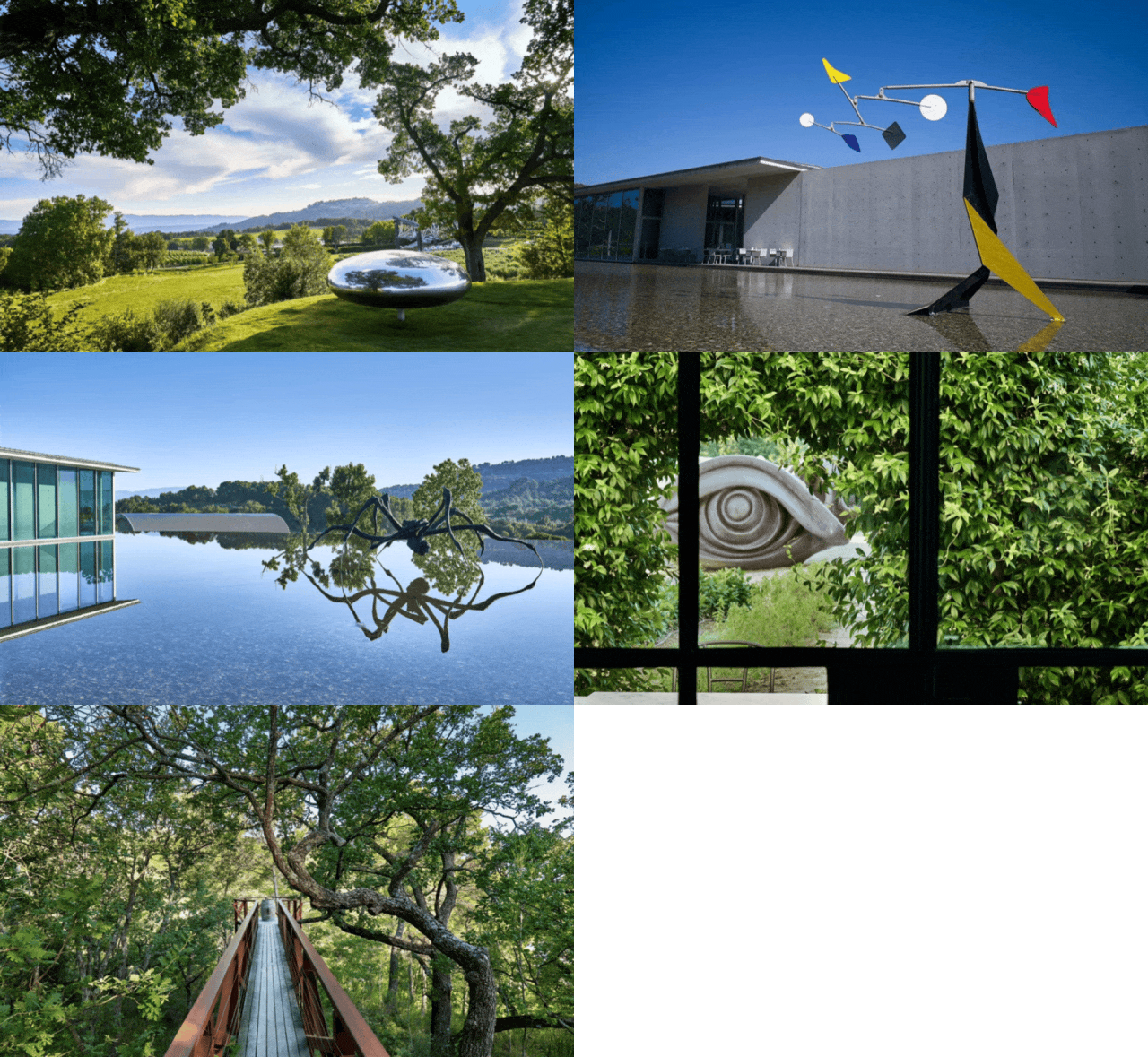
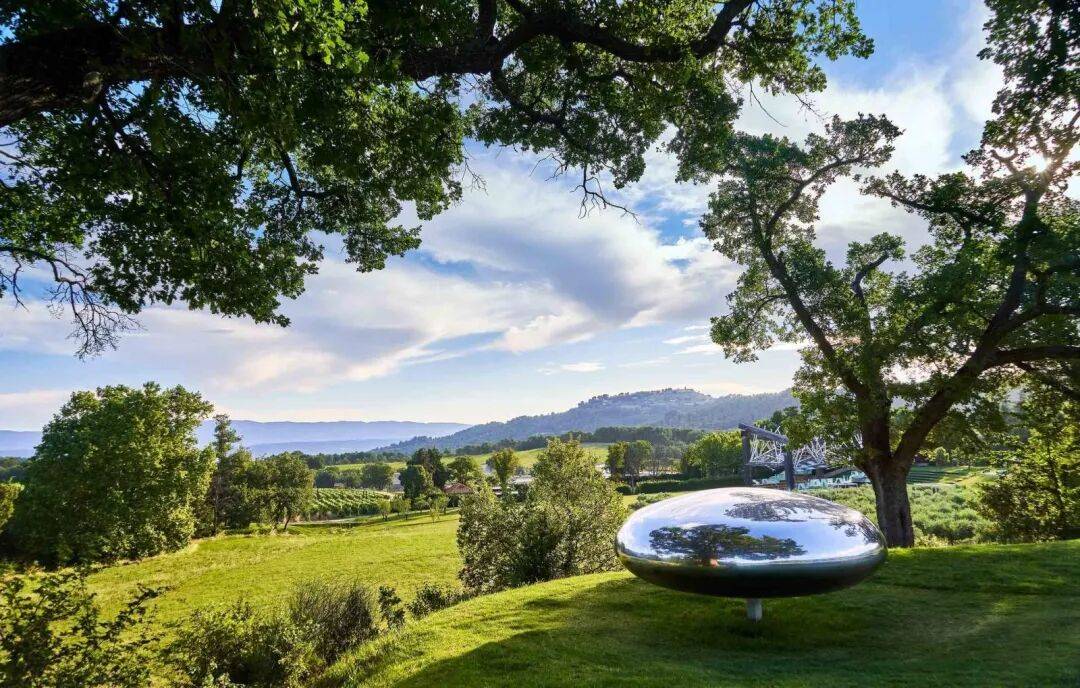
The estate has a long history, dating back to the Roman period. Over the past decade or so, an increasing number of internationally renowned architects and contemporary artists have shown their work here. Many of the estate’s buildings were designed by Tadao Ando, Jean Nouvel, Frank Gehry, Oscar Niemeyer, and others. Its outdoor permanent sculptures and installations include Louise Bourgeois’s “Spider,” Sean Scully’s two large “Wall of Light” works, Tracey Emin’s installation “Self-Portrait,” Lee Ufan’s “House of Air,” and Alexander Calder’s kinetic sculptures.
At Château La Coste, contemporary art and architecture are seamlessly integrated with nature and history. “Ding Yi: Signs and Portents,” 2024. The gallery housing Ding Yi’s work was designed by Oscar Niemeyer and stands at the center of the estate.
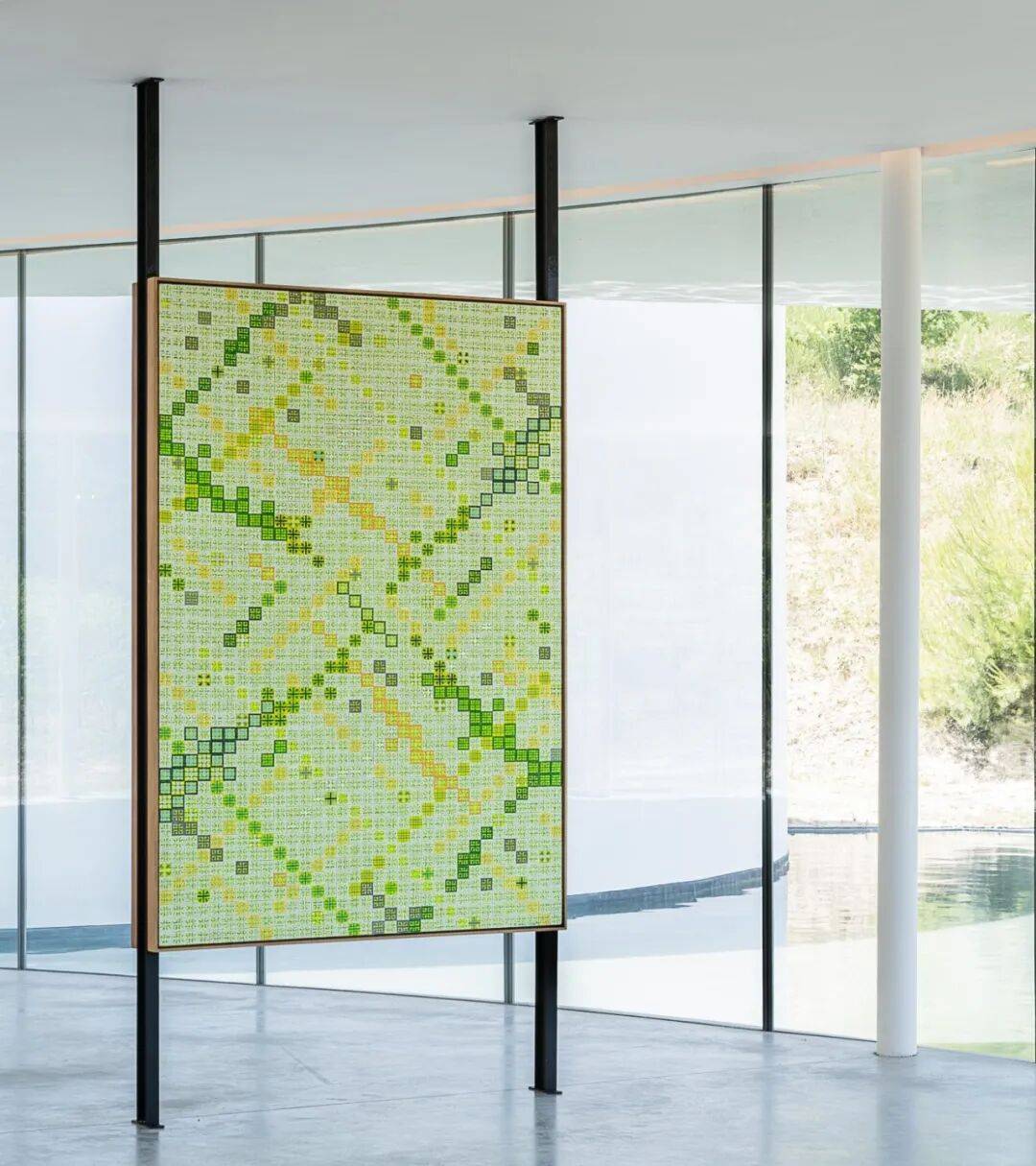
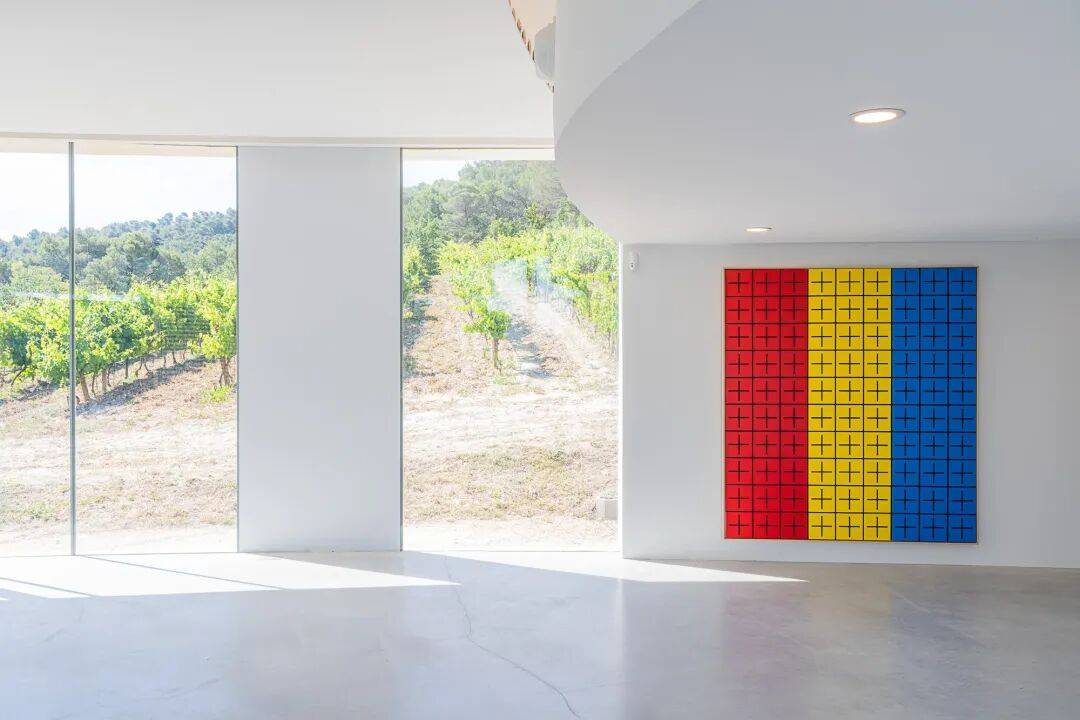
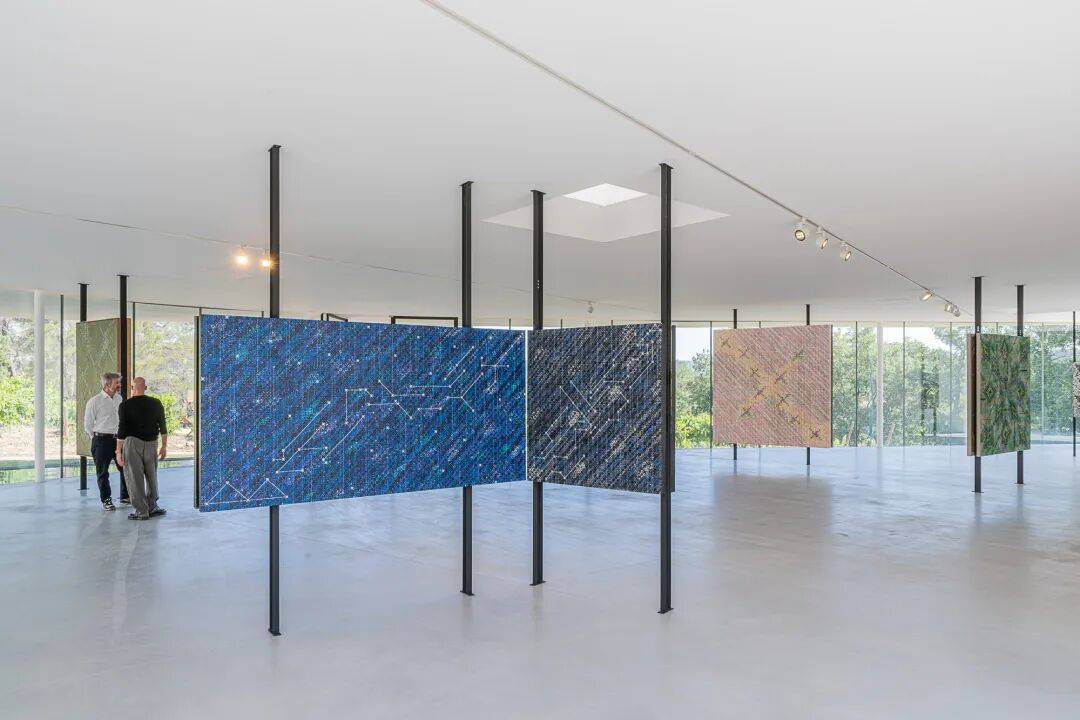
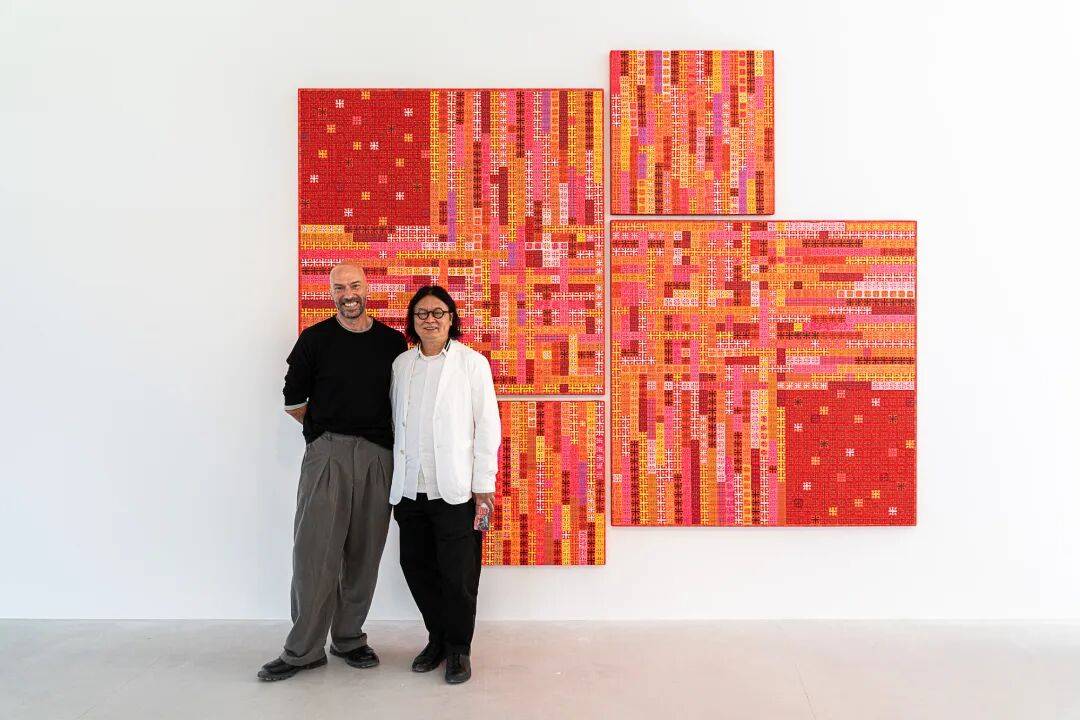
The gallery is almost entirely transparent. Brilliant sunlight pours in through large floor-to-ceiling windows on every side and through the skylight, while shimmering water and dense greenery surround the building. The exhibition space is not large, but its open, meandering structure gives Ding Yi ample room to present his work and the arc of his practice. From the Appearance of Crosses series, made over the past thirty years, he and the curator selected about thirty works on canvas, wood panel, and paper, along with the installation “Wind House.”
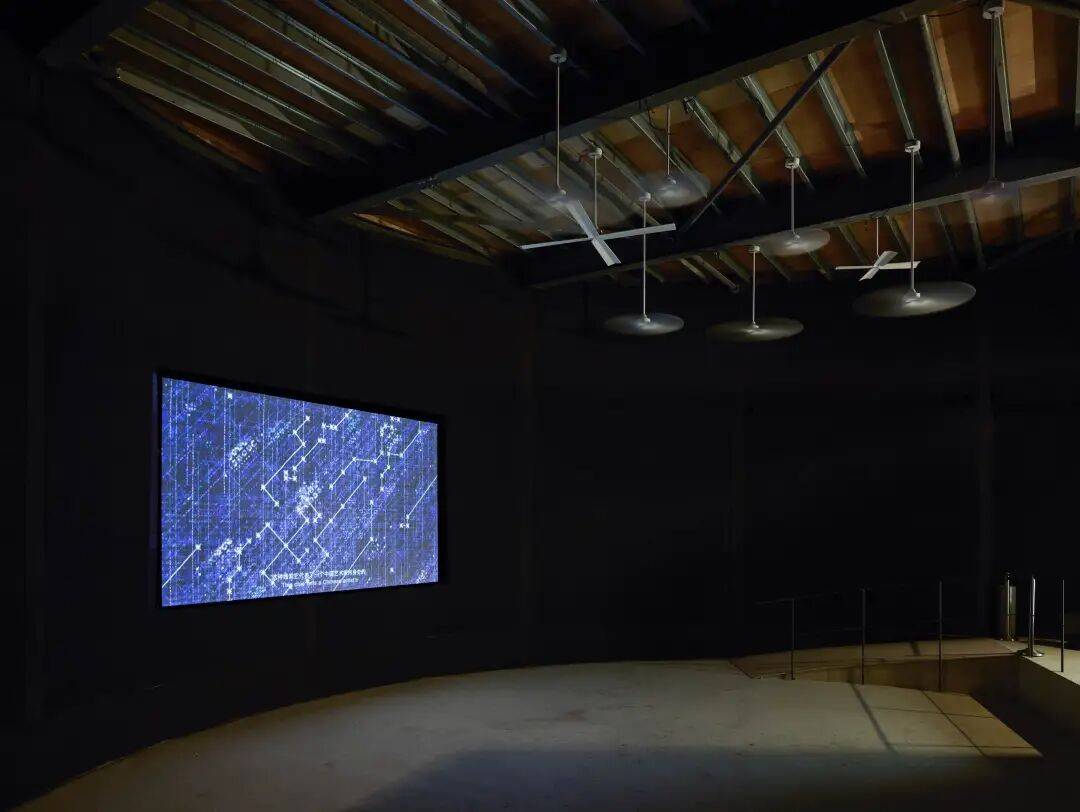
The video playing on site is a documentary about Ding Yi.
“The earliest work in the exhibition was made in 1988—the first ‘Cross’ work. The most recent was made three months ago, and this is its first presentation,” Ding Yi told us. “Ding Yi: Signs and Portents,” 2024. Ding Yi’s exhibitions have rarely presented paintings in this way, with the works mounted on frames. The longer one spends in the gallery, the more this arrangement begins to feel not only novel but also like an invitation to move repeatedly through the artist’s more than thirty-year career: the visual center shifts again and again, then returns.
SECTION 02 | There are art estates everywhere and you can’t finish them in one day.
While installing the exhibition with its curator, Alfredo Cramerotti, Ding Yi was delighted to discover that “we chose the right gallery.”
“The gallery’s transparent space is full of movement, and it interacts with the works and the surroundings. The works I am showing include red and green. The green works echo the vegetation outside the glass, while the red ones create a strong contrast.”
“At the time, there were several venues to choose from on the estate. I chose Oscar Niemeyer’s building because it is completely integrated with nature. In the past, it was used mainly for large-scale sculpture, and paintings were rarely shown there. But I think that the more difficult a gallery is for exhibiting paintings, the more you can discover its particular character when you use it for that purpose.” Ding Yi answered our question about the way the paintings were displayed.
“Ding Yi: Signs and Portents,” 2024. After the installation was complete, Ding Yi said that everyone, including the curator, was excited.
“For an artist, a completed exhibition is actually waiting for a moment—to be tested or reviewed. But you inevitably have some expectations about how it will appear. Personally, I feel very good about this exhibition. I think this unusual presentation will feel fresh to the audience.” Even when exhibiting in different countries, he does not want to emphasize his identity as a “Chinese artist.”
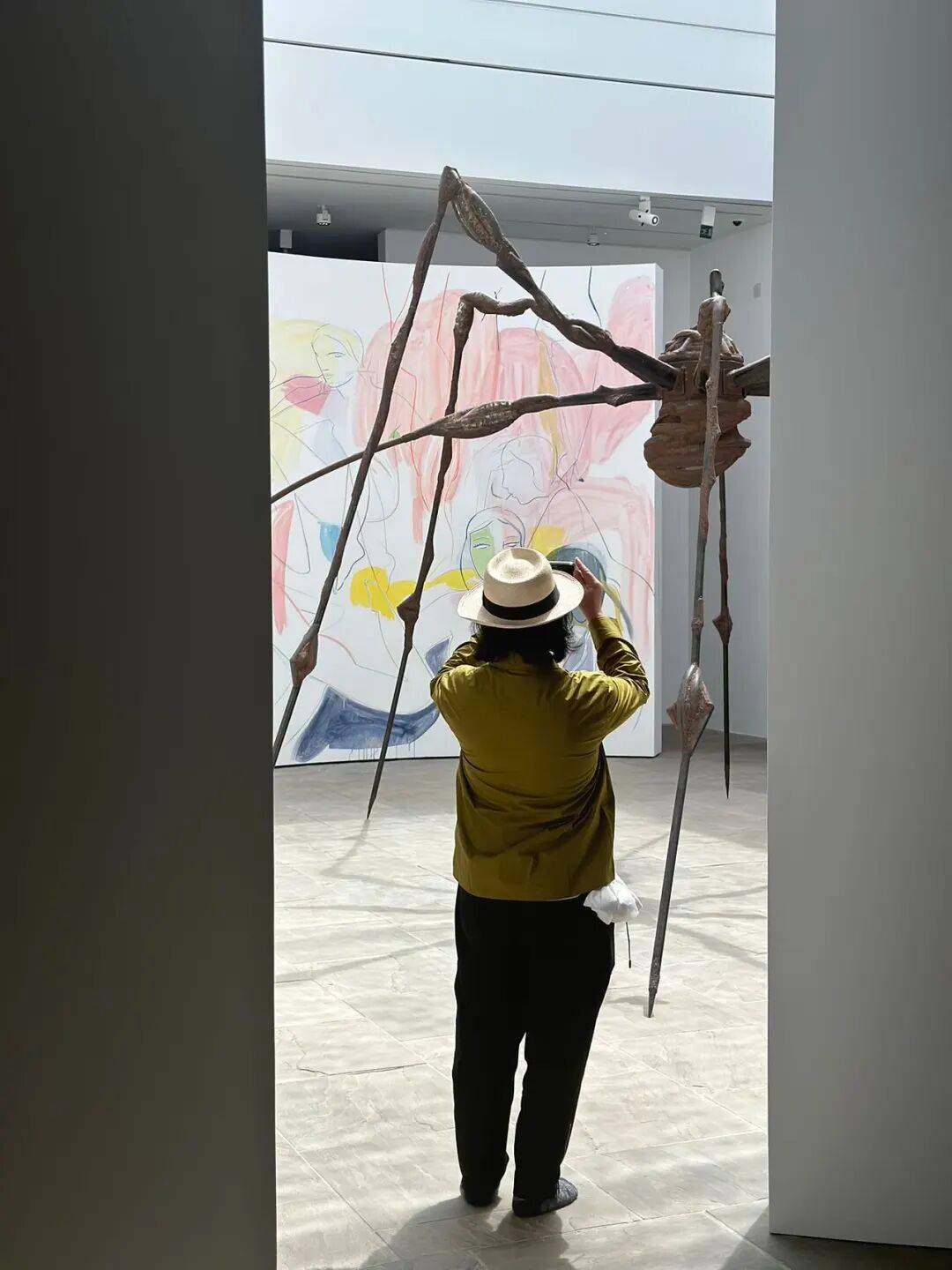
“My artistic aim is not merely to tell viewers that I am an artist from China. I hope my identity remains somewhat ambiguous; it is enough for viewers to think that you are a good artist.” Ding Yi before Louise Bourgeois’s “Spider,” 2024. Sean Scully, “Wall of Light,” 2007. On the morning before the opening of his solo exhibition in the South of France, Ding Yi arrived at Château La Coste.
Recalling his first impression, he still seemed excited. He said he had been immediately captivated by the natural scenery and the atmosphere of art. Château La Coste contains more than 40 large-scale sculptures and installations distributed across the grounds, as well as five exhibition spaces and a concert hall, all created by celebrated architects and artists. Among the outdoor sculptures, Ding Yi told us, Bourgeois’s “Spider” made a particularly strong impression on him, as did Sean Scully’s two very large works.
Tadao Ando, “Small Chapel,” 2011, Château La Coste. He also visited the small chapel on a low hill, which Ando redesigned from an old church that had stood on the site.
“Although it is very small in scale, it has a powerful spirituality. The treatment of light inside the church is natural and profound,” Ding Yi told us. Lee Ufan, “House of Air,” 2014, Château La Coste. He also visited Lee Ufan’s “House of Air.”
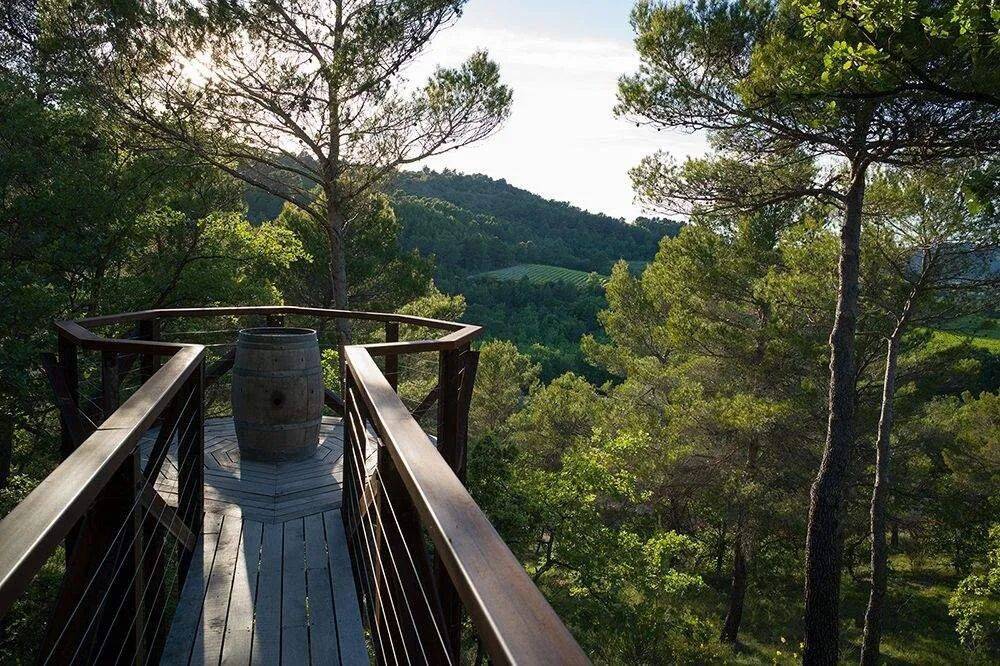
“House of Air” stands at the end of an inconspicuous path behind the vineyards. The stones at the entrance, a signature element of the artist’s language, came directly from the estate. Outside, gravel covers the ground and has been sprayed with white paint; inside, by contrast, the small building is pitch-black, with only a faint halo of light filtering through the ceiling. Tom Shannon, “Drop,” 2009. Tracey Emin, “Self-Portrait: Cat Inside a Barrel,” 2013. How did an old winery become connected with contemporary art?
SECTION 03 | 'Retirement is Impossible'
The credit goes to Paddy McKillen, the Irish property tycoon. He bought the entire estate in 2002 and spent nine years working with artists and architects from around the world to transform the winery into a destination for leading contemporary art and architecture, bringing nature and culture together. The property magnate, whose aesthetic judgment is strongly oriented toward art, commissioned Tadao Ando to design the entrance and art center, invited Jean Nouvel and Renzo Piano to create the wine cellars, and had Frank Gehry contribute the estate’s music pavilion.
Alexander Calder, “Small Crinkly,” 1976. Hiroshi Sugimoto, “Mathematical Model 012: Surface of Revolution with Constant Negative Curvature,” 2010. Richard Rogers, “LA GALERIE,” 2003. In recent years, the five exhibition spaces at Château La Coste have hosted solo exhibitions by leading contemporary artists including Anselm Kiefer, Yoshitomo Nara, and Roni Horn, as well as major presentations of legendary artists such as Andy Warhol, Jean-Michel Basquiat, and Giacometti.
Ding Yi also remarked to us, “The grounds are so large that you probably couldn’t see everything in a single day.” Ding Yi visiting museums in the South of France. Ding Yi at the Lee Ufan Arles museum in the South of France. “July really is the best season in Provence. Many people come to the South of France for their holidays. Yesterday I ran into lots of visitors who had come specifically to enjoy themselves,” Ding Yi said with a laugh. Because he was presenting a solo exhibition, he had become a tourist himself.
After the exhibition opened successfully, Ding Yi arranged an approximately five-day trip through the South of France to visit local museums, learn about the region’s history, and spend time in nature.
“Of course, in just these two days, I have already fully experienced the sunlight and color that people associate with the South of France,” he said. Ding Yi in the intense sunlight of the South of France. “The sunlight here is so strong,” Ding Yi said. “We know that many artists in history, whether Cézanne or Van Gogh, changed their styles in relation to the sunlight of the South of France. I think this is what people mean by the expression of southern color and sunlight.” He told us that he always carries a sketchbook and a box of water-based colored pencils when he travels. “I like observing things while traveling.
“Last night, I got back to my hotel room very late, but I still made a small drawing in the sketchbook I carry with me.” Ding Yi’s drawing was a nighttime view in the mountains, inspired by the ride back to the hotel after dinner.
“I watched the darkness reveal a road under the headlights, so I drew an image combining the glow of the headlights, the road, the vegetation, and other elements. Making sketches is a habit accumulated day by day. It has now become a way of working, a way to understand myself and take stock of myself.” Ding Yi visiting museums in the South of France. “Sometimes a huge painting can take three or four months. When it is finally finished, it feels as though a great battle has come to an end—as if all my energy and strength have been exhausted in the painting.”
Ding Yi said with a laugh. Even so, his plans for the coming months remain dauntingly full. After the South of France project ends, he has exhibitions planned in Cologne, Germany; Paris, France; and Switzerland. In September, he will have another exhibition in Seoul, South Korea, held concurrently with Frieze. Next February, he will travel to the United Kingdom’s Mostyn for another major solo exhibition. Ding Yi visiting museums in the South of France. When we drew a sharp breath and asked whether exhibition projects pushed his ideas forward or whether his steady stream of ideas generated the exhibitions—in other words, the “which came first, the chicken or the egg?” question—Ding Yi laughed and said, “Actually, they work on each other, because an exhibition plan may already have been finalized a year in advance. What I have to do is keep working, with a balance between exertion and rest.”
Finally, when we asked whether he might someday feel exhausted and want to retire, Ding Yi answered emphatically: “Retirement is impossible!” Perhaps, as the title of this exhibition in the South of France, “Ding Yi: Signs and Portents,” suggests, “portents” also express his expectation of himself: to remain forever on the road—so long as life continues, so does the work. Some images courtesy of Château La Coste, Ding Yi Studio, and Timothy Taylor Gallery. Images of Ding Yi’s exhibition courtesy of Stéphane ABOUDARAM @wearecontents.