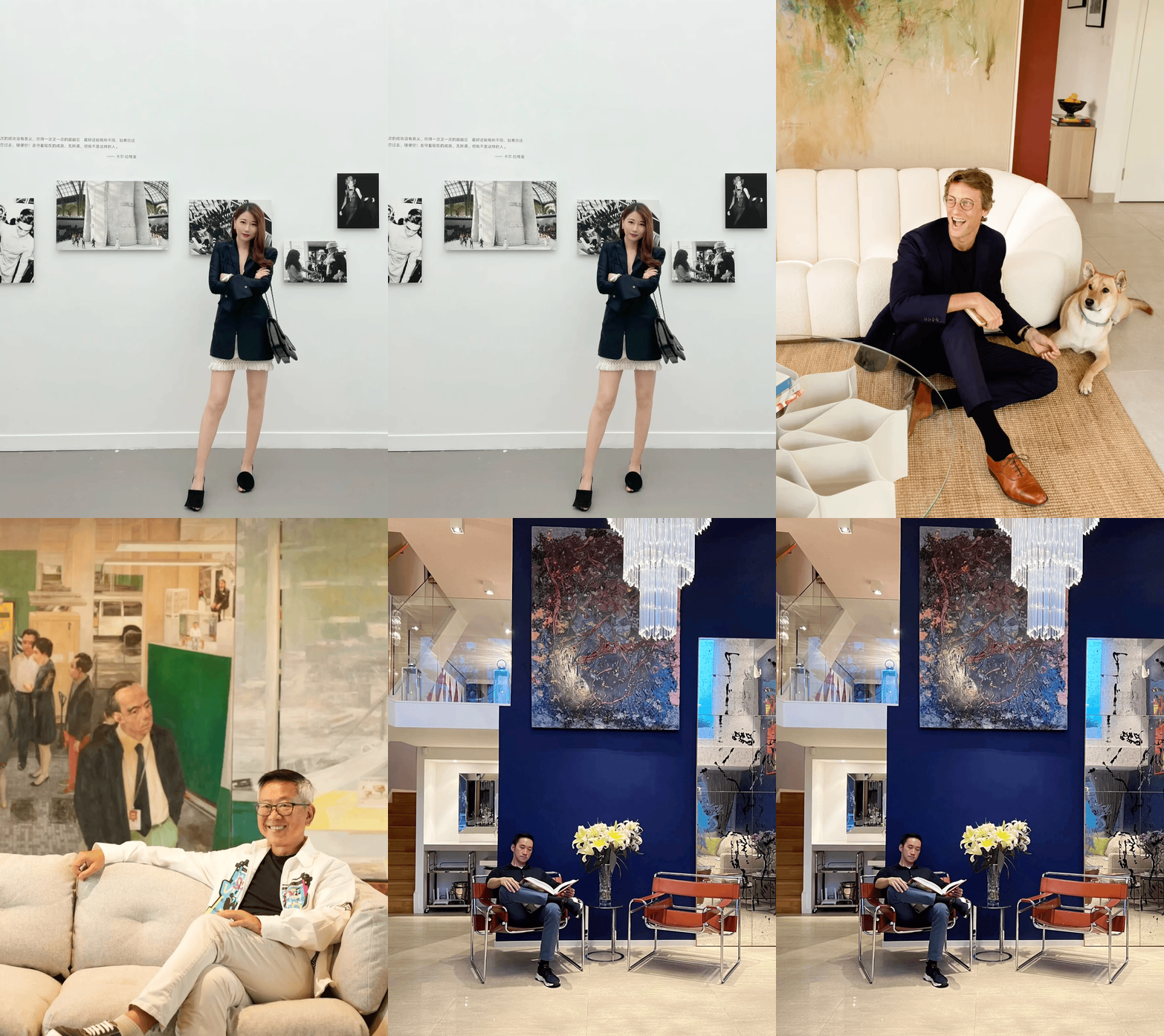
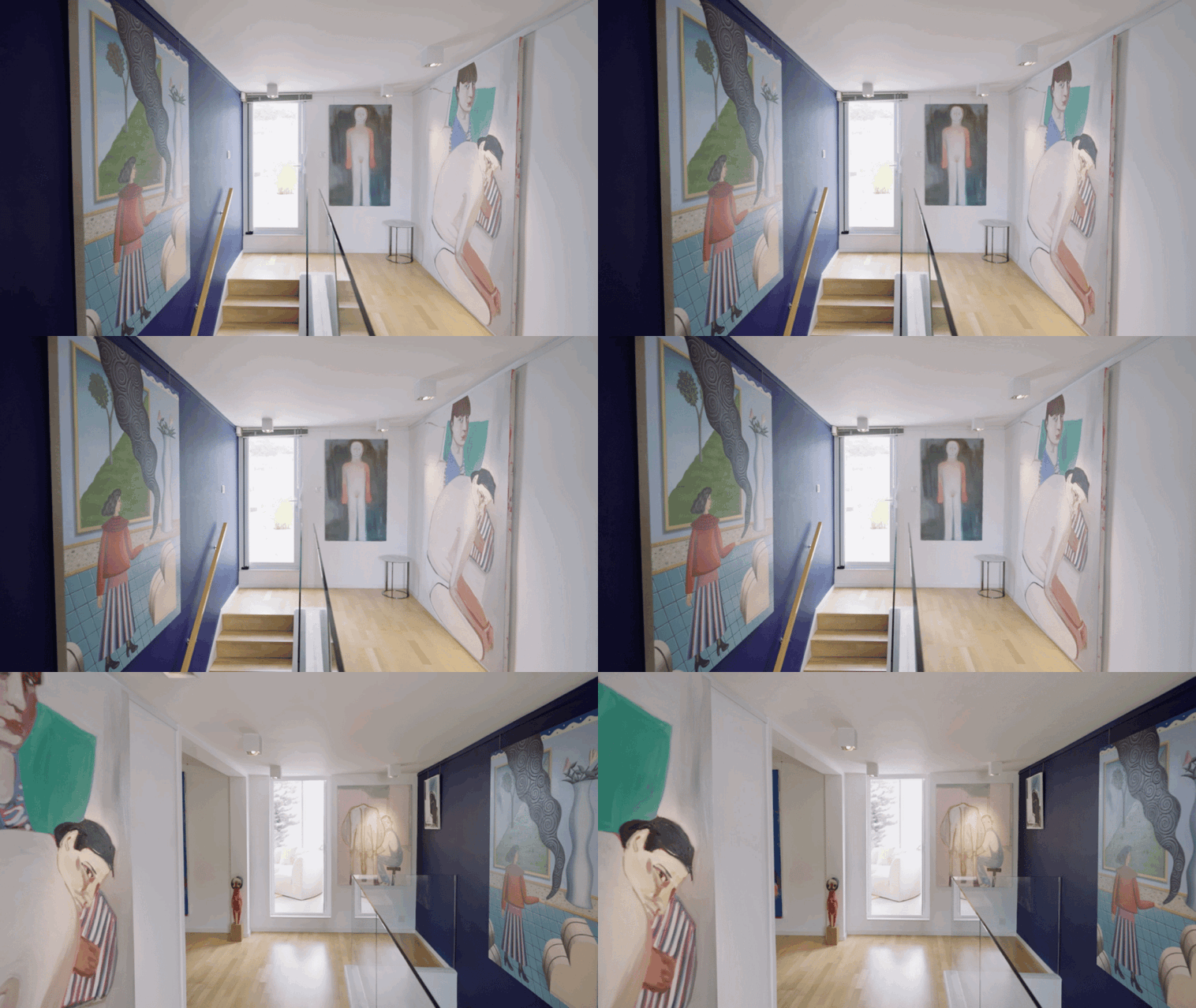
From a 70-Square-Meter Apartment to a 24-Story Tower: Four Greater Bay Area Collectors Build Spaces of Their Own
In the Guangdong–Hong Kong–Macao Greater Bay Area, art is quietly becoming a “secret weapon.” Four collectors reveal how they have made room for it—in apartments, studios, and entire houses......
By / Xirui Huang · 19 min read
How do four Greater Bay Area art collectors live with contemporary art in Hong Kong?
The article visits four collectors closely connected to Hong Kong and the Greater Bay Area. Wang Yinghan lives with art in a 70-square-metre apartment; Arthur de Villepin combines nature, antiques and family works in a hillside home; architect William Lim created H Queen’s and keeps a studio collection in Wong Chuk Hang; and Chow Sai-yiu extends a family tradition of ceramics and ink painting into contemporary art.
Art Figures: 4 Collectors in the Greater Bay Area
The Guangdong–Hong Kong–Macao Greater Bay Area, described as “China’s engine of globalization,” is quietly turning art into its “secret weapon.” This past December, exhibitions and art fairs appeared in rapid succession across Shenzhen and Guangzhou. This week, UCCA Center for Contemporary Art announced a major personnel change: Philip Tinari, its director and CEO for 14 years, is heading south to become deputy director of arts and head of arts at Tai Kwun Contemporary in Hong Kong. Meanwhile, new museums including Shenzhen Bay Cultural Plaza and Aranya Art Center Guangzhou are establishing themselves in the Greater Bay Area, while Tencent Art Museum and JD Art Museum are also scheduled to open in 2026.
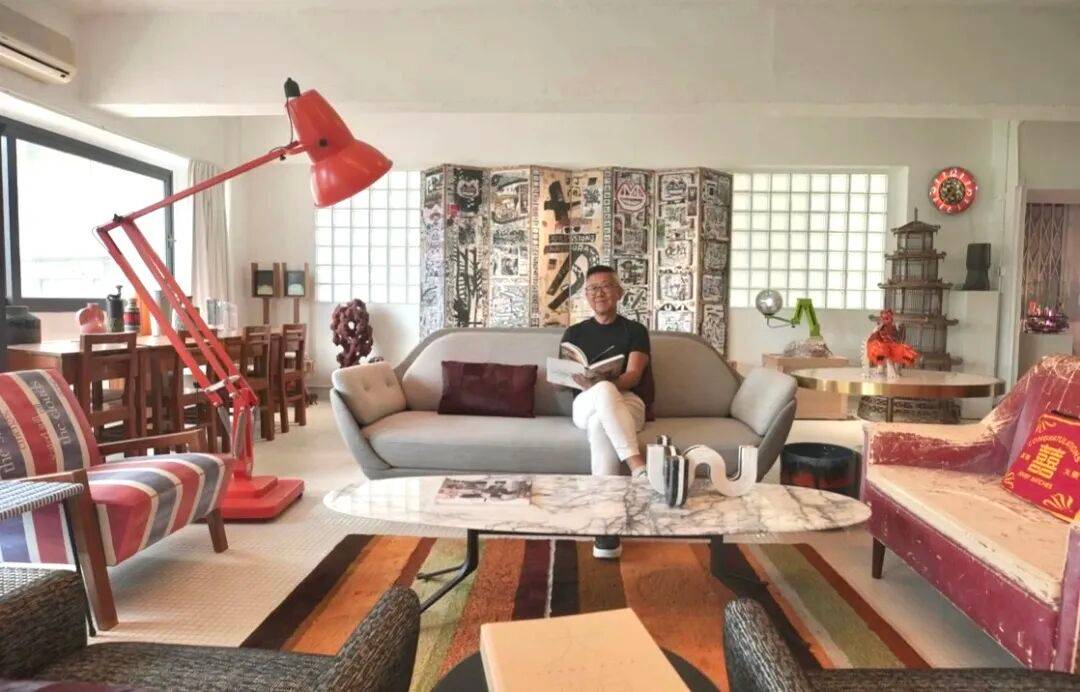
Since 2022, I have followed collectors in the Greater Bay Area each year. A northern-born woman, born in 1988, settled in Hong Kong after university and lives in a 70-square-meter apartment with her husband, child, and art. The son of a former French prime minister moved to Hong Kong at 22; his home holds a borderless, deeply restorative collection. An architect who loved drawing as a child built a 24-story tower in land-scarce Central that once housed some of the world’s leading galleries. A veteran of Hong Kong’s financial world converted an apartment into a reception room lined with art.
Here are the stories of four collectors deeply connected to the Greater Bay Area. Editors: Huang Xirui, Luo Ziyan, Rui Xue, and Yin Yadi. Collector Wang Yinghan. Wang Yinghan has many identities: art-and-fashion columnist, art-fair founder, and adviser to an art forum. She did not come from an art-education background. Before entering the art world, she underwent extensive academic training, which gives her speech and thinking an unusual clarity. When discussing her collection, Wang can even produce something like a report listing its contents.
The following is Wang Yinghan’s account. Childhood photograph of Wang Yinghan. I was born in a northern oil town. As a child, I loved all kinds of cultural and artistic performances, and several members of my family graduated from art academies. Without realizing it, I seemed to develop an eye for art through them. After middle school, I went to Hong Kong for university. As a graduate student, I studied international relations at the University of Hong Kong. At the time, one of my professors recommended me for an internship at the United Nations headquarters in New York. I also had many opportunities to visit New York’s museums for free, and gradually formed my own understanding of contemporary art.
Chen Wei, Some Gray, from Wang Yinghan’s collection. After returning from New York to Hong Kong, I worked at a think tank for cultural diplomacy. In 2015, I was fortunate to help prepare an exhibition in Hong Kong by Albania’s prime minister, Edi Rama, who presented himself there as an artist, and to serve as his interpreter. His belief in “changing society through art” had a deep influence on me. I accomplished many milestones in Hong Kong—graduating, marrying, starting a business—and developed a profound attachment to the city. So being able to settle here, and to own an apartment decorated with my collection in one of the world’s most expensive places, became another dream fulfilled.
Wang Yinghan’s apartment building in Hong Kong. In 2019, my husband and I moved into a freestanding apartment on the western mid-levels of Hong Kong Island. This was once the setting of Eileen Chang’s Love in a Fallen City. The surroundings are quiet, and the area has a strong historical atmosphere. Another important reason for choosing it was its proximity to my alma mater, the University of Hong Kong. The apartment is 70 square meters—not especially large—but it was our first new home, and we wanted to furnish it carefully. I immediately thought of using the art I had collected over the previous few years as decoration.
A corner of the living room. Because it was a new apartment purchased from the developer, we changed little of the finished interior. We selected more than 10 works from the collection and used them as decoration. After moving in, we invited many friends from Hong Kong’s art world to visit. For a young married couple, it felt perfect. The apartment has many large windows and excellent sunlight. When sunlight falls across a painting on the wall or a small sculpture on a shelf, the work takes on another kind of beauty.
Chen Wei, Tin, 2015. From the beginning of the design, I decided to paint the entire living-room wall deep blue to suit Chen Wei’s Tin (2015). On the television wall, He Xiangyu’s 6 Lemons (2017) and Francis Alÿs’s The Collector (1991–2006), mounted on a small car, create another burst of color. Eddie Kang, Fighting Blue Monster, 2018, and Yoshitomo Nara, My Sweet Dog, 2005. The living room also has a corner devoted to contemporary art, assembled from Eddie Kang’s Fighting Blue Monster (2018), Yoshitomo Nara’s My Sweet Dog (2005), and a small pumpkin by Yayoi Kusama brought back from Benesse House Museum on Naoshima.
Different works radiate different kinds of force; the contemporary-art corner brings energy into the home. Lee Kit, You know, he knows me., 2016. There are two works by Lee Kit in the living room and bedroom: You know, he knows me. (2016) and Dip in the Water (2014). One of the leading local artists to represent Hong Kong, China, at the Venice Biennale, Lee Kit works with restraint and delicacy. Placed in a corner of the home, his art creates a sense of inner calm.
Xie Molin, Ji No. 22, 2017. DIRECTION series, #248, 2018. To complement Xie Molin’s Ji No. 22 (2017), I painted the bedroom walls light blue. The work was sent directly from Asia NOW Paris to Hong Kong. On the opposite wall, I took inspiration from a themed room at Hotel Anteroom Kyoto, where Kohei Nawa serves as artistic adviser, and installed a work from the DIRECTION series, #248 (2018).
Su Chang, Portrait of a Wall, 2017. Above the bed is Su Chang’s Portrait of a Wall (2017), a wash of white that blurs the boundary between sculpture and painting. Su has taken part in public-art projects at the Power Station of Art, West Bund Art Center, and Fosun Foundation. Hand-cast in a mold, the work presents a plaster sculpture in the form of a wall. Lulu Ngie, Actually Not Ready, 2019. A work by Lulu Ngie, Actually Not Ready (2019), hangs in the study. It depicts a moment of release, making it well suited to a room where one can sit quietly and read.
For the upcoming Hong Kong Art Month in 2026, at the invitation of the Hong Kong Arts Centre, I will select works by Li Jie and Kao Chien-hui from my collection for Collect Hong Kong 2026, an exhibition focused on Hong Kong artists. From March 21 to 29, 2026, I will share them with the public in the Collectors’ Choice section at the fair venue of the Hong Kong Arts Centre, in support of local artists’ creation and promotion.
Works by Kao Chien-hui (left) and Li Jie at Collect Hong Kong 2026. For me, collecting is a process of continually discovering and exploring myself. I firmly believe that “you are what you collect.” The artists and styles each collector admires must resonate with that person’s past experiences and aesthetic preferences. Having art accompany me through life’s important moments gives me a sense of stability. I will continue collecting with patience, and do what little I can to advance contemporary art.
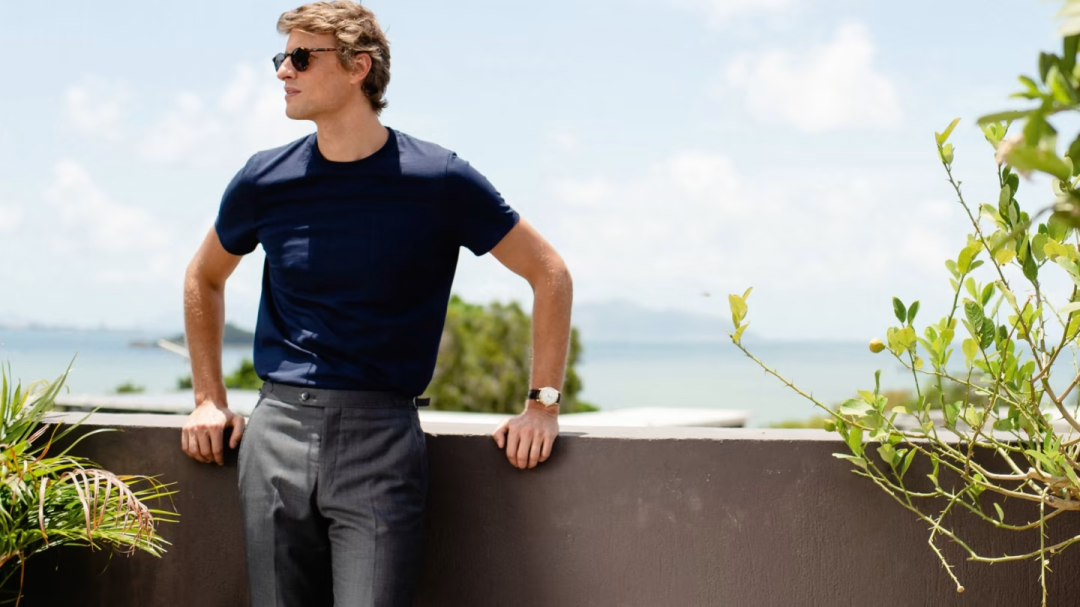
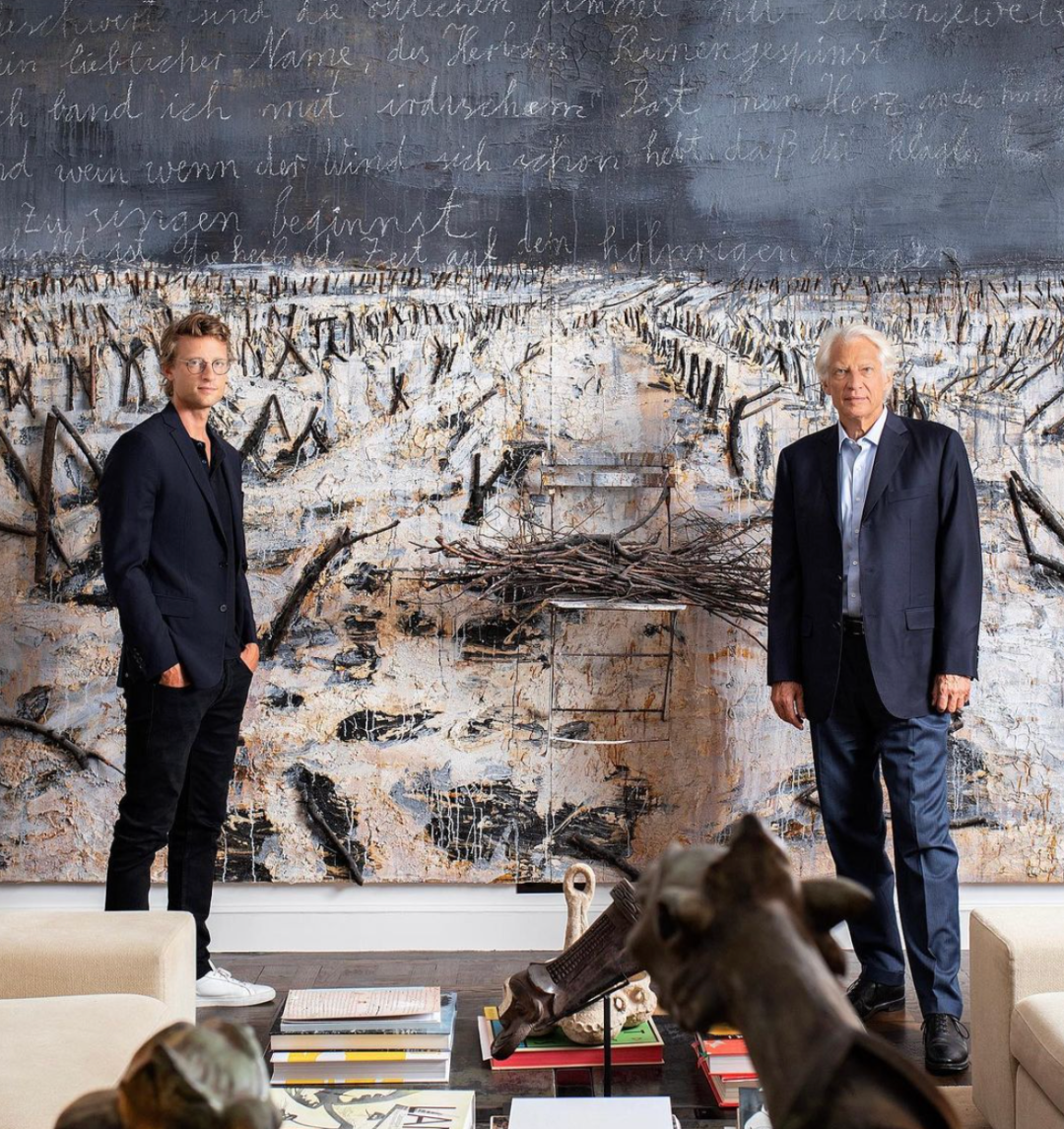
Collector Arthur de Villepin on the terrace of his home. Arthur de Villepin is the son of Dominique de Villepin, the former prime minister of France. As a child, he traveled the world with his diplomat father, living for long periods in the United States, India, France, and Britain. He also came to know such artists as Zao Wou-Ki, Anselm Kiefer, Pierre Soulages, and Kang Myeong-hee.
At 22, he chose to put down roots in Hong Kong, where he has now lived for more than 10 years. Arthur de Villepin and his father, Dominique de Villepin, in their home in France, in front of a work by Anselm Kiefer. Arthur’s home is in Hong Kong’s Southern District, a duplex with two sunny terraces. Nature is visible from nearly every angle: water from the living room, mountains from the bedroom.
“I feel especially ‘Chinese’; the mountains and water give me a quiet strength.” The following is Arthur de Villepin’s account. The living room in Arthur de Villepin’s home. I moved into this house in 2022, though I came to Hong Kong earlier. My roots are in Europe, but in some sense I am also Chinese, because I believe in Eastern ways of behaving. I love the food here, too. I love the taste of plain white rice so much that I eat it every day. In Hong Kong, a city of concrete and steel, I wanted to find a quiet “nest” where I could rest.
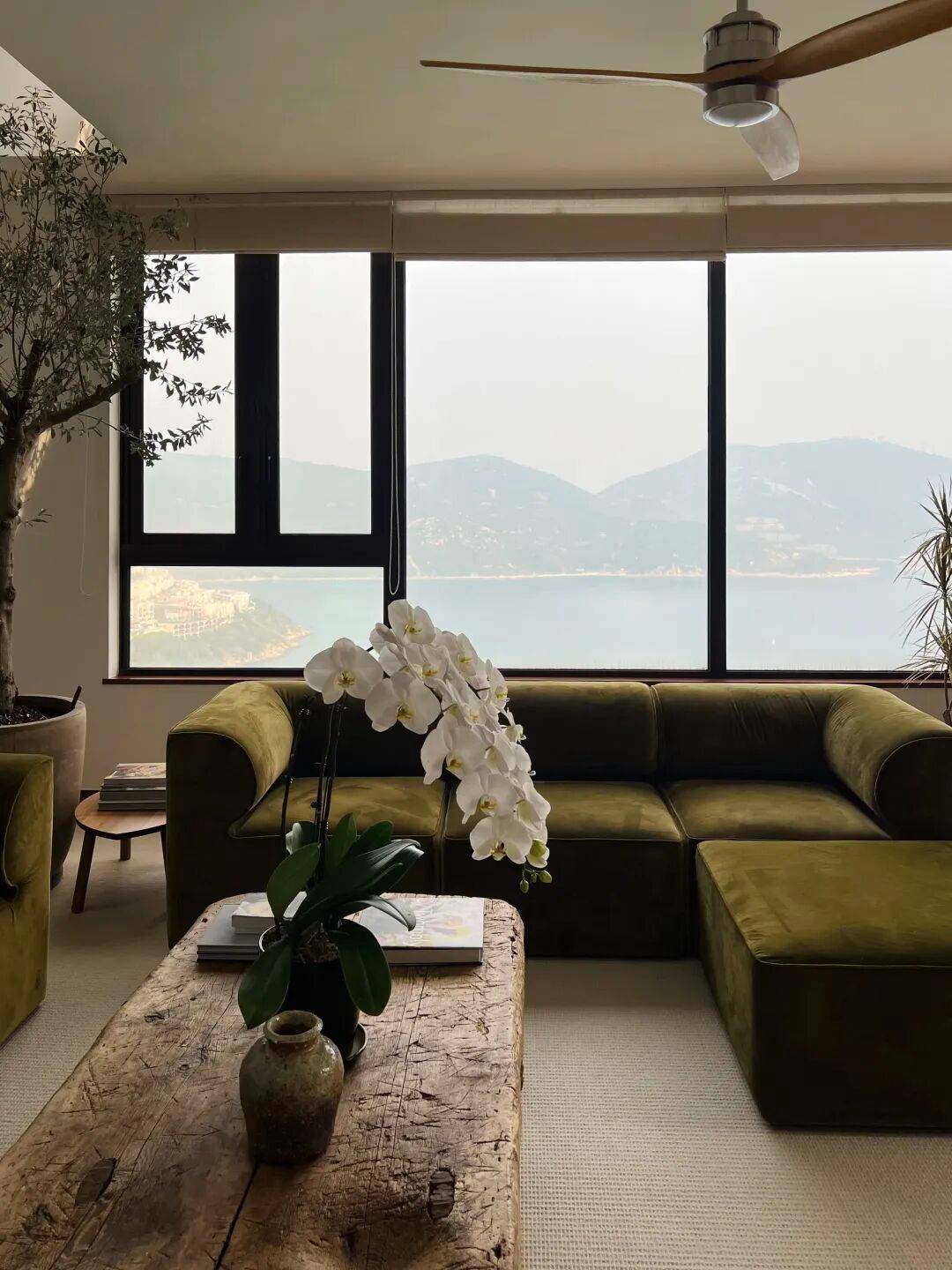
The “Spine” olive tree in Arthur de Villepin’s home. Photograph by Anastasia Grouvel. When renovating the house, my first thought was: I wanted a tree. I wanted to bring part of nature indoors. The olive is one of my favorite trees. They can live for hundreds of years; they represent contemplation and healing, and teach me to slow down. The tree reminds me of happy times with my family in India and Italy, and of a film called The Lovers Under the Olive Tree.
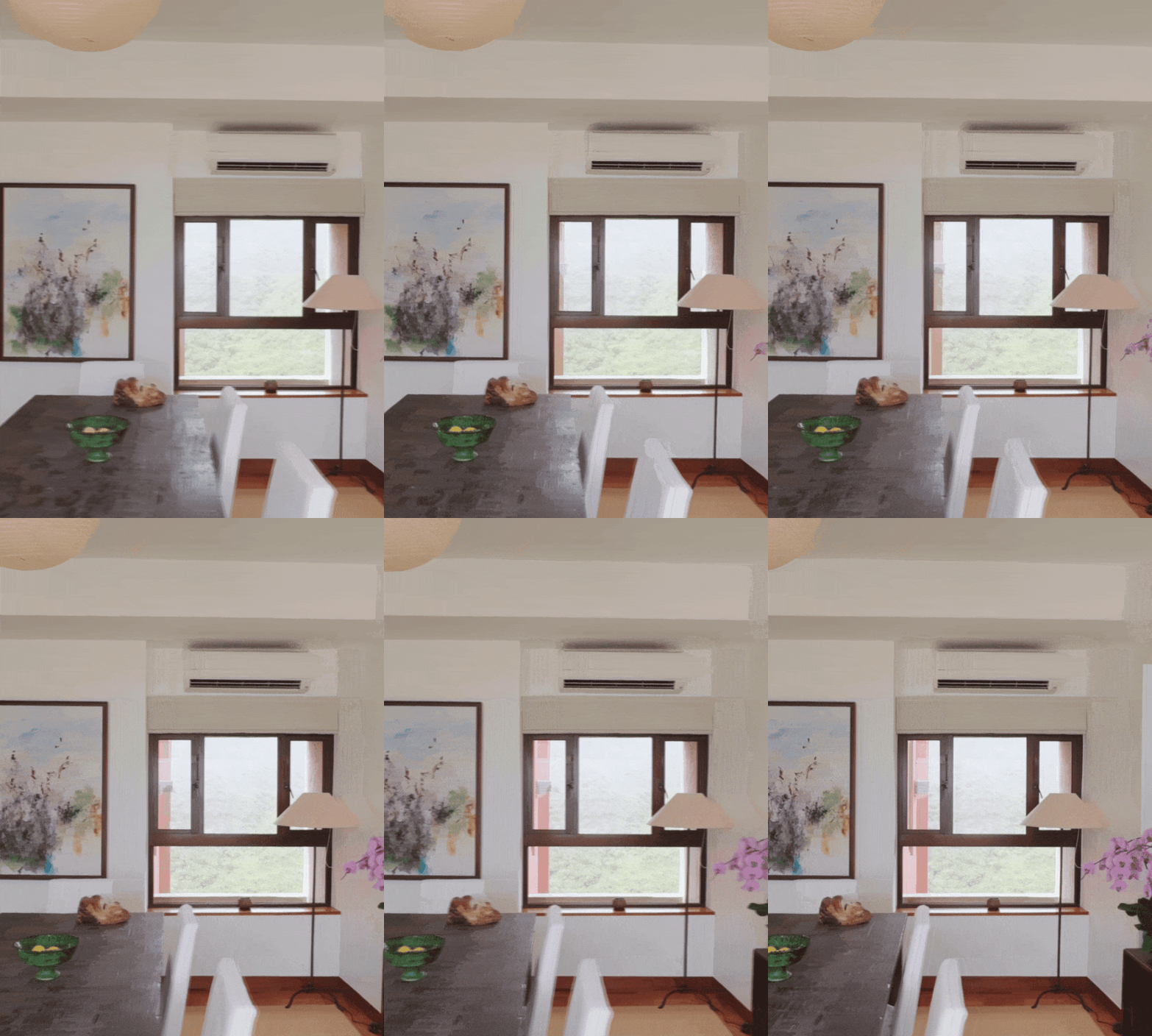
Antiques in Arthur de Villepin’s home. Everything in the house revolves around the tree: an olive-green sofa, a 15th-century table, antique chairs from Brazil and France, a Moroccan lamp, a ceiling light designed by Isamu Noguchi, and contemporary artworks. I wanted to create an atmosphere that could speak with time. For me, being surrounded by natural elements is essential. A home should remove what is unnecessary and allow what matters to speak.
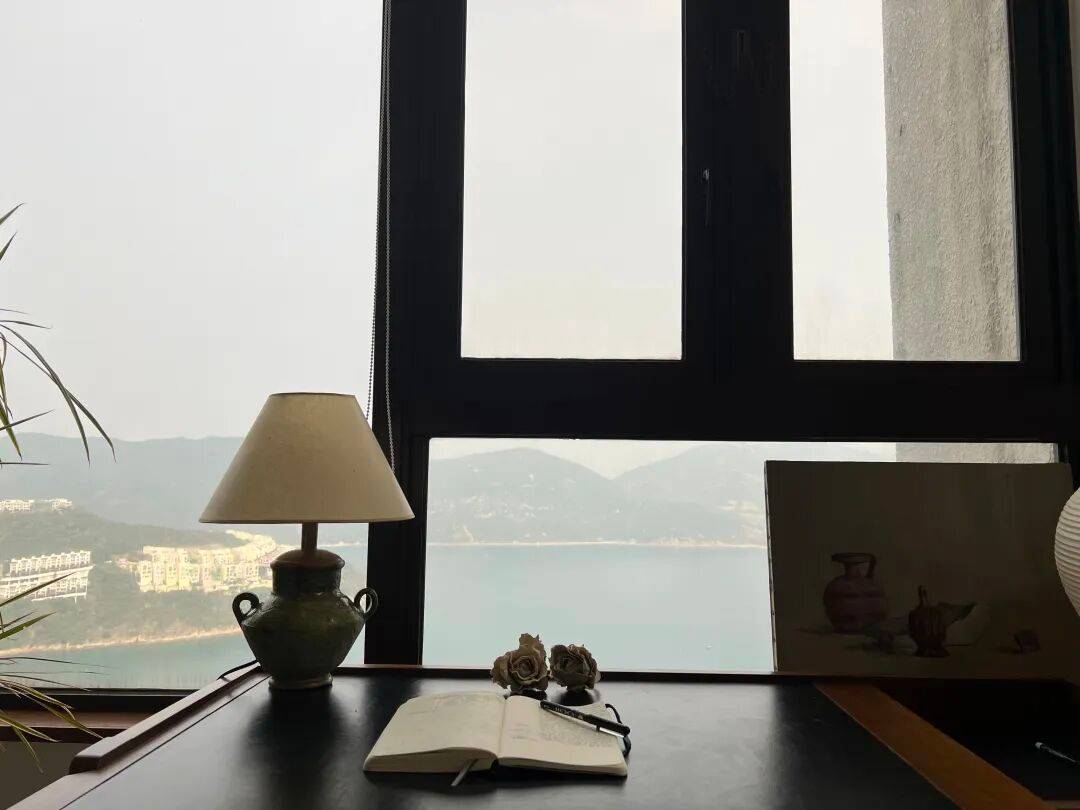
Mountain and sea views from Arthur de Villepin’s living room. Photograph by Anastasia Grouvel. Terrace on the first floor of Arthur de Villepin’s home. I feel especially “Chinese.” I need mountains, and I need water. Here, I can see water from the living room and mountains from the bedroom. It gives me immense, quiet strength. Arthur de Villepin in the dining room, with Mary de Villepin’s Like Swimming, 2022, on the wall behind him. The artworks in my home were made by artists with whom I feel a particularly deep connection—some by artists who were once very close to me, artists I lived alongside.
The special relationships and bonds between artists and collectors are very important to me. In the dining room is a painting by my sister, Mary, which she gave me for my birthday. In it, she created an underwater world. The forms resemble coral beneath the surface, and as the natural light changes, so does the coral’s color. Mary works simultaneously with her fingers, brushstrokes, and a utility knife. Painting with her fingers gives the work a certain force.
It is rough, yet sensual. Alfred Wallis, Two Sailing Boats and a Lugger. There is another work I value deeply, one that is very important to me: this painting by Alfred Wallis. He was one of Britain’s earliest modern painters, but he was never a professional artist.
He was poor. He fished all his life, then gathered cardboard and other scraps from the beach and returned home to paint boats. Looking at these boats always reminds me that art is not necessarily connected to fame or capital. Work on the wall: Jiang Minghui, Fleur de choux rouge, 2020. This work by Jiang Minghui almost perfectly merges with the view beyond the window. What we see is a landscape of primitive mountains, woods, and trees—not a perfectly manicured garden.
My father has collected her work for about 25 years. In her paintings, you seem to see the wildness of nature, without compromise. She does not want you to find it beautiful. It is so raw that it is almost confrontational. Arthur de Villepin with Jiang Minghui in her studio. Wooden sculpture brought back by Arthur from an antique shop in Barcelona. I like combining old and new. If an object has been used, it means it has had a life, and that vitality enters the house and becomes part of your own life.
This 15th-century wooden sculpture was bought when my family and I traveled to Barcelona, Spain. It is a vessel of memory, reminding me of my family. I am very attached to home, which may have something in common with the importance Chinese culture places on family. Family supports and loves you, giving you the energy to do more. Two terracotta flowers on the desk, a gift from Lucy Carroll, wife of the late artist Lawrence Carroll, to Arthur de Villepin. These flowers on the desk are precious to me because they were given to me by the wife of the late artist Lawrence Carroll.
Whenever I sit at the desk and look at the view and the horizon, inspiration pours out. Lawrence Carroll, Untitled (Blue), 2019. The painting in my bedroom seems to breathe with me in my sleep. It is by Lawrence Carroll, who made holes in his paintings. He said, “Most people see holes, but I see a painting that breathes and is alive.”
In some sense, I think this resembles Chinese architecture. Most bridges in the West are straight, while Chinese bridges curve and wind. It is another way of looking at life. Arthur de Villepin’s mother, Marie-Laure Viebel, is a sculptor. Marie-Laure Viebel, The Moon Child. My mother made this sculpture for me. She called it The Moon Child.
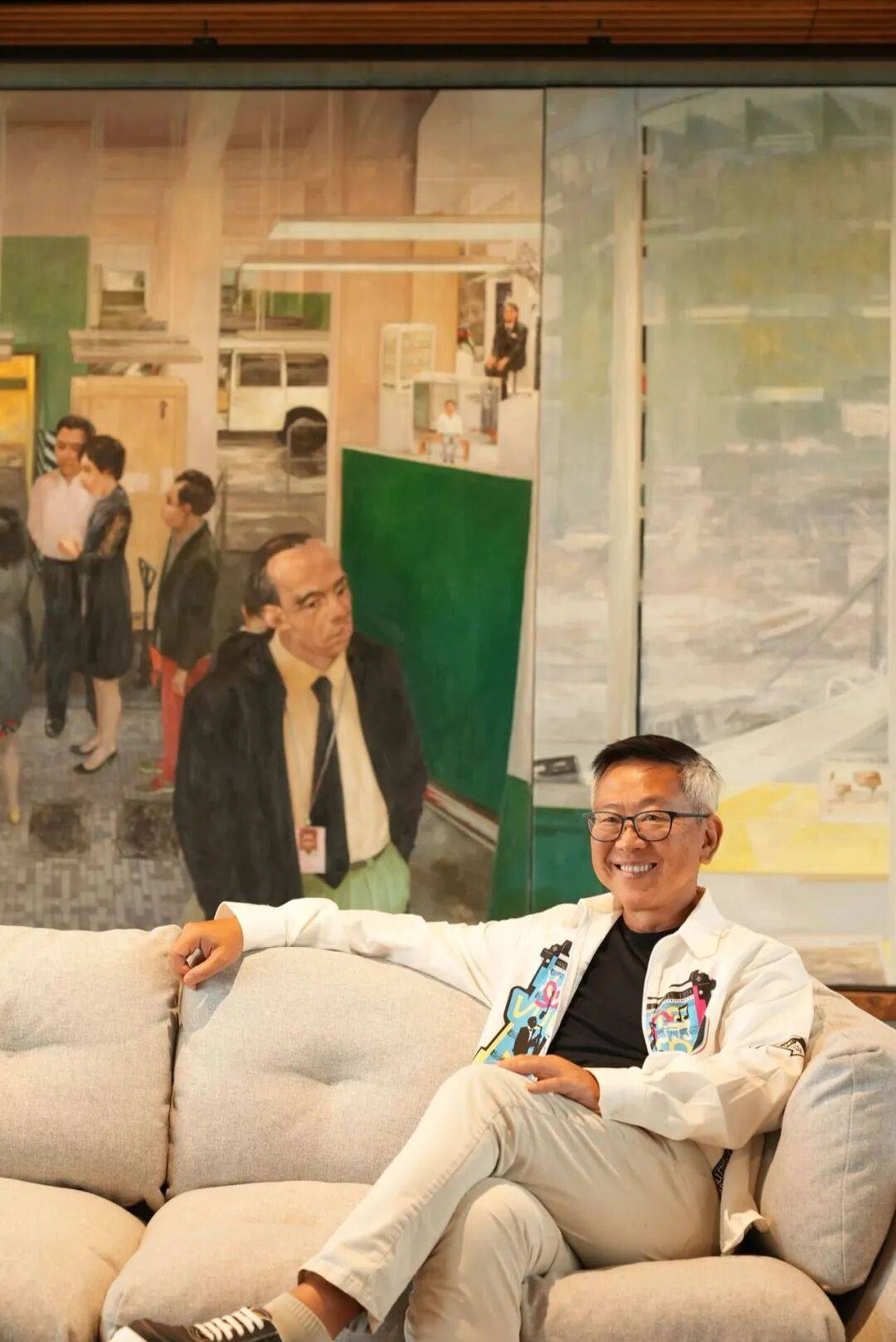
I find it charming because you can see many intriguing little holes that suggest the surface of the moon. She pierced two holes in the stone, giving the whole “moon face” a sense of life. I love it. Arthur de Villepin with his dog, Harley. Art’s essential power is that it can make you a better person. Every collector should understand that through collecting art, they can regain control of their lives. Collector William Lim. William Lim has many identities. He is the architect behind H Queen’s, once described as Asia’s only building of its kind, designed specifically for art. He is also a veteran collector who began collecting contemporary art 23 years ago. In 2021, he donated 90 works to M+, the museum of visual culture.
He is also an artist. He began drawing as a child, and the death of his mother led him to pick up the brush again. He has since held exhibitions in Hong Kong, China, Singapore, and Macao, earning broad approval in the art world. William Lim was born in Hong Kong in 1957 and loved drawing from an early age. As a boy, he was always carrying a brush, recording what he saw and imagined. When he was in middle school, Hong Kong was in the 1970s, a period when many large infrastructure and construction projects were launched.
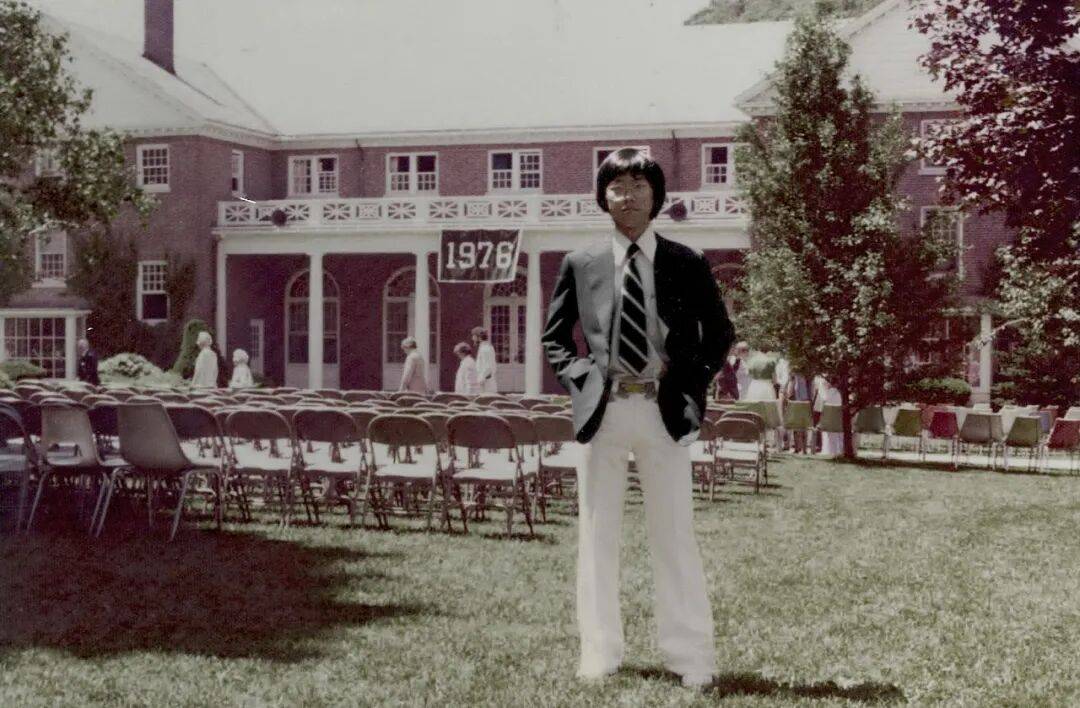
A drawing exhibition William Lim attended while in secondary school. American high-school graduation photograph. “My father suggested, ‘Since you like drawing so much, why not become an architect? You can combine drawing and creativity, and it can also be a livelihood.’” William Lim, as a Cornell University trustee, at the 2023 spring commencement. In the end, William was admitted to Cornell University’s architecture program. During six years of study, he earned both bachelor’s and master’s degrees in architecture.
After graduating, he chose to remain in the United States to work. It was also then that he gradually entered the world of collecting. Because of his strong interest in Chinese culture, he initially collected Chinese antique ceramics.
“I had just started working and didn’t have much money. Later I discovered that many of these so-called ‘antiques’ were actually fakes.” After working for five or six years, a promotion episode persuaded him to return home.
“There was a promotion opportunity at the company. The candidates were me and a senior white woman. In the end, the company promoted a newly arrived white male colleague. I always felt that Chinese people working in the United States faced an invisible glass ceiling.” In 1987, William Lim returned to his hometown, Hong Kong. After several years of preparation, he founded his own architecture firm, CL3 Architects, in 1992. Today, beyond Hong Kong, hotels, restaurants, residences, and art spaces designed by Lim and his team can be found in Shenzhen, Zhuhai, Chongqing, Beijing, and overseas in Singapore and Japan.
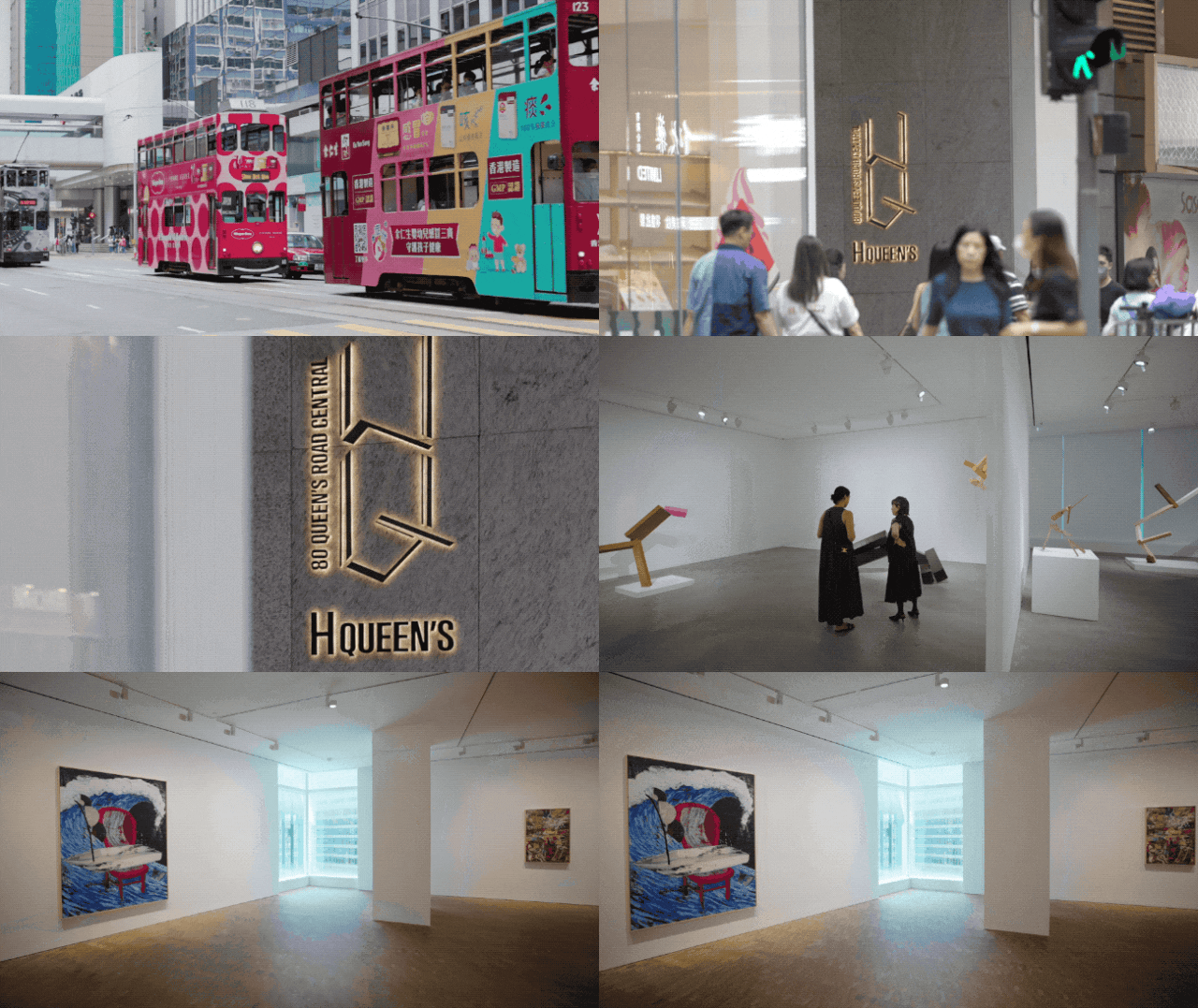
Exterior of H Queen’s. Image courtesy of CL3. Around 2013, H Queen’s, in the busy center of Hong Kong’s Central district, became the project that drew the widest attention in both architectural and art circles. Its distinction lay in this: on bustling Queen’s Road Central, H Queen’s was a 24-story tower built specifically for art galleries. H Queen’s attracted several of the world’s leading galleries. Around 2013, before the building entered the design phase, many galleries in prohibitively expensive Hong Kong struggled to find suitable operating space.
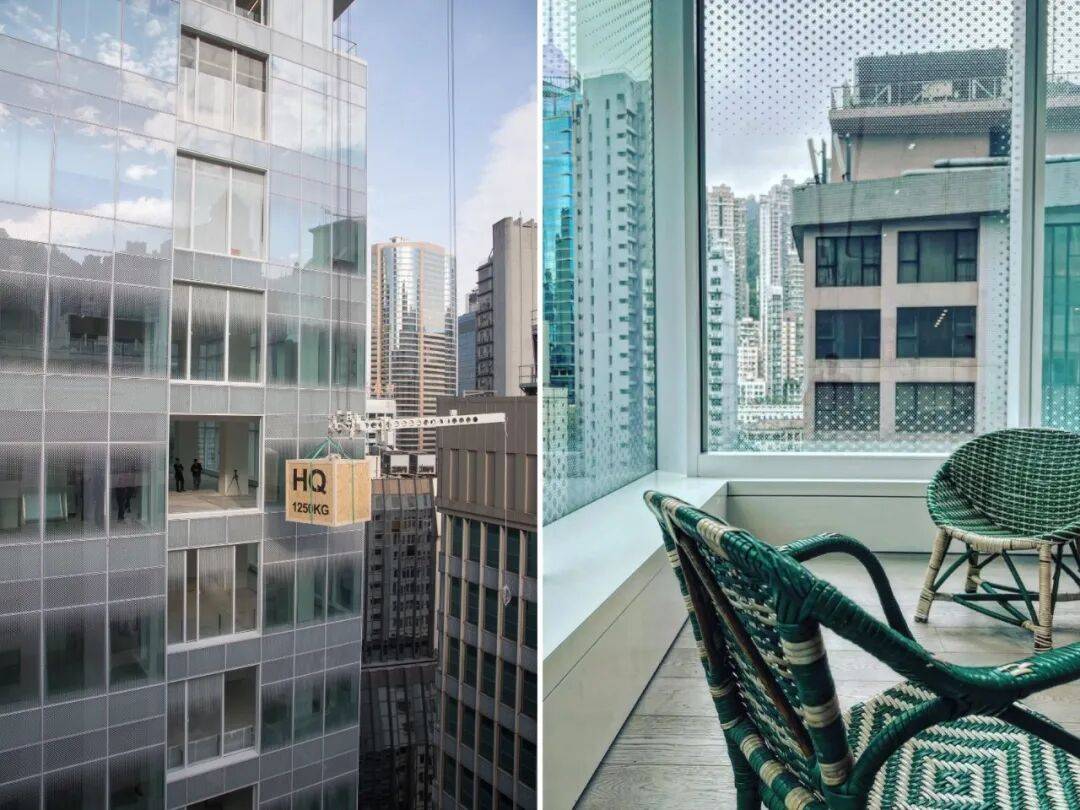
“At the time, galleries were scattered among different office buildings in Central. When I went to see exhibitions on weekends, those buildings were usually closed, and I had to ask security guards to let me in. It was very inconvenient.” Although there was almost no precedent, the client was willing to realize the idea with him. Left: a crane transporting an artwork outside H Queen’s. Right: the dot pattern on H Queen’s glass curtain wall. William Lim in his studio. Lim’s architecture firm is in the Wong Chuk Hang industrial district in southern Hong Kong Island.
In another industrial building about a 10-minute walk from the firm, he also has a 3,000-square-foot studio, nearly 300 square meters. More than 10 years ago, he rented the space as his painting studio.
“Later, when our collection gradually reached a certain scale, we began storing our works here.” The studio was designed by William Lim’s son. The Wong Chuk Hang studio is square. A black bookcase joins a wooden platform at the center, dividing the space into several areas: a living room, painting area, library, and dining area. The design was completed by Lim’s son, who is also an architect.
Almost every area is filled with art. From floor to wall, the works range from paintings and installations to video. The variety is broad, but the effect is neither crowded nor chaotic. Ruan Jiayi, Puzzle IV. William Lim began collecting early, but his contemporary-art collection dates to around 2000, when Chinese contemporary art was beginning to emerge on the international art market. He once read an article in the foreign press about the work of artists including Ding Yi, Xue Song, and Wang Guangyi.
“I thought the works were very special. At the time I was often traveling to Shanghai for work, and in my free time I would go look at these artworks.” Naturally, contemporary Chinese art became the entry point for his collection. Work on the floor: Paul Chan, The Argument: Athens, 2013. Around 2006, however, he gradually decided to change direction and focus on artists from Hong Kong.
“The mainland art market was very hot then, but in Hong Kong there was almost no art market at all. After collecting some contemporary works, I felt that continuing in that direction lacked a clear focus. So I decided to pay more attention to overlooked Hong Kong art.” Shi Jiahui, Untitled. Wong Wai-yin, Hong Kong Museum of Art Poster, 2008. Today, whether traveling or on a business trip, Lim often carries simple drawing tools and makes time for his own art.
He puts it this way: “I used to care very much whether I was an architect or an artist. Now I feel there is no need to distinguish between them. As for retirement, there is no need for that yet, because I still have many things I want to do. I want to enrich myself as much as possible.” Collector Chow Sai-yiu. Chow Sai-yiu is a prominent figure in Hong Kong’s financial world and a descendant of the Li family, which founded the Bank of East Asia. Because his family had collected Chinese ceramics and ink paintings since the generation of his great-grandparents, he grew up immersed in art and developed a natural sensitivity to it.
More than 10 years ago, he formally began collecting contemporary art with a work from Zhang Xiaogang’s Bloodline series. He now owns several hundred works. Chow Sai-yiu’s seaside villa in Sai Kung. In Sai Kung, Hong Kong, he converted his four-story seaside villa with a garden into an “art house” with only one master bedroom. Each floor has its own artistic theme and circulation. From time to time, he changes the works on display to accommodate new acquisitions and invites family and friends to visit.
He is also a trustee of the New Museum in New York and the youngest vice chairman of the Hong Kong Contemporary Art Centre. Art, for him, is an indispensable part of life.
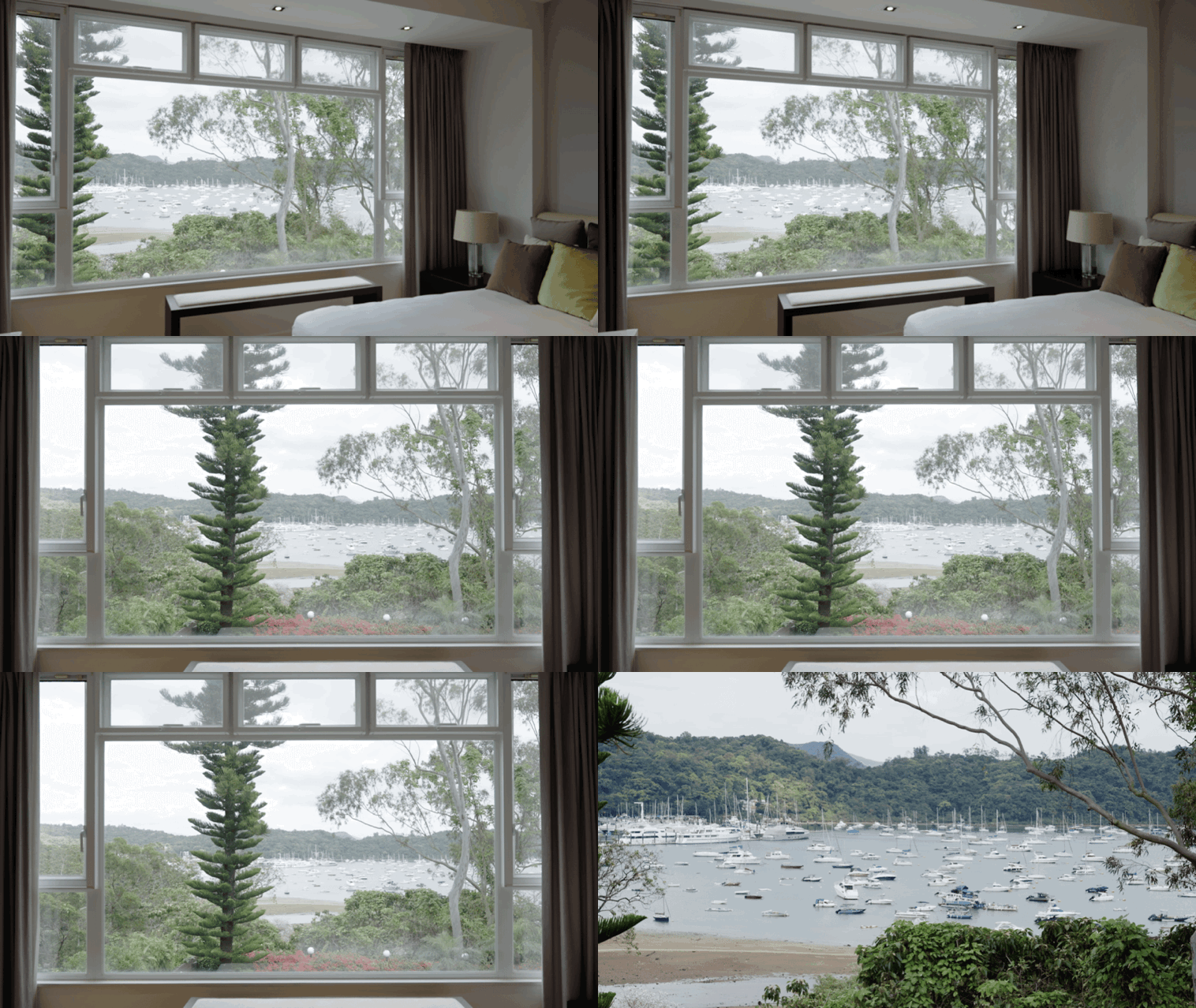
“I have to admit that art occupies most of my free time,” Chow told us with a laugh. View from the master bedroom of Chow Sai-yiu’s seaside villa. The drive from Tsim Sha Tsui in Hong Kong to Chow’s home in Sai Kung takes about an hour. Along the way, cars and pedestrians gradually thin out. The city’s bustle and congestion recede until we can see boats moored in Pak Shui Wun harbor and dense green woods. Hong Kong reveals a less familiar face—the small fishing village it once was.
“During the unusual period after 2020, I spent several months in this house for the first time in my life. It was so peaceful. I really loved the time I spent here.” Chow told us that he liked Sai Kung even more than the downtown area where he had lived longer. At the entrance: Sarah Crowner, Falling Black Shapes, Yellow and Lilac Background, 2019; Huang Rui, Sacrifice & Prelude, 1988. As soon as we entered, we saw a characteristic collage painting by Sarah Crowner, a leading younger artist in geometric abstraction.
The work fits the entryway wall exactly. Chow commissioned the artist to make it “to measure.”
“Sarah Crowner is one of my favorite artists. The purple in the painting is the color of her favorite flower in Mexico City, and she uses it to commemorate the beautiful time she spent there. The style pays tribute to the hard-edge abstraction of the 1960s and ’70s, including the work of one of my favorite artists, Josef Albers.” Chow told us. The wall opposite was painted entirely bright red, echoing the mottled, heavy, rough, and forceful red brushwork in Huang Rui’s painting.
Left: Sarah Crowner, Falling Black Shapes, Yellow and Lilac Background, 2019; right: Naotaka Hiro, Untitled (Opening Night), 2022. Chow Sai-yiu’s living room. Central work in the living room: Nick Mauss, F.S. Intervall II, 2014. “When you enter the living room, one of the principal works in the space is by Nick Mauss.
“When you approach the mirror, you discover that you have become part of the movement of the dance,” Chow told us.
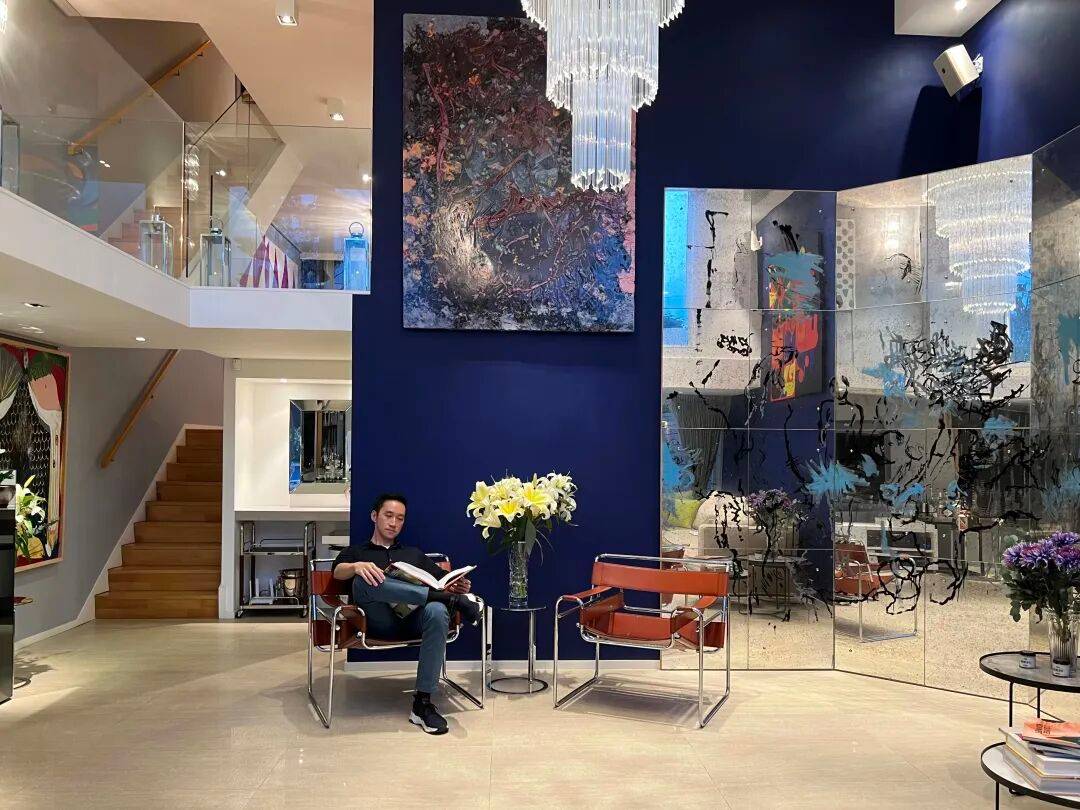
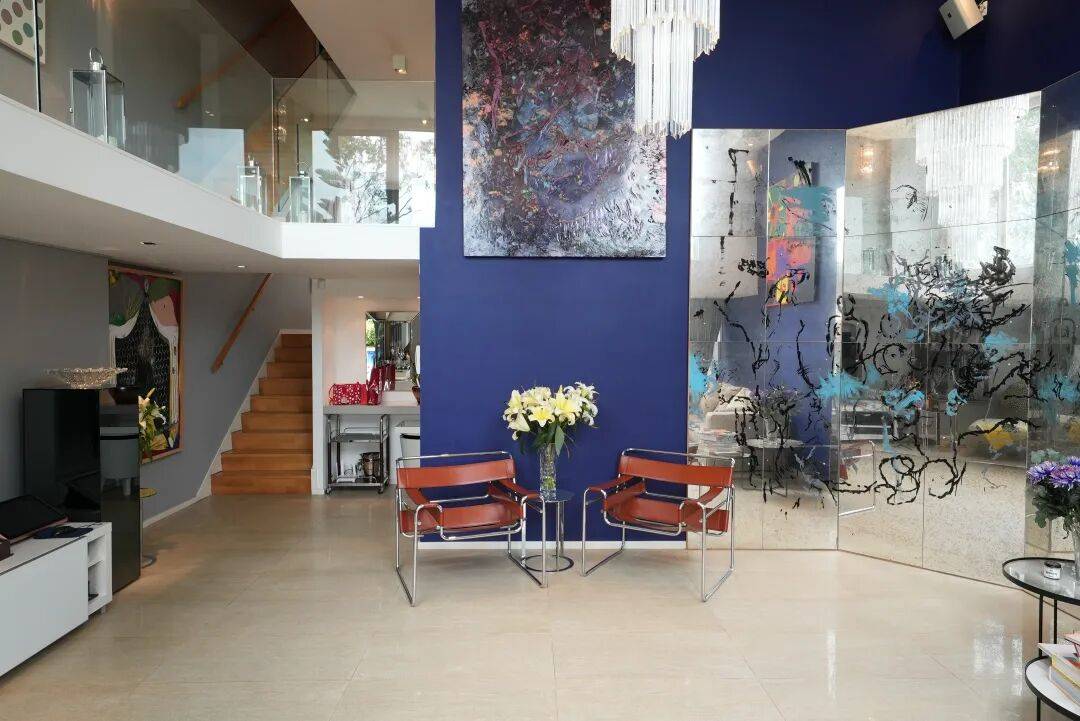
“For the sake of this mirror, I even removed a set of designer sofas from the living room. I repainted the wall behind it to match the Moroccan blue in the work.” Chow told us. Wall installation by Kevin Beasley, Site XV, 2022. He is one of the most important Black artists working in the United States today. A large blue-and-purple work hangs high on the left wall of the living room, its colors complementing the wall.
When we asked, “What is the story behind this painting?” Chow corrected us, very seriously: “This work isn’t a painting; it’s an installation. I discovered this artist’s work at his 2021 exhibition at the New Museum in New York, and it moved me.” Chow looking through an art book in the living room. Beneath the installation are two ocher-brown leather Wassily Armchairs designed by Bauhaus artist Marcel Breuer. They once stood in Chow’s grandmother’s home.
“Every time we sit in the chairs, we think of the wonderful memories of our childhood and grandparents.”
“When we first bought this house, it had four bedrooms. But to create more display space, we converted it into a house with only one master bedroom; the remaining rooms became art spaces and areas for leisure.” Chow told us that the works hung on each floor are not merely placed there. Each floor has its own theme. Dining area on the second-floor mezzanine: Sarah Crowner, Turning Violets and Reds, 2021; Bridget Riley, Measure for Measure 40, 2019. In the dining area, another geometric collage by Crowner comes into view, this time richer in tone, assembled from velvet-like iris purple and burgundy.
“The second floor is one of my favorite themes: geometric abstraction. I’ve always been a ‘math geek.’ At Brown University, I majored in applied mathematics and economics. So applying mathematics and geometry to art creates a very interesting dialogue for me.” Chow told us. Looking down from the second floor. Indeed, all the works on the second floor are inseparable from geometric forms and abstraction. Bridget Riley’s polka-dot painting faces the “box series” works of Donald Judd, a founder of Minimalism.
Another red-ground work by the Chinese artist Huang Rui, Spatial Structure 84-15, draws on Mondrian’s colors and Beijing’s siheyuan courtyards. Left: Lesley Vance, Untitled, 2022. Right: Adrian Wong, Hypnagogia VIII “Boat Shoes, Pumps,” 2005–2017. In a second-floor room, a large orange, blue, and green painting by Lesley Vance is set beside an installation resembling an old Shanghai barbershop sign by Hong Kong artist Adrian Wong. Similar colors, one still and one animated, create a lively and engaging visual effect.
“Many of the works on the third floor are connected to mysticism and religion,” Chow said. The third floor is also home to the only master bedroom. Two works by Chiharu Shiota stand in the room like monuments, storing the memory of old photographs and using the magic of red thread to suspend the passage of time. Third-floor arrangement, from left to right: Daniel Crew Chubbs, Where the Wild Things Are (Teal), 2020; Josh Smith, Pursuit into the Dark, 2019; Calvin Marcus, Blue Devil, 2018. Chiharu Shiota in the third-floor master bedroom. “The top floor could be called my own little ‘portrait gallery.’ One of my favorite Hong Kong painters, Chris Huen Sin Kan, has the final word.”
The top floor’s green-toned sunroom was arranged entirely around this work.
“We designed this room specifically to face the ocean and trees, blending in green carpets, furniture, and plants,” Chow said. Artworks in the top-floor “portrait gallery.” Top-floor sunroom. At sunset, the large floor-to-ceiling windows frame the green trees distinctive to Sai Kung, along with the blue fishing harbor and distant mountains. The setting sun enters the room. Shadows from potted plants overlap uncertainly with the trees outside, and the entire space is enveloped in a hazy, dreamlike beauty. It scarcely seems real.
“When I first saw this painting, I immediately thought of the landscape here in Sai Kung. The artist depicts his family—his children, his dog, his wife—as well as the houses and trees outside his view. Only then did I realize that the trees in the painting and the trees in Sai Kung are the same. The view outside this window is like a mirror of the painting,” Chow told us. Left: Sanya Kantarovsky, Milker (Grant Wood), 2018. Right: Sanya Kantarovsky, Untitled, 2011. Artworks in the top-floor “portrait gallery.” He said that the finely arranged “little corner” upstairs was his favorite place in the house. His habit of wanting to make a home beautiful, he explained, came from his family atmosphere.
Chow Sai-yiu with his ceramic collection. “From my great-grandparents to my parents, three generations of my family collected Chinese ceramics and ink paintings. I was always inspired by them in matters of art. Ten years ago, when I began collecting contemporary art, I would refer to my great-grandparents’ collecting habits, then incorporate my own taste and preferences into the collection I am building today.” Chow Sai-yiu working with his colleagues. “My advice to young collectors is not to chase trends. There are all kinds of people in the art world, and we need to proceed carefully.”