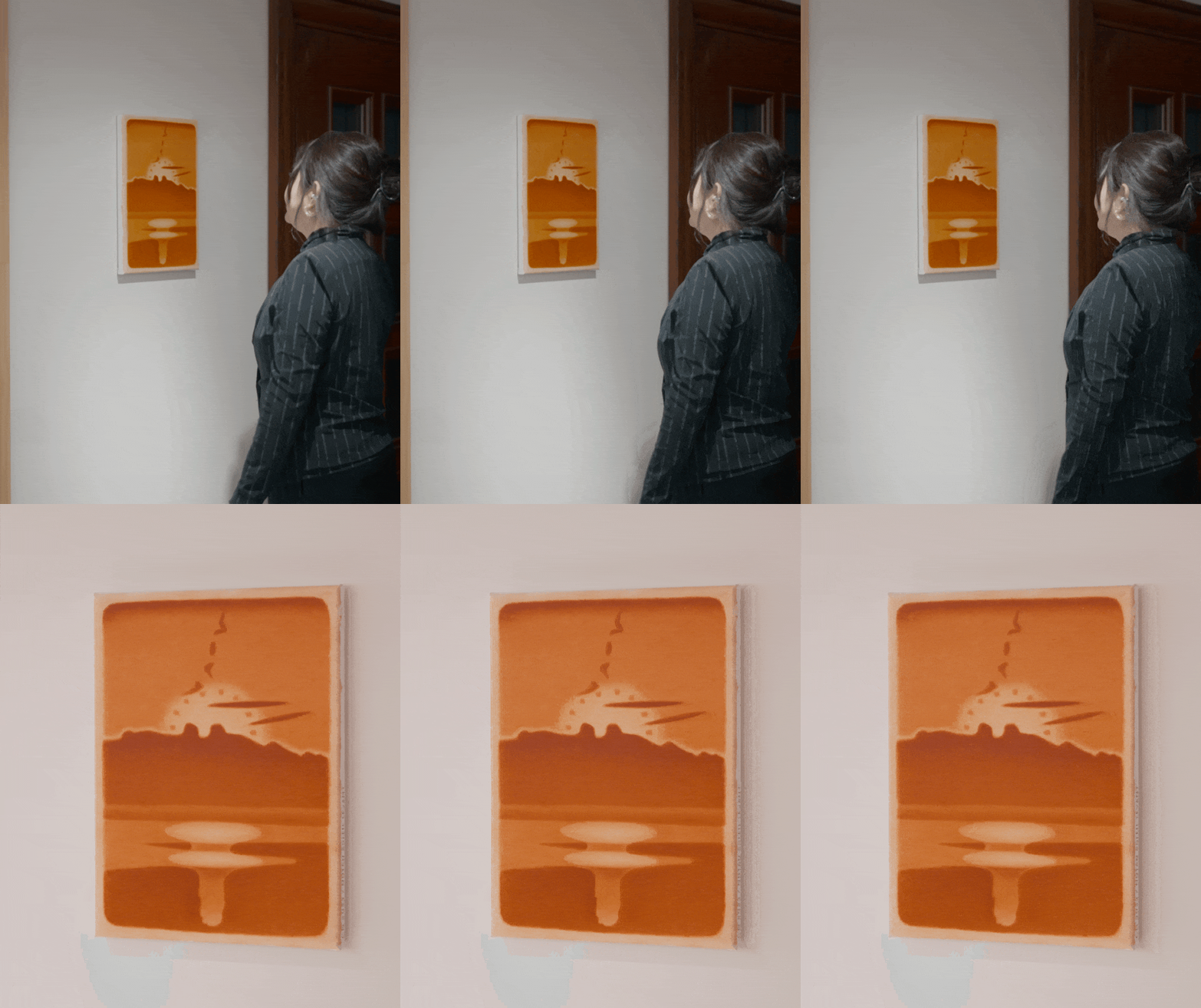
In 2025, we visited several women collectors whose holdings stood apart. Judith Neilson, the world’s largest collector of Chinese contemporary art, has spent 25 years acquiring nearly 4,000 works and insists that none will ever be sold, so that the “Chinese story” told by the collection can remain whole......
By / Xirui Huang · 14 min read
How do Judith Neilson, Yu Yan and Kaini approach art collecting?
Judith Neilson builds a long-term collection of post-2000 Chinese contemporary art and preserves its story through White Rabbit Gallery. Yu Yan values relationships with artists and moving-image works, while Kaini follows personal response rather than market trends or a fixed framework.
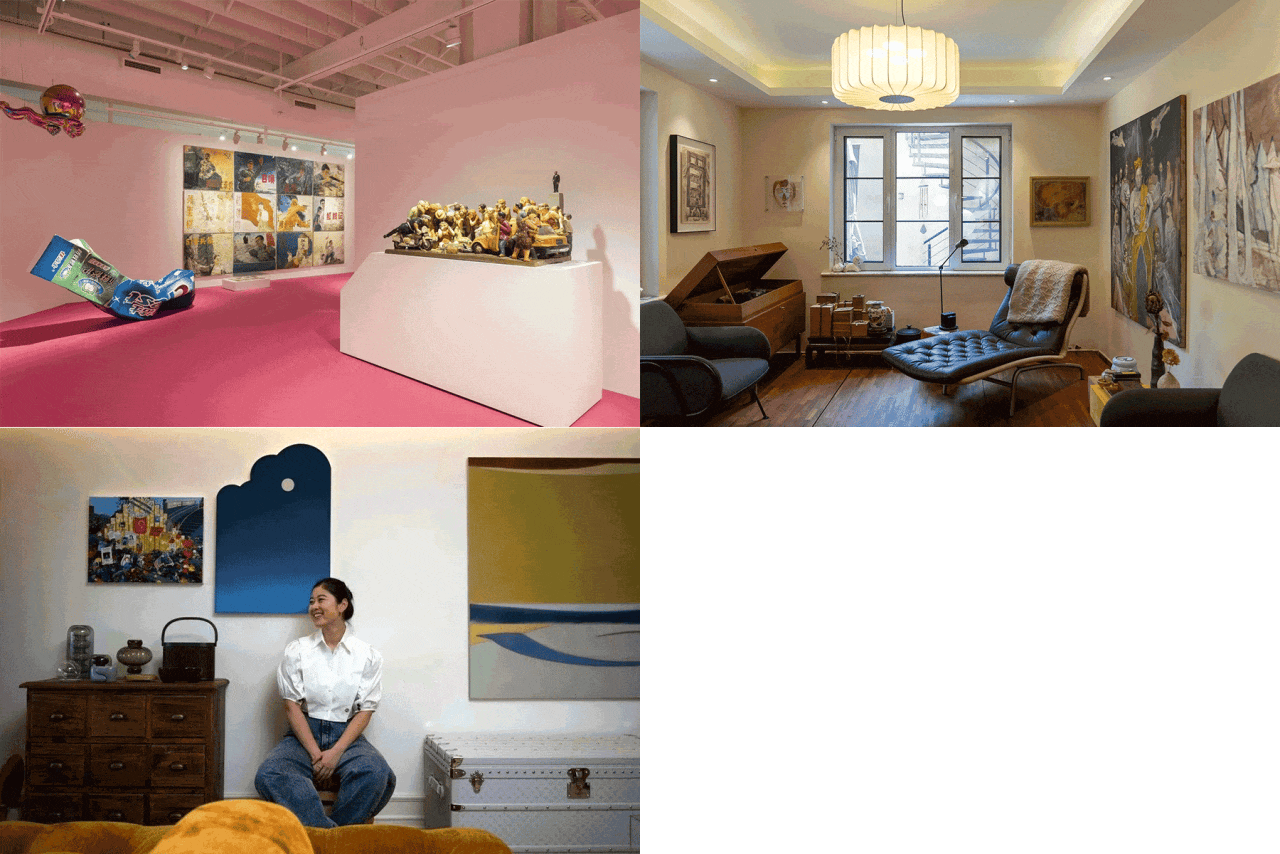
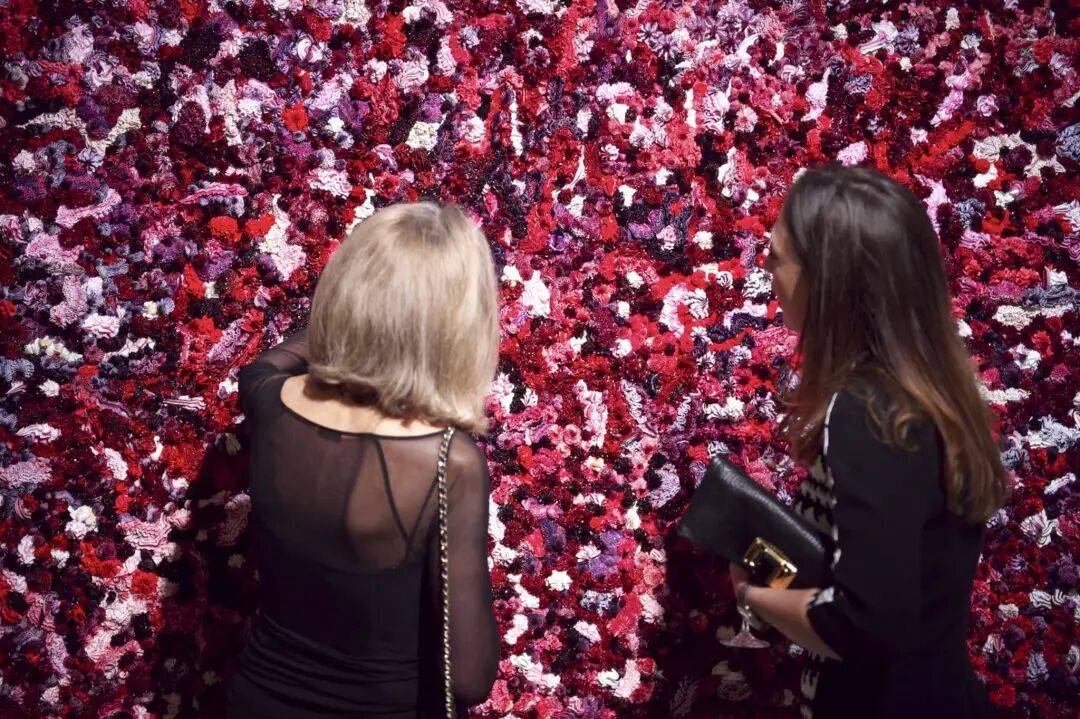
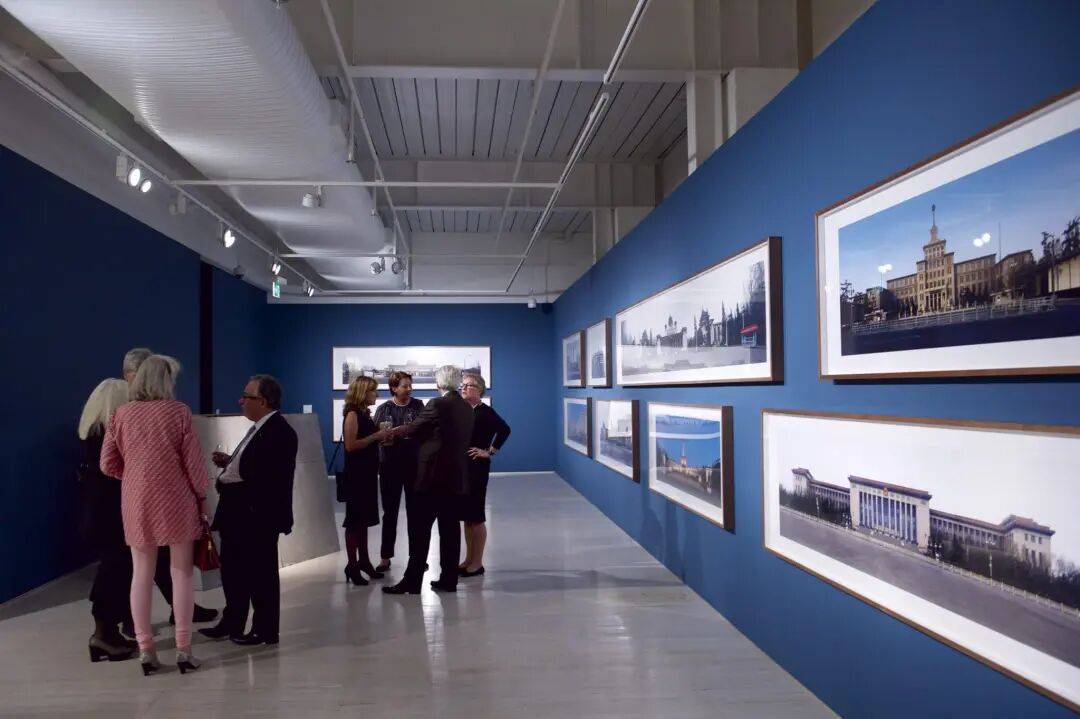
In 2025, we visited several women collectors whose holdings stood apart. Judith Neilson, the world’s largest collector of Chinese contemporary art, has spent 25 years acquiring nearly 4,000 works and insists that none will ever be sold, so that the “Chinese story” told by the collection can remain whole. Exhibition view at White Rabbit Gallery, founded by Judith Neilson. Yu Yan, a Beijing collector, owns nearly 200 works, each connected to a story involving the artist.
She also founded an anti-commercial art-collecting group with a close friend. They discuss art, organize events, and find collecting as sweet as falling in love. Kaini, a Shanghai-based collector born in the 1990s, has collected for five years without regretting a single purchase. She does not seek a coherent collecting narrative; what matters most is liking the work herself. Her guiding principle is: “The more everyday and relaxed collecting becomes, the purer it is.” Yu Yan and her friend yoyo founded a collecting group and display their works in a dedicated space. Kaini’s home. The 2025 Art Basel and UBS Global Art Market Report noted that, that year, high-net-worth women collectors in mainland China spent more than twice as much as their male counterparts.
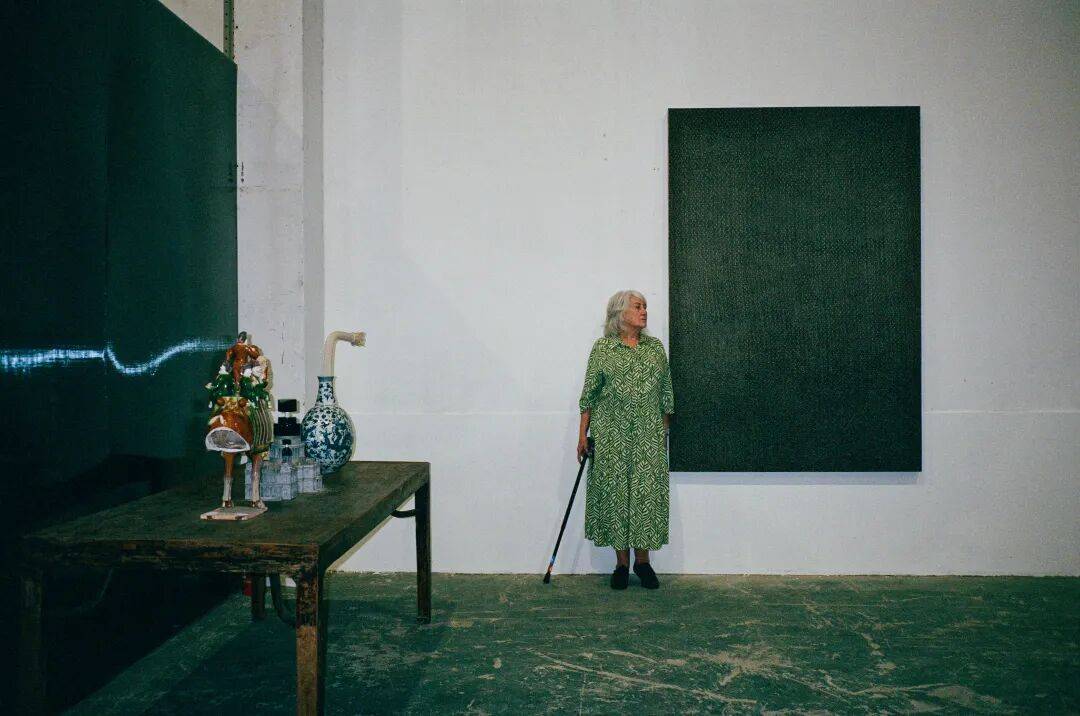
Around the world, women collectors also tend to be more adventurous, seeking out young artists who have not yet become well known. The force women collectors bring to collecting has made its dimensions more varied and expansive. Written by Huang Xirui and Li Ningyu. Judith Neilson photographed at Xu Zhen’s studio in 2024. Photography by Cheng Gong. Judith Neilson, an Australian philanthropist born in Zimbabwe, has the world’s largest collection of Chinese contemporary art: over 25 years, she has acquired nearly 4,000 works made after 2000 by more than 800 Chinese artists.
She also founded White Rabbit Gallery, the only museum outside China devoted exclusively to Chinese contemporary art. White Rabbit Gallery’s twenty-first exhibition, “A FAIRY TALE IN RED TIMES.” The first piece of Chinese contemporary art Judith collected was a very simple work she bought in Sydney in the 1990s.
SECTION 01 | She is the world's largest collector of Chinese contemporary art, with nearly 4,000 works that will never be sold.
“It was completely different from any artwork I had seen in Australia. It was full of imagination, and I felt that the artist did not care what other people thought of him. He was simply doing what he believed was right.” Wang Zhiyuan, One Begets Two, 1997. It was a wall sculpture by the artist Wang Zhiyuan. Two years after buying it, in 1999, she visited China for the first time. From then on, there was no stopping her: she began coming to China every three months and, over the years, visited more than 1,000 artists’ studios.
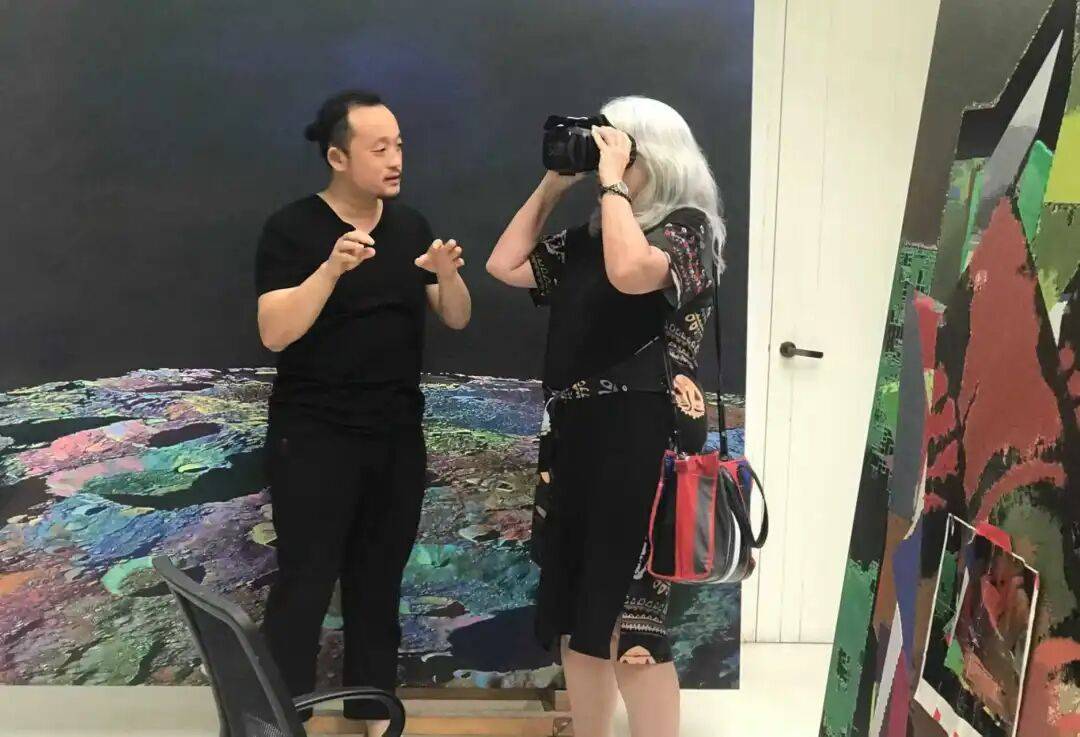
She told us that collecting was purely an immediate connection with a work: “I don’t know where these artworks come from or what they mean, but I connected with them immediately.” The connection has nothing to do with academic labels or market value; it comes from a private inner tremor. Judith Neilson dining with artists. Photography by Cheng Gong. Judith Neilson at the studio of the post-1980s artist Wang Yuyang, 2019. Unlike international collectors who focus on China’s 1985 New Wave or the political Pop of the 1990s, Judith has kept her gaze firmly on Chinese contemporary art made after 2000.
“Uli Sigg has an excellent collection that covers the history of Chinese contemporary art from the 1980s through the millennium, but I don’t intend to duplicate what he already has or reproduce his system,” she explained. “I’m more interested in knowing what the future trends are and moving in that direction.” White Rabbit Gallery’s twenty-sixth exhibition, “BIG IN CHINA.” The artists in Judith’s White Rabbit collection span several generations, born from the 1940s through the millennium. They include Li Shan and Liang Shaoji, born in the 1940s; Zhang Peili, Geng Jianyi, Xu Bing, and Zhang Xiaogang, born in the 1950s; Liu Xiaodong, Yu Hong, Yin Xiuzhen, Wu Shanzhuan, and Lin Tianmiao, born in the 1960s; Xu Zhen, Yang Fudong, Jiang Zhi, Li Nu, and Liu Wei, born in the 1970s; Hu Yinping, Lu Pingyuan, Nabuchi, and Li Binyuan, born in the 1980s; and Shan Huiqian, Zhang Ji, Li Hanwei, and Xia Han, born in the 1990s—artists active at the forefront of contemporary art.
White Rabbit Gallery’s ninth exhibition, “SERVE THE PEOPLE.” White Rabbit Gallery’s eighth exhibition, “SMASH PALACE.” Her confidence and “good eye” are not unrelated to her background. Born in Zimbabwe, she studied art and design in South Africa. After moving to Australia, she worked at an advertising agency and even tried painting, though she jokes that “the results were terrible.” Later, she and her former husband, Kerr Neilson, founded Platinum Asset Management, now Australia’s largest hedge-fund investment firm. The wealth she accumulated made her a prominent investor and philanthropist, someone who had weathered both upheaval and the changing tides of human relationships.
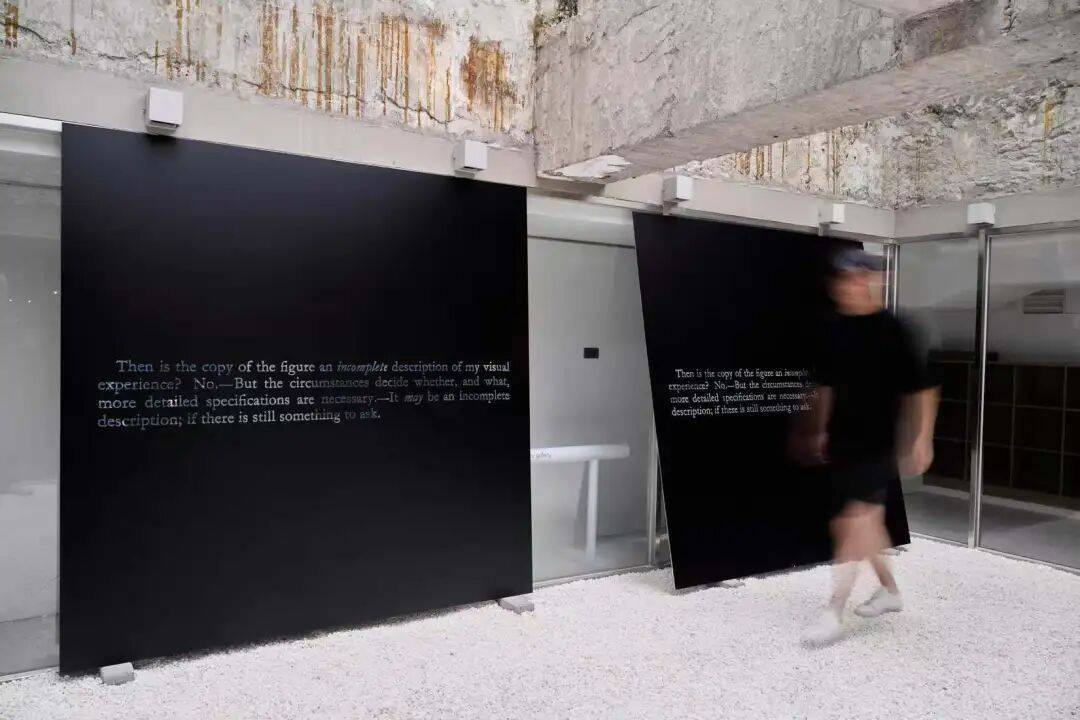
“Because I have tried as hard as I can to accept all kinds of things, when I see a good work I can understand how much time the artists have spent, as well as their vision and the way they think, and therefore give them respect,” Judith said. White Rabbit Gallery’s twenty-second exhibition, “THEN.” When collecting, Judith rejects the secondary market and insists on going deep into artists’ studios.
“I like dealing directly with artists. Buying works from their studios allows me to see the artists in their most authentic state. Very few people get to experience that, and it allows me to collect the best works,” Judith said.
“That direct, intimate interaction has helped me form deep friendships with many artists, friendships that go beyond the relationship between ‘buyer’ and ‘seller.’ We have shared many happy and sad experiences, and I hope these friendships will continue.” In 2020, White Rabbit Gallery partnered with Melbourne’s National Gallery of Victoria to present Xu Zhen®: Eternity vs Evolution. For this reason, we found that Judith does not collect only one particular period of an artist’s work. Instead, she collects works from different periods and in different styles over the long term and in stages. To her, this is a way of defending the integrity of the art.
Interview | Three Women Collectors with a Singular Eye
“Some artists remain focused on a particular subject, but they keep changing the way they express it. They may move from painting to sculpture and then to film. We see these changes every year. Especially now, change happens so quickly that I might just have bought a work, return six months later, and find that someone has made an entirely new work using what we discovered or learned today,” Judith said. Exterior of White Rabbit Gallery. Interior of White Rabbit Gallery. In 2009, she founded White Rabbit Gallery in Sydney, only a few steps from the city’s Chinatown.
Sixteen years later, it remains the only museum outside China devoted exclusively to Chinese contemporary art.
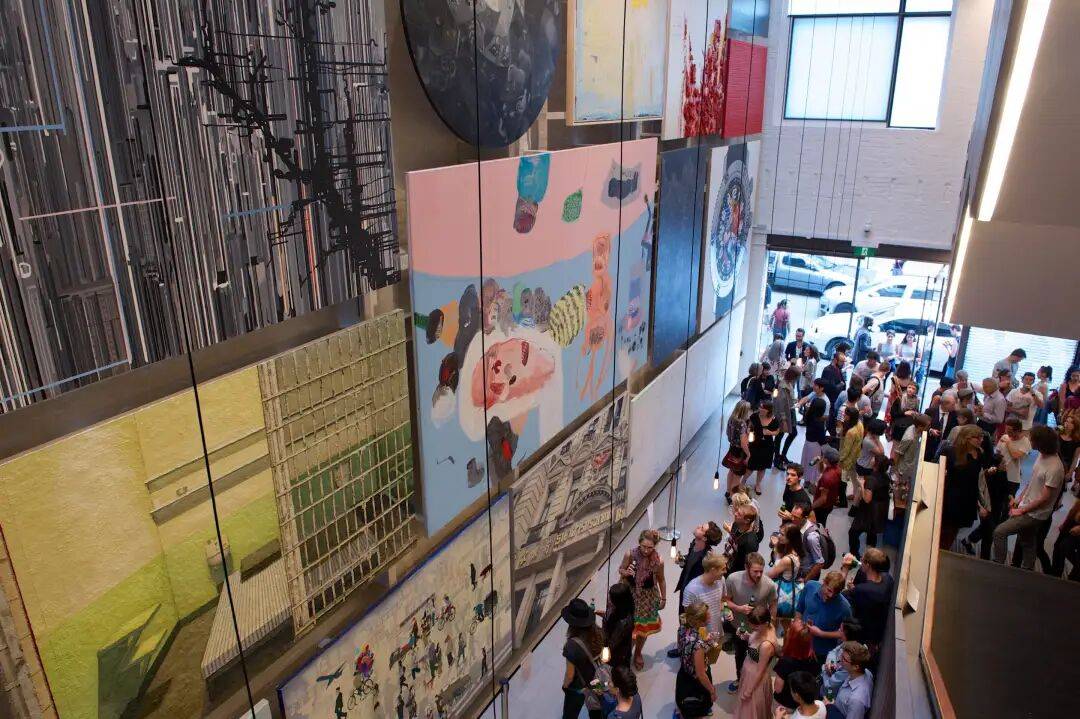
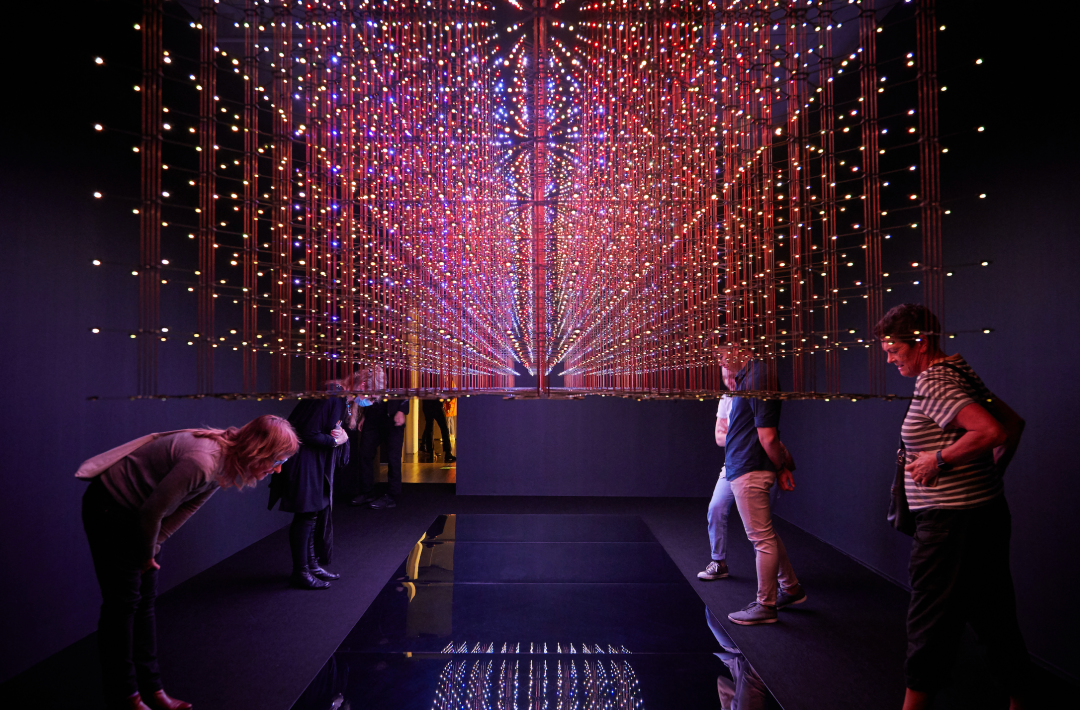
“When I first began collecting Chinese contemporary art, I thought, If only I had a place to show these works to the West, and allow Australians to see them and form their own opinions. Wouldn’t that be wonderful?” Scenes from openings of past White Rabbit Gallery exhibitions. In the 16 years since its founding, the museum has consistently changed exhibitions twice a year. It is now presenting its thirty-third exhibition. The first systematically presented the landscape of Chinese contemporary art after 2000; later exhibitions addressed consumption, power, and urbanization; looked back at “red history”; examined the many settings of intimacy; and, most recently, turned to social algorithms and the ways emojis, memes, and popular culture have upended human society, focusing on queer narratives and the boundaries of relationships.
White Rabbit Gallery’s twenty-fifth exhibition, “LUMEN.” White Rabbit Gallery’s seventeenth exhibition, “RITUAL SPIRIT.” “The White Rabbit collection is unique. Although it is entirely the product of my personal perspective, it tells the story of contemporary China and will therefore always have important historical significance.” Judith believes this could happen only in Chinese art, because no other country could produce such a quantity of excellent artworks in such a short period.
She also hopes the collection will inspire others: “If someone says, ‘If Judith can do it, I can do it better,’ that would be my dream. It would mean that another entirely new perspective had appeared.” Yu Yan is a veteran collector living in Beijing. She was once the editorial director of Shilin magazine and is widely known in the art world as the laughing, playful, poetry-loving “Auntie Yan,” an opponent of art’s commercialization. She began formally collecting contemporary art around 2008 and 2009 and has now been collecting for more than 15 years.
Her holdings include paintings, installations, sculpture, photography, and a considerable number of conceptual videos, totaling nearly 200 works. Yu Yan and yoyo arranging paintings in their space. Last year, she and yoyo, a young collector born in 1998 and a friend of her daughter, discovered that they shared the same approach to collecting and immediately founded the “YY Collecting Group.” The two friends acquire works and discuss art together. They also regularly organize events, bringing people from the art world together for tea, conversation, and meals. When the conversation gets lively, they start dancing in spaces filled with artworks.
“A lot of people say we’re as sweet as ‘lovers,’ as if we were on our honeymoon every day,” Yu Yan said with a laugh. Sitting room in the space. Tomas Vu, Flatland 4, 2001. They created three spaces—for painting, installation, and video—and placed the works there, living alongside them day after day. One space is devoted almost entirely to painting, with about 30 works, a selection from what she has collected over more than a decade.
Among her Western holdings, her favorite is this work by Tomas Vu. A Vietnamese American artist, Tomas Vu is also a professor of printmaking at Columbia University.
“Last year I went to New York for my daughter’s graduation and talked with Tomas Vu in a café for five hours. This work is actually his response to the 9/11 attacks, a meditation on the loss of life and violence. The series consists of 101 works. yoyo was lucky enough to buy the last one; I collect another series of his,” Yu Yan said. Lea von Wintzingerode, Brown (Part II), 2024. Another artist both Yu Yan and yoyo particularly like is the Berlin-based Lea von Wintzingerode.
SECTION 02 | Beijing female collector: Collecting with best friends is as happy as falling in love
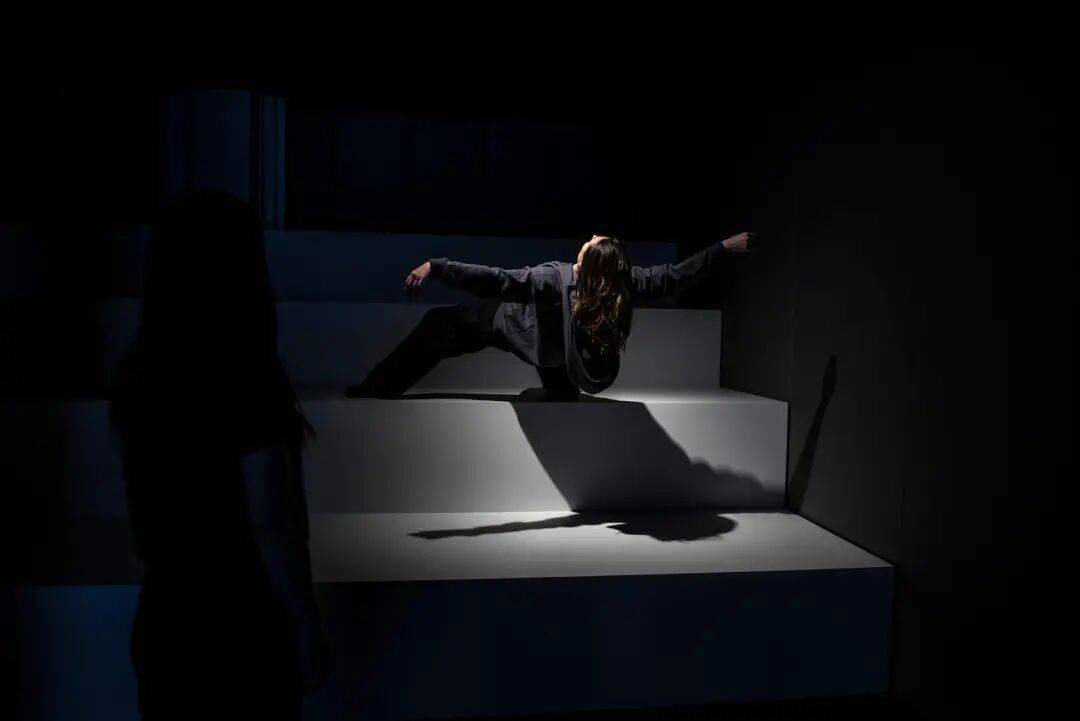
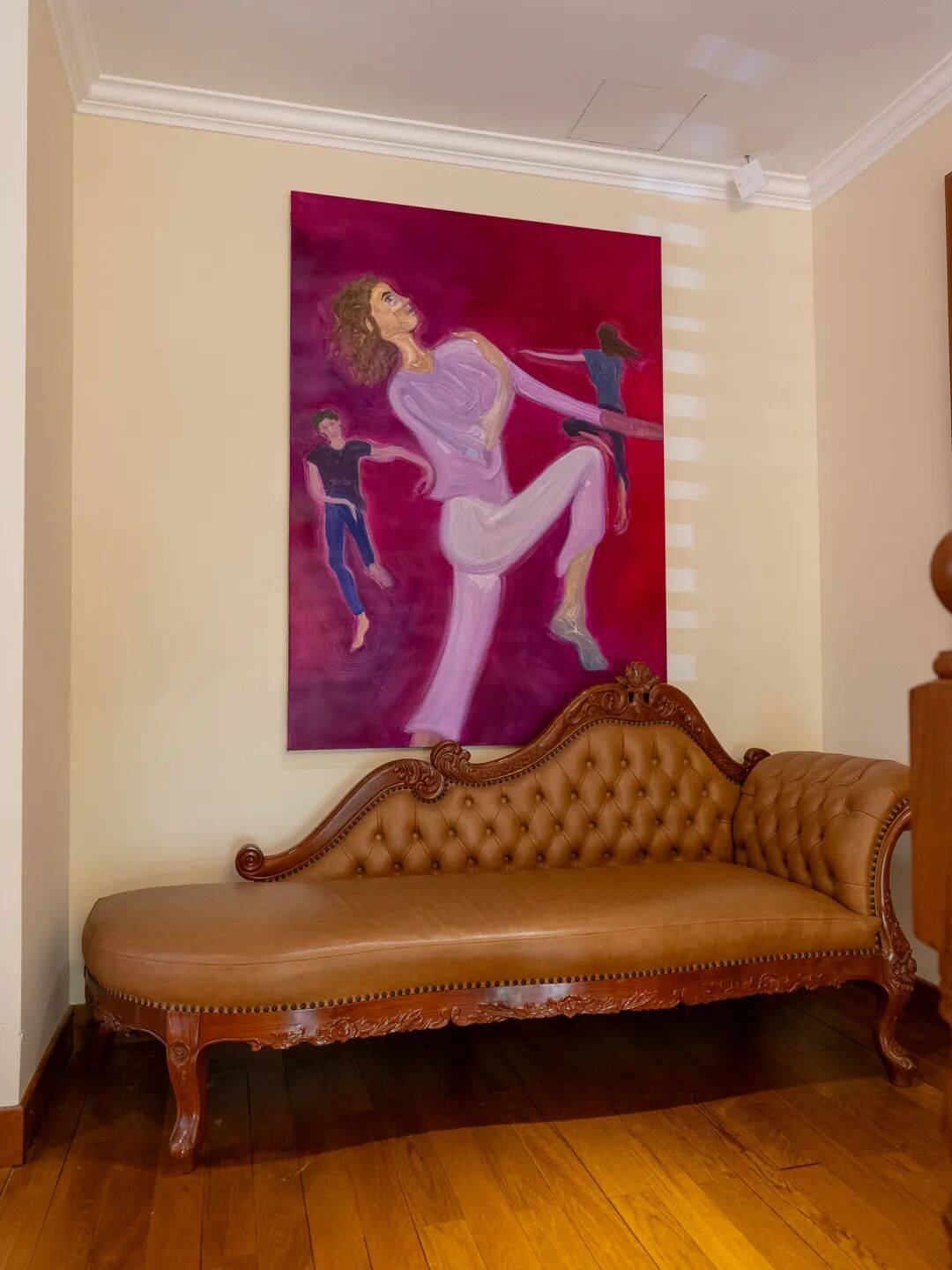
Her work is closely related to the body’s expression under the influence of revelry and music. She chooses historically important women as subjects—some artists, some dancers, and some poets or writers. The work Yu Yan owns depicts Trisha Brown, one of the most important American modern-dance artists of the 20th century. Through Brown’s dancing posture, the artist weaves an idea into the painting.
Yu Yan in her early years, at gatherings with artists and attending theater events. Yu Yan is friends with many artists.
“Back in 2016, I would go to Heiqiao at night to see Dai Chenlian, He Chi, and Yan Bing. I remember one day when I was with about nine artists. We sang from 9 p.m. until 6 a.m. The next morning, all our voices were gone.”
“Yan Bing stood in the wind with a guitar, playing and singing ‘Friend.’ Later, I drove home, and the whole way I felt tears welling up. It was a story that belonged to youth.” Dai Chenlian, Mother Trilogy—Seeking Osmanthus, the Moon Wheel Shifts II-A04—Osmanthus, 2022. Yan Bing, Steamed Buns Blooming When Piled Up, 2016. Among her artist friends, Dai Chenlian has known Yu Yan for 10 years. He makes theater and has maintained a way of life defined by low material desires and a simple enjoyment of art.
“yoyo and I both love this work. Beneath the painting is a very large osmanthus tree. The artist’s mother has the character for ‘osmanthus’ in her name, so for him it is a projection of his mother’s image.”
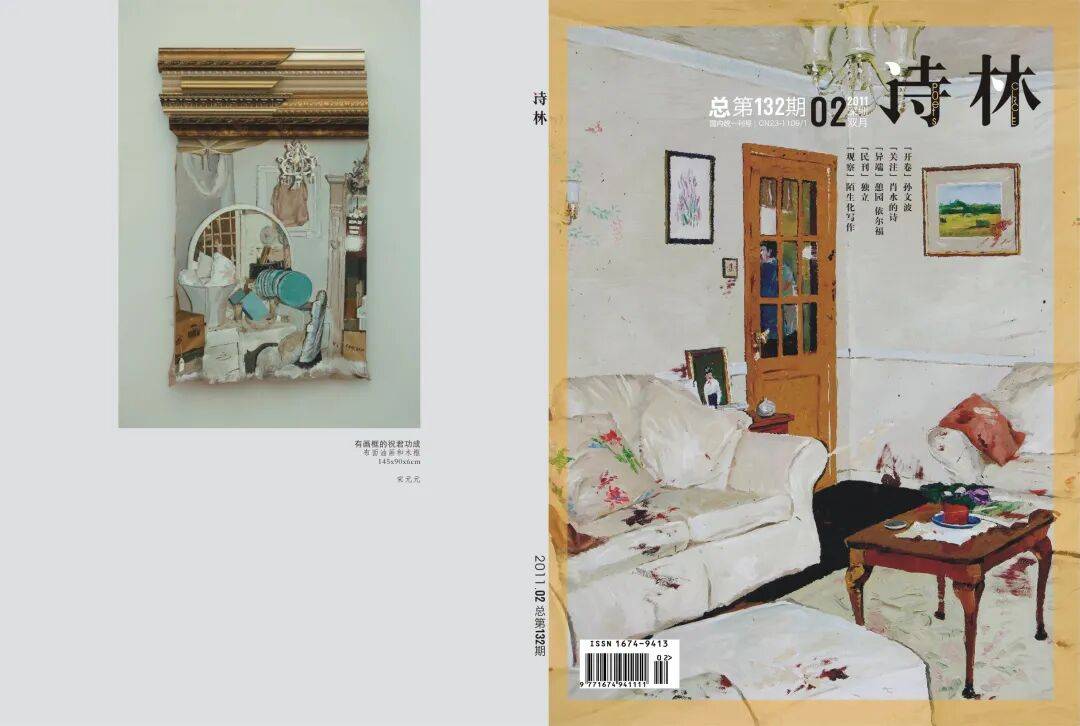
“As for Yan Bing, I’ve always thought of him as a spiritual aristocrat. This work depicts the steamed buns blooming when piled up, something people in the northwest eat every day. Most of his still lifes relate to the northwest: he has painted buns, cowhide, and mushrooms. The narratives behind his visual language are inseparable from that land.” Cover of Shilin featuring a work by the artist Song Yuanyuan. Song Yuanyuan, May You Succeed, 2009. Speaking about collecting contemporary art, she said it began in 2008 and 2009, when she was the editorial director of Shilin. Bao Dong was responsible for the art section and became, in effect, her introduction to contemporary art.
“I remember that once he published a work by the artist Song Yuanyuan on the cover of Shilin. I was moved by it and thought, So there are people who are professional artists.” Geng Jianyi’s Book from the “YY Collecting Group.” After gradually becoming interested in contemporary art, Yu Yan made friends with several young artists. Beginning in 2011, she talked with more artists and art institutions and studied the full trajectories of artists such as Geng Jianyi, whose work could enter art history.
She also collects works by artists from Switzerland, Germany, and the United States.
“The worldviews, values, and states they present are different. It’s a learning process. I get to make friends and enter their contexts, to experience different cultures.” Apichatpong Weerasethakul, Blue, 2018. Her collection is not limited to paintings. It includes installations, sculpture, photography, many conceptual works, and theater and performance art.
“I’m especially pleased with the video part of my collection because I didn’t follow the art market. I learned gradually, according to my own wishes.” The latest video work she bought is Apichatpong’s Blue, his award-winning work from the Venice Biennale.
“There is a kind of Eastern melancholy in it, with the rhythm of poetic language, and I was moved. The price of a car bought me this little box.” Yang Fudong, The Seven Intellectuals in a Bamboo Forest (One of the Series), 2003–2007. Yang Fudong, The Seven Intellectuals in a Bamboo Forest (One of the Series), 2007. Yu Yan also owns a major work by Yang Fudong: a photographic work from his video The Seven Intellectuals in a Bamboo Forest.
“I talked with the artist about buying it for three months because he did not want to sell to a private collector. There is now only one in my hands; the other four are all in museums,” she said. Yu Yan in front of a painting by Caroline Bachmann. Looking back on 15 years of collecting art, Yu Yan said: “For us, money means buying works. All my money goes into buying works, bringing them home, and letting them develop a relationship with me in the spaces where I live.”
“When I look at Caroline Bachmann’s Lake Geneva, I think of how similar it is to Ni Zan’s distant, level landscapes—so quiet and enduring. That is the meaning of collecting.” Kaini, a collector from Shanghai born in the 1990s, has a home and a collection that are unmistakably her own. Every wall—even the corners and the bathroom—is full of stories. “It’s like the exhibitions I curate: they’re all my taste.” There is no prescribed logic to the collection; what matters most is that she likes the work.
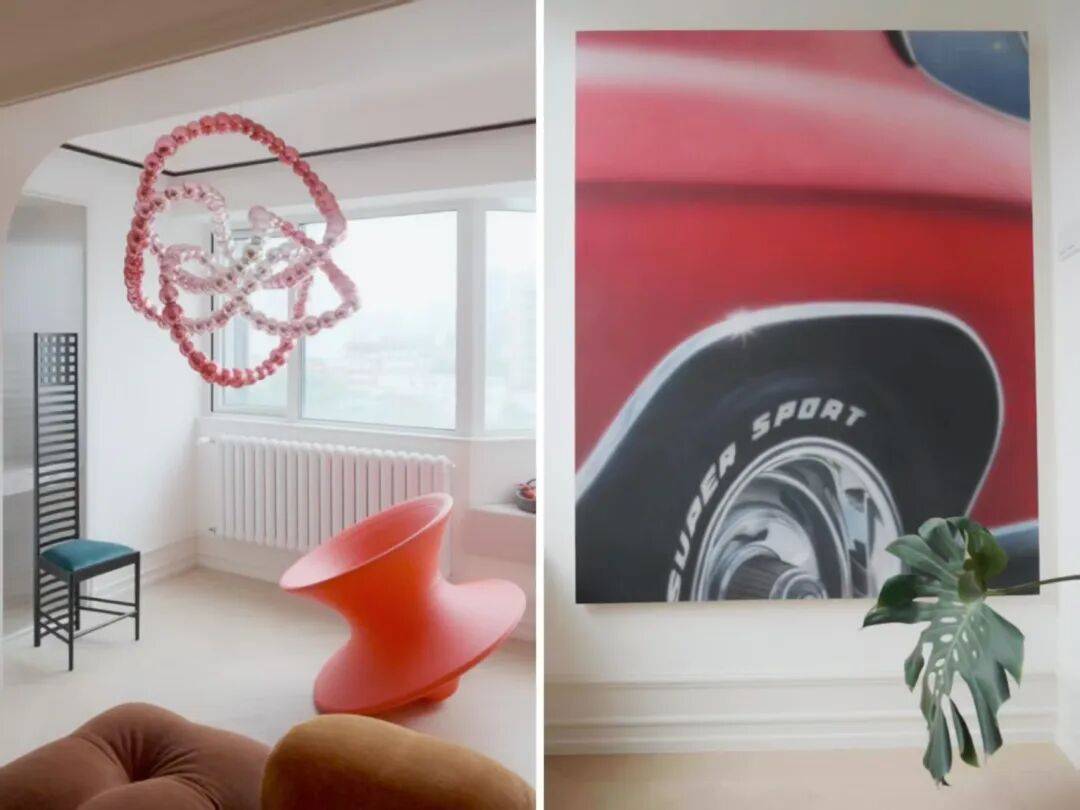
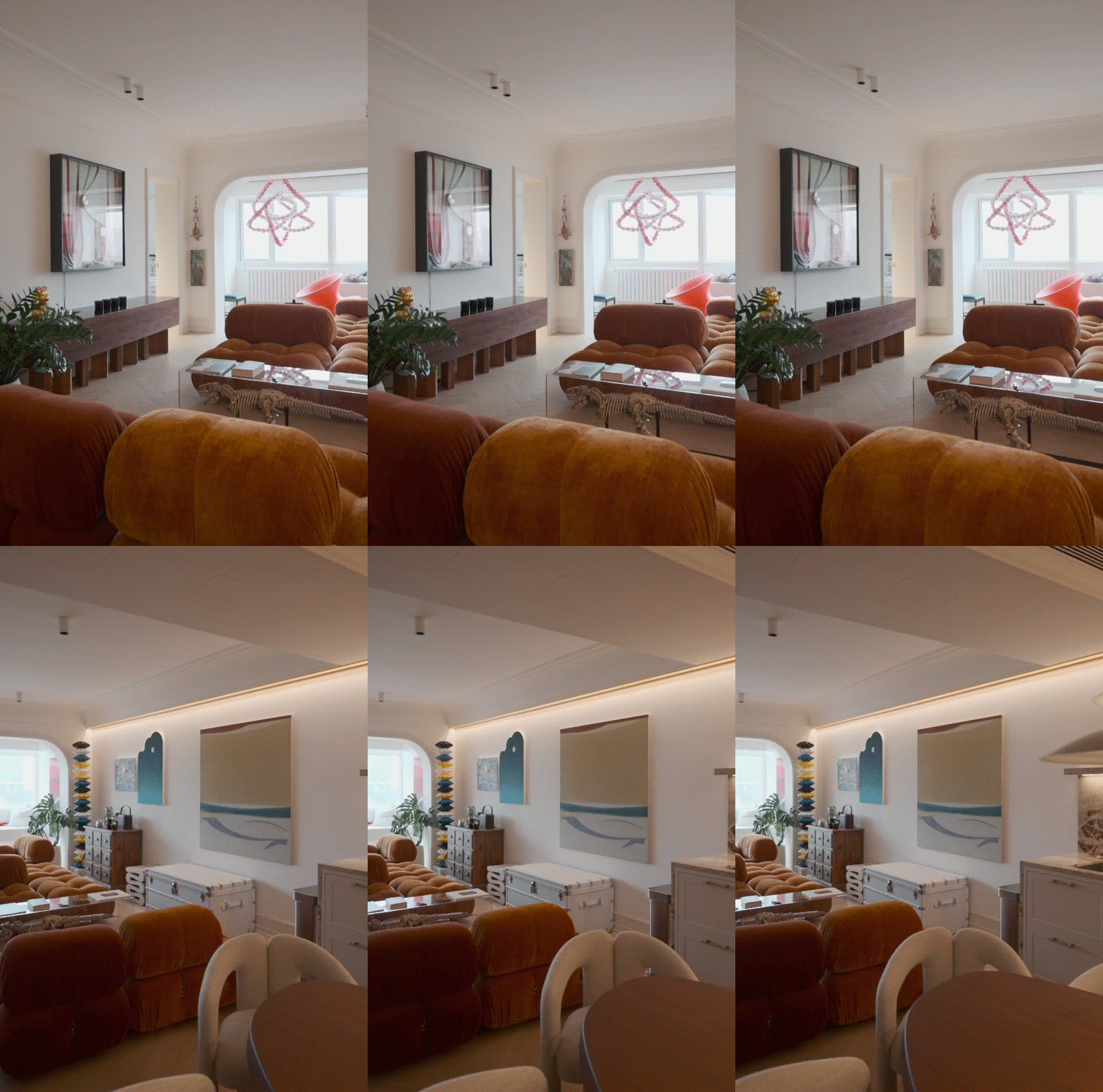
Left: Jean-Michel Othoniel, Noeud Sauvage, 2023. Right: Aryo Toh Djojo, Ketchup, 2023. Her list includes newcomers just beginning to show their work alongside artists already recognized by the market. Works from different regions and cultures collide. On the balcony, the French artist Jean-Michel Othoniel’s dreamlike “beads” face the “speed and passion” presented by the California artist Aryo Toh Djojo.
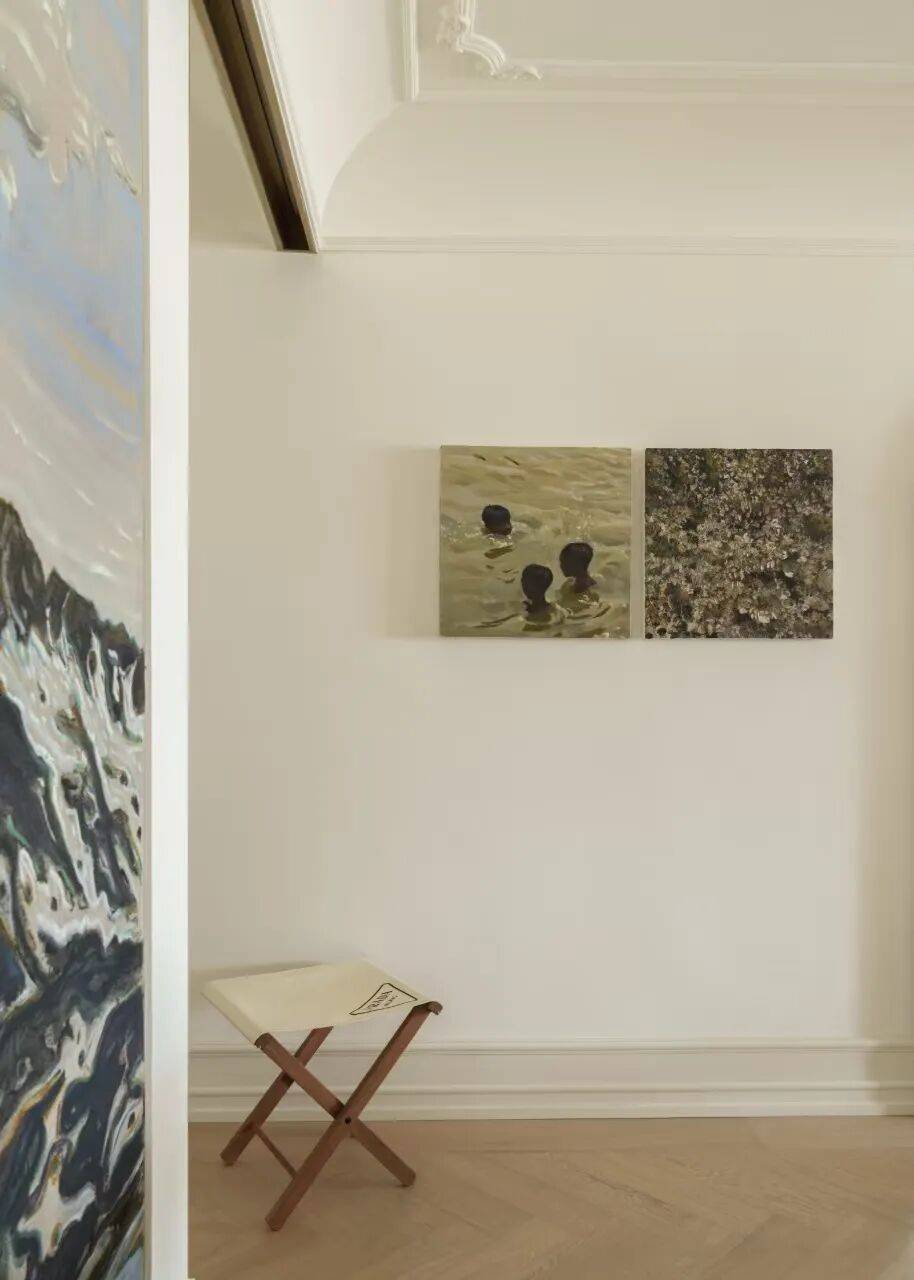
The young people swimming in Liu Xiaodong’s work converse across the room with the fashionable West Coast boys painted by the American artist Jonny Negron. Top: Liu Xiaodong, Steel 5, 2016. Bottom: Jonny Negron, Innervisions, 2020. “It’s difficult to define my collection, and I don’t want to define it. I’ve only been collecting for five years, and I have only a few dozen works. I don’t need some kind of narrative.”
“If I really wanted to say something abstract, I could make it sound magnificent, but when you actually collect, you don’t truly follow that,” Kaini said, delivering another blunt truth. “Not every work needs to have a great deal of academic significance. Some things are simply beautiful, or the house happens to need a work like that in a particular place.” In her view, collecting could be lighter and more relaxed: less overpackaged, and free of the academic “pretension.” Left: A corner of the home covered with portrait paintings. Right: KOAK, The Gift, 2022. Marc Chagall, Lune Visage, 1968. In fact, Kaini studied art history. As an undergraduate, she studied fashion design at Parsons, then transferred to New York University to study art history because of her interest in contemporary art.
SECTION 03 | The bachelor apartment of a collector born in the 1990s in Shanghai: the more daily the collection is, the purer it is
Tracing the relationships among works is second nature to her. But she refuses to approach her collection too rationally, placing feeling first.
“There doesn’t seem to be much point in setting a framework and fitting every work into it. Honestly, you still have to like it yourself.” Joseph Kosuth, Nonumber #12 (After Augustine’s Confessions). Leslie Hewitt, Untitled (Delicate), 2013. View of Kaini’s exhibition Not Seeing It Whole, 2024. Kaini readily admits that she has a particular fondness for conceptual art.
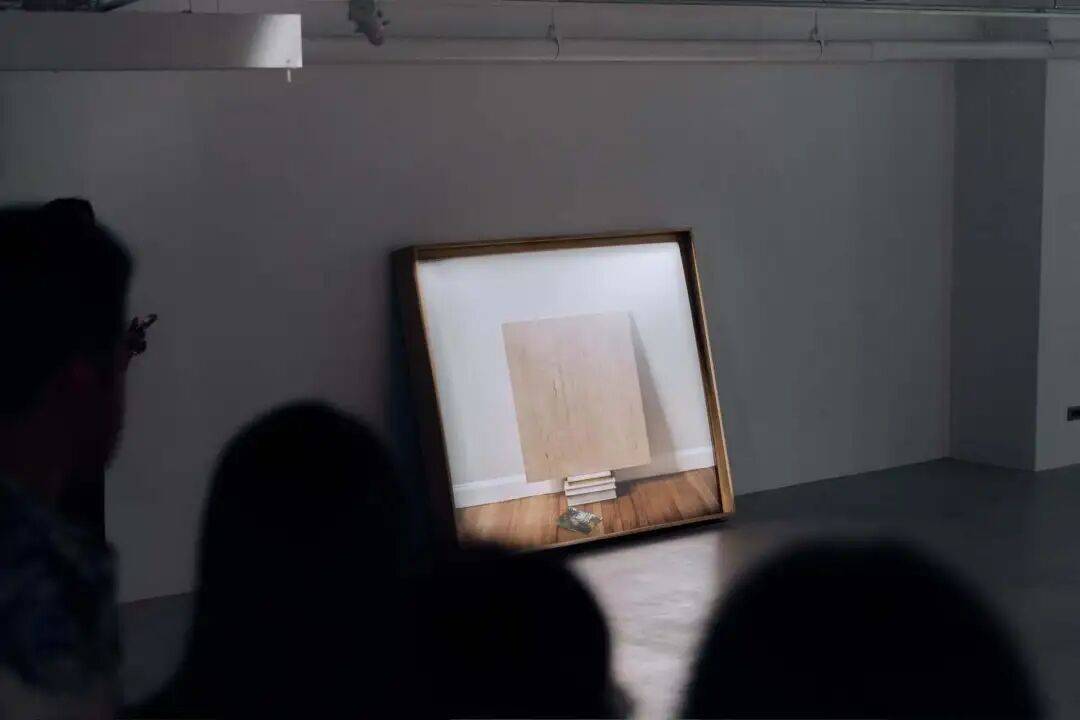
She owns a work by the conceptual-art pioneer Joseph Kosuth that asks whether a copy can fully describe the thing itself, recalling his seminal work One and Three Chairs. She also owns a classic series by Leslie Hewitt. The artist photographed a wooden board standing on a stack of books and leaning against a wall. The work itself is set into a groove in a wooden frame only at the bottom; when the work is moved, the photograph inside the frame also shifts.
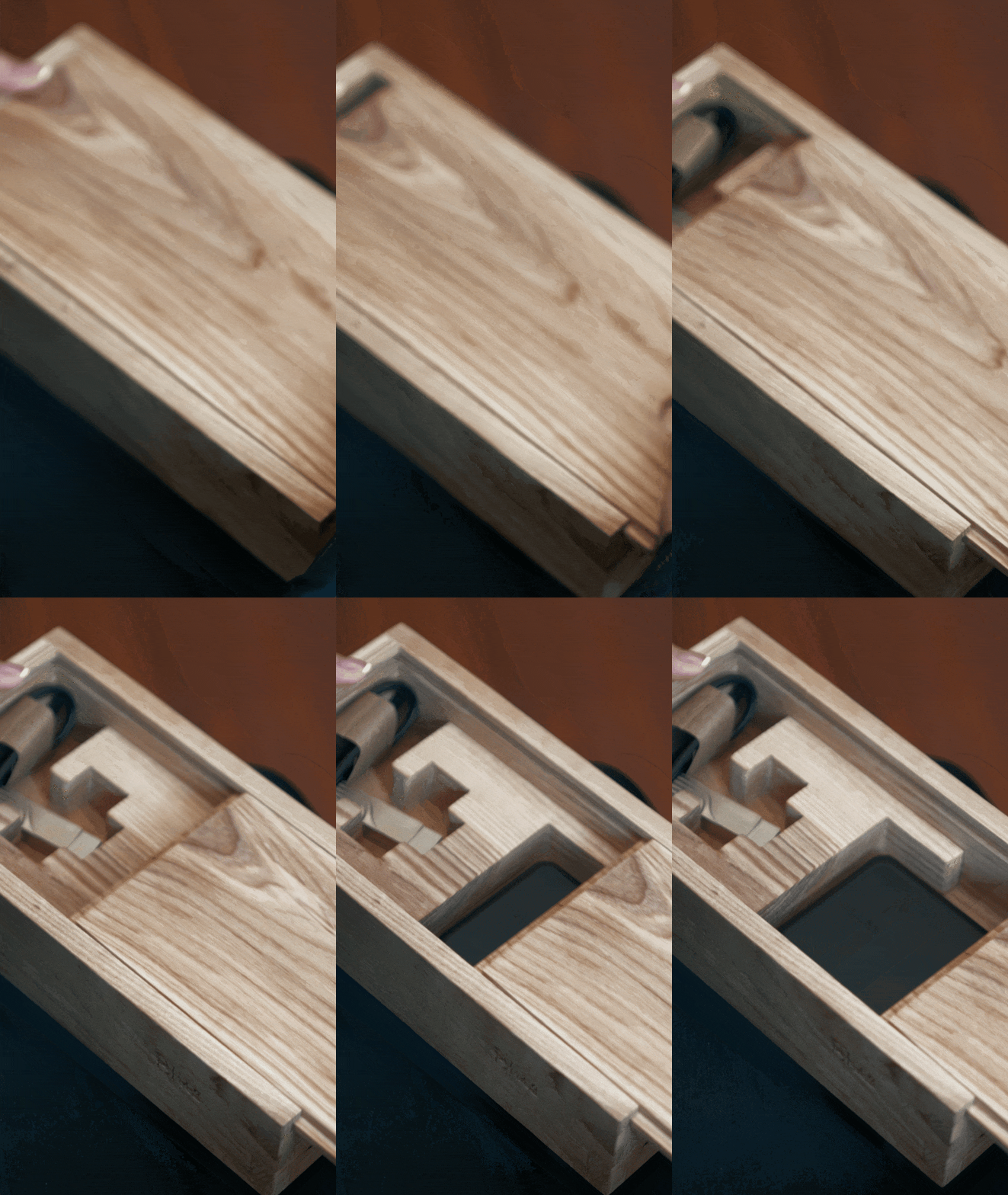
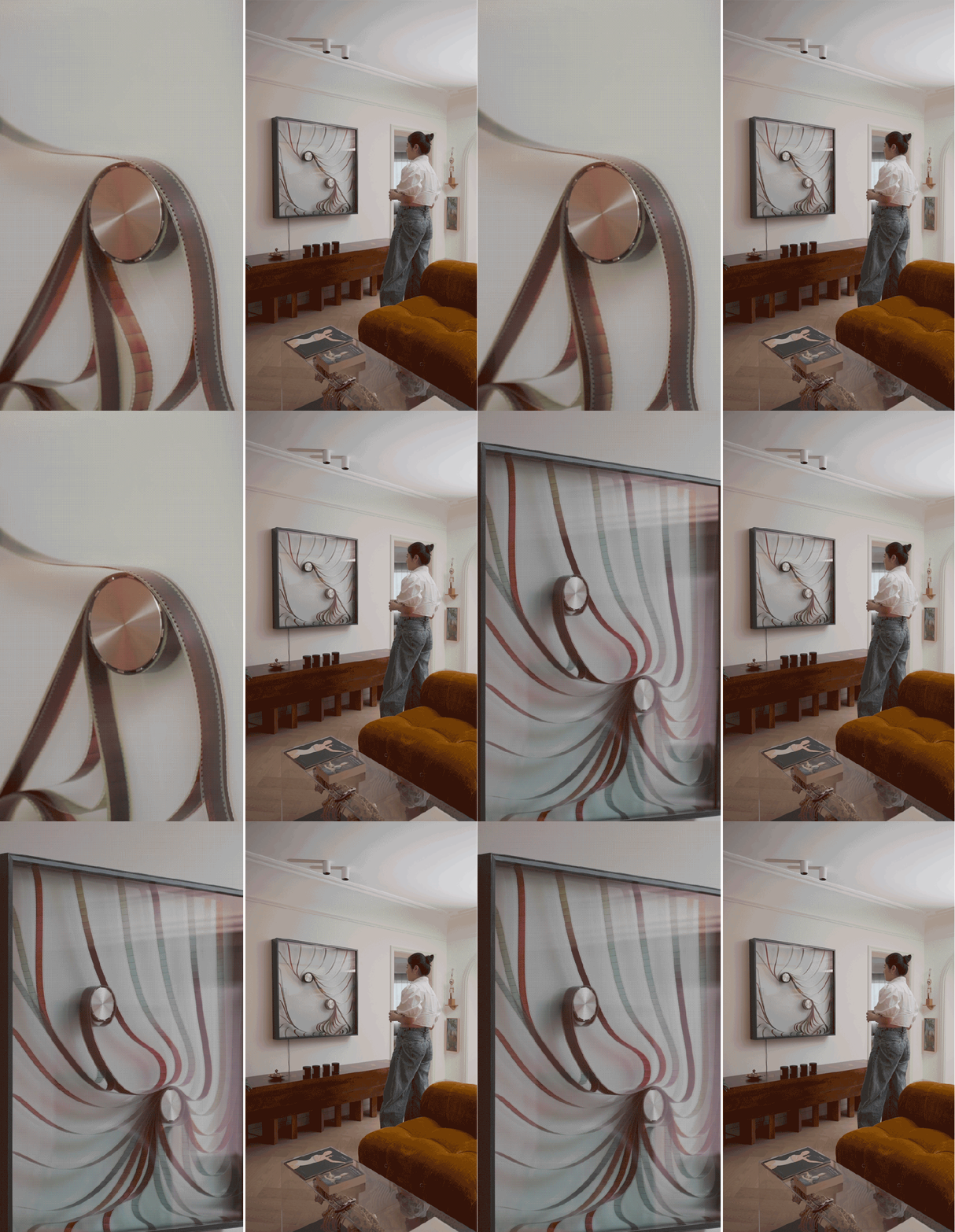
In this way, reality and image form a kind of intertext. Rosa Barba, Double Rhymes, 2024. Kaini’s latest acquisition is a conceptual installation by Rosa Barba. Like a projector, it has film that follows a programmed sequence inside a glass frame, bending and sliding flexibly as though it were alive.
“The work symbolizes time, but the film is blank. It depends on how the viewer interprets it.” After five years of collecting, Kaini says she has never regretted a purchase.
“I’ve always been quite calm. I’ve never been especially fanatical, and because I studied art history, I’m steady.” She makes each purchasing decision quickly, without much hesitation. The reason she can be so decisive and certain is simple: “Whether you look at it academically, from the perspective of art history, or as something whose value might rise, you can’t see what will happen in the future. So you really have to like it first. The purer, the better. Don’t look toward the future; seize what is best now. I think that’s enough.”
She arranges her collection in a newly renovated studio apartment.
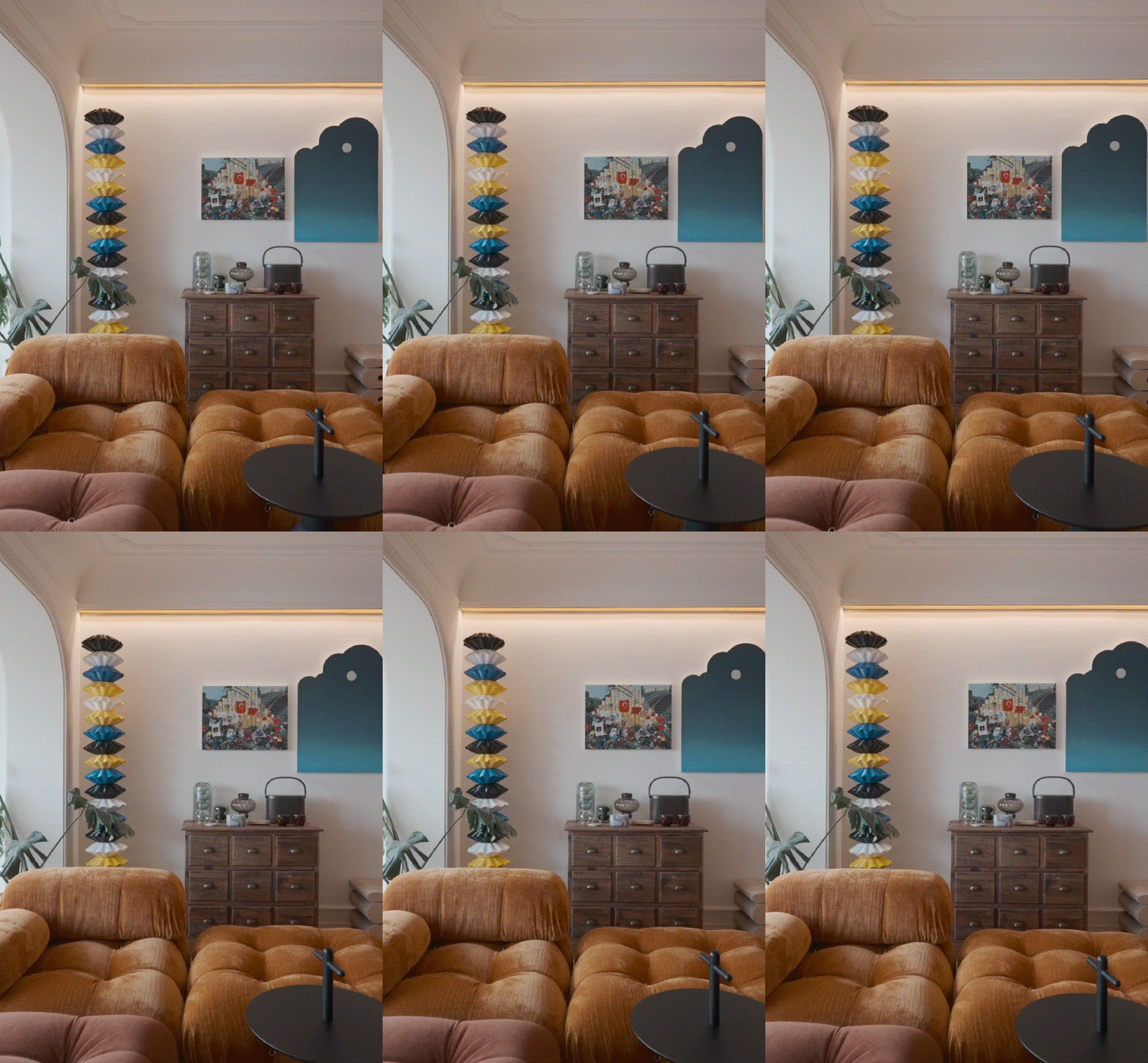
“Although the works aren’t completely coherent in the way they would be in a conventional exhibition, every wall has its own small story unfolding.” One wall is organized around yellow, blue, and white. It begins with a sculpture in the same palette by the German artist Gregor Hildebrandt. Next is a work by Hilary Pecis: beneath a blue sky, flowers and flags fill the space before the golden tombstone of the boxer Muhammad Ali.
Hilary Pecis, Memorial, 2016. From left to right: Gregor Hildebrandt, Cadere Saadane Brancusi (TBC), 2022; Hilary Pecis, Memorial, 2016; Ugo Rondinone, from the “Cloud” series, 2023; Julie Beaufils, Le Parc, 2023. The blue extends into a work by the Swiss artist Ugo Rondinone. Its quiet atmosphere contrasts with the pieces beside it.
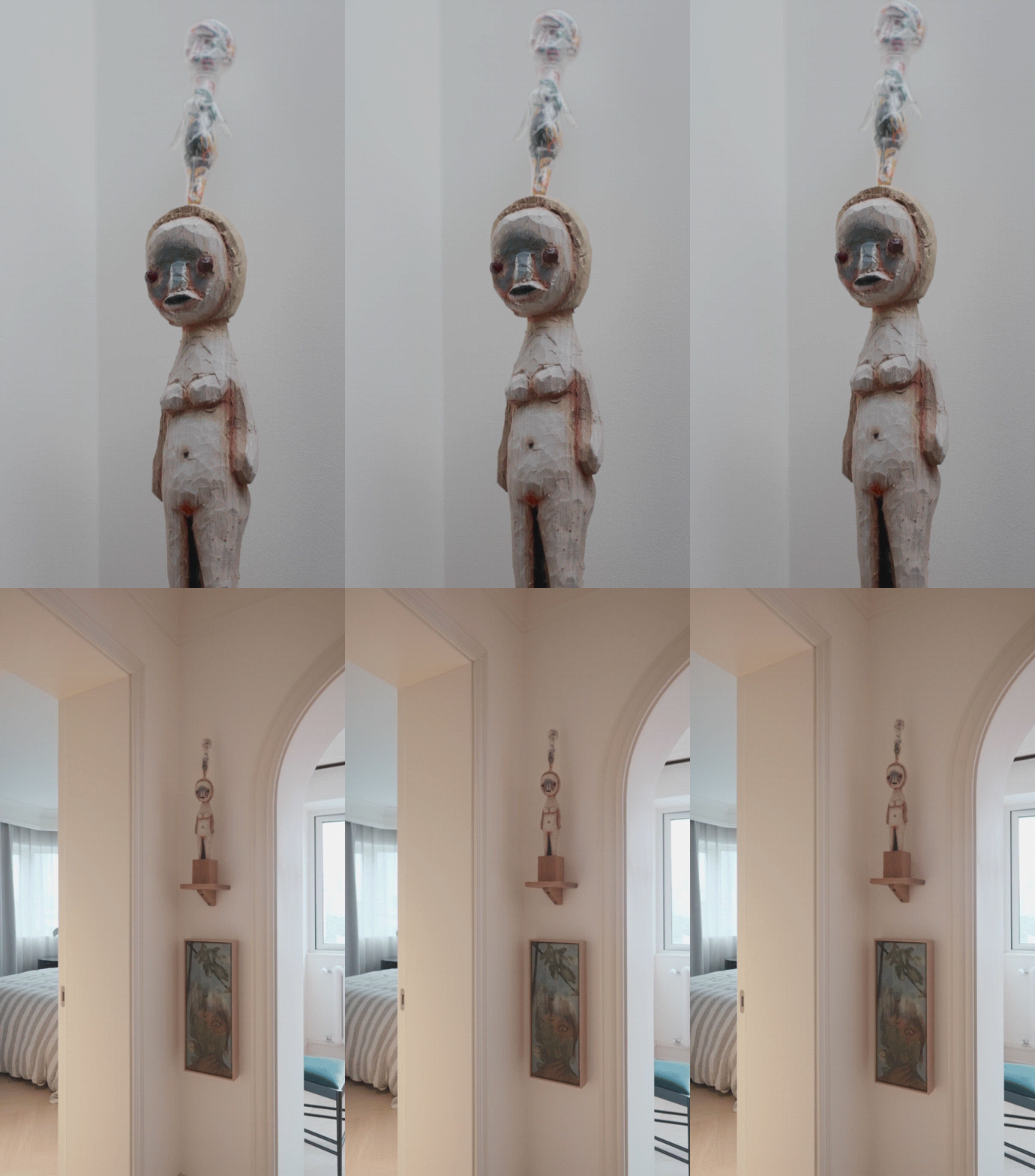
The story of the wall concludes with an abstract painting by Julie Beaufils, like a road movie crossing a desert, using a landscape as its final scene. In the corner of the living room are Izumi Kato’s sculpture Untitled and Sarah Buckner’s painting Untitled l. The corner of the room also conceals a story. A small sculpture by Izumi Kato occupies the partition; a little wooden head sprouts a plastic figurine from its crown.
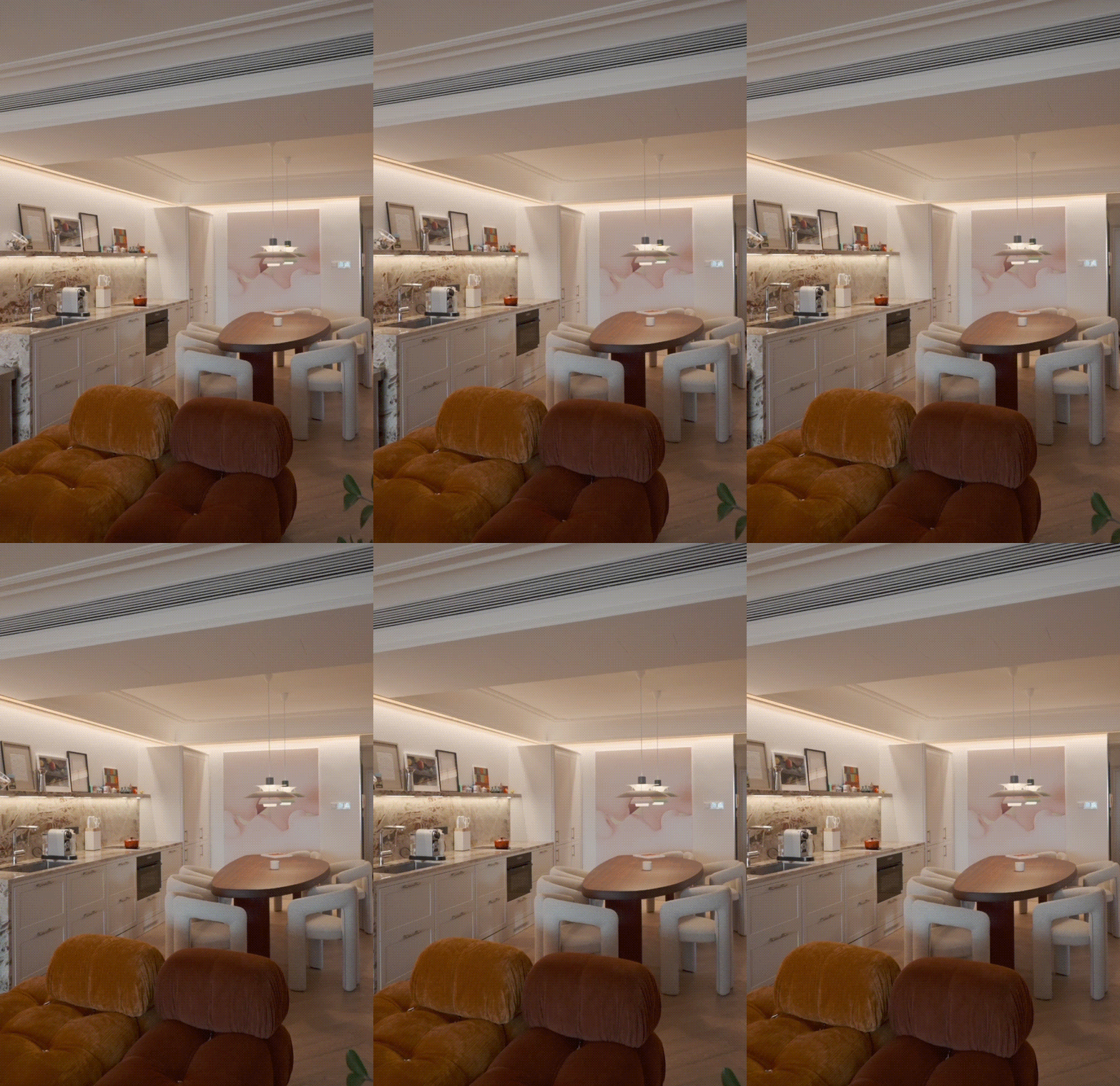
“Sarah Buckner happened to have a self-portrait that felt especially introverted at first sight, and its size was just right to ‘hide’ beneath the sculpture. This corner formed its own little story,” Kaini explained. Vivian Greven, )(xV, 2023. The largest painting in the home hangs in the dining room. Direct and bold, its pink surface appears gentle, but the artist Vivian Greven focuses on an ardent, entwined kiss, folding it into an abstract composition.
“It’s an extremely sexy work, with very intense desire.” Yang Bodu, In the Museum 2021S, 2021. By comparison, the bedroom is quieter. Near the entrance, a work from Yang Bodu’s “Museum” series leans against the wall. It, too, depicts the space as seen from the doorway.
“Whenever I enter the bedroom and turn on the ceiling light, it falls right on the Buddha statue. For a moment, I feel my whole body become still.” Top: Wolfgang Tillmans, Peach Alive, 2016. Bottom: Stanley Whitney, Stay Song Series 4, 2004. Kaini’s collection is closely woven into her life. On a partition in the kitchen, a colorful grid painting by the master of abstract art Stanley Whitney rests casually beside a peach photographed by Wolfgang Tillmans.
Asked whether looking at art every day made her life happier, she laughed. “The feeling of living with artworks is that most of the time you actually ignore them. It’s like having something by the door all the time: you get used to it, and only look carefully when you happen to think of it.”